Brooke Goes Global: South Africa

October 18, 2018

The birds sang their morning song as I began to wake.  I blinked my eyes continuously and rubbed last night’s sleep from their lids.  I slipped on long pants, a cozy sweatshirt, and some warm socks.  I tiptoed out of the room and headed up the stairs.  I crossed the lawn to the metal staircase, twirling and winding up the side of the building.  Quickly, I ascended the stairs and struggled to catch my breath at the top.  The hostel roof, unmistakably, offers its best views before 6:30am.  I sat close to the edge so as to not miss a single wave produced by the vast blue ocean.  My cheeks burned as the salty ocean breeze brushed them red.  The morning mist dotted my hair in a layer of damp cold.  The weather invited families of clouds to scatter across the sky.  But the waking sun was not to be silenced.  Finding the only break in the clouds, the sun peaked its way into existence.  Sun beams slowly reached their arms out of the dark clouds and spread across the sea.  I smiled and turned my head to what I once ignored.  To my surprise, the green luscious mountain, standing close behind, applauded the performance.  I closed my eyes tightly to fathom this moment, this experience, this life.

Muizenberg, Cape Town sunrises became my first friend on the continent of Africa.  After the third day at the beautiful ocean town, I reluctantly waved goodbye to the hostel and said hello to a new homestay, in a new country, in a new continent.

07EED665-43F3-43F9-BCFC-F8F02DCA4BE2.JPG

The morning’s view from our hostel in Muizenberg, Cape Town.

Here I am, in South Africa.

My homestay in Cape Town is in the historic neighborhood of Bo Kaap.  Houses stand side by side in organized, bright, colorful rows.  People are neighbors streets away.  Neighbors are friends and friends are family.  The Bo Kaap is the epitome of a community that cares for one another.

We had just arrived to the Bo Kaap, when we starting following the lead of my homestay mother, Omi Mia.  She led us through the streets, pointing out houses and pairing them with her many friends’ names.  All conversation in that moment was ignored as my brain concentrated on what the eyes were sensing — beautiful, bright rainbow houses.  All connected.  All so inviting and radiating.  My daydream was abruptly ended when Omi stopped us in front of a bright yellow home.  We emerged into a quaint and cozy living room filled with family photos and memorabilia.

IMG_5475.JPG

One of the beautiful streets of the Bo Kaap neighborhood. I live in the very last yellow colored house you can see in the photo.

Dinner after dinner, I excitedly sat at the table and listened as Omi shared her life story with us.  Omi is an intelligent, witty, and incredibly caring woman.  She is the oldest of four children.  At 72 years old, she is the hub of social gatherings among her family and friends.  On the night of our arrival, the table was set for seven.  She apologized for the small gathering that night, and I chuckled thinking back to normal family dinners with just my mom and me.

The Omi Mia household is one of 24 other households in the Bo Kaap housing IHP students.  The families hosting us students all know one another.  They adventure together.  They vacation together.  They eat together.  This is a community.  This is a neighborhood that cares for one another.

From 1948 to 1991, the Apartheid government attempted to make the city of Cape Town a whites only city.  This resulted in the Group Areas Act of 1950 forcing the segregation of different ethnic and racial groups.  Families were forced from their homes, told they only had minutes to put their belongings in a truck that would drive them to their new government issued house.  During this era of segregation, the Bo Kaap was, by law, deemed a Muslim only area.  The neighborhood’s history shapes its present.  Today, the Bo Kaap is a community of mostly Muslim families.

Unfortunately, gentrification and greedy politics are forcing families out of their Bo Kaap homes — homes that have been in their families for generations.  With the growing popularity of South African property, the Bo Kaap has become a hotspot for development.  It is in the central part of the city.  The waterfront harbor, museums, and countless amenities are all within a short distance’s walk.  As a result of this perfect storm, the demand for Bo Kaap property has exponentially grown.  This increase in property value causes taxes to soar.  New city regulations require monthly fees never charged to families before but are now deemed required and necessary.  Older generations pass and their children are unable to afford the adjusted finances of the now million dollar homes.  In turn, families who’ve grown up in the area are priced out of the Bo Kaap.

Gentrification is pushing history out of the neighborhood.  People move in for the convenient location while ignoring the community’s culture and individuality.  South Africa’s oldest mosque, over 200 years old, is located on the streets of Bo Kaap.  In practice with the Islam religion, the mosque plays a call to prayer at certain times of the day.  Within the past few years, an individual from Europe bought a house in the Bo Kaap.  Annoyed by the daily 5am wakeup from the call to prayer, he complained at a community meeting.  He demanded for the call to prayer to be stopped.  He believed as a foreigner, an outsider, and a non-Muslim that his needs should come before everyone else’s.  He willingly bought the house in the Bo Kaap.  He willingly moved in to this historically Muslim neighborhood.  But now, he is unwilling to accept the community he moved himself into.  Thankfully, his request was denied.  And at 5am, I happily lay in my bed listening to South Africa’s oldest mosque’s call to prayer.   

Another problem within the Bo Kaap is the consequences of tourism.  The Bo Kaap is deemed a must-see destination for South African vacations.  Tour buses park at the entrance of the neighborhood so their customers can get out and take photos.  Tourists ignore the privacy and property of the street’s natives and climb on their porches to snap the perfect photo.  Tour guides lead groups through the community’s sidewalks, spewing ignorant and downright wrong information about the neighborhood.  Omi has overheard tour guides tell groups the houses were painted different colors as a solution to them not being able to identify their own home when they come home drunk.  Yet, as a predominately Muslim neighborhood, most individuals do not drink in their town.  Tour guides still continue to share inaccurate and disrespectful rumors about real people, living in this very real place.  Tours of the Bo Kaap are advancing tourist companies, the city, and the outsiders.  Those living in the Bo Kaap are not reaping any benefits from tourism.  Instead their reputation is tarnished and their property is trespassed.

Nonetheless, I am thankful to say I am part of the SIT/IHP abroad program.  As a student of IHP, I am contributing to the preservation of the Bo Kaap and its stories.  Our homestays are compensated for housing students.  These working class families are paid generously by our program for kindly inviting strangers into their house.  Students learn from the families.  They learn the truth, the facts, the reality from citizens of the Bo Kaap.  But also we share our experiences, lives, and stories with the families too.  It is important to remember reciprocity when you’re abroad.  As much as we take from a foreign country as American students, it is just as important to leave a compassionate legacy behind.  I am honored to share the stories born and cultivated from Bo Kaap history.  I do not take this task lightly.  To have the opportunity to share someone else’s story, through my eyes, is truly a powerful adventure.  I am grateful to have this platform as an occasion to share the stories of these beautiful people in Bo Kaap, Cape Town.  

XZVJ6582.JPG

The sea and the mountains — what more could you ask for?


Bryan in Taipei: Exploring Local History

October 5, 2018
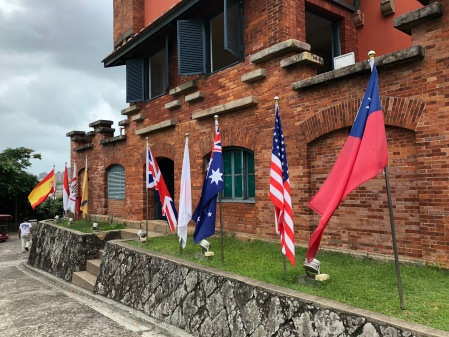
Flags (1)

Flags of Spain, the Netherlands, Qing dynasty, Koxinga , U.K., Japan, Australia, U.S., and Taiwan flying at Fort San Domingo.

One of the most exciting parts of living in Taiwan so far has been discovering the many legacies and influences on the island’s rich culture. One of the courses I am taking while here focuses on this history from the arrival of the aboriginal tribes to present. This includes the arrival of the Dutch, the Qing dynasty, the Japanese occupation, and several different phases of history. I decided to go to 淡水 (Danshui, or Tamsui in the Wade-Giles romanticization), which lies just north of Taipei, to check out Fort San Domingo and the British Consulate to see one of the island’s first Western consulates, as well as some traditional Japanese architecture. Though I had the chance to visit the world-famous National Palace Museum, its contents are vast to say the least (it would take 15 years to see all of the items cycled through exhibitions) and pertain more to the history of the mainland than local history.

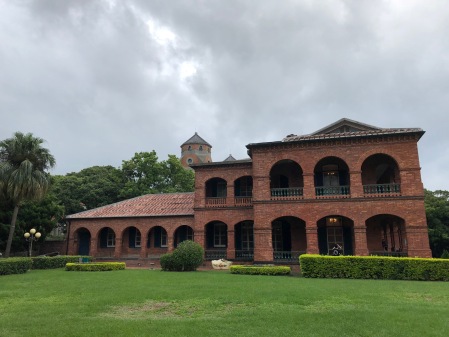
British Consulate

British consulate in Danshui featuring colonial architecture.

The photo above is the British consulate, which remained in operation for several hundred years. It sits among the top of the hill and neighbors the old Spanish (and later Dutch) Fort San Domingo. It was largely responsible for housing the British consul, who could assist British merchants during trade or British citizens during other matters, and remained in operation until 1972.

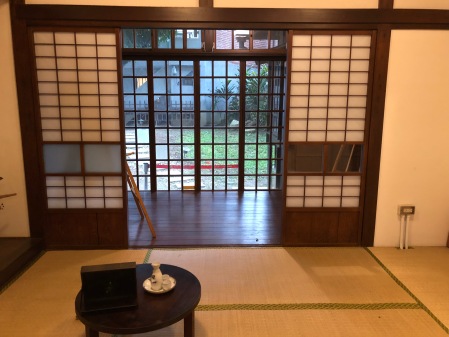
Japanese Residence

Residence of Tade Eikichi in Danshui. I had to take off my shoes before I could enter!

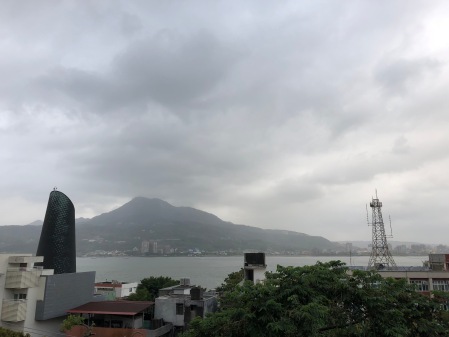
Another interesting site in Danshui is the former residence of Tade Eikichi, the township head of Danshui during Japanese rule. The Japanese occupied Taiwan for half a century and their influence is still felt in local cuisine, architecture, and several other customs. The house above is built completely resembling a traditional Japanese home, complete with a porch and a garden as well. This home faces the Guayin Mountain and Danshui River, which still serves as a source of inspiration for local artists to this day.

Guayin Mountain

View of the Guayin Mountain and Danshui River from Tade Eikichi’s residence.

While this post only scratches the surface of this topic, Danshui offers an interesting case-study on how this island came to become an amalgamation of several different cultures and create a unique one in its own right.

Until next time,

Bryan


Brooke Goes Global: Jaipur Travel Weekend
September 21, 2018

I have been on my abroad trip for 5 weeks and in India for 3 weeks.  I have told you ample about my classes and experiential learning.  However, I have dropped the ball on providing information about my touristy, free-time experiences.  Last weekend, IHP, our abroad program, gave us the opportunity to have a travel weekend.  A large group of students decided to go to Jaipur, a popular city in Northern India.  

From New Delhi, we headed on a 5 hour train ride to the city.  After many hours of staring at the “touristy Americans” throughout our transportation experience, we finally arrived in the city.  That evening we arrived at our hotel, the Anuraag Villa.  Consider this post to be a Yelp review for the Villa.  Every employee was kind and helpful, allowing their guests to make the most of their visit.  When we stepped inside the hotel, you were transported to a time when India was under British rule.  British colonialism seemed to be the decor theme of the hotel with their light blue bedroom walls, with adorned doors and large sliding locks.  Also, helpful tip: hotels are deemed some of the best places to eat authentic Indian food.  Professional chefs are hired by hotels, and because hotels cater to tourists, the food’s cleaning and cooking process is safe for a foreigner to enjoy.  Anyways, back to my Yelp review.  I certainly got the most bang for my buck at this hotel.  I shared a room with another girl in the program, and for two nights we paid $1,300 rupees.  This in terms of USD comes to about $13 per person for both nights.  It was not the most extravagant hotel I have ever been to, but it certainly contributed to my exciting time in Jaipur.  

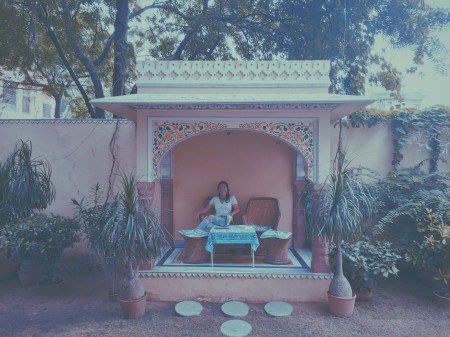
Processed with VSCO with p5 preset

Me eating breakfast at the Anuraag Villa, enjoying the feeling of eating like a queen in India

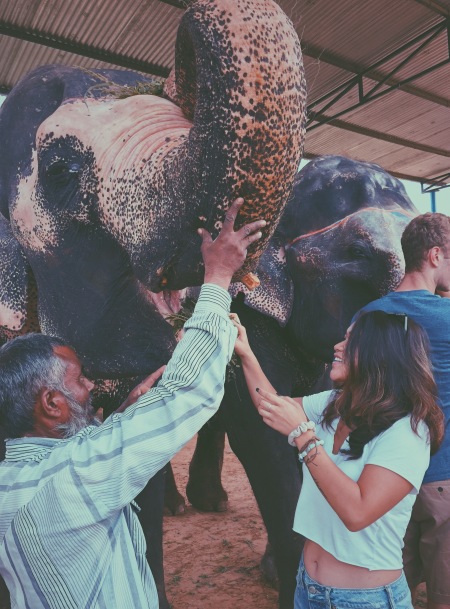
Unfortunately, our time in Jaipur was too short to see everything the city had to offer, but I certainly saw a lot over the two days.  Our first stop on Saturday, was to an elephant farm in the outskirts of the city.  Our group was very concerned about the well-being of the elephants, but we were assured by the staff and reviews of the farm that the animals were treated humanely.  We had the opportunity to meet six different Asian elephants, each with their own individual handler.  Elephants are some of the smartest creatures in the world.  In the four hours we were with the elephants, we are able to make such a strong impression on them that if we came back three years later, they would remember us.  It was such a fascinating and invigorating moment to spend time with such large, yet gentle animals.  

Processed with VSCO with p5 preset

Playing with the elephants has been a highlight of my time abroad so far


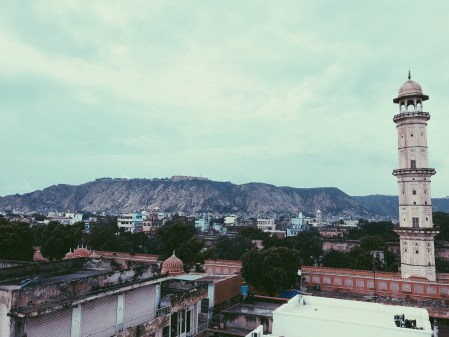
After, we took off to the historical and iconic city of the Pink City.  The rumors are true.  Every structure within the boundaries of the city is pink.  Shops and vendors align the streets with colorful food and clothing.  The rainy weather caused a thin layer of mud to form on every inch of every sidewalk.  The bumper to bumper traffic caused a symphony of car horns.  And on occasion, a camel or an elephant made an appearance as a form of transportation.  We stopped for lunch at a rooftop restaurant.  We were able to eat some amazing food while enjoying some amazing views of the city.  The juxtaposition of the rolling hills against the building structures of the city created a sight that took my breath away.  Is there a better location to build a city than in the valley of a hill? 

Picture4.jpg

The beautiful view from our rooftop restaurant

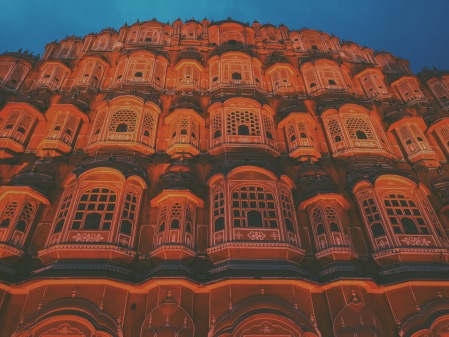
Processed with VSCO with p5 preset

The Hawa Mahal in the Pink City

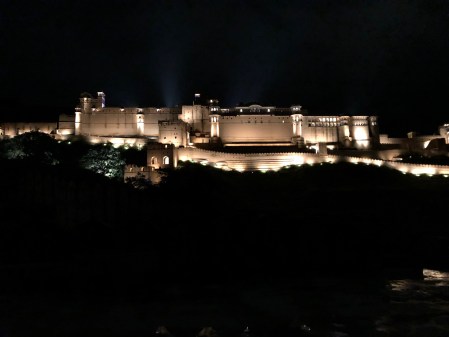
We spent the evening at the Amber Fort light and sound show.  The hour long performance gave a detailed history of the royal fort through narration, lights, and song.  The Amber Fort sits at the top of a hill, with a view of the city below.  With the mountain breeze sending a chill down your spine, it was a refreshing night to a long, tiresome, and hot week in New Delhi.  

Picture6

Amber Fort lit up at night

And to end the weekend, we spent Sunday morning at two historical sites including Jantar Mantar and the City Palace.  Jantar Mantar is a culmination of thousand year old sun dials that are able to tell the accurate calendar day and time of day based on the light from the “universe’s goddesses” — better known as the sun and the moon.  The City Palace constituted incredibly detailed buildings that showcased textiles, a royal and political meeting space, and chandeliers triple my size.  I appreciated the time we were given to experience a different part of India.  

PICTURE 7, 8, 9: The above three pictures depict the City Palace, a structure with exquisite detailing and architecture.


Bryan in Taipei: Pre-Departure & The Calm Before the Storm

August 31, 2018

To be clear, this title isn’t exactly accurate given how hectic my last few days in the U.S. were, but I thought it would be fitting since it’s rainy season in Taiwan right now.

My name’s Bryan, I’m a History and Chinese Studies double major from Philadelphia, PA. This Fall will be my 3rd abroad experience in East Asia since coming to UR, following two summers of intensive language study with China Studies Institute in Beijing in 2017 and with State Department’s Critical Language Scholarship program in Dalian this past summer. After some careful consideration, I chose the Taipei program for a number of reasons, the most notable being my geopolitical interest in the region as well as the relative independence the program offers. I’m very excited to see how this semester unfolds.

UN_Building_View

View of the Empire State Building from the United Nations Headquarters in New York.

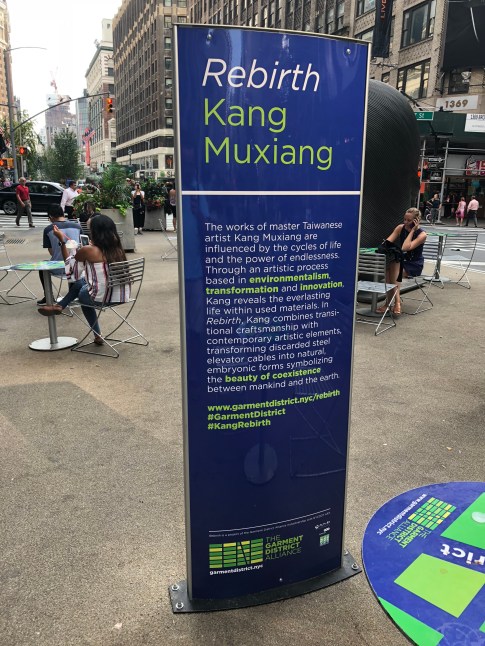
A word of advice to future study abroad applicants: apply for the visa as soon as possible, and make sure to read all of the details closely. I mailed in my visa application in August after returning from two months in China, and I almost didn’t receive it in time. It turns out the office was understaffed and the application volumes were higher than usual. I had to go to the consulate in New York and spent the whole day getting it, but on the bright side I got to visit the United Nations headquarters there! This was a really great experience that got me even more excited to go abroad and learn more about the island of Taiwan and its fascinating history and fusion of cultures. Also, I happened to see an exhibit in Times Square by Taiwanese artist Kang Muxiang, so I recommend checking that out and learning more.

Taiwan_Artist_Exhibit

Instead of being partial to a single work, I decided to show the plaque that explains the exhibit and its intentions.

Looking forward to sharing more!

Bryan In Taipei


Ella in Buenos Aires: Family in Town!

June 27, 2018

ba (MC44MzY2NjcwMA)

This past week has been crazy busy for me since it was finals week, the beginning of the World Cup, and my family came down to visit! Obviously, I hadn’t seen my parents or brothers for the four months that I have been down in South America, which was really hard for me. I was so happy to see them and felt so lucky that they were all able to make the trip down. We had such a good time together.

cemetery

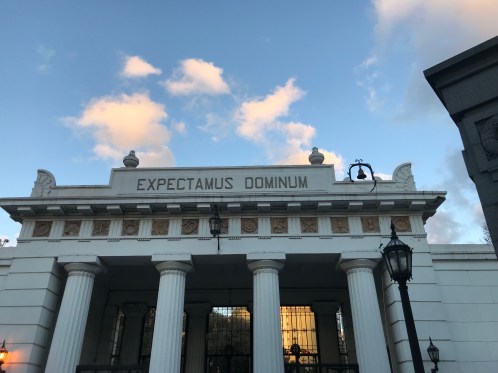
We did so many activities, like a tour of the Recoleta Cemetery! I had walked through the cemetery tons of times but had never done and actual tour. I learned so much about all the different mausoleums within the cemetery. Did you know that real estate companies buy the mausoleums from families that don’t want to maintain them anymore, and sell them to other families who hope to obtain a single place where they can bury all their loved ones? It was so interesting to learn about and observe the tombs of some of Argentina’s most important people. The cemetery is home to many Argentine writers, scientists, military leaders, sports figures, presidents, and politicians, one of the most famous being Eva Perón.

Processed with VSCO with c1 preset

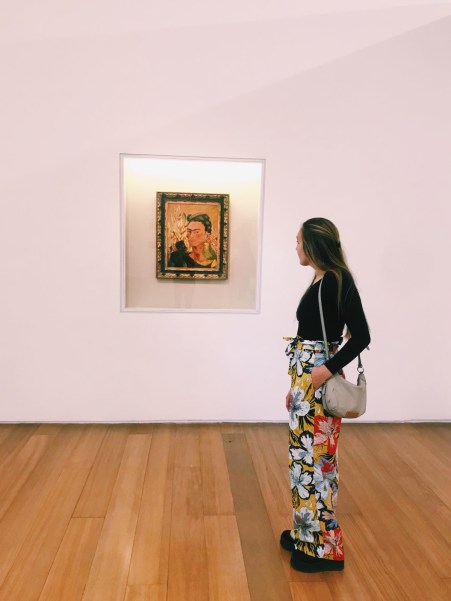
We also took a visit to the MALBA, one of my favorite museums in Buenos Aires. Here’s me observing a self portrait of Frida Kahlo with a monkey featured in the museum.

Processed with VSCO with c1 preset

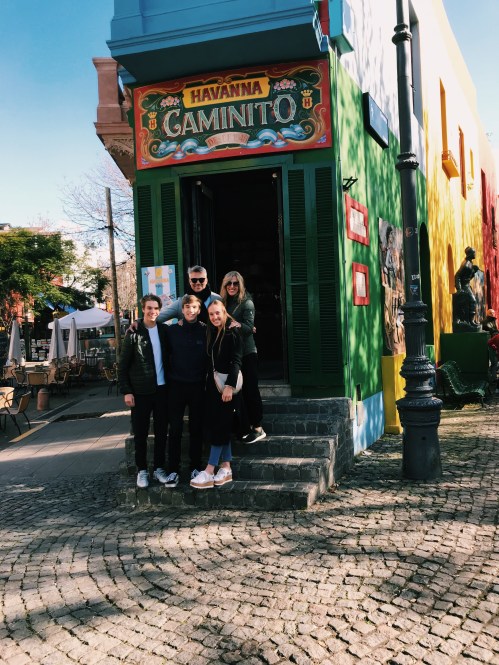
Here’s the whole fam at caminito in La Boca neighborhood! My brothers love soccer and were so excited to see the famous La Bombonera Stadium where the Boca Juniors club plays.

Processed with VSCO with c1 preset

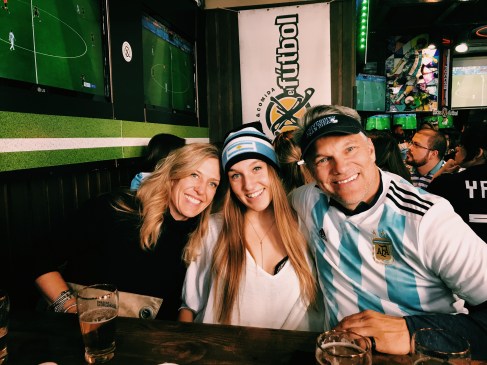
Finally, we were lucky enough to snag seats at a restaurant to watch la Selección (the Argentine National Futbol Team) play in their first two games in the World Cup! I feel like my family is just as excited as the rest of the country that Argentina is moving on to the round of sixteen starting this weekend!

Chau for now!

Ella


Ella in Buenos Aires: A Weekend in Salta

June 25, 2018

Hello!

Processed with VSCO with c1 preset

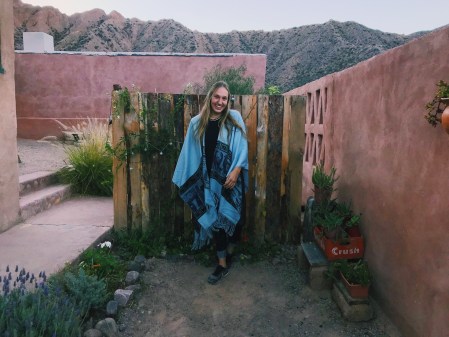
Things have been getting kind of crazy here since finals are coming up! This week I wanted to write about my amazing trip to the provinces of Salta and Jujuy, Argentina. I went with four of my good friends that I met here in Buenos Aires at the Universidad Católica Argentina.

Processed with VSCO with c1 preset

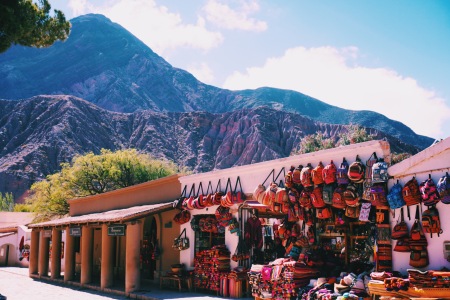
First we traveled to the cities of Humahuaca and Tilcara, which were absolutely incredible. The mountains were breathtaking.

Processed with VSCO with c1 preset

Next, we went to Purmamarca, and to the Salinas Grandes, or salt flats, which went on as far as the eye could see. We learned that the government harvests the salt to sell! I had never seen anything like it in my life. We thought our car looked cool against the barren landscape.

Processed with VSCO with c1 preset

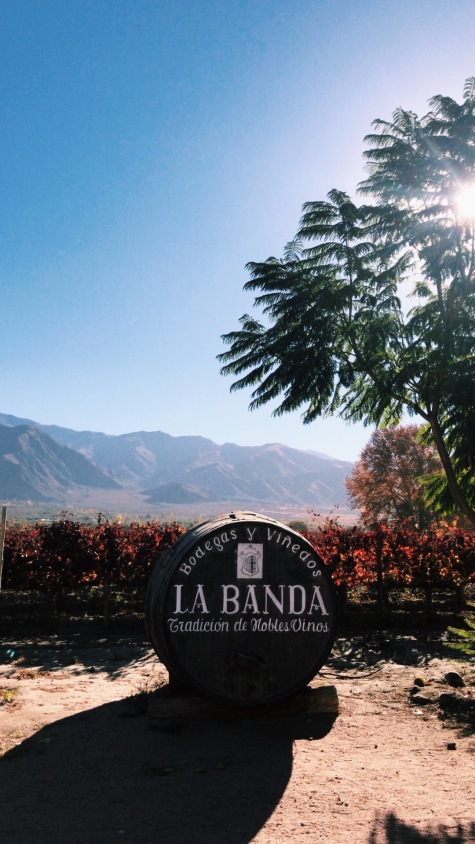
Last, we went to the city of Cafayate, which is kind of off the beaten path. None of our friends had been there before, so we weren’t sure exactly what to expect but we ended up having such a great time. The bodegas weren’t all open since it is the low season in terms of tourism, but the ones that we found were so cute and nice. I think this is my favorite city I’ve been to in Argentina outside of Buenos Aires. I can’t tell you how calm and relaxing it was! Also, the people we met were so nice and friendly.

Processed with VSCO with c1 preset

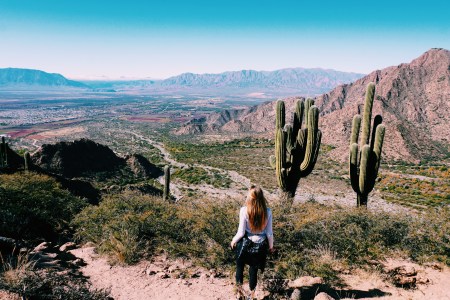
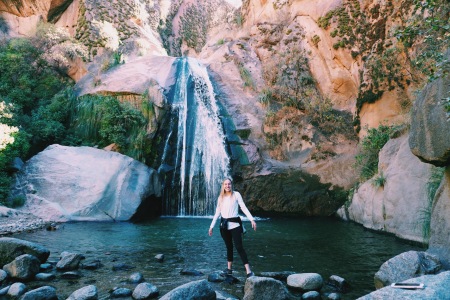
The whole trip was an incredible experience, but the highlight was definitely the hike that we went on in Cafayate. Our guide took us all the way to the top of steep mountain, where we could see the whole city below us. On our way up we saw five different waterfalls, and a whole herd of wild mountain goats!

Processed with VSCO with c1 preset

Now that I’m back in BA, I really have to hit the books this week so that I’m ready for finals!

Chau for now!

Ella


Justine in Russia: My Friend, My Host Mom

June 18, 2018

The hardest part about leaving Russia was not leaving the place itself, but leaving the people. This includes the people in my program, the Russian students I met at the university, and last but not least, my host mom. One of the main reasons I had such a wonderful time in Russia was because of how my host mom treated me.

I remember the first time I met her, I was extremely nervous because I thought I was being rude. However, I really did not have much to say. I only knew about twenty verbs and none of them I could use to describe me. I also had a two month long break from my Russian (only a semester), so I was extremely terrified. I remember sitting in this taxicab with my host mom and she could obviously feel my nerves. She would tell me to look out the window and talk about how beautiful certain streets/monuments were. When we finally got to the apartment, I was really tired and still stressed because I hadn’t spoken many words to her. However, she was extremely kind and accommodating the whole time. Even though I share a room with my grandma at home, sharing a flat with an older person still worried me.

What if I made too much noise after 9pm? What if I came home late too often? I remember over our first dinner, she was speaking 90% of the time and I did not really talk much (only because I really could not understand most of the things she was saying). I managed to pick up a few things about her family, but I forgot a lot of important details. Towards the end of the program, I asked her things like what she used to work as, etc. As she retold me all of this information, it hit me that she did tell me all of this information, but my vocabulary was not big enough for me to understand half the words she was saying.

e1

In my second week, there was a power out in our apartment complex for about three hours, but we still managed to have dinner in the dark.


My host mom always treated me like I was one of her own, not just a student living in her house. Every time she made a meal, it was for us to share and we always talked about our day. She would divide our food in half, but always snuck an extra scoop of rice or extra piece of cutlet. I always felt bad whenever I called home and let her know that I would not be home for dinner, but most of the time I just went home and stuffed myself anyway because I did not have the heart to call her thirty minutes earlier. Every morning, I would tell her when I was leaving and she would either tell me I was overdressed or underdressed or that I forgot to bring an umbrella. She asked me if I was wearing a new shirt or if she has just never seen me wear it before. She asked me about my friends and about my plans everyday. She wanted me to have plans. She was happy whenever I stayed out late because “I am young and I should”. On her birthday, she hosted a dinner party with her friends and I. She was young at heart, even though she had just turned eighty one years old. We lived on a fifth floor walk-up. She walks everywhere and goes skiing every Saturday in winter and early spring. She told me she’s been to Brazil eight times. She has been to many places. She talks about her daughters and her grandchildren.

e2

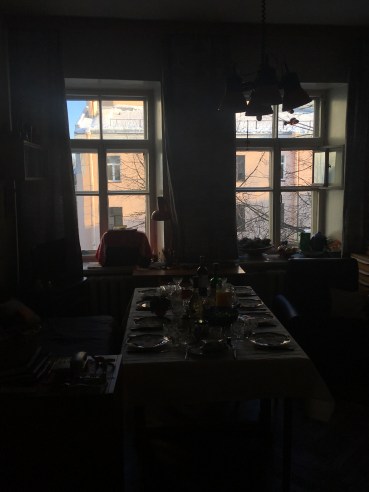
The dinner table (that she set up in her bedroom since the kitchen only had room for approximately four people).

Sometimes I came home from school late and she would have left a note for me telling me what she had prepared for me to reheat. I would always wait for her to come home before I went to sleep (once that was around 1:10am, but it was a Saturday). She always supported my decisions and never questioned what I did. When I was sick for that one week in March, I told her I did not want to go back to the doctor anymore and she did not push me to do anything crazy besides sleep. I told her I was going to Kazakhstan and Ukraine for travel week and she told me they were great places to go. I told her I was going to hop on the midnight bus to Helsinki and come back eighteen hours later because I did not want to pay for accommodation. However, all she did was laugh at me and said that she would look forward to seeing me home Sunday morning at 5am (she was asleep when I came back, but woke me up at 9am for breakfast).

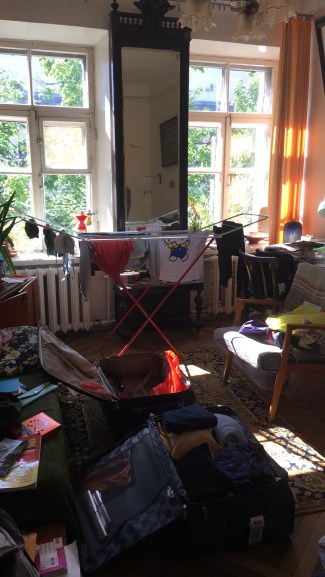
I remember when I was packing my stuff up the day before I had to go, she would pass by my room and laugh at my lack of progress. I usually am a fast packer, but knowing this was the end of my study abroad made it a lot harder. I know I will return to Saint Petersburg to visit her, but I would no longer be the person living in that room. I no longer had the keys to her apartment. There would be someone else living there. I know she will let me in and make me tea like she always did. She will yell at me because I would have brought her a souvenir from somewhere (I always brought her back something whenever I left Petersburg). The day I left Petersburg, she was going to fly to Greece that same night. I assume she has returned, but who knows, she could be anywhere right now. I am currently writing a letter to her, but I haven’t finished yet.

e3

Packing on the day before my flight.

I remember us hugging goodbye as my Uber driver patiently waited for us to say our last words to each other. When I finally got into the car, my street was full of traffic, so my host mom stood by the car for another two minutes. My driver was a kind Uzbek man from Samarkand. He asked my host mom if she wanted to come to the airport too and she smiled and said that I would be alright. When we finally drove away, my driver could obviously tell that I was sad and started asking me questions. He asked whether she was my grandmother and I smiled and told him that she was my host mother. I spent the rest of the ride telling him all about her and how much I looked forward to coming back here (might have shed a few tears along the way).

As I sign off for the last time, I can’t say до следующего раза (until next time) anymore. The last thing I said to my host mom was увидимся! (I will see you) and I hope this statement holds true, wherever my life takes me next, to Saint Petersburg, to my favorite pasta bar, to the Central Asian market, to the 24-hour flower shops, to the 181 bus to Smolny, to Russia, to my host mom.

e4

Людмила.


.Увидимся. 


Justine G.

no longer Жюстин, but Жустин (Джастин, on official documents).


Ella in Buenos Aires: Packing up!

February 14, 2018

Hello everyone! I’m Ella, and I’m from Minneapolis, Minnesota. I’m an International Studies major and I am also on the soccer team at UR! I’m super excited to leave for my semester abroad in Argentina, but I’m going to miss UR and my teammates so much. I chose to study at UCA in Buenos Aires because wanted to experience a new culture and be completely immersed in the Spanish language. A few of my goals are to improve my Spanish-speaking skills as well as play a lot of soccer while I am there!

Processed with VSCO with c1 preset

I’ve just started to pack up today, here’s a photo of a few of my essentials for my trip!


Processed with VSCO with c1 preset

I thought it would be nice to get my host mom a little gift to thank her for having me for a whole six months. I hope she likes it!


I can’t wait to leave this Monday. I’ve just gotten all the information for the pre-semester Spanish course that I am taking during the month of February before the semester starts. I’m so excited to meet all the other international students doing the same program and to start exploring the city.

See you next week!

Ella


Meghann in Argentina: Costumbres de Buenos Aires

August 25, 2017

It is crazy to realize that I have now been here for almost eight weeks. Time has flown by, but it still feels like I have done so much. At this point I think that I have really adapted to Buenos Aires—I still remember an early conversation I had with my host mom about how different some parts of life in Argentina were to me when I first arrived. We were talking about how time functions here in comparison to the U.S. I told her that for me, eating dinner at 10 or 10:30pm is really late, as a common time for American families is around 6 or 7pm. To this she simply replied, “vas a acostumbrar,” or “you will adjust.” She was right—I definitely have adjusted to life in Buenos Aires, but after almost two months here, I have found that there are a few things I don’t think I will get used to:


  1. Time. The initial surprise I expressed to my host mom about how late everything is here has not changed. Eating dinner at 10:30pm, los boliches (clubs) getting crowded at 3am, and arriving home at 7 or 8am is not strange or uncommon. This schedule often makes me miss meeting friends at dhall to have dinner at 6pm…


  1. Jamón (ham). Argentines put ham in/on everything. I went from rarely eating it at all in the U.S. to having it nearly every day here. This may seem like a small detail, but when you find ham in your salad on several occasions, you notice.


MegArg_6.1

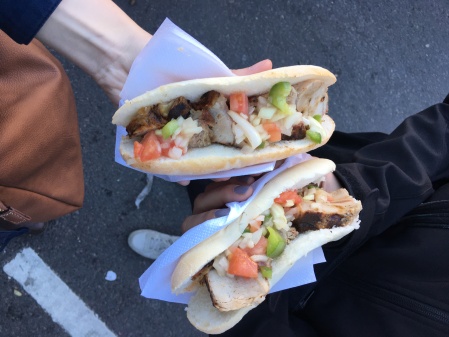
Argentina is well known for plenty of other kinds of meat. In addition to ham, I have also been able to try really great steak, such as these steak sandwiches we bought at the national asado competition that was held in Buenos Aires this past weekend.


  1. Accents. I was warned that Argentines speak with a fairly strong, particular accent. They pronounce “ll” as “sh” instead of “y,” which is what is taught in school/how basically everyone from other Spanish-speaking countries would pronounce this sound. So where I would say “yo quiero que llueva” (I want it to rain), Argentines would use a different pronunciation and say “sho quiero que shhhueva.” Although not everyone has such a noticeable accent, it is oftentimes hard for me to understand those who do.


  1. Plataformas. These are a type of platform shoe that every woman here seems to wear—while some could pass as normal footwear in the U.S., other pairs are ridiculously tall and I often find myself doing a double take as I watch some women wobble across the cobblestone streets or to their seats on moving busses.


MegArg_6.2

These don’t look too fun to walk around the city in.


Although I may not “get used” to these (and many other) parts of life in Buenos Aires, I appreciate them all the same. Differences in routine, custom and culture is a huge part of what makes being abroad so special (and as cliché as that sounds, it is completely true).


Meghann in Argentina: Trip to Córdoba

July 31, 2017

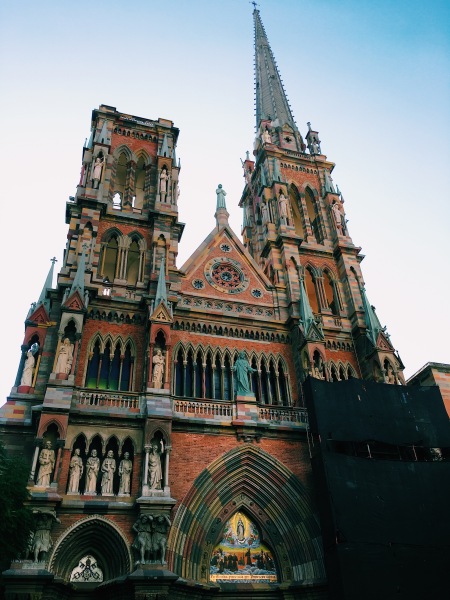
Due to the fact that we have almost two weeks of down time between the end of my three-week Spanish pre-semester course and the first day of orientation, some friends and I decided to use this time to our advantage and take our first trip outside of Buenos Aires. We opted for Córdoba, a city located about 10 hours northwest of Buenos Aires by bus (this distance is considered short by Argentine standards—until I looked at the length of bus trips, I didn’t fully realize just how massive this country is!). Córdoba is home to beautiful Spanish architecture and amazing Jesuit churches, and is the second biggest city in Argentina. Don’t let that size fool you, though—Buenos Aires still has about 12 million more people, so in comparison Córdoba seemed tiny.


It was refreshing to get a short break from the hustle and bustle of Buenos Aires. We spent the majority of our four days exploring the city, walking through the cobblestone streets and taking in the colonial architecture. We even stumbled upon a baptism in La Catedral (the oldest church in continuous service in the country) and a mass in a beautiful Jesuit church—although I couldn’t quite keep up with religious services in Spanish, it was still a cool experience to witness them.


Processed with VSCO with c1 preset

The Jesuit church where we sat through part of a mass on Sunday afternoon.


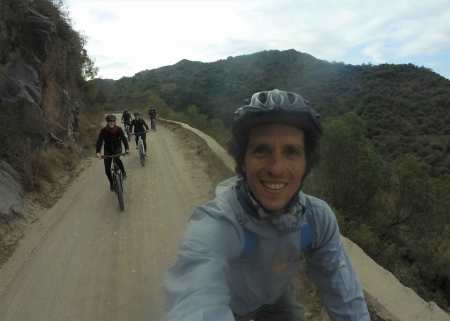
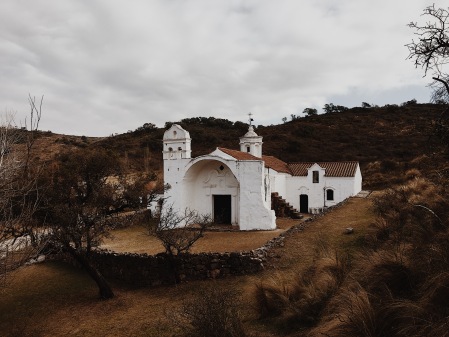
By far the best part of the whole trip, however, was a daylong biking tour through the Sierra mountain range. Our awesome guide Juan (who we discovered on TripAdvisor and were drawn to due to glowing reviews) drove us about an hour outside of the city to a small pueblo where we began the tour. Although parts of the trip were fairly grueling for most of us (Juan was the only one who had no trouble zipping up the steep hills), the views of the mountains and the historical sites we stopped at were well worth the workout. My favorite stop was a small Jesuit church in the hills of Candonga, an area where travelers coming by mule from Buenos Aires to the north of the country would stop after weeks of travel and switch out their mules—Juan told us that in some older and more colloquial form of Spanish, Candonga translates to “tired mule.”


MegArg_4.3

Juan very much enjoyed taking GoPro pictures of us throughout the trip.


Processed with VSCO with m5 preset

The one-roomed Jesuit church perched quietly in the Sierras.


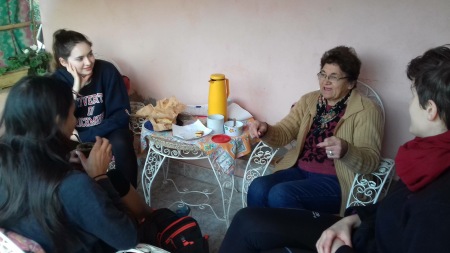
Our day ended back in the small pueblo that we began in. Juan invited us onto the porch of an old couple that he got to know because he biked by their home so often; he told us that their friendly “holas” quickly turned to friendship, and now every one of his biking tours ends with the couple welcoming strangers into their home for mate (a classic Argentine tea that is shared by passing the gourd it is served in around in a circle) and pastries. If this isn’t an example of how friendly and gracious Argentine people are, I don’t know what is. Elsa, the cute old woman, served us delicious cookies and prepared mate for us as she chattered on about how much her pueblo has grown and changed since her childhood.


MegArg_4.4

Talking with Elsa on her porch.


Overall, our trip to Córdoba was very refreshing; the small-city feel and our interactions with such kind people like Juan and Elsa made me excited to see what other cities in Argentina have to offer. That being said, I am excited to be back in Buenos Aires and for university to finally start!