Austen in Ireland: The Deutschland Expedition

May 29, 2014

After finishing up the last week of classes and final essays, I went to Germany for five days with a friend since we had a “revision week” between the final week of classes and final exams.  My friend and I decided to visit Berlin and Munich, the first and third largest cities in Germany.  Our trip began with my flight to Munich and meeting my friend at the Munich airport.  It was surreal that the airport had a tennis court and an outside area in between the two terminals.

From the airport, we decided to explore, marveling at the magnificent Bavarian architecture around the city of Munich.  We went in the Residenz, the former royal palace of the Bavarian monarchs.  It was a very regal.
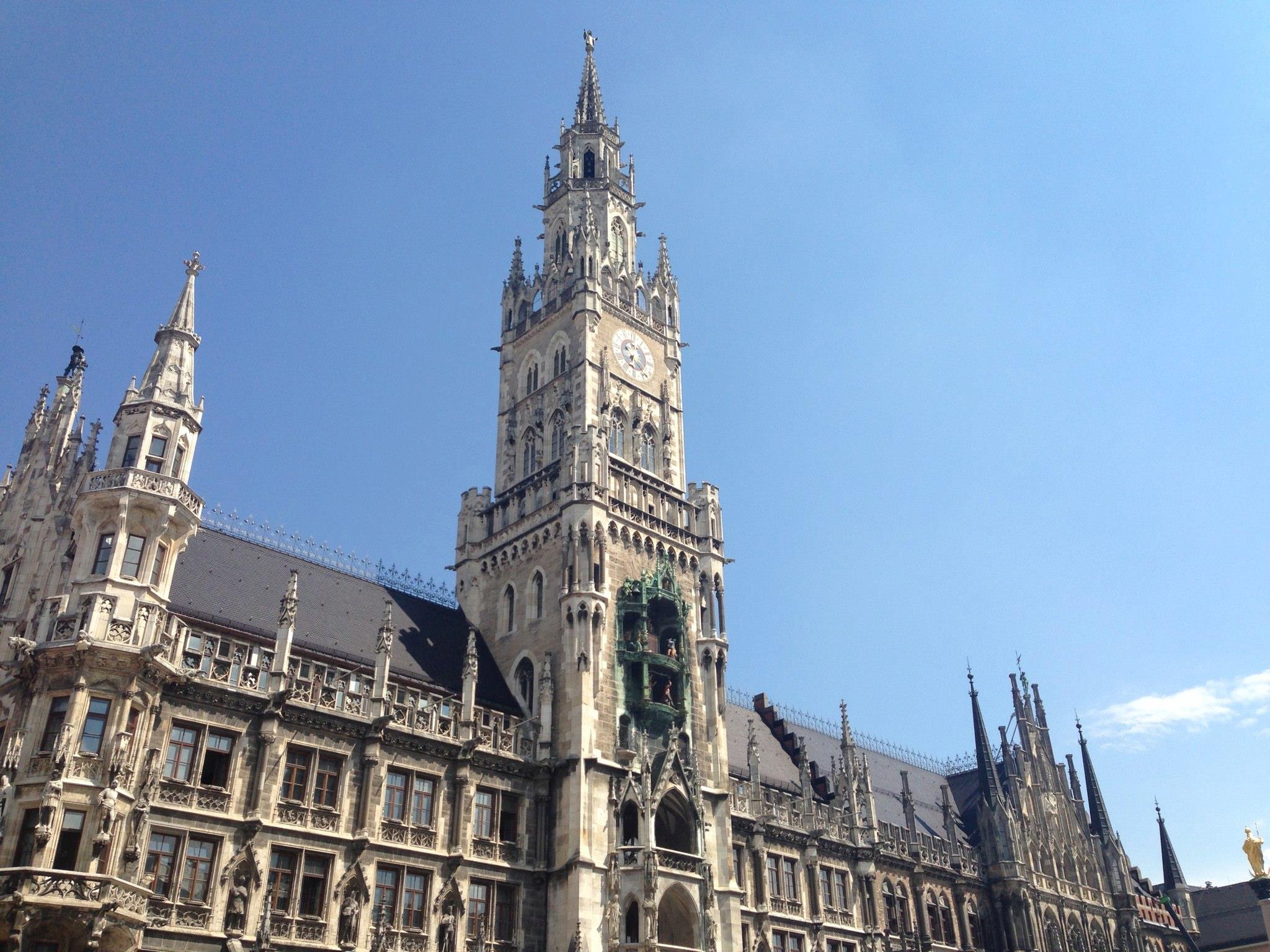
Marienplatz, central Munich.

Marienplatz, central Munich.

We also saw the English gardens, a large park in the city center.  It was an amazing sight seeing everyone enjoying their time on a weekday and not worrying about work.  We also experienced a beer garden, one of the must-sees when going to Munich, which was a fantastic and truly authentic German experience, including the food and beverages.

The next day, we took a day trip outside of Munich to visit the Bavarian castles of Linderhof and Neuschwanstein.  We first visited Linderhof, which was modeled after the famous Versailles chateau.  It had a similar hall of mirrors and the gardens around it were fantastic.  The castle was in such a picturesque setting in the mountains.  Our second stop was the very Bavarian village of Oberammergau.

The main attraction was Neuschwanstein Castle, one of the most famous castles in the world. Ludwig II of Bavaria commissioned the palace as a retreat.  The setting of the castle is absolutely breathtaking.  The climb is thirty minutes up a steep hill, but it was very much worth it.  The castle was unlike anything I had seen before and the views of not only the castle but the landscape were magnificent.  The bridge overlooking the castle from above was such a great spot to see everything.
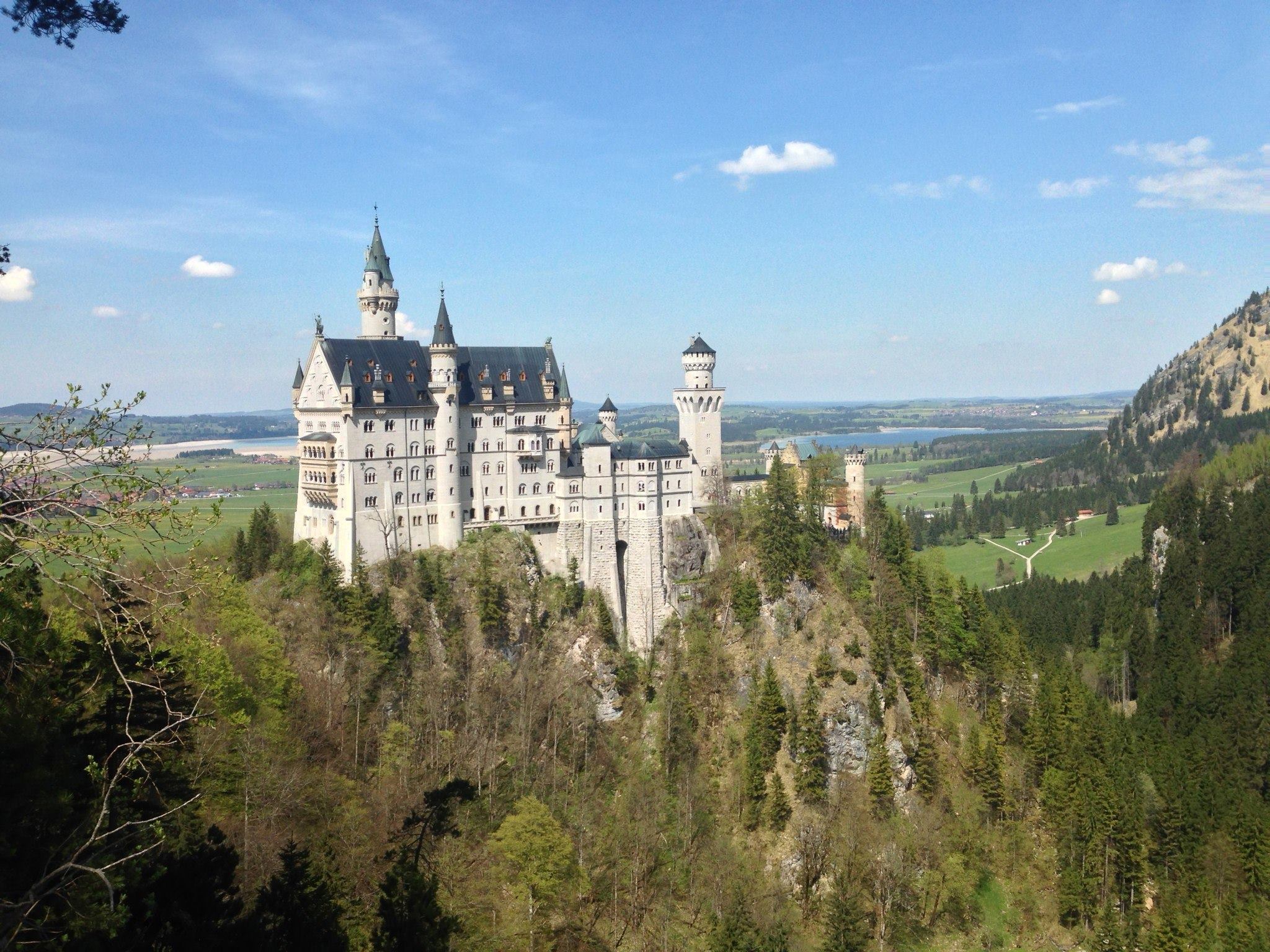
Breathtaking scenery of Neuschwanstein castle and the Bavarian landscape.

Breathtaking scenery of Neuschwanstein castle and the Bavarian landscape.

The next day we took a great tour through Munich and we were able to learn a lot more about the important history of the city.  We went up to the top of a church with terrific views of the city.

Our flight to Berlin was that night and we landed around 9 pm or so.  Berlin was a completely different city and the difference was apparent immediately.  Munich was a more historic and traditional city, while Berlin had more of a professional feel to it with its large business district.

We started our Berlin stay with a great tour of the city, which stopped at many of the famous sights such as the Brandenburg Gate (the former city gate), the Jewish Memorial, and the Berlin Wall to name a few.  Also, we explored Museum Island (a very nice area on the river with many museums) and the Berlin Cathedral.  The next day we decided to visit the concentration camp of Sachsenhausen, a concentration camp near Berlin used mainly for political prisoners.  It was a very eye-opening experience being able to see this camp, the living quarters, and even the extermination area.

Brandenburg Gate, Berlin.

Brandenburg Gate, Berlin.

On our last day in Berlin we decided to go to the top of the TV tower, which had a height of 368 meters.  The views were great out onto the city and a fitting way to end this epic expedition.  This journey was a neat adventure and also my farthest trip from Ireland.  It was great going to the homeland of my relatives as I have a large percentage of German ancestry.


Kimberlee in Mongolia: Blending In

April 17, 2014

My biggest surprise since coming to Mongolia is this: many Mongolian people assume that I’m Mongolian. I find this surprising because most Asians can immediately tell that I’m not full Asian, and not a local in their country. Besides the shape and look of my face, I think that it’s fairly obvious with the way I walk, dress, and conduct myself. When I’m in South Korea and Japan, people always speak to me in English and stare at me because I look like a foreigner.


So naturally, I expected similar treatment from local Mongolians. But in the month that I’ve been here, I’ve had less stares and more random conversations with Mongolians. I’ve had people on buses, sidewalks, and stores try and strike up a conversation with me in Mongolian. The kicker is that even when I tell them that I can’t speak Mongolian well, they keep chattering away as if I’m deceiving them by “pretending” to be a foreigner! This unexpected finding has turned out to be a great personal learning experience- both with understanding my position in the world as a biracial person, and also with understanding how Mongolians expect other ethnicities to look like.


What I find most interesting is that Mongolians are always boasting that they can immediately tell if a person is not a Mongolian. I’ve asked at least two-dozen Mongolians if they can spot a Chinese, Japanese, or Korean on the street, and they always insist that they can! But when it comes to me, almost everyone is fooled. The only time that I get more stares and squints is when I wear my glasses. I’m guessing that it highlights the shape of my eyes or changes the shape of my face. Either way, it’s been an interesting experiment to see when people treat me as a foreigner or as a local.


I think that the main reason that people assume I’m Mongolian is because Mongolians are incredibly diverse in the way they look. I realize that all Asians are diverse in different ways, but Mongolians are at a whole different level. We’ve had Mongolian speakers on our program that could pass as Middle Eastern or Southeast Asian. There have been some that I assumed were also foreigners until they told us that they could only speak Mongolian and needed a translator.


Many Mongolians have told me that people are so diverse because of the multiple tribes that have historically existed in Mongolia. In fact, Mongolian and Turkish cultures have striking similarities because they coexisted in Mongolian territory for a long time. Although most Turkish tribes made their way to modern day Turkey, there were some that stayed. This has always been the explanation for the existence of Mongolian people with green, hazel, and light brown eyes who are otherwise “Mongolian”. The existence of these more Caucasian features explains why I can pass for Mongolian. Additionally, there is a large Kazakh minority that exists in Mongolia, diversifying the nation even more.


Even though I still find it strange to blend in, it’s been mostly positive. I feel safer walking in the streets because hardly anyone looks at me twice, or thinks that I’m rich. It’s great not to have people always staring at me or studying my face to try and box me in with a specific ethnicity. Also, an increasing number of people seem to distrust and dislike foreigners because they’re associated with the mining companies, and it’s nice to be separated from that stigma.


The only negative that I can say is that I feel pressure to adhere to the cultural norms that I haven’t quite figured out yet! I got a lot of strange looks when I ate in the streets until I finally figured out that it’s rude to eat while walking. Once I wrote something important on my hand, and someone yelled at me. I found out later that writing on the body is culturally inappropriate because they write prayers and messages on the bodies of the deceased. But at the end of the day, I get to understand the culture and embody it in a unique way. It makes me more observant and aware of how other Mongolians act, which helps me become even more engaged with the culture. Overall, I find that it enriches me in a way that I never would have expected when I first came here.

DSCN0972

My host nephew’s hair color is a good example of the variation in Mongolian genes


Kimberlee in Mongolia: A Sunny Saturday

March 31, 2014

After almost a week separated from my host family, it was so nice to finally have the chance to spend time with them again. Who knew that after two weeks I’d be so attached to them? What an incredible feeling to have already formed strong bonds.

I began my day with a short trip to a conservation center/museum with Tuugi’s 7th grade class. We basically watched a 45-minute video on the deterioration of Mongolia’s environment and later wandered around many stuffed Mongolian animals. Although the tour was in Mongolian, most of the signs were also in English. That made it a lot easier for me to be engaged with the museum’s artifacts, and it was interesting to learn about the endangered species unique to Mongolia. The center was entirely funded by the Japanese government, so everything inside was covered in “From the People of Japan” stickers. Fun Fact: Japan is Mongolia’s biggest foreign aid provider

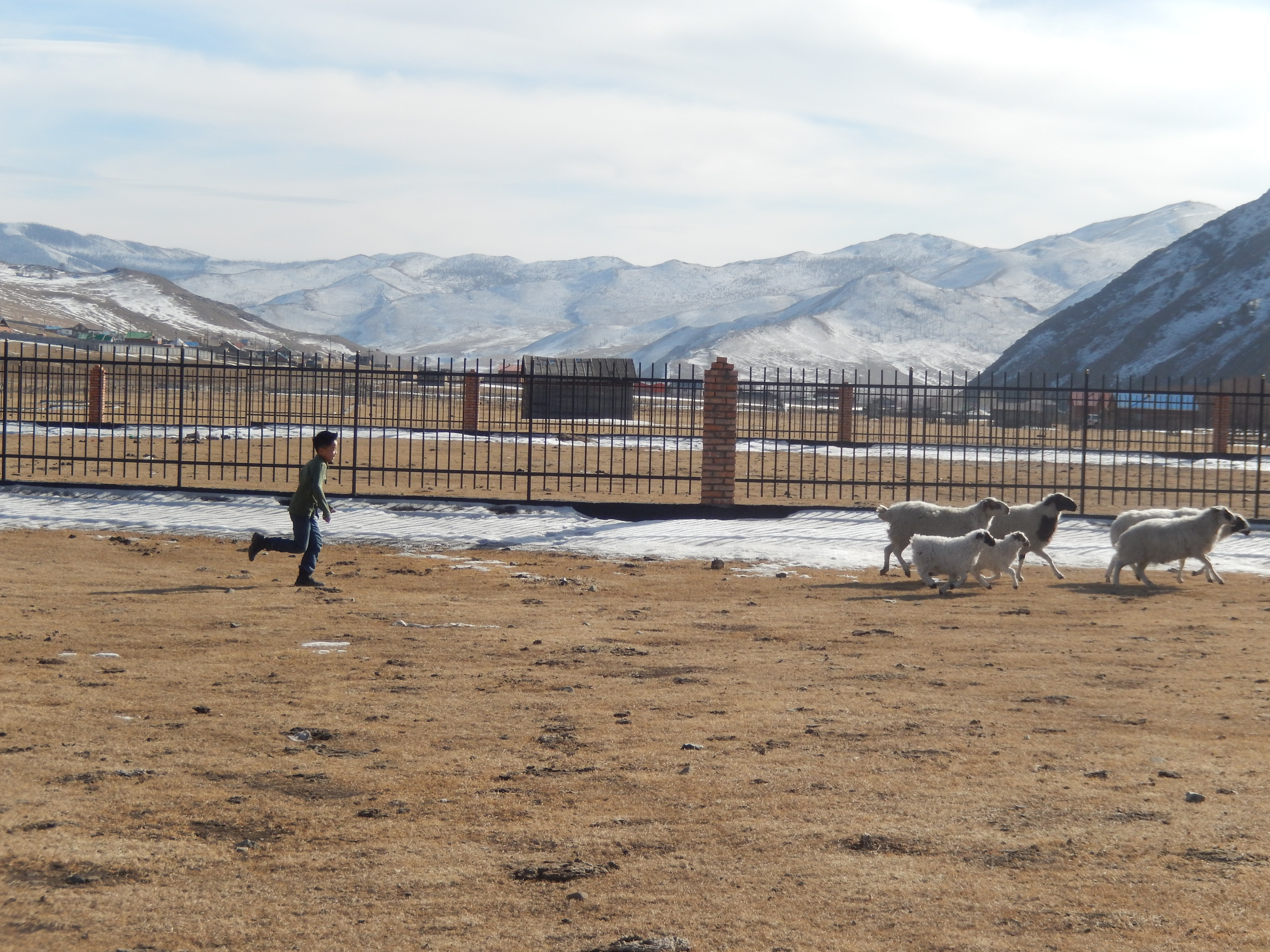
After lunch, my host family decided to visit some family members in the countryside. We drove about an hour outside of the city to a little village wedged between the mountains. It was absolutely stunning. We pulled up beside a giant herd of sheep and goats, and the kids immediately sprinted out to start chasing them.


DSCN0559

Temuujin chasing after the sheep


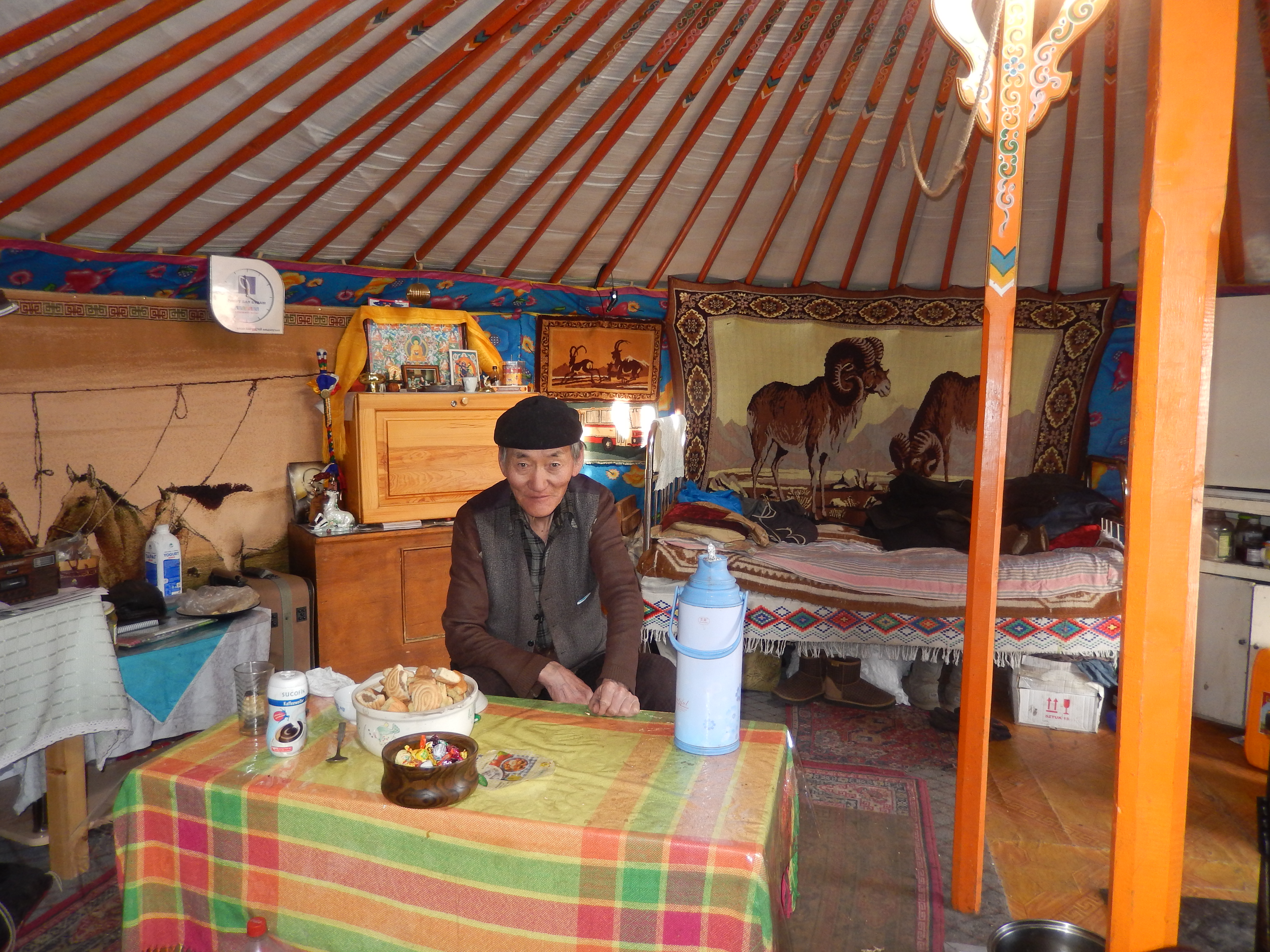
After the kids (both the human and the goat ones) became too exhausted to play anymore, we were invited into the ger for some tea and cookies. It was incredible to finally be inside of a ger. It was a lot larger, brighter, and sturdier than I imagined. There were lots of tapestries of horses and rams, and there was even a TV run by solar panels. All I could think about was what it must be like to wake up every morning in a ger to an amazing view outside your door. I guess I’ll be finding out what it’s like soon.


DSCN0594

The view from inside the ger.


It was also there that I finally figured out that we were visiting Grandma’s late husband’s sister. Because we had stopped by without calling (which seems to be a typical practice), we had just missed her driving into the city. Instead, we were hosted and shown around by her husband. I was able to introduce myself in Mongolian, but I missed hearing his name in his response. He was very hospitable, and gave us a mini-tour of their barn and animals.

Most of the animals were scared of humans, but there was this one goat in particular that kept following us around. He would always be nudging my arm while I was trying to pet another animal or take a picture. He was the only “billy” (male goat) of the herd, and was the father of all the baby goats running around, so I called him “Papa Goat”.


DSCN0579

Papa Goat and the traditional Mongolian ger

We started to drive home just as the sun was setting, and it was a beautiful backdrop to what was truly a wonderful day. Tuugi, Temuujin, and Tulga all passed out on top of me in the backseat of the car, and it was nice to have some quiet time for reflection after a busy day. Looking back, we technically hadn’t done a lot, but it was a fun and fulfilling day. I count myself very lucky to have a host family that is always looking out for me and introducing me to new things. Simply put, it was the kind of day where I knew that I had made the right choice in choosing Mongolia.


Kimberlee in Mongolia: Excursion to Erdenet

March 28, 2014

Our group officially began our first long excursion outside of Ulaanbaatar to a small city called Erdenet. It’s the third largest city in Mongolia, and is located northwest of the capital. We mainly traveled here to study the copper mines, local factories, and the ecological issues facing the city.


Traveling to Erdenet was an adventure in itself. We took an overnight train from Ulaanbaatar to Erdenet, and I got to experience a sleeping cabin in a train for the first time. It was crazy that we were able to fit 4 people in that tiny cabin! I’d estimate that it was around 5-6 feet across. There were 4 cots and a top shelf for our backpacks. I slept on one of the top bunks, and I was terrified that I would roll off during a sharp turn. Thankfully, this didn’t happen.


We left Ulaanbaatar around 8pm, and arrived in Erdenet at 6:30am. After breakfast at the hotel, our program activities immediately started. It was difficult to not doze off with only a couple of solid hours of sleep, but somehow we managed. It was awesome to wake up in a whole new city. I noticed that there was a lot less pollution in Erdenet. Like Ulaanbaatar, I was struck by the dramatic contrast between the beautiful landscape and the rapid industrialization. Erdenet has a very interesting history because its existence is directly connected to the opening of its copper mine. Without the mine, there would be no Erdenet.


After a few lectures from local officials about the issues that Erdenet faces, we set off to the copper mine in the outskirts of the city. This mine is roughly the 10th largest producer of copper in the world, and has supported Erdenet’s (and even Mongolia’s) economy for decades. It was difficult to see the beautiful landscape destroyed, but in some ways the locals consider it a necessary evil. The existence of this mine supports the city’s economy, and gives many jobs to Mongolians. It’s a concept that I think I’ll grapple with for the entire semester. It’s even harder to have a solid opinion on it because many Mongolians we’ve met are also conflicted about the mining.


DSCN0445

The open pit copper mine in Erdenet.


Although learning about the copper mine was interesting, it was nice to have some other activities to get to know the city. Everyone talked about the mine, but the city had so much more to offer us! We hiked, visited a cashmere factory, and even met with local university students. We had our “drop-off” in Erdenet city, and were placed in the hands of the university students. My group had to research the theme of “transportation” for two hours, so we headed to the local train, bus, and taxi stations. It was awesome to explore the city with a few of its inhabitants! I can honestly say that Erdenet was both an interesting learning experience and a great opportunity to explore a different city.


DSCN0520 (1)

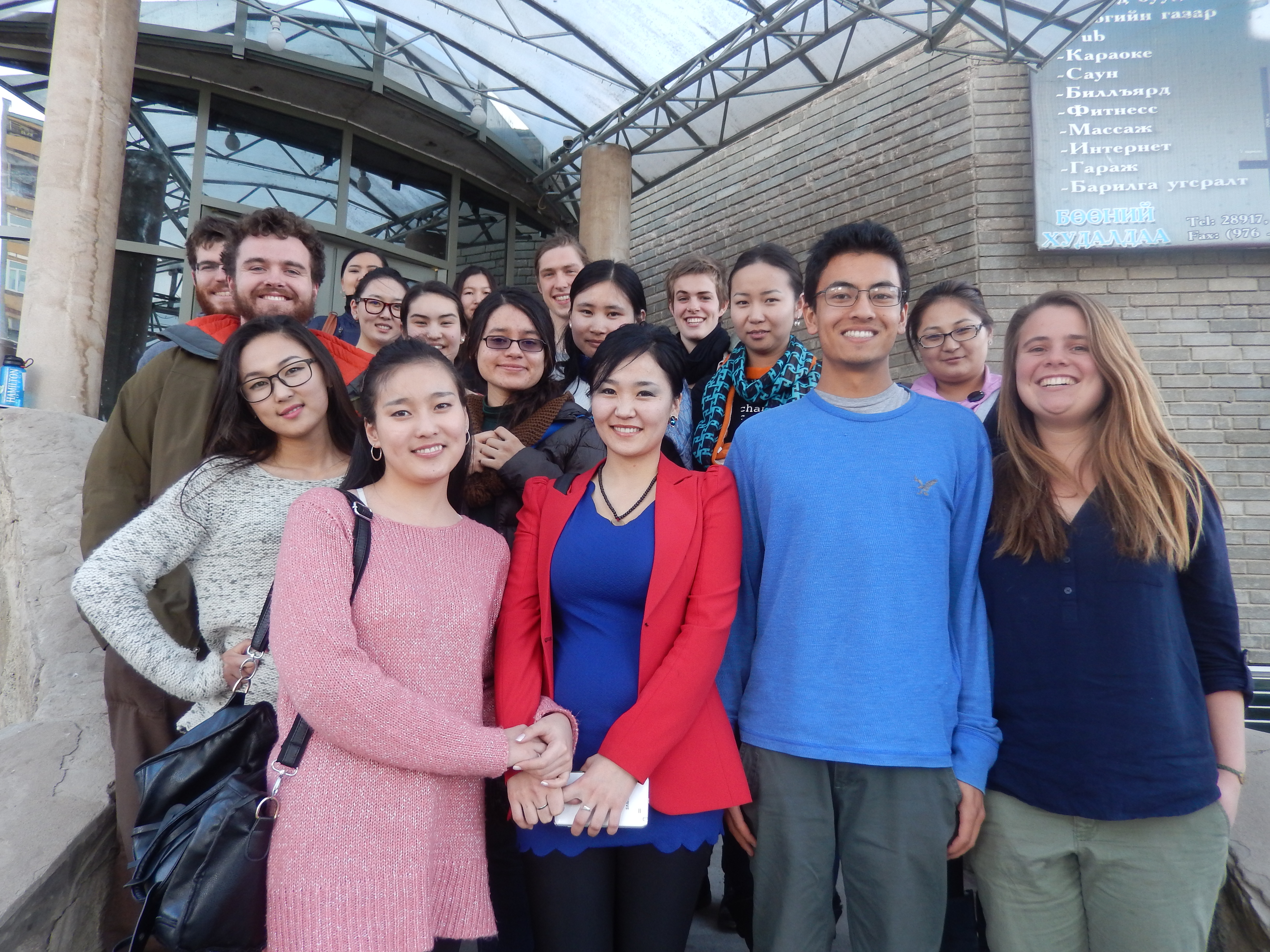
Our entire group of both SIT students and Mongolians after the drop-off.


DSCN0484

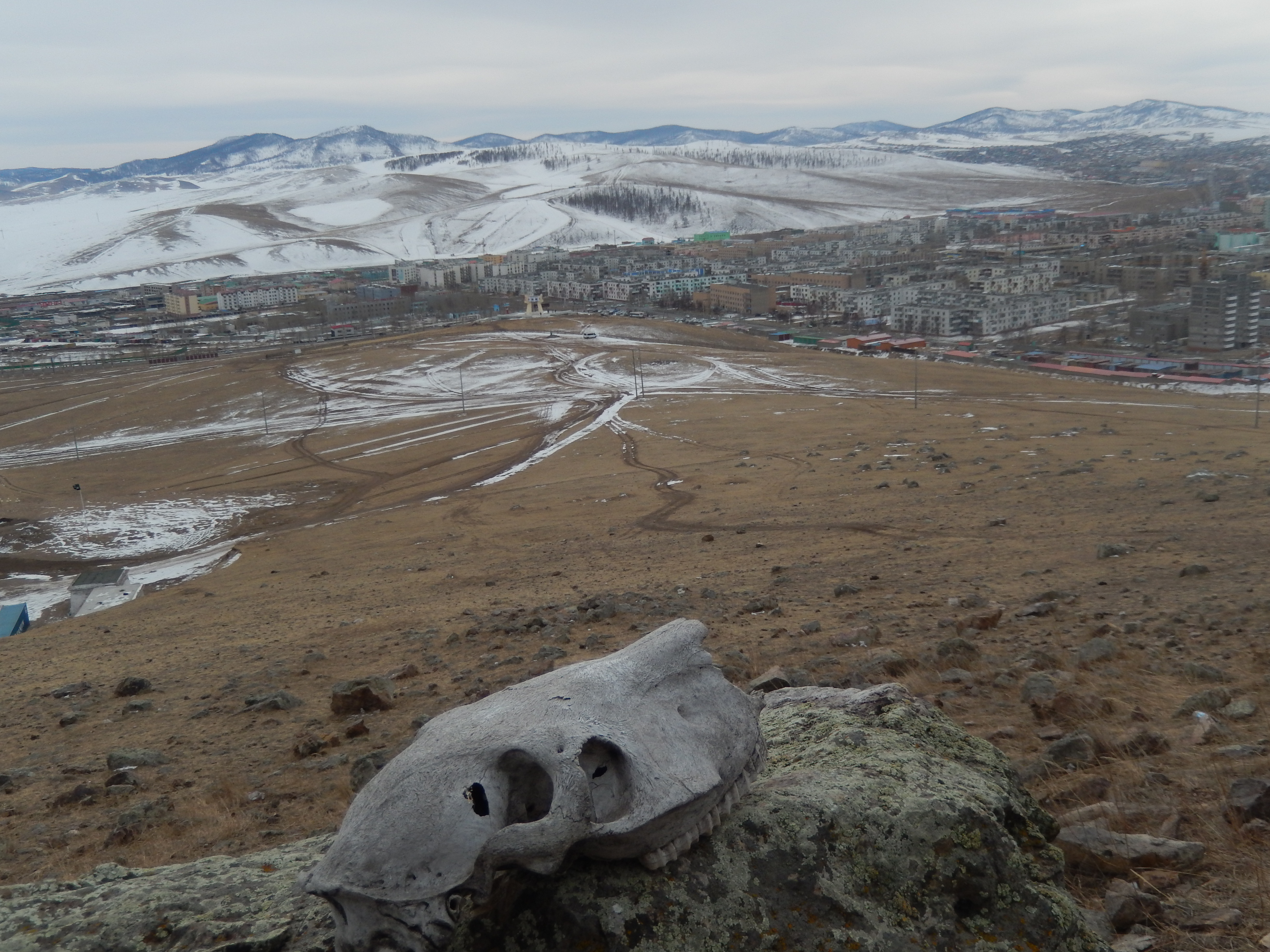
A horse skull that a student found looking over the city of Erdenet.


Austen in Ireland: France for Spring Break

March 21, 2014

So here at UCD we get two whole weeks off for spring break (or mid-term as they call it)!  We got off the weeks of March 10 and 17.  So, the first week I traveled to see my parents in southern France, as they are renting an apartment for two months in the city of Aix-en-Provence.

On Friday, I flew from Dublin to Carcassonne (a town in central France) to meet my parents and we drove three hours to visit the city of Marseille.  Here, we walked around the port and saw some beautiful areas of the city, but our main reason being there was to see my first European soccer match, Marseille vs. Nice.  Marseille’s stadium was stunning with a capacity of around 60,000.  It was probably the largest stadium I have been in.  The match was an intense one but Marseille ended up losing 1-0 to a Nice free kick in the second half.  After a long day of traveling, I got back to my parents’ apartment around midnight.

Stade Velodrome

First European soccer match! Stade Velodrome, Marseille’s stadium

On Saturday, we explored the city where my parents are staying, Aix-en-Provence.  I had been there a couple of times, but it was neat to be there as a “local” instead of a tourist and going back to an apartment instead of a hotel.  We explored the many squares and an enormous market that was going on throughout the day.  We also walked down the Cours Mirabeau, the large street in the middle of the city lined by trees.  Another noteworthy site was the gardens in the Pavillon Vendome.  For dinner, we had great Vietnamese food.

Cours Mirabeau

Cours Mirabeau, Aix-en-Provence’s tree-lined promenade

We went to the Musee Granet, the main museum in the city, on Sunday.  It had paintings by famous painters such as Cezanne and Picasso.  It had a variety of historical objects too, from art to sculptures.  The museum is in a beautiful historic building.  We ended up visiting a different building across the city that is also associated with this museum that had even more pieces of art and a great deal of Picasso paintings.

On Monday, we went to Nice, a large city right on the Mediterranean Sea.  It is an absolutely beautiful city with breathtaking views.  We walked around in the historic part of Nice (Vieux Nice) and had a great lunch in a square overlooking a church.  After lunch, we walked up to a park above the city that had amazing views of the port of Nice, sea, and historic Nice.  It was great to be able to see the whole city.  After this, we walked along the sea and the famous Promenade des Anglais before going to the Cours Saleya (a humongous market with many things from food to paintings).  We left Nice and got back to Aix-en-Provence around dinnertime.  At that time, we went to get some falafel, as falafel is one of my favorite foods!  It was a great falafel sandwich.

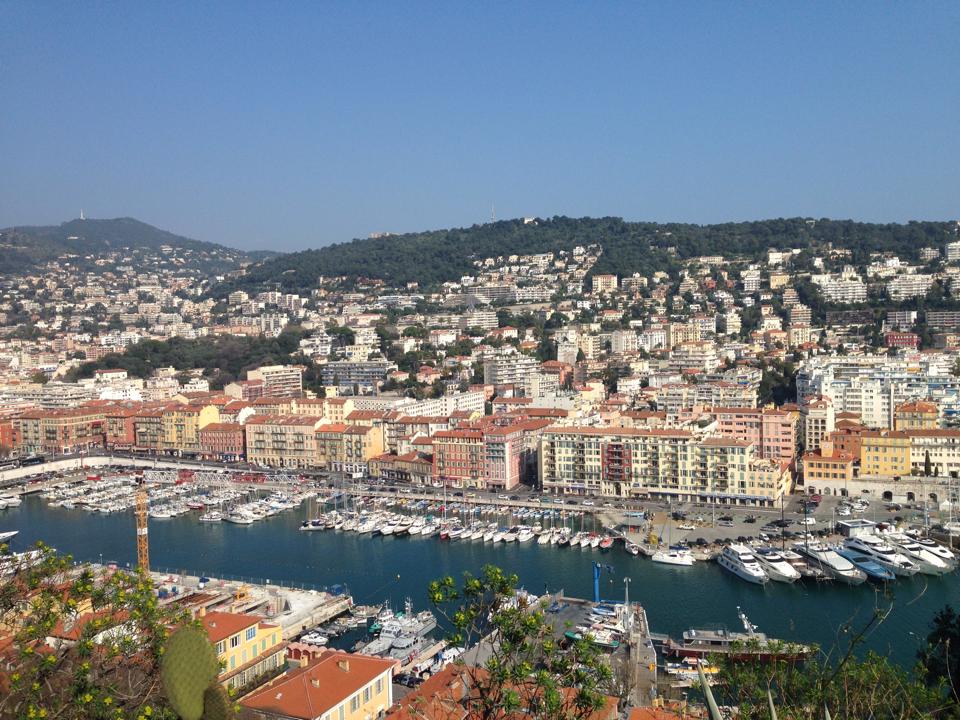
Nice port

The beautiful port of the city of Nice

Tuesday, we stayed in Aix-en-Provence and explored some other attractions.  In the morning, we visited the Atelier Cezanne, the gallery where painter Paul Cezzane painted many of his paintings.  It was amazing seeing how similar this gallery looked to how it was when Cezanne was alive.  The old building must require a fair amount of maintenance.  After this, we had a great picnic lunch in the garden near his gallery, where Cezanne painted some of his famous paintings of Mount St. Victoire.  It was surreal being able to enjoy a traditional French picnic of a baguette and goat cheese while being able to take the serene landscape and the same mountains that Cezanne painted.  After this, we had a relaxing afternoon and had a Turkish dinner; I had lamb.

We traveled to other cities and towns in Provence (a region of southern France) on Wednesday.  First, we saw the hospital where Vincent Van Gogh spent some of his later years when he was experiencing emotional and mental duress.  After this, we went to the town of Saint Remy de Provence.  It is a classical French town with beautiful buildings, squares, and fountains all around the older part of the town.  There was a large market going on, where I had a fantastic sausage sandwich.  I also learned of a great drink known as a “Tango,” which is beer with grenadine syrup, quite a refreshing and delicious beverage.  After Saint Remy, we traveled to the larger city of Arles.  Arles is a very Roman city with a famous Arena and Antique Theater.  There were so many police officers around and we soon found out why; there was some sort of protest by farmers on a major street in Arles.  There were no less than 300 sheep in the streets!  After seeing this, it become a challenge getting around the streets of Arles, as the cops had many streets blocked off because of the protest going on.  Thankfully we got out of the city without encountering too much traffic and got back to Aix en Provence around dinnertime.  I had an amazing pizza (French pizzas are so tasty) with chorizo.

Thursday was my last full day in France.  We traveled to Cassis, a town on the Mediterranean that gets jammed with tourists in the summer, but was quite peaceful the day we went.  It was a beautiful town with a port and breathtaking scenery all around.  We went on a boat tour of the calanques (inlets near Cassis with amazing rocky structures; they are steep-sided valleys).  These were great to see and the boat tour went all the way into the outlets for us to see the beauty of these rocky structures.  After this, we walked around the port and headed back to my parent’s apartment.  For my last meal, I had a crepe dinner, which was a crepe with beef, crème fraiche, and onions, which was really delicious, as well as a dessert crepe which had apple and sugar.  We walked around the city of Aix en Provence for our last night to admire the beauty one last time.

Calanques

A calanque, an inlet with towering rocky cliffs

Friday, I left to go back to Dublin and got back around 3:00 pm to meet up with my friends who were visiting from Edinburgh.  The next blog post will cover the fun St. Patrick’s Day Weekend!

Overall, it was a great week seeing my parents after not being able to see them for two months.  The awesome weather of highs in the mid 60s (I wore short sleeves every day) combined with the destinations that we visited and tasty food that I was able to eat contributed to one of the best weeks of my study abroad semester yet.


Urbanization in Ulaanbaatar

March 7, 2014

Our group had an interesting meeting with the head of Zorig Foundation in Ulaanbaatar. Zorig was a leader of the Democratic Revolution in Mongolia in the early 1990’s, and was an influential politician until he was assassinated. A main goal of the foundation is to focus on community development in Ulaanbaatar, and the head of the foundation lectured to us about the process of urbanization in Mongolia.

DSCN0173

Sükhbaatar Square at the center of Mongolia. These are some of the many new structures built in the city.

One of the most interesting aspects of the lecture was when we discussed the concept of “community” in Mongolia. As it’s a traditionally nomadic culture, there’s no word for “community” in the Mongolian language. Therefore, the concept of cities and Ulaanbaatar itself is a modern invention to Mongolians. Only about 2 generations of Mongolians have lived in Ulaanbaatar so far. The newness of the city and communities is important to keep in mind when discussing the issues within Ulaanbaatar.

Currently, about one-third of Mongolia’s population is nomadic, but about 30,000 people are moving into the city every year. The population of Ulaanbaatar has doubled since the 1990’s, and the city is overwhelmed with the sudden influx of people. Many of these new people are slightly mislead to believe that Ulaanbaatar is a city of multiple opportunities. Although there are many vacancies in employment, they require high-level degrees that formerly nomadic people aren’t often qualified for.

Many of these formerly nomadic families move into the “ger districts” on the outskirts of the city. In general, ger districts are the most vulnerable communities within Ulaanbaatar. Gers are the traditional homes that Mongolian nomads live in- imagine a sturdy, round “tent” with one room that everyone shares. It’s designed to disassemble quickly, and not so much to be connected to central heating or electricity. Therefore, many people in these ger districts have no access to running water and central heating, and generally have worse quality of life compared to those within the city.

DSCN0202

If you look closely in the background, you should be able to see the ger districts on the outskirts of the city.

Ulaanbaatar is the coldest capital in the world, and is also generally regarded as the second most polluted city. At first this may not seem directly connected, but it’s almost entirely caused by people heating their homes, most specifically in the ger districts. Many people heat their homes with coal because it’s abundant and cheap. This is the main reason why they use coal to heat their homes, and have therefore contributed significantly to the pollution of the city. Pollution is considered to be of the worst issues that Ulaanbaatar faces, and the destruction of the environment is a main theme in my SIT program.


Austen in Ireland: Weekends in Galway and Edinburgh

February 17, 2014

So the past two weekends I went on two different trips: one to Galway, Ireland with the International Student Society at UCD and the other to Edinburgh, Scotland to see friends from UR studying abroad at the University of Edinburgh.

My trip to Galway started early on a Friday morning with a bus ride heading to the west coast of Ireland, where Galway is.  Our first stop on Friday was Clonmacnoise, a famous monastery on the way to Galway.  It was in a beautiful setting on the water.  We then arrived in Galway late afternoon and took a walking tour of the city.  The city is great and looked like a more cultural and less tourist-y version of Dublin.  It also has a great amount of history as explained by our awesome tour guide.  For dinner, some of us from the group had dinner at a very Irish place, where most of us had fish and chips.  It was delicious!  We then went on a pub crawl, where we went to four pubs and one nightclub.  There were some great pubs.  On Saturday, the amount of flooding caused a detour from our planned sites so we went to a small Irish town, which was nice but didn’t have much to see.  We then got back to Galway, where we went out to dinner on Saturday at an American diner and got American food- my first American food in Ireland!  On Sunday, we went to the Cliffs of Moher, probably my favorite place that I have been to so far this semester.  The cliffs were absolutely breathtaking and definitely a must-see when in Ireland.  Our next stop was the city of Limerick, which was quite nice with a river in the middle- similar to Dublin- and had a lot to see.  I definitely could have spent a lot more time than our hour allotted.  We then went to Moneygall, a small town where President Obama’s ancestors are from.  The town is all decked out with Obama memorabilia (there’s even an Obama café) and we went to the pub where Obama had a pint when he visited (which had even more Obama items on the walls).  I was exhausted when we got back on Sunday night but I still went to downtown Dublin to see the Super Bowl that night with a couple friends.

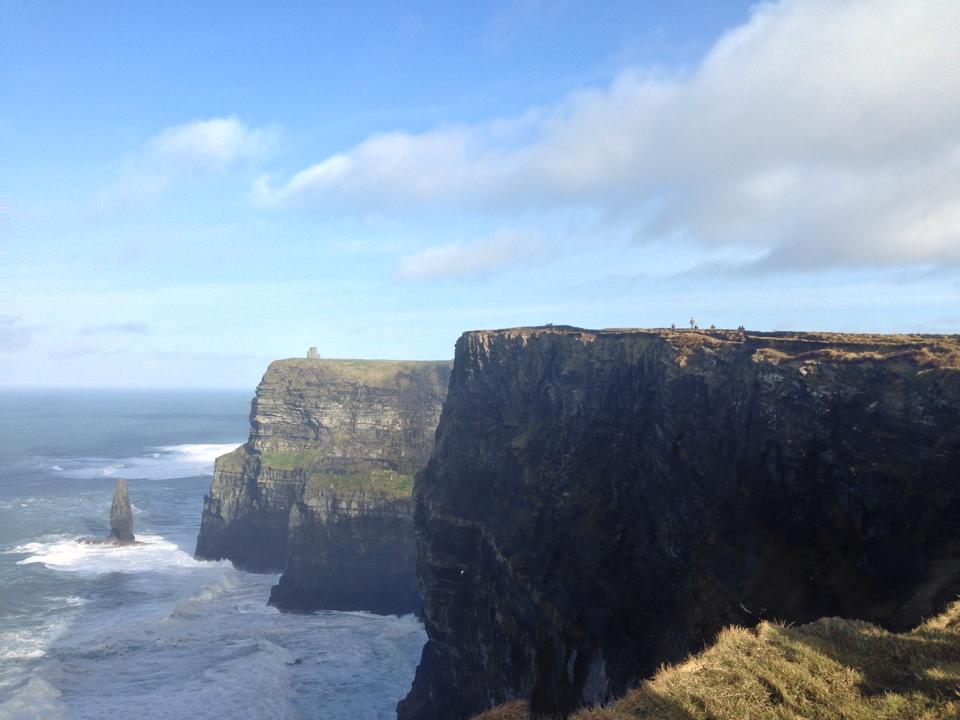
Cliffs of Moher

Cliffs of Moher

The trip to Edinburgh was even more memorable.  I left early Friday morning to catch my 12:30 Ryanair flight from Dublin to Edinburgh.  It was probably the shortest flight I’ve ever been since we were in the air for only 45 minutes.  Luckily my Ryanair experience was pretty unforgettable.  Once I arrived in Edinburgh, I met up with my friends studying abroad there (I know 4 UR students there).  We immediately climbed up a hill to catch views of Edinburgh.  I realized Edinburgh is very different from Dublin because Edinburgh is much more hilly compared to the flat Dublin and Edinburgh was much more a historic city.  I got a mini tour of the campus of the University of Edinburgh and was especially amazed by their eight floor library.  For dinner, I had some haggis (a Scottish specialty) as well as Irn Bru (a famous Scottish soft drink).  Both items were so great; I wish Ireland had these.  We went to a pub near the University popular with students, which had a live band with pretty good music.  On Saturday, we went to Edinburgh Castle (where there were some sieges during the Wars of Scottish Independence), which was beautiful and had some great history museums, where I learned quite a lot about the history of Scotland.


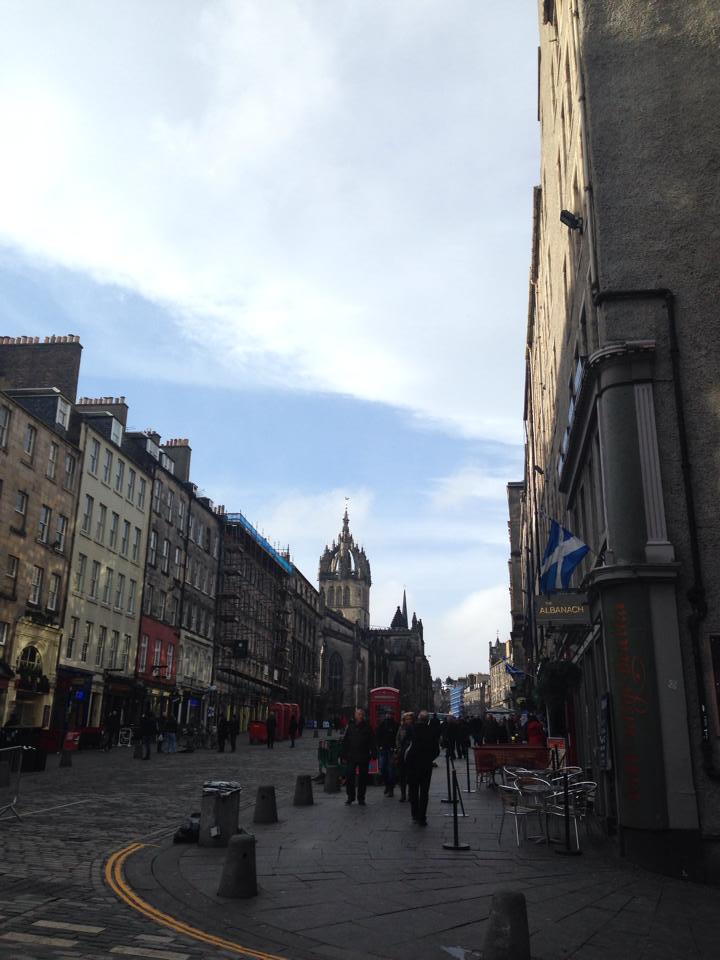
Edinburgh Street

A street in historic Edinburgh

We then went to the Holyrood Palace, which is where the Kings and Queens of Scots have lived since the 16th century.  For dinner that night, I had fish and chips with the Scottish rugby game on the TV in the restaurant, so a very Scottish night to say the least.  Sunday, I climbed up Arthur’s Seat (a hill with excellent views of the city) with my Richmond friend and his Scottish roommate.  They are experienced climbers so they wanted to go up the more difficult route where, given my lack of fitness, I almost fell down the cliff about four times.  I made it up somehow though and the winds were some of the strongest I’ve ever experienced, but the views were so worth it.  Going down was easier but it was so muddy and I didn’t have boots, so with my clumsiness, I fell not once, but twice right in the mud so my clothes got really muddy.  Our last stop of Sunday was at the National Museum of Scotland, which was a magnificent building; that had collections on pretty much everything, including animals, clothing, cars, and almost anything related to Scotland.  We only had about an hour because it closed pretty early but I could have definitely spent a whole day there.  Monday morning, waking up at 5:00, I caught my 8:00 am flight with an hour delay (I had a window seat without a window) and got back to Dublin in one piece.

Richmond Edinburgh

Richmond takes over Edinburgh

I look forward to what my future travels have in store for me!


Diego in Brazil: PUC and Rio’s social movements

December 12, 2013

For the past couple of months I’ve been writing this blog to share some of my thoughts and feelings about studying abroad in Rio de Janeiro. When I chose to study at PUC-Rio, Brazil was witnessing some of the largest protests the country has experienced since the early 1990s. The country’s middle-class went out to the streets to demand cheaper public transportation, better public services, less corruption, and an end to excessive spending on international mega-projects.

As soon as I came to Rio de Janeiro people back home and in Richmond began asking me about the protests – especially whether I was attending some of them. My major, focusing on social justice and political movements in Latin America, strongly influenced my decision to move to Rio de Janeiro during such an important period in the country’s recent history. I suppose friends and family expected me to attend these protests, but as a matter of safety and based on some personal ideas on social movements I decided not to attend.

I still wanted to find a space to interact with some of the political actors in these protests. I’ve been studying Brazilian politics and I could not ignore the largest socio-political movement that has impacted the country since the severe political crises of the 1990s. My host mother was not particularly interested in anything related to politics, so I turned to my host University.

Early in the semester I met some people studying Political Science, Philosophy, and Social Work. I joined them several times for lunch and asked countless questions about the protests, political movements at PUC-Rio, and suggestions to learn more about the current political situation. They were all really interested in the movements and most of them had already participated in at least one protest.

I was really surprised that all of them were frustrated at how little political activity and organizing goes on at PUC-Rio. According to them, most student-led political movements originate and develop at public universities. They told me that students’ apathy is a combination of the university’s attitude towards political protests and the socio-economic level of most students at PUC-Rio.

I must admit I was disappointed with how things developed in the beginning. I attended some meetings of different student groups on campus but I didn’t come across much information about the protests. Luckily, this all began to change when PUC-Rio held elections for several student governments (each major sector of the university has its own student government.)

I approached some people campaigning inside and outside the university and found several students who were active members of different social movements in the city. From members of the communist party to members of the Catholic Church, the people I met quickly showed me how diverse and little coherent the protests in Rio de Janeiro were. I was truly happy that I had finally found a way to learn about the protests without putting aside my decision of not joining them.

I obviously can’t claim that I know much about these social movements. It’s been only some weeks since I began meeting students who participate in these protests. One of the most positive aspects of all of this has been the number of invitations I’ve received to attend several events related to the protests and other political movements.

The picture I’m attaching to this entry is from a student-led debate on police brutality. For privacy reasons I’m not describing each participant in the panel but I wanted to show you how PUC-Rio can be a useful space to learn about Rio’s politics. I’m not entirely sure what the future of today’s social movements in Rio de Janeiro will be. For now, I’m incredibly glad I met several students who were willing to teach me about the recent protests and to share with me some of their hopes for the near future.

IMG_0800 (800x600)

An incredibly interesting debate at PUC-Rio on social protests.


Mel in Chile: The Final Project

December 10, 2013

Some days ago we closed our SIT Chile: Political Systems and Economic Development study abroad semester. During November I had been working hard (or hardly working?) towards the thirty-page research paper that we submit at the end of a semester abroad with SIT. I have to admit the month of research was an incredible opportunity to test out my ability to work independently. The only deadline to keep in mind was December 4th.

November was full of activities and my schedule looked busy even though I did not have classes. I needed interviews for my research and when you are in Latin America scheduling interviews/any meeting situations with people will prove to be a difficult process. I also chose a topic for my research that I had not studied through classes at Richmond or study abroad. It was a critical analysis of community-based tourism in Valle de Elikura within a mix of post-colonial/anthropological/orientalist theoretical frameworks. I spent half of the month simply looking for articles and reading as much material as I could so I developed a strong background before I started the actual writing.

I sometimes wonder what will happen with the thirty-three-page research paper I wrote in Spanish. It is difficult to convince myself that it will be useful for a class in Richmond since I know the rest of my time will be devoted to fulfilling business class requirements. If I want to use the paper anywhere in the US I would need to translate the entire thing to Spanish. So I sometimes ask myself “Why did you chose to do something ‘irrelevant’? Why didn’t you choose something that is more related to what you study at UR? Chile is would have been a fantastic country for research in any neoliberal related topic.” I am lucky I do not have to think very far to find my reasons. The truth is that I absolutely loved my topic. More importantly I enjoyed the journey of learning something entirely new, processing it, and then applying it as analysis to my fieldwork. I realized I was also wrong to refer to my work as “irrelevant”. This may sound cliché but I understood from personal experience how seemingly distinct areas of study are actually not as unrelated as we sometimes imagine. My research project gave me an opportunity to relate tourism, anthropology, orientalist theory, post colonial theory, Foucault’s notions of relations of power, and basic demand-supply relations within a capitalism economic structure. My study abroad experience allowed me to step back and explore the relationships between different disciplines. I would strongly argue that a study abroad experience is essential to a liberal arts education.

diploma

My certificate from Universidad de Santiago de Chile!


Diego in Brazil: It began as a class presentation…

November 13, 2013

Some minutes ago I finished my first in-class presentation on Brazilian Foreign Policy. I could feel all of my Portuguese vocabulary just flying away from my mind minutes before my presentation. I’m the only exchange student in my class and even my group seemed a little nervous not knowing how I was going to do. “What’s the summary of what you’ll present?” asked one of them. I suspect she was somehow testing my Portuguese…

But enough of that. The presentation went incredibly well and I’m happy to feel capable of improvising and analyzing Brazil’s involvement in Latin America during the Cold War in front of a large group. How did it happen? I’m still not entirely sure, but the topic is so interesting that I decided to share with you some history that has traditionally been ignored.

Read any history book on the political landscape of Latin America during the late 60s and early 70s and you will most likely be led to believe that Brazil played an almost-insignificant role in other countries’ politics. Historians and political scientists have typically pointed at the US for its involvement in the region as a hegemonic power interested in sabotaging any left-wing political victory in Latin America. A different language, culture, and history of colonization are all factors that have led us to conclude that Brazil hasn’t really focused its Foreign Policy on Latin America.

While most of the above may be true, it turns out most books won’t be precisely teaching you what really happened between 1965 and 1975. Brazil’s former president Médici – military dictator between 1969 and 1974 – believed that the ideological war in Latin America at the time was an internal conflict, consequence of the poverty and inequality that have historically characterized the continent. Médici concluded early in his time in power that any solution to the region’s ideological war would also have to be internal. During his administration Brazil participated in the overthrow of a democratically-elected leftist president in Bolivia, the weakening of Uruguay’s most important leftist coalition, and the training of military forces that would eventually overthrow Salvador Allende in Chile.

golpe_allende

Attack on the Palacio de la Moneda in Santiago de Chile on September 11th, 1973. Source: http://filosofiacr.wordpress.com/2011/09/12/salvador-allende-vida-y-muerte-la-cia-y-el-golpe-de-estado-del-11973-video/)

In 1971 Médici visited former president Nixon to motivate him to get even more involved in Latin America. Records of the meeting show that Médici left Washington quite unhappy about Nixon’s decision to not drastically increase the economic and military aid given to Bolivia’s and Uruguay’s right-wing regimes. It turns out that between 1970 and 1974 Brazil took the lead in the “fight against communism” in Latin America and constantly tried to get the US to pay more attention to the region. In September 11th of 1973, Salvador Allende suffered a coup d’état in Chile and this meant that, according to the Brazilian Foreign Minister at the time, the Southern Cone’s revolutionary “snowball had been reversed.”

medici

Médici, Nixon, and Kissinger meet in Washington in 1971. Source: http://impressao.wordpress.com/tag/nixon/)

A number of internal and external factors led Brazil to shift its attention away from the region after 1974. Pinochet in Chile and Geisel in Brazil would lead, respectively, the two countries on different paths towards a harsher military rule and more relaxed policies. It wasn’t until the 1990s that Brazil would regain such strong interest in Latin American politics.

Next semester I will start writing my thesis back in Richmond. I have decided to give a more historical touch to my examination of the Brazilian-Peruvian international border in the Amazon region. As it turns out, Brazil’s involvement in Latin America has been much more important than what I once thought. Among all of the academic lessons I have gained while studying abroad in Brazil, this may be the one that will have the greatest impact in years to come.

If you are interested in reading more about Brazil’s involvement in Latin America between 1970 and 1975, you can follow this link (http://dx.doi.org/10.1080/14682745.2011.641953) to the article by Tanya Harmer (2012) that was the basis of my presentation and this blog entry.