Alter Schwede: Sweden in 6 Days (posted by Indira in Sweden)

July 26, 2012

As I’m spending the last days at home I anxiously await the adventure that is about to start in only 6 days; I’m moving to Sweden to start my fall semester abroad.

I am Indira and I’m from Bosnia and Herzegovina. I am a rising junior double majoring in International Studies and German Studies. My main interests revolve around internationalism, traveling and culture – all of which are a major component of the University of Richmond study abroad program.

My fall semester I will be spending at the Uppsala University in Uppsala, Sweden. Together with other international, exchange and Swedish students I will be taking a wide range of classes with main focuses in government and sustainable development. Uppsala University is well-known for both of these fields, as well as for its natural and computer sciences departments. It is one of Europe’s oldest and best universities located in a city that it brings together tradition, education and youth. It’s a unique example of the ‘old meets new’ kind of place. These were the main reasons I chose Uppsala University over other exchange programs.

Before I start my classes in September I will participate in the IBS (Intensive Course in Swedish) program with other exchange students from around the world. This will be a perfect opportunity to settle  into a new place and learn my way around before the semester truly starts. Apart from that, I will learn some of the language so I’ll be able to make basic conversation in one of the most interesting languages I’ve encountered – Swedish. Language is a rather interesting thing in Sweden. This Scandinavian country is almost bilingual because everyone speaks English and children start having English classes from early on.

In Uppsala I will be living in the accommodation area called Flogsta, which is a complex of multiple buildings typical of the communist architecture. I am really excited to start my adventure and move to a place that is completely different from Richmond in so many ways.

Right now I’m trying to think of all the things I need to pack before Sunday and then I am ready for my Swedish adventure!


Shalom Until Next Time

July 9, 2012

A short time ago I turned in my last paper for my University of Haifa classes.  Yes, they were due two weeks after I returned home.  Some universities operate quite differently when it comes to final exams, apparently. But I’m not complaining – it meant that I could make last minute day trips, talk with friends until the wee hours of the morning and squeeze the most out of my last week in Israel instead of having to write my papers while I was there.  One night during finals week, a friend and I even went to Tel Aviv just for dinner – it takes about an hour and a half to get there by bus and train from Haifa.  Now, having officially ended the most incredible semester of my life with the turning in of those papers, I am left with only an aching loneliness for all that Israel meant to me.

Right now, I’m back on campus at UR for the summer doing an internship, where I’ve had the chance to catch up with a few friends.  While the quality of our friendships hasn’t changed, there is an odd distance between us.  I was told it may be hard to adjust back to life at UR, but I didn’t believe it or understand why.  I do now. I find my thoughts wandering while I am in the middle of a conversation, and I am back in Israel, hiking down into a rocky ravine in the north with the snow peaked Mt. Hermon standing guard above me, getting lost time and time again in the streets of Jerusalem’s Old City, watching a sunset from the beach in Tel Aviv, weaving my way through Haifa’s vegetable market on a crowded Friday afternoon, or just sitting beside a trail somewhere near the Sea of Galilee soaking in the freedom and beauty of the moment.  Israel has left an imprint on me, the depth of which is almost impossible to convey to those who didn’t share the experience with me.

I miss Israel.  I miss the hiking, I miss riding the bus, I miss the endless adventures, I miss my generous roommate, I miss cooking Shabbat dinners in my friend Emma’s apartment, I miss the glimpses of the Mediterranean Sea on my walk to class.  But parts of Israel will always stay with me.  The person I have become because of that semester, who is more confident, more willing to set out on adventures, and hopefully able to understand the world a little better, will remain.

Looking back on my thoughts and feelings at the beginning of this semester, I realize I didn’t come close to imagining what Israel would really be like.  I imagined sites from ancient history, but I didn’t imagine how the land feels old, how every mountain, every ruined city, every coastal town has a story to tell.  I imagined myself learning Hebrew, but I didn’t know about the pieces that would be added to my personality through the new forms of cultural expression I would learn.  I imagined beautiful landscapes, but I didn’t see the colors of the desert sweeping up to meet the sky with a beauty that left me gasping for words.  I expected spiritual fulfillment, but I didn’t grasp the depth of what it would mean to live in the country where the very events that shaped my faith took place.

My four and a half months in Israel were probably the most significant and formative of my entire time in college.  I know I will be looking back and processing the experience in the months and years ahead, and drawing up the memories of moments I will cherish for the rest of my life.

One thing I particularly like about Hebrew is that ‘shalom’ can mean both goodbye and hello.  So, shalom until next time, Israel.


Time flies when you’re having fun

June 4, 2012

It’s been a while since you all last read about my adventure in the Netherlands so I’ll start this post by quickly summarizing what I’ve been up to for the past two weeks.  Since Queen’s Day I have spent a weekend in Paris and I fell in love.  I’ve heard a lot of mixed reviews about Paris, but after going and seeing it for myself I gained an appreciation for its rich culture, famous sites and history.  My favorite place was the Eiffel Tower.

I spent the following weekend in Belgium.  If you recall from a previous post I went on a trip called Discover Holland (I went to six cities in two days).  This was similar; Discover Belgium was four cities in two days.  It was a lot of fun.  Good waffles and chocolate, but it reminded me a lot of the Netherlands, so I personally was a little disappointed.

During my last weekend, I spent time studying and writing papers since it was our exam week.  Today was the last day so I am done with my two papers, one take home exam and one group paper/final negotiation which means that I am officially a senior!  My study abroad experience went by really quickly and it’s strange to think that I’m leaving Maastricht soon.  It’s  stranger knowing that I’m graduating next year, but I’m looking forward to seeing what the future holds.

Even though I’m done with classes I’ll be staying in Europe for another week before coming back to the U.S.  My mom arrived today and we’re going to Italy and Switzerland to celebrate her birthday and the end of my study abroad experience.  The next time you hear from me my study abroad will officially be over and I’ll be back in the U.S.  I’m looking forward to going back home and back to the University of Richmond.  I’m curious to see how I’ll readjust to being home, and if I’ll have any moments of “reverse culture shock.”  Well, I guess time will tell.  Until next time, I hope everyone is having a great summer!

Below is a picture from Drielandenpunt (means three countries in English).  This is the point where the Netherlands, Belgium and Germany touch.  I took a day trip there with a friend before exam week started.  In the picture I have one hand in Germany, my body is in The Netherlands and my other hand is in Germany!  I thought this was so cool so I wanted to share it with all of you.


Midterms and Hiking

May 25, 2012

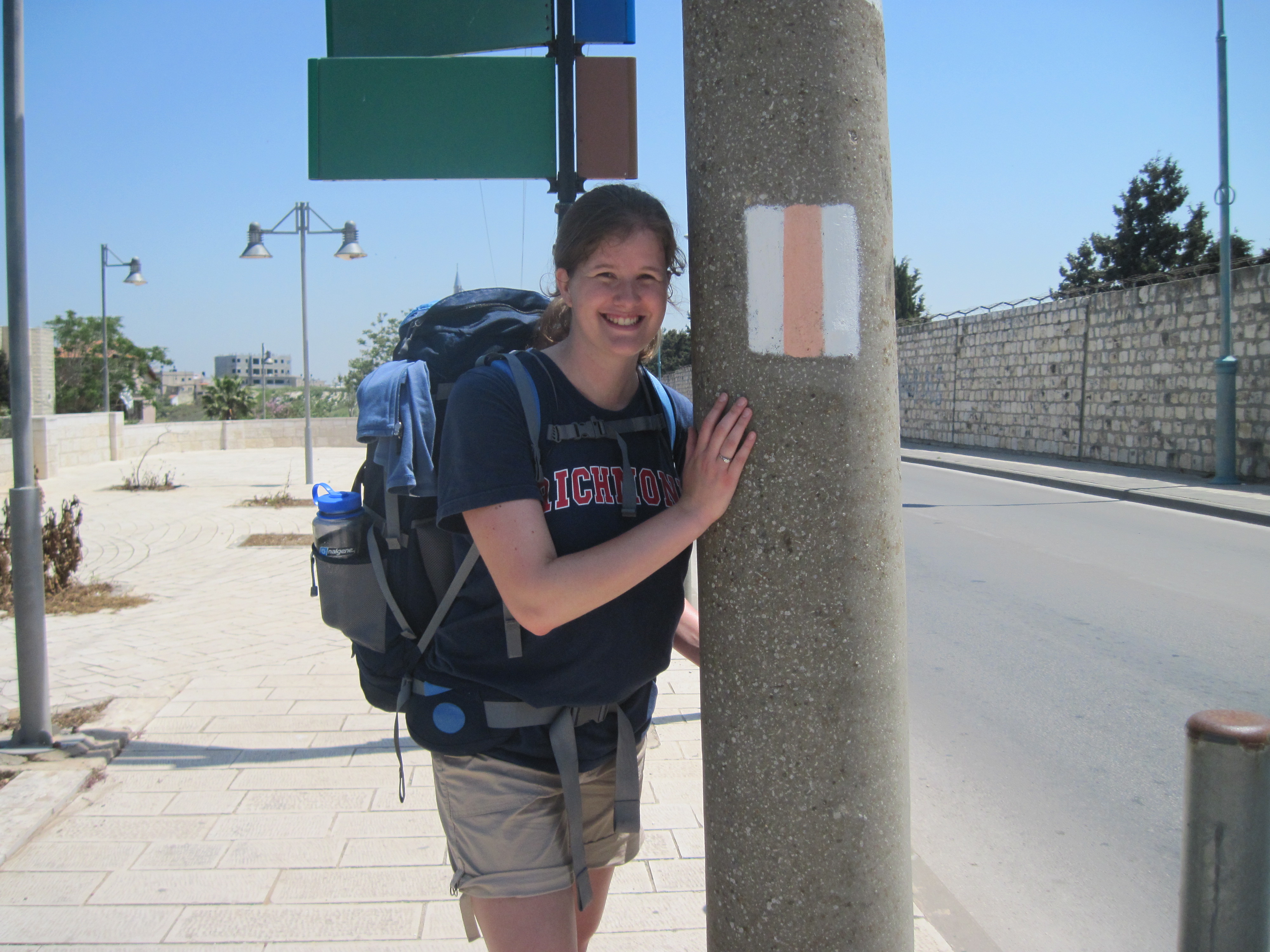
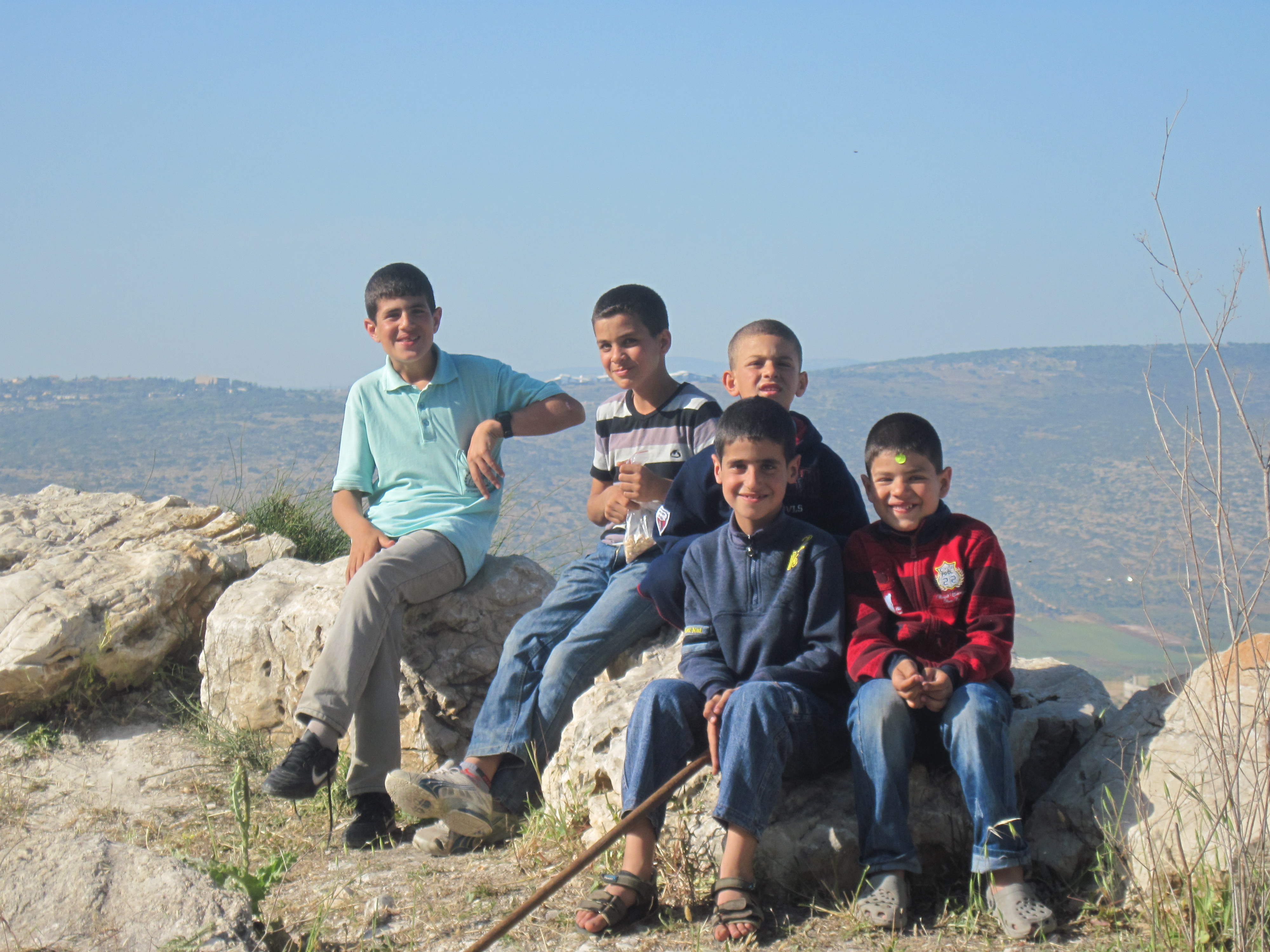
Are the two things that have been occupying most of my time lately.  But really, mostly hiking.  A few weeks ago my friend Bekkah from Ohio and I hiked the Jesus Trail, a 65 kilometer trail that runs from Nazareth to Capernaum.  Because of Israel’s Memorial Day and Independence Day we had a few extra days off, so we were able to take five days to complete the trail.  Most of the trail runs through small, predominantly Arab villages, farmland and parks.  We took the first two days pretty slowly, taking many long breaks beside fields or on hillsides, pondering life and soaking in the sunshine.

On Friday, however, it was a different story.  We got an early start, which was good, after spending the night in a guest shed at Yarok Oz organic goat farm.  Our first obstacle was a series of farm fields that for some reason were infested with flies.  Now I know why the Biblical plague of flies was, well, a plague.  We finally made it through that area and ended up on the outskirts of Kibbutz Lavi, where we visited their Holocaust Memorial and refilled our water bottles.

We were glad we did, because after that we ended up taking the wrong trail through the kibbutz, and by the time we realized and corrected our mistake we were four hours behind schedule and had spent so much time wandering through fields that we were dangerously low on water.  Also, a blister the size of Texas was forming on my toe.  We ended up cutting out a loop of the trail and heading straight for Moshav Arbel, where we spent the night.  The next day we climbed down Mt. Arbel and stopped for a break at a gas station.  I think we were still feeling the effects of being dehydrated the day before, because once we sat down we didn’t want to move again.  So we took a cab straight to Tiberias, where we stayed in a hostel for the night and then rented bikes and rode from Tiberias to Capernaum on Sunday.  So we ended up finishing most of the trail, just not on foot.

The whole trip was amazing, and quite possibly my favorite time here so far.

I was able to see an incredible variety of landscapes, and because we needed to ask for directions so much, we interacted with a lot of different people along the way.  There was something really meaningful about spending five days without internet, and without trying to communicate with anyone who wasn’t right there with us.  Too much of my life is spent in the virtual world of the internet and my phone, and getting away from all of that to focus on absorbing the experience of the moment was liberating and incredibly rewarding.

The following weekend the International School took us on a hiking trip in the north. the first day we hiked near Sefad, and the second day in and around the Hula Valley.  We saw Banias Falls, which was beautiful.  We slept under the stars at a campsite, which was exhilarating (but incredibly cold), and I woke up to little birds hopping around on my sleeping bag.  I’ve discovered how addicting hiking is, and I think this realization will result in a permanent lifestyle change once I return to the States.  Bekkah and I are even thinking about hiking the Appalachian Trail the summer after graduation, I’ll keep you posted on how that goes!

I have actually spent some of the time in the past four weeks doing schoolwork, studying for midterms and writing a couple of papers.  My roommate told me that I was talking in my sleep the other night, and some of what I said was in Hebrew.  So I guess that means I was dreaming at least partly in Hebrew.  This makes me quite excited; I love the idea that the language has sunk into my thoughts enough for this to happen.


Waterfalls and a little bit of history

April 9, 2012

I just got back from an amazing weekend getaway in Kanchanaburi, Thailand.  Kanchanaburi is about two hours (by bus) northwest of Bangkok.  The city itself is quite small – it is most frequented by visitors on their way to Erawan Falls, but the city does boast its own attractions– for example, the Bridge over River Kwai, which we visited the morning we arrived.

The bridge was commissioned by the Japanese during World War II in order to secure a better supply route between Thailand and Burma.  The bridge was built by both local Thais and prisoners of war, thousands of whom died during its construction.  The bridge is primarily famous because of the movie “The Bridge over River Kwai.”  There is not much really to see– it is quite literally a bridge over a river–not too thrilling.

The rest of the day we saw two more sites: temple caves and a World War II allied cemetery. The temple was an incredible labyrinth of underground, natural caves–very claustrophobic at some points! Each cave contains a shrine or Buddha.  Near the caves, our tuktuk driver took us to see the most incredible view of Kanchanaburi – the beautiful river surrounded by greenery and mountains on either side.  The natural beauty in Thailand is magnificent, and that was particularly evident this trip.  After spending so much time in a city, it is refreshing to see a more rural side of the country.

Our last stop of the day was to an allied war cemetery, which serves as the resting place for many of the soldiers killed building the bridge.  It was actually quite intense walking around and seeing all the name plaques – reading the quote written on the headstone, each name and nationality engraved, and particularly reading the soldier’s age; most were between 20 and 25, around the same age as I am.  I have to admit after my four months in Thailand I don’t know that much about its role in World War II so this was certainly a glimpse into some of Thailand’s history.

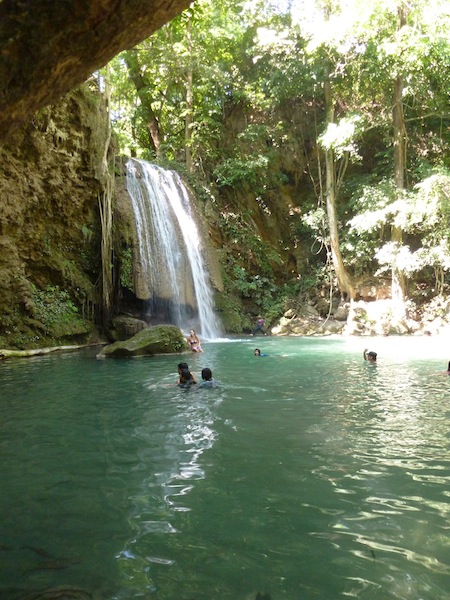
The next day we made the trek to Erawan National Park, located two hours from Kanchanaburi.  We had no idea how incredibly beautiful the national park would be! We literally spent four and a half hours walking along a path through the jungle, passing waterfalls as we went.  There are seven primary waterfalls that make up the national park, though there are small ones spread throughout.  There were tons of people – both international and Thai – and like everyone else, we walked from one waterfall to another and jumped in whenever we couldn’t stand the heat anymore.  It was incredibly beautiful, and so nice and peaceful to spend an afternoon just walking through nature, and enjoying it.

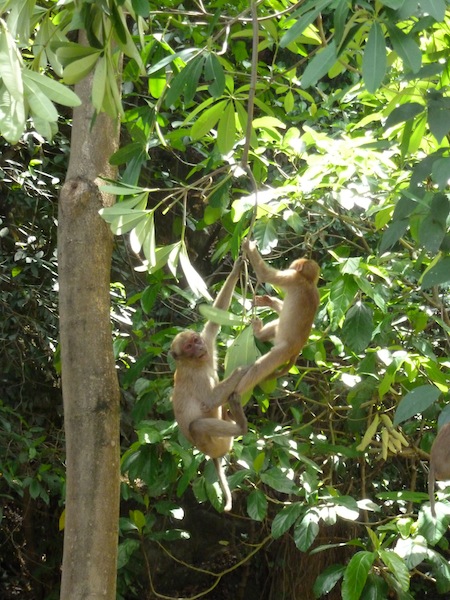
The most intense part of the trek was the 7th waterfall – much less crowded than the others because not as many people make it that far up.  As we approached the waterfall, the friend I was with, Rebecca, pointed out the monkeys overhead.  We had seen signs throughout our trek warning us to be careful of the monkeys because they can be dangerous, but hadn’t actually seen any monkeys until this point.  They were adorable climbing all over the branches, a mother and her babies.  While we were swimming in the waterfall, however, a large monkey got a little too close for comfort and started hissing at anyone who came too close.  It then went over to someone’s backpack, unzipped it, and started pulling out every piece of clothing in there and flinging it to the side.  Just as we were leaving, Rebecca pulled out a bag of peanuts, and within .2 seconds, the monkey was right in front of her, looking threatening as ever, moving exactly as the peanuts moved.  Completely scared, Rebecca just threw the bag of peanuts at the monkey – as we hurried off, we looked back to see the monkey rip the bag of peanuts open, and one by one, pop peanuts into its mouth, as he sat on the ground looking for his next target.


Reflection week

April 9, 2012

Hello everyone!  Period 4 is done, and now we have a one week break.  Most international students refer to this break as spring break, but at UCM, it’s known as reflection week.  It’s my understanding that reflection week was just implemented last semester. I decided to spend the first few days of my reflection week in Berlin, Germany.  My sorority sister is currently studying abroad in Copenhagen, Denmark, so we decided to meet up in Berlin and see all of the wonderful pieces of history in the city.

The first day we were there, we visited the Victory Column, the Brandenburg Gate, the Reichstag, and a monument dedicated to Atlas Shrugged and other mythological figures.  Below is a picture of the Victory Column.  My sister and I walked all 285 steps, and I must say, we were feeling the burn after the walk back down.

This next picture is of me with two “German soldiers” at the Brandenburg Gate.  Being at the Brandenburg Gate was a lot of fun; there was music and people everywhere.  As you can see in the picture, there were also people dressed up in a variety of costumes (most of them looking to earn money).  In my opinion, these two “soldiers” were by far the best dressed.

Being able to see the Reichstag in person was an experience that I’m not sure I’ll ever be able to explain.  Just knowing that I was at a building that, for a period of time, basically served as the headquarters for Hitler and the rest of Nazi Germany left me speechless.  This building is truly a part of Germany’s history and I felt privileged to be able to see it in person.

Seeing a version of Atlas and being able to recognize him as someone I’d learned about in school was a really good feeling.  Below is a picture of me and my sorority sister in front of Atlas, Sybil, and some others.

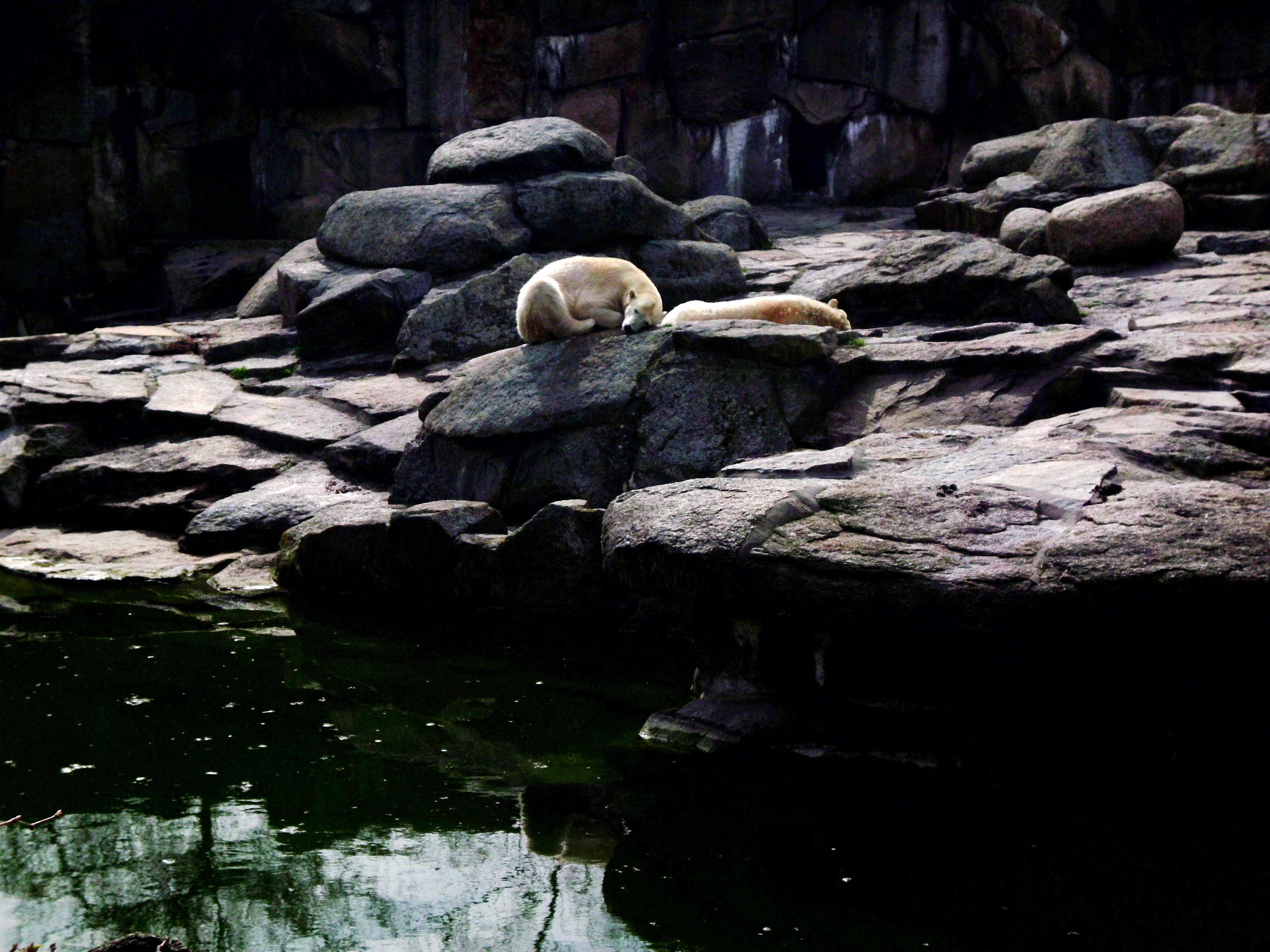
The next day of our trip, we visited the zoo, the aquarium, and of course, the infamous Berlin Wall.  The zoo and aquarium were both nice, but if I had to pick, I’d say the zoo was better, since it had a larger selection of animals and more variety.  Below is, in my opinion, one of the nicest pictures I took while at the zoo.

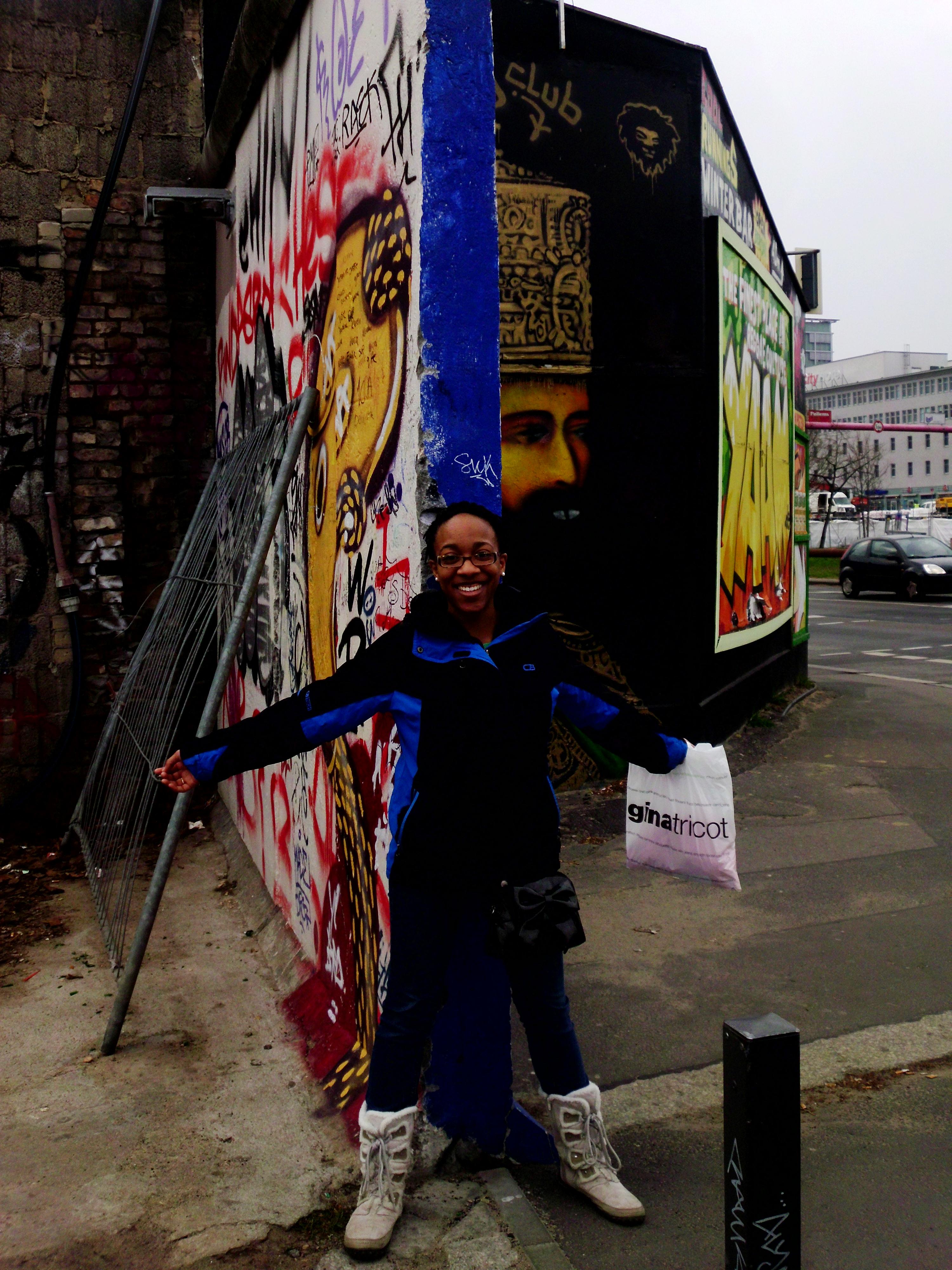
Last, but certainly not least, was our visit to what’s left of the Berlin wall, which for so long divided Germany into East and West.  I knew that if I didn’t do anything else while I was in Berlin, I couldn’t leave without seeing the remainder of the wall.  As I walked along both sides of the wall, I honestly couldn’t imagine that this wall, which is currently beautifully decorated by artwork, was a source of division. It was mind-boggling.  Non-tourists walked, biked, and drove past the wall without really looking at it, but for me, this was a piece of history that people will probably learn about forever and, once again, I just felt privileged to have been able to see this in person.  In the following picture you can see a glimpse of the wall from both the East and the West side.


Transported back in time…

April 2, 2012

I just came back from the most incredible trip to Myanmar (formerly Burma, but the United States chooses to use the name Burma as a political statement against the current Burmese government).  I have to admit, before arriving in Bangkok I was not at all aware of anything going on in Burma.  Nothing. Nada. Zilch. It was not until a dinner with friends in Bangkok, who are passionate about Burma, that I learned about the fascinating country and its political situation.  When you think of the world’s worst dictators, many of you may think of Kim Jong Il of North Korea, or Hugo Chavez of Venezuela, but did you know that Burma is one of the world’s worst dictatorships, responsible for some of the world’s worst human rights attrocities?  It is only in the past year that Myanmar has been creating better relationships with the West, and that the West has been easing some of the sanctions and boycotts against the country. But as many people told us, though progress undeniably has been made, in reality, things may not be so picture-perfect.

What really sparked my interest in this country, before my visit, was the story of Aung San Suu Kyi, depicted in the recently released film “The Lady.”  Suu Kyi is the leader of Burma’s opposition party.  Her father led Burma to freedom from Britain in 1947, only to be assassinated shortly after, leaving the country in the hands of a dictator.  Though she grew up in Burma, Aung San Suu Kyi later married an Englishman and had been living in England with her two children when she became the leader of the opposition party in Burma.  Though she claimed victory in a general election in 1990, the ruling party refused to accept the results and placed her under house arrest, where she spent 15 years, living away from her family in England and therefore sacrificing her life with her children and her husband.   Aung San Suu Kyi was released in 2010, and is a candidate in the Burmese parliamentary election to be held on April 1st.

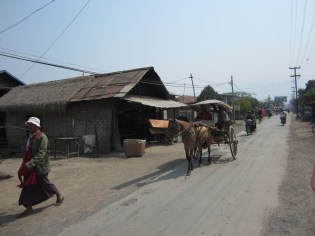
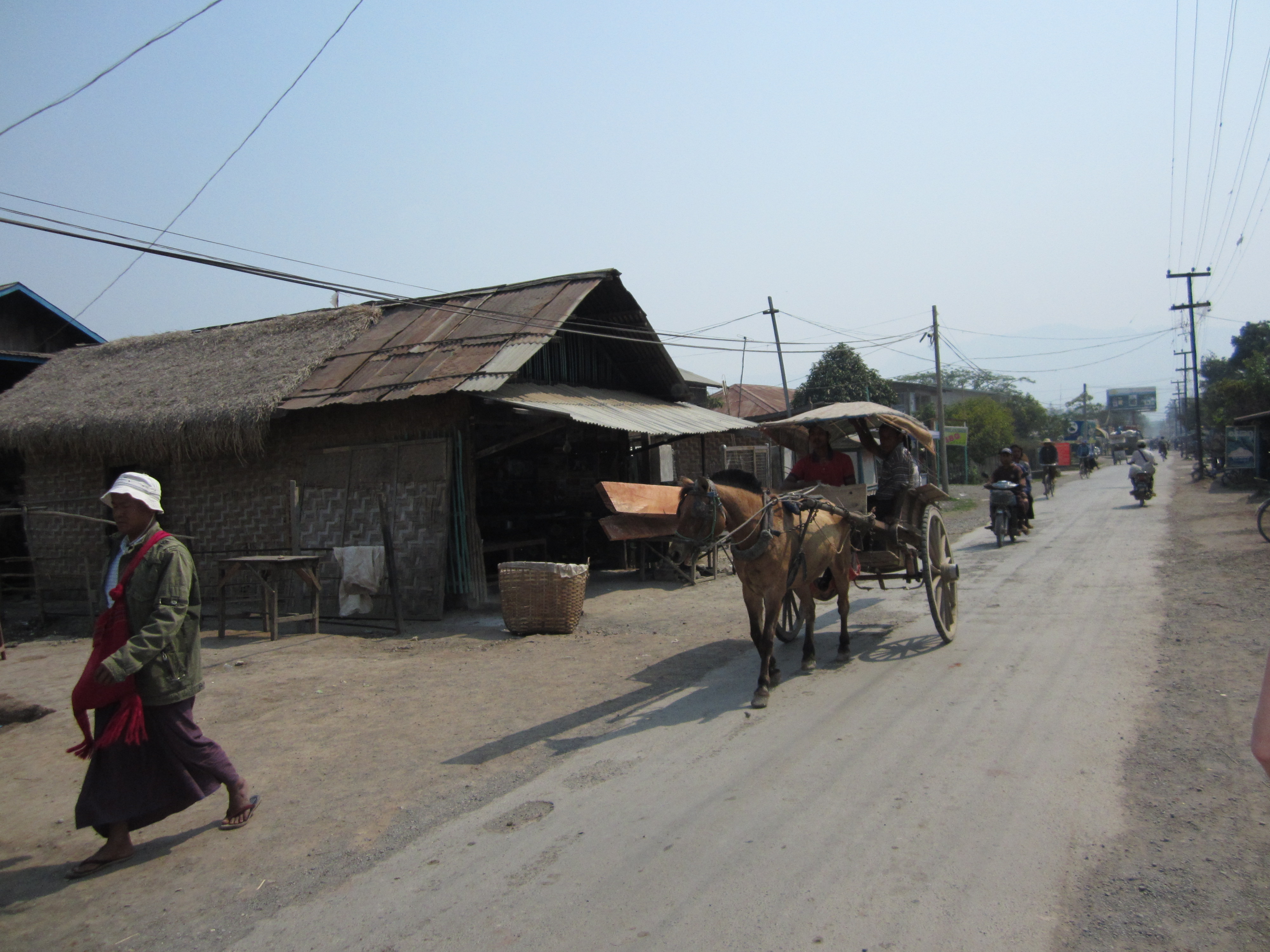
Needless to say, this country is fascinating, and it is in the midst of one of its most critical times in history, so I definitely had to see this for myself.  On top of that, because Burma has literally been shut off from the world for so many years, we were told it was like going back in time to Asia 100 years ago.  Until recently, the Burmese did not have access to news from outside of Burma (purposefully controlled by the government).  A cell phone there costs around $1000, and the down payment for internet in your home is $2,000.  In most places outside of the capital, a “taxi” is a horse-drawn, or ox-drawn carriage.

Because we spent five very packed days around the country, I will give you the highlights of our trip:

1)     Yangon (formerly Rangoon, and formerly the capital of Myanmar).

There is not much to see in the city.  We spent only a few hours our first day, and a few hours our last day, exploring the Yangon.  Other than the Shwedagon Pagoda, an impressive and revered Buddhist religious symbol, there really wasn’t much to do.  The city is quite run down, and much less developed than Bangkok, understandably so.

2)     Kalaw

Kalaw is an incredible mountain town, which we reached through a 12-hour overnight bus from Yangon.  We arrived at 2am, with no hostel booked, and no plan at all – it didn’t take us long to find the “Winner Hotel,” but the temperature had dropped overnight, so it was freezing.  In Kalaw, we did a trek into the mountains with two tour guides who were both 21 years old, named GuGu and Chaw Su.  We spent the whole day wandering through the mountains – the trek was not difficult, which was fantastic, because it not only gave us a chance to talk with the girls and learn about their lives in Burma, but it also gave our guides a chance to stop and point out different plants and crops along the way.  It is truly incredible what is grown in the mountains there! We saw oranges, pears, raspberries, gooseberries, ginger, cabbage, papaya, banana, pineapple, and much more! We stopped in two villages and two monasteries along the way, each time having a chance to (through our guides) talk with the families we met, sit down for tea, ask them questions, and laugh with them.  It was truly fantastic to be able to talk and interact with native people in a non-touristy setting.

In Kalaw, we also had delicious food – a broad-bean, peanut, tomato, and onion salad, noodle soup, and curry.  While curry in Thailand is coconut milk-based, Burmese curry is largely oil based, so it was interesting to try the different foods.

3)     Inle Lake

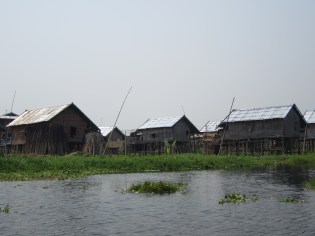
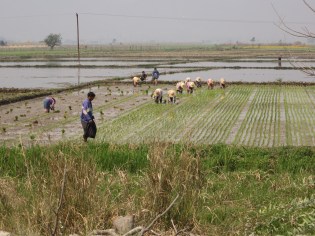
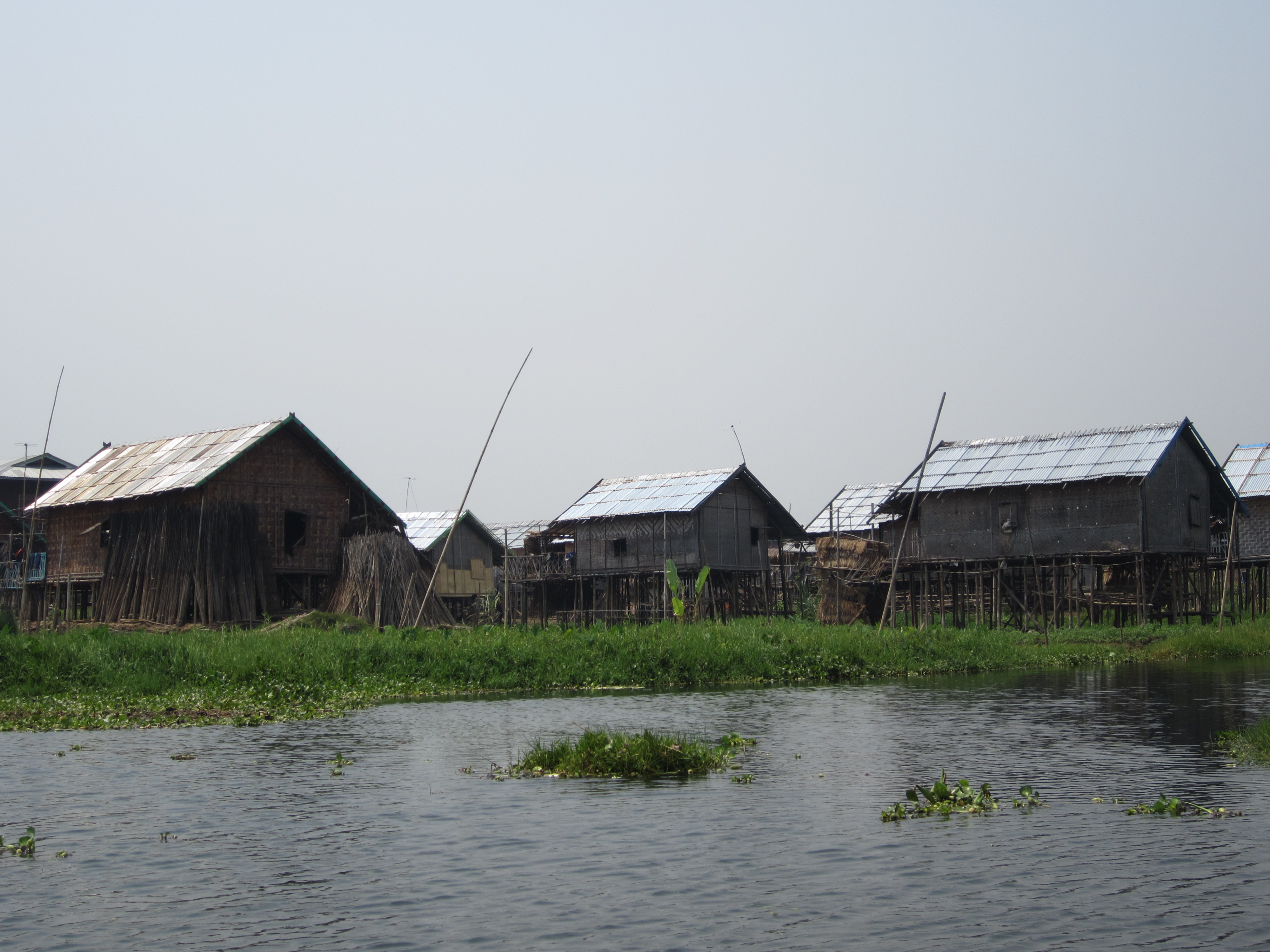
Just a two-hour drive from Kalaw, Inle Lake is one of the most popular destinations for tourists.  Similar to Kalaw, the town itself is very small, and very primitive, boasting half-paved, half-mud streets lined with small hostels, small houses, and shacks.  We spent an entire day (8 hours) on a boat ride around Inle Lake.  It was one of those long “typical” Southeast Asian boats, propelled by a motor.  The lake is enormous, so it was a 2-hour boat ride to our first destination.  Throughout the day we made many stops, including: a shop where silk is produced, a shop where cigars are made, a delicious restaurant, a paper making shop, a silversmith, and a few more destinations. Inle Lake is entirely made up of small villages, comprised of houses and buildings, which are on stilts.  Therefore, to get to each new shop, we had to go by boat, which is how locals get around as well.  The post office, for example, is a small house on stilts in the middle of the water.  Surrounding the villages are also endless fields of rice and other crops.  So throughout our day we observed men and women working to harvest and plant their crops.  We were able to stay out on the lake for the sunset, which was absolutely magnificent.

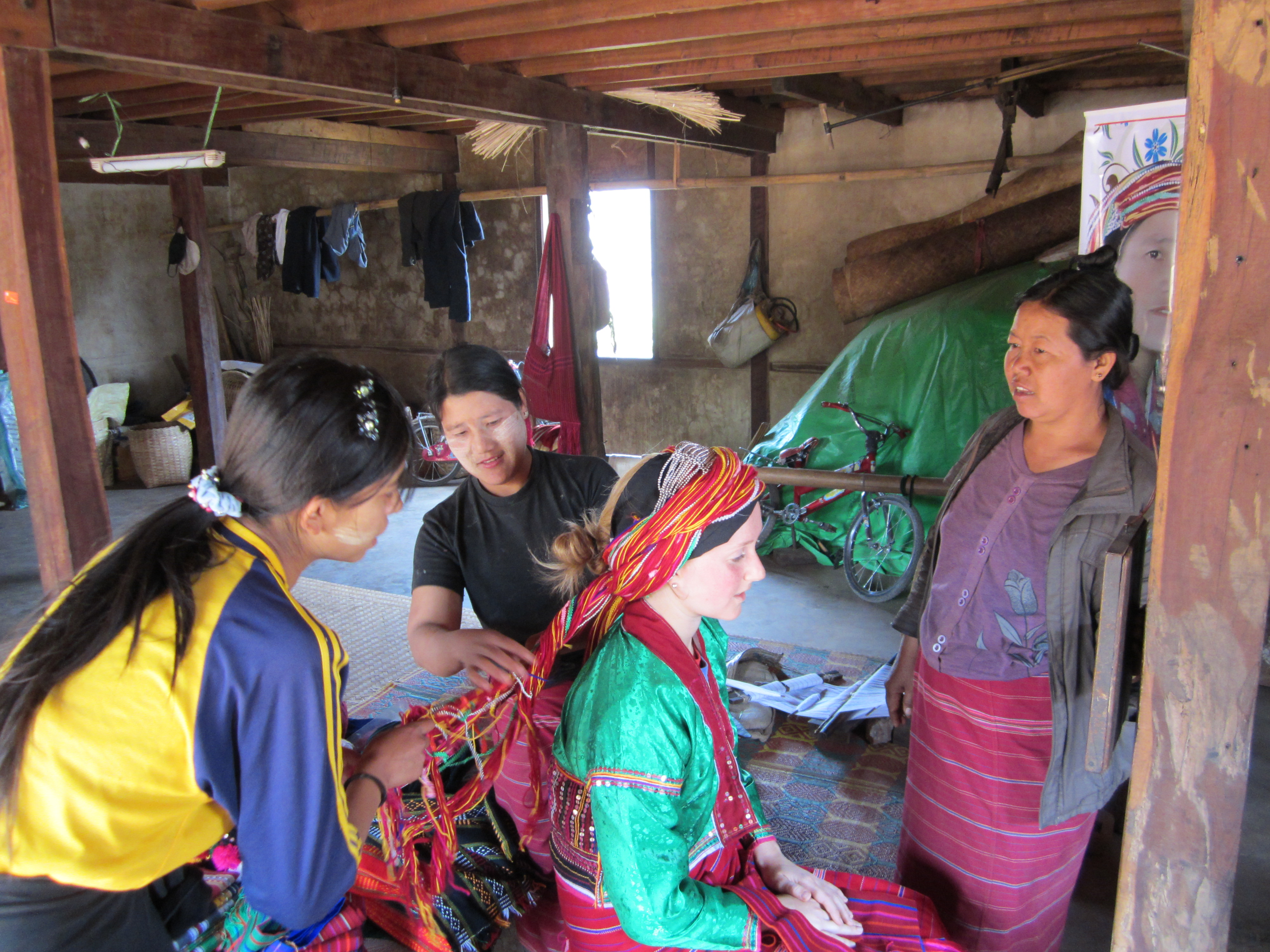
Before our 15-hour bus back to Yangon from Inle Lake, we rented bikes and biked in the area, again surrounded by endless rice fields; I’ll let the pictures do the talking, because it was absolutely breathtaking!  I came back from the weekend completely happy and refreshed; though I was exhausted, it was refreshing to have seen such an untouched nation, and to have been able to experience another country  knowing so much of its history and current political issues.  Even more importantly, we were able to fully interact and speak with locals to hear their perspectives, and those moments are what made the trip so incredible.

Below are some photos from the trip:


Tel Aviv Without a Plan

March 30, 2012

So far this semester, I have only been to Tel Aviv once, only for a weekend.  Many of the international students have gone several times to experience Tel Aviv’s vibrant night life, but that aspect of the city doesn’t have that much appeal to me.  So I hadn’t been aching to go, but when my friend Eva asked if I wanted to join her, I didn’t refuse.

A little background on Eva:  She was born in Hong Kong, lived part of her life in Texas, returned to Hong Kong, and now goes to college in the States.  Last semester, she did a Semester at Sea program, where she lived on a ship that traveled literally all the way around the world.  So, needless to say, she is a seasoned traveler. We chose a hostel with no problem, and planned our bus and train times for the trip. When we arrived in Tel Aviv on Thursday, we spent the day hanging out and touring Old Yafo with a couple other international students who were there for the day.  When we woke up Friday morning, I expected to carefully plan our day so that we would be able to visit all the museums and such that would be closed on Saturday.  So I started making suggestions of possible plans.

Me: “So, what do you think of checking out this Bible Museum, or going to the Art Museum to find the street festival the lady at the tourist counter mentioned yesterday?”

Eva: “Meh.  We’ll see what happens.”

Taken aback, I tried a couple more times to suggest plans, but each time, she refused to discuss them with me.  I was rather frustrated.  So we set out walking, really in no particular direction at all.  I wasn’t sure how to handle it at first, and the controlling side of me was rebelling at the thought of aimlessly wandering the city with no plan or goal in mind.  Finally I made up my mind to try my best to forget about a plan, and just go with the flow.  I guess really that was my only option anyway, as Eva had pretty much taken control of the situation.

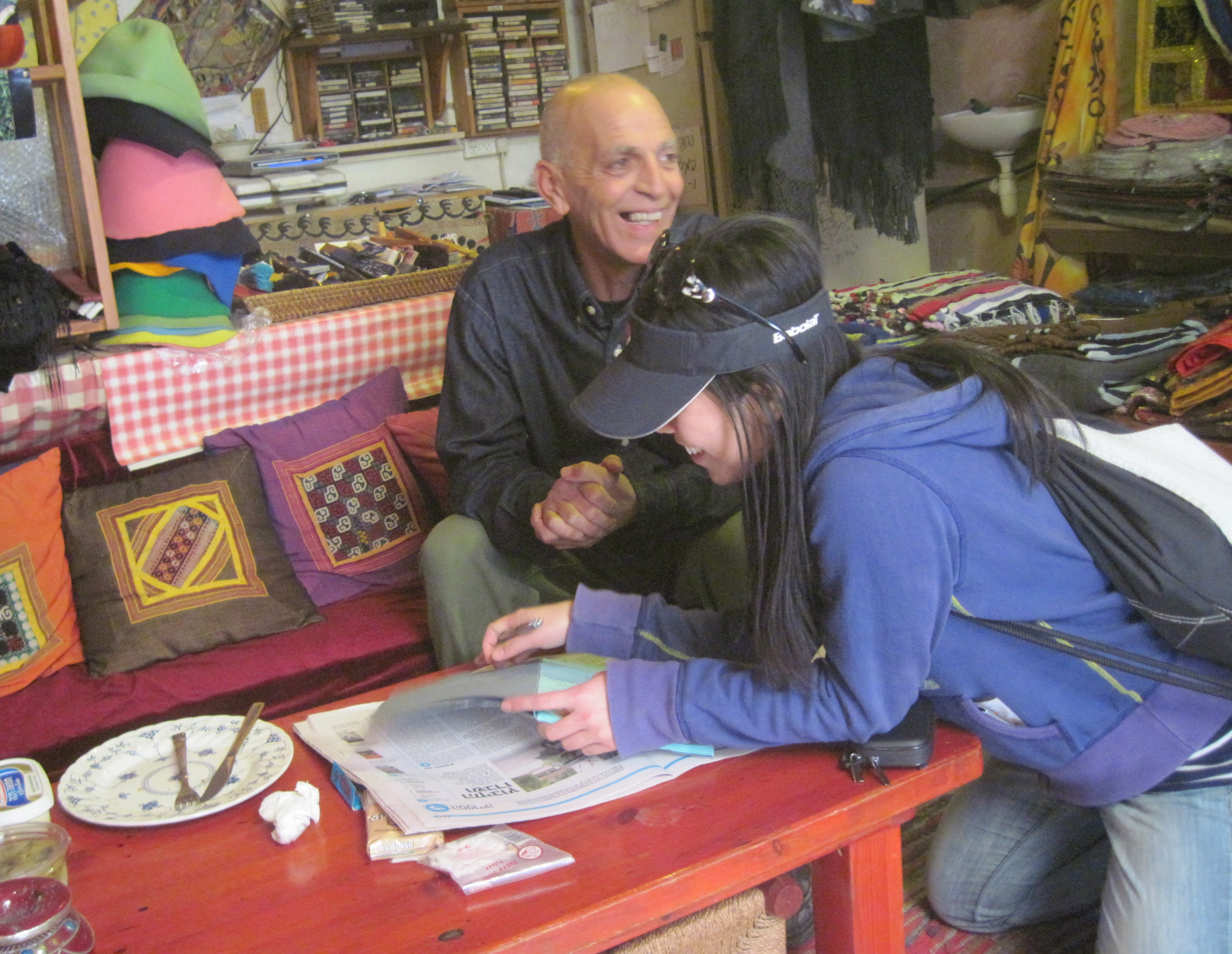
So we continued wandering, and entirely by accident, we bumped into this really neat crafts market, with some really amazing handcrafted items made by the vendors.  There was a lady who made baskets with rolled up, painted newspaper, there were painters, jewelry makers, you name it.  It was really fun, and we ended up spending a couple hours just wandering around.  Eva also was determined to practice her basic phrases of Hebrew with every shop owner that would give her the time of day, and hilarity ensued.

After the market and a stop for some freshly made carrot juice, we continued our wandering and ended up at the beach, where we ended up hanging out and playing a strange form of tableless beach ping pong that is really popular on the Tel Aviv beach.  Then we explored a little more and met a couple friends for dinner that we had run into the day before.

That is how our weekend progressed, and once I was able to leave my comfort zone of carefully planning every step of the day, it turned out to be one of the most relaxed, enjoyable weekends of touring I have ever had.  The weather was beautiful, and the Tel Avivians were extremely helpful when we were standing on a street corner trying to figure out our map; on multiple occasions  people even stopped to ask us if we needed help.  I think if we had minutely planned the day, I would have been focused on our next destination in my mind, and I would not have noticed all the life going on around me.


Standing on the Edge of the World

March 26, 2012

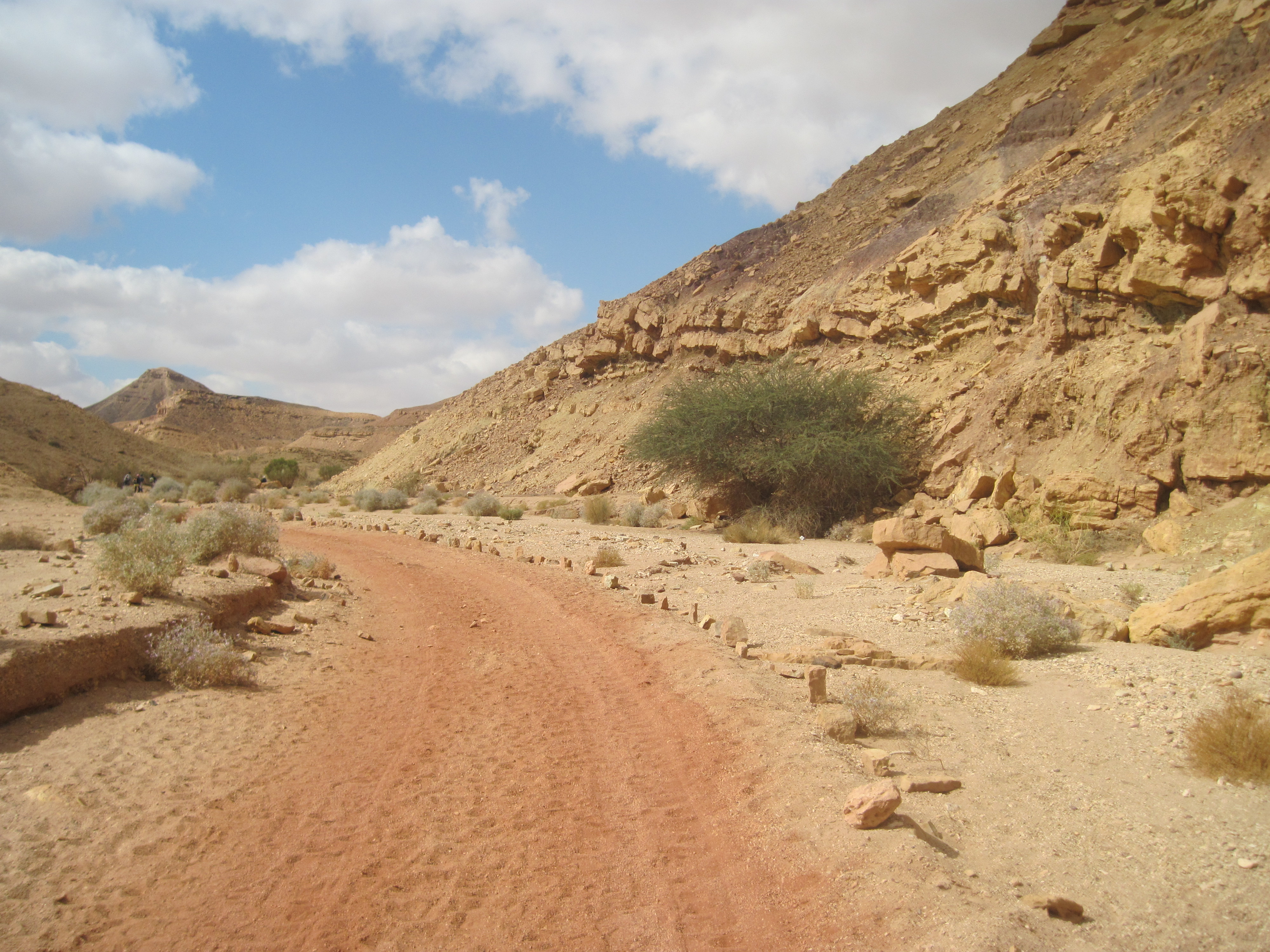
I’ve never before experienced a feeling quite like I did standing on the rim of a crater in the Negev desert this past weekend.  I felt all at once the vastness of the desert, my own comparative insignificance, and how incredibly blessed I was to be able to witness such amazing beauty.

We started our trip by leaving campus at 5:00 A.M. on Friday morning.  Driving south, we could see the diversity in Israel’s landscape as the lush green fields gave way to sand and rocks.  After a drive of about six hours, our bus left us at a trailhead on the side of the road, and we set off on our 8 kilometer (about 5 mile) hike.  We were about 75 students, plus 4 guides, two guards, and a medic.  At first, the hike was relatively flat and easy, although it was surprising cold and windy, and huge dark clouds threatened to rain on us.  Then we arrived at the edge of the Ramon crater.  The view was beyond spectacular.

We then had to pick our way down the steep descent, through the crater, then climb out the other side.  We all celebrated when we made it up the last stretch.  But alas, our rejoicing was premature – the bus had not been able to make it down the road to meet us, and we were going to have to walk another two miles!  At this point it was only our will that kept us going.  But finally we made it to the bus just as it started to rain. We then drove to the center of another crater, to the Bedouin camp where we would be spending the night.  We all pitched in and made a huge dinner of Israeli salad (chopped cucumbers, tomatoes, and onions), stir fry and rice, hamburgers and hot dogs, and of course, lots of pita.

Sleeping in the tent was quite an experience. I remember waking up in the middle of the night, and even though I was cozy in my sleeping bag, I felt how bitterly cold it was outside.  Waking up to the sun casting morning shadows across the crater, we set off on our second day of hiking.  This time we climbed up the edge of the crater and walked along the rim, and a couple of times, we had to climb rock scrambles where one slip could send you rolling down the edge of the crater.  At one point, there were even iron handles drilled into the rock; we knew when we saw those that this cliff meant business.  But we all made it through safe and sound, circling the rim of the crater around until we ended up back at our camp just before sunset.

We then set off for Eilat, where we stayed in a lovely hostel that fed us an amazing hot breakfast the next morning, which we were all incredibly grateful for.  On Sunday, we could either choose to stay at the beach or hike in the Eilat mountains to a peak where you can see Jordan, Egypt, and on a clear day, Saudi Arabia.  I chose the hike, even though I was pretty worn out from the past two days, and I was so glad I did!  Looking out over the Red Sea as it lay nestled in the midst of desert mountains was an exhilarating moment, to say the least.

It is really hard to describe in words how I felt throughout this weekend.  It was definitely the farthest I had ever been pushed physically, and the camaraderie the shared experience built within the international students was really great.  Passing each other on the way to class on Monday morning, we all knew not only how sore we were, but that the endless sweeping desert vistas we had seen together would be printed on our minds for the rest of our lives.


Barbados, Week 6: Island Hopping in St. Lucia

March 16, 2012

When I see tall things in the distance, one thing pops into my head:  I must climb that.  I was perusing my sister’s photos of her own St. Lucia vacation when I stumbled upon the Pitons of St. Lucia.  Like a mismatched set of gigantic fangs, Gros and Petit Piton rise out of the Caribbean Sea on St Lucia’s west coast and are its most recognizable landmarks.  They are so important to St. Lucia, in fact, that they named their own indigenous beer, Piton, after them.

I flew into St. Lucia on a late afternoon REDjet flight on Friday, a flight all of twenty minutes, knowing only where my hotel was located and that it had balcony views of Petit Piton.  Unlike the United States, finding a cab is never an issue; they will find you, and quickly.  I knew the price was set at US$65 from Hewanorra Airport to Soufriere, so I got a kick out of my cab driver when he told me “It’s $75 but, for you, i’ll knock it down $65”.  So nice of him to charge me regular price!  But as the drive progressed and we began talking, and I learned that he goes by the name “Cow”, we bonded as much as a taxi driver and tourist can.  I learned that he owns 4 acres of banana trees as well as driving the taxi van 7 days a week, and that he has three daughters from four different wives.  That is one busy man, I thought to myself.

Cow offered to drive me to Gros Piton the next morning, but I would have to be ready by 6:00 a.m.  Of course one of the two nights I was in a spacious, comfy, air-conditioned hotel room I wouldn’t even be sleeping for more than five and a half hours!  Soufriere, however, is settled in between beautiful, lush mountainside opening up onto a quiet fishing bay, so when I woke up at 5:30 a.m. with light clouds rolling over the jagged mountaintops and the sun illuminating just enough detail, and it was definitely a sight worth seeing.  All I had to eat was a bag of peanuts that morning, with two water bottles packed for my climb, before my guide Shem and I began the ascent of Gros Piton just before 7:00 a.m.  It was a good thing we left so early, though, because even by the quarter mile mark, I had sweat pouring down my face while Shem had not even broken a sweat.  I guess that’s the difference between casually keeping in shape and hiking a 2,619 foot peak everyday.  The trail consisted, at first, of inclined packed dirt with a few areas of steep broken rock that would have to be navigated with use of all four limbs.  As the path hit the half-way mark and continued upwards it morphed into steeper switchbacks with crude earthen stairs and wooden railings nailed between especially steep sections.  If it had been just me, I would’ve taken my sweet time, but Shem was under the impression that a young man of my age was capable of going faster than I wanted, and thus I pretended to be hardly winded when we would stop for breaks.  With aching limbs, I reached the summit look-out point about an hour and ten minutes after we began, and there it hit me that it was completely merited to be so winded, because I was really, really high up.  The view was stunning:  You could see nearly the entire length of the island, with many of its uneven peaks shrouded in early morning clouds.  Soufriere was just a cluster of houses behind Petit Piton across the bay, and you could see numerous sailboats jetting around the west coast.

The way down was a bit easier, and in the fifty minutes it took us to descend from Gros Piton’s glorious heights, I learned a little bit about my guide, Shem.  Although I didn’t ask his age, he must’ve been somewhere between 17-19 years old, and had graduated from school in Soufriere.  Shem lived near the base of the Piton and had four brothers and two sisters, but he was a middle child.  He had been working as a guide on Gros Piton for two years, hiking the mountain at least once, if not twice, daily.  He told me the fastest he had ever climbed Gros Piton was in 55 minutes, but the slowest was with a group of older tourists who took 4 hours to make the climb!

Traveling to unfamiliar destinations is exhilarating, but, at times, it can be just as frustrating.  Upon coming back to town, I needed to take out money for my celebratory post-hike meal, but of course Saturday was the day where the Bank of St. Lucia in town was inconveniently switching its location to a waterfront building.  The ATM would not be operable until Monday.  Cow had to pick up a couple in the northern capital city of Castries at 12:00, so I had to take an hour drive north with him, take out money in Castries, and take a public bus an hour back to Soufriere.  Exhausted, dirty, and desperate, I stumbled into Archie’s bar and restaurant around 1:30 p.m.  and had the best chicken rotis and salad of my life.  Despite my limited time in St. Lucia, the only activities I could muster the energy for the rest of the day was to nap on the beach, nap in my hotel room, eat dinner at Archie’s, and wander the town streets and talk with some locals until around 10:00 p.m.

Sunday I played the typical tourist role, with Cow taking me and a couple from Arkansas around to the drive-in sulfur volcano just outside of Soufriere along with a trip to Toraille Falls.  It made for some good picture taking, to be sure, but it did not have nearly as an authentic, organic feel to it as did yesterday’s hike up Gros Piton.  Cow agreed to drive me over to the east coast for some sightseeing before my afternoon flight back to Barbados, and I even got a dip in at a beach down the road from the airport before my 5:00 pm flight.  I wouldn’t recommend cutting one’s time that close, however, as I enjoyed myself at the beach so much I almost missed the cut-off for check in.  All in all, a great weekend away that I would recommend for anybody — well, anybody who enjoys challenging physical exertion, that is — and a nice break before my head is buried in the books for midterms at UWI!