Kimberlee in Mongolia: Lessons from my Nomadic Homestay

April 21, 2014

It feels strange to be sitting here at my computer and trying to find a way to explain these past 2 weeks. Each of the over 800 pictures that I took have their own story to tell, and there are a million moments that I want to share. I have to admit that I’ve been putting off writing about my experience because explaining 2 weeks of my nomadic homestay is impossible to condense. How do I accurately describe how it felt to spend my days telling time by the sun? How it felt to sit in the grass and only hear the sound of hundreds of animals chewing? Or what it was like to watch a goat give birth on a mountain?
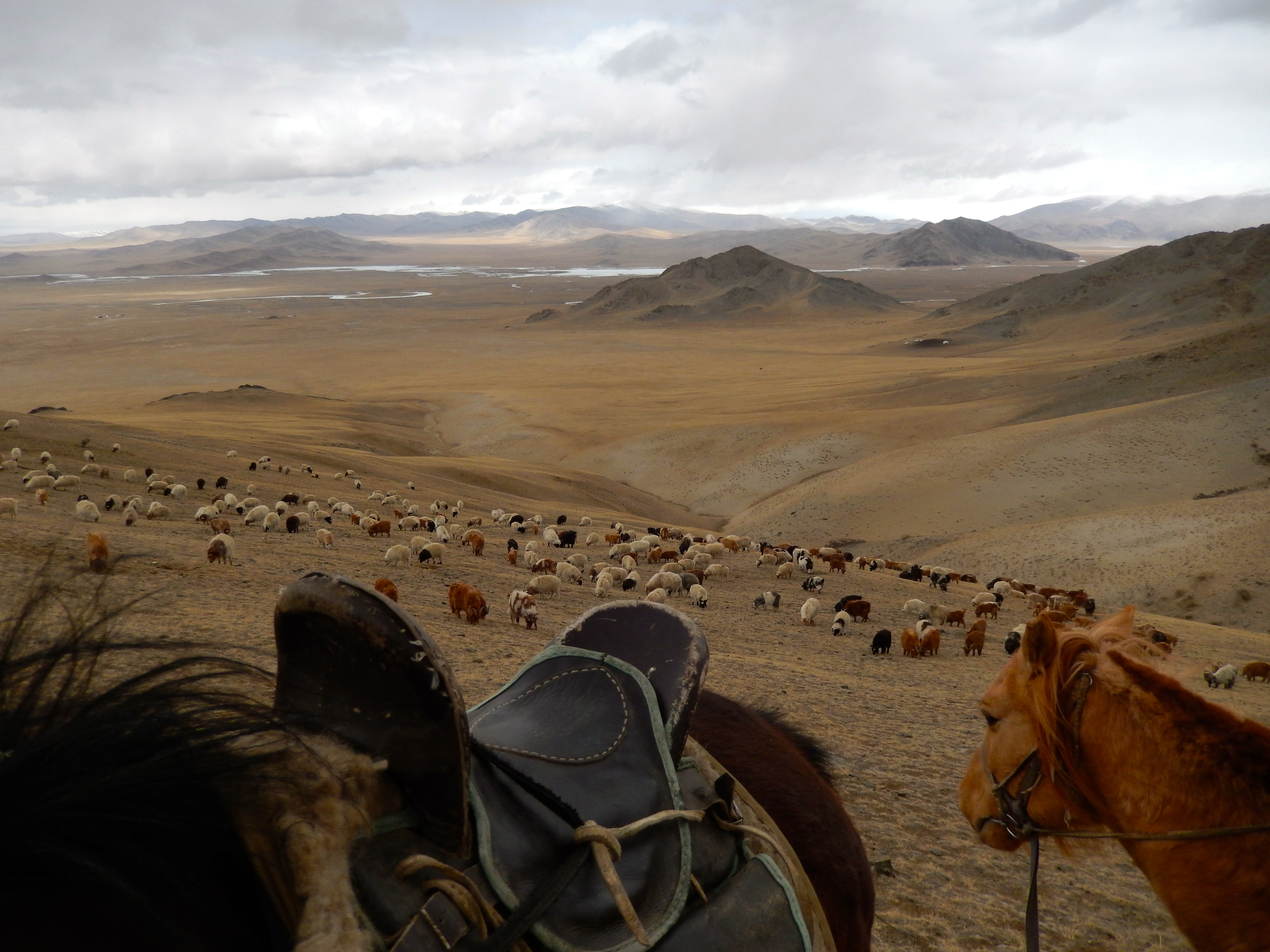
 

DSCN1374

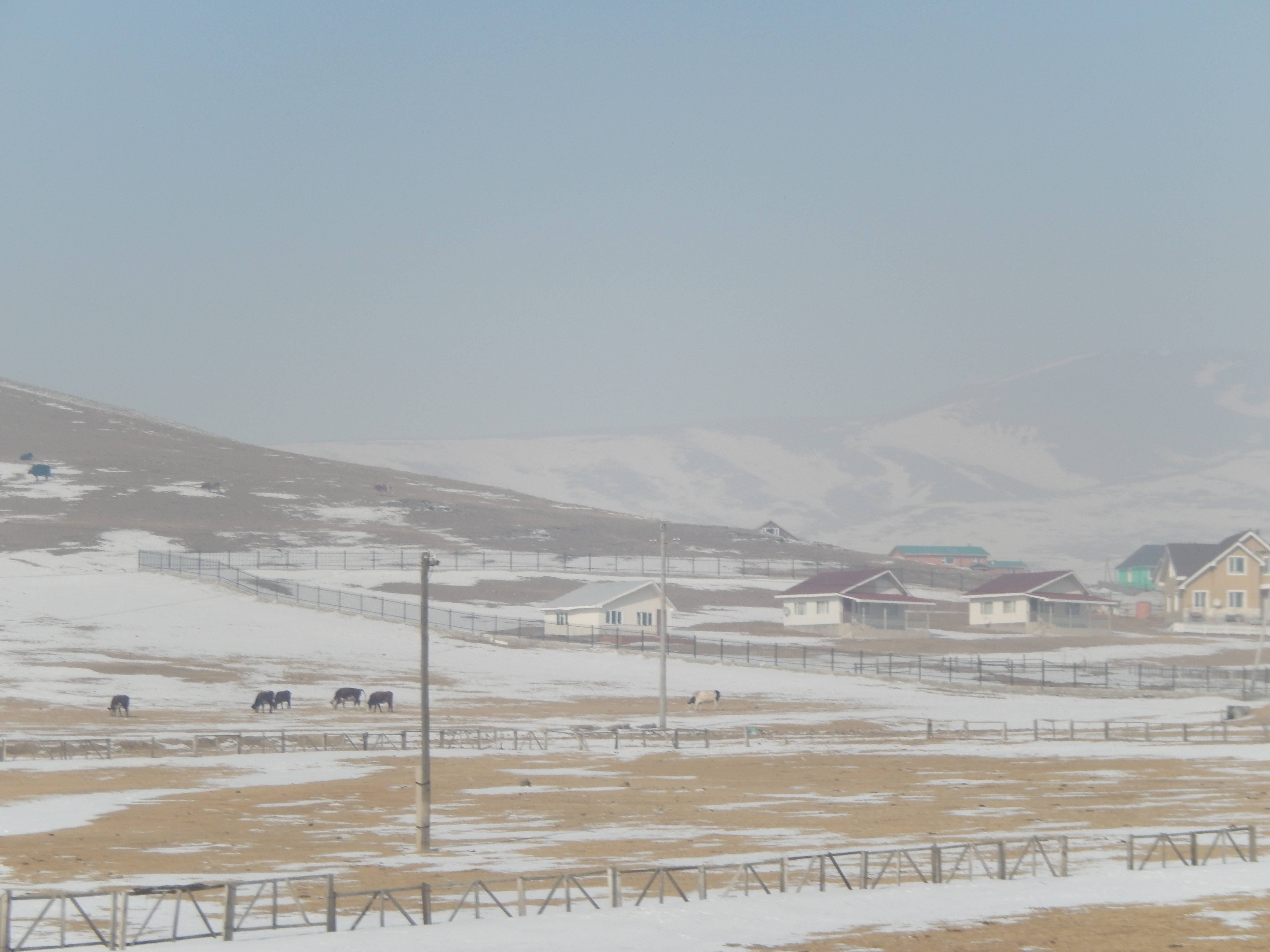
How can I fully explain how it felt to see this view everyday?


I ended up surprising myself with the amount of unexpected lessons that I learned. If you had asked me at the beginning to outline my expected challenges, only half would have been accurate. I probably would have mentioned challenges like: not bathing for 2 weeks, having no internet connection, the Mongolian language barrier, and the food. However, I would say that out of these challenges, the only one that turned out to be true was the language barrier. But even this was not as challenging as I thought. I became an expert mime by the end.


The challenges that I ended up having were completely different than I anticipated, which I think is the beauty of this experience. During my lows, I tried to accept these difficulties and get something out of it. The biggest challenge that I dealt with was boredom. The chores were not always exciting. Learning to herd was a beautiful experience, but there were days when 10 hours of herding became less exciting. Sometimes I would make up poems in my head, which made me understand why storytelling and singing are important to Mongolian herding culture. Other times I thought about life and all of it’s complexities (as stereotypical as that sounds). I can’t imagine another time in the near future where I’ll nothing to do but simply think for 2 weeks straight. As our academic director said: “Boredom is starting to become a luxury”.
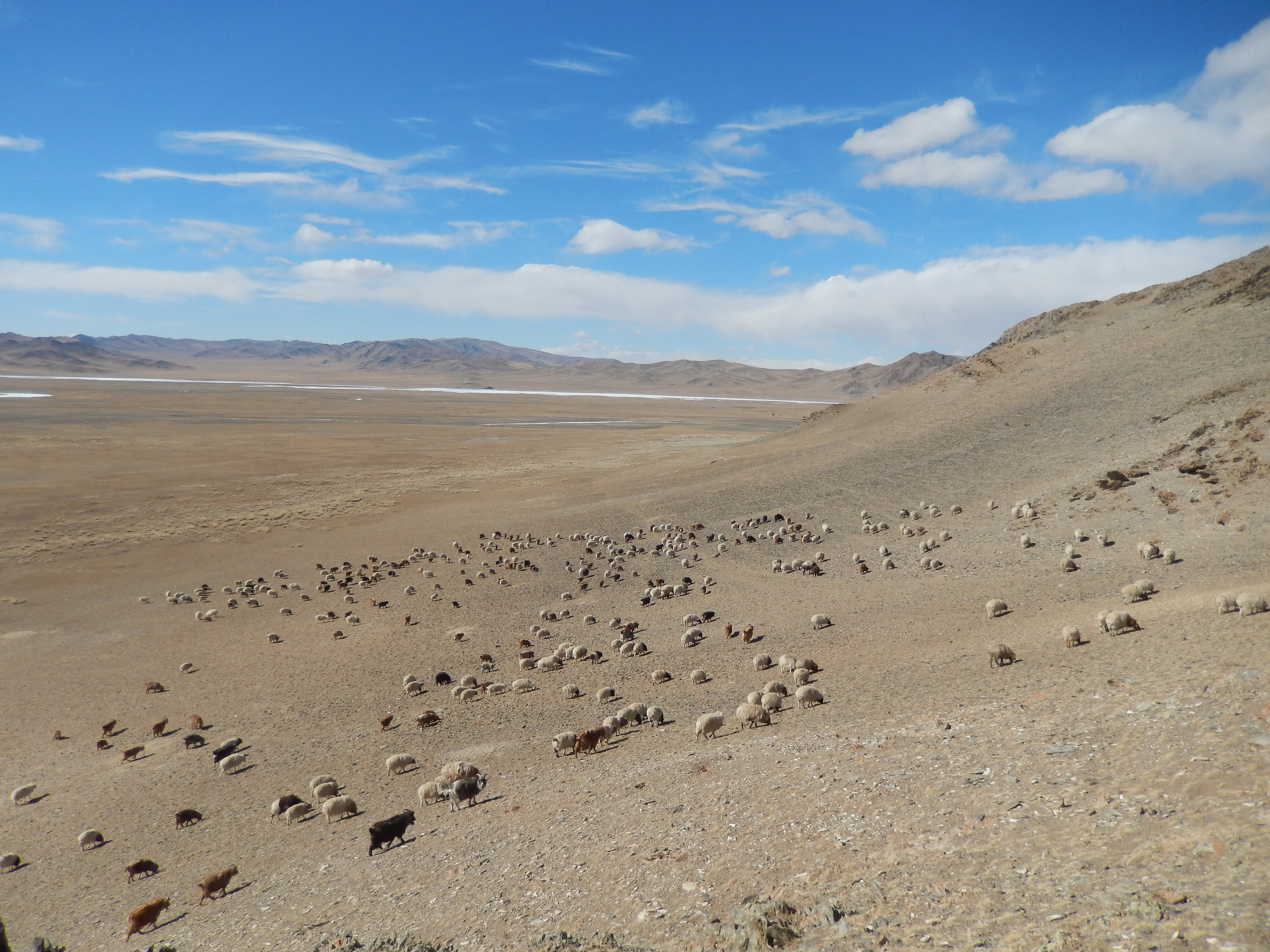
 

DSCN0988

At least I experienced boredom while looking at this beautiful scenery

Along with boredom, the extreme feeling of isolation was incredibly overwhelming and unexpected. I anticipated isolation in a different way. I thought that being disconnected from the internet would be isolating, but I mostly felt isolated from the group and people who speak the languages that I understand. I wanted to process with someone in words, and yet I had to deal with all of my emotions on my own. This was independence at its most extreme. It was difficult to deal with, but it was completely worth the struggle.


One thing I can say for certain is that this homestay was twice as difficult as my rural Ugandan homestay. In Uganda, I had a fellow student as a host sibling, my family spoke English, and our whole group lived in the same village. Here, the closest student to me was at least a 45-minute walk away. It was also only 5 days in Uganda, compared to almost 2 weeks in Mongolia. I didn’t experience any boredom or feelings of isolation, which was my biggest challenge here. But I will say that I think that I got more out of this experience partly because of the unexpected challenges I faced.


Once I was able to bond well with my family, I immediately found a great amount of joy. When I look back in my memory, I first think of my positive experiences: playing cards, brushing goats for cashmere, playing with the toddler, seeing the sunset while herding, and catching baby goats. Even though I had lots of lows, it was well worth my time and energy to work through them by myself. The whole time I lived there, I never felt like I’d made a better decision than coming here to Mongolia.


DSCN1447

DSCN0851

DSCN0886

When I look back at my time there, this is what I see in my mind


Kimberlee in Mongolia: Blending In

April 17, 2014

My biggest surprise since coming to Mongolia is this: many Mongolian people assume that I’m Mongolian. I find this surprising because most Asians can immediately tell that I’m not full Asian, and not a local in their country. Besides the shape and look of my face, I think that it’s fairly obvious with the way I walk, dress, and conduct myself. When I’m in South Korea and Japan, people always speak to me in English and stare at me because I look like a foreigner.


So naturally, I expected similar treatment from local Mongolians. But in the month that I’ve been here, I’ve had less stares and more random conversations with Mongolians. I’ve had people on buses, sidewalks, and stores try and strike up a conversation with me in Mongolian. The kicker is that even when I tell them that I can’t speak Mongolian well, they keep chattering away as if I’m deceiving them by “pretending” to be a foreigner! This unexpected finding has turned out to be a great personal learning experience- both with understanding my position in the world as a biracial person, and also with understanding how Mongolians expect other ethnicities to look like.


What I find most interesting is that Mongolians are always boasting that they can immediately tell if a person is not a Mongolian. I’ve asked at least two-dozen Mongolians if they can spot a Chinese, Japanese, or Korean on the street, and they always insist that they can! But when it comes to me, almost everyone is fooled. The only time that I get more stares and squints is when I wear my glasses. I’m guessing that it highlights the shape of my eyes or changes the shape of my face. Either way, it’s been an interesting experiment to see when people treat me as a foreigner or as a local.


I think that the main reason that people assume I’m Mongolian is because Mongolians are incredibly diverse in the way they look. I realize that all Asians are diverse in different ways, but Mongolians are at a whole different level. We’ve had Mongolian speakers on our program that could pass as Middle Eastern or Southeast Asian. There have been some that I assumed were also foreigners until they told us that they could only speak Mongolian and needed a translator.


Many Mongolians have told me that people are so diverse because of the multiple tribes that have historically existed in Mongolia. In fact, Mongolian and Turkish cultures have striking similarities because they coexisted in Mongolian territory for a long time. Although most Turkish tribes made their way to modern day Turkey, there were some that stayed. This has always been the explanation for the existence of Mongolian people with green, hazel, and light brown eyes who are otherwise “Mongolian”. The existence of these more Caucasian features explains why I can pass for Mongolian. Additionally, there is a large Kazakh minority that exists in Mongolia, diversifying the nation even more.


Even though I still find it strange to blend in, it’s been mostly positive. I feel safer walking in the streets because hardly anyone looks at me twice, or thinks that I’m rich. It’s great not to have people always staring at me or studying my face to try and box me in with a specific ethnicity. Also, an increasing number of people seem to distrust and dislike foreigners because they’re associated with the mining companies, and it’s nice to be separated from that stigma.


The only negative that I can say is that I feel pressure to adhere to the cultural norms that I haven’t quite figured out yet! I got a lot of strange looks when I ate in the streets until I finally figured out that it’s rude to eat while walking. Once I wrote something important on my hand, and someone yelled at me. I found out later that writing on the body is culturally inappropriate because they write prayers and messages on the bodies of the deceased. But at the end of the day, I get to understand the culture and embody it in a unique way. It makes me more observant and aware of how other Mongolians act, which helps me become even more engaged with the culture. Overall, I find that it enriches me in a way that I never would have expected when I first came here.

DSCN0972

My host nephew’s hair color is a good example of the variation in Mongolian genes


Austen in Ireland: St. Patrick’s Day and a Mid-semester Review

April 3, 2014

So once I returned back from France, I met up with my friends who were visiting Dublin for the weekend from Edinburgh. The airport was absolute mayhem for all the visitors coming into Dublin for St. Patrick’s Day weekend. I finally met up with them late afternoon and we went through the Temple Bar area, which was packed, and ate dinner. My friends had three hours of sleep the night before because of their early flight (they got to Dublin early and went sightseeing for the majority of the day before meeting up with me) so we went back to UCD early at night. The next day, we decided to take a day trip with a tour company to Glendalough and Kilkenny. Glendalough is a valley of two lakes, with essentially lakes in a valley right in between two mountains. The one lake in particular is breathtaking because of its beauty. For the afternoon, we went to the city of Kilkenny. It was a really neat city and was packed because of St. Patrick’s Day weekend. It had a castle that we explored that had some pretty regal rooms. All in all, it seemed like a quintessential large Irish town. I even got some shepherd’s pie in a pub while watching a rugby match.

Glendalough

Glenadalough

Once we got back to Dublin, we planned to go to some pubs but ran into a random carnival so we had to ride some ride there. We decided to go on this ride called the “Superbowl” (I have no idea why the name) that spun the cars that you are in really fast in a circle as well as going up and down at the same time. It was a pretty nauseating ride (and really long, close to 10 minutes) so I was glad to get off it when we did. We then went to a pub and had a couple pints of Guinness before heading back. Sunday, I showed my friends around the campus of UCD and they were amazed by its size but also its beauty. Then, my one friend and I went to the Guinness storehouse (my second time but I was a trooper because my friend really wanted to go) where we learned more about Guinness and the brewing process before pouring our own pints and drinking them. After this, we went to the National Museum of Ireland-Archaeology, and looked at artifacts from many different eras. We ran into another carnival and decided to go on the Ferris wheel at this one. There were great views of the city and it was great because I had never seen Dublin from up above before. Before my friends left, we had calzones for dinner at a calzone place. They left for their voyage back to Edinburgh and I went back to prepare for St. Patrick’s Day the next day.

St Patick's Day Temple Bar

St. Patrick’s Day crowds in Temple Bar


St. Patrick’s Day was insane to say the least. It turns out all the Europeans travel to Dublin so the streets are about four times as crowded as they usually are. I woke up at 8:00 in the morning to catch the 9:00 bus (the earliest one into the city) with my friends so we would be able to get to the parade early. We got to the city at around 10:00 and got a prime spot on O’Connell Street in the second row. There were a lot of weird floats and such but it was an overall good parade. There were many high school and college marching bands. There was even Clover Hill High School in it! (Richmond, Virginia shout out) University of Illinois and LSU also made an appearance in it. Once the parade ended, it took us about thirty minutes to finally move but we eventually found the pub we were looking for (after getting through Temple Bar unscathed somehow). I made a decision earlier in the day that I was only going to have Irish beer (as it is St. Patrick’s Day) and I succeeded. Over the course of the day, I had Smithwick’s, Guinness, and a “Galway Hooker”- the name of an Irish Pale Ale. We went to Tolteca (the Irish version of Chipotle, it literally looks just like it) because there’s just nothing like a burrito on St. Patrick’s Day in Ireland. We then continued our pub hopping and I met up with another friend who then came with us to another pub (our fifth pub of the day). At this point I began to get worn out so part of our group decided to get dinner (chicken shawarma, such Irish food on St. Patrick’s Day) and then head back to UCD. I was so tired that I feel asleep at around 11 p.m. but it was a fun day.

St. Patrick's Day Parade

My view of the St. Patrick’s Day parade


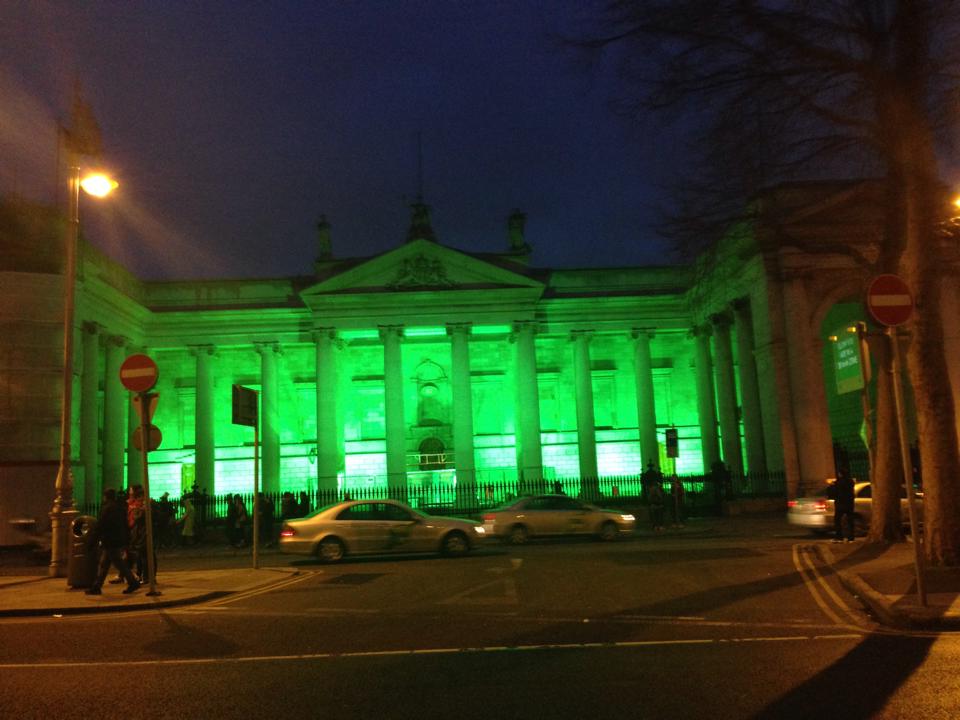
Green Building

Dublin ‘greens’ a lot of their buildings for the festivities

So it’s really hitting me that I’m halfway done with my semester abroad. I have less than two months abroad and I’m working on planning my last trips. It’s also hitting me because I’ve been doing housing for Richmond and scheduling is coming up soon too. I have been doing some assignments worth a large percentage of my grade (I had two essays due recently, one worth 50% of my final grade and the other 30%!) However, other than this I haven’t had any assignments due as my final couple of weeks are looking to be stressful with finals coming soon after that. I haven’t been spending as much time on my work as at Richmond, but I’m sure it will pick up in a week or so. I’m just sad to be leaving soon so I’m trying to cross off all off the sights I want to see before I leave! The semester has literally flown by and I’m sure the second half will fly by as fast as the first half did and I still have so much that I still want to do.


Kimberlee in Mongolia: Mongolian Food

April 3, 2014

I have to admit that eating Mongolian food was by far my biggest fear with coming here. I’ve had a lot of stomach issues since Uganda, and the stereotype of Mongolian food is that it’s fatty, greasy, and vegetable less- all opposite of what a recovering stomach needs. During our first dinner at the hotel, we were served traditional Mongolian food, which definitely left me with a huge stomachache! But since then, I’ve been able to maneuver these food obstacles with relatively few problems.


The number one thing that I’ve noticed about Mongolian food is that it has 2 main staples: meat and dairy. Their meat seems to usually be beef, mutton, or goat, but I’ve also had chicken once too. If I had to choose 1 word to describe their meat, it would be “fatty”. Contrary to the United States, fatty meat is more expensive and more valuable in Mongolia. I’ve had some of the biggest chunks of fat that I’ve ever seen floating in my Mongolian soups. A lot of “meat” I’ve eaten is pure fat. Many Mongolians keep telling me that they prefer the fat because of a). the taste and b). to keep warm in the winter. These seem like valid arguments to me.


DSCN0243

Relatively non-fatty meat from my Mongolian host mother’s perspective.


And by “dairy”, I mean anything and everything dairy related. I have to admit that I had no idea that so many products could be made out of milk. And they don’t let any milk go to waste either- they milk cows, goats, sheep, camels, and horses. I have a feeling that I’m missing some animals, too. The main foods seem to be milk tea, yogurt, and various types of curdled milk products. I’ve tried various creations, and I have to admit that from my ignorant, non-Mongolian perspective, they can only be described as “putrid”. My family enjoys this strong flavor, and I’m slowly trying to shift my own taste palate.


Thankfully for my stomach, my host family has relatively non-fatty food by Mongolian standards. The first day I came, Eme (my host grandmother) asked me what my favorite food was. When I answered with “any kind of soup”, I didn’t expect to have soup everyday! But I’ve been loving it. She puts lots of potatoes and carrots in her cooking, and I enjoy a nice, hearty meal every night. And if I’m lucky, we’ll have some leftover for breakfast!

DSCN0250

The typical soup Eme makes for dinner, along with a delicious, yeasty dough for dipping.


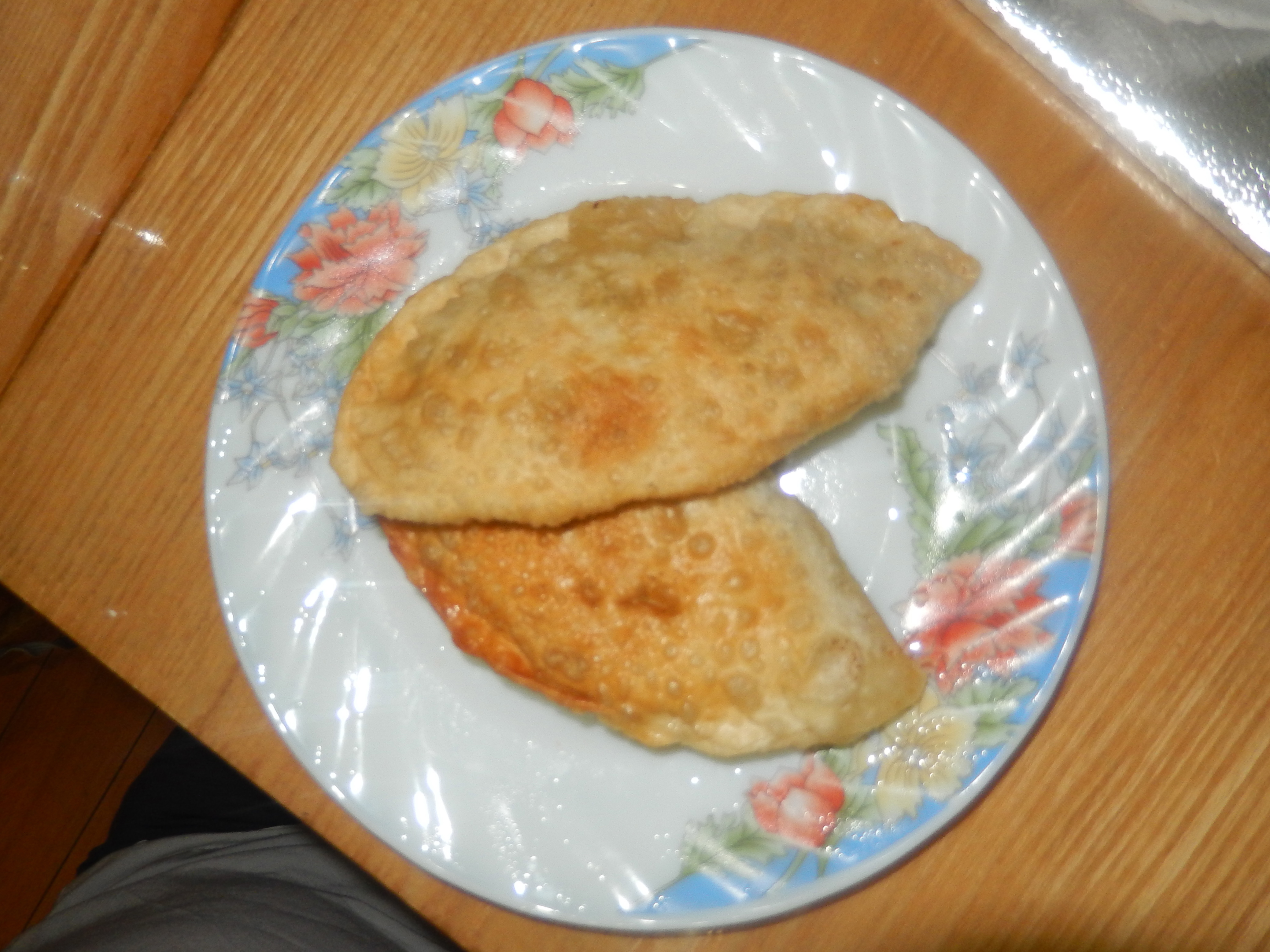
DSCN0273

These are another staple in our home. They’re called “hoshor”, and are kind of like a large, fried dumpling with beef and onion inside.


Kimberlee in Mongolia: A Sunny Saturday

March 31, 2014

After almost a week separated from my host family, it was so nice to finally have the chance to spend time with them again. Who knew that after two weeks I’d be so attached to them? What an incredible feeling to have already formed strong bonds.

I began my day with a short trip to a conservation center/museum with Tuugi’s 7th grade class. We basically watched a 45-minute video on the deterioration of Mongolia’s environment and later wandered around many stuffed Mongolian animals. Although the tour was in Mongolian, most of the signs were also in English. That made it a lot easier for me to be engaged with the museum’s artifacts, and it was interesting to learn about the endangered species unique to Mongolia. The center was entirely funded by the Japanese government, so everything inside was covered in “From the People of Japan” stickers. Fun Fact: Japan is Mongolia’s biggest foreign aid provider

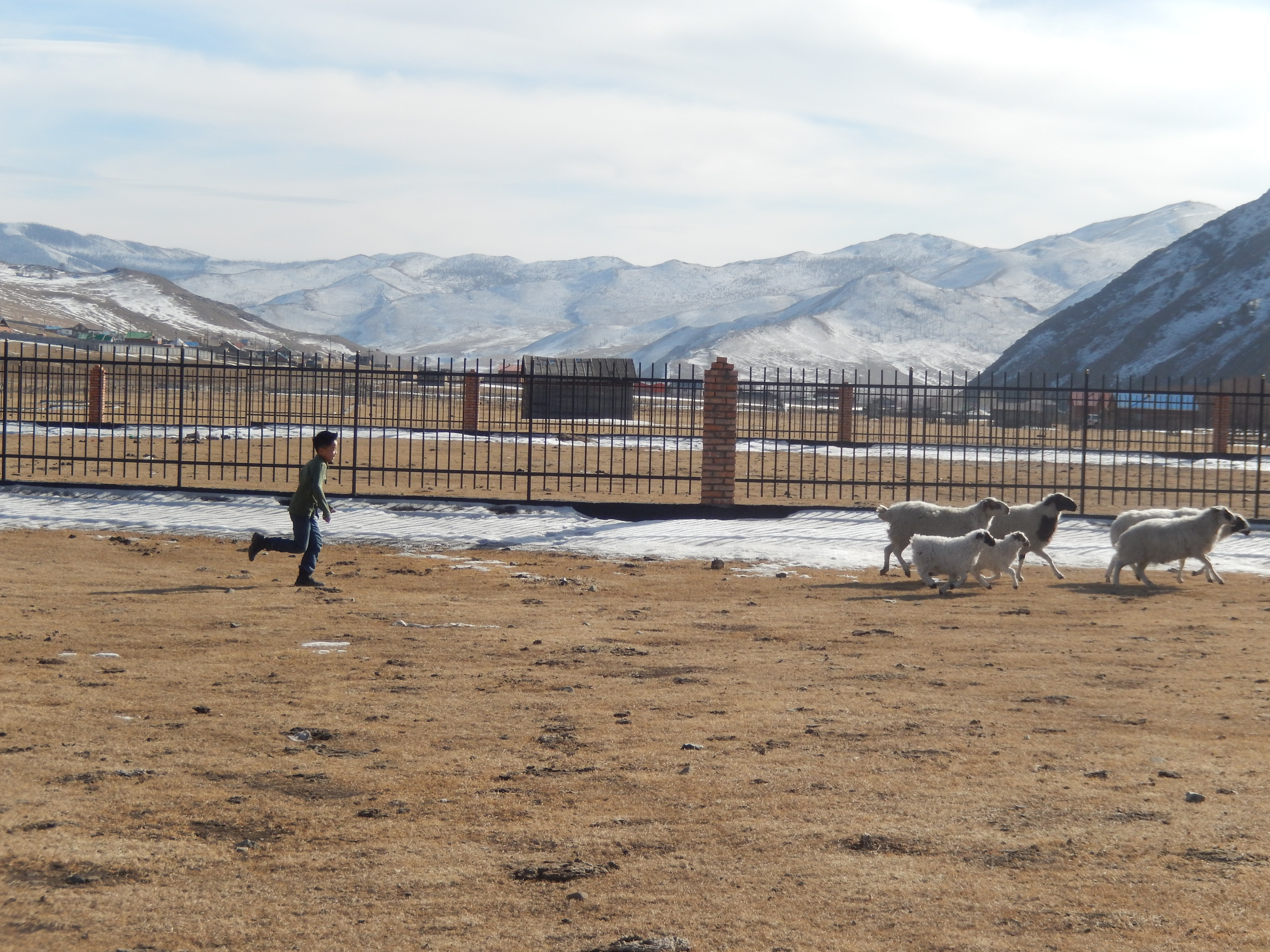
After lunch, my host family decided to visit some family members in the countryside. We drove about an hour outside of the city to a little village wedged between the mountains. It was absolutely stunning. We pulled up beside a giant herd of sheep and goats, and the kids immediately sprinted out to start chasing them.


DSCN0559

Temuujin chasing after the sheep


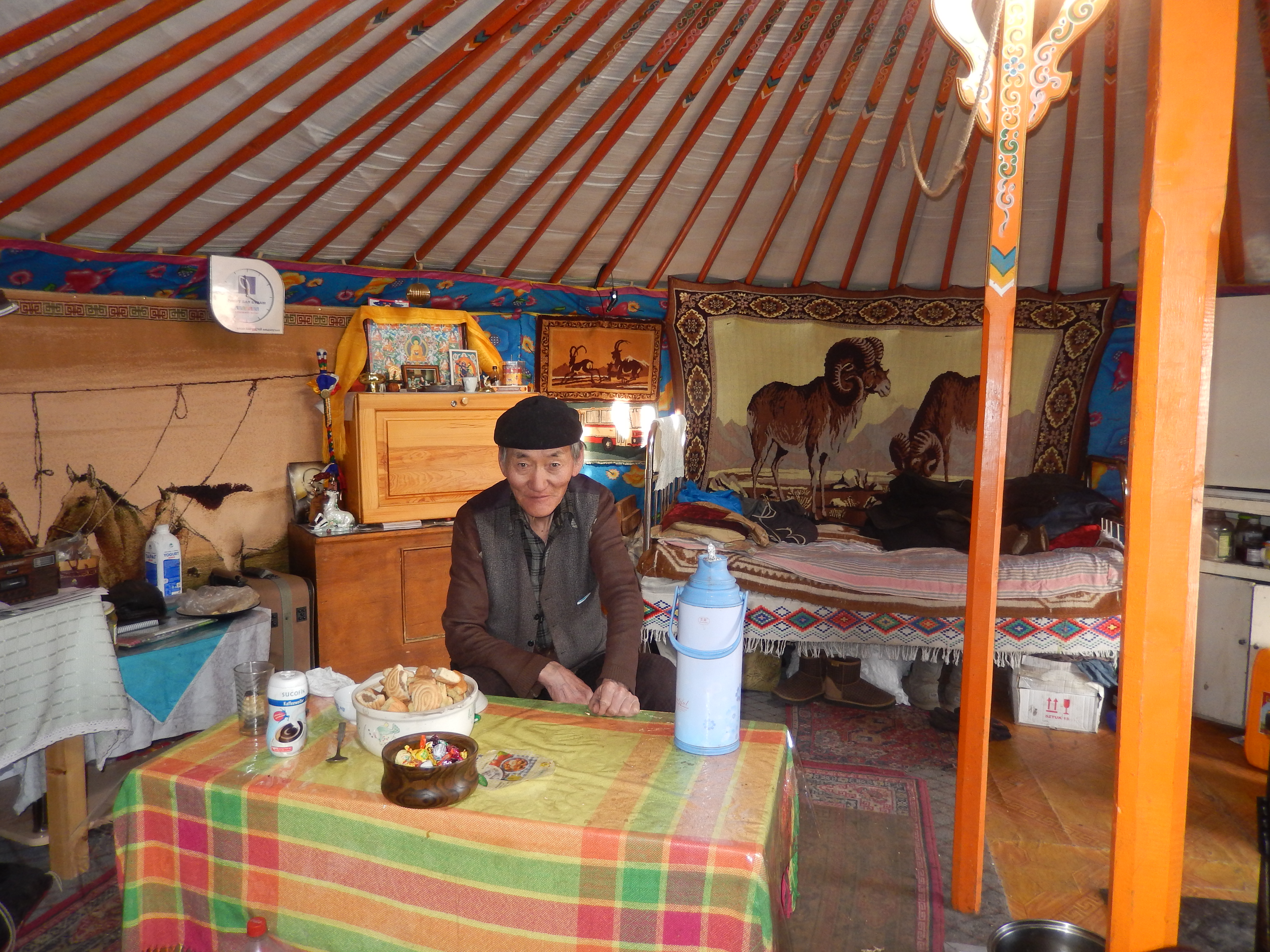
After the kids (both the human and the goat ones) became too exhausted to play anymore, we were invited into the ger for some tea and cookies. It was incredible to finally be inside of a ger. It was a lot larger, brighter, and sturdier than I imagined. There were lots of tapestries of horses and rams, and there was even a TV run by solar panels. All I could think about was what it must be like to wake up every morning in a ger to an amazing view outside your door. I guess I’ll be finding out what it’s like soon.


DSCN0594

The view from inside the ger.


It was also there that I finally figured out that we were visiting Grandma’s late husband’s sister. Because we had stopped by without calling (which seems to be a typical practice), we had just missed her driving into the city. Instead, we were hosted and shown around by her husband. I was able to introduce myself in Mongolian, but I missed hearing his name in his response. He was very hospitable, and gave us a mini-tour of their barn and animals.

Most of the animals were scared of humans, but there was this one goat in particular that kept following us around. He would always be nudging my arm while I was trying to pet another animal or take a picture. He was the only “billy” (male goat) of the herd, and was the father of all the baby goats running around, so I called him “Papa Goat”.


DSCN0579

Papa Goat and the traditional Mongolian ger

We started to drive home just as the sun was setting, and it was a beautiful backdrop to what was truly a wonderful day. Tuugi, Temuujin, and Tulga all passed out on top of me in the backseat of the car, and it was nice to have some quiet time for reflection after a busy day. Looking back, we technically hadn’t done a lot, but it was a fun and fulfilling day. I count myself very lucky to have a host family that is always looking out for me and introducing me to new things. Simply put, it was the kind of day where I knew that I had made the right choice in choosing Mongolia.


Kimberlee in Mongolia: Excursion to Erdenet

March 28, 2014

Our group officially began our first long excursion outside of Ulaanbaatar to a small city called Erdenet. It’s the third largest city in Mongolia, and is located northwest of the capital. We mainly traveled here to study the copper mines, local factories, and the ecological issues facing the city.


Traveling to Erdenet was an adventure in itself. We took an overnight train from Ulaanbaatar to Erdenet, and I got to experience a sleeping cabin in a train for the first time. It was crazy that we were able to fit 4 people in that tiny cabin! I’d estimate that it was around 5-6 feet across. There were 4 cots and a top shelf for our backpacks. I slept on one of the top bunks, and I was terrified that I would roll off during a sharp turn. Thankfully, this didn’t happen.


We left Ulaanbaatar around 8pm, and arrived in Erdenet at 6:30am. After breakfast at the hotel, our program activities immediately started. It was difficult to not doze off with only a couple of solid hours of sleep, but somehow we managed. It was awesome to wake up in a whole new city. I noticed that there was a lot less pollution in Erdenet. Like Ulaanbaatar, I was struck by the dramatic contrast between the beautiful landscape and the rapid industrialization. Erdenet has a very interesting history because its existence is directly connected to the opening of its copper mine. Without the mine, there would be no Erdenet.


After a few lectures from local officials about the issues that Erdenet faces, we set off to the copper mine in the outskirts of the city. This mine is roughly the 10th largest producer of copper in the world, and has supported Erdenet’s (and even Mongolia’s) economy for decades. It was difficult to see the beautiful landscape destroyed, but in some ways the locals consider it a necessary evil. The existence of this mine supports the city’s economy, and gives many jobs to Mongolians. It’s a concept that I think I’ll grapple with for the entire semester. It’s even harder to have a solid opinion on it because many Mongolians we’ve met are also conflicted about the mining.


DSCN0445

The open pit copper mine in Erdenet.


Although learning about the copper mine was interesting, it was nice to have some other activities to get to know the city. Everyone talked about the mine, but the city had so much more to offer us! We hiked, visited a cashmere factory, and even met with local university students. We had our “drop-off” in Erdenet city, and were placed in the hands of the university students. My group had to research the theme of “transportation” for two hours, so we headed to the local train, bus, and taxi stations. It was awesome to explore the city with a few of its inhabitants! I can honestly say that Erdenet was both an interesting learning experience and a great opportunity to explore a different city.


DSCN0520 (1)

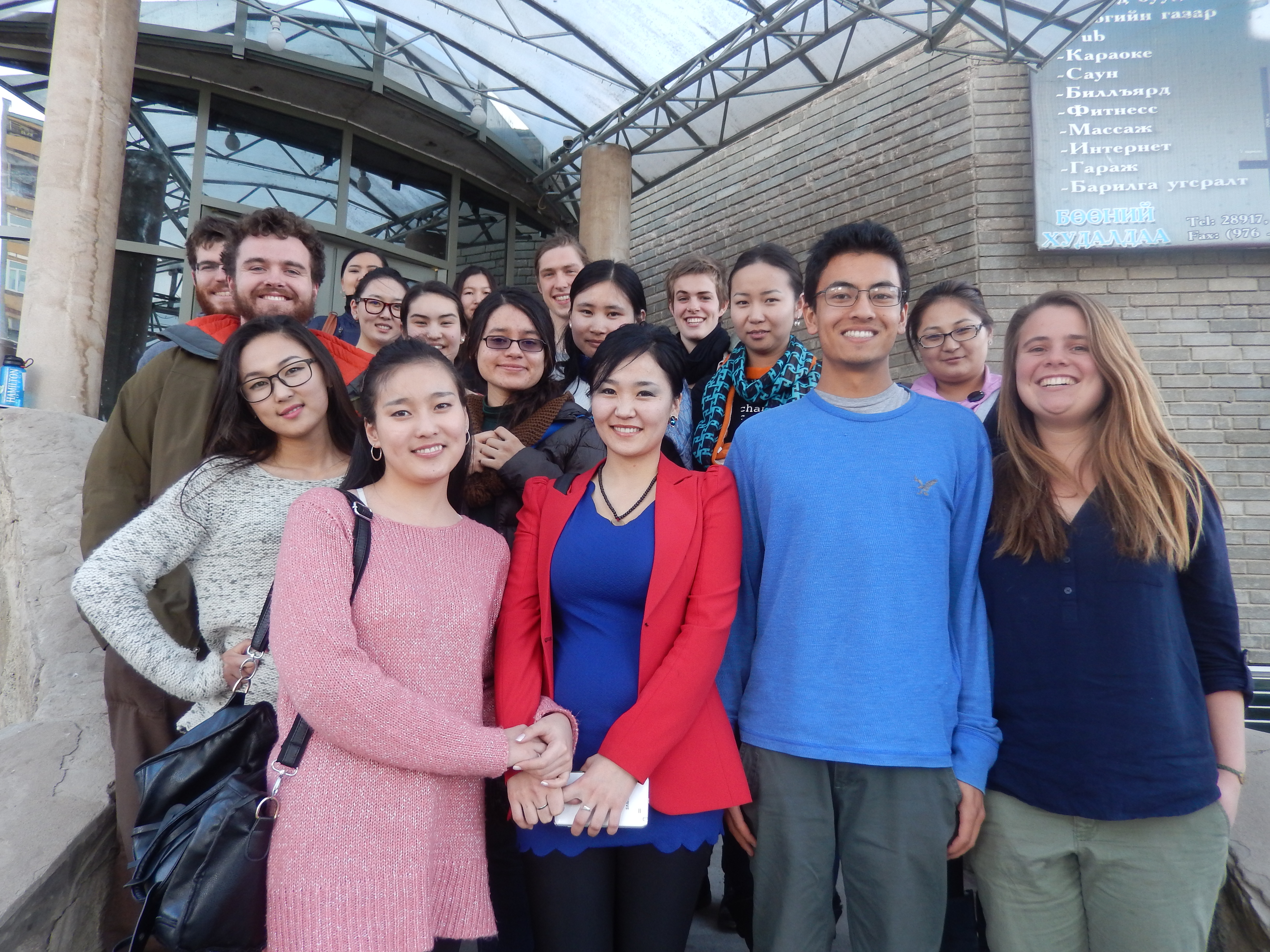
Our entire group of both SIT students and Mongolians after the drop-off.


DSCN0484

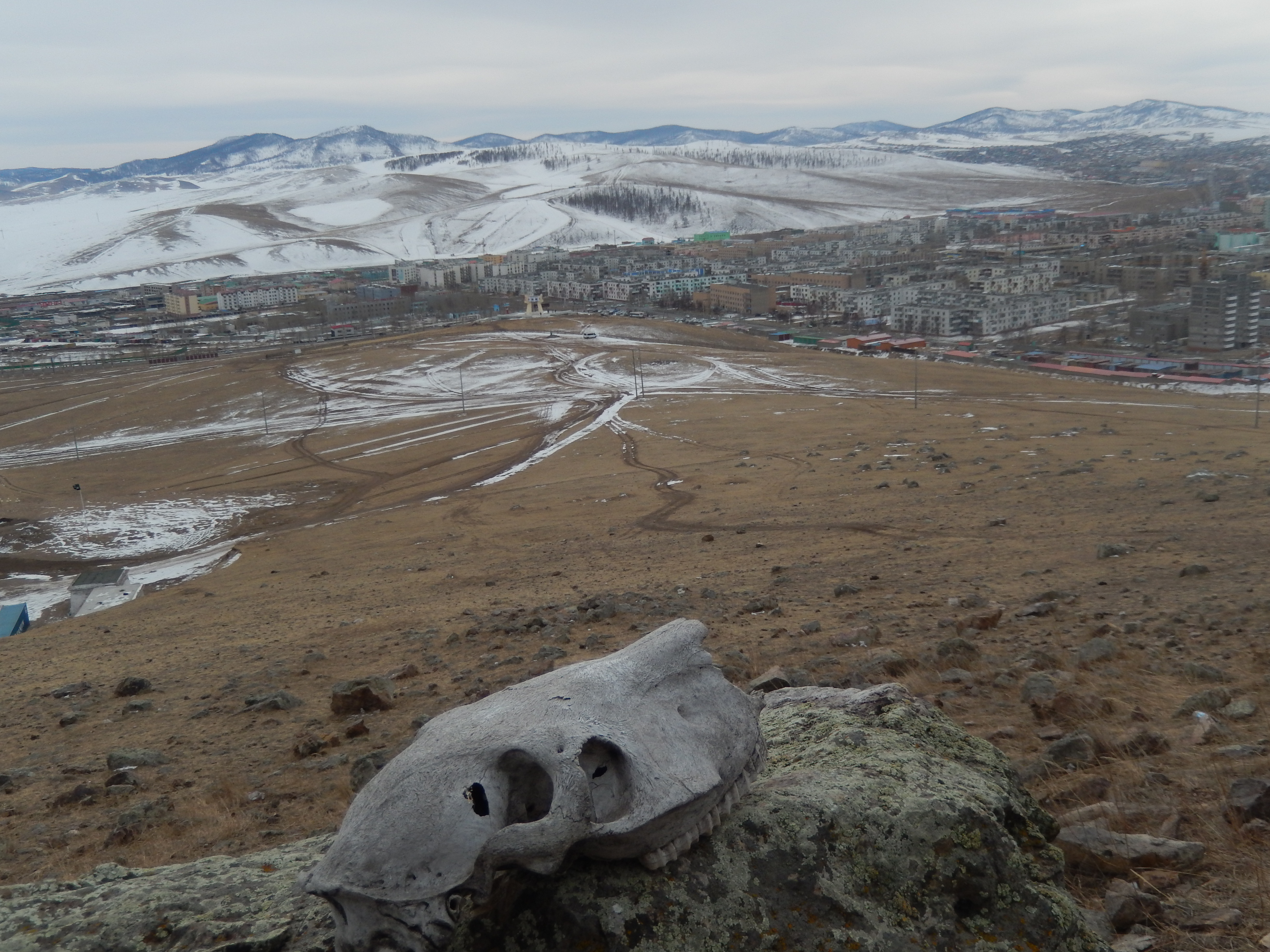
A horse skull that a student found looking over the city of Erdenet.


Austen in Ireland: France for Spring Break

March 21, 2014

So here at UCD we get two whole weeks off for spring break (or mid-term as they call it)!  We got off the weeks of March 10 and 17.  So, the first week I traveled to see my parents in southern France, as they are renting an apartment for two months in the city of Aix-en-Provence.

On Friday, I flew from Dublin to Carcassonne (a town in central France) to meet my parents and we drove three hours to visit the city of Marseille.  Here, we walked around the port and saw some beautiful areas of the city, but our main reason being there was to see my first European soccer match, Marseille vs. Nice.  Marseille’s stadium was stunning with a capacity of around 60,000.  It was probably the largest stadium I have been in.  The match was an intense one but Marseille ended up losing 1-0 to a Nice free kick in the second half.  After a long day of traveling, I got back to my parents’ apartment around midnight.

Stade Velodrome

First European soccer match! Stade Velodrome, Marseille’s stadium

On Saturday, we explored the city where my parents are staying, Aix-en-Provence.  I had been there a couple of times, but it was neat to be there as a “local” instead of a tourist and going back to an apartment instead of a hotel.  We explored the many squares and an enormous market that was going on throughout the day.  We also walked down the Cours Mirabeau, the large street in the middle of the city lined by trees.  Another noteworthy site was the gardens in the Pavillon Vendome.  For dinner, we had great Vietnamese food.

Cours Mirabeau

Cours Mirabeau, Aix-en-Provence’s tree-lined promenade

We went to the Musee Granet, the main museum in the city, on Sunday.  It had paintings by famous painters such as Cezanne and Picasso.  It had a variety of historical objects too, from art to sculptures.  The museum is in a beautiful historic building.  We ended up visiting a different building across the city that is also associated with this museum that had even more pieces of art and a great deal of Picasso paintings.

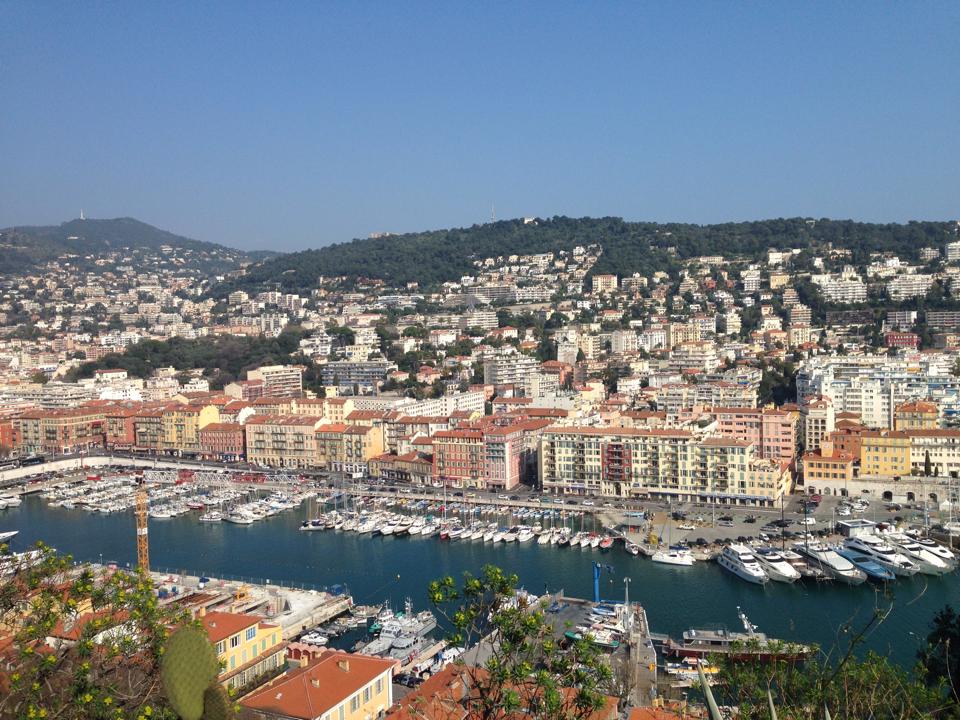
On Monday, we went to Nice, a large city right on the Mediterranean Sea.  It is an absolutely beautiful city with breathtaking views.  We walked around in the historic part of Nice (Vieux Nice) and had a great lunch in a square overlooking a church.  After lunch, we walked up to a park above the city that had amazing views of the port of Nice, sea, and historic Nice.  It was great to be able to see the whole city.  After this, we walked along the sea and the famous Promenade des Anglais before going to the Cours Saleya (a humongous market with many things from food to paintings).  We left Nice and got back to Aix-en-Provence around dinnertime.  At that time, we went to get some falafel, as falafel is one of my favorite foods!  It was a great falafel sandwich.

Nice port

The beautiful port of the city of Nice

Tuesday, we stayed in Aix-en-Provence and explored some other attractions.  In the morning, we visited the Atelier Cezanne, the gallery where painter Paul Cezzane painted many of his paintings.  It was amazing seeing how similar this gallery looked to how it was when Cezanne was alive.  The old building must require a fair amount of maintenance.  After this, we had a great picnic lunch in the garden near his gallery, where Cezanne painted some of his famous paintings of Mount St. Victoire.  It was surreal being able to enjoy a traditional French picnic of a baguette and goat cheese while being able to take the serene landscape and the same mountains that Cezanne painted.  After this, we had a relaxing afternoon and had a Turkish dinner; I had lamb.

We traveled to other cities and towns in Provence (a region of southern France) on Wednesday.  First, we saw the hospital where Vincent Van Gogh spent some of his later years when he was experiencing emotional and mental duress.  After this, we went to the town of Saint Remy de Provence.  It is a classical French town with beautiful buildings, squares, and fountains all around the older part of the town.  There was a large market going on, where I had a fantastic sausage sandwich.  I also learned of a great drink known as a “Tango,” which is beer with grenadine syrup, quite a refreshing and delicious beverage.  After Saint Remy, we traveled to the larger city of Arles.  Arles is a very Roman city with a famous Arena and Antique Theater.  There were so many police officers around and we soon found out why; there was some sort of protest by farmers on a major street in Arles.  There were no less than 300 sheep in the streets!  After seeing this, it become a challenge getting around the streets of Arles, as the cops had many streets blocked off because of the protest going on.  Thankfully we got out of the city without encountering too much traffic and got back to Aix en Provence around dinnertime.  I had an amazing pizza (French pizzas are so tasty) with chorizo.

Thursday was my last full day in France.  We traveled to Cassis, a town on the Mediterranean that gets jammed with tourists in the summer, but was quite peaceful the day we went.  It was a beautiful town with a port and breathtaking scenery all around.  We went on a boat tour of the calanques (inlets near Cassis with amazing rocky structures; they are steep-sided valleys).  These were great to see and the boat tour went all the way into the outlets for us to see the beauty of these rocky structures.  After this, we walked around the port and headed back to my parent’s apartment.  For my last meal, I had a crepe dinner, which was a crepe with beef, crème fraiche, and onions, which was really delicious, as well as a dessert crepe which had apple and sugar.  We walked around the city of Aix en Provence for our last night to admire the beauty one last time.

Calanques

A calanque, an inlet with towering rocky cliffs

Friday, I left to go back to Dublin and got back around 3:00 pm to meet up with my friends who were visiting from Edinburgh.  The next blog post will cover the fun St. Patrick’s Day Weekend!

Overall, it was a great week seeing my parents after not being able to see them for two months.  The awesome weather of highs in the mid 60s (I wore short sleeves every day) combined with the destinations that we visited and tasty food that I was able to eat contributed to one of the best weeks of my study abroad semester yet.


Kimberlee in Mongolia: International Women’s Day

March 17, 2014

Even though I barely heard about it in the US, International Women’s Day is a big deal here in Mongolia. Everyone from my host family to the SIT staff kept reminding me of the “big day”. Up to a week before the “big day”, I saw many people buying roses, cakes, and fancy chocolates! The way Mongolians celebrate Women’s Day seems to be a combination of a Mother’s Day and Valentine’s Day in the US.

My host sister Tuugi had a school concert in the outskirts of the city on Women’s Day, so our family headed out there for most of the day. It was great to get out of the city for the first time! It’s amazing how a short drive outside of the city can drastically alter the landscape. The drive gave me a taste of what I will get to see later in the semester during our excursions and nomadic homestay! I must’ve been oohing and ahhing a lot because after a while my host brothers started pointing at random things and shouting “WOW!”

DSCN0315

One of the many scenic landscapes I witnessed

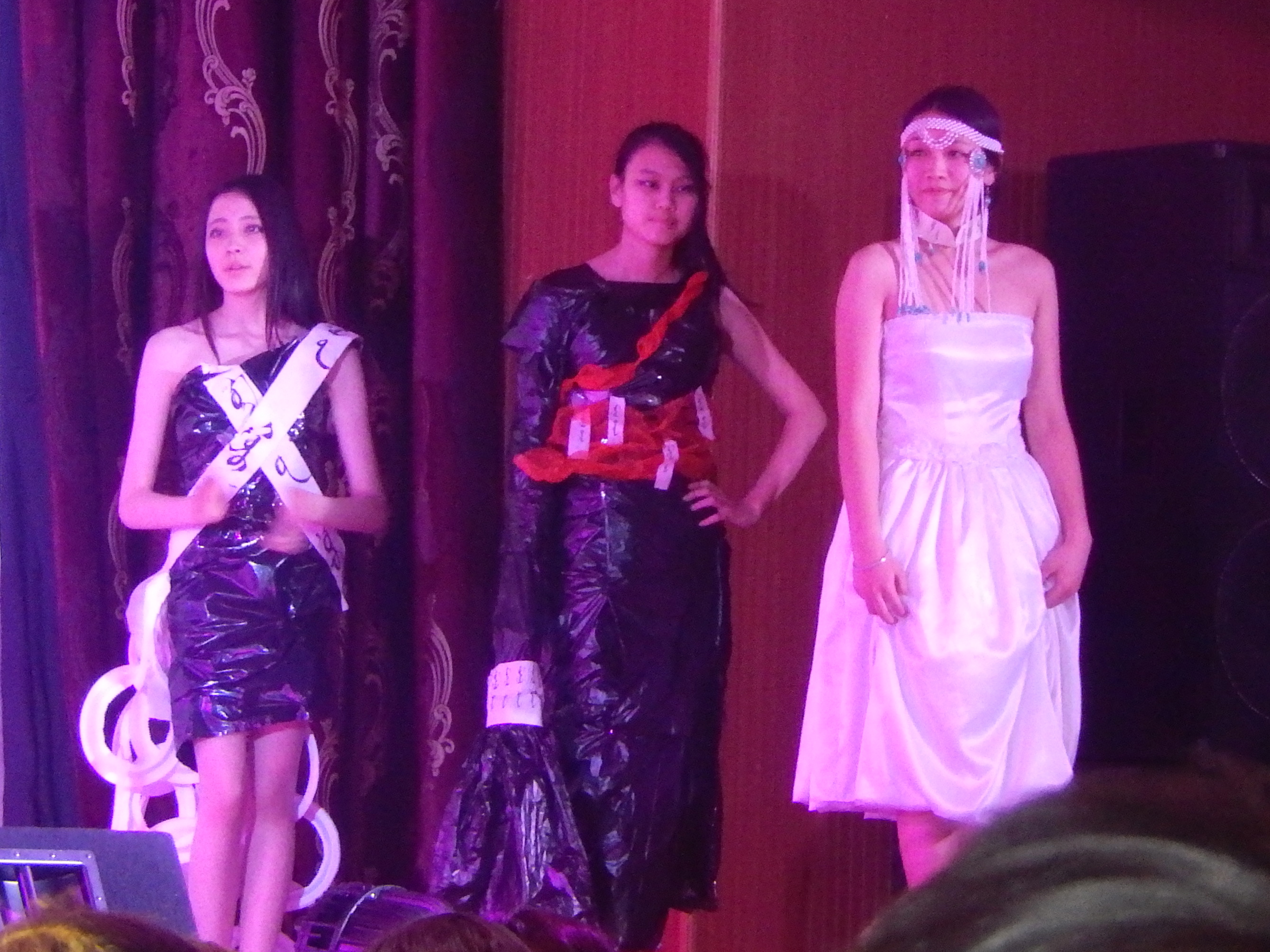
Once we got to the concert, we were so late that we only got to see Tuugi perform for a few seconds. It was kind of like a school-wide talent show, and we missed almost all of her portion. Thankfully, the rest of the show was interesting, even though I had no clue what was going on. There was an array of acts, and it was interesting to see what was acceptable in the school environment. For example, there was a student-made video that humorously portrayed a middle-school student that came in to shoot/beat up weak students. There’s no way that that would be acceptable in the US, but it got a lot of laughs here. Another surprise was when a group of students performed traditional Irish-step dancing. There was also a fashion show that had an interesting mix of traditional Mongolian accessories with western-style clothing. I especially enjoyed the performances that included traditional Mongolian instruments.

DSCN0350

To the far right is a student wearing a traditional headband with her western-style dress.

After the concert, my host mother pulled over to the side of the road to give us the chance to run around and enjoy the fresh air outside of the city! It was great to play outside with Temuujin and Tulga for a bit- they were especially excited by the jet we saw in the sky.

DSCN0384

Chasing after the jet

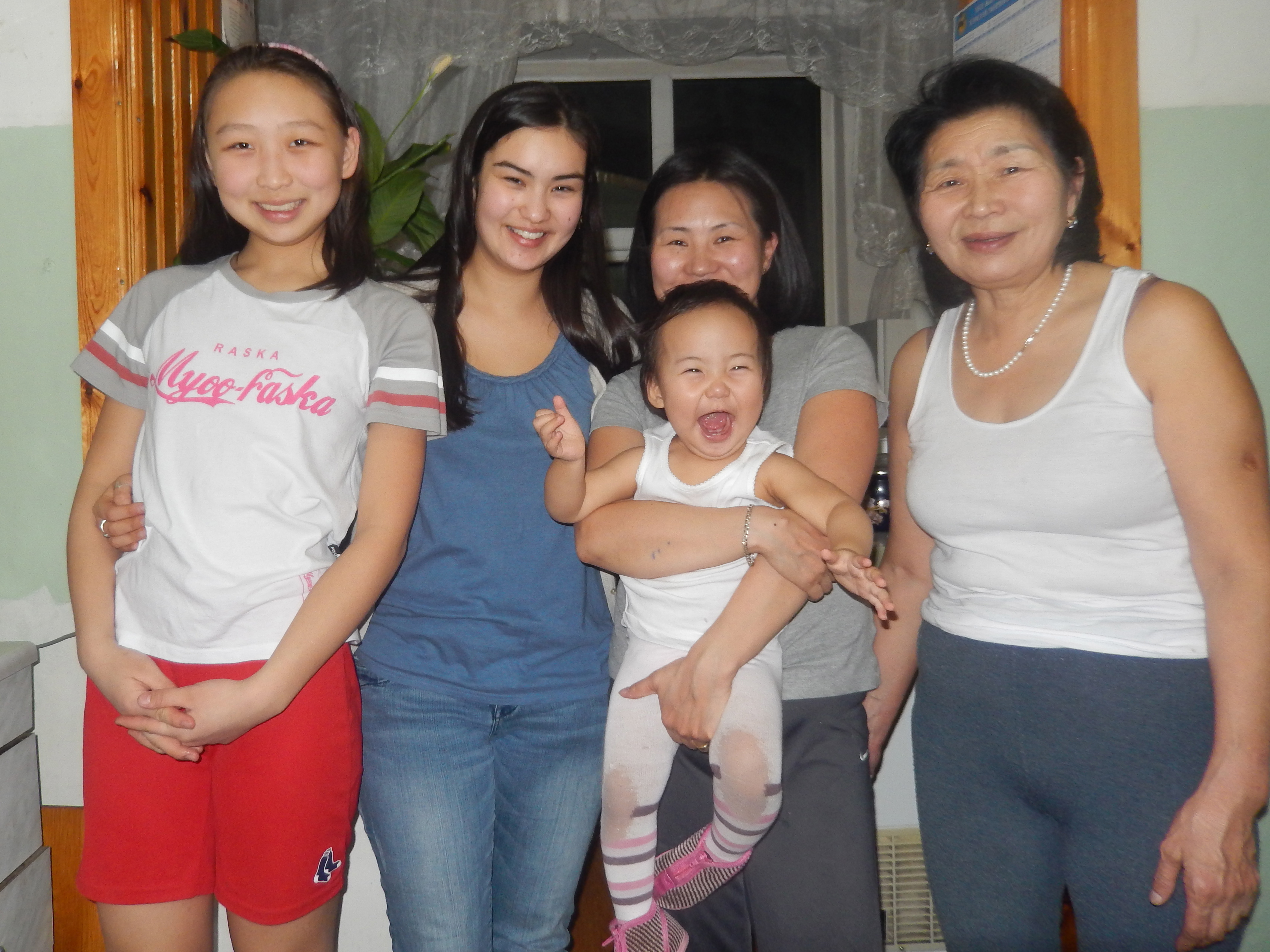
Once we got home, we celebrated Women’s Day together. After dinner, we ate cake and passed out the candy we had bought for each other.  I think that when I look back at this picture, I’ll always remember what an exhausting, yet wonderful day it was.

DSCN0401

I got Temuujin to take a picture of all the women, and we even got Undral to hysterically laugh at exactly the right moment.


Urbanization in Ulaanbaatar

March 7, 2014

Our group had an interesting meeting with the head of Zorig Foundation in Ulaanbaatar. Zorig was a leader of the Democratic Revolution in Mongolia in the early 1990’s, and was an influential politician until he was assassinated. A main goal of the foundation is to focus on community development in Ulaanbaatar, and the head of the foundation lectured to us about the process of urbanization in Mongolia.

DSCN0173

Sükhbaatar Square at the center of Mongolia. These are some of the many new structures built in the city.

One of the most interesting aspects of the lecture was when we discussed the concept of “community” in Mongolia. As it’s a traditionally nomadic culture, there’s no word for “community” in the Mongolian language. Therefore, the concept of cities and Ulaanbaatar itself is a modern invention to Mongolians. Only about 2 generations of Mongolians have lived in Ulaanbaatar so far. The newness of the city and communities is important to keep in mind when discussing the issues within Ulaanbaatar.

Currently, about one-third of Mongolia’s population is nomadic, but about 30,000 people are moving into the city every year. The population of Ulaanbaatar has doubled since the 1990’s, and the city is overwhelmed with the sudden influx of people. Many of these new people are slightly mislead to believe that Ulaanbaatar is a city of multiple opportunities. Although there are many vacancies in employment, they require high-level degrees that formerly nomadic people aren’t often qualified for.

Many of these formerly nomadic families move into the “ger districts” on the outskirts of the city. In general, ger districts are the most vulnerable communities within Ulaanbaatar. Gers are the traditional homes that Mongolian nomads live in- imagine a sturdy, round “tent” with one room that everyone shares. It’s designed to disassemble quickly, and not so much to be connected to central heating or electricity. Therefore, many people in these ger districts have no access to running water and central heating, and generally have worse quality of life compared to those within the city.

DSCN0202

If you look closely in the background, you should be able to see the ger districts on the outskirts of the city.

Ulaanbaatar is the coldest capital in the world, and is also generally regarded as the second most polluted city. At first this may not seem directly connected, but it’s almost entirely caused by people heating their homes, most specifically in the ger districts. Many people heat their homes with coal because it’s abundant and cheap. This is the main reason why they use coal to heat their homes, and have therefore contributed significantly to the pollution of the city. Pollution is considered to be of the worst issues that Ulaanbaatar faces, and the destruction of the environment is a main theme in my SIT program.


Austen in Ireland: Amsterdam

March 6, 2014

This past weekend I went to Amsterdam!  It was one of the best weekends so far.  I left Thursday afternoon taking Aer Lingus and arriving into Schiphol, the main airport in Amsterdam.  I met my Richmond friends studying in Edinburgh at the airport and we took a train to the central station downtown.  Our hotel, the Crowne Plaza was a really short walk from the train station.  Once we arrived, we mentioned to the person checking us in that we planned on going to the Anne Frank House (where she lived a part of her life).  Luckily, he recommended that we go late during the day and since it was around 5, we headed out there (this was a good decision because there was no line!).  It was a pretty small attraction but it was a really interesting historical site to see.  We then had dinner, where I tried bitterballen (a Dutch snack that is fried dough with meat inside) and then walked around afterwards, looking at the many scenic canals as well as the infamous Red Light District.

On Friday, we saw so many pieces of art.  First, we went to the Rijksmuseum, a humongous art museum (and the most popular in the Netherlands) dedicated to many different types of art.  The collection of the museum includes more than 2,000 paintings from the Dutch Golden Age from famous painters such as Rembrandt (The Night Watch is a famous painting at the museum) and Johannes Vermeer.  Afterwards, we went to the Van Gogh Museum, right across a beautiful green from the Rijksmuseum.  The Van Gogh Museum contained a variety of his paintings, such as The Yellow House, Bedroom in Arles, and Almond Blossoms.  Both of these museums are great and highly recommended for anyone even remotely interested in art.  The rest of the day was spent exploring more of Amsterdam and admiring its most unique sights, the canals.  That night, we went out to a square and enjoyed the atmosphere of night-time Amsterdam.

Rijksmuseum

An Amsterdam sign with Rijksmuseum behind it

square

Leidseplin: a popular square during the daytime and nighttime

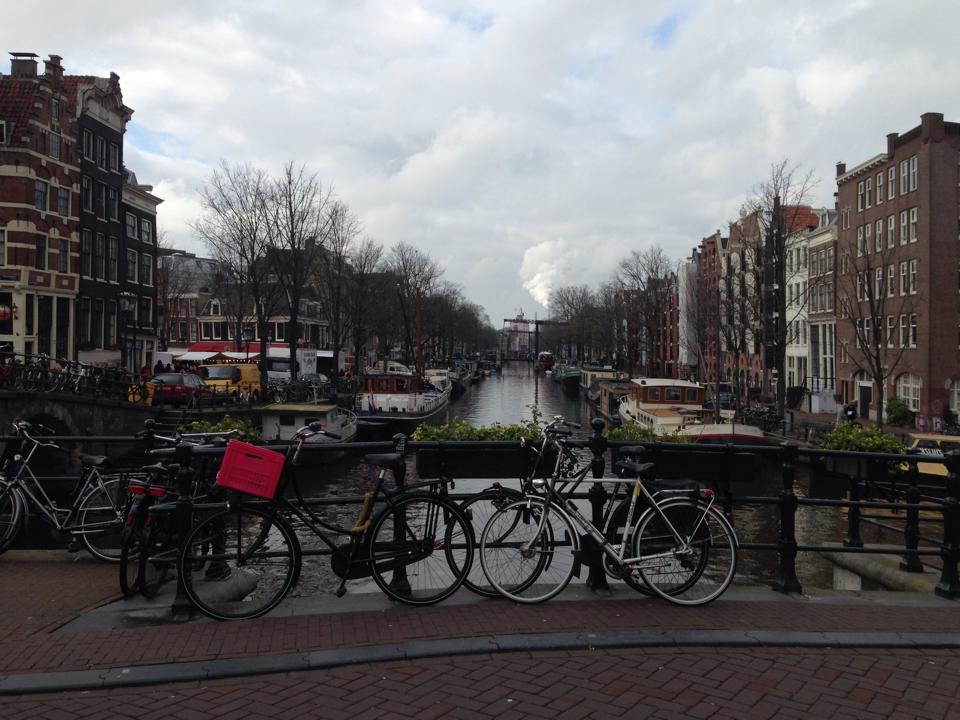
The next day, we decided to rent bikes.  This was such a great idea because Amsterdam is probably the most bike-friendly city in the world and everyone uses them.  There are basically bike paths alongside every street.  We decided to discover the whole Amsterdam area.  At first, we went up near the zoo area on the northeast side of the city, and went through some parks as well.  We then went south towards the museum district area.  We had a great lunch (my goat cheese sandwich was awesome) and then went through the old town area, where canals dominate the landscape.  After this, we went up to the northwest area called Jordaan, which was very scenic.  Also, we biked up to the riverfront north of the city near the train station on the Amstel River, another very scenic body of water.  After going through some more parks and squares, we finally returned our bikes after a tough five hours of biking.  We decided to then get souvenirs and rest in the hotel room after our long day (it was really nice having a much more comfortable bed than at UCD).  We decided to go out for dinner with really no idea of what we wanted so naturally we got Mexican food while in Amsterdam.  The fajitas were surprisingly tasty.  For this last night, we just decided to walk around the city again and experience the great atmosphere of Amsterdam one last time.

bikes Amsterdam

These canals are an iconic sight in Amsterdam

Sunday, we woke up early to get catch our planes back to our host countries.  I had a pretty uneventful plane ride and arrived in Dublin around 1:30 in the afternoon.  I already miss Amsterdam because it was such a beautiful city but I look forward to future trips to other great European cities!