Diego in Brazil: Grades at PUC-Rio

September 24, 2013

Stay with me during this post. I know I am writing about grades and not a weekend trip to a beach or a new location, but you may be surprised at how a grading system may reveal many cultural and social aspects of a place.

As the semester continues to move forward my professors at PUC-Rio have begun talking about our first tests. Grades at PUC certainly work quite differently than at Richmond. Instead of having a cumulative grade that you earn through class projects, tests, presentations, class participation, and so on, at PUC I only have two tests during the semester that will form my final grade. My first test accounts for approximately 40% of my grade, and in a matter of a week or two I will be having tests for my five courses. According to some of my Brazilian classmates, these tests at PUC tend to be a way for your professors to only determine whether you have completed the assigned readings. Gladly I have been trying to stay on top of my readings in the past month.

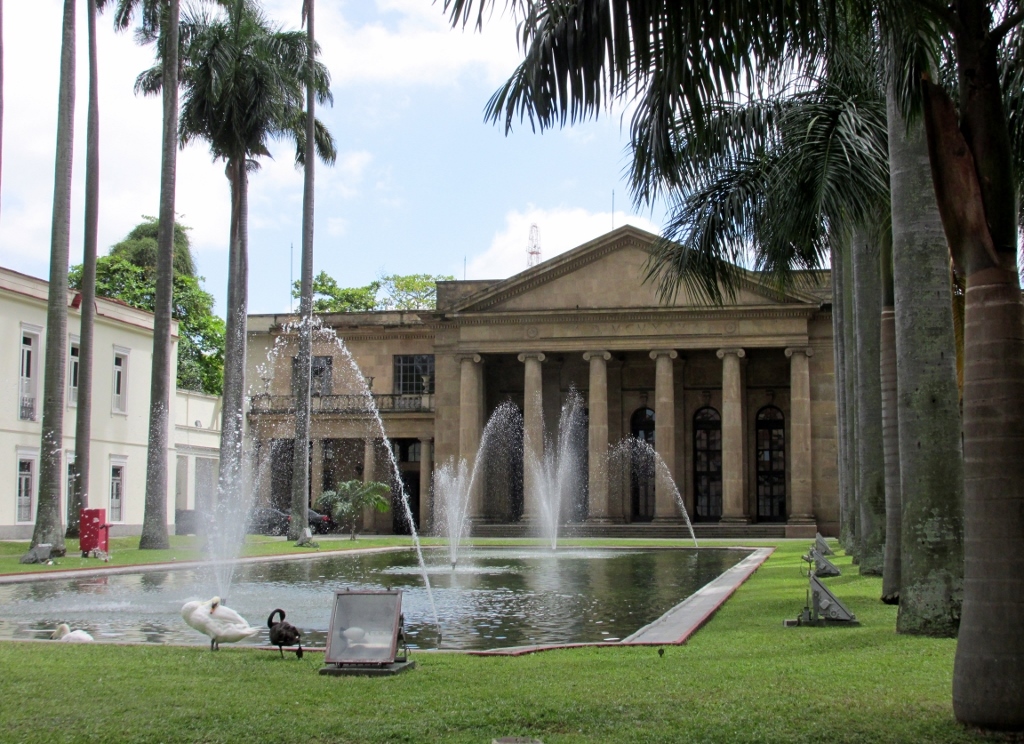
DiegoinBrazil (1024x768)

The University’s atmosphere definitely calms you down from any concern about a new grading system

Interacting with my classmates has definitely been a major entry point to many aspects of life in Rio de Janeiro. Having a set topic for conversation does help when meeting local students. Trying to explain that I am a Guatemalan student at the US currently studying abroad in Brazil can get quite complicated at times. When that happens, it is always useful to fall back to a topic related to the class we share to build a new conversation from there. For instance, I have really enjoyed learning about Brazil’s tough political environment through some conversations with one of my classmates from my Political Economy of Latin America course. However, these conversations can also reveal something deeper about the life of students at Rio.

I had wondered several times why I saw countless posters advertising internships for students at PUC. Fortunately UR has several programs to fund students in their internships, but the amount of internships opportunities advertised at PUC is certainly beyond what I have seen at Richmond. According to one of my classmates from my Geography class, obtaining a first job in Rio may depend much more on previous work and internship experience than on a particular grade. His opinion is that Brazil’s professional environment requires you to leave college with at least two years of work experience with you. For that reason, he believes students and professors understand that work experience is a pillar in students’ preparation during their first university degree. When you bring all of this into account, you begin to understand part of the academic culture at PUC.

If a higher education institution understands the importance of work experience for the professional world it operates in, why would it not adapt its academic system to prepare its students in the best possible way? From conversations I have had with other UR students about grades at their study abroad locations, it seems to me PUC-Rio’s system is more common that this post would suggest. Yet it has been incredibly interesting to think about and ask what lies behind PUC’s grading system.


Alyssa in New Zealand: Hidden beauty

September 20, 2013

Changes are happening in Dunedin. The days are becoming longer. Flowers are practically fully bloomed. The temperature is gradually increasing. Spring time is just around the corner and winter will soon come to an end.

It is much easier to appreciate a country in warmer weather when nature is at its peak. Such great climate conditions motivates me to continue with my exploring of the country.

South of Dunedin is an area called the Catlins, the “forgotten corner” of southern New Zealand. Even though most don’t initially think to visit this region of the country, it is still well worth the visit. As my friends and I traversed through these roads, nothing could have prepared us for what we encountered. We weren’t expecting to come across anything that would particularly impress us.

We couldn’t have been more wrong.

Several waterfalls, cliffs and coastal beaches surrounded us everywhere we went. They were simply examples of New Zealand’s hidden, authentic beauty. We had only traveled for an hour from Dunedin and we had already entered a zone full of incredible pieces of nature. I couldn’t believe how easily accessible all of these spots were. To think that all of this was so close to where we have been living this entire time is mind-boggling. It doesn’t take much effort to see the amazing things that New Zealand beholds, no matter where you are in the country.

DSC_0357

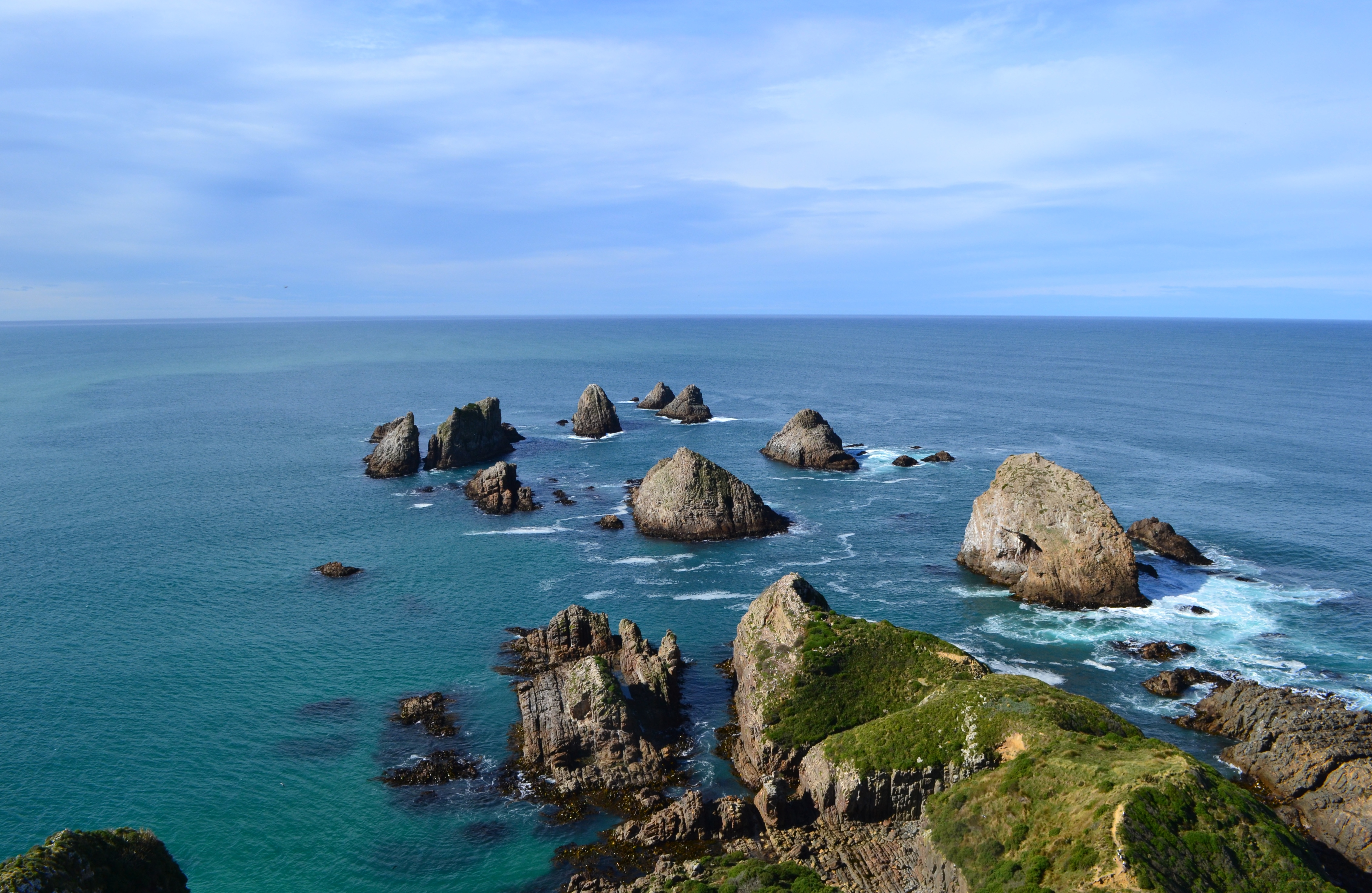
A coastal view from Nugget Point Lighthouse, which is an hour and a half south of Dunedin

As the semester is soon coming to an end, students are doing their best to finish their last minute assignments. Sometimes it is very easy to get caught up with exploring, for we forget that we have school obligations as well. I have become motivated to complete all my assignments early due to the fact that I don’t want to waste any of the time that I have left. The easiest solution is to get them done and out of the way so that I won’t have to worry about them when I’m off traveling.

Numerous plans are being organized and made for the remaining weekends that are left. My entire schedule has become completely booked with adventures that I have been waiting to do for the past seven months. Knowing that we don’t have all the time in the world, we’re doing our best to fit in everything in.

DSC_0406

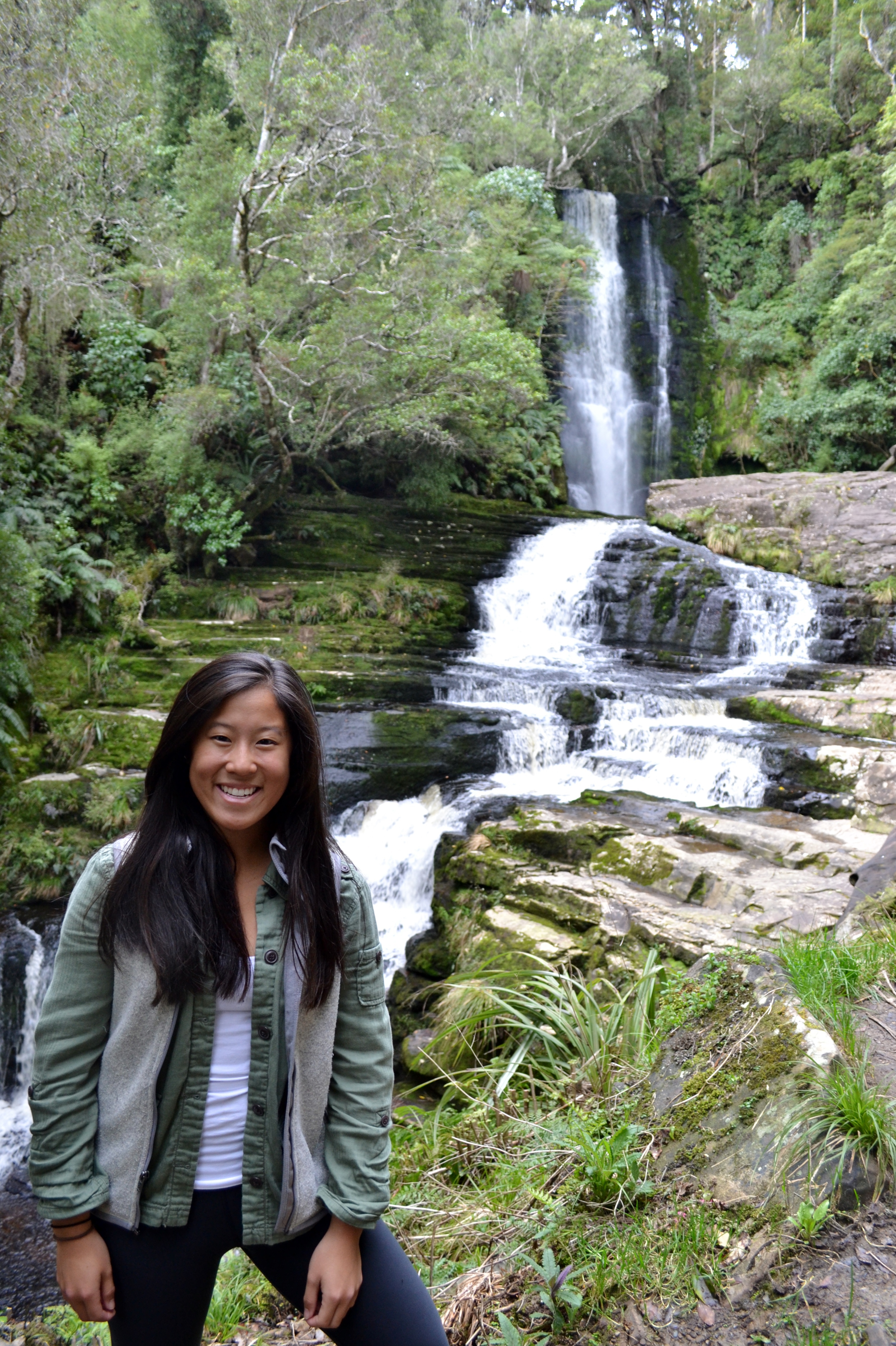
McLean Falls

One of the most recent adventures involves tramping the Routeburn track, another one of the Great Walks of New Zealand. To much of our chagrin, there was so much snowfall that had occurred a couple days before, my friends and I were told that we would be unable to hike the entire thing. After accepting such disappointing news, we didn’t let that stop us from proceeding to parts of the track that we could discover.

The majority of the track was covered in heaps of snow, making hiking a little more challenging (and wet) than usual. Regardless of the fact that there was snow on the ground, the sun continuously graced us with its presence throughout our entire tramp. Likewise, the snow made the scenery much more rewarding. As we walked along the bush line, the snow capped mountains that jutted into the sky were in plain sight the entire time. Even though we didn’t reach our desired elevation, we were not deprived of any sort of views. The conditions of the track may not have been ideal, but being outside in this setting could not have felt any more worthwhile.

DSC_0434

As we made our way through, we encountered the massive, fresh Earland Falls

Staying overnight in one of the huts that is provided on the track is common. We stayed at Lake Mackenzie hut for the night after hiking for 4 hours to an altitude of 1,081 meters. Since we were tramping during the winter season, all of the power and running in the hut was turned off. However, we were able to make a fire and all that really mattered to us was that we had a roof over our heads. The world seems to take on an entirely different position when you set yourself outside of society. When you’re fully immersed in the wilderness and completely remote from civilization, the only thing that seems to really matter is the nature itself.

DSC_0435

We finally concluded our day at Lake Mackenzie hut and were rewarded with beautiful views at the site.

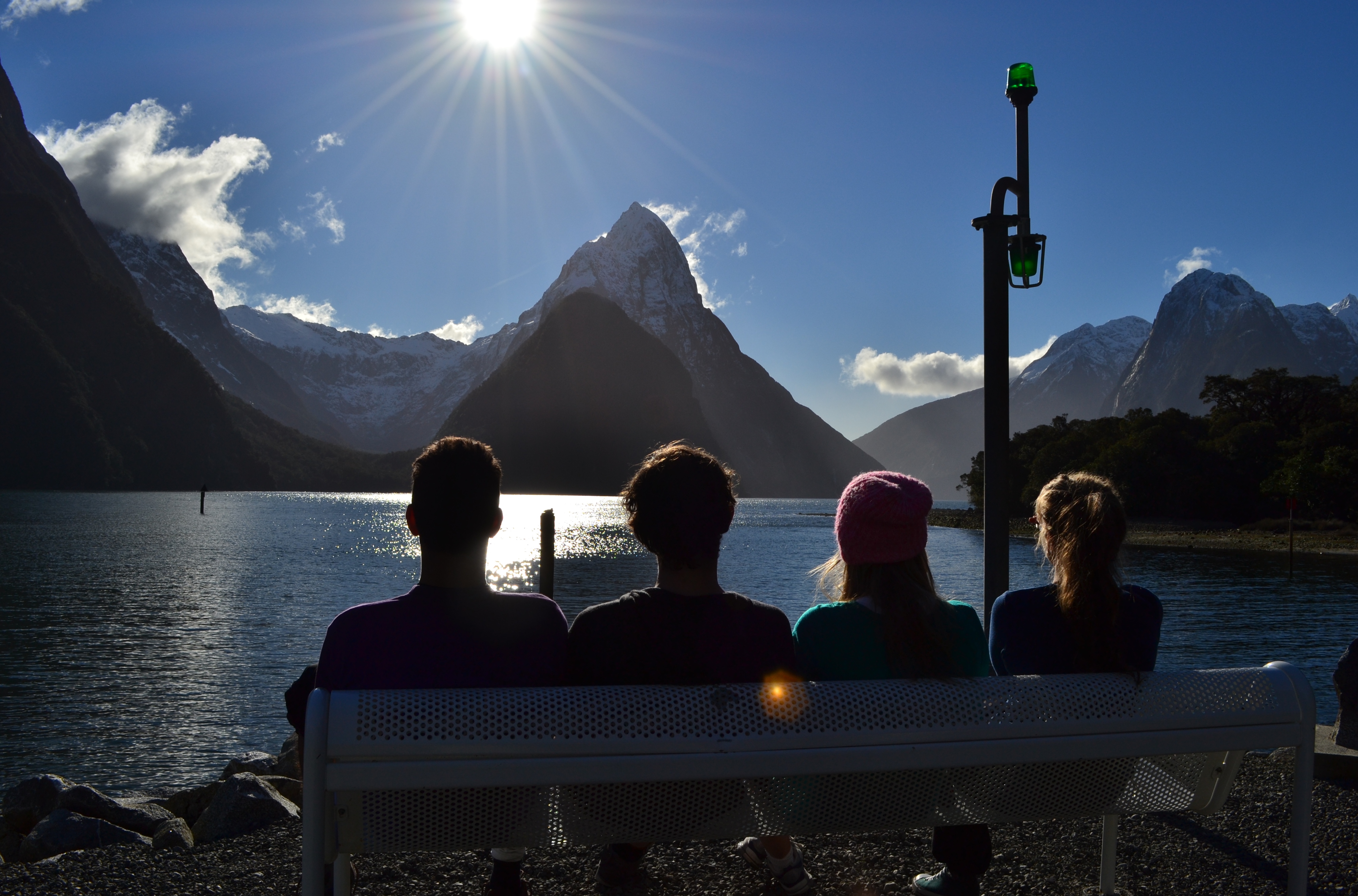
Since our journey was shortened, we decided to embark on a last minute visit to one of the most beautiful places in New Zealand, Milford Sound. After driving through many narrow roads, down valleys and through the mountains, we finally arrived at scenery that took my breath away instantly. With the sun beginning to set, it brightly shone over the lake and cliffs that lay in front of us. The silhouettes of the cliffs were pristine, each possessing its own kind of shape and dimension. We were only standing at the entrance to Milford Sound, so the features are still indefinite to us. The entrance was so astonishing, one can only imagine what it is like to explore within.

DSC_0447

A kea, one of New Zealand’s native birds

The world of New Zealand has much to offer. Because of its distance from every other continent of the world, it seems to be forgotten. Yet, that makes it much easier to appreciate everything within it. Not everyone seems to realize its magnitude of splendor. When it comes to exploring, I enjoy the fact that I am cut off from technology, electricity and modern necessities. Because of these conditions, I am able to fully focus and value what’s in front of me. Unlike technology, sights like these aren’t always accessible.

Traveling within the country has become practically a second nature to me. Every weekend, I am always anticipating that I will be on the move, going somewhere. I have become accustomed to a completely new lifestyle. It’s full of so much adventure and animation that it’s hard to imagine that it’s all going to stop once I go back to the states. Even though the end is coming soon, it’s vital to enjoy the time that I have left.

DSC_0456

The team at the end of the day at Milford Sound


Rhiannon in India: Ganesh Chaturthi

September 20, 2013

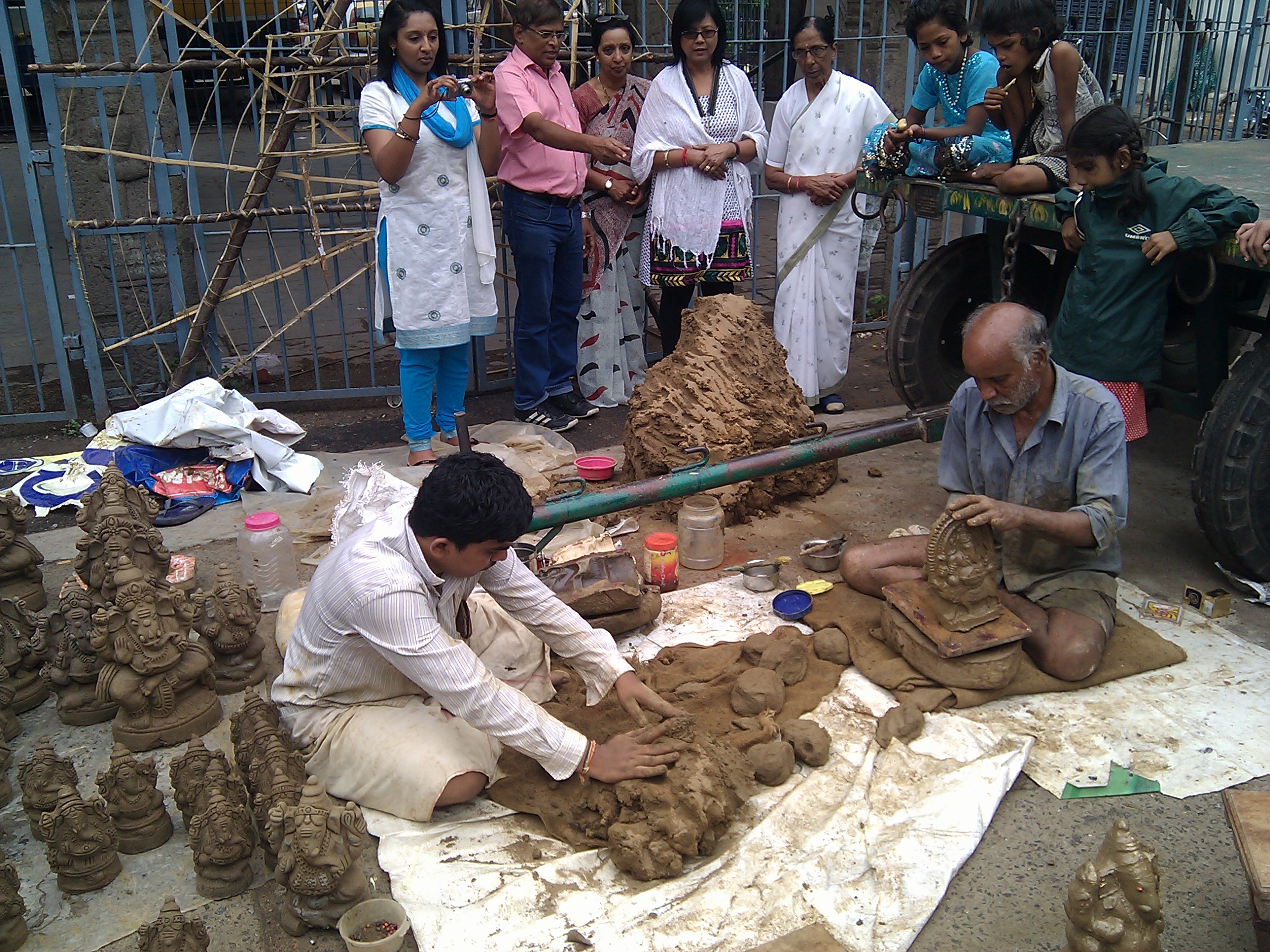
As I mentioned in my last post, the past week was full of celebrations in honor of Ganesh’s birthday, called Ganesh Chaturthi. People in India celebrate by putting up statues of Ganesh in their homes or on the road and do pooja (ritual) around the Ganesh every day for anywhere from 3 to 11 days, depending on different traditions. At the end of the week, they put the Ganesh statues in water for Immersion, symbolizing Ganesh’s journey home to heaven. Because everyone puts the Ganesh statues in natural bodies of water during this holiday, it has been a huge source of pollution that adds to the issue of clean water in India. Recently, people have started using clay statuettes that naturally dissolve in the water, but many plastic and painted statues are still used every year. In Chennai, when we visited the temple to make an offering to Ganesh, we saw men making the clay Ganesh statuettes on the street for people to buy instead.

Clay Ganeshas

Men at the temple making clay Ganeshas

As soon as we got home from our Chennai trip on Monday night, the weeklong celebration began in full swing in our apartment building. While we were in Chennai, our host mom, Nivedita, and some of the other women in the building had put up a pandal, similar to a shrine, that included a large stage, elaborate decorations, and a 4-foot tall Ganesh statue in the car garage beneath our building, colorfully decorated with flowers and other small statuettes. Every night for five nights, all of the families in the apartment building (about 65 people in total) would gather around the pandal for pooja, singing, games, and dinner.

First, around 8 p.m., all the women would sit in a circle in front of Ganesh and chant Vedic mantras together. Then, a pujari would arrive and begin the formal ritual by chanting loudly, apparently instructing us to do certain actions, although I could never understand what he was saying. Instead, I would mimic the actions of the people around me, throwing rice on the Ganesh, drinking coconut water, spinning around three times to the right, and many other things. Although I never fully understood what was going on, burning incense, breaking coconuts, and listing the names of our neighbors were among the usual things done during the pooja. After the pujaris were finished, we would begin playing games and singing. Most of the children – and there were a lot of them – were very interested in Jennie and me and wanted to talk and play with us constantly. During the Friday night pooja, the families wanted to do something special so Jennie, Prerna and I sang a Taylor Swift song and played guitar. It turns out Taylor Swift is just as popular here as she is in the US, if not more!

Finally, around 9 or 10 p.m., we started dinner, which was prepared by some of the women in the apartment. It always included an enormous vat of rice, lots of fried snacks, and a dessert. The dessert was the most important part of the meal because Ganesh is known to love sweets. In fact, all of the statues of Ganesh show him holding a laddu, a sweet ball-shaped dessert, in one hand. The dinner usually went on until 11 or 12, and even after we came upstairs, we would go to the neighbors’ apartments and chat for another hour, so we were always exhausted by the end of the night.

IMG_3638

Our apartment’s Ganesh pandal and food for the potluck

The most exciting part of the whole celebration was on Saturday, when we did the Immersion. As soon as we got up on Saturday morning, we started making biryani with Nivedita and Sandia, our neighbor down the hall. Biryani is a spicy rice dish special to Hyderabad – and we made 11 pounds of it for the potluck that day. When we gathered for the feast that afternoon, I was so surprised to see that there was even more rice, curries, snacks, and desserts that other people had made for us to eat. It was like Thanksgiving, but with more food than I could have ever imagined.

After eating, we started the procession of cars to the lake, displaying the large Ganesh statue in the back of the first car, like a parade float. The car had been decorated like the pandal, complete with flowers and all of the small Ganeshas from each apartment. After our neighbors blessed the journey by doing a ritual in front of the car with water, fire, and breaking coconuts, everyone drove their cars and two-wheelers slowly all the way to the lake while banging on pots and yelling “Jai! Jai!” The cheering didn’t stop until the last Ganesh had been thrown into the water.

IMG_3711

Blessing the travel of the Ganesh procession

The best part of this celebration was getting the chance met all of our neighbors. Now that Jennie and I have gotten to know them, especially the kids, we haven’t stopped hanging out with them since. Now, we have started eating meals on the rooftop with some of the other families. When the power goes out (which happens every day), we go to the neighbors’ apartments to pass the time together. A few of the kids come to our apartment every day after school to play games or ask for help with their English homework. Some of the kids have even made it their job to teach me Telugu, the local language, although I am hopeless at pronouncing the words.

IMG_3732

In the procession to the lake with the Ganesh statue

I feel so lucky to be surrounded by such a great community of people and that I have been able to form relationships with them over the past week. Not understanding Telugu, spilling the coconut water, or turning left instead of right during pooja didn’t seem to matter at all. Spending time with my host family and neighbors makes our differences melt away, and it has made a world of difference.

IMG_3763

Our family and neighbors on the day of Immersion


Rhiannon in India: A Trip to the Beach

September 17, 2013

This weekend was another holiday, so Jennie, Romi, and I took a long overdue vacation south to Pondicherry and Chennai. After traveling north to the bustling capital a few weeks ago, we wanted a more relaxing destination – and we got it!

After we finished classes on Thursday, we boarded another Sleeper train with a 14-hour ride to Chennai ahead of us. Now, if you know anything about Bollywood or Indian pop culture, you are probably wondering if we traveled on the Chennai Express. Chennai Express is a very popular movie in India right now featuring two of Bollywood’s most famous actors – and it takes place on a train to Chennai. Unfortunately, our train was called Charminar Express rather than Chennai Express, but we took a few movie-like photos anyway.

Chennai Express

Before our trip to Chennai, we had a Chennai Express photo shoot

Even though we were in the most budget option of Sleeper compartments once again, the whole trip was very enjoyable. Truthfully, we were delighted to have seats on the train at all because, when we booked our trip online, we received RAC tickets (sort of like waiting list spots) and didn’t get our confirmed seats until two days before our trip! If we had boarded the train with RAC tickets, we would have had to share our bunks for the entire 14-hour ride, and we may have been separated. Luckily, after two weeks of watching our waitlist numbers get closer to zero on the website, we finally received our confirmed tickets and boarded the train to find three full bunks just for us.

One of the best parts of the train ride was the company we had in our compartment. An older Telugu-speaking couple sat across from us and, although we could barely communicate using English, somehow we shared food, laughed, and interacted with each other and had a wonderful time that night. There was also a young man in an RAC seat nearby that spent over an hour giving us suggestions for things to do in Pondicherry and Chennai. He seemed really enthusiastic to share information about temples, beaches, and festivals with us. Even after everyone had gone to sleep in their bunks, the old man and a younger man nearby, although strangers before the trip, sat up and chatted over chai for half the night.

After sleeping through the night in my little bunk on the train, I woke up early, waved good morning to the old lady across from me, then looked out of the little crack of the window visible from my bunk. I could not believe my eyes. The scenery was probably one of the most beautiful things I have ever seen! We were in the middle of green patty fields and marshlands, and every once in a while we passed through a village of small houses and huts. We passed people in the fields playing an early-morning game of cricket, and others in the villages getting ready for work. The train was following the coast, so in the distance I could see the Bay of Bengal, dotted with colorful sailboats. The best part was that the sunrise was reflected in all of the water collected in the fields and marsh from the monsoon rains.

When we pulled into the Chennai station, we had a quick breakfast and headed straight to the bus station to catch a three-hour bus south to Pondicherry. Pondicherry was a French settlement until the 1950s, so there is still a lot of French influence there (now mostly in terms of tourists), especially in the French quarter, a quaint little neighborhood on the beach. As we drove into Pondicherry, I noticed lots of flags that were a mix of the French and Indian flags. In the French quarter, all of the street names were French, many people spoke French, and people even said “salut” or “bonjour” to us on the street. We also had plenty of French food, coffee, and chocolates in the many French cafes all over the area. It was like we were in a totally different India! Being there reminded us of how many different cultures there are to see in India, and how no two are alike.

Colorful Pondicherry

All of the streets in the French Quarter were lined with colorful houses and hotels

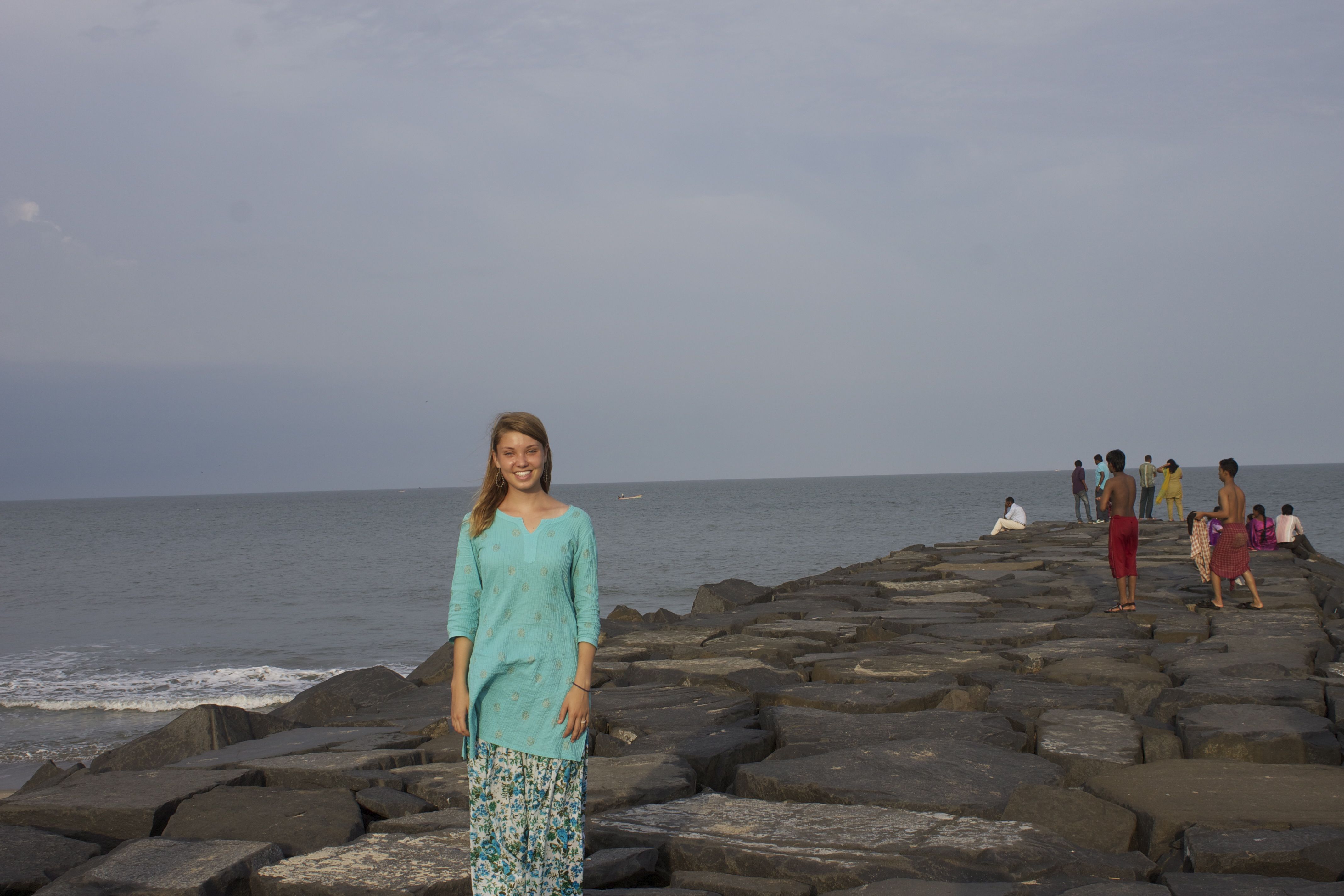
Without a doubt, my favorite part of Pondicherry was the beach. In the French quarter, the coastline is mostly rocky, but still has a few sandy spots as well. We spent our first afternoon walking along the waterfront watching kids play in the water, although it is technically not allowed because of the strong current and pollution. We didn’t swim there, but our hotel owner told us about a cleaner beach seven kilometers south of the French quarter called Paradise Beach, so on Saturday we hopped in an auto and went there for the afternoon. We were a bit unsure about what we would be doing because it is uncommon in India to swim at the beach, but we left the hotel with open minds and lots of food for a picnic. But to our surprise, Paradise Beach was almost completely deserted, so we jumped in the water for a swim! We picnicked and played Frisbee for a while, but all of a sudden black cloud started rolling in from over the ocean. Within 15 minutes, the wind picked up, the sky got dark, and it began to rain so hard we thought it was hailing. We ran back to our auto and got back to our hotel safe and sound, so now we can say that we survived a monsoon on the beach at the Bay of Bengal!

Rocks in Pondicherry

The rocky coastline of the French Quarter

On Sunday, we went back to the bus station and caught a bus back to Chennai. The next day was Ganesha Chaturthi, the beginning of a long festival to celebrate Lord Ganesha’s birthday. Ganesha is the Hindu god whose head resembles an elephant, and he is the god whom Hindus pray to first because he takes away obstacles in life. The story of Ganesha (as told by my host mom) is that his mother, Parvati, wanted a son so she made Ganesha out of sandalwood while her husband Shiva, the destroyer god and Ganesha’s father, was out of the house. Parvati put life into Ganesha and put him in front of the door to protect the house from intruders. When Shiva came back from hunting, Ganesha wouldn’t let him in, and not knowing that Ganesha was his son, Shiva cut off his head, which flew into the jungle. When Parvati realized what had happened, she explained to Shiva that he had killed their son and ordered that he go into the jungle to find Ganesha’s head. Shiva went out and returned with an elephant head instead and brought Ganesha back to life.

To celebrate on Monday, we went to a temple in Chennai and offered some flowers to Ganesha. During the festival, statues of Ganesha are put up in neighborhoods all over India, and people put small statues in their houses as well. There were six- to ten-foot tall Ganesha statues on all the roads and vendors were selling small clay statuettes in all the market areas. While we were in an auto on our way to the temple, a parade of people passed by with a mobile Ganesha shrine, so our auto driver parked the auto and ran over to receive prasadam (offered food and coconut water). When we returned to Hyderabad that night, we were surprised to find our neighborhood transformed with large, colorful Ganesha shrines on all the street corners complete with floodlights and loud music.

Mobile Ganesha Chennai

The mobile Ganesha passing our auto in Chennai

The trip this weekend was so relaxing and beautiful, but now I have a busy week ahead of me. Our apartment building will be celebrating for the Ganesha festival every night this week with poojahs (devotions) and lots of food. I will post soon about all of the festivities going on right here in Hyderabad!

Happy Ganesh Chaturthi!


Mel in Chile: Santiago

September 13, 2013

Week #2. I’ve had the chance to walk around the city a lot this past week. In fact, I walked from my house in Providencia to the University which is close to Estación Central. It takes about an hour and fifteen minutes.

In general, I try and walk anywhere that will be within an hour or so and feel comfortable saying I have seen many areas of the city and walked through similar streets several times. Although, I should disclose that I have only been through the “safe” and usually nice areas of Santiago. In other words, all of my comments about the city refer to the middle/upper-middle class regions and are not a full representation of all of Santiago.

Okay.

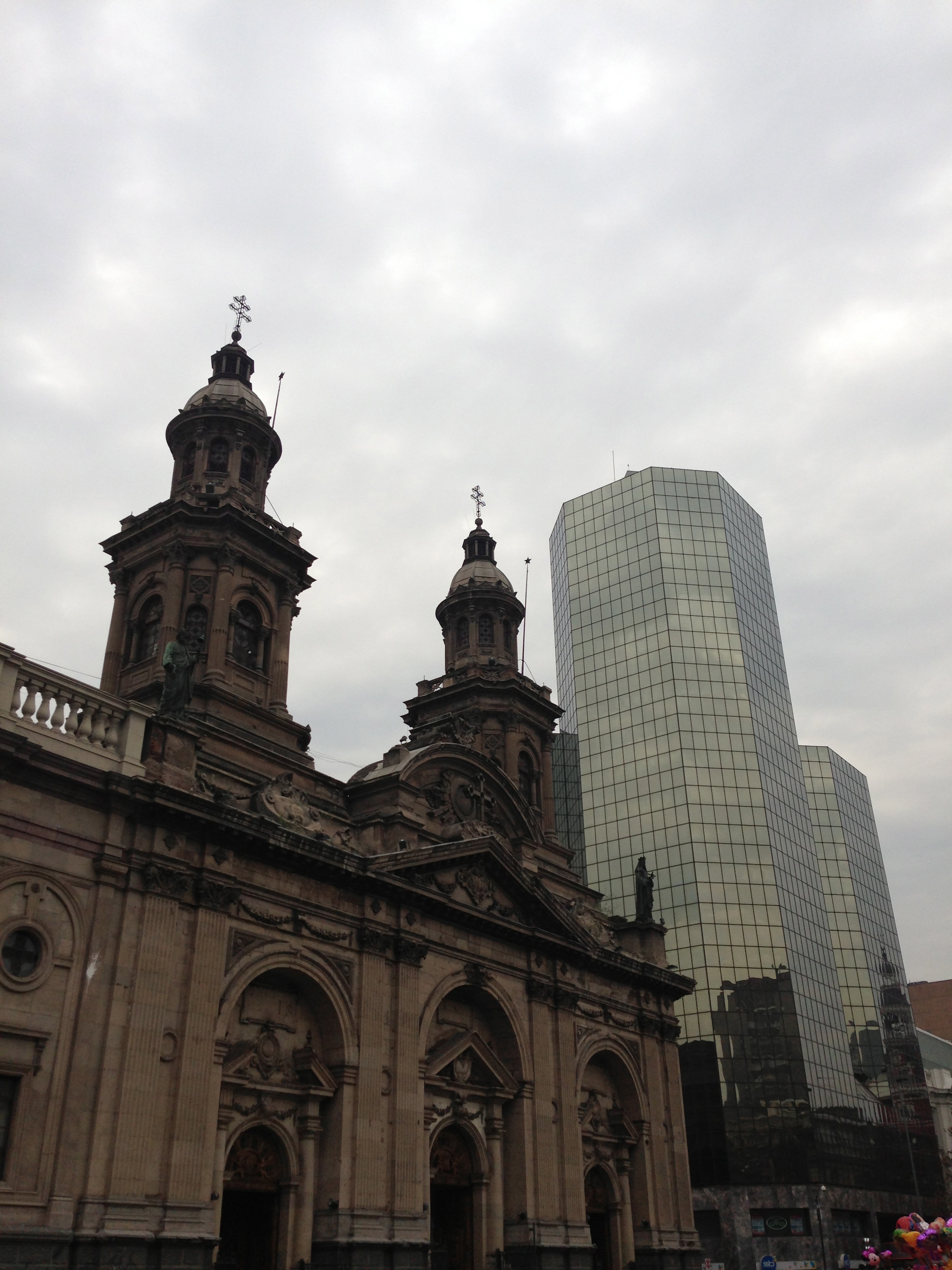
The past week and a half I walked around central Santiago confused. The architecture of the buildings seemed almost awkward. Actually, not the architecture of each individual building, rather the collective appearance of several buildings positioned close to each other. When I look one way on Avenida Providencia I see an old building with a structure screaming 18th century Spain which I imagine this to be the case in many Latin American countries. Then I look the other way and see the modern building of “Fundacion Telefónico” which holds various cultural events like theater plays and galleries. Across the street, on Plaza Italia, and I see the overbearing residential skyscraper marking it’s territory on central Santiago.

IMG_1891

On the left is the Metropolitan Cathedral of Santiago built in 1748. To the right, stands a perfect example of the many skyscrapers piercing the Santiago sky today.

Sometimes I feel I am in Spain, sometimes London and at other times even Tirana! Tirana, for the few of you who might not know (joking, I know most of you don’t know) is the capital of Albania. This is where I was born, grew up for the first ten years of my life, where most of my family lives and where I have spent many of my summers since migrating to the United States.

All last week, as I found myself in different areas of the city, I thought “What is going on here? Santiago must be confused. Is it colonial? Is it modern? Does it have its own identity? Its own niche?”

I am not suggesting cities, or even the tiniest municipality, is, or needs to be, homogeneous. Santiago is big. Of course it is diverse. I do not expect the architecture of every single part of the city to be identical. I also do not want to reduce an incredibly diverse city of almost seven million inhabitants to one single identity. That is not what I tried to do.

With that said, I still contend Santiago is a special place.

I spent the past week and a half trying to understand how the different structures and diverse architecture tell the story of Santiago.

The colonial architecture obviously comes from the colonial period. Easy. At first glance, the skyscrapers filled with offices of foreign enterprises contend that Chile does enjoy a developed economy, sophisticated financial structure and plenty of foreign investment. These are the buildings that proudly show the international community “Hey, we have made it!”. The modernity is celebrated not only by the elite who benefit from an open and deregulated market, but from also a working class who hope swallow their objections in hope that trickle down economics will eventually…well, trickle down to them.

On the contrary, the buildings are also an uncomfortable symbol  of the seventeen years of military dictatorship that aggressively implemented neoliberal economic  reforms. The reforms made possible  the most stable macro-economy in Latin America, but also created severe inequality in earnings, education, and healthcare to name a few. Consequently, for many, the modernity, the high-rises, and the “booming” economy also represent classicism, racism, and enforcement of prejudices and the further entrenchment of the degrading stereotypes that sustain them. The disrespect of human rights for seventeen consecutive years during the dictatorship which carried out a neoliberal economy and replaced citizens with consumers, and the current systematic neglect of key functions of a democratic government and civil society are oftentimes seen as an unjustifiable sacrifice for macroeconomic success.

But, this isn’t meant to be a history lesson.

So friends, I walked around for a week and a half thinking Santiago was confusing me because of how incredibly diverse the architecture is. As I thought this, I came to a street crossing. The light was red for the vehicles, but that isn’t what’s important. In front of the stopped cars was a man on top of those high unicycles, dressed as a clown, and juggling. He was putting a show for the cars during the few minutes they wait at the red light.

That is when I realized, the city isn’t confused.

It is unbelievably eclectic.

There is a fusion of past and present. The struggles and the victories. Protests on one side of town and celebrations on the other. Business men in suits and students marching in the streets. A musician playing his fiddle in the subway train and a woman dressed as if ready for a fashion show, having an extensive conversation about the current health of her nail-beds. September 11th 2013, the fortieth anniversary of the military coup, will undoubtedly result in riots across the streets (No worries, I will be in the north, and more that safe), then a week later, everyone will celebrate the fiestas patrias with friends, family, barbecues, and late night parties.

But, these “extremes” should not come as any surprise. It sort of runs in the country. Geographically speaking, Chile can make even the most experienced National Geographic photographer go “Huh. I have never seen anything like that before.” There are the Andes, an entire coast line in the Pacific, the world’s driest desert, glaciers, enormous lakes, valleys, rivers, grassland, and finally, the eclectic metropolitan city of Santiago.

Right now, I am on a plane flying north for an excursion with my program. The plane is going over the Atacama desert, the driest and highest desert in the world, and in the background I see the snow capped Andes.

Chile defies geographical norms.

IMG_1919

Birds eye view of the mountainous Atacama desert.


Alyssa in New Zealand: Studying at Otago

September 13, 2013

Being a pre-health student, I’m lucky enough to have found a university that offers endless amounts of classes that help me fulfill my requirements for graduate school. Since I am planning on becoming a Physician’s Assistant, there are several science courses that I am required to take before I apply to P.A. school.

Studying abroad had always been a fear of mine, for I was always afraid that I wouldn’t be able to go. There have always been rumors about being a pre-health student. Many have claimed that we don’t get the chance to do as many things as other majors because we are always spending most of our time outside of the classroom and lab in the library, burying our heads in textbooks. While that may be true, I was determined that I could make studying abroad and my classes work simultaneously.

Having researched University of Otago, I was more than pleased to discover that they offered numerous science classes. After being accepted as an exchange student, I knew that my vision was finally becoming a reality.

DSC_0764

The clocktower is in a very central part of campus

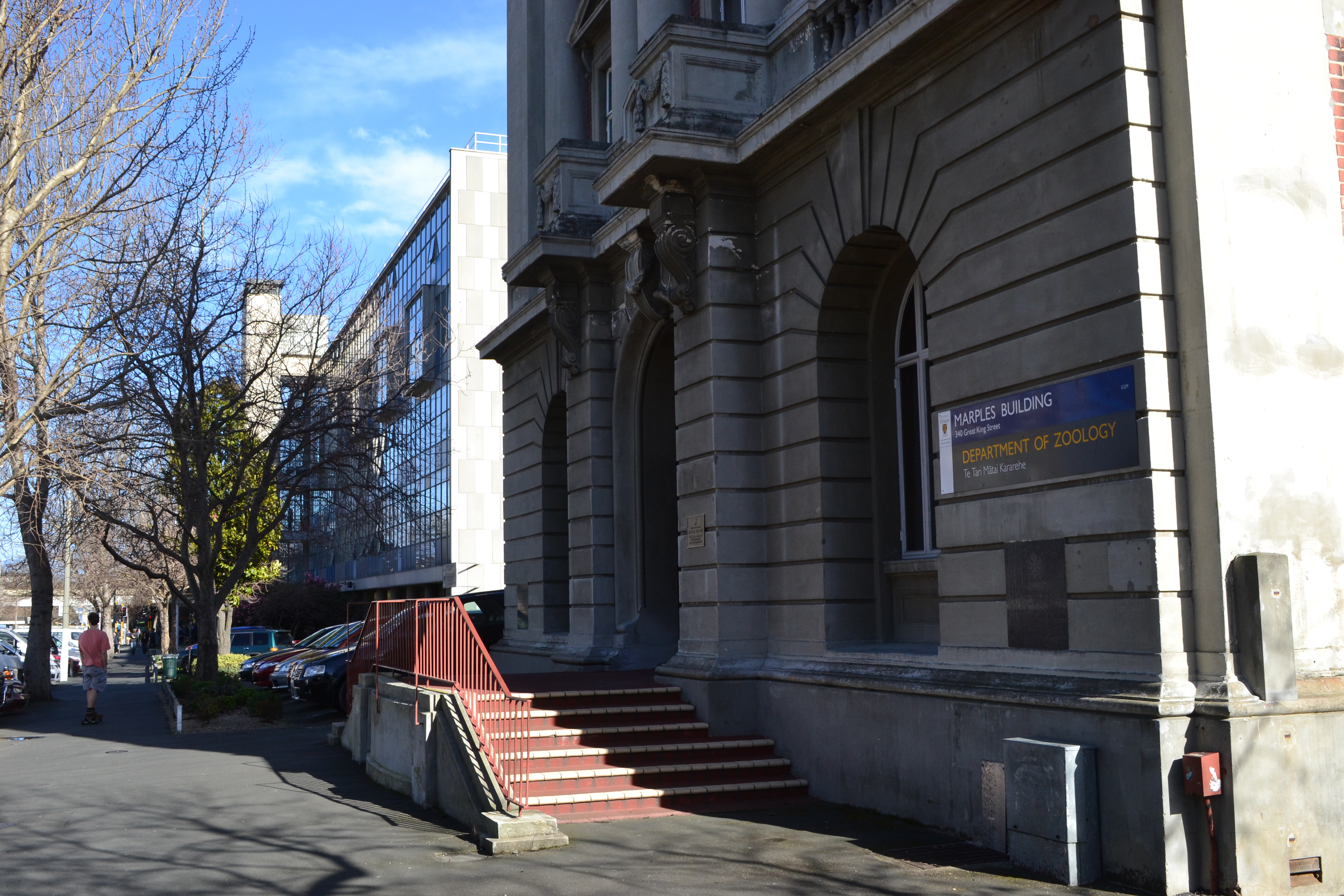
Here at Otago, I am taking Evolutionary biology (a zoology paper) and Microbiology for my biology major back at Richmond. There are two zoology lectures each week. Every Tuesday and Wednesday morning, I sit in the lecture hall with over 100 other students for 50 minutes. Even two other Richmond students are in the same paper, which I find to be comforting and very convenient when we are working on lab reports together. Every other week, the practical (also known as lab) meets for about four hours. There are two practicals, so there are approximately 50 students in each one as opposed to 100. For every practical there is a lab report that has to be submitted the following week. However, not one lab report exceeds over 9% of our final grade, for they are of very little value. What matters most in the end is what we receive on our final exam, which accounts for 50% of our final grade.

DSC_0790

The zoology building, which is where my practicals meet

The circumstances are very similar with the Microbiology paper as well. The lecture meets three times a week (Monday, Tuesday and Wednesday) for fifty minutes. The practicals do not meet up every week. For instance, there will be three week period when there will be no practical at all and then another period where the practical will meet for three weeks in a row. Fortunately, we do not have lab reports for every practical. Instead, we have to take two exams throughout the semester. The first exam was on lecture material and the second on practical material. Each exam counts as 15% of our final grade. However, what we receive on the final exam will influence our grade the most, which is similar to the zoology paper.

For my third paper, I am taking a theater class in order to fulfill my Visual Arts requirement back at Richmond. This paper meets three times a week for 50 minutes. Additionally, students are required to attend live performances that take place on campus and movie screenings. The goal of the class is to compare drama that occurs on stage and on screen. Just like my other two papers, the class size is generally large. However, all the assignments that we hand in throughout the semester are equally taken into account for our final grade just as much as the final grade, a concept that is much more similar to Richmond’s way of grading.

Since New Zealand is such a new country, many of the examples that are introduced in lecture are rarely kiwi examples. Instead, many of the professors use examples from America, which tend to come across as new to many of the students. Conversely, I am fairly familiar with many of the examples that are presented. On the off chance that the professor does use a kiwi example, I find myself highly intrigued by its unique and innovative nature.

Generally speaking, many of the final grades that are received at Otago are based off mainly the final exam. Not being used to such grading, I have had to adjust my priorities when it comes to my studies. Typically, I try to complete and put much more effort into assignments that are of high percentage of my final grade. In the end, I know that I will be studying a vast amount for my final exams, for most of my final grades are dependent upon them. Luckily, there is a one month exam period at Otago after classes end (October 11), which in turn gives students a decent amount of time to study.

DSC_0774

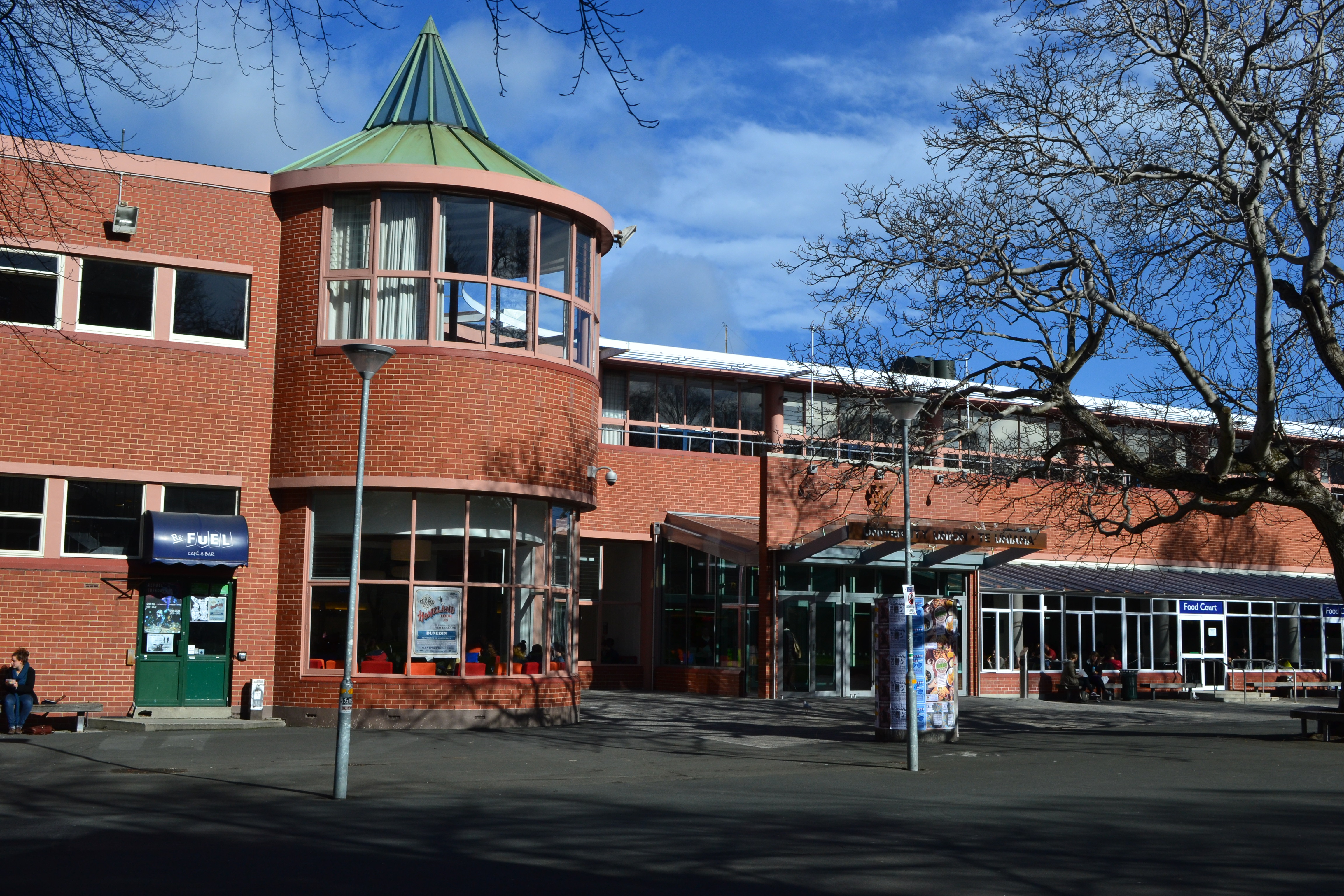
Student’s refer to campus as “uni”. This area is where many students may accumulate throughout the day

As unique as my experience has been at Otago, I have grown much more appreciation for the education that I have been receiving at Richmond the past two years. The small class sizes really make a difference, for the professors are able to identify each of their students and even form close relationships with them. With these connections, the student-teacher relationship is strong, which makes the whole learning experience more enjoyable and enriched.

Moreover, I think it’s very important for a student’s progress to be recorded throughout the semester and their entire grade should not be based off one exam in the very end. Final exams are essential, yet a final grade should not be entirely reliant on them. However, I value the education that I have been receiving here at Otago as well because not having heavily weighted assignments throughout the semester has allowed me to explore and have more free time to myself. There will only be a one month period when I will actually have to contribute majority of my time to my studies. As a result, I have found that this type of education is extremely fitting for my semester abroad.

In the end, being a pre-health student has never held me back from doing what I want and I don’t believe that it will in the future. Yes, my education has always been a priority in my life, but I have others as well. Traveling has always been a passion of mine and there is no reason for me to push my aspirations aside just because there are inconveniences. Ultimately, I’ve successfully found a way to make traveling and studying coincide.

This new way of learning has become very convenient for my time in New Zealand. Throughout the past two months, I have been constantly traveling the country and seeing things that one can’t even imagine. In the last few weeks of the semester, I find myself planning and embarking on all kinds of trips, putting in efforts to utilize all of the free time that is left while I can. Such opportunities have been presented often and I’ve been more than fortunate enough to  have been able to take advantage of them.


Diego in Brazil: Bureaucracy and social networks

September 13, 2013

Maybe it’s time for an “It’s been a month!” post, so here it goes!

A month and two days ago I was going by bus to the international airport in Lima. I had just finished a 10-week research/internship project in the Brazilian and Peruvian Amazon and I hadn’t really had the time to prepare for Rio de Janeiro. Now that I look back and think about that last week in Peru, I realize that I hadn’t built solid expectations for what could happen in the following months.

I guess typically these posts reflect on how time flew by, but it seems as if the opposite has happened for me. As I look at the calendar all I can think of is “has it only been a month?!” Don’t get me wrong, I have found an incredibly interesting combination of classes at PUC (my host-university,) a bi-weekly yoga class, two daily bike rides to and from my University, a lovely home with my host-family, the environment to learn Portuguese, and great people. When I say that it surprises me that I have been in Rio only for a month is precisely because of how well established I feel already. To show how far I have got in settling in Rio de Janeiro, I want to tell you about two very common topics in conversations among Brazilians: family and bureaucracy.

One of my favorite aspects of studying in Rio de Janeiro has been encountering a culture that highly values social networks. Similarly to other Latin American countries, you will find in Brazil that family and friends form a person’s safety network and may go as far as forming part of someone’s identity. In my Poverty and Social Inequality class at PUC, we have been discussing how social integration in Brazil happens mainly through these social networks. Western social thought has typically valued social integration through a person’s career and professional development over social networks. However, research conducted across socio-economic classes constantly shows that Brazilians will, on average, protect their social networks over seeking new employment opportunities.

I have felt incredibly comfortable living in this environment (I’ll blame my Guatemalan background,) and experiencing these social interactions again is making me want to go back home for some years to recover some of those networks!

Navigating a new place as an immigrant without strong social networks can be tough at times. This past Thursday I went to Brazil’s Federal Police to register as a foreign student (a mandatory procedure for all non-Brazilians who stay in the country for more than thirty days.) I stood in line for four hours, and when I finally managed to present my documents I was told my mother’s name did not match the police’s system. I didn’t get more than a “you cannot register until you fix this.” I came back home incredibly frustrated. The only exciting aspect was that I now needed to go to the Ministry of Foreign Affairs to correct my immigration documents. As you may remember from my initial posts, my favorite course at PUC is precisely Brazilian Foreign Policy, so the trip was not bad at all. “You can’t fight Brazilian bureaucracy,” replied my host-mother when I told her my story, “that’s why you always need to know someone.”

Diego in Brazil 4

It was quite a trip to the Ministry of Foreign Affairs this past Friday


Alyssa in New Zealand: Mid-semester break

September 4, 2013

It is important to take advantage of the environment you’re in, but it is also vital to not let yourself forget about the other places that surround you as well. There is much to discover and explore, but we can’t let ourselves be distracted by what’s only in front of us. Leaving the U.S. two months ago was my first step towards new journeys. After having been in New Zealand for seven weeks, it was time to put my life in Dunedin on pause and venture to the neighboring country, Australia.

Once mid-semester break arrived, my flatmates and I were constantly on the move for the entirety of the trip, beginning to end. Driving to Christchurch was our first endeavor, for that was where our flight was departing from. The three hour plane ride brought us to one of the most famous cities in the world, Sydney. Right away we started exploring, touching many aspects of the city such as the Sydney Opera House, Hyde Park, Darling Harbor and the Harbor Bridge. The climate was so different compared to what we have been used to in Dunedin that we made our way out to Manly Beach the following day in order to enjoy the warm weather.

bridge

Sydney Harbor Bridge at night


Shortly after, we flew north towards even warmer weather to Cairns. I was caught off guard by the heat, for the thought of having weather in the 80’s seemed foreign to me at that time. It didn’t take long for me to change into shorts and t-shirts. Our first adventure consisted of the Great Barrier Reef. We boarded a boat that took us out an hour from the shores of Cairns and were provided with snorkeling gear. As I jumped off the boat into the ocean, I didn’t feel one sting of coldness from the water because the air was so tropical. Looking underwater was incredible, for the amount of marine life that was directly below me was overwhelming in a sense that I felt as if I needed to see everything. Whether it was in a form of coral or fish, color completely surrounded me. Every aspect of the reef was unique. Not one fish looked like one another and each corner presented a wide arrangement of vivid hues.

josphine

Josephine Falls in Cairns

Cairns had much to offer on land as well. We ventured our way into several different rainforests running into several waterfalls, lakes and other different kinds of nature. There were also several beaches that were easy to access around the city as well. Each day in Cairns beheld a different adventure in front of us. It felt as if we were seeing the most authentic parts of Australia regardless of what kind of setting we were in.

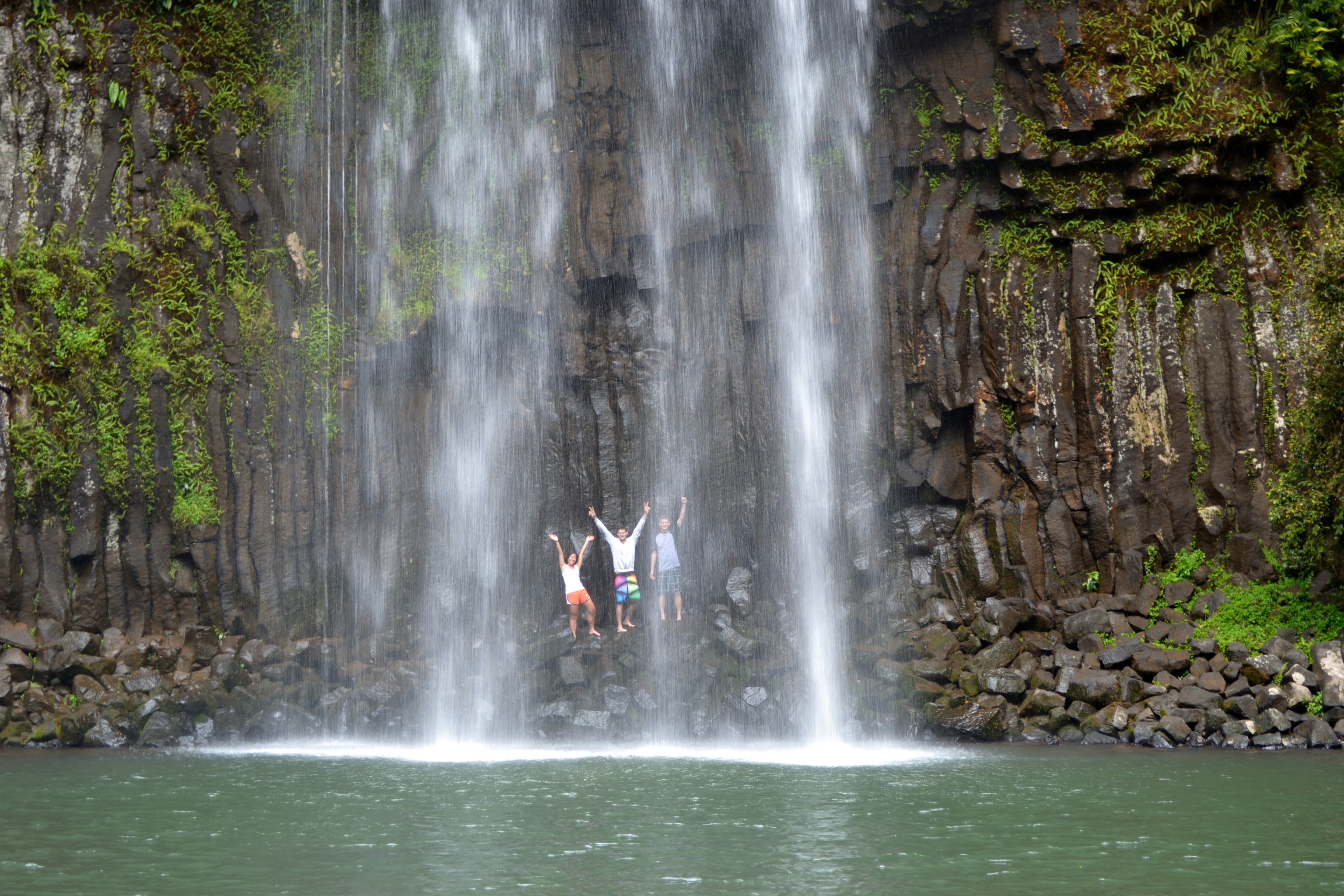
waterfall

My flatmates and I ventured our way to under the waterfall at Milla Milla Falls in Cairns

Knowing we couldn’t stay in Cairns forever, we began to travel south towards Brisbane. On the way, we stopped at the Whitsunday islands for a day trip. Nothing could have prepared me to anticipate such a view. Expectations are never accurate, for no sense of what you are going to see can perfectly depict what is actually there. Pictures almost do Whitsundays no justice. With the water having 20 different hues of blue, the scenery is unable to be replicated by any other location. The silica sand on the beach was so soft that you could exfoliate yourself with it (which I most certainly did). Paradise would be an understatement to describe what it was like. Thinking about going back at the end of the day became a concern, for every inch of my body was reluctant to leave.

Whitsunday

Whitsundays islands

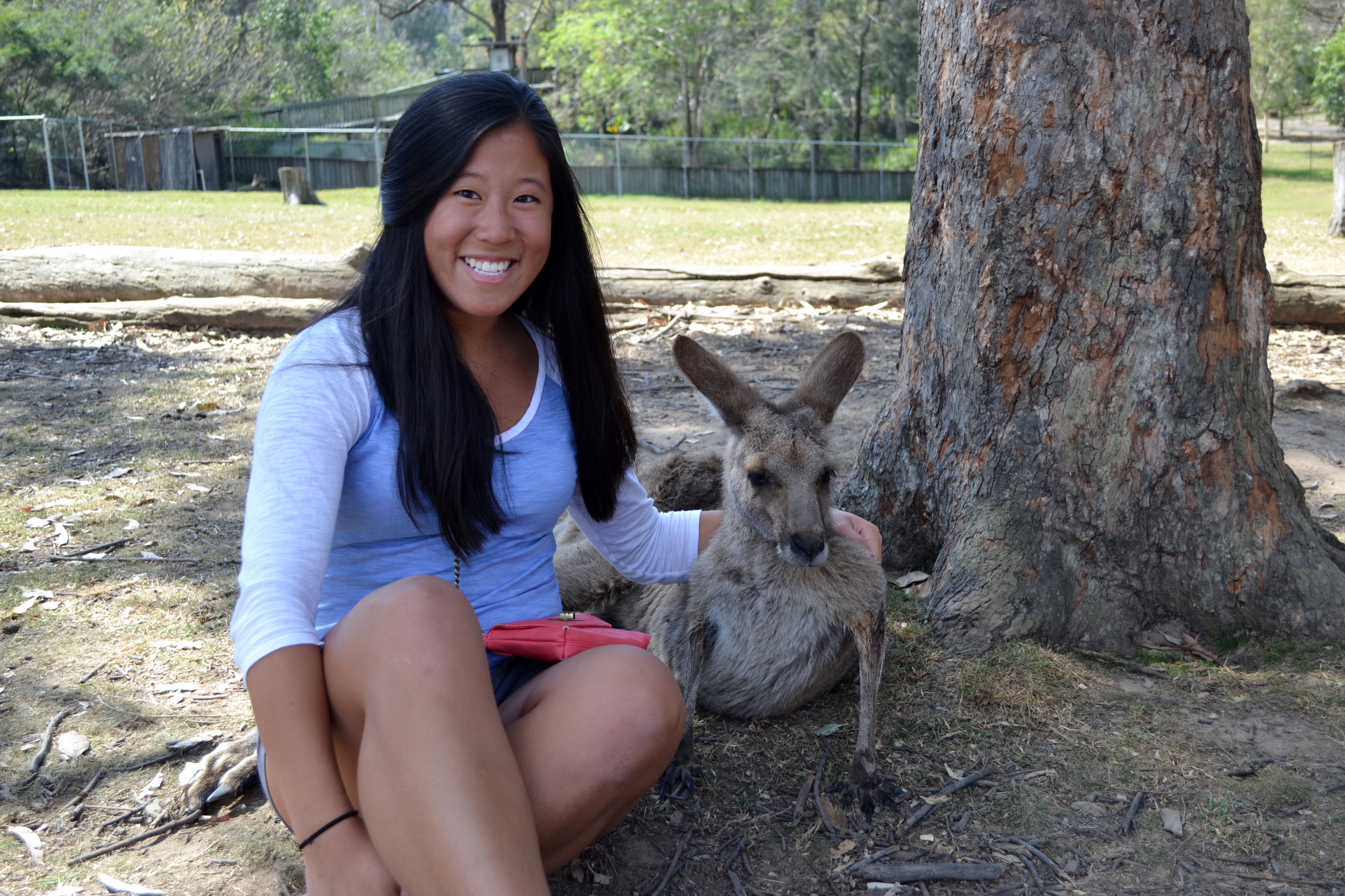
We finally arrived in Brisbane, which was our last stop on our trip but it didn’t necessarily mean we were slowing down. We utilized our time by visiting Long Pine Sanctuary, the first and largest koala bear sanctuary in Australia. The entire place was enriched with all kinds of Australian life such as koala bars, wombats, dingoes, crocodiles and kangaroos. To our delight, we were easily able to enjoy our time with the kangaroos up close in such a way that we were allowed to fully interact and pet them. The animals showed very little sign of discomfort, and they were very welcoming to visitors. Kangaroos were lounging everywhere in this field waiting for attention and consolation.

kangaroo

The kangaroos were more than welcoming when they were approached by visitors

Every beginning has an end, and finally we flew out from Sydney back to Christchurch. Having been in Australia for ten days, we were ready to return to New Zealand. A change of scenery is always enjoyable, but returning to what you’re familiar with always generates a sense of comfort. Being away from my home in Dunedin has made me appreciate how at ease I actually am in New Zealand.

Having Australia being so nearby was such a convenience, for there was most likely no other time when I would go there besides being abroad now. Opportunities aren’t always available. You can’t expect for them to present themselves at any time. If it’s there, you can either take it now or sometimes even never. Fears or distress shouldn’t obstruct your true desires. Visiting Australia had always been one of mine for as long as I can remember, yet I was always worried about money and time management. However, studying abroad presented the perfect chance for me to go and it undoubtedly became one of the most remarkable trips of my life.

Life has now resumed back in Dunedin, and it’s almost like nothing has changed. I am more than halfway throughout the semester and I am already fearing that the end is going to arrive sooner than I think. Such a thought only reminds me that there is still so much more for me to do and see. Nevertheless, I am already more than satisfied by the amount of things that I have done thus far. It’s almost impossible to see and do everything that New Zealand has to offer down to the last piece of nature. However, it is possible to fully appreciate all that has been seen and done.


Mel in Chile: A Lens

September 3, 2013

It has been exactly a week. The most interesting aspect of “the life of a university student” is that political affiliation is a big part of the identity of public universities. Chile is an incredible place to study political systems as it is the only place in the world where a socialist government was elected democratically and without military intervention. This government was overthrown in a military coup only a few years after it was established. The years of Pinochet’s military dictatorship brought the implementation of strict neoliberal economic reforms and fast privatization of important industries. Many will argue it was precisely this period of free markets and capitalist ventures which brought Chile the macroeconomic “success” it currently enjoys. It is considered one of the most stable economies in Latin America. However this same period of military dictatorship also carries painful memories of vast and blatant human rights abuses the government committed against dissidents. Leaders of socialist parties were assassinated, thousands  of civilians who opposed the neoliberal reforms were tortured as political prisoners, and thousands more would simply disappear; they are called the “desaparecidos”. It is without a doubt that Chile’s “economic miracle” came at heavy price.

The bittersweet taste of “macroeconomic” success is not simply nested in the past. Chile continues to be a country with one of the highest margins of income inequality in South America. Access to health care and higher education (along with other industries) is concentrated in the hands of elites. I imagine many will remember the student led protests in 2011.

I apologize! This was not meant to be a history lesson on Chile’s economic and political evolution. I started the blog with the statement that university life for students in Santiago is very interesting. I have found that the universities in the city have a strong political identity. After only two days in the city, I heard from other Chilean students which universities were rightist and which were leftist. After walking around other campuses in the city, I also began to see the role of politics in the university.

This group of SIT students has come to study politics and economics in Chile at an incredibly special time. September 11th will be the 40th anniversary of the military coup in Chile. My host family, professors, and other students say there are many things that go on around the city. At USACH (my university), as in other universities, there are forums, discussions, panels and other events the university has organized. There are also events that will take place throughout the city. My group will actually be traveling to the North for our first excursion so we will be away from all the activity.

Then on November 17th Chileans will vote for their president.  It will be the first presidential election in which voting is voluntary.

In conclusion, I feel very lucky to be in this program during such a specific time in Chile. I am not simply here taking classes, making friends, and sightseeing. I have the opportunity to “experience” the country through a specific lens. I walk around the metropolitan areas of Santiago and I don’t simply see huge skyscrapers housing foreign companies. I also think about the implications of such economic growth. When I am in the university campus I don’t just see other university students. I think of how their identity as students was formed through the movement, and how they help form the identity of the university.

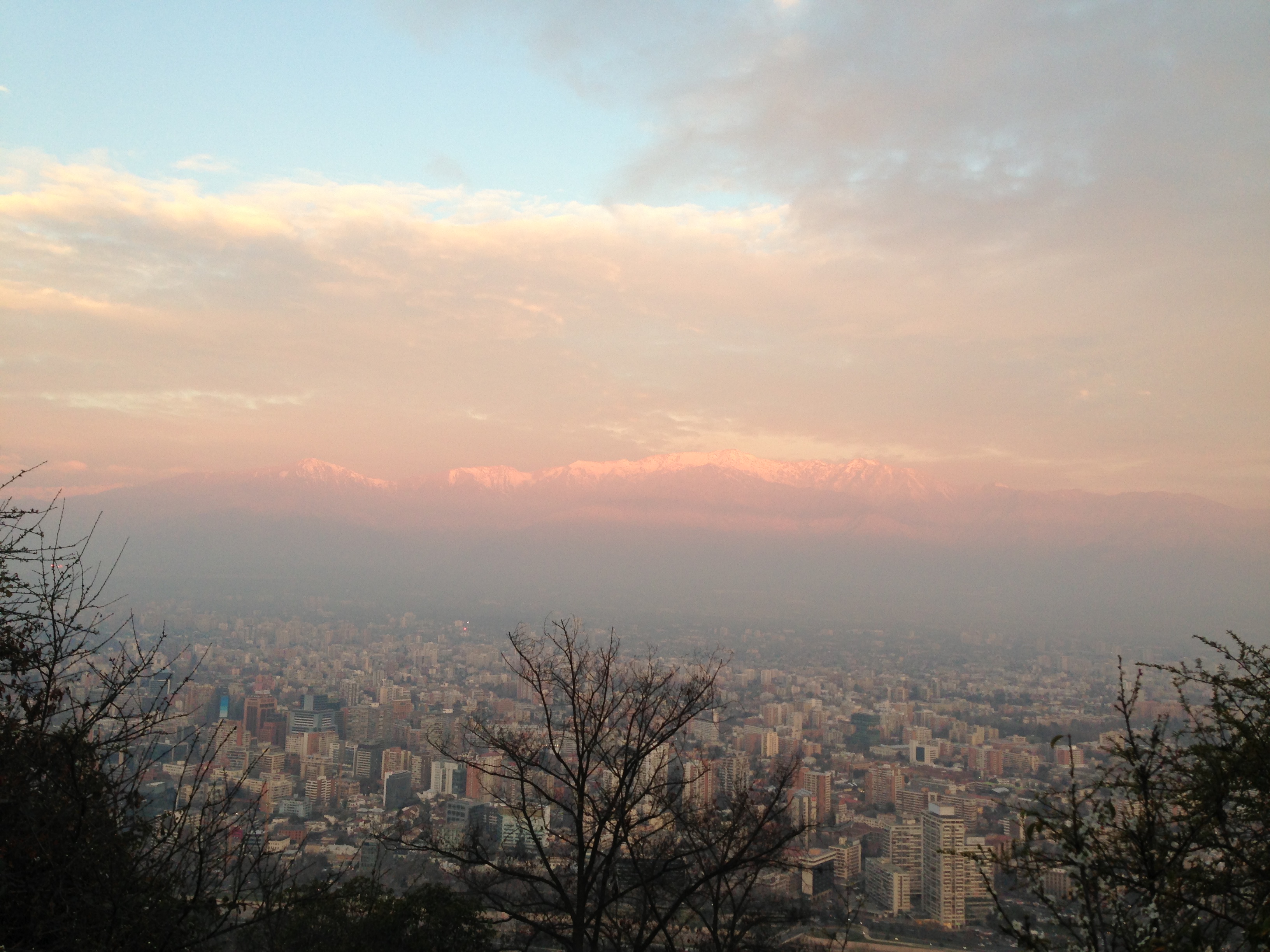
IMG_1743

This is a view of Santiago from the San Cristobal hill. Note the Andes in the background!

It has been incredibly helpful to have this lens. Another student studying abroad in Brazil and writing for the Traveloges for UR mentions how easy it is for study abroad students to be “tourists”. Being a “tourist” is not bad. I am already planning a backpacking trip to Patagonia after the program is over with another friend studying in Valparaiso and I will do as much traveling as I can. That is to say, if you have the opportunity to travel you should take advantage of it. However you should also take advantage of the fact that studying abroad gives students an opportunity to create a lens. It gives students the opportunity to travel not to simply visit places and appreciate their presence in space but to also see what isn’t physically there.

I can feel myself becoming poetic as I sit in the cozy kitchen of Pedro and María on this cold night in Santiago, Chile.

Better to stop now before I start writing of the wisdom of the wind and the courage of the sun or something.

Have a great week everyone 🙂


Diego in Brazil: Biking in Rio de Janeiro

September 3, 2013

I never expected biking to become my favorite activity in Rio de Janeiro. It wasn’t until I moved to Rio that I realized I hadn’t had the chance to live in a city where biking is encouraged and the right infrastructure exists. About two or three weeks ago my host-mother suggested that I could bike to and from PUC, my host university, every morning and afternoon. I thought it was a fantastic idea (from a social, environmental, and financial perspective, biking is the way to go!) but first I needed to make sure I had a bicycle, a safe path to take, and, of course, the time to do it.

I initially thought about buying a used bicycle. I had seen countless bike racks (bicycle stands) in Rio de Janeiro’s Zona Sul (where I am living,) so I thought buying a used bike was a reasonable plan. I told my host-mother about my plan but she quickly suggested it would be better to subscribe to BikeRio first. Needless to say, I had no idea what she was talking about, so I asked her to explain. BikeRio is a sustainability project led by the city’s Prefeitura (similar to a City Council,) the Itaú Bank, and the bicycle system SAMBA. The project relies on approximately 60 stations with twenty bikes each located throughout Rio’s Zona Sul and some other neighborhoods. BikoRio’s main objective is to provide a low-cost transportation alternative for people who move around these urban neighborhoods. “That’s exactly what I need,” I told my host-mother, and I had no idea that I was about to expand my image of Rio de Janeiro by simply joining a biking program.

Using BikeRio is incredibly simple. You pay a $4.00 monthly fee and gain the right to pick a bike from any station and use it for an hour. After you return to the bike to any station, you can wait fifteen minutes and pick another bike. The project also has an app for iPhone, iPad, etc., where you can check if the closest station to you has any available bikes. And in case you are wondering, every bicycle I have used so far has been in perfect condition.

“Great, I now have a bike,” I thought, but I also needed to find how to safely get to PUC and then home every day. The first days that I biked to my University I took the route that my bus usually takes. At that point, that route was the only one I knew and taking it was quite necessary to avoid getting lost. With time I have found countless ways to get to PUC in the mornings and come to my apartment in the afternoon. However, and I say this without a doubt, the safest and most enjoyable route to take is around the Lagoa (Rio’s lagoon.) The city’s Zona Sul now has several biking paths and lanes that can take you across this part of the city crossing only some major roads. This past Friday and today in the afternoon I went biking without a particular destination, and I reached some very interesting and new places in the neighborhoods surrounding the one where I live.

DiegoBrazil4

Biking is becoming increasingly popular in Rio de Janeiro’s Zona Sul

So I have a bike (well, several) and a safe way to get to and from PUC every day, but do I really have the time? Going by bus to my University saves me a total of 40 minutes per day in comparison to taking a bike. Now, if I were to base my transportation choice purely on how much time it takes out of my day, I would have to go for the bus. However, the benefits I get from biking are definitely greater than what I could get out of those 40 “extra” minutes each day. Those benefits impact my health (both physical and mental, since I have found that biking can clear my mind for a while,) my perception of Rio de Janeiro (you certainly become part of the “biking community,”) my finances (I calculated that I save approximately $68 per month if I take a bike instead of the bus,) and many social and environmental aspects of the city. From a holistic point of view, and as I said in the beginning, biking is the way to go!

I am looking forward to biking beyond Rio de Janeiro’s Zona Sul. I recently met some Brazilian students at PUC who go biking for fun every weekend, so I am truly excited about joining them this coming week. Buying a used bike is still an attractive plan…