Emily in Samoa: a Sunday kind of Samoa

February 9, 2016

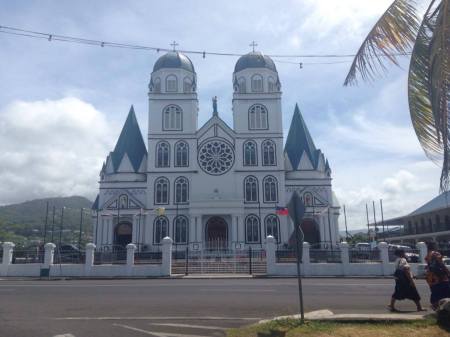
I am not a religious person, but I love church services here in Samoa. This is our second day here, and our director, a former Peace Corps worker who married a Samoan matai (chief), took us to a local Catholic church. The vast majority of Samoans are Christian, and church is a big deal here. Most people wear white on Sundays, and close their shops for family and worship that often takes most of the day. The priest is the most important male figure in town, and is the recipient of the services and contributions of the rest of the community. Because of this, the community dedicates ample time and money to the welfare of the church.


The newest Catholic Church in Samoa

The newest Catholic Church in Samoa


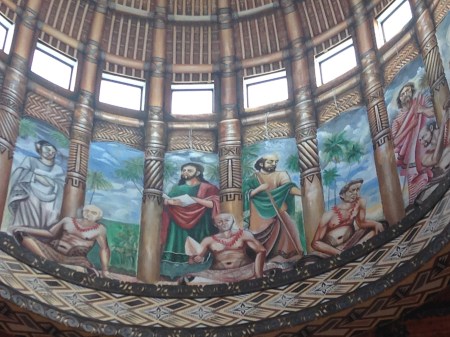
We explored Apia a bit yesterday after our flight arrived, and the newest churches are impressive. The largest Catholic church was built in 2014, after much of the city was decimated by a 2012 cyclone. This church is beautiful inside now: wood slats make up the ceiling, and form geometric patterns with each other. The floors are a light pink tile, adding to the brightness to the rich wood of the ceiling and the colorful frescoes of grape bunches (of all things). My favorite part of this particular church is a rotunda at the top, which features various Catholic saints doing whatever saints like to do, and important Samoan chiefs sitting among them and conferring. I think that this painting reflects a lot of the Samoan mentality toward religion and their existence in general—while they venerate and extoll their religion, they also know the importance of their own identity.


Saints and chiefs ponder

Saints and chiefs ponder


A story that we were told in class the other day also reflects this. Missionaries who had come to Samoa, and imparted lessons from the Bible to the chiefs and villagers. One of these “lessons” was that all people could trace  themselves back to Jesus Christ and the Holy Land. At this point, the Samoans interrupted. The teachings of the Bible were good, they said, but that part was wrong. Perhaps the rest of the world came from the Holy Land, but the Samoans came from Samoa.

Similar reactions have occurred when historians “teach” Samoans about human migration from Polynesia to the Pacific—it’s simply not true, they say. The pride that Samoans take in their identity is both overt and tenacious, and, although you might see it in any aspect of daily life, I found it striking today at church.

Only the choir sings the mass, and, as the priest sings a verse, he is answered in a beautiful four-part harmony. Voices raise in song and echo off the wooden ceiling of the church, in a melody that one would almost expect in a European cathedral, but which is much to bright for the darkness and solemnity a cathedral would bring.


Inside the new church

Inside the new church


As the offertory is played, baskets are passed amongst the congregation, as one family distributes leis made of frangipani blossoms to high-ranking elders. A statue of the Virgin Mary has her own lei, and a row of older women dressed in white receive more. Our director also receives a lei, and exchanges kisses with the woman who gives it to her. The sweet smell of flowers mingles with the darkness of the incense, carried around the church by the gentle breeze of people’s fans.

This portrayal of a Samoan church service is somewhat romanticized—it is incredibly hot and humid in the church, and feeling the sweat dripping down my back does not necessarily make me feel spiritual. However, it provides a picture of an essential part of the Samoan life, and one that I hope I will experience more of in the future.


Fabiana in China: The Last One

May 1, 2015

As we wrap up the month of April, I sit back and enjoy my last plane ride back to Beijing. I look at the blue sky and clouds, and remember I forgot to throw out the milk in my refrigerator before leaving (two weeks ago). Haha.

With approximately 1,400 photos in my camera (of which 200 are basically selfies), I feel as if it was only yesterday when this trip started. We had seen and learned so much, to the extent that I have to make an effort to remember what I had seen in each city. I could go on and on about everything that has happened, but instead I’ll briefly narrate my top 10 experiences.

(Because it’s too hard to rank them, I just listed them according to the order in which each was done)

Visiting the White Horse Temple (Luoyang, western Henan province, China)

The White Horse Temple is the first Buddhist temple in China. Established in 68 AD under the patronage of Emperor Ming, the temple is considered “the cradle of Chinese Buddhism.” The legend says Emperor Ming had a dream vision about a Buddha who established Buddhism in India. He then sent emissaries to search for Buddhist scriptures. In Afghanistan, they found two Buddhist monks that agreed to come to China to translate the Buddhist scriptures into Chinese. These monks carried their Buddhist books, scriptures and relics on two white horses. In their honor, the Emperor built and named the first Buddhist temple The White Horse Temple.  Creative huh?
Photo 1

Witnessing tens of thousands Buddhist statues carved into mountains (Luoyang)

The last time I remember feeling this amazed was when I saw the Taj Mahal in India two years ago. The view of the Longmen Buddhist Grottoes was simply breathtaking, especially because you never really know when you’ll reach the most famous sculptural site of the place. The construction of the grottoes began in 493 BCE, and in 2000, the area was inscribed on the UNESCO World Heritage List. With around 2345 caves and niches, 2800 inscriptions, 43 pagodas, and over 10,000 Buddhist images at the site, it is one of the most impressive collections of Chinese art from the Northern Wei Dynasty, Tang Dynasty and other periods.

Photo 2

Touring The Terracotta Soldiers Site (Xi’an)

Ever since I saw an exposition at Epcot, Disney of the Terracotta Soldiers, my dream was to go see “the real-deal.” These life-sized statues of warriors older than the Roman Empire are located 1.5 kilometers east of the Mausoleum of the First Emperor, Shi Huang Di. Farmers found pieces of broken terracotta in 1974 when digging a well. This is how the 14,260 square-meter pit of terracotta warriors and horses was found. Today, more than 8,000 soldiers and 100 chariots have been excavated. However, because of the “limited technology” today, most of the excavated warriors have been buried again for better protection. There are only 1,000 terracotta figures in exhibition today.

Photo 3

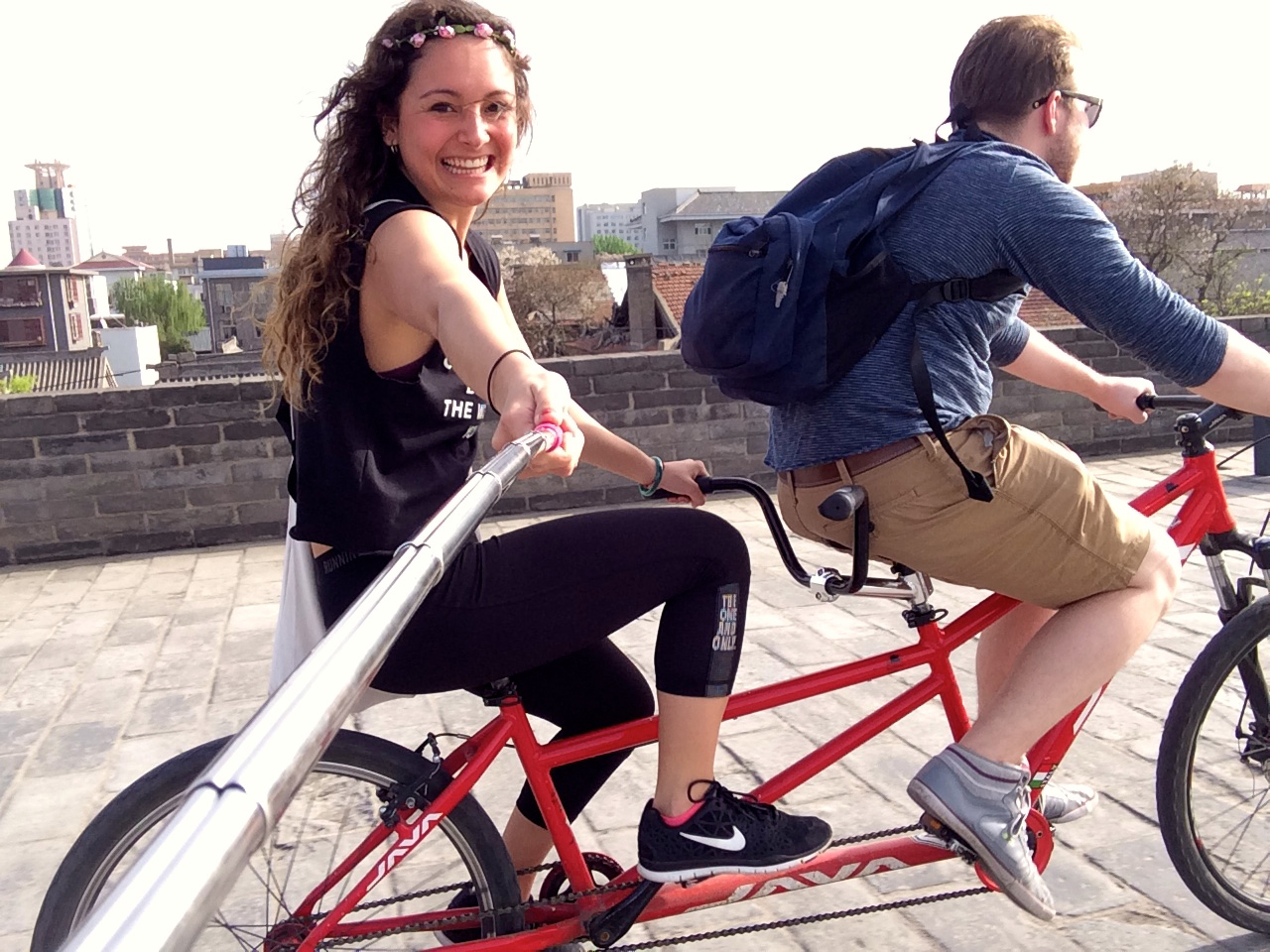
Riding a Tandem Bike on Xi’an’s Ancient City Wall

There is truly no other way to wander this 14-kilometer city wall other than riding a bike. If you’re up for spicing things up, try renting the tandem bikes. From the top, you’ll be able to see the contrast between the old and new architecture: the old referring to the construction located inside the city wall, and the new referring to the outside. The city walls form one of the largest and most complete, ancient military systems of defense in the world. They were built on the fortifications of the Tang Forbidden City.

Photo 4

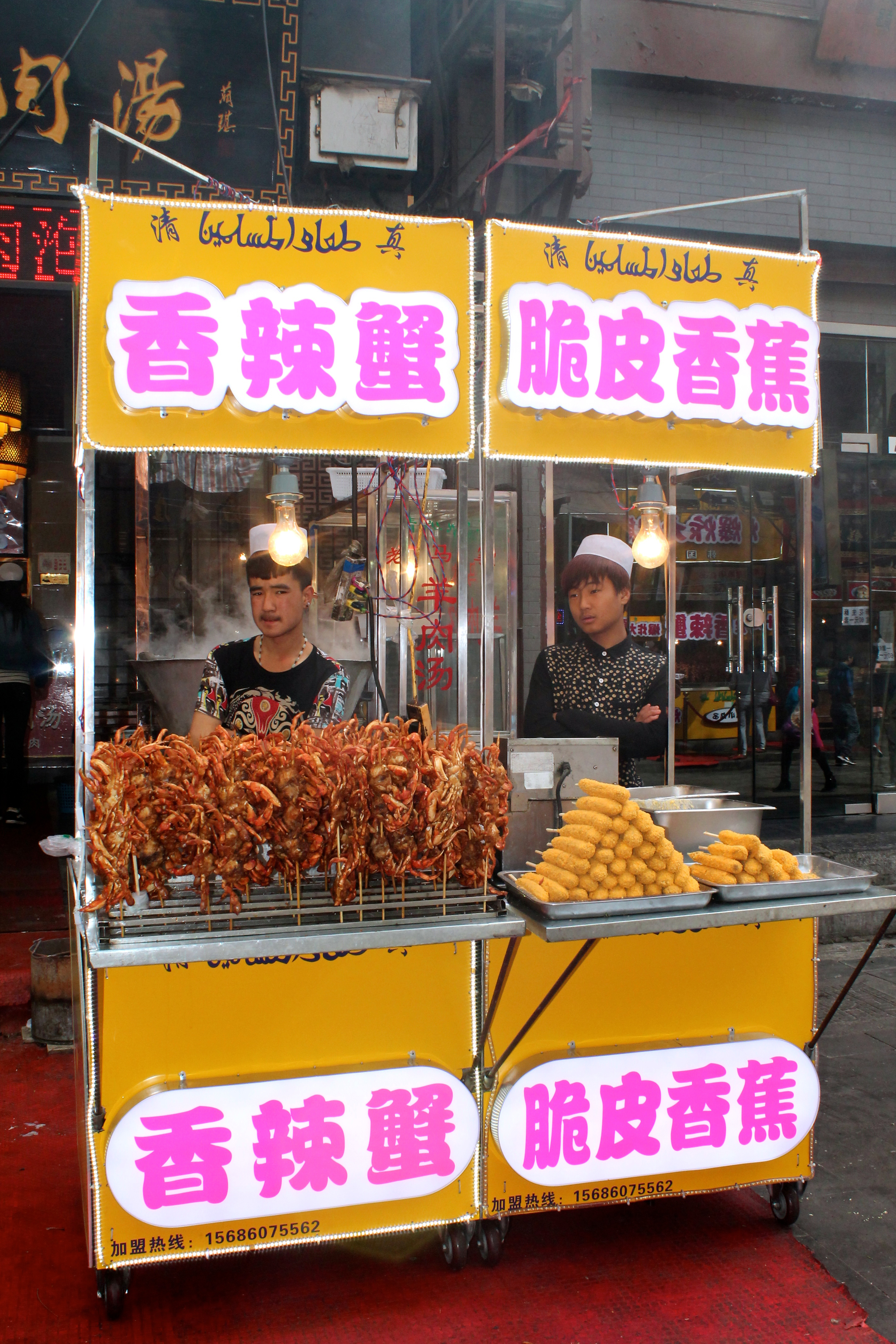
Eating in Xi’an: Arab Street Food

From fried bananas on sticks to spicy meat over bread: when in Xi’an this street is a “must-go” to eat. Half the time you will not know what you’re eating, but the lines of people waiting will depict how good the food being sold there is.

Photo 5

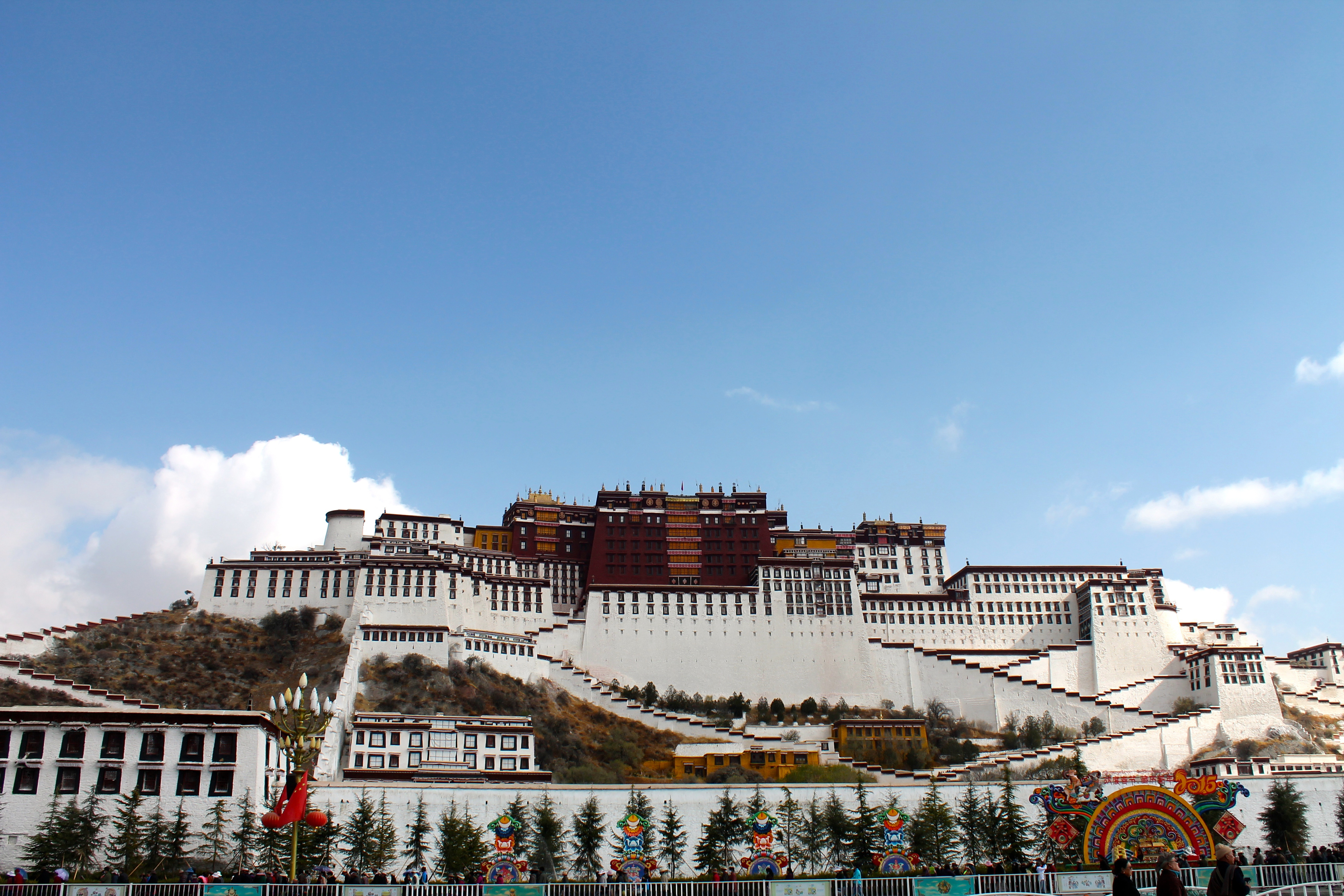
Roaming Around the Potala Palace (Lhasa)

This palace is truly astonishing. When seeing it from the outside, you see a combination of white on the bottom and red on top. These two colors correspond to two palaces built in different time periods, but connected to form one from the inside. Pilgrims walk around the Potala Palace for hours to pay homage, so as soon as you’re near the palace you can get a feel of how important this building is for Buddhists. The 13-story palace stands 117 meters high and has over 1,000 rooms. It covers an area of 130,000 square meters.

The red palace contains jaw-dropping mausoleums of previous Dalai Lamas and the white palace contains the living headquarters of successive Dalai Lamas and their tutors. The Potala Palace is full of precious sculptures, murals, scriptures, and Buddha figures accompanied by the hums of the Buddhist prayers. It has been considered one of the most sacred places for Buddhism for hundreds of years.
Photo 6

Having Tea by the Barkhor Street (Lhasa)

“入乡随俗,”by far one of my favorite four-character word sayings in Chinese means: “In Rome, do what Romans do.” After walking one of the oldest streets in Lhasha called Barkhor Street, one has to make an effort to find the famous teashops located on hidden alleys. Our tour guide took my friend and I to one of these for a big surprise. These places are not the ordinary teashops you’re imagining, where you sit in an ordinary manner and have a server ask your order. These are the type of places you sit wherever you fit: there are long tables and chairs everywhere. This is a type of place locals sit and chat, do business and meet total strangers. With a whole pot of milk tea priced at $1, this is the place to end your day’s adventure.

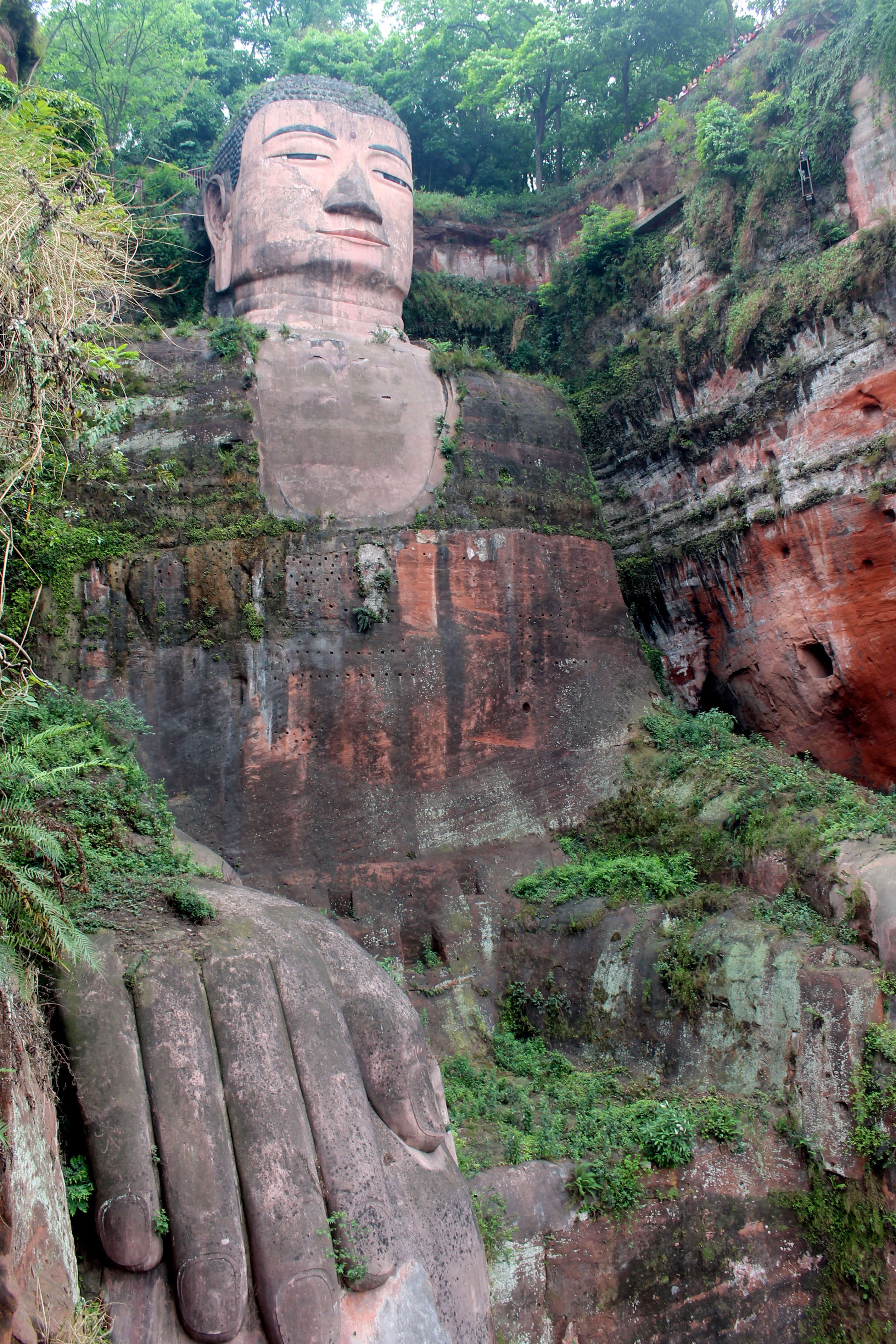
Hiking the Leshan Giant Buddha (Leshan)

The Leshan Giant Buddha is the biggest carved stone Buddha in the world (71 meters high). Located at the confluence of three important rivers, the statue was built to bring the water spirit under control. The falling stones during the carving would also help reduce the water force there. It took 90 years to complete the carving.

Photo 8

Visiting the Panda Research Base/Giant Panda Breading Center (Chengdu)

The research base, which has elements of a veterinary lab, a park, a panda habitat, and a zoo, is one of the best places to see giant pandas in the world. The research base, covered in trees, flowers and 14 species of bamboo, provides a pleasant escape from city life. Red pandas (closer-looking to a raccoon than a panda) are also sheltered there, giving a twist to the whole experience.

Photo 9 pandas

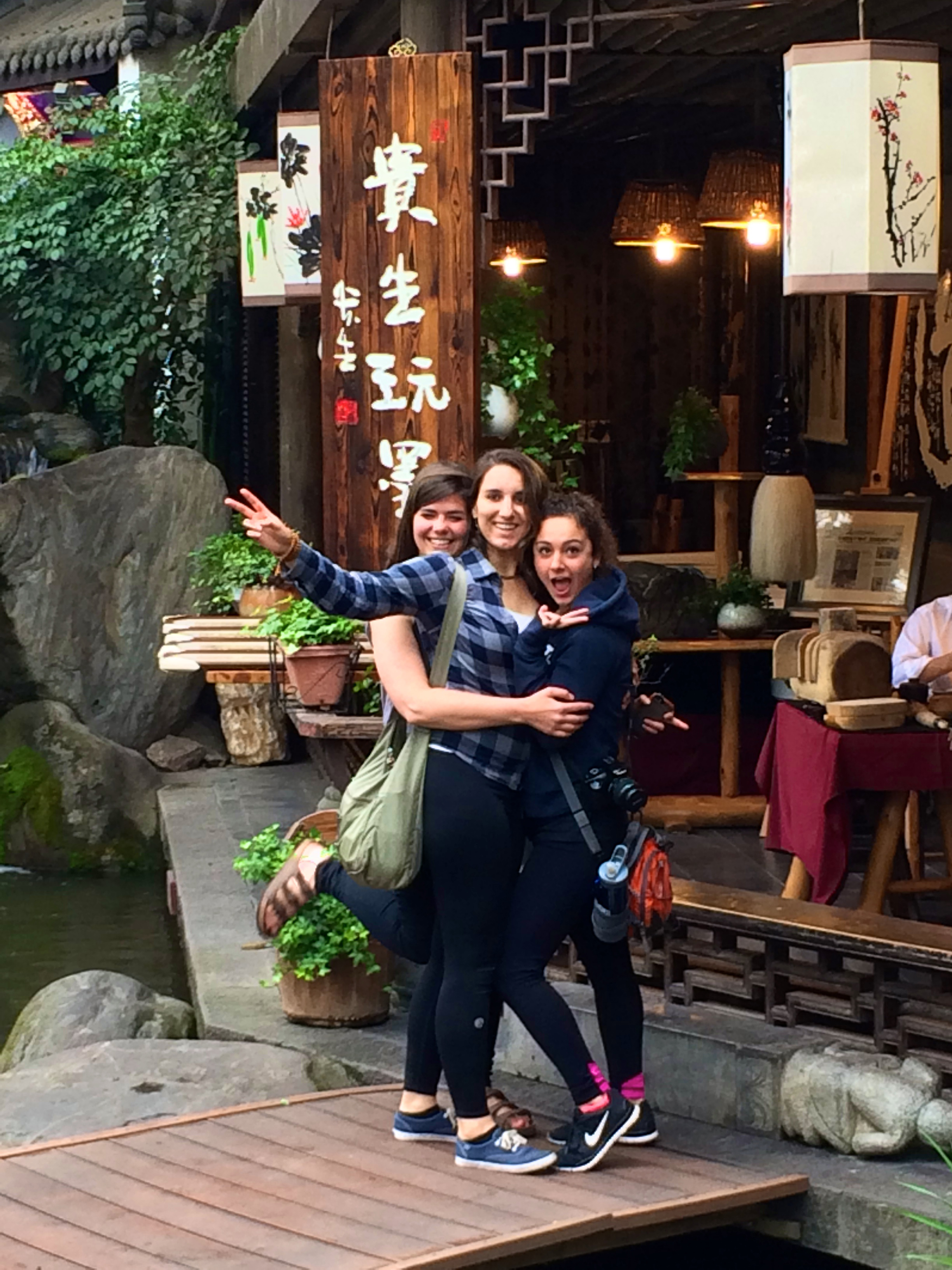
Walking through Jinli Street (Chengdu)

In ancient times, Jinli was one of the busiest commercial boulevards of the Kingdom of Shu. Today, visitors from all over China and abroad enjoy this renovated street, as there is a lot to see, hear and EAT. WARNING: eating some of the local specialties will literally make you sweat. If you’re not into spicy food, make sure you tell the vendor “bu yao la” 不要啦 = I don’t want spicy. They’ll look at you a little insulted (they love the spice), but will make sure you get the least amount of spice in it (if possible).
Photo 10

With the semester completed and a month left in Beijing, I wrap my last blog post with a BIG THANK YOU. I couldn’t have done anything without the support of my family, boyfriend, and friends I made along the way. I liked having this blog for my stay in China, who knows if I’ll have another independent one in the future.

There is still so much to see, touch and taste out there. I am young. I am hungry for experience.

Till we meet again.

F.

Becca in Hungary: Experiencing Faith Abroad

April 13, 2015

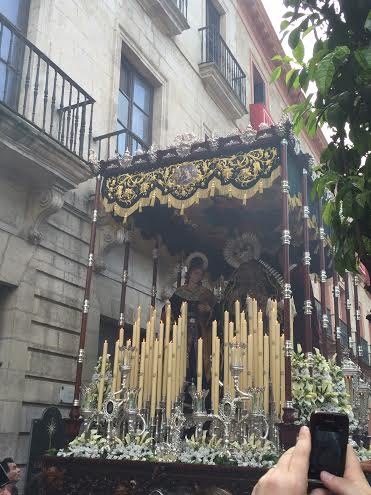
Easter weekend is probably one of my favorite times of the year! In fact, I have been planning this past Easter weekend way before I even arrived in Budapest. For Easter I went to Sevilla, Spain where they have huge Semana de Santa (Holy Week) parades. Each day of Holy Week a couple brotherhoods (groups of religious individuals) will a host a parade that will wind through the city of the Sevilla. The start of each procession is a alter boy carry a large cross. The parade continues with many individuals from the brotherhood including some children passing out candy and also large city bands . The star of the parades though are the pasos which are large, ornate, wooden floats.  Typically these floats depict images of Jesus’s crucifixion or the Virgin Mary.

Some of the floats of the parade

Some of the floats of the parade

unnamed-1

unnamed-2

Now if the floats themselves aren’t stunning enough for you, if you look below the float you might be able to make out some feet. What are people doing under the float? Well for almost 10 to 14 hours these one ton floats are carried by over a dozen men! UNBELIEVABLE!! These men (woman are not allowed to carry them… yet 🙂 ) are only allowed to carry this float once in their lifetime making a very big honor for the people chosen to carry the paso.

These parades are certainly nothing like the Macy’s parade I am use to seeing around Thanksgiving or local parades in my hometown. While most parades have a more upbeat presence, the Semana De Santa parades are much more somber. They really make you think about your faith and religion. Not only do you see these beautiful depictions of various scenes, but beneath the scene you see many shuffling feet slowly jerking the float forward. Religious or not, it is amazing to witness these men’s testimony to God and their ability to overcome tremendous physical pain for the sake of their beliefs.

On top of the eye opening experience of the parades, I was also able to attend two separate services in Spain. The first was an Easter Mass in the Cathedral of Spain.

My failed attempt to get the whole Cathedral into one picture

My failed attempt to get the whole Cathedral into one picture

A picture from the tower of the Cathedral

A picture from the tower of the Cathedral

As you can tell this Cathedral is more of a fortress then a simple town church. Throughout the Cathedral there were several side chapels so at one time there could be multiple masses going on. This mass for me just didn’t spark my spiritual heart. It was very much a “get them in, get them out” approach rather than an in-depth spiritual experience.

On our way to dinner that night, though, I wanted to stop into one more small chapel, and that is when I found a group of semi-cloistered nuns partaking in a small worship ceremony. The nuns are behind a gated area meaning that they have limited interaction with the public while the priest were in the front leading the service. Within the chapel there were only maybe 5 benches for visitors to stay. The service was the complete opposite of the one I went to in the cathedral. While the cathedral was filled with thousands of people this service had only 4. What amazed me the most about this service was even though I did not understand one word that was being said (it was all in Spanish) I was still so moved by what he was saying. It really showed me that faith can transcend the barriers of language. If you keep your heart open to the message, you can hear the message through your faith rather than through your ears. Going to this service was definitely one of my favorite experiences I have had abroad!

unnamed-5

Now that I have returned from Spain and trying to get back into the swing of school, I am committed to staying within Hungary for the rest of the program. I have loved visiting all these new places, but the next month and a half I plan to focus my energy on Hungary.


KyungSun in Scotland: The Scots, Brits, and Somewhere in Between  

February 9, 2015

Most of you are probably wondering who I’ve been hanging out with here in Edinburgh or if I even have friends at all…Anyone that’s studying abroad can tell you that their greatest fear is not making any friends. I certainly felt anxious about the type of people I’d meet. The good news is that like freshmen year, every exchange student has the “new” factor in common. You also strangely feel close to the other exchange students simply because everyone is experiencing the same fears, cultural shocks, and excitement over the little (often touristy) moments like you.

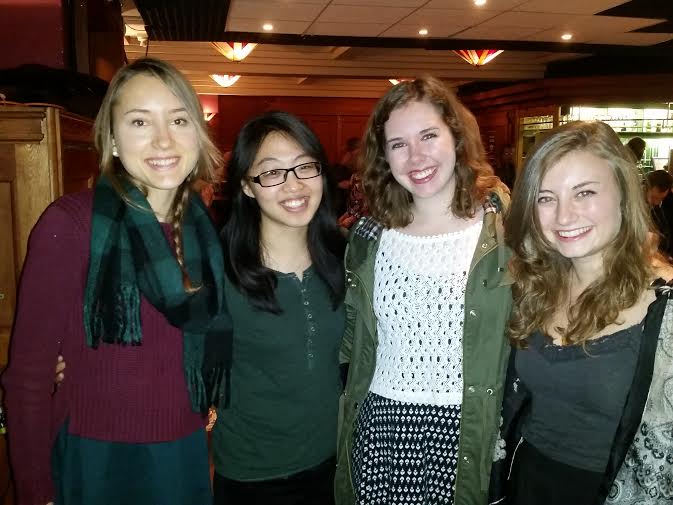
Tess, Kara, me, and Meghan at Burns Night

Tess, Kara, me, and Meghan at Burns Night

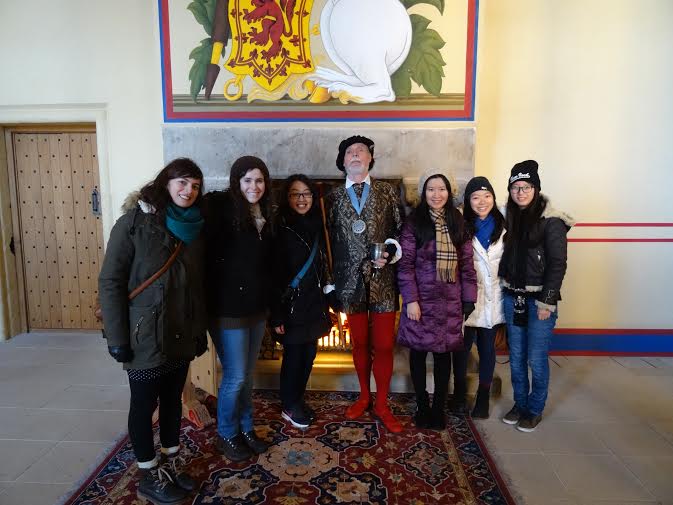
I'm pretty sure it was for kids, but we really wanted to try the costumes at Stirling Castle

I’m pretty sure it was for kids, but we really wanted to try the costumes at Stirling Castle

The girls from the Parliamentary Program!

The girls from the Parliamentary Program!

On the other hand, it’s really difficult to meet Scots here in Scotland – how can this be? Here at the University, the best way to get to know other Edinburgh students is to join societies (clubs). So far, I’ve only really joined the Music Society. This is mainly because the societies I’ve wanted to join always seem to conflict with a tour or meeting I have as part of my program. But hopefully I’ll be able to join at least one more society.

I’ve also noticed that 99.9% of the time, societies socialize by going to pubs – even after church! After mass, the President of the Catholic Student Union invited everyone – students and non-students – to join them for wine. I admit, I was caught off guard. But I had to remind myself that the drinking culture is different here; it’s much more common to go out and grab a few drinks with friends.

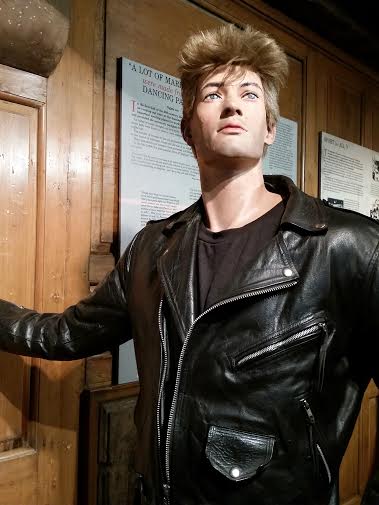
Other than pubs, I’ve also met Scots at museums or walking along the beach wall:

Met him at the People's Story Museum (a museum telling the stories of the ordinary people of Edinburgh)

Met him at the People’s Story Museum (a museum telling the stories of the ordinary people of Edinburgh)

Met him at Stirling Castle

Met him at Stirling Castle

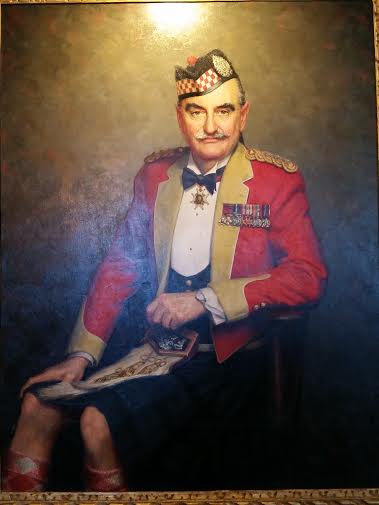
He was my favorite. I met him at the Regimental Museum

He was my favorite. I met him at the Regimental Museum

The only Scot I haven’t yet met in a pub is my MSP (Member of the Scottish Parliament), Richard Simpson. I’m really excited to work with him because he’s involved in a lot of healthcare issues ranging from chronic illnesses to healthcare inequalities which are issues that I’m also interested in researching. He also said that I would have a few opportunities to travel to visit his constituency which is going to be a great way to get to know Scotland even better!

The new Parliament building, usually referred to as Holyrood

The new Parliament building, usually referred to as Holyrood

Something that I didn’t consider before coming here is what it means to be Scottish versus British versus English. I embarrassingly didn’t realize that Scotland is not a country. Rather, it’s called a state because it’s part of the United Kingdom.

Okay so let’s work from a micro to macro level. People in Scotland are Scottish, but they’re also British because they are part of Britain, which consists of the main island including Scotland, England, and Wales. But people in England are English, but also British. People in Wales are Welsh but also British. Then what about people in Northern Ireland?

I met someone from Northern Ireland a few days ago (not surprisingly, at a pub) and he told me this: If they’re Protestant, they’ll generally call themselves British, but if they’re Catholic, they’ll generally call themselves Northern Irish or Irish.

As you can see, it can get very, very confusing. But this confusion has also made me think about the importance of preserving your identity within a union of states like the United Kingdom. For those who don’t know, Scotland recently voted on whether or not they wanted to break away from the United Kingdom. Although it didn’t pass, coming here has made me realize how much Scotland prides itself in its unique history, culture, and independence.

Scotts Momument in the heart of Princes Street, dedicated to Sir Walter Scott.

Scotts Momument in the heart of Princes Street, dedicated to Sir Walter Scott.

I’m certainly learning a lot about how Scotland fits within the rest of the UK and likewise, how the UK fits in with the European Union (which is also anticipated to come up to a vote soon!). It’s a great time to be here as a politics student especially as the UK General Election is less than 100 days away!


The diversity in Scotland and the UK is also one of the reasons why I’m falling more in love with the state/city every day. Edinburgh is really a hub of diversity. But I’ve come to realize that being in a diverse place no longer means seeing people simply of different ethnicities/races. Rather, the more modern diversity is defined by people of cross-cultural backgrounds and multiple identities – the Pakistani-British, the Polish-Scottish, or the Asian-Australians. It’s a concept that I think we, as Americans, still have much to explore and I, as an Asian-American, have a lot to learn from.

Til next time, cheers!

My Asian-Australian friend Jackie and I celebrating our (semi) successful nutella cupakes!

My Asian-Australian friend Jackie and I celebrating our (semi) successful nutella cupcakes!


Mel in Chile: The South Part 3

November 8, 2013

Last time you heard from me, I finished writing about my homestay with a Mapuche family in a small valley called Valle Elikura.

We left Valle Elikura early Monday morning. We spent the next part of the trip in Dichato, a small town in the southern coast of Chile. We also took two classes in Universidad de Concepción about the economic, political and social influence of the forestry industry.

Before I start talking about the activities during the final days of our trip, I would like to share how I felt after Valle Elikura.

I think it’s safe to say when we travel and spend time with other people who are culturally or ethnically different than our own group, we tend to hope our time with them will attend to some questions, or curiosities. Likewise, I hoped that my time in the homestay in the Valle Elikura would answer many questions I had thought of in preparation for the trip. How did they feel about being surrounded by the forestales (general term for forestry companies)? Is there a space for the community and the forestales to discuss terms of mutual agreement for future plans? How had the concept of “ser Mapuche” (literally meaning “to be Mapuche) evolved through history? In which ways did this identity adapt to the political context of each time period? What are the major discontents of the Mapuche community in Valle Elikura with the Chilean state?

I refer specifically to the community in Valle Elikura because I wanted stay away from the fallacy of assuming that the Mapuche are a homogenous group. I did assume that everyone in Valle Elikura would share the same identity, have similar political views, and generally organize around the same “vision” for the community. I quickly found out my notion was embarrassingly wrong. To begin with, most of the families in Valle Elikura have one Chilean parent. My host father was a priest in an Evangelical church while the director of our homestay expressed great discontent with the infiltration of Western, monolithic religions in the Mapuche community. As I became aware of these dichotomies, I raised questions that tried to go deeper into learning more about the people living in Valle Elikura.

The more I tried to “learn” during the five days of my homestay, the more I felt I didn’t understand. It’s as if I walked into a cave. In the beginning, I had a torch with a small fire. I could see clearly as far as the light from the fire would allow me. But, as the fire grew and the light became bigger, I realized the immensity of the cave.

At the end of our second day, I wrote ten pages front and back of reflection in my journal. My mind never stopped thinking.

I never got to the bottom to any of my questions. It is impossible.

In this post, I wanted to share a bit of my personal reflection of the trip.

It was a milestone experience. I didn’t answer questions. It was the first time I put incredibly effort into resolving my inquiries and realized I could not do it. I could not reduce thousands of years of history and social processes and point to one fragment to say “this is the answer.” This may sound like an amazing and valuable epiphany, and it is. But when I was just understanding the complexity, I was very discouraged that I would never “fully” understand.

In my own opinion, I say I have a passion for the pursuit of knowledge. When I realized this pursuit would raise more questions than it answered, I became very cynical. I thought, “If I will never fully understand these concepts, then I should stop wasting my time trying.”

I am thankful I took some time to track where I learned to relate obtaining answers with successful pursuit of knowledge. I need not look any further than my current curriculum as a university student. My classes thus far have taught me to look for answers. They have taught me that assets should always equal liabilities. They taught me to model consumer behavior according to models and mathematical equations. I think somewhere in my 14 years of schooling, I learned to appreciate and value linear ways of thinking. The problem is at the top and through several processes of analyses and deconstruction, I arrived at the bottom; “the answer”.

The experience in the south broke that nonsensical concept.

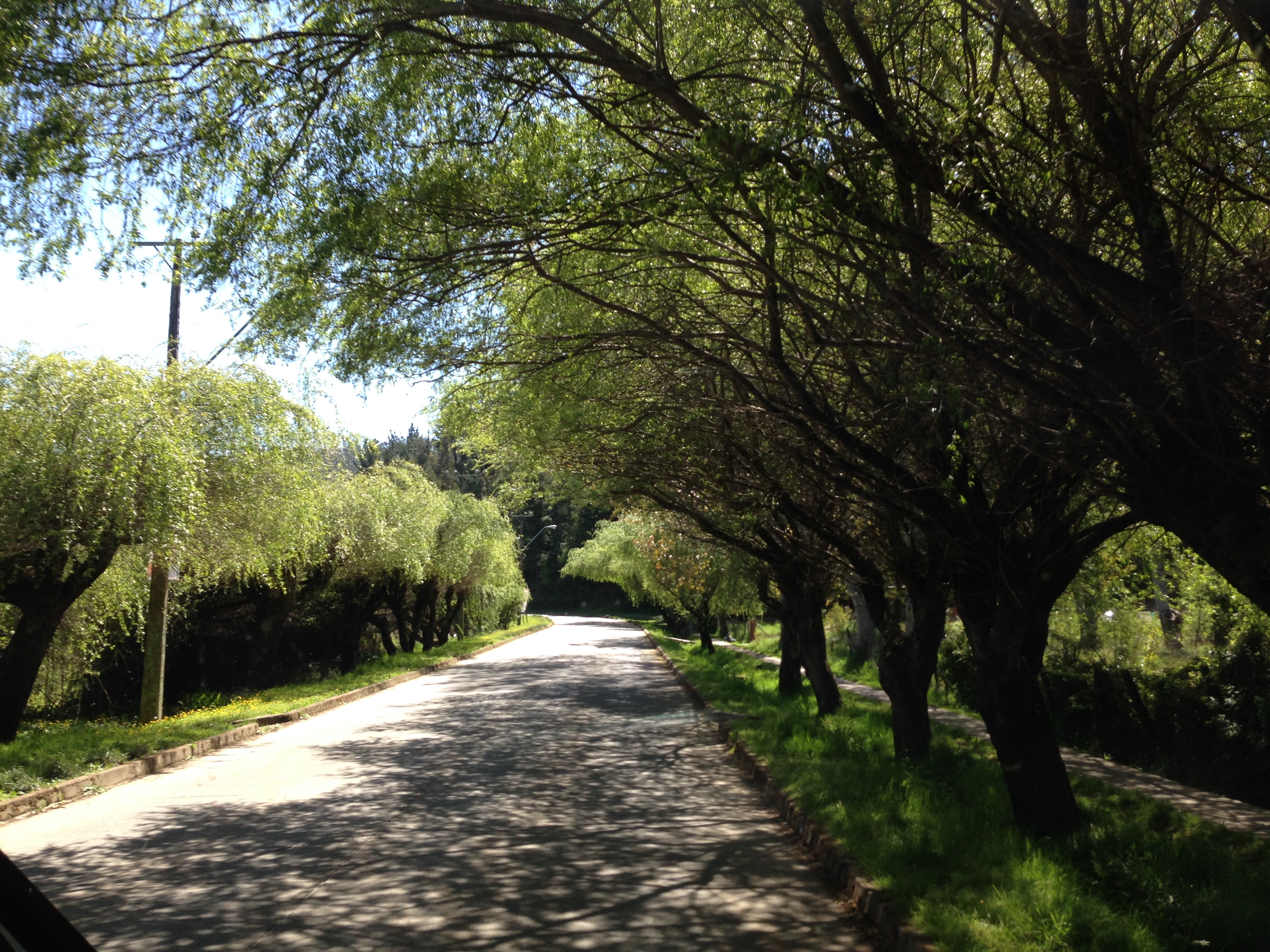
road

On the way to Dichato from Valle Elikura


Rhiannon in India: Observing the many religions of India

November 6, 2013

A lot has been changing here recently. Finals are quickly approaching, the end of our program is almost a month away, and believe it or not, it is getting a little cooler here in Hyderabad. Right now, we are busy reviewing for finals in our classes, making travel plans for our last trips around India, and preparing for the Cultural Show, a performance that the Study in India program puts on at the end of every semester for the entire university. SIP students will perform things they know from home or something that they have learned here, like sitar or traditional dance. According to our advisors, it’s a huge hit among the university community and the auditorium is always packed. My sitar class will be performing two songs in the show, one traditional raga and one popular Bollywood song from the movie Aashiqui II. Together, the songs total 15 minutes of straight playing time, so it’s safe to say my fingers will be totally numb by the end.

Because I am leaving India in only one month, I have been spending more time reflecting on what I have learned in my time here – what has fascinated me, what has confused me, and what I am still interested to learn more about. A few weeks ago, CIEE took us to Varanasi (formerly called Banaras) for a long weekend trip, and although I have been interested in the many religions of India since I arrived in July, being in Varanasi made me even more fascinated by the complexity of the subject. Just as in any other part of the world, religion is a complex part of Indian culture that is impossible to boil down to one blog post, but somehow India strikes me as even more complicated than many other places in its religious culture. It seems impossible for an outsider like me to understand the innumerable traditions, values, festivals, and rituals of each of the religious groups present in India, especially because each part of the country has created its own unique version over the centuries. What’s more, religion or spirituality is much more present in everyday life here than it is in the US, so I am surrounded by constant reminders of its importance and complexity.

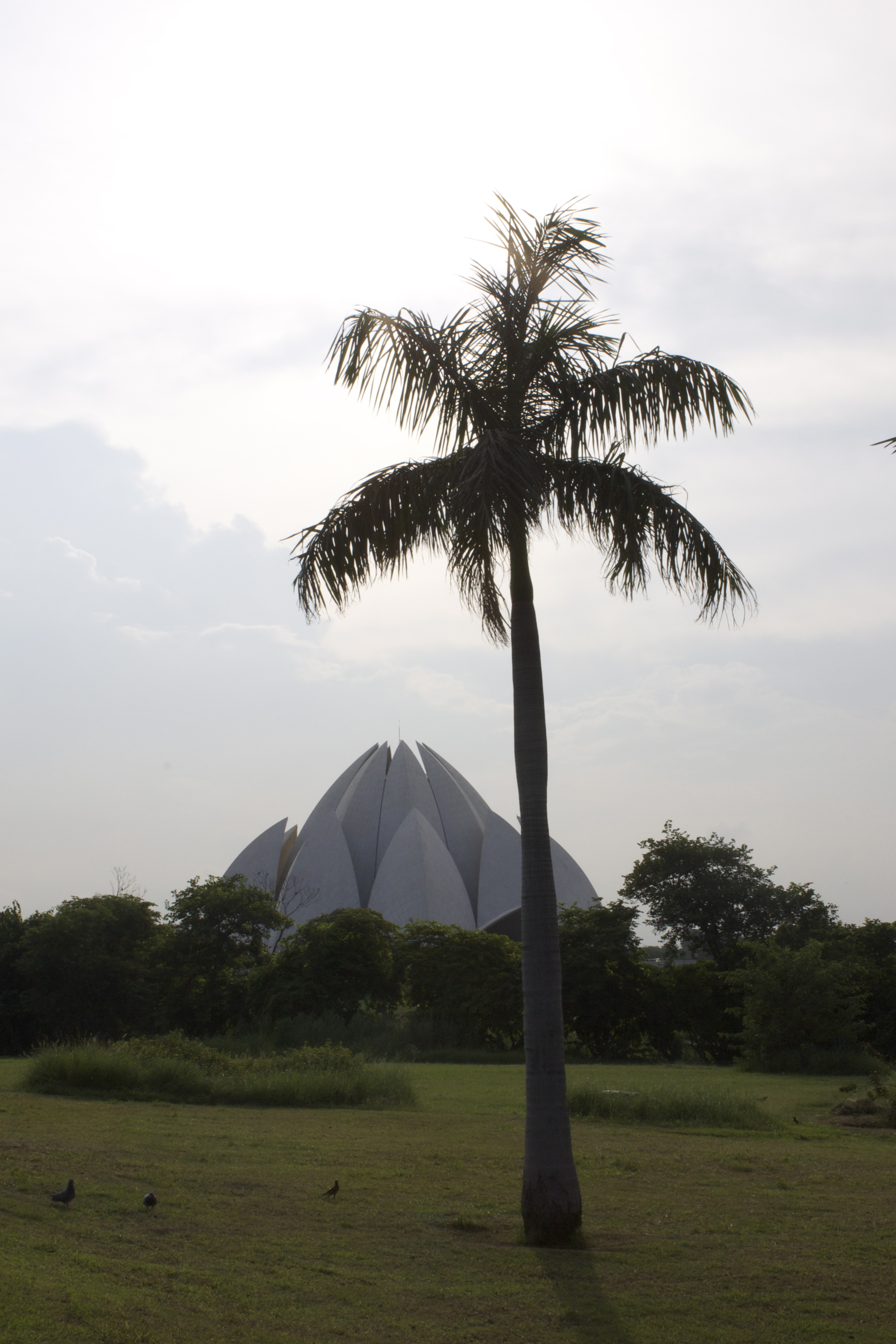
IMG_2941

The Bahai Lotus Temple in Delhi

Of course, religion is different for every person in India, and there is no way I have seen even a small part of all there is to see. I have met Hindus, Muslims, Christians, Jains, Sikhs, Buddhists, and I’m sure many others. Instead of attempting to make sense of it all, I would just like to share the experiences I have had over the past few months that show just how integral religion is to Indian culture.

IMG_3415

A small shrine on the side of the road in Pondicherry

As Hinduism is the dominant religion in India, there are references to Hindu gods everywhere you turn. There are Hindu temples along the roadsides, tucked away between houses in neighborhoods, and among the rocks on the hillsides. There are shrines to one god or another in almost every store and restaurant, puja rooms in almost every Hindu household, and pictures or statuettes of deities in many taxis and autos. As I said before, each region of India has molded their own religious traditions, so people always joke that if we celebrated every religious holiday in India, we would never have to go to school or work. Adding to this is the shear number of gods recognized in Hinduism. There are millions of Hindu deities, but most Hindus will say that this is because there are just many names for each of the main gods.

IMG_4080

Men performing morning puja at Assi Ghat in Varanasi

As I said, our trip to Varanasi last month really solidified my interest in religion in India. Varanasi, nestled on the edge of the Ganges River, is the “Mecca of Hinduism” and full of religious temples, stupas, and shrines to various Hindu gods and the Buddha. It is one of the only places in India that is famous for its sacred rituals concerning all parts of the life cycle. The Ganges River, named after the Hindu goddess Ganga, is the holiest river in India, although all rivers are considered to be auspicious because of their cleansing and purifying qualities. All Hindus aspire to visit Varanasi and bathe in the Ganges at least once in their lifetime to be cleansed of their sins. Unfortunately, the Ganges has now become one of the most polluted rivers in the world. Families unable to afford cremation often put the bodies of the deceased in the river anyway, and you can see trash lining the water’s edge as you walk along the riverbank. However, this doesn’t deter many followers of Hinduism and other religions that worship the Ganges from bathing in the water, or even drinking it to cure diseases.

There are over one hundred “ghats,” or long, steep steps leading down to the water’s edge, along the riverside in Varanasi. These ghats are used for bathing, daily puja, and death rituals. At many of the ghats, there are cremation pyres, where the bodies of the dead are burned and their ashes spread into the water of the Ganges, allowing that person to reach Moksha, or the liberation from the reincarnation cycle of life and death. As we explored the city that weekend, it seemed like every 20 minutes we saw a funeral procession moving through the narrow, crowded alleyways toward the river, with covered bodies laid out on stretchers carried by two men. At first all the talk about death was a bit depressing, and I wondered if this process of pushing through the crowds of people was disrespectful to the deceased. However, I came to realize as I watched this happen many times that the procession through the holy city to the river is a very sacred part of the death ritual.

Because of these rituals, many Hindus and people from other religions move from all over the world to the holy city in order to die and be cremated by the Ganges. As a result, Varanasi has become a microcosm of India, comprised of small neighborhoods for people from each region of the country. Even the way each of these groups practices Hinduism – the gods they worship, the types of temples they build, and the rituals they conduct – are very different, so moving around the city quickly becomes a lesson in the cultural plurality of India.

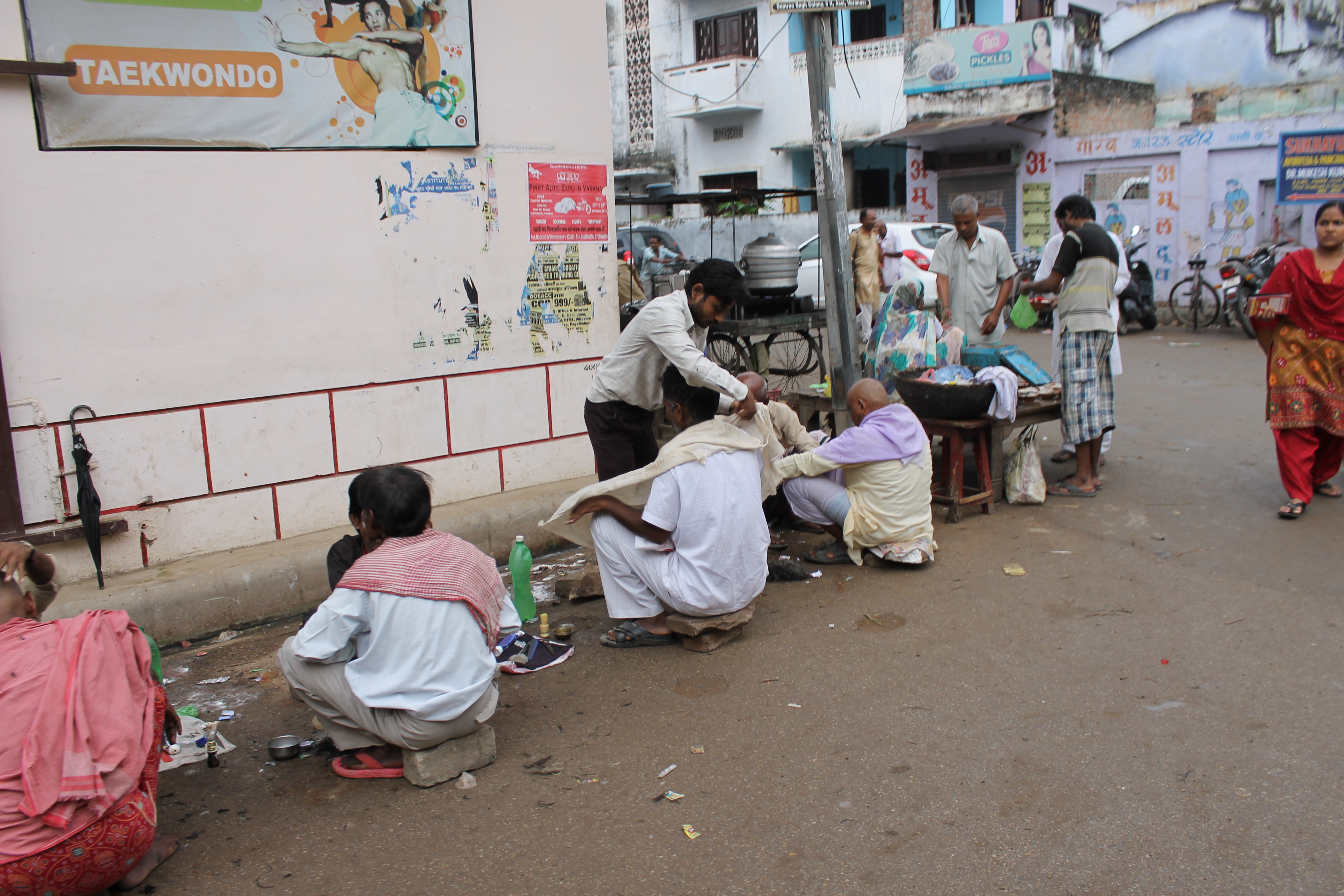
IMG_4081

Men having their heads shaved on the street for Pitru Paksha, a 16-day period when Hindus pay homage to their ancestors

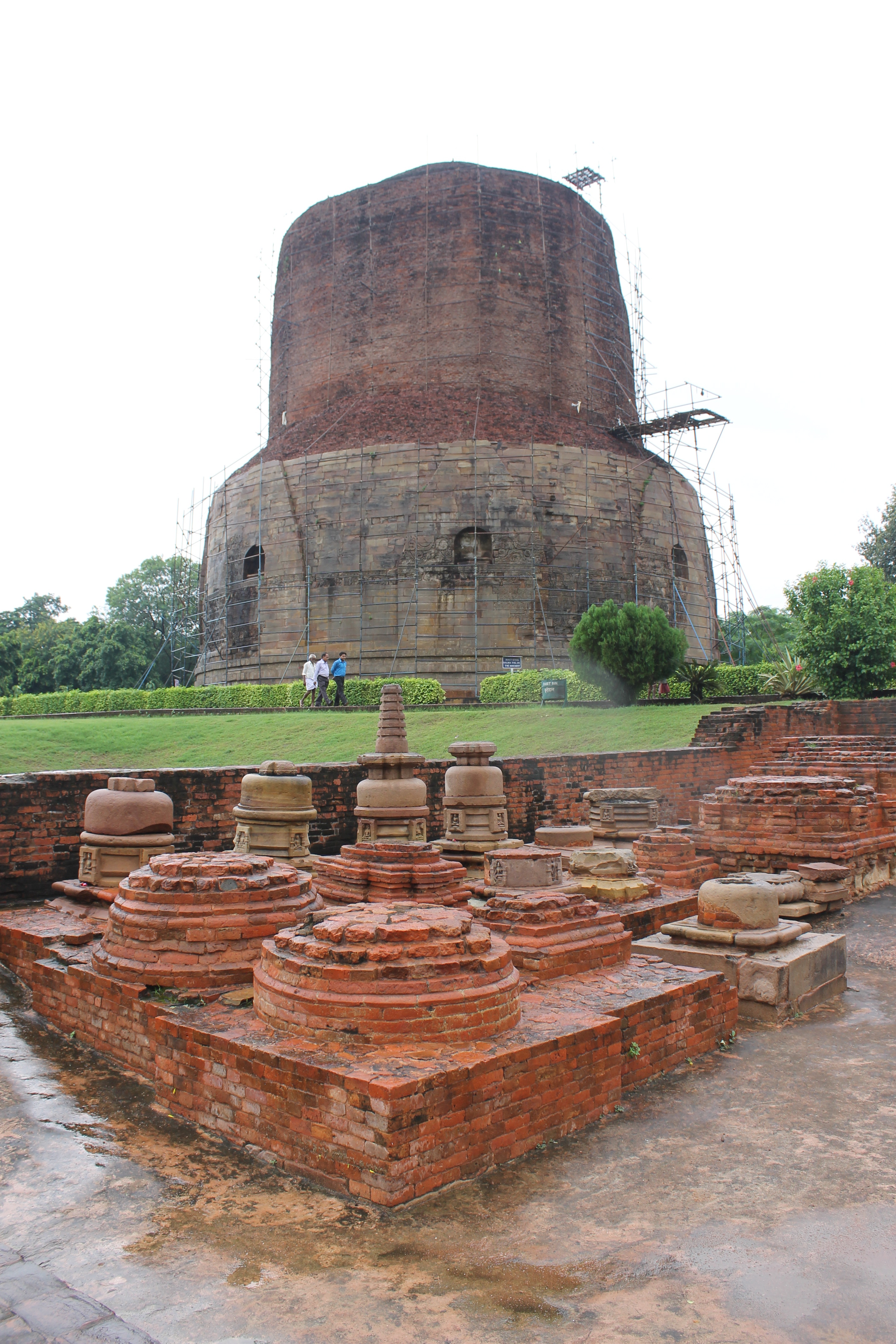
We also went to Sarnath, the sister city of Varanasi where the Buddha gave his first sermon and now home to a Buddhist stupa and a sapling from the Bhodi tree under which the Buddha found enlightenment. A stupa is a solid mound of earth, stone, or brick of any size, usually containing relics from the Buddha himself, that is used as a meditation site for Buddhists. We have seen many stupas while we have been in India, and most of them contain relics (usually ashes) from the Buddha. At first, I thought it was very curious that, although Buddhism originated in India, there are very few Buddhists in the country, and instead it is practiced mainly in Sri Lanka, Nepal, Thailand, and other Asian countries. But I learned from a few friends here that in India, Buddhism is not considered a religion separate from Hinduism. Rather, the Buddha is considered a Hindu sage, and his followers in India consider themselves Buddhist Hindus. It was not until the ideology spread to other countries that it became a religion in itself.

IMG_4180

The Buddhist stupa in Sarnath

Although Hinduism is the main religion in India, Hyderabad is actually one of the largest Muslim centers in the country. As you go towards the Old City in the center of Hyderabad, you will see more mosques, men wearing taquiyas (head coverings), and women wearing hijabs or burkas. Even from our apartment, we can hear music from the Hindu temple and the call to worship in Arabic from the Mosque in our neighborhood. The Old City has a large Muslim population because Hyderabad used to be ruled by the Nizams, an Islamic monarchy, from 1724 until 1948. This mixture of Islamic and Hindu culture makes Hyderabad an especially interesting place to live.

I didn’t intend for this blog post to be a boring lecture on religion, but I hope that it shows just how important religion is to the vast majority of people in India. Because we are surrounded by it every day as we are studying here, it has become something we must learn about – whether we like it or not. I know I am not alone in my frustration over which Hindu god did what, what religious holidays we are celebrating practically every week, or the reasoning behind the rituals that we witness everyday. But becoming a part of these things has been a wonderful opportunity that I could have never had at home.


Rhiannon in India: Indian Cuisine

October 2, 2013

If there’s anything that deserves the dedication of an entire blog post, it’s food. So far, I have loved the food here, and making the adjustment at the beginning of my trip was surprisingly easy. Some of the “dangers” that people warned me about still ring true, like drinking tap water or eating too much street food, but my friends and I have been here long enough now that we have adjusted to a lot of the differences. Sometimes I even go to a roadside stand with my host sister, Prerna, to eat a delicious snack called pani puri. When you go to a pani puri stand, the vendor takes a hollow fried ball out of a bag, pokes a hole in it with his thumb, throws in some mashed chickpeas with spices and cilantro, dunks the whole ball in a large vat of spicy broth, and hands it to you. You have to throw the whole thing in your mouth immediately before it disintegrates – and before he throws the next one your way.

As a disclaimer, my experience with food in India could never do justice to Indian food in general. Every state in India has its own trademark dish, and many people say that there is a new signature cuisine every 50 kilometers. This is because regional produce and ingredients almost always dictate the traditional dishes of an area in India because it wasn’t too long ago when India was made up of smaller localities called princely states. For instance, dishes in Kerala (the southern-most state, at the tip of India) always include coconuts – coconut oil, coconut water, coconut milk, or dry coconut mixed into curries, chutneys, and sweets. Hyderabad is known for its spicy rice dish called biryani, and everyone here is proud of it. Biryani is typically eaten for special occasions, is made in very large quantities, and can be made “veg” or “non-veg” with mutton or chicken. Biryani is made with a variety of spices, or masala, including cinnamon, cardamom, and cloves.

Biryani

Nivedita preparing biryani for the Ganesh festival

There are also many religious beliefs that dictate the way people eat in India. The ancient Hindu religious texts say that eating a strict vegetarian diet makes you peaceful, so being “veg” is a religious tradition and is also a symbol of caste identification. However, many people eat “non-veg” too, especially the Muslim and Christian communities, so finding a non-veg meal isn’t difficult. The ayurvedic texts also describe the health benefits of eating with your hands, like that your fingers correspond to the five elements, so using them to eat helps with digestion.

My host family is vegetarian, but Jennie, my friend who is also living at my home stay, is vegan and gluten-free, so now all of us eat that way at home. Unless I am traveling or my friends and I go out to eat, I mostly eat home-cooked meals by our host mom, Nivedita. In the morning, Nivedita makes us breakfast to take to school, usually consisting of fried rice and vegetables or dosas with chutney. Dosas are like super thin pancakes made of rice flour, similar to crepes in French cuisine. Chutneys can be made of virtually any vegetable, peanuts, or even coconut and are pureed with oil and spices. For dinner, we always eat together on the floor in the living room and usually have rice with daal (lentil soup) or a vegetable curry using okra, potatoes, onions, tomatoes, or carrots.

Dosas

Dosas with carrot chutney


For lunch, I usually eat at one of the student canteens on campus. These canteens are all over campus and range in size from full restaurants to little shacks behind the school buildings. At the campus restaurant, called Gops, you can order tons of different curries, rice, noodles, and breads like naan or roti. The smaller canteens serve chai (tea) and fried snacks like samosas throughout the day and serve meals only around lunchtime. When you order a “meal,” you get a huge pile of rice and unlimited amounts of the curries and chutneys that they have made that day.

Integrated Canteen

My favorite canteen on campus

Another important meal of the day in India is “tiffins,” which is like the Indian version of teatime. This includes chai of course, but also a variety of snacks that are all deep-fried and incredibly delicious. I have been to two cooking classes to learn how to make some of these snacks, and the cooking instructors tried to teach us healthier ways of making them, but that didn’t mean they spared the oil and salt. We learned how to make mirchi bujji, pakora, chickpea sundel, and chiwada. I won’t explain these in detail, but they are all fried in oil and a variety of Indian spices. These are also typical dishes to eat during the rainy season. As my cooking instructor put it, “When Indians smell rain, they also smell pakora.”

Tiffins

A tiffins meal on the train – idly, vada, and chutney

As you can see, there are so many different types of Indian food that it would be impossible to describe them all here. I always enjoyed Indian food before coming here, but I have realized that what I thought of as Indian food at home barely scratched the surface. One of the best parts about traveling to new places in India is experiencing just how different the cuisine is from region to region. It really shows what a diverse and interesting country India is!

Pakora2

Preparing pakora at the cooking class


Rhiannon in India: Ganesh Chaturthi

September 20, 2013

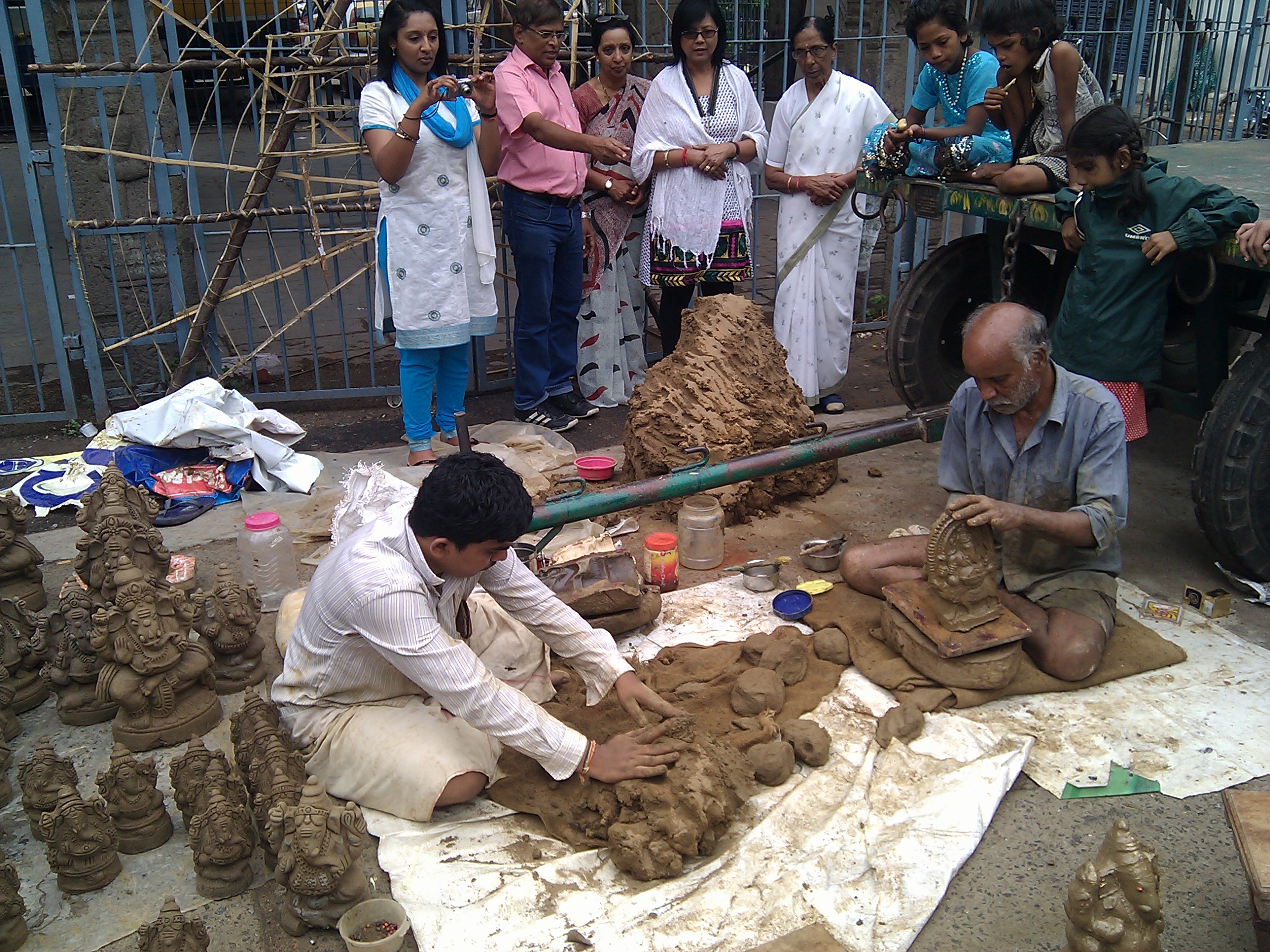
As I mentioned in my last post, the past week was full of celebrations in honor of Ganesh’s birthday, called Ganesh Chaturthi. People in India celebrate by putting up statues of Ganesh in their homes or on the road and do pooja (ritual) around the Ganesh every day for anywhere from 3 to 11 days, depending on different traditions. At the end of the week, they put the Ganesh statues in water for Immersion, symbolizing Ganesh’s journey home to heaven. Because everyone puts the Ganesh statues in natural bodies of water during this holiday, it has been a huge source of pollution that adds to the issue of clean water in India. Recently, people have started using clay statuettes that naturally dissolve in the water, but many plastic and painted statues are still used every year. In Chennai, when we visited the temple to make an offering to Ganesh, we saw men making the clay Ganesh statuettes on the street for people to buy instead.

Clay Ganeshas

Men at the temple making clay Ganeshas

As soon as we got home from our Chennai trip on Monday night, the weeklong celebration began in full swing in our apartment building. While we were in Chennai, our host mom, Nivedita, and some of the other women in the building had put up a pandal, similar to a shrine, that included a large stage, elaborate decorations, and a 4-foot tall Ganesh statue in the car garage beneath our building, colorfully decorated with flowers and other small statuettes. Every night for five nights, all of the families in the apartment building (about 65 people in total) would gather around the pandal for pooja, singing, games, and dinner.

First, around 8 p.m., all the women would sit in a circle in front of Ganesh and chant Vedic mantras together. Then, a pujari would arrive and begin the formal ritual by chanting loudly, apparently instructing us to do certain actions, although I could never understand what he was saying. Instead, I would mimic the actions of the people around me, throwing rice on the Ganesh, drinking coconut water, spinning around three times to the right, and many other things. Although I never fully understood what was going on, burning incense, breaking coconuts, and listing the names of our neighbors were among the usual things done during the pooja. After the pujaris were finished, we would begin playing games and singing. Most of the children – and there were a lot of them – were very interested in Jennie and me and wanted to talk and play with us constantly. During the Friday night pooja, the families wanted to do something special so Jennie, Prerna and I sang a Taylor Swift song and played guitar. It turns out Taylor Swift is just as popular here as she is in the US, if not more!

Finally, around 9 or 10 p.m., we started dinner, which was prepared by some of the women in the apartment. It always included an enormous vat of rice, lots of fried snacks, and a dessert. The dessert was the most important part of the meal because Ganesh is known to love sweets. In fact, all of the statues of Ganesh show him holding a laddu, a sweet ball-shaped dessert, in one hand. The dinner usually went on until 11 or 12, and even after we came upstairs, we would go to the neighbors’ apartments and chat for another hour, so we were always exhausted by the end of the night.

IMG_3638

Our apartment’s Ganesh pandal and food for the potluck

The most exciting part of the whole celebration was on Saturday, when we did the Immersion. As soon as we got up on Saturday morning, we started making biryani with Nivedita and Sandia, our neighbor down the hall. Biryani is a spicy rice dish special to Hyderabad – and we made 11 pounds of it for the potluck that day. When we gathered for the feast that afternoon, I was so surprised to see that there was even more rice, curries, snacks, and desserts that other people had made for us to eat. It was like Thanksgiving, but with more food than I could have ever imagined.

After eating, we started the procession of cars to the lake, displaying the large Ganesh statue in the back of the first car, like a parade float. The car had been decorated like the pandal, complete with flowers and all of the small Ganeshas from each apartment. After our neighbors blessed the journey by doing a ritual in front of the car with water, fire, and breaking coconuts, everyone drove their cars and two-wheelers slowly all the way to the lake while banging on pots and yelling “Jai! Jai!” The cheering didn’t stop until the last Ganesh had been thrown into the water.

IMG_3711

Blessing the travel of the Ganesh procession

The best part of this celebration was getting the chance met all of our neighbors. Now that Jennie and I have gotten to know them, especially the kids, we haven’t stopped hanging out with them since. Now, we have started eating meals on the rooftop with some of the other families. When the power goes out (which happens every day), we go to the neighbors’ apartments to pass the time together. A few of the kids come to our apartment every day after school to play games or ask for help with their English homework. Some of the kids have even made it their job to teach me Telugu, the local language, although I am hopeless at pronouncing the words.

IMG_3732

In the procession to the lake with the Ganesh statue

I feel so lucky to be surrounded by such a great community of people and that I have been able to form relationships with them over the past week. Not understanding Telugu, spilling the coconut water, or turning left instead of right during pooja didn’t seem to matter at all. Spending time with my host family and neighbors makes our differences melt away, and it has made a world of difference.

IMG_3763

Our family and neighbors on the day of Immersion


Rhiannon in India: Experiencing Hyderabad

August 5, 2013

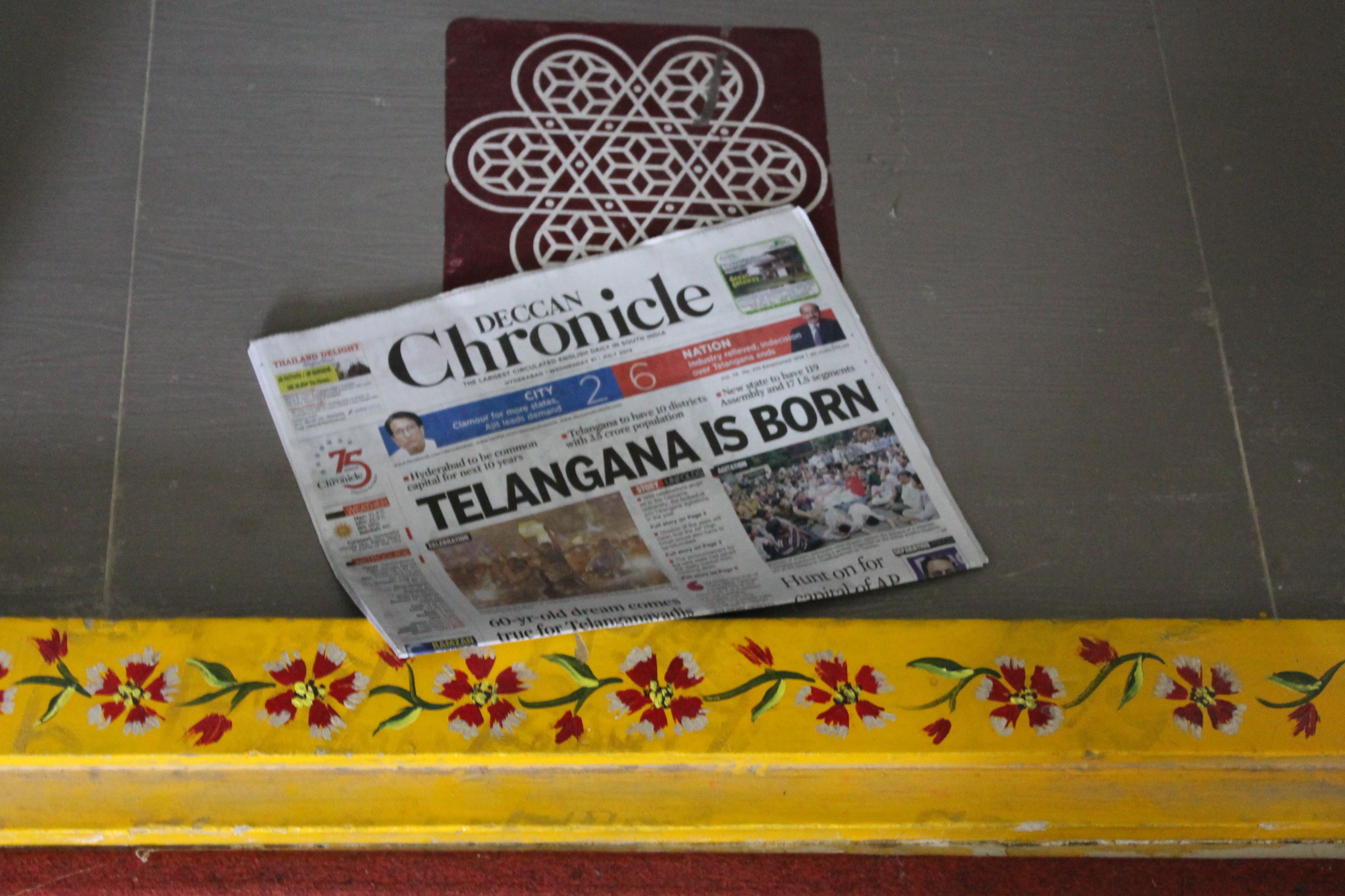
“Jai Telangana!” This phrase, “Hooray Telangana”, can’t be escaped on campus – or anywhere in Hyderabad for that matter. It is graffitied on signs, buildings, and even on the road in the middle of a busy intersection. This week, the Indian government in New Delhi made the decision to split Andhra Pradesh (the state I am in) into two new states – Andhra and Telangana. It is hard for me to distinguish between news and rumor on the subject, but a news broadcast earlier this week said that the national government made the decision based on 50+ years of persistent demand within Telangana for its own state. The question that is on everyone’s mind now is what is going to happen to Hyderabad, the former capital of Andhra Pradesh that has now landed right in the middle of the new Telangana state. The bittersweet news for Telangana supporters is that Hyderabad will remain the capital of both states for the next 10 years while Andhra, the new coastal state, creates its own capital. But what does this mean for Hyderabad? Will it become a union territory, floating within one state and governing two? Who will receive the benefits and opportunities flowing from the urban center of Hyderabad, and where will they draw the lines?

Telangana is Born

The new state of Telangana is born

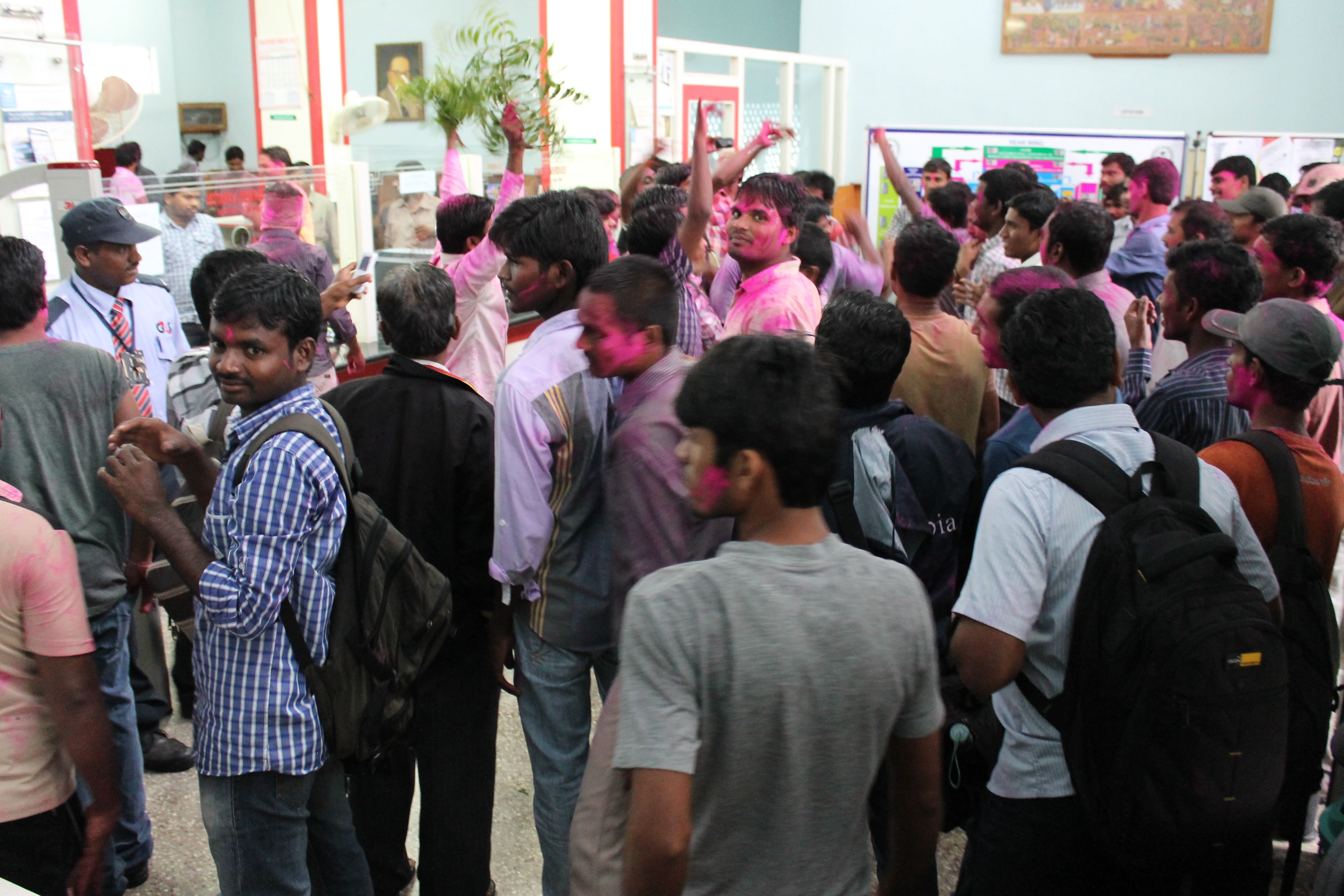
I won’t delve to far into the politics here, mostly because it is hard to say what has been decided and what is still being debated. However, what is certain is that this decision has been in the works for decades, and I am here for one of the most exciting moments in its history! The day after the announcement, campus was full of celebrations and large groups of students went from building to building cheering, banging drums, and throwing hot pink powder, the color of the Telangana movement. Without taking sides on an issue that I know far too little about, I am interested to watch the makings of a new state. Nevertheless, it comes with its ups and downs. News reports suggest that Andhra officials in Hyderabad will be forced out of their positions to make way for new Telangana officials. And on a personal note, my roommate Jennie and I were supposed to go on a hiking trip this weekend, but erring on the safe side, decided to stay home to avoid protests in a nearby area. The recent protests have not been violent, but they may pose a threat to travelers, not to mention the annoyance of roadblocks and traffic. I hope that some of the excitement dies down soon so that we can start our independent travels!

Telangana Celebration

Celebrating with pink powder, the color of the Telangana movement

I realized that I have been so busy for the last 4 weeks that I have not stopped to ask myself, “Where am I?” I know it sounds simple. I am in Hyderabad, India – I can point to it on a map. But I have struggled to piece together the history, the events, the culture, and the people that I have seen in Hyderabad to really grasp where I am. So since this week has been mostly about settling in, I thought I would dedicate the rest of this post to answering this never-ending question.

I am part of a program called CIEE (a UR-affiliate program) with 12 other American students and four advisors. Being a part of this program has made the transition to living in India much easier because our advisors are pros at helping American students acclimate themselves to living in Hyderabad. We are studying at the University of Hyderabad, a unique school with a small student body, yet the campus is vast, full of greenery, and home to tons of wildlife. While I have been here, I have seen water buffalo, peacocks, and monkeys so often on campus that it almost seems normal. The University of Hyderabad has also been described as a miniature version of India. Its students are from all parts of India, from all types of backgrounds, and speak all different languages. I always wonder, how can I understand where I am when I am surrounded by so many different cultures?

U of H

University of Hyderabad main gate

The neighborhood I live in, called Manikonda, is about 15 kilometers away from campus. It is an area packed full of apartment buildings, schools, and shops everywhere you look. Produce and street food vendors are on every corner, and there are always people, cows, and dogs walking along the streets. When we are in our apartment in the evenings, there are constant sounds of car horns, barking dogs, and the call-to-worship from the masjid (mosque) near by. Although the neighborhood is always bustling, Jennie and I have started to feel like part of the community. Some of the auto drivers and street vendors recognize us now and say hello as we walk to and from the bus stop every day for school.

Manikonda

My neighborhood, Manikonda

Hyderabad, one of the largest cities in southern India, has a rich history and, as I explained earlier, is still changing rapidly. Although the city is predominantly Hindu, it is one of the Islamic centers of India, and this dynamic plays out in many of the traditions and celebrations of Hyderabad. In fact, this is the first time in 38 years that Ramadan (an Islamic festival) and Bonalu (a Hindu festival) fall on the same month, and both are being celebrated right now around the city.

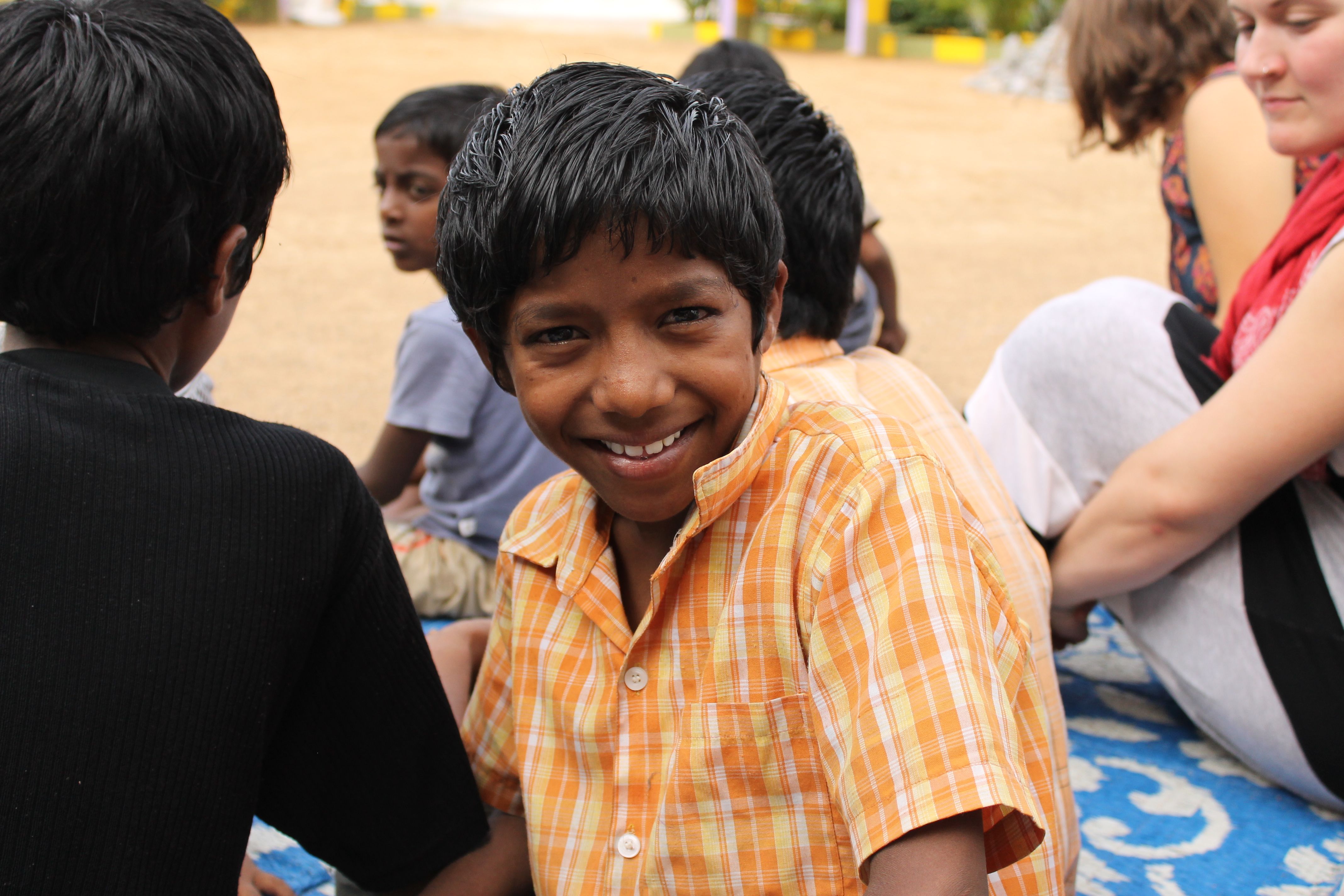
Hyderabad is also home to many interesting organizations that Jennie and I have been exploring since we got here. Today, we went on a short hike with a group called Greater Hyderabad Adventure Club through the hills near our neighborhood. We hiked, rock climbed, crawled through caves, and watched the sunset from Top Rock over the skyline of Hyderabad. The organization is full of great people from Hyderabad who just love being outdoors. We also visited another NGO this week called Desire Society. Desire Society is home to about 60 children with HIV/AIDS, most of which have been orphaned or cannot live at home with their families. Many communities in India, especially in rural villages, don’t understand HIV/AIDS and label the children as “untouchables”. Desire Society provides these children with a place to live, schooling, and daily health care. When we visited last week, we played with the children, some as young as 5 years old, and taught them songs and games.

Desire Society

Visiting with the children at Desire Society

Desire Society Camp Songs

Singing camp songs at Desire Society

So despite my reluctance to cancel our hiking trip this weekend, I am glad that I stayed in town so that I could explore a few more areas of the city. I am anxious to see new parts of India, but I am also starting to realize just how much there is to do right here in Hyderabad! I feel so lucky that there are opportunities near by to explore and to search for answers to that recurring question: Where am I?


Two Unforgettable Weeks

April 23, 2012

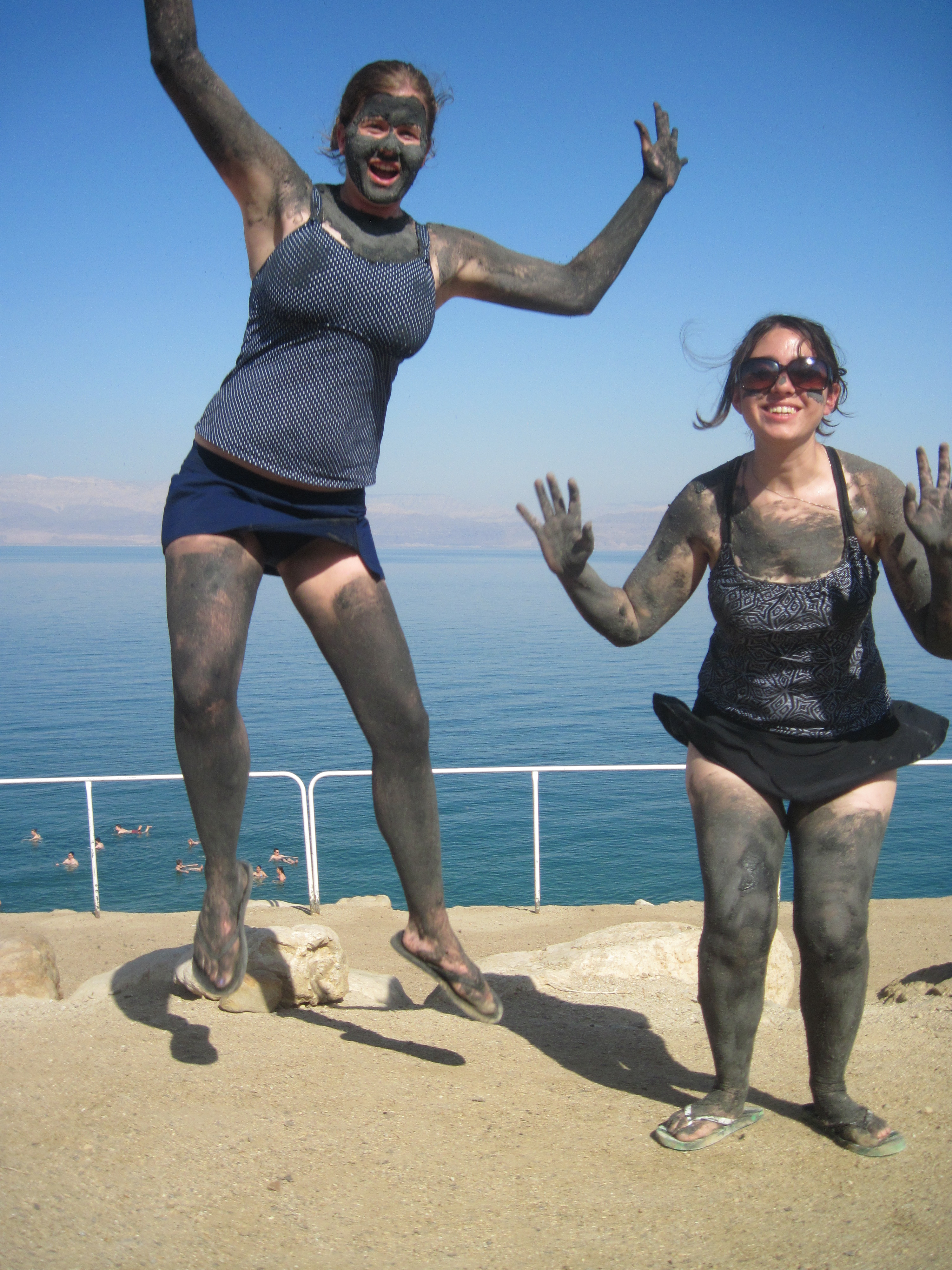
Five cities.  Two sunrises.  The Lowest Point on Earth.  One mud bath. Two Passover Seders.  Two rooftop hostel gardens.  A 5 a.m. mountain climb.  Seven long bus rides and one train ride.  Old friends and new friends.  Dancing across Israel.  Life advice from 71 year old Peggy, a dorm mate in a hostel in Jerusalem.  The best hummus in Israel.  The best hot chocolate in the world.  A literary café in Jerusalem. Spying on a wedding reception in Tel Aviv. Burning leavened bread in Be’er Sheva in preparation for Passover.  A shepherd with his flock next to the Sea of Galilee. Coming home to Haifa.

It is hard to know how to begin to describe my spring break.  Just as my friends and I thought as we were planning the trip, where do you begin a whirlwind tour of a country that has so much to offer?  All I know is I am convinced more than ever that studying in Israel was the right decision.  There are moments here that are hard and confusing, such as when I witnessed a young man hissing at an Israeli soldier in the Old City of Jerusalem. At times like these, I wonder what I have gotten myself into.  Who am I to be a cheerful, curious tourist when the reality of the situation in Israel is very serious for so many people?  But it is this confrontation with a human experience so different from my own that makes studying in Israel so incredible.

Another occasion in the past two weeks that showed me the high intensity of life in Israel was when my friend and I had Shabbat dinner with a lovely, generous Orthodox Jewish family in Jerusalem. They had an eighteen year old daughter named Shlomiya who was preparing to begin her army service in a few weeks.  Army service is mandatory in Israel, women serve for two years and men for three.  Observing Shlomiya and the mature, thoughtful way she spoke and acted throughout the evening, I thought of myself when I was eighteen, and how the most important thing on my mind was my next Spanish test.  Constantly living on edge, young Israelis must mature quickly as they are faced with challenges that never crossed the minds of me and my American friends as we were growing up.

I spent the majority of my break with my friends Emma and Heather, fellow international students who attend Brandeis University in the U.S.  I met Heather during the intensive Hebrew Ulpan at Haifa University at the beginning of the semester, but she is now doing a complete Hebrew immersion program at Ben Gurion University in Be’er Sheva, during which she is not permitted to speak in English.  To be completely honest, after the first day we spent together I did not have a very good attitude toward the situation.  What was I thinking, spending my spring break with someone I can’t even have a normal conversation with?  But within a couple of days, I was amazed by how Hebrew really started clicking for me.  I had always thought I learned almost exclusively from reading and writing, but I was proved wrong as I learned more from a few days of conversations than I had in weeks of classes.

This semester has held some challenges for Heather.  On top of the difficulties of having to speak Hebrew all the time, several weeks ago she had to run to the bomb shelter in her dorm several times as over ninety rockets were fired at Be’er Sheva from the Gaza Strip over the course of a few days.  She said the Israelis in the shelter with her would sit and count the booms as the Iron Dome, Israel’s missile defense system, destroyed many of the rockets in mid-air.

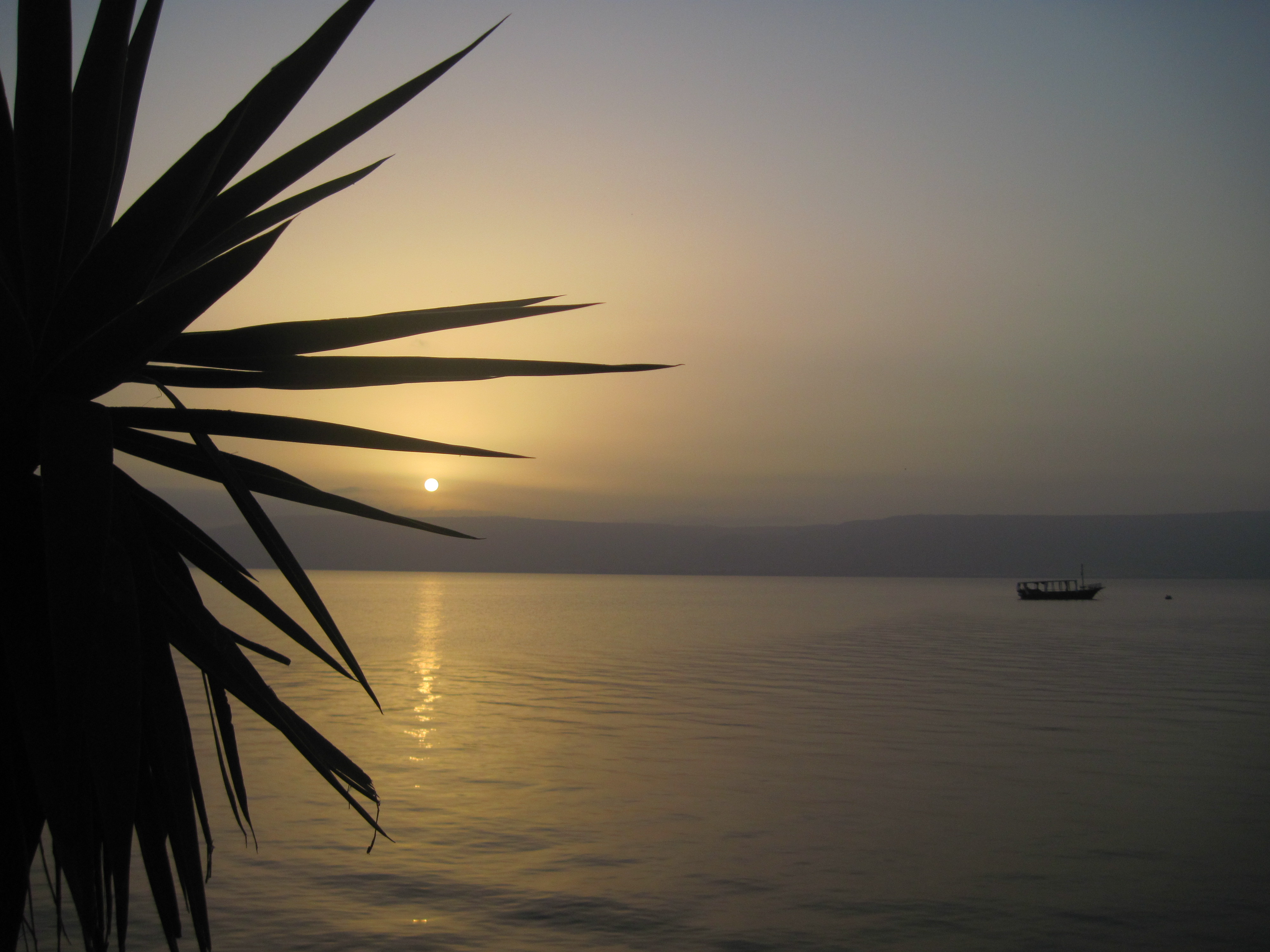
I accomplished a lot of bucket list items over break – climbing to see the sunrise on the desert mountain fortress of Masada where almost one thousand Jewish rebels committed mass suicide rather than be taken by the Roman army, floating effortlessly on the buoyant salty water of the Dead Sea, and seeing the sun rise over the Sea of Galilee and set over the Mediterranean in the same day.  Most importantly, though, I had a lot of time for reflection, and when new thoughts to ponder came my way I was able to soak them in, trying to expand my understanding of what it really means to live in Israel.

Sunrise over Masada

Standing on Masada

Sunrise over Sea of Galilee

Mud bath at Dead Sea