Thanksgiving in Uppsala (posted by Indira in Sweden)

November 30, 2012

Who said you can’t celebrate Thanksgiving unless you were in the US? Well, exchange and international students at Uppsala clearly showed the opposite! As the time for Thanksgiving approached American students at Uppsala University (and there are quite a lot of them, especially from California) decided to organize a dinner for about 50 people in order to show them what is so special about Thanksgiving.

I was amazed by the amount of food prepared by just a handful of hard-working people who made the commitment to organize such a big dinner. Everyone was taken by surprise, and the food was amazing (plus it’s nice when you get to eat great food with amazing people without having to cook yourself!). It was nice seeing how Thanksgiving is celebrated among an international community (last year I spent Thanksgiving with an American host family in Richmond so I got to see how it is celebrated among Americans), but it was also nice knowing the story behind it, as well as the traditions related to this holiday. I enjoyed sharing the knowledge I have gained during my two years in Richmond about Thanksgiving with other students who never actually thought they would be celebrating it. It’s funny how Uppsala keeps proving itself to be an international city where one can encounter the world.
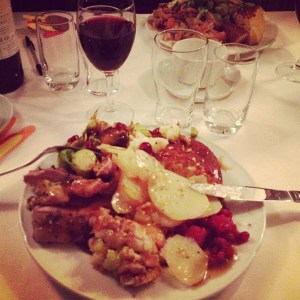
Thanksgiving Dinner in Uppsala, Sweden

Thanksgiving Dinner

Thinking about it, it definitely is time to be grateful! Even though I keep pushing the thought of leaving away, it always hits me in random moments that I will be actually leaving the place I call home in about three weeks. Where did the time go? I can swear that it was just yesterday that I moved into my room in Flogsta, took my Swedish language course and met so many amazing people. It’s funny how I can still remember August warmth and barbecues on the rooftops, buying the bike and pushing myself into mastering the art of cycling. Those are just some of the things, moments and lessons I can be grateful for. There are so many more. I experienced so much in the last four months that it will take me years to remember and retell everything, as well as figure out how much this study abroad experience shaped me as a person, as a student, and most of all as a global citizen. It all lingers in my mind. The worst thing is that I am already nostalgic about this place and I haven’t even left yet. That is a sign that there will be a lot of tears shed and that leaving Uppsala will be one of the hardest things I’ve ever had to do. At least I have something else to look forward to: a semester at Yonsei University in South Korea.

Even though I do get lost in my thoughts about leaving Uppsala, I don’t actually have all too much time to think about it. First of all, I try to keep myself busy at all times by taking part in all kinds of activities offered in Uppsala through student nations or the student union because I know this is my last chance to do it all. Secondly, I still have classes to attend. And since the end of the month (and semester) is approaching, most of my exams, papers and projects are due in this and next week. I’ve been working like crazy in order to  balance everything. One of the biggest challenges, also one of the most interesting projects, I’ve worked on is the group paper on sustainable urbanization and urban resilience in Stockholm. After weeks and weeks of intensive literature reviews, interviews, weekly group meetings and extensive writing, we are wrapping up paper up. I am extremely proud of our piece of work since I learned so much on the subject, but also got a chance to work with a very international group of people learning a lot from them and about their countries (one girl in my group is actually from Seoul so she’s been giving me loads of information on life there in preparation for my next semester abroad!).

My class on feminism, role of women and international development is also ending this week and I will be taking an exam next week. That class was amazing – I learned so much; academically on the subject, and technically though ‘expert model’ seminars where absolutely everything was student led. Also, my new class – Armed Conflict and Development – starts next week as well, so it’s going be really tricky balancing all of that.

On a happy note – Uppsala looks amazing. Today it snowed. A lot!

Snow in Uppsala, where its very cold!

Snow in Uppsala

Everything is white and pretty (unfortunately it’s cold too) and the snow is sticking to the ground so it’s beautiful. There are already plans to organize snowball fights at some point soon. As much as I like snow and enjoy winter, going to class in 2 degrees Fahrenheit is not going to be fun. Today when I was cycling back from my class it started to snow and it was already a challenge. The worst part about it is getting all the snowflakes in your eyes. I am definitely not a fan of that. I will be using bus and other means of public transportation from now on, though. It is just much safer (it’s really easy to fall off the bike on slippery paths) and warmer.

And since it is a winter season, Christmas craziness has already began in Uppsala. There are Christmas decorations on streets, in stores, and even in our kitchen on my corridor. I will be also attending Julgask (Christmasgasque) on Saturday and rumor has it that Santa will be present. I am looking forward to that! 🙂
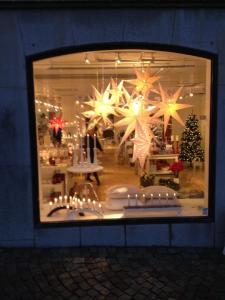
Christmas Decorations in a shop in Uppsala

Christmas Decorations


Vintern kommer till Uppsala: First Snow, Tallinn, and a New Bike (posted by Indira in Sweden)

October 26, 2012

It has arrived! I have feared it for so long, and it has finally reached the region of Uppsala. Yeah, it’s winter and the cold that I’m talking about. Temperatures below 30 degrees (Fahrenheit, of course), morning frost, and the very first snow of the season caught me by surprise.

Morning frost in Uppsala, the first sign of winter

Morning frost in Uppsala

As I was leaving Blåsenhus, the place where I have my Sustainable Development class, I was hit by unexpected cold and small white particles flying in the air. It took me  a moment to realize that it was actually SNOWING! The weather forecast said that we might get some snow next week, but not now. It snowed for about half an hour or so and right after that one could see some snow sticking to the ground. Luckily it melted quickly. When choosing Sweden as my study abroad destination I decided to simply ignore the weather since I liked everything else so much. I am not  a fan of snow and winter, but I will have to deal with it here, I guess. With a warm pair of winter boots and a good winter jacket it shouldn’t be too hard (or at least I hope so)! 🙂

 First snow in Uppsala, though it melted quite quickly!

My German friend, Nadine, after the first snow in Uppsala!

Another thing I am concerned with is the fact that once we switch to daylight savings time (and this will happen in a week or so) by the time I have to go to my class, it’ll be completely dark outside (my class starts at 5pm). My next class will start on November 5th and it will be mainly during the afternoon so that will be fine. Speaking of classes, I have to say that it’s getting really busy now. For my Sustainable Development class we are working within our study groups on the case studies (which in my case is the Urban Resilience and Sustainable Urbanization in Stockholm), but we also have other things due at the same time. This is the only class where I don’t have a final exam that is 100% of the final grade: Here, we have to write 3 smaller papers, one big case study, and hold a presentation, which all count for the final grade (it is more similar to the system at UR). For my Government class, there is only one thing that decides the final grade – a final exam that lasts 4 hours. I really like having more papers and assignments contribute to the grade than only one exam. One exam only creates so much more pressure and requires students to do the entire course work load at once. But, it is doable! 🙂

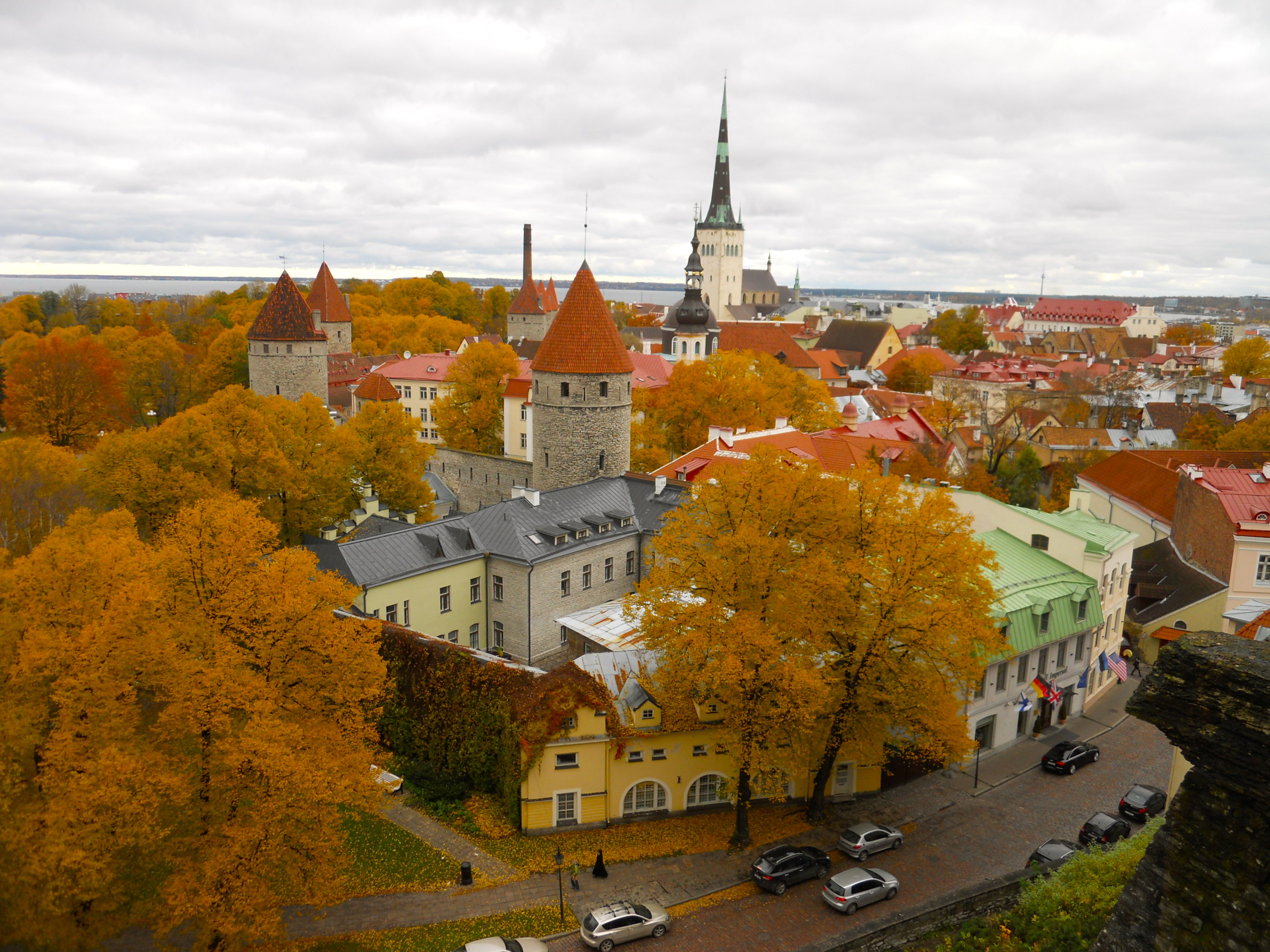
Before it got really busy I managed to go on a trip to Tallinn, Estonia, with some of my friends. First we took a train to Stockholm (40 mins away from Uppsala) in the morning and spent the entire day there just sightseeing and enjoying the city (I am pretty sure that Stockholm is becoming my favorite city. I fell in love with it from the very first time I visited it. I really love the multiple islands and the sea that make Stockholm to “Venice of the North”). After that we boarded the ship and got ready for our cruise to Tallinn (Stockholm being a harbor, it is really easy to go on a cruise to Helsinki, Riga, Tallinn etc. from here). I enjoyed spending time in Tallinn. It was my first time ever in this Baltic country. Luckily we had a friend, Gretta, who is an Estonian on exchange at Uppsala University, to help us navigate the city. She was an excellent tour guide and made the best out of our stay in her city. Tallinn is beautiful. We were lucky it didn’t rain so we saw Estonian capital in its fall colors at their best! It was interesting to see the Soviet and more modern, EU if I can say so, influence fight and yet coexist in this city. Definitely worth a visit on so many levels!

Beautiful colors of changing leaves in Tallinn, Estonia

Beautiful colors of Fall in Tallin, Estonia

Another big news of the week is that I bought a new bike! I was using my friend’s bike for some time, but since it was too big for me, I decided to get a new one. I also made sure to get a safe lock to avoid my bike being stolen again. 🙂 Having a bike in Uppsala is truly a necessity. Even thought there are busses (public transportation in Uppsala is super effective and well developed), it is so much easier to have  a bike and ‘free will’ when deciding when to leave to go somewhere.

Now, I need to get ready for the Swedish winter by buying warmer clothes and bike lights (new bike = new lights)!


Waterfalls and a little bit of history

April 9, 2012

I just got back from an amazing weekend getaway in Kanchanaburi, Thailand.  Kanchanaburi is about two hours (by bus) northwest of Bangkok.  The city itself is quite small – it is most frequented by visitors on their way to Erawan Falls, but the city does boast its own attractions– for example, the Bridge over River Kwai, which we visited the morning we arrived.

The bridge was commissioned by the Japanese during World War II in order to secure a better supply route between Thailand and Burma.  The bridge was built by both local Thais and prisoners of war, thousands of whom died during its construction.  The bridge is primarily famous because of the movie “The Bridge over River Kwai.”  There is not much really to see– it is quite literally a bridge over a river–not too thrilling.

The rest of the day we saw two more sites: temple caves and a World War II allied cemetery. The temple was an incredible labyrinth of underground, natural caves–very claustrophobic at some points! Each cave contains a shrine or Buddha.  Near the caves, our tuktuk driver took us to see the most incredible view of Kanchanaburi – the beautiful river surrounded by greenery and mountains on either side.  The natural beauty in Thailand is magnificent, and that was particularly evident this trip.  After spending so much time in a city, it is refreshing to see a more rural side of the country.

Our last stop of the day was to an allied war cemetery, which serves as the resting place for many of the soldiers killed building the bridge.  It was actually quite intense walking around and seeing all the name plaques – reading the quote written on the headstone, each name and nationality engraved, and particularly reading the soldier’s age; most were between 20 and 25, around the same age as I am.  I have to admit after my four months in Thailand I don’t know that much about its role in World War II so this was certainly a glimpse into some of Thailand’s history.

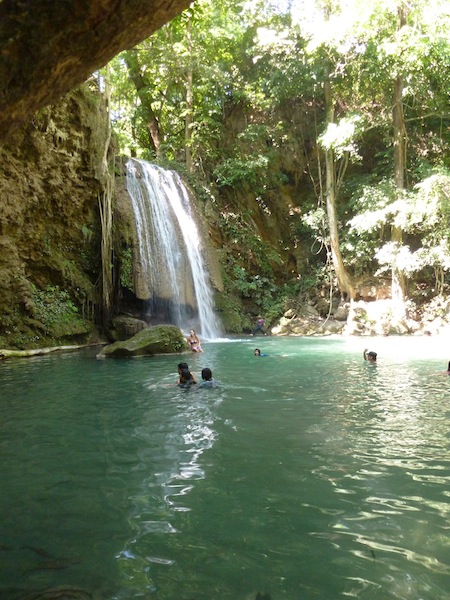
The next day we made the trek to Erawan National Park, located two hours from Kanchanaburi.  We had no idea how incredibly beautiful the national park would be! We literally spent four and a half hours walking along a path through the jungle, passing waterfalls as we went.  There are seven primary waterfalls that make up the national park, though there are small ones spread throughout.  There were tons of people – both international and Thai – and like everyone else, we walked from one waterfall to another and jumped in whenever we couldn’t stand the heat anymore.  It was incredibly beautiful, and so nice and peaceful to spend an afternoon just walking through nature, and enjoying it.

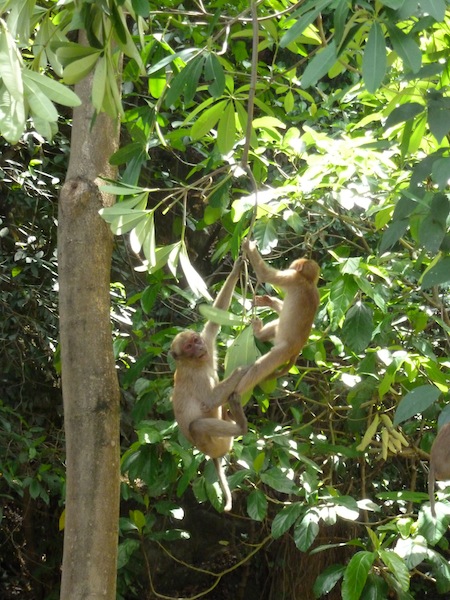
The most intense part of the trek was the 7th waterfall – much less crowded than the others because not as many people make it that far up.  As we approached the waterfall, the friend I was with, Rebecca, pointed out the monkeys overhead.  We had seen signs throughout our trek warning us to be careful of the monkeys because they can be dangerous, but hadn’t actually seen any monkeys until this point.  They were adorable climbing all over the branches, a mother and her babies.  While we were swimming in the waterfall, however, a large monkey got a little too close for comfort and started hissing at anyone who came too close.  It then went over to someone’s backpack, unzipped it, and started pulling out every piece of clothing in there and flinging it to the side.  Just as we were leaving, Rebecca pulled out a bag of peanuts, and within .2 seconds, the monkey was right in front of her, looking threatening as ever, moving exactly as the peanuts moved.  Completely scared, Rebecca just threw the bag of peanuts at the monkey – as we hurried off, we looked back to see the monkey rip the bag of peanuts open, and one by one, pop peanuts into its mouth, as he sat on the ground looking for his next target.


Transported back in time…

April 2, 2012

I just came back from the most incredible trip to Myanmar (formerly Burma, but the United States chooses to use the name Burma as a political statement against the current Burmese government).  I have to admit, before arriving in Bangkok I was not at all aware of anything going on in Burma.  Nothing. Nada. Zilch. It was not until a dinner with friends in Bangkok, who are passionate about Burma, that I learned about the fascinating country and its political situation.  When you think of the world’s worst dictators, many of you may think of Kim Jong Il of North Korea, or Hugo Chavez of Venezuela, but did you know that Burma is one of the world’s worst dictatorships, responsible for some of the world’s worst human rights attrocities?  It is only in the past year that Myanmar has been creating better relationships with the West, and that the West has been easing some of the sanctions and boycotts against the country. But as many people told us, though progress undeniably has been made, in reality, things may not be so picture-perfect.

What really sparked my interest in this country, before my visit, was the story of Aung San Suu Kyi, depicted in the recently released film “The Lady.”  Suu Kyi is the leader of Burma’s opposition party.  Her father led Burma to freedom from Britain in 1947, only to be assassinated shortly after, leaving the country in the hands of a dictator.  Though she grew up in Burma, Aung San Suu Kyi later married an Englishman and had been living in England with her two children when she became the leader of the opposition party in Burma.  Though she claimed victory in a general election in 1990, the ruling party refused to accept the results and placed her under house arrest, where she spent 15 years, living away from her family in England and therefore sacrificing her life with her children and her husband.   Aung San Suu Kyi was released in 2010, and is a candidate in the Burmese parliamentary election to be held on April 1st.

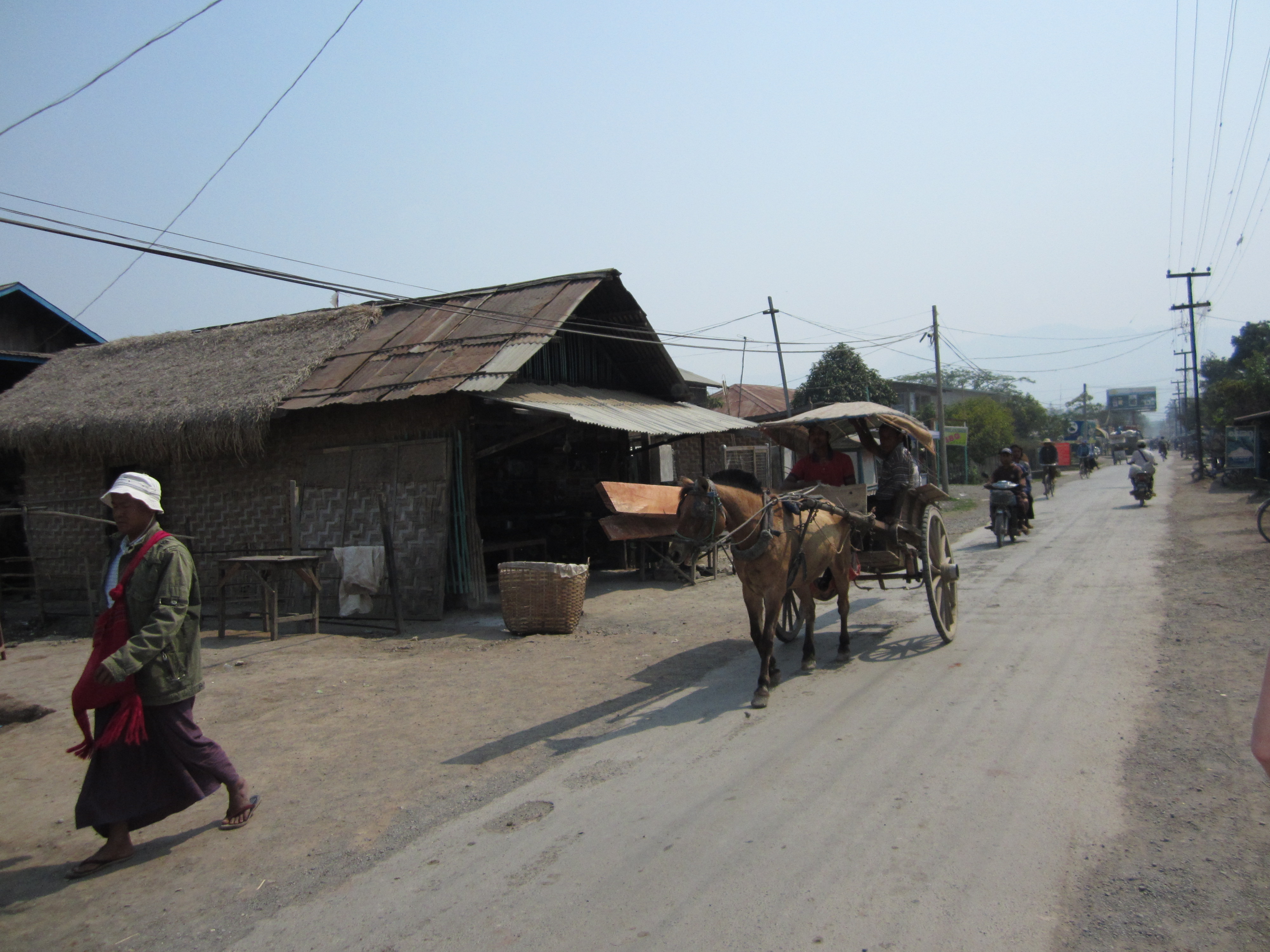
Needless to say, this country is fascinating, and it is in the midst of one of its most critical times in history, so I definitely had to see this for myself.  On top of that, because Burma has literally been shut off from the world for so many years, we were told it was like going back in time to Asia 100 years ago.  Until recently, the Burmese did not have access to news from outside of Burma (purposefully controlled by the government).  A cell phone there costs around $1000, and the down payment for internet in your home is $2,000.  In most places outside of the capital, a “taxi” is a horse-drawn, or ox-drawn carriage.

Because we spent five very packed days around the country, I will give you the highlights of our trip:

1)     Yangon (formerly Rangoon, and formerly the capital of Myanmar).

There is not much to see in the city.  We spent only a few hours our first day, and a few hours our last day, exploring the Yangon.  Other than the Shwedagon Pagoda, an impressive and revered Buddhist religious symbol, there really wasn’t much to do.  The city is quite run down, and much less developed than Bangkok, understandably so.

2)     Kalaw

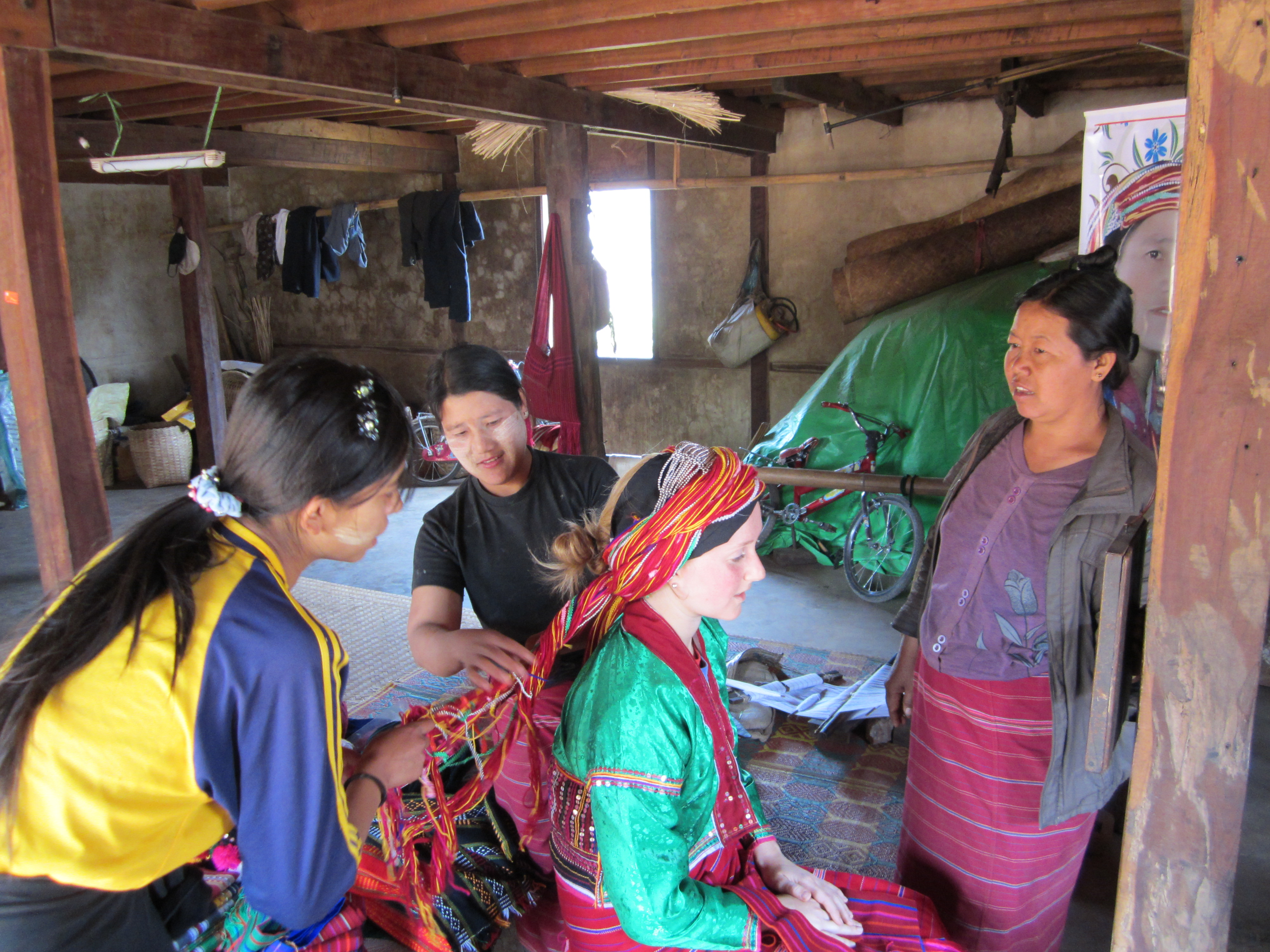
Kalaw is an incredible mountain town, which we reached through a 12-hour overnight bus from Yangon.  We arrived at 2am, with no hostel booked, and no plan at all – it didn’t take us long to find the “Winner Hotel,” but the temperature had dropped overnight, so it was freezing.  In Kalaw, we did a trek into the mountains with two tour guides who were both 21 years old, named GuGu and Chaw Su.  We spent the whole day wandering through the mountains – the trek was not difficult, which was fantastic, because it not only gave us a chance to talk with the girls and learn about their lives in Burma, but it also gave our guides a chance to stop and point out different plants and crops along the way.  It is truly incredible what is grown in the mountains there! We saw oranges, pears, raspberries, gooseberries, ginger, cabbage, papaya, banana, pineapple, and much more! We stopped in two villages and two monasteries along the way, each time having a chance to (through our guides) talk with the families we met, sit down for tea, ask them questions, and laugh with them.  It was truly fantastic to be able to talk and interact with native people in a non-touristy setting.

In Kalaw, we also had delicious food – a broad-bean, peanut, tomato, and onion salad, noodle soup, and curry.  While curry in Thailand is coconut milk-based, Burmese curry is largely oil based, so it was interesting to try the different foods.

3)     Inle Lake

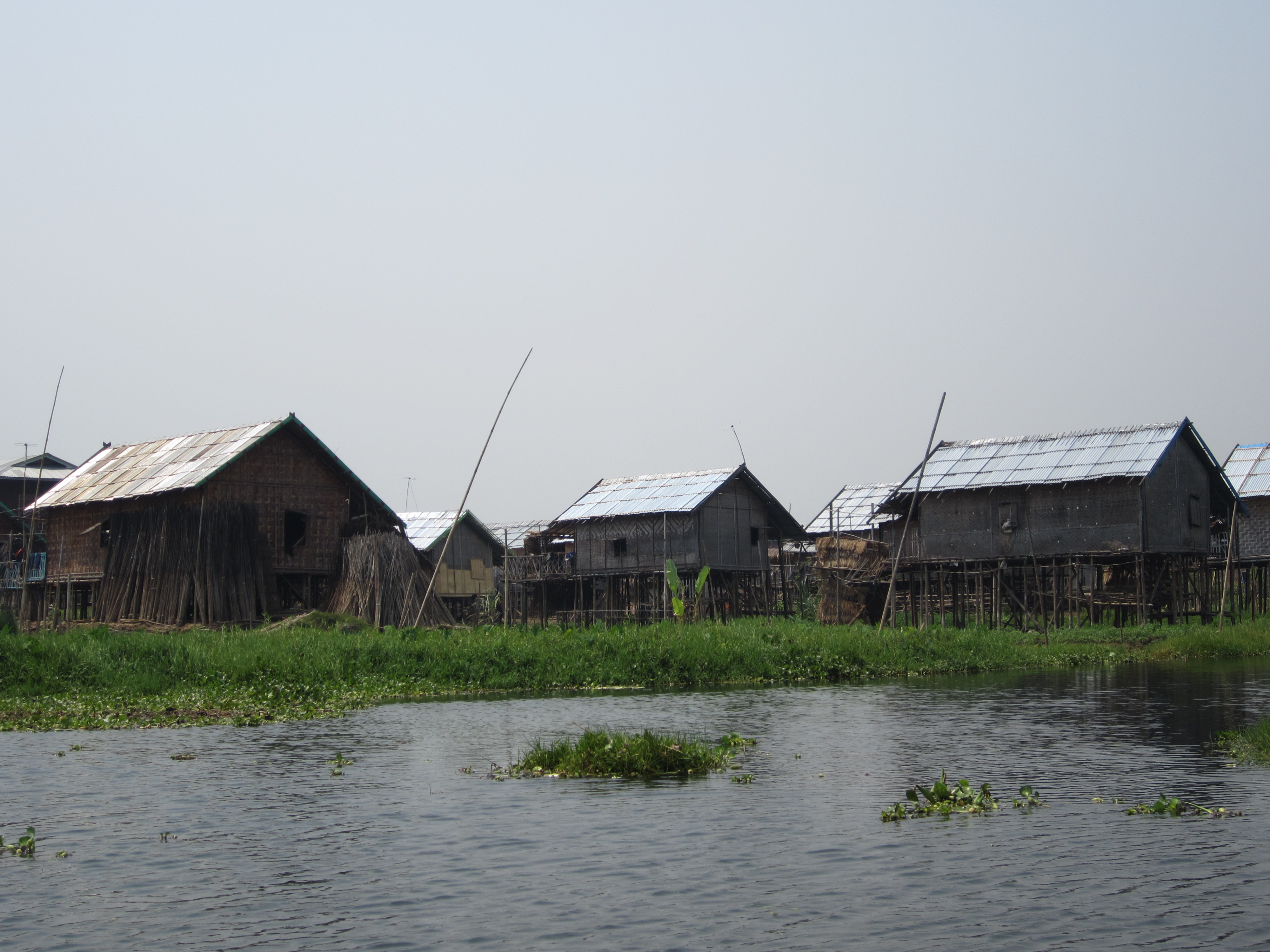
Just a two-hour drive from Kalaw, Inle Lake is one of the most popular destinations for tourists.  Similar to Kalaw, the town itself is very small, and very primitive, boasting half-paved, half-mud streets lined with small hostels, small houses, and shacks.  We spent an entire day (8 hours) on a boat ride around Inle Lake.  It was one of those long “typical” Southeast Asian boats, propelled by a motor.  The lake is enormous, so it was a 2-hour boat ride to our first destination.  Throughout the day we made many stops, including: a shop where silk is produced, a shop where cigars are made, a delicious restaurant, a paper making shop, a silversmith, and a few more destinations. Inle Lake is entirely made up of small villages, comprised of houses and buildings, which are on stilts.  Therefore, to get to each new shop, we had to go by boat, which is how locals get around as well.  The post office, for example, is a small house on stilts in the middle of the water.  Surrounding the villages are also endless fields of rice and other crops.  So throughout our day we observed men and women working to harvest and plant their crops.  We were able to stay out on the lake for the sunset, which was absolutely magnificent.

Before our 15-hour bus back to Yangon from Inle Lake, we rented bikes and biked in the area, again surrounded by endless rice fields; I’ll let the pictures do the talking, because it was absolutely breathtaking!  I came back from the weekend completely happy and refreshed; though I was exhausted, it was refreshing to have seen such an untouched nation, and to have been able to experience another country  knowing so much of its history and current political issues.  Even more importantly, we were able to fully interact and speak with locals to hear their perspectives, and those moments are what made the trip so incredible.

Below are some photos from the trip:


Barbados, Week 6: Island Hopping in St. Lucia

March 16, 2012

When I see tall things in the distance, one thing pops into my head:  I must climb that.  I was perusing my sister’s photos of her own St. Lucia vacation when I stumbled upon the Pitons of St. Lucia.  Like a mismatched set of gigantic fangs, Gros and Petit Piton rise out of the Caribbean Sea on St Lucia’s west coast and are its most recognizable landmarks.  They are so important to St. Lucia, in fact, that they named their own indigenous beer, Piton, after them.

I flew into St. Lucia on a late afternoon REDjet flight on Friday, a flight all of twenty minutes, knowing only where my hotel was located and that it had balcony views of Petit Piton.  Unlike the United States, finding a cab is never an issue; they will find you, and quickly.  I knew the price was set at US$65 from Hewanorra Airport to Soufriere, so I got a kick out of my cab driver when he told me “It’s $75 but, for you, i’ll knock it down $65”.  So nice of him to charge me regular price!  But as the drive progressed and we began talking, and I learned that he goes by the name “Cow”, we bonded as much as a taxi driver and tourist can.  I learned that he owns 4 acres of banana trees as well as driving the taxi van 7 days a week, and that he has three daughters from four different wives.  That is one busy man, I thought to myself.

Cow offered to drive me to Gros Piton the next morning, but I would have to be ready by 6:00 a.m.  Of course one of the two nights I was in a spacious, comfy, air-conditioned hotel room I wouldn’t even be sleeping for more than five and a half hours!  Soufriere, however, is settled in between beautiful, lush mountainside opening up onto a quiet fishing bay, so when I woke up at 5:30 a.m. with light clouds rolling over the jagged mountaintops and the sun illuminating just enough detail, and it was definitely a sight worth seeing.  All I had to eat was a bag of peanuts that morning, with two water bottles packed for my climb, before my guide Shem and I began the ascent of Gros Piton just before 7:00 a.m.  It was a good thing we left so early, though, because even by the quarter mile mark, I had sweat pouring down my face while Shem had not even broken a sweat.  I guess that’s the difference between casually keeping in shape and hiking a 2,619 foot peak everyday.  The trail consisted, at first, of inclined packed dirt with a few areas of steep broken rock that would have to be navigated with use of all four limbs.  As the path hit the half-way mark and continued upwards it morphed into steeper switchbacks with crude earthen stairs and wooden railings nailed between especially steep sections.  If it had been just me, I would’ve taken my sweet time, but Shem was under the impression that a young man of my age was capable of going faster than I wanted, and thus I pretended to be hardly winded when we would stop for breaks.  With aching limbs, I reached the summit look-out point about an hour and ten minutes after we began, and there it hit me that it was completely merited to be so winded, because I was really, really high up.  The view was stunning:  You could see nearly the entire length of the island, with many of its uneven peaks shrouded in early morning clouds.  Soufriere was just a cluster of houses behind Petit Piton across the bay, and you could see numerous sailboats jetting around the west coast.

The way down was a bit easier, and in the fifty minutes it took us to descend from Gros Piton’s glorious heights, I learned a little bit about my guide, Shem.  Although I didn’t ask his age, he must’ve been somewhere between 17-19 years old, and had graduated from school in Soufriere.  Shem lived near the base of the Piton and had four brothers and two sisters, but he was a middle child.  He had been working as a guide on Gros Piton for two years, hiking the mountain at least once, if not twice, daily.  He told me the fastest he had ever climbed Gros Piton was in 55 minutes, but the slowest was with a group of older tourists who took 4 hours to make the climb!

Traveling to unfamiliar destinations is exhilarating, but, at times, it can be just as frustrating.  Upon coming back to town, I needed to take out money for my celebratory post-hike meal, but of course Saturday was the day where the Bank of St. Lucia in town was inconveniently switching its location to a waterfront building.  The ATM would not be operable until Monday.  Cow had to pick up a couple in the northern capital city of Castries at 12:00, so I had to take an hour drive north with him, take out money in Castries, and take a public bus an hour back to Soufriere.  Exhausted, dirty, and desperate, I stumbled into Archie’s bar and restaurant around 1:30 p.m.  and had the best chicken rotis and salad of my life.  Despite my limited time in St. Lucia, the only activities I could muster the energy for the rest of the day was to nap on the beach, nap in my hotel room, eat dinner at Archie’s, and wander the town streets and talk with some locals until around 10:00 p.m.

Sunday I played the typical tourist role, with Cow taking me and a couple from Arkansas around to the drive-in sulfur volcano just outside of Soufriere along with a trip to Toraille Falls.  It made for some good picture taking, to be sure, but it did not have nearly as an authentic, organic feel to it as did yesterday’s hike up Gros Piton.  Cow agreed to drive me over to the east coast for some sightseeing before my afternoon flight back to Barbados, and I even got a dip in at a beach down the road from the airport before my 5:00 pm flight.  I wouldn’t recommend cutting one’s time that close, however, as I enjoyed myself at the beach so much I almost missed the cut-off for check in.  All in all, a great weekend away that I would recommend for anybody — well, anybody who enjoys challenging physical exertion, that is — and a nice break before my head is buried in the books for midterms at UWI!


The Temples of Angkor Wat: Cambodia

February 24, 2012

This weekend, I took my first international trip to one of Thailand’s neighbors, Cambodia.  Specifically, we went to Siem Reap, which is the center for all of the tourism surrounding Cambodia’s famous Angkor Wat.  The journey to get there is not exactly quick; it began with a four-hour minivan ride to the Cambodian border, then about one hour spent actually crossing the border, an hour spent waiting at the bus station, a two-hour minivan ride to Siem Reap, and then a 20-minute tuk tuk ride to our hostel.  All in all, about a ten-hour journey door to door.  We arrived in Siem Reap Saturday afternoon and left early Monday afternoon – it may seem crazy to some of you to travel to Cambodia for such a short time, but a) with the very strict attendance policy at Thammasat it is the only way I can travel, and b) we really felt we did not need any more time in Siem Reap.  So here are the notable highlights:

1) Cambodia is not Thailand.  It may seem obvious, yes, but I have always had a magical view of Southeast Asian countries – friendly, smiling people always willing to help you, greenery everywhere, rice fields lining both sides of the road.  I assumed that the hospitality and kindness that are normal in Thailand would also be present in Cambodia.  But from the second that we stamped out of Thailand and started the visa/entry process into Cambodia we immediately noticed a change in atmosphere.  The guards at the border were not friendly whatsoever, and immediately after officially entering Cambodia we were overwhelmed by men trying to get us to go into their taxi, or in their minivan to Siem Reap.  We have very much become accustomed to Thai courtesy and friendliness; in Thailand I never have to worry about being scammed.  But Cambodia is known for its scams, particularly at the border, so we had to be extremely cautious.  There is even a “fake” border that has been set up.  Literally, a building was built complete with guards, and signs, and visas.  They bribe tuktuk and minivan drivers to bring tourists to the fake border, who then pay a lot of money for what may or may not be a valid visa.

2) Siem Reap is essentially the main city where tourists go in order to see Angkor Wat and the surrounding temples.  The city provides a stark contrast between wealth and poverty – while there are five-star hotels lining both sides of the streets, between those manicured lawns and marble entryways are dirt roads filled with children, running around begging tourists for money.  It was a surprising and uncomfortable reality.  Despite the hotels everywhere, we opted for a much more modest accommodation in a fantastic hostel near the old town, for only $3 USD per night.  Saturday evening we had traditional Khmer red curry for dinner, which was easily the most delicious curry I have had since landing in Southeast Asia.

3) The temples.  The temples of Angkor Wat are located about a 20-30min tuktuk ride from Siem Reap.  The area surrounding the temples has been well preserved, so instead of endless hotels and restaurants, Ankor Wat is surrounded by beautiful forest.  We hired a tuktuk for the whole day (only $15) and left Siem Reap at 5am to see the sunrise over Angkor Wat.  We were joined by many tourists, but the early start was completely worth it – Angkor Wat is incredible and utterly breathtaking.  It is an expansive structure (only pictures can do it justice) that is considered to be the largest religious structure on earth; some place Angkor Wat in the same category as Machu Picchu and other wonders of the world.  It is this fact that I could not get over.  Construction of the temple was started in the year 1112 by the king of the Khmer empire at the time.  It is thought that he created the Hindu temple, which ended up being changed to a Buddhist temple, in dedication to the Hindu god Vishnu.  It took 37 years to complete. The thing is, in my lifetime, I have visited many castles that immediately strike any visitor by their opulence and grandeur.  For example, the Château de Versailles, in France, created by King Louis XIV, is just ridiculously extravagant.  But Angkor Wat was not created for the purpose of living, it was purely in dedication to a Hindu god.  It is purely religious — that’s just hard to fathom, because it is so big!  Though commoners used it for prayer throughout the year, our tour guide explained that the king usually only visited it once per year.

4) Angkor Wat is not the only temple to see. We also visited Ta Prohm, which is the only temple in the area that has not been protected against the jungle.  It is therefore covered with trees and roots that have wound their way around the ruins.  Fun Fact: Ta Prohm was featured in the film “Tomb Raider.”  We then visited Ta Keo, and Bayon, and ended our day by going back to Angkor Wat and having a guided tour of the temple.  I am definitely glad we spent the $3 for a tour guide, because it is not easy to understand the meaning of the temple without some history and explanation. We spent nine hours, from 5:30 am to 2:30pm on our feet visiting temples.  And it was completely worth it.

All in all, Cambodia was incredible – once I realized that Cambodia has only been out of Civil War since 1998, it became very clear as to why there is such a stark contrast between wealth and poverty in Siem Reap.  Cambodia is very much still recovering from the Khmer Rouge regime, and as of now the country relies heavily on tourism, which is why so much money has been poured into hotels and restaurants in Siem Reap, but nowhere else.  I would have loved one more day to travel the six hours to Phnom Penh, the capital of Cambodia, to learn more about the history of the country as well as to see some of the museums there chronicling Cambodia’s recent history.  But otherwise, by the end of our stay we felt we had seen all there was to see in Siem Reap. I have to say, after a nine-hour trip  back to Bangkok which included one very offensive, drunk Irish man, who didn’t stop talking for our four hour-minivan ride, offended every race and religion represented in the van, swore every other word, smoked in the van, threatened to kill most of us, and almost assaulted one of the guys in our minivan – it certainly felt good to be back “home” in Bangkok!


Botswana, Week 4: The City!

February 24, 2012

I’ve been in Gaborone, Botswana since mid-January, but I’ve only had a chance to explore the city and surrounding area for about 3 weeks. This is mainly due to the fact that we either have to take a taxi, combi, or walk to local areas. However, the weather here is almost always the same (hot and sunny) which means walking is sometimes out of the question.

Most of our shopping centres are located at the local Main Mall, convenient River Walk Mall, and the highly commercialized Game Mall. Game Mall and River Walk Mall have the most options, but are still very similar to any other, smaller mall in Gaborone.  They basically have everything you would find in a local mall back in the States, except with an African touch to it. The Botswana ways and culture are different than American customs. Even customer service, buying items, and viewing items is different. Also, 90% of the items bought in department stores in Botswana come from South Africa.

The Main Mall

River Walk Mall

Game City Mall

In terms of restaurants, we have several here. Nando’s serves delicious wraps, pitas, and salads, etc. It’s equivalent to a sit-down Panera Bread with available wi-fi and they even bring the food to you. Tip: If you ask for french fries, the employees and locals will stare at you for what seems like an eternity. They call it “chips” and they’re just as good as they are in the states!

Nando’s is well known for their international sauces. Be careful when ordering because what we consider “mild” back home is actually very spicy and hot here. Nando’s is also known for hilarious billboards and signs across Africa such as the one below.


Believe it or not, they have KFC here. And yes, it’s delicious. However, the menu is completely different, but the secret recipe is the same and still a “secret,” so they say, even on the African continent. It’s very interesting to see the same KFC logo of Colonel Sanders smiling when walking by local vendors and local businesses as I would see back in Richmond, VA.

Chicken Licken is the equivalent to KFC, but the African version. It’s good food for the great price one would pay for a piece of chicken and chips. Interesting event: KFC sued Chicken Licken and took them to court. KFC claimed that the slogan “Finger Licken Good” resembled Chicken Licken’s company name and confused customers. Needless to say, KFC lost their claim in court.


Barbados, Week 4: My Adventure North

February 13, 2012

It was one of those rare days when simply sitting on the beach, soaking in the sun, wasn’t going to do it for me.  Tomorrow would be Friday, devoid of classes, and thus I had an empty day with which to work.  I have already scoured much of the west and south coasts, enjoying the beaches, restaurants, and nightlife, so if I was to go on a self-labeled “adventure,” it would have to be somewhere in Barbados’s unspoiled northern or eastern highlands.  Immediately, I recalled North Point, the northernmost point in Barbados, where the serene Caribbean meets the broiling Atlantic.  The images of the windswept, rocky plains of northern Barbados sliding off dramatically into the choppy Atlantic, stretching for hundreds of miles before one’s eyes, held my attention, and thus my destination was decided.

Having received no signs of interest in going amongst the other exchange students, it became apparent that I would be doing this trip to North Point alone.  Strangely, however, I cherished the opportunity to take a bus ride out into the middle of what seemed like nowhere by myself and just see where the day went.  I asked a lady at the bus stop when the Connell Town (the small town closest to North Point) bus was due to arrive, and she gave me an incredulous look. “You ne’er see dem tourists try’n go to Connell Town!”

The Connell Town bus came an hour after I reached the bus stop, and as the bus chugged north, the Bridgetown sprawl turned into the posh “Plantinum Coast”, which then turned into hilly countryside, dotted with modest, brightly colored houses scattered along the road.  I felt myself getting excited; this was unexplored territory, and certainly off the beaten tourist path.  Again, I had to ask the assistance of a lady on the bus to determine when, exactly, I should get off the bus to make it to North Point.  Getting on the right bus is never the hard part — it’s determining where you should get off that has proven to be somewhat troubling.  She pulled the overhead cord, alerting the driver to let me off, and the bus came to a squealing halt next to a dilapidated gravel road.  She pointed down the path, telling me that was North Point.

I hopped off the bus, and as it roared away down the road, it became very apparent that I should have asked for more specific directions toward the North Point, not just a north point.  I continued down the gravel road, which led to an abandoned hotel complex, clearly not having been occupied in many years.  It was creepy, there’s no denying that, but I was so engrossed in my adventure mindset that I kept walking further toward the cliffs on the coast and into the complex.  A couple of times, I got the feeling that someone was watching me, but I attributed that to an over-active imagination as I continued to snap some pictures of the collapsing hotel buildings.  I came through a group of trees, and then I immediately saw the small fire burning.  Before I could decide the next course of action, the man tending the fire jumped to his feet and waved at me.  “Great,” I thought. “I just wandered at least half a mile into an abandoned hotel complex, and now I’m alone with an arguably homeless gentleman in the northernmost part of the country.”

As he walked toward me, the only thing I could think of to say was “Oh, sorry man, should I leave?”  He came closer, and I could tell that my first assumption was definitely right; this guy was living out here.  “Where your tour guide?  It’s okay.  I be your tour guide.  Your people go to the Animal Flower Cave, over der.  But here you can take dem steps down to da beach and swim, very refreshing!”

I looked incredulously down at the waves pounding the rocky cliffs — there was no way anyone could swim down there.  We introduced ourselves, and he told me he was the “Keeper of the Flame of the North”, which would explain his little fire.  It was a strange sensation, talking to the Keeper of the Flame of the North, because I was simultaneously excited to be talking to someone so eccentric, but also very nervous he was going to finish the conversation by taking all my money.  After discussing our respective birthdays and how his mother’s birthday is ten days away from mine, he did eventually ask for some money. “Man, I go into town and my friends make fun o’ me ’cause I got nothin’!  They say, ‘What you doin’ up there?’  They don’ know I’m keepin’ the flame goin’.”

I stolidly told him I could give him a $2 bill, but that was all.  The Keeper of the Flame, and, briefly, my new tour guide, was not thrilled but accepted it and thanked me with a fist pound.  Then, as casually as I possibly could, I said my goodbyes and booked it out of there.

The rest of the adventure was breathtaking.  I skirted the coast for a half-mile in the other direction upon leaving the hotel complex, and was mesmerized by the raw power of the Atlantic Ocean just hammering away at the forty foot cliffs standing in its path.  I got close enough to get hit with ocean spray as droplets of water exploded over the edge of the cliff.  The Animal Flower Cave, where I was told “my people go”, as it turns out, is a bit of a tourist trap, as it cost $20 Bajan to have a tour guide walk you down a flight of stairs and then tell you you’re in a small cave.  Don’t get me wrong — it was cool to be standing in a cave where you could see the water rushing into the pools on the cave floor, only to be sucked out moments later, but as soon as monetary value gets placed on something, one’s expectations inevitably go up as well.

Out of water, with not much left to explore, I walked back to the nearest bus stop. This is where pre-adventure planning really is important, because, with no prior knowledge of bus schedules and/or specific routes, I ended up waiting nearly two hours in the baking heat for any form of transportation to come.  I watched school children getting home from school, people biking home from work, and the sun nearly set behind the sugar cane fields before a bus driver told me to get on his bus, despite the fact that it was going in the wrong direction.  I agreed, just happy to not be sitting out on a sidewalk anymore.  The bus would, in fact, make it back to a stop near campus, but not before driving down countless back roads all over the countryside in order to make its necessary stops.  For a mere $2 Bajan, I got to see more of Barbados than I had in my previous three weeks combined.

This is where the “Keeper of the Flame” advised me to go swimming.

The view of North Point from the Animal Flower Cave.


To bike or not to bike? That is the question…

February 13, 2012

When I found out I was accepted to study abroad in The Netherlands, I had a natural response; I told people.  The people who had never been to The Netherlands were excited for me and told me to take pictures and have a nice time.  But the people who had been to The Netherlands told me that I would need a bike to get around Maastricht.

This was exciting news, but also slightly scary.  It was exciting for two main reasons: buying a bike would cut-down the amount of money I would spend on local transportation, and also because I had not ridden a bike since high school.  But the thought of riding a bike was also scary because I had not done so in several years. Despite the cliche saying: “It’s just like riding a bike: once you learn, you never forget,” I was afraid that it wouldn’t be that easy.  Put yourself in my position — you walk or drive a car daily, then you’re told that for approximately four months you’re going to be riding a bike in a contained bike lane next to cars that are going over 30 miles per hour; that’s kind of a scary thought.

After arriving in Maastricht and walking twenty minutes one way to school, I thought to myself, “it’s time to buy a bike.”  My fear started to disappear after seeing the Dutch riding their bikes.  They ride their bikes like pros!  For example, I saw several children talking and riding close to each other with only one hand on the bike handles.  I thought that was impressive until I saw a young girl sitting calmly in a side-saddle position on the back portion of an older woman’s bike… without holding on.  If they could do that, then I could definitely ride a bike next to cars.  With that being said, I’m happy to announce that I did indeed buy a bike!

You may be wondering how my biking experience has been going so far. I must admit… I’ve only ridden it twice.  The day after I bought it, the majority of the ice had melted and the bike lanes had been cleared, so I decided to ride to school.  It was great!  It took half the normal time to get there, and generally speaking, it was a nice day for a bike ride.  The ride back, however, was not as easy.  Although Maastricht does not have hills, there is a slight incline leading from my school to the main road.  Let’s just say that I noticed the difference in the incline while I was riding.  My body wasn’t used to riding with a book bag, especially up an incline, so I had to walk with my bike, then I finished riding home.  The second time I rode my bike was more successful.  I went to the store and back and didn’t have any problems!  I must say, I was feeling pretty confident and at that moment I knew I wouldn’t have to sell my bike and I wouldn’t be forced to walk everywhere. Until next time, wish me luck on my bike riding endeavor!


Only in Bangkok

February 3, 2012

I thought I would share some details about what I did this past Saturday, to give you a good idea of an average, ordinary day in Bangkok.

My day began by meeting a friend in the lobby of my apartment building, so that we could catch the bus together to meet a few friends for breakfast.  We said our usual “Sa wat dee kha”  to the lovely guards at the bottom of our building, and headed out on a walk to the bus.  At only 10am, it was already 85 degrees outside; the sun was shining, and all of the street vendors who crowd the Bangkok streets were just beginning to set up their food and clothing stands to begin their long weekend of work.  We climbed up the stairs of the overpass, which provides a safe way to cross the huge, 10-lane highway, passing the usual homeless men lying on the concrete, and the standard installments of individuals singing into a microphone hoping to make some money.  We hopped onto our bus, being careful not to touch the monks, clad in their orange robes, who were also boarding the bus.  We sat down, and the bus “tout” came over to collect our money – only 8 baht (about 25 cents), because the bus was open-air and not air-conditioned.  I quickly noticed what looked like an animal’s cage resting at the front of the bus next to the driver – based on the tail that was visible we assumed it must be a squirrel.  Well, that’s odd.  After the bus tout was finished collecting money, she proceeded to the front of the bus, opened the cage, pulled out what we think was a baby squirrel, wrapped it up in a small baby-squirrel-sized blanket, and proceeded to feed it with a syringe, squeezing something into its mouth for the remainder of the ride.  I tried to get a good picture, but the bus ride was so bumpy that a blurry one will have to do.

We then proceeded to Ethos, our new favorite earthy-crunchy, all-natural, sing-kumbaya, can’t-wear-shoes-inside, sit-on-the-floor type of restaurant. We had the most incredible banana mango gluten-free pancakes. I know it doesn’t sound like much, but they were delicious.

Afterwards, we ventured out to the main road in the now sweltering heat.  We waited for a bus that we knew would take us to the mall right by our apartment complex.  We fully expected to have at least a 30 minute bus ride – it takes minimum of thirty minutes to get anywhere in Bangkok, because there is always traffic.  Well, no one had mentioned to us that this bus takes the most roundabout, absurd path to go from point A to point B.  The ride ended up taking us 2 hours.  Don’t get me wrong, seeing the scenery of a weekend in the city was great, but my gosh, in that heat, with no air-conditioning, it was rough.

After two hours, our mall destination was finally in sight, so we got up and pressed the red button which signals to the driver that we want to get off at the next stop.  He was driving particularly aggressively at this point, especially considering how bad the traffic was.  And then, like slow motion, I saw it: bus jerking left, small helpless car turning right, and then — CRRUUUNCCHHH.  The horrible sound of metal crunching.  Our bus crashed straight into the car next us.  We all looked at each other, decided it would be best to just get off that bus as fast as possible, and into the refuge of the huge and nicely air-conditioned Central Pinklao mall.

Just another morning in Bangkok, Thailand.