Alyssa in New Zealand: Two is better than one

October 23, 2013

Doing something more than once is anything but a waste of time. In fact, it allows you to see more of what you have initially missed. As pointless as it may seem to visit the same place for a second time, it is actually very beneficial.

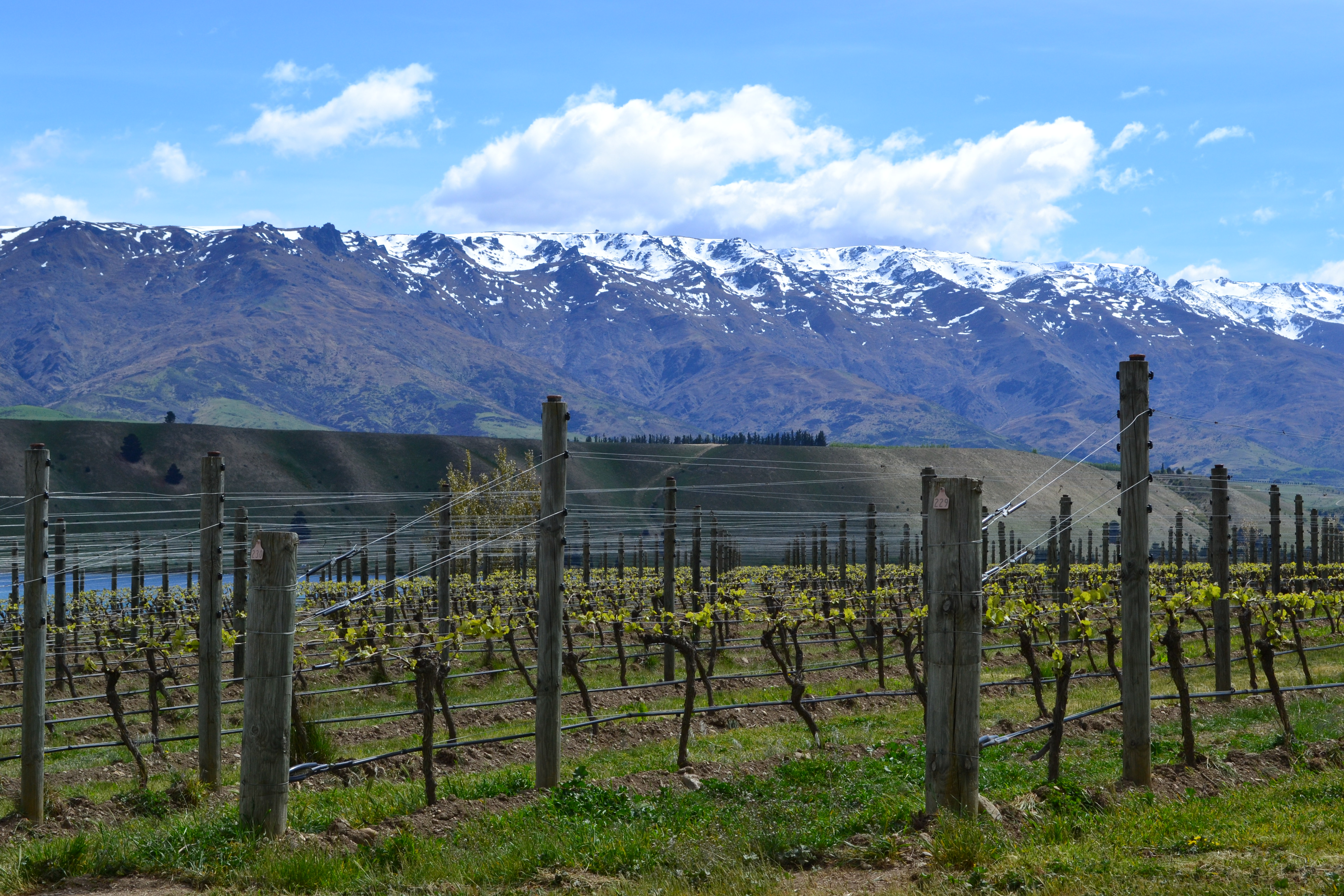
After returning to Queenstown once more with my parents, I was exposed to some of the more geographical aspects of the area. As we drove to several different vineyards throughout the day, I got the chance to see the nature that truly surrounded Queenstown. It was quite strange to think that vineyards could thrive in such a dry, cold area in the region. However, such wineries have learned to adapt and grow successfully in New Zealand’s weather conditions, even if they are situated near mountainous areas.
DSC_0859

Northburn Station winery

DSC_0863

A taste of Queenstown scenery

I also returned to the Milford Sound, except this time, instead of just standing at the entrance, I went on a boat cruise that took us deeper within. Despite the fact that it was raining fairly hard (Milford Sound is considered to be one of the wettest places on Earth), the beauty of Milford was not overshadowed by the dismal weather. As a matter of fact, the rain only contributed to its magnificence, for there were several waterfalls, most of which formed from the rainfall, that were running down from the mountain peaks into the sound. At one point, we encountered one of the more powerful waterfalls. As we made our way closer, the vibrations began to increase from the impact of the water hitting the sound. We were several meters away, but we still managed to get completely sprayed and covered by the water. The force of the water was immense, but it did not prevent us from approaching it.

milford23 (1 of 1)

The reverberations from the waterfall became more and more immense as we approached it.

There were vast amounts of fog which made it hard to make out some of the peaks of the mountains in the distance. However, the magnitude of the mountains were fully revealed when the boat made its way through the fog. Throughout the cruise, we were all kept in suspense, waiting to see what more Milford Sound had in store for us beyond the layers of haze.

milford2 (1 of 1)

A layer of mist floated over Milford Sound as we made our way deep within

The minute I returned to Dunedin, I finally had to put myself to work, for it was officially final exam period at Otago. Even though I was disappointed by the fact that I had to stop traveling for the time being, I knew that papers were a priority during my time over here as well. It felt a little weird to abruptly put my travels to a halt, for I had become so used to being on the go for the entire semester.

There was a significant amount of work that I had to do in order to prepare for my exams. My theatre exam was a take home exam, for which I had to write two essays. For my microbiology exam, the paper consisted of over thirty lectures. There were forty multiple choice and three short essay questions, all of which had to be answered in three hours (very similar to Richmond’s exams). The only difference was that these exams were more heavily weighted on my final grade.  As a result, the exams covered a lot of material and it was obligatory for me to do well.

Since my theatre exam was a take home, microbiology has been my only exam so far that has taken place during a given time slot. The location for each exam is usually very random. For instance, my exam was set in the old physical education gymnasium instead of a classroom or lecture hall. The room held an exam for not only my class, but for another class as well. The desks in the room were set up in rows and each person was assigned a number. As we took the exam, three proctors continuously walked around the room, watching almost our every move. The room atmosphere was tense, and the experience was similar to being a room full of students taking the SAT’s.

Now that two out of three of my final exams are out of the way, I have free time to myself once again. Having only one exam left makes the end of the semester seem so soon. The end is quickly creeping up and I’ve barely begun to notice it up until now. I continue to explore Dunedin in my free time, for I still haven’t seen everything. Whether it consists of me waking up early to watch the sunrise, hiking tracks that are not typically highlighted or discovering new beaches around the peninsula, everything still seems new and exciting. I still find it astonishing that all of these amazing sights and spots are so close by. Their proximity and easy access just reminds me that I have to take advantage of them while I’m living here for the last four weeks of this experience.

The odds of me seeing these people again in the near future is very slim, for we are all from very different places. Being from Boston, having friends all the way from Michigan to Norway does not make visiting each other very easy. Nevertheless, I plan on making the most of my time with the friends that I have made over here until the very end. It’s never too late for us to arrange a last minute trip in our last few weeks. The end may be near, but that does not turn us away from continuing to travel more.

Having been to most of the highlighted areas of the south island, I find myself wanting to return to the same places again. I have a fear that I will forget the sights that I have seen. Something new is always discovered the second time, which makes me think that there is still more out there. Even if I don’t see everything, it always gives me an excuse to come back all over again.

st clair10 (1 of 1)

Sunrise at Saint Clair Beach on the Otago Peninsula


Rhiannon in India: Classes at the University of Hyderabad

October 22, 2013

Now that I have been taking classes at the University of Hyderabad (or Hyderabad Central University, as it is called here) for about three months now, I have started to reflect a bit more on my academic experience. As I wrote at the beginning of the semester, the University of Hyderabad is a predominantly graduate-level university about 20 minutes outside the center of Hyderabad. Although the university has a small student body of about 5,000 students, the campus is vast, full of greenery, and serves as a nice sanctuary within the bustling city. Much of the campus still lies untouched, so despite the long, hot walks to South Campus every afternoon, it is nice to be in an environment with lakes, trees, and wildlife like peacocks and water buffalo.

IMG_6716

It’s like walking through the jungle to get to class, and sometimes I see peacocks on the sidewalks and in the trees

IMG_6729

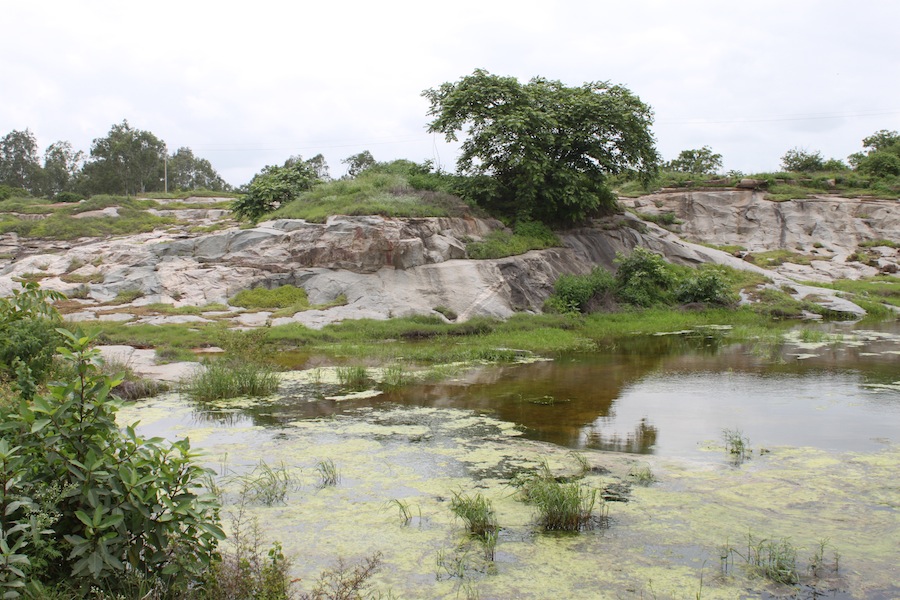
The natural, untouched landscape

I am taking four classes this semester, two that are direct-enrollment with Indian students and two that are only for international students and are held in the Study in India Program building all the way in South Campus (which is quite far from the rest of the academic buildings). My two SIP courses, Basic Hindi and Indo-US Policies, are structured much more like classes at home and cater more to our home school programs and majors. These classes are great because our professors give us tons of opportunities to do things outside of the classroom and experience different aspects of Indian culture. Our Hindi professor, Bhavani, who is also a home stay mom for some girls in my program, holds cooking classes in her home for us. And our Indo-US Policies professor, Ramesh Babu, took us on a trip to Osmania University in another part of Hyderabad, had us over to his sister’s house for dinner, and invited our whole class to his cousin’s wedding. Even though we are just their students, they really embody the Indian culture of welcoming guests and want us to see India in the best way possible.

For the most part, my classes in India are very similar to my classes at Richmond, but there are definitely some differences as well. My workload so far pales in comparison to my usual workload in Richmond, not because the class content is less challenging, but because the grading system here is much different. At home, professors generally decide the number and nature of assignments in each class. Here, however, there is a university-wide policy for assignments and grading. Professors must assign three “internal” assignments, counting only the best two, and one final. This means that you can skip one of the internal assignments because only your best two are counted. Other than these two assignments, no other work is really required, except studying for the final. This system makes it really easy to fall behind with readings because there isn’t much incentive to do them, especially if the class is lecture-style and you aren’t expected to contribute in discussions. What’s worse (or better, depending on your perspective) is that you only need 75% attendance to pass, so generally speaking, it is much easier to get by with much less effort than at Richmond.

IMG_6712

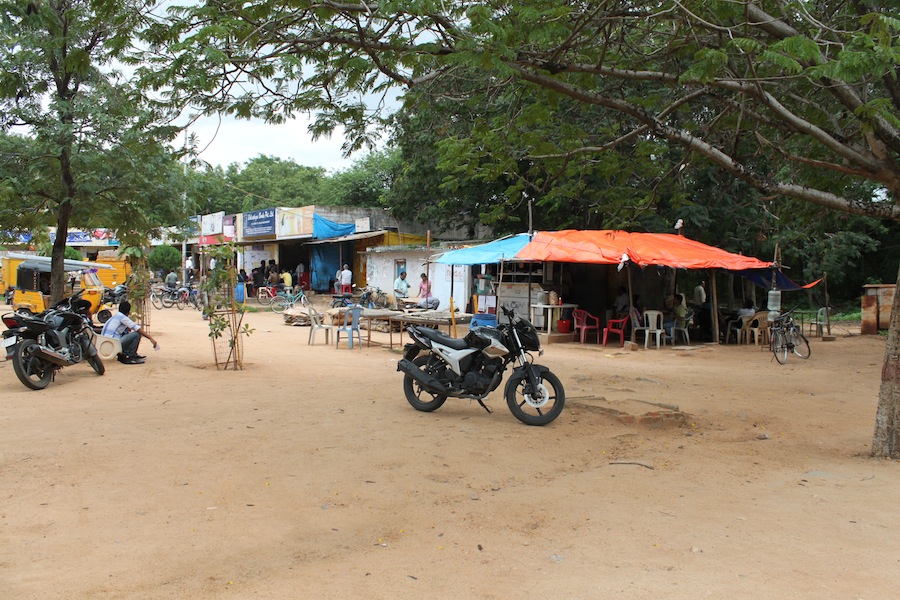
The shopping complex (Shop-Com), where all the students hang out, eat, and socialize

I really notice this in my Indian Philosophy class, which has about 15 students, five of which are SIP students like me. We are learning about three schools of Indian philosophy, including Yoga, but the professor is very new to teaching and, according to my Indian classmates, studied art in graduate school – not philosophy. Because of this, her lectures are usually pretty confusing, not only to the international students, but to the Indians too. And to add to that, the Indian style of teaching tends to emphasize repetition, so many of our lectures are about very similar things for days at a time. After the first few weeks, many of the Indian students even stopped coming to class. For the international students, this class gets pretty frustrating, and we usually just read outside material on Indian philosophy to complete our assignments.

IMG_3286

It’s pretty common for the campus dogs to go in and out of the academic buildings. This one in particular sits in on our philosophy class every morning.

On the other hand, my Technology and Politics professor is very interesting to listen to and engages the students a lot in class. We talk about a wide range of topics – from philosophy to new technological advances with regards to caste and gender issues – and the students get really excited to contribute in class. The structure is mostly discussion-based, and our professor engages the class by assigning presenters and discussions on each reading assignment. If you don’t speak up during the discussion, she will inevitably call you out and ask if you have anything to add. She can be pretty intimidating, but her way of challenging students seems to work well. For our second internal assignment, we have to research a topic of our choice and present on it, but instead of presenting what we have learned about the topic, we present our research proposal to the class. The class and the professor critique our research and then we have to write a formal research report by the end of the semester. I have never had to do this type of project before, so I’m not sure if this is a difference between U.S. and Indian schools, or if it is because this is a masters-level course and I have only had undergraduate classes so far. Regardless, I am glad that I took this class because I feel like I am learning about Indian culture, not just through the course content but also by hanging out with my classmates.

IMG_20130918_115649

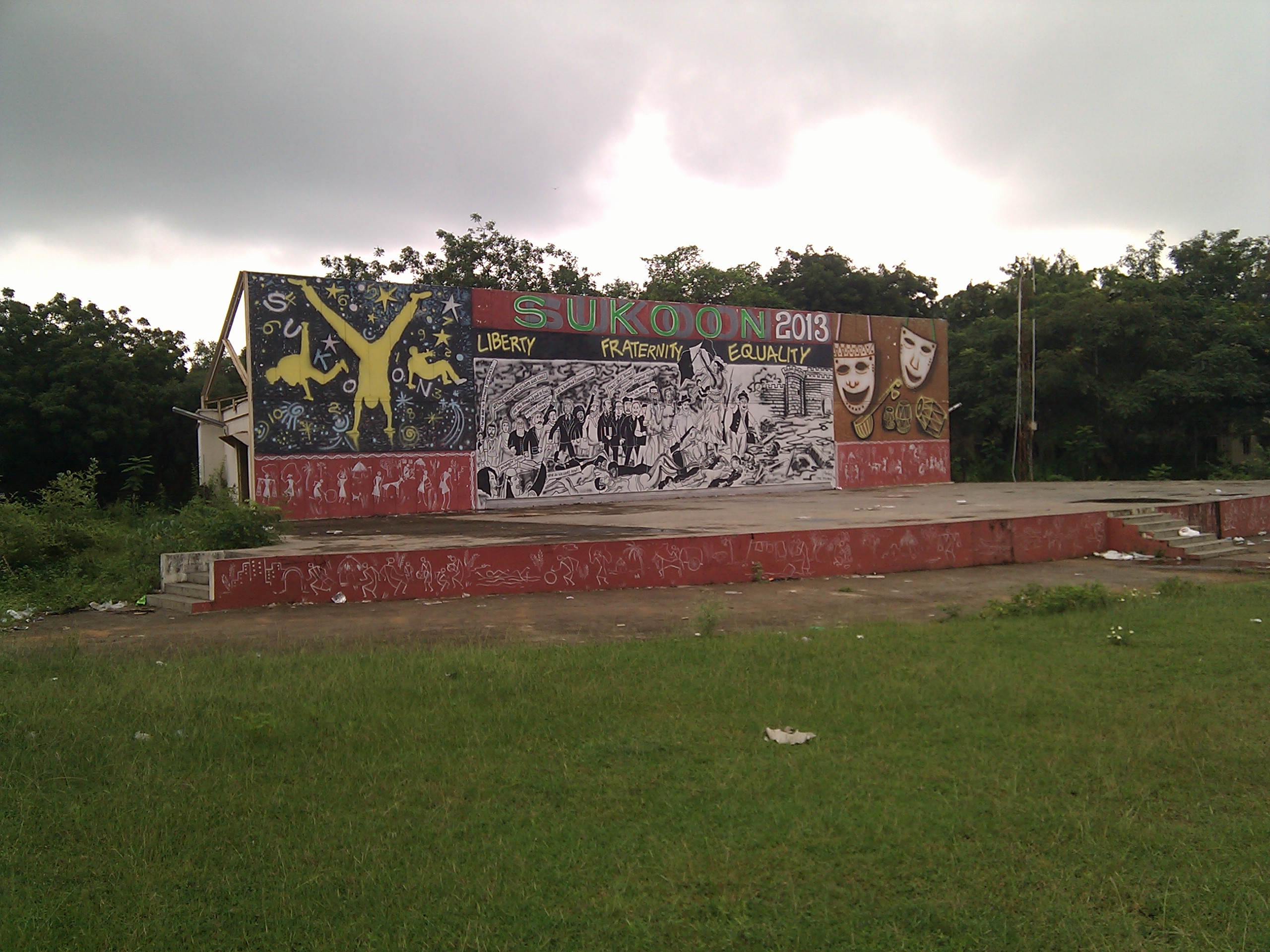
The outdoor auditorium on campus – the site of many student events and protests

Overall, I am really enjoying my classes in India and they are adding a lot to my experience. Not only do I enjoy learning about ancient Indian philosophy, India’s foreign policy, and caste and poverty issues, but I also think that observing my professors and classmates is a valuable way to learn about Indian culture.


Alyssa in New Zealand: Reaching new heights
October 8, 2013

How high can you possibly imagine hiking? Personally I find it hard to imagine.  At this point, it is hard to believe that there is a limit to how high I can climb, for tramping (another word for hiking in New Zealand) has become an addiction. If there wasn’t an end to the trails, I would certainly venture higher through the mountains.

Two weekends ago, I tramped to the height of 1,250 meters, which can be reached on the Sealy Tarns Track. My friends and I were planning on doing the tramp to Mueller Hut, which is 1,800 meters high and the halfway point to the summit of the highest mountain in New Zealand, Mount Cook. However, our plans were foiled once we were informed that there was too much snow blocking the track. As disappointing as it was, we weren’t going to let that prevent us from going up. I became determined to go as far up as I could.

The higher you go, the more you see. The more you see, the better the view is.

mount cook11 (1 of 1) (1)

The view that we were rewarded with after climbing 1,810 steps to the top of Sealy Tarns track

So much can be achieved by reaching the top. Not only have you tested the limits of your fitness, but you have also tested your drive to complete the challenge. In order to get to the top, we had to climb 1,810 steps. As I arrived at the top of Sealy Tarns track, I found myself completely surrounded by a new level of nature. The weather was still brisk enough that snow capped the peak of every mountain. Mount Cook was fighting to reveal itself to us through the thick clouds. The depths of the valley seemed never ending and the glacial waters below were reflecting several different shades of blue even with the grey skies above, all the way from navy to turquoise.

DSC_0475

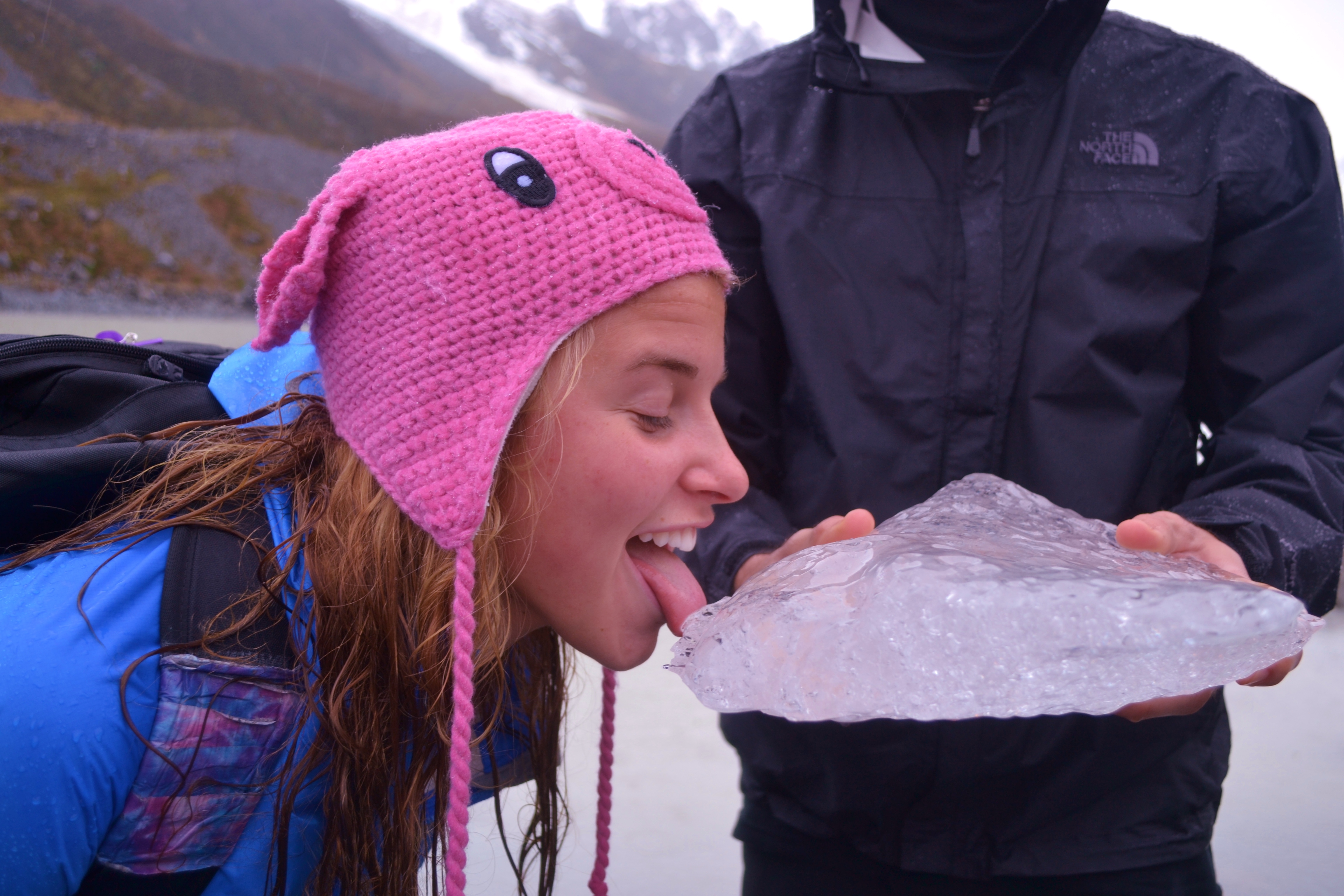
Tasting some of the glacier ice that is over hundreds of years old

I was so enamored by what I had seen, I was unsure of what my next adventure should be.  I kept thinking that nothing could possibly be better than what I just accomplished. After returning to Dunedin and talking to my neighbors about my weekend, they told me about their plans for the following weekend. Although I wasn’t particularly close with them, I decided to join, as the plans were to hike in Wanaka and go bungee jumping (even though it is not an activity covered by the insurance the UR OIE provides, and they advise not to do so, it’s been something on my bucket list that I’ve been keen to do for my entire life).

roy20 (1 of 1)

The new group of friends that I have recently acquired

As I am usually embarking on trips with only my flatmates and a select few of other internationals, traveling with my complex neighbors was something new to me. There were some that I have never even met or seen before. However, by the time the weekend was over, it seemed like we all had known each other since the start of our arrival in the country. I now find it hard to believe that I haven’t spent time with them before. It has become much easier to make friends, for we all have the same motives to explore and make the best of our time in a country that has so much to offer.

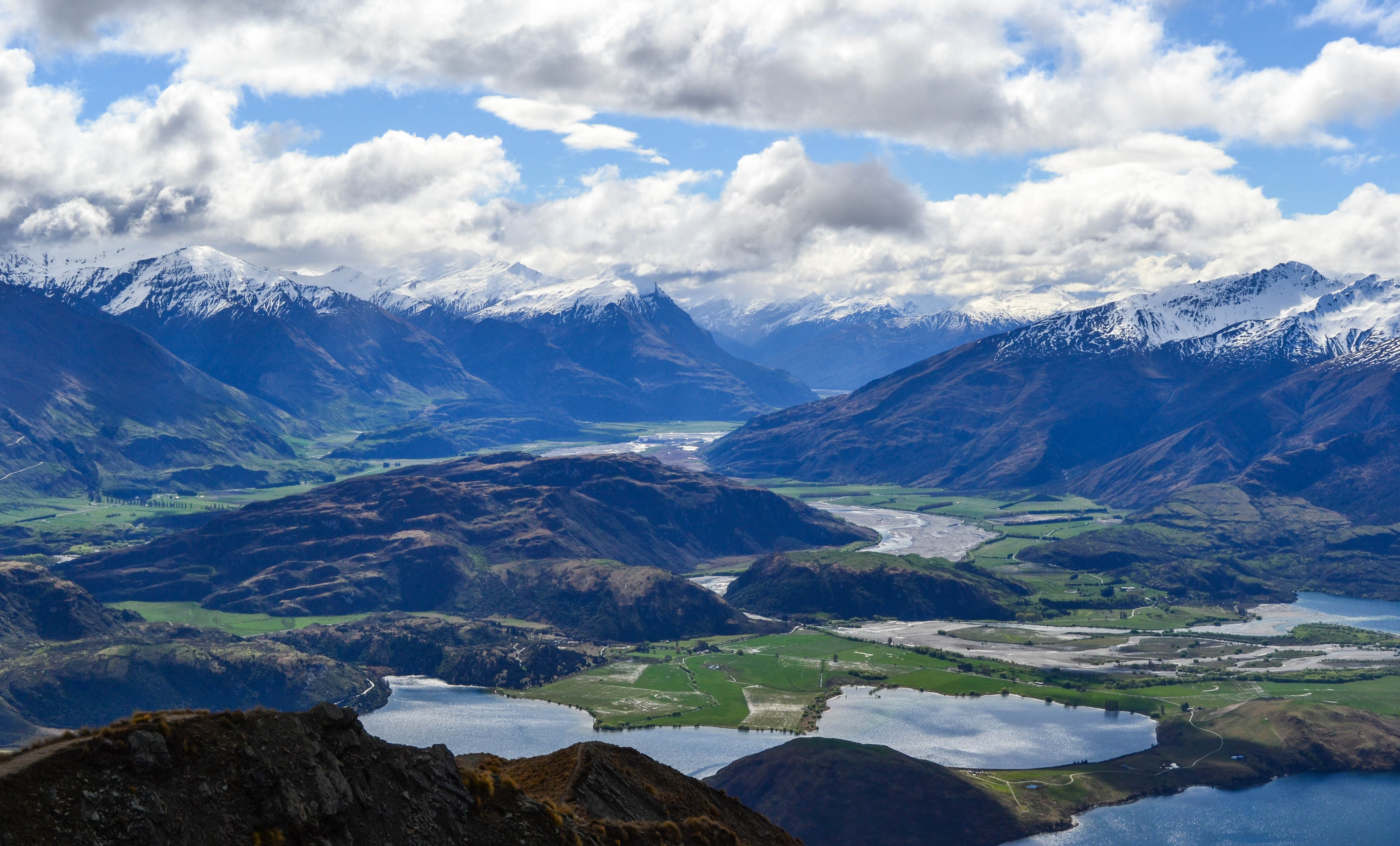
I reached an even higher peak in Wanaka when hiking on the track Roy’s Peak. There was a view the entire time we hiked. The track was open and offered an incredible scene of Lake Wanaka and the mountains surrounding it the entire way through. As we gained height in the clouds, the valley continued to expand right in front of our eyes. We passed several grazing areas and sheep as we made our way to the top.

After tramping for a little over two hours, we reached the summit, which is 1,600 meters. Clouds completely blocked every direction that we looked, leaving us slightly disappointed. Just as we were about to give up on the view, a huge gust of wind came through and blew every single obstruction away. Everything was revealed and the entire valley was crystal clear. There were countless elements that were in front of our eyes. From the pastures to the lake to the mountains, we were completely immersed in an environment like no other. Not thinking that anything would ever compare to Mount Cook, I was certainly convinced otherwise as I looked at the beautiful and encompassing scene of Wanaka.

roy19 (1 of 1) (1)

The crystal clear view of Wanaka from the summit of Roy’s Peak

Just when I think that I’ve seen it all, I immediately realize how wrong I am as I keep embarking on new journeys. Each destination is so unique that they cannot be compared to one another. None of them are remotely the same, but each place is equally as spectacular.

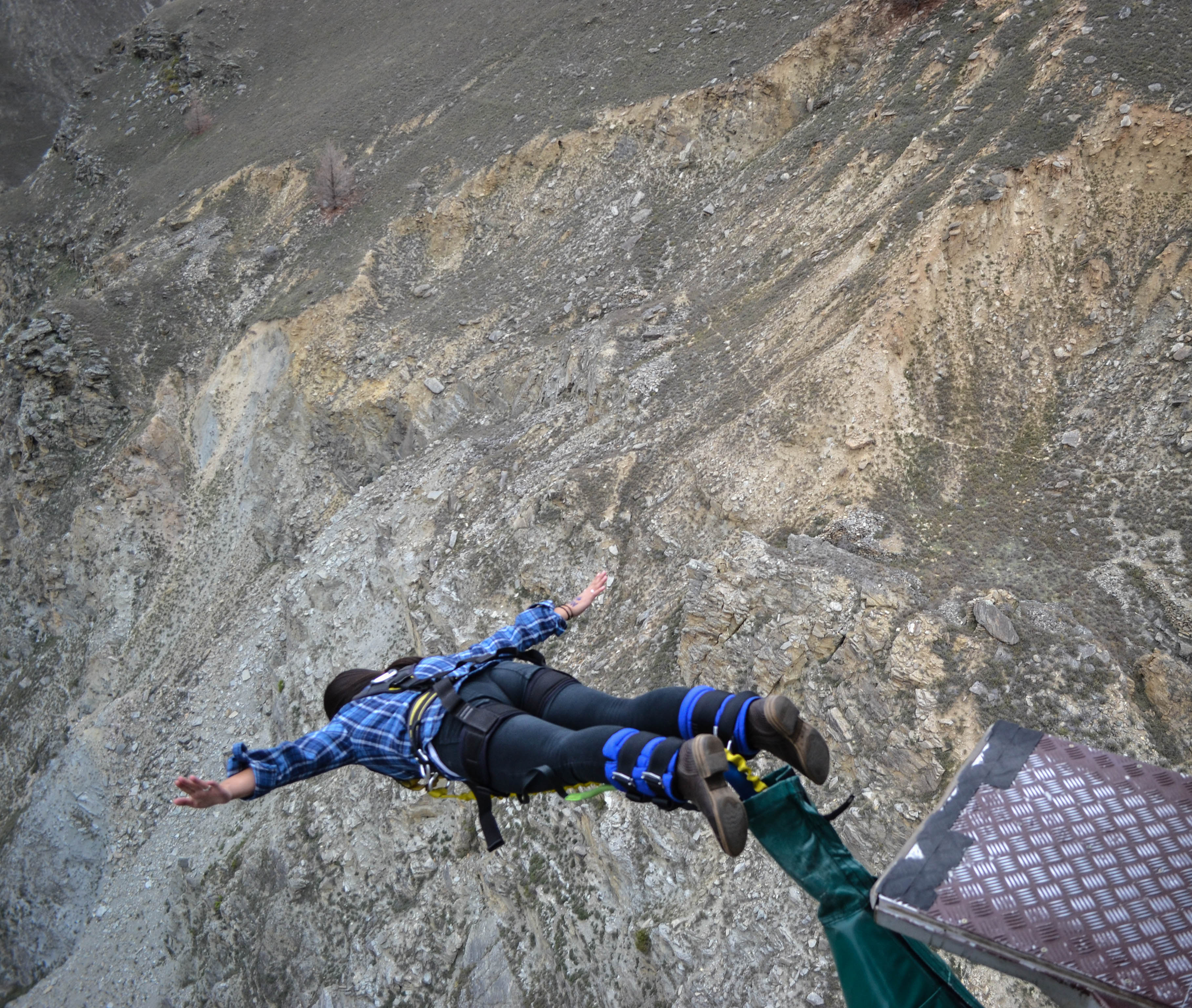
The following day was the when the thrill of adventure really presented itself. A bus transported two of my new found friends and I to the large canyon where we would bungee jump. As we approached the cable car that hung above the canyon, I caught a glimpse of how far I would be jumping. My nerves didn’t begin to hit me until I was actually standing at the edge of the platform, seconds before my fall.

As the overseer counted down to 1, I leaned forward, trying to manage of all the thoughts and emotions going through my head. For a split second, I lost all control of everything that was in my mind. I couldn’t think of anything except for the fact that this was actually the craziest thing that I’ve ever done. Jumping off completely stable ground and into open air was going against all human instincts. I barely had time to think about being scared. However, once I gained momentum, I never felt so exhilarated. It turned out to be a 9 second fall, for the drop is 134 meters (440 feet). The fall was long enough for me to realize that I was in fact free falling. I never wanted that feeling to end. Before I knew it, the cable retracted and I began to bounce, indicating that it was over. As I was being pulled up, I finally had time to collect my thought and all I could think of was that I have never been more happy with what I had just experienced.

bungy15 (1 of 1)

A 440 ft drop and 9 second fall

Even though I have hiked to heights that are extremely higher than 134 meters, the distance of the fall seemed greater than anything that I had tramped at that moment. Just when I thought I had befriended a decent amount of people here in Dunedin, more have come into the picture and my social circle has expanded.

There is no limit to anything. The only limit that exists is the one that you impose on yourself. A maximum may exist, but there is no reason for you to not alter let alone increase it. If such an opportunity presents itself, the best thing that you could do is to step out of your comfort zone and exert a change in your life. Nothing is monotonous in New Zealand. Everything is always changing around me, and it encourages me to take advantage of what’s there. You never really know what you’re going to encounter until you’re actually there. The worst that could happen is not experiencing it for yourself.


Mel in Chile: The North

September 25, 2013

(Warning: the pictures for this blog post are awesome.)

I ended the last blog post with a picture of the Atacama Desert I took from the plane right before we landed in Antofagasta. During the next five days we (the 13 students in the SIT program) traveled through the driest desert in the world. The purpose of the trip was to bring life to the lectures about the Chilean economy. We were to do this in two ways: three days exploring the copper industry and two days in a small village which in the past two decades has become almost entirely economically dependent on tourism.

The itinerary included two classes at a university in Antofagasta- one explaining the importance of mineral mining that is done in the region for the Chilean economy, and the other one focused on the social and environmental implications of the industry. Other major experiential learning components of the trip involved a two-hour tour of one of the biggest copper mines in the world, and an informal lecture/discussion with an anthropologist in San Pedro de Atacama. The anthropologist is also from an Atacameño community, which is the indigenous group in San Pedro de Atacama.

First up, the two lectures at Universidad Catolica del Norte in Antofagasta and the visit to the Radomiro Tomic mine in Calama:

The lectures were widely different but also complimentary. The first one was on the regional economic development of Antofagasta and the second one was on the economy and human rights. Fear not, this blog will not be a drawn out summary of the lectures. I mention them because they add to the perspective I am gaining about Chile and help to shape my experience here.

The region of Atacama is rich in minerals. There is an immense area including the south of Peru and parts of Bolivia that are lucky enough to be on the fault line of Pacific and South American tectonic plates that endow the countries with a rich variety of minerals. Unfortunately, this also generates what I judge to be modern colonialism.  Foreign investment pours into mineral rich regions like Antofagasta, international companies begin to mine, make unbelievable profits while draining regional resource wealth, and at the same time secure support from the national government . Open and unregulated markets seem to be the unspoken rule for developing countries. Many economists say this generates jobs for the local communities but it hardly seems to be the case for such a highly technological industry like copper mining. I learned that for every million dollars of investment in the copper mining industry in Chile, only one direct job is created.

Another issue is the danger of an export-driven national economy based on natural resources. How far away are we from developing a sustainable substitute for copper? How much longer until the minerals run out? What if the costs associated with mining and refining copper become greater than the market value of this resource?  Who will suffer from these probable future events? Will it be the CEOs of international corporations or the national economy dependent on the mineral? What about the effects on communities who for 100 years have been dependent on jobs related to the mining?

That is for you to ponder (I like to imagine I have thousands of avid readers.)

After the lectures we traveled to Calama and had a free afternoon of shenanigans until the next day when we visited the Radomiro Tomic copper mine. According to the booklet (more like book) the communications department gave the group, “each day the mine extracts 600,000 metric tons of material.” In the Radomiro Tomic mine, and I think throughout the region of the Atacama where most mines operate, only 0.5% of the rock is copper. I will not continue listing facts about the mine because those can be accessed from anywhere. My personal experience in the tour was a very overwhelming one. The number 600,000 metric tons sounds ridiculous when you read it and I do not imagine it produces a specific image in anyone’s mind. After the rock is leached and the copper has been extracted, the rest of the rubble is simply taken to the dumping site. It was at this point that I understood the mountain-like formations a bit further away were rubble.  During the time that we were on the observation site at the mine, they had planned an explosion to the left of where we were standing. We heard the sound, the ground shook, and within minutes the sky was covered in dust. To stand on the edge of  one of the biggest mining sites in the world was nothing but extraordinary and to be honest I do not think my mind will ever fully psychologically process the sheer size of the mining pit. It is bizarre to “see” what it means to extract 600,000 metric tons of rock per day.

0

The mines

The next most significant part of the trip was our stay in San Pedro de Atacama and the anthropologist, Jimena, who spoke with us about the implications of the recent tourist boom for the indigenous community. A couple of comments about San Pedro de Atacama itself: it looks like a movie set. You walk around and see an “authentic” typical village in the dry highlands of Chile with its dirt roads, adobe walls, and low “houses”, but it’s as if the place is too manicured. The adobe walls and the dirt roads are perfectly rustic. Then you actually notice the people walking around and it is all western tourists. What looked like “houses” are actually hostels (very expensive,) touring agencies that will take you to do 136,455,478 activities you can do in the desert that include everything from sand surfing to star gazing.

0-2

San Pedro de Atacama

We met with Jimena in the afternoon. She started with telling the history of the Atacameño people and how things were when she arrived during the period in the 1990s when the tourism boom had just begun. The first comment she made about the change of lifestyle in the village was how tourism had brought some drugs to a place where they had never before been used. She also spoke extensively that national and international travel agencies harvest the profits from tourism. In her view, the normal lifestyle of her indigenous group is being “commoditized” and its “rustic” image sold to western tourists. At the same time, most of the locals have been pushed to the outskirts of the village to make room for the shops, agencies and hostels, which essentially sell their lifestyle.

I stayed half an hour after the discussion was over and everyone had left to talk more with her. Without a doubt, I can say this was one of the greatest conversations I have had.

hike-1

I went on a hike with a friend through the mountains right outside of San Pedro (not with a touring company)

sunset-1

Later on that day, the entire group took a hike up a mountain in Valle de la Luna to watch the sunset. One of the most beautiful places on Earth


Alyssa in New Zealand: Hidden beauty
September 20, 2013

Changes are happening in Dunedin. The days are becoming longer. Flowers are practically fully bloomed. The temperature is gradually increasing. Spring time is just around the corner and winter will soon come to an end.

It is much easier to appreciate a country in warmer weather when nature is at its peak. Such great climate conditions motivates me to continue with my exploring of the country.

South of Dunedin is an area called the Catlins, the “forgotten corner” of southern New Zealand. Even though most don’t initially think to visit this region of the country, it is still well worth the visit. As my friends and I traversed through these roads, nothing could have prepared us for what we encountered. We weren’t expecting to come across anything that would particularly impress us.

We couldn’t have been more wrong.

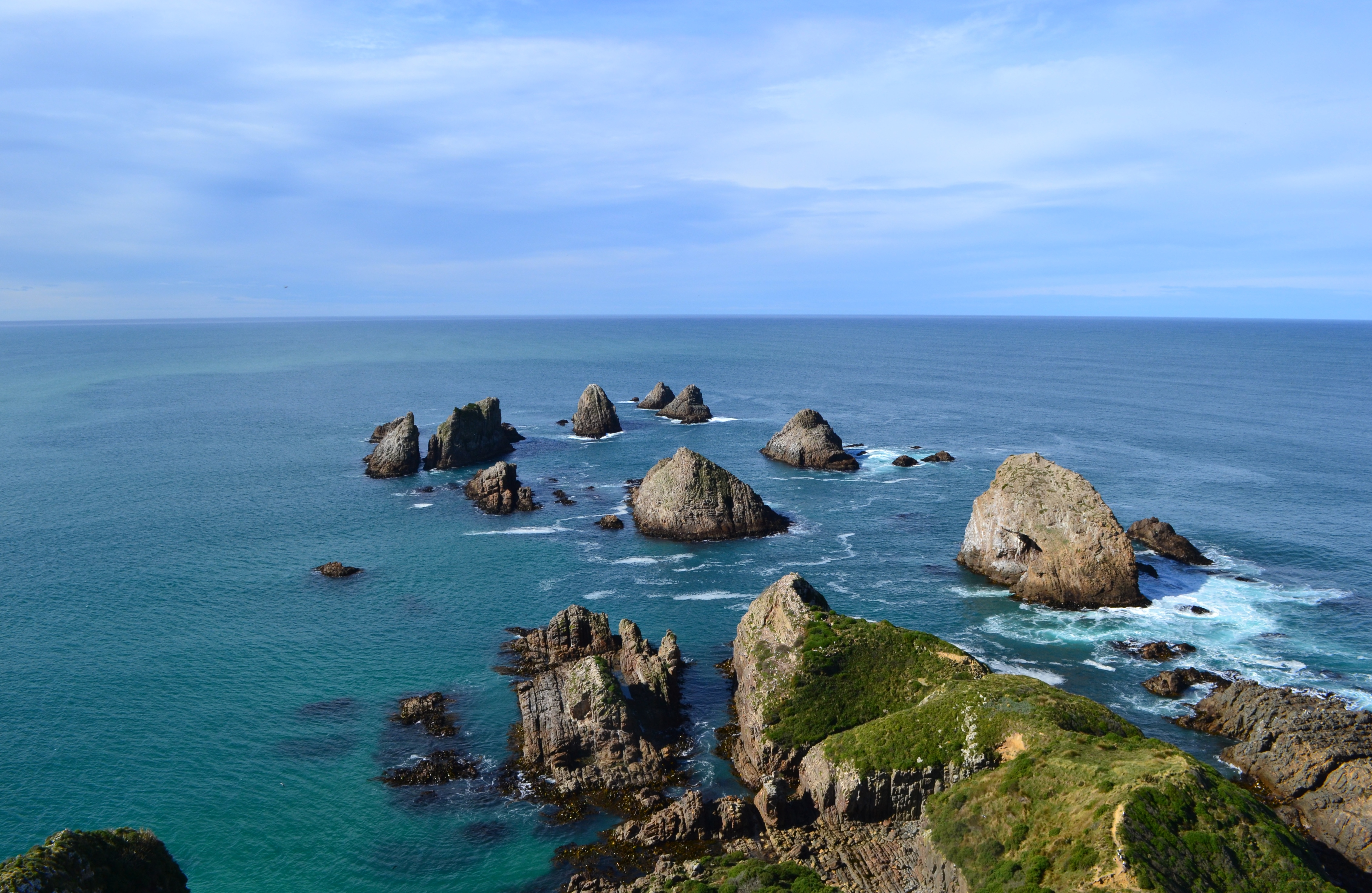
Several waterfalls, cliffs and coastal beaches surrounded us everywhere we went. They were simply examples of New Zealand’s hidden, authentic beauty. We had only traveled for an hour from Dunedin and we had already entered a zone full of incredible pieces of nature. I couldn’t believe how easily accessible all of these spots were. To think that all of this was so close to where we have been living this entire time is mind-boggling. It doesn’t take much effort to see the amazing things that New Zealand beholds, no matter where you are in the country.

DSC_0357

A coastal view from Nugget Point Lighthouse, which is an hour and a half south of Dunedin

As the semester is soon coming to an end, students are doing their best to finish their last minute assignments. Sometimes it is very easy to get caught up with exploring, for we forget that we have school obligations as well. I have become motivated to complete all my assignments early due to the fact that I don’t want to waste any of the time that I have left. The easiest solution is to get them done and out of the way so that I won’t have to worry about them when I’m off traveling.

Numerous plans are being organized and made for the remaining weekends that are left. My entire schedule has become completely booked with adventures that I have been waiting to do for the past seven months. Knowing that we don’t have all the time in the world, we’re doing our best to fit in everything in.

DSC_0406

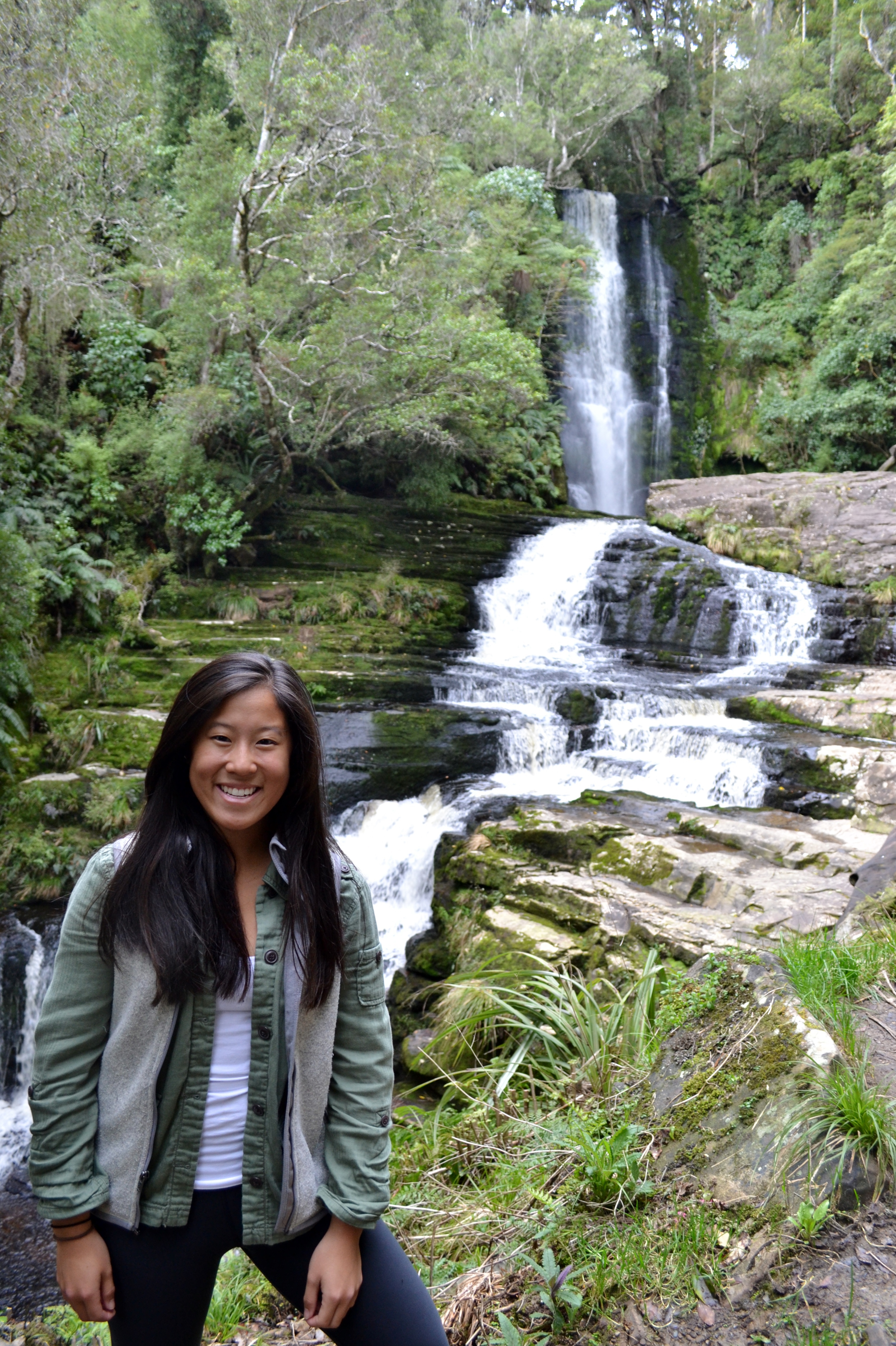
McLean Falls

One of the most recent adventures involves tramping the Routeburn track, another one of the Great Walks of New Zealand. To much of our chagrin, there was so much snowfall that had occurred a couple days before, my friends and I were told that we would be unable to hike the entire thing. After accepting such disappointing news, we didn’t let that stop us from proceeding to parts of the track that we could discover.

The majority of the track was covered in heaps of snow, making hiking a little more challenging (and wet) than usual. Regardless of the fact that there was snow on the ground, the sun continuously graced us with its presence throughout our entire tramp. Likewise, the snow made the scenery much more rewarding. As we walked along the bush line, the snow capped mountains that jutted into the sky were in plain sight the entire time. Even though we didn’t reach our desired elevation, we were not deprived of any sort of views. The conditions of the track may not have been ideal, but being outside in this setting could not have felt any more worthwhile.

DSC_0434

As we made our way through, we encountered the massive, fresh Earland Falls

Staying overnight in one of the huts that is provided on the track is common. We stayed at Lake Mackenzie hut for the night after hiking for 4 hours to an altitude of 1,081 meters. Since we were tramping during the winter season, all of the power and running in the hut was turned off. However, we were able to make a fire and all that really mattered to us was that we had a roof over our heads. The world seems to take on an entirely different position when you set yourself outside of society. When you’re fully immersed in the wilderness and completely remote from civilization, the only thing that seems to really matter is the nature itself.

DSC_0435

We finally concluded our day at Lake Mackenzie hut and were rewarded with beautiful views at the site.

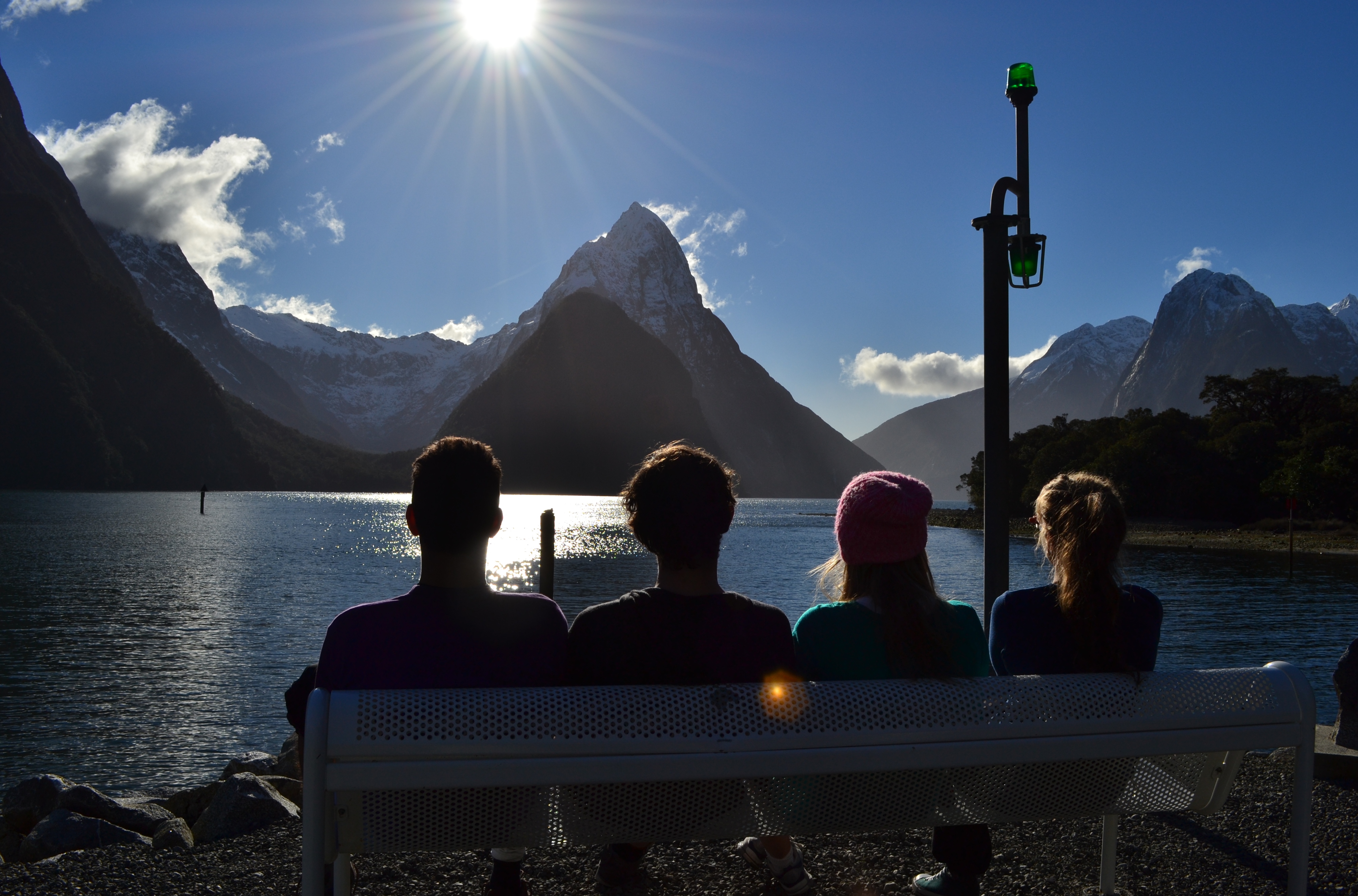
Since our journey was shortened, we decided to embark on a last minute visit to one of the most beautiful places in New Zealand, Milford Sound. After driving through many narrow roads, down valleys and through the mountains, we finally arrived at scenery that took my breath away instantly. With the sun beginning to set, it brightly shone over the lake and cliffs that lay in front of us. The silhouettes of the cliffs were pristine, each possessing its own kind of shape and dimension. We were only standing at the entrance to Milford Sound, so the features are still indefinite to us. The entrance was so astonishing, one can only imagine what it is like to explore within.

DSC_0447

A kea, one of New Zealand’s native birds

The world of New Zealand has much to offer. Because of its distance from every other continent of the world, it seems to be forgotten. Yet, that makes it much easier to appreciate everything within it. Not everyone seems to realize its magnitude of splendor. When it comes to exploring, I enjoy the fact that I am cut off from technology, electricity and modern necessities. Because of these conditions, I am able to fully focus and value what’s in front of me. Unlike technology, sights like these aren’t always accessible.

Traveling within the country has become practically a second nature to me. Every weekend, I am always anticipating that I will be on the move, going somewhere. I have become accustomed to a completely new lifestyle. It’s full of so much adventure and animation that it’s hard to imagine that it’s all going to stop once I go back to the states. Even though the end is coming soon, it’s vital to enjoy the time that I have left.

DSC_0456

The team at the end of the day at Milford Sound


Rhiannon in India: A Trip to the Beach

September 17, 2013

This weekend was another holiday, so Jennie, Romi, and I took a long overdue vacation south to Pondicherry and Chennai. After traveling north to the bustling capital a few weeks ago, we wanted a more relaxing destination – and we got it!

After we finished classes on Thursday, we boarded another Sleeper train with a 14-hour ride to Chennai ahead of us. Now, if you know anything about Bollywood or Indian pop culture, you are probably wondering if we traveled on the Chennai Express. Chennai Express is a very popular movie in India right now featuring two of Bollywood’s most famous actors – and it takes place on a train to Chennai. Unfortunately, our train was called Charminar Express rather than Chennai Express, but we took a few movie-like photos anyway.

Chennai Express

Before our trip to Chennai, we had a Chennai Express photo shoot

Even though we were in the most budget option of Sleeper compartments once again, the whole trip was very enjoyable. Truthfully, we were delighted to have seats on the train at all because, when we booked our trip online, we received RAC tickets (sort of like waiting list spots) and didn’t get our confirmed seats until two days before our trip! If we had boarded the train with RAC tickets, we would have had to share our bunks for the entire 14-hour ride, and we may have been separated. Luckily, after two weeks of watching our waitlist numbers get closer to zero on the website, we finally received our confirmed tickets and boarded the train to find three full bunks just for us.

One of the best parts of the train ride was the company we had in our compartment. An older Telugu-speaking couple sat across from us and, although we could barely communicate using English, somehow we shared food, laughed, and interacted with each other and had a wonderful time that night. There was also a young man in an RAC seat nearby that spent over an hour giving us suggestions for things to do in Pondicherry and Chennai. He seemed really enthusiastic to share information about temples, beaches, and festivals with us. Even after everyone had gone to sleep in their bunks, the old man and a younger man nearby, although strangers before the trip, sat up and chatted over chai for half the night.

After sleeping through the night in my little bunk on the train, I woke up early, waved good morning to the old lady across from me, then looked out of the little crack of the window visible from my bunk. I could not believe my eyes. The scenery was probably one of the most beautiful things I have ever seen! We were in the middle of green patty fields and marshlands, and every once in a while we passed through a village of small houses and huts. We passed people in the fields playing an early-morning game of cricket, and others in the villages getting ready for work. The train was following the coast, so in the distance I could see the Bay of Bengal, dotted with colorful sailboats. The best part was that the sunrise was reflected in all of the water collected in the fields and marsh from the monsoon rains.

When we pulled into the Chennai station, we had a quick breakfast and headed straight to the bus station to catch a three-hour bus south to Pondicherry. Pondicherry was a French settlement until the 1950s, so there is still a lot of French influence there (now mostly in terms of tourists), especially in the French quarter, a quaint little neighborhood on the beach. As we drove into Pondicherry, I noticed lots of flags that were a mix of the French and Indian flags. In the French quarter, all of the street names were French, many people spoke French, and people even said “salut” or “bonjour” to us on the street. We also had plenty of French food, coffee, and chocolates in the many French cafes all over the area. It was like we were in a totally different India! Being there reminded us of how many different cultures there are to see in India, and how no two are alike.

Colorful Pondicherry

All of the streets in the French Quarter were lined with colorful houses and hotels

Without a doubt, my favorite part of Pondicherry was the beach. In the French quarter, the coastline is mostly rocky, but still has a few sandy spots as well. We spent our first afternoon walking along the waterfront watching kids play in the water, although it is technically not allowed because of the strong current and pollution. We didn’t swim there, but our hotel owner told us about a cleaner beach seven kilometers south of the French quarter called Paradise Beach, so on Saturday we hopped in an auto and went there for the afternoon. We were a bit unsure about what we would be doing because it is uncommon in India to swim at the beach, but we left the hotel with open minds and lots of food for a picnic. But to our surprise, Paradise Beach was almost completely deserted, so we jumped in the water for a swim! We picnicked and played Frisbee for a while, but all of a sudden black cloud started rolling in from over the ocean. Within 15 minutes, the wind picked up, the sky got dark, and it began to rain so hard we thought it was hailing. We ran back to our auto and got back to our hotel safe and sound, so now we can say that we survived a monsoon on the beach at the Bay of Bengal!

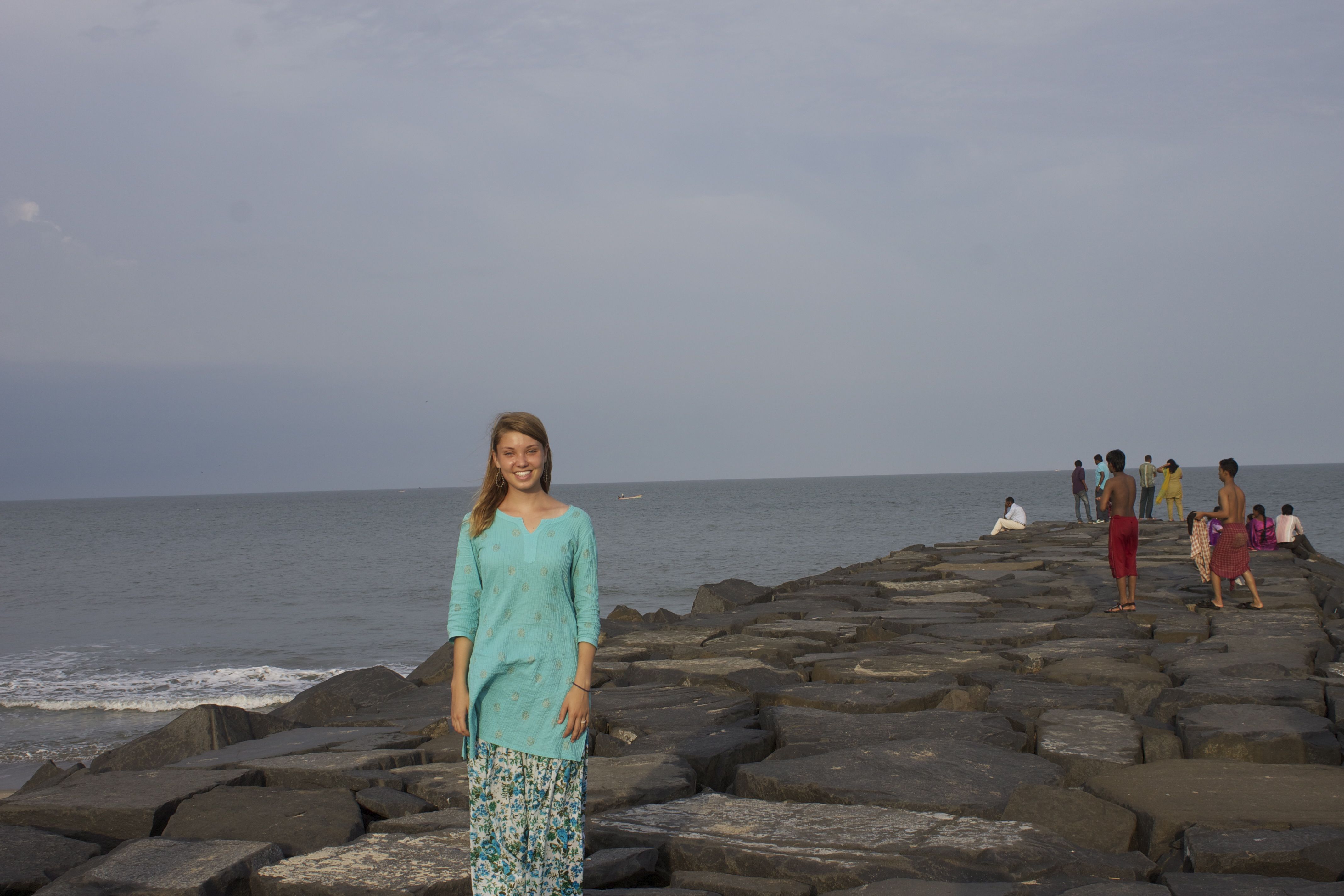
Rocks in Pondicherry

The rocky coastline of the French Quarter

On Sunday, we went back to the bus station and caught a bus back to Chennai. The next day was Ganesha Chaturthi, the beginning of a long festival to celebrate Lord Ganesha’s birthday. Ganesha is the Hindu god whose head resembles an elephant, and he is the god whom Hindus pray to first because he takes away obstacles in life. The story of Ganesha (as told by my host mom) is that his mother, Parvati, wanted a son so she made Ganesha out of sandalwood while her husband Shiva, the destroyer god and Ganesha’s father, was out of the house. Parvati put life into Ganesha and put him in front of the door to protect the house from intruders. When Shiva came back from hunting, Ganesha wouldn’t let him in, and not knowing that Ganesha was his son, Shiva cut off his head, which flew into the jungle. When Parvati realized what had happened, she explained to Shiva that he had killed their son and ordered that he go into the jungle to find Ganesha’s head. Shiva went out and returned with an elephant head instead and brought Ganesha back to life.

To celebrate on Monday, we went to a temple in Chennai and offered some flowers to Ganesha. During the festival, statues of Ganesha are put up in neighborhoods all over India, and people put small statues in their houses as well. There were six- to ten-foot tall Ganesha statues on all the roads and vendors were selling small clay statuettes in all the market areas. While we were in an auto on our way to the temple, a parade of people passed by with a mobile Ganesha shrine, so our auto driver parked the auto and ran over to receive prasadam (offered food and coconut water). When we returned to Hyderabad that night, we were surprised to find our neighborhood transformed with large, colorful Ganesha shrines on all the street corners complete with floodlights and loud music.

Mobile Ganesha Chennai

The mobile Ganesha passing our auto in Chennai

The trip this weekend was so relaxing and beautiful, but now I have a busy week ahead of me. Our apartment building will be celebrating for the Ganesha festival every night this week with poojahs (devotions) and lots of food. I will post soon about all of the festivities going on right here in Hyderabad!

Happy Ganesh Chaturthi!


Diego in Brazil: Biking in Rio de Janeiro

September 3, 2013

I never expected biking to become my favorite activity in Rio de Janeiro. It wasn’t until I moved to Rio that I realized I hadn’t had the chance to live in a city where biking is encouraged and the right infrastructure exists. About two or three weeks ago my host-mother suggested that I could bike to and from PUC, my host university, every morning and afternoon. I thought it was a fantastic idea (from a social, environmental, and financial perspective, biking is the way to go!) but first I needed to make sure I had a bicycle, a safe path to take, and, of course, the time to do it.

I initially thought about buying a used bicycle. I had seen countless bike racks (bicycle stands) in Rio de Janeiro’s Zona Sul (where I am living,) so I thought buying a used bike was a reasonable plan. I told my host-mother about my plan but she quickly suggested it would be better to subscribe to BikeRio first. Needless to say, I had no idea what she was talking about, so I asked her to explain. BikeRio is a sustainability project led by the city’s Prefeitura (similar to a City Council,) the Itaú Bank, and the bicycle system SAMBA. The project relies on approximately 60 stations with twenty bikes each located throughout Rio’s Zona Sul and some other neighborhoods. BikoRio’s main objective is to provide a low-cost transportation alternative for people who move around these urban neighborhoods. “That’s exactly what I need,” I told my host-mother, and I had no idea that I was about to expand my image of Rio de Janeiro by simply joining a biking program.

Using BikeRio is incredibly simple. You pay a $4.00 monthly fee and gain the right to pick a bike from any station and use it for an hour. After you return to the bike to any station, you can wait fifteen minutes and pick another bike. The project also has an app for iPhone, iPad, etc., where you can check if the closest station to you has any available bikes. And in case you are wondering, every bicycle I have used so far has been in perfect condition.

“Great, I now have a bike,” I thought, but I also needed to find how to safely get to PUC and then home every day. The first days that I biked to my University I took the route that my bus usually takes. At that point, that route was the only one I knew and taking it was quite necessary to avoid getting lost. With time I have found countless ways to get to PUC in the mornings and come to my apartment in the afternoon. However, and I say this without a doubt, the safest and most enjoyable route to take is around the Lagoa (Rio’s lagoon.) The city’s Zona Sul now has several biking paths and lanes that can take you across this part of the city crossing only some major roads. This past Friday and today in the afternoon I went biking without a particular destination, and I reached some very interesting and new places in the neighborhoods surrounding the one where I live.

DiegoBrazil4

Biking is becoming increasingly popular in Rio de Janeiro’s Zona Sul

So I have a bike (well, several) and a safe way to get to and from PUC every day, but do I really have the time? Going by bus to my University saves me a total of 40 minutes per day in comparison to taking a bike. Now, if I were to base my transportation choice purely on how much time it takes out of my day, I would have to go for the bus. However, the benefits I get from biking are definitely greater than what I could get out of those 40 “extra” minutes each day. Those benefits impact my health (both physical and mental, since I have found that biking can clear my mind for a while,) my perception of Rio de Janeiro (you certainly become part of the “biking community,”) my finances (I calculated that I save approximately $68 per month if I take a bike instead of the bus,) and many social and environmental aspects of the city. From a holistic point of view, and as I said in the beginning, biking is the way to go!

I am looking forward to biking beyond Rio de Janeiro’s Zona Sul. I recently met some Brazilian students at PUC who go biking for fun every weekend, so I am truly excited about joining them this coming week. Buying a used bike is still an attractive plan…


Alyssa in New Zealand: Seeing the country

August 9, 2013

It doesn’t take much effort to see beautiful parts of New Zealand. One could even say that it’s not necessary to venture out to the most iconic parts of the country. I haven’t traveled very far from Dunedin yet (four hours maximum), but I am still impressed by everything that I have seen. Each portion of New Zealand has its own kind of magnificence to it; hiking (they call it “tramping”) and camping beyond civilization this past weekend has definitely proved that.

The new adventure began last Friday when Malachi, Andras and Edward (another Kiwi host) and I decided to explore and sight see before we embarked on our weekend tramp. After much anticipation, I finally got to see my first Lord of the Rings movie sites. What surprised me most about them was they were located near such a quaint, remote area called Arrowtown. Walking through the central part of town was somewhat comparable to walking through a ghost town of the Old West. The shops were juxtaposed very closely together consisting of tourist souvenirs such as Maori greenstone (similar to jade, except much more rare and valuable) and The Ring replicas from Lord of the Rings (ranging up to $200).

As we made our way through town, I didn’t see how it would be at all possible to reach the LOTR sites. The area was so small and it seemed like there wasn’t too much to see. However, we figured out soon that we have to venture out a little further to the outskirts of Arrowtown in order to reach our destination. After making our way through open forests, we finally arrived at the area that we were all familiar with having seen the same exact site in the movies several times (it’s typically considered a well-known scene in the movie). You can’t underestimate the potential of anywhere, for you never really know what it has to offer. The fact that this setting for the movie was found near such a humble town convinces me that anywhere in New Zealand beholds some sort of unique aspect. Nothing should be overlooked.

one of the sites where Lord of the Rings was filmed

One of the sites where Lord of the Rings was filmed

The explorations continued after we left Arrowtown and headed to Glenorchy so that we could access incredible views of the well known Lake Wakatipu. I can safely say that this area has been my favorite so far. It presented a new kind of peace and seclusion. The water was so still that the reflection of the mountains in the distance was highly distinguishable. Even though the sun was beating down hard for the wintertime, the snow on the mountains were barely affected. The entire scenery almost seemed somewhat fake, but I had to keep reminding myself that what I was seeing was not an illusion in the slightest.

A view of Lake Wakatipu on the way to Glenorchy

A view of Lake Wakatipu on the way to Glenorchy

Andras and Malachi looking out at Lake Wakatipu in Glenorchy

Andras and Malachi looking out at Lake Wakatipu in Glenorchy

I finally got a little taste of the Queenstown culture that all other international students have been constantly raving about. I now understand where all the hoopla comes from because the town itself is unmistakably full of life and excitement. Around every corner, there’s always something to do or see. The landmark that we were really looking forward to visiting was Fergburger, a recognized burger bar in New Zealand. Nothing could prepare me for the amount of food that I was about to eat, for it was the largest, yet most delicious burger that I’ve ever had. Andras ordered a burger that was practically the size of my entire head (the Hungarian was quite hungry). For the remainder of the night, we proceeded to take advantage of Queenstown by engrossing ourselves in the animated environment.

The following morning, we made our way to Wanaka in order to begin another adventure. Edward had organized a group of 27 people to hike through Mount Aspiring Park for the weekend. It’s not a well-known trek, but it allowed us to explore the less touched parts of the country. As we made our way to the starting point, we found ourselves driving further and further away from society and becoming more immersed in isolated nature. The mountains seemed to be getting bigger and the grasslands greener. Everything became more exaggerated. When we finally arrived to our starting point, it was clear that we were in a completely new environment.

Mount Aspiring Park

Mount Aspiring Park

The trek to our hut was about 2.5 hours one way. Throughout the hike, rain was coming down and it showed no mercy, yet the wetness barely seemed to phase us. Conversely, the only things that were on my mind were my surroundings. The only thing that the hut provided to us were beds. However, it was soon discovered that the beds were inaccessible due to the fact that the room was locked. Once again, none of us seemed affected by this misfortune, for we weren’t going to let it ruin the trip. Instead, we looked on the bright side and found that each others’ company was all we needed to enjoy our stay out in the depths of the mountains.

The following day, the rain continued to come down for our hike up the Rob Roy Glacier. After our 50 minute ascent, we were presented with a vast glacier and fresh waterfall. We even witnessed two avalanches. It felt so surreal finally seeing nature in action in person. For the first time on the trek, I became phased by what was in front of me.

Waterfall near the top of Rob Roy Glacier

Waterfall near the top of Rob Roy Glacier

I still find myself meeting new people with every experience. Going into the tramp, I knew a total of 8 out of the 27 people. Now that the weekend has ended, I have come out of it knowing at least 15 of those people total. Many of them in the group were Kiwi hosts and international students. After familiarizing myself with them, it’s clear that we all have the same motives. New Zealand has provided much insight into a completely new world and we have only become more motivated to explore it.

Even though we didn’t venture out to the most prominent area of the country, I was still moved by what was surrounding me. There is no doubt that I will eventually see the more well-known parts of New Zealand. However, there is nothing wrong with visiting the unconventional parts of the country for the time being, for they all have something extraordinary to offer.


Alyssa in New Zealand: Reflecting the month

July 30, 2013

As cliché as it sounds, I find it hard to believe that it has already been four weeks since I first arrived. The weeks seemed to have flown by and it only reminds me that my stay here is limited. Not one day should be wasted.

It was only nine days ago since I hiked so high up Mount Cargill that I was literally above the clouds. After the one hour ascent to the top of the 676 meter mountain, I was rewarded with a beautiful view of the entire city. The summit allowed me to see all that has been surrounding me for the past month. Everything was in plain sight. The peninsula, the flats, the town. Nothing could be hidden, no matter how hard it tried. I was seeing Dunedin in a completely new light.

DSC_0648

Above the clouds at Mount Cargill

I had also decided to take a slight half an hour detour in order to make my way to the well-known organ pipe rocks, which required me to channel my arm strength in order to reach the top. The unique framework of this area made the climb enjoyable and unpredictable. The rocks being so steep and uneven made the task difficult; but it was a challenge I was more than willing to take on.

DSC_0671

Climbing organ pipe rocks with Malachi

It was only seven days ago when I realized that the work in my courses is going to start picking up soon. In my zoology paper (they call courses “papers” here at Otago), I have two lab reports due, one of which is based on observations that I made at the Otago Museum. I find it very fortunate that the zoology lab (also known as a practical) took the students to the museum, for it allowed me to learn specifically even more about New Zealand biology and environment. I never would have thought to take the time out of my day to visit the museum, but this particular lab gave me the chance to discover more about not only the city of Dunedin, but the entire country as well. Likewise, my first Microbiology test is approaching next week. It will be my first test out of two for the semester. Hopefully my current studying skills are enough preparation because I don’t know what to expect out of the exam.

It was only four days ago when I left Dunedin for the first time since I had initially arrived. I ventured out by leaving the town that I was finally comfortable in and made my way to Wanaka, a town with a native sense of splendor and endless surrounding nature. The whole purpose of the trip was to ski at Treble Cone, the largest ski resort of the south island of New Zealand. I knew that the skiing experience was going to be somewhat exotic once I realized that we had to drive practically two-thirds up the mountain to get to the actual snow to ski on instead of parking at the base, like in America.

As strange as it was skiing in the middle of July, it became easier to get used to. The mountain was completely open, for not one forest or tree-line was present to be used as guidelines for the trail. Every track that I skied was completely one of my own.

Even though the chairlift did not take skiers up to the summit of the mountain, we had the option to climb to the top with our skis in order to access untouched, fresh powder. The fifteen minute trek to the peak of Treble Cone was well worth the extra effort. Everything at the top was completely natural. The cold, brisk air and vast mountain landscape of the backcountry reminded me that winter indeed has its own kind of magnificence. It will never cease to amaze me that nature can evolve unconventionally in such a complex and dignified way.

DSC_0680

View of the mountains in Wanaka from the Treble Cone ski resort

It was only two days ago when I returned back to my flat in Dunedin. As nice as it is to be back at home, I have only become more motivated to see more. My first trip being a success has set expectations for me for the rest of the semester.

It was only today when I realized that I have officially been here for exactly one month. A little less than four months left in my study abroad experience. Even though the weeks have been flying by, I am definitely satisfied by the amount of excursions that I have taken initiative to do thus far. I won’t allow myself to take my time here for granted, for I plan to make the most out of this experience as best as I can. The days left in New Zealand may be limited, but my drive to explore certainly isn’t.


Alyssa in New Zealand: A New Comfort Zone

July 19, 2013

There is a very broad definition for “home.” It can simply mean where you live. Or where your family resides. Where you’re from. In the end, one is usually very accustomed to the lifestyle, wherever that “home” may be.

It’s definitely not the easiest thing to develop a routine in a brand new environment. The surroundings are unfamiliar. People are unrecognizable. The buildings are foreign. You simply don’t know where to go or what to do just for the sake of not knowing. Living somewhere new takes time to get used to.

However, everything finally seems to be coming together. I’m starting to attain a better understanding of the Dunedin environment day by day. I can navigate myself around campus and town with ease. Time management has become simpler to handle. I’ve finally solidified and mastered my class schedule (no Fridays, which will make it much easier for traveling purposes). Faces are becoming more familiar. Friendships are continuing to grow and expand.

In addition to that, my flatmates and I have become closer and closer, for the dynamic of the flat has turned out to be fairly strong. There is a lot of support that is shared between all of us. We keep each other company, even if we are just sitting in the lounge in silence. The silence is anything but uncomfortable, for it is understood that we are all at ease around each other regardless if there are words exchanged or not. Likewise, we will cook and eat dinner together occasionally throughout the week, keeping the direct interactions between us alive. Even on the weekends, we spend much of our time together keeping each other entertained and happy. Our schedules do not coincide very well throughout the weekdays, for they’re all very different. Yet, when we come back and find each other in the end, not much distance has been generated between us.

DSC_0421

Me with my flatmates

Here in Dunedin, I have found that I am actually living. Instead of going to the on campus dining hall, I have to go to the grocery store, buy my own food and do my own cooking. Different responsibilities are shared between everyone in the flat in order to keep our living conditions in good shape. There are bills that have to be taken care of. I have to be aware about the amount of internet and power that I utilize. I even constructed a budget plan so that I can organize my money and keep my spending under control.

As difficult and strange this was to me at first, I have become very comfortable with this type of lifestyle. Being conscious of almost everything I do and plan to do has only helped me build character. It not only prepares me for the semester I return to Richmond (I’ll be living in an off campus apartment spring semester), but it prepares me for the real world as well (as scary as that is to think about). Independence has been taken to a new level.

This past Saturday, I had the opportunity to explore even more of Dunedin. My entire flat complex and I ventured out to the Otago Peninsula, where beauty and landscapes were intensified. We specifically went to an area called Lover’s Leap. As we hiked through paths, valleys and plains, we were able to see spectacular views of the coast of Dunedin. Life had a different dynamic out there. Everything seemed carefree, yet full of adventure all at the same time.

DSC_0435

At the Otago Peninsula – I told you it was breathtaking!

I felt no fear when walking out to the edge of the cliffs. In fact, there was no feeling that was actually felt at that moment when standing on the edge of a 200 foot fall into the ocean. All I know is that I just wanted to stay there forever, or at least for as long as I could. It’s hard to even think about seeing the remainder of the country, for according to the Kiwis, there are other places and sights that are even more breathtaking than what I saw at that point.

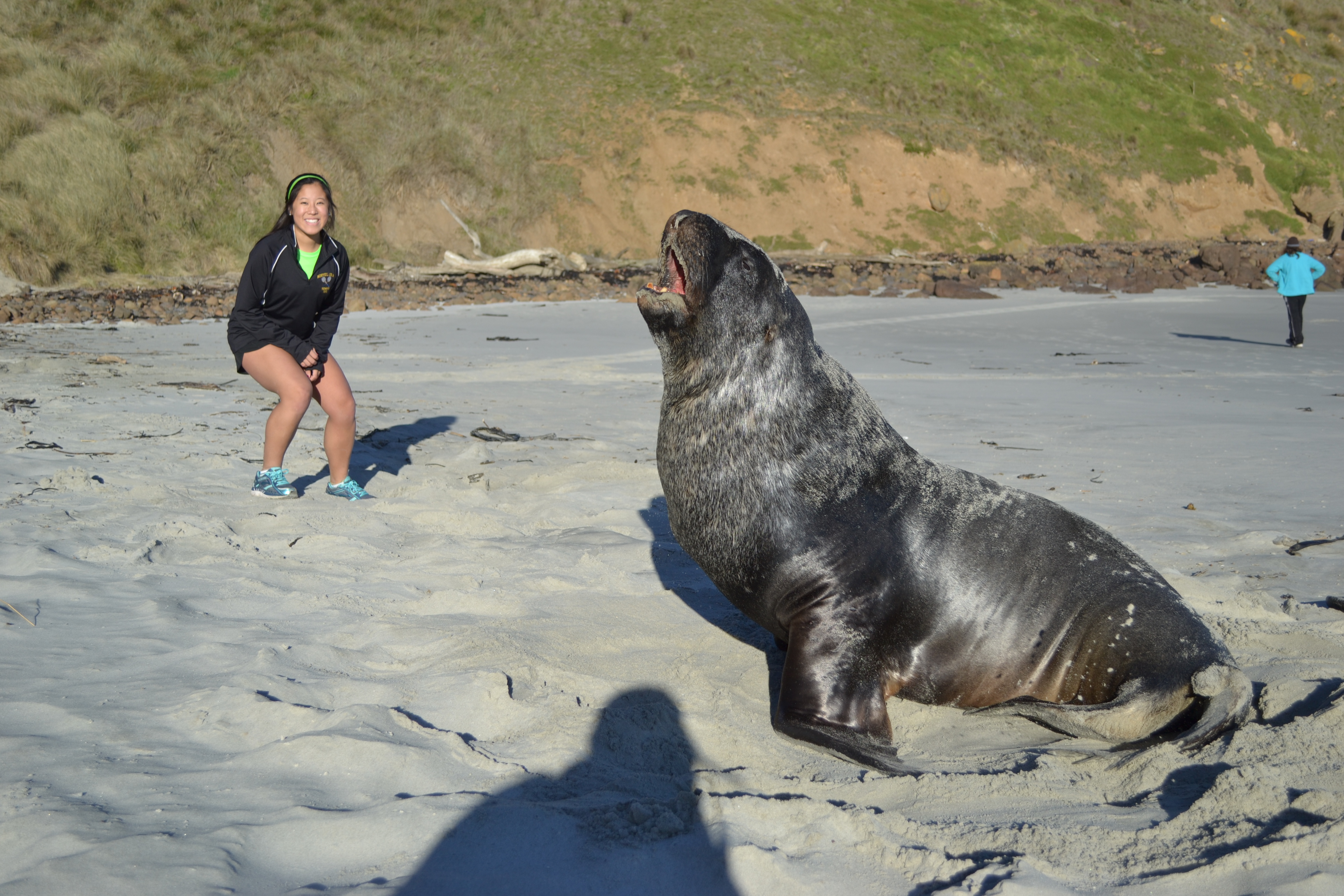
After we were through seeing what was at the top, we decided to make our way to the bottom to the beach, Sandfly Bay. We made our descent from where we were parked after returning from the cliffs for about 20 minutes until we finally reached the ocean. As we explored the land, we ran into several seals sunbathing out on the rocks. We even encountered a sea lion at one point. The hike back up to the top was a little challenging due to the fact that we had to trek through excessive amounts of soft sand. It took about a total of 30-40 minutes for the group as a whole.

DSC_0581

My new sea lion friend at Sandfly Bay

Dunedin continues to surprise me more and more, especially when it comes to weather. It could be 55°F and sunny outside, and the next thing we know, the temperature can rapidly drop to 28°F with rain coming down hard within the next hour. Luckily, the weather was ideal when hiking through the peninsula. Despite its unpredictable nature, none of it stops me from enjoying my time here. The quick changing climate has only encouraged me to be prepared for the unexpected.

Now that I have finally settled in, I’ve been able to start planning for even more adventures. As of two days ago, I’m officially going to Australia for my mid-semester break with my flatmates.  I’m finally making progress on my bucket list, but there is still much more to cover.

I have encountered a lot of changes just in the past two weeks. Not only am I seeking out new adventures, but I’ve also created a new kind of life in here in New Zealand. It’s ironic to think that the more new experiences that I expose myself to, the more at home I feel.

So “home” is not simply where you live or where you’re from. “Home” is where you feel settled. Where you’re comfortable. Where you’re happy. As a matter of fact, I have found all these elements in my life recently. I haven’t necessarily forgotten or pushed aside my homes back in Massachusetts and Richmond. I’ve just happened to create another one somewhere else.