Diana in Germany: Holiday Happenings

December 15, 2014

Late fall and early winter mark several celebrations for Americans back home. Thanksgiving, Black Friday, and all the days until Christmas and New Years. Though Germans do not celebrate Thanksgiving, my IES program was very sensitive to the fact that this is a special time for family and friends to come together for a large meal back home. So about 2 weeks ago IES hosted a dinner at one of the fancier restaurants in Freiburg up on Schlossberg mountain. After everybody huffed and puffed up the stairs to the top – because really who is going to pay for a two minute funicular – we were so ready to eat. I entered the dining room feeling mildly underdressed, but easily relaxed as I saw my friends and two of my previous teachers, Klaus and Sandra!

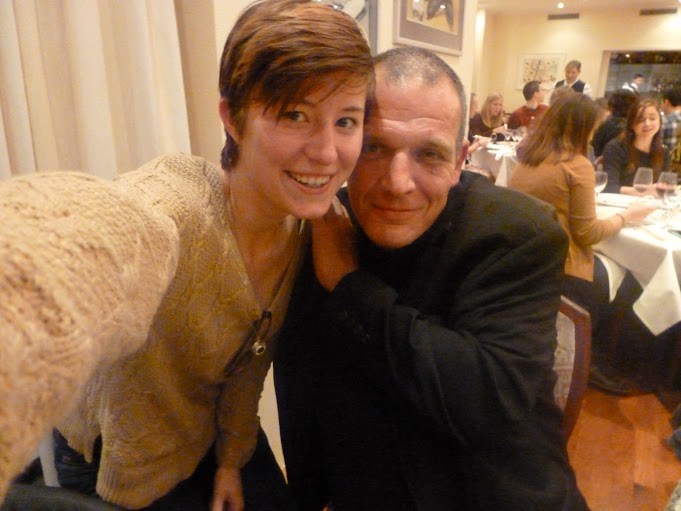
Klaus, my Environmental Ethics professor, and I at the Thanksgiving Dinner

Klaus, my Environmental Ethics professor, and I at the Thanksgiving Dinner

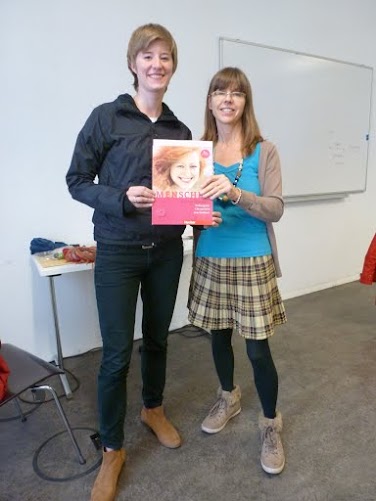
Sandra, my Sustainable Policy professor, and I at the Thanksgiving Dinner

Sandra, my Sustainable Policy professor, and I at the Thanksgiving Dinner

We still waited quite a time for the food! That may have been the only bad part of the evening though. The wait staff kept bringing a steady supply of fresh bread with butter to my table in particular (Many vegetarians, one vegan, and me, the “flexitarian”) Our first course was a kurbissuppe or pumpkin soup and our second course was a wonderfully dressed selection of salad and vegetables. The main meal was different than what I am used to. For me, it was in a good way. We got small cylinders of what I assume was their version of stuffing. Many of the other students mentioned they missed “real” stuffing. Mashed potatoes, warm applesauce, corn, carrots…. more bread. The pièce de résistance were the mushrooms in cream sauce. I have always been a huge mushroom fan, but never in my life have I experienced them in a more mouth-watering way. The one small piece of turkey I ate from someone else’s plate was very nice, better than the turkey I eat at home. The dessert left a lot to be desired (no pumpkin or apple pie), but we were entertained by two IES students, Ben and Katrina, singing songs from Sound of Music. I left the Schlossberg restaurant happy and very full of Thanksgiving food. IES really pulled out all the stops.

mushrooms

Those mushrooms…. I will never forget them.

The following weekend after Thanksgiving, I began my exploration of the Christmas Market in Freiburg! There were bright lights, people selling their crafts (glass, wood, ceramics, you name it). My friend Dave and I shared glühwein which is traditionally a mulled red wine for the winter season. (P.S. I am not a fan of glühwein) I also ate kartoffel puffers which are actually latkes! Dave had potatoes with a fried egg on top. There was flammkuchen (flat pizza), pasta, sauerkraut, burgers, sausages, cheeses, and sweets. Basically a smorgasbord! I returned to the markets the following day after a few hours of ice skating with my friends.
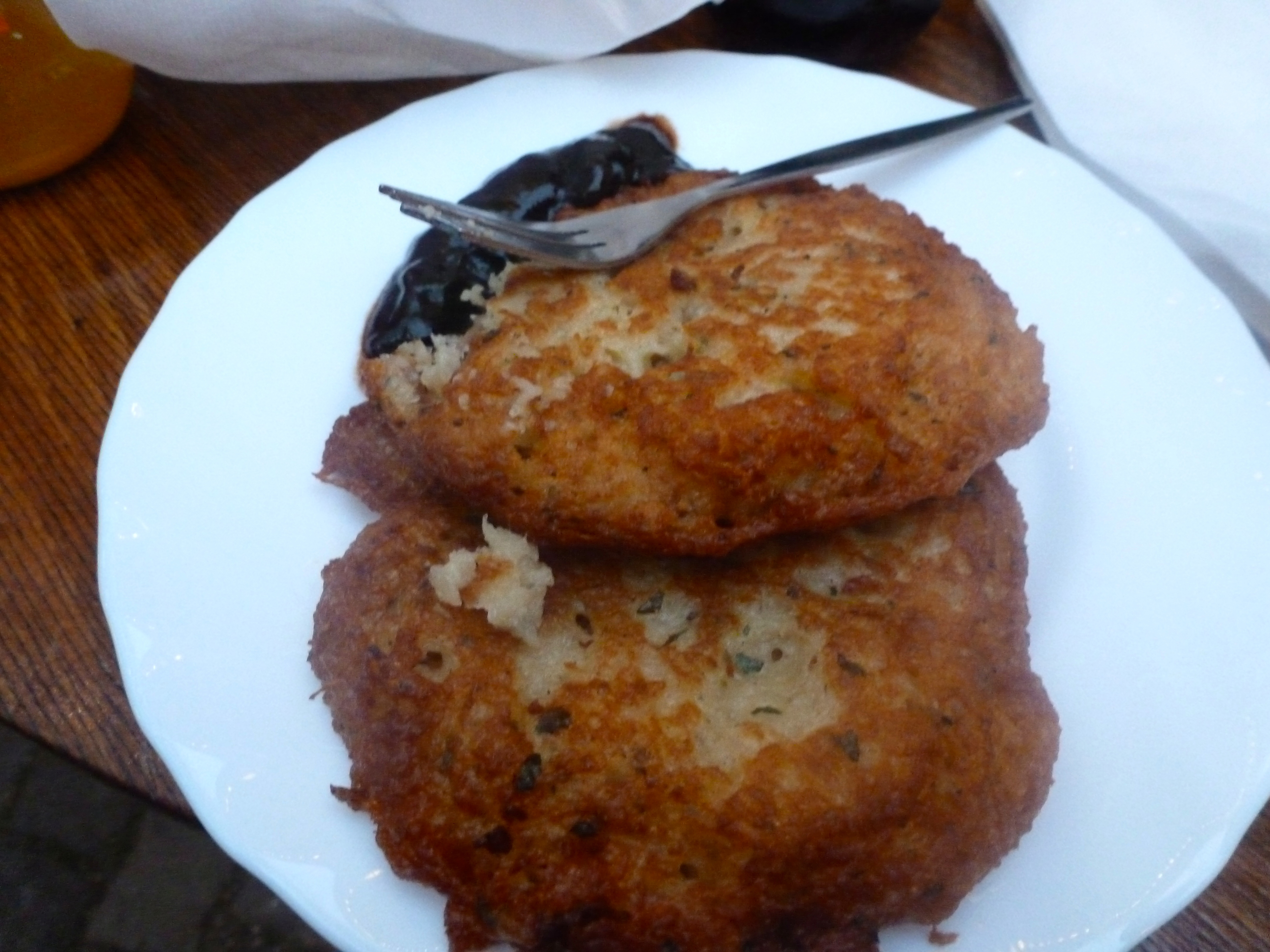
Kartoffelpuffer - yummy

Kartoffelpuffer – yummy

The next weekend I went to the Christmas Market in Colmar, France. First, my group got a tour of the city. We saw their Mannekin Pis, which was made to look like the one I saw earlier this year in Bruxelles, Belgium. Afterwards we saw the birthplace of Frédéric Auguste Bartholdi, creator of the Statue of Liberty, which I saw for the first time right before coming to Europe. Colmar is obviously just on the border of France and Germany based on the different architectural styles and languages written and spoken there. In fact Colmar has switched 5 times between French and German rule.

Mannekin Pis à Colmar

Mannekin Pis à Colmar

The Christmas markets themselves were more spread out throughout the city (5 different areas), which was different from the centralized market in Freiburg.The glühwein here is made with the traditional wine and spices, but also has some brandy in it.  The white wine version here is made from Alsace grapes. There were also more crêpe and waffle stations and even a stall selling escargot. I almost tried it, but chickened out when I realized I did not know the proper way to eat them. Food etiquette is a pretty big deal to me in respecting a culture, so escargot will be on the list in the future. I also noticed more people selling lace products in Colmar and fewer wooden products. It was great to experience two different markets to get a feel for what they have in common and how regional differences play into their diversity as well.
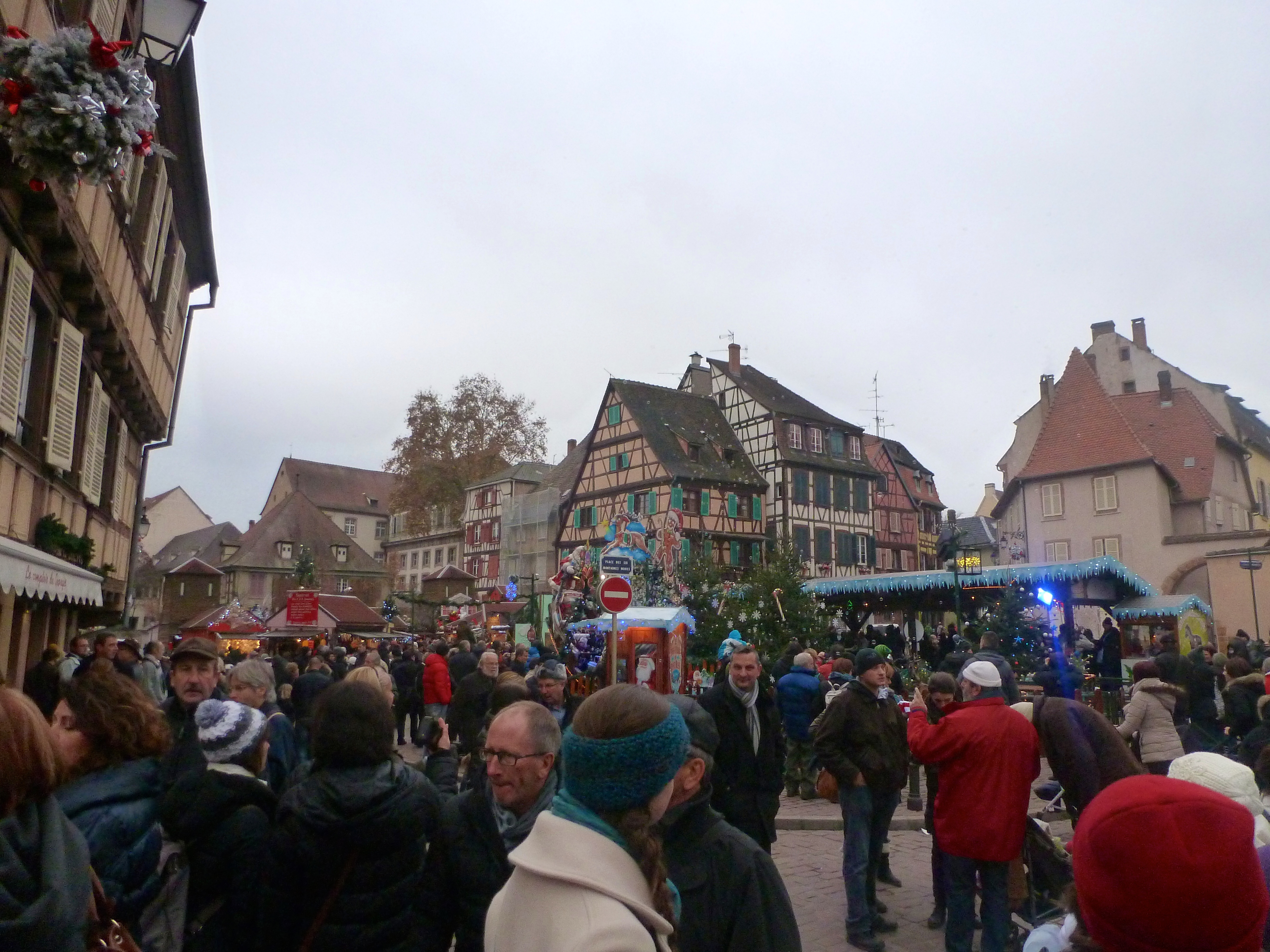
Colmar Christmas Markets

Colmar Christmas Markets

A Santa spotting!

A Santa spotting!

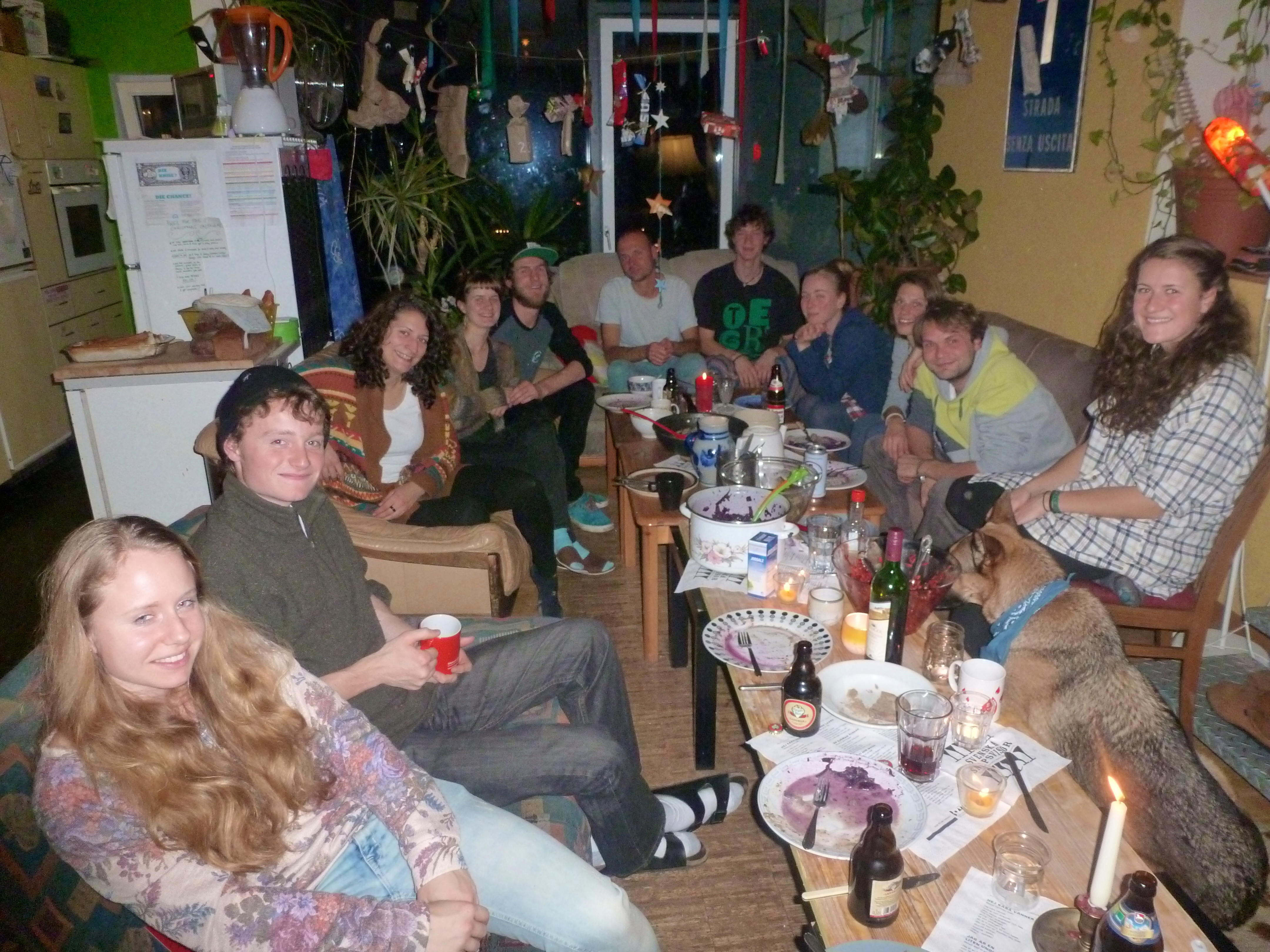
Back at my flat, this winter season has brought with it many awesome surprises. One of my flatmates, Hanna, organized an advent calendar. Nine of the flatmates contributed 3 presents each (that were 5 euros or less in cost). We hung the presents up in the living room as part of our Christmas decorations. Each day one person opens the presents (we have a list on the wall to keep track of who opens a present on which day). So far I have opened two presents: a cloth pencil/paintbrush holder and a bar of chocolate. A few days ago I woke up and found Stutenkerl, barely sweet dough, in the shape of a man on the handle of my door. This was to mark St. Nikolaus Tag (St. Nicholas Day) on December 6th. French legend has it that a hungry butcher killed three lost boys, but that St. Nicholas brought them back to life. My flat had a Christmas dinner this weekend with knödel, which are round bread dumplings, along with different soups and salads. For dessert we had baked apples filled with nuts and topped with vanilla sauce. It was great to have this bonding experience just one week before I move out.

Advent Calendar

Advent Calendar

Baked goods for St. Nikolaus Tag
Baked goods for St. Nikolaus Tag

Christmas dinner with my flatmates

Christmas dinner with my flatmates

Which brings me to letting you know I have only:
-3 days left of class
-6 days left in the flat
-7 days until I see my parents who are coming here to Germany for Christmas (we are starting in Frankfurt, then Baden-Baden, Freiburg for Christmas, and Munich)
-24 days until I am home… after my parents fly back home from Munich I get to go on a weeklong tour of Europe

I am excited to enjoy my last month or so in Europe with family, friends, travel, and great food. But I really am also ready to come home to fulfill all my plans. Through this time abroad I set up an opportunity to shadow a genetic counselor, volunteer training at a domestic violence shelter in Richmond, and joined an organization called WILL* (formerly known as Women Involved in Living and Learning) at my school. I will also be able to declare a double major in biology and environmental studies and a minor in Women, Gender, and Sexuality Studies. Not to mention when I get home I turn 21 two days after arrival, get to go to Washington D.C. with Oldham Scholars, and get to settle into the newest dorms on campus in Westhampton Hall. My life is filled with endless blessings. Coming to the end of my time in Germany allows me to reflect on how thankful I am for all my supporters, for all my challengers, and for my privileges, all of which have led me to live this full, spectacular life.


Diana in Germany: Environmental Ethics and Sustainable Policy

December 2, 2014

Two classes have passed since the last time I spoke in depth about the academic portion of my study abroad, so here’s what I have been up to in the classroom (and out!).

Environmental Ethics

My professor for this course was named Klaus. He’s a really silly guy who has a huge passion for his subject matter. Throughout the course he would make anecdotal quips about how his young sons confronted ethical questions in their daily lives. He would also explain some concepts or hypothetical situations in highly candid and casual ways. I left our first day of class feeling so excited about the subject matter. Never having studied philosophy before it was exhilarating to learn different codes of ethics, the arguments against them, and the counterarguments against those denunciations. I’m known to be “debate prone” which I like to call “debate loving” and the debates were written down right in front of me.

​Heeeere's Klaus!

​Heeeere’s Klaus!

We covered three main topics in this class which were:

  • Deontological vs. Utilitarian Ethics (do something to follow universal, moral law vs. do things to increase overall happiness)
  • Anthropocentricism vs. Physiocentrism (protecting nature for other people vs. protecting nature because it has value in itself)
  • Weak vs. Strong Sustainability (balance ecological, economic, and social needs vs. need to focus on ecological needs in order to fulfill economic and social needs)

Klaus took our class out for beer after our final exam, which is not an uncommon practice here. When I turn 21 in the U.S. I would like to compare how students and teachers socialize differently, with part of that analysis focusing on the role of alcohol. So far in the U.S. I certainly have hung out with teachers outside of the classroom setting, but never in a bar.

Sustainable Policy

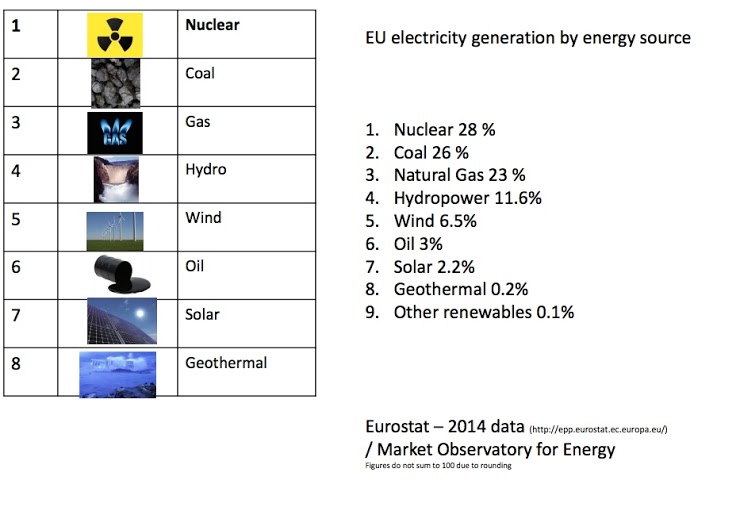
The class I finished last Friday pertained to Sustainable Policy in the European Union (EU) and Germany specifically. Our first day of class I was struck by the energy and passion of our teacher, Sandra. It was also evident that the class would have interactive components in addition to lectures. Sandra wrote different topics on the board and asked us each to write our thoughts underneath. She also had us put different sources of energy production by the US in order and then showed us the real order. This method of teaching always services me more. I enjoy thinking first instead of being told first if possible.

​US Energy Generation​

​US Energy Generation​

EU Energy Generation

EU Energy Generation

Of course there were many topics Sandra had to simply teach us in lectures. Energy efficiency and renewables were two major themes of the course. For instance, two-thirds of the economic potential to improve energy efficiency remains untapped in the period up to 2035 in Germany. Then we learned in an increasingly specific fashion, scaling down from international policy, to EU policy, to Germany, to Freiburg and Freiamt.

The day we discussed international policy, we had a roundtable discussion on how to penalize countries who did not meet reduction goals. It is much more difficult to enforce emissions reductions on the international level, so the effectiveness of bodies like the International Policy United Nations Framework Convention on Climate Change (IPUCCC) is low. The Kyoto Protocol that resulted from their meetings was NOT ratified by the U.S. According to Bush, it would decrease our ability to build our economy, however we spent a lot of time in class discussing the numerous ways to be greener as a country. There is a lack of policy to encourage it and subsidies to non-renewable energies do not help because there is not an even playing field for renewable energy competition.

The next few days were spent on the EU Climate and Energy Package, which called for a  20% reduction in emissions, 20% increase in energy efficiency, and 20% increase in renewables energy consumption by 2020. The New EU Framework that was just ratified extends different goals out to 2030: a 40% reduction in emissions and 27% increase in energy efficiency and renewables consumption. Different member states (countries) within the EU get different targets of emissions reductions in order to meet the overall goal.

Germany plans to get at least 35 percent of its power from renewables by 2020, at least 50 percent by 2030, and at least 80 percent by 2050. This emphasis on renewable energy consumption is part of the German movement called Energiewende, which was in part fueled by the Fukishima nuclear plant disaster. Nuclear plant moratoriums began soon after the disaster. Nuclear power should be phased out entirely from Germany by 2022. Replacing this power with renewables instead of coal would help keep emissions down. One piece of policy that helps Germany become more green is the Renewable Energy Law, which includes feed-in tariffs for renewable energy. A feed-in tariff means that independent power producers have unlimited access to the energy grid and unlimited production of energy. If they feed their energy into the grid they are guaranteed to get paid for that energy at a set rate.

​Creating a model of a sustainable house in class

​Creating a model of a sustainable house in class

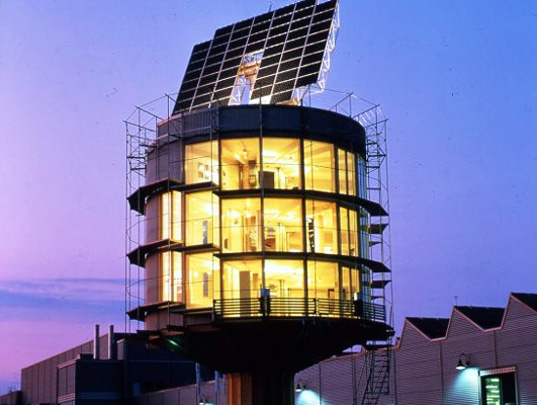
One afternoon class we were each tasked with exploring our village called Vauban. It runs on a cogeneration unit from natural gas and wood chips. This system enabled Freiburg to reduce its reliance on nuclear power from 60% to 30%. The famous Heliotrope, the house that rotates with the sun, is also located about 10 minutes walking from my house. The Heliotrope was the first home in the world that produced 5 times more energy than it expends: the energy consumption is emission-free, CO2-neutral and 100% renewable. The builder of the home, Rolf Disch lives there. Even closer (across the main road from my flat)  are the Solar Settlement, a low emissions planned community, and the Solar Ship. The Solar Ship is a business center with tons of solar panels on top.

​This model of an energy plus house is on my jogging route!​

​This model of an energy plus house is on my jogging route!​

​Skyview of the Solar Ship and Solar Settement. Look at all those solar panels!

​Skyview of the Solar Ship and Solar Settement. Look at all those solar panels!

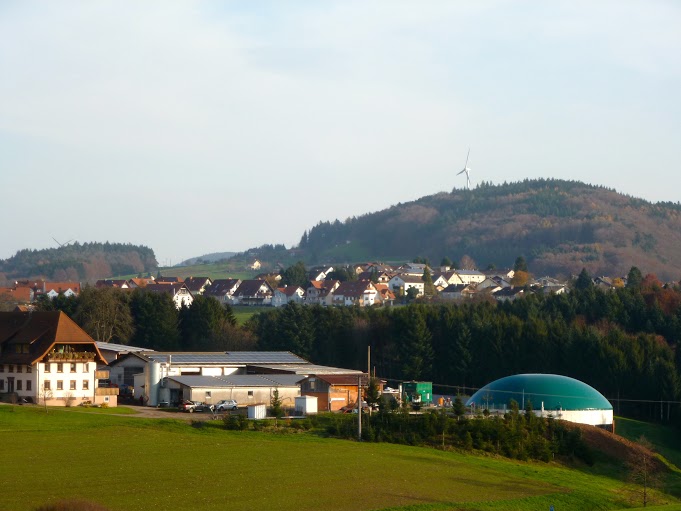
One of our final days in class, we went on a field trip to a community called Freiamt. This community has 250 solar roofs, a biogas heat and energy generator we visited and also several wind turbines. At the biogas facility, 10 tons of corn go into the first tank. After the first step, everything foes into an anaerobic fermentor or 90 days. 1.3million kWh are produced at the facility we visited. Next we went to a farm with cows, solar panels, and a wind turbine. 65% of their income is from their cows, but 35% comes from selling their energy. They also produce schnapps from the energy they produced with renewables! During our tour of Freiamt we also stopped at several wind turbines, discussed how long the projects took, the sizes of the blades and height of the turbines, and also the financials of each project. We were even allowed into one of the turbines! To learn more about Freiamt, go to this link.

​Biogas farm​

​Biogas farm​

​Class Wind Turbine Photo

​Class Wind Turbine Photo

The major homework component of the Sustainable Policy class was coming up with a business plan related to sustainable energy. I will not disclose the specifics of my business plan since I may actually use it one day. We had to include unique selling points, risk assessment and mitigation strategies, financing, marketing, and stakeholders. The process the class went though though – practicing business pitches, presentations, and a final business proposal in writing – all really enhanced my skills and deepened my understanding of starting and running a business. This was a skill I never really expected to get over here, but it was awesome to have this practice. I’m not one to love group projects and this was all on my own. It made me feel that I actually accomplished something when I sent in the final business proposal.

I only have 1 class left, which requires 11 days in school. It’s my “Freiburg Green City” class that counts as an Environmental Economics credit. The class features 4 of field trips with one being a bike tour of Freiburg. After my first day of class today, it seems we will learn more about how the green image of Freiburg is merely a selling point rather than “reality.” A critical perspective Freiburg is certainly a new one, and I am excited to explore it further.

Next Week

Late fall and early winter activities!


Jack in Czech Republic: I Go to School Too

November 6, 2014

I really don’t want to do schoolwork right now. So why not blog about school? Before I discuss the differences (or lack thereof) between Charles classes and Richmond classes, here’s a brief description of my five courses:

U.S. in the 1960s and 1970sRefer to Ohio by CSNY from my mid-semester mixtape to get my passionate thoughts on this course. The discussions in this class are consistently thought provoking and sometimes ridiculous, in a good way.

Introduction to Photojournalism – You know your photojournalism course is impacting you when you stare at a wall in a bathroom wishing you had your camera on you. This course has already forced me to view photography, Prague’s landscape, and, I guess, bathrooms in completely different manners.

Global Communication – The one course I am taking with an American institution taught by an American professor from an American university. Yea, there’s not a whole lot of cultural realizations coming from this course. Overall, it’s been a fun class, though. I get to spend the next five weeks defending China’s censorship, so that’s kind of cultural, right?

Here’s an action shot of Tim, who also gets to defend China’s censorship, working hard on our group project.

Here’s an action shot of Tim, who also gets to defend China’s censorship, working hard on our group project.

Czech for Beginners – Thanks to the Eastern Europeans, whose native tongue is somewhat similar to Czech, this is far and away my most difficult class.

Arms Control and Disarmament – This is a master’s level course on a subject I knew little about when I enrolled. So that should give you a sense on how difficult I find Czech language. Additionally, this is the one course that is vastly different than my Richmond courses. There are no assigned readings or written tests. Instead, students write weekly two-page research reports on one nuclear state (I’m the U.K.) that lead to our eventual end-of-class debate. My guess is that this class is different not because it’s in Prague, but because it is a master’s course.

With the exception of my Global Communication course, my courses are primarily composed of a mix of Czech students looking to improve their English and European students studying at Charles University for a semester. Despite the diverse composition of students, these courses don’t differ too greatly from my Richmond courses. There are, however, a few differences worth mentioning before I expand on how the two institutions’ similarities.

Punctuality, or lack thereof: At Charles, on time means 10 minutes late. And early means on time. It blows me away how many people show up to class late. My American history class, for example, always starts on time, yet it’s rare that at least two-thirds of the students are there when class begins. One reason for the constant tardiness could be that getting to class isn’t as simple as a five-minute walk from your on-campus dorm.

All around the city: Charles does not have a campus. Instead, the school consists of several buildings splattered throughout Prague. My five classes are taught in four buildings spread throughout the city. I still can’t decide which system I like better. I enjoy the different sceneries I’m forced to see, but the vast distances create more obstacles when going to class. Take, for example, when the city decided to change the tram lines without any heads up. Later that day I eventually realized my tram was not headed toward my usual Czech Language stop. I had to quickly get off and run through the city, so that I would not be too late. When I busted into class, out of breath and five minutes late, I noticed three or four other students in this small class had yet to arrive. Based on the students’ timetable, I was five minutes early.

Once-a-week classes: Except for my Czech language class, which meets twice a week, my courses meet once a week. I cannot overstate my love for once-a-week meetings. The workload isn’t too much different from Richmond’s, but having a full week in my grasp to spread out my work is fantastic.

Grading: I’m sure the grading at Charles is different from Richmond, since final grades are based on one or two assignments and class participation. I can’t tell you much more, however, because, well, I’ve barely received any grades. Typing that sentence gave me way too much anxiety.

Oral exams: Two of my courses culminate with oral exams, where I will have to speak with my professor about the course rather than filling in bubbles or answering short-answer questions. This feels like the biggest difference because I have no idea what to expect for an oral exam, and, well, it will be crucial to my grade.

So there are a few differences between the Richmond and Charles, but the most important aspect of a school – the way students learn – is quite similar. My educational experience – workload, types of assignments, discussion, professor availability, etc. – is quite similar to Richmond. Here’s the Spark Notes version of my classes’ syllabi: Do a reading assignment, maybe answer some discussion questions, discuss the reading in class, and ultimately take an exam/write a term paper/give a presentation. Strikingly similar to Richmond, I’d say. This certainly isn’t a bad thing – I love the whole reading/writing/discussing basis of my leadership studies and journalism majors. Additionally, I, like most UR students, I assume, didn’t go abroad for an out-of-this-world classroom experience. Sure, taking classes with a different faculty and different students offers a nice change of pace, but my true foreign education comes outside of the classroom. I came to Prague for a real-world academic experience – for example, meeting professional journalists and learning about the daily tasks of an online publication through my internships, traveling around Europe, and having to learn a city where English is not the first language. Hell, I’ve met a lot of fascinating people by having a couple drinks at Czech bars. I’ve been told for many years that learning doesn’t only take place in the classroom, but my time in Prague has given me a new perspective on that idea.

Selfie of the week: Because I am an egotistical millennial, here is the selfie of the week:

I was super happy to spend a day with this guy on his business trip. Thank you Teradata for sending my father to Prague!

I was super happy to spend a day with this guy on his business trip. Thank you Teradata for sending my father to Prague!


Diana in Germany (Delayed) Week Four: Double Dose Part 1

October 6, 2014

Sorry for the delay everyone! I have been so busy with academics and travel that I am behind by a week! So what does this mean for you? Glad you asked. This means two blog posts are coming your way next week in a little thing I like to call Double Dose Diana. One post about travel and one post about everything else. This is the post about everything else.

Flat Talk

My flatmates are flabbergasted by the price of college in America. This spurred many a conversation so far. The students I have talked with barely pay anything or get paid to attain a higher level of education. In America there are several more affordable options than paying the sticker price for a private school, such as University of Richmond at almost $57,000 a year. For instance UR gives wonderful aid – I attend on full scholarship. There are also 4-year public schools averaging $21,000 a year and community colleges for much less. All told though, the average student debt in 2013 for U.S. college graduates was over $30,000, a decently horrifying number to some Europeans whose governments subsidize post-secondary education. Germany actually just passed a resolution that public college tuition would be free for all German students. Lucky them!

​A viral photo on Facebook after the announcement that German university will be tuition free.

​A viral photo on Facebook after the announcement that German university will be tuition free.

I brought up another issue close to my life and to University of Richmond: rampant sexual assault in colleges. About 12% of female German Uni students experience attempted or completed rape in German colleges vs. 25% of female American college students. So basically, it’s too dang much in both places. It also seemed to me that the German uni students I know rarely have conversations about sexual violence as they had to research what the rates were.

Of course we have also discussed obesity and the general (lack of?) health in America. Simon notably stated, “America has one day of independence and 52 of eating badly… land of the free, home of the fat.” That one stung a bit. I think there is a general lack of healthy food available in America, especially for people who do not make a ton of money. We have a lot of work to do here as a country. Only recently I learned about food deserts in America. These areas have no nearby, accessible grocery stores. Many people in inner city areas like this rely on public transportation, but that isn’t going to take you to the grocery store 20 miles away quickly, if at all. Here in Freiburg, I can walk for 3 minutes and see 2 grocery stores.

Finally, I always knew Europeans eat with their fork in their left and their knife in their right, no matter if they are left or right handed. As a right-handed American I always eat with my fork in my right hand until I need to cut something and switch hands briefly. My flatmates had never noticed this phenomenon! Last night during my weekend travels, I looked down and realized I finally was eating in the European style!


Study Abroad Bucket List

I was supposed to have this list before leaving the US. However, I knew I had no clue what my life would be like and set to settling in first before solidly deciding on an official “I have to do this” list. Here are the top 20 left to do, accompanied by pictures of some of the ones I have already completed so far!

1. Climb the Münster Cathedral Tower
2. Go to the rooftop restaurant, Skyda
3. Eat international food from every stall in the Markthalle
4. Eat a Turkish Döner from Euphrat
5. Try on a dirndl
6. Eat at the most stereotypical restaurant for German food in Freiburg, Martin’s Bräu
7. Hike up to the tower on Schauinsland mountain
8. Go skiing for the first time
9. Take a paddle boat out on Titisee Lake
10. Getting through a meal without the waiter or waitress switching to English
11. Enjoy the thermal baths of Baden-Baden
12. Visit nearby French cities such as Colmar and Strasbourg
13. Slide down the longest tunnel slide in Europe at Baumkronenweg
14. Explore Neuschwanstein castle
15. Travel through the exhibits at the Augustiner Museum
16. Watch a soccer game in the Freiburg stadium
17. Ride a boat on the Rhine River
18. Join a University of Freiburg extracurricular activity
19. Watch a Baltimore Orioles game in an Irish pub called O’Kelly’s
20. Lounge in the botanical gardens


​The Black Forest cake my friend Anne and I made. This was one of the items on my bucket list that I already checked off!

​The Black Forest cake my friend Anne and I made. This was one of the items on my bucket list that I already checked off!

The End of German Class

The last week of German class was much more difficult as we leaned new verbs called separable verbs in addition to learning travel vocabulary. Frau Snuggs made no signs of letting the class off easy, which is wonderful. When a professor expects a lot from me, I tend to work harder. All in all, we made it through 10 of the 12 chapters in our book in just 3 weeks! Our test was on a Wednesday and I’m proud to say my 10 hours of studying paid off. I got a 1,0 on the test and in the class, which is an A! This is how grades work for class:

​German gradingsystem as compared to American grading system

​German gradingsystem as compared to American grading system

The morning of our last day, which was two Fridays ago, we went to the student café together for breakfast. Then we had a “graduation ceremony.” This ceremony was pretty awesome as all of the German students for this three week program attended. One of my classmates, Quinn, and his wife sang with a choir in front of the whole crowd. We received our grades afterwards and enjoyed the spread of food and drink the program set out for us. I am so thankful to Frau Snuggs and my other German classmates – this was an amazing beginning on the journey to German fluency.

OH yeah, I also surprised my class by showing up with a completely new hairstyle and color.


​​I loved all the people in my German class!

​​I loved all the people in my German class!

​Our teacher, Frau Snuggs was amazing.

​Our teacher, Frau Snuggs was amazing.


First time getting my hair dyed!

First time getting my hair dyed!

A New Class

This past week my first environmental class began, but we only had a three day week! This class is called Ecology and Management of Forest Landscapes in Southwest Germany and the Swiss Alps. The format of this class is very unique. We have lecture and student presentations one day and then the next we go out into the field. This week, we took a bus up Schauinsland mountain and hiked down the rest of the way. We made frequent stops to talk about the history, geology, vegetation, etc. at different altitudes. At the end of the day I was tired and very content to take a hot shower. Hopefully our trip next week to the Rhine River Valley will be a bit less strenuous!

Next Post

Stop by the blog mid-week as I am planning to post about my travels outside of Freiburg! It will include details and analysis of my solo trip to Brussels and my trip with fellow UR Spider, Masnoon Majeed, in Paris and the Loire Valley. Finally, read some travel tips that come from my recent experiences.


Diana in Copenhagen: The Difference Between Danish and American Classes

September 25, 2014

While I’ve written a lot about the “abroad” aspect of studying abroad, I would now like to pay some attention to the “study” component. I’ve found that academics in Denmark, more specifically at Copenhagen Business School (CBS), are strikingly different from what I’m familiar with back in the States. CBS has over 20, 000 students attending the university, which is significantly more than the 3,000 undergraduate ones at Richmond.

Despite the large discrepancy in total enrollment, the class sizes are not grossly different from school to school. I’m currently taking three classes, all lectures, and will have a fourth starting halfway through the semester. Just one of these lectures is overwhelmingly large and fits my expectations for a school that’s roughly seven times the size of the one I’m used to. The other two are comparably sized to those I see in the Robins School, though, and professors engage students by asking questions and knowing the names of some class attendees.

This is my biggest class but it should give you an idea of what class sizes are like. I took this right after our teacher called our first break. We usually get 2-3 breaks every class because each lecture is about three hours long!

This is my biggest class but it should give you an idea of what class sizes are like. I took this right after our teacher called our first break. We usually get 2-3 breaks every class because each lecture is about three hours long!


All of my teachers teach from a PowerPoint and students take notes on their computers.

All of my teachers teach from a PowerPoint and students take notes on their computers.

The reason why class sizes seem so comparable, however, is because far fewer students actually attend lectures from week to week. Teachers say things like, “Now pull up the Excel spreadsheet to work on problems. If you don’t want to participate you can go take your break now” during class. No attendance is taken. No homework is checked. There are no quizzes, papers, or midterms, and one hundred percent of your final grade is your exam score. There is barely any accountability throughout the semester to keep up with your studies despite the looming thought of that four-hour long written examination at the end of the course. And even that is usually open book!

This system is completely different from ones I’ve experienced in attending small private schools all my life. I have never been granted the anonymity that accompanies large lecture halls with countless unfamiliar faces and I’ve always been expected to do work and participate. Since first grade, my class sizes have been small and I’ve had teachers who saw it as their job (well, because it was) to keep engagement high and ensure students learn the material at every step.

At Richmond, there are some professors who believe that their students are truly adults and therefore expect more independence from them. In my experience, however, this means that those professors don’t walk around and check homework, but instead use checkpoints throughout the course to keep their students accountable. They utilize tools like papers, quizzes, and midterms to ensure that the work is always being completed. The expectation of independence in Denmark is astounding compared to the standard I’ve seen back home.

In the Danish classroom, if a teacher asks a question that results in silence they will not cold call (randomly choosing a student to respond), but rather answer the question themselves. Yet again, this differs from what I’ve come to expect in America. I vividly remember my first class in the Business School, Microeconomics with the late Dr. Dean. I found him to be an amazing professor, one of the best I’ve had, because of his ability to make me want to excel and impress him. Yes, he had daily quizzes on required readings, but the greater incentive to do well for me was grounded in the fact that he called on his students randomly. You had to come prepared if you wanted to convey your intelligence and avoid the social awkwardness of saying something dumb in front of your peers. I also felt satisfied in answering these questions correctly—it felt as though I had been personally challenged and emerged victorious. I have yet to feel this kind of desire to prove myself and excel in Danish classrooms so far.

This is Solbjerg Plads where I have my Competitiveness and Operations Performance class. It also has a cafe that turns into a bar/nightclub on Thursdays (when is 815 going to start doing that?)

This is Solbjerg Plads where I have my Competitiveness and Operations Performance class. It also has a cafe that turns into a bar/nightclub on Thursdays (when is 8:15 at Boatwright going to start doing that?)

That being said, the Danes handle their structure well. To American students and those who have a similar educational system, the Danish structure seems like a free ride. No homework? No quizzes? No problem! I would analogize the feeling to the freedom that results in the infamous freshman fifteen. Danish class is like D-Hall to a naïve eighteen year old. They have finally escaped the paternal eye and wagging finger that used to stop them from eating froyo for dinner every night and now they answer to no one. Obviously this is not without its negative repercussions.
I like to think that I would better fit in this system if it weren’t so disparate from what I’m accustomed to. That is, if I didn’t experience that wave of freedom I just explained. That being said, I’ve identified three alternate incentives to work hard and do best in the Danish educational system.

  1. Group Projects: I have yet been assigned a group project, but they are quite common in the Danish school system. This activity encourages more work because you are faced with a responsibility to others. It is easy enough to forego reading to your own detriment, but most people respond to the social obligation of not bringing the whole team down with you. You work so you don’t let your classmates down, but end up benefiting yourself in the process too.
  2. Professional Connections: Professors at CBS are highly qualified and connected in their respective fields. Many students are focused and driven to excel professionally and recognize the value of building a relationship with the man or woman who stands at the front of the lecture hall. This means many students work hard to participate in class, speak with professors during breaks, and work diligently in the hopes of building a connection that could lead to a job or internship.
  3. Reduce Myopia: This one is simple in theory but challenging in practice. You can be less nearsighted in academics by looking at your circumstance from two different perspectives. The first is recognizing that even though there are fewer checkpoints along the way in Danish classes, the journey still culminates in an exam. To excel, you must constantly remember that end and disperse work over time to avoid a tsunami of cramming in the final weeks. You can extend your sights even further though and consider why you’re even enrolled in college in the first place. For most, the final goal is not simply to get a good grade in a class, although that is often integral to the process. The driving objective of these classes is to learn and to use your acquired knowledge to find success in life personally, financially, professionally, or otherwise. With long-term objectives like these, you won’t even need a teacher singling you out to keep you on track. Granted that is easier said than done.
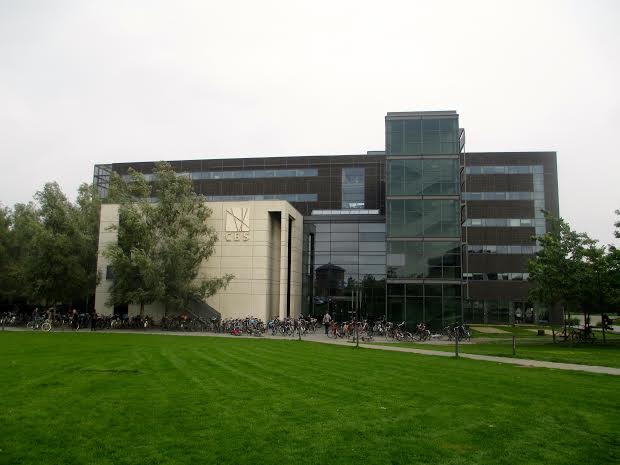
    This is one academic building on campus called Kilen. I don't have class here but I think it's absolutely beautiful. The campus also has lots of outside areas like this to relax and you see students hanging out in them all the time.

    This is one academic building on campus called Kilen. I don’t have class here but I think it’s absolutely beautiful. The campus also has lots of outside areas like this to relax and you see students hanging out in them all the time.

    This is the inside of Kilen. I've been amazed at the architecture and design in all of the buildings at CBS and this is certainly one of my favorites.

    This is the inside of Kilen. I’ve been amazed at the architecture and design in all of the buildings at CBS and this is certainly one of my favorites.

The Danish and American higher educational systems have their differences, but each meets the needs of students differently. I have found that I much prefer having methods in place that make me accountable for information before the exam, as they make me work more diligently throughout the semester. With that being said, I can learn and grow in the Danish system and use its approach to improve myself in other ways. It is my hope that I find my own success at this Danish university. I hope to leave Denmark with tools, like self-discipline, that will help me wherever I go.


Kimberlee in Mongolia: ISP Period

June 11, 2014

We are now at the point of our program where all of us students pick our own topic of interest and research it for a month. Our Independent Study Project (ISP) allows us to go anywhere to study anything for four weeks, and gives us a great deal of independence and control over what we want to learn about Mongolia. At the end of the four weeks, we have a 25-50 page paper and oral presentation due. The other students are researching a variety of topics, including: accessibility for people with disabilities, how climate change affects herders, street cleaning, emergency medicine in the countryside, and the use of the traditional Mongolian characters in modern society.

I first decided to study distance education in Mongolia, but soon decided that the topic was a bit too outdated. The further I researched distance education in Mongolia, the more I realized that most of the projects were conducted from the 1990’s to around 2007. I could continue to research and interview people on these past projects, but I decided to change my topic to technology in the Mongolian education sector. As you might guess, this topic is huge. I’m covering both the formal and informal education sectors, and it ranges from teacher training to e-learning to changes in classroom culture. It’s large, but I find it so interesting and don’t want to cut anything out.

My main research methods have been attending a conference, conducting 26 individual interviews, and observing classrooms. It was pure luck that the day our ISP research began was also the beginning of a 2-day international conference on technology in education in Mongolia. It was great to be able to experience it, and thankfully, most of the slideshows were in English. At the end of the conference, we were given a CD filled with each presenter’s individual Powerpoint or research papers. I don’t think it can get more helpful than that!

One of the best parts of my ISP time is getting to know Ulaanbaatar city on my own terms. I get to make my own schedule and plan what I want to do during my days, and I love having the opportunity to explore during my free time. The longer I live here, the more I realize how much I love it. This is the first time I’ve gone to a new city and explored it thoroughly on my own, and I love knowing the area so well. The city is relatively small (1.5 million people), but big enough to discover new areas! It’s strange to come from a smaller town in Maine and to realize how much I have fallen in love with this city. I never thought I would like to live in a city so much. This is something new that I discovered about myself abroad! I know that I’m going to miss UB when I have to leave.

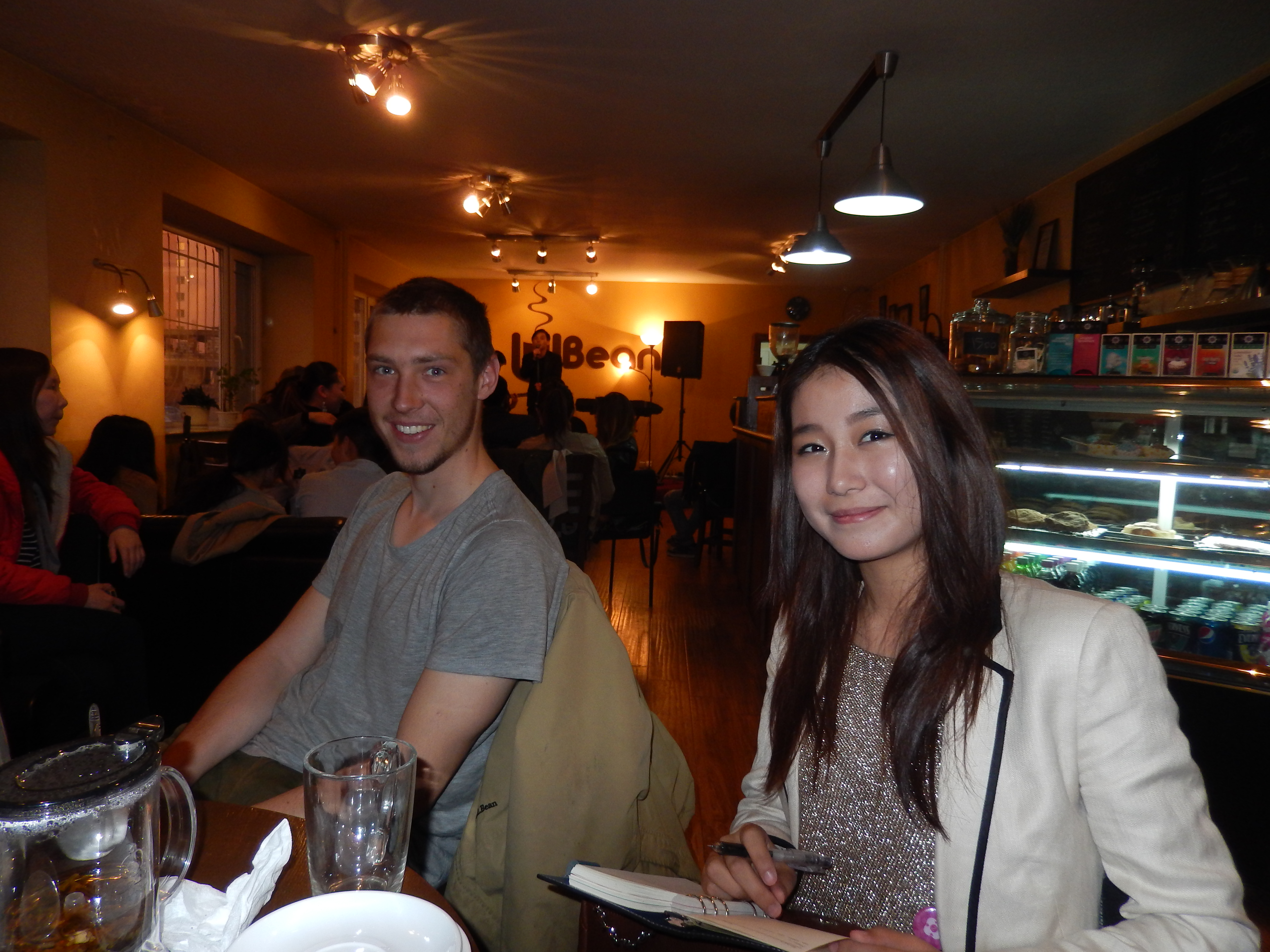
A cafe where I go so frequently they know me by name! I also walk on this street almost daily.

A cafe where I go so frequently they know me by name! I also walk on this street almost daily.

Another perk of the ISP is getting to interact with locals more. I interviewed around 1-3 people a day, and so I had to engage with Mongolians on a daily basis. I also used university students as my translators, so I had the opportunity to hang out with them between or after interviews. I learned so much from them, and it’s fun to hang out more as friends outside of interviews. I think that if ISP taught me anything, it’s how to begin to really live in UB. The rest of the SIT program was wonderful, but this time period definitely gives me more freedom, independence, and a look into what life here would be like if I didn’t go to university classes.

My friends Kit & Anni at an open mic night we went to as a group.

My friends Kit & Anni at an open mic night we went to as a group.


Austen in Ireland: Reflections of my Semester Abroad

June 9, 2014

After being back in the USA for two weeks, I figured I would finish up with some reflections from my semester abroad.

Looking back at my first blog entry, I’d hoped to really assimilate myself into the Irish culture.  I feel that I was able to do this to a certain extent, as I became a member of the UCD softball club and made good friends with many of them.

The UCD Softball Club

The UCD Softball Club

There was a mix of Irish, American, and Canadian, so I was able to meet Irish students as well as other Americans.  It was a really great choice to join this club and I enjoyed the social aspects of it too–the tournaments and the nights out in Dublin.  I also was able to enjoy the Irish culture outside of Dublin by visiting the cities of Galway and Cork.  These cities had a very different and more local feel to them than Dublin and were a nice change of pace.

However, I didn’t hang out with my Irish apartment mates as much as I had planned to at the beginning of the year.  I did spend a decent amount of time with them the first couple of weeks, getting to know them and such, but it seemed that they were very different from me and we did not have much in common.

Although we all got along very well, other than saying “hi” to them in the common room or the kitchen, I did not spend much time with them.  I played video games (FIFA) with the guys sometimes, but that was about it.  This is one of my bigger regrets of the semester.  However, I really was able to bond with most of the Irish people I met and they really were some of the nicest and funniest people I have met.  Their ability to enjoy life is really remarkable.

Another goal I had was to compare the different learning environments between the Irish universities and American universities.  Overall, I would say my classes at the University of Richmond were more challenging than the classes I took at University College Dublin.  The small class sizes at Richmond really require you to pay attention and not get behind in learning the material in class.

The larger classes at University College Dublin were held in lecture theaters and solely consisted of lecturing and very little class participation.   As for grading, there were very few assignments throughout the semester, and as a result, they counted for a fairly large portion of the class grade.  Through the whole first month, I did not really have much work at all.  Most of the classes had a sort of midterm essay assignment worth about 30% of the grade, and then a final exam worth about 70% of the grade.

However, there were some variations between the classes–one class had a couple of group assignments during the semester, another class had one large journal (7,500 words) for its sole assignment, and my Irish class had smaller continuous assignments as well as an oral exam.

The only stressful time during the semester was finals because there were so many exams occurring at the same time and they counted for a much larger portion of the grade than finals at Richmond.  It mainly consisted of essays so writing for a full two hours could definitely be demanding and intimidating.  Although I felt that I have learned many important things at UCD, my closer relationships with the professors at Richmond have allowed me to acquire more knowledge than when I was at UCD in Dublin.

Gaining my independence was also an important aspect of my study abroad experience.  Being an only child with somewhat sheltering parents, I felt that this would be a great experience for myself.  Although I did study abroad the previous summer as well, that was only for a month and this was for four months.

This study abroad experience definitely did help me become more independent, from planning trips across Europe by myself to cooking meals.  I definitely did miss my parents at times being halfway across the world from them but it was a great learning experience.

Also at the top of my list was being able to travel throughout Europe.  On my first blog post I made a list including the Cliffs of Moher, Amsterdam, Berlin, Prague, and Rome.  Although I did not make it to Prague and Rome, I did go to the Cliffs of Moher, Amsterdam, and Berlin!  Also other places I was able to visit included southern France, Munich, Liverpool, Newcastle, Belfast, Edinburgh and various places around Ireland.

Although I did not make it to some of the places I had hoped to visit (mainly Eastern Europe) I did travel a great amount and it was nice being able to visit some less-touristy cities such as Liverpool and Newcastle. It was nice meeting locals there too since they apparently loved Americans there.

Being able to travel and see new places has ultimately become more of an interest as a result of this trip and I hope to be able to do a Euro trip of some sorts next summer after I graduate.

Although I was very nervous and anxious about the semester I felt that I navigated along very well.  I was homesick at the start, but once I got acclimated and made friends the time flew by so quickly.  I still cannot believe how fast those four months have been.  I was really able to experience the Irish culture and all that it had to offer and I am sure to be there again in the near future.

Overall, saying I had the most memorable semester abroad is an understatement.  I not only had a fantastic time but I also was able to learn a lot more about myself from becoming more independent to also being more outgoing since I was in a new country and trying to meet new people.  It was a fantastic experience and I would most definitely do it again if I could.  The places I saw, the people I met, and the experiences I had contributed to the great memories I have of this semester.  Although I look forward to my senior year at the University of Richmond, I will always have an Irish part of me from these past four months.

Until next time, sláinte (cheers) Ireland.

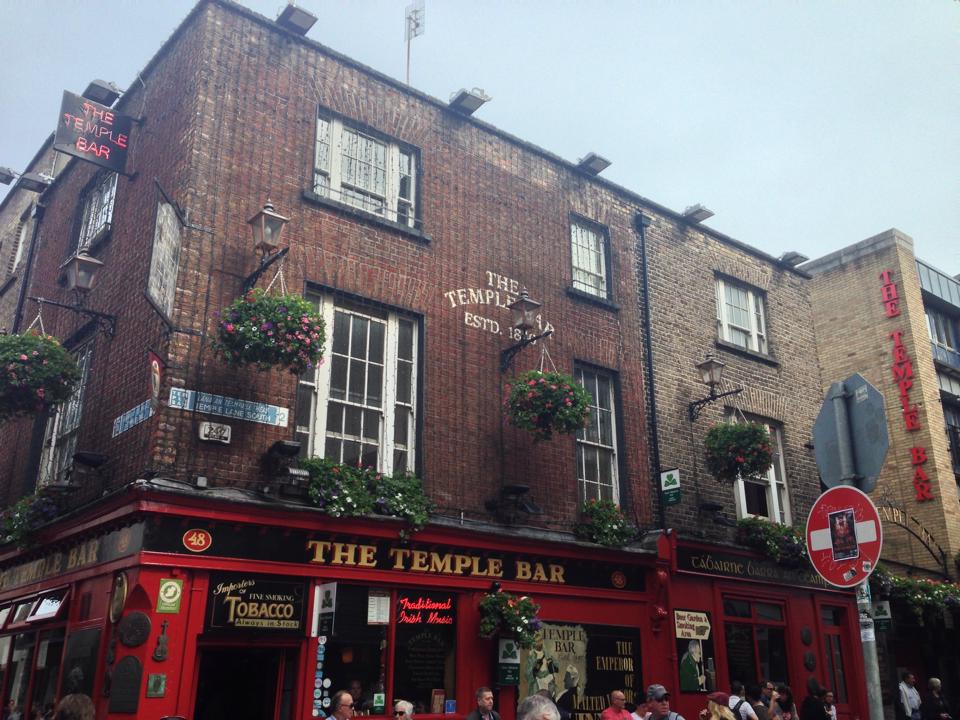
The Temple Bar

The Temple Bar

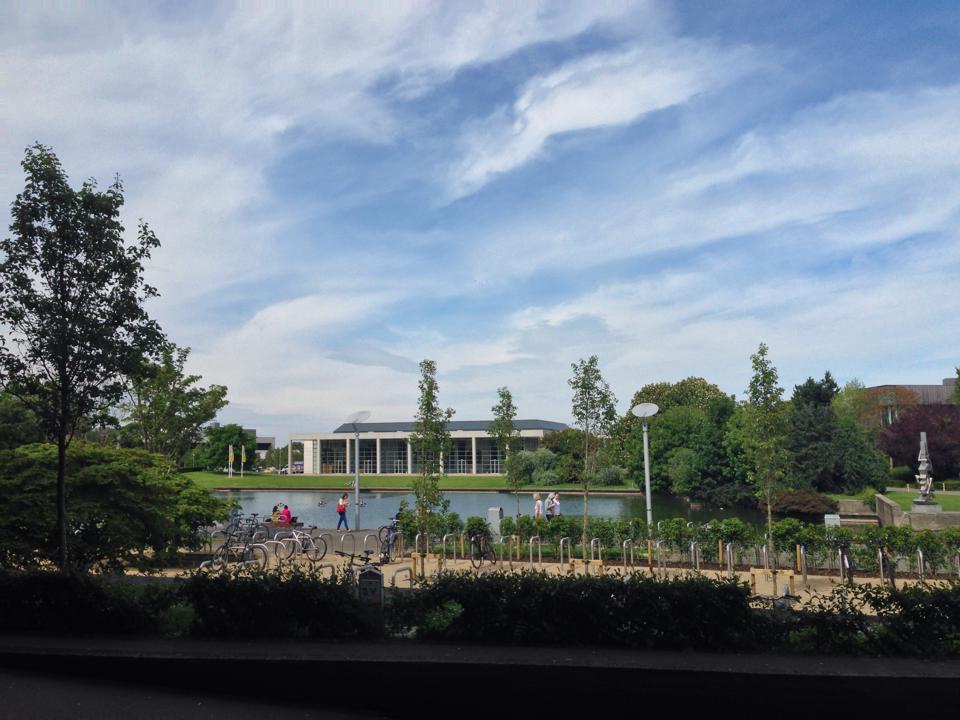
The UCD Campus

The UCD Campus

The River Liffey

The River Liffey


Austen in Ireland: Newcastle

May 4, 2014

So a couple weekends ago I went to Newcastle with a few friends.  I know what most people think when I say this,“Why Newcastle?”  After researching the city and wanting to see an English Premier League football match before the end of the semester, I decided on Newcastle.

Waking up a little after 3 a.m. on Friday morning was how the weekend began–my  flight was at 6 a.m.  I was shocked when I got to the bus stop and saw about 15 people at the stop at 4 a.m.  It was Easter weekend so I assumed that everyone was going home.  It was so crowded on the bus that it wasn’t able to pick up people at the later stops.  The airport was also crowded and I got to the gate right when my flight was boarding.  I landed a little after 7 a.m. and took a metro in the city center and got in no later than 8 a.m.  It was absolutely sublime walking around the city without anyone else around.  I wandered down to the Quayside (Riverside) as Newcastle is on the River Tyne.

Newcastle Quayside

Newcastle Quayside

This area reminded me a little bit of Richmond and the area around the James River.  There were many unique bridges over the river which were quite amazing.  I saw a massive part of the city as I wandered around the historical parts, the Quayside, saw both universities (Northumbria University and Newcastle University), saw St. James’ Park (home of Newcastle United Football Club) and also a couple of parks.

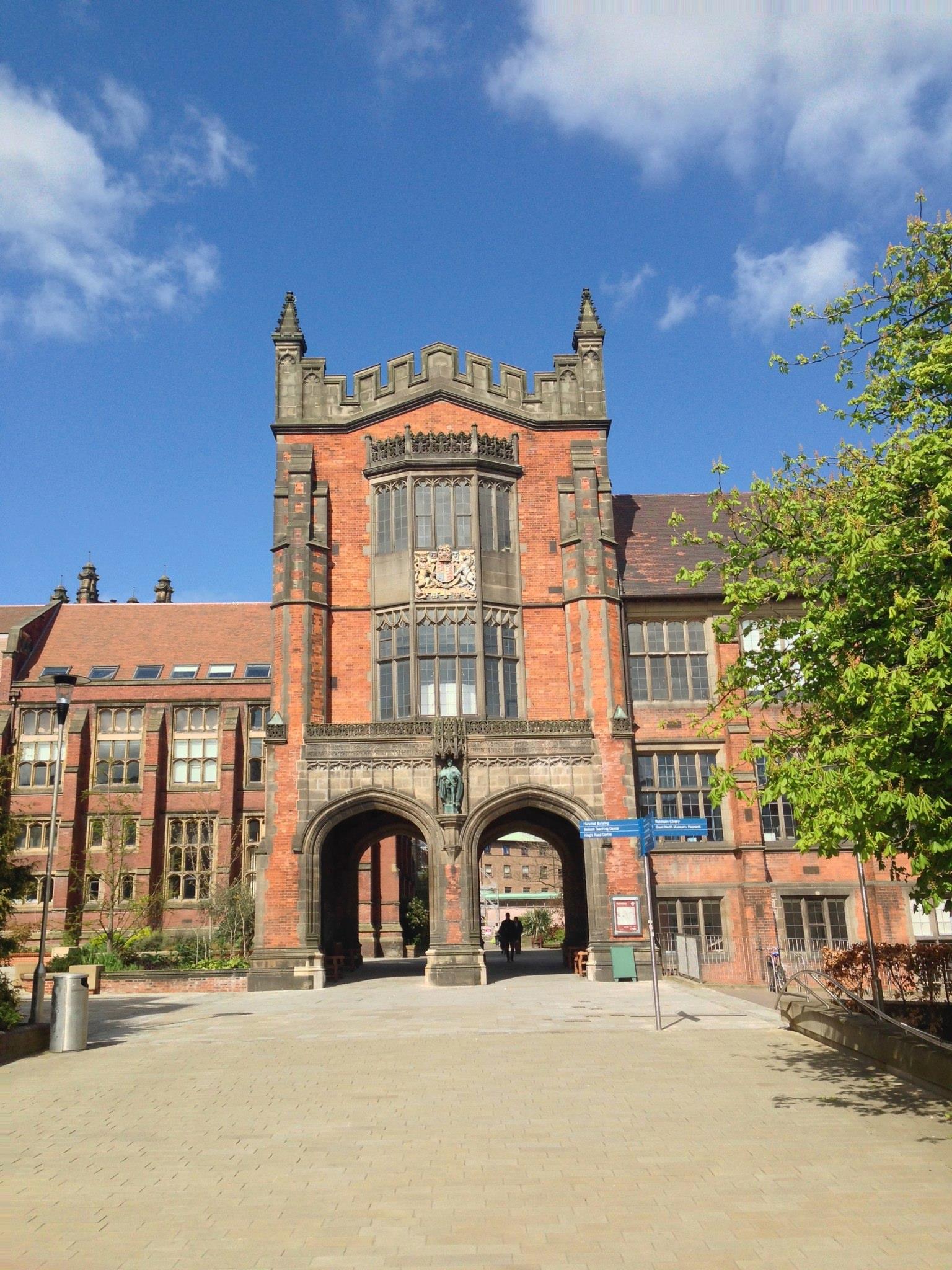
Newcastle University

Newcastle University

My friends from the University of Edinburgh arrived in the afternoon and we went sightseeing around the city, including the Quayside and Newcastle University.  We then checked into our hotel, literally right across from St. James’ Park.  Newcastle had two very large universities, so there was never a shortage of entertainment options during the night time.  Needless to say, we had a good time both nights we were there.  The first night, the place we went to even had a bouncy castle.

Saturday mainly revolved around the football (soccer) match at 3 p.m.  We walked around the city in the morning, got some lunch, and then proceeded to go the football match.  I was amazed by the stadium’s size right when we walked in.  It was a 50,000 seat stadium but right in the center of Newcastle.

Newcastle United

Newcastle United

Newcastle United was playing Swansea (from Wales).  We had a great view of the game from one end of the pitch.  It was such a great experience and the crowd went crazy when Shola Amoebi for Newcastle scored first.  However, Wilfried Bony for Swansea City scored a header and then a penalty kick, thus declaring a win for Swansea.  After the match, we wandered around the stadium and it was just an amazing experience overall.  We then went to the park right behind the stadium and it was quite unique being able to see the stadium while in the park behind it.

The next day we decided to go out to the coast of England on the east side since Newcastle was very close.  We walked around the village of Tynemouth and had an excellent lunch consisting of turkey, beef, and ham.  We explored the castle there and even two of my friends went into the absolutely freezing water fully submerged.  I just felt it with my feet and it was so cold.  We then made the trek back to Newcastle where there was a bus back to Edinburgh in the afternoon.  My flight wasn’t until later that night, so I decided to take a train ride out to Sunderland, a city close to Newcastle.  It was really quiet around, probably because it was Easter.  I walked around a park there and saw a little bit of the city.

This was one of my most memorable weekends because it was off the beaten path.  It was fun making friends with the Geordies (nickname for a person from this region) and they definitely did have a unique accent.  All in all, a fun weekend and I would definitely return back to the city.


Austen in Ireland: From Comedy to Softball

February 24, 2014

So my first major assignment in a class is due tomorrow and it’s a group assignment.  It was about applying Freud’s psychoanalysis concepts to a specific case.  It was pretty straightforward; hopefully all assignments will be this simple and short (it was only 1000 words for a group of 5 people).  I have a bunch of assignments due in March though, including a midterm in one of my classes, as well as essays in two other classes, so March will be a much more hectic month.  I like the majority of my classes, even though lecturing can get monotonous over the course of an hour, especially since I’m used to more class participation from Richmond.  I’ve learned that Irish is a lot tougher of a language than I thought it was!  I’m not even a foreign language person to begin with.

The weekend after my Edinburgh trip I laid low for the majority of the weekend, catching up on applying for summer research opportunities and running errands for the apartment and my room.  Then on Monday, my friend mentioned a free comedy show in town at the Woolshed Bar (an Australian/American bar that is humongous and has many TVs).  I ended up going with him and it was a great show, with a couple different comedians.  The greatest thing was that it was free, pizzas were half priced, and pitchers of beer were cheap.  The greatest moment of the night was that an American woman got kicked out for heckling.  She was not happy with the host’s hilarious impressions of Americans so she called him out for it.  She then proceeded for the rest of the show speaking under her breath and occasionally calling something out until she got kicked out about halfway through the show.  Unfortunately, she didn’t give Americans a very good name but my friend and I were reassured by later comedians that they like Americans because they thought we acted much nicer.

Comedy Show (1)

The Comedy Show

One of the great things about UCD is that they had a “refresher’s day”, where tons of organizations and sport clubs tried to get people to sign up for their respective groups.  I signed up for many clubs but only really followed through with one; the softball club.  I really wondered about playing softball co-ed because it’s not really popular in the USA for males.  I have a few years of experience of baseball under my belt, so I decided to give it a try.  I’m so glad I did because it’s a great group with a mixture of Irish, Americans, and Canadians.  They don’t really take softball very serious at all so it’s more of the social aspect that’s important.

For example, we went BYOB bowling on Friday night.  I was stunned that a bowling alley would let you bring in your own alcohol because that would never happen in the USA.  All the games you could bowl for 10 euros as well.  It was a really fun night and our group went to the bar across the street after bowling and it was a lot of fun hanging out with them because they’re a fun group.

Glenomena

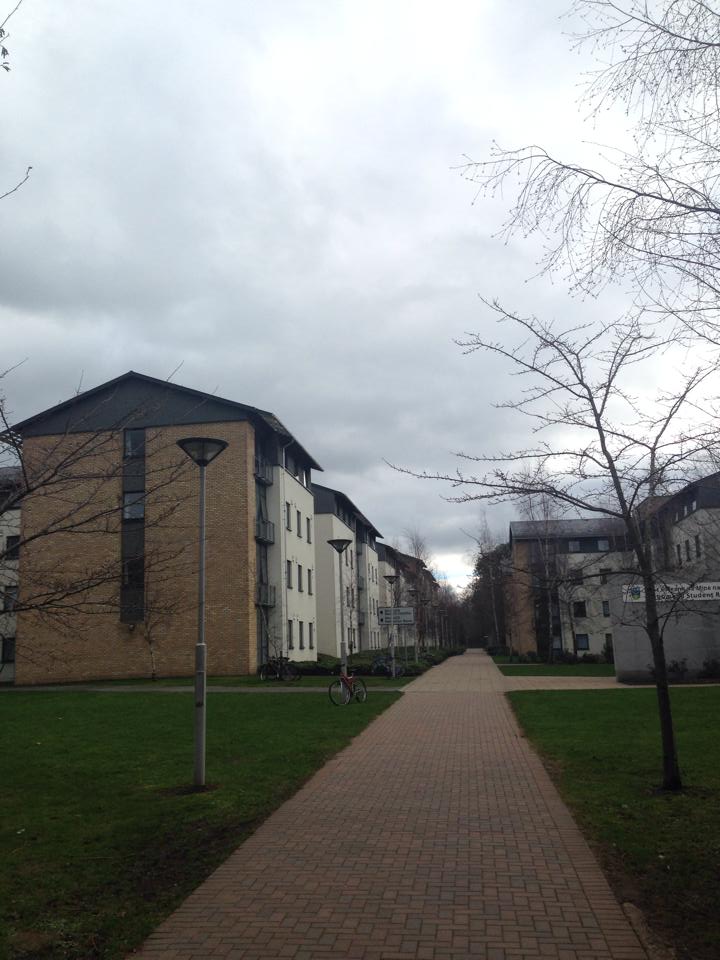
Glenomena, where I live on the campus of UCD

The next day I spent mostly in my room watching Premier League soccer (my wish is to be able to travel to England at some point this semester to see a game), Six Nations rugby (Ireland lost to England) and Richmond basketball, who won!  Today, I knew I had to go to a fish and chips place because I somehow haven’t had them here in Dublin yet.  A friend and I went to Beshoff’s for fish and chips, and the fish was really crispy just how I like it.

I have a field trip tomorrow with one of my classes to counties southwest of Dublin, including County Kildare and County Carlow.  Looking forward to it!

Rainbow

Rainbow seen from my room


Austen in Ireland: My Classes so Far

February 10, 2014

I’ve been really busy recently and haven’t even been able to post about my classes!  I am taking six modules (which are what they call classes here in Ireland).  I am taking three psychology modules: Lifespan Development, Counseling Psychology, and Visual and Social Cognition.  These are all relatively large classes of between 50-100 students (two are in lecture theatres) so it’s a lot different than Richmond.   Visual and Social Cognition seems like the most interesting to me of these classes as it’s topics are the closest to my interests in psychology.  For these classes, there are not too many assignments over the course of the semester so the few assignments count for a large portion of the grade, a significant difference from the US.

For my other three modules, I am taking a variety of topics.  For one, I am taking Health Economics, which will count as an elective class for my economics minor.  It seems like an interesting class because it incorporates economics, political science, and psychology topics.  I am also taking Irish for beginners.  This is my smallest class of about 20 students with all international students, which is a nice change from my other classes.  Irish is a difficult language so far and I’m not the best at foreign languages to begin with.  I find the class really interesting though so it should be a fun experience.  The last module I have is called Discovering Ireland: Landscape and it consists of just two field trips.  There are no lectures, we just go on the two trips and make journal entries about our observations from the landscape, buildings, etc. since it is an archaeology class.  I’m really looking forward to class because it seems like it will be a great excuse to see new areas of Ireland!

Overall, I’m looking forward to my classes and seeing what else I will be learning.  It is interesting to see the different teaching styles in Ireland, as there is virtually all lecturing and no class participation because of the much larger class size.  There are, however, smaller tutorial sections that meet a few times a semester for a couple of my classes that go over the topics in a smaller group.

photo (1)

The UCD campus!