Social Events Overload in Uppsala: International Gasque, Birthday, Kanelbulledag and a Stolen Bike (posted by Indira in Sweden)

October 19, 2012

Last week was so overloaded with social events. Every single day there was something going on and so many times I would just come to my room to drop off my bag and in 5 minutes I would be on the move again. I am not complaining though – I enjoy this rhythm that allows me to experience as much of Sweden as possible (especially taking into consideration that half of the time I’m supposed to study abroad in Uppsala has already passed).

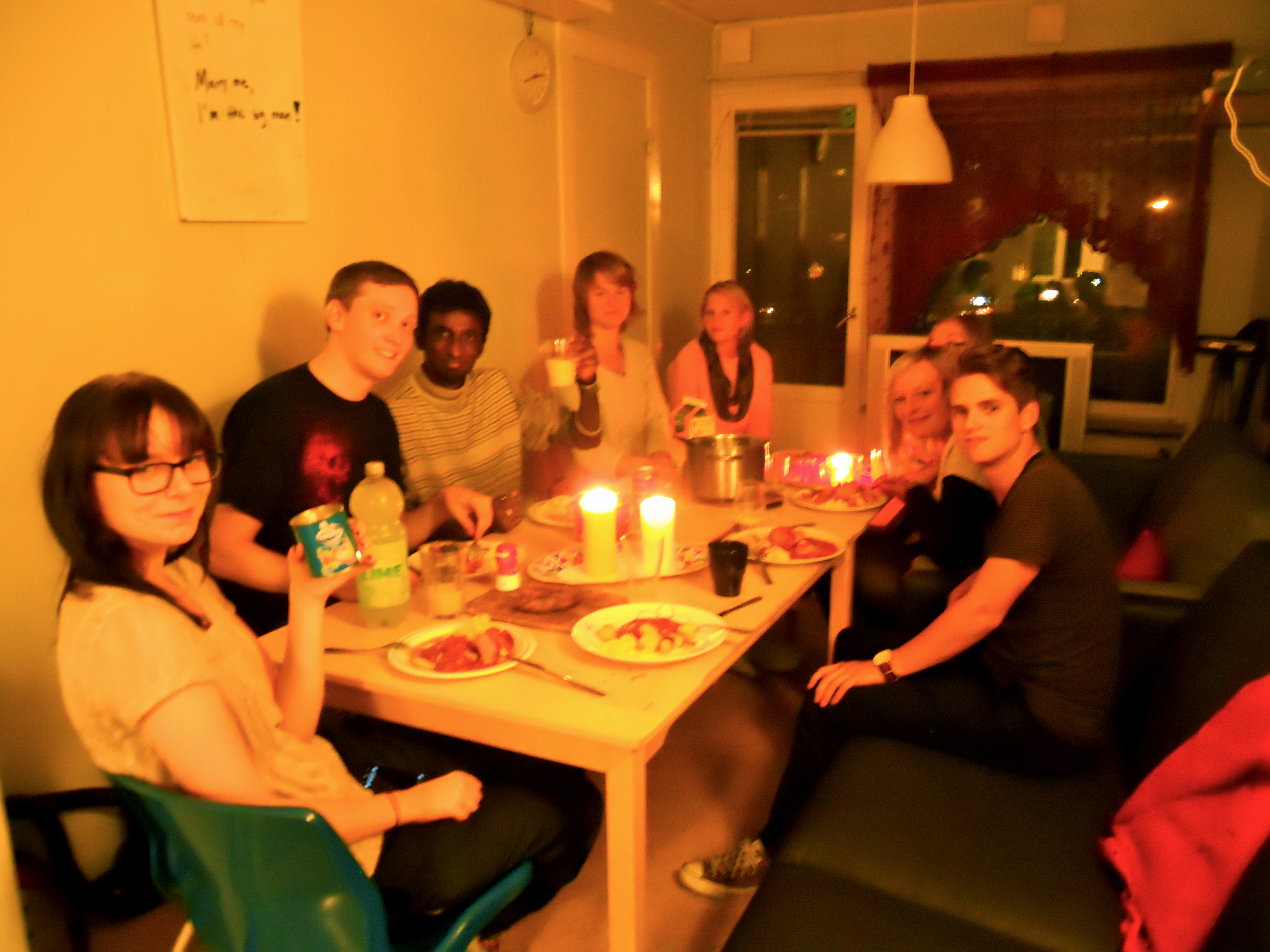
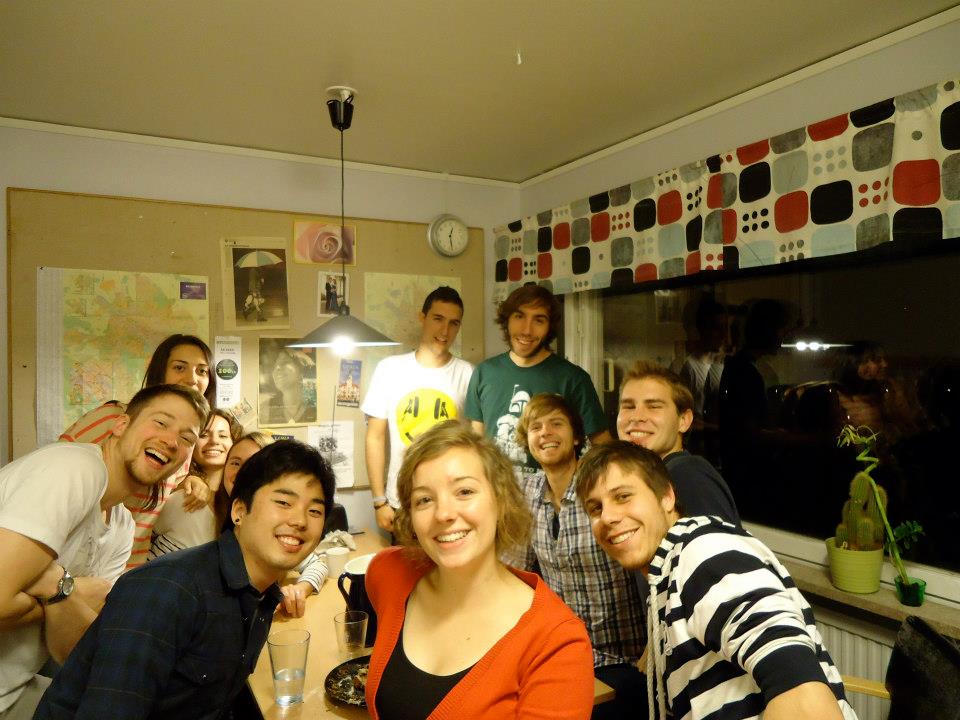
One of my friends, Marine, had her birthday a few days ago so we organized a birthday dinner for her (it was a pot luck style dinner where everyone brought something). I made a traditional Bosnian dish called “sataraš” and I was happy to see that people liked it. We had a really great time talking over the dinner, and then we had our own private concert: two guys played guitars and sang for about an hour before the clock struck 12. It was a really nice bonding experience!

My friend's Birthday Dinner, celebrated with a potluck

My friend’s Birthday Dinner

On Thursday last week it was the official Kanelbulledag (cinnamon bun day – Swedes really love their Kanelbulle and I know why: they are super delicious and go really well with fika!). It is a tradition that on the Kanelbulledag Swedes make homemade Kanelbulle, so my Swedish corridor-mates organized the event. We all got together and enjoyed some quality time together while making some delicious cinnamon buns. 🙂

Kanelbulle, a swedish cinnamon bun

Kanelbulle

On Friday we had the long awaited International Gasque. As I wrote earlier, gasque is a formal 3 or 5 course dinner where all the students dress up and have a nice meal, drink snaps and sing songs, as well as enjoy the entertainment. The International Gasque was very long, lasting 6 hours (6pm-midnight). There was some stand up comedy, a choir performance and skits to make it all incredibly enjoyable. After all the delicious food was eaten, all songs sung, and the entertainment program finished, there was an after party with Karaoke and a live band. I really enjoyed karaoke since so many people came on stage and everyone was having fun, not really caring about how well (or bad) they could sing. The live band was also very good. They were singing mainly popular mainstream songs that brought everyone to dance. All in all, it was a great night! I was really happy to be part of it all!

International Gasque: a picture of the seating arrangement for the dinner

International Gasque: Seating arrangement for the dinner

The twist came later on. The night, unfortunately, ended not so well for me. On our way back home when I wanted to get my bike, it was not there. I couln’t believe that someone had stolen my bike! We were all warned that this might happen, but I was always optimistic about it. It took 2.5 months for my bike to get stolen. At first I was really sad because I went through so many adventures on that bike (including me falling off it multiple times, and over-inflating the tire so it exploded). By now I have accepted what happened and got a new bike (I was really lucky that a friend of mine had 2 bikes, so he let me borrow one for the rest of the time I’m in Sweden). Life goes on!

The week ended with me trying to cook (and actually succeeding)! I cooked Bosnian for 7 of my friends. I made three traditional dishes and they all turned out amazing! I am happy I got a chance to learn how to cook. Those are the skills one will always need and find useful. 🙂

Of course, apart from many events in Uppsala, our classes went on. My only class for this month, Critical Perspective on Sustainable Development in Sweden, started integrating more study group work in the course. We divided into a few groups and now we will work within those groups on the case studies of interest. My study group (which is, by the way, very international. We are 5 people: Swede, Japanese, Korean, German and I) is working on urbanization and we will be looking at two districts in Stockholm in oder to see how sustainable they are. In the end we plan to come up with a list of recommendations for other districts in Stockholm, as well as other cities that are looking into urban resilience.

It was truly a good week with a lot of things going on and very little free time, but it all made my week much better! I guess that is the point of study abroad – do as much as possible and enjoy whatever country you’re in. 🙂


Academics at Oxford (posted by Jimmy in England)

October 9, 2012

Today Times Higher Education came out with their yearly rankings of the 400 best universities in the world.  The top seven universities were:

7. University of Cambridge

6. Princeton University

5. Massachusetts Institute of Technology

4. Harvard University

Tied in 2nd– University of Oxford and Stanford University

1. California Institute of Technology

The rankings use a system based on specific performance indicators including teaching, research, knowledge transfer and international outlook.  With that news buzzing around campus and the lurking start of my term coming up in a few days, I wanted to dedicate this entire post to the academic side of Oxford.  In the months prior to my arrival, I knew that Oxford was an incredible institution, but I didn’t know what set it apart from the rest of the world.  After being here for a week, I can begin to understand why people think so highly of it.

To start, by the time you apply for admission to Oxford you are already expected to know what degree you want to receive.  This is very different from the liberal arts system of the U.S. where we can spend a few years taking different courses to see what interests us.  Included in the admissions process to the university, prospective students take specific examinations in the subjects that they want to pursue.  If they do well enough on the exam, they are offered an interview with a college professor.  During the interview, they are not asked the typical U.S. college interview questions like, ‘Why do you want to attend our university?’ or ‘what are some of your strengths and weaknesses?’ Rather, they are asked questions to see if they really grasp the academics that they have studied prior to the application process.  I spoke with an engineering student that is starting his first year at Oxford.  He was telling me some of the questions that he was asked, one being incredibly interesting. The interviewer showed him a picture of a man running with prosthetic legs and asked him to describe how we would build a replica.  I have been in university for two years and would not have a clue how to answer that.  This institution is world renowned because they demand that you know what you want to study.  They don’t allow you to take any time thinking about potential majors, they want you ready to come in and work.

A second reason that Oxford is world renowned is because of its academic system.  The school year is broken up into three terms.  Each term a student takes one major tutorial and one minor tutorial. Major tutorials meet 8 times over the course of an 8 week term and minor tutorials meet 4 times.  It may seem like only meeting 12 times in a trimester is easy…. Ask any student here and they would laugh.   A tutorial is nothing like the American lecture style learning.   Tutorials, in the simplest analogy, are a 60 minute one-on-one cage match with a tiger…. A massive tiger that is easily capable of destroying you, like the ones in The Gladiator.  In a tutorial, you meet a professor in an assigned location.  It could be an office, a lecture hall, a public café, or anywhere that you decide.  The meeting lasts for one hour and is based entirely on the work that you have done in advance.  All of the work for one tutorial, which usually includes reading mounds and mounds of books and papers and preparing one essay, must be turned in 48 hours before the meeting.  The tutor then reads your work and prepares questions/ commentary for you.  When you arrive, you have to defend your points for one hour against a Ph. D. My first tutorial is next week and I have to read 15 scientific papers and 8 chapters from 3 different text books.  Then I have to write a 2000 word essay answering a specific question outlined in the document that my tutor sent me.  At the visiting student introduction ceremonies yesterday, the Dean of the college said that the minimum amount of time that is usually spent on academic work per week is 40 hours.

Oxford does not have regular tests or mandatory lectures.  They hold end of the year collections exams which rank students and they also hold beginning of term exams which force students to retain the knowledge from the previous years.  Every subject at Oxford offers optional lectures that correspond with it.  None of the lectures are mandatory and anyone can go to them.  This means that even if someone is a linguistics or history major, they can sit in on a biophysical chemistry lecture.  This system is different from any educational system that I have ever experienced.  In America, it seems like there is a lot of structure and if you follow the right path you can succeed.  Here, you are fully independent.  You cannot hide in the back of a classroom or cram the night before a big test.  They demand that you start your work early and continue throughout the week.  At many universities across the U.S. libraries are open 24/7.  At Oxford, there are many library buildings, but all of them close before 10pm on the weekdays and some are closed on Sundays.  The most famous of the libraries is Bodleian Library.  Aside from holding many historical texts and being a frequent place of work for J.R.R. Tolkein and C.S. Lewis, the library’s architecture is a favorite location for filmmakers. It can be seen in the opening scene of The Golden Compass and the first two Harry Potter films, in which the Divinity School acts as the Hogwarts hospital wing and Duke Humfrey’s Library as the Hogwarts library.  

While on the topic of Harry Potter, yes, it does feel like I go to school at Hogwarts.  Aside from Harry Potter actually being filmed at various locations in Oxford, there are many strikingly similar features.  The main one is in Oxford’s formal dinners.  Every evening the colleges have optional formal dinners that go from 7-8:15pm.  Most students attend these dinners every night.  Students arrive at 7 and sit down at a table.  At 7:15, the dining staff stops admitting students and all of the people in the hall stand up.  The professors and deans walk through a door dressed in their college robes (black, like in Harry Potter).  All of the students are quiet and must stand until the faculty has sat down at the head table, which is located at the front of the Hall and is elevated higher than the other tables.  Some colleges do not have a dress code for students but others require students to wear formal dress along with a black robe.

This place may not have any ‘Defense Against the Dark Arts’ courses and I am not likely to play quidditch, but there are reasons why Oxford consistently produces people who go out and make the world a ‘magical’ place.  See what I did there?  Until next time, keep drilling life.  How good are you going to be?

Here’s to the Crazy Ones.
The misfits.
The rebels.
The troublemakers.
The round pegs in the square holes. The ones who see things differently.
They’re not fond of rules.
And they have no respect for the status quo.
You can quote them, disagree with them,
disbelieve them, glorify or vilify them.
About the only thing that you can’t do, is ignore them.
Because they change things.
They push the human race forward.
While some may see them as the crazy ones, we see genius.
Because the ones who are crazy enough to think that they can change the world,
are the ones who do.

-1997 Apple Commercial


The First 5 Days (posted by Jimmy in England)

October 3, 2012

In the words of Marv Levy, the Hall of Fame Buffalo Bills head coach, “Where else would you rather be than right here, right now?” I arrived in Oxford last Thursday and have been in awe ever since. I spent the first two nights living in a hostel (Central Backpackers) ten minutes from the center of the city. If you have never stayed in a hostel before, I highly suggest it. Being an American college student, I feel like I was ignorant to the way in which many people live. In the hostel, I met people from many different walks of life. I was only there for 48 hours, but I met people from Spain (southern and Basque regions), Norway, Germany, Greece, Columbia, China, Sweden, Mexico, India and Australia. Even though there were many different world views, we all shared one common interest. Whether we were studying at a university or traveling city to city to find jobs, we were all working towards what we thought would bring us happiness. After my two day stay in the hostel, I was able to move into my dorm in the city of Oxford. For those of you that do not know, Oxford is a mid-sized city with a population of more than 150,000. There are many shops, restaurants, and cafes that I plan on visiting during my stay. My room is located in Jesus College in the center of the city.

Second quad at Jesus College, Oxford University

Everybody in Oxford has been incredibly friendly. When I arrived a few days early, I was invited to attend two afternoon cream teas for postgraduate students. (Oxford runs on a trimester schedule. Trimesters run from 0th week-9th week. Last week was -1st week and this week is 0th week. Postgrads arrive in -1st week while undergraduates and exchange students arrive in 0th week. Classes start in 1st week. It’s a little confusing.) These cream teas were part of the postgrad orientation and were a chance for students to meet and listen to prominent speakers. The main speaker was Dr. Andrew Briggs, a professor of nanomaterials at Oxford. His research team is trying to build what is known as a ‘quantum nanocomputer’. I have spent the last few days trying to figure out what it is, but his talk had nothing to do with complex physics. He introduced an idea, one that I have seen is a common theme among the faculty at Oxford. He said, “When you mix the personal desire to learn with an environment like Oxford, magic happens. But the reason that we succeed is due to a combination of work and personal reflection. We spend one day in deep thought over life’s biggest questions. We leave our research labs and ask ‘who am I’ and ‘why does any of this matter’. An Oxford education is not simply about academics, but rather about finding out who you really are.” These cream teas were very helpful in understanding how people succeed at this university.

Being at Oxford has not been entirely about academics. One night I went with another American exchange student to the Turf Tavern. It is a famous pub where Bill Clinton frequently hung out while studying at Oxford. The next night I visited another famous pub called The Bear Inn, which was built in the late 17th century. They are famous for their collection of ties that they collect. Years ago, if you ran out of money at the pub you could cut off the end of your tie in exchange for a drink. The tradition became famous and the collection is still growing.

Tie collection at The Bear Inn

These last five days have helped me adjust to English life. I feel fully prepared to immerse myself in all that this city has to offer over the course of the next year. Today I start orientation. I will keep you all updated. Until next time, keep being great!

When the world knocks at your front door, clutch the knob tightly, open on up, and run forward and far into its widespread greeting arms with you hands outstretched before you. Fingertips trembling, though they may be.- Anis Mojgani


Majestätisk Värmlands Reccegasque (posted by Indira in Sweden)

September 24, 2012

Last week was amazing! I don’t think I have ever had more fun and bonding time with my corridor-mates, as well as people from my nation.

I live on a corridor with 11 other people and we share a kitchen together. There are 4 other international students, and the rest are Swedish. Last week we decided to have a corridor dinner so that we could get to know each other and to discuss some corridor rules. This was truly an amazing idea! We all got together, cooked, and then had a nice meal. The best thing about the corridor dinner is that you get to know people in a way you can’t in class or at fika. Everyone is so much more relaxed and there is a sort of  positive vibe around them. It was fascinating to see how none of us study the same thing or have classes together (we even have few Master students), but we all get along really well. Student life in a residence here is very different than at UR, since the residence halls are not specific to any grade, group, major, or area of interest.  It would seem like all of the residents would be more disconnected as a result, however that is not the case. Sharing a kitchen and a corridor makes us more likely to hang out and to spend time together. I really enjoy this part of being an Uppsala student. And all of my corridor-mates are really great, which makes it all so much better!

 Dinner with the 11 other students living on my hall

Dinner with my corridor-mates

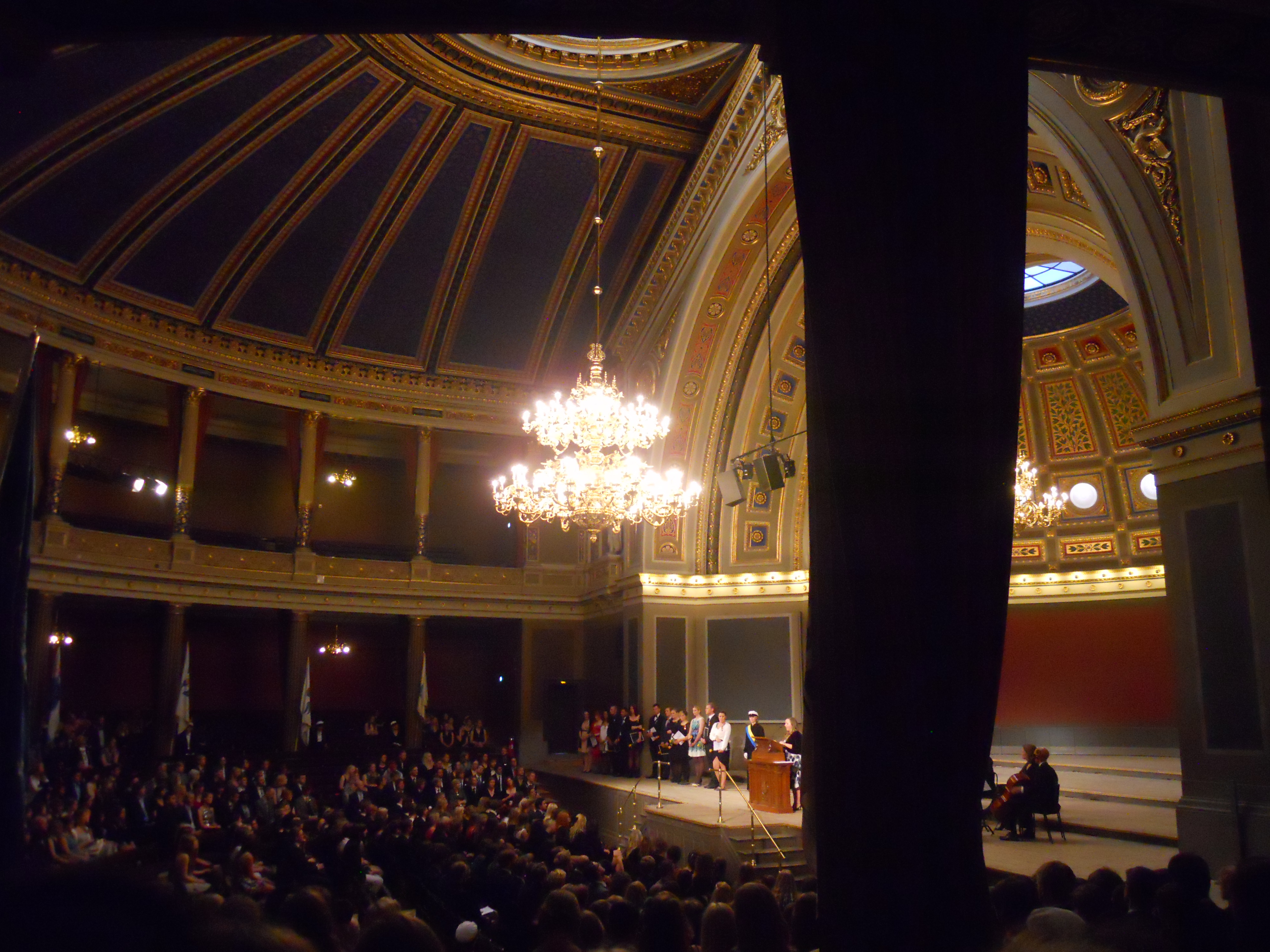
The big part of my week was the Reccegasque I was so excited about. On Friday, we all got ready, dressed in cocktail dresses and suits and all gathered at our respective nations (each of the 13 nations had a Reccegasque at the same time). Uppsala never looked so fancy! We were very lucky to have clear skies and no rain (it rained in the morning). First we gathered at Värmlands Nation (my nation) and then we walked over to the University Main Building. There was a senior member of the nation who carried the nation’s flag and we followed him in a line. This entire ritual made me feel like a part of something bigger. The sense of community is on a really high level here. When we got to the University Main Building (which is conveniently 2 minutes away from our Nation’s house) other nations’ members were also gathering on a patio in front of the building. After about 10 minutes of waiting and chatting  with people standing around me, new nation members, lead by the flag bearer, started entering the building. We were seated in the Great Hall where we had the reception for international students. The program was amazing. We had representatives from the University and Student Union speak, and there was also an entertainment program. It all looked very majestic, especially with the classical music playing while the flag bearers entered the Hall. The weird thing was that most of the speeches were held in Swedish and I, along with all other international students, didn’t understand much. Luckily we had some Swedes around willing to help us. It was funny that there was an a capella group singing, and they performed “Levels” by Avicii. Does it get any more Swedish than this? 😀

Speeches and entertainment in the Great Hall of the University Main Building with all the nations

Speeches and entertainment, in the Great Hall of the University Main Building, as part of my first Reccegasque

After the program in the University Main Building we headed back to our Nations. There we had a looooooong dinner (5.30-10.30pm). The food was amazing (we had typical Swedish food like salmon and potatoes). Of course we sang a lot and heard a lot of speeches. There were also a few short performances by the Värmlands’ drama club and choir. The funniest thing for me was when we had to make a hat out of napkins, put them on our heads, sing a song, and then wave with the napkin after the song. For the last song of the night we had to get up on our chairs and sing. If, after the song, you sit down on your chair you will fail your exams. So we all stood a bit until the dinner was officially over. After the dinner we had an after-party in Värmlands’ own club “State of Mind” that was open to every student (not only the students who attended the Reccegasque). I really enjoyed the Gasque and I can’t wait for the next one (which is in October!). This is a great way to learn more about traditions, have a very formal dinner, and meet new people (the nation arranges the seating so you are almost never sitting next to your friends. I was lucky and had amazing table neighbors).

Waving the "hats" that we made out of napkins at the Gasque, our nations dinner

Waving our “napkin hats” at the Gasque

Uppsala is a place where you can experience so much and I am more and more sure of this every week. 🙂


First Week of Classes, Culture Night and the Reccereception (posted by Indira in Sweden)

September 14, 2012

It seems like the semester (which ironically in Swedish actually means vacation) has officially started.

The first week of classes is over and I have to admit that it was a long week. At first I was really surprised by how the teaching system here operates in a completely different way than back at UR. Here, everyone usually takes one class at the time – basically you take one class for 5 weeks and you have that class every day – which means that you focus on only one field/area at a time. I think this is rather good approach. Right now I am taking two classes simultaneously (which is also one of the options), one in the Department of Government and the other in the Department of Sustainable Development. The way these classes run is very different. My Government class is very informal, and classes (lectures and seminars) are not mandatory, while the final exam is mandatory (of course!). There are lectures where we have about 50 students (mainly Swedish freshmen and exchange students) and seminars where there are about 15 students. During the seminars we discuss the class material, while during the lectures we simply listen to what the professor/lecturer has to say on a topic. My Sustainable Development class, on the other hand, is mandatory, but it is organized in essentially the same way as my other class (lectures and seminars). We also get a new lecturer for each class, so it’s rather dynamic and you learn from the experts in specific fields. In the beginning I was truly confused by this system, but now I understand it better. 🙂

After my last class on Friday I had a Reccereception. As a member of the Värmlands Nation I signed up for the Reccereception and Reccegaque which are basically a semi-formal and a formal dinner that help the new members (recce) get acquainted with the Nation.

Värmlands Nation's Big House in Uppsala

Värmlands Nation’s Big House


During the Reccereception we had a guided tour of the Nation houses and then we had a dinner. Dinner was more of a lesson for all of us newbies on how to act during the real formal Reccegasque. We learned about drinking snaps and singing songs (we even got special Songbooks so we can sing along with the Songmaster). I would say that the Reccereception was a real success and I had a lot of fun.

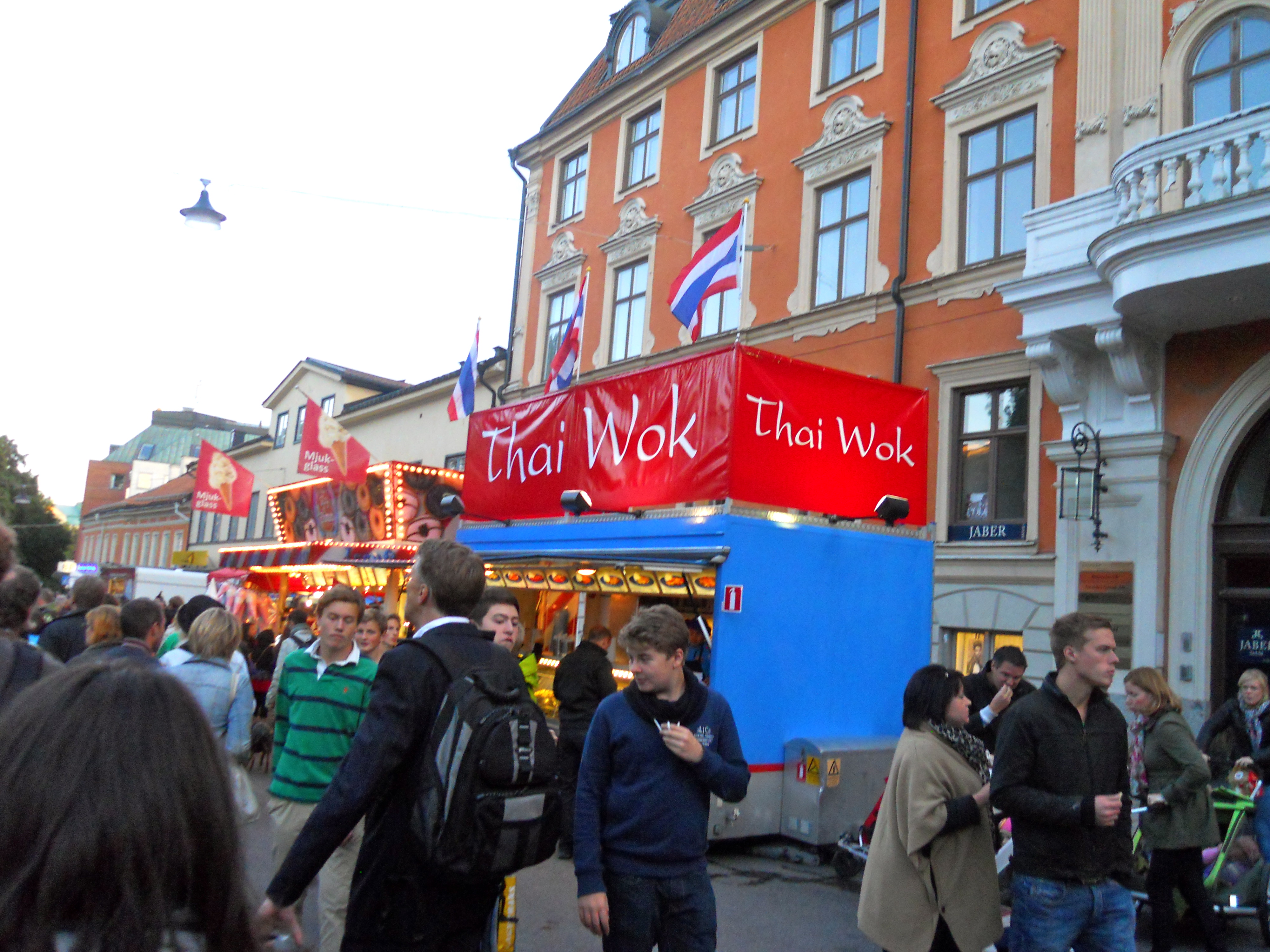
Crowded streets of Uppsala during the Culture Night in Sweden

Crowded streets of Uppsala during the Culture Night

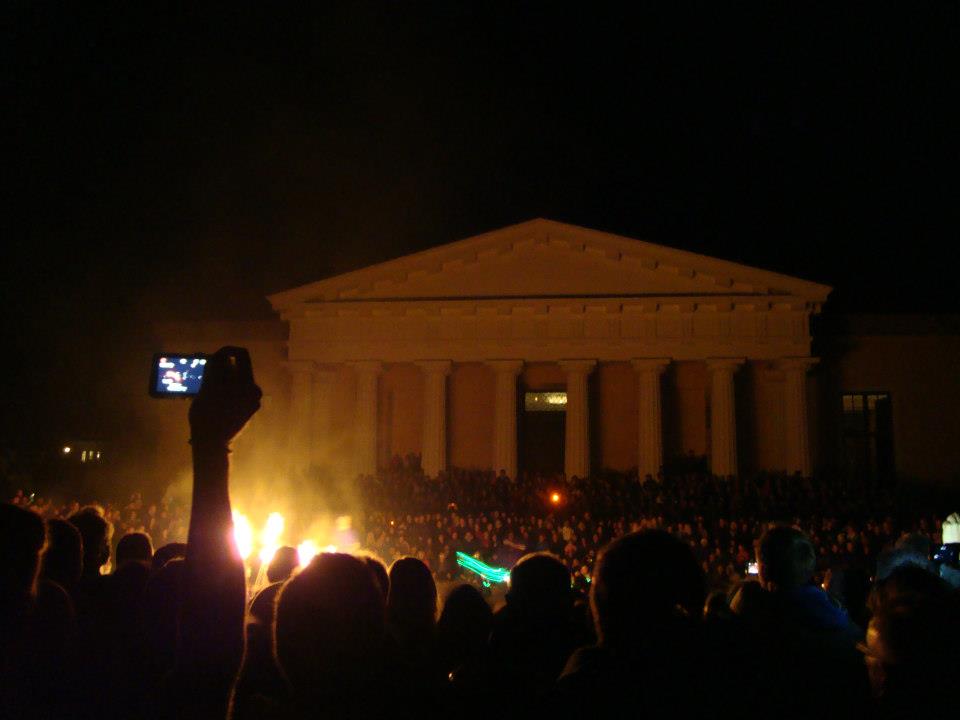
Last week there was also the Culture Night here in Uppsala. All museums had free entrance and were open during the night. There were also a lot of various cultural events across town. It is very interesting to see how so many different cultures come together in such a small city like Uppsala. The streets were very crowded and everyone attended at least one event. My favorite part was the fire display. There were fire dancers who showed us their most mystical moves and kept us warm during the cold night. If you are ever in Uppsala during the Culture Night – make sure you take part in it, it is definitely worth it!

Fire Display at the Botaniska trädgården, at a cultural fair in Uppsala, Sweden

Fire Display at the Botaniska trädgården

Right now I am looking forward to the Reccegasque! I am sure it will be a blast 🙂


Week 2: Little Steps (posted by Kati In Spain)

September 4, 2012

This week has been focused on the administrative details of moving to Spain and matriculating in a university that has procedures and customs that are very different from those that I am used to. It has been a long week of ups and downs, and although Monday was a rocky start, Sunday was a perfect finish.

Ninety days before leaving for Spain I applied for a yearlong student visa via the Boston Spanish Consulate, following their directions to a T. After eight weeks of waiting, I was told that the Consulate is no longer permitted to grant yearlong student visas and that I would have to apply for residency at the local police station within thirty days of arriving in Spain, or else I would be deported. I waited a week after arriving to begin my residency application, as the director of my orientation program, the person I was told to ask for help, was on vacation until Monday. First thing Monday morning I went to the Cursos Internacionales Office to ask Carmen for guidance. She patiently explained to me her understanding of the application process, and she gave me directions to the police station. Colleen, my unconditionally supportive roommate, accompanied me.

By the time we arrived at the station it was one o’clock in the afternoon, and after being loudly hissed at and thoroughly evaluated by the male officers standing outside of the station, we were told that we would not be helped today and that we must come back early tomorrow. Feeling slightly dispirited, we continued with Carmen’s directions and made our way to the University’s International Relations Office, where my thoroughly confused advisor told me that I must have done something quite wrong on my original visa application and that I needed to fly to Madrid to speak with the U.S. embassy and bring her a written explanation as to why I did not have the correct visa. Thankfully, Michele Cox, the head of Richmond’s Study Abroad Office, was able to help me determine the best course of action, and so I returned to the police station early Tuesday morning.

My experience on Tuesday was much better than the treatment I received on Monday. The man who helped me sported a grey Canada T-shirt, jeans, and sneakers, and upon realizing that I hail from Boston, he immediately started talking about the Celtics, the Red Sox, and thick Boston accents. He gently told me that my application was not complete because I did not have my permanent Spanish address yet, that I needed additional photos, and that he had to add me to a deportation watch list until we could proceed with my application. Wednesday saw me back at the International Relations Office begging for my final address, and Thursday saw me modeling for an overly enthusiastic photographer as she snapped visa headshots from every angle possible. Finally, on Friday, I returned to the police station armed with a folder of paperwork and pictures, and Sarah, a USC graduate, accompanied me to help smooth the process. The same kind man helped me again, and after waiting in line, filling out more forms, traveling to the bank for a money order, waiting in line again, and finally being seen, I was told that I could return to the station in forty days to retrieve my extended visa. Halleluiah!

Despite missing several hours of class to deal with my visa, I successfully graduated from the Cursos Internacionales intensive immersion program on Friday. It feels strange that I will not be in class with my wonderful professor Juan or my new friends again! Although my grammar did not improve very much through the course, my speaking ability and my knowledge of Spanish culture and daily life improved at lot, and I am so glad that I took the class. On Wednesday I took a placement test for another intensive immersion course that begins in October, and I have high expectations for my experience!

Also dotted throughout this week have been preparations for class registration. Class registration for international students is an arduous process that is not well understood by anyone and is confusing for everyone. As with any university, the student peruses the rich course catalog and creates a list of classes that are of interest to her and fit with her major areas of study. She then emails and receives an almost immediate response from the heads of each relevant University of Richmond department to make sure that she will be able to transfer credit from the classes she is interested in back to Richmond. The student spends a few hours arranging various possible schedules with different combinations of the classes that she might like to take, and then she pursues a meeting with her academic coordinator at the University of Santiago de Compostela.

But this is where it gets tricky: international students are not assigned an academic coordinator. The student must select a home faculty even though she is taking courses across various faculties, ask the International Relations Office staff to craft her a new acceptance letter so that professors will allow her to take classes in multiple faculties, email the faculty secretaries repeatedly over the course of a week until she finally gets a response, schedule an appointment with the coordinator of each faculty, trek all over the city for appointments with each coordinator, and then beg each coordinator to answer her questions about class schedules, the language of instruction, final exams, and the class registration process, which is different for every faculty and not at all self-explanatory. Finally, with signed learning contracts, final acceptance letters, and certificates of matriculation, the student may finally register for her classes, receive a student ID card, and gain access to the Internet in the dormitory. Needless to say, I cannot wait to be done with this process and registered for the classes that I am so excited to take!

Keeping me well fed and sane as I wade my way though these processes is Pepita, my incredible host mother. Every day has begun with a piping hot cup of English tea, toast, various yogurts, and fruit, and every evening has concluded with an overwhelming amount of delicious food and an hour or two of Spanish TV game shows. After receiving my final address and dorm room number on Wednesday, Colleen and I wandered over to the residence hall to see if we could see our rooms. Unfortunately, my room was occupied by a summer student, but after much negotiating and pleading, the man behind the desk finally agreed to show us a room. We have certainly been spoiled by the wonderful dorms at Richmond, and the stark nature of these rooms made that clear. After much deliberation and conversations with all parties involved, Colleen and I asked if it would be possible for us to remain with Pepita for the rest of the semester. Sadly, after some tense last minute negotiating, it was determined that we have to relocate to the dorm or lose all of our housing deposit. We will really miss Pepita, her grandchildren, and her wonderful cooking and caring smiles, but upon hearing the news she made us promise to visit her, and as she hugged us and patted our backs she told us that we are always welcome in her home. Even though it is sad to leave Pepita, I know that we will have an equally beneficial cultural experience by living in the dorms and by participating in the many clubs, sports programs, and social events that are planned through the residence halls, and I am looking forward to meeting even more people my age!

One of the social resources Colleen and I have taken advantage of is the ERASMUS program. ERASMUS is a student-run social and academic resource for exchange students at universities across Europe. By joining ERASMUS Colleen and I have gained access to uniquely discounted trips to important places around Spain, specially organized group outings for tapas around the city, tours of Santiago in both English and Spanish, and to the buddy program, which has partnered us with a current USC student who will help us navigate the university and the city and answer any questions we might have. Plus we get a fancy ID card…how could we pass up that opportunity?
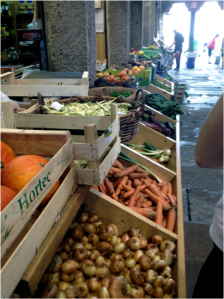
Saturday at the food market in Santiago, fruits and vegetables

Saturday at the food market in Santiago

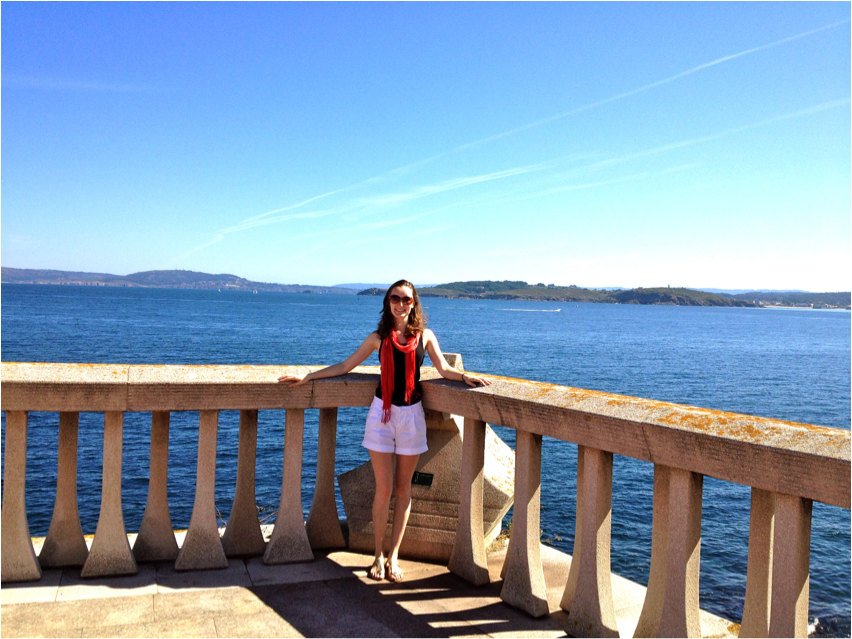
On Saturday we spent the morning at an amazing open-air food market in Santiago, and we concluded our week with a perfectly lazy day on a beautiful beach in A Coruña, a city located a short train ride north of Santiago. We spent the morning walking along the port and the city coast from the train station to the Plaza de Maria Pita observing the gorgeous architecture and the beautiful coast. We ate lunch at a little Mexican restaurant that was the best bang for your buck in town, and the owner was so excited to have Americans in his restaurant because he believed that we could better identify with his experiences with violence and the drug trafficking in Mexico than could the Spanish. After lunch we continued on to the Tower of Hercules. The Ancient Romans built the tower almost 2000 years ago, and it is one of the oldest lighthouses in the world.
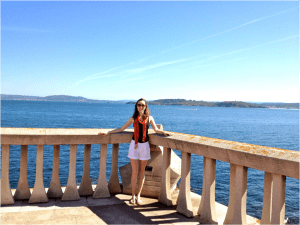
A picture at the A Coruña coast, a gorgeous view of the sea

Kati at the A Coruña coast

From the base of the tower we got an incredible view of the city and the coast, and then we continued on to a lovely little beach that is obviously a favorite of the locals. After a few hours of relaxing in the sand, refreshing ourselves in the water, and catching up on some sleep we wandered over to a little ice cream shop before catching the bus back to the train station. We all tried turrón ice cream, which tastes like almondy burnt sugar ice cream – so delicious! A sunny day with friends, ice cream, and ocean water was the perfect anecdote to a hectic week.

A perfect Sunday at the beach in Spain

A perfect Sunday

Quote of the Week: “Finish each day and be done with it. You have done what you could. Some blunders and absurdities have crept in; forget them as soon as you can. Tomorrow is a new day and you shall begin it serenely and with too high a spirit to be encumbered with your old nonsense.” ~ Ralph Waldo Emerson

Week 1: Aprovechar: to take full advantage of (posted by Kati in Spain)

August 28, 2012

An announcement over the plane’s loudspeaker wakes me from my comatose state, “…flying south to Santiago. We will arrive in approximately one hour. The temperature at our destination is 27 degrees.”

Flying south? Santiago de Compostela is north of Madrid. I look out the window and see tan hills dotted with little green bushes, not the rolling green hills of Galicia that I was hoping to see. Panicking, I yank my overstuffed backpack free from under the seat in front of me and begin to excavate for one – any – of my three guidebooks. I find maps of Spain in all of them, but none of them have Santiago labeled. I open the airplane magazine to find a flight map, and my panic subsides as I see that Santiago de Compostela is the only Santiago that Iberia Airlines flies to from Madrid. I am on the right flight; the pilot must have misspoken. Whew.

A short hour later we descend through fluffy white clouds, soaring over the greenest countryside I have ever seen. After collecting my bags, I push my trolley out into the soft, fresh Galician air. After hours of travel, I am finally here.

PIcture out of window flying over Santiago de Compostela

Flying into Santiago de Compostela

A cabbie rolls his little white car forward to meet me. He is rocking a plaid flannel shirt, black Ray Bans, black skinny jeans, a graying mustache and matching hair, and a cigarette, which he promptly puts out. His accent rolls and lilts like the road we drive towards Santiago. His pronunciation reminds me of an Irish brogue just as the Galician song on the radio reminds me of Celtic music I have heard at home.

The cabbie drops me off outside of a heavy glass and iron door squeezed between an oriental clothing shop and what looks like a garage entrance. I ring the bell, and after a minute an older woman with brownish-red hair and a sweater draped over her shoulders carefully makes her way down a flight of stairs into the apartment lobby. With a big smile that crinkles her eyes, Pepita opens the heavy door and bustles me and my bags inside.

The apartment is spacious and filled with natural light. The floors are beautifully constructed from cherry wood, and although upon first inspection the kitchen appears to be in disarray, I quickly learn that everything has its place and its purpose. I am shown from my bedroom to the kitchen where Pepita has prepared a Spanish tortilla. It’s a solid disk the size of a frying pan created from eggs, milk, potatoes, and onions. Without pausing for breath in her story about an adventure she had in an airport, Pepita flips the whole tortilla onto a plate and sets it in front of me. Forty-five minutes later when I have only managed to eat half of it, she cuts me another quarter and insists that I finish.

Pepita reminds me a lot of my own grandmother. She is kind and gentle beyond words, but she is a force to be reckoned with. She is a teacher/administrator at a local high school, and she is full of stories and life lessons. Five minutes after welcoming me into her home, Pepita quizzed me on my beliefs about abortion, dating, and children, and she proceeded to tell me that no one, absolutely no one, should have children before they are thirty years old. In the mornings, Pepita serves me “English” tea: I am of British descent, and so I should, therefore, prefer English tea. She is always finding ways to make me more comfortable and more at home.

Colleen, a fellow Richmonder and my roommate for our two-week orientation period, arrived on Sunday. She is lovely and just as excited to be in Spain as I am. We are extremely similar, which makes living together an absolute pleasure. Our adventures are always full of laughs, and no day is complete without a somewhat uncomfortable cultural learning experience.

We have the best teacher, Juan, for our intensive Spanish immersion class. In class we practice grammar with exercises such as interviewing fictional characters, solving murder mysteries, writing fake roommate adds, completing TV scripts, and debating current events. We also learn how to imitate Spanish spoken with a thick French accent, the difference between tortas and pasteles, the best beaches in Galicia, and what not to miss in Santiago.

Traditional Santiago almond cake, the Torta de Santiago

Smiles all around after two big bites into the Torta de Santiago

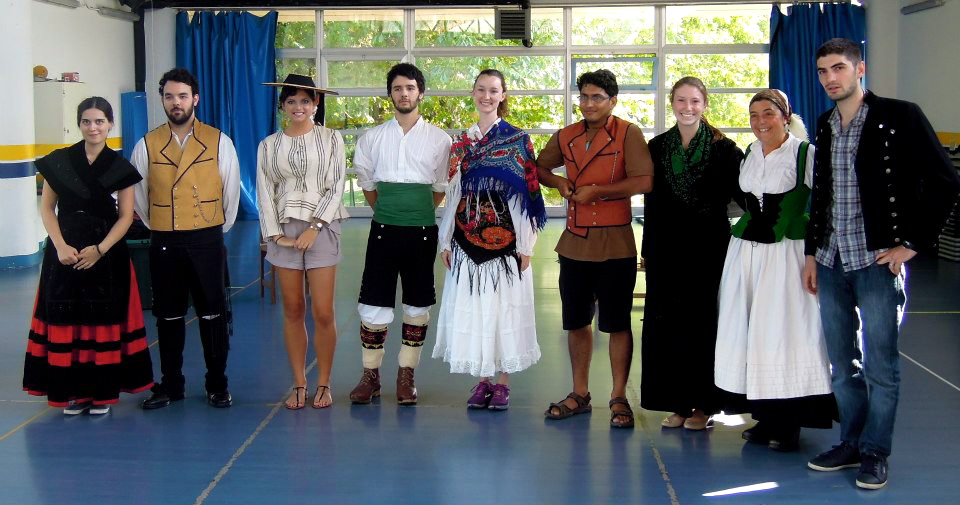
In addition to our academic orientation, Colleen and I are orienting ourselves to daily life in Santiago. We spend part of every afternoon and every evening after dinner wandering the stone streets of the city, and we discover little treasures during our walks. We have fallen in love with the Torta de Santiago, which is essentially almond pound cake with powdered sugar. We have compared prices, quality, and quantity of food in supermarkets around the city. We have investigated the rates of different mobile phone companies and compared packages. We have spent time in bookshops, bakeries, little corner stores, oriental markets, parks, culture centers, and art museums. We have gone to mass, attempted Galician dancing, and toured the buildings of the university (University of Santiago de Compostela (USC)). We have experienced Santiago nightlife (until 5:30am, which is considered early!) under the protective wing of Antonio, Pepita’s son and father of two. We have become friends with students from Kazakhstan, Tajikistan, Georgia, Germany, Brazil, Japan, Italy, and South Korea, and we cannot wait for the 40,000 full-time university students to arrive on campus.

Dressed in traditional wear for a Galician dance and music class

Kati dressed in traditional wear for a Galician dance and music class

The past seven days have been a wonderful introduction to life in Spain, and I am so happy to be here.

Quote of the Week: “The key question to keep asking is, Are you spending your time on the right things? Because time is all you have.” ~Randy Pausch (The Last Lecture)


Exploring Sweden (posted by Indira in Sweden)

August 22, 2012

The past week was all about learning more about Sweden firsthand; through food, music, people and traveling.

Sweden is a beautiful country and when blessed with nice and sunny weather (which we were very lucky to have over the past week) it definitely reveals its vibrant and vivid side. This country is like the pieces of kaleidoscope glass – they shine and surprise you with a new image in no time.

This week I was lucky to experience so many new sides to Sweden through the cultural part of the IBS program. First of all we had a lecture (and a practical part) about the Swedish food where we learned more about the holidays in this country and how food makes them special. We also talked a lot about the differences in the diet in the north and the south of the country. Since, of course, words don’t really have a taste, especially when you use them to describe food you never had in your life, we had samples of the most typical Swedish dishes such as köttbullar (meatballs) with lingonberry jam, reindeer (yes, real Swedish reindeer), herring, salmon, and typical Swedish cookies one usually has with fika. At the end of the day I was able to say: Swedish food is amazing!

Swedish food: Köttbullar and reindeer

A few days after the Swedish food, we had a 3-hour long presentation on Swedish music by four musicians from the Uppsala region. They presented traditional, classical, as well as modern Swedish music.  The most interesting part was the performance on the nyckelharpa (traditional Swedish instrument that sounds so nice) and the ABBA impression (we had the performers dress up as the ABBA members and sing their songs). It was really fun being a part of this presentation since I learned so much about the way Swedish music evolved and developed.

Swedish music: both musicians are dressed in the traditional costume from the Uppsala region and the women is holding the nyckelharpa.

We ended the week by going to two Swedish cities on Saturday and Sunday. On Saturday we went to Stockholm (it’s really close, about 40 minutes by train) so we could attend the Stockholm’s Kulturfestival (you can read more about it here: http://kulturfestivalen.stockholm.se/EN/index.php). It was amazing! We saw performances by Catalan, Swedish and Finnish artists. I am really happy we made it there on Saturday since it was the last day of the festival – definitely a well spent day!

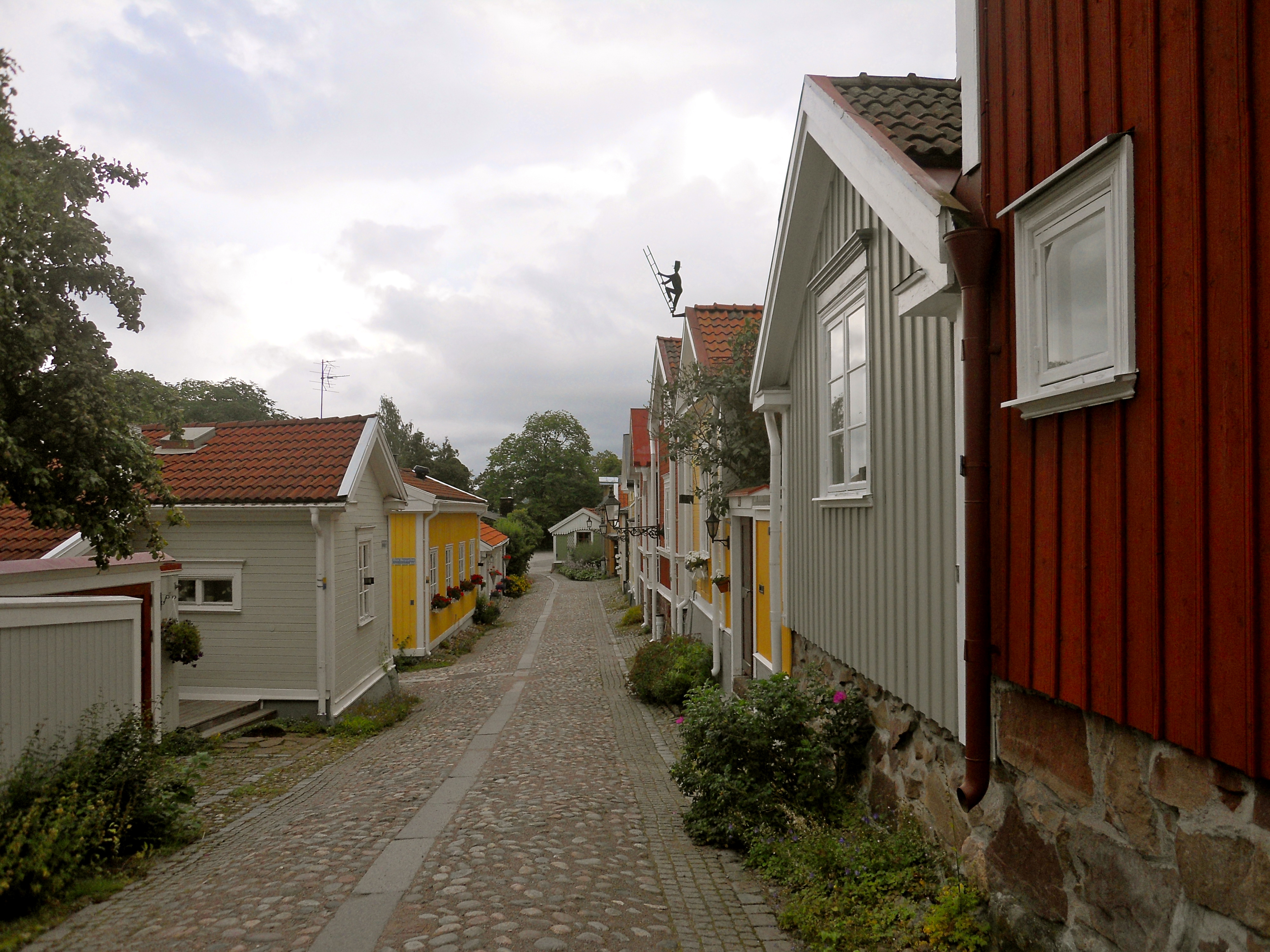
On Sunday we went to a city named Gävle. Since it is a small city and not really a popular tourist destination we had a choice of doing an individual walking tour which turned out to be quite a success! We saw an amazing park, river, old bridge, prison museum, sunning town hall and much more. I’ve noticed that Gävle and Uppsala are very alike, but they have different vibes: Uppsala is more exuberant (but not as much as Stockholm!) and yet tamed in a way, while Gävle seems to be more of a nice small town (almost a suburb) that reminds me of a mystery box that hides all the beautiful spots that have to be discovered. Either way, I really loved visiting both of the cities. 🙂

Gävle

People are also a big part of the exchange program. Not only am I meeting a lot of international students (there are not a lot of Americans, which makes Uppsala University a perfect place to make friends with people of other nationalities and backgrounds), I am also making a lot of Swedish friends. Don’t let the stereotype about Swedish coldness scare you – they are amazing people with interesting stories. And they are very funny too! There are a few Swedes who live on my corridor and I really like them; they are all so helpful and they do their best to make me feel at home. Swedes you meet at the social events are also very nice and talkative (I haven’t really experienced that famous coldness yet). After all, talking to people is the best way to learn about the country and its traditions, but also to find out more about the wonders this country hides.

Every day I am more and more happy that I have chosen Uppsala University as my study abroad destination since I am getting the best of both worlds – high quality education and amazing cultural exchange that will mark my college experience in a great way.


Leaving Bangkok

May 21, 2012

I am writing now sitting at Suvarnabhumi Airport in Bangkok, waiting to board my flight to London.  I have finished my exams, I have said my “see you soon’s” I have done the absolute impossible (only thanks to my fantastic roommate) and have fit 5 months worth of purchases and clothing into only one checked bag (I am not pleased with my airline about this), and I took my last look at the beautiful Bangkok skyline from my bedroom window.

Yesterday and today, ironically, I had the best Thai food of this entire semester, food which I will definitely miss.  I am off to London now to spend a week traveling within Europe to visit family, and while I cannot WAIT to see my family, I am absolutely sad that I am already leaving Bangkok.  It is an incredible city that very quickly came to feel like home, and I could have easily continued on living here without hesitation.  It is very rare that a city can offer so much, from incredible food and cheap amenities, to fantastic weather and the kindest people you will ever encounter.  It will certainly be interesting, after this year of travel, to go back to the “real world.”

Once I am home back in US I will do one last blog post on how the readjusting is going.  Until then, for those who have never been to Thailand before, I highly recommend researching how you could make a trip to Thailand possible. Thailand has everything to offer, and is absolutely worth the trip half way around the world!


The Finer Things in Thai Life

April 30, 2012

Thai people like to enjoy the finer things in life–those things come cheaper here than in the US, and after reflecting on the whole semester, I have realized that those small things that make life just a little bit more comfortable, really are available everywhere-and its difficult not to get hooked.  It is guaranteed that when you look around walking on the street, most people you see have some drink, some plastic bag, some coffee drink, or some food in hand.  Some of the most delicious food I have ever had in my life is at your fingertips on the streets at any time of night, clothing stalls fill the markets and streets all around the city providing cheap and very stylish clothing (which for the most part none of us foreigners fit into because Thais are tiny), and there is always some shake, or some delicious drink available within minutes.

This fact is particularly emulated in an area of the city called Siam.  Siam is the hub for shopping in Bangkok, for foreigners and Thais alike.  There are four or five huge malls, some connected, all within a block or two of one another.  Most of the malls contain every chain restaurant and type of food you can imagine, as well as every brand name shop you could imagine.  “The Pride of Bangkok,” as it is literally tag-lined, is Siam Paragon. Paragon boasts fountains, and waterfalls, music, and ushers opening doors for you, as well as some of the most expensive brands available in Thailand.  As soon as you walk into one of Paragon’s eight floors, you just think “glam.” So going to the movies there last week was quite an experience! We went to the 4DX movie theater, a concept that is now all the rage in Asia. The newest movie to come out in 4DX is Titanic, and let me tell you it was a crazy experience! The 4DX experience is just like seeing a movie at universal studios–bursts of air when there were bullets, sprays of water in your face when the ship was going down, seats shaking all over the place, as well as 3D glasses–amazing!  You literally feel like you are in the movie at times.  All the facilities are incredibly clean, and for Thai people it seems that going to see a movie there is really a glamorous event. There is no shortage of expensive food and Thai popcorn flavors, and certainly no shortage of well-dressed Thais.  To give you a better sense of the ambiance there, I would have felt under dressed in jeans!

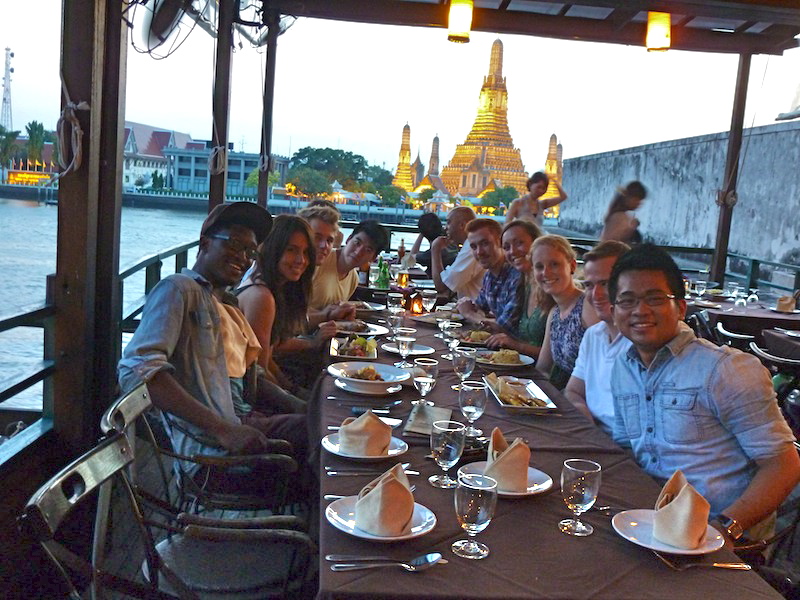
Another amazing aspect of living in Bangkok is the endless number of food options–literally every type of international food you could imagine can be found here: Thai, Japanese, Chinese, Mexican, International, American, French–the list goes on! Often the best part of the dining experience is the view that you have–whether its the skyline of Bangkok, a little side street in which you have found a hidden gem, or a beautiful view over the Chao Phraya river and the surrounding temples.  Thais have become so accustomed to this consumer lifestyle, which is so normal for so many in Thailand, that they don’t realize that this type of accessible luxury isn’t commonplace worldwide, not even in the US.  After almost four months here I have certainly become accustomed to the lifestyle here! I can get an entire mango, or an entire pineapple completely cut and peeled on the street for $1.  I can find any type of smoothie, at any time of day, for less than a dollar. Street food is often better than restaurant food, and there is always something new to try!  I will definitely miss the food here in Thailand! Included are some pictures of my food adventures this week–enjoy!