Mel in Chile: The South Part 1

October 25, 2013

The South: Part 1

I have finally returned to Santiago from the ten-day excursion with my study abroad program. If I was promoting SIT before, I am really promoting them now! The excursions are valuable because they contextualize our lectures, readings, and discussions. The excursions allow us, as students, to move closer to the reality of the theories and discourses we are exposed to in an academic environment.

The title of this blog is “The South: Part 1” because I will divide our trip into three parts. For the first two days we traveled to Ralco, a town in the Biobío region, and stayed in cabins with the other students in our program. The next five days we participated in a homestay in small village called Valle Elikura. During this time we learned about the practice of communal tourism, engaged in discussions with community members, and heard stories of struggles and achievements of the Mapuche group. As we bid our temporary homestay families farewell in Valle Elikura, we spent the last two days around the city of Concepcion. These last days we visited a coalmine, the industrial complex of a forestry company, and had two lectures at Universidad de Concepcion.

Worry not; all of the above events will be described in detail in the upcoming posts.

So this particular post is about the first part of our excursion. We left Santiago at 10 pm on the evening of Sunday, October 13. We drove through the night and arrived to our cabins in an area just outside of Ralco at six am on a very chilly Monday morning. Biobío is the eighth region in Chile bordered by the Pacific Ocean to the west and the Andes in the east.

We all devoured breakfast like hungry wolves that morning and headed out to find our cabins. I am not a car/bus/airplane sleeper so I was tired. I planned to claim my bed and sleep well into the afternoon.

As I was wobbling through the grass, sandwiched in between the two backpacks I was carrying, I looked to the left and felt like I had been zapped awake by an electrical force. I saw the most bizarre and beautiful mountain. The peak looked like it had been split in three pieces by a lighting bolt. I thought, “Alright, this deserves some attention.” I dropped off my things in the room and, without any sleep, decided to look for a trail.

As fate would have it, there weren’t any trails leading up the mountain and the forest was too dense to create my own, so my intended hike turned into a nature walk.

The pictures will speak on behalf of the scenery much better than I will be able to describe it in words so I will not continue with descriptions.

cabins

These are the cabins we stayed in while in Alto Biobío

mountain

This is what our research methods class looked like Tuesday afternoon. The mountain is in the background.

I wanted to talk about what I enjoyed in Ralco. The town has a strong representation of Pewenche people, a group ethnically related to the Mapuche indigenous group in Chile. We were going to visit the Pewenche museum in Ralco. The last time we visited a museum trying to show “indigenous culture” we were in San Pedro de Atacama. It was an incredibly disappointing experience. Until recently the museum (in San Pedro) had an open display of a mummified body of an individual who belonged to the Atacameño group (the indigenous group in San Pedro de Atacama). The Atacameño community denounced this as incredibly disrespectful to their ancestors and an inappropriate display of the Atacameño people in general for many years. The mummified body was not removed until recently. I am positive I spoke of this in my blog post after the trip to San Pedro, but to recap; tourism in San Pedro is almost entirely based on foreign agencies. The indigenous culture is commoditized for consumption of western tourists, and the community itself is outside of any discourses and dialogue on how tourism of their region and culture is carried out. In literal terms, they are also physically outside of the center of the village. The center is now only for restaurants, tourist agencies, and hostels. It maintains a manicured “rustic” image of an “indigenous village” in order to supply tourists with the preconceived notions we have of exotic places. An anthropologist who works at the museum in San Pedro told us she will hear guides tell entertaining stories of Atacameño history to their groups that are incredibly far away from the history as told by the Atacameños themselves.

For this reason, when we were told we were going to a museum that exhibited Pewenche people and their culture, I was a bit weary and irritated.

When we entered the museum, however, I encountered a much different dynamic.

For starters, the museum was relatively small. The two people who worked there told us they were Pewenche. The young man let us know he would guide us through the museum. The museum didn’t have any displays of “ancient artifacts” produced from archeological digging sites. One section had photographs of different Pewenche people from Ralco with a caption of something they wanted to share about the Pewenche culture. Another area displayed Pewenche cuisine, including the instructions of how the food could be prepared. The other wall displayed and explained fruit and vegetables typically used by the Pewenche people in Ralco.

In the middle there were four wax figures of Pewenche males dressed in ceremonial attire, imitating a dance. Our guide told us next month he would dress in that way and participate in this dance.

This museum was a display of a living culture. The Pewenche people in Ralco designed it. They controlled the displays. Most importantly, they control the dialogue of how people outside the culture would consume what the museum exhibits.

We also visited a dam in Ralco. The building of dams is a big struggle the communities and environmental activists have in the Biobio region. I remember in my Environmental studies region we learned about the pros and cons of building dams. I particularly remember we had an exam on “clean” forms of energy so I diligently studied the flashcards of pros and cons I had created for the types of alternative energy we would have on the test. It was…a dejavu moment (i think?) to stand on the dam. I would look to my left and see a huge reservoir and look to my right and only see a tiny river. We also went inside the dam, into the control room to see the technological face of the structure. We also saw the various components of the dam, like the turbines the water turns and the magnetic sheet above it. As far as my understanding goes, the water from the river turns the turbine which causes positive and negative electrons in the magnetic sheet to move, which then generates electricity.

river

This is the river side

reservoir

and this is the reservoir side.

inside a dam

This is a section inside the dam where the crew controls….stuff.

The first part of our trip in Alto Biobío was incredibly valuable. I was incredibly happy with the museum. I also felt comfortable knowing I was not “consuming” images of an ethnic group that were built by people outside said group. It was also interesting to visit the dam and visualize not only the “pros and cons” that I kept thinking about, but also gain an understanding of how the structure functions internally.

Physically speaking, the area is incredibly beautiful

It is my second favorite museum in Chile.

Stay tuned for Part 2!


Rhiannon in India: Classes at the University of Hyderabad

October 22, 2013

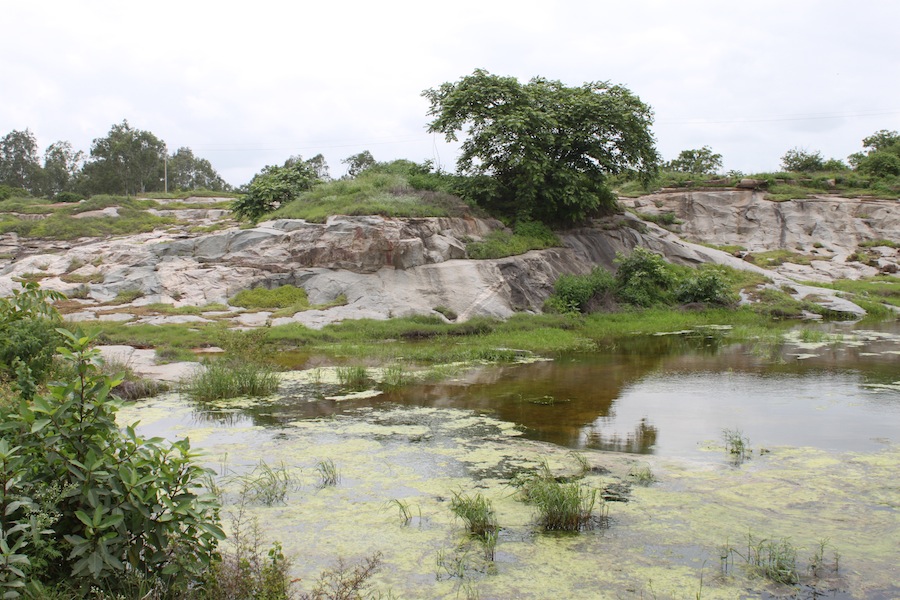
Now that I have been taking classes at the University of Hyderabad (or Hyderabad Central University, as it is called here) for about three months now, I have started to reflect a bit more on my academic experience. As I wrote at the beginning of the semester, the University of Hyderabad is a predominantly graduate-level university about 20 minutes outside the center of Hyderabad. Although the university has a small student body of about 5,000 students, the campus is vast, full of greenery, and serves as a nice sanctuary within the bustling city. Much of the campus still lies untouched, so despite the long, hot walks to South Campus every afternoon, it is nice to be in an environment with lakes, trees, and wildlife like peacocks and water buffalo.

IMG_6716

It’s like walking through the jungle to get to class, and sometimes I see peacocks on the sidewalks and in the trees

IMG_6729

The natural, untouched landscape

I am taking four classes this semester, two that are direct-enrollment with Indian students and two that are only for international students and are held in the Study in India Program building all the way in South Campus (which is quite far from the rest of the academic buildings). My two SIP courses, Basic Hindi and Indo-US Policies, are structured much more like classes at home and cater more to our home school programs and majors. These classes are great because our professors give us tons of opportunities to do things outside of the classroom and experience different aspects of Indian culture. Our Hindi professor, Bhavani, who is also a home stay mom for some girls in my program, holds cooking classes in her home for us. And our Indo-US Policies professor, Ramesh Babu, took us on a trip to Osmania University in another part of Hyderabad, had us over to his sister’s house for dinner, and invited our whole class to his cousin’s wedding. Even though we are just their students, they really embody the Indian culture of welcoming guests and want us to see India in the best way possible.

For the most part, my classes in India are very similar to my classes at Richmond, but there are definitely some differences as well. My workload so far pales in comparison to my usual workload in Richmond, not because the class content is less challenging, but because the grading system here is much different. At home, professors generally decide the number and nature of assignments in each class. Here, however, there is a university-wide policy for assignments and grading. Professors must assign three “internal” assignments, counting only the best two, and one final. This means that you can skip one of the internal assignments because only your best two are counted. Other than these two assignments, no other work is really required, except studying for the final. This system makes it really easy to fall behind with readings because there isn’t much incentive to do them, especially if the class is lecture-style and you aren’t expected to contribute in discussions. What’s worse (or better, depending on your perspective) is that you only need 75% attendance to pass, so generally speaking, it is much easier to get by with much less effort than at Richmond.

IMG_6712

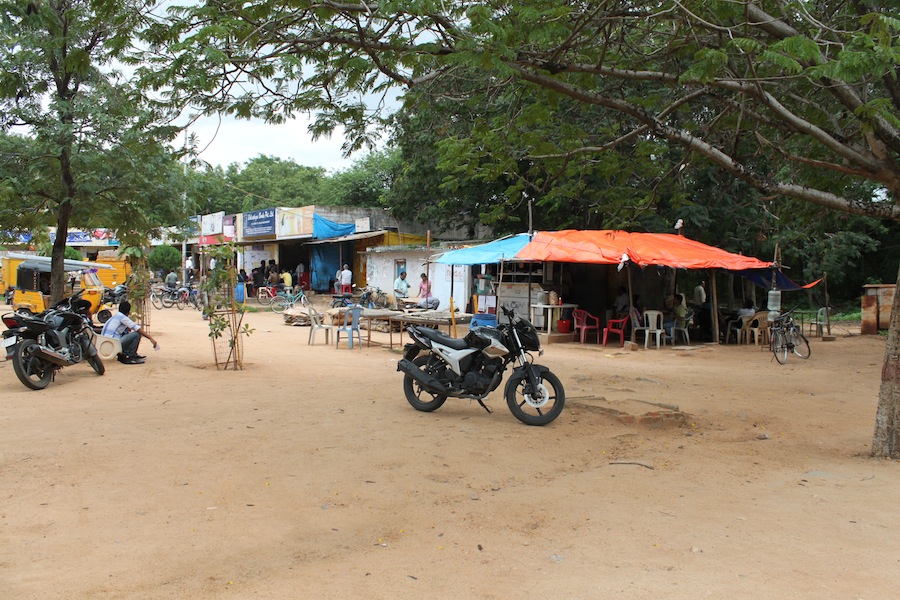
The shopping complex (Shop-Com), where all the students hang out, eat, and socialize

I really notice this in my Indian Philosophy class, which has about 15 students, five of which are SIP students like me. We are learning about three schools of Indian philosophy, including Yoga, but the professor is very new to teaching and, according to my Indian classmates, studied art in graduate school – not philosophy. Because of this, her lectures are usually pretty confusing, not only to the international students, but to the Indians too. And to add to that, the Indian style of teaching tends to emphasize repetition, so many of our lectures are about very similar things for days at a time. After the first few weeks, many of the Indian students even stopped coming to class. For the international students, this class gets pretty frustrating, and we usually just read outside material on Indian philosophy to complete our assignments.

IMG_3286

It’s pretty common for the campus dogs to go in and out of the academic buildings. This one in particular sits in on our philosophy class every morning.

On the other hand, my Technology and Politics professor is very interesting to listen to and engages the students a lot in class. We talk about a wide range of topics – from philosophy to new technological advances with regards to caste and gender issues – and the students get really excited to contribute in class. The structure is mostly discussion-based, and our professor engages the class by assigning presenters and discussions on each reading assignment. If you don’t speak up during the discussion, she will inevitably call you out and ask if you have anything to add. She can be pretty intimidating, but her way of challenging students seems to work well. For our second internal assignment, we have to research a topic of our choice and present on it, but instead of presenting what we have learned about the topic, we present our research proposal to the class. The class and the professor critique our research and then we have to write a formal research report by the end of the semester. I have never had to do this type of project before, so I’m not sure if this is a difference between U.S. and Indian schools, or if it is because this is a masters-level course and I have only had undergraduate classes so far. Regardless, I am glad that I took this class because I feel like I am learning about Indian culture, not just through the course content but also by hanging out with my classmates.

IMG_20130918_115649

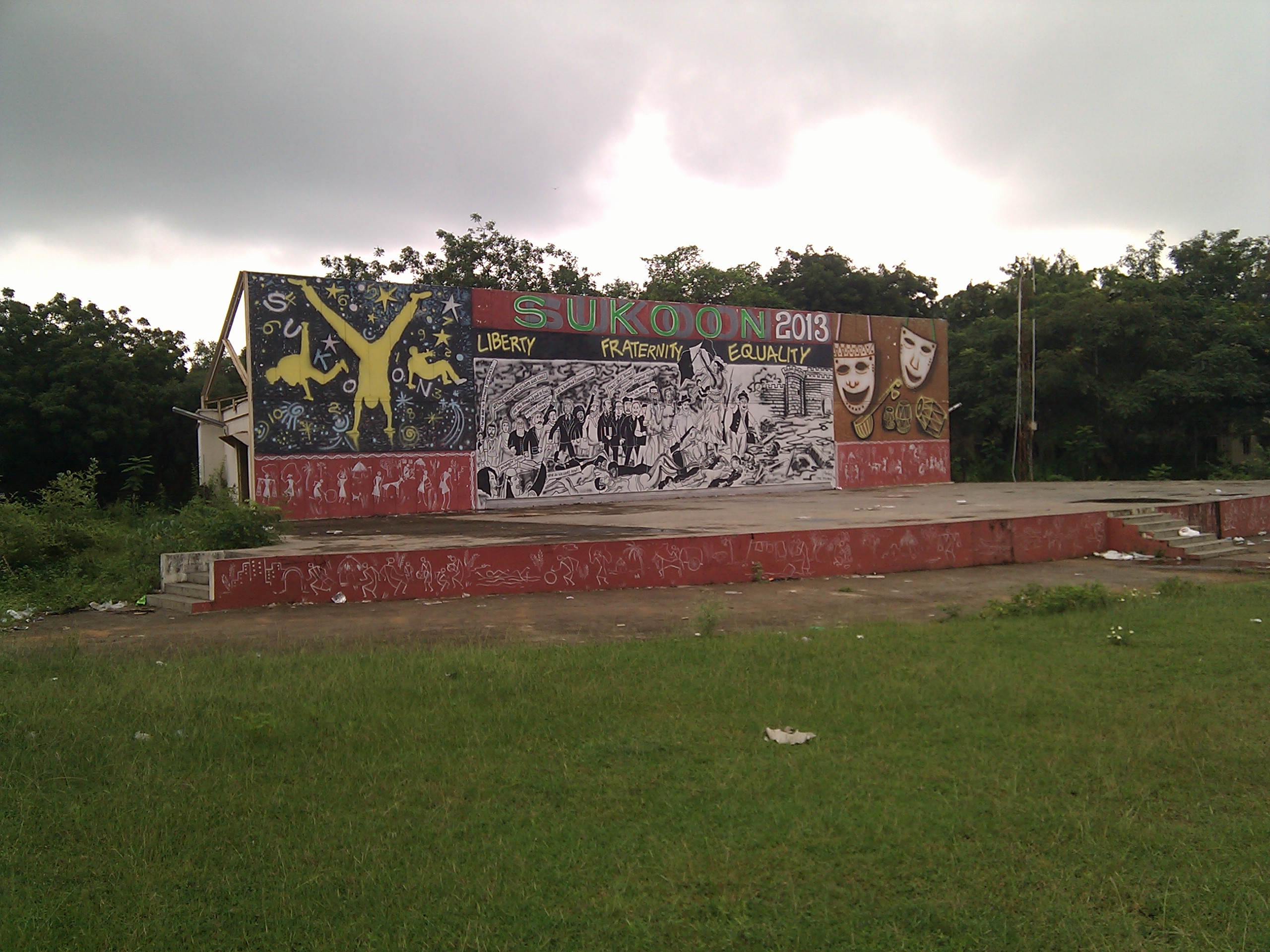
The outdoor auditorium on campus – the site of many student events and protests

Overall, I am really enjoying my classes in India and they are adding a lot to my experience. Not only do I enjoy learning about ancient Indian philosophy, India’s foreign policy, and caste and poverty issues, but I also think that observing my professors and classmates is a valuable way to learn about Indian culture.


Done with Classes!

October 16, 2013

Alright, before all of the other study abroad students look at this title and feel themselves overcome with jealousy, I should explain.

I am not doing a traditional exchange program with a university in Chile. Technically I go to Universidad de Santiago de Chile, but that is only true in part. The School for International Training (SIT) is an independent organization that offers themed study abroad programs around the world. The program I am participating in right now is called “Chile: Political Systems and Economic Development”. All of the students in SIT programs take classes together. For example, my program has thirteen students and all of our lectures are in a classroom of just SIT students; we do not have classes with Chilean students as part of the program. With that said, I am not lying when I say I am done with classes. One of the characteristics of SIT is the month long independent research project students work on during the last month of studies, so for me this means November. Today we are starting a ten-day excursion in southern Chile where there are high concentrations of Mapuche communities (Chile’s biggest indigenous group). The drive will be about ten hours and we will do this during the night. The purpose of this trip is to engage in dialogue with the Mapuche community and the community leaders about Mapuche political participation, economic development, and the struggles over land rights that the government sells to multinational forestry corporations, and the Mapuche perspective of identity within a nationalist country that marginalizes indigenous identity.

We will return from this trip in late October. During the next couple of days I need to create a research proposal and make the decision to reside in Santiago for November or relocate to a place that would be more useful for my work. Then November will come and I will be in full swing on my independent research.

Now that I am done advertising for SIT, I would like to express some thoughts on how it feels to be finished with classes.

Time has passed by faster than anyone can understand until they participate in a similar study abroad arrangement. Of course this is because we literally have less time in the classroom with the excursions and the independent month. However even taking into consideration those circumstances, I still feel it is honest to say time passed very quickly.

I have truly enjoyed the group with which I spent the past two months. There are only thirteen students so we had the opportunity to become close to one another. I can say that all of them are people I would have chosen to be friends with under different circumstances. We learned about Chile together, we learned a different language, we explored Santiago, and we traveled to magnificent places and came back to hotel rooms discussing them under the lens of social progress. We sat in class together every day for the past two months learning and exchanging ideas. It goes without saying I will miss the group.

We are all meeting at the metro station in two hours to start our journey to the south. I feel ready for this next experience.

Stay tuned 🙂

Screen Shot 2013-10-13 at 8.03.01 PM

This is a picture of almost all of us…we cannot be contained within the dimensions of one photo! This is in Valle de la Luna, in the North of Chile.


Alyssa in New Zealand: The capital and Maori culture

October 11, 2013

The reality that the end is approaching has finally hit everyone. Since it’s the last week of classes, we have all started to realize that living here is not going to last forever. As we hand in our last minute assignments and prep for the upcoming exam period, we can’t but help ourselves to keep planning more and more last minute trips. What have we not done? What are we missing? Surely we’ve seen a lot, but have we seen enough? The thought of leaving something behind seems to be more worrisome than preparing for our final exams.

Yet, it is important to focus on the next few weeks, for typically, the final exams account for the majority of our final grades. My microbiology final is 70% of my grade and my zoology final is 50%.  As much as I would prefer to put most of my efforts on my travels, it is essential for me to focus on my work as well.

That doesn’t necessarily mean the traveling comes to a complete halt. In fact, I continue to explore the country. Nothing stopped me from flying into Wellington (the North Island) last weekend. What made this experience a little more special was that I was with the people that I have known my entire life: my parents.

Being with mom and dad was such a great way to spend my time in the nation’s capital. I found myself very lucky to have had visitors. I got to have a little taste of home in America, even though I’m several thousand miles away from it.

welly2 (1 of 1)

Golem, a main character from Lord of the Rings, greets those who arrive in the Wellington airport everyday

Wellington is a very walkable city, for we continuously weaved in and out of the streets. Since the city is situated on the southern part of the North Island of New Zealand, much of the main activity is centered near and around the waterfront. It it typically known as “Windy Welly” due to the high amount of winds that blows into the city from the ocean. A boardwalk that turns into a path runs along the perimeter of the city right by the waterfront, making everything very accessible and creating an enjoyable walkway. Near the water, Wellington seems almost like a beach town. Nevertheless, the further you walk away from the waterfront, the more urban it becomes. The city turns into a more hectic and active version of Dunedin. There are several more people that are walking around as well as cars drive through the streets.

welly4 (1 of 1)

The leaning posture of the statue indicates the magnitude of wind in Wellington.

Variety is integrated all throughout Wellington. Every corner that you turn is something completely new. Whether it be shops or restaurants, no two places that you encounter are the same. I finally got to go out to eat and have a taste of some of the New Zealand food. The food isn’t significantly different from American food. Most of the options that they offer on the menu are somewhat similar. However, the way it all tastes is fairly different, for it tastes much more natural. Everything that I tried seemed like it was a more flavorful, healthier version of what the American dish would be.

welly5 (1 of 1)

A view an area of the waterfront from Mount Victoria, a prominent hill in Wellington. Wellington is the first city one would enter if traveling by ferry from the South to the North Island.

The waterfront is a very populated area, for there are several different kinds of attractions located there. One of the main appeals is the Te Papa Museum, New Zealand’s national museum. As we walked around each level, I found myself learning a lot more about the kiwi culture than I had throughout the entire semester. The Maori culture is highly preserved and respected in the country, for they are the indigenous Polynesian people of New Zealand that have their own language, mythology, crafts and performing arts. Sadly, the presence of the Maori seems to be slowly shrinking in New Zealand, but the kiwis make a great amount of effort to sustain and uphold the customs in the country.

welly6 (1 of 1)

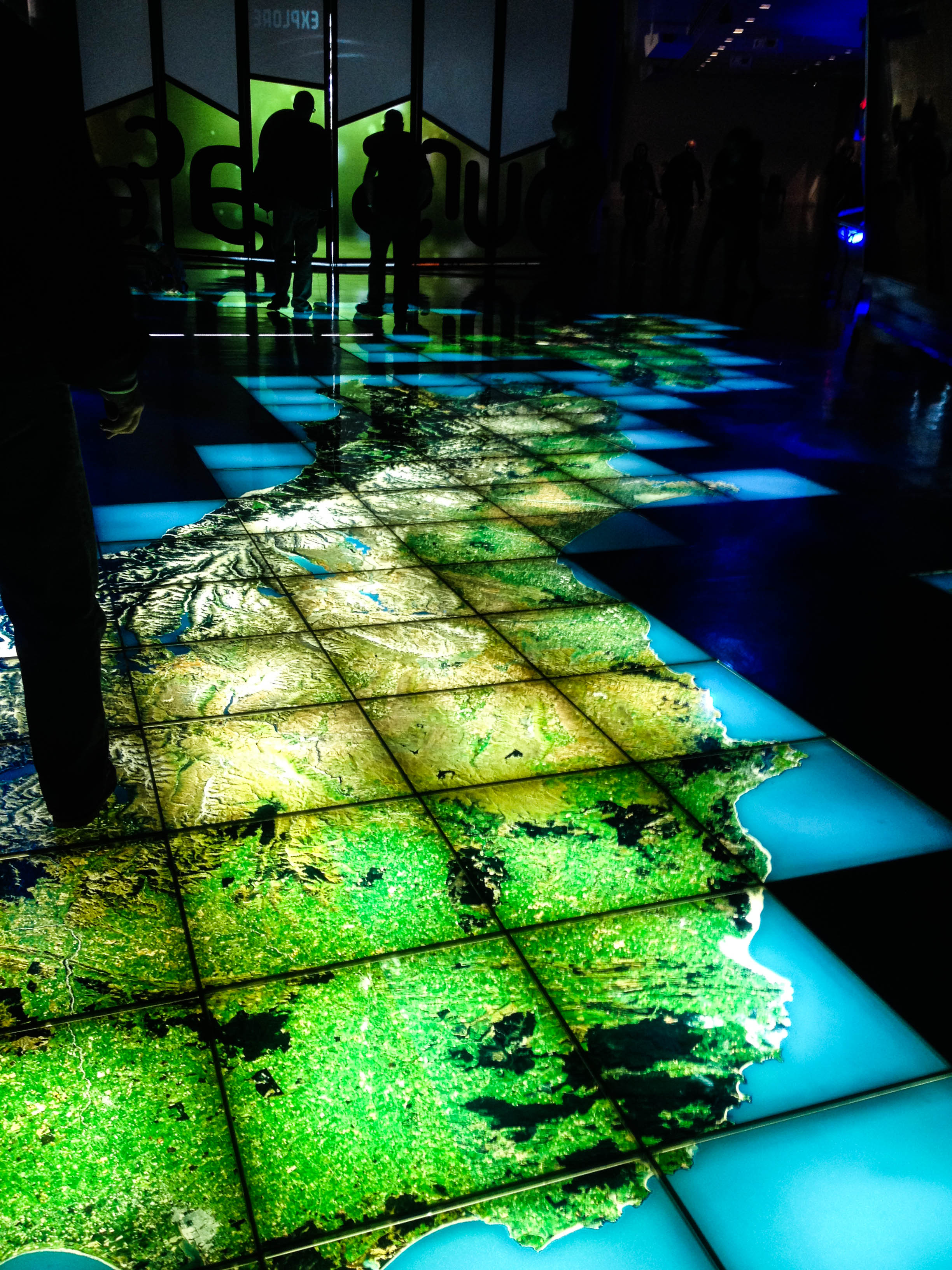
A light up map of New Zealand in the Te Papa museum

Pounamu (also known as “greenstone”) plays a very important role in Maori culture. It is a very highly valued type of stone found in southern New Zealand and each piece of stone carries some sort of significance to it. The piece of greenstone that I attained (a gift from my parents, for it is advised that you should never buy greenstone for yourself) is a “fish hook”, the symbol of plenty. It represents strength and determination and it provides safety for travelers, especially those who venture out overseas (which seemed to be quite fitting for me).

welly9 (1 of 1)

Maori greenstone – the fish hook

After returning to Dunedin, I was inspired to attend the end of the semester concert that was performed by the students enrolled in the Maori papers (both 100 and 200 level). Over half the students in the 100-level paper were international students. I saw the people that I was familiar with walk on stage in costumes that made them seem like strangers. The females were dressed in all black, wearing knee-length skirts, black lipstick and black designs drawn right beneath their lower lip on their chin, almost making it look like they had fangs. The males were shirtless and wore grass skirts that seemed to be constructed by some type of fiber.

Throughout the performance, the students were only singing in Maori with a peaceful melody. Even though I did not understand what they were saying, I was still very entertained. Typically, the dance starts off so that the females are situated in the front and the males in the back and they’re standing very close to each other. Eventually they all spread apart, and the females continue to gently sing in the front. The highlight of the performance is when the males make their way to the front to perform the haka, the traditional ancestral war cry. Much of the dance involves stomping of the feet, vigorous movements and rhythmic shouting and chanting. The signature mark of the dance is the widening of the eyes and sticking out the tongue. New Zealand rugby teams perform the haka before every game, trying to intimidate their opponents and to increase the intensity of the team.

Even though the semester is finishing, that does not prevent me from learning more about the New Zealand tribal culture. I’m glad that I finally had proper exposure to the culture, for there is much more to New Zealand than amazing sights; it has plenty to offer. It’s never too late to discover something new, even if it seems like you’re quickly running out of time (which is exactly how I do feel). The end may seem intimidating, but it is also motivating.


Mel in Chile: Missing Richmond

October 8, 2013

Here it is!

I cannot accurately chronicle my time abroad if it didn’t include a post about how I am starting to miss Richmond. This also comes a couple of days after I decided that I would will go back to Richmond in lieu of another semester abroad.

Maybe the blog about missing UR and being excited to come back and the nostalgia that starts to hit me, would be more romantic or fitting if it were my last blog. But I will break with tradition here and talk about how I miss the red brick and grassy heaven that is the University of Richmond only a month and a week into my program.

Evidently, I am not the only one who feels this way. Our program director walked in today and said “Look, I imagine the month long excitement of being in a different country has waned by now. I know you all want to eat hamburgers again and are getting tired of eating so much bread (NEVER!). But this will pass. I promise it doesn’t last.”

After the one-month mark, I get the feeling the excitement of being abroad turns into a routine of waking up, having class during the day, hanging around a bit before going home, and finally coming in for dinner at 8 pm. After this, I start with homework/skype/reading news/reading things that don’t matter/answering emails until all this culminates into a trip downstairs for some pan con aji pebre (bread with the best spicy salsa concoction to ever be put on the market). I will be bringing 5 bottles of aji pebre upon my return to the states. This will probably last me a month or so and then I will suffer through a withdrawal phase. I could write an entire blog post about aji pebre.

The title of this post is “missing Richmond” and before I wrote the main body, I thought I was going to write about how much I missed Richmond, what I missed about it, and how I am so excited to come back.

All of this is certainly true, and I was going to write about it all without being too “You don’t know what you have until it’s gone” –ish

But then I decided not too. I will be back in Richmond and “have” all of what I miss in a couple of months.

So instead, I decided to write some things I love about living in Chile.

Pebre

Aji

Aji Pebre

How it is socially acceptable to eat a copious amount of bread

The movements for social progress

The people who perform in front of rows of cars stopped at red lights

The hot dog with fried potato chips around it

THE HOME MADE ALFAJORES BY THE LA MONEDA STATION (I can never buy just one)

The colorful stones the country has

The friendly Chileans

Chilenismos (Spanish words used exclusively by Chileans)

The Human Rights Museum

The National Library I go to study in every day after school

My walk to the university

The Andes.

The Andes.

The Andes.

San Pedro de Atacama

That good pizza place I went to on Tuesday after visiting Pablo Neruda’s house

Pablo Neruda

Pablo Neruda’s houses

Especially the one in Isla Negra

$2 Yoga classes at the studio close to my house

My host family

The delicious meals they cook
But most of all, I love sitting in the kitchen at 1 in the morning, when everyone is asleep, doing my homework while listening to a radio station that plays old Spanish, English, Portuguese, and French classic songs, with the volume super low.

The kitchen at night is my favorite place in all of Chile.

The list could be long enough to circle around the equator at least 13 times.

But nobody has time to read that!

IMG_1897

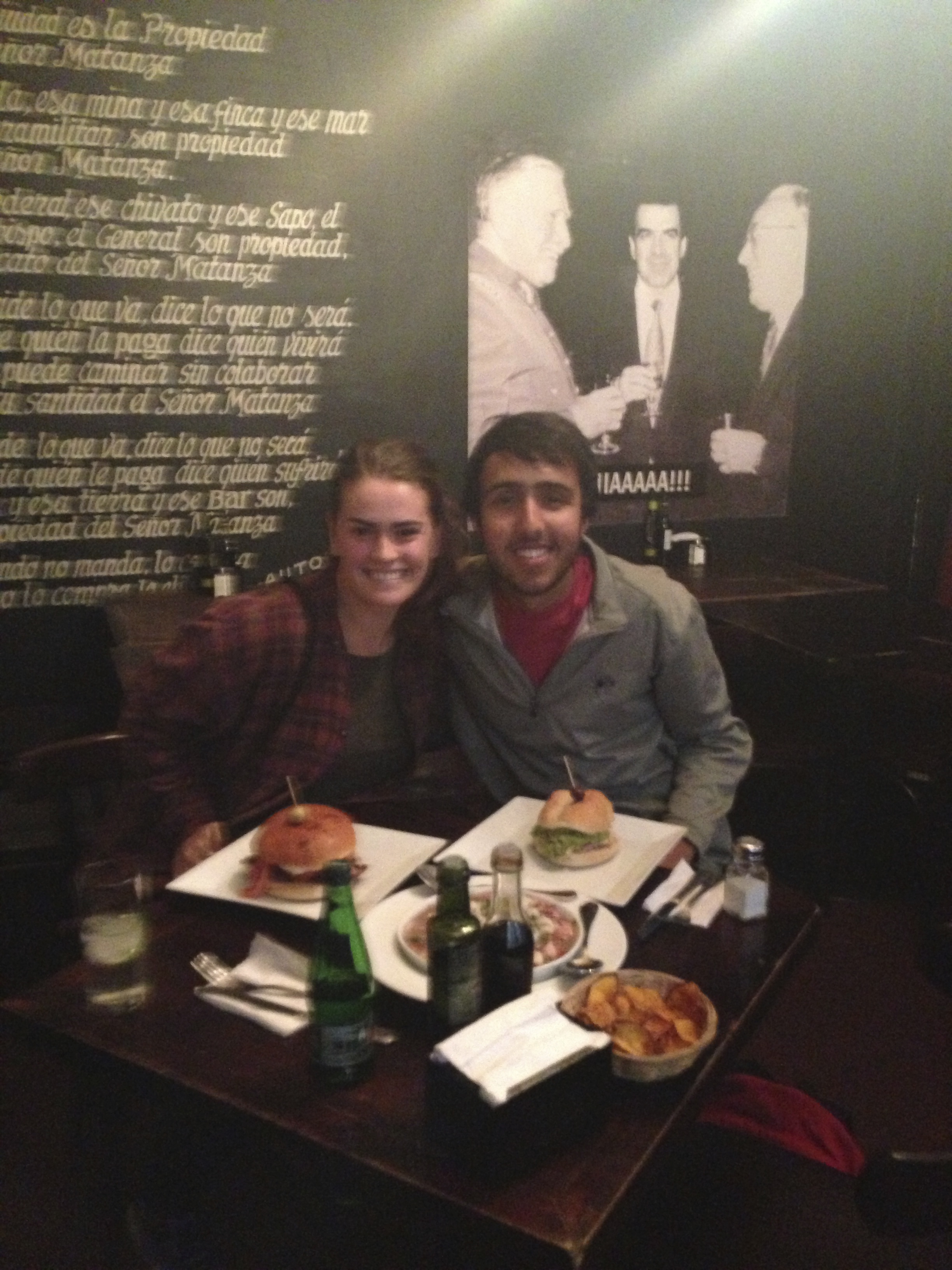
One of the most memorable days in Santiago! Neal, a UR student studying in Valparaiso, Chile, came to visit me for the day. We stopped for dinner at my favorite bar/restaurant “The Clinic”

IMG_2675

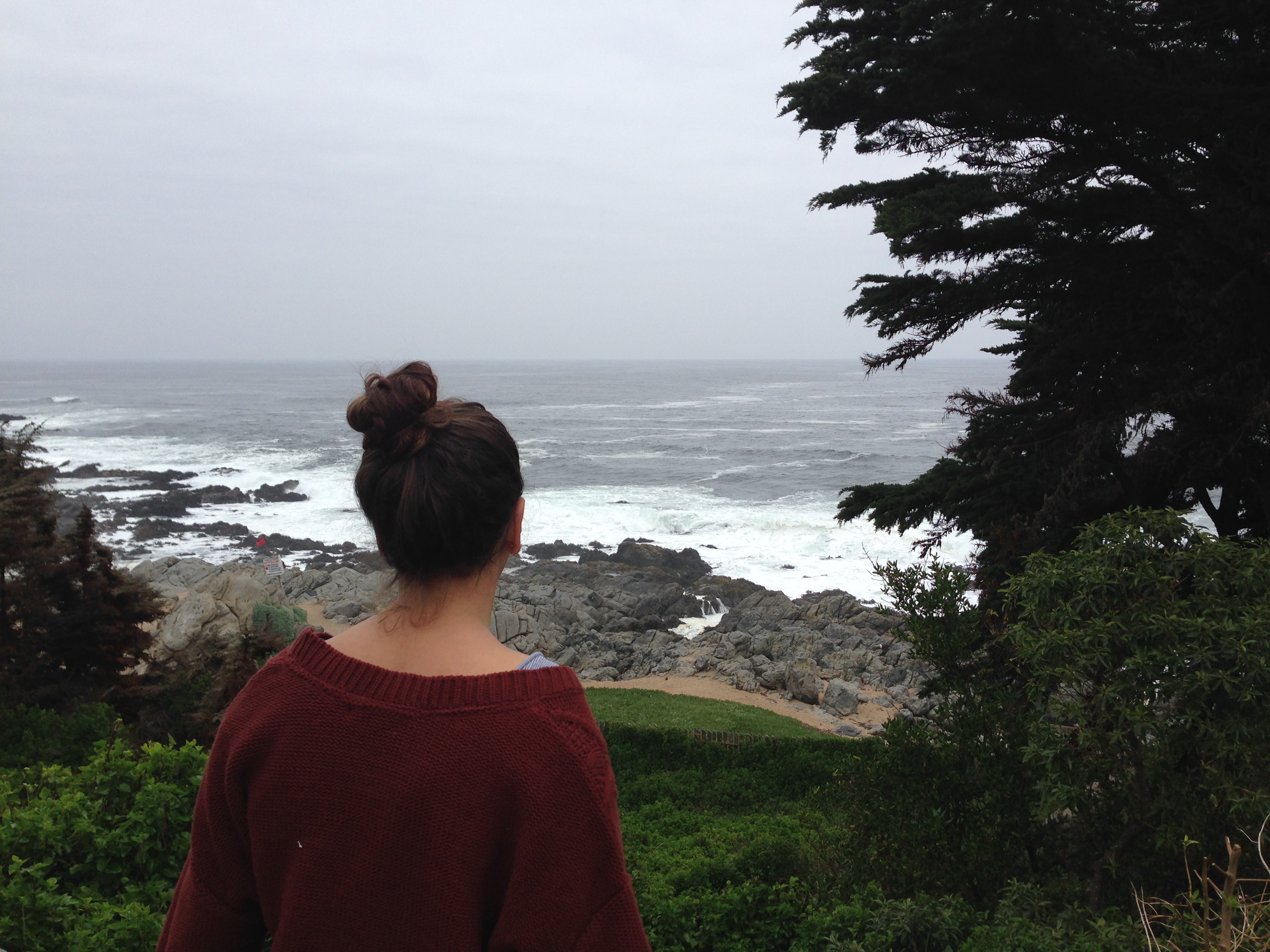
This view is from Pablo Neruda’s house in Isla Negra. I can definitely see what he loved about the place!

IMG_1823

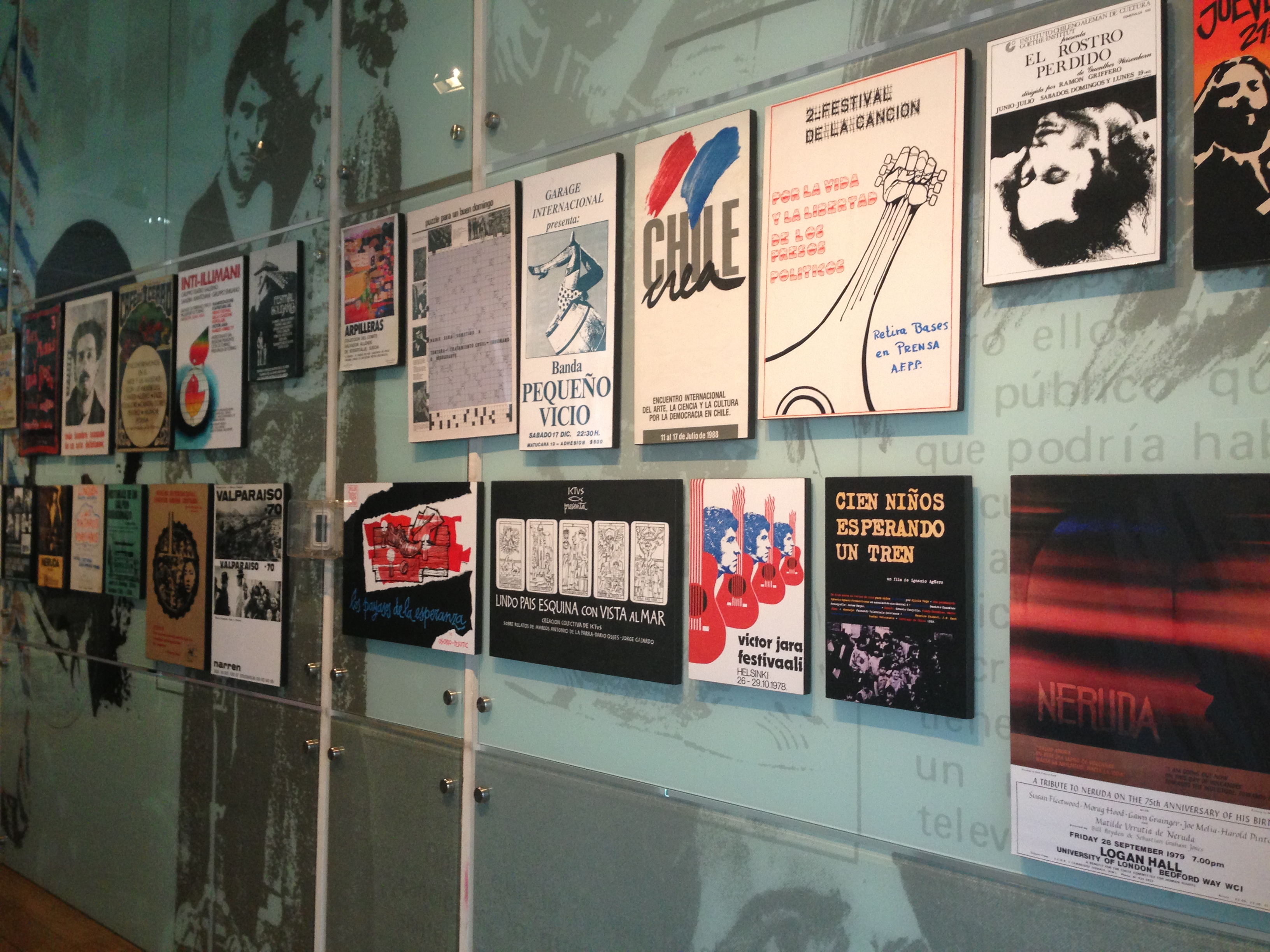
Picture from a section of the Museum of Memorial and Human Rights in Santiago. This is a museum dedicated to the 17 years of dictatorship (1973-1989/1990) in Chilean history

IMG_1765

This is the porch in my Chilean house. Now that summer is coming, it makes for a lovely place to spend a Saturday morning. We will start to have many barbecues here as well!

Hasta la próxima (until next time!) 🙂


Rhiannon in India: Indian Cuisine

October 2, 2013

If there’s anything that deserves the dedication of an entire blog post, it’s food. So far, I have loved the food here, and making the adjustment at the beginning of my trip was surprisingly easy. Some of the “dangers” that people warned me about still ring true, like drinking tap water or eating too much street food, but my friends and I have been here long enough now that we have adjusted to a lot of the differences. Sometimes I even go to a roadside stand with my host sister, Prerna, to eat a delicious snack called pani puri. When you go to a pani puri stand, the vendor takes a hollow fried ball out of a bag, pokes a hole in it with his thumb, throws in some mashed chickpeas with spices and cilantro, dunks the whole ball in a large vat of spicy broth, and hands it to you. You have to throw the whole thing in your mouth immediately before it disintegrates – and before he throws the next one your way.

As a disclaimer, my experience with food in India could never do justice to Indian food in general. Every state in India has its own trademark dish, and many people say that there is a new signature cuisine every 50 kilometers. This is because regional produce and ingredients almost always dictate the traditional dishes of an area in India because it wasn’t too long ago when India was made up of smaller localities called princely states. For instance, dishes in Kerala (the southern-most state, at the tip of India) always include coconuts – coconut oil, coconut water, coconut milk, or dry coconut mixed into curries, chutneys, and sweets. Hyderabad is known for its spicy rice dish called biryani, and everyone here is proud of it. Biryani is typically eaten for special occasions, is made in very large quantities, and can be made “veg” or “non-veg” with mutton or chicken. Biryani is made with a variety of spices, or masala, including cinnamon, cardamom, and cloves.

Biryani

Nivedita preparing biryani for the Ganesh festival

There are also many religious beliefs that dictate the way people eat in India. The ancient Hindu religious texts say that eating a strict vegetarian diet makes you peaceful, so being “veg” is a religious tradition and is also a symbol of caste identification. However, many people eat “non-veg” too, especially the Muslim and Christian communities, so finding a non-veg meal isn’t difficult. The ayurvedic texts also describe the health benefits of eating with your hands, like that your fingers correspond to the five elements, so using them to eat helps with digestion.

My host family is vegetarian, but Jennie, my friend who is also living at my home stay, is vegan and gluten-free, so now all of us eat that way at home. Unless I am traveling or my friends and I go out to eat, I mostly eat home-cooked meals by our host mom, Nivedita. In the morning, Nivedita makes us breakfast to take to school, usually consisting of fried rice and vegetables or dosas with chutney. Dosas are like super thin pancakes made of rice flour, similar to crepes in French cuisine. Chutneys can be made of virtually any vegetable, peanuts, or even coconut and are pureed with oil and spices. For dinner, we always eat together on the floor in the living room and usually have rice with daal (lentil soup) or a vegetable curry using okra, potatoes, onions, tomatoes, or carrots.

Dosas

Dosas with carrot chutney


For lunch, I usually eat at one of the student canteens on campus. These canteens are all over campus and range in size from full restaurants to little shacks behind the school buildings. At the campus restaurant, called Gops, you can order tons of different curries, rice, noodles, and breads like naan or roti. The smaller canteens serve chai (tea) and fried snacks like samosas throughout the day and serve meals only around lunchtime. When you order a “meal,” you get a huge pile of rice and unlimited amounts of the curries and chutneys that they have made that day.

Integrated Canteen

My favorite canteen on campus

Another important meal of the day in India is “tiffins,” which is like the Indian version of teatime. This includes chai of course, but also a variety of snacks that are all deep-fried and incredibly delicious. I have been to two cooking classes to learn how to make some of these snacks, and the cooking instructors tried to teach us healthier ways of making them, but that didn’t mean they spared the oil and salt. We learned how to make mirchi bujji, pakora, chickpea sundel, and chiwada. I won’t explain these in detail, but they are all fried in oil and a variety of Indian spices. These are also typical dishes to eat during the rainy season. As my cooking instructor put it, “When Indians smell rain, they also smell pakora.”

Tiffins

A tiffins meal on the train – idly, vada, and chutney

As you can see, there are so many different types of Indian food that it would be impossible to describe them all here. I always enjoyed Indian food before coming here, but I have realized that what I thought of as Indian food at home barely scratched the surface. One of the best parts about traveling to new places in India is experiencing just how different the cuisine is from region to region. It really shows what a diverse and interesting country India is!

Pakora2

Preparing pakora at the cooking class


Diego in Brazil: Interacting with Rio de Janeiro’s socio-economic and racial inequality

September 27, 2013

I have been writing in this blog for some weeks now, and so far I have tried to stay away from portraying Rio de Janeiro under the same lens you may find in other type of stories about Brazil. I came to Rio almost seven weeks ago with the goal of avoiding becoming yet another tourist in this incredibly dynamic city. To accomplish that, I decided I would stay away from visiting some of the city’s most impoverished neighborhoods at first. From what I heard before coming here and what I have seen so far, this what many outsiders do when visiting Rio de Janeiro.

In recent years, the ‘Favela Tours’ have become major touristic attractions for foreigners. A quick search online for these tours will show you what these companies advertise: “interact with local people, see the happiness that comes out of these slums, and learn about the city’s socio-economic problems.” Most of the exchange students I have met at PUC-Rio have already ‘visited’ some of these favelas, yet when I ask them what the difference between their visit and these popular favela tours is there seems to always be an uncomfortable pause in the conversation.

Certainly many people would disagree with my approach to settling in Rio de Janeiro. Living in Rio’s Zona Sul (the city’s richest area) with a host-family, attending a private university as an exchange student, and interacting mainly with Rio’s middle-class will not show you much about other regions of the city. But this is precisely my point: what exactly is to be “shown” about these marginalized neighborhoods? I share many foreigners’ desire to learn about and interact with Rio de Janeiro’s diverse population. But can we find a more just way of learning about the country’s social diversity when we have the time and resources to do so? Would it be possible to suppress our ‘inner explorers’ until we find a social position or activity that will contribute to the lives of those from whom we seek to learn? In other words, could we approach a new social reality as foreigners and complete strangers while respecting the humanity of those who suffer from inequality and discrimination in the city? I truly want to believe we can.

One of my first steps in finding a more conscious way to learn about Rio de Janeiro was paying attention to how Rio’s residents talk about the city’s socio-economic inequality. My main source of information and perspectives is my host University. I must say that my perspective on how PUC-Rio talks about poverty, culture, and racial discrimination in Rio de Janeiro and Brazil is highly determined by a very particular set of students. As in any other university, you will find some differences between those who discuss social exclusion for two hours in a sociology course and those who take more technical courses. Among the many perspectives and ideas I have heard in my classes so far, the most common thought that I keep encountering is that “poverty in Brazil has color.”

Poverty and race relations in Brazil have drastically changed in the recent decade, and according to one of my professors, class conversation on these topics is shifting and constantly adapting. The World Bank states that Brazil saw its poverty rates dropped from 21% in 2003 to just 11% in 2009, and despite recent protests in Brazil’s biggest cities, statistics show that poverty continues to drop in the country.  I have heard many students arguing that race relations in Brazil are also changing, yet by 2012, 70% of those living in poverty were Afro-Brazilian. Programs and new systems such as university quotas based on race have been established in the country, but as recently as last year statistics showed that only 2.2% of Afro-Brazilians can access higher education. Rio de Janeiro mirrors some of these relationships present in the rest of Brazil.

Let me go back to my point of respecting marginalized populations as we seek to learn about a new place. I want to ask, how fair is it to enter these communities as ‘travelers’ seeking to gain experience and then return to our safe and comfortable accommodation in the nicest areas of the city? Why would we take the freedom to pay our way into these favelas to witness the marginalization of countless families and communities for the sake of experience? As I wrote in one of my first entries, my goal for the semester was to find a position that allowed me to interact with Rio’s diverse population while contributing to these communities. I have been looking for some math and reading teaching programs that go directly to groups of kids and young students inside or near Rio’s poor neighborhoods. If everything works out in the next few weeks, I will hopefully join one of these programs for the rest of the semester. Is it a perfect solution to my questions? Of course not. Yet I want to believe that we can make an effort to grow as exchange students while respecting and contributing to the lives of those who welcome us in their cities and homes.

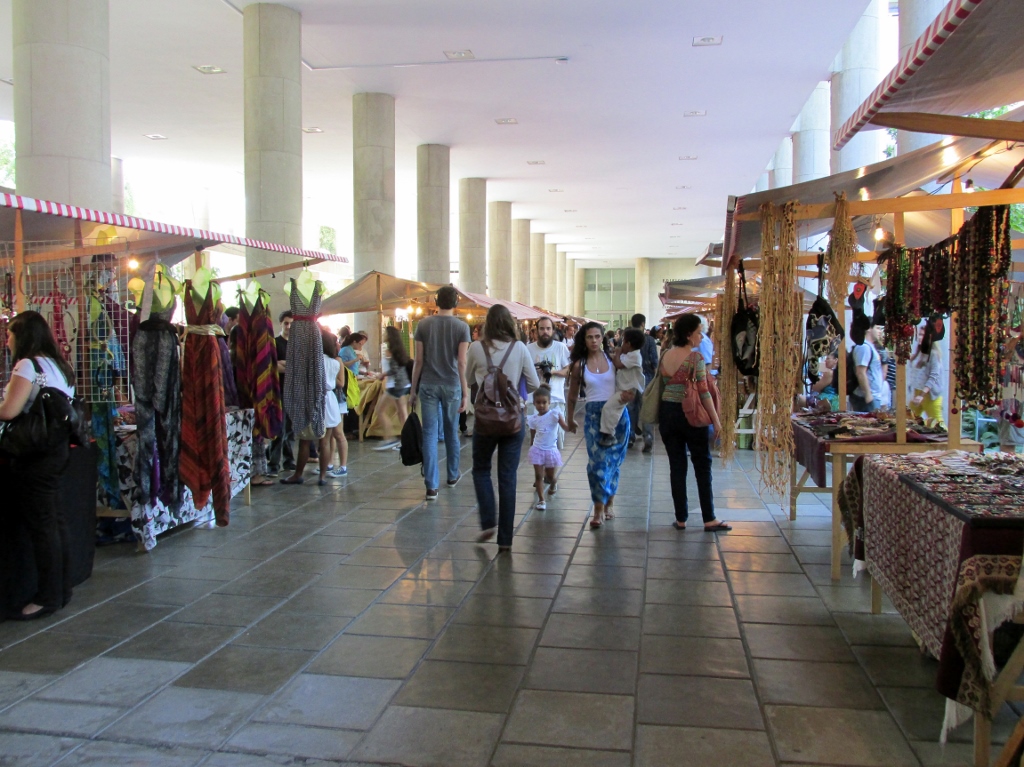
PUC-Rio has been an interesting place to learn about racial and social dynamics in Brazil. Just last week the University hosted a fair with many people who came to sell their products. The activity had a strong focus on racial and ethnic diversity, and I was happy to join other exchange students who were also interested in learning more about this complicated topic in Brazil.

DiegoBrazilFair (1024x768)

One of the booths at the Brazilian fair

Maybe six months will not be enough to fully grasp how PUC-Rio talks about inequality in Rio de Janeiro, but so far I have at least had the opportunity to learn some interesting perspectives from the University.

DiegoBrazilFair2 (1024x767)

The fair gave me new perspective on Brazilian diversity


Diego in Brazil: Grades at PUC-Rio

September 24, 2013

Stay with me during this post. I know I am writing about grades and not a weekend trip to a beach or a new location, but you may be surprised at how a grading system may reveal many cultural and social aspects of a place.

As the semester continues to move forward my professors at PUC-Rio have begun talking about our first tests. Grades at PUC certainly work quite differently than at Richmond. Instead of having a cumulative grade that you earn through class projects, tests, presentations, class participation, and so on, at PUC I only have two tests during the semester that will form my final grade. My first test accounts for approximately 40% of my grade, and in a matter of a week or two I will be having tests for my five courses. According to some of my Brazilian classmates, these tests at PUC tend to be a way for your professors to only determine whether you have completed the assigned readings. Gladly I have been trying to stay on top of my readings in the past month.

DiegoinBrazil (1024x768)

The University’s atmosphere definitely calms you down from any concern about a new grading system

Interacting with my classmates has definitely been a major entry point to many aspects of life in Rio de Janeiro. Having a set topic for conversation does help when meeting local students. Trying to explain that I am a Guatemalan student at the US currently studying abroad in Brazil can get quite complicated at times. When that happens, it is always useful to fall back to a topic related to the class we share to build a new conversation from there. For instance, I have really enjoyed learning about Brazil’s tough political environment through some conversations with one of my classmates from my Political Economy of Latin America course. However, these conversations can also reveal something deeper about the life of students at Rio.

I had wondered several times why I saw countless posters advertising internships for students at PUC. Fortunately UR has several programs to fund students in their internships, but the amount of internships opportunities advertised at PUC is certainly beyond what I have seen at Richmond. According to one of my classmates from my Geography class, obtaining a first job in Rio may depend much more on previous work and internship experience than on a particular grade. His opinion is that Brazil’s professional environment requires you to leave college with at least two years of work experience with you. For that reason, he believes students and professors understand that work experience is a pillar in students’ preparation during their first university degree. When you bring all of this into account, you begin to understand part of the academic culture at PUC.

If a higher education institution understands the importance of work experience for the professional world it operates in, why would it not adapt its academic system to prepare its students in the best possible way? From conversations I have had with other UR students about grades at their study abroad locations, it seems to me PUC-Rio’s system is more common that this post would suggest. Yet it has been incredibly interesting to think about and ask what lies behind PUC’s grading system.


Rhiannon in India: Ganesh Chaturthi

September 20, 2013

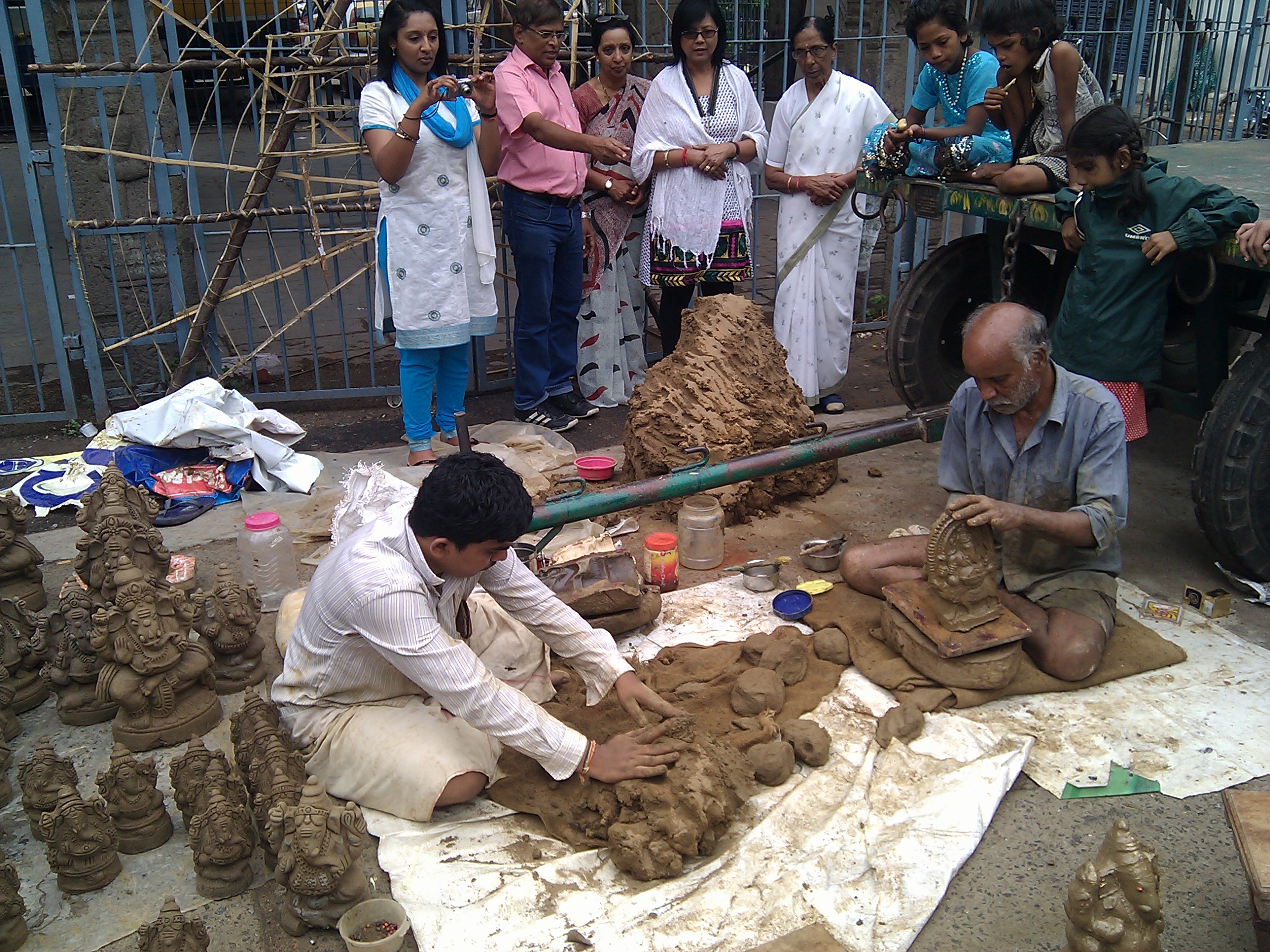
As I mentioned in my last post, the past week was full of celebrations in honor of Ganesh’s birthday, called Ganesh Chaturthi. People in India celebrate by putting up statues of Ganesh in their homes or on the road and do pooja (ritual) around the Ganesh every day for anywhere from 3 to 11 days, depending on different traditions. At the end of the week, they put the Ganesh statues in water for Immersion, symbolizing Ganesh’s journey home to heaven. Because everyone puts the Ganesh statues in natural bodies of water during this holiday, it has been a huge source of pollution that adds to the issue of clean water in India. Recently, people have started using clay statuettes that naturally dissolve in the water, but many plastic and painted statues are still used every year. In Chennai, when we visited the temple to make an offering to Ganesh, we saw men making the clay Ganesh statuettes on the street for people to buy instead.

Clay Ganeshas

Men at the temple making clay Ganeshas

As soon as we got home from our Chennai trip on Monday night, the weeklong celebration began in full swing in our apartment building. While we were in Chennai, our host mom, Nivedita, and some of the other women in the building had put up a pandal, similar to a shrine, that included a large stage, elaborate decorations, and a 4-foot tall Ganesh statue in the car garage beneath our building, colorfully decorated with flowers and other small statuettes. Every night for five nights, all of the families in the apartment building (about 65 people in total) would gather around the pandal for pooja, singing, games, and dinner.

First, around 8 p.m., all the women would sit in a circle in front of Ganesh and chant Vedic mantras together. Then, a pujari would arrive and begin the formal ritual by chanting loudly, apparently instructing us to do certain actions, although I could never understand what he was saying. Instead, I would mimic the actions of the people around me, throwing rice on the Ganesh, drinking coconut water, spinning around three times to the right, and many other things. Although I never fully understood what was going on, burning incense, breaking coconuts, and listing the names of our neighbors were among the usual things done during the pooja. After the pujaris were finished, we would begin playing games and singing. Most of the children – and there were a lot of them – were very interested in Jennie and me and wanted to talk and play with us constantly. During the Friday night pooja, the families wanted to do something special so Jennie, Prerna and I sang a Taylor Swift song and played guitar. It turns out Taylor Swift is just as popular here as she is in the US, if not more!

Finally, around 9 or 10 p.m., we started dinner, which was prepared by some of the women in the apartment. It always included an enormous vat of rice, lots of fried snacks, and a dessert. The dessert was the most important part of the meal because Ganesh is known to love sweets. In fact, all of the statues of Ganesh show him holding a laddu, a sweet ball-shaped dessert, in one hand. The dinner usually went on until 11 or 12, and even after we came upstairs, we would go to the neighbors’ apartments and chat for another hour, so we were always exhausted by the end of the night.

IMG_3638

Our apartment’s Ganesh pandal and food for the potluck

The most exciting part of the whole celebration was on Saturday, when we did the Immersion. As soon as we got up on Saturday morning, we started making biryani with Nivedita and Sandia, our neighbor down the hall. Biryani is a spicy rice dish special to Hyderabad – and we made 11 pounds of it for the potluck that day. When we gathered for the feast that afternoon, I was so surprised to see that there was even more rice, curries, snacks, and desserts that other people had made for us to eat. It was like Thanksgiving, but with more food than I could have ever imagined.

After eating, we started the procession of cars to the lake, displaying the large Ganesh statue in the back of the first car, like a parade float. The car had been decorated like the pandal, complete with flowers and all of the small Ganeshas from each apartment. After our neighbors blessed the journey by doing a ritual in front of the car with water, fire, and breaking coconuts, everyone drove their cars and two-wheelers slowly all the way to the lake while banging on pots and yelling “Jai! Jai!” The cheering didn’t stop until the last Ganesh had been thrown into the water.

IMG_3711

Blessing the travel of the Ganesh procession

The best part of this celebration was getting the chance met all of our neighbors. Now that Jennie and I have gotten to know them, especially the kids, we haven’t stopped hanging out with them since. Now, we have started eating meals on the rooftop with some of the other families. When the power goes out (which happens every day), we go to the neighbors’ apartments to pass the time together. A few of the kids come to our apartment every day after school to play games or ask for help with their English homework. Some of the kids have even made it their job to teach me Telugu, the local language, although I am hopeless at pronouncing the words.

IMG_3732

In the procession to the lake with the Ganesh statue

I feel so lucky to be surrounded by such a great community of people and that I have been able to form relationships with them over the past week. Not understanding Telugu, spilling the coconut water, or turning left instead of right during pooja didn’t seem to matter at all. Spending time with my host family and neighbors makes our differences melt away, and it has made a world of difference.

IMG_3763

Our family and neighbors on the day of Immersion


Rhiannon in India: A Trip to the Beach

September 17, 2013

This weekend was another holiday, so Jennie, Romi, and I took a long overdue vacation south to Pondicherry and Chennai. After traveling north to the bustling capital a few weeks ago, we wanted a more relaxing destination – and we got it!

After we finished classes on Thursday, we boarded another Sleeper train with a 14-hour ride to Chennai ahead of us. Now, if you know anything about Bollywood or Indian pop culture, you are probably wondering if we traveled on the Chennai Express. Chennai Express is a very popular movie in India right now featuring two of Bollywood’s most famous actors – and it takes place on a train to Chennai. Unfortunately, our train was called Charminar Express rather than Chennai Express, but we took a few movie-like photos anyway.

Chennai Express

Before our trip to Chennai, we had a Chennai Express photo shoot

Even though we were in the most budget option of Sleeper compartments once again, the whole trip was very enjoyable. Truthfully, we were delighted to have seats on the train at all because, when we booked our trip online, we received RAC tickets (sort of like waiting list spots) and didn’t get our confirmed seats until two days before our trip! If we had boarded the train with RAC tickets, we would have had to share our bunks for the entire 14-hour ride, and we may have been separated. Luckily, after two weeks of watching our waitlist numbers get closer to zero on the website, we finally received our confirmed tickets and boarded the train to find three full bunks just for us.

One of the best parts of the train ride was the company we had in our compartment. An older Telugu-speaking couple sat across from us and, although we could barely communicate using English, somehow we shared food, laughed, and interacted with each other and had a wonderful time that night. There was also a young man in an RAC seat nearby that spent over an hour giving us suggestions for things to do in Pondicherry and Chennai. He seemed really enthusiastic to share information about temples, beaches, and festivals with us. Even after everyone had gone to sleep in their bunks, the old man and a younger man nearby, although strangers before the trip, sat up and chatted over chai for half the night.

After sleeping through the night in my little bunk on the train, I woke up early, waved good morning to the old lady across from me, then looked out of the little crack of the window visible from my bunk. I could not believe my eyes. The scenery was probably one of the most beautiful things I have ever seen! We were in the middle of green patty fields and marshlands, and every once in a while we passed through a village of small houses and huts. We passed people in the fields playing an early-morning game of cricket, and others in the villages getting ready for work. The train was following the coast, so in the distance I could see the Bay of Bengal, dotted with colorful sailboats. The best part was that the sunrise was reflected in all of the water collected in the fields and marsh from the monsoon rains.

When we pulled into the Chennai station, we had a quick breakfast and headed straight to the bus station to catch a three-hour bus south to Pondicherry. Pondicherry was a French settlement until the 1950s, so there is still a lot of French influence there (now mostly in terms of tourists), especially in the French quarter, a quaint little neighborhood on the beach. As we drove into Pondicherry, I noticed lots of flags that were a mix of the French and Indian flags. In the French quarter, all of the street names were French, many people spoke French, and people even said “salut” or “bonjour” to us on the street. We also had plenty of French food, coffee, and chocolates in the many French cafes all over the area. It was like we were in a totally different India! Being there reminded us of how many different cultures there are to see in India, and how no two are alike.

Colorful Pondicherry

All of the streets in the French Quarter were lined with colorful houses and hotels

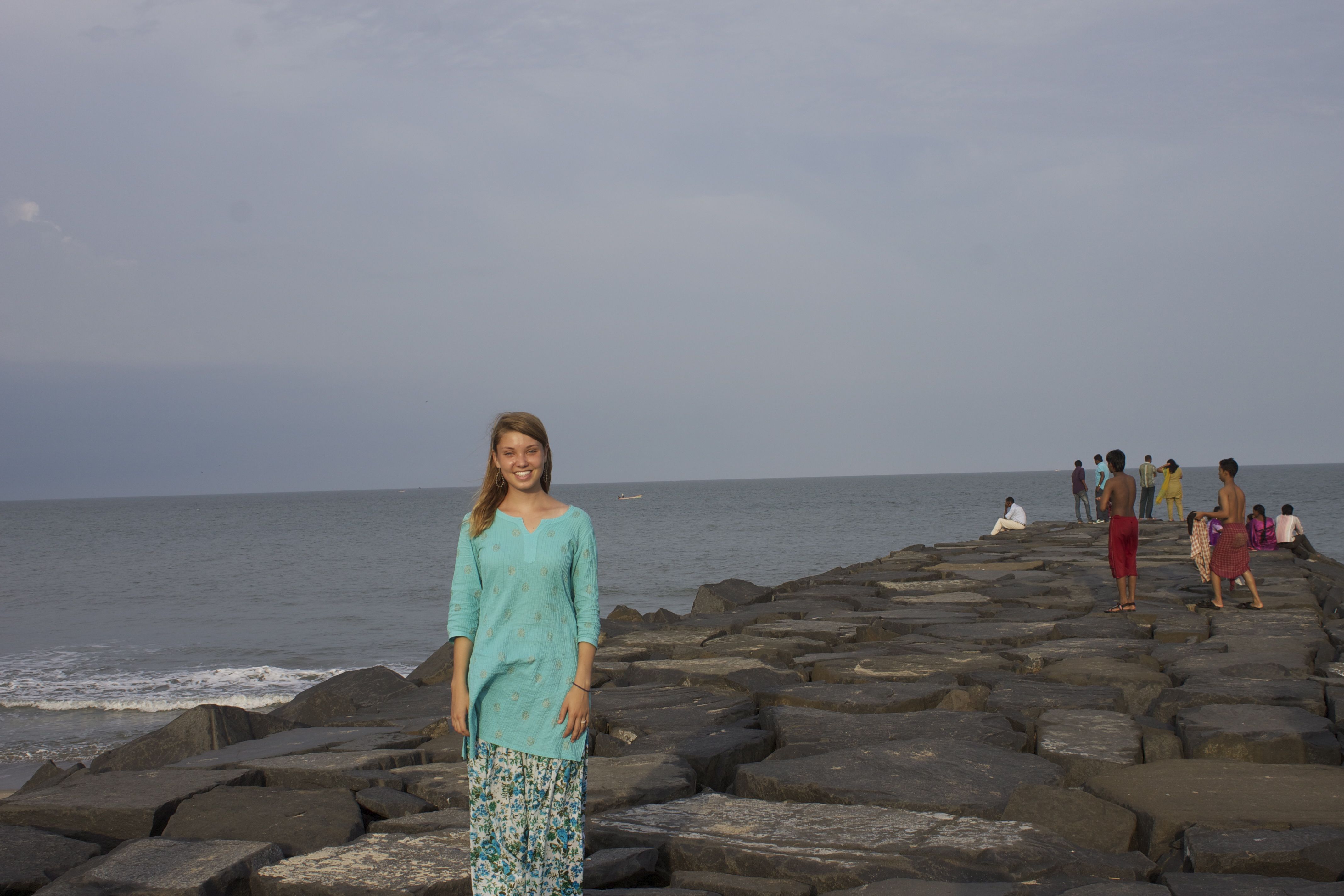
Without a doubt, my favorite part of Pondicherry was the beach. In the French quarter, the coastline is mostly rocky, but still has a few sandy spots as well. We spent our first afternoon walking along the waterfront watching kids play in the water, although it is technically not allowed because of the strong current and pollution. We didn’t swim there, but our hotel owner told us about a cleaner beach seven kilometers south of the French quarter called Paradise Beach, so on Saturday we hopped in an auto and went there for the afternoon. We were a bit unsure about what we would be doing because it is uncommon in India to swim at the beach, but we left the hotel with open minds and lots of food for a picnic. But to our surprise, Paradise Beach was almost completely deserted, so we jumped in the water for a swim! We picnicked and played Frisbee for a while, but all of a sudden black cloud started rolling in from over the ocean. Within 15 minutes, the wind picked up, the sky got dark, and it began to rain so hard we thought it was hailing. We ran back to our auto and got back to our hotel safe and sound, so now we can say that we survived a monsoon on the beach at the Bay of Bengal!

Rocks in Pondicherry

The rocky coastline of the French Quarter

On Sunday, we went back to the bus station and caught a bus back to Chennai. The next day was Ganesha Chaturthi, the beginning of a long festival to celebrate Lord Ganesha’s birthday. Ganesha is the Hindu god whose head resembles an elephant, and he is the god whom Hindus pray to first because he takes away obstacles in life. The story of Ganesha (as told by my host mom) is that his mother, Parvati, wanted a son so she made Ganesha out of sandalwood while her husband Shiva, the destroyer god and Ganesha’s father, was out of the house. Parvati put life into Ganesha and put him in front of the door to protect the house from intruders. When Shiva came back from hunting, Ganesha wouldn’t let him in, and not knowing that Ganesha was his son, Shiva cut off his head, which flew into the jungle. When Parvati realized what had happened, she explained to Shiva that he had killed their son and ordered that he go into the jungle to find Ganesha’s head. Shiva went out and returned with an elephant head instead and brought Ganesha back to life.

To celebrate on Monday, we went to a temple in Chennai and offered some flowers to Ganesha. During the festival, statues of Ganesha are put up in neighborhoods all over India, and people put small statues in their houses as well. There were six- to ten-foot tall Ganesha statues on all the roads and vendors were selling small clay statuettes in all the market areas. While we were in an auto on our way to the temple, a parade of people passed by with a mobile Ganesha shrine, so our auto driver parked the auto and ran over to receive prasadam (offered food and coconut water). When we returned to Hyderabad that night, we were surprised to find our neighborhood transformed with large, colorful Ganesha shrines on all the street corners complete with floodlights and loud music.

Mobile Ganesha Chennai

The mobile Ganesha passing our auto in Chennai

The trip this weekend was so relaxing and beautiful, but now I have a busy week ahead of me. Our apartment building will be celebrating for the Ganesha festival every night this week with poojahs (devotions) and lots of food. I will post soon about all of the festivities going on right here in Hyderabad!

Happy Ganesh Chaturthi!