Jack in Czech Republic: I Go to School Too

November 6, 2014

I really don’t want to do schoolwork right now. So why not blog about school? Before I discuss the differences (or lack thereof) between Charles classes and Richmond classes, here’s a brief description of my five courses:

U.S. in the 1960s and 1970sRefer to Ohio by CSNY from my mid-semester mixtape to get my passionate thoughts on this course. The discussions in this class are consistently thought provoking and sometimes ridiculous, in a good way.

Introduction to Photojournalism – You know your photojournalism course is impacting you when you stare at a wall in a bathroom wishing you had your camera on you. This course has already forced me to view photography, Prague’s landscape, and, I guess, bathrooms in completely different manners.

Global Communication – The one course I am taking with an American institution taught by an American professor from an American university. Yea, there’s not a whole lot of cultural realizations coming from this course. Overall, it’s been a fun class, though. I get to spend the next five weeks defending China’s censorship, so that’s kind of cultural, right?
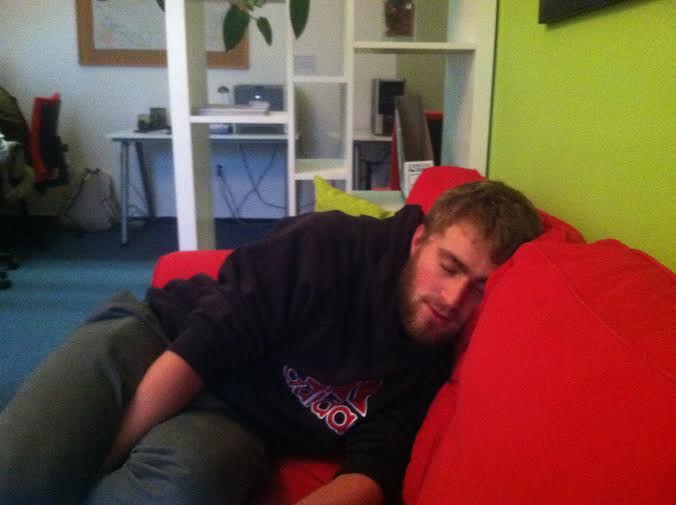
Here’s an action shot of Tim, who also gets to defend China’s censorship, working hard on our group project.

Here’s an action shot of Tim, who also gets to defend China’s censorship, working hard on our group project.

Czech for Beginners – Thanks to the Eastern Europeans, whose native tongue is somewhat similar to Czech, this is far and away my most difficult class.

Arms Control and Disarmament – This is a master’s level course on a subject I knew little about when I enrolled. So that should give you a sense on how difficult I find Czech language. Additionally, this is the one course that is vastly different than my Richmond courses. There are no assigned readings or written tests. Instead, students write weekly two-page research reports on one nuclear state (I’m the U.K.) that lead to our eventual end-of-class debate. My guess is that this class is different not because it’s in Prague, but because it is a master’s course.

With the exception of my Global Communication course, my courses are primarily composed of a mix of Czech students looking to improve their English and European students studying at Charles University for a semester. Despite the diverse composition of students, these courses don’t differ too greatly from my Richmond courses. There are, however, a few differences worth mentioning before I expand on how the two institutions’ similarities.

Punctuality, or lack thereof: At Charles, on time means 10 minutes late. And early means on time. It blows me away how many people show up to class late. My American history class, for example, always starts on time, yet it’s rare that at least two-thirds of the students are there when class begins. One reason for the constant tardiness could be that getting to class isn’t as simple as a five-minute walk from your on-campus dorm.

All around the city: Charles does not have a campus. Instead, the school consists of several buildings splattered throughout Prague. My five classes are taught in four buildings spread throughout the city. I still can’t decide which system I like better. I enjoy the different sceneries I’m forced to see, but the vast distances create more obstacles when going to class. Take, for example, when the city decided to change the tram lines without any heads up. Later that day I eventually realized my tram was not headed toward my usual Czech Language stop. I had to quickly get off and run through the city, so that I would not be too late. When I busted into class, out of breath and five minutes late, I noticed three or four other students in this small class had yet to arrive. Based on the students’ timetable, I was five minutes early.

Once-a-week classes: Except for my Czech language class, which meets twice a week, my courses meet once a week. I cannot overstate my love for once-a-week meetings. The workload isn’t too much different from Richmond’s, but having a full week in my grasp to spread out my work is fantastic.

Grading: I’m sure the grading at Charles is different from Richmond, since final grades are based on one or two assignments and class participation. I can’t tell you much more, however, because, well, I’ve barely received any grades. Typing that sentence gave me way too much anxiety.

Oral exams: Two of my courses culminate with oral exams, where I will have to speak with my professor about the course rather than filling in bubbles or answering short-answer questions. This feels like the biggest difference because I have no idea what to expect for an oral exam, and, well, it will be crucial to my grade.

So there are a few differences between the Richmond and Charles, but the most important aspect of a school – the way students learn – is quite similar. My educational experience – workload, types of assignments, discussion, professor availability, etc. – is quite similar to Richmond. Here’s the Spark Notes version of my classes’ syllabi: Do a reading assignment, maybe answer some discussion questions, discuss the reading in class, and ultimately take an exam/write a term paper/give a presentation. Strikingly similar to Richmond, I’d say. This certainly isn’t a bad thing – I love the whole reading/writing/discussing basis of my leadership studies and journalism majors. Additionally, I, like most UR students, I assume, didn’t go abroad for an out-of-this-world classroom experience. Sure, taking classes with a different faculty and different students offers a nice change of pace, but my true foreign education comes outside of the classroom. I came to Prague for a real-world academic experience – for example, meeting professional journalists and learning about the daily tasks of an online publication through my internships, traveling around Europe, and having to learn a city where English is not the first language. Hell, I’ve met a lot of fascinating people by having a couple drinks at Czech bars. I’ve been told for many years that learning doesn’t only take place in the classroom, but my time in Prague has given me a new perspective on that idea.

Selfie of the week: Because I am an egotistical millennial, here is the selfie of the week:
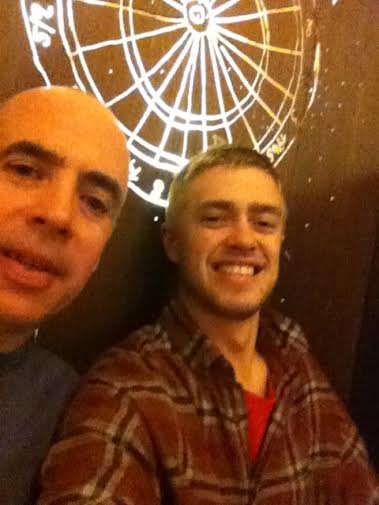
I was super happy to spend a day with this guy on his business trip. Thank you Teradata for sending my father to Prague!

I was super happy to spend a day with this guy on his business trip. Thank you Teradata for sending my father to Prague!


Oliver in Spain: Busy Weeks Call for Relaxation

October 23, 2014
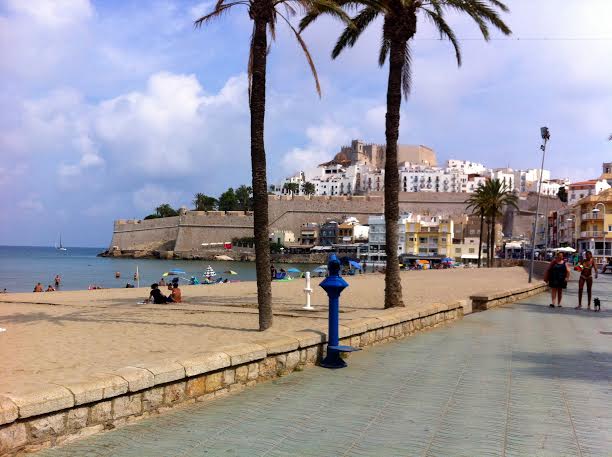
This week I have been putting my nose to the grindstone as it is midterms week. It has pretty much revolved around studying for these exams, however I was able to find some fun in between chapters.

Last weekend my program offered a free (that’s right free!) excursion to a small town in the Valenciano province known as Xátiva. In Valenciano it is pronounced sha-ti-vah, for those of you who were interested. We were given a tour through the city which included a look into its famous church. This church is permitted to bear the symbol of the Vatican because it is one of the only cities in the world that is the birthplace of two Popes.

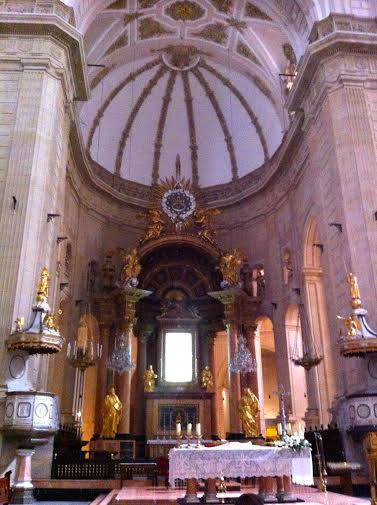
Collegiate Basilica, built in the 16th century

Collegiate Basilica, built in the 16th century

The catholic history isn’t even the most interesting part of this city. On the cliff tops that protected the city from invasion lies a castle. Lucky for us, we were given the opportunity to hike up to this castle and explore. I took that opportunity to heart and frequently went off the main road to make the trek a little more interesting. When we got to the castle we were rewarded with incredible picturesque views of the rolling mountains that surround this small city.

Castle of Xátiva, built in the 11th century

Castle of Xátiva, built in the 11th century

In addition to this “field trip” my friends and I decided to embrace the European culture and get haircuts. We went to a local peluquería (salón) in Valencia and showed them pictures of popular soccer players while asking the hair dressers to make us look like them. This resulted in the shortest haircut I have ever had, but also resulted in the best game of soccer I have ever played with 4 goals…there’s no way that was just a coincidence.

A shorter version of Paco Alcacer!

A shorter version of Paco Alcacer!

Since this has been one of my longest, uninterrupted, stints at home in Valencia, I have become a lot closer with my host family. My host sister has moved to Zaragoza, about three hours north by car, so she is more or less out of the picture for now. My older host brother, Guille, has been busy with late classes so I do not see him very much either, other than the late night movie watching. That leaves Mark. Mark and I have been spending my downtime playing videojuegos and watching dibujos (cartoons). He is a funny little guy who has become very comfortable with me being around. I look forward to coming home so I can beat him in Fifa. He may have Spanish blood but I trained all last semester to play Fifa with the best.

Hermanos

Hermanos

I have big plans for this weekend that include going to see my favorite tennis player, Andy Murray, play in the Valencia Open this friday, going to a home soccer game at la Mestalla on Saturday night, and the beach on Sunday. Even in the midst of a busy week this place never ceases to make me smile. I absolutely love it here and am a little sad that I only have…what…8 weeks left? Gotta make the most of it!!


Diana in Germany Week Six: Ecology and Management of Forests

October 20, 2014

My second class of the semester is already over! Also about 35% done my stay in Germany to put things in perspective. So these past few weeks in Ecology and Management of Forests in Southwestern Germany and the Swiss Alps we have gone on field excursions a total of 6 times, and they were all amazing.


Schauinsland

Our first excursion was an all day hike at the nearby Shauinsland hill. We took a bus up the mountain to save time, and we made it to the summit by foot shortly afterwards. There is a tower on top, but we decided not to climb as it would not have offered more of a view that foggy morning. Here we discussed how the Black Forest, Rhine River Valley, and Vosges Mountains were formed by the shifting of tectonic plates millions of years ago.

As we walked down through the hill paths we stopped to talk about the economy, the shift from grazing meadow to coniferous forests for timber, and the forest diebacks Germany experienced in the late 1900’s. We saw beech trees that are naturally predominant in this area and also many Douglas firs that have been introduced for timber and tree coverage.

Unfortunately I did not bring my camera on this trip, so no photos. Sorry!!


Rhine River Valley

Our next field trip brought us to the border of France and Germany, which is delineated by the Rhine River itself. It was intriguing to see that the land and vegetation were different on opposite sides of the river!

​The Rhine River. France on the left and Germany on the right. In class a point was made how the banks look different and have different vegetation.

​The Rhine River. France on the left and Germany on the right. In class a point was made how the banks look different and have different vegetation.

We studied the signs of flooding that frequently occurs in riparian areas. For instance, there were trees that were slanted and buildup of vegetative litter that had been carried by floodwaters. Closest to the rivers there were only new grasses and sometimes no vegetation at all since species had not been able to establish since the last flood. Trees were further up the banks. The rocks also gave it away. Smaller, finer sediment deposits higher up on the banks because it travels in the water whereas the largest rocks stay put near the river.

​Flood waters made these trees bend and stay slanted.

​Flood waters made these trees bend and stay slanted.

Our next stop on the trip brought us to the side channel of the Rhine. Here we discussed the human impacts that literally shaped the river. Way back when there were many small side channels and more bends in the river. The riparian areas were relatively undisturbed and stretched a lot wider geographically than they do currently. All of this changed through a serious of straightening and damming projects. Now there are only two major channels with fewer curves. This was wonderful economically as it straightened and shortened the river, so shipping and boating took shorter periods of time. Unfortunately it exposed villages to flooding and destroyed huge areas of riparian habitat.

To reduce flooding and promote a more natural ecology, the Integrated Rhine Program was established. So far 3 out of 13 projects have been completed. It takes a long time to restore riparian ecosystems, but one step at a time things should improve.


Coventwald

Forestry relies on scientific research nowadays and Coventwald is one such research forest. Our guide for that day has been studying chemical deposition rates in the forest depending on tree type/amount of tree cover. The factors that increase chemical deposition in forests are the leaf area index and age of the trees. basically chemicals in the air (a lot now input by industries and humans) stick to leaves and then when it rains the chemicals wash off the leaves and deposit themselves into the soil. When soil chemistry changes, some trees are not as suited to the environment.

​​​This is an example of the equipment used to get water out of soil.

​​​This is an example of the equipment used to get water out of soil.

The major results of the studies so far have been the following:

  • Higher deposition under canopy and in soil of spruce trees than under beech trees
  • Soils are becoming more acidic
  • Nitrate levels have decreased

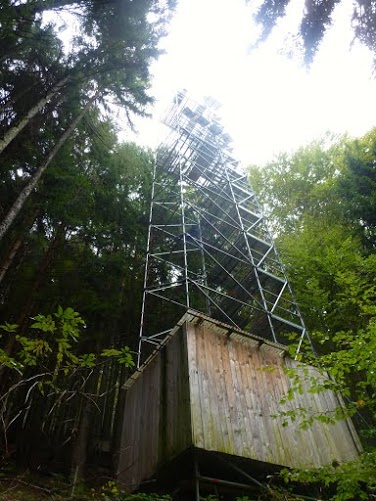
The coolest part of the trip was walking up a research tower. We had an amazing view from there, but it was scary! The stairs were wet, so walking up to and down from the top made me think I was on Fear Factor or The Amazing Race. At the top I also pondered the fact that my father would never be able to be there (he is pretty afraid of heights).


​We got to go on top of the research tower at Coventwald! 11 flights of stairs was a work out. On top, we could feel the tower moving in the wind.

​We got to go on top of the research tower at Coventwald! 11 flights of stairs was a work out. On top, we could feel the tower moving in the wind.

Swiss Alps

7am sharp this past Monday my class gathered outside of the Konzerthaus in Freiburg to start our 4 hour bus drive to Disentis, Switzerland. When we arrived in the Alps it was absolutely pouring (which is why I don’t have pictures from this first day of the trip FYI). To make a long day short, the class hiked hard terrain up into Scatlé forest that has been untouched by humans since before the 13th century, which makes it extremely unique. Very few tourists go through it and only a few researchers interact with the forest at all. We were out there for a long time with no facilities, so I unfortunately had to “interact” with the forest. You got it… I peed in a primeval forest. Soaking wet, we made it back to our hostel for showers and a great dinner with schnitzel, vegetable soup, and caramel flan. We were all very grateful to be warm and dry indoors.

Our second day welcomed us with beautiful weather. The excursion for that day consisted of taking a cable car up to the top of a mountain and walking back down it, similar to what we did during the Shauinsland excursion. Our speaker for the day had an extremely thick Swiss German accent and I could barely pay attention to anything said. That was fine because the surrounding area was gorgeous!

​The cable car we took our second day in the Swiss Alps.

​The cable car we took our second day in the Swiss Alps.

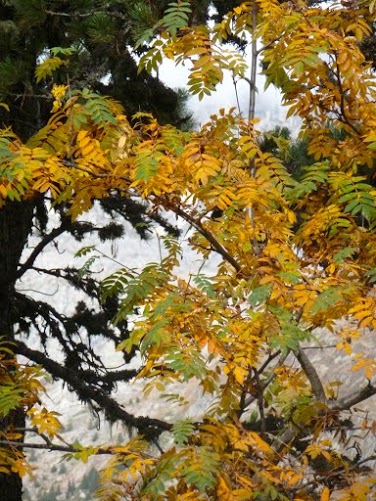
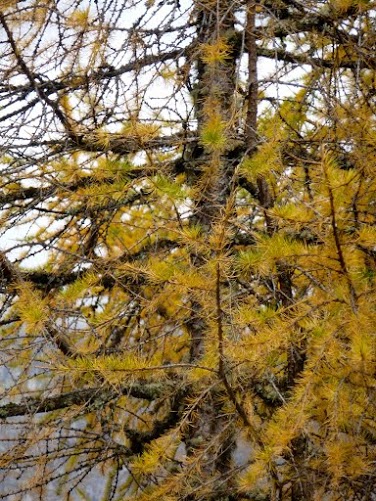
The final day of our trip started very early. We left our hostel at 7am and then had a few hours on the bus to sleep. We arrived at Aletsch mountain, which is the most beautiful natural place I have been so far during my study abroad experience. There were trees turning yellow and conifers that were green. The tops of the mountains are covered in snow. We even got to see Aletsch Glacier and, off in the distance, Matterhorn! We had to rush through our hike a bit because of the bus driver wanting to get back to Freiburg (about 6 hours away at this point).

​Mountain ash​

​Mountain ash​

​Larch​

​Larch​

​Swiss Stone Pine​

​Swiss Stone Pine​

​Aletsch Glacier​

​Aletsch Glacier​

​A stunning view from the top of the Alps.

​A stunning view from the top of the Alps.

On the way home our bus drove onto a train… it carries cars and busses. I had never even heard of this mode of transportation before! (Have you?) At 8pm, all us tired students made our way off the bus and back to bed.


Last Day of Class

The last day of class we started with a student presentation on the ways forests are managed all around Europe. However the most interesting part was that our teacher then spent the rest of the class period asking us for our critical input about the course. He took notes about our suggestions and what things we liked best. At University of Richmond we’re supposed to fill out forms online with our evaluation of a class, but this was such a more rewarding experience. Having a conversation as a class with a teacher and hearing what the teacher thought of our suggestions gave me a huge feeling of independence and control over my education.


Next Post

Alright guys I have to admit it – homesickness has finally gotten to me a tiny bit. I want to devote a blog post to what things I do to handle those feelings and about how my relation to home has changed a lot since I came to Freiburg.


Diana in Germany (Delayed) Week Four: Double Dose Part 1

October 6, 2014
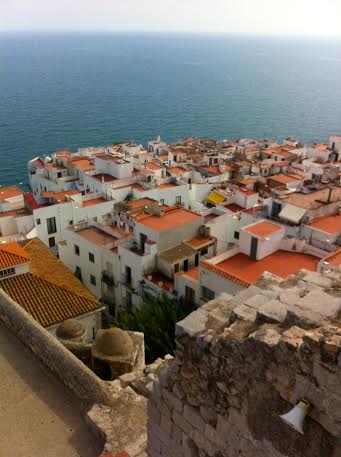
Sorry for the delay everyone! I have been so busy with academics and travel that I am behind by a week! So what does this mean for you? Glad you asked. This means two blog posts are coming your way next week in a little thing I like to call Double Dose Diana. One post about travel and one post about everything else. This is the post about everything else.

Flat Talk

My flatmates are flabbergasted by the price of college in America. This spurred many a conversation so far. The students I have talked with barely pay anything or get paid to attain a higher level of education. In America there are several more affordable options than paying the sticker price for a private school, such as University of Richmond at almost $57,000 a year. For instance UR gives wonderful aid – I attend on full scholarship. There are also 4-year public schools averaging $21,000 a year and community colleges for much less. All told though, the average student debt in 2013 for U.S. college graduates was over $30,000, a decently horrifying number to some Europeans whose governments subsidize post-secondary education. Germany actually just passed a resolution that public college tuition would be free for all German students. Lucky them!

​A viral photo on Facebook after the announcement that German university will be tuition free.

​A viral photo on Facebook after the announcement that German university will be tuition free.

I brought up another issue close to my life and to University of Richmond: rampant sexual assault in colleges. About 12% of female German Uni students experience attempted or completed rape in German colleges vs. 25% of female American college students. So basically, it’s too dang much in both places. It also seemed to me that the German uni students I know rarely have conversations about sexual violence as they had to research what the rates were.

Of course we have also discussed obesity and the general (lack of?) health in America. Simon notably stated, “America has one day of independence and 52 of eating badly… land of the free, home of the fat.” That one stung a bit. I think there is a general lack of healthy food available in America, especially for people who do not make a ton of money. We have a lot of work to do here as a country. Only recently I learned about food deserts in America. These areas have no nearby, accessible grocery stores. Many people in inner city areas like this rely on public transportation, but that isn’t going to take you to the grocery store 20 miles away quickly, if at all. Here in Freiburg, I can walk for 3 minutes and see 2 grocery stores.

Finally, I always knew Europeans eat with their fork in their left and their knife in their right, no matter if they are left or right handed. As a right-handed American I always eat with my fork in my right hand until I need to cut something and switch hands briefly. My flatmates had never noticed this phenomenon! Last night during my weekend travels, I looked down and realized I finally was eating in the European style!


Study Abroad Bucket List

I was supposed to have this list before leaving the US. However, I knew I had no clue what my life would be like and set to settling in first before solidly deciding on an official “I have to do this” list. Here are the top 20 left to do, accompanied by pictures of some of the ones I have already completed so far!

1. Climb the Münster Cathedral Tower
2. Go to the rooftop restaurant, Skyda
3. Eat international food from every stall in the Markthalle
4. Eat a Turkish Döner from Euphrat
5. Try on a dirndl
6. Eat at the most stereotypical restaurant for German food in Freiburg, Martin’s Bräu
7. Hike up to the tower on Schauinsland mountain
8. Go skiing for the first time
9. Take a paddle boat out on Titisee Lake
10. Getting through a meal without the waiter or waitress switching to English
11. Enjoy the thermal baths of Baden-Baden
12. Visit nearby French cities such as Colmar and Strasbourg
13. Slide down the longest tunnel slide in Europe at Baumkronenweg
14. Explore Neuschwanstein castle
15. Travel through the exhibits at the Augustiner Museum
16. Watch a soccer game in the Freiburg stadium
17. Ride a boat on the Rhine River
18. Join a University of Freiburg extracurricular activity
19. Watch a Baltimore Orioles game in an Irish pub called O’Kelly’s
20. Lounge in the botanical gardens


​The Black Forest cake my friend Anne and I made. This was one of the items on my bucket list that I already checked off!

​The Black Forest cake my friend Anne and I made. This was one of the items on my bucket list that I already checked off!

The End of German Class

The last week of German class was much more difficult as we leaned new verbs called separable verbs in addition to learning travel vocabulary. Frau Snuggs made no signs of letting the class off easy, which is wonderful. When a professor expects a lot from me, I tend to work harder. All in all, we made it through 10 of the 12 chapters in our book in just 3 weeks! Our test was on a Wednesday and I’m proud to say my 10 hours of studying paid off. I got a 1,0 on the test and in the class, which is an A! This is how grades work for class:

​German gradingsystem as compared to American grading system

​German gradingsystem as compared to American grading system

The morning of our last day, which was two Fridays ago, we went to the student café together for breakfast. Then we had a “graduation ceremony.” This ceremony was pretty awesome as all of the German students for this three week program attended. One of my classmates, Quinn, and his wife sang with a choir in front of the whole crowd. We received our grades afterwards and enjoyed the spread of food and drink the program set out for us. I am so thankful to Frau Snuggs and my other German classmates – this was an amazing beginning on the journey to German fluency.

OH yeah, I also surprised my class by showing up with a completely new hairstyle and color.


​​I loved all the people in my German class!

​​I loved all the people in my German class!

​Our teacher, Frau Snuggs was amazing.

​Our teacher, Frau Snuggs was amazing.


First time getting my hair dyed!

First time getting my hair dyed!

A New Class

This past week my first environmental class began, but we only had a three day week! This class is called Ecology and Management of Forest Landscapes in Southwest Germany and the Swiss Alps. The format of this class is very unique. We have lecture and student presentations one day and then the next we go out into the field. This week, we took a bus up Schauinsland mountain and hiked down the rest of the way. We made frequent stops to talk about the history, geology, vegetation, etc. at different altitudes. At the end of the day I was tired and very content to take a hot shower. Hopefully our trip next week to the Rhine River Valley will be a bit less strenuous!

Next Post

Stop by the blog mid-week as I am planning to post about my travels outside of Freiburg! It will include details and analysis of my solo trip to Brussels and my trip with fellow UR Spider, Masnoon Majeed, in Paris and the Loire Valley. Finally, read some travel tips that come from my recent experiences.


Oliver in Spain: Education

October 2, 2014
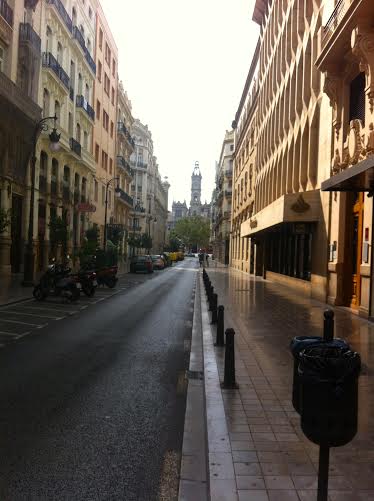
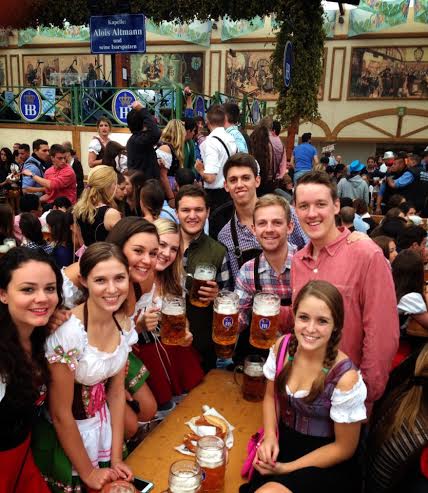
It has been a little while since I’ve posted here, but I have nothing but good things to report. Last week I continued my weekend travel and went to Munich to celebrate Oktoberfest. I even had the pleasure of seeing a handful of UR students that I did not expect to see. Munich is a pretty special city and I was excited at the opportunity to work on my German, or lack there of.

With friends at Oktoberfest

With friends at Oktoberfest in Munich

I want to focus this post on a the education/academics of Spain because it is one of the areas that differs tremendously from that of the US. After a month in Valencia, it becomes pretty easy to pick up on patterns. One of these patterns is seeing my 21 year old host brother at home regularly. In the United States a 21 year old would be at his or her University, living in a dorm and studying every day. In Spain, it is common for students to stay with their family and be a part time student. Another point of interest here is what comes post graduation. I am lucky enough to attend UR and be given a more than 90% chance that I will have a job lined up after college. The students here are not as lucky. For men and women 25 years and younger, the unemployment rate is over 55%. Compare that with our number hovering around 12% and you can see the difference. It is highly unlikely that a student will have a job coming out of college so they just carry on and get their masters.

This might have seen like more of a report than a blog post but these are the things that are visible in my day to day life. I go to school right across the street from the University of Valencia and I can’t help but feel sorry for the students I see.

I’ve decided to keep this one short as my fall break is upon me and I am two hours away from boarding a flight to Paris. Fall break plans include Paris, Berlin, Prague, and Amsterdam so I will have a lot to write about when I get back. I’ll keep the next one focused on travel!


Diana in Copenhagen: The Difference Between Danish and American Classes

September 25, 2014

While I’ve written a lot about the “abroad” aspect of studying abroad, I would now like to pay some attention to the “study” component. I’ve found that academics in Denmark, more specifically at Copenhagen Business School (CBS), are strikingly different from what I’m familiar with back in the States. CBS has over 20, 000 students attending the university, which is significantly more than the 3,000 undergraduate ones at Richmond.

Despite the large discrepancy in total enrollment, the class sizes are not grossly different from school to school. I’m currently taking three classes, all lectures, and will have a fourth starting halfway through the semester. Just one of these lectures is overwhelmingly large and fits my expectations for a school that’s roughly seven times the size of the one I’m used to. The other two are comparably sized to those I see in the Robins School, though, and professors engage students by asking questions and knowing the names of some class attendees.

This is my biggest class but it should give you an idea of what class sizes are like. I took this right after our teacher called our first break. We usually get 2-3 breaks every class because each lecture is about three hours long!

This is my biggest class but it should give you an idea of what class sizes are like. I took this right after our teacher called our first break. We usually get 2-3 breaks every class because each lecture is about three hours long!


All of my teachers teach from a PowerPoint and students take notes on their computers.

All of my teachers teach from a PowerPoint and students take notes on their computers.

The reason why class sizes seem so comparable, however, is because far fewer students actually attend lectures from week to week. Teachers say things like, “Now pull up the Excel spreadsheet to work on problems. If you don’t want to participate you can go take your break now” during class. No attendance is taken. No homework is checked. There are no quizzes, papers, or midterms, and one hundred percent of your final grade is your exam score. There is barely any accountability throughout the semester to keep up with your studies despite the looming thought of that four-hour long written examination at the end of the course. And even that is usually open book!

This system is completely different from ones I’ve experienced in attending small private schools all my life. I have never been granted the anonymity that accompanies large lecture halls with countless unfamiliar faces and I’ve always been expected to do work and participate. Since first grade, my class sizes have been small and I’ve had teachers who saw it as their job (well, because it was) to keep engagement high and ensure students learn the material at every step.

At Richmond, there are some professors who believe that their students are truly adults and therefore expect more independence from them. In my experience, however, this means that those professors don’t walk around and check homework, but instead use checkpoints throughout the course to keep their students accountable. They utilize tools like papers, quizzes, and midterms to ensure that the work is always being completed. The expectation of independence in Denmark is astounding compared to the standard I’ve seen back home.

In the Danish classroom, if a teacher asks a question that results in silence they will not cold call (randomly choosing a student to respond), but rather answer the question themselves. Yet again, this differs from what I’ve come to expect in America. I vividly remember my first class in the Business School, Microeconomics with the late Dr. Dean. I found him to be an amazing professor, one of the best I’ve had, because of his ability to make me want to excel and impress him. Yes, he had daily quizzes on required readings, but the greater incentive to do well for me was grounded in the fact that he called on his students randomly. You had to come prepared if you wanted to convey your intelligence and avoid the social awkwardness of saying something dumb in front of your peers. I also felt satisfied in answering these questions correctly—it felt as though I had been personally challenged and emerged victorious. I have yet to feel this kind of desire to prove myself and excel in Danish classrooms so far.

This is Solbjerg Plads where I have my Competitiveness and Operations Performance class. It also has a cafe that turns into a bar/nightclub on Thursdays (when is 815 going to start doing that?)

This is Solbjerg Plads where I have my Competitiveness and Operations Performance class. It also has a cafe that turns into a bar/nightclub on Thursdays (when is 8:15 at Boatwright going to start doing that?)

That being said, the Danes handle their structure well. To American students and those who have a similar educational system, the Danish structure seems like a free ride. No homework? No quizzes? No problem! I would analogize the feeling to the freedom that results in the infamous freshman fifteen. Danish class is like D-Hall to a naïve eighteen year old. They have finally escaped the paternal eye and wagging finger that used to stop them from eating froyo for dinner every night and now they answer to no one. Obviously this is not without its negative repercussions.
I like to think that I would better fit in this system if it weren’t so disparate from what I’m accustomed to. That is, if I didn’t experience that wave of freedom I just explained. That being said, I’ve identified three alternate incentives to work hard and do best in the Danish educational system.

  1. Group Projects: I have yet been assigned a group project, but they are quite common in the Danish school system. This activity encourages more work because you are faced with a responsibility to others. It is easy enough to forego reading to your own detriment, but most people respond to the social obligation of not bringing the whole team down with you. You work so you don’t let your classmates down, but end up benefiting yourself in the process too.
  2. Professional Connections: Professors at CBS are highly qualified and connected in their respective fields. Many students are focused and driven to excel professionally and recognize the value of building a relationship with the man or woman who stands at the front of the lecture hall. This means many students work hard to participate in class, speak with professors during breaks, and work diligently in the hopes of building a connection that could lead to a job or internship.
  3. Reduce Myopia: This one is simple in theory but challenging in practice. You can be less nearsighted in academics by looking at your circumstance from two different perspectives. The first is recognizing that even though there are fewer checkpoints along the way in Danish classes, the journey still culminates in an exam. To excel, you must constantly remember that end and disperse work over time to avoid a tsunami of cramming in the final weeks. You can extend your sights even further though and consider why you’re even enrolled in college in the first place. For most, the final goal is not simply to get a good grade in a class, although that is often integral to the process. The driving objective of these classes is to learn and to use your acquired knowledge to find success in life personally, financially, professionally, or otherwise. With long-term objectives like these, you won’t even need a teacher singling you out to keep you on track. Granted that is easier said than done.
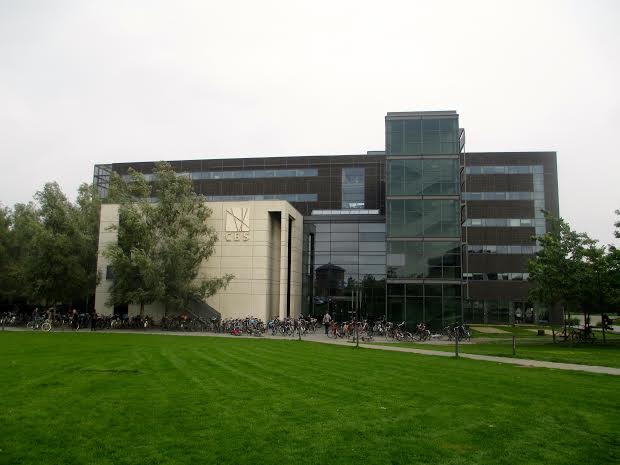
    This is one academic building on campus called Kilen. I don't have class here but I think it's absolutely beautiful. The campus also has lots of outside areas like this to relax and you see students hanging out in them all the time.

    This is one academic building on campus called Kilen. I don’t have class here but I think it’s absolutely beautiful. The campus also has lots of outside areas like this to relax and you see students hanging out in them all the time.

    This is the inside of Kilen. I've been amazed at the architecture and design in all of the buildings at CBS and this is certainly one of my favorites.

    This is the inside of Kilen. I’ve been amazed at the architecture and design in all of the buildings at CBS and this is certainly one of my favorites.

The Danish and American higher educational systems have their differences, but each meets the needs of students differently. I have found that I much prefer having methods in place that make me accountable for information before the exam, as they make me work more diligently throughout the semester. With that being said, I can learn and grow in the Danish system and use its approach to improve myself in other ways. It is my hope that I find my own success at this Danish university. I hope to leave Denmark with tools, like self-discipline, that will help me wherever I go.


Diana in Germany Week Two: “The Skinny” on Freiburg

September 18, 2014

Every week of study abroad is like a month in “normal” time. I am experiencing so much and hopefully I can summarize all of it for you without it being really long!

The City of Freiburg
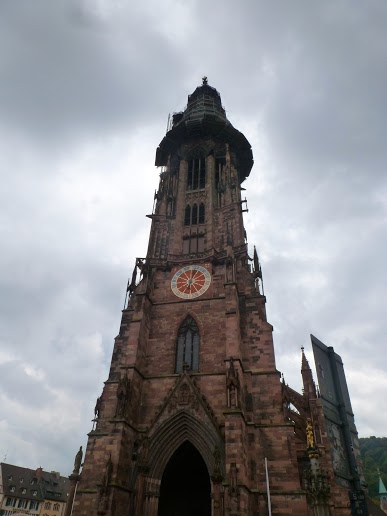
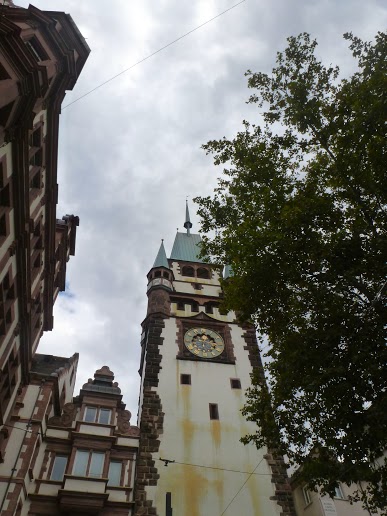
Probably the most notable landmark in Freiburg is the Münster cathedral. It is a 12th century church with amazing organs (I went to a concert there last week). There is a farmers market in front of it almost every day. There are also shops and restaurants on the square. Two other notable structures are the city gates. I see the one called Martin’s Gate every single day when I get off of my tram stop for school in the morning. The University of Freiburg itself was founded back in 1457 and is one of the oldest universities in Germany. It has buildings scattered throughout the city and many have their own history.

Münster Cathedral

Münster Cathedral

Martin’s Gate

Martin’s Gate

There are little stone paths for water, called Bächle, that crisscross through the streets of Freiburg. They are the old source of water for the town. If you accidentally step into one of these then the legend is that you will marry a Freiburger. This reminds me of the tales of kissing on the gazebo at University of Richmond – if you do not marry the person you kissed, you must walk backwards around Westhampton Lake.

Bächle - watch your step!

Bächle – watch your step!

The ways that I access the city are through tram, bike, and by foot. The tram station is only a 3 minute walk from my flat. It takes 10 minutes by tram to get to the Holzmarkt stop, which is a 1 minute walk from my German classroom and a 2-3 minute walk from the IES Abroad office. For longer travel here, there is a large area for trains and buses that meet up by the “Hauptbahnhof” or Central Station. It is amazing how few people drive cars on a day to day basis. I love this custom so much I am beginning to consider only settling down in an area where it will be possible for me to walk, bike, or take public transportation easily. Biking is barely possible on the University of Richmond campus due to the amount of stairs and steep hills that cut off bike paths.

Food/Drink
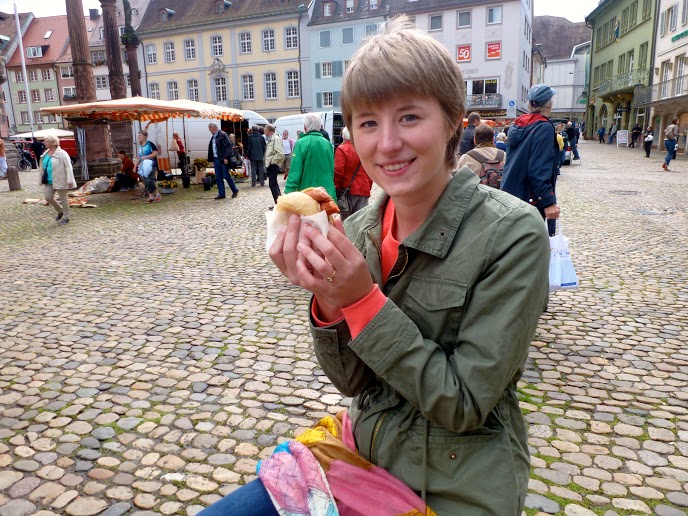
So far I tried many different foods typical in Germany. At Münster market I have eaten bockwurst and bratwurst. Yes, they are different! A bockwurst is basically a hot dog (a LONG hotdog) and the bratwurst is a fried sausage. Both are put into a baguette and you can add beer mustard and curry ketchup, two delicious condiments. One night I ate a a fancier restaurant on the Münster square and got local fish. I tried a piece of someone else’s schnitzel, but still need to go order my own. I will tell you how that goes in my next post for sure! For Heather’s birthday we made a traditional Black Forest cake. It was SO delicious that I ate four pieces. No shame.

This fish looks as fresh as it tasted. The accompanying butter sauce was sehr gut.

This fish looks as fresh as it tasted. The accompanying butter sauce was sehr gut.

On weekdays I tend to eat lunch at Mensa, the student dining hall. It is about 3 Euro for a meal and the portions are so huge that I bring a Tupperware container with me. This saves me a lot of money so I do not feel as bad when I splurge once or twice a week on a meal. I go there with friends Sarah and Dave from my language class and Anne from IES right now. For meals at home, I shop at a store called Rewe. There’s amazing pasta, sauces, fresh baked goods, fruit and vegetables.

I’ve tried a few different beers: Pilsner, Radler (lemonade + beer = yes), and Kristallweizen. Alcohol is plentiful and not as expensive as in the states. The main non-alcoholic drinks here are sparkling water and Apfelsoft or sparkling apple juice. I carry around my own still water from the tap at all times to keep hydrated, though a person may not drink from their water bottle inside a restaurant. You have to pay quite a bit of your own still table water, so my advice is to drink water before and after walking into a restaurant, that’s my advice.

Bockwurst Delight in Münster Square

Bockwurst Delight in Münster Square

Academics
The overall system of education as part of the IES Environmental Studies Program is that we take 5 classes. We only take 1 class at a time for three weeks each. My classes for the semester are as follows:

1) Intensive Elementary German
2) Ecology and Management of Forest Landscapes in Southwest Germany and the Swiss Alps (counts as an Environmental Elective)
3) Environmental Ethics (fulfills this Environmental Studies major requirement)
4) Sustainable Policy (fulfills another Environmental Elective)
5) Freiburg Green City (fulfills the Environmental Economics major requirement)

This past week in German class, we learned how to order food and discuss families and furniture. This video shows me performing the role of Verkäuferin (seller) and Quinn playing the role of Käufer (buyer).

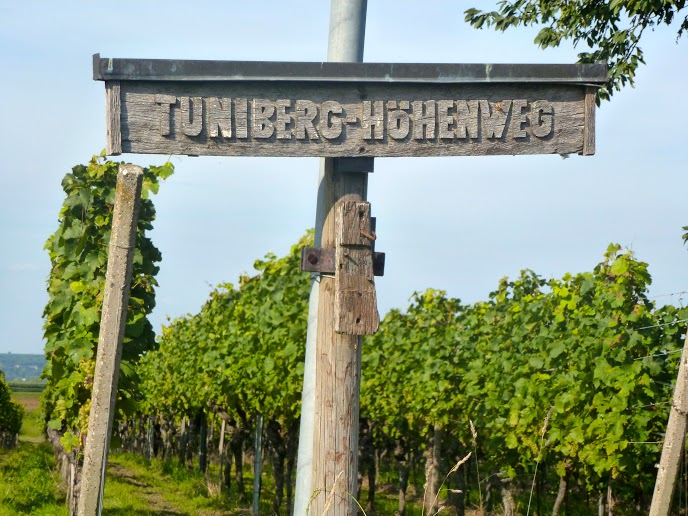
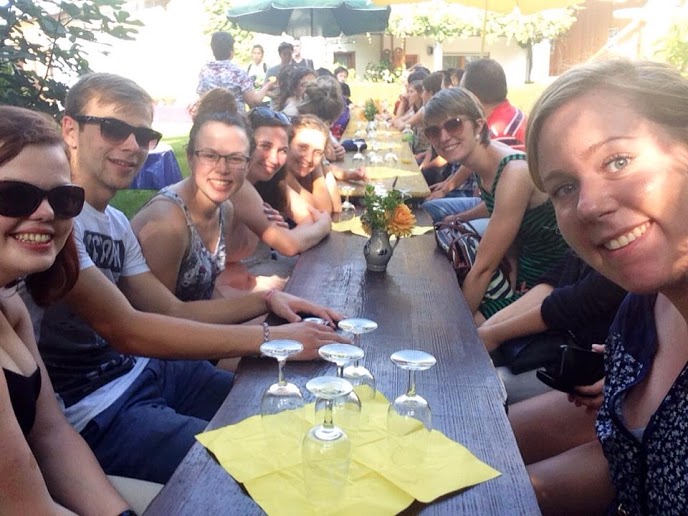
There is an added social aspects outside of the classroom because the Language Institute puts on different programs such as day tips to Switzerland and France, local hiking trips, and other activities. So far I participated in a bar hopping experience and went on a vineyard tour in Tuniberg. This coming week I will be swimming at the University pool, going bowling, going to Titisee, and going on a 10km hike!

A Vineyard in Tuniberg

A Vineyard in Tuniberg

A Most Welcoming Meal: The owners of the vineyard brought us to their house and cooked for us.

A Most Welcoming Meal: The owners of the vineyard brought us to their house and cooked for us.

Next Week
I will update you about how all the social events went and the analysis of stereotypes that I left out this week (I had so much to write about)! There may be other topics I explore as well. Tschüs!


Oliver in Spain: Transitioning and Sight Seeing

September 15, 2014

I cannot believe that I have already been in Valencia for a full week. This semester is going to fly by. I’ve already attended all four of the classes that I am signed up for, so I know what I am in for academically. My classes are as follows: Literatura y cine, Cultura y civilización, Islamic Iberia, and La historia del siglo 20 en España. All of those are pretty simple translations so I’m sure you guys can figure it out! My program, UVA in Valencia, has its own building off a main street, Gran Vía de Blasco Ibañez, which is right next to the campus of the University of Valencia. It’s about an hour walk from where I’m living so I normally take the bus or the metro.

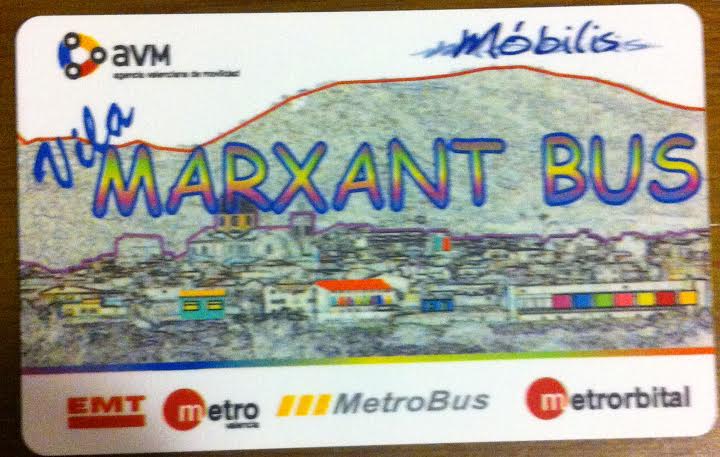
Traveling in Valencia as a pedestrian is so convenient. Between the metro, the bus, and the bicycle system, you can get anywhere you want to go relatively quickly. I picked up a Móbilis card a few days ago which opens up all of these services for about 9€ per 10 trips. Yesterday, I registered for the bicycle system known as “Valenbisi.” There are these bicycle stations all across the city, and once you register for about 27€, you can pick one up and have 30 minutes before putting it back at a different station and picking up a new one. It is a great system that could only work in relatively small cities like Valencia. Needless to say, I will be able to get my way around this city with ease. Also, since it’s such a small city, I am already pretty familiar with the main spots.

Picture of Móbilis card

A picture of my Móbilis card

Now for my host family! I am one of the only students at the UVA in Valencia program that has a father as well as a mother. Interestingly, most students only have a host mother. I’m sure I will learn more about this in my culture class. I also have three siblings: María (oldest sister), Guille (21 year old brother), and Mark (10 year old little brother). The whole family has been very inviting, but to be honest, the language barrier can be very tough at times. I have no doubt in my mind that I will be conversationally fluent after these four months because there is no English spoken at home or at school.

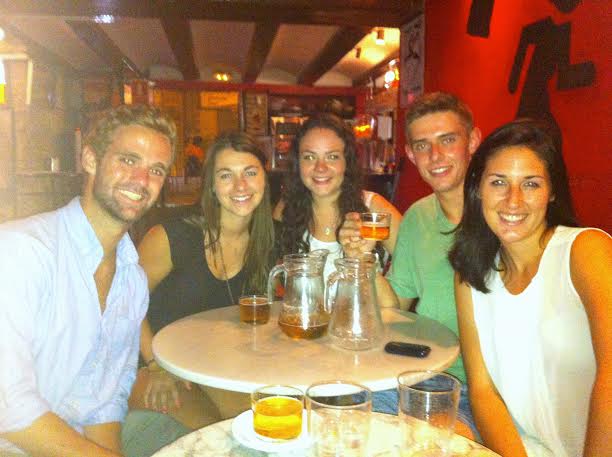
Last weekend I went out with my friends on Thursday, Friday, and Saturday. Thursday we went to a bar near our respective houses and quickly befriended the bartender who found out we were Americans all too quickly. From there we went to a place known as el Barrio de Carmen. It’s a small neighborhood with three clubs that get big around 2 am. Friday we took it easy and posted up in a different bar for a few hours before calling an early night, jetlag was still nagging us. Saturday was easily the biggest night of the weekend. My 8 friends and I went to this huge outdoor club known as L’umbracle. It is a massice discoteca in Valencia near the aquarium. That night we didn’t leave until about 5 am. These Spaniards have an absurd stamina…

The core group of my friends enjoying some Cruzcampo

The core group of my friends enjoying a night out

During the day on Saturday, my whole program took a trip to Peñíscola which is a small city north of Valencia. It is called Peñíscola because there is a 800 year old castle on a peninsula next to the main city. We spent the day here on the beach and in the warm, clear water. Then we went into the castle and toured the massive building.

A beautiful view of the castle on Penñiscola

A beautiful view of the castle on Peñiscola

It turns out that selfies are as big here as they are in the States!

It turns out that selfies are as big here as they are in the States!

This is the village within the castle walls

This is the village within the castle walls

We had the day off on Sunday, so we got a big group of about 15 of us together, and did a short walking tour of Valencia that focused on the cathedral. The images of the buildings are magnificent so I will leave a couple here:

A typical narrow street in Valencia

A typical narrow street in Valencia

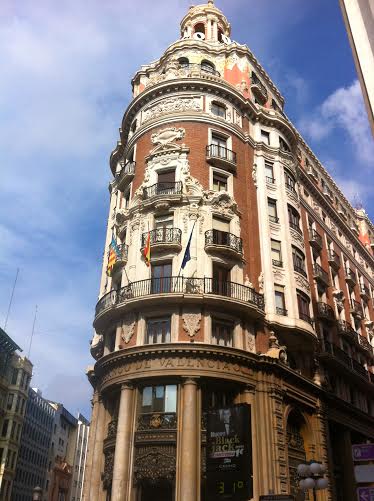
We were pretty sure this was Gringotts Bank

We were pretty sure this was Gringotts Bank

A great shot of the entrance to the Peninsula

A great shot of the entrance to the peninsula

Detailed entrance to the main worship area of the cathedral

Detailed entrance to the main worship area of the cathedral

The back of the cathedral attached to the the Palace of the Archbishop

The back of the cathedral attached to the the Palace of the Archbishop

I wasn’t exactly sure how to format this entry because so much has happened so if it seems all over the place, that’s my bad. Point of the entry though…I’m having a blast!!!


Diana in Germany Week One: Travel Nightmares, but Living the Dream

September 11, 2014

Arrival
So you know how people ask if you want the good or bad news first? We’re starting with the only thing that could be described as “bad” because it came first. Traveling was extremely stressful and full of sleep deprivation. I went a full 25 hours without sleeping and I have never done anything close to that in my life.

The goodbyes were somewhat easy (I didn’t cry! I totally thought I would). Thankfully I traveled with Heather, a girl from my living-learning community “Earth Lodge” from sophomore year. Heather and I both ordered white wine with our dinners on the plane, which marked the first legal drink of our trip. After this, things went downhill for me. I thought I would get 5 hours of sleep or so on the 8 hour flight, however several people kept their lights on or were watching movies the entire time. Regret filled me as I realized I had left my eye mask at home and there was no way I’d be sleeping before I made it all the way to Freiburg.

The train from Frankfurt to Freiburg was the worst part of the journey. Heather and I got in on the completely wrong end of the train and were 9 cars down from where we should have been. A bunch of Germans laughed at us for even trying. Heather helped keep things in perspective for me and we eventually made it to the right seats. Soon we got off, caught a taxi, and visited the IES Freiburg Center to get instructions. 24 hours after I woke up for my flight to Germany, I was finally in my dorm room. I quickly set it up and took a nice long nap before IES took us out for dinner.


Housing
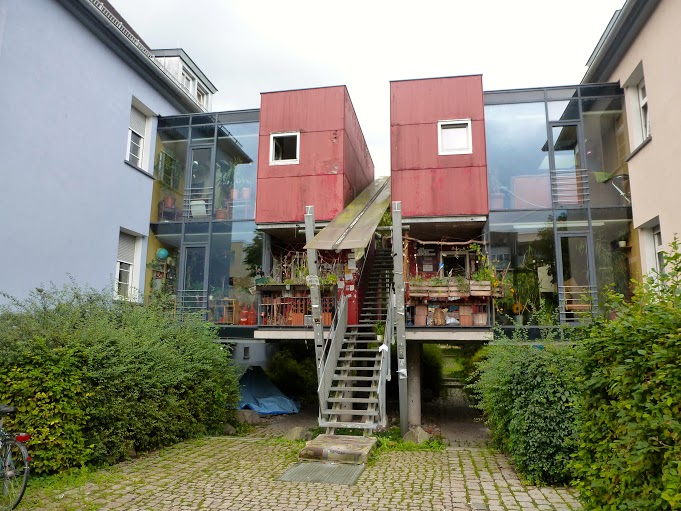
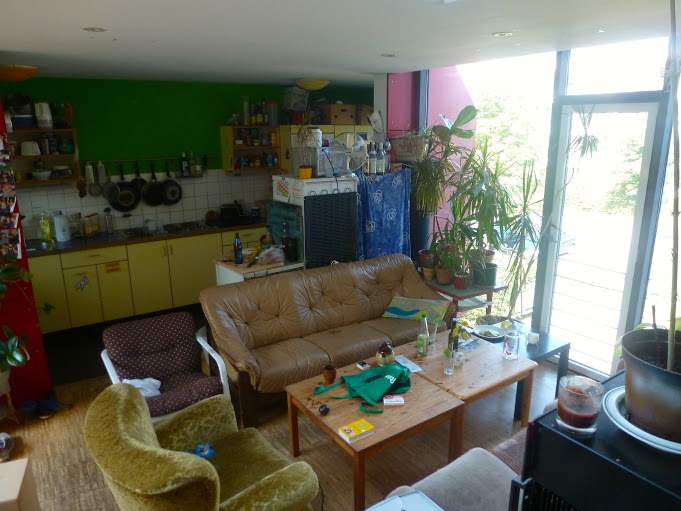
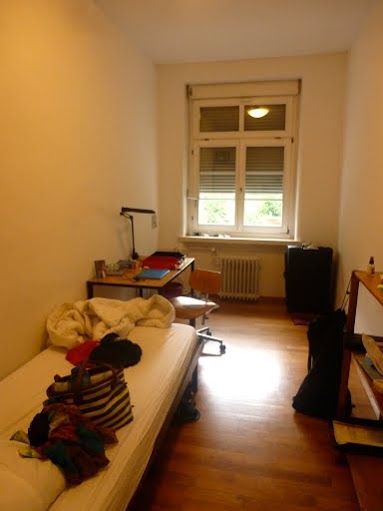
My dorm is, in my opinion, the best possible dorm in terms of its “cool factor” and its “awesome flatmate factor.” Plants everywhere, huge shared kitchen, large lounge couches, party space with awesome speakers, very hippie vibe. My dorm room is plain, but who cares when the shared space is so spectacular?! Here are some pictures to really help you visualize this:

The outside of my hippie dorm

The outside of my hippie dorm

Kitchen and living room

Our kitchen and living room

My plain dorm room

My plain dorm room

In terms of my flatmates, they immediately started inviting me out to things. Most of them are German, but they all speak English. They are Conny, Tobi, Sarah, Felix, Theresa, and Lovisa (who actually just left for a month for Algeria and lent me her bike in the meantime!!!). We also have a French guy named Simon who is here for 2 weeks. There is a lot of turnover in the household, especially in October when the “real” semester starts at Uni Freiburg. Apparently, other people in the IES program are not in contact with their flatmates much at all. I do not know a single other one who has a social life with their flatmates, so I consider myself EXTREMELY lucky to have them in my life as friends.

We’ve hiked up mountains, picked fruit, biked, swam in the Flückigersee lake, played games, shared dinner/wine, gone clubbing, and had a trilingual jam session together. In addition one of our neighbors, Judith comes over here a lot. She was the first person to do “cheers” with me, but here in Germany you say “Prost!” She also was the first to “invite” me to join her for ice cream, which here means she invited to pay for me! Thank you, Judith!

Flatmates Simon, Youdid, and Felix with zucchini

Flatmates Simon, Judith, and Felix with zucchini


Swimming at Lake Flückingersee

Swimming at Lake Flückingersee

Orientation
IES had small orientation sessions on Monday and Tuesday to give us basic information about the surrounding area, such as where the best places to eat are, where to seek medical attention, where to buy things, and how to stay safe while doing it. Freiburg is relatively safe, but according to one of the IES employees, there has been a rise in thefts recently. We also were asked to attend a presentation on Thursday in order to learn more about getting involved in clubs or volunteering. There is also a Tandem Partner program that allows a German speaker and English speaker to informally practice conversing in the opposite language. I’m considering horseback riding, a cappella, dance, badminton, and am 100% sure that I will be volunteering at some point.

IES so far has mainly functioned as a “home base” in case we need them. I believe that some of my environmental classes later in the semester will be there though. Speaking of which….


Academics
German class started on Wednesday. My teacher is Andrea Snuggs (yes, her last name is awesome). She is very sweet, always open to questions, and creates an extremely interactive environment in the classroom. It is crazy, but I can already ask a lot of basic questions or ask how to say things in German without using any English in the process! German class and listening to my flatmates is obviously working. Monday marks our fourth day of class and we are already having a quiz on verb conjugations!

Basic German verbs and their conjugations

Basic German verbs and their conjugations


Next week
I will cover more about academics, such as the city of Freiburg and its surrounding, food and drink, stereotypes, and updates about travel and fun I am having. Tschüss!


Kimberlee in Mongolia: ISP Period

June 11, 2014

We are now at the point of our program where all of us students pick our own topic of interest and research it for a month. Our Independent Study Project (ISP) allows us to go anywhere to study anything for four weeks, and gives us a great deal of independence and control over what we want to learn about Mongolia. At the end of the four weeks, we have a 25-50 page paper and oral presentation due. The other students are researching a variety of topics, including: accessibility for people with disabilities, how climate change affects herders, street cleaning, emergency medicine in the countryside, and the use of the traditional Mongolian characters in modern society.

I first decided to study distance education in Mongolia, but soon decided that the topic was a bit too outdated. The further I researched distance education in Mongolia, the more I realized that most of the projects were conducted from the 1990’s to around 2007. I could continue to research and interview people on these past projects, but I decided to change my topic to technology in the Mongolian education sector. As you might guess, this topic is huge. I’m covering both the formal and informal education sectors, and it ranges from teacher training to e-learning to changes in classroom culture. It’s large, but I find it so interesting and don’t want to cut anything out.

My main research methods have been attending a conference, conducting 26 individual interviews, and observing classrooms. It was pure luck that the day our ISP research began was also the beginning of a 2-day international conference on technology in education in Mongolia. It was great to be able to experience it, and thankfully, most of the slideshows were in English. At the end of the conference, we were given a CD filled with each presenter’s individual Powerpoint or research papers. I don’t think it can get more helpful than that!

One of the best parts of my ISP time is getting to know Ulaanbaatar city on my own terms. I get to make my own schedule and plan what I want to do during my days, and I love having the opportunity to explore during my free time. The longer I live here, the more I realize how much I love it. This is the first time I’ve gone to a new city and explored it thoroughly on my own, and I love knowing the area so well. The city is relatively small (1.5 million people), but big enough to discover new areas! It’s strange to come from a smaller town in Maine and to realize how much I have fallen in love with this city. I never thought I would like to live in a city so much. This is something new that I discovered about myself abroad! I know that I’m going to miss UB when I have to leave.

A cafe where I go so frequently they know me by name! I also walk on this street almost daily.

A cafe where I go so frequently they know me by name! I also walk on this street almost daily.

Another perk of the ISP is getting to interact with locals more. I interviewed around 1-3 people a day, and so I had to engage with Mongolians on a daily basis. I also used university students as my translators, so I had the opportunity to hang out with them between or after interviews. I learned so much from them, and it’s fun to hang out more as friends outside of interviews. I think that if ISP taught me anything, it’s how to begin to really live in UB. The rest of the SIT program was wonderful, but this time period definitely gives me more freedom, independence, and a look into what life here would be like if I didn’t go to university classes.

My friends Kit & Anni at an open mic night we went to as a group.

My friends Kit & Anni at an open mic night we went to as a group.