Jess en France: Life in French Academia

September 15, 2017

In light of France’s loss in the Franco-Prussian war in 1871, Sciences Po was established in order to promote a new generation of French politicians. It’s now one of the most well-known schools in France. It’s not a university in the traditional sense, however. There isn’t a contiguous campus or a cafeteria. It’s also a school that specializes in the political sciences, so there aren’t many classes that expand outside the discipline. But the most significant difference between Sciences Po and other traditional universities, in France or elsewhere, is that Sciences Po isn’t a university but a Grande École. In other words, within the French educational system, which is rather hierarchical, the pinnacle of French education is not a university but a Grand École, which is a step higher. For the sake of accuracy I’m synthesizing some external sources in my definition of Grandes Écoles, which essentially are highly prestigious and selective institutions outside of the public university system. Because they’re intensely competitive and difficult to get into, Grande École graduates tend to dominate the top echelons of the political and business sectors in France. Sciences Po in particular has produced France’s last five successive presidents. Needless to say the classes are difficult, the expectations are high, and the students here are quite impressive.

unnamed

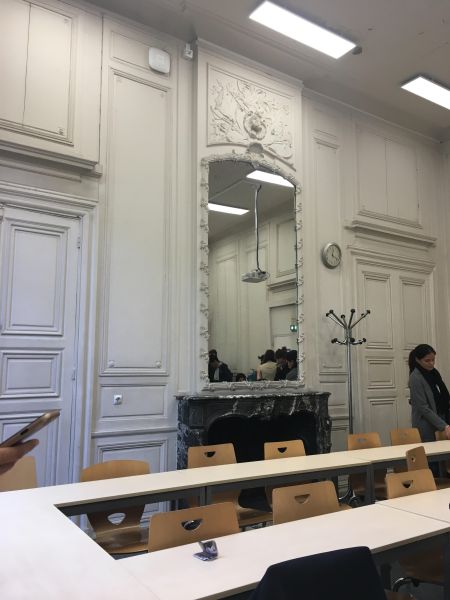
Hard to pay attention in class when you’re learning in such a historical environment

I’m taking five courses, all of which so far have been some of the most interesting I’ve taken in college so far. My most demanding course is “The Sacred and the Profane: Critical Perspectives on Power, Ecstasy, and Violence” which is taught by a professor who used to work with UNESCO as an Enseignment (or educator). We’re currently diving into the works of sociologist Emile Durkheim, which is new territory for me academically, so it’s been relatively difficult for me so far to substantially contribute to class discussions. The class discussions as well are demanding in the sense that many students here are more familiar with classical texts and can provide compelling philosophical evidence even for the question or answers they propose in class. It’s been tough, but I’ve been enjoying the challenge—it’s certainly what Sciences Po is known for.
unnamed-1

Hard to believe this is classroom!

One of the other exciting parts about studying abroad is assimilating into a new social culture, and the best way to do this is to join a club. I’ve joined the “Refugee Help” association as well as “Stop and Go,” Sciences Po’s very own hitchhiking club. I wanted to get involved with the humanitarian side of politics and thought an association that is dedicated to doing exactly that would be a good choice to both meet French students and also dedicate my extra time to serving a cause the needs all the help it can get. On a less serious note, the hitchhiking club is a lighthearted group of French people struck by wanderlust and who share in excursions all across Europe. I’m going on a hitchhiking trip next weekend across France, so we’ll see how that goes. They’re two entirely different clubs but, experientially, will make my time studying abroad here all the more interesting.

À plus tard,

Jess


Jeanette in Morocco: Moroc(kin’) First Week

September 10, 2017

Plane .jpg

Wow, it’s hard to believe I’ve already been in Morocco for nearly a week! Stepping off the plane felt surreal. There is something unexplainably special about experiencing a place for the first time.

The days feel long, but the moments feel fleeing.

As much as I would like to talk about all the things happening so quickly, I am slowly learning through the relaxed Moroccan lifestyle that it is unnecessary to make sense of everything immediately. Instead, we should understand that reflection takes time. It is this acknowledgement which liberates us, allowing us to not only be in a moment, but to truly soak it in.

In one week, Morocco has already challenged my abilities to relax, unwind, and be present. As an American, go-go-going is an embedded notion difficult to strip. However, as my host dad says, “Relax! It is not a problem!”

Day by day, I am learning to replace a stressful need to achieve with a calm desire to enjoy.

Enjoy this collection of small, but meaningful moments I have been lucky enough to experience, and more importantly, enjoy.

Group 1.JPG

Group 2.JPG

My program SIT Morocco: Field Studies in Journalism and New Media is made up of 15 students from across the U.S. pursuing degrees in a mixture of journalism, film, photography, international relations, foreign correspondence, and more. Aka – a group of artistic junkies obsessed with words, images, and storytelling lucky enough to be mentored by award-winning creatives.

To say I am incredibly inspired by my new friends and professors is an understatement. From a Late Night Show intern to a New York Times published writer, I am surrounded by some serious talent and I can’t wait to learn from them and offer what I can!

Sunset.JPG

As a University of Richmond student pursuing a double major in Leadership Studies and Journalism, with a minor in Film Studies, it can sometimes feel like I am a fish swimming upstream. Whereas I find passion in literature and cinema, much of the university spends their time mixing chemicals or studying Econ.

It was a pleasant surprise to find that almost every single person in my study abroad program journals like I do!

A few nights ago, my friend and I went to the beach to watch the sunset and journal. Foolishly, we left too late and missed the sunset. We ended up laughing about the fact that we were sitting in the dark more than we actually journaled, but this has been one of my favorite nights thus far. And I look forward to many more.

I just moved into my homestay last night, and I already feel a part of the family! For homestay gifts, I brought a lighthouse candle holder (resembling the Virginia Beach lighthouse seal), autumn-scented candles, and one of my mom’s canvases.

Within seconds of unwrapping the gifts, my homestay mom immediately made them a part of the home decor!

She couldn’t read the Chinese calligraphy my mom wrote on the canvas, and I couldn’t explain them to her in Arabic, but somehow, with the little English we share, I was able to communicate the characters. “Peace is a blessing.” She smiled from ear to ear.

It was amazing to watch the way art bridged three cultures in this simple moment.

Brother 1.JPGBrother 2.JPG

Meet my little brother Youssef! He is the most adorable seven year old I have ever met and for the first time in my life, I’m not the youngest one!

My lack of Arabic and his lack of English don’t make for rich conversations, but we spent the whole afternoon playing catch, coloring, drawing, and communicating in an ongoing game of charades and validating thumbs-ups.

Despite language barriers and cultural differences, Youssef makes me smile as though I were seven again too.


Jess en France: Ch-Ch-Ch-Ch-Changes!

September 4, 2017

Now that orientation is over, and I’ve been settled with my host family for over a week, I want to talk about studying abroad and the inevitable adjustment process. Before coming to France I only spoke as much French as I had managed to cram over the summer. Although many people in Europe speak English as their second, third, or even fourth language (and I met some Europeans who know a fifth one), the French are notoriously picky about language competency. Granted, this is a stereotype, but the French are rightfully proud of being a historically significant contributor to the world in art, gastronomy, and language and have the cultural organizations to ensure that the ‘French’ way is respected. So I made sure that upon arriving in Paris I would, at the least, have a basic grasp on, well, the basics.

Inevitably, adjusting to a new language is difficult, and I’ve messed up quite a few times. One of my most embarrassing moments, admittedly, occurred when I tried to talk about the former President of Vichy France, Philippe Petain, and mispronounced his last name. I won’t be too explicit, but I, essentially, had renamed the man “President *expletive*,” about which it took everything in my host mom not to burst out laughing.

Although it was easy enough to laugh off my mistake, it took a while longer to navigate and grow accustom to other cultural shifts. The French don’t generally make small talk with strangers. This also means that smiling at strangers or saying “hi” to them in passing is bizarre. As someone who loves to smile I’ve garnered some unwanted attention being a bit too ‘smiley’ on the streets of Paris. But on the other hand, when French people engage in conversation with you they do it not out of a sense of obligation to be nice but because they genuinely want to. So there isn’t much doubt when a French person offers to help you that they sincerely would like to help. If I walk into a store or go to a restaurant there isn’t always someone readily and eagerly waiting to assist me, but there is certainly help if I ask. There’s a more pronounced sense of independence or ‘laissez-faire-ness’ here that is difficult to articulate, but it starkly contrasts with the bustle of American overt-friendliness.

This is one of my favorite aspects of the French culture, however—most don’t feel an obligation to make small talk and, consequently, respect each other’s solitude. The metro is almost always silent. Interestingly though, most aren’t looking down at their phones, like many would in the States (because there is a sense of awkwardness for Americans when we don’t have something with which to occupy ourselves). Most are reading a book or staring off into space. In cafes, people generally sit on the terrace and eat by themselves while people-watching. This isn’t to say that French culture is aloof or intensely introverted, but silence and solitude is acceptable, and there isn’t a cultural necessitation that people have to be doing something lest they look awkward. Human interaction is still important, there’s no doubt about that, but it’s conducted with a different purpose in different settings than what I’m used to in the United States. As someone who enjoys her solitude eating alone at restaurants or going solo to a movie, often to the curiosity of American onlookers in the States, I feel right at home slipping into this aspect of French culture.

I start my first day of school tomorrow, and I’m excited for the new people, events, and expectations looming on the horizon. During orientation we were given instruction on how to acclimate to the French methodology of writing, which is notoriously strict and systematic. So aside from acclimating to a new school and student body, I have to acclimate to a new system of education as well. Next week I will be sure to talk a bit more about the ‘French’ way of all things academia and the five classes I plan on taking for the rest of the semester.

À la prochaine,

Jess

P.S. I’ve done a bit of exploring around Paris, so here are some photos. More to come!

IMG_3412.JPGIMG_3442.JPG

IMG_3544IMG_3435


Meghann in Argentina: Host Family

September 3, 2017

For whatever reason, be it nervousness about not speaking the same language or fear of having different living habits, many students I know are hesitant to live with host families. I can say with certainty, however, that one of my favorite parts of studying abroad thus far has been my family. I believe that living with a family in their own home has given me the feeling that I am having a real, authentic experience of what it is like to live in Buenos Aires in a way that staying in an apartment with other Americans could not. Integrating myself into the normal life of an Argentine family makes me feel less like I am a “visitor” to the country for six months.

IMG_7850.JPG

My host dog Rocco enjoys hanging out in my room.

My family consists of an older couple with three grown children, one of whom stills lives at home to study (which is typical here), and an old black lab. Because my host parents work and I am usually at school or out exploring during the day, the majority of our interactions occur every night at dinner. Dinners have served as a great way to both practice Spanish and get to know my host family better; there is always something new to talk about or learn (they like to learn English words too). Additionally, my host parents always love telling me where to go and what to see in the city—suggestions that I would not be able to find online or in a touristy guidebook.

IMG_7792.JPG

A typical dinner of empanadas with my host family.

To dispel any false notions about living with a host family that often lead students to choose different options: no, staying with a family does not “hold you back” in any way. Any time I am home at night my host mom asks why I’m NOT “saliendo” (going out), and when I come back early (which, by Argentine standards is 3am) she jokes that I should stay out later. No, language differences do not put up a barrier. My host family knows I am not fluent in Spanish, and they are always patient and helpful when I speak more slowly or pause to think about what I want to say. Despite not fully speaking the same language, we are able to discuss everything from politics to the best places in the neighborhood for ice cream. My family has been nothing but kind and supportive to me since the day that I arrived to their apartment at 6am, exhausted and nervous after more than a full day of travel. I love having a real home to call “home” here, and I am excited to get to know my host family even better during the rest of my time abroad.


Jeanette in Morocco: Pre-Departure Feels

September 1, 2017

Coin.jpg

Eight months ago, I sat in the University of Richmond dining hall, unsure of where to study abroad. Part of me wanted to return to my mother’s loving homeland, Taiwan, while another part of me sought a new adventure to deconstruct the confines of my comfort zone. Unable to decide, I left it up to fate.

With the flip of a coin, I will be on a plane, flying to Morocco tomorrow! As a Leadership Studies, Journalism, and Film Studies student, I will be embarking on the SIT: Field Studies in Journalism and New Media Program.

Camera.jpg

I cannot wait to combine my passions for social justice and visual storytelling as I explore the ins and outs of imperial cities and rural villages, seeking and sharing diverse, rich, and perhaps, silenced stories.

Book.jpgTomorrow, I will be watching the sunrise in Africa. This is both a beautiful and nerve-wrecking thought.

I feel as though people typically have a reason for choosing a particular country to study abroad in. However, I feel as though I will not know my reason until I return. And strangely, I am content with that.

For the next four months, I want to experience as a sponge – soaking in all the knowledge, experience, and culture Morocco has to offer. Here’s to a semester of growth, change, and new beginnings. As salam aleykum! أس سالم عليكم!


Jess en France: A Beginning

August 27, 2017

It’s quite hard to imagine a city that is as easy to fall in love with as Paris. Every street corner has a musician, every boulevard is peppered with bakeries, and the very ground you walk on is historical. The river Seine weaves itself throughout the city and, today, I find myself dangling my feet at its elevated edge. Along this part of the canal-way there are wide ledges where Parisians and tourists alike come for leisure. I have my journal with me, as I often do, and feel compelled to reflect on these past few days. I sit under the shade of a willow tree and, in the warmth of a setting sun, I begin to catalog my time in France so far.

1.4 La Seine

The first day I arrived in Paris I stayed in Saint-Germain-en-Laye, where I met with a friend who currently studies at Sciences Po. SGL is not only in the outskirts of Paris where the views are panoramic but it also is in one of Paris’ most beautiful and historical parts. We walked through a large garden next to an even larger castle that used to house the royal family before Versailles was built. Every facet of the chateau had been restored to its original state—the gargoyles, the Gothic-inspired ornamentation of the facade, the exactly trimmed square hedges in the garden and the perfectly spread beige gravel. This attention to detail is not uncommon in the rest of Paris. I came to discover in the next few days that the entire city is just as architecturally ornate. It was Day 1 and I was already awestruck.

1.2 Notre Dame


Orientation began the next day, and it felt like freshman year all over again—in a good way! Although I got lost going in the wrong direction on the metro, I made it to school and, fortunately, was given a tour and a map to help orient myself to the area. In my orientation group, China, South Korea, Sweden, Brazil, the US, and Singapore were all represented, which made for a melting pot of cultural diversity and ever-more interesting conversation topics. We were then funneled into a massive auditorium, which I later learned is a lecture hall. Coming from a school with an average class size of sixteen people, a classroom of that size is a bit alien to me. The director of the university, Frederic Mion, was in attendance and gave a speech about the many paths we might find ourselves traversing this next year or semester of our lives and the richness they bring to our sense of identity as citizens and academics of the world. And just as my orientation facilitated for me at University of Richmond, I felt like I had found a new home at Sciences Po.


1.1 Student ID Card


It’s the weekend now, and I’ve moved into my housing arrangement for the semester. I’m living with a lovely host family in Montmartre, and they are thankfully patient with my limited French. I chose to live with a host family because I wanted an immersion experience. It also helps curb the homesickness to be in a home with a mom who cooks wonderful French food. They live right next to the Basilique du Sacre-Coeur or the Sacred Heart Church as us Anglophones know it. The church is constructed of limestone, which is said to have an effervescent glow after it rains. Needless to say, this area is beautiful, the church down the road is ethereal, and I’m pretty ecstatic about spending the next four months with a wonderful family.


1.3 Host Family


I still have a few days of orientation left, so my next update will include some more tidbits about acclimating to French life as I’m introduced to all its Parisian nooks and crannies.

à bientôt,

Jessica


Meghann in Argentina: Costumbres de Buenos Aires

August 25, 2017

It is crazy to realize that I have now been here for almost eight weeks. Time has flown by, but it still feels like I have done so much. At this point I think that I have really adapted to Buenos Aires—I still remember an early conversation I had with my host mom about how different some parts of life in Argentina were to me when I first arrived. We were talking about how time functions here in comparison to the U.S. I told her that for me, eating dinner at 10 or 10:30pm is really late, as a common time for American families is around 6 or 7pm. To this she simply replied, “vas a acostumbrar,” or “you will adjust.” She was right—I definitely have adjusted to life in Buenos Aires, but after almost two months here, I have found that there are a few things I don’t think I will get used to:


  1. Time. The initial surprise I expressed to my host mom about how late everything is here has not changed. Eating dinner at 10:30pm, los boliches (clubs) getting crowded at 3am, and arriving home at 7 or 8am is not strange or uncommon. This schedule often makes me miss meeting friends at dhall to have dinner at 6pm…


  1. Jamón (ham). Argentines put ham in/on everything. I went from rarely eating it at all in the U.S. to having it nearly every day here. This may seem like a small detail, but when you find ham in your salad on several occasions, you notice.


MegArg_6.1

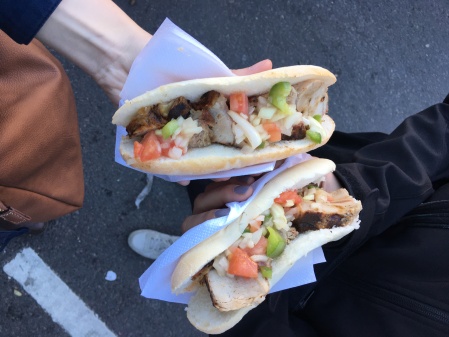
Argentina is well known for plenty of other kinds of meat. In addition to ham, I have also been able to try really great steak, such as these steak sandwiches we bought at the national asado competition that was held in Buenos Aires this past weekend.


  1. Accents. I was warned that Argentines speak with a fairly strong, particular accent. They pronounce “ll” as “sh” instead of “y,” which is what is taught in school/how basically everyone from other Spanish-speaking countries would pronounce this sound. So where I would say “yo quiero que llueva” (I want it to rain), Argentines would use a different pronunciation and say “sho quiero que shhhueva.” Although not everyone has such a noticeable accent, it is oftentimes hard for me to understand those who do.


  1. Plataformas. These are a type of platform shoe that every woman here seems to wear—while some could pass as normal footwear in the U.S., other pairs are ridiculously tall and I often find myself doing a double take as I watch some women wobble across the cobblestone streets or to their seats on moving busses.


MegArg_6.2

These don’t look too fun to walk around the city in.


Although I may not “get used” to these (and many other) parts of life in Buenos Aires, I appreciate them all the same. Differences in routine, custom and culture is a huge part of what makes being abroad so special (and as cliché as that sounds, it is completely true).


Jess en France: Nerves (the Good Kind?)

August 25, 2017

It’s a few days before I fly to Paris, and my hyper-active mind has presented me with a mixed-bag of emotions. I find myself reminiscing the days before I made my move across the country, from southern California, to start my college career at University of Richmond. But as I now face the new prospect of moving across the world, to one of the most gushed about destinations on our planet, the sentiment of these last few days feel similar, yet altogether different than that before I came to Richmond. If you’re like me, you like to plan and over-plan, going over minutiae in your head until planning becomes superfluous (and even unhelpful). But if there’s anything I learned from my move just a few years ago it’s that there’s a finite extent to which planning is actually going to help—especially when you’re travelling and taking root in an entirely new place. This isn’t to say you should “wing it”—travelling can be logistically challenging. However, one of the greatest parts about travelling is letting yourself be surprised by what you find and allowing it to paint your experience, rather than you painstakingly painting it for yourself. And this is where my anxieties fortunately drop-off, at the point where I let myself “be” and let what will come, come.

Hi, I’m Jess. I’m a UR student majoring in International Studies: World Politics and Diplomacy, and I’m spending my first of two semesters abroad studying at Sciences Po in Paris, France. I chose to study abroad in France for two main reasons—to work on my French language skills and to study at Sciences Po, which offers one of the best International Politics programs in higher education. I will be staying with a host family in Montmartre, which is a large hill in the eighteenth arrondissement (i.e. the outer district of the city) as well as a historically renowned part of Paris that artists have flocked to throughout the years, particularly in the nineteenth century. As someone who loves to write, I can’t wait to scope out a “writers spot” and bask in the wonderment this corner of the city has to offer. So I would definitely be remiss not to mention that Paris is a melting-pot of cultural, artistic, as well as musical, and gastronomical prominence! There is quite a lot to look forward to.

I’ve been truly blessed with such a wonderful opportunity to study here, and there are many people to thank—professors and friends who have supported me, but also the Office of International Education and Chris Klein, my study abroad adviser. Without them, I wouldn’t have been afforded such a life-altering adventure. I cannot wait to share my experiences with you and any tips or words of wisdom I may be able to impart as I venture off into Europe.  I will be posting weekly, so stay tuned!

À la prochaine (Until next time),

Jess


Meghann in Argentina: A Mix of Cultures

August 14, 2017

Orientation is over and classes have finally begun, which has given me the chance to start meeting other exchange students from all over the world—on only the first day of class, I spoke with people from countries like Japan, Colombia, France, and Norway, to name a few. It is awesome to not only be able to immerse myself in Argentine culture, but to also experience and learn about parts of other cultures from friends and students in class. A couple of German friends from my pre-semester Spanish course have been teaching me a German word a day—leaving Spanish class just to be taught bits of German is a perfect example of how much I have already learned about cultures, languages, and life in other countries I previously knew very little about.

MegArg_5

When cultures mix: some of my first random German words at the bottom of my Spanish homework.

I really enjoy the idea of being able to learn about and adapt to living in Argentina with other foreigners because it provides the opportunity to both find out about life in other exchange students’ home countries and share about my own experiences in the United States. For example, a long wait for the bus outside of campus led me to talk to an English girl about how different commuting to university in England is in comparison to living on campus in the U.S. I am also excited to take the PEL (Programa de Estudios Latinoamericanos) classes that UCA offers for exchange students, as many of the subjects will likely be even more interesting given that the classes are comprised of student perspectives from all over the globe. I am the only American in my Arte y Arquitectura en America Latina class, and I think it will be a great experience to learn about such an interesting topic that is taught in Spanish and coupled with the views of students from several different continents and many distinctive backgrounds.


I definitely did not expect my experience in Buenos Aires to be so wrapped up in other cultures (besides that of Argentina, of course), but I am very pleasantly surprised that my experience has turned out this way; there is so much to be learned when you are surrounded by great diversity.

MegArg_5.2

A group photo of all of the UCA International students that are here this semester.


Meghann in Argentina: Trip to Córdoba

July 31, 2017

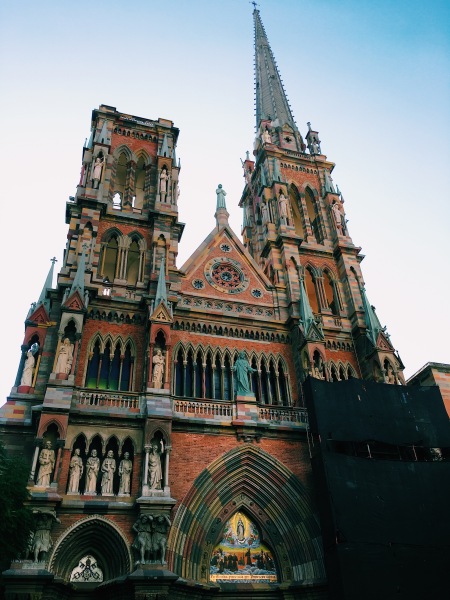
Due to the fact that we have almost two weeks of down time between the end of my three-week Spanish pre-semester course and the first day of orientation, some friends and I decided to use this time to our advantage and take our first trip outside of Buenos Aires. We opted for Córdoba, a city located about 10 hours northwest of Buenos Aires by bus (this distance is considered short by Argentine standards—until I looked at the length of bus trips, I didn’t fully realize just how massive this country is!). Córdoba is home to beautiful Spanish architecture and amazing Jesuit churches, and is the second biggest city in Argentina. Don’t let that size fool you, though—Buenos Aires still has about 12 million more people, so in comparison Córdoba seemed tiny.


It was refreshing to get a short break from the hustle and bustle of Buenos Aires. We spent the majority of our four days exploring the city, walking through the cobblestone streets and taking in the colonial architecture. We even stumbled upon a baptism in La Catedral (the oldest church in continuous service in the country) and a mass in a beautiful Jesuit church—although I couldn’t quite keep up with religious services in Spanish, it was still a cool experience to witness them.


Processed with VSCO with c1 preset

The Jesuit church where we sat through part of a mass on Sunday afternoon.


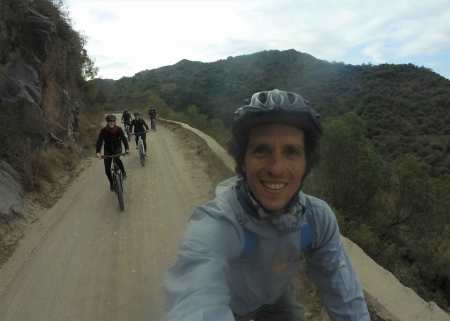
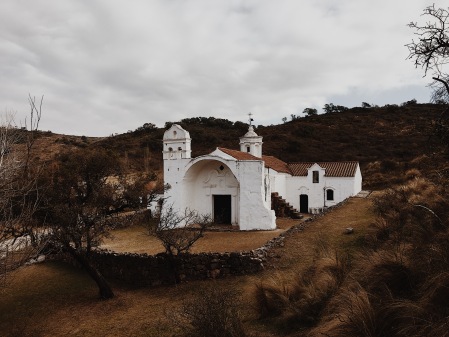
By far the best part of the whole trip, however, was a daylong biking tour through the Sierra mountain range. Our awesome guide Juan (who we discovered on TripAdvisor and were drawn to due to glowing reviews) drove us about an hour outside of the city to a small pueblo where we began the tour. Although parts of the trip were fairly grueling for most of us (Juan was the only one who had no trouble zipping up the steep hills), the views of the mountains and the historical sites we stopped at were well worth the workout. My favorite stop was a small Jesuit church in the hills of Candonga, an area where travelers coming by mule from Buenos Aires to the north of the country would stop after weeks of travel and switch out their mules—Juan told us that in some older and more colloquial form of Spanish, Candonga translates to “tired mule.”


MegArg_4.3

Juan very much enjoyed taking GoPro pictures of us throughout the trip.


Processed with VSCO with m5 preset

The one-roomed Jesuit church perched quietly in the Sierras.


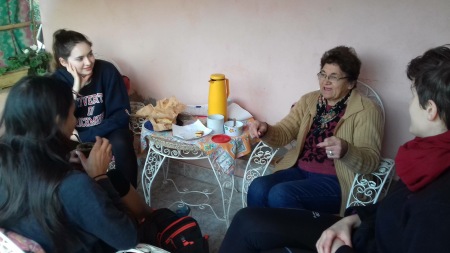
Our day ended back in the small pueblo that we began in. Juan invited us onto the porch of an old couple that he got to know because he biked by their home so often; he told us that their friendly “holas” quickly turned to friendship, and now every one of his biking tours ends with the couple welcoming strangers into their home for mate (a classic Argentine tea that is shared by passing the gourd it is served in around in a circle) and pastries. If this isn’t an example of how friendly and gracious Argentine people are, I don’t know what is. Elsa, the cute old woman, served us delicious cookies and prepared mate for us as she chattered on about how much her pueblo has grown and changed since her childhood.


MegArg_4.4

Talking with Elsa on her porch.


Overall, our trip to Córdoba was very refreshing; the small-city feel and our interactions with such kind people like Juan and Elsa made me excited to see what other cities in Argentina have to offer. That being said, I am excited to be back in Buenos Aires and for university to finally start!