Jeanette in Morocco: Serendipity

November 22, 2017

Throughout my time in Morocco, I’ve met some incredible people all by simply being in the right place at the right time.

1 (2).JPG

Meet Ahmed! I am currently working on a documentary short film about the threats Morocco’s famous tile industry is facing. One day, my print partner and I were planning to visit an artisan school, but our cab driver mistakenly took us to a pottery shop instead. However, the place was beautiful and still related to our topic, so we decided to stay and explore. We stumbled upon Ahmed, a man who has worked for 40 years in the tile industry and owns multiple shops now. He invited us to sit with him and we ended up staying for hours, drinking coffee, listening to his crazy life stories, and laughing really hard. He even showed us pictures from his 20s when he starred in a movie with Sean Connery! We never got to the artisan school that day, but it has been one of my most memorable days so far.

2 (2).JPG

Meet Rochdi and Azar! The one thing about being on a SIT field-study program is that your program is made up of only Americans so it can be challenging to get to know locals. However, I think befriending locals and doing local things can provide a more authentic abroad experience. My American friend and I met Rochdi and Azar one random morning on the beach. They offered to watch our bags while we went swimming and then we returned the favor. Then, somehow we ended up staying on the beach until sunset, teaching each other lingo, showing each other music, and laughing at stupid things. They’ve become some of my closest friends in Morocco and I honestly can’t imagine this experience without them!

3 (2).JPG

Meet Driss and his family! Driss (far left) is the main subject of my documentary. I only had three days to film in the tile factory and it was difficult to pick my subject being that they spoke no English and I know very minimal Arabic. I went with my gut and picked Driss because despite the rigorous, physically demanding work he was doing for hours on end, he never stopped smiling. After visiting his family and learning about their story, I’m confident I made the right choice! I was also moved to tears during some of our interviews when the translator shared with me that his whole family is illiterate and Driss dropped out of school at the age of 7 to start working in the tile industry to support his family. To this day, he is their sole stream of income. I’m so honored to know him.


Jeanette in Morocco: Behind the Scenes of Filmmaking

November 21, 2017

When I first got my camera, I said to my friends I’m excited to see where I take it, but I’m more excited to see where it takes me.

Well, I took it to Morocco, but it’s taken me to the door steps of some incredible opportunities.

I am currently working on a documentary short film to be released at the end of December and serving as the Video Editor for an online publication, Reporting Morocco.

Working as a filmmaker in Morocco hasn’t been easy. I am constantly innovating ways to combat language and cultural barriers. It seems that every time I think I have something figured out, another challenge arises that I could have never predicted. This is the nature of working in an unfamiliar place.

However, these once daunting challenges have taught me a lot. I’ve strengthened my technical skills and enhanced my creative eye, but more importantly, I’ve gained patience, resilience, and adaptability – arguably three of the most important assets for anyone in this field to have.

Here are some photos encapsulating the lessons I’ve learned as a filmmaker in Morocco!

1 (1).JPG

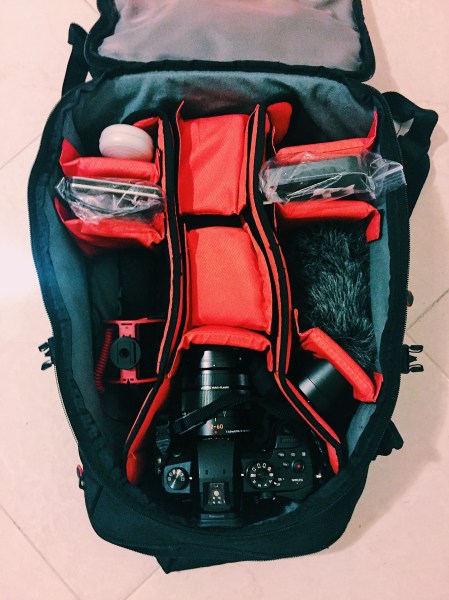
1) Be prepared! It’s always better to be over-prepared than under-prepared. Before every shoot, I make sure I have three sets of charged batteries, three sets of formatted SD cards, two hard-drives for back-up storage, two microphone sets (shot-gun and lavalier), and two forms of stabilization tools (tripod and gimbal). Without these fundamentals, I wouldn’t be able to achieve the shots I want!

2 (1).jpg

2) Be adventurous! Filming in a country you’ve only lived in for a short amount of time means there’s a lot you haven’t seen. If you don’t explore, you’ll never know what’s out there that could elevate your creative vision. For a video I shot last month, I grabbed my camera and explored the old medina and surrounding city aimlessly for hours. The footage I shot that day ended up being the introduction in my final cut!

3 (1).JPG

3) Be adaptable! The photo above is my print partner and I waiting for our subject who was over an hour late to our scheduled interview. Time is a very relaxed notion in Morocco. It is not considered rude to show up late or cancel last minute. Also, the concept of answering within one to three business days does not really exist. As frustrating as it is having to deal with elements out of my control, I’ve slowly come to realize that the only way to be successful here is to adapt to the norms. On my latest shoot, my subject once again showed up late. However, instead of getting flustered, I made effective use of my time by shooting b-roll (supplemental footage) of the environment while I patiently waited for him to arrive.

4 (1).JPG

4) Be inventive! The photo above shows an interview I shot next to a landfill because it was the only quiet place I could find near the tile factory I was filming. The floor was cold, so we found pieces of old leather and a brick from the landfill to sit on. Not the most conventional set you could say, but it worked! And I ended up getting amazing natural lighting and crisp, echo-less sound from the open space.

5 (1).jpg

5) Be passionate! In my opinion, this is the most important quality of them all. Technology malfunctions. People flake. Things go wrong. There have been moments where I haven’t loved what I’m doing, but I make a conscious decision to keep going because I am passionate about my work. I am passionate about using creativity as a tool to bridge communities. I am passionate about hearing and sharing meaningful stories. I am passionate about evoking emotion – laughter, tears, and everything in between. I am passionate. And if I’m being honest, without it, I’d be nothing.


Jess en France: It’s Decided—Amsterdam is the Best City on Earth

November 15, 2017

When the sun sets on Amsterdam and its rays reflect off the rain-soaked pavement, the city streets turn into paths of sheer light. So today after the day-long rain, the sunlight reflecting off the pavement became so bright I could hardly see the sidewalk in front of me without squinting my eyes nearly shut. That didn’t help so much since I was exploring the city by bike. But despite the potential crash-factor, cycling in Amsterdam has been one of the most memorable moments of my time studying abroad so far.

IMG_4319.PNG

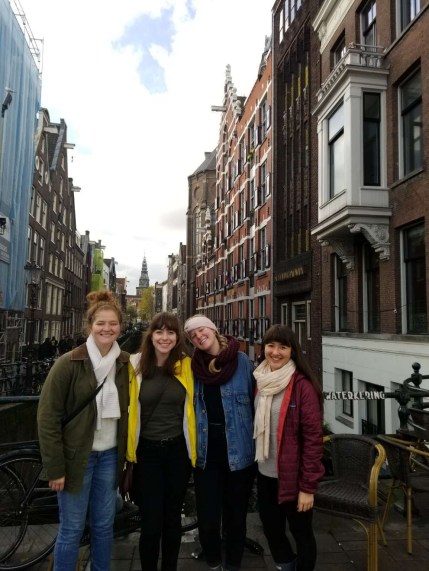
I’m here as a tradition with the women’s ultimate Frisbee team. Each year, the juniors who are abroad meet in one city in Europe. Our job while here is to send an email and welcome letter to the freshmen joining the team as well as take pictures in our traditional team poses. I remember seeing the pictures from the last set of juniors meeting in Europe and waiting in eager anticipation of the day I would be able to venture off abroad and continue the traditions myself. It’s certainly a reminder that time passed has passed quickly.

IMG_4331

On the first day, my friends and I biked around to get a feel for the city and its culture. The city is much calmer than Paris yet still carries the same level of importance. It’s a city for business people and entrepreneurs, but it’s also open to people of various walks of life. We stayed at a youth hostel in the center of the city, and I heard Spanish, English (of the non-American brand), and French—but little Dutch spoken. Everyone here generally speaks English, and if I didn’t know any better I would’ve thought I was in an Anglophone country. This country is also very open with its values, so many things are legal here that aren’t legal in the US. It makes for a bit of a culture shock, but is interesting nonetheless.

1409223314-amsterdam-hostel-bobs2.jpg

I can’t forget the architecture! After I got to Paris and did some traveling to other cities in Europe, I got it in my head that all cities are more or less the same. I’ve see a lot of the Haussmann architecture, which is virtually the only kind of building in Paris. Amsterdam, however, is something different altogether. It’s more colorful, quirky, and reflects the light-hearted spirit of the city. Some buildings are lopsided, some seem to be missing infrastructure altogether, some of them have colorful facades, and all of them have dizzyingly steep staircases. There are also canals and tunnels all throughout the city. It seems like a theme park in some ways.

The second day, we spent the day visiting museums. We made our way to art museums as well as a heavenly cheese museum. The most memorable of these museums, for me, was the Anne Frank house. I’ve always had an interest in 20th century Europe with a particular interest in WWII history. This is one of the reasons why I wanted to study in Europe—to live in and be surrounded by historical artifacts. Visiting these sites of history is also a must for me every time I visit a new city. I visited Dachau a few weeks ago and now get the chance to visit the former hiding place of the world’s most beloved child author.

As I walked up the steps (steep ones at that) into the former hiding place of the Frank and Van Pels family, the Secret Annex, I felt transported into history. As I walked into Anne’s bedroom the original posters were plastered on the wall, the signs next to them explaining that it was her attempt to make the room seem happier. I had the chance to read some of her diary, and it’s unfathomable to think that a girl, who had been locked away in a house and repulsed by her society, could have thought what she did at her age. But her writing is still relatable; she was a child and had the same impulses and desires of a child. Nevertheless, she spoke with a profound command on her life and the lessons she learned having faced the prospect of death. This museum is a beautiful tribute to an even more beautiful young girl, and, although I didn’t get a chance to capture any pictures, I highly encourage visiting to see it for yourself.

I’m writing this while sitting in the airport. The flight back to Paris is only an hour long, the brevity of which is taking some getting used to. In the states, flying from Richmond to home for me takes six hours and one layover. But that’s also what I appreciate about being in Europe; another historical artifact or another amazing city or mountain range is just a hop, skip, and jump away. I’m not sure where I’ll go next (because finals are coming up, and I have to buckle down to prepare), but hopefully I’ll make it out one more time before I head back to the States for the New Year. It’s almost over! I can hardly believe it.

IMG_4364.JPG

A la prochaine,

Jess


Meghann in Argentina: Heading North

November 13, 2017

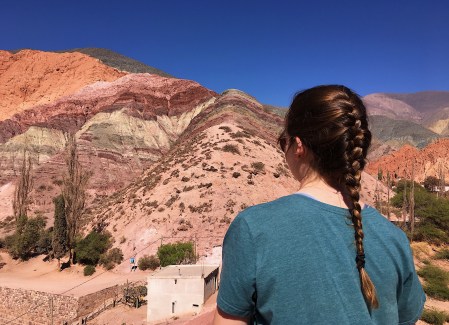
Last week I had the amazing opportunity to go on a weeklong trip to northern Argentina with my mom. We took a three-hour flight up to the city of Salta, a provincial capital of the northwestern region, and then continued our journey by taking a road trip in a rental car up la Quebrada de Humuhuaca, a beautiful trail dotted with small pueblos. We got so far north that we were less than 100 miles away from the Bolivian border—and you could tell! Both the geography and the culture were completely disparate from anything that I have experienced in other parts of Argentina thus far. While in Buenos Aires I usually can’t see beyond one city block due to the massive buildings, in the north, at literally every point you look out from you can see gorgeous, colorful mountain ranges (many of which are pre-cordillera, or in other words, “mini Andes mountains”). My mom had to do a lot of nervous driving through mountainous, twisting roads, but the views were well worth it.

FullSizeRender (4).jpg

In northern Argentina, the mountains can change from red to green to yellow to purple all within one stunning view.

Even more surprising than the differences in geography, though, was the distinct culture we encountered in all of the little pueblos that we visited (some of which had only a few more than 100 permanent residents). The city of Buenos Aires is well known for being very European; from the architecture to the food to the people, sometimes it feels more like I am in Spain than Latin America. I am really interested in more indigenous cultures, so being exposed to this way of life in the north was a unique experience for me. In many of the pueblos that we visited, the primary way of earning a living is to sell small artesanías, or handicraft work, to visitors. I loved looking at all of the beautiful colors and designs that seem so much more bright and colorful than what I am accustomed to seeing in Buenos Aires.

IMG_8775.JPG

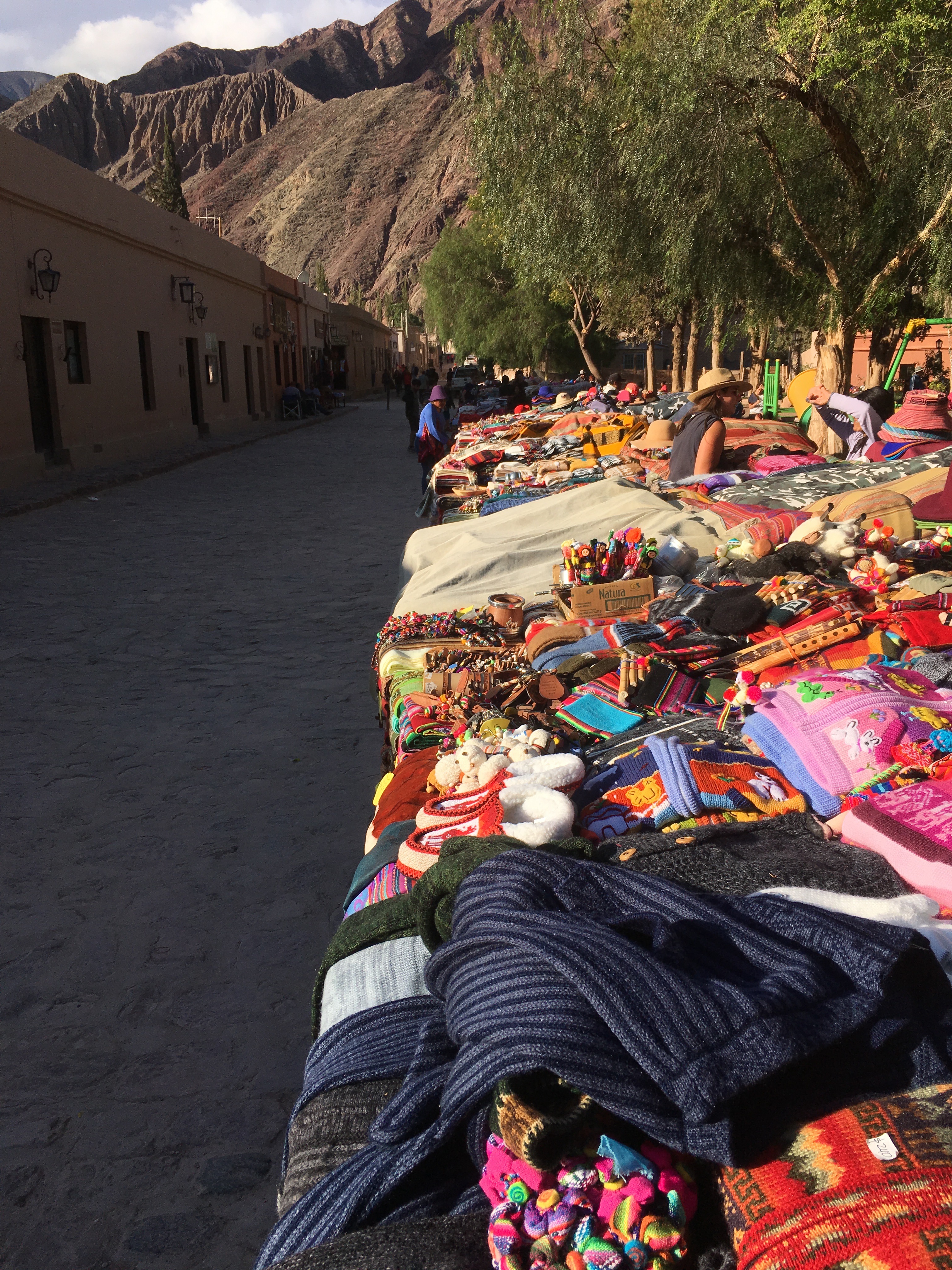
In the small town of Purmamarca, a market with artesanías opens up every day around the main plaza. Among the most common things I saw were alpaca clothing, tapestries, and tiny wooden carvings.

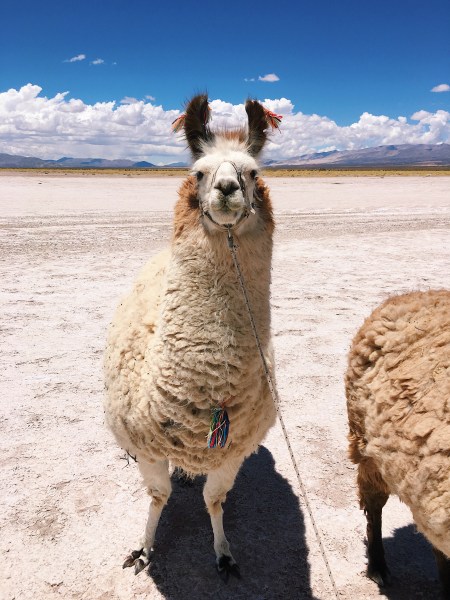
My favorite day was one that took us from the smallest pueblo we visited to the Salinas Grandes, or salt flats, of Jujuy. My mom and I went with a guide who explained how the salt flats formed and how the industry is important for the indigenous people that live near them (this salt, once iodine is added, is used for human consumption all over Argentina). The best part of the tour in my eyes, though, was that the guide brought his four llamas out into the flats to help carry a picnic for the three of us.

IMG_8948.JPG

Walking with four cute llamas through a picturesque landscape provided many excellent photo ops.

I feel as though I say this every time I go somewhere new in Argentina, but once again, I am awed by the diversity of this country. Going to the north (and befriending llamas) was definitely another unique experience that I won’t soon forget.


Jeanette in Morocco: A Different Universe

November 12, 2017

It’s difficult to admit, but before I came to Morocco, there were only a handful of people I felt like I had genuine support from. Whenever I told people where I would be spending my fall semester, it seemed like the first thing they said was “is it safe?” or “be careful” but it never seemed as though it was coming from a genuine place of care, but rather a place of concern. Perhaps such fears stem from the fact that Morocco is considered a developing country in Africa, or American rhetoric has made people narrow-minded about Muslim-majority countries. However, despite the doubt surrounding me, something in me told me that it couldn’t be true. There was no way people who have had no connection with a country could generalize a truth about it. It was unfair. It was ignorant.

Though I had no idea what to expect coming into Morocco, I can say that after having spent over two months here, my gut feeling was right.

Morocco is a country rich with history and culture. It is a place where strangers welcome you with mint tea, warm hugs, and hours of laughter despite strong language barriers. It is a place where community is deeply valued and everyone thinks of their neighbor before themselves. It is a place where I have been challenged to deconstruct my preconceived notions and see the world around me for what it is.

Below is a short film I created to capture my thoughts, emotions, and reflections. It was inspired by a poem I wrote the first week I was here.

“A Different Universe” – Enjoy!


Jess en France: Journeying Outside of Paris

November 10, 2017

It’s been a few weeks since school has started and I’m eager to see more of France. Paris is wonderful but France is as beautiful as its regions are diverse in what they have to offer.  My university has a student association called Stop and Go, and they organized a group trip to the Champagne region of France, where we traveled between the towns of Reims, Ay, and Épernay. It’s a good opportunity to see more of France and experience its culture outside of the Parisian bubble.

We first travelled to Reims, which seemed deserted in relativity to Paris. I tend to forget that Paris is one of the more populated cities in Europe and attracts millions of tourists each year. So coming to the countryside brought me to the realization that I haven’t heard silence or seen smaller crowds of people in over a month. It was a much needed break that I didn’t know I needed. The lack of massive crowds made navigating the town and visiting tourist-attractions much easier. The first night I visited the Reims Cathedral, which is a High Gothic-style Roman Catholic church built in 1211. In 816, the first king of France, Louis I, was crowned at the cathedral, and almost every successive king since has held his coronation rituals there as well. I spent a few hours admiring its architectural and historical significance and felt almost in personal audience with the cathedral given how empty the town was.

The next day we made our way to Ay and then onto Épernay, where we walked alongside the undulating hills of wineries that seemed to stretch into every direction on the horizon. We followed a river for a while on our way to Chateau Thierry, and, of course, there were swans wading alongside us. At the chateau, our group had climbed to the top to get a better view of the valley, which, despite needing to climb what seemed like a mile of stairs, proved to be the highlight of my day. The sun was sitting above our heads, getting ready to set, and had lit up the extensive fields of grapes all across Épernay. The traditional French buildings of the city juxtaposed with the extensive fields of champagne grapes looked like a sliver of heaven.

This was my first excursion outside of Paris, and the trip was made awesome by the people who organized it. It was my first chance to test out of my language skills (although quite honestly I was a bit shy to say too much), and it was also a good opportunity to make some French friends. The next trip Stop and Go is planning is coming up soon, and I’ll be sure to document it if I join them in the coming days.


Jess en France: Church-Hopping in Paris

November 5, 2017

I’m finally on break and have the opportunity to take the walking tour of Paris I’ve been wanting to do for a while. This morning I set out for a neighborhood called Le Marais. This part of Paris is well-known for its typical Parisian-like architecture (and most importantly its amazing falafel vendors). I’ll start walking from there and use the River Seine as a guide to get me from one point of Paris to another. I’ve got some bucket-list items I’m looking to tick off today.

Just a quick side-note: I ran into another UR student on the metro visiting Paris for the weekend, which is quite a lovely surprise seeing a familiar face.

I get off the metro and in the distance I hear the faint chime of church bells, and, given my new-found love for ecclesiastical Gothic architecture, that’s where I head first. The first church I enter is just finishing mass, so I don’t snap any photos. But like many churches in France, the high-vaulted ceilings are so high above they hardly seem tenable, and the architectural feat (of all these churches in general) seems all the less possible given the age in which most of them were built. The incense must’ve been burning for a while because the light field of smoke permeating throughout the cathedral gave the air an ethereal glow against the backdrop of its natural lighting. Unfortunately I’ve misplaced my notes and can’t provide you with a name of the church. But trust me it is stunning.

After leaving the church, I continue on the same road until I stumble upon Paroisse Saint-Paul Saint-Louis and it’s even more magnificent than the last. At this point my plans have already shifted from finding good brunch places around Paris to church-hopping down the Marais. I walk through the church and this time have a chance to take some pictures. The detailed carvings into the church façade, ceiling, and pillars probably have to be repaired frequently. This church was built in 1627 on the orders of Louis XIII of France, and its first mass was held in 1641 by cardinal Richelieu as well, so the church, like many others, is a historical landmark. I’m sure the maintenance on this building is a constant process, so it’s hard to believe it’s as accessible to the public as it is and still holds mass every Sunday. It’s incredible.

23361214_1524979837617916_1286337623_n.jpg


On my way out of the church I run into another familiar face, this time from my abroad university. The world is feeling smaller and smaller.

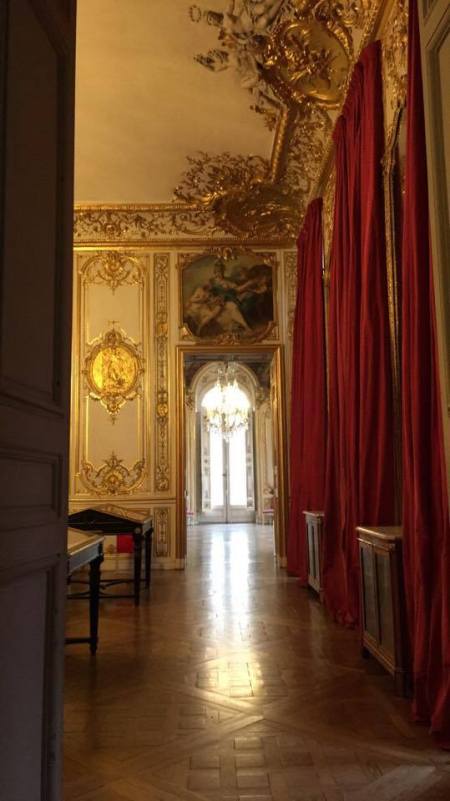
In between Paroise Saint-Paul Saint-Louis, I run across the national archives. The entry is free for anyone under 25, so I walk in. Turns out that this archive houses one of the largest collections of archival documents in the world (casual), and the institution itself was established in 1790 (just after the birth of the United States)…it’s a testament to how old France is and the historical impact it already made prior to the formal realization of our country. The oldest document kept in this archive dates back to AD 625 and is a contractual confirmation of a land grant from the city of Paris to the Abbey of Saint-Denis. This document was recorded by King Clothar II, a king whose rule dates so far back I don’t remotely recognize the names of the populations he ruled. Maybe I should brush up on some more history.
23283240_1524979810951252_1710798772_n.jpg

23318947_1524979717617928_2079038505_n.jpg

I continue down the street and find a large library with crepe stands all around. My first bucket list item: get a street crepe. I have a nutella-strawberry concoction that tastes heavenly (but unfortunately I forget to snap a picture—as always happens when food is placed in front of me). I keep walking until I hit my next bucket list item, which quite frankly happened by accident.

When buildings are under construction in Paris, which they often are given their age, the city places a large drape of some sort over the façade. I walk up to one of the buildings with a massive drape over its entire north-facing façade and decide to walk inside because I’m thinking it’s a church. I squeeze through a side door into a dark hallway (that’s only naturally lit) where I am handed a pamphlet about the German church choir performing there within the hour. Curiously enough, this is one of my bucket list items—to watch a choir-organ performance.

I look up from the pamphlet and find myself in Paroisse Saint-Eustache, and it is utterly massive and hauntingly beautiful. Just last night I was in the Notre Dame cathedral, but this church easily rivals its beauty. Because I’m just in time, I get a good seat in the front of the church where, for the next two hours, I listen to the haunting serenade of the choir and organ as it resonates throughout the entire cathedral.


It’s hard to believe that all these churches can exist together in a few mile radius of each other. But that’s what is incredible about Paris—it’s a modern city that, simultaneously, is visually saturated with centuries of French history.

I just got home and have started planning the rest of my week off. I’ve just spent $400 to go to the Palais Garnier for an opera and ballet performance next month, which is thankfully reimbursed by the OIE. (To any prospective student studying abroad, do take advantage of the $500 the OIE gives you to attend cultural events in your host country!). Tomorrow, I’ll be doing some more writing at a library in Paris called the Mazarine. And soon I’ll be planning a trip down to the south of France, hopefully in the Alps, where I’ll be hiking for the weekend. I’ll be sure to cover my adventures down there in the next post.

Stay tuned!

Jess


Jess en France: Annecy-le-Vieux (Annecy, the old)

November 5, 2017

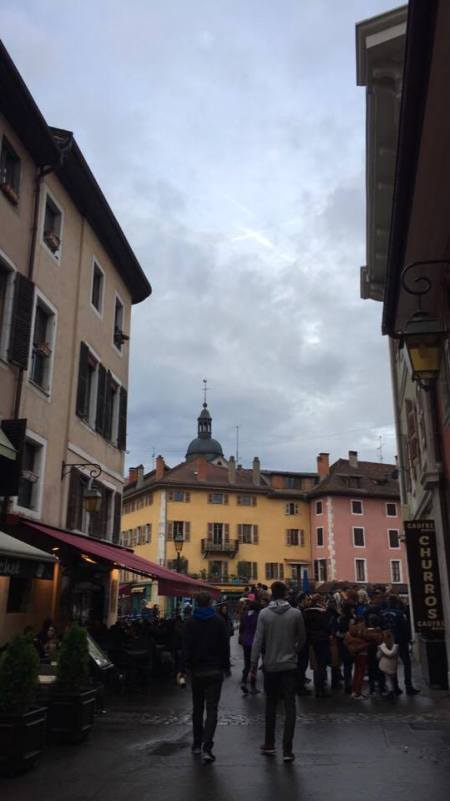
I initially had a hard time finding a place to go for the latter half of my vacation. I had bounced between four or five different places until I landed on a town called Annecy, a small city dubbed the “Venice of France.” My friend mentioned it to me in passing, and, after looking at some photos, it took me about one minute to toss my other plans out the window and book a ticket to Annecy for Thursday. I found a great youth hostel in the mountains that’s only a twenty-five minute walk from the train station, which is also in the center of town. Logistically speaking, I found the perfect place to spend the rest of my week.

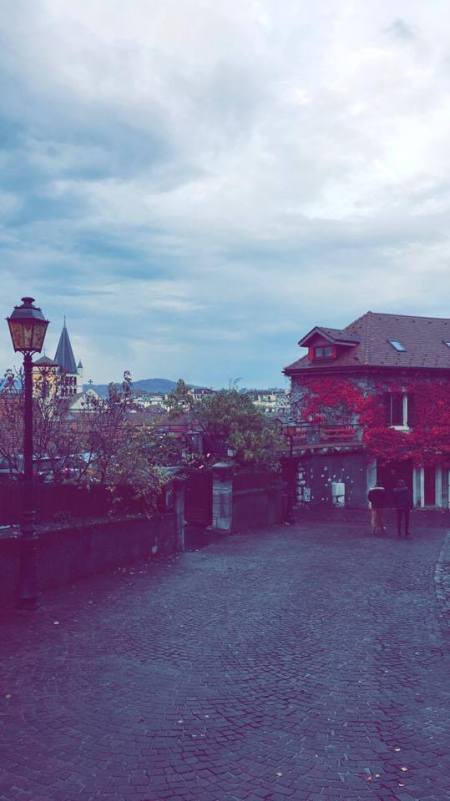
I didn’t exactly plan all my activities, because strict planning stresses me out more than it helps me organize, so I played it by ear and wandered the city until I found places of interest I’d want to spend the week visiting. And just like the pictures, the city of Annecy (and Annecy-le-Vieux, meaning the “old Annecy”) proved to be one of the most beautiful towns I’ve ever had the privilege of staying in.

23316054_1524980004284566_486701755_n.jpg

23318641_1524980017617898_655030506_n.jpg

23283472_1524979997617900_1003506646_n.jpg

23231827_1524979994284567_1740600039_n.jpg

Annecy has a beautiful church that is in the constant process of restoration

It was late so I walked to my hostel and settled in. I wasn’t sure if I was going to get a roommate, but I’ve always had a hope that my hostel roommate and I would become good friends and we’d go traveling together. And I guess the stars aligned today because after my roommate, Pascale arrived, we began planning the rest of our trip together.

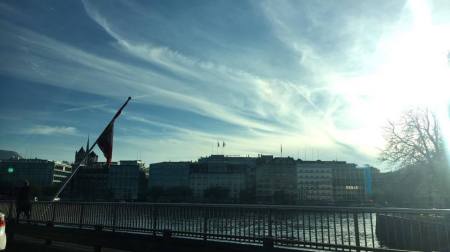
The next day, we hopped in her car and drove up to Evian, which is the city where Evian water is sourced. It’s a beautiful town whose economy is driven by its (fancy) water industry. Because of its proximity to Geneva, Switzerland, I bought some Swiss chocolate and other gifts for my family. But considering how close we were to Geneva, we decided to head there anyway. We hit two countries in a matter of a few hours, something I don’t get to say often when I’m in the States.

23283147_1524979904284576_1884616267_n (1).jpg

23360902_1524979910951242_1826646410_n.jpg

23231983_1524979917617908_541971229_n.jpg

We wanted to head back to the hostel before sundown so we could scout out a place to hike for the next day. We found a place called the Plateau of Semnoz and decided we’d spend Saturday morning there hiking. Our hostel is on the same road that leads directly up the plateau, and, when we started up the next morning, we were faced with one of the most jaw-dropping views I have ever seen. As a backpacker, I live for views. I’ve hiked over several days and over many miles to find them. But quite honestly I had never seen anything quite like the views we had at the Plateau of Semnoz. Mont Blanc was visible in the distance and cut through the low-lying clouds descending into the valley in front of us. I’ll let the pictures speak for themselves.

23283489_1524979950951238_233458646_n.jpg

23318633_1524979957617904_1641629043_n.jpg

23231863_1524979964284570_439900297_n.jpg

I write this post from the train station of Annecy and already feel nostalgic for this past weekend. From the small town, to the beautiful lake, to Geneva and Evian, to the unbelievable view from atop the plateau, and to the time spent with a new friend, I cannot begin to describe how wonderful a time I had here. It was also a great way to practice my French, as my roommate is a French citizen and also interested in bettering her own English. She invited me to come stay with her in her city, which I cannot wait to do. I’ll be sure to capture that in a blog post in the coming days.

A la prochain,

Jess


Meghann in Argentina: Flavors of Argentina

November 3, 2017

I can’t believe that I have made it over four months here without writing about (in my opinion) one of the best parts of traveling: food. Argentina has not let me down in terms of food—even ordinary weekday dinners with my host parents have a certain indescribable Argentine flare. I have also definitely taken advantage of the culinary scene in the city. Every Saturday night when my host family does not provide me with dinner, I go out with friends to a cute area of the city called Palermo, which is filled with different types of restaurants and bars.

IMG_7539.JPG

Choripan is a very typical Argentine meal. The word is a combination of “chorizo” (a spiced sausage) and “pan” (bread), and it is topped off with a sauce called chimichurri. You can buy choripan as street food from carts or vendors (as seen in this picture) or also in nicer restaurants.

Photo #1. Caption: Choripan is a very typical Argentine meal. The word is a combination of “chorizo” (a spiced sausage) and “pan” (bread), and it is topped off with a sauce called chimichurri. You can buy choripan as street food from carts or vendors (as seen in this picture) or also in nicer restaurants.

IMG_8298.JPG

Perhaps one of the most classic foods that Argentines can’t seem to live without are empanadas. There are empanada shops with huge varieties of flavors on almost every block, and most are sold for just 11 pesos (about 60 cents)!


Photo #2. Caption: Perhaps one of the most classic foods that Argentines can’t seem to live without are empanadas. There are empanada shops with huge varieties of flavors on almost every block, and most are sold for just 11 pesos (about 60 cents)!


It has also been fun to cook with friends from different countries. We have done “cultural” food nights at friends’ apartments where everyone makes something from their home country, so I have also had the chance to try everything from homemade French Canadian to German food here. Some of us also tried our hand at doing our own asado (barbeque), another Argentine culinary tradition. Although I can’t say that I was too helpful with grilling, it turned out pretty well for a group of foreigners!


FullSizeRender (3)

Our attempt at homemade asado (barbeque).


The only downside to the Argentine diet is that it is generally pretty bad for you—I have even found myself missing the salad bar at Dhall. I’m amazed at how healthy the population here looks considering a pretty high percentage of the usual diet is red meat, wine, and a very large variety of deserts. I’m guessing that people can stay healthy due to the amount of walking required for getting around the city. Even though the public transportation is great, I still probably end up walking over five miles every day.

IMG_7719

One of the best and most famous deserts are alfajores, cookie-ish deserts that vary based on region in Argentina. These are fancier coconut alfajores filled with dulce de leche, but you can also buy them in corner stores (there are probably over 50 kinds of pre-packaged alfajores).


While the food here has been great and I am still enjoying trying new things, after six months I will definitely be happy to return to foods that I am more accustomed to in the U.S. (and to finally eat a few vegetables)!


Jeanette in Morocco: Bni Koulla Village

November 1, 2017

Last week, I spent ten days in Bni Koulla, a small Moroccan village located in the Rif Mountains. Despite the lack of running water, language barriers, and differing cultures, it has been one of the most transformative experiences I’ve ever had. Find some of my favorite moments below.

1.jpg

The sun paints the sky burnt orange as it sets over the mountains and families gather along the dirt roads to share laughs and stories.

2

Mourad, 10, smiles for the camera after herding sheep back into their pen.

3.jpg

Jeanette means “paradise” in Arabic. This is little Jeanette and I. Our communication did not extend beyond counting to ten, playing hide and seek, and variations of concentration hand games but she made me smile every day even when it wasn’t easy to.

4.jpg

This is the adobe tin-roof home I stayed in. Although my home-stay family and I could could only have minimal language exchange, it was hard to leave them at the end of the week. I had a humbling experience helping them get water from the well, cook, sweep, and perform farm work.

5.jpg

On Friday, we all gathered together to make couscous, a staple food in Moroccan culture. It was a rewarding experience watching our hard work come to fruition, and not to mention, tasty!