Dan in Argentina: Putting the Study in Study Abroad

October 26, 2015
To my Auntie Donna who always jokes there's no way I go to classes because I have so much fun abroad, here's proof on the contrary. Well, I guess all this proves is that I've stood in front of the school... but trust me, I've entered the building as well. The University Torcuato di Tella was founded in 1991 and recently moved to this building in March 2013. The very modern building with cement floors and big glass doors and windows stays (aesthetically) true to its industrial roots as an automobile factory.

To my Auntie Donna, who always jokes there’s no way I go to classes because I have so much fun abroad, here’s proof on the contrary. Well, I guess all this proves is that I’ve stood in front of the school… but trust me, I’ve entered the building as well. The University Torcuato di Tella was founded in 1991 and recently moved to this building in March 2013. The very modern building with cement floors and big glass doors and windows stays (aesthetically) true to its industrial roots as an automobile factory.


Di Tella, as students commonly shorten the University's name, is known for its business and architecture programs. All located under the roof of one main building, other programs of study include political science, law, history and international studies. The school has about 1,200 undergraduate students. I, along with the other Richmond students here, am in direct exchange with di Tella and UR which means students from Buenos Aires are currently in Virginia studying on our campus.

Di Tella, as students commonly shorten the University’s name, is known for its business and architecture programs. All located under the roof of one main building, other programs of study include political science, law, history and international studies. The school has about 1,200 undergraduate students. I, along with the other Richmond students here, am in direct exchange with di Tella and UR which means students from Buenos Aires are currently in Virginia studying on our campus.


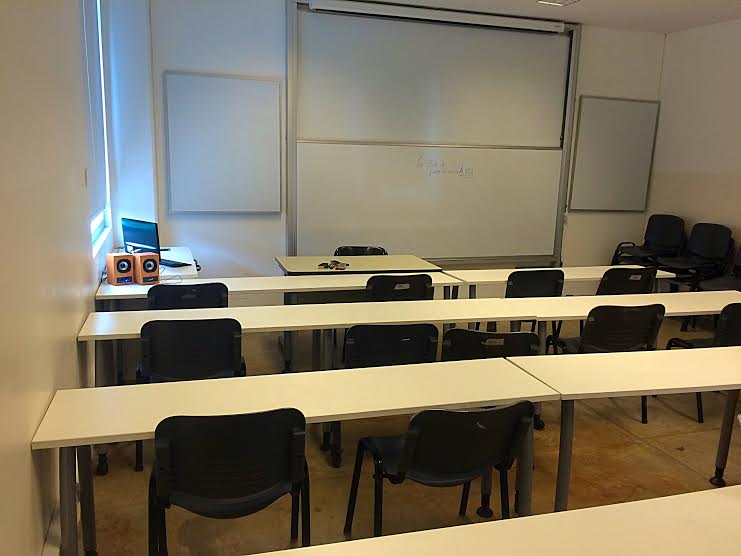
This is what almost every classroom at di Tella looks like: very simple with concrete floors, white tables, white walls, a projection screen and one of those cool sliding whiteboard things. This is the room in which I have my Argentine Literature class. I am also taking a Latin American Cinema course and a class called Dictatorships and Militancy in the Southern Cone (Argentina, Chile and Uruguay) During the 1960's and 70's. I have enjoyed all of them so far.

This is what almost every classroom at di Tella looks like: very simple with concrete floors, white tables, white walls, a projection screen and one of those cool sliding whiteboard things. This is the room in which I have my Argentine Literature class. I am also taking a Latin American Cinema course and a class called Dictatorships and Militancy in the Southern Cone (Argentina, Chile and Uruguay) During the 1960’s and 70’s. I have enjoyed all of them so far.


Getting ready for class today, I decided to have a little photoshoot. These are the materials I have for my Dictatorships class. We recently read the popular Rodolfo Fogwill novel "Los Pichiciegos." It is about a fictional group of Argentine military deserters during the Malvinas War, better known as the Falkland Islands War, between Argentina and the United Kingdom in 1983. Although a good read, I enjoy our other readings more which regard the history and the current memory of the topic. It is interesting to study how history is presented and how people remember these negative and sometimes traumatic events.

Getting ready for class today, I decided to have a little photoshoot. These are the materials I have for my Dictatorships class. We recently read the popular Rodolfo Fogwill novel “Los Pichiciegos.” It is about a fictional group of Argentine military deserters during the Malvinas War, better known as the Falkland Islands War, between Argentina and the United Kingdom in 1983. Although a good read, I enjoy our other readings more which regard the history and the current memory of the topic. It is interesting to study how history is presented and how people remember these negative and sometimes traumatic events.


Lindsay in Thailand: The Thai Funnies

October 19, 2015


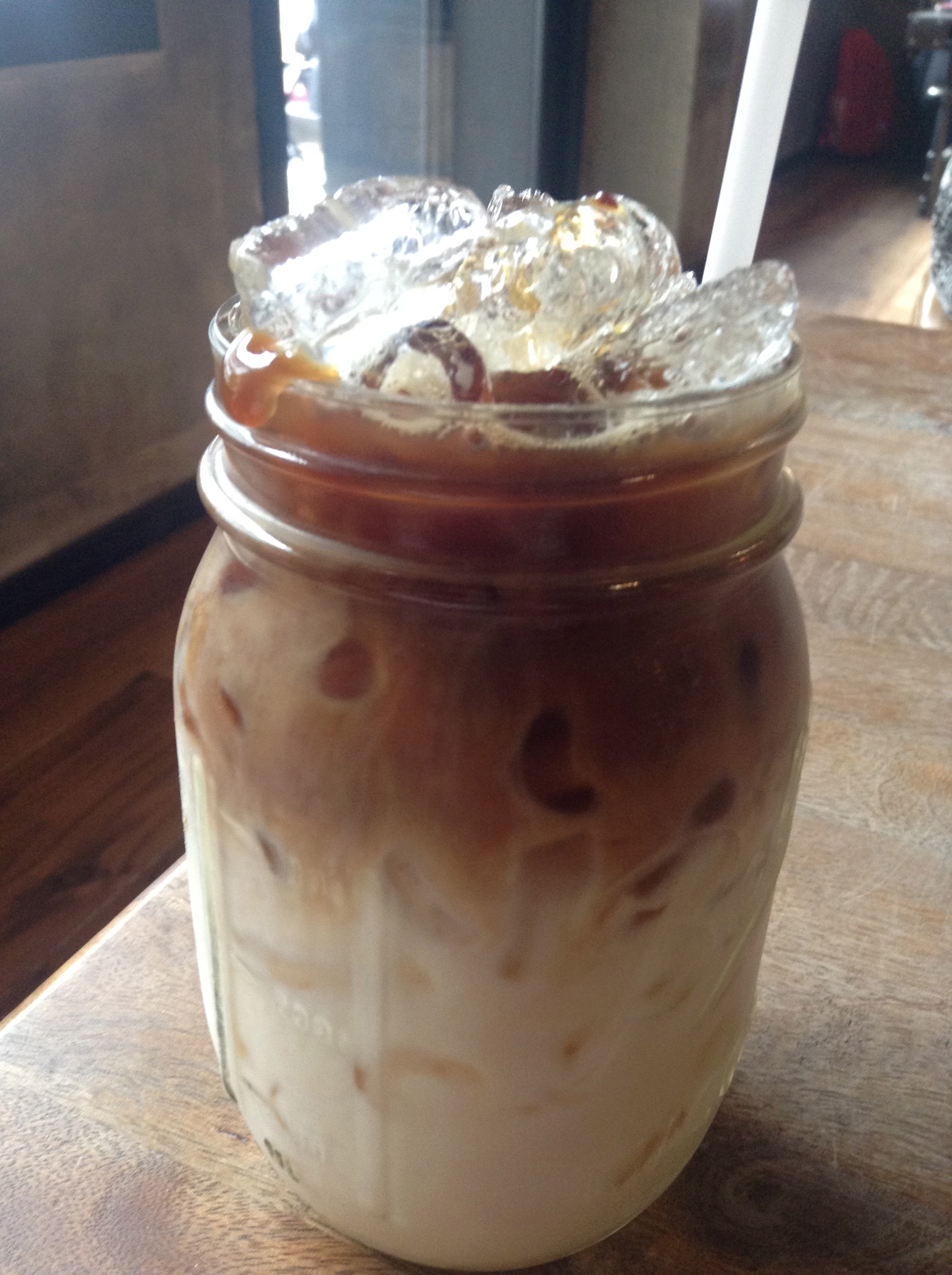
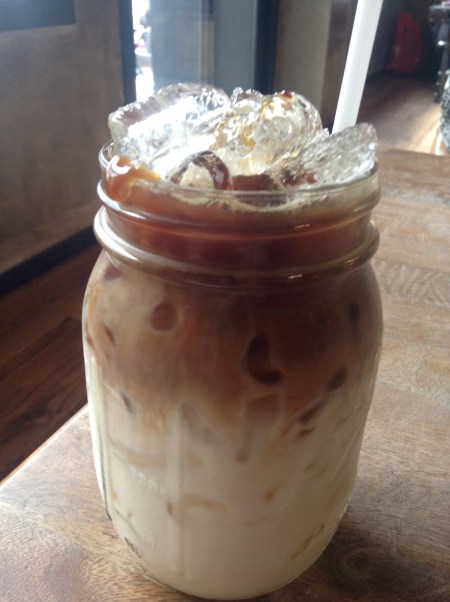
I had an iced latte. Now I'm just missing the pumpkin spice.

I had an iced latte. Now I’m just missing the pumpkin spice.


Today, I reminisced a bit about home. I found myself missing Fall leaves and the stereotypical pumpkin spice latte. I decided to somehow satisfy my seasonal coffee craving as I put on my scarf (in the 80 degree heat) and headed to a quaint café nearby. Even with my personal attempt of a mock pumpkin spice latte, I craved something unusual- what my Gram might call the Sunday newspaper “funnies.” Using this as inspiration, I thought I would make my own written comics, compiling a few funny occurrences and random thoughts from my Thai adventure so far. Enjoy!

  1. Apparent Differences in Distance
  2. Language Barriers or Avenues of Understanding
  3. Finger Foods
  4. Facebook (and Selfie) Official

Apparent Differences in Distance

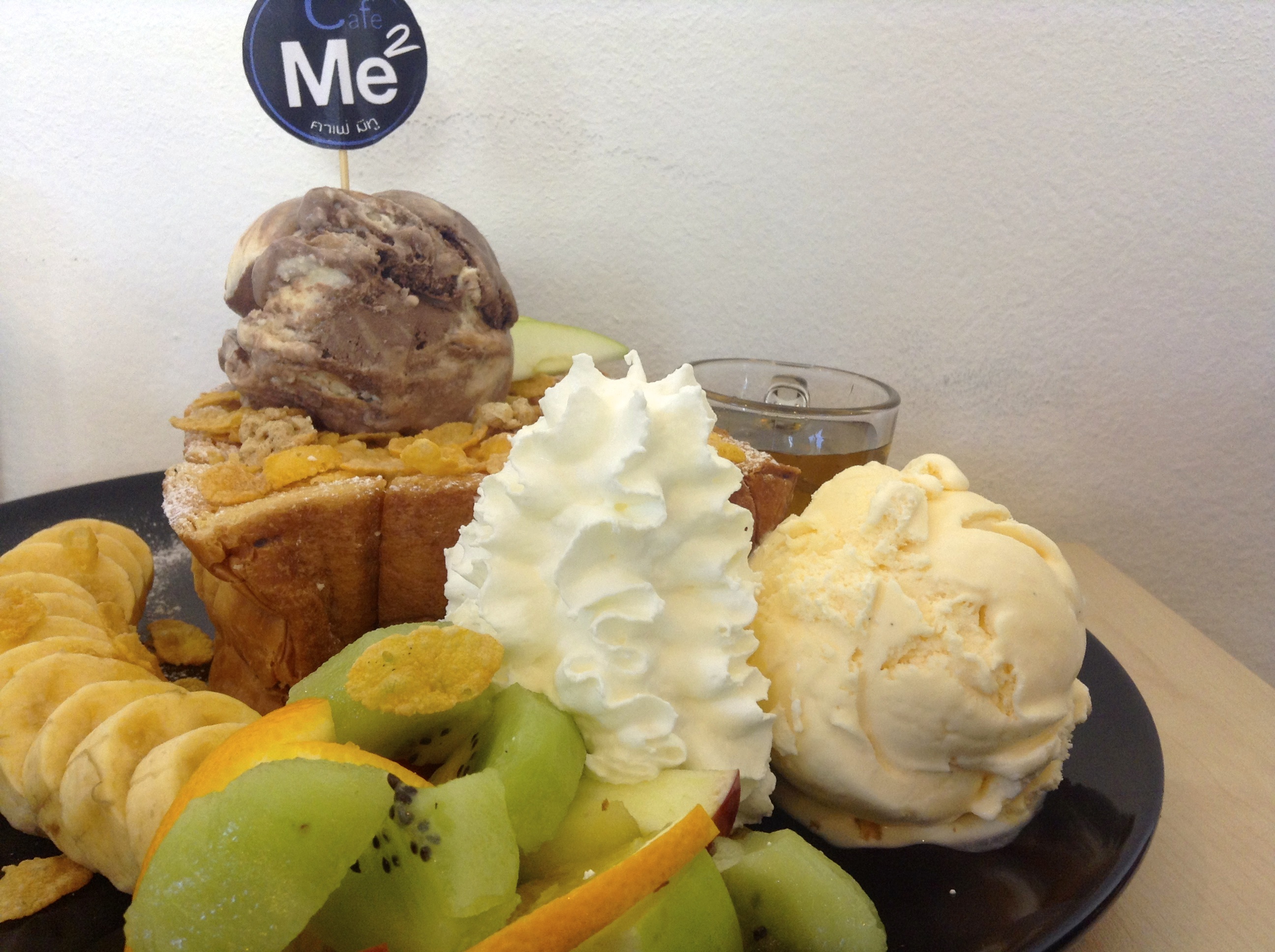
My first morning in Khon Kaen, my lovely roommate and her friend wanted to take me and another exchange student out for breakfast. They informed us about a great cafe nearby, Have a Break. We walked 25 seconds down the street from our apartment, hidden from the sun under our umbrellas, to find that Have a Break was closed. Disheartened, our Thai roommates turned around and began to head back to our rooms. I then suggested going to another cafe two buildings down. With this proposal, they stared at the further café’s sign for a couple of minutes and insisted it was too far away. I replied that I did not mind the extra exercise, and in another ten seconds, we arrived at Cafe Me 2 less than 100 yards from our original departure point.
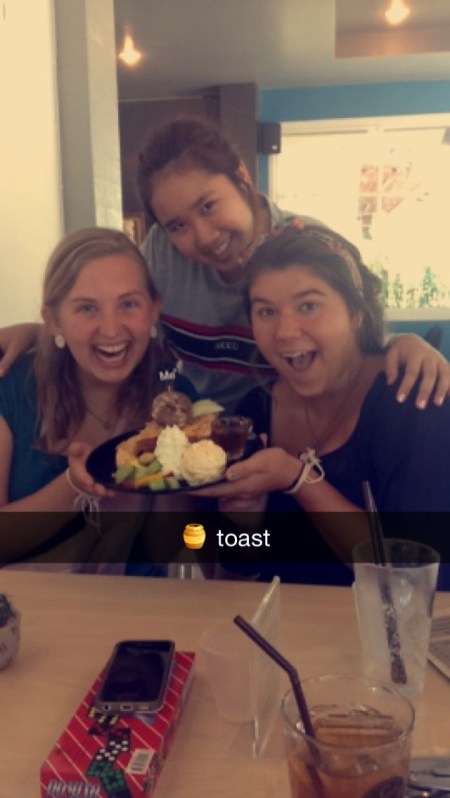
 

My first, and definitely not last, honey toast

My first, and definitely not last, honey toast


A closer look a the infamous Thai dessert!

A closer look a the infamous Thai dessert!


Before leaving for Thailand, I envisioned the people to be extremely active, contrasting them to the stereotypical “lazy Americans” who use drive-thrus so they do not have to get out of their cars to pick up food and who even drive in circles to get the closest parking spot at the gym (I know… I’m guilty of this too). I was shocked to find the existing aversion to walking not only in the city of Khon Kaen, but also in many rural villages. Thais love their motocis. I have been told that “walking four miles is dangerous” and have also been driven to village houses 100 yards down the dirt road. If you see a Thai individual, especially students in Khon Kaen, it is likely that their motoci is just a step and a hop away.
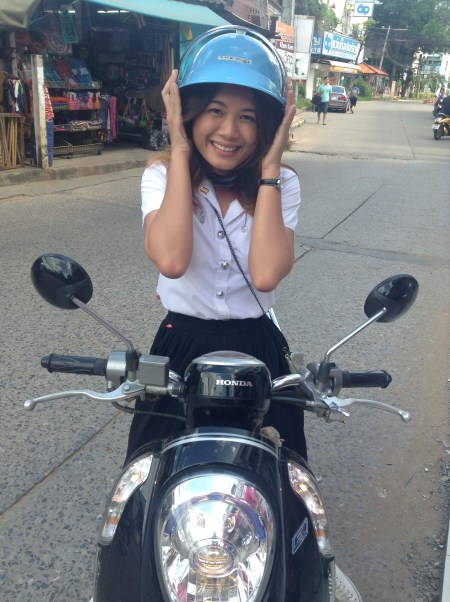
 

My Thai roommate, Yui, on her motorci

My Thai roommate, Yui, on her motoci


P.S. In addition to seeing up to four people on one motorbike, do not be surprised to also see cages of rabbits, full-grown Poodles, and babies like I was!

Language Barriers or Avenues of Understanding

At my first community homestay, I accidentally caused a ruckus. I stayed in a rural village a half of an hour outside of Khon Kaen with a Thai family for three days. My family consisted of my ‘Mehh,’ ‘Paw’ and another exchange student, Billy. Each morning, Meh made a ginormous breakfast that in actuality could constitute both lunch and dinner, as well. One morning, I approached my Meh in the kitchen with the little Thai I knew. As she fried chicken, I made a chopping gesture to indicate I wanted to help prepare the vegetables. She stopped what she was doing and simply stared at me. I repeated the motion as her head tilted in confusion. I then stated ‘sa poem pack.’ Now, I know this phrase does not come close to what I wanted to say, but at the time I thought “hair wash vegetables” might suggest rinsing veggies. With no luck, I tried ‘ab nahm pack.’


Keo Kruyah Kone chan (my family): One of our lovely neighbors, myself, Meh, Billy, and Paw

Keo Kruyah Kone chan (my family): One of our lovely neighbors, myself, Meh, Billy, and Paw


Ab nahm, meaning to take a shower, is a word Thais know very well. It is not uncommon for Thais to shower up to three times per day, so Thai families often offer their shower to guests even before offering a cold beverage.
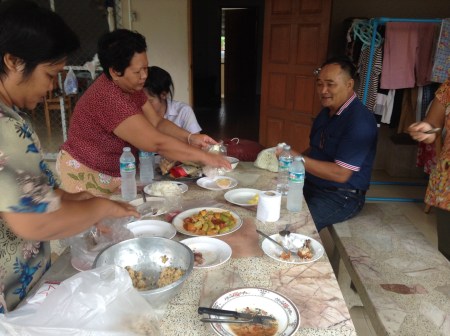
 

My family and neighbors packing all the leftover food Billy and I could finish for breakfast for our lunches...Yum!!

My family and neighbors packing all the leftover food Billy and I could finish for breakfast for our lunches…Yum!!


In actuality, I did not want to shower with vegetables, but my Meh thought I did. She handed me an assortment of greens as she escorted me upstairs to the bathroom. I refused, and in desperation, Meh handed me forks, knives, spoons, and fruit as I was sat down at the table. Meh’s cries for help as she leaned over the fence could barely be heard over Billy’s laughter. Soon enough, I found myself swarmed by ten villagers attempting to understand that I simply wanted to help Meh make breakfast, not wash vegetable hair or shower vegetables.


Students gathered together as our Thai families gave blessings in a traditional ceremony before our departure back to Khon Kaen.

Students gathered together as our Thai families gave blessings in a traditional ceremony before our departure back to Khon Kaen.


Although that was an experience in itself, I did not find the next one as humorous. Because I was leaving for Singapore to visit my friend Colleen right after class, I wanted to make a copy of my passport photo on my lunch break. I arrived at the photo shop soaked after an unexpected monsoon and handed the worker my soggy photo. I requested one ‘4×6’ photo, and what did I leave with an hour later? Not only four 6x6s photos, six 4×4 photos, 150 baht additional payment, near tears, and a single 4×6 passport photocopy, but also a new understanding and appreciation.

While I intentionally attempted to remain calm and refrain my frustration, the photo shop worker did it with ease. He did everything he could to help me, from bringing out an electronic translator to offering his own money to pay for the photos I did not intend to purchase. For such a simple gesture, it made me question myself: How helpful am I to those who don’t speak English in America? How accommodating are we as a country to non-native English speakers?

I cannot count the amount of times I have heard the phrase “If you want to live in America, speak English.” I have heard of many people hanging up the telephone or raising their tone of voice with telephone assistants who are difficult to understand. I myself have giggled when I heard foreigners mispronounce an English word.

Since becoming more aware of our nation’s language deficit, I found I do not have much room to laugh. A mere 18% of Americans are fluent in another language while 53% of our European counterparts are fluent in at least one other language.

I myself have traveled throughout Europe and I cannot say anything more than ‘hello,’ ‘thank you,’ and ‘goodbye’ in any of the six countries I visited. Many citizens in these European countries; however, could hold conversations with me in English. They did not know if I was a tourist, new community member, or established citizen, yet they catered to my little comprehension.   Yet, I can still recall several moments of frustration when they did not understand my questions and requests—all in English.

Until now, I have expected others to accommodate to my sole English speaking capabilities. I had never honestly and intentionally tried to master a language. I had never been in a place for an extended amount of time where I could not find a single soul who could speak English. Have you?

I swear that if the Thai people had not expressed so much kindness and patience with me (and my language incapability) as they have so far, my experience would be very different. Studying abroad in any location is a difficult transition, even if you do speak the same language. I could not imagine permanently moving to the U.S. as a foreigner or refugee, searching for a new adventure or new life, and not being given the same assistance the Thai people have willingly offered. Before evaluating someone else’s communication abilities in the U.S., I hope to recall the difficult language barrier I faced, and the beautiful friendships I formed through eventual and somewhat unconventional communication methods.

Finger Foods

I have always been a fan of eating with my hands and playing with my food, and I am happy to say Thailand is too. In my first week of orientation, I took a class called “Thai Etiquette.” Along with learning how to properly wai, situate my legs while sitting on dinner mats, and point my feet in a temple, I learned how to eat with my hands.


A Thai etiquette class

Thai etiquette class


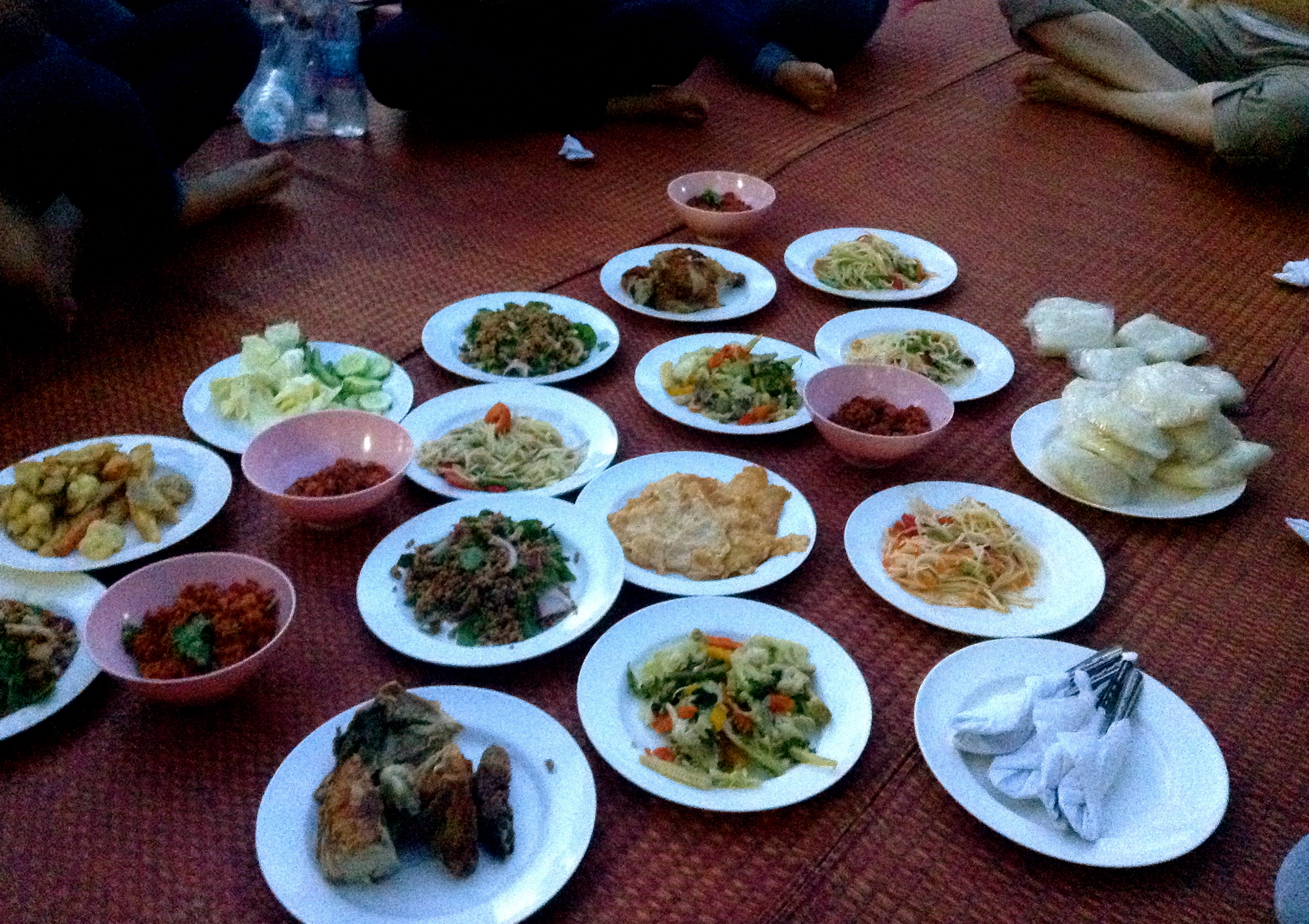
Although I was thrilled to eat with my hands, I was not initially as keen on all the food sharing. For any fans of the television show, Friends, you might say I was Joey who “doesn’t share food” as easily. That has sure changed for the better! In Thailand, communal eating is very popular. In Isaan villages, the families roll out mats onto bamboo tables. The family will then gather cross-legged on the mat, surrounding the bowls of traditional Northeastern Isann food.


IMG_3143

A traditional Isaan meal


At any homestay, I can be sure to find Som Tom (spicy papaya salad), blah toad (fried fish), ky toad (fried egg), guy yong (grilled chicken), and moo bing (minced pork) at breakfast, lunch, and dinner. Proper technique includes making a small ball of cow neow (sticky rice) and using that as a ‘spoon’ to scoop up small bits of each of the dishes. No one has a personal plate and communal eating utensils are also used (which means less dish washing).

This communal finger food setting is one that I love! Not only does it avoid loading your personal plate with more than you can handle, it also ensures you will not feel bad about wasting food left on your plate or stuffing yourself (too much, although it is inevitable most of the time). You do not have to worry about finishing your meal too early or being the last to finish because you simply eat until you are satisfied-no rush needed.

You can also extend the ‘communal’ eating aspect to ‘community’ eating. At each of the five village homestays I have been to, it is not uncommon to have seven or more additional friends and relatives gathered around the family’s table. Eating is considered an art form, and one that everyone should enjoy. Meh and Paw do not hesitate to yell “gin cow” to random passer-bys on bicycles, tractors, and motorcycles. ‘Gin cow’ literally means ‘eat rice,’ but also ‘eat food’ because most every dish involves some form of rice- white, black, purple, red, sticky, sweet, fried etc.,. The list goes on and on.

Facebook (and Selfie) Official

Farang; a word I might even consider a nickname now. Farang in Thai means “a person of white race.” I hear this term quite often followed by shutter clicks and camera flashes. Once, while on an overnight seven-hour bus ride to Bangkok (without my fellow ‘farang’ friends), I was sleeping with my night mask near the aisle. I woke up quite quickly when a bright light crept under my cover. A girl two rows ahead of me was taking a selfie with my ‘farang’ self and forgot to turn off her flash. She was initially shocked when I became quite aware of it but was not too embarrassed as the picture taking continued without hesitation.


My first Thai selfie, complete with peace signs and all

My first Thai selfie, complete with peace signs and all.


This experience was unique, but not too dissimilar to others. In Thai culture, it is much more acceptable to take pictures of people you do not know. I have had hiking tour guides, children, restaurant owners, gym instructors, and even Thai government officials sneak pictures of farang.

Keep in mind; however, that even if you don’t ever meet those people again, those stealthy photos may resurface. Many times, you can even view them as a shared link or as a post on your facebook wall. When I was studying Thai with a friend at a local café, two Khon Kaen university students were seated next to us. We didn’t speak to each other during the four hours we were there, and I only occasionally heard giggles after I attempted to formulate Thai questions and responses. (Then again, if I heard what I actually sounded like, I would laugh at me too).
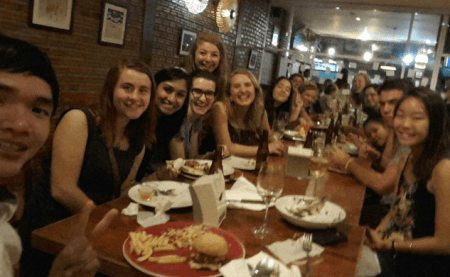
 

American feast with Farang!

American feast with Farang!


It was not until I packed up my belongings to leave when the two girls stopped me and asked if I could be friends with them. “Of course,” I responded. I wanted to hang out with more Thai peers. Rather than exchanging phone numbers, they immediately handed me a pad of paper to write down my name, asking if I ‘facebooked’ often. They then requested a ‘selfie’ with me. Before even walking down the stairs of the small café, I had two friend requests and was tagged in a photo. Before coming to Thailand, prepare yourself. Be aware that Thais are #selfiegame strong.


Jiaqi in Italy: A Weekend In Budapest vs A Weekend In Milan

October 15, 2015

Like Milan, Budapest has been reputed as a city of endless charm. During the summer, I randomly met an Hungarian girl called Gabriella in a museum workshop and we instantly became best friends. Now that she is back in Budapest, I decided to spend a weekend with her and take the chance to visit this long-dreamed-about city. After four days of devouring delicious homemade Hungarian food and marveling at the Central European architectural wonder, I did notice some differences between the Budapest-style weekend and the Milanese weekend. Here are some insights from me, a casual tourist who observes seriously:
  • Breakfast. Hungarian weekend breakfast is long, sumptuous, and conversation-friendly. The Milanese breakfast, instead, is …? Wait what? Does that even exist? It did baffle me many times that a country obsessive with food does not have an extensive breakfast menu. Breakfast in Milan and northern Italy usually consists of only a few biscuits and a cup of cappuccino. At the most, you add a brioche and some orange juice. The breakfast I had in Budapest, however, is probably the type of big meal you will eat in your grandma’s country kitchen when you go back once a year. Locally-produced ham, hummus, whole wheat bread, fresh butter, cheese platters, pastries, milk and coffee…etc. “A great weekend always starts with a satisfying long breakfast,” said my Hungarian friend.
  • Cafe Culture. There is no need to re-emphasize how a cafe functions as a semi-religious institution in Italy. Yes, there is a certain ritual and drinking pattern that you are forced to respect and follow. In Hungary, everything about coffee is much more casual. An even more casual and relaxing atmosphere dominates the cafes in Budapest. The former Jewish quarter, now turning into a hip, “ruined” pub district, hides a collection of gem-like cafe bars.
  • People and Style. The Milanese fashion style is hard to miss even when you are visiting the city for just one day. Take a look of this street fashion blog  which generates a sense of how the Milanese dress themselves. “La bella figura” (the beautiful figure), said by Italians, defines their attitude toward everyday elegance. Fashionistas in Budapest, are relatively more reserved. It’s hard to spot flashy color and revealing jewelry in the fanciest neighborhood of Budapest, while even the shop cashier in Milan wears a pair of Valentino-labeled shoes. In the subway, most people prefer to wear darker colors and their coats are more conservatively designed. For me, this is rather a difference of personality than a difference of taste.


Turkish bath cafe


The Budapest Market Hall


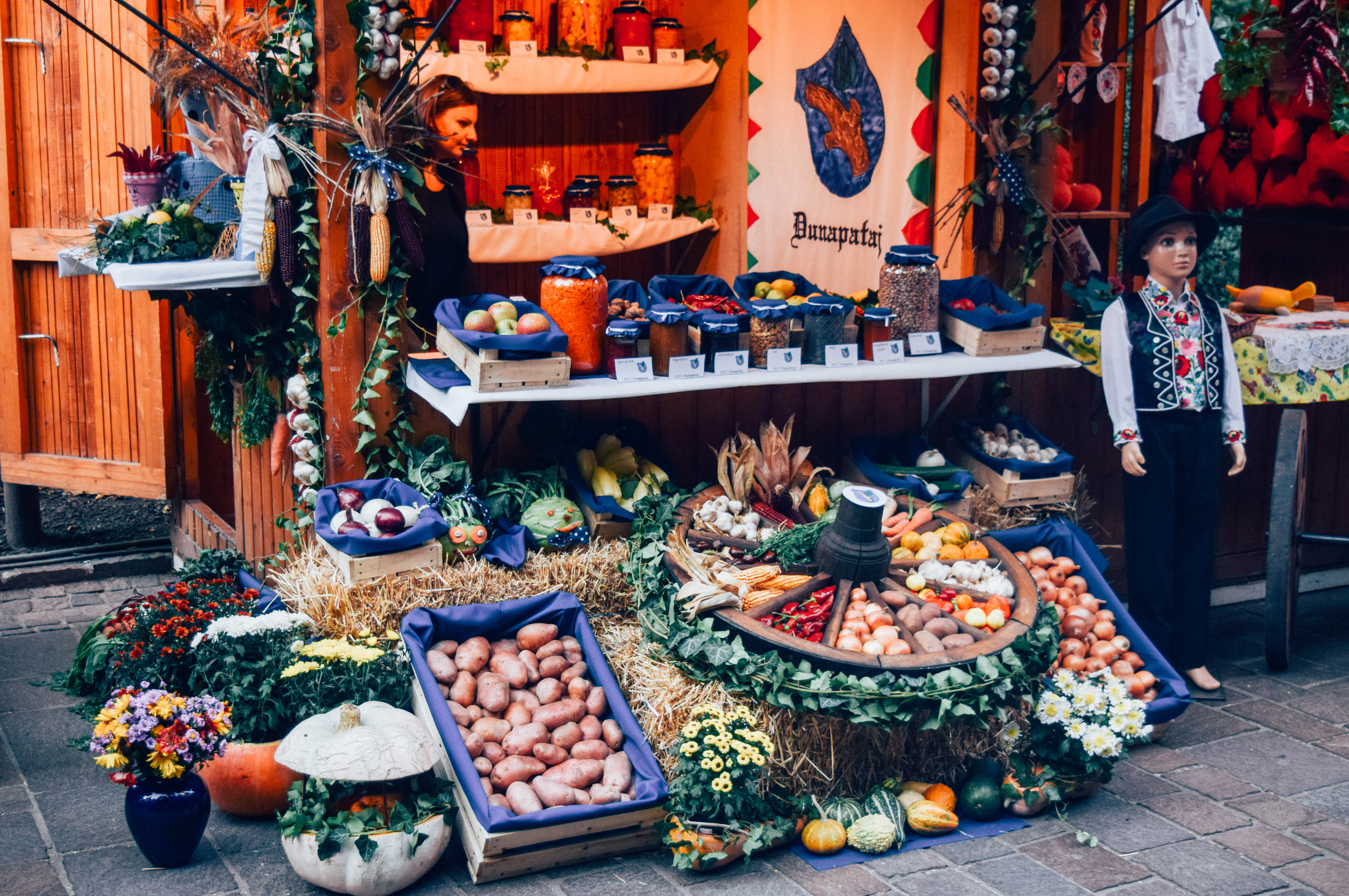
Local Farmer's market


Impressve Parliament Building


Hungarian style ham


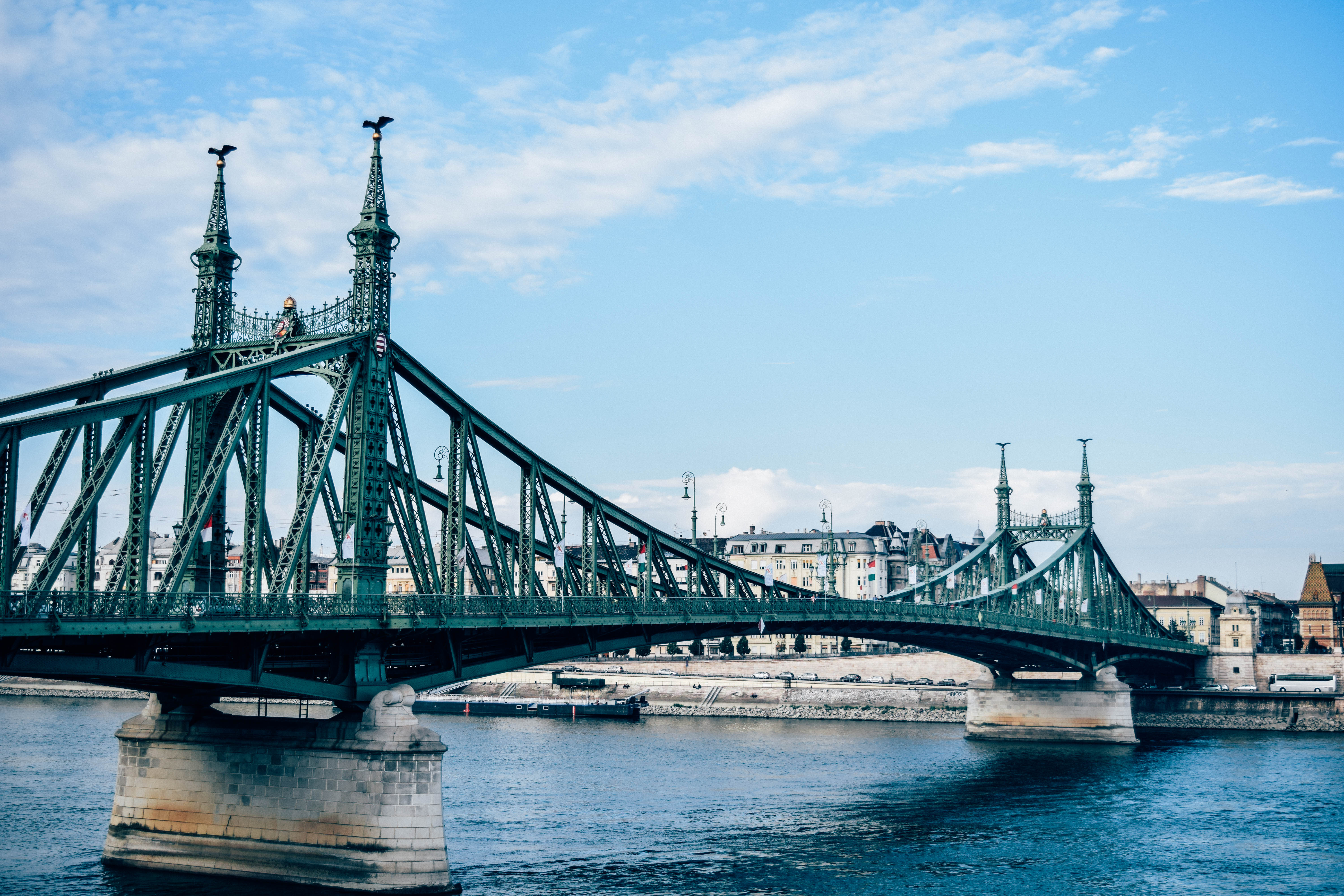
Budapest Chain Bridge


Beautiful Budapest riverside


Jiaqi in Italy: How to Make the Best Italian Pasta From Scratch

October 15, 2015

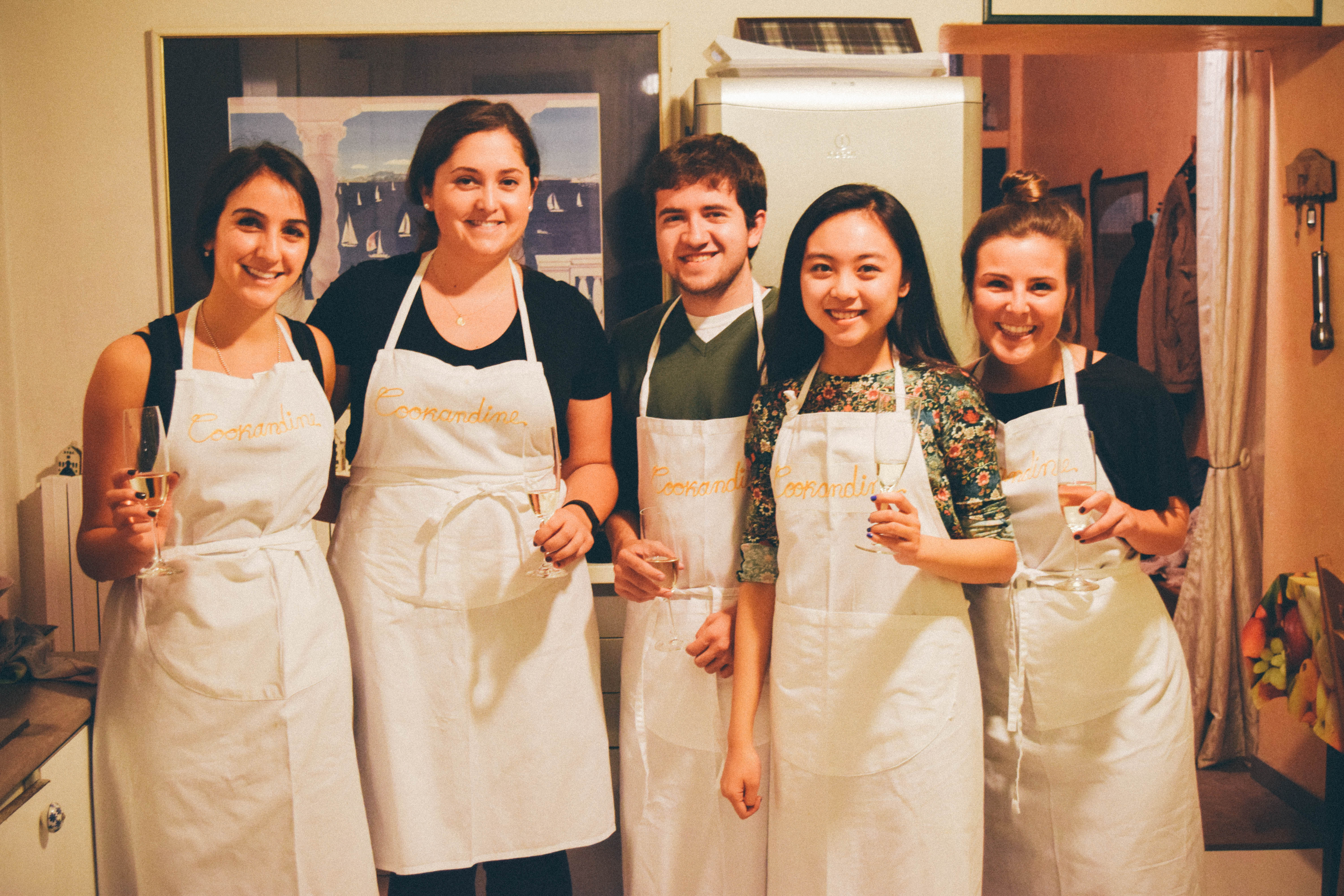
There is no better way to learn about a culture than learning a typical grandma-style recipe at her home. Especially in Italy, a country obsessed with producing everything by hand and with a culture of passing down learning to create “from-scratch” meals. Last night, I signed up for a pasta-cooking lesson in Milan and invited my friend Ryan to come with me. There were three other Canadian girls to practice with us and have a peak into the masterful universe of home pasta making.


Cook and dine


Our chef Aurora, is a certified chef in Italian cuisine that has several years of experience working in a top Italian restaurant in Australia. Her cooking philosophy, like most of the Italian chefs, features fresh ingredients and handmade traditional methods. Our menu for the day is:

  • Tagliatelle from Bologna (with ragu sauce)
  • Vegie lasagna from Liguria
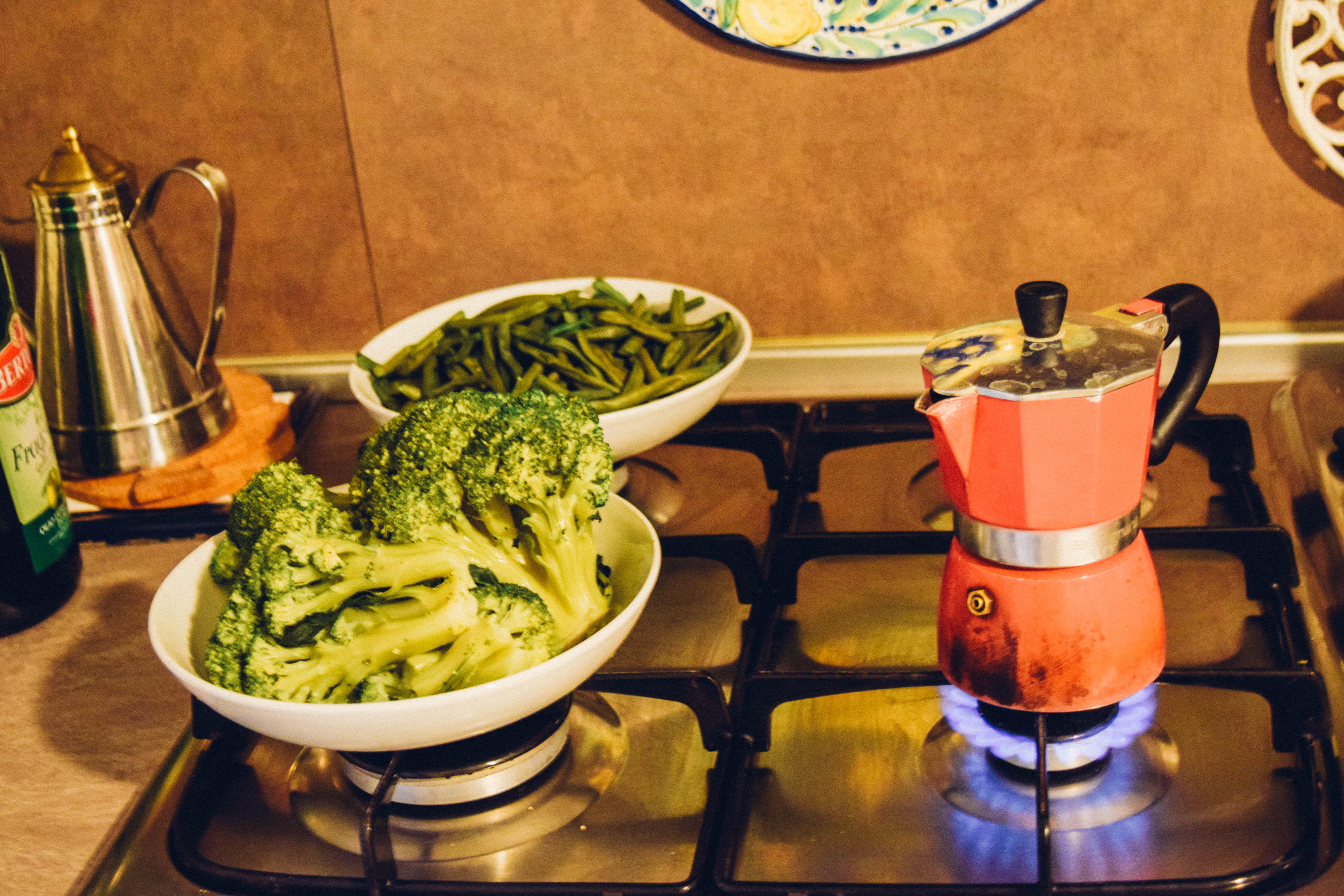
  • Orecchiette from Puglia (small pasta with Broccoli sauce)
  • Tiramisu


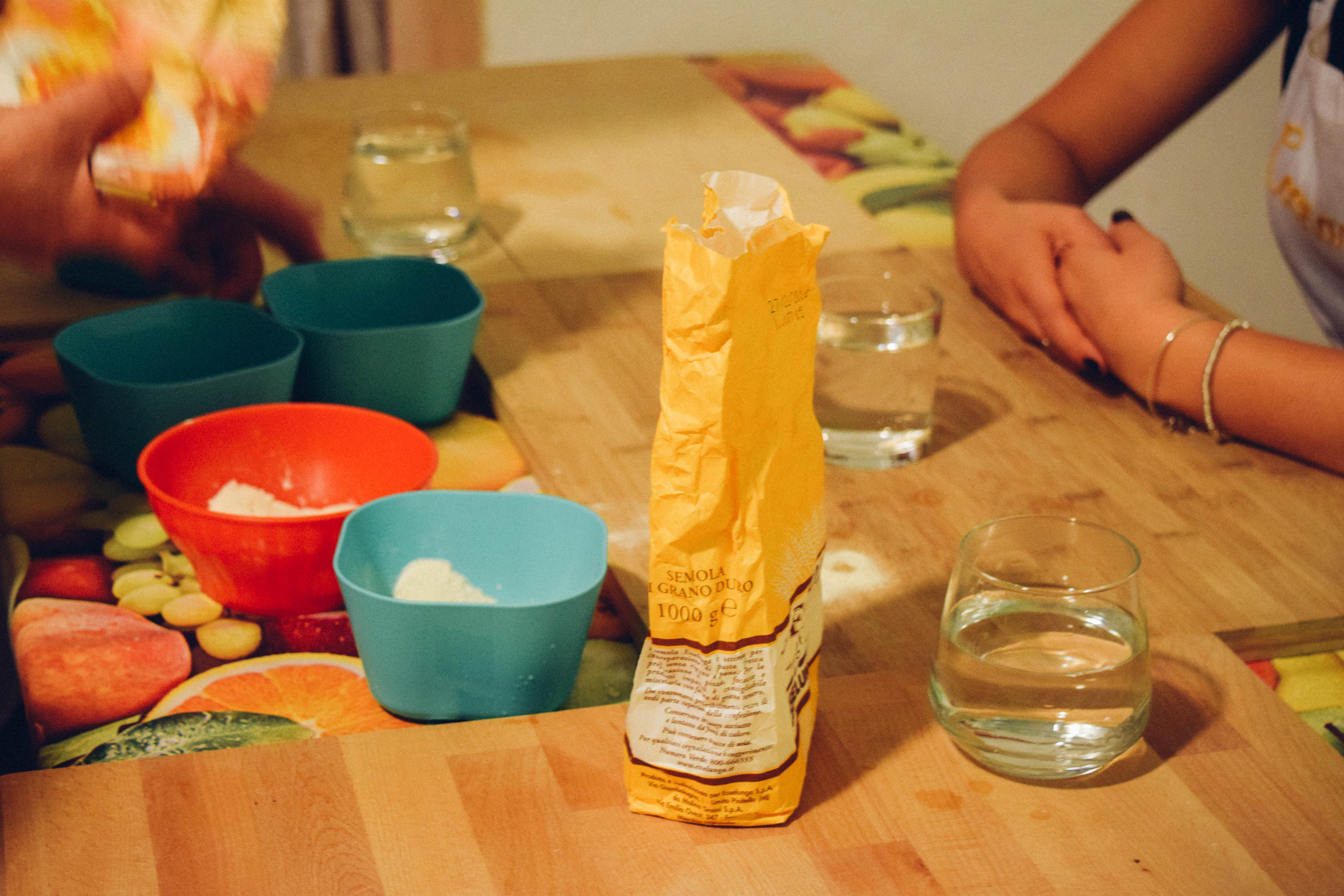
Preparing for Tiramisu

Preparing Tiramisu


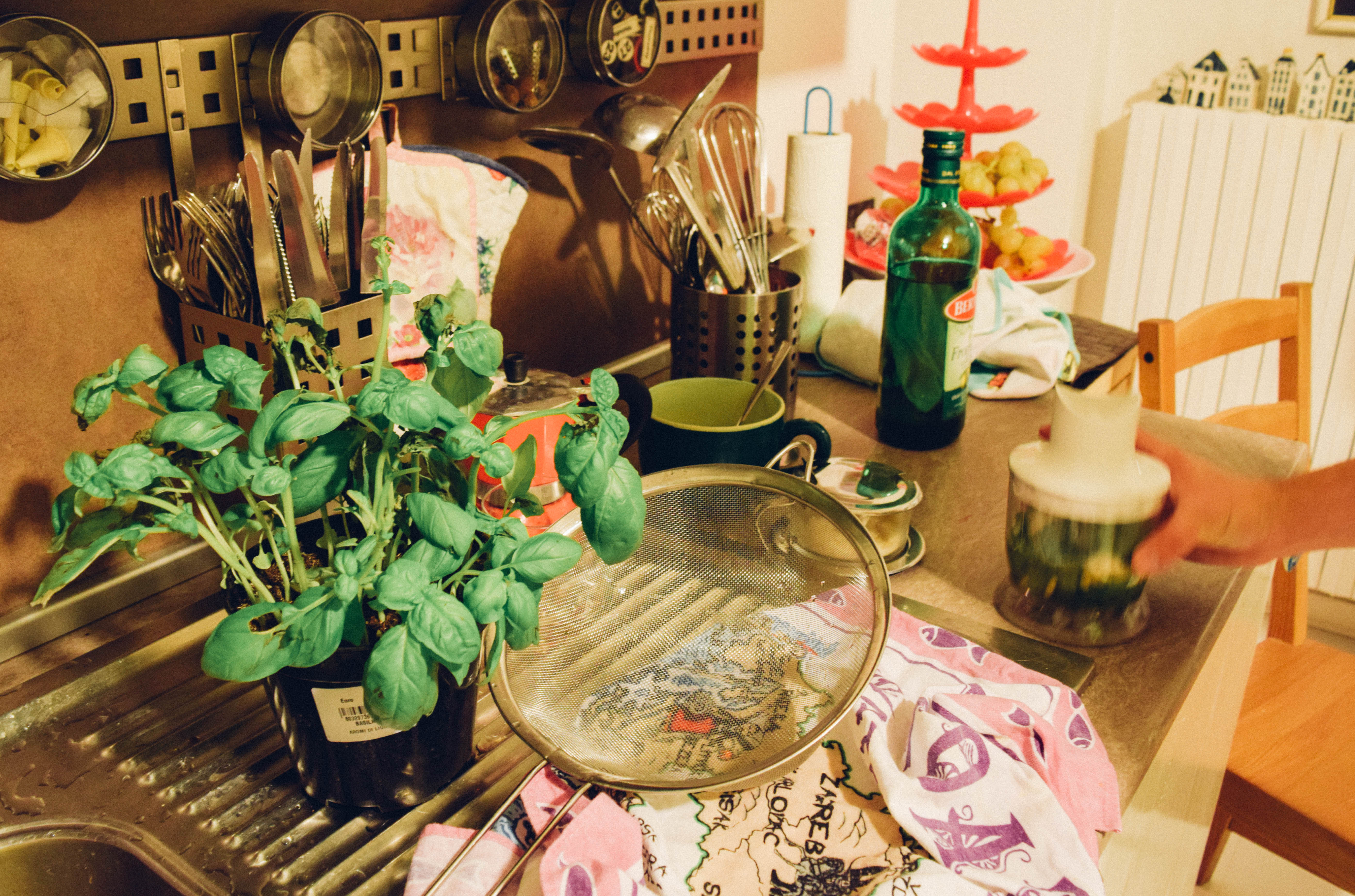
Fresh basil pesto sauce

Fresh basil pesto sauce


First, we prepared the coffee for making Tiramisu. Finger biscuits, fresh milk, egg yolks, every ingredient are bought from the open market by our chef in the morning. Later, we chopped the meat and sausage to make the delicious Bolognese sauce for pasta. Here comes the secret word – Massage. With a little bit of a hand massage to the meat mixture, the sauce becomes more flavorful and the texture will be much softer.

In the pasta-making session, everyone seems a little stressed out. It is always pleasant to watch the chef preparing everything from scratch and people rarely realize how much effort it takes. It is in fact, a very, very tiresome job. We have to not only make sure the consistency of moisture is perfect but also force the pasta into standard shape.  After half-an-hour of pasta making, we are all amazed by the amount of effort and heart it takes for a wholesome meal.


Making pasta from scratch

Making pasta from scratch


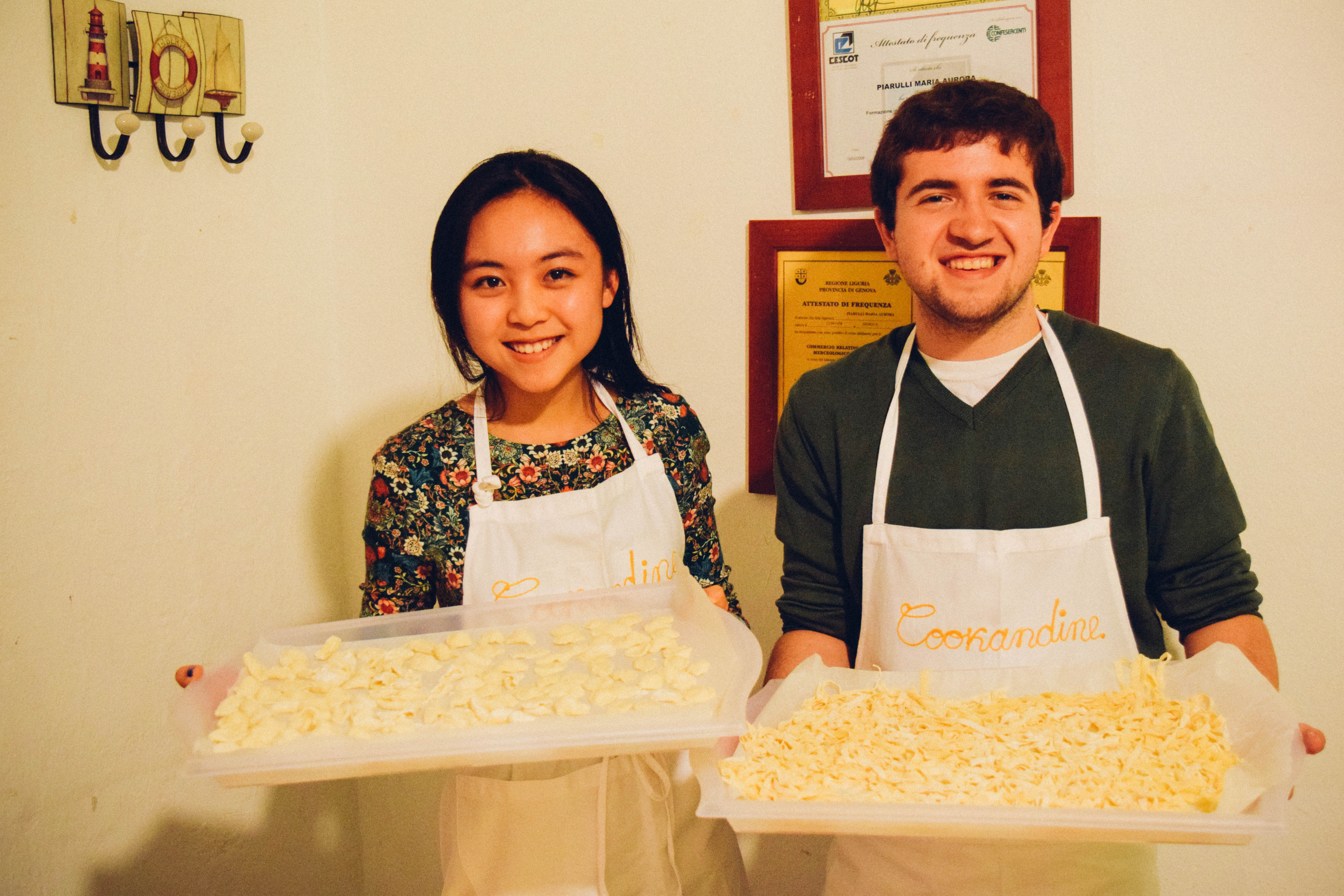
Our first product

Our first product


Now, time to dine. Having tasted our results after two and half hours’ preparation, we were all overjoyed by how delicious it tasted. Fresh made pasta really tasted entirely different than the hard pasta packet from the supermarket. The texture, consistency, and chewiness totally converted me into a believer of “from-scratch” Italian cuisine now.

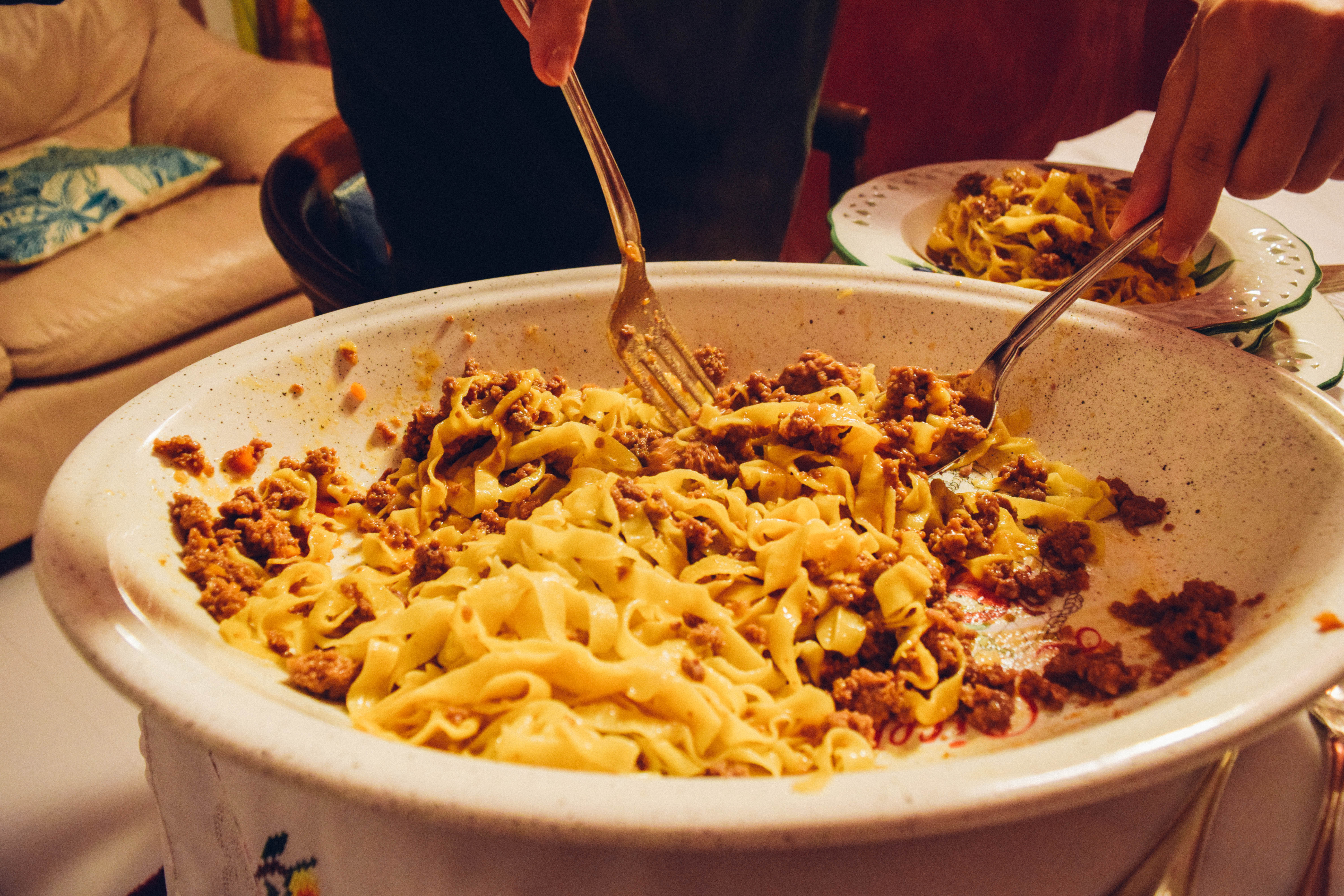
Pasta, Bologna-style

Pasta, Bologna-style


Layla in Australia: A Day in the Life

October 15, 2015

Today I received a reminder on my phone telling me to renew my travel notification for my bank. My bank only lets you notify them that you’ll be traveling abroad for 90 days at a time, which means this notification means I’ve been in Australia for just about 3 months. Needless to say, I didn’t realize how long it’s been! I’m just over halfway through my time abroad, and in 3 more months I’ll be starting the spring semester back at Richmond. To say I’ve settled here in Australia is an understatement – I feel just as home here as I do in the United States, if not more. To use some of my Australian slang that I’ve picked up, I’m really not keen to come home… in fact, I still haven’t booked my return flight to the States. Here, I’m going to describe a typical day for me here in Sydney, and hopefully show why I love it so much.

9 AM, any given Thursday: Wake up… after hitting the snooze button on my phone about three or four times. While I was never a breakfast person in America, the lack of a meal plan and a dining hall on campus means that buying lunch is expensive. Instead, I typically eat a bowl of Weet-Bix, a classic Australian cereal, for breakfast and bring a granola bar and some fruit for lunch. After getting ready, playing around on my phone, and eating breakfast, I make the ten- to fifteen-minute walk up the road to uni.

11 AM: Macroeconomics lecture. While it’s tough to keep focused for the entire two hour lecture, the material is interesting enough to stay awake and the ten-minute break in the middle helps. The professor tends to show how what we’ve learned about in class applies to the Australian economy, so I get to learn about not only general macroeconomics but Australian policies as well.

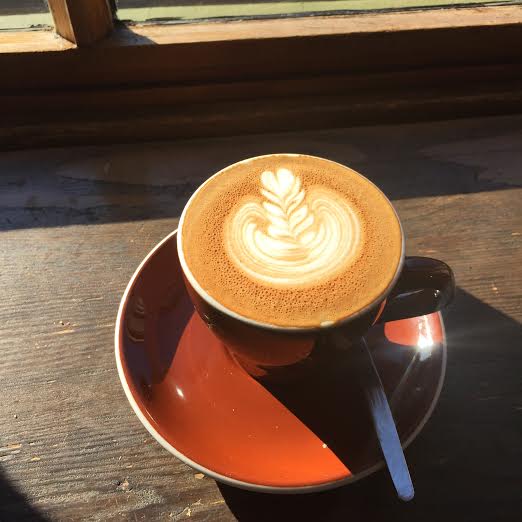
1 PM: With lecture over, I cave to my biggest weakness: coffee. I don’t really drink coffee at home – I’ve never liked the taste. I did drink caramel macchiatos while studying for the MCAT, but mostly the appeal was the caramel sauce. The coffee was just the bitter obstacle that I drank quickly so I could indulge in caramelly goodness. However, Australia is known for its delicious coffee, and I decided that I couldn’t come here and without trying a flat white, the classic Australian coffee drink that’s like a less foamy cappuccino. Needless to say – I had one, and I was hooked. Coffee here is so good that I don’t even need sugar to make it palatable like I do in America. My guilty pleasure at uni is a flat white and a croissant from the café in the New Law Annexe.


A flat white from the coffee shop where I first tried Australian coffee, Campos in Newtown.

A flat white from the coffee shop where I first tried Australian coffee, Campos in Newtown.


For the first half of the semester, I had four hours of gruelling chemistry lab directly after my economics lecture. This lab, which I had multiple times a week, was the bane of my existence, endlessly frustrating me with my inexplicable failures in it. But luckily, as of a few weeks ago, the lab has ended and I can finally go to quidditch trainings! Trainings on Thursdays are 3-5 PM in Victoria Park, the park bordering the USYD campus. I’ll generally do a little study after my coffee break and then head to training, where we run drills, play scrimmages, and play netball. Netball is a sport that’s pretty popular in Commonwealth countries but almost unheard of in America. It’s similar to basketball, but one major difference is that you can’t run with the ball. Needless to say, I often forget this rule, so netball isn’t my favorite. Practice usually has about fifteen people present.

5 PM: After practice, the quidditch team heads to the pub! Generally we start at the Forest Lodge Hotel (affectionately nicknamed the “flodge”) just north of campus in the suburb of Glebe for dinner and then head to the neighboring Roxbury Hotel for trivia at 7:30. Weirdly, pubs are called hotels here… as are hotels. That was definitely confusing at first!


Me and a handful of quidditch mates at the Roxbury hotel. This was actually taken after my very first training at USYD. I'm in the purple jacket, and pictured clockwise are my friends: Kat, Cameron, Lachlan, Laurel, Nat, Tom, Lachlan, and Paul. Usually our table is two or three times the size!

Me and a handful of quidditch mates at the Roxbury hotel. This was actually taken after my very first training at USYD. I’m in the purple jacket, and pictured clockwise are my friends: Kat, Cameron, Lachlan, Laurel, Nat, Tom, Lachlan, and Paul. Usually our table is two or three times the size!

Since Australian universities are mostly commuter schools, the focus of social life is off-campus, typically at pubs. On-campus or house parties are almost unheard of, except for students who live in colleges (which are akin to American fraternities, and generally only for students who don’t live in the metropolitan area.) Since there are no communal dining halls, dorms, or apartments for students to socialize in after classes, pubs fulfil that role. Speaking sociologically, drinking is much more of a focus in daily life at university here than it seems to be in America, even accounting for the lowered drinking age.  ‘Mateship’ is one of the cornerstones of Australian culture, and buying drinks for your mates and having them reciprocate is one of the ways that it is expressed.

Typically, my friends and I will stay at the pub until it closes, around midnight, with some people filtering out earlier to catch public transport home. Usually then we will split up to go home, or if we’re still feeling sociable, some will come over to the apartment complex where my friend Sam and I live, Urbanest. It has a TV room on the ground floor filled with couches that is typically empty by the time we get there, and is great for late-night hangouts. Once everyone goes home, all I have to do is take the elevator up four floors and I’m home.

Hopefully this post has given you a little insight on what it’s like to be a university student in Australia. My life isn’t glamorous by any means, but it’s definitely fun. While I’m not jetting off to a new country every weekend like many study abroad students, I think that by immersing myself into Australian culture, I’ve gained a much deeper appreciation for where I am studying abroad. I think for a lot of study abroad students, between all of the traveling and lack of deep connections with local students, their host country becomes interchangeable with any other place. Not to say that traveling often or being friends with other exchange students is bad, but I think that by making local friends and really getting to know Sydney on a deeper level, my study abroad experience has been infinitely richer. I can’t even fathom how much it would have lacked without my Australian friends – they have made this experience what it has been so far for me, and I will miss them terribly when I go back to America.


Colleen in Singapore: Bali

October 14, 2015

Hi everyone! I wanted to share my recent trip to Bali to visit two fellow Richmond students, Nicole and Dalyan. The trip was truly amazing, and it’s safe to say that Bali is my favorite place that I’ve traveled to thus far.


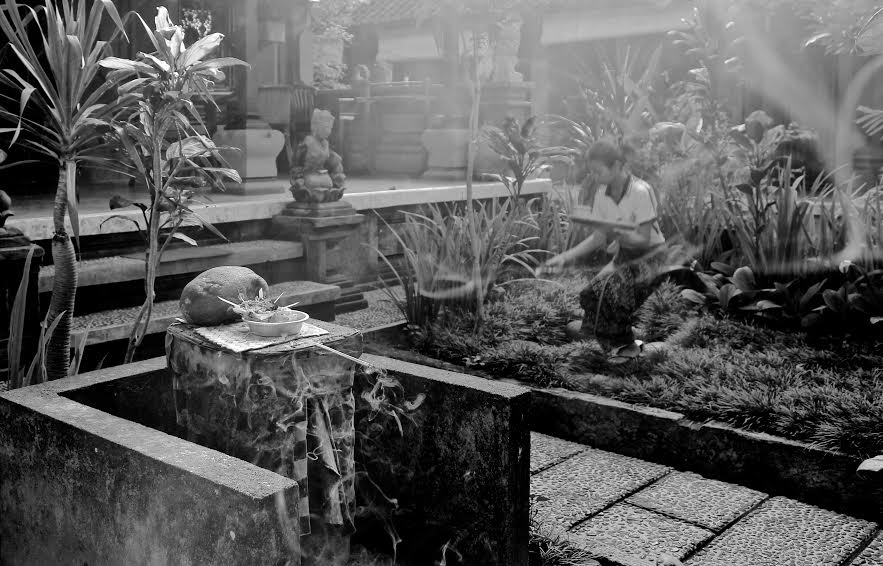
We began the weekend in Ubud. If I had to describe Ubud in one word, I would choose enchanted. The houses and shops that line the narrow, hilly roads look more like ancient ruins. At night, local artisan shops close their doors as cozy, bohemian restaurants turn on their tree-lanterns, welcoming the night crowd. Despite Ubud being a popular tourist destination, Balinese traditions and customs are very much alive.

We began the weekend in Ubud. If I had to describe Ubud in one word, I would choose enchanted. The houses and shops that line the narrow, hilly roads look more like ancient ruins. At night, local artisan shops close their doors as cozy, bohemian restaurants turn on their tree-lanterns, welcoming the night crowd. Despite Ubud being a popular tourist destination, Balinese traditions and customs are very much alive.


Nicole, Dalyan, and I stayed at Puri Saraswati Bungalows, which were connected to Ubud Palace.

Nicole, Dalyan, and I stayed at Puri Saraswati Bungalows, which were connected to Ubud Palace.


Even though we were in the heart of Ubud, the bungalows provided a peaceful and unique ambience.

Even though we were in the heart of Ubud, the bungalows provided a peaceful and unique ambience.


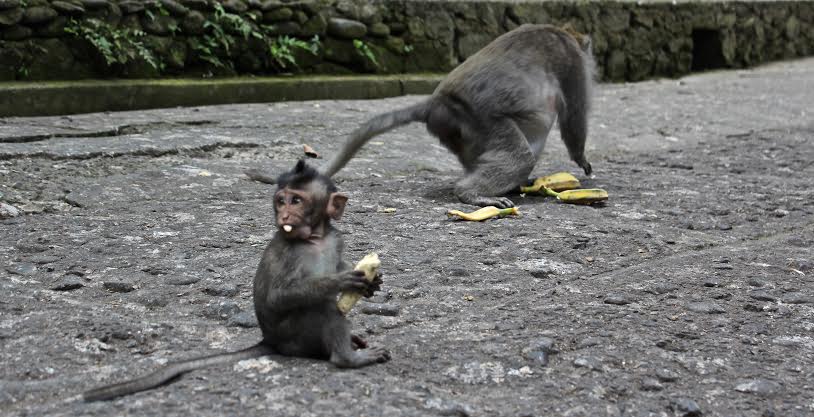
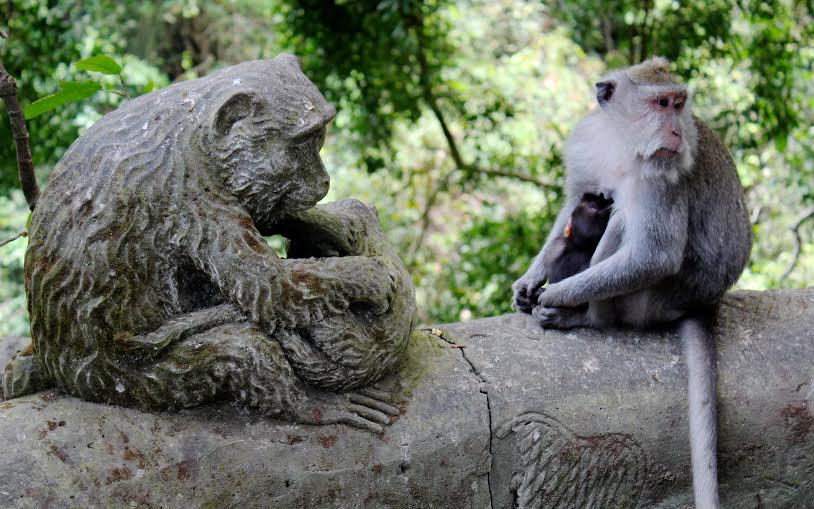
In the afternoon, we made our way to Monkey Forest. These little guys were quite entertaining, and everyone seemed to be giggling at their antics.

In the afternoon, we made our way to Monkey Forest. These little guys were quite entertaining, and everyone seemed to be giggling at their antics.


No monkeys jumped on us, but we did witness one man get bit by a mother monkey due to the fact that he was holding her baby.

No monkeys jumped on us, but we did witness one man get bit by a mother monkey due to the fact that he was holding her baby.


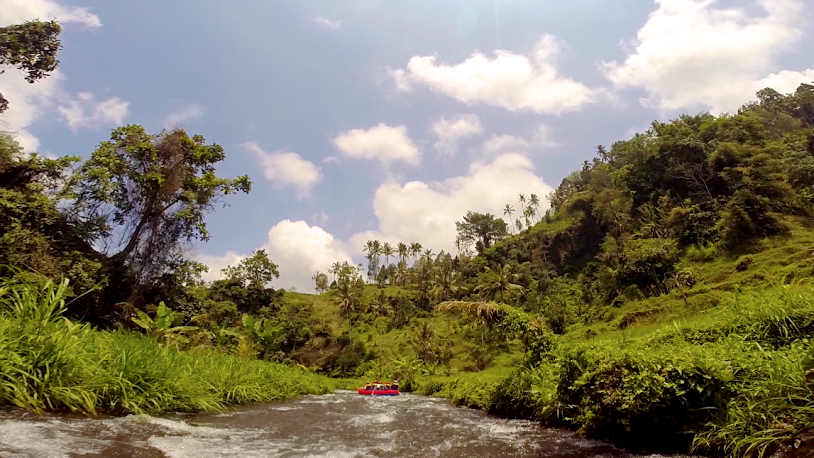
Friday, we made our way to Telaga Waja River for some white water rafting. The pre-rafting safety talk was almost comical; the only words I managed to gather from our guide's speech was "boom boom". With a mutual understanding that we had no idea what was said, we all hopped into the raft and made our way down the river. Turns out that "boom boom" means we're about to collide into a rock/boulder. There were many, many "boom boom"-s.

Friday, we made our way to Telaga Waja River for some white water rafting. The pre-rafting safety talk was almost comical; the only words I managed to gather from our guide’s speech was “boom boom”. With a mutual understanding that we had no idea what was said, we all hopped into the raft and made our way down the river. Turns out that “boom boom” means we’re about to collide into a rock/boulder. There were many, many boom booms.


The rafting experience had beautiful views of the lush, green forests and rice paddies, and we even got to hang out in a waterfall for a bit.

The rafting experience had beautiful views of the lush, green forests and rice paddies, and we even got to hang out in a waterfall for a bit.


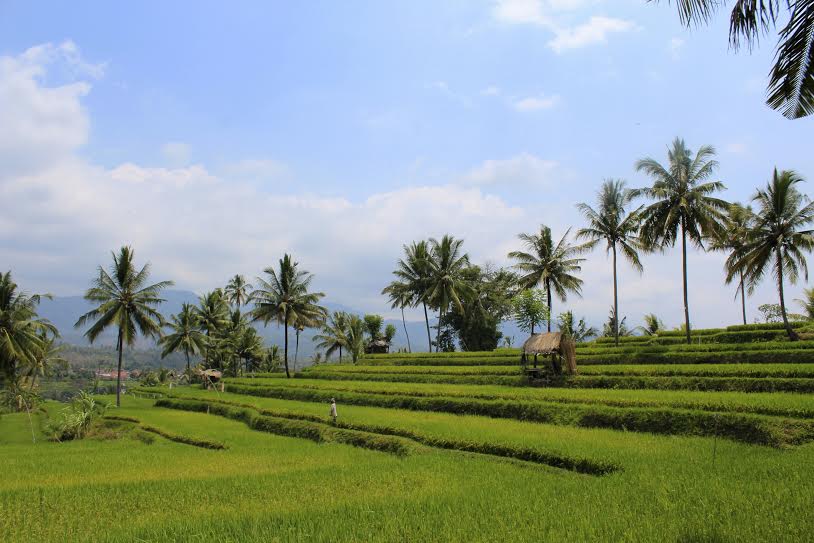
Saturday morning we made our way to Mayong Village, a hilltop town located about two hours north of Ubud.

Saturday morning we made our way to Mayong Village, a hilltop town located about two hours north of Ubud.


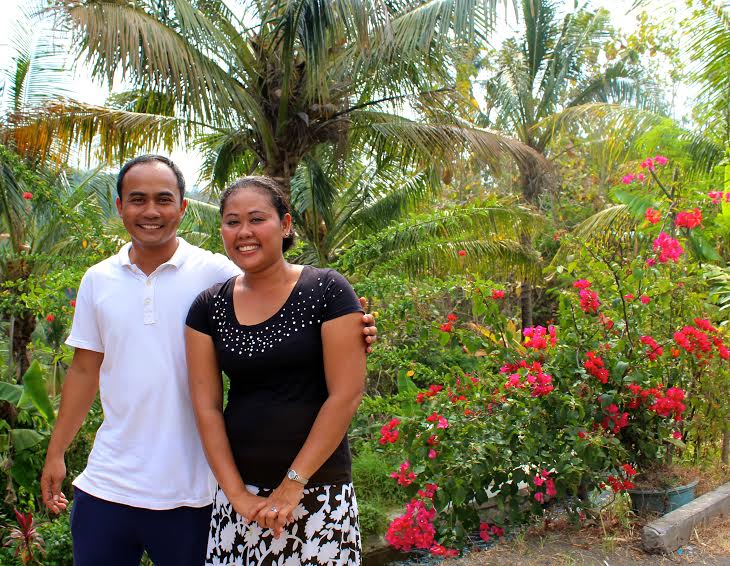
There, we did the Mayong Village Track, led by a man named Artana and his wife, Ria.

There, we did the Mayong Village Track, led by a man named Artana and his wife, Ria.


unnamed-7


unnamed-8


During the track, we stopped at a local farmer's home for some fresh coconut and fried bananas.

During the track, we stopped at a local farmer’s home for some fresh coconut and fried bananas.


unnamed-10


Sunday was spent in Seminyak, a popular beach town in southern Bali. We spend all day on the beach, soaking up the sun and attempting to learn how to surf. Dalyon got the hang of it, while my surfing career was only 1.5 minutes long.

Sunday was spent in Seminyak, a popular beach town in southern Bali. We spend all day on the beach, soaking up the sun and attempting to learn how to surf. Dalyon got the hang of it, while my surfing career was only 1.5 minutes long.


The day was wrapped up in shades of orange, purple, and blue as we watched the sun set on the beach.

The day was wrapped up in shades of orange, purple, and blue as we watched the sun set on the beach.


Our final hours in Bali were spent watching the sun set at the renowned Tanah Lot Temple.

Our final hours in Bali were spent watching the sun set at the renowned Tanah Lot Temple.


Dan in Argentina: The Latest in Buenos Aires

October 8, 2015
The day after the Supermoon, I saw an farcical article about how people's photos from the night before were blurry and underwhelming. While most of mine can be described equally, I think this one is pretty cool. I went to the Planetarium in Buenos Aires with a couple of my friends to see this rare moon. With live music, a big projection of the moon up close, and about 15,000 other people, we had a really amazing experience we'll be able to reminisce about in 2033.

The day after the Supermoon, I saw an farcical article about how people’s photos from the night before were blurry and underwhelming. While most of mine can be described equally, I think this one is pretty cool. I went to the Planetarium in Buenos Aires with a couple of my friends to see this rare moon. With live music, a big projection of the moon up close, and about 15,000 other people, we had a really amazing experience we’ll be able to reminisce about in 2033.


On top of Palacio Borolo, an office building designed and built during the early 20th century and inspired by Dante's "Divine Comedy," lie some of the greatest views of Buenos Aires. From the top lighthouse, you can see the famous Eva Peron mural, the Obelisk, and the Congress building (see next photo). A 6 pm tour of the palace gets you to the top perfectly as the sun is setting over the city.

On top of Palacio Borolo, an office building designed and built during the early 20th century and inspired by Dante’s “Divine Comedy,” lie some of the greatest views of Buenos Aires. From the top lighthouse, you can see the famous Eva Peron mural, the Obelisk, and the Congress building (see next photo). A 6 pm tour of the palace gets you to the top perfectly as the sun is setting over the city.


While the view of the Congreso is cool from the top of Palacio Borolo, the ground view is nice too. Once, while driving past the Plaza de Congreso and admiring its beauty, my cab driver agreed that, yes, it is nice on the outside, but remarked that what happens on the inside is not always so pretty. Yikes!

While the view of the Congreso is cool from the top of Palacio Borolo, the ground view is nice too. Once, while driving past the Plaza de Congreso and admiring its beauty, my cab driver agreed that, yes, it is nice on the outside, but remarked that what happens on the inside is not always so pretty. Yikes!


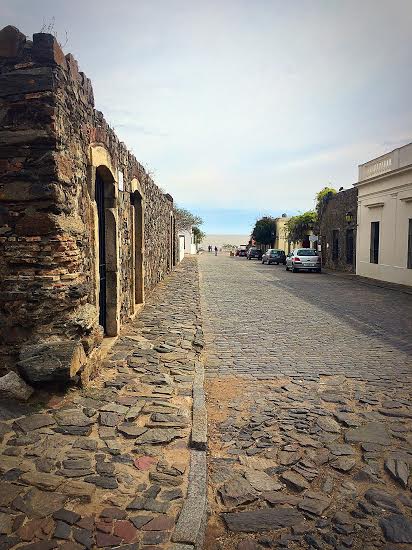
A day trip to Colonia, Uruguay is a must for any extranjero in Buenos Aires. An hour ferry ride to the opposite shore of el Rio de la Plata brings you to the gorgeous Spanish colonial town where alley ways with river views like this are the norm. A nice lunch and an excursion to a typical, quaint, Latin American church is basically all the town has to offer, but it is a great change from the hustle and bustle of the streets of Buenos Aires.

A day trip to Colonia, Uruguay is a must for any extranjero in Buenos Aires. An hour ferry ride to the opposite shore of el Rio de la Plata brings you to the gorgeous Spanish colonial town where alley ways with river views like this are the norm. A nice lunch and an excursion to a typical, quaint, Latin American church is basically all the town has to offer, but it is a great change from the hustle and bustle of the streets of Buenos Aires.


unnamed-4

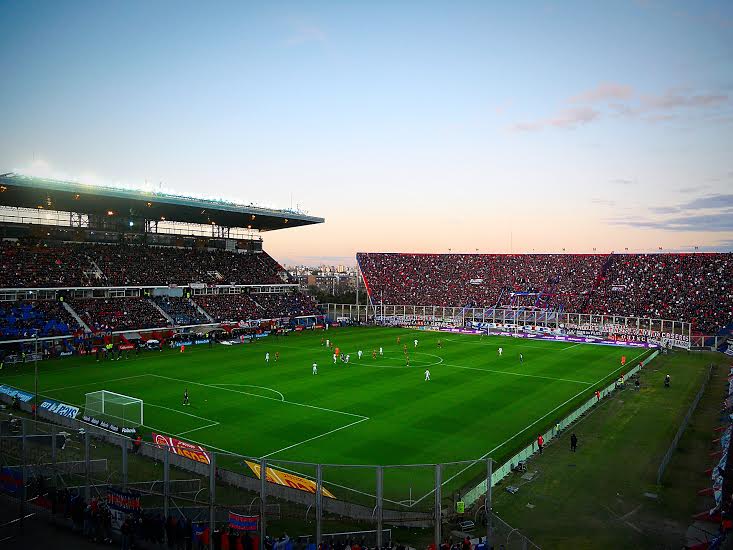
Back in Argentina, I have finally made it to a soccer game! On a brisk Saturday night, San Lorenzo hosted Rosario for an overtime game that ended in a 2-2 tie. The stadium was packed with the most dedicated fans I have ever seen…or heard. Throughout the entire 2 hours or so, the fans sang on the top of their lungs. Truly, the simple, alcohol-free stadium, even without a scoreboard, fills with Spanish rhythms and rhymes for the entirety of the game, creating a contagious energy I’ll never forget. My dad joked that it was obvious a vocal audition wasn’t required before being permitted entrance.


Jiaqi in Italy: What To Do & What Not To Do In Venice

October 1, 2015

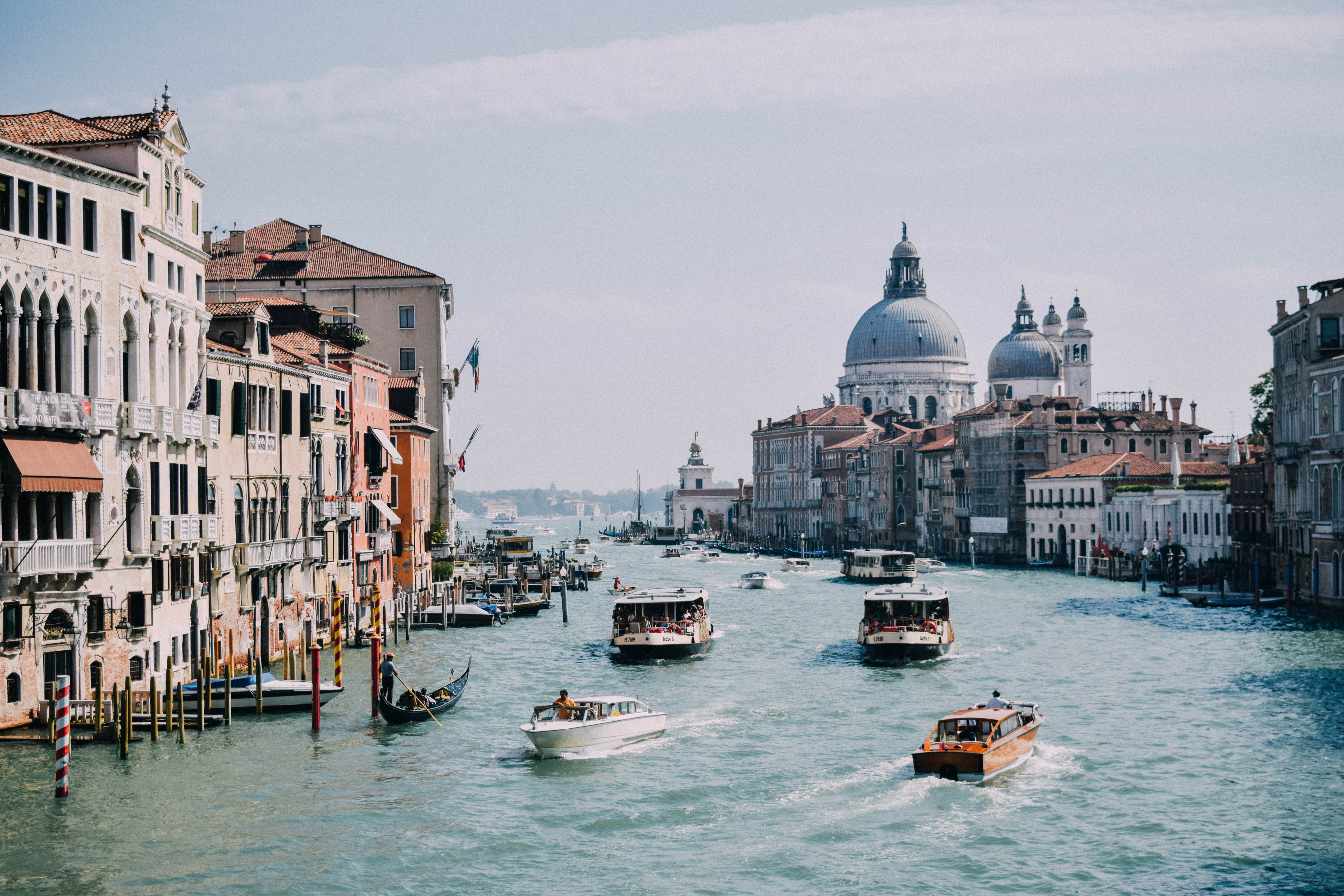
Venice is arguably the most touristic city in Italy, or maybe Europe. Indeed, it is such a beautiful city that I decide to go anyway despite the frenetic tourist crowd. After staying in Venice for four entire days, here are some tips that I invite you to read through before you step into this most dreamy city. It could be a nightmare if you don’t know where to go, trust me.

  1. Spend at least two full days in Venice, or any city in the world. The reason is pretty clear – how are you supposed to get the best out of a place if you just step out of a tourist bus and haven’t learned the transportation map yet? It is impossible to move around and spot any interesting locales if you are still having a headache trying to figure out where you are. In a city where streets and signs are so intricately woven into the fabric of the city to fool its ordinary visitors, you don’t want to fall into that trap. Stay at least two days to walk around, learn the main areas, and go to cafes to learn the local coffee specialty (probably every Italian city has some sort of coffee to claim its own).
  2. Do get lost, occasionally. Before I went to Venice, a wise elder who is an expert of traveling in Italy told me, “getting lost in Venice is the best thing that could happen to you.” It turns out he is totally right. Narrow alleys, restaurants that will pop your heart out by showing the fish-killing process in front of customers, and little artist workshops fill up the city’s less-traveled streets. Travel off the beaten paths, and you will find the endless secrets of Venice.
  1. Eat seafood, but at the right place. Venice is known for its fresh sea products. The renowned spaghetti with clams, not only a tourist must-try, is also the local favorite. Do some research about the most-loved bars by locals before you go, and plan yourself a bar hopping night: stop at lovely decorated bars with dim light, try a bit finger foods made of sea-to-table fish, and sing about your wonderful life.
Sunset in Venice

Sunset in Venice


Neighborhood in Burano

Neighborhood in Burano


Libreria Alta Acqua

Libreria Alta Acqua


Venice on the water

Venice on the water


Island of Murano

Island of Murano


Colorful Island of Burano

Colorful Island of Burano


Jiaqi in Italy: The Italians Call It “Equilibrium”

September 28, 2015

After two weeks staying in Milan, I found out that the Milanese locals really fancy using the word “equilibrio”, meaning “equilibrium” in English. Depending on the context, it usually refers to balance, a middle point, or perhaps perfection. And now I have found the most accurate word to describe my experience in Milan. It is all about the balance.

Like every other big international city, Milan is definitely chaotic sometimes. Traffic and all-year-round fog become a part of the Milanese identity. Here, the Northern Italians who are known for respecting punctuality and efficiency might actually disappoint cliché tourists for their non-Italianess. To me, Milan’s answer to”la dolce vita” is simply smart and respectful. It is the golden middle doctrine, not too lazy, but no rush. The Milanese are definitely in the know of gastronomy, cafe culture, art and design, and all the other disciplines that build out the Italian identity that we are familiar with. They spend the weekdays working hard, sipping espresso, and all weekends hanging out with friends without notion of time. It’s the balance that keeps the city so charming.

This weekend, I explored the Navigli neighborhood famous for aperitifs and design cafés. It was a typical rainy day, but the vintage market is still going strong. Antique accessories, vintage clothes, housing furnitures…They have everything that you and your grandma both defined as “beauty”. Orto Botanico di Brera, is another my surprising find. This hidden gem, tucked away from the Brera museum district, is probably the most tranquil spot in the heart of the city.


Navigli neighborhood

Navigli neighborhood


Cafe in Navigli

Cafe in Navigli


Fresh Pasta in a farmer's market

Fresh Pasta in a farmer’s market


Orto Botanico Brera

Orto Botanico Brera


Orto Botanico Brera

Orto Botanico Brera


Orto Botanico Brera

Orto Botanico Brera


Dan in Argentina: Playing the Tourist Role

September 23, 2015
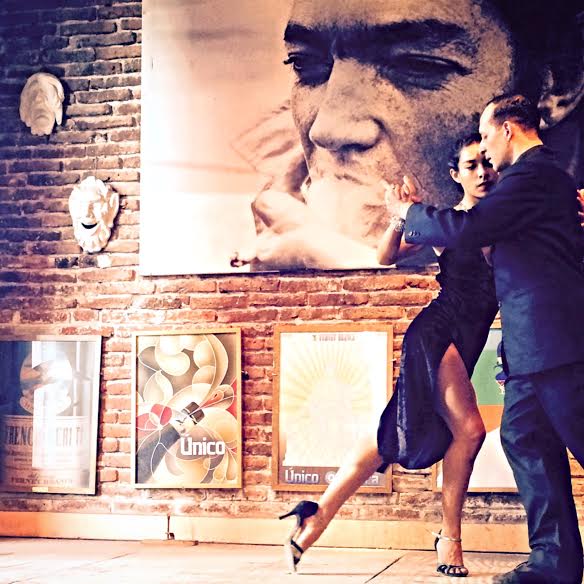
Ahh, el Tango... The Tango is not only a seductively romantic dance but also a popular type of music. In Buenos Aires, although the Tango may be becoming antiquated to everyday culture, it is still very much alive for the tourists and those authentic porteños (residents of Buenos Aires) who wish to maintain the tradition. I went to a traditional milonga where the locals go to dance, and it was amazing. The sounds of the accordion and violin create the perfect backdrop to the most beautiful dances you can witness.

Ahh, el Tango… The Tango is not only a seductively romantic dance but also a popular type of music. In Buenos Aires, although the Tango may be becoming antiquated to everyday culture, it is still very much alive for the tourists and those authentic porteños (residents of Buenos Aires) who wish to maintain the tradition. I went to a traditional milonga where the locals go to dance, and it was amazing. The sounds of the accordion and violin create the perfect backdrop to the most beautiful dances you can witness.


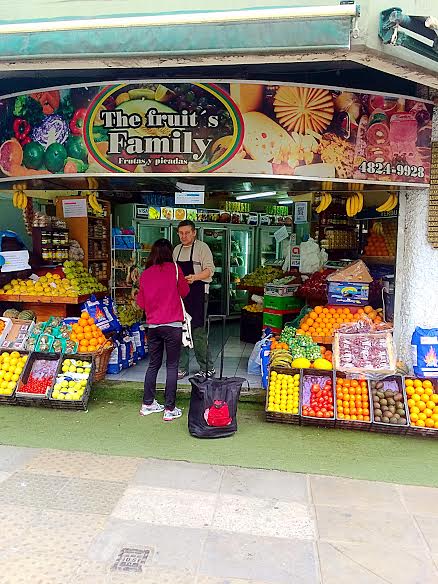
As one might expect in Latin America, the fruit is very fresh. At the bottom of my apartment building is a fruit and vegetable shop. Every day, my host mom buys fresh vegetables for that night's dinner and fresh fruit for the next morning. Every day, when I get home, I always peer over and smile at the vibrant colors and amazing smells!

As one might expect in Latin America, the fruit is very fresh. At the bottom of my apartment building is a fruit and vegetable shop. Every day, my host mom buys fresh vegetables for that night’s dinner and fresh fruit for the next morning. Every day, when I get home, I always peer over and smile at the vibrant colors and amazing smells!


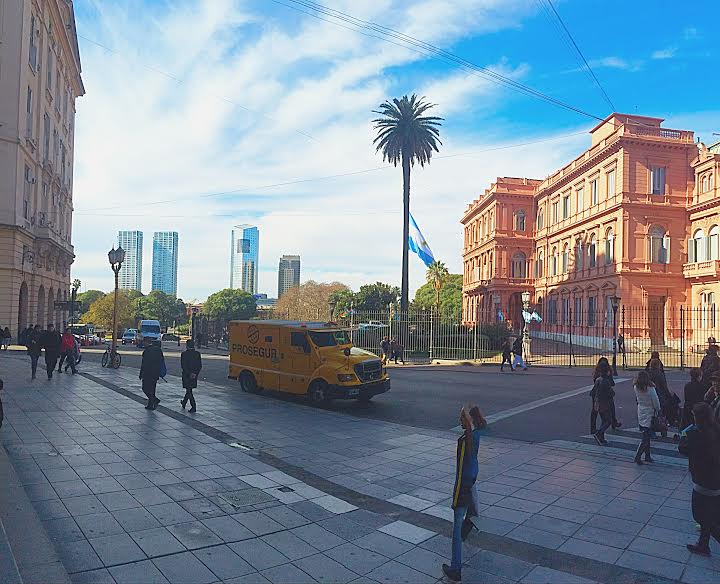
From the steps of the Central Bank, you have a beautiful view of the modernity of great skyscrapers and the history of the Casa Rosada (Pink House). The Casa Rosada holds the executive offices of the President. I toured the building and got to see all its beauty inside and out. While some old wallpaper held small stains and the original floors looked a little beat up, these imperfections added to the authenticity of its history. Interestingly, the building is pink because at one point it was believed that, to protect against the summer humidity in Buenos Aires, it was good practice to preserve the exterior walls with a mixture of lime and cows blood.

From the steps of the Central Bank, you have a beautiful view of the modernity of great skyscrapers and the history of the Casa Rosada (Pink House). The Casa Rosada holds the executive offices of the President. I toured the building and got to see all its beauty inside and out. While some old wallpaper held small stains and the original floors looked a little beat up, these imperfections added to the authenticity of its history. Interestingly, the building is pink because at one point it was believed that, to protect against the summer humidity in Buenos Aires, it was good practice to preserve the exterior walls with a mixture of lime and cows blood.


The Colon Theater is ranked as the third best concert hall in the world. Its acoustics are unmatched and its beauty is ridiculous. I am unsatisfied with the photos I got inside because they do not properly display the grandeur of the building. I plan to go back with my friends from UR and we'll be sure to get a group pic!

The Colon Theater is ranked as the third best concert hall in the world. Its acoustics are unmatched and its beauty is ridiculous. I am unsatisfied with the photos I got inside because they do not properly display the grandeur of the building. I plan to go back with my friends from UR and we’ll be sure to get a group pic!