Kimberlee in Mongolia: International Women’s Day

March 17, 2014

Even though I barely heard about it in the US, International Women’s Day is a big deal here in Mongolia. Everyone from my host family to the SIT staff kept reminding me of the “big day”. Up to a week before the “big day”, I saw many people buying roses, cakes, and fancy chocolates! The way Mongolians celebrate Women’s Day seems to be a combination of a Mother’s Day and Valentine’s Day in the US.

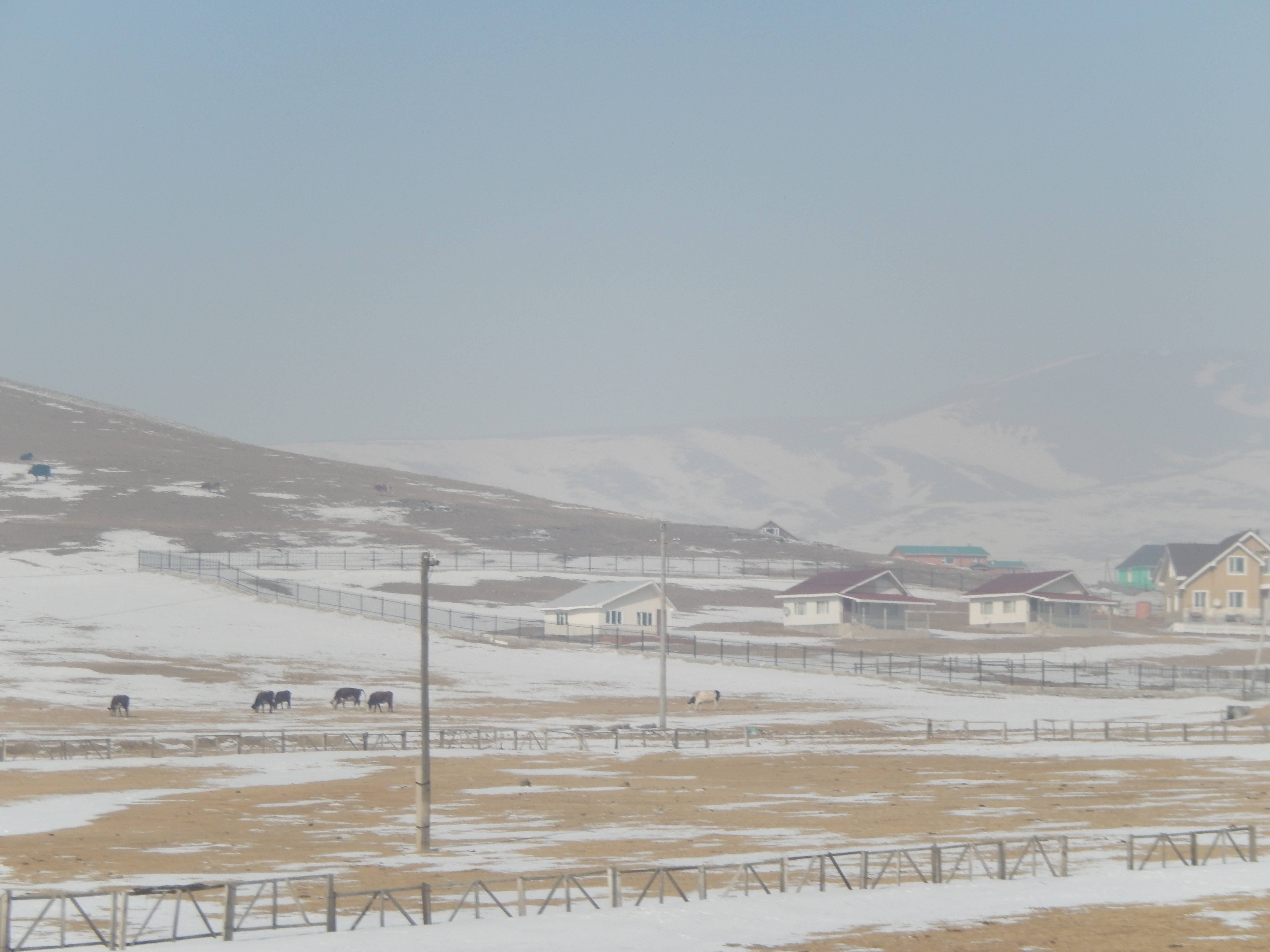
My host sister Tuugi had a school concert in the outskirts of the city on Women’s Day, so our family headed out there for most of the day. It was great to get out of the city for the first time! It’s amazing how a short drive outside of the city can drastically alter the landscape. The drive gave me a taste of what I will get to see later in the semester during our excursions and nomadic homestay! I must’ve been oohing and ahhing a lot because after a while my host brothers started pointing at random things and shouting “WOW!”
DSCN0315

One of the many scenic landscapes I witnessed

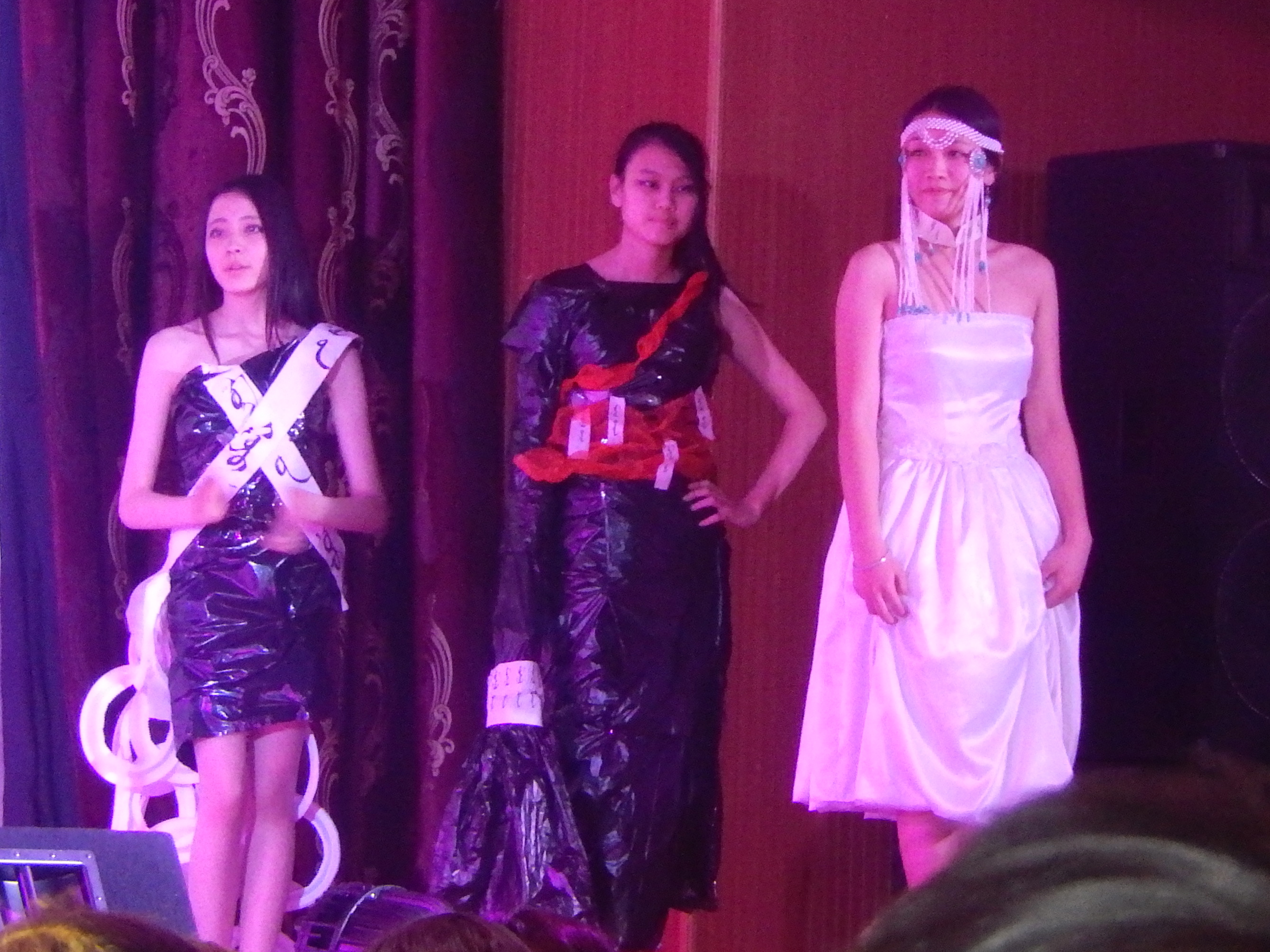
Once we got to the concert, we were so late that we only got to see Tuugi perform for a few seconds. It was kind of like a school-wide talent show, and we missed almost all of her portion. Thankfully, the rest of the show was interesting, even though I had no clue what was going on. There was an array of acts, and it was interesting to see what was acceptable in the school environment. For example, there was a student-made video that humorously portrayed a middle-school student that came in to shoot/beat up weak students. There’s no way that that would be acceptable in the US, but it got a lot of laughs here. Another surprise was when a group of students performed traditional Irish-step dancing. There was also a fashion show that had an interesting mix of traditional Mongolian accessories with western-style clothing. I especially enjoyed the performances that included traditional Mongolian instruments.
DSCN0350

To the far right is a student wearing a traditional headband with her western-style dress.

After the concert, my host mother pulled over to the side of the road to give us the chance to run around and enjoy the fresh air outside of the city! It was great to play outside with Temuujin and Tulga for a bit- they were especially excited by the jet we saw in the sky.

DSCN0384

Chasing after the jet

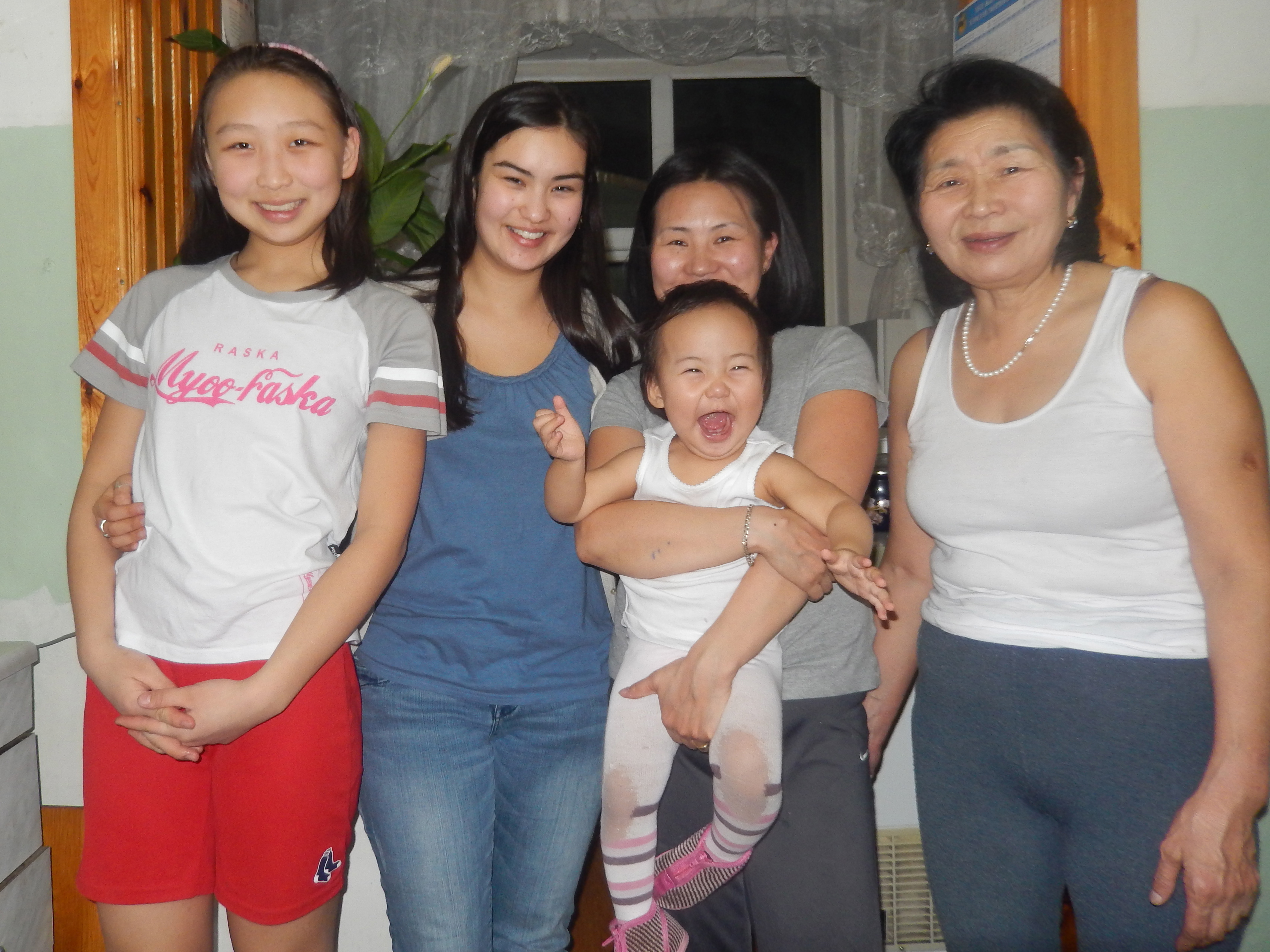
Once we got home, we celebrated Women’s Day together. After dinner, we ate cake and passed out the candy we had bought for each other.  I think that when I look back at this picture, I’ll always remember what an exhausting, yet wonderful day it was.
DSCN0401

I got Temuujin to take a picture of all the women, and we even got Undral to hysterically laugh at exactly the right moment.


Urbanization in Ulaanbaatar

March 7, 2014

Our group had an interesting meeting with the head of Zorig Foundation in Ulaanbaatar. Zorig was a leader of the Democratic Revolution in Mongolia in the early 1990’s, and was an influential politician until he was assassinated. A main goal of the foundation is to focus on community development in Ulaanbaatar, and the head of the foundation lectured to us about the process of urbanization in Mongolia.

DSCN0173

Sükhbaatar Square at the center of Mongolia. These are some of the many new structures built in the city.

One of the most interesting aspects of the lecture was when we discussed the concept of “community” in Mongolia. As it’s a traditionally nomadic culture, there’s no word for “community” in the Mongolian language. Therefore, the concept of cities and Ulaanbaatar itself is a modern invention to Mongolians. Only about 2 generations of Mongolians have lived in Ulaanbaatar so far. The newness of the city and communities is important to keep in mind when discussing the issues within Ulaanbaatar.

Currently, about one-third of Mongolia’s population is nomadic, but about 30,000 people are moving into the city every year. The population of Ulaanbaatar has doubled since the 1990’s, and the city is overwhelmed with the sudden influx of people. Many of these new people are slightly mislead to believe that Ulaanbaatar is a city of multiple opportunities. Although there are many vacancies in employment, they require high-level degrees that formerly nomadic people aren’t often qualified for.

Many of these formerly nomadic families move into the “ger districts” on the outskirts of the city. In general, ger districts are the most vulnerable communities within Ulaanbaatar. Gers are the traditional homes that Mongolian nomads live in- imagine a sturdy, round “tent” with one room that everyone shares. It’s designed to disassemble quickly, and not so much to be connected to central heating or electricity. Therefore, many people in these ger districts have no access to running water and central heating, and generally have worse quality of life compared to those within the city.

DSCN0202

If you look closely in the background, you should be able to see the ger districts on the outskirts of the city.

Ulaanbaatar is the coldest capital in the world, and is also generally regarded as the second most polluted city. At first this may not seem directly connected, but it’s almost entirely caused by people heating their homes, most specifically in the ger districts. Many people heat their homes with coal because it’s abundant and cheap. This is the main reason why they use coal to heat their homes, and have therefore contributed significantly to the pollution of the city. Pollution is considered to be of the worst issues that Ulaanbaatar faces, and the destruction of the environment is a main theme in my SIT program.


Kim in Mongolia: Orientation Week

March 6, 2014

So I’ve finally landed in Mongolia, and am settling down in a hotel in Ulaanbaatar. My first impression of the city is that it’s very…gray. From what I’ve seen, there doesn’t seem to be large buildings in the city. But there are definitely a lot of Soviet-style apartments, not unlike the ones I saw in East Germany.

DSCN0126

View of Mongolia from the airplane

DSCN0135

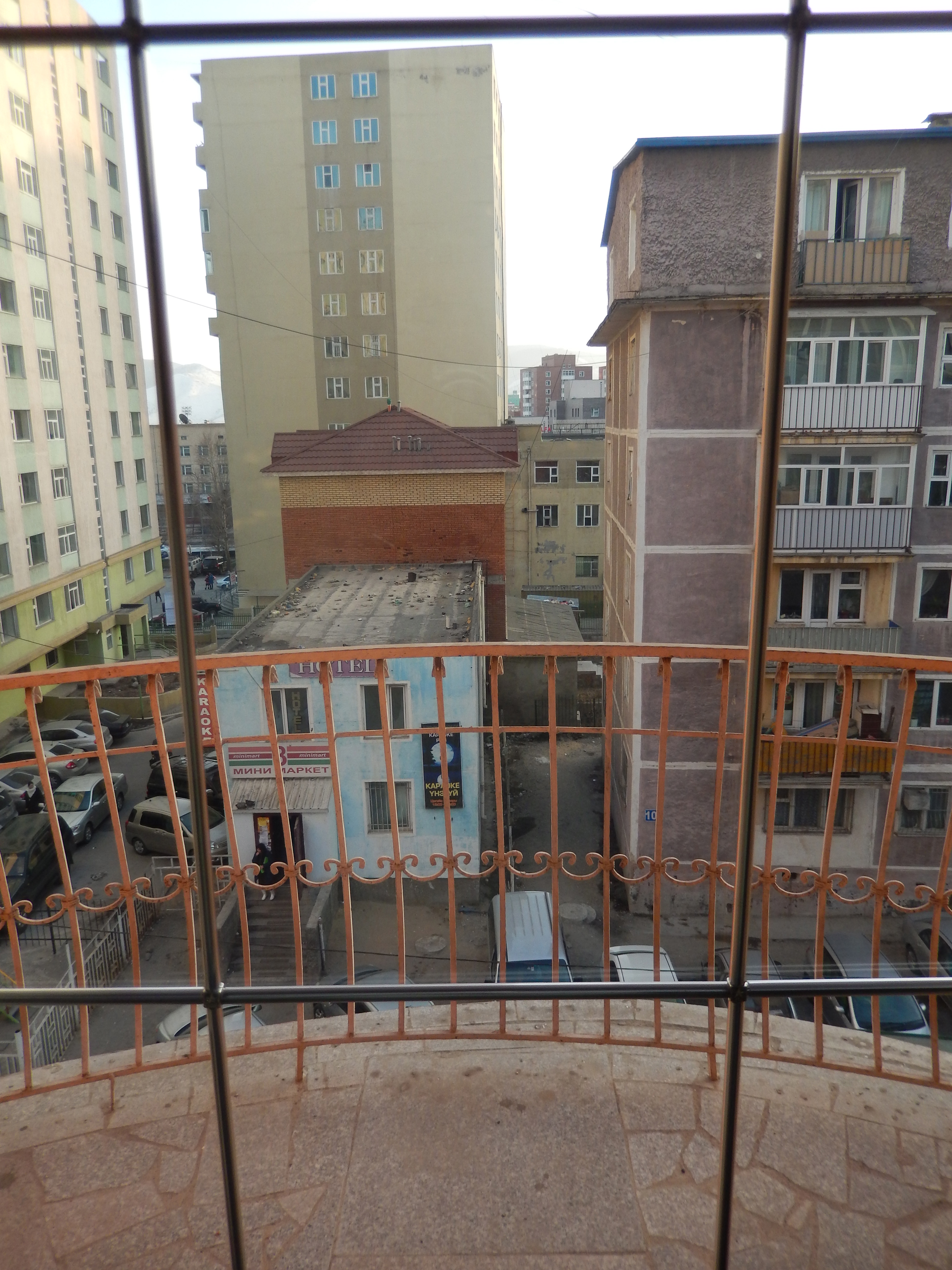
View from our hotel!

DSCN0136

The welcome dinner on our first night

I’ve actually been a bit surprised by the weather. It’s been overcast and cold, but not to the extent that we’d been warned. It was around 15 degrees Fahrenheit for most of the day today. Our program director told us that this season is projected to be warmer than usual, which I’m pretty thankful for. I’m hoping that I can enjoy my commutes around the city, instead of rushing to my destinations because of the cold.

For our first day, we were taken to SIT headquarters to begin our orientation. It took about 30 minutes to walk there, and it was great to see the city for the first time. I didn’t take any pictures on the way over, just because I wasn’t sure what the picture-taking policy was in Mongolia. However, we’ll be exploring the city more tomorrow, so I’ll try to take a lot then.

DSCN0137

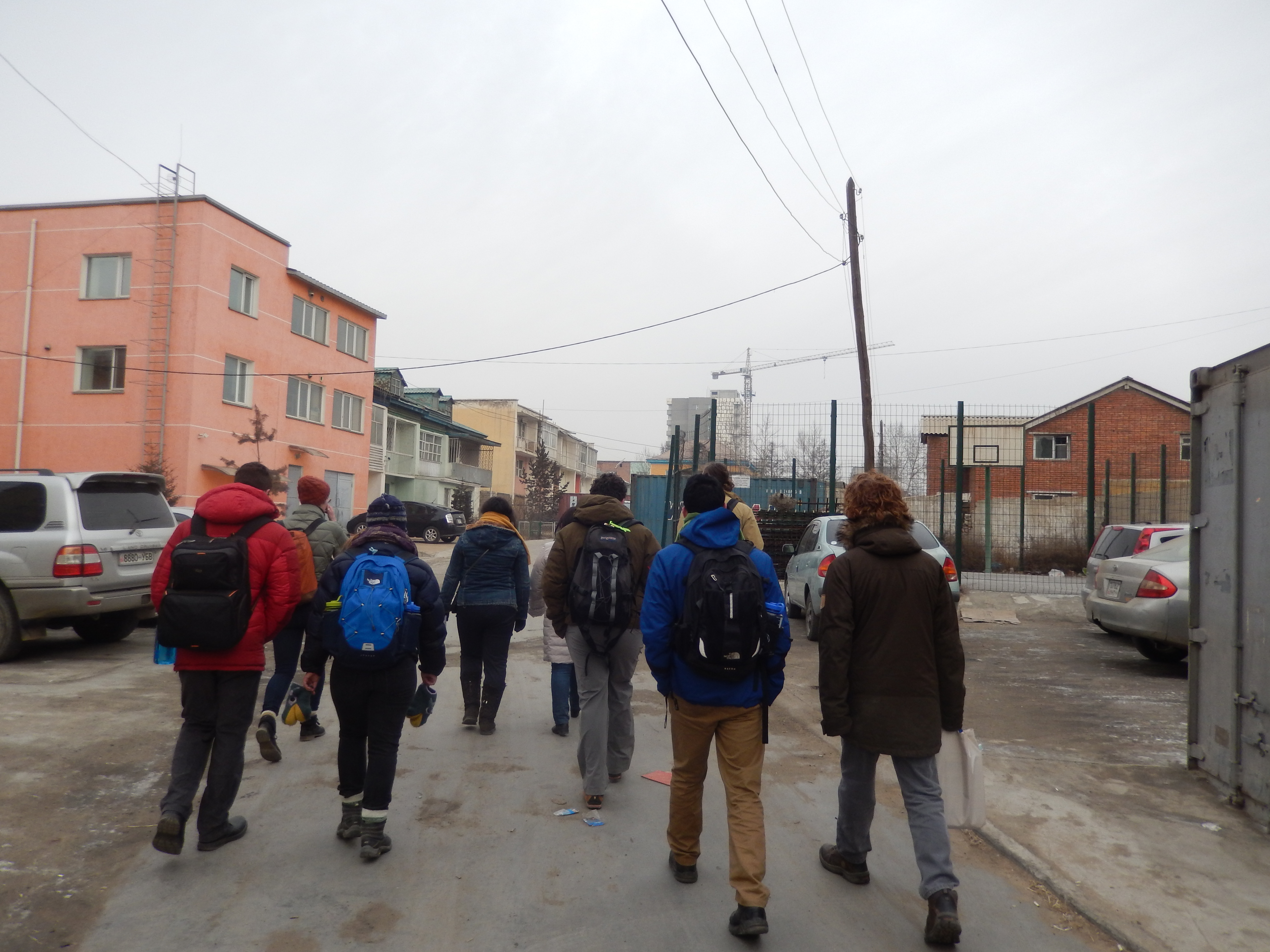
On our way to SIT orientation

During our orientation, we learned about safety, basic Mongolian, and even had an American talk to us about cultural differences. These are all topics that we’ll be discussing in greater detail, but it was nice to have some brief introductions. As our program director Ulzii Bagsch said today: “the whole semester will be your orientation”. This could not be more accurate.

Here are some things I learned about Mongolians today:

–       Giving/receiving things with your left hand is considered very impolite.

–       Mongolians are extremely superstitious, and also consult shamans before making important decisions. For example, they decide when to begin long journeys or have surgeries after consulting with their shamans. This is apparently so important that Mongolian shamans now give chants and advice via phone and Skype to Mongolians overseas.

–       Going off of the point above, Mongolians believe that Tuesdays are unlucky, so nothing big happens on this day (including haircuts).

–       Although hard liquor like vodka has only been in society for the past century, alcoholism is a big issue in society. The program leaders told us that in the cold months, the city has to pick up dead bodies of people who passed out in the streets and froze to death.

–       Mongolians apparently don’t help strangers because they believe that it’s none of their business. If you’re being harassed/abused/hurt in the streets, the likelihood that people will be indifferent to your situation is high.

–       Touching the heads of older people is considered extremely scandalous. Anything associated with heads is seen as almost sacred. For example, you can’t wear another person’s hat, because it touched their heads. Additionally, putting things like hats or even books (because they give knowledge to your head) on the floor is considered impolite.

–       Mongolia men hate it when Mongolian women date foreigners. The American told us that he has foreign friends who are married to Mongolians, but they have to pretend like they aren’t affiliated in public. This obviously means no PDA, but then also having to walk a few steps behind their wives in public. If they don’t do this: “the women will have their heads shaven, and the men will be beaten up by Mongolian men”.

Besides learning these small facts about Mongolian culture, we also had a session on Mongolian. All I can say is that it’s going to be much more challenging than Uganda. I’m finding it extremely difficult to keep up with learning meanings and pronunciations when I can barely read the words! Our teachers told us that Mongolian is related to Turkish, but to me it kind of sounds like a very rugged version of Korean.

The SIT building itself is very cozy and warm. It’s more of a house, with two floors, a kitchen, dining room, and small classrooms. It feels very welcoming, and the SIT staff is super friendly. There are 7 of them and 9 of us, so we’re basically equal in number!

Another cool thing about SIT Mongolia is that they have 2 cooks that prepare lunch for us! SIT Uganda definitely didn’t have that. So instead of always venturing outside for lunch, we have home-cooked meals that we eat together.

DSCN0139

The SIT office is very cozy!

This is the living room- we ate lunch on the floor around the low table. The map on the wall is of Ulaanbaatar. Ulzii Bagsch explained to us that the shaded areas of each district indicate the communities in the city!

Overall, it’s been a great first day. I can hardly believe that I’m here, and am trying to take in as much as I can. I’m trying to focus on not comparing everything to Uganda, but I’ll admit that it’s been difficult. I realize that it’s human nature to compare what you see to what you already know, but I can already tell that Mongolia is a whole different animal from Uganda. I’m excited to see what’s in store for me this semester!


Kim in Mongolia: Pre-Mongolia Introductions

February 28, 2014

Hello Everyone! My name is Kim, and I’m currently a junior at the University of Richmond. I’m an Interdisciplinary Studies major, which means that I’ve created my own major to suit my exact interests. My major is Education & Development, and it’s a mixture of classes in history, political science, education, and international studies.

As a brief introduction to my background, I was born in Japan, and moved to the U.S. with my parents when I was 4. We lived briefly in Falls Church, Virginia, but I grew up in Maine until I left for Richmond. However, I spent many childhood summers in Japan going to school and living with family, so I definitely consider myself to be a Japanese-American. I’m actually in Japan right now, and am visiting family in Hiroshima before my program in Mongolia begins.

P1010357

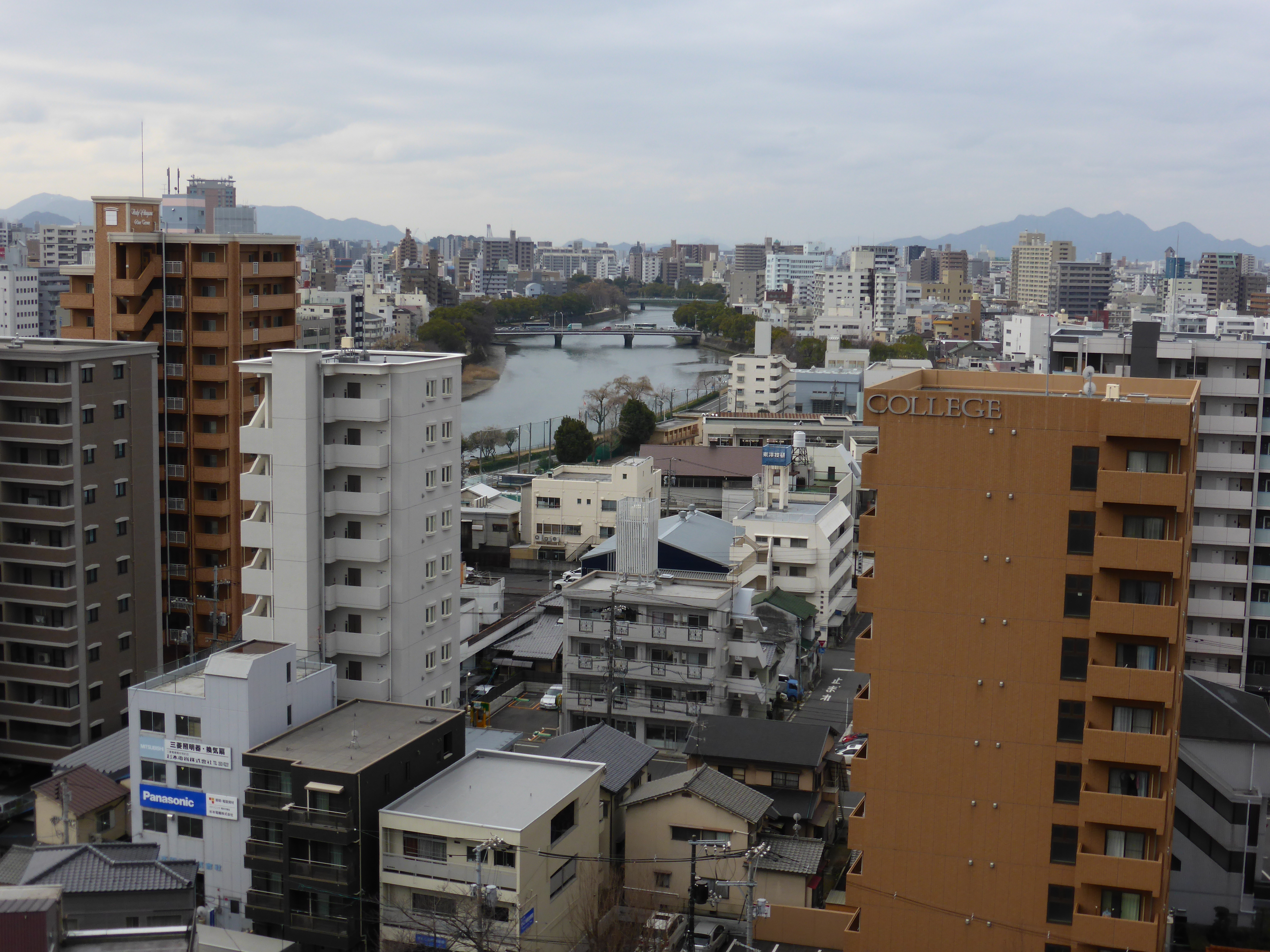
The view I see every morning from Hiroshima

Another pretty important factor about my background is that I received a scholarship to study abroad in Germany for a year in high school. Combined with my last semester abroad in Uganda, Mongolia will be the third time that I’ve studied abroad. As with any combination of experiences, I think that they will always be inevitably connected in my mind. I will keep this blog focused on Mongolia, but I can’t promise not to occasionally mention interesting connections!

You might be wondering why I’m blogging so late, especially compared to Austen. While it’s true that most spring programs begin in mid-January, the official start date of my program is February 24th. The best (and only) explanation I’ve heard is that the program doesn’t think that the students can handle the Mongolian weather before this date. Apparently the average temperature there now is around -30 degrees Fahrenheit. We’ll see if this is true, although I’m naively hoping that it’s not!

The program I choose to study abroad with is administered by the School for International Training (SIT). If you’ve read Mel and Blair’s blogs, you’ll remember that their programs in Ecuador and Chile were also from SIT. The set-up of the programs is similar: some classes at the local university, urban/rural host families, and a 4-week Independent Study Project at the end. It’s incredible to have a structure that allows for independent, hands-on learning. I thoroughly enjoyed this set-up in Uganda, and I am eager to try this again in Mongolia.

However, the journey to specifically choosing Mongolia was harder than I originally thought. My time in Uganda was unbelievably challenging in so many ways that I couldn’t imagine not having another experience that forced me to question my beliefs daily. All throughout my sophomore year, I was 100% convinced that I wanted to spend half a year in Africa, and the other half in Asia. But when it came down to choosing a program, I found it difficult to settle on one. I was worried that by being in northeast Asia, I wouldn’t be as challenged as I was in Uganda.

In the end, I had to revisit my main goal for studying abroad. I wanted to go to a place where I wouldn’t get half the same experience exploring on my own. Mongolia is an incredible place that is rapidly changing, and I wanted to get a taste of it before it was too late. There are many components to this program that will give me experiences that I couldn’t get on my own. I’m most excited to have the chance to live with Mongolian nomads for 2 weeks! Opportunities like this allowed me to confidently settle on this program.

I’m so excited to explore a new side of Asia, and to share it with you through this blog. This time next week, I’ll be settled in Mongolia! Thank you for taking the time to read this, and please look forward to my first post from Mongolia!