Rhiannon in India: A Trip to the Beach

September 17, 2013

This weekend was another holiday, so Jennie, Romi, and I took a long overdue vacation south to Pondicherry and Chennai. After traveling north to the bustling capital a few weeks ago, we wanted a more relaxing destination – and we got it!

After we finished classes on Thursday, we boarded another Sleeper train with a 14-hour ride to Chennai ahead of us. Now, if you know anything about Bollywood or Indian pop culture, you are probably wondering if we traveled on the Chennai Express. Chennai Express is a very popular movie in India right now featuring two of Bollywood’s most famous actors – and it takes place on a train to Chennai. Unfortunately, our train was called Charminar Express rather than Chennai Express, but we took a few movie-like photos anyway.

Chennai Express

Before our trip to Chennai, we had a Chennai Express photo shoot

Even though we were in the most budget option of Sleeper compartments once again, the whole trip was very enjoyable. Truthfully, we were delighted to have seats on the train at all because, when we booked our trip online, we received RAC tickets (sort of like waiting list spots) and didn’t get our confirmed seats until two days before our trip! If we had boarded the train with RAC tickets, we would have had to share our bunks for the entire 14-hour ride, and we may have been separated. Luckily, after two weeks of watching our waitlist numbers get closer to zero on the website, we finally received our confirmed tickets and boarded the train to find three full bunks just for us.

One of the best parts of the train ride was the company we had in our compartment. An older Telugu-speaking couple sat across from us and, although we could barely communicate using English, somehow we shared food, laughed, and interacted with each other and had a wonderful time that night. There was also a young man in an RAC seat nearby that spent over an hour giving us suggestions for things to do in Pondicherry and Chennai. He seemed really enthusiastic to share information about temples, beaches, and festivals with us. Even after everyone had gone to sleep in their bunks, the old man and a younger man nearby, although strangers before the trip, sat up and chatted over chai for half the night.

After sleeping through the night in my little bunk on the train, I woke up early, waved good morning to the old lady across from me, then looked out of the little crack of the window visible from my bunk. I could not believe my eyes. The scenery was probably one of the most beautiful things I have ever seen! We were in the middle of green patty fields and marshlands, and every once in a while we passed through a village of small houses and huts. We passed people in the fields playing an early-morning game of cricket, and others in the villages getting ready for work. The train was following the coast, so in the distance I could see the Bay of Bengal, dotted with colorful sailboats. The best part was that the sunrise was reflected in all of the water collected in the fields and marsh from the monsoon rains.

When we pulled into the Chennai station, we had a quick breakfast and headed straight to the bus station to catch a three-hour bus south to Pondicherry. Pondicherry was a French settlement until the 1950s, so there is still a lot of French influence there (now mostly in terms of tourists), especially in the French quarter, a quaint little neighborhood on the beach. As we drove into Pondicherry, I noticed lots of flags that were a mix of the French and Indian flags. In the French quarter, all of the street names were French, many people spoke French, and people even said “salut” or “bonjour” to us on the street. We also had plenty of French food, coffee, and chocolates in the many French cafes all over the area. It was like we were in a totally different India! Being there reminded us of how many different cultures there are to see in India, and how no two are alike.

Colorful Pondicherry

All of the streets in the French Quarter were lined with colorful houses and hotels

Without a doubt, my favorite part of Pondicherry was the beach. In the French quarter, the coastline is mostly rocky, but still has a few sandy spots as well. We spent our first afternoon walking along the waterfront watching kids play in the water, although it is technically not allowed because of the strong current and pollution. We didn’t swim there, but our hotel owner told us about a cleaner beach seven kilometers south of the French quarter called Paradise Beach, so on Saturday we hopped in an auto and went there for the afternoon. We were a bit unsure about what we would be doing because it is uncommon in India to swim at the beach, but we left the hotel with open minds and lots of food for a picnic. But to our surprise, Paradise Beach was almost completely deserted, so we jumped in the water for a swim! We picnicked and played Frisbee for a while, but all of a sudden black cloud started rolling in from over the ocean. Within 15 minutes, the wind picked up, the sky got dark, and it began to rain so hard we thought it was hailing. We ran back to our auto and got back to our hotel safe and sound, so now we can say that we survived a monsoon on the beach at the Bay of Bengal!
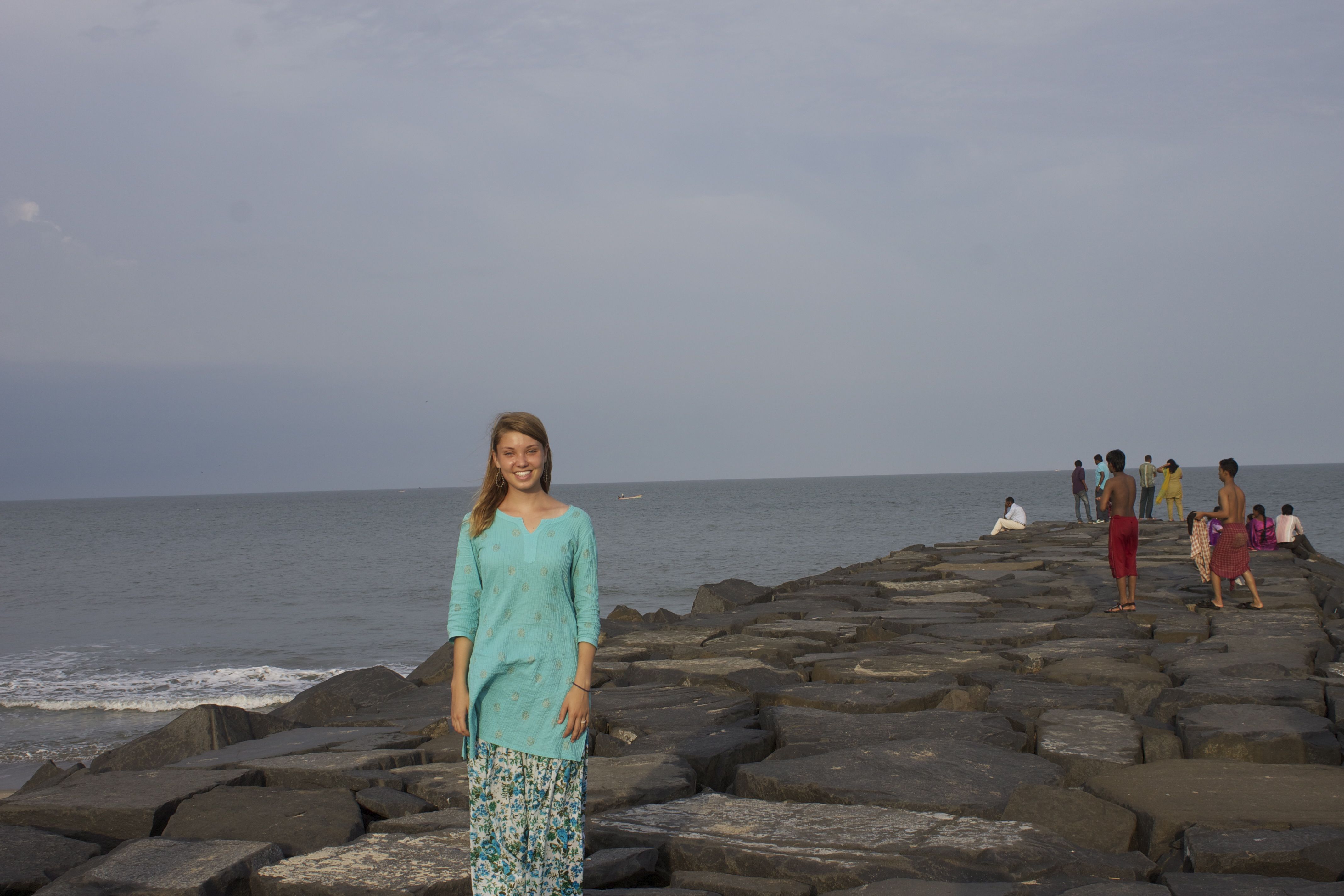
Rocks in Pondicherry

The rocky coastline of the French Quarter

On Sunday, we went back to the bus station and caught a bus back to Chennai. The next day was Ganesha Chaturthi, the beginning of a long festival to celebrate Lord Ganesha’s birthday. Ganesha is the Hindu god whose head resembles an elephant, and he is the god whom Hindus pray to first because he takes away obstacles in life. The story of Ganesha (as told by my host mom) is that his mother, Parvati, wanted a son so she made Ganesha out of sandalwood while her husband Shiva, the destroyer god and Ganesha’s father, was out of the house. Parvati put life into Ganesha and put him in front of the door to protect the house from intruders. When Shiva came back from hunting, Ganesha wouldn’t let him in, and not knowing that Ganesha was his son, Shiva cut off his head, which flew into the jungle. When Parvati realized what had happened, she explained to Shiva that he had killed their son and ordered that he go into the jungle to find Ganesha’s head. Shiva went out and returned with an elephant head instead and brought Ganesha back to life.

To celebrate on Monday, we went to a temple in Chennai and offered some flowers to Ganesha. During the festival, statues of Ganesha are put up in neighborhoods all over India, and people put small statues in their houses as well. There were six- to ten-foot tall Ganesha statues on all the roads and vendors were selling small clay statuettes in all the market areas. While we were in an auto on our way to the temple, a parade of people passed by with a mobile Ganesha shrine, so our auto driver parked the auto and ran over to receive prasadam (offered food and coconut water). When we returned to Hyderabad that night, we were surprised to find our neighborhood transformed with large, colorful Ganesha shrines on all the street corners complete with floodlights and loud music.

Mobile Ganesha Chennai

The mobile Ganesha passing our auto in Chennai

The trip this weekend was so relaxing and beautiful, but now I have a busy week ahead of me. Our apartment building will be celebrating for the Ganesha festival every night this week with poojahs (devotions) and lots of food. I will post soon about all of the festivities going on right here in Hyderabad!

Happy Ganesh Chaturthi!


Mel in Chile: Santiago

September 13, 2013

Week #2. I’ve had the chance to walk around the city a lot this past week. In fact, I walked from my house in Providencia to the University which is close to Estación Central. It takes about an hour and fifteen minutes.

In general, I try and walk anywhere that will be within an hour or so and feel comfortable saying I have seen many areas of the city and walked through similar streets several times. Although, I should disclose that I have only been through the “safe” and usually nice areas of Santiago. In other words, all of my comments about the city refer to the middle/upper-middle class regions and are not a full representation of all of Santiago.

Okay.

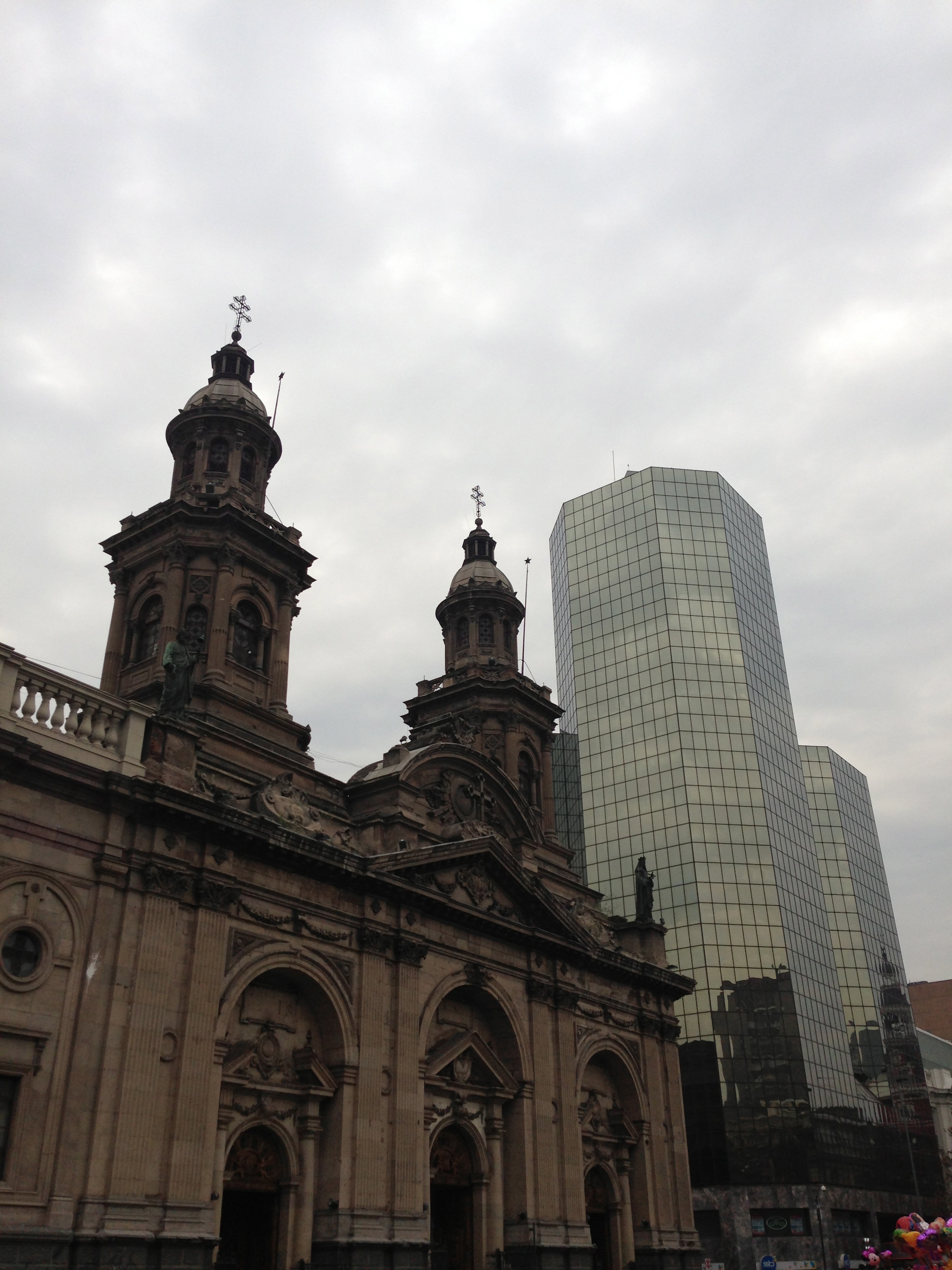
The past week and a half I walked around central Santiago confused. The architecture of the buildings seemed almost awkward. Actually, not the architecture of each individual building, rather the collective appearance of several buildings positioned close to each other. When I look one way on Avenida Providencia I see an old building with a structure screaming 18th century Spain which I imagine this to be the case in many Latin American countries. Then I look the other way and see the modern building of “Fundacion Telefónico” which holds various cultural events like theater plays and galleries. Across the street, on Plaza Italia, and I see the overbearing residential skyscraper marking it’s territory on central Santiago.

IMG_1891

On the left is the Metropolitan Cathedral of Santiago built in 1748. To the right, stands a perfect example of the many skyscrapers piercing the Santiago sky today.

Sometimes I feel I am in Spain, sometimes London and at other times even Tirana! Tirana, for the few of you who might not know (joking, I know most of you don’t know) is the capital of Albania. This is where I was born, grew up for the first ten years of my life, where most of my family lives and where I have spent many of my summers since migrating to the United States.

All last week, as I found myself in different areas of the city, I thought “What is going on here? Santiago must be confused. Is it colonial? Is it modern? Does it have its own identity? Its own niche?”

I am not suggesting cities, or even the tiniest municipality, is, or needs to be, homogeneous. Santiago is big. Of course it is diverse. I do not expect the architecture of every single part of the city to be identical. I also do not want to reduce an incredibly diverse city of almost seven million inhabitants to one single identity. That is not what I tried to do.

With that said, I still contend Santiago is a special place.

I spent the past week and a half trying to understand how the different structures and diverse architecture tell the story of Santiago.

The colonial architecture obviously comes from the colonial period. Easy. At first glance, the skyscrapers filled with offices of foreign enterprises contend that Chile does enjoy a developed economy, sophisticated financial structure and plenty of foreign investment. These are the buildings that proudly show the international community “Hey, we have made it!”. The modernity is celebrated not only by the elite who benefit from an open and deregulated market, but from also a working class who hope swallow their objections in hope that trickle down economics will eventually…well, trickle down to them.

On the contrary, the buildings are also an uncomfortable symbol  of the seventeen years of military dictatorship that aggressively implemented neoliberal economic  reforms. The reforms made possible  the most stable macro-economy in Latin America, but also created severe inequality in earnings, education, and healthcare to name a few. Consequently, for many, the modernity, the high-rises, and the “booming” economy also represent classicism, racism, and enforcement of prejudices and the further entrenchment of the degrading stereotypes that sustain them. The disrespect of human rights for seventeen consecutive years during the dictatorship which carried out a neoliberal economy and replaced citizens with consumers, and the current systematic neglect of key functions of a democratic government and civil society are oftentimes seen as an unjustifiable sacrifice for macroeconomic success.

But, this isn’t meant to be a history lesson.

So friends, I walked around for a week and a half thinking Santiago was confusing me because of how incredibly diverse the architecture is. As I thought this, I came to a street crossing. The light was red for the vehicles, but that isn’t what’s important. In front of the stopped cars was a man on top of those high unicycles, dressed as a clown, and juggling. He was putting a show for the cars during the few minutes they wait at the red light.

That is when I realized, the city isn’t confused.

It is unbelievably eclectic.

There is a fusion of past and present. The struggles and the victories. Protests on one side of town and celebrations on the other. Business men in suits and students marching in the streets. A musician playing his fiddle in the subway train and a woman dressed as if ready for a fashion show, having an extensive conversation about the current health of her nail-beds. September 11th 2013, the fortieth anniversary of the military coup, will undoubtedly result in riots across the streets (No worries, I will be in the north, and more that safe), then a week later, everyone will celebrate the fiestas patrias with friends, family, barbecues, and late night parties.

But, these “extremes” should not come as any surprise. It sort of runs in the country. Geographically speaking, Chile can make even the most experienced National Geographic photographer go “Huh. I have never seen anything like that before.” There are the Andes, an entire coast line in the Pacific, the world’s driest desert, glaciers, enormous lakes, valleys, rivers, grassland, and finally, the eclectic metropolitan city of Santiago.

Right now, I am on a plane flying north for an excursion with my program. The plane is going over the Atacama desert, the driest and highest desert in the world, and in the background I see the snow capped Andes.

Chile defies geographical norms.

IMG_1919

Birds eye view of the mountainous Atacama desert.


Alyssa in New Zealand: Mid-semester break

September 4, 2013

It is important to take advantage of the environment you’re in, but it is also vital to not let yourself forget about the other places that surround you as well. There is much to discover and explore, but we can’t let ourselves be distracted by what’s only in front of us. Leaving the U.S. two months ago was my first step towards new journeys. After having been in New Zealand for seven weeks, it was time to put my life in Dunedin on pause and venture to the neighboring country, Australia.

Once mid-semester break arrived, my flatmates and I were constantly on the move for the entirety of the trip, beginning to end. Driving to Christchurch was our first endeavor, for that was where our flight was departing from. The three hour plane ride brought us to one of the most famous cities in the world, Sydney. Right away we started exploring, touching many aspects of the city such as the Sydney Opera House, Hyde Park, Darling Harbor and the Harbor Bridge. The climate was so different compared to what we have been used to in Dunedin that we made our way out to Manly Beach the following day in order to enjoy the warm weather.

bridge

Sydney Harbor Bridge at night


Shortly after, we flew north towards even warmer weather to Cairns. I was caught off guard by the heat, for the thought of having weather in the 80’s seemed foreign to me at that time. It didn’t take long for me to change into shorts and t-shirts. Our first adventure consisted of the Great Barrier Reef. We boarded a boat that took us out an hour from the shores of Cairns and were provided with snorkeling gear. As I jumped off the boat into the ocean, I didn’t feel one sting of coldness from the water because the air was so tropical. Looking underwater was incredible, for the amount of marine life that was directly below me was overwhelming in a sense that I felt as if I needed to see everything. Whether it was in a form of coral or fish, color completely surrounded me. Every aspect of the reef was unique. Not one fish looked like one another and each corner presented a wide arrangement of vivid hues.

josphine

Josephine Falls in Cairns

Cairns had much to offer on land as well. We ventured our way into several different rainforests running into several waterfalls, lakes and other different kinds of nature. There were also several beaches that were easy to access around the city as well. Each day in Cairns beheld a different adventure in front of us. It felt as if we were seeing the most authentic parts of Australia regardless of what kind of setting we were in.

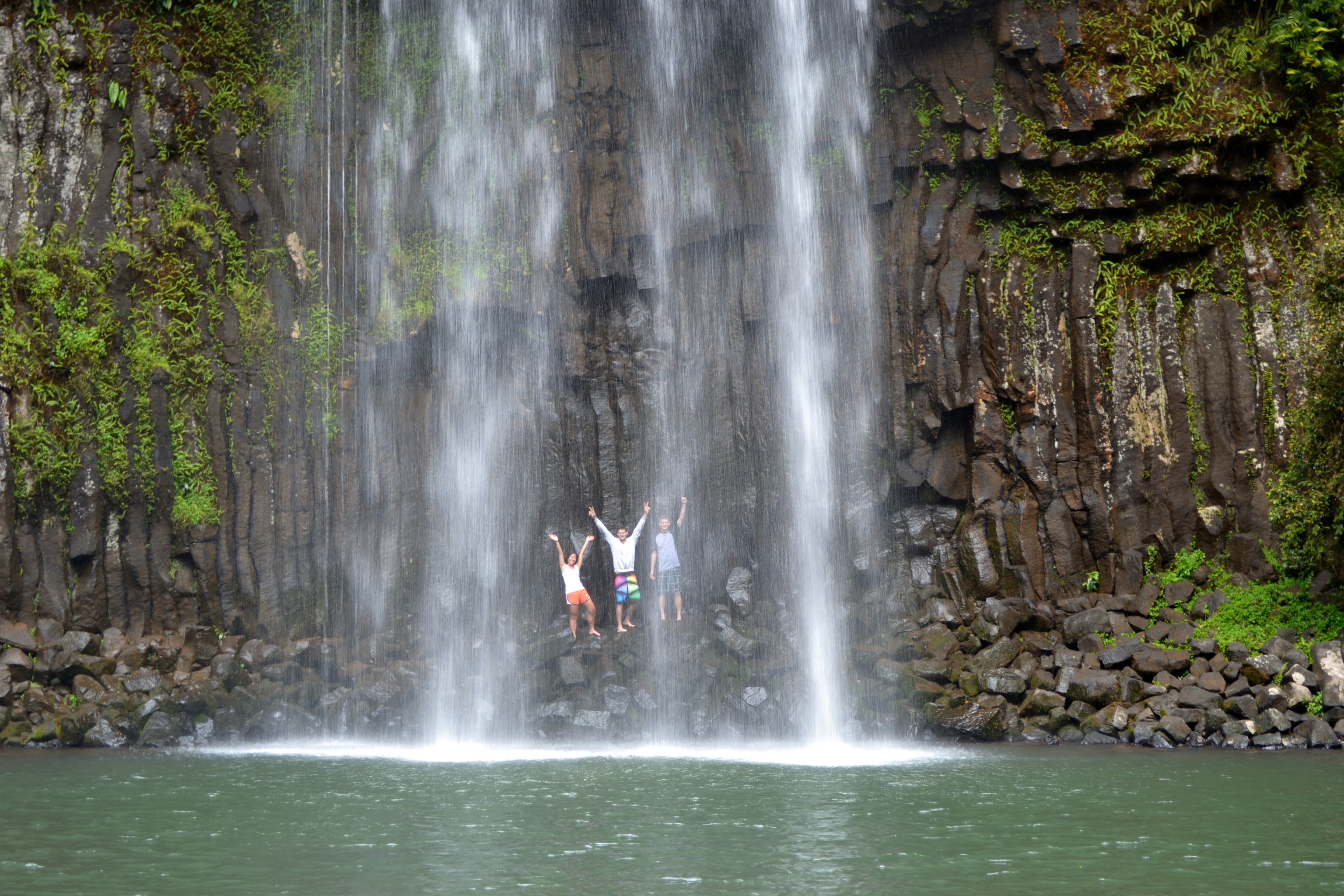
waterfall

My flatmates and I ventured our way to under the waterfall at Milla Milla Falls in Cairns

Knowing we couldn’t stay in Cairns forever, we began to travel south towards Brisbane. On the way, we stopped at the Whitsunday islands for a day trip. Nothing could have prepared me to anticipate such a view. Expectations are never accurate, for no sense of what you are going to see can perfectly depict what is actually there. Pictures almost do Whitsundays no justice. With the water having 20 different hues of blue, the scenery is unable to be replicated by any other location. The silica sand on the beach was so soft that you could exfoliate yourself with it (which I most certainly did). Paradise would be an understatement to describe what it was like. Thinking about going back at the end of the day became a concern, for every inch of my body was reluctant to leave.

Whitsunday

Whitsundays islands

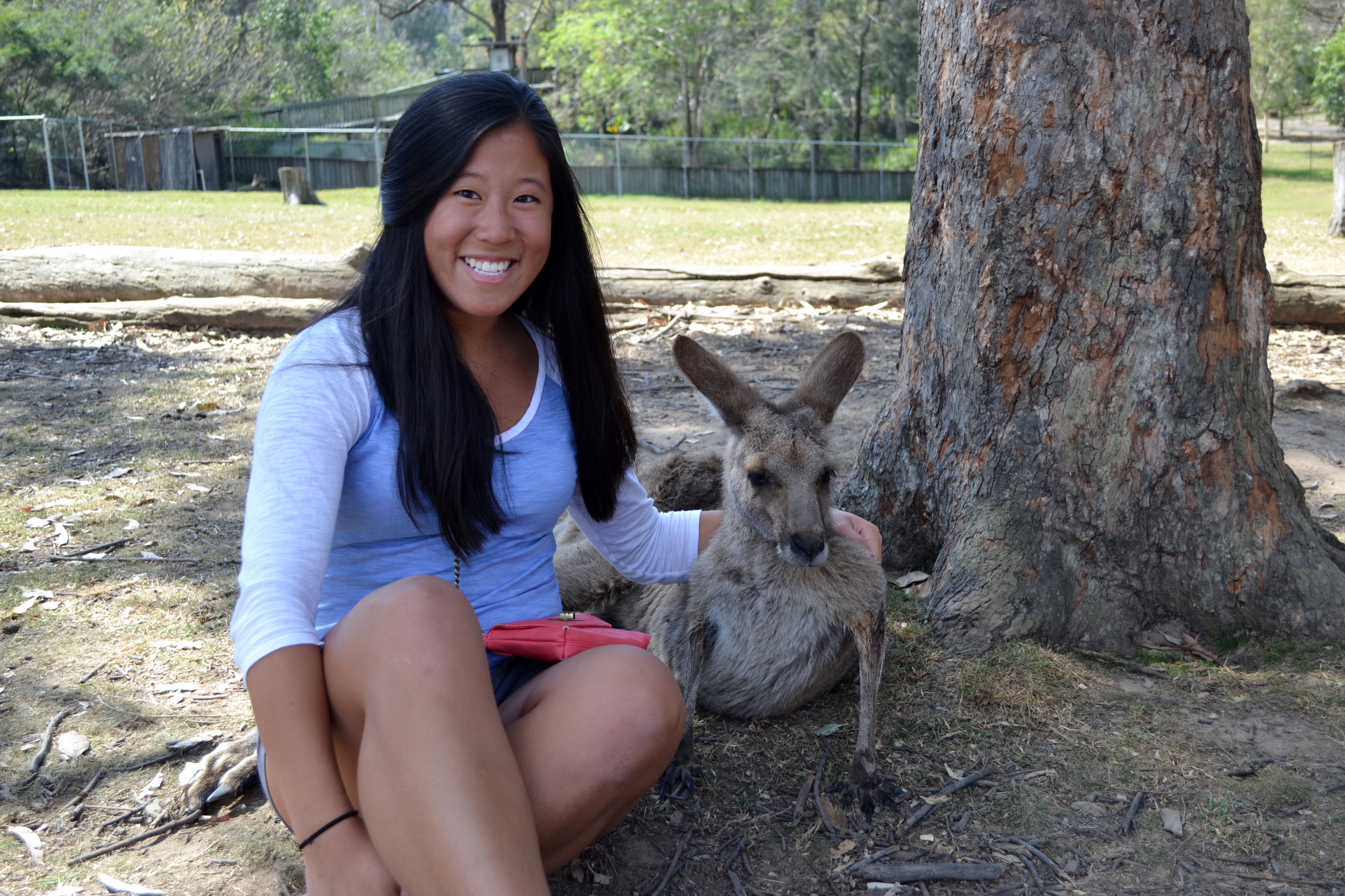
We finally arrived in Brisbane, which was our last stop on our trip but it didn’t necessarily mean we were slowing down. We utilized our time by visiting Long Pine Sanctuary, the first and largest koala bear sanctuary in Australia. The entire place was enriched with all kinds of Australian life such as koala bars, wombats, dingoes, crocodiles and kangaroos. To our delight, we were easily able to enjoy our time with the kangaroos up close in such a way that we were allowed to fully interact and pet them. The animals showed very little sign of discomfort, and they were very welcoming to visitors. Kangaroos were lounging everywhere in this field waiting for attention and consolation.

kangaroo

The kangaroos were more than welcoming when they were approached by visitors

Every beginning has an end, and finally we flew out from Sydney back to Christchurch. Having been in Australia for ten days, we were ready to return to New Zealand. A change of scenery is always enjoyable, but returning to what you’re familiar with always generates a sense of comfort. Being away from my home in Dunedin has made me appreciate how at ease I actually am in New Zealand.

Having Australia being so nearby was such a convenience, for there was most likely no other time when I would go there besides being abroad now. Opportunities aren’t always available. You can’t expect for them to present themselves at any time. If it’s there, you can either take it now or sometimes even never. Fears or distress shouldn’t obstruct your true desires. Visiting Australia had always been one of mine for as long as I can remember, yet I was always worried about money and time management. However, studying abroad presented the perfect chance for me to go and it undoubtedly became one of the most remarkable trips of my life.

Life has now resumed back in Dunedin, and it’s almost like nothing has changed. I am more than halfway throughout the semester and I am already fearing that the end is going to arrive sooner than I think. Such a thought only reminds me that there is still so much more for me to do and see. Nevertheless, I am already more than satisfied by the amount of things that I have done thus far. It’s almost impossible to see and do everything that New Zealand has to offer down to the last piece of nature. However, it is possible to fully appreciate all that has been seen and done.


Mel in Chile: A Lens

September 3, 2013

It has been exactly a week. The most interesting aspect of “the life of a university student” is that political affiliation is a big part of the identity of public universities. Chile is an incredible place to study political systems as it is the only place in the world where a socialist government was elected democratically and without military intervention. This government was overthrown in a military coup only a few years after it was established. The years of Pinochet’s military dictatorship brought the implementation of strict neoliberal economic reforms and fast privatization of important industries. Many will argue it was precisely this period of free markets and capitalist ventures which brought Chile the macroeconomic “success” it currently enjoys. It is considered one of the most stable economies in Latin America. However this same period of military dictatorship also carries painful memories of vast and blatant human rights abuses the government committed against dissidents. Leaders of socialist parties were assassinated, thousands  of civilians who opposed the neoliberal reforms were tortured as political prisoners, and thousands more would simply disappear; they are called the “desaparecidos”. It is without a doubt that Chile’s “economic miracle” came at heavy price.

The bittersweet taste of “macroeconomic” success is not simply nested in the past. Chile continues to be a country with one of the highest margins of income inequality in South America. Access to health care and higher education (along with other industries) is concentrated in the hands of elites. I imagine many will remember the student led protests in 2011.

I apologize! This was not meant to be a history lesson on Chile’s economic and political evolution. I started the blog with the statement that university life for students in Santiago is very interesting. I have found that the universities in the city have a strong political identity. After only two days in the city, I heard from other Chilean students which universities were rightist and which were leftist. After walking around other campuses in the city, I also began to see the role of politics in the university.

This group of SIT students has come to study politics and economics in Chile at an incredibly special time. September 11th will be the 40th anniversary of the military coup in Chile. My host family, professors, and other students say there are many things that go on around the city. At USACH (my university), as in other universities, there are forums, discussions, panels and other events the university has organized. There are also events that will take place throughout the city. My group will actually be traveling to the North for our first excursion so we will be away from all the activity.

Then on November 17th Chileans will vote for their president.  It will be the first presidential election in which voting is voluntary.

In conclusion, I feel very lucky to be in this program during such a specific time in Chile. I am not simply here taking classes, making friends, and sightseeing. I have the opportunity to “experience” the country through a specific lens. I walk around the metropolitan areas of Santiago and I don’t simply see huge skyscrapers housing foreign companies. I also think about the implications of such economic growth. When I am in the university campus I don’t just see other university students. I think of how their identity as students was formed through the movement, and how they help form the identity of the university.

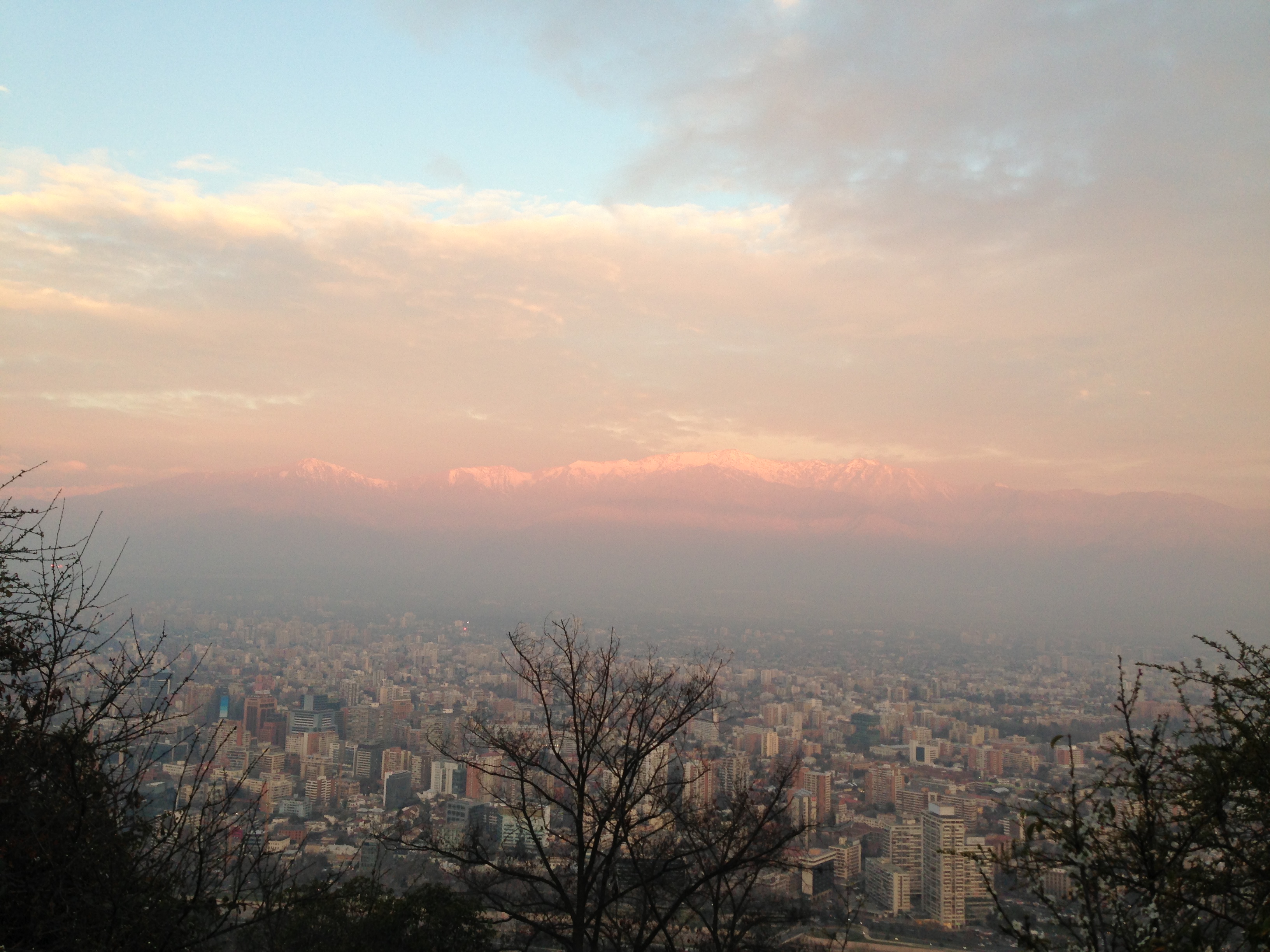
IMG_1743

This is a view of Santiago from the San Cristobal hill. Note the Andes in the background!

It has been incredibly helpful to have this lens. Another student studying abroad in Brazil and writing for the Traveloges for UR mentions how easy it is for study abroad students to be “tourists”. Being a “tourist” is not bad. I am already planning a backpacking trip to Patagonia after the program is over with another friend studying in Valparaiso and I will do as much traveling as I can. That is to say, if you have the opportunity to travel you should take advantage of it. However you should also take advantage of the fact that studying abroad gives students an opportunity to create a lens. It gives students the opportunity to travel not to simply visit places and appreciate their presence in space but to also see what isn’t physically there.

I can feel myself becoming poetic as I sit in the cozy kitchen of Pedro and María on this cold night in Santiago, Chile.

Better to stop now before I start writing of the wisdom of the wind and the courage of the sun or something.

Have a great week everyone 🙂


Rhiannon in India: Connecting with People

August 27, 2013

Namaste mere dost! [Hello friends!]

My trip to Delhi this past weekend was a blast, but I am glad to be back in Hyderabad. In Delhi, the weather was a sticky mixture of monsoon rains followed by hot, sunny afternoons. But back in Hyderabad, the weather is generally cool and only gets up to the mid-80s. It’s nice to be back in a smaller city, too, where we aren’t treated as much like tourists, and people just seem nicer in general. Delhi was a wonderful place to visit, but being in one of the largest cities in the world made me really appreciate the great things about Hyderabad! This week, I have learned a lot about culture, not necessarily through visiting more places, but through engaging with more people in Hyderabad – my host family, my classmates and professors, and my community. Connecting with people here has proved to be a rewarding way to experience India that goes far beyond shopping at markets and seeing historical sites.

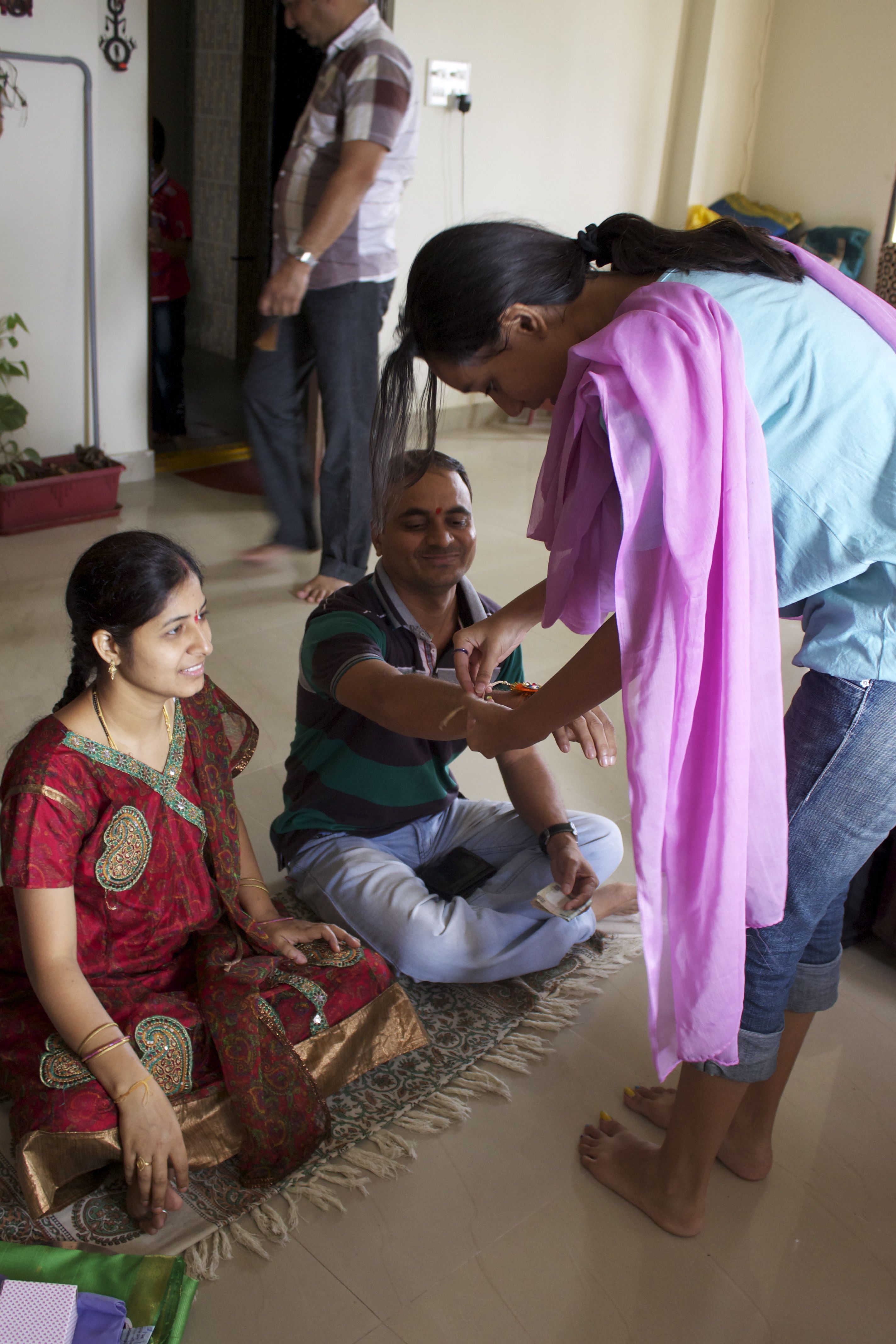
Family Poojah

Prerna celebrating Raksha Bandhan (Sibling Day) with her aunt and uncle

This weekend, Nivedita and Prerna (my host mom and sister) invited us to an event at Oakridge International School, where Prerna goes to school and Nivedita teaches art. The event was called Treasure Fest, which is a vibrant two-day arts competition for many of the schools in Hyderabad. Check out the video for some of the performances!

I also went with four friends this weekend to meet with the founders of Sankalp, the NGO that I talked about in an earlier post. Founders Anita and Sara never fail to inspire me with their dedication to helping Indian women and preventing sexual violence. They explained to us that, because they just started the organization, they are still in a research and development stage. Making connections with other NGOs, the police department, and law firms in the Hyderabad area is the most important task right now because these other organizations will help advertise Sankalp as a contact for victims of sexual violence. As volunteers, we will be researching different areas of this issue in India so that they can use the information for presentations, grants, and education. They gave us research topics on human trafficking, the effect of caste and religion on sexual violence issues, the psychology of a sexual offender, and many more. Because I am interested in law, my assignment is to research and compile the recent movements in the Indian legal system pertaining to crimes against women. Anita and Sara also mentioned that they will be doing advocacy and prevention programs in local slums and encouraged us to tag along when we can! This may not be your stereotypical semester abroad, but I am so excited that I will have the chance to meet tons of people from a variety of backgrounds and, if I’m lucky, do something to give back while I’m here.

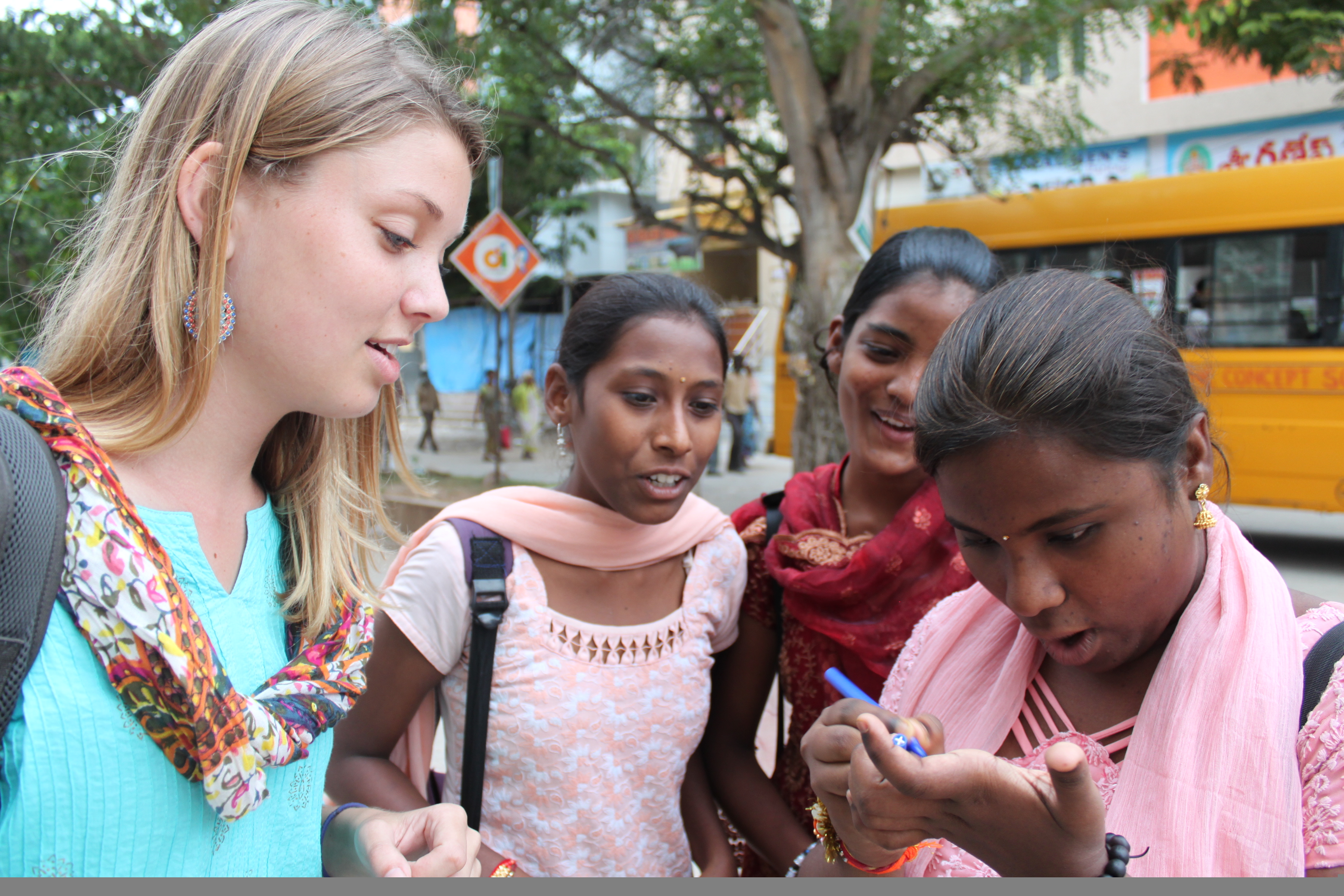
Girls in Manikonda

Meeting some friends in the neighborhood

It is also nice to be back home because the “study” in study abroad has started to kick in. Classes at the University of Hyderabad have been one of the most interesting cultural experiences yet on my trip. I am taking four classes for credit — Indian Philosophy, Technology and Politics, Indo-US Policies, and Basic Hindi — two that are direct-enrollment into the university and two that are classes for international students. I have noticed that Indian students are much more engaged in classroom debate than I am used to at home. Issues of caste, politics, education, Marxism, Indian philosophy, and Western lifestyle are topics that seem to come up in every class discussion, like the students really are thinking about these things all the time. One of my CIEE advisors mentioned at the beginning of the semester that some aspects of India remind her of what the 1960s must have been like in the US. It seems like there is a lot of passion among Indians, especially younger generations like the students at University of Hyderabad, to impact social norms and traditions, whether it be in a positive or negative way. Every week, it seems like there is another forum, rally, or protest on campus that gets students talking about their freedoms. By talking to students in my class, I have heard many different opinions of how students should act while at the university, most of which are compared to their view of “the Western way.”

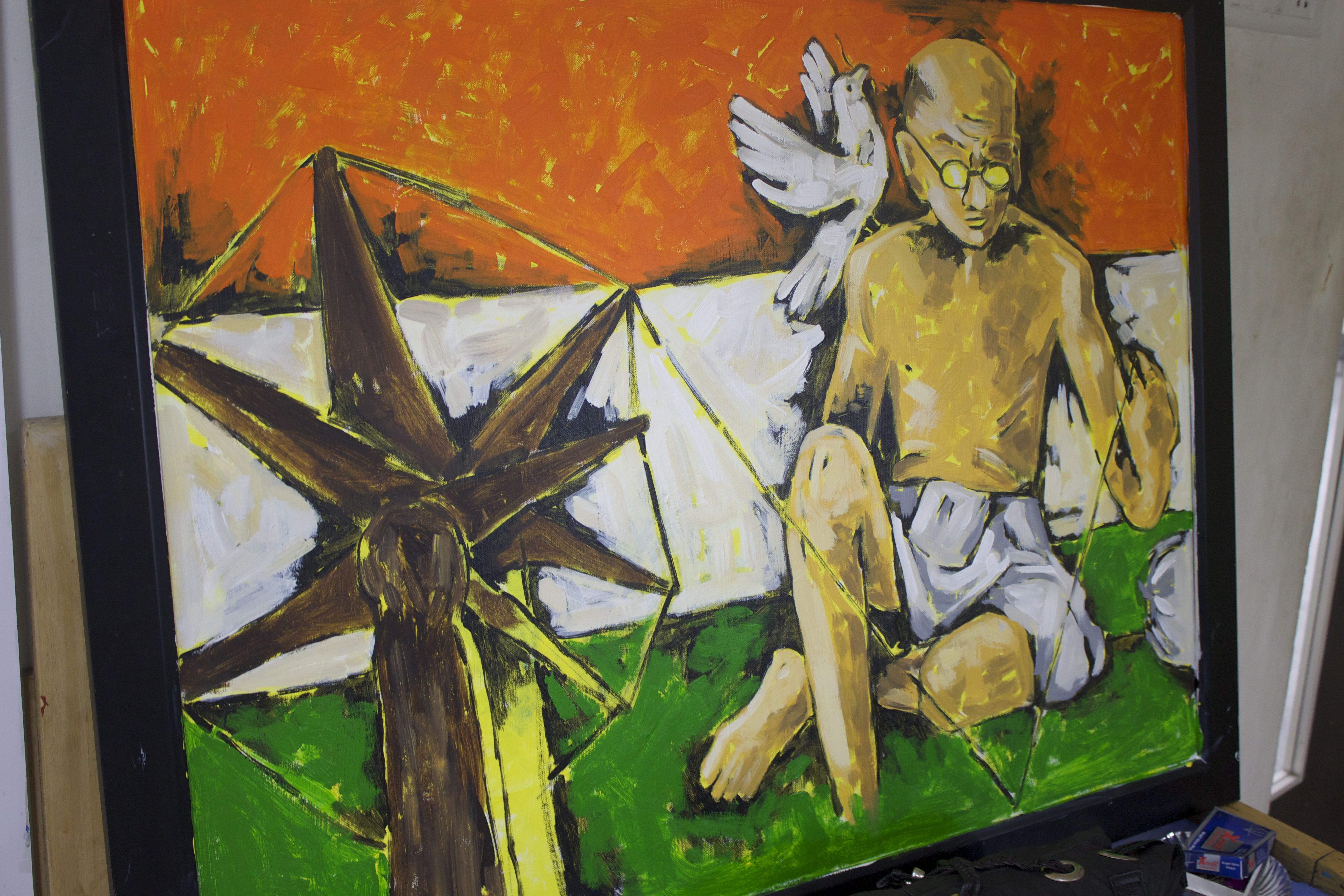
Oakridge Art

A student’s painting in the art competition at Oakridge Treasure Fest

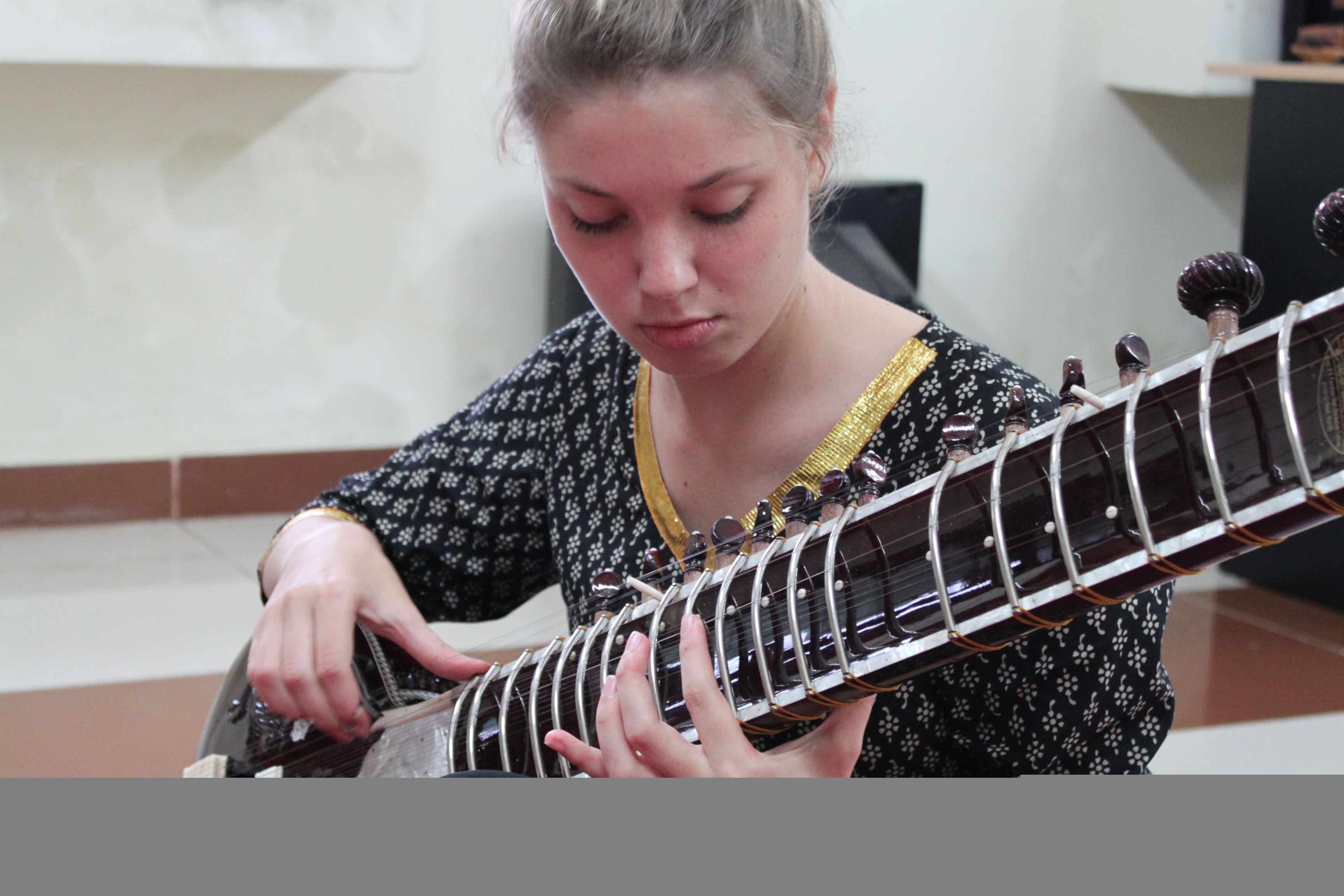
Although my academic classes are interesting, my favorite class that I am here taking is Sitar! I take lessons two times a week with a few of my friends in the CIEE program. I thought it might be similar to playing guitar, but so far it has been totally different. To make it even more interesting, our teacher speaks very little English, so we have to follow along by listening and watching him play. So far we have learned one melody and Happy Birthday, but soon we will start working on playing a piece for the Cultural Show at the end of the semester!

Sitar

Me practicing the sitar


Rhiannon in India: A Weekend in Delhi and Agra

August 19, 2013

After a month in India, I finally had a weekend free to do some traveling outside Hyderabad with my friends! Until now, our weekends here have been occupied by activities in Hyderabad – seeing historical sites, hiking through rocky terrain, shopping in the old markets, watching Bollywood movies, cooking Indian food… But because Thursday was Independence Day here in India, my friends and I took advantage of the long weekend and flew to Delhi! Our program directors were going to take our entire group to Hampi, a historical city in a nearby state, but because of the recent Telangana decision that I talked about in my last post, they decided to postpone our trip to a later date. Although we were disappointed, they assured us that it would be fine to travel anywhere independently as long as we didn’t take roads through the areas of agitation. What resulted from their announcement Monday afternoon was a mad rush to decide what we would be doing to take advantage of this rare opportunity: a long weekend. Within hours of the announcement on Monday, my friends Kate, Romi, Jennie and I had booked our flight to Delhi and were already reading our guidebooks for ideas!

It took hours of last-minute planning, but before we left Hyderabad, we had our travel plans intact and a list of all the interesting things to do in Delhi. We even booked an early 3-hour train from Delhi to Agra so that we could spend Independence Day visiting the Taj Mahal! We left Hyderabad early Wednesday morning and arrived in Delhi with a whole afternoon open to explore. With Lonely Planet as our roadmap for the weekend, we explored the area around our hotel and found a great restaurant that served all-you-can-eat North Indian thali, a to-die-for meal that anyone visiting India must try. For four days straight, we did one thing after another and tried to fit in as many activities as possible. But instead of listing all of them here, I’ll just give the highlights.

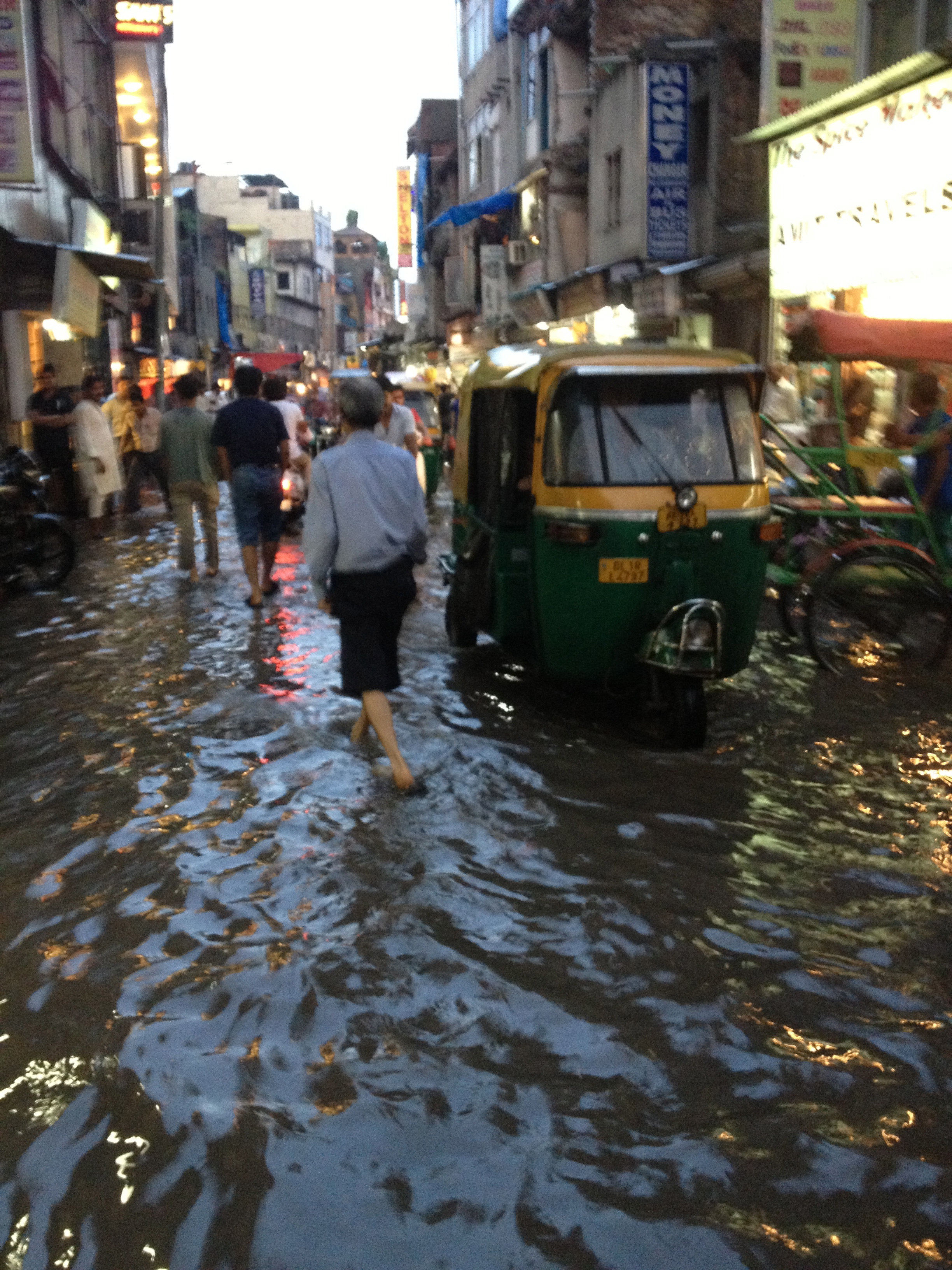
Getting from place to place may be the most mundane part of traveling for most people, but as I have explained in earlier posts, transportation in India often brings new and exciting experiences. During our last dinner in Delhi, we thought back over our 4-day trip and counted at least ten modes of transportation that we had used: planes, taxis, walking, auto rickshaws, bicycle rickshaws, city buses, sleeper buses, metros, sleeper trains, and we added, jokingly, swimming, because the monsoon was so bad in Delhi that the streets were covered in water half way to our knees. Every time we walked to and from our hotel, we had to wade through a “puddle” the size of a football field that poured into some of the shops near the road!

Flooding in Delhi

Flooding in Delhi

The sleeper train was definitely a new experience for me this weekend. When booking a long-distance train in India, there are so many options that choosing can be really overwhelming! You can choose between General (the cheapest option), Sleeper, 3 A/C, 2 A/C, and 1 A/C (the most expensive). You don’t need to book a General ticket ahead of time, but for this reason, you never know what will happen and you may have to stand for the entire trip. Because we booked our train so last-minute, the only option for us (besides the General compartment, which we were advised not to take) was the Sleeper. The benefits of the A/C compartments are that they have air conditioning and that they provide increasing levels of space, comfort, and privacy. When we entered the Sleeper compartment early Thursday morning, we found our “seats,” which actually resembled 3-level bunk beds. We slept the whole way and the trip was over in a snap! I wonder now why all transportation isn’t like this.

Sleeper Compartment

Sleeper Compartment

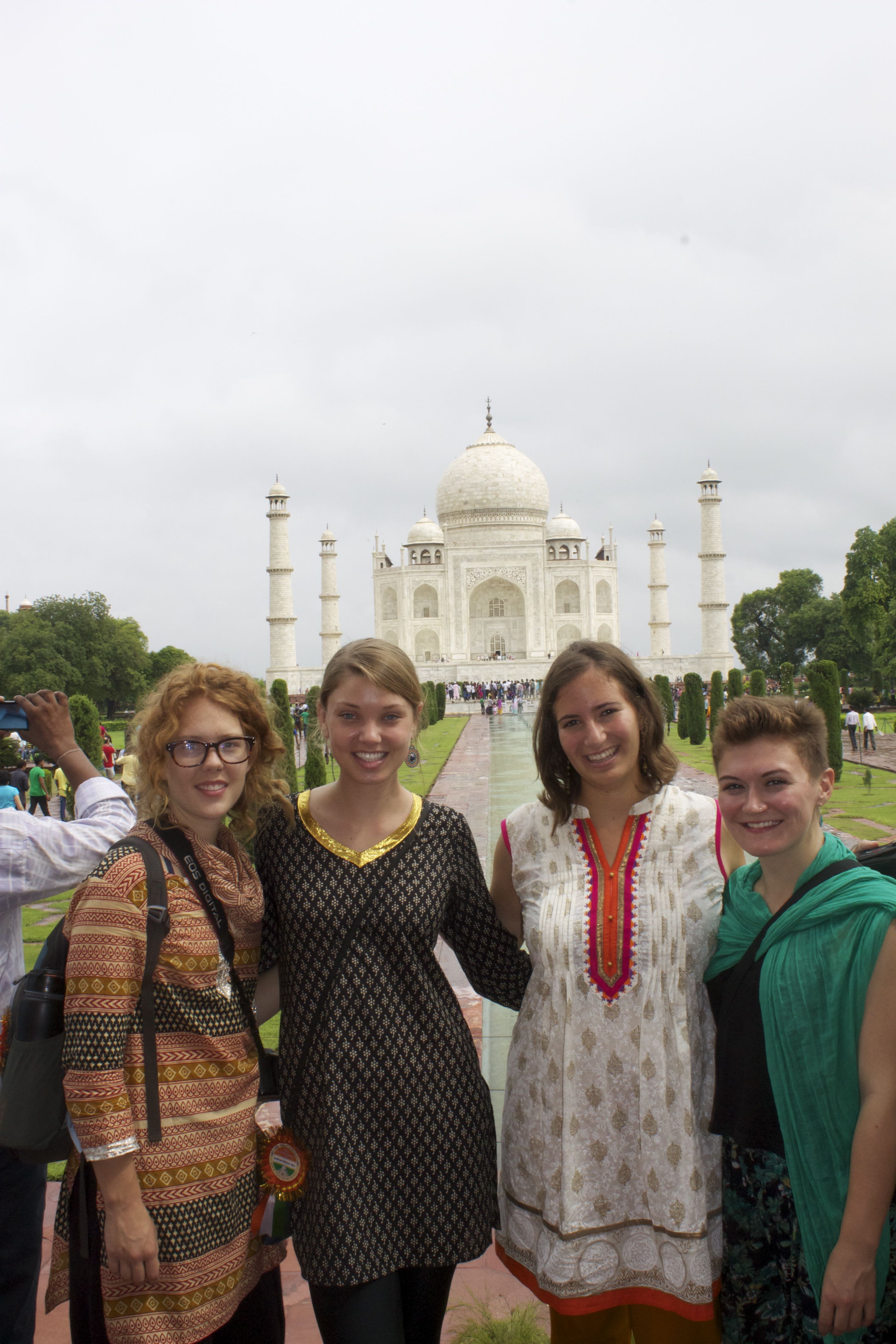
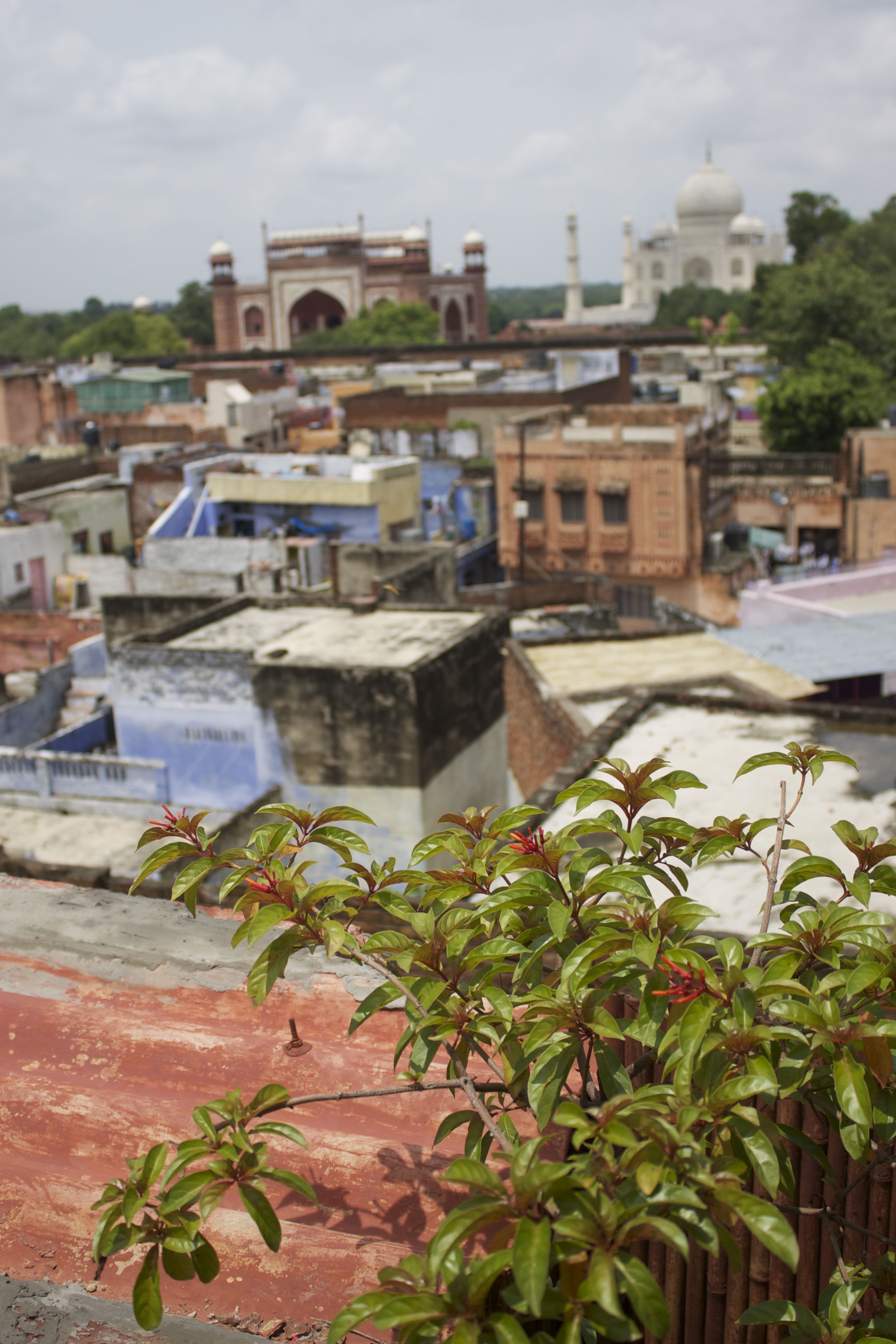
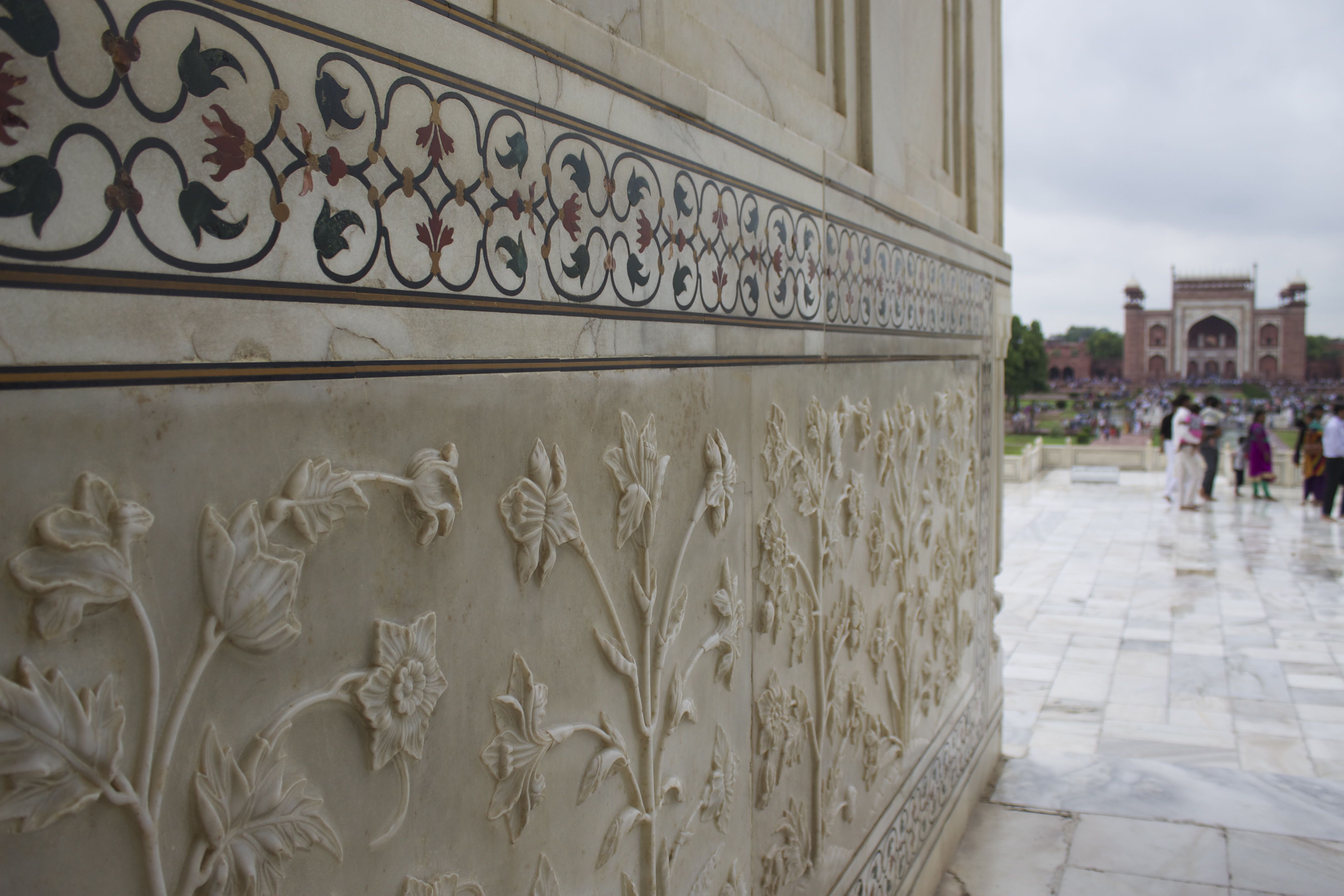
The main highlight of our trip was obviously seeing the Taj Mahal. I was a little skeptical before hand, but the Taj is even more magnificent than I could have ever imagined! Not only is it huge and glowing, but every inch is beautifully decorated with such ornate stone inlay that it is impossible to capture in a photo. We spent a whole morning at the Taj walking around the grounds and taking in the experience of being at one of the Wonders of the World! Our entire trip was a lesson on the history, culture, and religions of Delhi and Agra. We also visited many other magnificent structures in Delhi and Agra – the “Baby Taj,” two Red Forts, the Lotus Temple, numerous tombs of kings and emperors, and many shrines of religious leaders. It is difficult to count all of the sites we visited because many of them were tucked away among residential and market areas.

Taj Mahal

Our group at the Taj Mahal

Rooftop view of the Tah

Rooftop view of the Taj Mahal

Taj Inlay and Ornamentation

Taj Mahal inlay and ornamentation

Baby Taj

Baby Taj

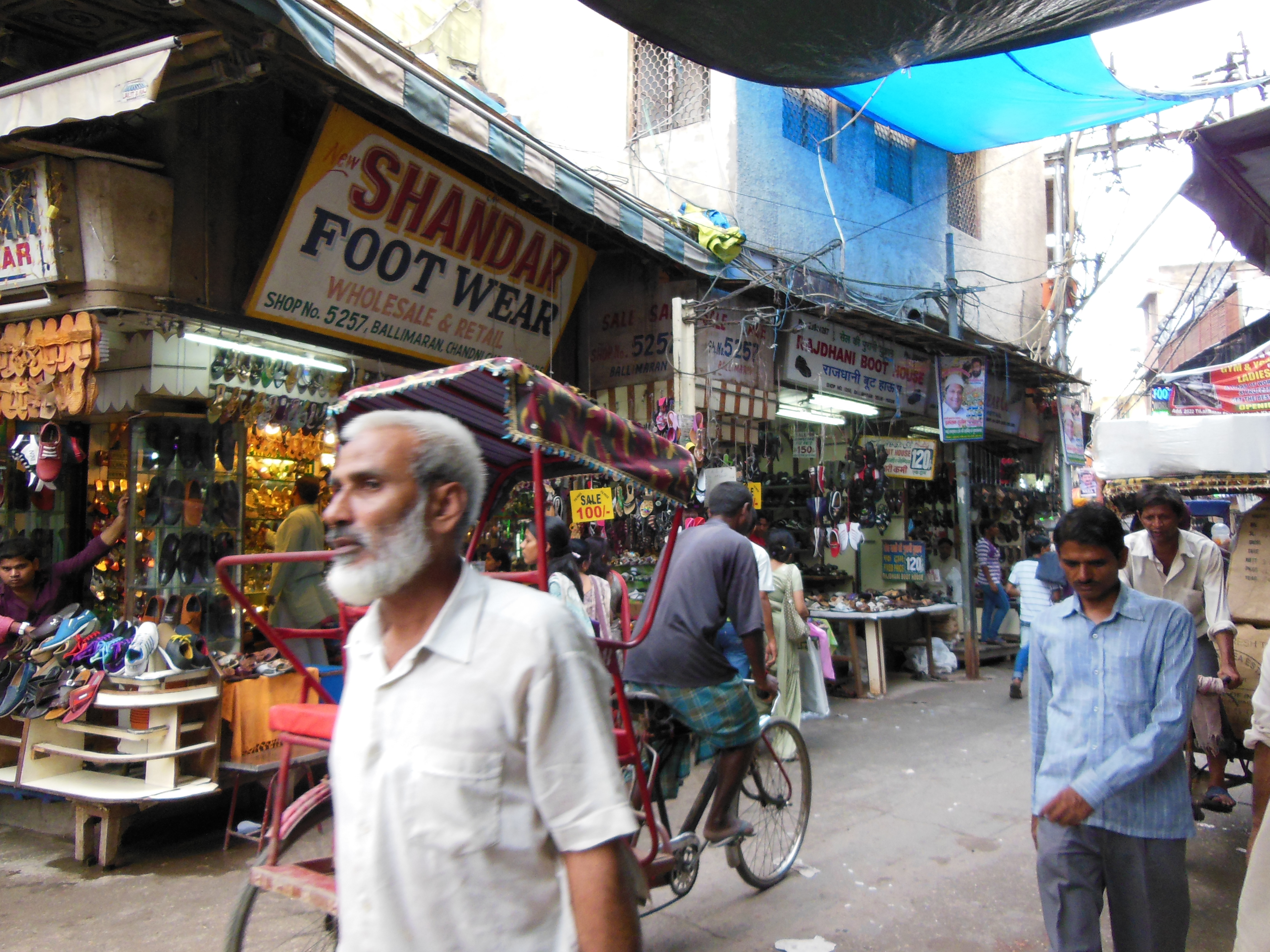
Another highlight of the trip, and the best part in my opinion, was exploring through the markets. On Wednesday, we went to a craft market in Delhi and spent the whole evening wandering through the handmade art and jewelry. On Friday, we went to a vast market called Chandi Chowk in Delhi that is supposedly the oldest running market in all of India. It is called Chandi Chowk, or Moonlight Square, because the Mughal emperor could see the moon’s reflection in a channel running through the market from the Red Fort at night. When we arrived we stayed on the main road, but we soon realized that there were small alleyways branching off in all directions that were packed with a maze of shops and vendors. The best part about the market was that it was divided into sections based on the merchandise being sold. There was one section lined with at least 20 shops selling tea and spices, and another alleyway that had nothing but shoes as far as you could see. We were in heaven!

Spice Market

Spice Market

Shoe Street

Shoe Street

We also visited a market in a Tibetan neighborhood just outside New Delhi. It was so interesting to see the immediate contrast when we arrived in the Tibetan area because it really felt like we were in a different area of the world. The vendors were selling winter clothes and Buddhist items, and the people were even dressed differently. We went to a restaurant and ate a Tibetan dumpling soup called Thenthuk, which was a refreshing change from the Indian meals we had been eating the whole trip.

Tibetan Market

At the Tibetan Market

I am so glad that we made the spur-of-the-moment decision to go to Delhi because the whole weekend was packed with exciting activities, new places, and a ton of good food. Just when I thought I was getting to know India pretty well, I found that North India is a completely different place from Hyderabad. This trip put an image into my mind of India as a patchwork of different cultures. They are all sewn together into one nation, yet each one remains distinct – from north to south, east to west, and even down to the very neighborhood. I know now that it would take a lifetime to experience all of the cultures, places, and people of India, and I am only here for one semester!


Alyssa in New Zealand: Seeing the country

August 9, 2013

It doesn’t take much effort to see beautiful parts of New Zealand. One could even say that it’s not necessary to venture out to the most iconic parts of the country. I haven’t traveled very far from Dunedin yet (four hours maximum), but I am still impressed by everything that I have seen. Each portion of New Zealand has its own kind of magnificence to it; hiking (they call it “tramping”) and camping beyond civilization this past weekend has definitely proved that.

The new adventure began last Friday when Malachi, Andras and Edward (another Kiwi host) and I decided to explore and sight see before we embarked on our weekend tramp. After much anticipation, I finally got to see my first Lord of the Rings movie sites. What surprised me most about them was they were located near such a quaint, remote area called Arrowtown. Walking through the central part of town was somewhat comparable to walking through a ghost town of the Old West. The shops were juxtaposed very closely together consisting of tourist souvenirs such as Maori greenstone (similar to jade, except much more rare and valuable) and The Ring replicas from Lord of the Rings (ranging up to $200).

As we made our way through town, I didn’t see how it would be at all possible to reach the LOTR sites. The area was so small and it seemed like there wasn’t too much to see. However, we figured out soon that we have to venture out a little further to the outskirts of Arrowtown in order to reach our destination. After making our way through open forests, we finally arrived at the area that we were all familiar with having seen the same exact site in the movies several times (it’s typically considered a well-known scene in the movie). You can’t underestimate the potential of anywhere, for you never really know what it has to offer. The fact that this setting for the movie was found near such a humble town convinces me that anywhere in New Zealand beholds some sort of unique aspect. Nothing should be overlooked.

one of the sites where Lord of the Rings was filmed

One of the sites where Lord of the Rings was filmed

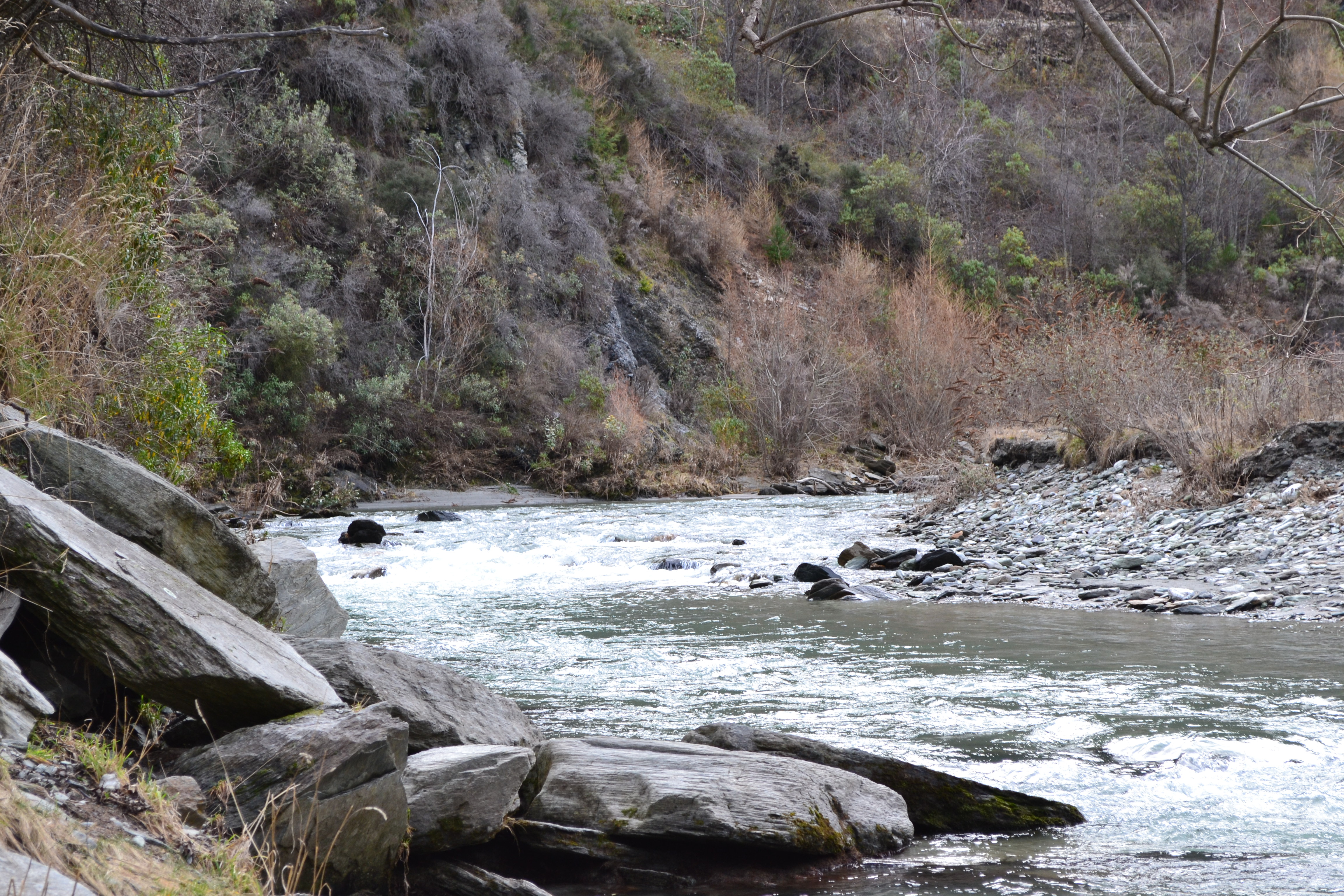
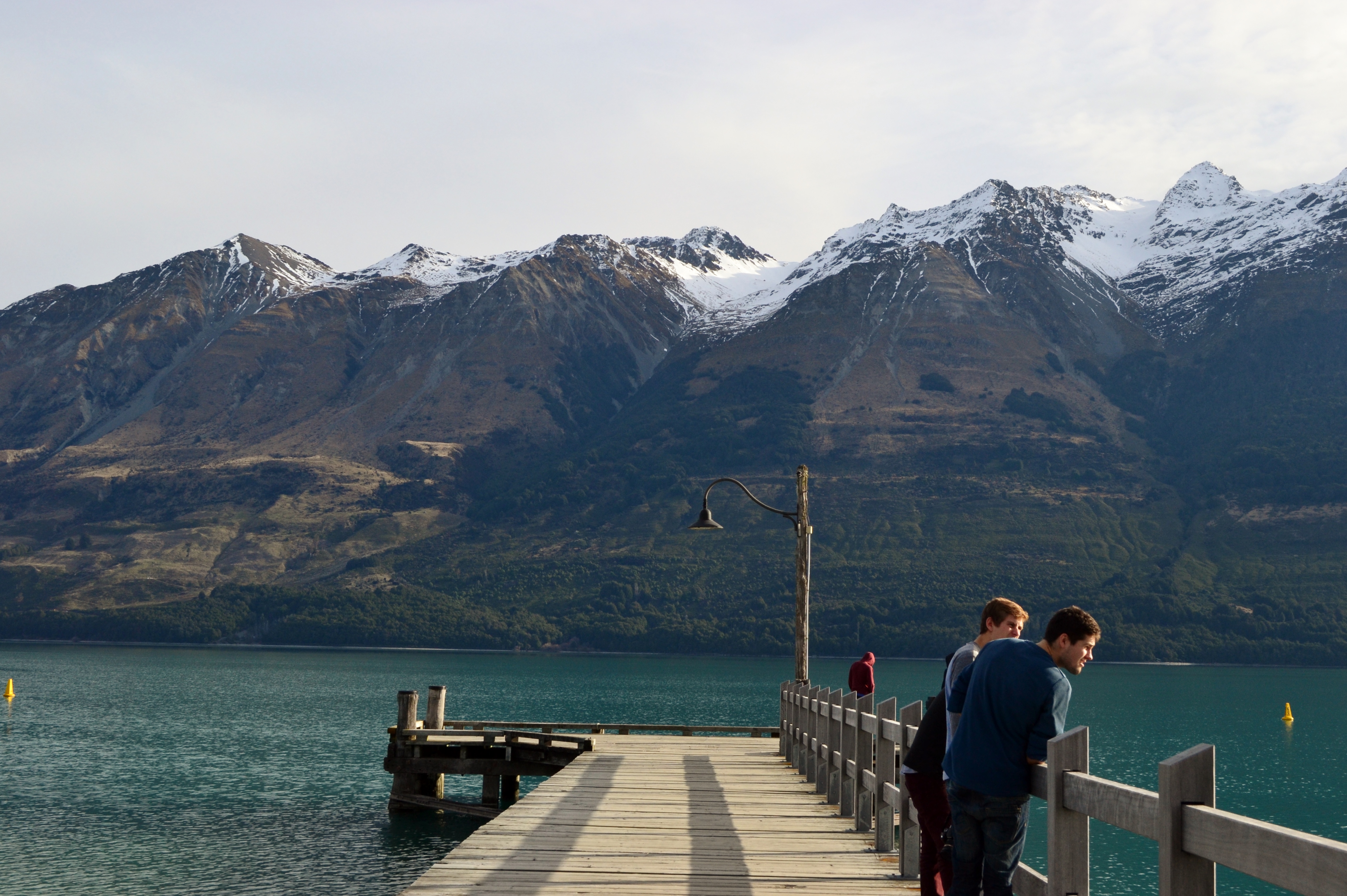
The explorations continued after we left Arrowtown and headed to Glenorchy so that we could access incredible views of the well known Lake Wakatipu. I can safely say that this area has been my favorite so far. It presented a new kind of peace and seclusion. The water was so still that the reflection of the mountains in the distance was highly distinguishable. Even though the sun was beating down hard for the wintertime, the snow on the mountains were barely affected. The entire scenery almost seemed somewhat fake, but I had to keep reminding myself that what I was seeing was not an illusion in the slightest.

A view of Lake Wakatipu on the way to Glenorchy

A view of Lake Wakatipu on the way to Glenorchy

Andras and Malachi looking out at Lake Wakatipu in Glenorchy

Andras and Malachi looking out at Lake Wakatipu in Glenorchy

I finally got a little taste of the Queenstown culture that all other international students have been constantly raving about. I now understand where all the hoopla comes from because the town itself is unmistakably full of life and excitement. Around every corner, there’s always something to do or see. The landmark that we were really looking forward to visiting was Fergburger, a recognized burger bar in New Zealand. Nothing could prepare me for the amount of food that I was about to eat, for it was the largest, yet most delicious burger that I’ve ever had. Andras ordered a burger that was practically the size of my entire head (the Hungarian was quite hungry). For the remainder of the night, we proceeded to take advantage of Queenstown by engrossing ourselves in the animated environment.

The following morning, we made our way to Wanaka in order to begin another adventure. Edward had organized a group of 27 people to hike through Mount Aspiring Park for the weekend. It’s not a well-known trek, but it allowed us to explore the less touched parts of the country. As we made our way to the starting point, we found ourselves driving further and further away from society and becoming more immersed in isolated nature. The mountains seemed to be getting bigger and the grasslands greener. Everything became more exaggerated. When we finally arrived to our starting point, it was clear that we were in a completely new environment.

Mount Aspiring Park

Mount Aspiring Park

The trek to our hut was about 2.5 hours one way. Throughout the hike, rain was coming down and it showed no mercy, yet the wetness barely seemed to phase us. Conversely, the only things that were on my mind were my surroundings. The only thing that the hut provided to us were beds. However, it was soon discovered that the beds were inaccessible due to the fact that the room was locked. Once again, none of us seemed affected by this misfortune, for we weren’t going to let it ruin the trip. Instead, we looked on the bright side and found that each others’ company was all we needed to enjoy our stay out in the depths of the mountains.

The following day, the rain continued to come down for our hike up the Rob Roy Glacier. After our 50 minute ascent, we were presented with a vast glacier and fresh waterfall. We even witnessed two avalanches. It felt so surreal finally seeing nature in action in person. For the first time on the trek, I became phased by what was in front of me.

Waterfall near the top of Rob Roy Glacier

Waterfall near the top of Rob Roy Glacier

I still find myself meeting new people with every experience. Going into the tramp, I knew a total of 8 out of the 27 people. Now that the weekend has ended, I have come out of it knowing at least 15 of those people total. Many of them in the group were Kiwi hosts and international students. After familiarizing myself with them, it’s clear that we all have the same motives. New Zealand has provided much insight into a completely new world and we have only become more motivated to explore it.

Even though we didn’t venture out to the most prominent area of the country, I was still moved by what was surrounding me. There is no doubt that I will eventually see the more well-known parts of New Zealand. However, there is nothing wrong with visiting the unconventional parts of the country for the time being, for they all have something extraordinary to offer.


Rhiannon in India: Classes and a New Home in India

July 25, 2013

This has been yet another crazy week in India because I just moved into my new home stay and started classes at the university! This feels like the real start of my study abroad experience — finally living with an Indian family and going to classes at an Indian university. As I mentioned in my last post, I am staying in an apartment with my friend Jennie and our host family, Nivedita and Prerna. Nivedita, the mother, is an art teacher at a school in Hyderabad, and Prerna, her daughter, is 14 years old and goes to the same school. Nivedita and Prerna have been so kind and welcoming to us. They took us to the zoo on Sunday and drove us around the neighborhood so that we could learn how to get to the bus stop.

View from homestay

The view from my homestay

Homestay room

My room in my homestay

In the mornings before school, Nivedita packs us a breakfast-to-go and we start our commute to campus. Getting to and from school is probably the biggest adventure of our day! After taking the car with Nivedita and Prerna to the Manikonda intersection, a rickshaw to the main road, a bus to campus, and a bike to class, the commute takes about an hour and really wakes us up at 8 in the morning. Although it takes a while, traveling this route every day is an exciting way to see the city and integrate into the community.  Come along on my morning commute in the video below!

Breakfast

Breakfast-to-go!

Monday was my first real day of classes at the university, and so far the classroom setting has been quite a different experience from classes at Richmond. There is no “master list” of classes at the university, so departments and professors schedule classes whenever they see fit – and sometimes change them. Classes generally run for an hour on the hour, so there is no time to get between classes that are back to back. I was late to a few classes on my first day, but it is more common here for students to walk in and out of the room while class is in session. I have noticed that some things in India (class schedules, traffic rules, etc.) are much more relaxed than in the U.S., while there are other social expectations such as respecting the professor and dressing modestly that are much more strict. Because of this, I am starting to realize that when one of my professors said, “India is a nation of paradoxes,” he wasn’t just talking about its many cultures and languages. I am still processing this paradox and haven’t really made sense of it yet, but it seems that both systems work well despite how differently they are approached.

Now that classes have started, I have been struggling to decide how to balance my time in India among school activities, traveling, and volunteering. University clubs and volunteer groups have a large presence on campus here, and I hope to meet other students by joining something soon. I am also planning to take sitar lessons, which should start within a week or so.

Luckily, I don’t have class on Fridays so I will be able to travel to new places in India on the weekends. There are many cities in South India that have been recommended for weekend trips, such as Hampi, Goa, and Mysore to name a few. But since the majority of India’s vast population is rural, an Indian experience would not be complete without visiting a village or two along the way. Unfortunately, many of the great destinations in India are in the north, which are just too far away to visit during the semester, so I’ll have to wait for a long holiday weekend or until exams are over in November. It is impossible to see everything in such a diverse country in only five months, but I hope that in my short stay I will have a chance to see Darjeeling, the Taj Mahal, Varanasi, and Delhi.

I have also been thinking about volunteering for an NGO in Hyderabad called Sankulp. Sankulp works with victims of sexual violence in Hyderabad and supports them through the court process, therapy, and finding safe housing. As a more preventative measure, the organization also goes into schools to educate young girls and boys about sexual violence issues. The women at Sankulp are documenting the stories of the victims they meet, so I hope that I can get involved by transcribing these stories into English for a book they hope to publish in the future.

Looking back over the past two weeks, I am astounded at how much I have seen and experienced. Now that I am settling in, things such as navigating, haggling, and communicating that used to seem impossible are now getting easier. I know that I will always look like a foreigner here, but I hope that by the end of the semester I will be able to live like a local in Hyderabad.

Mera blog padhane ke liye shukriya!  [Thank you for reading my blog!]


Back Home: End to a Great Adventure and a Million Memories (posted by Indira in South Korea)

July 8, 2013

I honestly can’t believe I’m back home. When the plane touched down in Frankfurt and I was finally in Europe, I felt weird. It is then that it hit me that my South Korean adventure was over. Last four months have been absolutely amazing and I’ve enjoyed every single bit of it: Trips, friendships, food, classes, culture, history, tradition, but also sleepless nights I spent with the people that have made my last semester as great as it possibly gets.

The morning I left Korea I said goodbye to the people I shared so much with over the past four months; people I got to know so well in such a short period; people I hope to stay in touch despite the fact I won’t be seeing them on a daily basis any longer. Choosing South Korea as my study abroad location for the spring semester was a great decision, no doubt about that. In fall 2012 I studied abroad in Sweden and I already had what I thought to be the best semester yet. When I decided to go to Korea in spring instead of staying in Sweden for a year many were surprised especially since they knew how much I came to love Sweden and my experience there.  To be honest, I was very anxious to see how my semester in Asia would turn out to be. I choose a country I knew almost nothing about and didn’t speak the language, but also a country that was so different compared to my previous experiences. The beginning was rough: Getting used to the new culture where modernity and tradition meet, making new friends, getting used to the new system of classes and teaching style – it was all a challenge. I was, however, more than happy to embrace that challenge and make the best out of it.

It was the embracing the unknown and enjoying the adventure that made my semester in Korea so amazing. Oftentimes I’m asked whether I liked Sweden more than Korea. To be honest, I like them both equally! The two semesters I had were so much different in so many ways and yet they were both so amazing. Each was the best in its own way. I find it amazing how much I’ve grown over the past year I spent abroad and how this year came to shape my personality in a slightly different way than before. I am more self aware of the world, more patient, more flexible and easy to adapt, but I’m also richer for so many new experiences and amazing memories.

My semester in Korea will always be one of the most amazing experiences in my life. I got to live in a big city of 10.6 million people, try all these different dishes, experience Korean and Asian culture firsthand, and travel. I also find it fascinating how little I knew about Korea before going there and how much I know now: All my classes were focused on Korea and I learned a lot about this country socially, historically, demographically, economically, as well as about the relations between Korea and other countries. The best thing was learning about the country and then seeing it all unfold in front of  my eyes: I would learn something about Korean history and a short subway ride would take me to a museum that would add colors to the pictures in my head. I really enjoyed that kind of learning.

Discovering Korea was also amazing: I got to travel all around Seoul, Incheon, Muuido Island, Busan, Jeju Island. All of these places gave me a different perception of Korea that together formed a perfect image about the country I had such a hard time leaving.

A week-long trip to Cambodia was undoubtedly one of the most amazing things I ever have – and possibly ever will – experience. This country in the southeastern Asia with high temperatures and humid air was something I’ve never seen before: Riding elephants, admiring centuries old temples, riding tuk-tuks, and exploring the part of the world I never even thought of visiting. Visit to Cambodia is definitely one of the highlights of my year abroad. Actually, this entire year has been one big highlight and I am so happy I took the chance to spend it abroad.

Possibly the most important part of the semester in Korea are the people I met: My core group of friends, my classmates, my roommate, my Korean friends, my mentor, my language exchange partner, all of them are a reason behind everything great that happened in Korea. Now I know I have friends all over the world, friends I can rely on even if I’ve known them for merely four months. That is the beauty of the study abroad – people bond and create friendships really fast. But that is also the saddest part of it all: Leaving is so much harder when you know that you might never again see some of the amazing people you met. It is all, nonetheless, an important aspect of study abroad.

I can only wholeheartedly recommend Yonsei University and South Korea to any student interested in study abroad. Regardless of your major (Yonsei is a big university and it offers classes in English in a wide range of subjects), weather preference (it can be both hot and cold in Seoul), or size of the city (Seoul is a big city, but you can always find that little street or the part of the city that will just about fit your preferences) Korea won’t disappoint. I promise. I was very skeptical in the beginning and now I can’t wait to visit Korea again. So many great things await students and visitors in this city: Technology is everywhere, cafes too, the food is amazing, it is easy to travel around (just make sure you get a T-Money card and the subway is all yours to explore and use), people are so warm and hospitable, culture and tradition is breathtaking.

I will miss you Korea. Actually, I already do.

Seoul

Farewell Seoul – Thanks for a great semester!


Alyssa in New Zealand: Arriving, Orientation

July 8, 2013

It is important to not let fatigue and uncertainty overwhelm you when you’re trying to figure things out. While being forced to completely revise my entire itinerary due to several flight delays and issues, I reminded myself to not let stress overcome me. Right from the moment I stepped off the plane in Auckland, everything started to happen so quickly. I felt somewhat foolish walking around the airport with all of my luggage, but there were at least fifteen other people that were in the same exact boat as I was. After going through customs, I had to be redirected to another flight, for I had missed my last connection to Dunedin. This put me very behind schedule…to say the least.

Instead of taking a direct flight to Dunedin, I had to fly to Queenstown instead and then take a 3.5 shuttle bus ride to Dunedin. The other option was to take a direct flight to Dunedin nine hours later. At that point, I just wanted to get to my final destination. It seemed as if the first option seemed to be the most efficient one. That being said, I sprinted to the gate and boarded the flight to Queenstown.

In the end, my decision turned out to be the wisest one. The two hour flight barely seemed like two hours long, for my eyes were glued to the window the entire time. This must be the scenic route, I thought as we flew, but it was just a typical course. I watched the geography of the country become a reality. As the plane entered the south island, I became anxious to see more of the country. The surrounding mountains of Queenstown were extraordinary. The closer the plane came to landing, the more impressive and surreal they became. I hadn’t even walked off the plane and I was already significantly impressed by what was before my very own eyes. Once we landed and the doors of the plane were lifted, a small wave of brisk air hit my face almost immediately, indicating that it was winter.

I was even more awed by the scenery from our shuttle bus ride to Dunedin. The rolling hills and vast lands were nothing like I’ve ever seen. Pictures could not do it any justice, no matter how hard you tried (I was unable to take any because my phone was on its way to dying and my camera was inaccessible. Besides, the driver’s driving was quite reckless in a way that made it difficult to stay stabilized and get a decent image. Although I do admit, the roads were fairly hilly and windy due to the geography).  I began to appreciate winter in a completely new way.

And never before in my life have I seen so many sheep. Left and right, hundreds of them were grazing. I must have seen at least 2,000 throughout the duration of the drive (that’s most likely an underestimate). Apparently, there are approximately 60 million sheep in New Zealand, which is 15 times the amount of people.

I was overcome by my first surge of nervousness once the shuttle driver dropped me off at my address. I didn’t see my house instantly, which concerned me. So there I was standing out all alone in the streets of Dunedin with all my bags in the darkness and cold air. Fortunately, it only took three minutes for me to figure out that I had to walk down an alley to get to my flat, making it a slightly more secluded area.

As I opened the doors of my new home, a wave of housewarming smell overcame my senses. Lucky for me, my Kiwi host, Jenny, was currently in the process of cooking my flatmates and me a home cooked meal, which consisted of my first New Zealand lamb and vegetables. My flatmates, Erling from Norway and Andras from Hungary, were all there to greet me as well. I don’t know what was more shocking to me: the immediate welcoming nature of the flat or that it felt like 11:00 pm when it was actually 7:00 pm.

ALyssa home

My new home in Dunedin


Alyssa room

My room

Many of the Kiwi hosts have done their best to make all the international students feel at ease throughout the first week. Since a majority of the international students live in close vicinity, it is a very tight knit community and it has been easy to become close with one another. My friend Lee is a one minute walk from my flat, so it’s nice to have a familiar face very close by. Everyone has come to New Zealand for many different reasons and interests; yet, we all have the same intention of getting out and wanting to see the country. Whether it be a potluck dinner or a party, different flat areas will host events almost every night, inviting everyone in the area, for the Kiwis genuinely want to meet and befriend as many people as they can.

Orientation has been fairly simple and straightforward so far. There was a two hour meeting the first day, providing the basic, important information to all the students. Following that, everyone had to go through Course Approval, which required students to obtain all of the necessary signatures from professors in order to officially enroll for their class. This semester, I will be taking Evolution, Microbiology and Musicianship Skills (for my General Education Visual Arts requirement).

I’ve had many chances to walk around the city of Dunedin in the past few days. I was not expecting the surrounding area to be so busy and urban-like. It is very different from what I’m used to, but I’ve adapted to this new way of living without difficulty and I enjoy it. The only thing that I find challenging is grocery shopping and making my own meals, for I was a never a chef to begin with (Erling likes to give me a really hard time about my poor cooking skills, which really helps support the American stereotype, sorry). Regardless, everything I need to live is easily accessible and a simple ten minute walk away.

Dunedin

Dunedin!

It feels strange celebrating the Fourth of July outside the United States. It’s difficult to honor America when you’re surrounded by people who are currently oblivious to this holiday. I’m sure that they are aware of what the holiday is. But if they were reminded that today was the day, it would just be passing information to them. To have no parades, cookouts or fireworks on the Fourth of July just seems so out of the ordinary to me. But then again, I’m in a a different world. In New Zealand, Independence Day isn’t on their calendar.

Instead of sitting on the shores of the harbors of Boston and watching the fireworks jet off into the night sky, I found another way to celebrate the Fourth with all of the other Americans that are here. After all of the Independence day festivities that took place here in Dunedin, I figured that it’s not necessary to be in the United States to celebrate the holiday. Leaving home and getting over here was quite gruesome and hectic, but so far that journey has definitely been worth it.