Jackie (Not) in Switzerland: Spring Break!

April 16, 2015

You have not done spring break until you have done spring break in Europe. A few weeks ago, all of my friends at Richmond were on Spring Break – at the beach in warm, sunny weather. Meanwhile, I was still wearing a winter coat here in Lausanne. But it was all worth it. For my Spring Break in Europe, I went to Nice, Monaco, Venice, and Milan and they were all amazing!

I am always happy to be back in France, and Nice was the perfect place to go. Heading from the cold temperatures in Lausanne and seeing people in bathing suits on the beach in Nice was a huge shock! I had another one of those “wow I am really here” moments as I took a nap on the beach on the French Riviera (!!). Other than the amazing weather, the city itself was incredible. It was definitely a touristy beach city, but it was very clear that only the wealthiest people actually vacationed there. I am proud to say that I had the time of my life, even living on a student budget.

This picture of the Cote d’Azur is iconic, I couldn’t believe how blue the water was!

This picture of the Cote d’Azur is iconic, I couldn’t believe how blue the water was!

While we were in Nice, we decided to head to Monaco for a day to see the Monte Carlo and more amazing clear blue beaches. While we thought that Nice was a city for the wealthy, it was nothing compared to Monaco. Everywhere we turned, there was a new luxury car or limousine. Every building looked like a palace, and the stores were all the best European designer brands. I’ve decided that I need to live there one day. I think my love for Monaco was quite apparent to my friends, as I repeatedly explained how I would become the future Princess of Monaco (let me dream!)
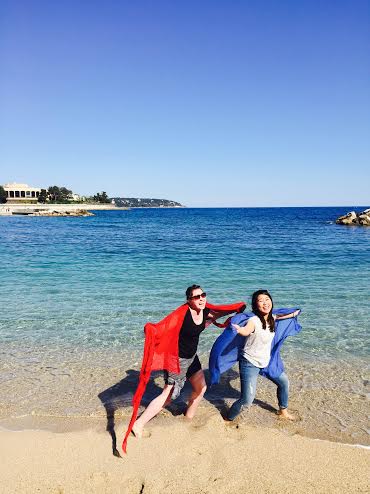
 Ayumi and I decided to recognize the fact that we were in one of the classiest cities in Europe. This was the result. Very mature.

Ayumi and I decided to recognize the fact that we were in one of the classiest cities in Europe. This was the result. Very mature.

After visiting Monaco, it was time to head to Venice. Before coming to Europe, Venice was the one city that I really wanted to visit, so I was unbelievably excited to see the city! I arrived at the airport and had to take a water taxi onto the island of Venice, which was one of the coolest things ever. What other city has water taxis and waterbuses? My friend and I stayed in an old, traditional Italian building that had been converted into a hotel, and that experience was amazing! The whole city felt so lively and filled with history, and there were hardly any modern buildings.

In Venice, it is hard to get anywhere. You need to take a boat to get to the mainland, and you can only get to some places on the island by boat. Still, it was an amazing place to visit

In Venice, it is hard to get anywhere. You need to take a boat to get to the mainland, and you can only get to some places on the island by boat. Still, it was an amazing place to visit

Of course I had to be a super tourist and take a gondola ride in the Grand Canal. Even though I knew I was WAY overpaying for the experience, it was totally worth it! We got to see a lot of the city from the water, which was a completely different experience than seeing it from walking around! Our gondola driver didn’t sing to us (which was probably for the best), but my gondola experience was amazing nonetheless.

The gondola ride was actually my favorite part! It was so cool to see the city from the water.

The gondola ride was actually my favorite part! It was so cool to see the city from the water.

After Venice, we made it to our last leg of the trip; Milan. This city was so totally different from Venice with its modern skyscrapers and sleek, new buildings. It was definitely the most cosmopolitan city that I have been to recently, and the change was nice.
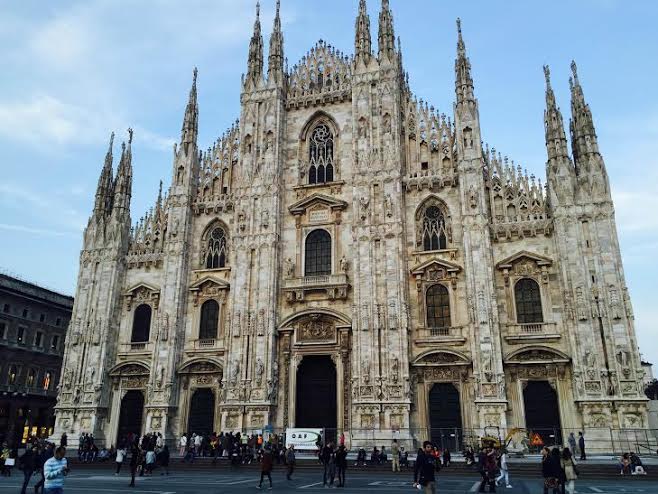
We climbed all the way up to the top of the Duomo, the church in the center of town. The view was amazing and we spent about an hour just lying on the roof of the building.

We climbed all the way up to the top of the Duomo, the church in the center of town. The view was amazing and we spent about an hour just lying on the roof of the building.

As the fashion capital of the world, there were plenty of designer stores throughout the city. Prada was begun in Milan, and this is the first ever store!

As the fashion capital of the world, there were plenty of designer stores throughout the city. Prada was begun in Milan, and this is the first ever store!

And now for the bad news. I was being the most American tourist in the world, eating a snack in McDonalds. A few girls came over to our table asking for food or money and it was shortly after they left that I realized that my phone was missing! I went through the whole trip feeling like a savvy traveler, not falling for any of the tourist traps that would make me a target for pickpockets. In the end, I really was *that* tourist that doesn’t notice that their phone was stolen. I never thought that it would actually happen to me, and I thought that I would be smart enough to recognize what was happening, but it really is so easy to get caught off guard. I reported the theft to the police (who were DEFINITELY sick and tired of hearing of phone thefts from American tourists), but I know that my phone is gone.

I think that I handled my first pickpocketing experience pretty well, with minimal tears, but it still feels horrible to feel like something was taken right from you. In the end, the process of getting a new phone hasn’t been too stressful, so I really am just lucky that I didn’t lose anything more important!

In addition to the theft, our train home was almost 2 hours late and I didn’t end up getting home until 1am on Sunday night (before my 10am Monday morning class). Needless to say, I was so overwhelmingly happy to come back home to Lausanne! I really missed being ‘home’ and I’m really excited to spend some time going back to normal life with school and friends.

P.s. There was a slight delay in this post because while I had all of my pictures of my trip all planned out, they were all saved on my phone! I’m crossing my fingers and hoping against hope that all of pictures were somehow miraculously saved onto iCloud even though I have no clue what that even really is (I am clearly a tech genius). Stay tuned for the verdict on the state of my pictures, but for now, special shout out to Ayumi for letting me use her pictures of our trip!


Becca in Hungary: Trying to Find my Way

January 27, 2015

I have been in Budapest for two weeks, and mainly I have worked on finding ways to get around the city. Growing up in Ohio, I was not exposed to public transportation, so trying to figure out the public transit here as been a learning experience. Budapest is equipped with trams, buses, railways, and metros which makes the city easy to navigate.

As I practice navigating the city I have also seen many beautiful sites! I am sure I will say this thousands of times, but Budapest is truly one of the most beautiful cities! Budapest consists of a unique blend of modern and classic architecture. Because Budapest has been under the control of the Roman Empire, the Ottoman Empire,  Austria, and the Soviet Union, all of these countries and cultures have left an interesting mark on the landscape. For instance, during the invasion of the Turks many bath houses have been built throughout the city. Today Budapest is known for their array of baths and spas. Yesterday, I was able to soaked up the warm water in the Szecheny bath, a popular outdoor bath. The baths are an awesome way to wind down after a day of class, and hang out with some friends.


The Szechnyi Baths in the Center Park"

The Szechnyi Baths in the Center Park

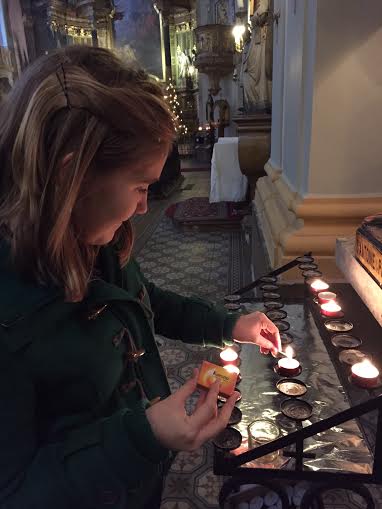
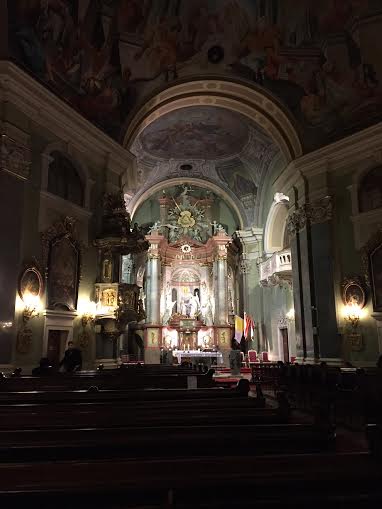
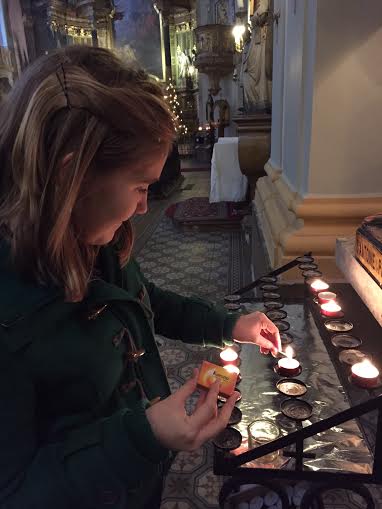
Another thing I have enjoyed in the city is the plethora of churches. Growing up Roman Catholic, I have a tradition of lighting a candle at each church I visit as a prayer to bless my travels as well as my wonderful family and friends that have allowed me to make the travels possible. While in Budapest I have been able to visit three beautiful churches. Each one provided a safe haven for me to reflect on all my blessings. My goal for the trip is to be able to visit all the Catholic Churches in Budapest. So far I have a good start!

Lighting candles at various Churches in Budapest to give thanks for my family and friends.

Lighting candles at various Churches in Budapest to give thanks for my family and friends.

unnamed-1

unnamed-2

unnamed-3

Because it was raining during the weekend I stuck to mostly indoor adventures. The main things I visited were the House of Terror and the Parliament building. The House of Terror is a museum that displays what Hungary was like under communist rule after WWII. After WWII Hungary was placed under Soviet Union control. The Soviet Union were extremely cruel to the Hungarian people and killed anyone that tried to defy their rule. I found this museum to be extremely thought-provoking and emotional. It blows my mind that the violence inflected on the Hungarian people was not only so recent but also so wide-scale. For almost 50 years the Hungarian people lived in fear, and it wasn’t until 1990 that they were able to gain independence. By visiting the Parliamentary building the next day, it made me realize how far Hungary has come and how hard they have fought for their independence. I am excited to continue to learn more about Hungarian history!

Pictures of the Parliament building. Much of the building had to be restored after being attacked during WWII.

Pictures of the Parliament building. Much of the building had to be restored after being attacked during WWII.

This weekend I am looking forward for my program to actually start. As stated previously, I am currently enrolled in an independent language school. The language school has been a great way to learn Hungarian and begin to learn more about Hungarian culture. My actual program begins on February 2nd and this weekend will be the program’s orientation. Be on the look out for updates about the official start of my program!


Diana in Copenhagen: Final Reflection

January 5, 2015

As I sit and write this from my bed in Massachusetts I can’t wrap my head around the fact that I’m home. After one hundred and twenty eight days, thirteen cities, ten countries, four classes, and countless memories, my time abroad came to a close and I could not be more grateful for the experience.

As I look back on the semester I decided to revisit some of the questions I asked myself before embarking on the adventure. I was unsure about living in a single room for the first time in college, but doing so certainly had its perks. I liked having my own kitchen and not having to work around someone else’s schedule, but I’m not as concerned as I was about having to go back to having a roommate in the future. As much as I liked living alone, having a roommate can be a lot of fun and it’s nice having someone to hang around with all the time.

I was concerned about Copenhagen being so expensive, and it really is, but I like to think I handled my budget well. I became pretty obsessed with saving money on day-to-day items so I could instead spend on things like traveling that were more important to me. This meant shopping at the discount grocery store for only the cheapest items, cooking in for nearly every meal, rationing instant coffee, and not buying many souvenirs. I also saved a lot of money on public transportation by having a bike. I’ll be honest, it was hard to part with my bike, Gwen, but I sold her at a good price causing it to only have cost me $32 for the entire four months. I feel like I got much more value out of putting my money towards experiences over material goods, and think that contributed to a much fuller and happier experience.

One last thing I voiced concern for in my first Travelogues post was how my directionally challenged self would manage getting around a city. While I’ve gotten slightly better in this arena, I would be lying if I said I was much more capable now. I decided to purchase a phone plan in Denmark providing lots of data, so I sadly still used Google Maps as a crutch to get around. I didn’t have phone service when traveling though, so I did do better job navigating from memory and by using with good old fashioned maps out of necessity.

Beyond these few concerns, my semester abroad made me exponentially more independent, which is best evidenced by my final trip of the semester. Since I wanted to book my Copenhagen flights round trip, I picked a date to fly home before knowing my finals schedule. As it turned out, I had enough time between my finals and my flight home to take advantage of the ease of European travel one last time. After failing to find someone to travel with me though, I decided to take a chance and book a trip to Spain alone. You might remember I traveled alone in London, but Spain was different, considering this time I had no one to meet up with when there. As the trip neared closer I started to get pangs of regret thinking I should have just pushed my return flight up a few days, but now I am so happy I followed through.

Beautiful benches at Plaza de España in Seville

Beautiful benches at Plaza de España in Seville

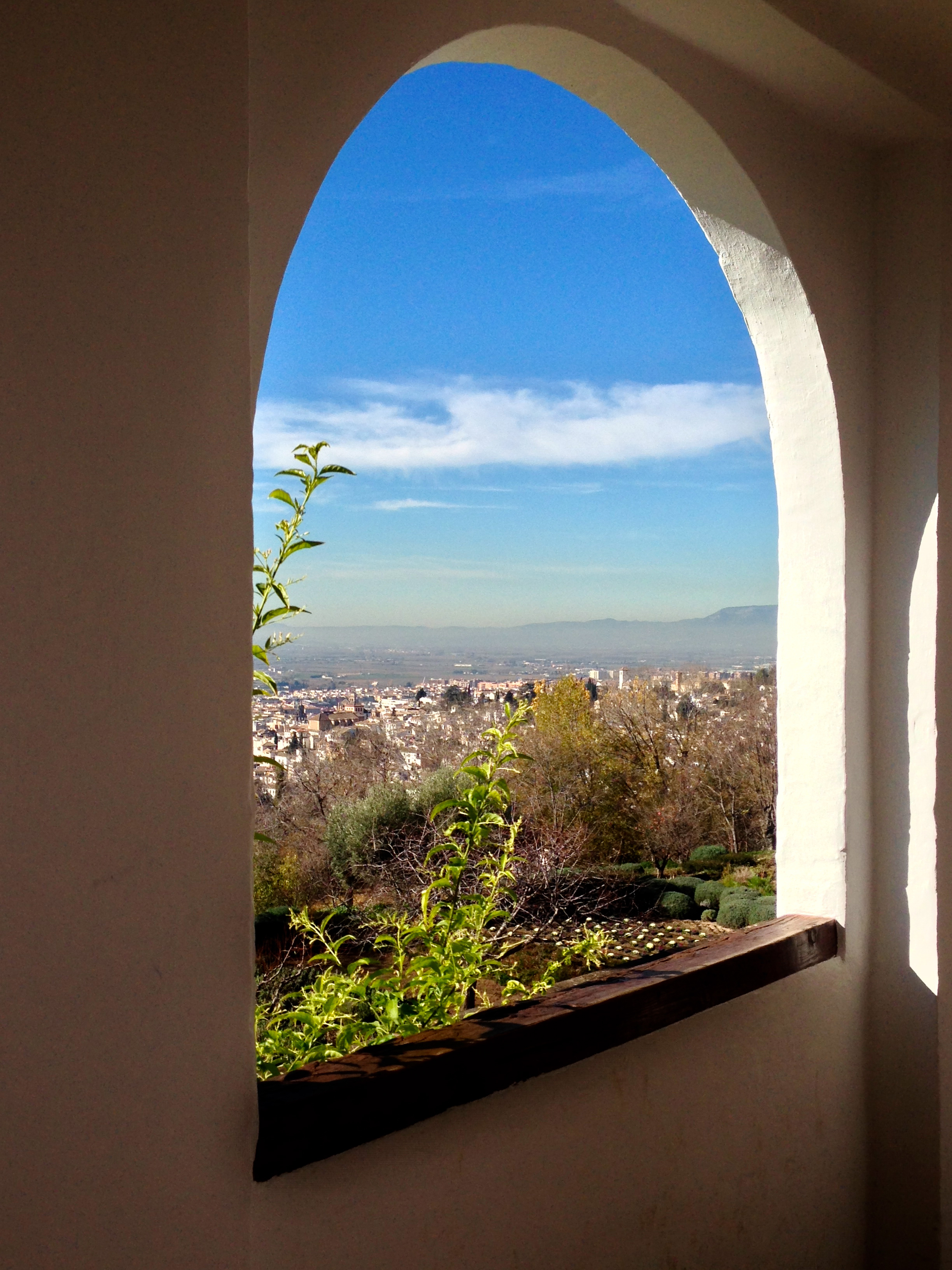
A view from the Alhambra in Granada

A view from the Alhambra in Granada

The trip was the perfect culmination of my experience abroad. It forced me out of my comfort zone more than others had because I was completely solo, had few things planned since I lacked time to do so during finals week, and had a language barrier to deal with. While this trip was indeed more challenging than others, being by myself made me deeply appreciate everything I saw and let me reflect on everything I’d done in the four months leading up to it too. I was able to be more observant, think about and process things on my own time, more readily meet other travelers, demonstrate the highest degree of independence, and do everything I could to appreciate a culture different from mine for the last time before coming home. Comparing this trip to my others, especially my solo trip in London, made me realize the true growth I’ve undergone from living abroad. In a post from a few weeks ago I wrote about using my little notebook to not feel uncomfortable when eating alone. I brought the same little notebook to Spain and put it to use again, but for a different reason this time. While having tapas alone one day in Triana, a neighborhood of Seville, I wrote, “This time I’m writing in the notebook while sitting alone not because I feel awkward, but because I don’t want to forget a single thing.” Being alone that day in Seville was probably one of my favorite days abroad, and it made me realize how far I’d come in such a short time.

Diana food
While the trip to Spain was an amazing way to culminate my experience abroad, the entire four-month span I was away had a profound effect on me. There are many reasons why I’m happy to be home, but am forever grateful for the friends, lessons, and memories from my semester in Denmark.

Thank you all for reading. Farvel!

Me, at the Alhambra in Granada

Me, at the Alhambra in Granada


Jack in Czech Republic: The Case Against Traveling

December 16, 2014

So far I have only traveled to Ireland, Krakow, Munich and two additional cities in the Czech Republic. “What do you mean only!?” you ask. Compared to a bunch of my friends, that really is not that much traveling. In fact, most people seem to be away nearly every weekend. And how could you blame them? Prague is in the dead center of Europe, and traveling in Europe is relatively cheap. Let’s get this out of the way – I am not anti traveling and I totally get why people dedicate much of their time in Europe to traveling. Instead, I want to emphasize some seldom-mentioned reasons for not traveling. Here are some the reasons why I am in favor of staying home:

$$$ — Traveling in Europe, albeit cheaper than America, still costs money. But, cost is only one factor to consider when debating the merits of traveling vs. staying home. In fact, I’d contend, which I assume other study abroad students would support, that cost shouldn’t always prevent students on this once-and-a-life-time opportunity. It’s not like I don’t spend money when I am home. Still, I have saved some money staying in Prague most weekends.

Learn your city — Since I have had plenty of open weekends in Prague, I have been able to explore many different parts of the city. Going to the same restaurants, cafes, and bars on weekends gets old after a while, so, in a way, I had to explore other areas of Prague. I now feel comfortable going practically anywhere in Prague. As I wrote in my first post, directions aren’t one of my strong areas. I have, however, improved my general sense of direction, thanks, in part, to my continuous exploration of Prague.

Independence — Because of the variety of everyone’s travel schedule, I seem to find myself hanging out with new people every weekend, which I have enjoyed. Each weekend seems to create some new, for lack of a better word, crew, of people to explore Prague with.

Internship — In addition to my course load, I work two part-time internships, so I generally work five-day weeks. Although “real people” work five days a week anyway, study abroad students aren’t necessarily “real [people”. Most students have either three-day or four-day weeks, making weekend trips easier to schedule. If you are going to one of Europe’s many major attractions, you want a full weekend; leaving Friday night and coming back Sunday makes for a short trip. My internships prevented me from traveling more than anything else – a tough tradeoff for sure – but I am happy with my decision.

I’m certainly in the minority group when it comes to traveling, which makes sense. If you were studying in the heart of Europe why would you not travel as much as you could? Plenty of my pals who frequently traveled have said they aren’t going to get to some of the places they wished to see. I would encourage anyone studying in this area to travel around some, but don’t feel compelled to have to go somewhere every weekend. My study abroad situation is not better or worse than the traveling hounds – it’s just different.

I still traveled though. Here are some highlights:

Despite the gross weather, The Cliffs of Moher in Ireland were absolutely breathtaking.

Despite the gross weather, The Cliffs of Moher in Ireland were absolutely breathtaking.

Oktoberfest was, uh, lots of fun!

Oktoberfest was, uh, lots of fun!

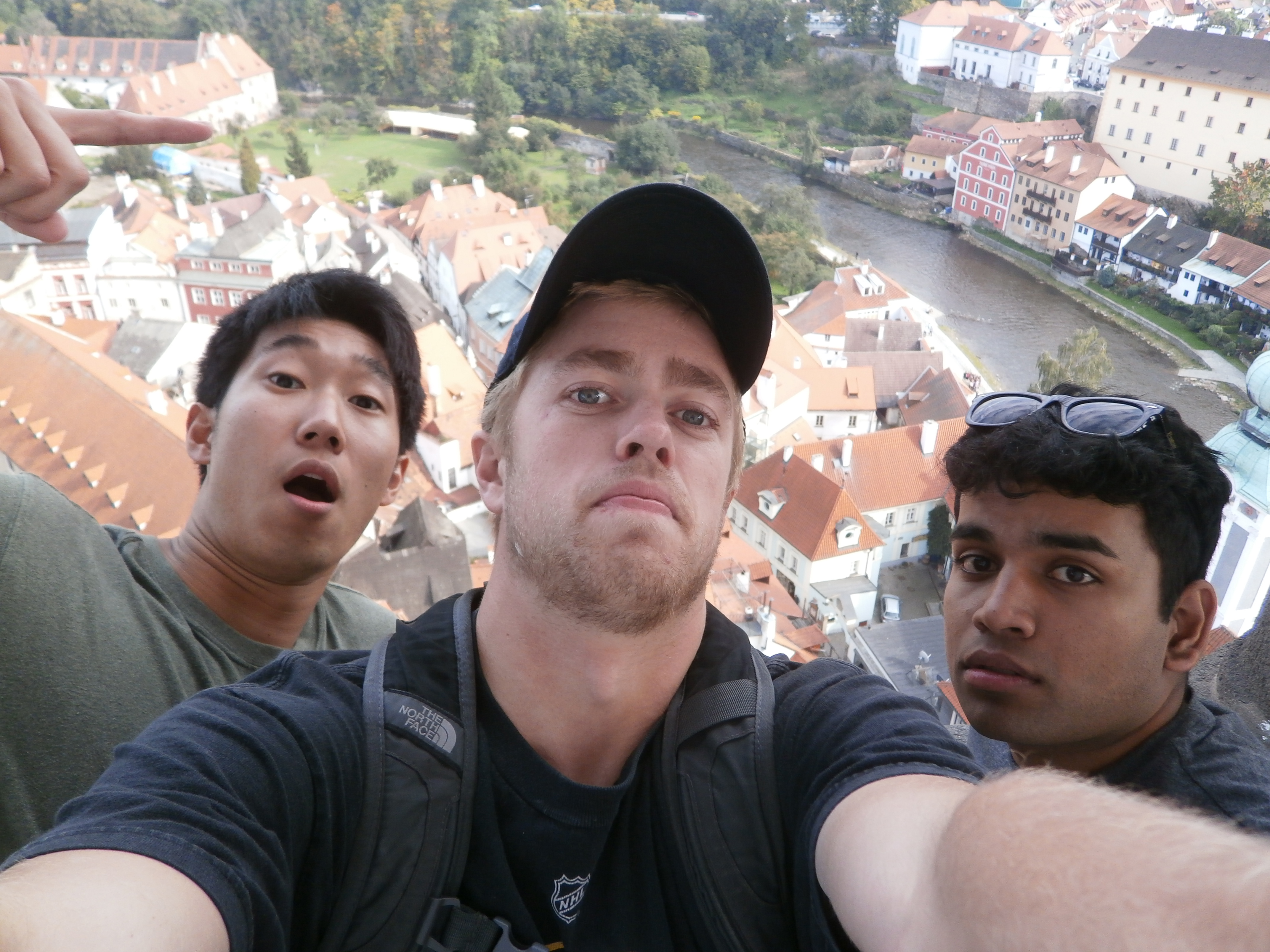
For my first trip of the semester, my program took all of us to Cesky Krumlov, which is pretty much a real-life fairytale.

For my first trip of the semester, my program took all of us to Cesky Krumlov, which is pretty much a real-life fairytale.

Selfie of the week: Because I am an egotistical millennial, here is the selfie of the week:

A lot of the students in my program finished finals last week, so Friday night at Lucerna, a 80s-90s dance club on weekends, offered the ideal going away party.

A lot students in my program finished finals last week, so Friday night at Lucerna, a 80s-90s dance club on weekends, offered the ideal going away party.


Jack in Czech Republic: I Go to School Too

November 6, 2014

I really don’t want to do schoolwork right now. So why not blog about school? Before I discuss the differences (or lack thereof) between Charles classes and Richmond classes, here’s a brief description of my five courses:

U.S. in the 1960s and 1970sRefer to Ohio by CSNY from my mid-semester mixtape to get my passionate thoughts on this course. The discussions in this class are consistently thought provoking and sometimes ridiculous, in a good way.

Introduction to Photojournalism – You know your photojournalism course is impacting you when you stare at a wall in a bathroom wishing you had your camera on you. This course has already forced me to view photography, Prague’s landscape, and, I guess, bathrooms in completely different manners.

Global Communication – The one course I am taking with an American institution taught by an American professor from an American university. Yea, there’s not a whole lot of cultural realizations coming from this course. Overall, it’s been a fun class, though. I get to spend the next five weeks defending China’s censorship, so that’s kind of cultural, right?

Here’s an action shot of Tim, who also gets to defend China’s censorship, working hard on our group project.

Here’s an action shot of Tim, who also gets to defend China’s censorship, working hard on our group project.

Czech for Beginners – Thanks to the Eastern Europeans, whose native tongue is somewhat similar to Czech, this is far and away my most difficult class.

Arms Control and Disarmament – This is a master’s level course on a subject I knew little about when I enrolled. So that should give you a sense on how difficult I find Czech language. Additionally, this is the one course that is vastly different than my Richmond courses. There are no assigned readings or written tests. Instead, students write weekly two-page research reports on one nuclear state (I’m the U.K.) that lead to our eventual end-of-class debate. My guess is that this class is different not because it’s in Prague, but because it is a master’s course.

With the exception of my Global Communication course, my courses are primarily composed of a mix of Czech students looking to improve their English and European students studying at Charles University for a semester. Despite the diverse composition of students, these courses don’t differ too greatly from my Richmond courses. There are, however, a few differences worth mentioning before I expand on how the two institutions’ similarities.

Punctuality, or lack thereof: At Charles, on time means 10 minutes late. And early means on time. It blows me away how many people show up to class late. My American history class, for example, always starts on time, yet it’s rare that at least two-thirds of the students are there when class begins. One reason for the constant tardiness could be that getting to class isn’t as simple as a five-minute walk from your on-campus dorm.

All around the city: Charles does not have a campus. Instead, the school consists of several buildings splattered throughout Prague. My five classes are taught in four buildings spread throughout the city. I still can’t decide which system I like better. I enjoy the different sceneries I’m forced to see, but the vast distances create more obstacles when going to class. Take, for example, when the city decided to change the tram lines without any heads up. Later that day I eventually realized my tram was not headed toward my usual Czech Language stop. I had to quickly get off and run through the city, so that I would not be too late. When I busted into class, out of breath and five minutes late, I noticed three or four other students in this small class had yet to arrive. Based on the students’ timetable, I was five minutes early.

Once-a-week classes: Except for my Czech language class, which meets twice a week, my courses meet once a week. I cannot overstate my love for once-a-week meetings. The workload isn’t too much different from Richmond’s, but having a full week in my grasp to spread out my work is fantastic.

Grading: I’m sure the grading at Charles is different from Richmond, since final grades are based on one or two assignments and class participation. I can’t tell you much more, however, because, well, I’ve barely received any grades. Typing that sentence gave me way too much anxiety.

Oral exams: Two of my courses culminate with oral exams, where I will have to speak with my professor about the course rather than filling in bubbles or answering short-answer questions. This feels like the biggest difference because I have no idea what to expect for an oral exam, and, well, it will be crucial to my grade.

So there are a few differences between the Richmond and Charles, but the most important aspect of a school – the way students learn – is quite similar. My educational experience – workload, types of assignments, discussion, professor availability, etc. – is quite similar to Richmond. Here’s the Spark Notes version of my classes’ syllabi: Do a reading assignment, maybe answer some discussion questions, discuss the reading in class, and ultimately take an exam/write a term paper/give a presentation. Strikingly similar to Richmond, I’d say. This certainly isn’t a bad thing – I love the whole reading/writing/discussing basis of my leadership studies and journalism majors. Additionally, I, like most UR students, I assume, didn’t go abroad for an out-of-this-world classroom experience. Sure, taking classes with a different faculty and different students offers a nice change of pace, but my true foreign education comes outside of the classroom. I came to Prague for a real-world academic experience – for example, meeting professional journalists and learning about the daily tasks of an online publication through my internships, traveling around Europe, and having to learn a city where English is not the first language. Hell, I’ve met a lot of fascinating people by having a couple drinks at Czech bars. I’ve been told for many years that learning doesn’t only take place in the classroom, but my time in Prague has given me a new perspective on that idea.

Selfie of the week: Because I am an egotistical millennial, here is the selfie of the week:

I was super happy to spend a day with this guy on his business trip. Thank you Teradata for sending my father to Prague!

I was super happy to spend a day with this guy on his business trip. Thank you Teradata for sending my father to Prague!


Diana in Copenhagen: My Luxurious Travels

November 4, 2014

A big reason for why I chose Europe for study abroad is because of the expansive list of travel destinations it offers. One thing I love about the time I’ve spent across the pond is the luxury of being able to visit so many remarkable places around the continent. Luxury is actually an important term here too, in fact, because it perfectly describes the nature of my travels.

Anyone who has traveled abroad knows all too well that budget airlines represent the peak of extravagance. When you fly Ryanair or Easy Jet you quickly forget you’re boarding a cramped bullet-shaped tomb that offers little to no leg space and enforces a strict one-bag policy, and instead imagine yourself entering a five star hotel with wings. Magical flight attendants, or “angels” as I prefer to call them, patrol the aisles offering up foreign delicacies like M&Ms and tired-looking sandwiches at prices higher than your current altitude. You’re flying so high in the air, no wonder this place feels like heaven.

“Comfort” is another word that comes to mind when describing the beauty of budget-travel. It is common to go to great lengths seeking cheap flights and you will sacrifice nearly anything to obtain them, namely sleep and time. Pure exhaustion is an inevitable product of this plight and you become grateful for all of the amenities available in your travels to make you more comfortable. It’s great having your knees, even as a girl standing at a mere five feet and two inches, touch the seat in front of you regardless of whether the chair is reclined or not. It’s cozy. As for a pillow? Don’t worry. Your faux-leather purse stuffed with your phone, wallet, camera, sunglasses, and clunky global adapter makes the perfect alternative. Adjust the purse against the window just so, or prop it up on your own shoulder if you’re a lucky middle-seat inhabitant. Go ahead, you. Catch up on that sleep you missed leaving for your flight at four in the morning—you deserve it.

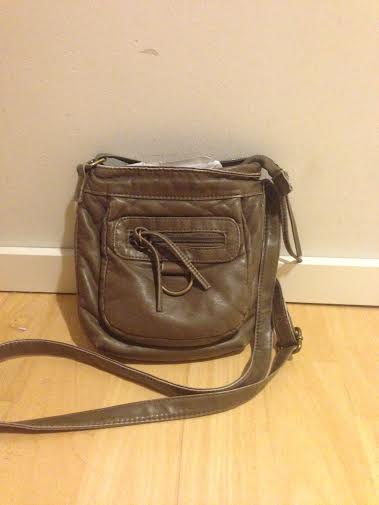
It looks like it would make a wonderful pillow, right?

It looks like it would make a wonderful pillow, right?


An advanced demonstration on how to use this purse-pillow. Take notes.

An advanced demonstration on how to use this purse-pillow. Take notes.

These cheap flights bring even more excitement, like accidental layovers! A girl-on-a-mission dead set on finding the most inexpensive flights knows full well that those Expedia, Skyscanner, and Kayak prices are not set and could change at any given moment. You expertly have all three, amongst others, loaded on different browser tabs with the window pushed to the side of your screen to cross-reference departure times with your class schedule. Sometimes you forget to breathe, let alone realize you’re about to book a flight from Prague with an eight-hour layover at eleven at night. Things happen. But have no fear, as a seasoned budget-traveler you know you have options—options like going through security eight hours early with your purse-pillow and finding the least-awkward couch on which to sleep in public. Bonus travel tip: drape your jacket over your head to block out the florescent lights and strangers’ judgmental stares.

A couch I found in the Vienna airport that I caught some sleep on.

A couch I found in the Vienna airport that I caught some sleep on.

Maybe after reading all of this, you realize that traveling by plane may not be your cup of tea. Lucky for you, there are other cheap options like the train. I booked a night train back from Amsterdam a few weeks ago, and boy was it an experience! We checked into the station a few hours early so I could print my ticket, only to realize our train had been cancelled due to the German workers going on strike. Yay! After meeting with one seemingly knowledgeable woman we learned that the company could not compensate us for a hotel room for the night but that she could get us on a train that left in just a few hours. Everything sounded reasonable until we talked to another worker who correctly informed us that the strike would be ongoing through the night and that the company could, in fact, put us up in a hotel for a new next-day departure. No one could find the woman we spoke to first but to this day we’re convinced she didn’t work for the train station at all and was actually an actress planted by a mortal enemy trying to ruin my life. Luckily, we caught her mistake and waited about an hour for busses to ship all of the train’s stranded passengers off to a hotel for the night. The room was actually quite nice and I would have enjoyed a pleasant bath if we’d had the time.

We didn’t, of course, and boarded another bus at five in the morning to finally begin our journey home. We were delighted to catch our train until it unexpectedly stopped on the tracks for about an hour. That delay made us miss our connection, causing us to wait a few hours for the next one.

Which was delayed.

That delay made us also miss our final connection, as I’m sure you could have guessed since the cycle is a predictable one.

The great thing about train travel is that you can book tickets in advance to reserve a seat. The bad thing though, is that you lose those reservations when striking Germans cancel your train. At this point you have some choices: you can go all “Hunger Games” and fight for the few vacant and un-reserved seats, you can find a seat in the Bistro car and convince the workers you really are drinking the same coffee for six hours so you don’t give up your spot, or you could prop yourself up on the floor in the hallway and enjoy the ride. We opted for choices A and B and touched down in Copenhagen more than twenty-four hours after our intended departure from Amsterdam. I told you it was an experience.

I hope my sarcastic tone is evident in this post and that my misery gave you at least the slightest amusement. That being said, I also want to convey the appreciation I have to be able to travel as I do, because I know it is not an option everyone has. I recognize how lucky I am to have the chance to even write a satirical entry complaining about legroom on a flight I took to hike the Swiss Alps. I cannot express the amount of gratitude I have for these kinds of opportunities, and I thank Richmond but above all, my parents for making them possible. I have the unbelievable opportunity to explore the world at twenty years old—you could ship me in a cardboard box for all I care.

Moments like this make everything worth it.

Moments like this make everything worth it.


Diana in Copenhagen: Getting Around the City

October 6, 2014

As in any city, there are many ways to get around Copenhagen. It is quite small, 34 square miles and about half the size of Richmond, which makes moving throughout it pretty simple. Unlike Richmond, however, very few people choose cars as their primary mode of transportation. Danes prefer two wheels to four, and bike more than anywhere I’ve ever seen. They also walk a fair amount and take full advantage of their great public transit system. I have found Copenhagen to be quite navigable and thought I would give a breakdown of the different modes of transportation available to residents here.


Biking
Denmark is famous for its biking culture. Before I came here, people told me that everyone bikes and they bike everywhere. I took this note in passing and greatly underestimated what they meant by the word everyone. Danish businessmen and businesswomen bike in their suits to and from work. Women bike in heels and stylish dresses. Children bike behind their parents on small plastic tricycles. People even bike to go out at night, which is one thing I actually might advise against. The weather hasn’t gotten too wintery yet, but I’ve been told people won’t even let driving rain and brutal temperatures keep them off the bike paths.

A tiny boy riding a tiny bike outside of my dorm. There's a school or kindergarten right next door so I see lots of children around drop-off and pick-up times. Sorry the picture's a little blurry!

A tiny boy riding a tiny bike outside of my dorm. There’s a school or kindergarten right next door so I see lots of children around drop-off and pick-up times. Sorry the picture’s a little blurry!


Hopefully this will give you an idea of what I'm talking about. So. Many. Bikes.

Hopefully this will give you an idea of what I’m talking about. So. Many. Bikes.

On that note, I’ll add that the infrastructure of the city completely allows for this bike-obsession. Bike lanes run parallel to every street and they even have their own separate traffic lights. There are smooth ramps up stairs at metro stations to make it easier for riders to bring their bikes along too. At any metro stop or train station you’ll see upwards of a hundred bikes and the trains themselves have cars where you can actually “park” your bike and find a place to sit. Biking is a good way to save money on a car or public transit, and it is also popularized for being an environmentally friendly way to get around.

A parking station for your bike on the train. There are different cars where bikes are allowed and not.

A parking station for your bike on the train. There are different cars where bikes are allowed and not.

My take: If any of you readers follow me on social media you might already know that I bought a bike upon my arrival to Denmark. I went to a few bike shops and worked my negotiating magic before finding a great deal with a woman through a Buy-Sell-Trade Facebook group. I named my bike Gwen and, I’ll admit, became a little obsessed. I would recommend that anyone staying in Copenhagen for a semester or longer buy a bike. Economic reasons aside, having one has been an amazing experience and has made me feel like I’m really immersing myself in the city’s culture. It’s easy to bike to class, to the gym, and to friends’ places and it gives me a much fuller view of the city than I ever would have from a metro seat. I’ll spare you the cliché of talking about the wind blowing through my hair and how freeing it feels, but take my word for it.

This is my beautiful bike Gwen! (Please withhold judgment of me for naming her.

This is my beautiful bike Gwen! (Please withhold judgment of me for naming her.


Walking
Like I said in the introduction, Copenhagen is small, which means walking is a pretty good option to get around. It takes longer than other alternatives, of course, but if time is a non-issue walking is a great choice. Pedestrians here are different from those in the States though, in that they actually follow the rules. At every crosswalk where you see a little red “do not walk” illuminated man people actually stop—an action I rarely see or practice back home. In my experience, I will cross a street if there are no cars coming and it is safe to do so. In Denmark, however, if you happen upon a crosswalk in the middle of the night on an empty street you will likely find pedestrians waiting their turn to legally cross. Their lawful obedience is due in part to a threat of a 700 kroner ($118.86) fine if they are caught. That being said, I have only seen one police officer roaming the streets in my ten-week stay in Copenhagen so far. This leads me to believe that Danes are generally just a very respectful and rule-abiding people who enjoy a much safer, yet inefficient, way to walk.

My take: I respect their obedience, I really do. I just don’t understand it. Even when I’m in no hurry I find it silly to halt my progress and wait on one side of the street when there isn’t a car in sight. Besides this, walking is quite nice here. The sidewalks are kept very clean, they are well lit, and you don’t have to worry about sharing the space with cyclists because of the expansive network of bike lanes. Like biking, walking also gives you a nice chance to take in the city and explore its personality.


Public Transportation
Public transportation in Copenhagen falls into one of three categories: metro, train, or bus. All are really easy to use and the same slip or pass will gain you access to any of the three. They’re all very clean, sleek, and modern too which makes for a pleasant ride. The options for payment differ from systems in the US by operating on somewhat of an honor system. That is, you can get on and off as you please without paying and just hope you won’t encounter a uniformed agent asking for your ticket. Like jaywalking, this system runs on honor and the threat of a fine, this one for a whopping $130. There are other options to buying a ticket each ride though, including getting a monthly pass or purchasing a card called a Rejsekort. Since I bike most places, I chose the latter option which gives me a discounted fare. To use it, I put money on the card and simply tap it against a sensor to check in and out at the different stations. With the Rejsekort, each trip costs about $2.50 where a monthly pass is priced around $55. There are other options available too, and which is best for you depends on how frequently you’ll be riding the lines.

The metro line we use. The "S" marks where trains leave from, my dorm is off Flintholm, Norreport is city center, and Lufthavnen is the airpo

The metro line we use. The “S” marks where trains leave from, my dorm is off Flintholm, Norreport is city center, and Lufthavnen is the airpo

My take: I took the Commuter Rail to school every morning in high school and I have to say, the Danish network of public transit is an upgrade. I’ve also ridden the metro in Boston and New York and the system in Copenhagen is significantly nicer and more pleasant to use. As for the honor code method, I’m indifferent. Once or twice I’ve accidentally ridden a few stops without a ticket and was lucky enough not to get caught. I have friends who do so frequently and have never been stopped. That being said, I’ve been checked for my ticket about five times and an agent recently fined three friends when they risked travelling with expired monthly passes (I feel for you guys). A quick calculation shows that if I rode the metro more than fifty-two times without being caught it would be financially worthwhile in the end. I’m smart enough to recognize though, that those odds are not ever in my favor and I pay for my rides.


Cars
There are far fewer cars in Copenhagen than you would expect to find in a city, and that’s because of their unbelievable expense. There is a 180% sales tax on cars. Let that sink in. Furthermore, gas prices are astronomical. If you think prices in the US are bad, I would think again. A gallon of regular gas in Copenhagen will cost you about $8 compared to $3 ones in the States. Considering this, most cars you do see are tiny. There are more hatchbacks than anything else and it makes me think my 2008 Scion xD would fit in great over here. As far as taxis go, they exist but aren’t frequently used. You can imagine how expensive fares would be and they’re relatively unnecessary when the metro runs 24 hours a day.

The cars in Denmark are very small compared to most you see in the United States.

The cars in Denmark are very small compared to most you see in the United States.

My take: I’ve been in a car once since arriving in Denmark and that was when I left Copenhagen to visit a friend in the city of Aarhus. She was borrowing her parents’ car for the week so we made a small trip instead of walking to the bus. Other than that though, I haven’t used a car and also haven’t missed them. Taking a taxi never even crosses my mind considering they are expensive even in the cheapest of cities. I like the lack of dependency on cars though as it provides me with a polar opposite experience than what I’ve had growing up in a suburban area. I’ve always been very reliant on cars for getting around and I’ve enjoyed becoming familiar with other alternatives.


If you ever visit Copenhagen, I have a few tips for you. After you fly,  do not take a taxi from their airport because it will be expensive, I assure you, and the metro conveniently leaves from inside the airport. Metro stops are prevalent also so I would save the money you’d spend on a taxi to buy food or get a nice drink somewhere. I would also suggest renting or borrowing a bike on your trip because it will help you to get around efficiently and give you a taste of the Danish way.

This breakdown should help you understand how to get around this amazing city, and now you should all visit so you can try them for yourselves!


Diana in Germany Week Two: “The Skinny” on Freiburg

September 18, 2014

Every week of study abroad is like a month in “normal” time. I am experiencing so much and hopefully I can summarize all of it for you without it being really long!

The City of Freiburg
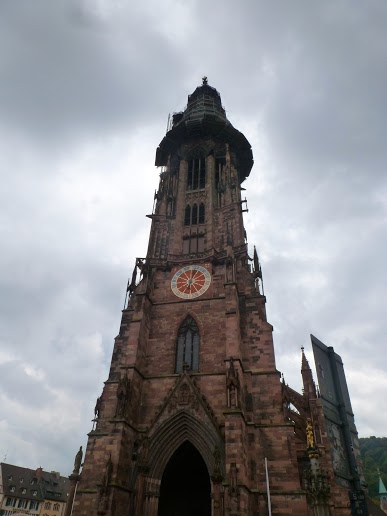
Probably the most notable landmark in Freiburg is the Münster cathedral. It is a 12th century church with amazing organs (I went to a concert there last week). There is a farmers market in front of it almost every day. There are also shops and restaurants on the square. Two other notable structures are the city gates. I see the one called Martin’s Gate every single day when I get off of my tram stop for school in the morning. The University of Freiburg itself was founded back in 1457 and is one of the oldest universities in Germany. It has buildings scattered throughout the city and many have their own history.

Münster Cathedral

Münster Cathedral

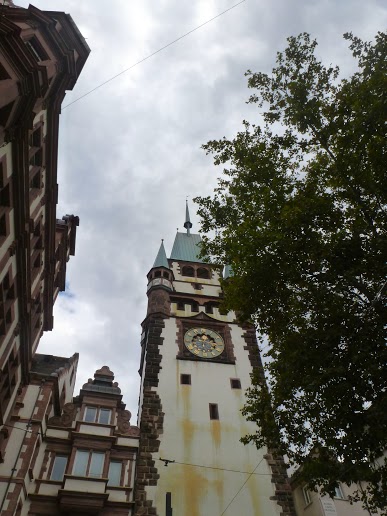
Martin’s Gate

Martin’s Gate

There are little stone paths for water, called Bächle, that crisscross through the streets of Freiburg. They are the old source of water for the town. If you accidentally step into one of these then the legend is that you will marry a Freiburger. This reminds me of the tales of kissing on the gazebo at University of Richmond – if you do not marry the person you kissed, you must walk backwards around Westhampton Lake.

Bächle - watch your step!

Bächle – watch your step!

The ways that I access the city are through tram, bike, and by foot. The tram station is only a 3 minute walk from my flat. It takes 10 minutes by tram to get to the Holzmarkt stop, which is a 1 minute walk from my German classroom and a 2-3 minute walk from the IES Abroad office. For longer travel here, there is a large area for trains and buses that meet up by the “Hauptbahnhof” or Central Station. It is amazing how few people drive cars on a day to day basis. I love this custom so much I am beginning to consider only settling down in an area where it will be possible for me to walk, bike, or take public transportation easily. Biking is barely possible on the University of Richmond campus due to the amount of stairs and steep hills that cut off bike paths.

Food/Drink
So far I tried many different foods typical in Germany. At Münster market I have eaten bockwurst and bratwurst. Yes, they are different! A bockwurst is basically a hot dog (a LONG hotdog) and the bratwurst is a fried sausage. Both are put into a baguette and you can add beer mustard and curry ketchup, two delicious condiments. One night I ate a a fancier restaurant on the Münster square and got local fish. I tried a piece of someone else’s schnitzel, but still need to go order my own. I will tell you how that goes in my next post for sure! For Heather’s birthday we made a traditional Black Forest cake. It was SO delicious that I ate four pieces. No shame.

This fish looks as fresh as it tasted. The accompanying butter sauce was sehr gut.

This fish looks as fresh as it tasted. The accompanying butter sauce was sehr gut.

On weekdays I tend to eat lunch at Mensa, the student dining hall. It is about 3 Euro for a meal and the portions are so huge that I bring a Tupperware container with me. This saves me a lot of money so I do not feel as bad when I splurge once or twice a week on a meal. I go there with friends Sarah and Dave from my language class and Anne from IES right now. For meals at home, I shop at a store called Rewe. There’s amazing pasta, sauces, fresh baked goods, fruit and vegetables.

I’ve tried a few different beers: Pilsner, Radler (lemonade + beer = yes), and Kristallweizen. Alcohol is plentiful and not as expensive as in the states. The main non-alcoholic drinks here are sparkling water and Apfelsoft or sparkling apple juice. I carry around my own still water from the tap at all times to keep hydrated, though a person may not drink from their water bottle inside a restaurant. You have to pay quite a bit of your own still table water, so my advice is to drink water before and after walking into a restaurant, that’s my advice.

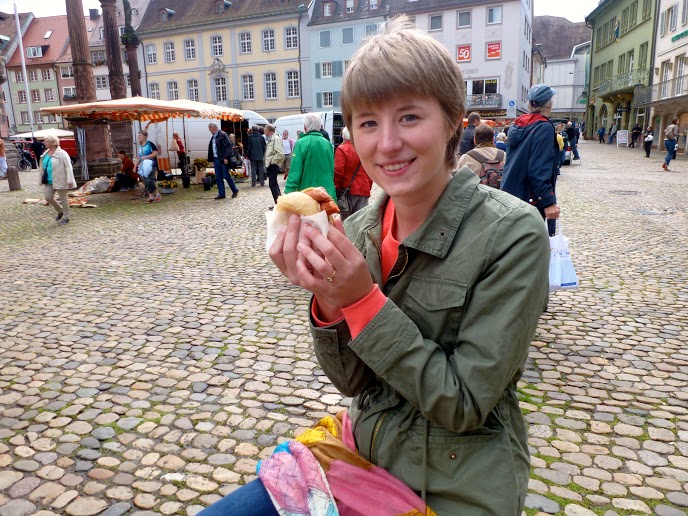
Bockwurst Delight in Münster Square

Bockwurst Delight in Münster Square

Academics
The overall system of education as part of the IES Environmental Studies Program is that we take 5 classes. We only take 1 class at a time for three weeks each. My classes for the semester are as follows:

1) Intensive Elementary German
2) Ecology and Management of Forest Landscapes in Southwest Germany and the Swiss Alps (counts as an Environmental Elective)
3) Environmental Ethics (fulfills this Environmental Studies major requirement)
4) Sustainable Policy (fulfills another Environmental Elective)
5) Freiburg Green City (fulfills the Environmental Economics major requirement)

This past week in German class, we learned how to order food and discuss families and furniture. This video shows me performing the role of Verkäuferin (seller) and Quinn playing the role of Käufer (buyer).

There is an added social aspects outside of the classroom because the Language Institute puts on different programs such as day tips to Switzerland and France, local hiking trips, and other activities. So far I participated in a bar hopping experience and went on a vineyard tour in Tuniberg. This coming week I will be swimming at the University pool, going bowling, going to Titisee, and going on a 10km hike!
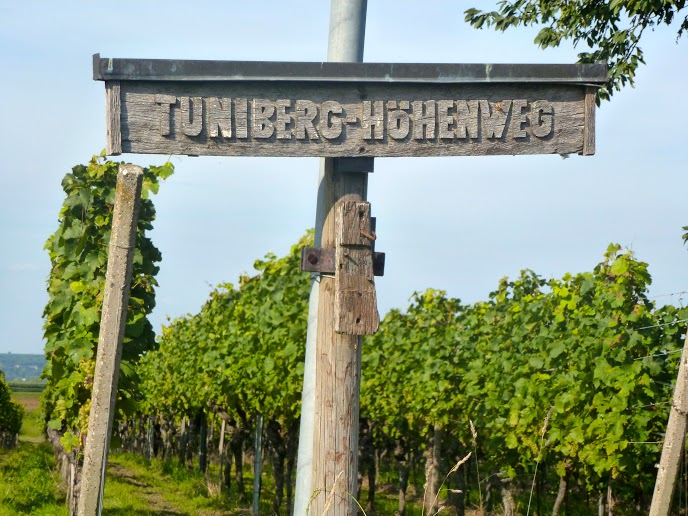
A Vineyard in Tuniberg

A Vineyard in Tuniberg

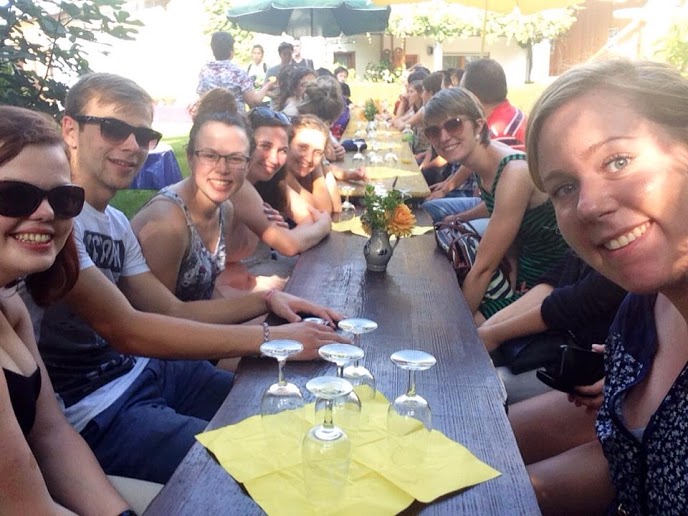
A Most Welcoming Meal: The owners of the vineyard brought us to their house and cooked for us.

A Most Welcoming Meal: The owners of the vineyard brought us to their house and cooked for us.

Next Week
I will update you about how all the social events went and the analysis of stereotypes that I left out this week (I had so much to write about)! There may be other topics I explore as well. Tschüs!


Oliver in Spain: Transitioning and Sight Seeing

September 15, 2014

I cannot believe that I have already been in Valencia for a full week. This semester is going to fly by. I’ve already attended all four of the classes that I am signed up for, so I know what I am in for academically. My classes are as follows: Literatura y cine, Cultura y civilización, Islamic Iberia, and La historia del siglo 20 en España. All of those are pretty simple translations so I’m sure you guys can figure it out! My program, UVA in Valencia, has its own building off a main street, Gran Vía de Blasco Ibañez, which is right next to the campus of the University of Valencia. It’s about an hour walk from where I’m living so I normally take the bus or the metro.

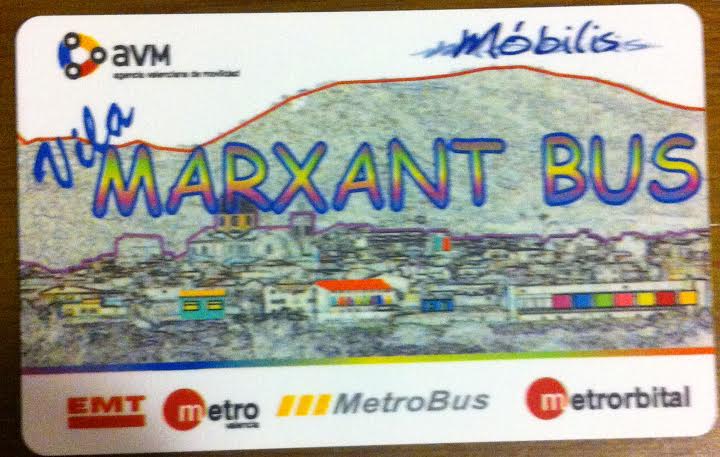
Traveling in Valencia as a pedestrian is so convenient. Between the metro, the bus, and the bicycle system, you can get anywhere you want to go relatively quickly. I picked up a Móbilis card a few days ago which opens up all of these services for about 9€ per 10 trips. Yesterday, I registered for the bicycle system known as “Valenbisi.” There are these bicycle stations all across the city, and once you register for about 27€, you can pick one up and have 30 minutes before putting it back at a different station and picking up a new one. It is a great system that could only work in relatively small cities like Valencia. Needless to say, I will be able to get my way around this city with ease. Also, since it’s such a small city, I am already pretty familiar with the main spots.

Picture of Móbilis card

A picture of my Móbilis card

Now for my host family! I am one of the only students at the UVA in Valencia program that has a father as well as a mother. Interestingly, most students only have a host mother. I’m sure I will learn more about this in my culture class. I also have three siblings: María (oldest sister), Guille (21 year old brother), and Mark (10 year old little brother). The whole family has been very inviting, but to be honest, the language barrier can be very tough at times. I have no doubt in my mind that I will be conversationally fluent after these four months because there is no English spoken at home or at school.

Last weekend I went out with my friends on Thursday, Friday, and Saturday. Thursday we went to a bar near our respective houses and quickly befriended the bartender who found out we were Americans all too quickly. From there we went to a place known as el Barrio de Carmen. It’s a small neighborhood with three clubs that get big around 2 am. Friday we took it easy and posted up in a different bar for a few hours before calling an early night, jetlag was still nagging us. Saturday was easily the biggest night of the weekend. My 8 friends and I went to this huge outdoor club known as L’umbracle. It is a massice discoteca in Valencia near the aquarium. That night we didn’t leave until about 5 am. These Spaniards have an absurd stamina…

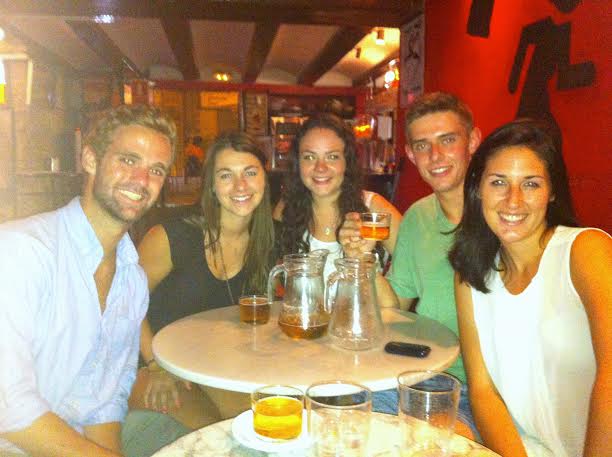
The core group of my friends enjoying some Cruzcampo

The core group of my friends enjoying a night out

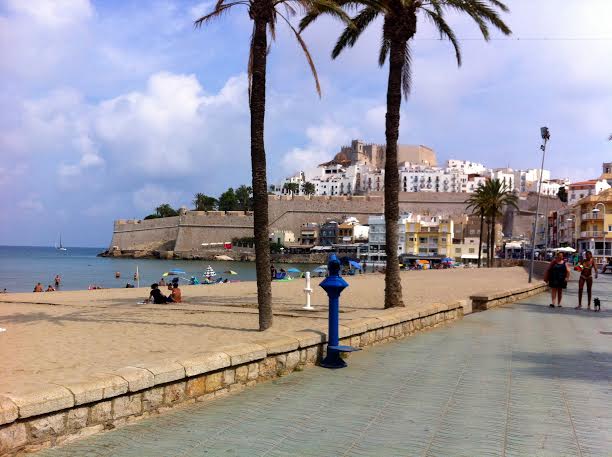
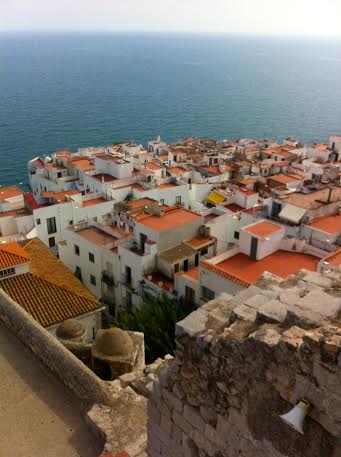
During the day on Saturday, my whole program took a trip to Peñíscola which is a small city north of Valencia. It is called Peñíscola because there is a 800 year old castle on a peninsula next to the main city. We spent the day here on the beach and in the warm, clear water. Then we went into the castle and toured the massive building.

A beautiful view of the castle on Penñiscola

A beautiful view of the castle on Peñiscola

It turns out that selfies are as big here as they are in the States!

It turns out that selfies are as big here as they are in the States!

This is the village within the castle walls

This is the village within the castle walls

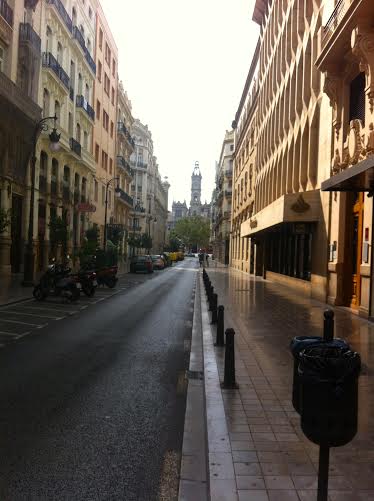
We had the day off on Sunday, so we got a big group of about 15 of us together, and did a short walking tour of Valencia that focused on the cathedral. The images of the buildings are magnificent so I will leave a couple here:

A typical narrow street in Valencia

A typical narrow street in Valencia

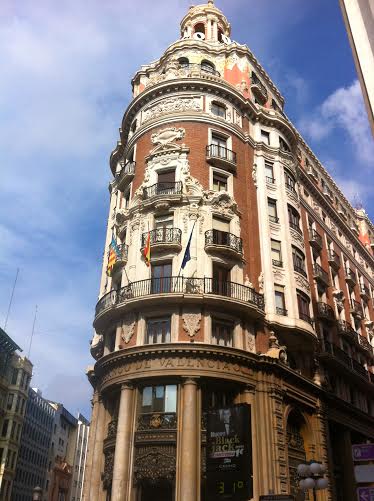
We were pretty sure this was Gringotts Bank

We were pretty sure this was Gringotts Bank

A great shot of the entrance to the Peninsula

A great shot of the entrance to the peninsula

Detailed entrance to the main worship area of the cathedral

Detailed entrance to the main worship area of the cathedral

The back of the cathedral attached to the the Palace of the Archbishop

The back of the cathedral attached to the the Palace of the Archbishop

I wasn’t exactly sure how to format this entry because so much has happened so if it seems all over the place, that’s my bad. Point of the entry though…I’m having a blast!!!


Austen in Ireland: Amsterdam

March 6, 2014

This past weekend I went to Amsterdam!  It was one of the best weekends so far.  I left Thursday afternoon taking Aer Lingus and arriving into Schiphol, the main airport in Amsterdam.  I met my Richmond friends studying in Edinburgh at the airport and we took a train to the central station downtown.  Our hotel, the Crowne Plaza was a really short walk from the train station.  Once we arrived, we mentioned to the person checking us in that we planned on going to the Anne Frank House (where she lived a part of her life).  Luckily, he recommended that we go late during the day and since it was around 5, we headed out there (this was a good decision because there was no line!).  It was a pretty small attraction but it was a really interesting historical site to see.  We then had dinner, where I tried bitterballen (a Dutch snack that is fried dough with meat inside) and then walked around afterwards, looking at the many scenic canals as well as the infamous Red Light District.

On Friday, we saw so many pieces of art.  First, we went to the Rijksmuseum, a humongous art museum (and the most popular in the Netherlands) dedicated to many different types of art.  The collection of the museum includes more than 2,000 paintings from the Dutch Golden Age from famous painters such as Rembrandt (The Night Watch is a famous painting at the museum) and Johannes Vermeer.  Afterwards, we went to the Van Gogh Museum, right across a beautiful green from the Rijksmuseum.  The Van Gogh Museum contained a variety of his paintings, such as The Yellow House, Bedroom in Arles, and Almond Blossoms.  Both of these museums are great and highly recommended for anyone even remotely interested in art.  The rest of the day was spent exploring more of Amsterdam and admiring its most unique sights, the canals.  That night, we went out to a square and enjoyed the atmosphere of night-time Amsterdam.

Rijksmuseum

An Amsterdam sign with Rijksmuseum behind it

square

Leidseplin: a popular square during the daytime and nighttime

The next day, we decided to rent bikes.  This was such a great idea because Amsterdam is probably the most bike-friendly city in the world and everyone uses them.  There are basically bike paths alongside every street.  We decided to discover the whole Amsterdam area.  At first, we went up near the zoo area on the northeast side of the city, and went through some parks as well.  We then went south towards the museum district area.  We had a great lunch (my goat cheese sandwich was awesome) and then went through the old town area, where canals dominate the landscape.  After this, we went up to the northwest area called Jordaan, which was very scenic.  Also, we biked up to the riverfront north of the city near the train station on the Amstel River, another very scenic body of water.  After going through some more parks and squares, we finally returned our bikes after a tough five hours of biking.  We decided to then get souvenirs and rest in the hotel room after our long day (it was really nice having a much more comfortable bed than at UCD).  We decided to go out for dinner with really no idea of what we wanted so naturally we got Mexican food while in Amsterdam.  The fajitas were surprisingly tasty.  For this last night, we just decided to walk around the city again and experience the great atmosphere of Amsterdam one last time.

bikes Amsterdam

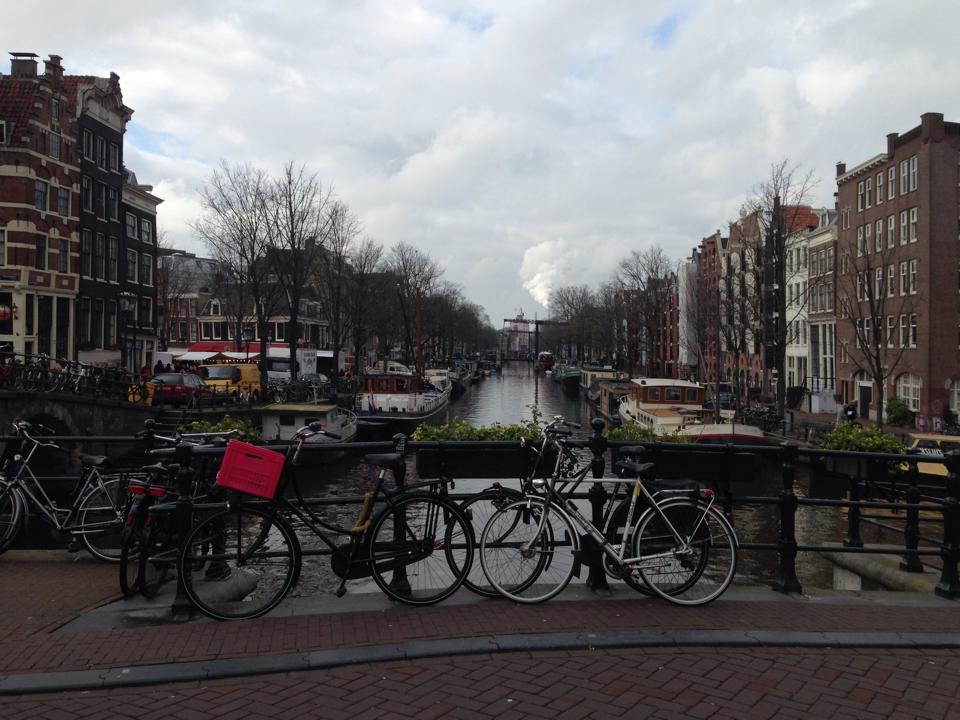
These canals are an iconic sight in Amsterdam

Sunday, we woke up early to get catch our planes back to our host countries.  I had a pretty uneventful plane ride and arrived in Dublin around 1:30 in the afternoon.  I already miss Amsterdam because it was such a beautiful city but I look forward to future trips to other great European cities!