Transported back in time…

April 2, 2012

I just came back from the most incredible trip to Myanmar (formerly Burma, but the United States chooses to use the name Burma as a political statement against the current Burmese government).  I have to admit, before arriving in Bangkok I was not at all aware of anything going on in Burma.  Nothing. Nada. Zilch. It was not until a dinner with friends in Bangkok, who are passionate about Burma, that I learned about the fascinating country and its political situation.  When you think of the world’s worst dictators, many of you may think of Kim Jong Il of North Korea, or Hugo Chavez of Venezuela, but did you know that Burma is one of the world’s worst dictatorships, responsible for some of the world’s worst human rights attrocities?  It is only in the past year that Myanmar has been creating better relationships with the West, and that the West has been easing some of the sanctions and boycotts against the country. But as many people told us, though progress undeniably has been made, in reality, things may not be so picture-perfect.

What really sparked my interest in this country, before my visit, was the story of Aung San Suu Kyi, depicted in the recently released film “The Lady.”  Suu Kyi is the leader of Burma’s opposition party.  Her father led Burma to freedom from Britain in 1947, only to be assassinated shortly after, leaving the country in the hands of a dictator.  Though she grew up in Burma, Aung San Suu Kyi later married an Englishman and had been living in England with her two children when she became the leader of the opposition party in Burma.  Though she claimed victory in a general election in 1990, the ruling party refused to accept the results and placed her under house arrest, where she spent 15 years, living away from her family in England and therefore sacrificing her life with her children and her husband.   Aung San Suu Kyi was released in 2010, and is a candidate in the Burmese parliamentary election to be held on April 1st.

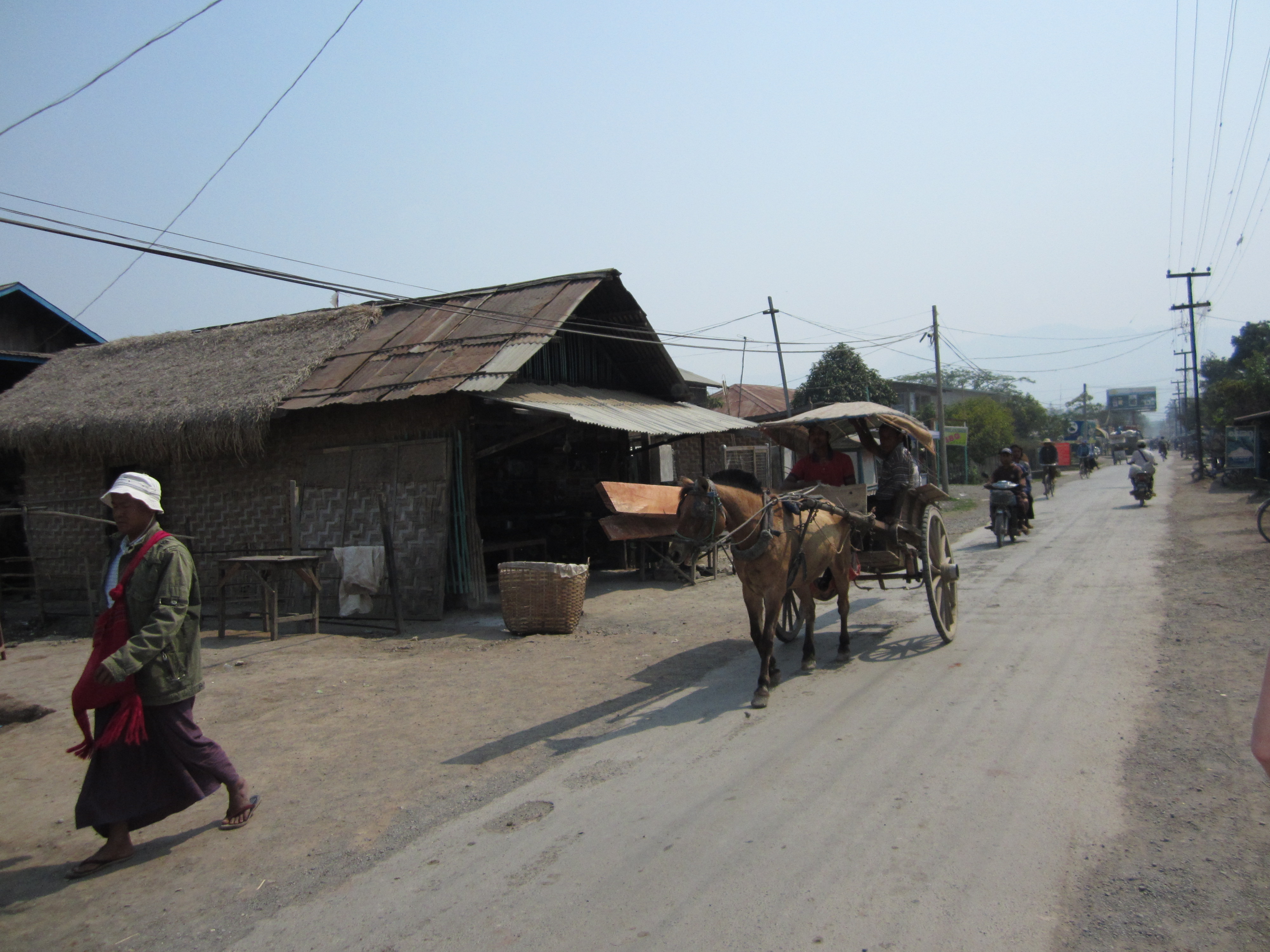
Needless to say, this country is fascinating, and it is in the midst of one of its most critical times in history, so I definitely had to see this for myself.  On top of that, because Burma has literally been shut off from the world for so many years, we were told it was like going back in time to Asia 100 years ago.  Until recently, the Burmese did not have access to news from outside of Burma (purposefully controlled by the government).  A cell phone there costs around $1000, and the down payment for internet in your home is $2,000.  In most places outside of the capital, a “taxi” is a horse-drawn, or ox-drawn carriage.

Because we spent five very packed days around the country, I will give you the highlights of our trip:

1)     Yangon (formerly Rangoon, and formerly the capital of Myanmar).

There is not much to see in the city.  We spent only a few hours our first day, and a few hours our last day, exploring the Yangon.  Other than the Shwedagon Pagoda, an impressive and revered Buddhist religious symbol, there really wasn’t much to do.  The city is quite run down, and much less developed than Bangkok, understandably so.

2)     Kalaw

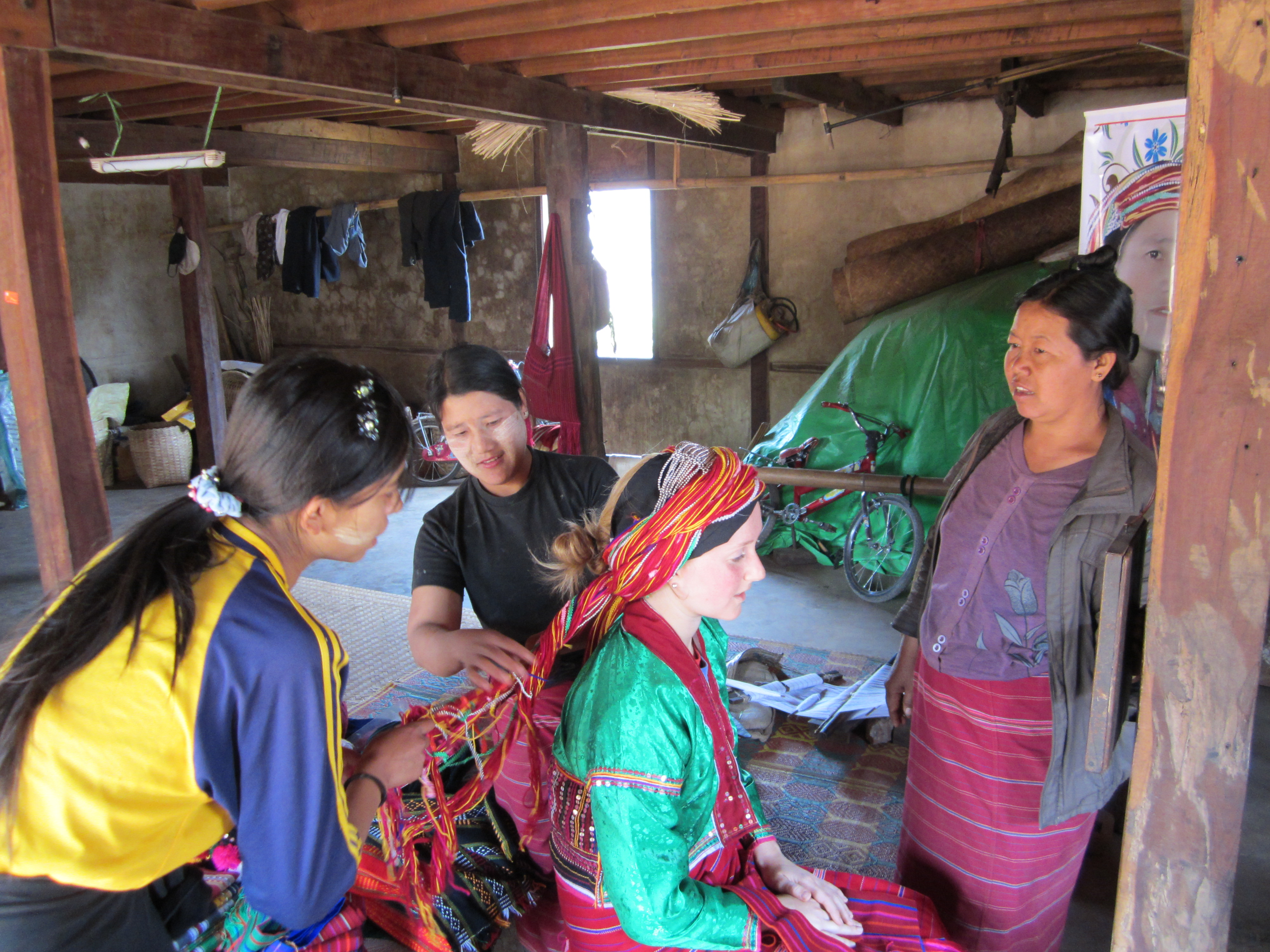
Kalaw is an incredible mountain town, which we reached through a 12-hour overnight bus from Yangon.  We arrived at 2am, with no hostel booked, and no plan at all – it didn’t take us long to find the “Winner Hotel,” but the temperature had dropped overnight, so it was freezing.  In Kalaw, we did a trek into the mountains with two tour guides who were both 21 years old, named GuGu and Chaw Su.  We spent the whole day wandering through the mountains – the trek was not difficult, which was fantastic, because it not only gave us a chance to talk with the girls and learn about their lives in Burma, but it also gave our guides a chance to stop and point out different plants and crops along the way.  It is truly incredible what is grown in the mountains there! We saw oranges, pears, raspberries, gooseberries, ginger, cabbage, papaya, banana, pineapple, and much more! We stopped in two villages and two monasteries along the way, each time having a chance to (through our guides) talk with the families we met, sit down for tea, ask them questions, and laugh with them.  It was truly fantastic to be able to talk and interact with native people in a non-touristy setting.

In Kalaw, we also had delicious food – a broad-bean, peanut, tomato, and onion salad, noodle soup, and curry.  While curry in Thailand is coconut milk-based, Burmese curry is largely oil based, so it was interesting to try the different foods.

3)     Inle Lake

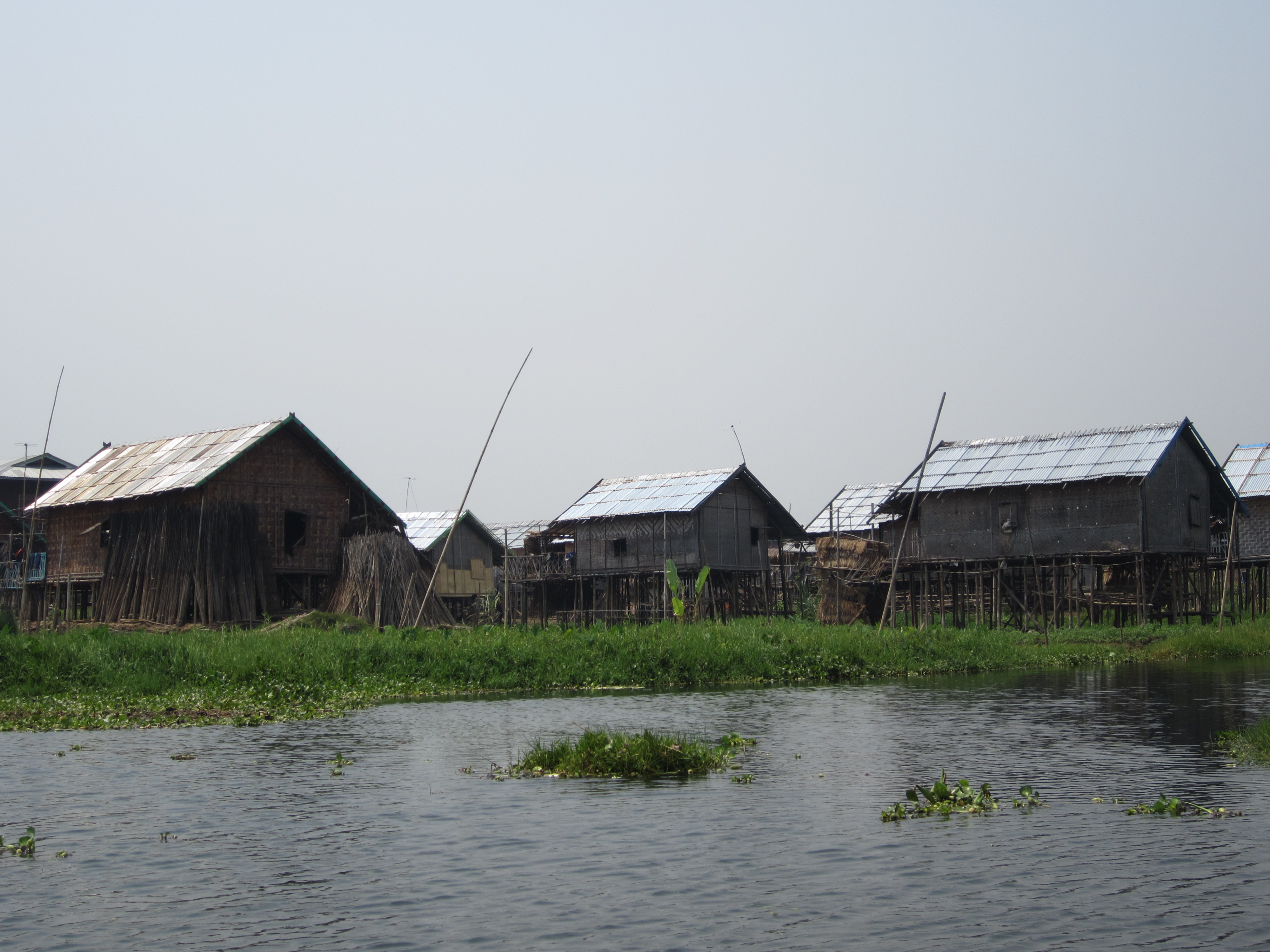
Just a two-hour drive from Kalaw, Inle Lake is one of the most popular destinations for tourists.  Similar to Kalaw, the town itself is very small, and very primitive, boasting half-paved, half-mud streets lined with small hostels, small houses, and shacks.  We spent an entire day (8 hours) on a boat ride around Inle Lake.  It was one of those long “typical” Southeast Asian boats, propelled by a motor.  The lake is enormous, so it was a 2-hour boat ride to our first destination.  Throughout the day we made many stops, including: a shop where silk is produced, a shop where cigars are made, a delicious restaurant, a paper making shop, a silversmith, and a few more destinations. Inle Lake is entirely made up of small villages, comprised of houses and buildings, which are on stilts.  Therefore, to get to each new shop, we had to go by boat, which is how locals get around as well.  The post office, for example, is a small house on stilts in the middle of the water.  Surrounding the villages are also endless fields of rice and other crops.  So throughout our day we observed men and women working to harvest and plant their crops.  We were able to stay out on the lake for the sunset, which was absolutely magnificent.

Before our 15-hour bus back to Yangon from Inle Lake, we rented bikes and biked in the area, again surrounded by endless rice fields; I’ll let the pictures do the talking, because it was absolutely breathtaking!  I came back from the weekend completely happy and refreshed; though I was exhausted, it was refreshing to have seen such an untouched nation, and to have been able to experience another country  knowing so much of its history and current political issues.  Even more importantly, we were able to fully interact and speak with locals to hear their perspectives, and those moments are what made the trip so incredible.

Below are some photos from the trip:

The Temples of Angkor Wat: Cambodia

February 24, 2012

This weekend, I took my first international trip to one of Thailand’s neighbors, Cambodia.  Specifically, we went to Siem Reap, which is the center for all of the tourism surrounding Cambodia’s famous Angkor Wat.  The journey to get there is not exactly quick; it began with a four-hour minivan ride to the Cambodian border, then about one hour spent actually crossing the border, an hour spent waiting at the bus station, a two-hour minivan ride to Siem Reap, and then a 20-minute tuk tuk ride to our hostel.  All in all, about a ten-hour journey door to door.  We arrived in Siem Reap Saturday afternoon and left early Monday afternoon – it may seem crazy to some of you to travel to Cambodia for such a short time, but a) with the very strict attendance policy at Thammasat it is the only way I can travel, and b) we really felt we did not need any more time in Siem Reap.  So here are the notable highlights:

1) Cambodia is not Thailand.  It may seem obvious, yes, but I have always had a magical view of Southeast Asian countries – friendly, smiling people always willing to help you, greenery everywhere, rice fields lining both sides of the road.  I assumed that the hospitality and kindness that are normal in Thailand would also be present in Cambodia.  But from the second that we stamped out of Thailand and started the visa/entry process into Cambodia we immediately noticed a change in atmosphere.  The guards at the border were not friendly whatsoever, and immediately after officially entering Cambodia we were overwhelmed by men trying to get us to go into their taxi, or in their minivan to Siem Reap.  We have very much become accustomed to Thai courtesy and friendliness; in Thailand I never have to worry about being scammed.  But Cambodia is known for its scams, particularly at the border, so we had to be extremely cautious.  There is even a “fake” border that has been set up.  Literally, a building was built complete with guards, and signs, and visas.  They bribe tuktuk and minivan drivers to bring tourists to the fake border, who then pay a lot of money for what may or may not be a valid visa.

2) Siem Reap is essentially the main city where tourists go in order to see Angkor Wat and the surrounding temples.  The city provides a stark contrast between wealth and poverty – while there are five-star hotels lining both sides of the streets, between those manicured lawns and marble entryways are dirt roads filled with children, running around begging tourists for money.  It was a surprising and uncomfortable reality.  Despite the hotels everywhere, we opted for a much more modest accommodation in a fantastic hostel near the old town, for only $3 USD per night.  Saturday evening we had traditional Khmer red curry for dinner, which was easily the most delicious curry I have had since landing in Southeast Asia.

3) The temples.  The temples of Angkor Wat are located about a 20-30min tuktuk ride from Siem Reap.  The area surrounding the temples has been well preserved, so instead of endless hotels and restaurants, Ankor Wat is surrounded by beautiful forest.  We hired a tuktuk for the whole day (only $15) and left Siem Reap at 5am to see the sunrise over Angkor Wat.  We were joined by many tourists, but the early start was completely worth it – Angkor Wat is incredible and utterly breathtaking.  It is an expansive structure (only pictures can do it justice) that is considered to be the largest religious structure on earth; some place Angkor Wat in the same category as Machu Picchu and other wonders of the world.  It is this fact that I could not get over.  Construction of the temple was started in the year 1112 by the king of the Khmer empire at the time.  It is thought that he created the Hindu temple, which ended up being changed to a Buddhist temple, in dedication to the Hindu god Vishnu.  It took 37 years to complete. The thing is, in my lifetime, I have visited many castles that immediately strike any visitor by their opulence and grandeur.  For example, the Château de Versailles, in France, created by King Louis XIV, is just ridiculously extravagant.  But Angkor Wat was not created for the purpose of living, it was purely in dedication to a Hindu god.  It is purely religious — that’s just hard to fathom, because it is so big!  Though commoners used it for prayer throughout the year, our tour guide explained that the king usually only visited it once per year.

4) Angkor Wat is not the only temple to see. We also visited Ta Prohm, which is the only temple in the area that has not been protected against the jungle.  It is therefore covered with trees and roots that have wound their way around the ruins.  Fun Fact: Ta Prohm was featured in the film “Tomb Raider.”  We then visited Ta Keo, and Bayon, and ended our day by going back to Angkor Wat and having a guided tour of the temple.  I am definitely glad we spent the $3 for a tour guide, because it is not easy to understand the meaning of the temple without some history and explanation. We spent nine hours, from 5:30 am to 2:30pm on our feet visiting temples.  And it was completely worth it.

All in all, Cambodia was incredible – once I realized that Cambodia has only been out of Civil War since 1998, it became very clear as to why there is such a stark contrast between wealth and poverty in Siem Reap.  Cambodia is very much still recovering from the Khmer Rouge regime, and as of now the country relies heavily on tourism, which is why so much money has been poured into hotels and restaurants in Siem Reap, but nowhere else.  I would have loved one more day to travel the six hours to Phnom Penh, the capital of Cambodia, to learn more about the history of the country as well as to see some of the museums there chronicling Cambodia’s recent history.  But otherwise, by the end of our stay we felt we had seen all there was to see in Siem Reap. I have to say, after a nine-hour trip  back to Bangkok which included one very offensive, drunk Irish man, who didn’t stop talking for our four hour-minivan ride, offended every race and religion represented in the van, swore every other word, smoked in the van, threatened to kill most of us, and almost assaulted one of the guys in our minivan – it certainly felt good to be back “home” in Bangkok!


Botswana, Week 3: Protests

February 17, 2012

A couple of weeks ago, there was some tension on campus. The University of Botswana (UB) is working very hard to improve the image, credibility, and stability of the school. However, the actions being taken by the university caused an uprising among students. Although the students that I have spoken with understood the circumstances surrounding the situation, they disagreed upon how to handle it.

Some of the measures UB indicated they would take included:

Close 411:

All of the buildings on campus have a number, unlike at U of R, and most schools in the States, where we name our buildings for other numerous reasons. The bar we have on campus is referred to as “411” and is located only walking distance away.

UB decided that they would consider the closing of 411. The intended date for permanent closure was fall 2012. UB chose to close 411 due to the fact that it caused many problems, such as excess consumption of alcohol, unwanted physical and emotional risks, and constant visitation from outside guests that were not students. Also, unless one orders a soda (known as pop), then he or she will receive a fragile glass bottle with no way of recycling or properly disposing it around campus; trash cans and other forms of waste are still ongoing issues in most developing countries, including Botswana.

However, the UB students are looking at it in a differesent perspective. They know that closing of 411 does not just mean that there will not be a bar on campus – it’s a matter of student rights and freedom. The school has offered to compromise by moving the bar on the edge of campus, instead of closing it entirely, but students’ protests only gained momentum. This is mainly due to the fact that the students saw the real meaning of moving the bar away from middle of campus: Botswana law says that alcohol may be consumed only 500 meters away from any alcohol-serving establishment. Therefore, if the bar is moved to the edge of campus (away from student housing and comfortable seating areas), then that means that any forms of alcohol in open areas of campus, and especially living hostels/dorms, is strictly prohibited.

End Supplementary Exams:

UB’s rules and procedures for students are very different from schools in the United States. For example, if a student fails any subject during the semester, then they are allowed to take what is called a “Supplementary Exam.” This exam is taken once at the end of the year and can erase the previous failing grade received (if passed, of course). The students became very angry upon hearing the news that supplementary exams might be done away with.

Lower Allowance:

Currently, most UB students have their tuition and most other academic needs paid for by the government. Also, a monthly allowance is given in what is considered “to be used for living purposes” only. The allowance comes in cash form and may be used for anything, without any restrictions. UB has been contemplating lowering the allowance because they believe that it is being used for alternative and undesirable purposes that lead to unhealthy choices. Although there is no substantial and realistic evidence for the school to believe this, 411 always happens to be at full capacity immediately after the 23rd of each month – the date that the allowances are distributed.

No More Games:

The Inter Varsity games are like the Olympics, but on a college level, with surrounding country universities participating against each other. UB has decided to not host the Inter Varsity games this semester. This angered students and contributed to the protests that were to come. The school’s reasoning for this was for the safety and security of the students, because the IV Games attract the general population and students from other schools, which can create security concerns.

—————————————————————————————————-

Fortunately for my friends and I, we had left for a trip to Namibia. Windows, signs, buildings, and many other things were broken during the protests. Many students, especially those in charge, were arrested and suspended.

UB closed from January 25th-27th, and upon re-opening, there have been no more protests. As of now, none of the initial propositions by the school have been put in place. Even the IV games seem like a possibility, but a very unlikely possibility. Even though the school has not initiated anything yet, they seem to be moving in the direction of what they originally intended. For example, although they haven’t closed down 411 yet, but we’ve noticed the prices have gone up 15% – slowly pushing students and guests to go elsewhere.


Home is behind, the world ahead…

January 16, 2012

Hello there!  I’m Rebekah, and I am a junior geography major at the University of Richmond. I’m from Syria, Virginia, a small town in the foothills of the Blue Ridge Mountains.  I love hiking, learning languages, archaeology, and Biblical history.  This semester, I will be studying at the University of Haifa in Haifa, Israel.  I was drawn to Israel because of its rich cultural, religious, and political significance in the world today.  Founded in 1948, the State of Israel is home to a wide variety of Jewish people with heritages from all over the world, as well as Muslims, Christians, and other religious sects, creating complex dynamics of culture and national consciousness.

A few weeks ago, I called the Israeli Embassy to ask about something on the student visa application that was confusing me.  The questions were in Hebrew, with English translations, and they were ordered like this:

Category of residence permit:                             Dates of previous stays in Israel:

I said to the receptionist who answered the phone, “I’m confused by this question.  Which ‘category of residence permit’ would a student visa fall under?”  to which she replied, after a moment’s pause, “See the question to the right, ‘dates of previous stays in Israel’? It is asking what category of residence permit you had during any previous stay in Israel.”

Oh, right.  I knew that.  Read the questions from right to left, just like the Hebrew language is read from right to left.  I have a feeling this won’t be the only time this confuses my Indo-European brain.

A popular travel saying goes, “when you pack, lay out all your clothes and all your money.  Then take half the clothes and twice the money”.  I keep reminding myself of that as I try to cram four months’ worth of clothes — for weather ranging from chilly and rainy to hot and dry, and for occasions ranging from dining at nice restaurants to backpacking in the Galilee — into one suitcase.

On Monday, the 23rd, I begin a Hebrew Ulpan, an intensive language program that will meet for five hours of class (with an expected three hours of homework) five days a week for the first three weeks of my time in Haifa.  Even though the intensity is a little intimidating, I am really excited at the prospect of completely immersing myself in a language, with no other classes to distract me.

My younger brother observed the other day, “Life is like a grapefruit.  It’s up to you how much you get out of it.”  I thought that was quite wise, and have adopted it as my motto for this trip.  I know I could take a passive approach to my time abroad, clinging as close as possible to what is familiar and comfortable, or I could actively immerse myself in the language and culture, seeking to gain as many experiences and life lessons as I possibly can in a few short months.  I want to squeeze this grapefruit for all it is worth.

Am I nervous? Maybe a little.  This won’t be my first solo international travel, but it will be the first without a familiar face to greet me at the other end.  But I am much more excited than nervous.  I’m excited about the people, the language, and the beautiful land with all the incredible spiritual significance it holds.


Learning a lot in Thailand

January 16, 2012

I have been here for almost two weeks now, and since my last entry, a lot has happened: school orientation, moving into my apartment, opening a bank account, my first week of classes, exploring the city, joining a gym, conquering the Bangkok bus system, using the river boat taxis, navigating Thai malls, grocery shopping, dealing with the warning of a terrorist attack in Bangkok, and my first adventure in Chinatown with some Richmond Spiders.  I have included some pictures taken around the city to give you an idea of the setting.  All of these firsts have included learning many interesting nuances of Thai culture:

1.  The importance of politeness:  as I mentioned in my last blog post, Thais as a whole are some of the most kind and friendly people that I have ever met.  They are always smiling, always willing to help, and completely accommodating and understanding of the fact that I am a foreigner in this city.  Most of the time, Thais are not out to rip you off in order to make an extra baht or two.  That being said, many natives have warned us that it is essential to reciprocate this kindness.  Once you get angry or hostile with a Thai, the smile stays but suddenly their helpful, genuinely kind demeanor goes out the window.

2.  Eating street food is much cheaper than cooking at home: counterintuitive, right?  In the US, cooking meals at home is emphasized everywhere – partly because it is healthier, but also because it is cheaper than going out to eat.  Here, however, on average, eating a big meal on the street costs about a dollar or two.  Buying fruits and vegetables on the street is easy and cheap, but buying fruits and vegetables in the supermarket is extremely expensive.  I am not complaining, though; fresh mango and pineapple at every hour of the day, with stir fry, rice, Pad Thai, and spring rolls on every corner…  Thailand is truly food heaven.

3.  Some strict cultural customs are NOT negotiable: a) Never say anything bad about the King and the royal family, because it is against the law and very offensive.  The current King is a beloved man here in Thailand, because he is truly someone concerned with his people and has done an incredible amount for Thailand in his sixty-some years of rule.  He is also the longest reigning monarch in the world. b) Never put your feet up anywhere — for example, on a seat in the bus, in the movie theater, or on your desk.  Showing a Thai the bottom of your feet is one of the rudest offenses, and is taken very seriously. Apparently a picture of President Obama with his feet up on his desk in the oval office caused quite an uproar here. C) Twice a day, when Thailand’s national anthem (of sorts) is blasted on the loudspeakers around the city, everyone — including foreigners — must stop and pay respect until it is finished.  Not doing this is considered incredibly rude.

4.  Buddhism has a big influence on Thai culture: By some estimates, Thailand is 95% Buddhist, which is made very evident by the thousands of temples and shrines blanketing the city.  As I mentioned before, I have been overwhelmed by the politeness and genuine kindness of Thai people, and I learned recently that much of this has to do with Buddhism.  There are five precepts of Buddhism, which guide people to live a happy and enlightened life. This will, in turn, help them to reach the afterlife.  These precepts include refraining from stealing, killing, lying, and engaging in adultery.  These rules, and the hope of accumulating enough karma to reach the afterlife, are taken very seriously, which I believe is a large reason why Thais seem so incredibly kind.


The River Runs Free (or should) and Chiang Mai

November 16, 2011

Here in Khon Kaen, Thailand, working as a member of a group and visiting villages every few weeks, the term solidarity has come up a few times. It seems that the more time that passes, the more frequently the term is used. What does solidarity mean in relation to these issues? What does it mean in the villages?

On a journey to discover what solidarity really means, one telling village was Ban Huay Top Nai Noi. Not only does this protest village share passion and drive, but they have a plan. Made up of villagers from two different surrounding villages, this village was formed to protest a dam project upstream. These villagers’ homes were not going to be flooded, but their farms and their livelihoods were. In 1995, the protest village formed in the flood zone of the proposed dam project. Paw Sampone said, “We moved to the flood zone because if they want to build the dam, build the dam. But, if you retain any water, you will be killing people.” The power of their mission is not just for themselves, however —  it is for the land and the people around them.

For communities we visited during unit 4, which are potential or previous dam sites, the river is more than a source of water. The flooding created or exacerbated by dams is not just detrimental to the crops in the farmland or the homes in the area, but completely destroys livelihoods.

For example, in communities in Rasi Salai, the end of the rainy season has led to absolutely no source of income for the people. The wetlands, their original source of food and crops, is flooded. They cannot gather crops that have been sustaining their families for hundreds of years. Because of the dam reservoir, their farmlands are also flooded to the point where they can only get around some parts by boat. Many cannot even walk to their farms to see how much damage has been done. The final portion of these villagers’ income comes from handicrafts made and sold at the local learning center. The center is up to the roof with water because the land the people were given for the project is located on the banks of the reservoir. The supplies to make most of the crafts come from their fields, as well. So without farmland just a few weeks before harvest, plus no crafts and no place to sell them, the dam has led to no financial stability or security for the people of Rasi Salai. Their homes may not be flooded, but they continue to band together because without the other community members, some families could easily go hungry.

This community serves as a mentor for that of Ban Huay Top Nai Noi. They have provided guidance, comfort, and support during the hard times. They inspire the people of Ban Huay Top Nai Noi, and encourage their fight. Even through the violence that occurred, the people of the protest village stayed in their new location. Their presence is a fight, and it is a message. “We do this for the land. Land cannot regenerate, but people are born everyday.” Their strength comes from each other. “Wherever we go, we go together. We share everything, not just knowledge.” These words of the community members is what enables the movement they are part of. They have a cause and support and the strength of their community is what true solidarity looks like. They stand, fall, live and fight together.

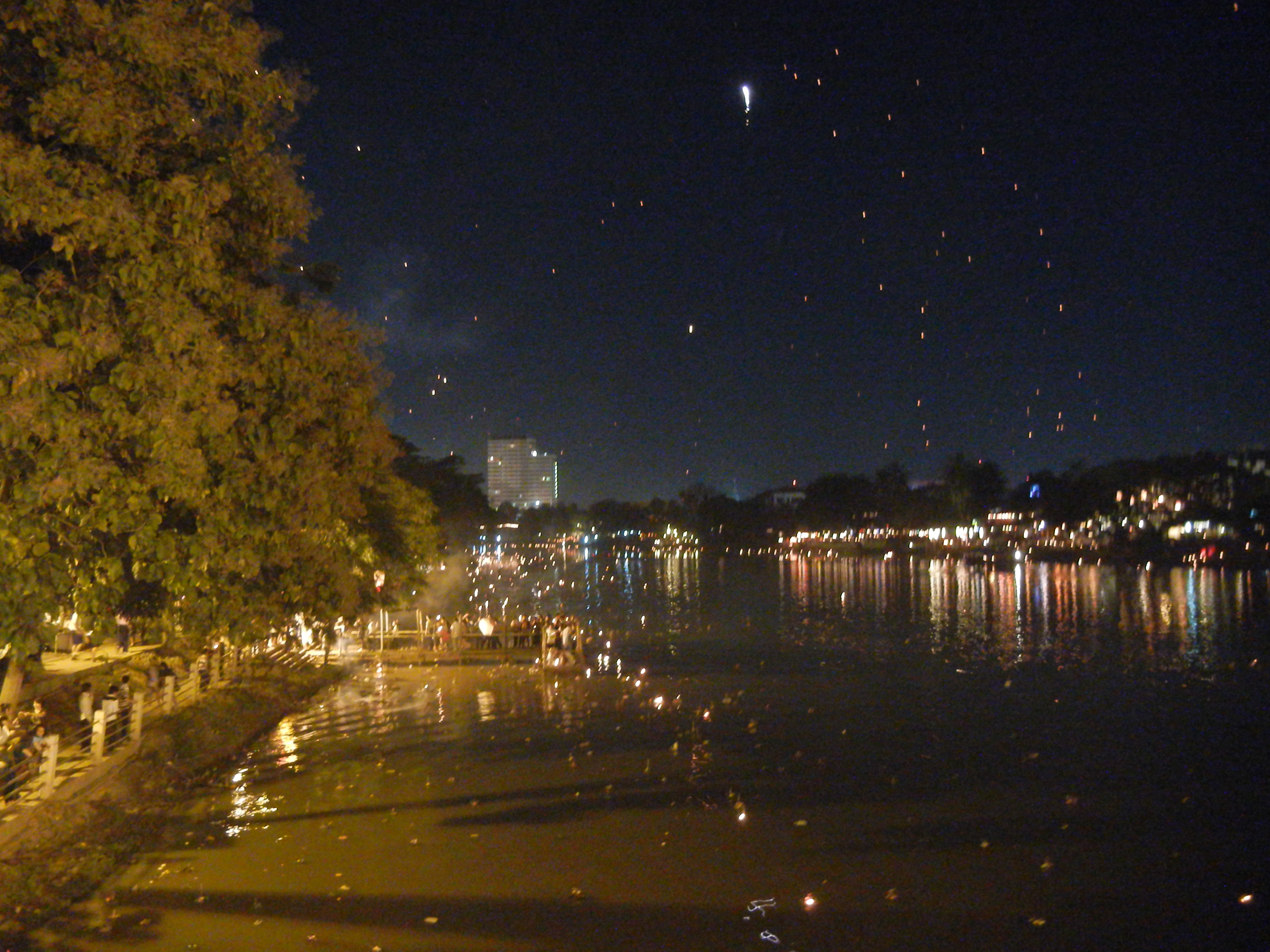
After the water unit was our four-day break, which came and went quickly, and what an amazing adventure it was! Just a quick summary — I went to Chiang Mai and saw the floating lantern festival. It was the most amazing thing, and it is a time to pay tribute to the river, so it was fitting following our water unit. I rode an elephant, played with baby tigers, and went bungee jumping (never thought I would…)  Although I indulged in foreign food like burritos and falafel, it’s good to be back in Isaan where there aren’t tourists and I get to speak Thai.

Onto the mining unit, which should be really interesting and I’ll have more time with internet to blog in a more timely fashion!


Community, Globalization, and Tons of Trash

October 24, 2011

So many villages, so little space to write about them…  so I’ll keep up with the highlights principle.  The highlight of the Land unit was definitely Baw Kaew community.  It is a protest village where the people were kicked off of their land, and two years ago they returned and have built a community.  There were people from all different villages, and through the shared struggle and passion, they have created something unbelievable.  The grandmothers share their stories of being kicked off their land with the children, who will continue to fight based on the devotion.  This unit showed me that an outside force or a powerful figure is not needed for a successful grassroots movement.  Anyone and everyone has agency, and it just takes motivation and passion to create change.  It was a really moving exchange and experience.

My Paw from this unit, other than the two one-nighters, was incredibly educated.  I was sitting watching Meh cook one night when Paw came into the cooking area.  He sat down next to me, pen in hand, and started to lecture.  All in Thai, of course, but the essence of the conversation was, “Julie, do you see this papaya—we grow them in Thailand.  You don’t grow them in America, yet you are able to eat them in America.  That is just one reason why globalization is so amazing.”  The lectures continued and got more and more complex over the course of the three days. There was a lot of guessing based on what was said or drawn (one day he got out his grandson’s coloring book and drew for us—an upgrade to the hand), but it was all an amazing lesson on both communication and globalization.

After the unit ended, there was an optional trip to the landfill near our campus.  Just 17km away, 200 tons of trash is brought in each day.  There is a community of 60 families that live there, started by just one man who went to make a living off of the trash.  Not only does it bring to light the realization of scavengers (those who work 20 hours a day picking through garbage to find plastic bottles to recycle), but it brings to light the realities of consumerism.  I literally climbed a trash mountain.  Not to mention the irony of the laundry detergent package I saw in the mud that read, “Hygiene”.

I was so blown away by the Paw that we exchanged with there.  He no longer works in the landfill, nor does his wife and children, but he lives there because he owns his land and he wants to make the community a better place.  Unlike in America, where people strive to get out of the slums, Paw was trying to improve the village.  He chooses to live in a dump — literally.

The problems with each village we visit are hard to stomach.  With each unit and each exchange, I continue to recognize the realities of a developing country.  It is natural to make comparisons to the United States, and we have many of these issues.  We have medical problems associated with damming and mining (the coming two units).  We have poverty that is solved by cash cropping.  There are so many problems in our world.  This country is so amazing, and my time here is invaluable, but it is hard meeting amazing people and learning about their suffering, unable to fix it.


So Much to Do, So Much to See.

October 3, 2011

Induction for international students at the University of Ulster (a.k.a. UU) is not unlike freshman orientation at UR. We had a very detailed itinerary with several meetings and speakers. Some parts were — how shall I say this? — less exciting than others. It definitely included information that I needed to hear, but my favorite day, by far, came on Friday– the day of registration and the city tour.

I had my enrollment form filled out and all ready to go by early Friday morning. I’m pretty sure my school here is fairly new to the whole online registration thing. I had a paper form filled out by hand, but then they led students into a computer lab where we basically input the contents of our form into the computer system. It was good for me, though… I was out of there in no time.

Some American friends and I decided to walk to the city center early to look around before the tour started. It is so liberating to attend a school that is embedded in a city. It takes about 20 or 30 minutes for me to walk to the middle of the Derry. Sure, UR is on the edge of Richmond, but it is pretty isolated. It is a great experience to go to a different type of uni (as the Irish students abbreviate). It is also a very different type of city. Derry doesn’t really have the glassy and steel office buildings and skyscrapers that litter Richmond’s downtown. Most buildings are made from stone or brick. Especially in the city center, buildings are hundreds of years old.

One similarity the two cities share is a winding river running through. However, for us, the James acts as a fun place to hang out with friends during the summer. The Foyle River here in Derry acts much more like a dividing line, but the people here are trying hard to change this aspect of the city. Before I can explain the geographic significance of this river I need to give a brief history of the country:

Northern Ireland has a sad history which is probably all that many Americans know about the place. Locals refer to these times as “the troubles”. They were a time of unrest and disparagement between Catholics and Protestants about the status of Northern Ireland as part of the UK or the Republic of Ireland. The Good Friday Peace Agreement of 1998 started to put an end to the bad times and the country has been recovering ever since. Derry has actually been chosen as the first UK City of Culture for the year 2013 (which makes the inhabitants extremely proud). I may have to make the journey back then to take part in the festivities.

So, back to the Foyle. The city center is located on the western banks of the river. This part of the city is called the “city-side”. The opposite side is referred to as the “water-side”. Traditionally, Catholics live on the city-side and Protestants live on the water-side. There is however a tiny bubble of protestants who live on the city-side. They show their pride here with murals and by painting the curbs red, white, and blue. Here are some pictures of that community:

Let’s return to the tour, where I actually learned all of this information. So, my friends and I were exploring the city before we were to meet up with our international group. We decided to enter The Guildhall, which is basically the city hall where the council meets. This building was amazingly beautiful. As an art person, I could really appreciate it. The floors, ceilings, walls, and even windows were beautifully made. The windows were stained glass dating back to the 1910s. When we met up with our school group here, we actually were able to sit in the same room the council meets and hear the Mayor of Derry speak. Here are some photos of this building and the mayor:


Our tour guide, Garvin, showed us around the old city walls and energetically told us the stories of the city. The walls surrounded the original city of Derry for protection. They are quite wide and tall and the public is allowed to walk on top of them around the city.

Some cafes and churches are actually located on the walls. They are about 1 mile in circumference. The views from the walls are spectacular. Derry is located in somewhat of a valley, so you can see surrounding churches, neighborhoods, mountains, and the Foyle River. I can actually see the Foyle River from campus. The views here are unlike anything I have seen. Although the tour was optional, I am so happy that I came along. I know so much more about this beautiful city. Here are some pictures from my adventure around the walls:

My main advice to anyone wishing to or planning to study abroad is to take advantage of any opportunity that is offered you. If the school planned a city tour, take it. If there is a seemingly boring residence meeting followed by dinner, go. Attend as many events as possible. Meet as many new people as possible. Immerse yourself in the culture. Become part of the culture.

Fun Fact #3: Derry, Northern Ireland is home to the oldest department store in the world, called Austin’s. Yes, it is older than Macy’s in New York and Harrod’s in London. It recently celebrated its 180th birthday.

Fun Fact #4: To be called a “Professor” in Ireland is much, much more impressive than to be labeled a “Doctor”. It’s a little tough keeping this cultural difference straight.


Initial International Interpretations…. Italy

September 14, 2011

So, the past week and a half has been very… interesting, exciting, scary, overwhelming, mind-blowing, awing, amazing, and overwhelming… did I already say that? Ha, which is part of why I am a little behind on my posting. Sorry, people. As transitions go, this is certainly no walk in the park. New country, new language, new people, on top of missing home country, home language, and home people has not been easy. I won’t lie to you, loyal readers — I have had some tough days. But I must say that as far as first weeks go in a new country, especially while fighting through my homesickness and broken heart, in retrospect, it has been pretty amazing.

I figured I would talk mostly about cultural things and differences in this post and save some more of the fun stuff for later (but don’t worry, there is still plenty of fun to go around). So, my biggest window into sharing cultures and gaining a more worldly perspective so far has been through my Italian Intensive Language Course offered here by Bocconi, 5 hours a day Monday through Friday until academic classes start, then night and weekend classes for another week after that. Now, as you can imagine, 5 hour classes starting at 9:30 in the morning that are spoken in a language few members of the class can speak at higher than an elementary level can be a little boring…. to put it nicely. But as people have been known to bond together through agonizing experiences, my class has become somewhat close-knit over our past 10 days together. This melting pot of world travelers studying at the University includes an equal mix of Brazilian, Spanish, French, Dutch, German, Canadian, and American students, all being taught by an Italian teacher. While we all come from different places and walks of life, we have found things in common that have created the beginning of some beautiful friendships. I have been pleasantly surprised (especially given all of the American stereotypes I am trying to kill off) that our different cultures don’t separate us, but instead bring us together with an attitude of curiosity and open mindedness. Spending time in and out of class, going during our break time to get lunch together, and hanging out in the park on a nice weekday night has really been meaningful to me. Sharing customs, jokes, games (I played my first game of European soccer on Tuesday and it was sick; 1 goal and 1 assist)… We have been able to learn a lot about each other and where we come from.

Besides learning about everyone else and where they are from, I have also learned a lot about myself and where I am from. The first week I was here, I was having a conversation with a friend of mine from Barcelona about Milan and studying abroad, and in the course of the conversation, I asked:

“What do you hope to get out of being here? What are your goals?”

Needless to say, his answer shocked and made an impression on me, or I wouldn’t be writing about it now. He said: “That is a very American question, John,” in a cool Spanish accent that I’m slightly jealous of.  “Americans are so goal oriented, always looking for the outcome… I don’t necessarily mean that as a bad thing, ” he continued. “Americans are very driven and motivated, so they accomplish a lot, but sometimes they forget to stop and look around.”

So I thought about my response… and I thought, and then when I thought I knew what to say, I thought a little bit more… and I finally said, “You’re right.”

I was impressed by his insight in evaluating my culture, and I was taken aback by the true realization that Americans frequently miss what is most important in life. Europeans value things much differently than Americans in terms of success. In terms of time and efficiency, they are polar opposites;  just being in Italy for a week has driven a control freak like me to insanity because of the inefficiency, constant strikes, and seemingly pointless bureaucracy. But I must say, in many ways, they are happier people. They are more welcoming, less competitive and cutthroat, and often very relaxed. Whereas Americans get annoyed by foreigners who don’t know English, Italians welcome foreigners and are always eager to explain and help them learn. I hope while I am here, I can continue to develop myself in a way that allows me to hold both my goals for success and my values of a happy and enjoyable life on an even plane. I will not be disloyal to my beloved America, but I will also not be naïve enough to believe we always know best. Everything about this is a learning experience, and the first thing I am learning about is my own perspective on life.

Words of wisdom: like flavors of gelato, we are all made from different things, but we are all very good in our own way.


How do you say hakuna matata in Thai?

August 1, 2011

Well, I’ve never blogged before but what better time to start than two weeks before I leave for my semester abroad. My name is Julie and I am a junior at the University of Richmond studying Leadership and Political Science.  I am from New Jersey so the adjustment from suburbia to rice paddies will surely be interesting.

As I gear up to go to Thailand, “no worries” is the most prevalent thought in my mind.  As far as my language capabilities, they are limited to a restaurant take-out menu and I am pretty sure that English is not as prevalent there.  The dress code is very different from what I am used to (no gym shorts!) And did I mention it’s near the equator? Hello eight month summer. I have a feeling I will be returning with many mosquito bites. What is an adventure without a challenge though right? (and yes, I am freaking out—but just a little..)

The country itself has been politically unstable for the last six years.  It is amazing that I will be there just after an election (they just elected their first female prime minister!), especially as a political science major-as long as more riots don’t break out.  The local communities and rural areas have become more politically active over these past years and technology is finding its way out onto the rice paddies.  As a student of political science, this is truly awesome.  I am about to embark on an adventure where I get to witness grassroots government and its founding.  The program is focused on development and globalization, so I am given the opportunity to participate in NGO workings and grassroots community development.  Having worked in my Congressman’s office this past summer, I have seen government and democracy first hand, in fact I have contributed to it.  I am both excited and a little scared to see the juxtaposition Thailand is sure to pose.

So, how does one prepare to go to such a place?  Well I am meditating more—both to calm the nerves and to experience a taste of Thai culture before I leave (or maybe its just cause my mother keeps telling me to).  I am also attempting to eliminate all expectations that I have.  I recently learned that Denmark is the happiest country in the world, and it is because they do not have expectations.  I know I am a control freak, so this is not the easiest task I have taken on, but I am going to live abroad with a no expectation and YES attitude.  A good friend who just got back from abroad told me to accept every invitation, and I fully intend to take her up on that challenge.

So for now, I am packing, finishing out my internship, and learning as much about my future home as possible.  So hakuna matata in Thai—still no worries.  I plan to live every day, study hard, but explore more.   This is my greatest adventure so far, and I invite you to follow along on my journey as I truly live and let Thailand happen to me.  So all aboard, next stop Thailand.