Mel in Chile: A lot of time in a few places

December 3, 2013

Last week I went back to Valle Elikura, the location where we engaged in a home stay about a month ago with my study abroad program.

I went back this time because of two main reasons. My research project is an analysis on the experience with community-based tourism in the area. I gave some interviews when I was there with the group but as my research developed and I had a better grasp of the topic in question, I naturally developed questions that were more analytical. Ready with my informed consent forms, I walked down to the bus station as if I was walking to my deathbed, to buy tickets for the overnight nine-hour bus ride to Cañete. My journey would not end there; from Cañete I needed to take another hour-long bus ride to Valle Elikura.

Nevertheless I arrived in Valle Elikura early Sunday morning. Silvia was my host mother when we traveled with my group and I had called her prior to my coming to ask if I could rent the cabin again. She cheerfully agreed and told me she would also provide all three meals. Silvia had left the house early to come meet me at the location where the bus form Cañete dropped me off.

I arrived at the cabin fourteen hours after I left my home in Santiago.

I took the rest of Sunday to rest. Valle de Elicura is an incredibly peaceful place. My room in Santiago faces a very busy street so I was more than happy to trade in the noise of 8 am traffic for the chirping of birds.

I began Monday by starting my work right away. As I greeted familiar faces in Valle de Elicura I felt more and more comfortable every time I spoke with someone I had previously met. This is when I suddenly and pleasantly realized that coming back to visit a place for the second time is an entirely new experience. I enjoyed going back to the river where I ran by on my first visit. After some exploring I found a beautiful meadow. As I lay in the grass, tranquil, away from noise, distractions and other people, I could not help but feel as though I was inside my own conscience. I allowed myself to bathe in this beautiful solitude.

I stayed in Valle de Elicura until Wednesday. I ate all of my meals with Silvia, Lautaro, and Kata (Silvia’s husband and granddaughter). I enjoyed staying with Silvia’s family the first time, but this was even better. It is precisely what I referred to in the above paragraph. I went to visit the people I had interviewed a month ago. The feeling of familiarity, of “Hey! It’s nice to be here again. Nice to see you, how is everything?” is something that feels incredibly warm for me.

Many people have a thirst for constant travel; to hike through as many beautiful mountains as possible, to visit vibrant cities, to jump around countries and see different cultures.

I imagined I would have the same mentality during my study abroad semester in Latin America.

I can assert with confidence that I belong to the other group. I found that I subscribe to the spend- a- lot- of- time- in- a- few- places  philosophy of travel.
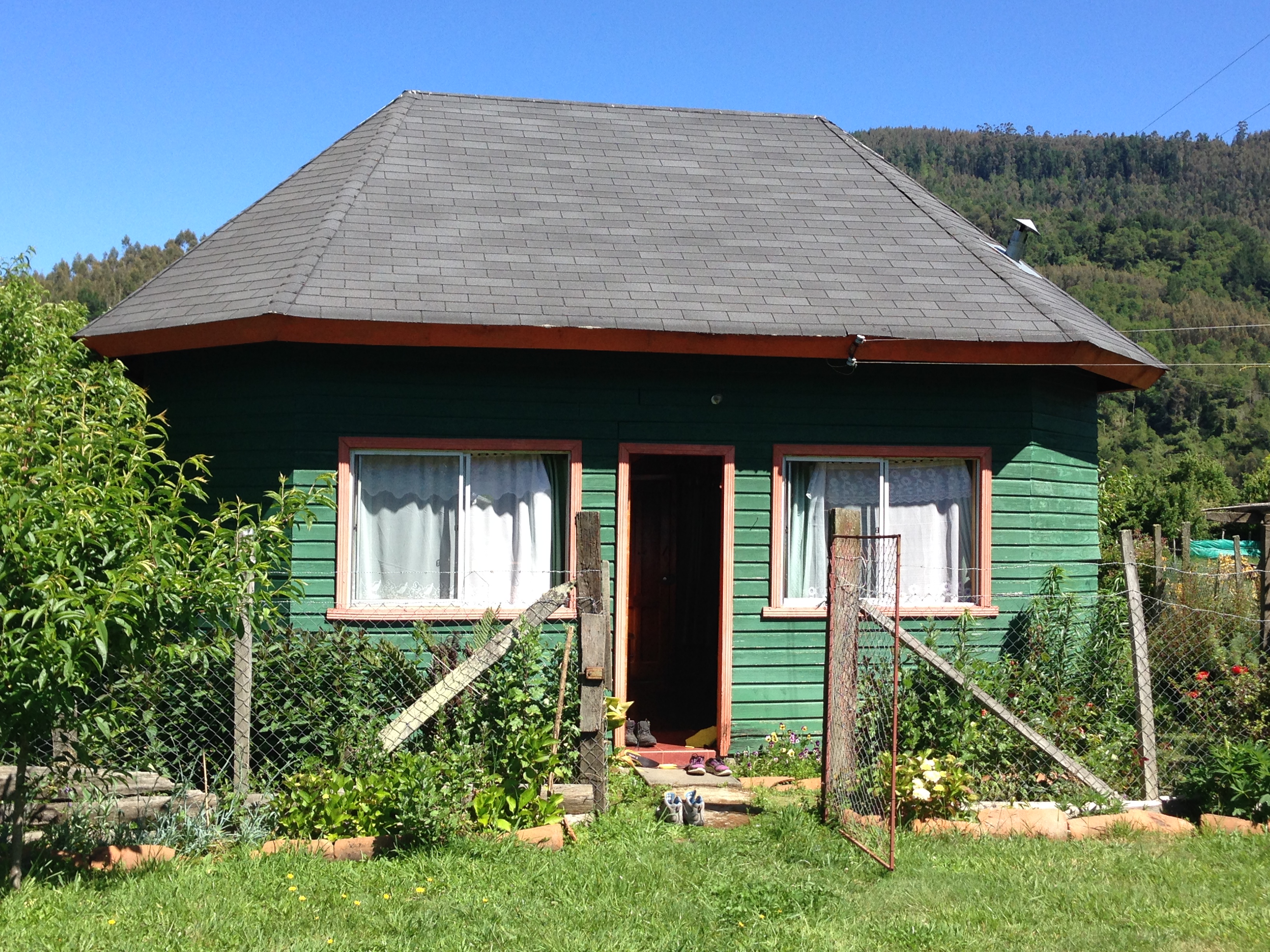
cabin

Silvia’s cabin in Valle de Elicura


Rhiannon in India: Missing Life in Hyderabad

November 22, 2013

Right now, I am on a plane on my way to Kochi, Kerala. As I wrote in my last post, I am spending the next two weeks travelling through the southern states of Kerala and Karnataka, known for their coastlines, mountains, and coconuts. As soon as my Hindi exam ended today, I rushed home to pack my things and headed to the airport, eager to finally escape school life and being an amazing adventure. But this excitement came at a price. I have been so engulfed by exams and planning for this trip, I had not realized that I would be seeing many of my friends for the last time today. When we left the exam room this afternoon, many of my friends and I realized that our end-of-semester travels would be separating us until it was time to go home in December. We said our goodbyes, but it seemed so rushed and unexpected that it left me feeling strange about leaving for my trip. I know I’ll see many of my American friends again, whether it be in India before we leave or once we are back home, but these goodbyes made me realize something even worse. Even though I’ll be in India for a few more weeks, I will never be in the daily routine that I developed earlier this semester. I may never get to experience the little things that became so normal and part of my everyday life, like being greeted by the familiar auto-wallahs in our neighborhood, riding my bike to class with two flat tires, or eating a pound of rice at my favorite canteen on campus. So although I am thrilled to start my two-week trip, it is a bittersweet excitement.

I know I’ll miss every experience, every interaction, and every person at some point when I get home, because it is often the little things that come to mind first when I am reflecting on my stay in India. Nevertheless, there are a few people that I will really miss having as a part of my everyday life once I am home.

The first is my host family – Nivedita, my host mom, and Prerna, my host sister. Looking back on the semester, I feel so lucky to have been placed with this host family. Nivedita and Prerna were always so kind and patient with us when we would ask endless questions about Indian culture. Nivedita would always let us crowd around her in the small kitchen while she was cooking dinner to watch and write down recipes. She would also spend hours after dinner telling us the religious stories about different gods behind all of the holidays we were celebrating, and was the primary source behind many of my blog posts this semester. Prerna was also a very good source of information when it came to understanding the ins and outs of Indian culture. We really got to bond with Prerna when she came with us on a long weekend trip to Mumbai. She had never been to Mumbai before, so we all went together to explore the big city, see some sites, and go shopping for “western” clothes. My favorite part about hanging out with Nivedita and Prerna was when we go on trips with them. Last weekend, Nivedita’s sister and her two kids, Sanskar (12) and Isha (5), were visiting us from Pune to pick up Nivedita’s mom, who we called Aji (grandma in Marathi). While they were all staying with us, we went for a day trip to a town to the north of Hyderabad called Warangal, known for its farmland and historic temples. We spent the whole day hopping from site to site in the taxi while we had the best time hanging out with the family, especially the two kids, Sanskar and Isha. Everyone welcomed us into the family and treated us like we were one of them, especially Isha, who attached herself to Jennie and me the whole day.

Family at Warangal

Our host family at a temple in Warangal

Jennie Sanskar Isha rice field jumping

Jennie, Sanskar, Isha, and I jumping in a rice field near Warangal

I am also fortunate to have had the opportunity to meet the neighbors in our apartment building. One of the first people we met when we moved into the apartment was Moulali, the watchman. A middle-aged Telugu man, he knew very little English (and I knew even less Telugu), but somehow we always managed to communicate about where our host family was, what he was having for dinner that night, where we were going, and when we’d be back. Every time we came into the carport, where he and his family lived in a small room, he would yell, “Namaste!” and fold his hands dramatically. He was always extremely energetic, and my best memory of Moulali was when Jennie and I gave him a flower for him to give it to his wife, Narasimha. He took the flower, then sang and skipped all the way across the carport to his wife to give it to her.

Moulali and Narasimha

Moulali and Narasimha, the watchman and maid for our apartment building

Throughout the semester, we formed a close relationship with the other family on our hall, spending many afternoons or weekends hanging out in their apartment watching TV, or eating lots of snacks, and playing with their two kids Binnu (9) and Quiny (5). Madhu and Sandiya, the parents, were so kind and welcoming to us, and now seem like an integral part of our host family. We also became really close with the family living in the “penthouse” apartment on the roof. They also had two kids, Lalith (14) and Spandana (9), who we also spent a lot of time with. Lalith, a super smart rubix cube master, would always hang out in our apartment and tell us about the things he was learning in school. Spandana loved to come over to color or learn English songs from YouTube on our laptops. As the semester went on, our three families spent more and more time together, sharing meals, going to the park, and even doing sunrise yoga on the roof.

Binnu and Quiny Diwali

Binnu and Quiny in their Diwali outfits

There are many other people I will miss as well. I will miss spending evenings with Jennie doing homework, making cookies, and watching old episodes of Disney channel shows. I will miss traveling to new, exciting places with my friends from CIEE. I will miss meeting with my peer tutor Rajini twice a week to attempt at speaking Hindi. I will miss going to dinner and concerts with my friends from Hyderabad. And the list goes on.

Rajini

My peer tutor Rajini and me at our normal meeting spot in front of the library

Of course, I could list just as many, or more, things that I miss from home right now too, and I’m excited to go back to my family and friends in America. But now that my time in India is coming to a close, I wish that I could stay here for a little longer and prolong the end to these wonderful experiences I have had this semester.


Rhiannon in India: Ending the semester on a great note

November 19, 2013

I starting to dawn on me that I only have few weeks left in India, and what’s worse, only a few more days left in Hyderabad! All of a sudden, I am scrambling to spend as much time as possible with my friends in Hyderabad, the other students in my program, and my home stay family and neighbors. To add to this busy schedule, I am hurrying to find gifts for my family and friends at home, plus attempting to study for finals and plan for my end-of-semester travelling. Because of all this craziness, it has been hard to find time to blog about my recent experiences, not to mention stopping to reflect on my semester and going back home. Nevertheless, I am happy that, in the past few weeks, I have been able to spend time doing the things that I will miss most once I am back home.

It may sound strange, but one thing I will miss most about this semester is sitar practice. Twice a week, five of my friends and I spent at least an hour in the evenings learning sitar from our wonderful teacher Vinoj, who only knew a few words in English. We learned mostly by watching and repeating what he played, but he would always say, “very good, very good” accompanied by a pat on the head, if we played something correctly, or “WRONG” if we messed up. Although we couldn’t communicate much through language, our teacher was always enthusiastic and supportive of us, and it provided a lot of hilarious moments during practice. Last week, we finally performed in the SIP Cultural Show, playing two songs on sitar that we have been practicing for three or four months now. It was really nerve-wracking to perform in front of a large auditorium full of UoH students and professors, but we were all proud of ourselves for performing only a few months after starting to learn sitar from scratch. As soon as we started playing our second piece, a popular Bollywood song, the whole crowd erupted in applause, and afterward, some of my Indian friends said we stole the show!

Sitar class

Sitar class with our teacher and tabla player

Here’s a video of our performance:

http://www.youtube.com/watch?v=hkGTHHZxlF0

Another thing I will miss a lot is hanging out with the little kids in my apartment building. A few weekends ago, Jennie and I were missing home, so we threw a Halloween party and invited all the families in our building. We decorated the rooftop patio with orange balloons, paper pumpkins and bats, and tissue paper ghosts. We bought tons of candy, a pumpkin, and some art supplies and planned some activities so that all the kids could participate. When the kids showed up that night, they were all decked out in full costumes, masks, capes, and face paint! We wore costumes, turned on some music, and played Halloween-themed bingo, pin the spider on the web, and musical chairs. The biggest hit among the kids was the “brain bowl,” a pumpkin full of noodles with prizes in the bottom that kids had to find by reaching their hands in the “brains.” Usually, we are constantly asking questions about Indian traditions, so it was nice to share a little bit about our culture in return, while getting to spend time with our neighbors too.

IMG_2537 (1)

The kids in their costumes for the Halloween party

Halloween weekend also happened to be Prerna’s birthday and Diwali, so the whole weekend was full of celebration. On Saturday, Prerna decided to celebrate her 15th birthday at an orphanage in Hyderabad that she had visited before with her school. We loaded up the car with toys and headed to the orphanage with our host family and some of our “extended host family” as well. Going to the orphanage was one of the many eye-opening experiences I have had while being in India. When we arrived, I thought it was a girl’s orphanage because almost all of the children I saw were girls, ranging from infants to pre-teens. However, I realized that it is only because many families in India can’t afford having daughters that the orphanage was so overwhelmingly female. It is illegal in India to determine the sex of a child before birth, so many baby girls are abandoned after they are born. To add to this problem, the social stigma around having children out of wedlock and the discrimination of children with divorced parents causes many mothers to abandon children regardless of their gender. This was a sad reality to witness firsthand at the orphanage, but while we were there we met a few of the children that had been adopted, including one girl who would be leaving the orphanage with her new family to live in London in just a few weeks.

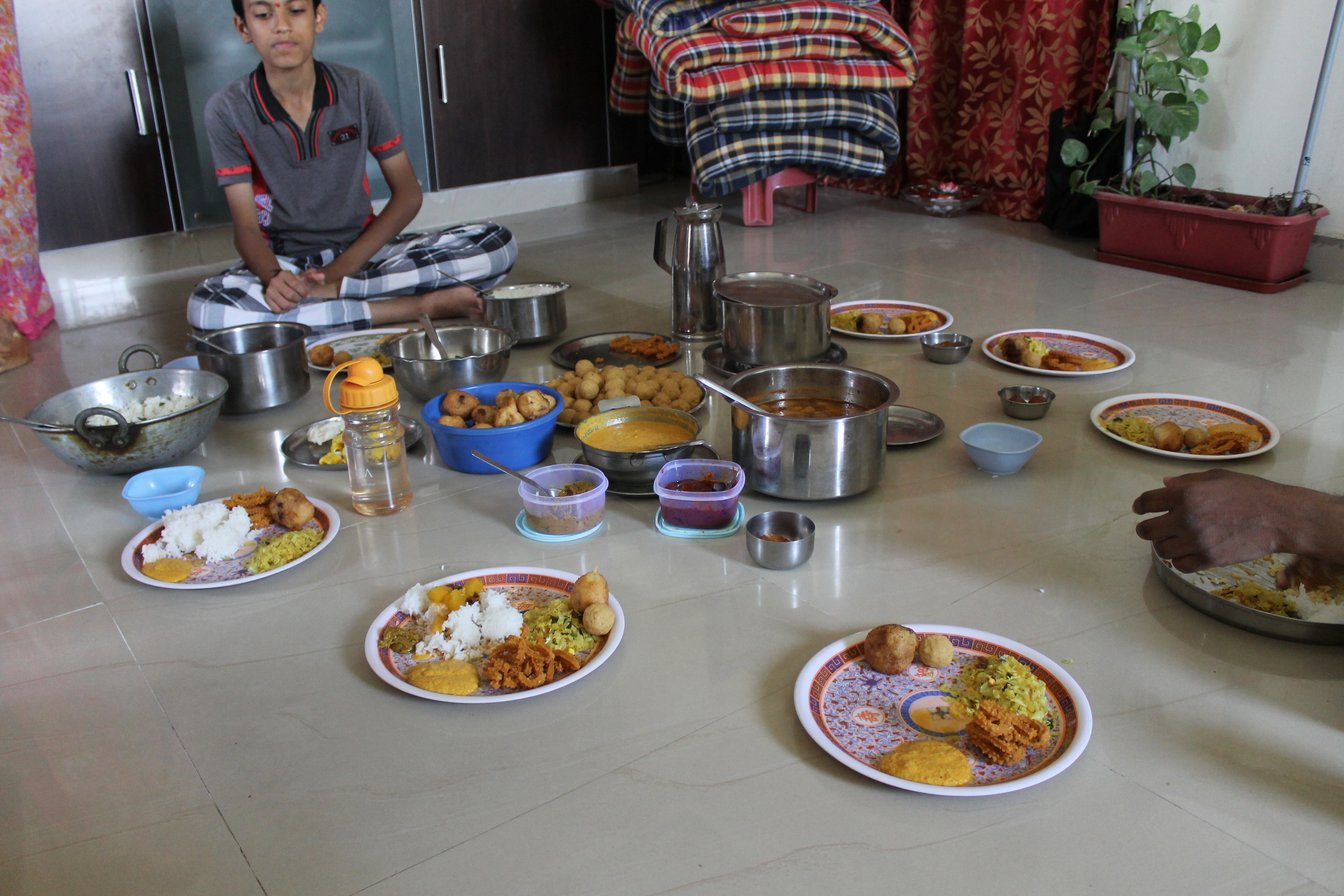
The next day, we celebrated Diwali, one of the biggest and most widely celebrated holidays in India,with our host family and neighbors. We feasted all day on white rice, lemon rice, curries, daal, roti, vada, peanut chutney, and tons of sweets like laddus, gulab jamin, and kheer. Then we spent the evening setting off fireworks and playing with sparklers. There aren’t many regulations on fireworks here, so it was actually quite frightening how many explosions were going off in the small alleyways and streets between the apartments in our neighborhood. Apparently Diwali is one of the most dangerous days of the year in India, and we even saw an apartment building on fire in the distance. We went up on the roof to watch the 360-degree view firework show going on for miles around us, but as the night went on, we all got headaches from the booming noises and smoke inhalation. Overall, my first Diwali experience seemed like a mixture of Thanksgiving, the Fourth of July, and Blitzkrieg.

IMG_5346

Our Diwali feast

In just a few days, after I finish exams, I’ll be heading to South India with my friends to explore the backwaters of Kerala, tea plantations in the Western Ghats, and the luxurious palaces of old kings in Karnataka. I’m anxious to start these adventures, but the excitement is bittersweet. When I leave for this trip, I’ll be saying goodbye to Hyderabad, the wonderful city that I’ve called home for the last five months.

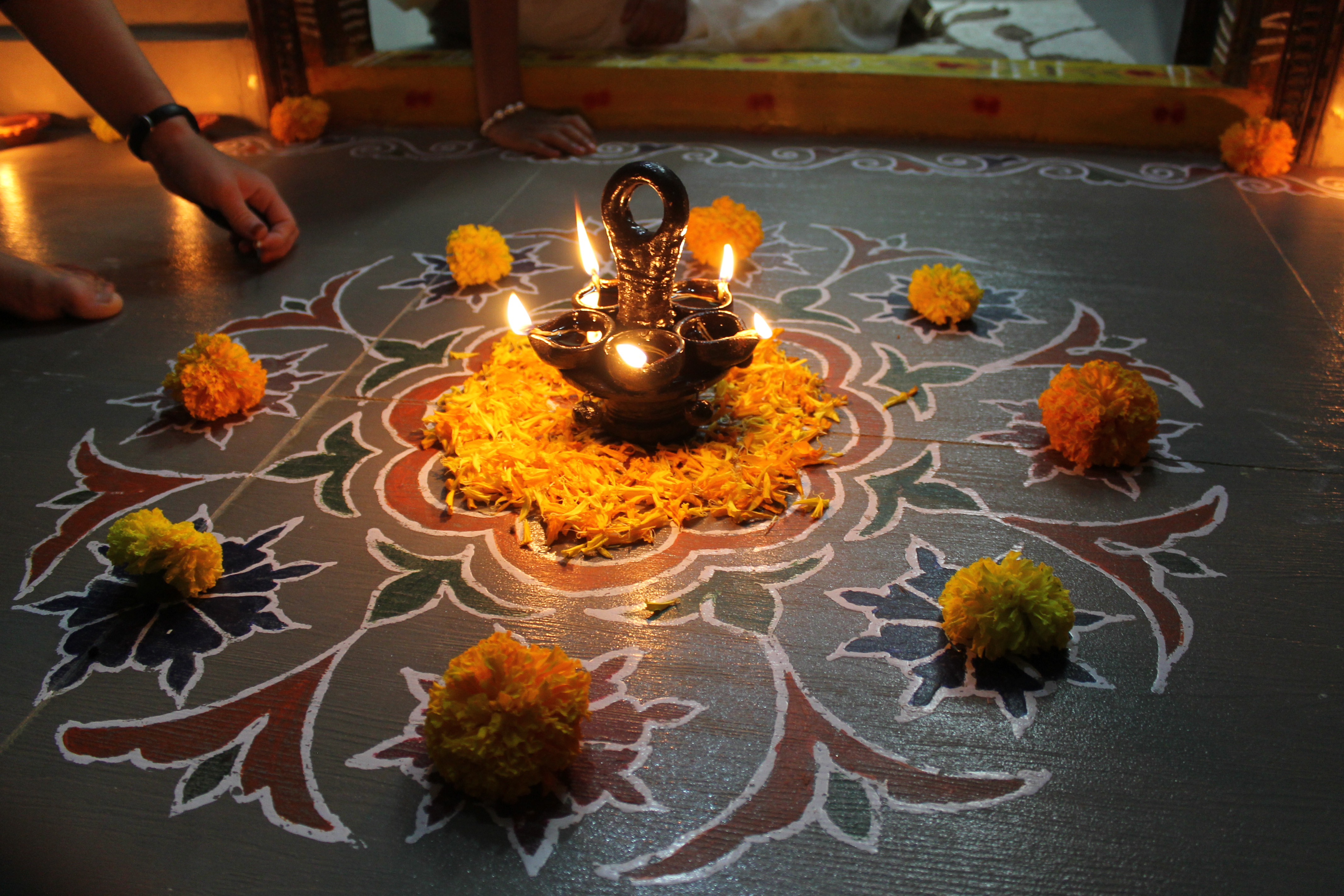
IMG_5405

Diwali decorations – rangoli and diyas


Mel in Chile: The South Part 3

November 8, 2013

Last time you heard from me, I finished writing about my homestay with a Mapuche family in a small valley called Valle Elikura.

We left Valle Elikura early Monday morning. We spent the next part of the trip in Dichato, a small town in the southern coast of Chile. We also took two classes in Universidad de Concepción about the economic, political and social influence of the forestry industry.

Before I start talking about the activities during the final days of our trip, I would like to share how I felt after Valle Elikura.

I think it’s safe to say when we travel and spend time with other people who are culturally or ethnically different than our own group, we tend to hope our time with them will attend to some questions, or curiosities. Likewise, I hoped that my time in the homestay in the Valle Elikura would answer many questions I had thought of in preparation for the trip. How did they feel about being surrounded by the forestales (general term for forestry companies)? Is there a space for the community and the forestales to discuss terms of mutual agreement for future plans? How had the concept of “ser Mapuche” (literally meaning “to be Mapuche) evolved through history? In which ways did this identity adapt to the political context of each time period? What are the major discontents of the Mapuche community in Valle Elikura with the Chilean state?

I refer specifically to the community in Valle Elikura because I wanted stay away from the fallacy of assuming that the Mapuche are a homogenous group. I did assume that everyone in Valle Elikura would share the same identity, have similar political views, and generally organize around the same “vision” for the community. I quickly found out my notion was embarrassingly wrong. To begin with, most of the families in Valle Elikura have one Chilean parent. My host father was a priest in an Evangelical church while the director of our homestay expressed great discontent with the infiltration of Western, monolithic religions in the Mapuche community. As I became aware of these dichotomies, I raised questions that tried to go deeper into learning more about the people living in Valle Elikura.

The more I tried to “learn” during the five days of my homestay, the more I felt I didn’t understand. It’s as if I walked into a cave. In the beginning, I had a torch with a small fire. I could see clearly as far as the light from the fire would allow me. But, as the fire grew and the light became bigger, I realized the immensity of the cave.

At the end of our second day, I wrote ten pages front and back of reflection in my journal. My mind never stopped thinking.

I never got to the bottom to any of my questions. It is impossible.

In this post, I wanted to share a bit of my personal reflection of the trip.

It was a milestone experience. I didn’t answer questions. It was the first time I put incredibly effort into resolving my inquiries and realized I could not do it. I could not reduce thousands of years of history and social processes and point to one fragment to say “this is the answer.” This may sound like an amazing and valuable epiphany, and it is. But when I was just understanding the complexity, I was very discouraged that I would never “fully” understand.

In my own opinion, I say I have a passion for the pursuit of knowledge. When I realized this pursuit would raise more questions than it answered, I became very cynical. I thought, “If I will never fully understand these concepts, then I should stop wasting my time trying.”

I am thankful I took some time to track where I learned to relate obtaining answers with successful pursuit of knowledge. I need not look any further than my current curriculum as a university student. My classes thus far have taught me to look for answers. They have taught me that assets should always equal liabilities. They taught me to model consumer behavior according to models and mathematical equations. I think somewhere in my 14 years of schooling, I learned to appreciate and value linear ways of thinking. The problem is at the top and through several processes of analyses and deconstruction, I arrived at the bottom; “the answer”.

The experience in the south broke that nonsensical concept.

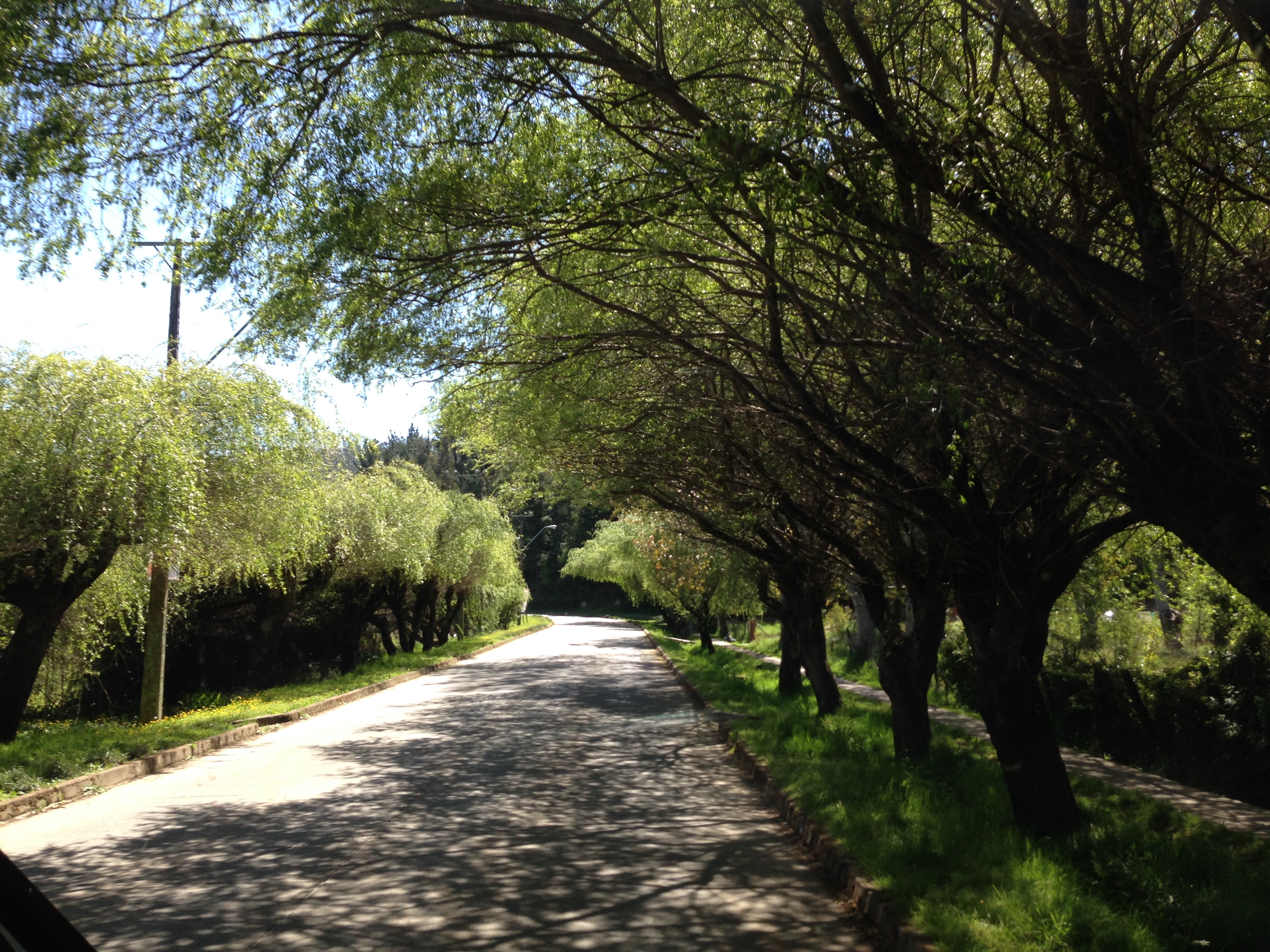
road

On the way to Dichato from Valle Elikura


Diego in Brazil: Getting to know Rio’s Zona Sul

October 29, 2013

If you have been following my blog or have read one or two posts, then hopefully you have noticed that I have been trying really hard to avoid becoming yet another tourist in this dynamic city. Typical questions from friends and family back home can be anything from “Do you go every day to the beach?” and “Have you visited many favelas?” to “Is every Brazilian really sexy?” or “Is it true that no one really works and people just relax all day?” What I experience every day at PUC-Rio (take a look at some of the pictures in this entry) is drastically different from these questions.

Diego.Brazil1

PUC-Rio constantly has new cultural activities on campus. This picture shows two students and many design and architecture books.

I must admit that if I had come to Brazil a year and a half ago I would most likely fallen into the trap of experiencing Rio de Janeiro from this perspective. And that is of course no surprise. The touristic and exotic discourse surrounding Rio de Janeiro has been shaped for decades. The mix of beaches, forests, mountains, and industrial areas make of this city a mystical experiment in the eyes of many.

Now that I look back, I can more easily understand why as a Guatemalan I grew up constantly having these images in mind. To some extent I think Rio the Janeiro becomes the object that could fulfill, in an ideological and exotic way, what many people think we lack back in Guatemala. I do not support this idea, but I write it here for you to have an idea why I have been so focused on not buying into it. Keeping this in mind, I have continued to wonder how to then avoid becoming yet another tourist.

Well, if you have read some of my posts you know I have tried to understand what each part of the city means for those who live here. Luckily studying abroad in Rio de Janeiro has given me the time to understand how different socio-economic and cultural groups experience this city differently. My host family certainly has a particular perspective on favelas, the government, Rio’s public services, the city’s wealthiest areas, and so on. Such perspective does contrast with the way many of those who I have met in my host university think. In the beginning I assumed that studying in a private university would restrict me to meet only a certain wealthy sector of Rio’s student population. As you may have guessed already, I was completely wrong.

I wrote this short entry because in the next two or three posts I will share with you some of my trips to Rio’s southern zone. My host family lives in one of these neighborhoods and after gathering different perspectives, stories, complaints, and expectations from many people in the past two months I feel somehow ready to let myself explore much more. Reaching a point in which I can fully appreciate how Rio is experienced differently by the countless groups and identities living here is of course impossible. Yet I have tried my best to build an understanding of the city that will allow me to leave my study abroad program knowing that I truly challenged and changed my past ideas of Rio de Janeiro.

We all have different goals for our study abroad programs. I will feel incredibly satisfied if I can get close to achieving one of mine. Come back for the next posts to get to know some of Rio’s neighborhoods!

Diego.Brazil2

A very interesting debate on the democratization of culture. I thought I would stop by to take the picture and eventually stayed until the debate finished.


Mel in Chile: Missing Richmond

October 8, 2013

Here it is!

I cannot accurately chronicle my time abroad if it didn’t include a post about how I am starting to miss Richmond. This also comes a couple of days after I decided that I would will go back to Richmond in lieu of another semester abroad.

Maybe the blog about missing UR and being excited to come back and the nostalgia that starts to hit me, would be more romantic or fitting if it were my last blog. But I will break with tradition here and talk about how I miss the red brick and grassy heaven that is the University of Richmond only a month and a week into my program.

Evidently, I am not the only one who feels this way. Our program director walked in today and said “Look, I imagine the month long excitement of being in a different country has waned by now. I know you all want to eat hamburgers again and are getting tired of eating so much bread (NEVER!). But this will pass. I promise it doesn’t last.”

After the one-month mark, I get the feeling the excitement of being abroad turns into a routine of waking up, having class during the day, hanging around a bit before going home, and finally coming in for dinner at 8 pm. After this, I start with homework/skype/reading news/reading things that don’t matter/answering emails until all this culminates into a trip downstairs for some pan con aji pebre (bread with the best spicy salsa concoction to ever be put on the market). I will be bringing 5 bottles of aji pebre upon my return to the states. This will probably last me a month or so and then I will suffer through a withdrawal phase. I could write an entire blog post about aji pebre.

The title of this post is “missing Richmond” and before I wrote the main body, I thought I was going to write about how much I missed Richmond, what I missed about it, and how I am so excited to come back.

All of this is certainly true, and I was going to write about it all without being too “You don’t know what you have until it’s gone” –ish

But then I decided not too. I will be back in Richmond and “have” all of what I miss in a couple of months.

So instead, I decided to write some things I love about living in Chile.

Pebre

Aji

Aji Pebre

How it is socially acceptable to eat a copious amount of bread

The movements for social progress

The people who perform in front of rows of cars stopped at red lights

The hot dog with fried potato chips around it

THE HOME MADE ALFAJORES BY THE LA MONEDA STATION (I can never buy just one)

The colorful stones the country has

The friendly Chileans

Chilenismos (Spanish words used exclusively by Chileans)

The Human Rights Museum

The National Library I go to study in every day after school

My walk to the university

The Andes.

The Andes.

The Andes.

San Pedro de Atacama

That good pizza place I went to on Tuesday after visiting Pablo Neruda’s house

Pablo Neruda

Pablo Neruda’s houses

Especially the one in Isla Negra

$2 Yoga classes at the studio close to my house

My host family

The delicious meals they cook
But most of all, I love sitting in the kitchen at 1 in the morning, when everyone is asleep, doing my homework while listening to a radio station that plays old Spanish, English, Portuguese, and French classic songs, with the volume super low.

The kitchen at night is my favorite place in all of Chile.

The list could be long enough to circle around the equator at least 13 times.

But nobody has time to read that!

IMG_1897

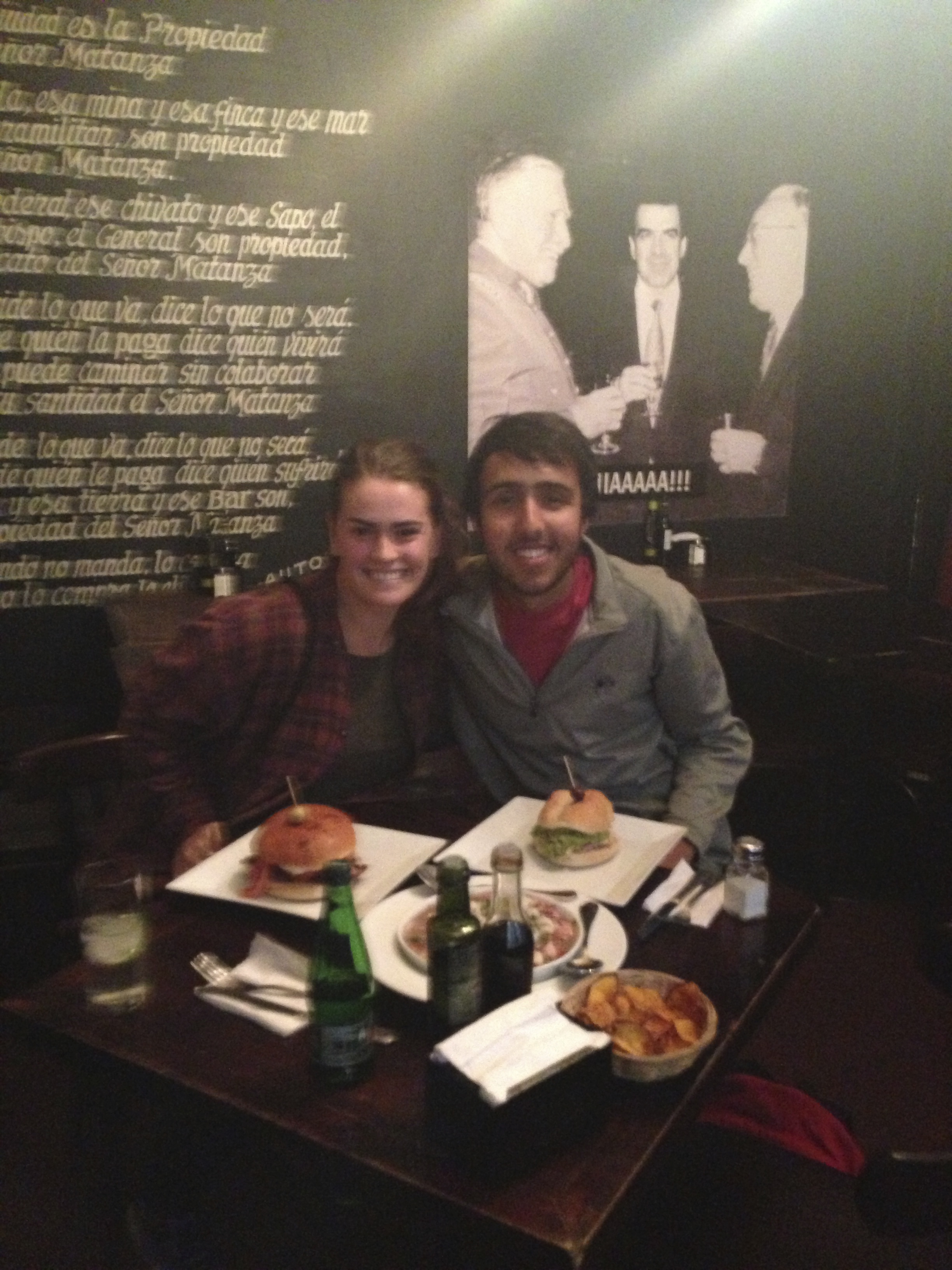
One of the most memorable days in Santiago! Neal, a UR student studying in Valparaiso, Chile, came to visit me for the day. We stopped for dinner at my favorite bar/restaurant “The Clinic”

IMG_2675

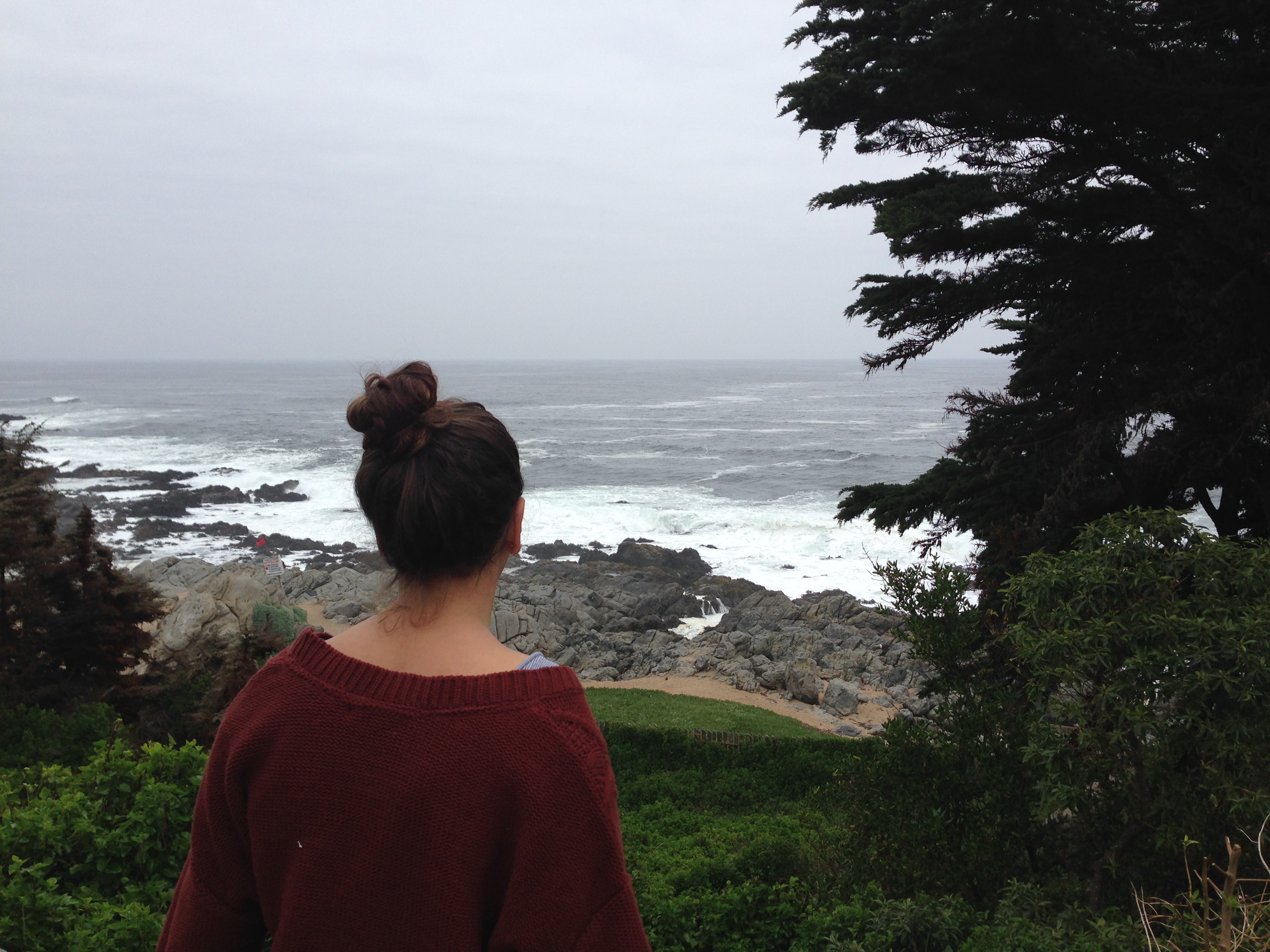
This view is from Pablo Neruda’s house in Isla Negra. I can definitely see what he loved about the place!

IMG_1823

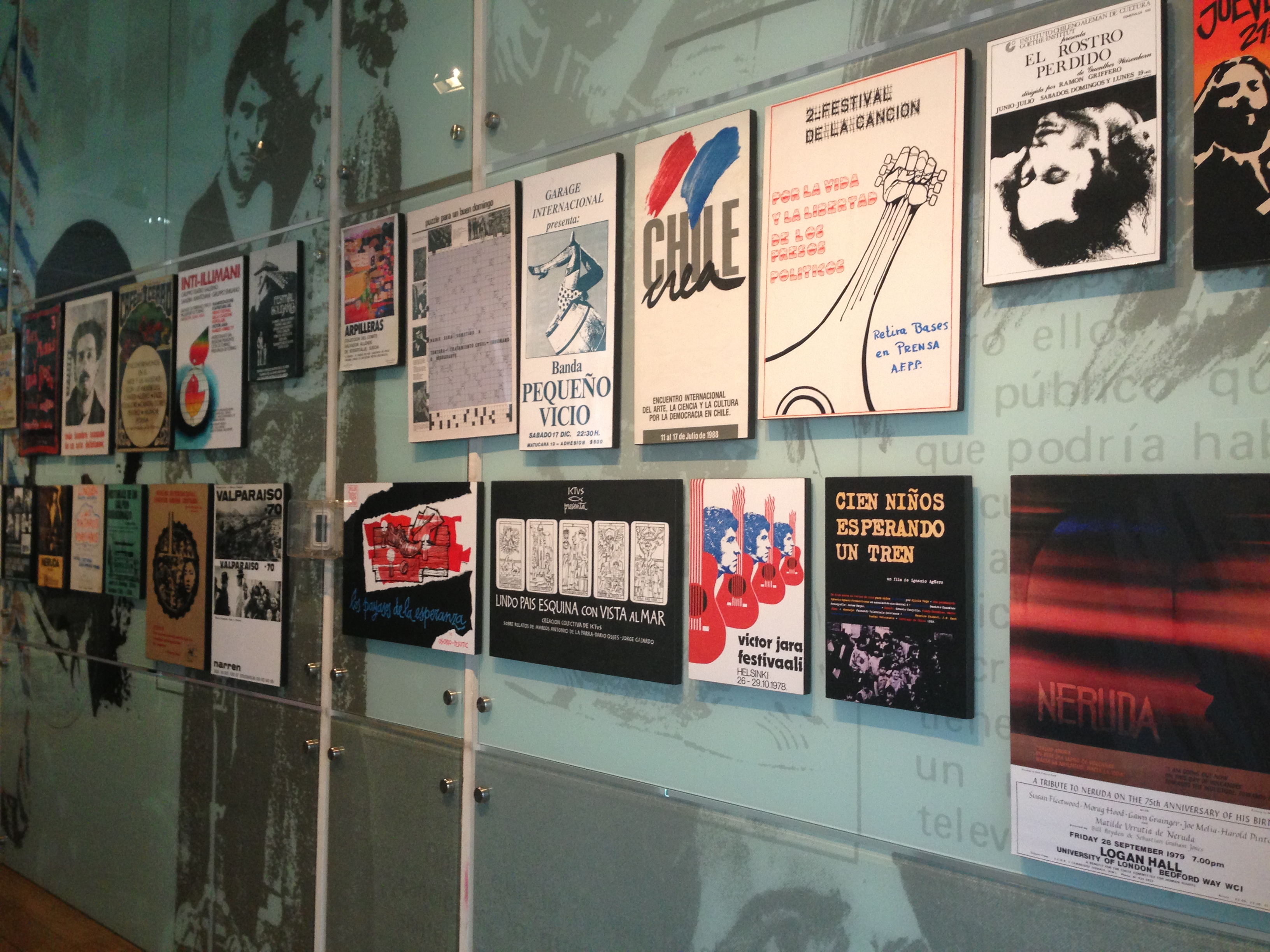
Picture from a section of the Museum of Memorial and Human Rights in Santiago. This is a museum dedicated to the 17 years of dictatorship (1973-1989/1990) in Chilean history

IMG_1765

This is the porch in my Chilean house. Now that summer is coming, it makes for a lovely place to spend a Saturday morning. We will start to have many barbecues here as well!

Hasta la próxima (until next time!) 🙂


Rhiannon in India: Indian Cuisine

October 2, 2013

If there’s anything that deserves the dedication of an entire blog post, it’s food. So far, I have loved the food here, and making the adjustment at the beginning of my trip was surprisingly easy. Some of the “dangers” that people warned me about still ring true, like drinking tap water or eating too much street food, but my friends and I have been here long enough now that we have adjusted to a lot of the differences. Sometimes I even go to a roadside stand with my host sister, Prerna, to eat a delicious snack called pani puri. When you go to a pani puri stand, the vendor takes a hollow fried ball out of a bag, pokes a hole in it with his thumb, throws in some mashed chickpeas with spices and cilantro, dunks the whole ball in a large vat of spicy broth, and hands it to you. You have to throw the whole thing in your mouth immediately before it disintegrates – and before he throws the next one your way.

As a disclaimer, my experience with food in India could never do justice to Indian food in general. Every state in India has its own trademark dish, and many people say that there is a new signature cuisine every 50 kilometers. This is because regional produce and ingredients almost always dictate the traditional dishes of an area in India because it wasn’t too long ago when India was made up of smaller localities called princely states. For instance, dishes in Kerala (the southern-most state, at the tip of India) always include coconuts – coconut oil, coconut water, coconut milk, or dry coconut mixed into curries, chutneys, and sweets. Hyderabad is known for its spicy rice dish called biryani, and everyone here is proud of it. Biryani is typically eaten for special occasions, is made in very large quantities, and can be made “veg” or “non-veg” with mutton or chicken. Biryani is made with a variety of spices, or masala, including cinnamon, cardamom, and cloves.

Biryani

Nivedita preparing biryani for the Ganesh festival

There are also many religious beliefs that dictate the way people eat in India. The ancient Hindu religious texts say that eating a strict vegetarian diet makes you peaceful, so being “veg” is a religious tradition and is also a symbol of caste identification. However, many people eat “non-veg” too, especially the Muslim and Christian communities, so finding a non-veg meal isn’t difficult. The ayurvedic texts also describe the health benefits of eating with your hands, like that your fingers correspond to the five elements, so using them to eat helps with digestion.

My host family is vegetarian, but Jennie, my friend who is also living at my home stay, is vegan and gluten-free, so now all of us eat that way at home. Unless I am traveling or my friends and I go out to eat, I mostly eat home-cooked meals by our host mom, Nivedita. In the morning, Nivedita makes us breakfast to take to school, usually consisting of fried rice and vegetables or dosas with chutney. Dosas are like super thin pancakes made of rice flour, similar to crepes in French cuisine. Chutneys can be made of virtually any vegetable, peanuts, or even coconut and are pureed with oil and spices. For dinner, we always eat together on the floor in the living room and usually have rice with daal (lentil soup) or a vegetable curry using okra, potatoes, onions, tomatoes, or carrots.

Dosas

Dosas with carrot chutney


For lunch, I usually eat at one of the student canteens on campus. These canteens are all over campus and range in size from full restaurants to little shacks behind the school buildings. At the campus restaurant, called Gops, you can order tons of different curries, rice, noodles, and breads like naan or roti. The smaller canteens serve chai (tea) and fried snacks like samosas throughout the day and serve meals only around lunchtime. When you order a “meal,” you get a huge pile of rice and unlimited amounts of the curries and chutneys that they have made that day.

Integrated Canteen

My favorite canteen on campus

Another important meal of the day in India is “tiffins,” which is like the Indian version of teatime. This includes chai of course, but also a variety of snacks that are all deep-fried and incredibly delicious. I have been to two cooking classes to learn how to make some of these snacks, and the cooking instructors tried to teach us healthier ways of making them, but that didn’t mean they spared the oil and salt. We learned how to make mirchi bujji, pakora, chickpea sundel, and chiwada. I won’t explain these in detail, but they are all fried in oil and a variety of Indian spices. These are also typical dishes to eat during the rainy season. As my cooking instructor put it, “When Indians smell rain, they also smell pakora.”

Tiffins

A tiffins meal on the train – idly, vada, and chutney

As you can see, there are so many different types of Indian food that it would be impossible to describe them all here. I always enjoyed Indian food before coming here, but I have realized that what I thought of as Indian food at home barely scratched the surface. One of the best parts about traveling to new places in India is experiencing just how different the cuisine is from region to region. It really shows what a diverse and interesting country India is!

Pakora2

Preparing pakora at the cooking class


Rhiannon in India: Ganesh Chaturthi

September 20, 2013

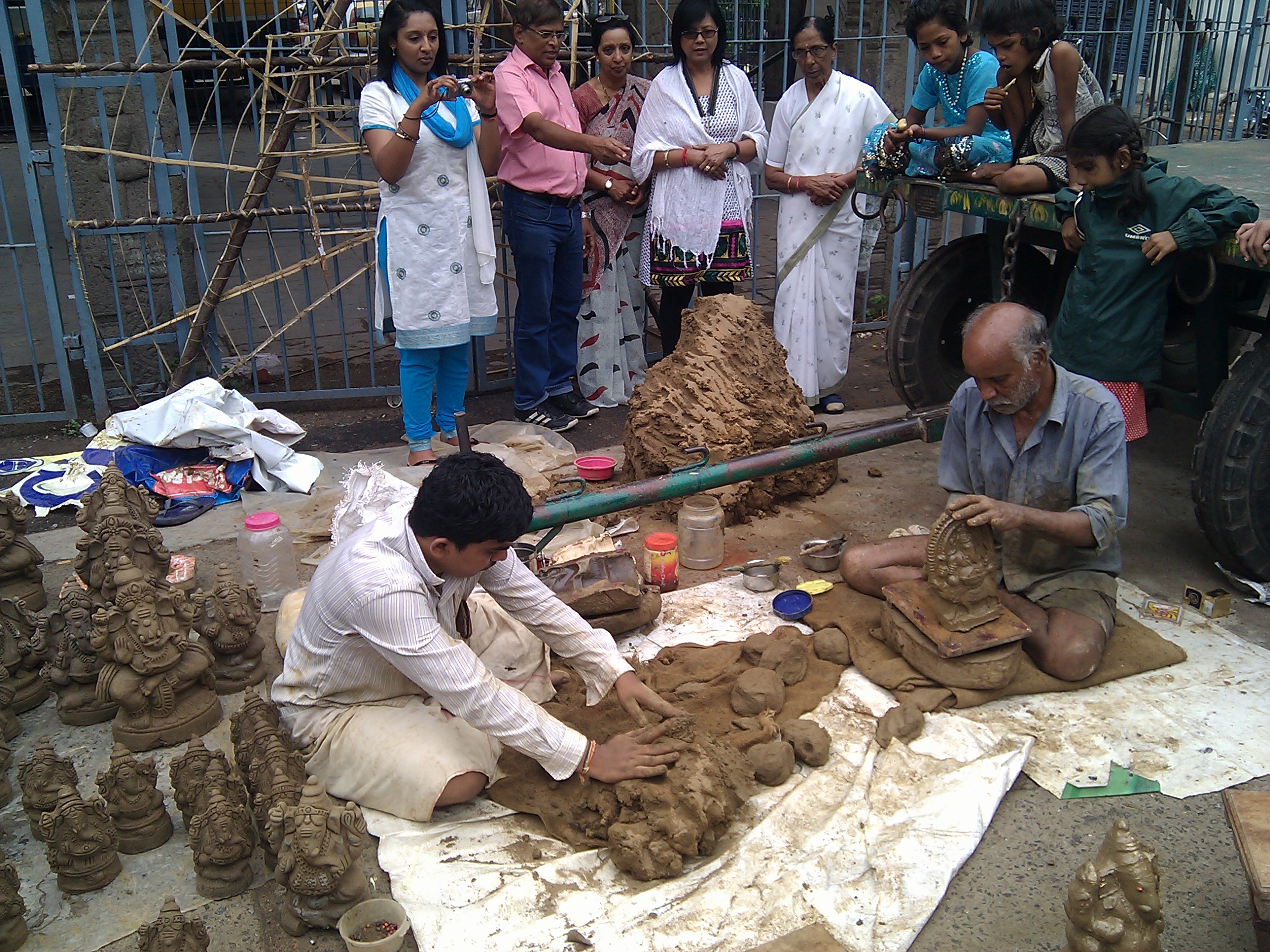
As I mentioned in my last post, the past week was full of celebrations in honor of Ganesh’s birthday, called Ganesh Chaturthi. People in India celebrate by putting up statues of Ganesh in their homes or on the road and do pooja (ritual) around the Ganesh every day for anywhere from 3 to 11 days, depending on different traditions. At the end of the week, they put the Ganesh statues in water for Immersion, symbolizing Ganesh’s journey home to heaven. Because everyone puts the Ganesh statues in natural bodies of water during this holiday, it has been a huge source of pollution that adds to the issue of clean water in India. Recently, people have started using clay statuettes that naturally dissolve in the water, but many plastic and painted statues are still used every year. In Chennai, when we visited the temple to make an offering to Ganesh, we saw men making the clay Ganesh statuettes on the street for people to buy instead.

Clay Ganeshas

Men at the temple making clay Ganeshas

As soon as we got home from our Chennai trip on Monday night, the weeklong celebration began in full swing in our apartment building. While we were in Chennai, our host mom, Nivedita, and some of the other women in the building had put up a pandal, similar to a shrine, that included a large stage, elaborate decorations, and a 4-foot tall Ganesh statue in the car garage beneath our building, colorfully decorated with flowers and other small statuettes. Every night for five nights, all of the families in the apartment building (about 65 people in total) would gather around the pandal for pooja, singing, games, and dinner.

First, around 8 p.m., all the women would sit in a circle in front of Ganesh and chant Vedic mantras together. Then, a pujari would arrive and begin the formal ritual by chanting loudly, apparently instructing us to do certain actions, although I could never understand what he was saying. Instead, I would mimic the actions of the people around me, throwing rice on the Ganesh, drinking coconut water, spinning around three times to the right, and many other things. Although I never fully understood what was going on, burning incense, breaking coconuts, and listing the names of our neighbors were among the usual things done during the pooja. After the pujaris were finished, we would begin playing games and singing. Most of the children – and there were a lot of them – were very interested in Jennie and me and wanted to talk and play with us constantly. During the Friday night pooja, the families wanted to do something special so Jennie, Prerna and I sang a Taylor Swift song and played guitar. It turns out Taylor Swift is just as popular here as she is in the US, if not more!

Finally, around 9 or 10 p.m., we started dinner, which was prepared by some of the women in the apartment. It always included an enormous vat of rice, lots of fried snacks, and a dessert. The dessert was the most important part of the meal because Ganesh is known to love sweets. In fact, all of the statues of Ganesh show him holding a laddu, a sweet ball-shaped dessert, in one hand. The dinner usually went on until 11 or 12, and even after we came upstairs, we would go to the neighbors’ apartments and chat for another hour, so we were always exhausted by the end of the night.

IMG_3638

Our apartment’s Ganesh pandal and food for the potluck

The most exciting part of the whole celebration was on Saturday, when we did the Immersion. As soon as we got up on Saturday morning, we started making biryani with Nivedita and Sandia, our neighbor down the hall. Biryani is a spicy rice dish special to Hyderabad – and we made 11 pounds of it for the potluck that day. When we gathered for the feast that afternoon, I was so surprised to see that there was even more rice, curries, snacks, and desserts that other people had made for us to eat. It was like Thanksgiving, but with more food than I could have ever imagined.

After eating, we started the procession of cars to the lake, displaying the large Ganesh statue in the back of the first car, like a parade float. The car had been decorated like the pandal, complete with flowers and all of the small Ganeshas from each apartment. After our neighbors blessed the journey by doing a ritual in front of the car with water, fire, and breaking coconuts, everyone drove their cars and two-wheelers slowly all the way to the lake while banging on pots and yelling “Jai! Jai!” The cheering didn’t stop until the last Ganesh had been thrown into the water.

IMG_3711

Blessing the travel of the Ganesh procession

The best part of this celebration was getting the chance met all of our neighbors. Now that Jennie and I have gotten to know them, especially the kids, we haven’t stopped hanging out with them since. Now, we have started eating meals on the rooftop with some of the other families. When the power goes out (which happens every day), we go to the neighbors’ apartments to pass the time together. A few of the kids come to our apartment every day after school to play games or ask for help with their English homework. Some of the kids have even made it their job to teach me Telugu, the local language, although I am hopeless at pronouncing the words.

IMG_3732

In the procession to the lake with the Ganesh statue

I feel so lucky to be surrounded by such a great community of people and that I have been able to form relationships with them over the past week. Not understanding Telugu, spilling the coconut water, or turning left instead of right during pooja didn’t seem to matter at all. Spending time with my host family and neighbors makes our differences melt away, and it has made a world of difference.

IMG_3763

Our family and neighbors on the day of Immersion


Diego in Brazil: Bureaucracy and social networks

September 13, 2013

Maybe it’s time for an “It’s been a month!” post, so here it goes!

A month and two days ago I was going by bus to the international airport in Lima. I had just finished a 10-week research/internship project in the Brazilian and Peruvian Amazon and I hadn’t really had the time to prepare for Rio de Janeiro. Now that I look back and think about that last week in Peru, I realize that I hadn’t built solid expectations for what could happen in the following months.

I guess typically these posts reflect on how time flew by, but it seems as if the opposite has happened for me. As I look at the calendar all I can think of is “has it only been a month?!” Don’t get me wrong, I have found an incredibly interesting combination of classes at PUC (my host-university,) a bi-weekly yoga class, two daily bike rides to and from my University, a lovely home with my host-family, the environment to learn Portuguese, and great people. When I say that it surprises me that I have been in Rio only for a month is precisely because of how well established I feel already. To show how far I have got in settling in Rio de Janeiro, I want to tell you about two very common topics in conversations among Brazilians: family and bureaucracy.

One of my favorite aspects of studying in Rio de Janeiro has been encountering a culture that highly values social networks. Similarly to other Latin American countries, you will find in Brazil that family and friends form a person’s safety network and may go as far as forming part of someone’s identity. In my Poverty and Social Inequality class at PUC, we have been discussing how social integration in Brazil happens mainly through these social networks. Western social thought has typically valued social integration through a person’s career and professional development over social networks. However, research conducted across socio-economic classes constantly shows that Brazilians will, on average, protect their social networks over seeking new employment opportunities.

I have felt incredibly comfortable living in this environment (I’ll blame my Guatemalan background,) and experiencing these social interactions again is making me want to go back home for some years to recover some of those networks!

Navigating a new place as an immigrant without strong social networks can be tough at times. This past Thursday I went to Brazil’s Federal Police to register as a foreign student (a mandatory procedure for all non-Brazilians who stay in the country for more than thirty days.) I stood in line for four hours, and when I finally managed to present my documents I was told my mother’s name did not match the police’s system. I didn’t get more than a “you cannot register until you fix this.” I came back home incredibly frustrated. The only exciting aspect was that I now needed to go to the Ministry of Foreign Affairs to correct my immigration documents. As you may remember from my initial posts, my favorite course at PUC is precisely Brazilian Foreign Policy, so the trip was not bad at all. “You can’t fight Brazilian bureaucracy,” replied my host-mother when I told her my story, “that’s why you always need to know someone.”

Diego in Brazil 4

It was quite a trip to the Ministry of Foreign Affairs this past Friday


Diego in Brazil: Biking in Rio de Janeiro

September 3, 2013

I never expected biking to become my favorite activity in Rio de Janeiro. It wasn’t until I moved to Rio that I realized I hadn’t had the chance to live in a city where biking is encouraged and the right infrastructure exists. About two or three weeks ago my host-mother suggested that I could bike to and from PUC, my host university, every morning and afternoon. I thought it was a fantastic idea (from a social, environmental, and financial perspective, biking is the way to go!) but first I needed to make sure I had a bicycle, a safe path to take, and, of course, the time to do it.

I initially thought about buying a used bicycle. I had seen countless bike racks (bicycle stands) in Rio de Janeiro’s Zona Sul (where I am living,) so I thought buying a used bike was a reasonable plan. I told my host-mother about my plan but she quickly suggested it would be better to subscribe to BikeRio first. Needless to say, I had no idea what she was talking about, so I asked her to explain. BikeRio is a sustainability project led by the city’s Prefeitura (similar to a City Council,) the Itaú Bank, and the bicycle system SAMBA. The project relies on approximately 60 stations with twenty bikes each located throughout Rio’s Zona Sul and some other neighborhoods. BikoRio’s main objective is to provide a low-cost transportation alternative for people who move around these urban neighborhoods. “That’s exactly what I need,” I told my host-mother, and I had no idea that I was about to expand my image of Rio de Janeiro by simply joining a biking program.

Using BikeRio is incredibly simple. You pay a $4.00 monthly fee and gain the right to pick a bike from any station and use it for an hour. After you return to the bike to any station, you can wait fifteen minutes and pick another bike. The project also has an app for iPhone, iPad, etc., where you can check if the closest station to you has any available bikes. And in case you are wondering, every bicycle I have used so far has been in perfect condition.

“Great, I now have a bike,” I thought, but I also needed to find how to safely get to PUC and then home every day. The first days that I biked to my University I took the route that my bus usually takes. At that point, that route was the only one I knew and taking it was quite necessary to avoid getting lost. With time I have found countless ways to get to PUC in the mornings and come to my apartment in the afternoon. However, and I say this without a doubt, the safest and most enjoyable route to take is around the Lagoa (Rio’s lagoon.) The city’s Zona Sul now has several biking paths and lanes that can take you across this part of the city crossing only some major roads. This past Friday and today in the afternoon I went biking without a particular destination, and I reached some very interesting and new places in the neighborhoods surrounding the one where I live.

DiegoBrazil4

Biking is becoming increasingly popular in Rio de Janeiro’s Zona Sul

So I have a bike (well, several) and a safe way to get to and from PUC every day, but do I really have the time? Going by bus to my University saves me a total of 40 minutes per day in comparison to taking a bike. Now, if I were to base my transportation choice purely on how much time it takes out of my day, I would have to go for the bus. However, the benefits I get from biking are definitely greater than what I could get out of those 40 “extra” minutes each day. Those benefits impact my health (both physical and mental, since I have found that biking can clear my mind for a while,) my perception of Rio de Janeiro (you certainly become part of the “biking community,”) my finances (I calculated that I save approximately $68 per month if I take a bike instead of the bus,) and many social and environmental aspects of the city. From a holistic point of view, and as I said in the beginning, biking is the way to go!

I am looking forward to biking beyond Rio de Janeiro’s Zona Sul. I recently met some Brazilian students at PUC who go biking for fun every weekend, so I am truly excited about joining them this coming week. Buying a used bike is still an attractive plan…