Jiaqi in Italy: Old-fashioned Market in Viale Papiniano

November 5, 2015
Typical vendor

Typical vendor


I have always had a passion for markets. Fresh produce straight coming from the farmers, cheeses, condiments, clothes, shoes, accessories, shoes, but also home objects. Strictly fresh, honest, low-price, and practical.

My journey in Milan began with a treasure hunt across different farmers’ markets in the city, in search of kitchen essentials, unique clothes, and an authentic view of the local Milanese people. Among all these markets in Milan, there is probably no more vibrant place like the one in Viale Papiniano. Upon entering the characteristically mundane plaza, I was immediately catapulted into the old-fashioned market atmosphere. Through a close look at the intense color and the natural human interactions, I want to present the veracity of the local life in Milan, a part of Milan that is less represented in mass media.


Cheese paradise

Cheese paradise


Cheese stand

Cheese stand


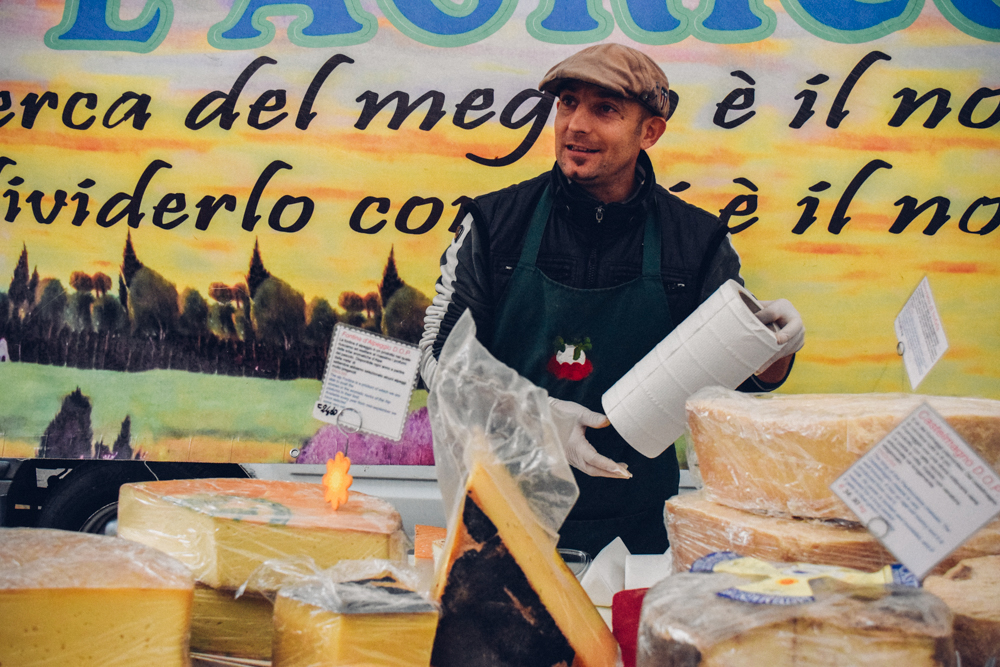
Cheese vendor

Cheese vendor


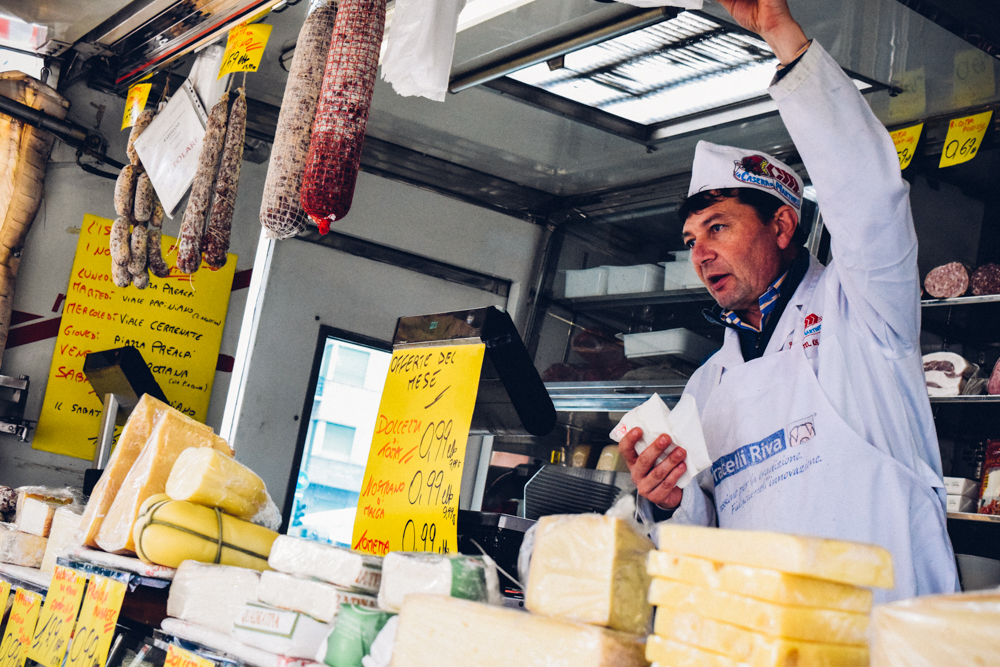
Passion for cheese has already become an important part of Italian identity. Milanese are no exception, and they for sure know what is good taste. Cheeses, “formaggi” in Italian, come in amazingly diverse variety and quantity in Papiniano market. Each cheese stand has its own specialty and character. My favorite, however, is the organic cheese stand that sells truffled-flavor cheese exclusively. With one little bite, the indescribable flavor of minerals from that far-away mountain has already convinced me.


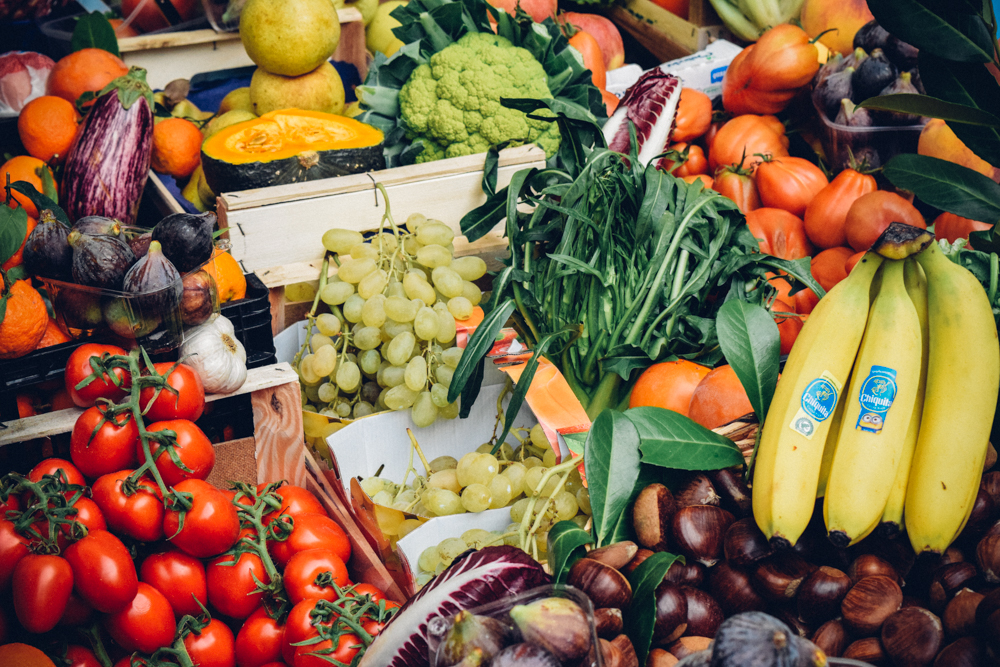
Italian in-season produce

Italian in-season produce


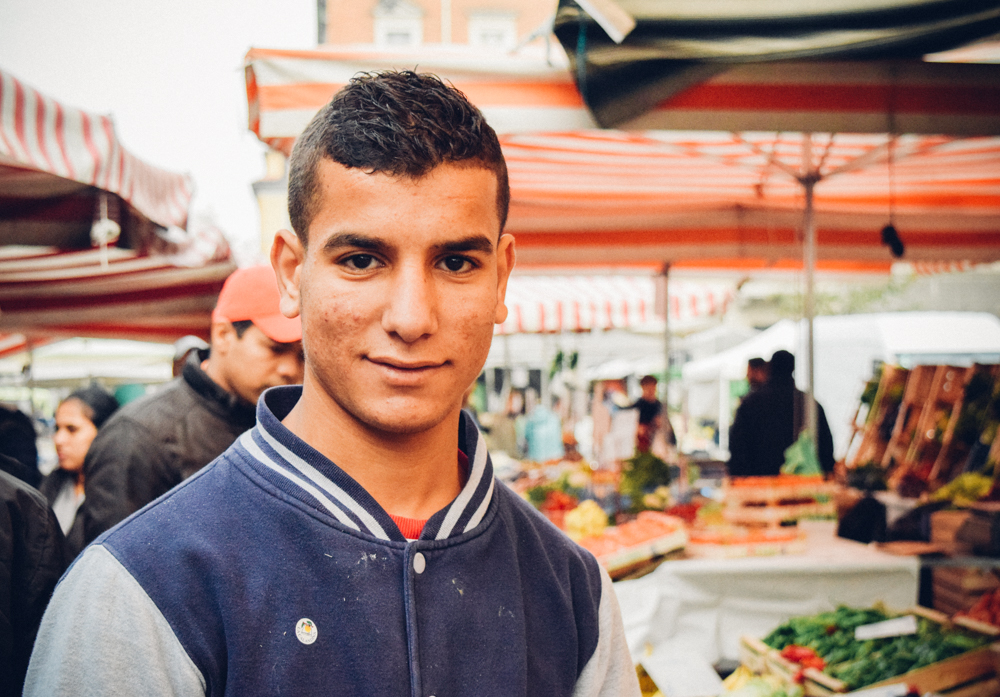
Fruit vendor Muhammad

Fruit vendor Muhammad


Four Euros please

Four Euros please


It’s a great opportunity to see what fruit and vegetables are in season, and Italy has a fantastic range of diverse produce year-round. As what you would expect at a market, there is also the usual yelling and bargaining conversations, which makes it much more lively than a normal supermarket. The stand of Muhammad, a young immigrant from Pakistan, is my go-to place because he always greets me with a warm smile and often discounts.


Dan In Argentina: A True Porteño

November 5, 2015
The word "porteño" is what you call someone from Buenos Aires. As the weeks and months pass, I am feeling more and more like a true porteño. Recently, a bunch of my friends and I took a cooking class on traditional Argentine foods. We made empanadas, beef stew and a dulce de leche desert. It was one of the best meals I've had here! And it tasted even better knowing I had kneaded the dough and stirred the stew. This, among others, was a cultural experience for which UR reimbursed the cost.

The word “porteño” is what you call someone from Buenos Aires. As the weeks and months pass, I am feeling more and more like a true porteño. Recently, a bunch of my friends and I took a cooking class on traditional Argentine foods. We made empanadas, beef stew and a dulce de leche desert. It was one of the best meals I’ve had here! And it tasted even better knowing I had kneaded the dough and stirred the stew. This, among others, was a cultural experience for which UR reimbursed the cost.


Also like a true porteño, I recently took a day trip to Delta del Tigre, a small residential town north of the city, in the province of Buenos Aires. This area is made up of a bunch of islands separated by narrow canals, streams and rivers. You can take boat taxis to different islands, have a picnic and just relax. Here's a picture of me being awkward on a small bridge connecting two close islands.

Also like a true porteño, I recently took a day trip to Delta del Tigre, a small residential town north of the city, in the province of Buenos Aires. This area is made up of a bunch of islands separated by narrow canals, streams and rivers. You can take boat taxis to different islands, have a picnic and just relax. Here’s a picture of me being awkward on a small bridge connecting two close islands.


I, being my true porteño self, also experienced the beauty of an Argentine asado recently. An asado is the equivalent of the American cookout. My host family invited me to their first asado of the summer. As meat cooked on the huge grill, a fragrant smoke filled the room! Along with regular steaks and chorizo sausages, I tried (and subsequently did not enjoy) cow intestines and blood pudding... but of course, as a porteño, I had to try.

I, being my true porteño self, also experienced the beauty of an Argentine asado recently. An asado is the equivalent of the American cookout. My host family invited me to their first asado of the summer. As meat cooked on the huge grill, a fragrant smoke filled the room! Along with regular steaks and chorizo sausages, I tried (and subsequently did not enjoy) cow intestines and blood pudding… but of course, as a porteño, I had to try.


Lindsay in Thailand: ‘T’ is for Thailand & Bye Teow (Travels)

November 4, 2015

Since being in Khon Kaen, the occasional cabin fever feeling has fueled many of my last minute travels. My first trip was actually outside of Thailand. On a Wednesday I booked a ticket for Singapore and on Friday I arrived, much to the shock of both Colleen and I. Colleen, a fellow UR blogger, was one of the first friends I made at Richmond. She was my freshman hall neighbor in Laura Robins and we lived through the always awkward and transitional first year together. She is one of those people that can make me question how I went eighteen years of my life not knowing her, so when I found out we would still be living in the same hemisphere this semester, I could not have been happier.


I can’t believe there’s a boat in the sky!

I can’t believe there’s a boat in the sky!


My reunion travel began late Thursday night with an over-night bus adventure to Bangkok, taxi drive to the airport, and plane ride. At two in the afternoon Friday, I finally arrived on the island city-state. Standing in the Singapore airport that prides itself on being “an experience in itself” with a broken phone, I questioned if I would ever find Colleen. By pure luck, I bumped into her twenty minutes after landing and our adventurous weekend began.

After the exchanges of “oh my goodness I’ve missed you” hugs, “how is life” responses, and “look what happened” pictures, we ate dinner in one of the well-known ‘hawker centres’ filled with superb street fare (and Indian food I had been craving so much). We wandered about the city streets, perched on an apartment rooftop, and eventually made our way to the CÉ LA VI bar and observation deck atop the Marina Bay Sands Resort The dancing lasting until four in the morning and the amazing view of the modern city made for a pretty surreal night.


The ever so majestic Gardens by the Bay

The ever so majestic Gardens by the Bay


The next day, we walked…a lot. We were able to pack in an extensive tour of the city and even found time for yoga and a catnap atop a magical rooftop garden. We spent the rest of the night strolling through the Gardens by the Bay and laying in the grass marveling at the twinkling lights and harmonious music. This was when a “oh my goodness I can’t believe I’m here” moment kicked in and I left the gardens with such a love for this city. Of course, we could not have finished the night more perfectly than with the ice cream and chick flick we mindlessly consumed. This weekend getaway ended too soon as weekends always do, but it was so nice to spend time in such a wonderful city with an even more wonderful friend!

Continuing the last minute planning trend, my next trip to Chiang Mai, Thailand was very unexpected. Two girls on my program, Leah and Julia, and I mentioned doing a weekend trip on Monday. It was not until Friday that the subject came about again and one hour later, we were in a taxi on our way to the Khon Kaen bus station. A ten-hour bus ride to Chiang Mai was the only thing we knew we had booked for our weekend trip. We did not have hostel reservations, day tours, or tickets back to Khon Kaen, but we were not concerned.


Even with our last minute decision, we made it to the bus station just in the nick of time.

Even with our last-minute decision, we made it to the bus station just in the nick of time.


I still stand by the idea that a lack of formal plans or expectations makes for the best adventures. Somehow for me, everything always seems to work out, even if I least expect it to. The three of us managed to check into a hostel at 8:25 a.m., and by 8:35 we were running to catch a songtow (a ‘taxi’ like mode of transportation that is essentially two-rows of seats in the back of a truckbed) with our half-cooked pancakes in hand for a day trip trek. What makes Chiang Mai one of the most popular destinations in Thailand is because of its combination of lively night markets, ancient wall ruins, and magnificent mountains, all of which we were able to take advantage of.


Elephant hand hug

Elephant hand hug


We began our day visiting an elephant recovery center. We fed the elephants bananas and bamboo, and even bathed them in the river. The elephant I was giving a bath, Di Jai, however, decided she did not want to take a bath anymore and walked out of the river. Meanwhile, I was still on her back left wondering how in the world I was going to get down.


IMG_3789


After we visited with the elephants, we trekked our way up to a waterfall near where the Hill Tribes reside. We swam and splashed in the water until it was time to go rafting. Julia, Leah, and I were assigned to a canoe with another couple and our rafting instructor. He led his unexperienced team through some pretty incredible rapids and showed us the best views of vast mountains and lush rice fields. We ended the day with the largest night market in Chiang Mai filled with silks, Thai pants, and even live animals, and eventually made our way home to Khon Kaen the following day. Chiang Mai is an incredible city that is too big to see in a day and a half, so I hope to return there someday soon.

My next travel destination, Nong Khai, is a small treasure nestled beside the Mekong River just two hours from Khon Kaen. The capital of Laos, Vientiane, is situated just on the other side of the Friendship Bridge, an Australian infrastructure connecting the country with Thailand and aiding Laos development. From my guesthouse situated beside the calm running water, I felt like I could almost touch Laos.

The city of Nong Khai is quite tranquil and charming. Upon arrival, the locals welcomed me and four other ‘farang’ friends as if were family, offering their best English ‘hello, how are you’-s and calling us beautiful (“suwai”) as we passed the open shops. We stumbled upon the small downtown area early on our trip that was bustling with both indoor and outdoor markets. These stores had some of the most magnificent Thai silks and woodcarvings, along with some of the most unusual kanomes (snacks) I had ever seen, including buffalo hide and dried bat.

Nong Khai reminded me just how affordable Thailand is. For just 50 baht ($1.40), my friends and I were able to rent bikes for the full day which really enabled us to see the city’s nooks and crannies (and feel like young kids again). By simply looking at the skyline, we saw the top of an intriguing statue. We followed the figure like it was the North Star. After several close encounters with angry dogs and potholes the size of black holes, we were left amazed. We found the Sala Kaew Ku Park. This sculpture garden, constructed over a 20-year span, contains Luang Pu Boun Leua Sourirat’s Hindu-Buddhist inspired visions with some even towering at over 82 feet tall. I cannot describe how I felt at that time, standing so small beneath what I still think is the closest thing I’ve come to a Wonder of the World.


IMG_4141


Following this portion of our day’s exploration was a race to get back to our guesthouse. At 5:30, a ‘sunset boat’ would leave the small port for an hour ride on the river if enough people were interested. Upon arrival, we were the only ones waiting in line for the ride. This actually worked well, because for just $30, the five of us together rented our own personal houseboat restaurant that sailed the Mekong for an hour under the cotton candy sunset sky. Laos was even closer now, and so were the Laotian dragon boat racers we once saw from a distance on the Thai riverfront. The night commenced with a margarita at the only cocktail bar in town and a wonderful four-hour night/early morning bike ride to the Friendship Bridge and through the market square. Nong Khai remains one of my favorite destinations in all of Thailand.


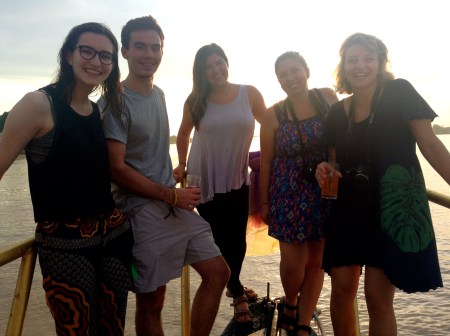
From left: Annie, Billy, myself, Jamie, and Elyssa enjoying our ride down the Mekong River.

From left: Annie, Billy, myself, Jamie, and Elyssa enjoying our ride down the Mekong River.


Jiaqi in Italy: Field Trip Edition – Under the Tuscan Rain

October 28, 2015

Not a single trip to Italy is complete without going to Tuscany. A slow-cooking food tradition, the famous Chianti wine region, and the rich artistic tradition of Renaissance style all originated from this territory. In early October, I hopped on the bus with my IES Milan program to Siena, a medieval town in central Tuscany. Although it was a weekend filled with drizzling rain and crisp fall air, my experience of Tuscany was in fact much more tranquil and authentic. The rain suddenly became a “stop” sign to the big tourist groups that are always present in every Italian city, turning Siena into a quaint town, as it has always been.


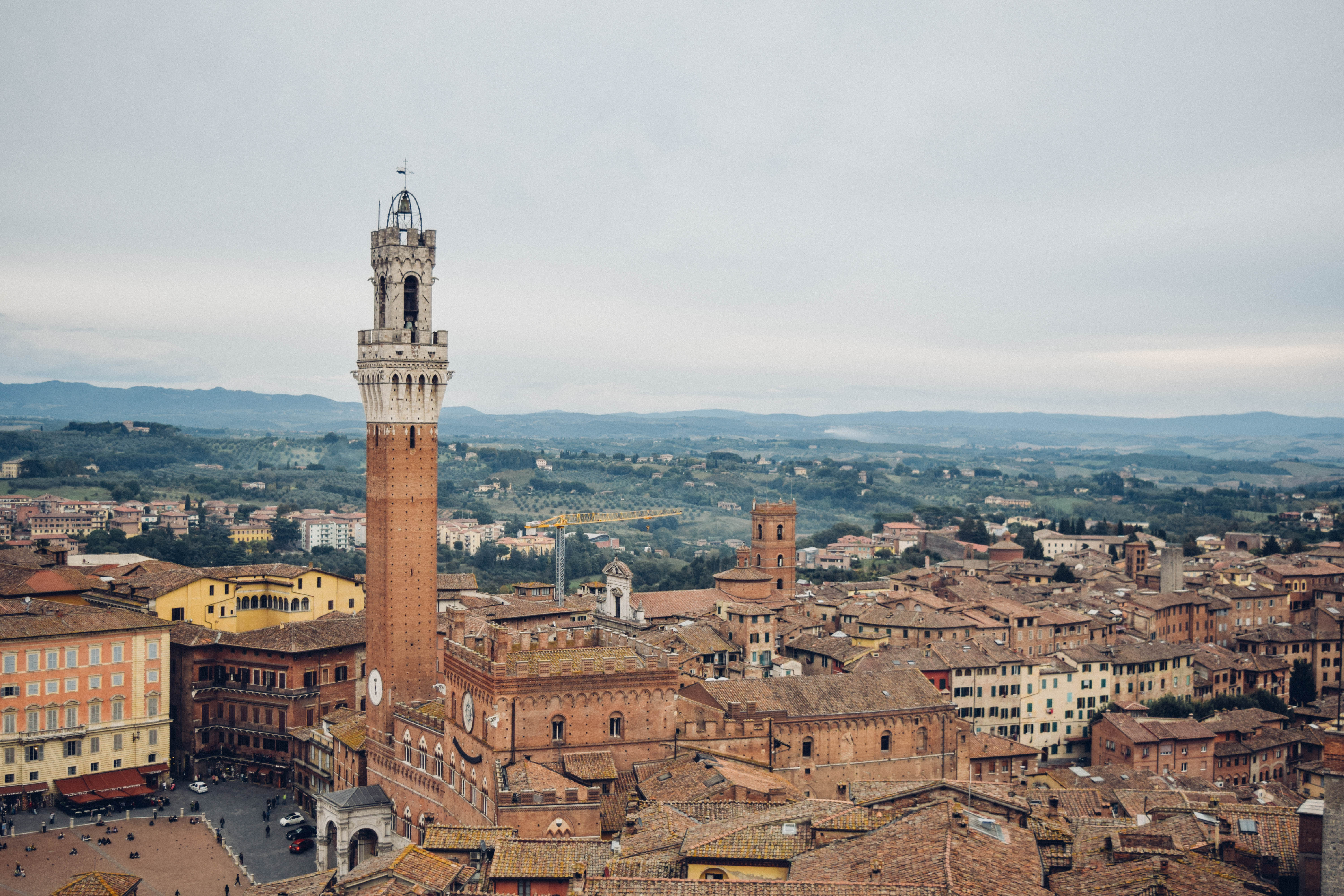
City of Siena

City of Siena


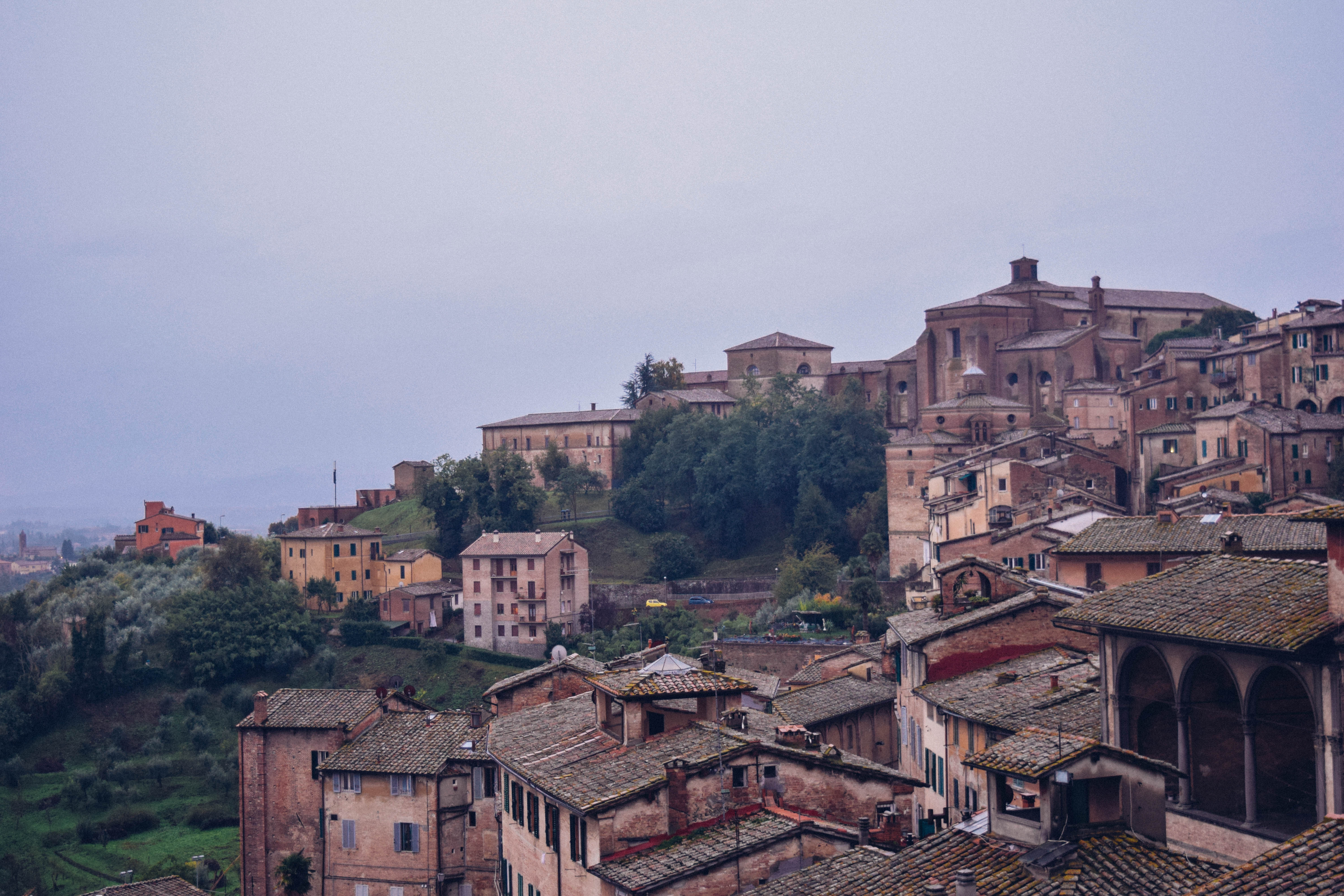
Siena view

Siena view


Typical door in Siena

Typical door in Siena


Siena is not one of the grand cities of Italy. It doesn’t have the history of Rome, the charm of Florence, the energy of Milan. It doesn’t even have the tourist crowd as you would imagine, probably because of the rainy weather. But greatness is often defined by one’s personal response to a certain place. After climbing 500 steps to go on top of the Museum of Opera, I was on an emotional state looking down at this incredible panorama. Ancient, a little messy, medieval-style, tranquil, Siena defines the essence of a typical Tuscan town.


Montalcino

Montalcino


Tuscany in the rain

Tuscany in the rain


Speaking of Tuscany, it is impossible not to mention its gastronomic richness and fine vineyards. Being the little gem of Chianti region, Montalcino produces Tuscany’s best Brunello and, arguably, Italy’s most distinguished wine. Up in the hills, Montalcino is tucked away by vast greenness and wavy mountains. The fogginess, tranquility, and elegance of Montalcino exemplifies the renowned Tuscan landscape.


Dine with style

Dine with style


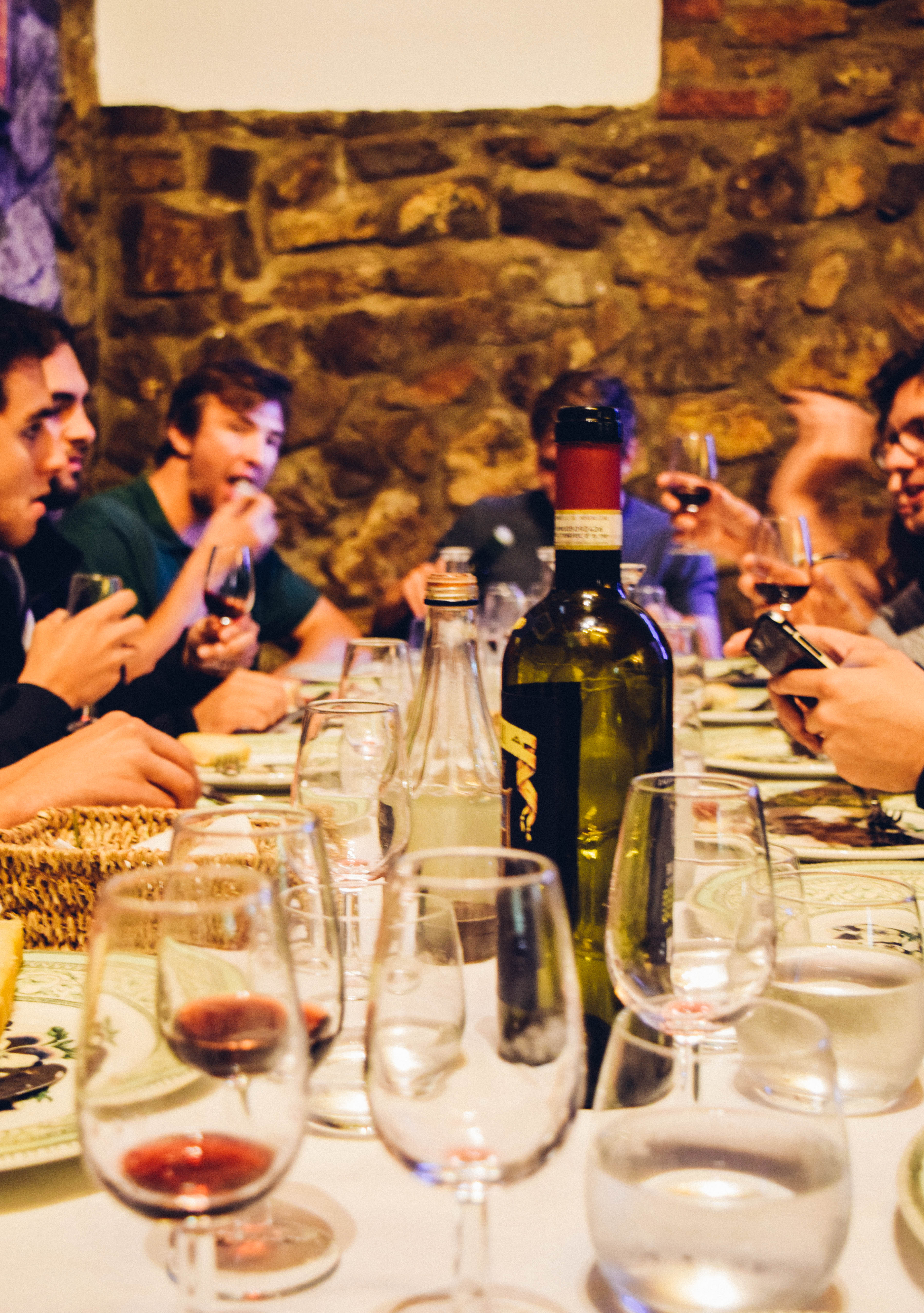
After a brief tour of a family-runned vineyard, we had lunch at their farm-to-table style restaurant. A plate of homemade tagliatelle with ground pepper, butter, and Parmesan cheese, paired with locally produced Brunello, constitutes the menu of the day. Simple, fine, irresistibly delicious, this homemade meal defines the Tuscan cooking philosophy.


Pisa Tower

Pisa Tower


Now, after two days of immersing in tranquil Tuscan landscape, it’s time to head to Pisa. As touristic as Pisa has always been, the city undoubtedly offers some of the most incredible architectural wonders of the world, including the Pisa tower and much more.


Lindsay in Thailand: The Thai Funnies

October 19, 2015


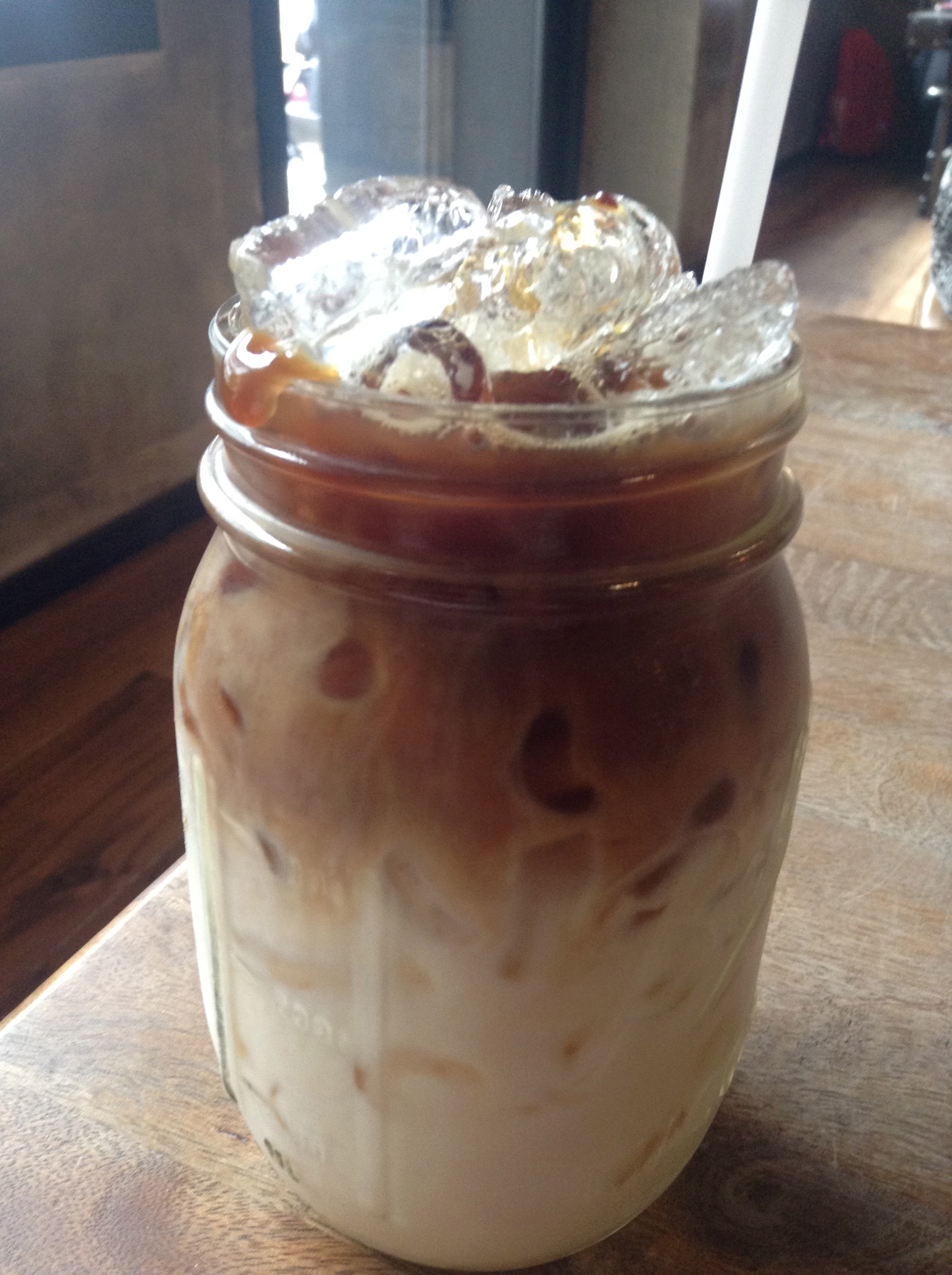
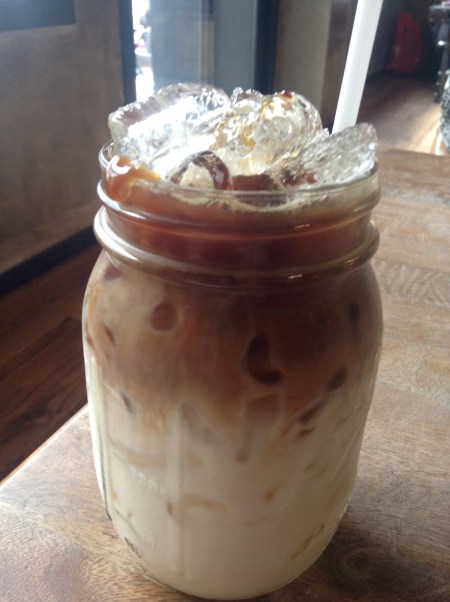
I had an iced latte. Now I'm just missing the pumpkin spice.

I had an iced latte. Now I’m just missing the pumpkin spice.


Today, I reminisced a bit about home. I found myself missing Fall leaves and the stereotypical pumpkin spice latte. I decided to somehow satisfy my seasonal coffee craving as I put on my scarf (in the 80 degree heat) and headed to a quaint café nearby. Even with my personal attempt of a mock pumpkin spice latte, I craved something unusual- what my Gram might call the Sunday newspaper “funnies.” Using this as inspiration, I thought I would make my own written comics, compiling a few funny occurrences and random thoughts from my Thai adventure so far. Enjoy!

  1. Apparent Differences in Distance
  2. Language Barriers or Avenues of Understanding
  3. Finger Foods
  4. Facebook (and Selfie) Official

Apparent Differences in Distance

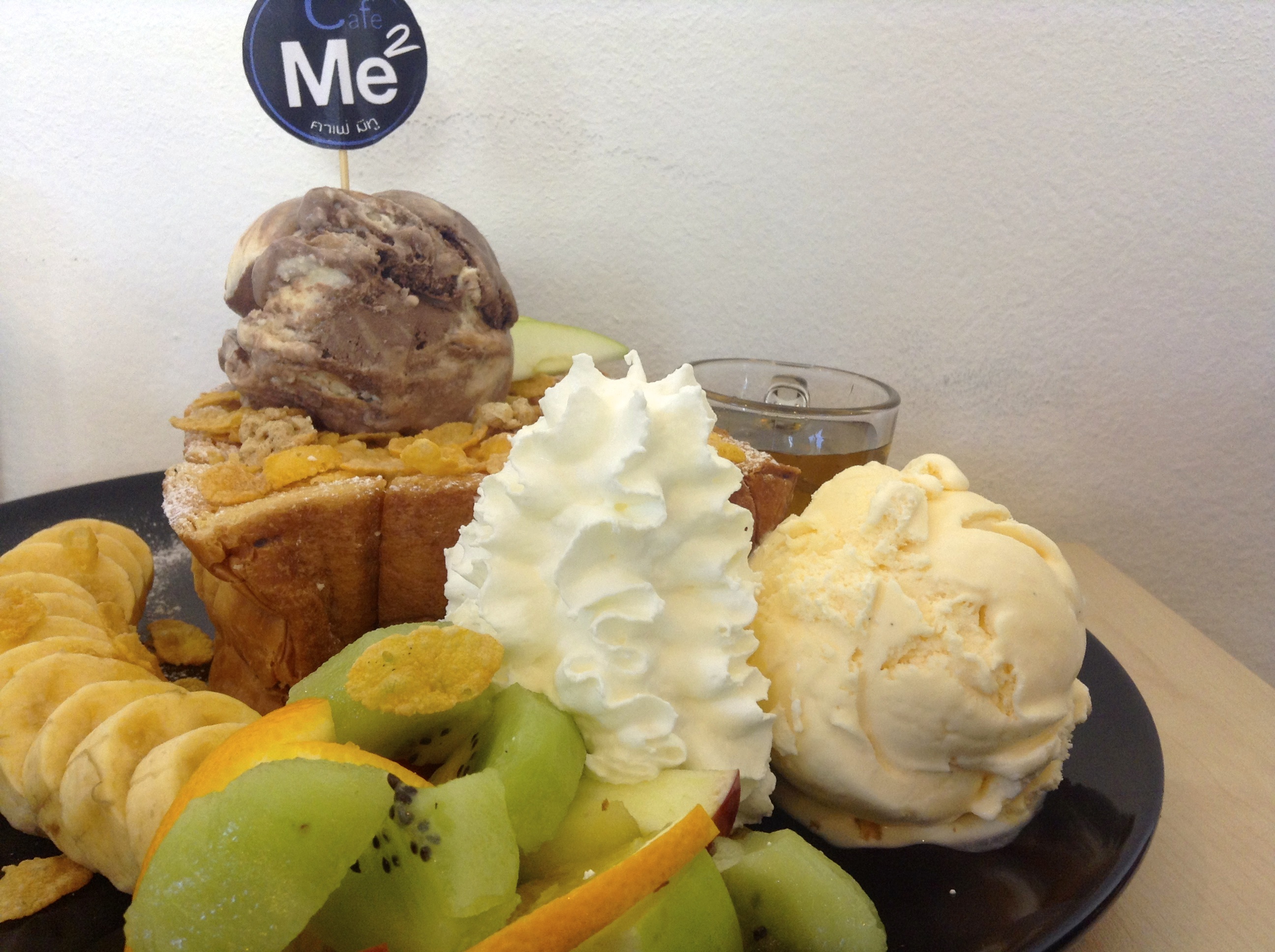
My first morning in Khon Kaen, my lovely roommate and her friend wanted to take me and another exchange student out for breakfast. They informed us about a great cafe nearby, Have a Break. We walked 25 seconds down the street from our apartment, hidden from the sun under our umbrellas, to find that Have a Break was closed. Disheartened, our Thai roommates turned around and began to head back to our rooms. I then suggested going to another cafe two buildings down. With this proposal, they stared at the further café’s sign for a couple of minutes and insisted it was too far away. I replied that I did not mind the extra exercise, and in another ten seconds, we arrived at Cafe Me 2 less than 100 yards from our original departure point.
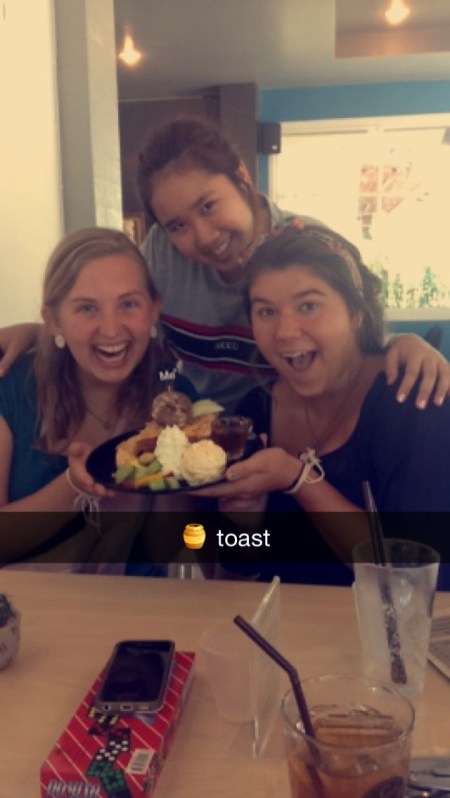
 

My first, and definitely not last, honey toast

My first, and definitely not last, honey toast


A closer look a the infamous Thai dessert!

A closer look a the infamous Thai dessert!


Before leaving for Thailand, I envisioned the people to be extremely active, contrasting them to the stereotypical “lazy Americans” who use drive-thrus so they do not have to get out of their cars to pick up food and who even drive in circles to get the closest parking spot at the gym (I know… I’m guilty of this too). I was shocked to find the existing aversion to walking not only in the city of Khon Kaen, but also in many rural villages. Thais love their motocis. I have been told that “walking four miles is dangerous” and have also been driven to village houses 100 yards down the dirt road. If you see a Thai individual, especially students in Khon Kaen, it is likely that their motoci is just a step and a hop away.
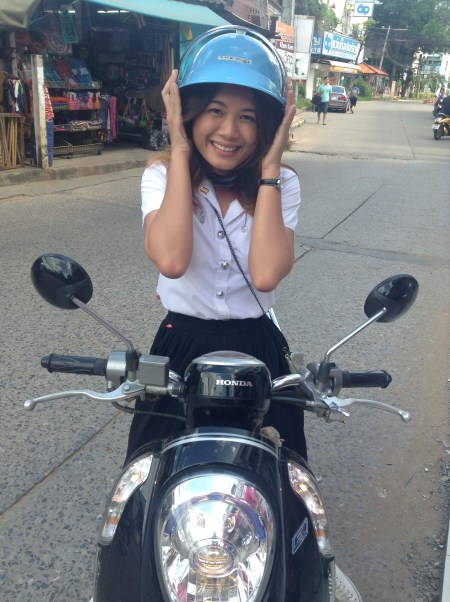
 

My Thai roommate, Yui, on her motorci

My Thai roommate, Yui, on her motoci


P.S. In addition to seeing up to four people on one motorbike, do not be surprised to also see cages of rabbits, full-grown Poodles, and babies like I was!

Language Barriers or Avenues of Understanding

At my first community homestay, I accidentally caused a ruckus. I stayed in a rural village a half of an hour outside of Khon Kaen with a Thai family for three days. My family consisted of my ‘Mehh,’ ‘Paw’ and another exchange student, Billy. Each morning, Meh made a ginormous breakfast that in actuality could constitute both lunch and dinner, as well. One morning, I approached my Meh in the kitchen with the little Thai I knew. As she fried chicken, I made a chopping gesture to indicate I wanted to help prepare the vegetables. She stopped what she was doing and simply stared at me. I repeated the motion as her head tilted in confusion. I then stated ‘sa poem pack.’ Now, I know this phrase does not come close to what I wanted to say, but at the time I thought “hair wash vegetables” might suggest rinsing veggies. With no luck, I tried ‘ab nahm pack.’


Keo Kruyah Kone chan (my family): One of our lovely neighbors, myself, Meh, Billy, and Paw

Keo Kruyah Kone chan (my family): One of our lovely neighbors, myself, Meh, Billy, and Paw


Ab nahm, meaning to take a shower, is a word Thais know very well. It is not uncommon for Thais to shower up to three times per day, so Thai families often offer their shower to guests even before offering a cold beverage.
 

My family and neighbors packing all the leftover food Billy and I could finish for breakfast for our lunches...Yum!!

My family and neighbors packing all the leftover food Billy and I could finish for breakfast for our lunches…Yum!!


In actuality, I did not want to shower with vegetables, but my Meh thought I did. She handed me an assortment of greens as she escorted me upstairs to the bathroom. I refused, and in desperation, Meh handed me forks, knives, spoons, and fruit as I was sat down at the table. Meh’s cries for help as she leaned over the fence could barely be heard over Billy’s laughter. Soon enough, I found myself swarmed by ten villagers attempting to understand that I simply wanted to help Meh make breakfast, not wash vegetable hair or shower vegetables.


Students gathered together as our Thai families gave blessings in a traditional ceremony before our departure back to Khon Kaen.

Students gathered together as our Thai families gave blessings in a traditional ceremony before our departure back to Khon Kaen.


Although that was an experience in itself, I did not find the next one as humorous. Because I was leaving for Singapore to visit my friend Colleen right after class, I wanted to make a copy of my passport photo on my lunch break. I arrived at the photo shop soaked after an unexpected monsoon and handed the worker my soggy photo. I requested one ‘4×6’ photo, and what did I leave with an hour later? Not only four 6x6s photos, six 4×4 photos, 150 baht additional payment, near tears, and a single 4×6 passport photocopy, but also a new understanding and appreciation.

While I intentionally attempted to remain calm and refrain my frustration, the photo shop worker did it with ease. He did everything he could to help me, from bringing out an electronic translator to offering his own money to pay for the photos I did not intend to purchase. For such a simple gesture, it made me question myself: How helpful am I to those who don’t speak English in America? How accommodating are we as a country to non-native English speakers?

I cannot count the amount of times I have heard the phrase “If you want to live in America, speak English.” I have heard of many people hanging up the telephone or raising their tone of voice with telephone assistants who are difficult to understand. I myself have giggled when I heard foreigners mispronounce an English word.

Since becoming more aware of our nation’s language deficit, I found I do not have much room to laugh. A mere 18% of Americans are fluent in another language while 53% of our European counterparts are fluent in at least one other language.

I myself have traveled throughout Europe and I cannot say anything more than ‘hello,’ ‘thank you,’ and ‘goodbye’ in any of the six countries I visited. Many citizens in these European countries; however, could hold conversations with me in English. They did not know if I was a tourist, new community member, or established citizen, yet they catered to my little comprehension.   Yet, I can still recall several moments of frustration when they did not understand my questions and requests—all in English.

Until now, I have expected others to accommodate to my sole English speaking capabilities. I had never honestly and intentionally tried to master a language. I had never been in a place for an extended amount of time where I could not find a single soul who could speak English. Have you?

I swear that if the Thai people had not expressed so much kindness and patience with me (and my language incapability) as they have so far, my experience would be very different. Studying abroad in any location is a difficult transition, even if you do speak the same language. I could not imagine permanently moving to the U.S. as a foreigner or refugee, searching for a new adventure or new life, and not being given the same assistance the Thai people have willingly offered. Before evaluating someone else’s communication abilities in the U.S., I hope to recall the difficult language barrier I faced, and the beautiful friendships I formed through eventual and somewhat unconventional communication methods.

Finger Foods

I have always been a fan of eating with my hands and playing with my food, and I am happy to say Thailand is too. In my first week of orientation, I took a class called “Thai Etiquette.” Along with learning how to properly wai, situate my legs while sitting on dinner mats, and point my feet in a temple, I learned how to eat with my hands.


A Thai etiquette class

Thai etiquette class


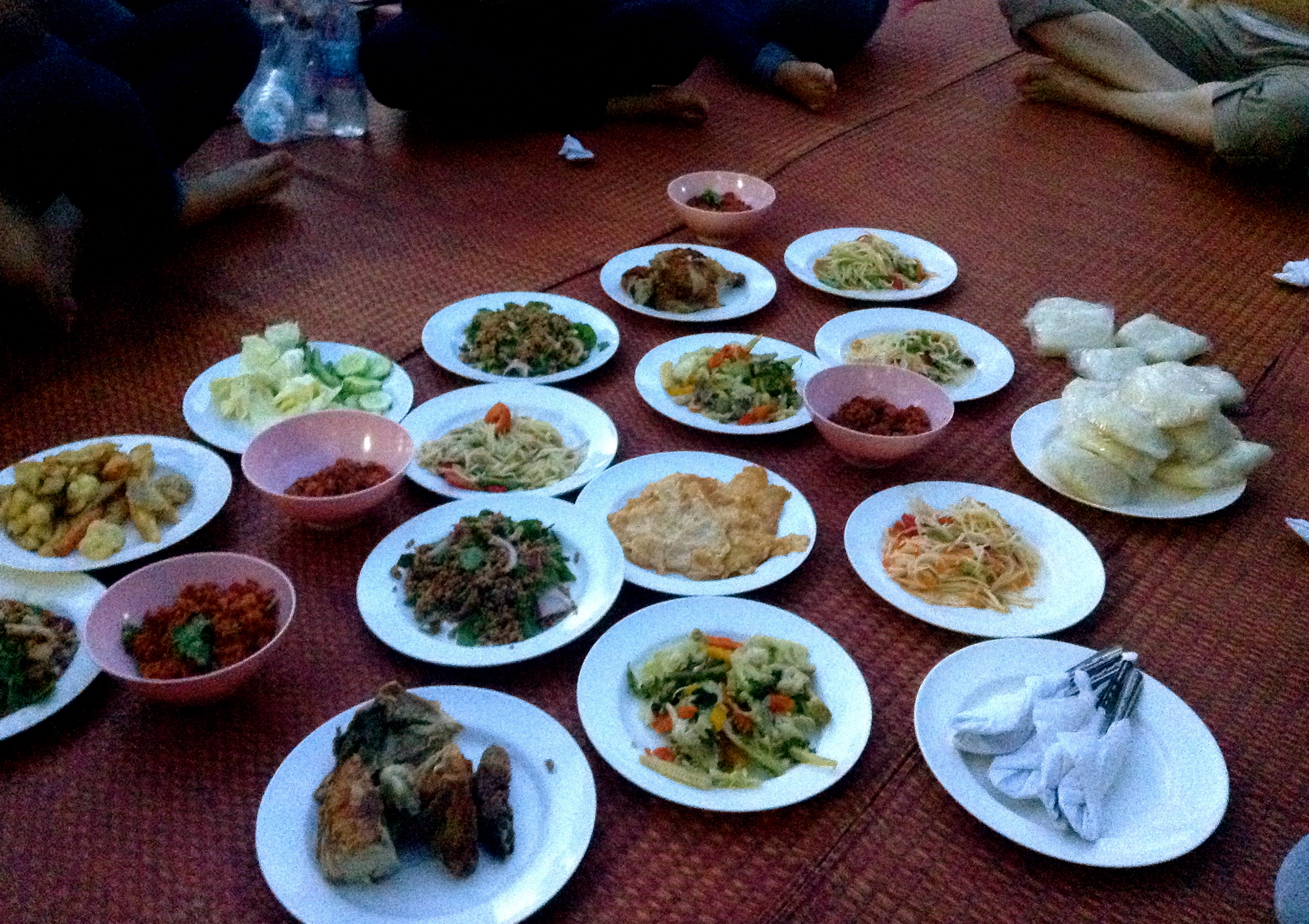
Although I was thrilled to eat with my hands, I was not initially as keen on all the food sharing. For any fans of the television show, Friends, you might say I was Joey who “doesn’t share food” as easily. That has sure changed for the better! In Thailand, communal eating is very popular. In Isaan villages, the families roll out mats onto bamboo tables. The family will then gather cross-legged on the mat, surrounding the bowls of traditional Northeastern Isann food.


IMG_3143

A traditional Isaan meal


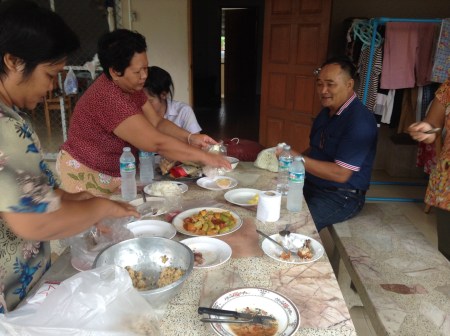
At any homestay, I can be sure to find Som Tom (spicy papaya salad), blah toad (fried fish), ky toad (fried egg), guy yong (grilled chicken), and moo bing (minced pork) at breakfast, lunch, and dinner. Proper technique includes making a small ball of cow neow (sticky rice) and using that as a ‘spoon’ to scoop up small bits of each of the dishes. No one has a personal plate and communal eating utensils are also used (which means less dish washing).

This communal finger food setting is one that I love! Not only does it avoid loading your personal plate with more than you can handle, it also ensures you will not feel bad about wasting food left on your plate or stuffing yourself (too much, although it is inevitable most of the time). You do not have to worry about finishing your meal too early or being the last to finish because you simply eat until you are satisfied-no rush needed.

You can also extend the ‘communal’ eating aspect to ‘community’ eating. At each of the five village homestays I have been to, it is not uncommon to have seven or more additional friends and relatives gathered around the family’s table. Eating is considered an art form, and one that everyone should enjoy. Meh and Paw do not hesitate to yell “gin cow” to random passer-bys on bicycles, tractors, and motorcycles. ‘Gin cow’ literally means ‘eat rice,’ but also ‘eat food’ because most every dish involves some form of rice- white, black, purple, red, sticky, sweet, fried etc.,. The list goes on and on.

Facebook (and Selfie) Official

Farang; a word I might even consider a nickname now. Farang in Thai means “a person of white race.” I hear this term quite often followed by shutter clicks and camera flashes. Once, while on an overnight seven-hour bus ride to Bangkok (without my fellow ‘farang’ friends), I was sleeping with my night mask near the aisle. I woke up quite quickly when a bright light crept under my cover. A girl two rows ahead of me was taking a selfie with my ‘farang’ self and forgot to turn off her flash. She was initially shocked when I became quite aware of it but was not too embarrassed as the picture taking continued without hesitation.


My first Thai selfie, complete with peace signs and all

My first Thai selfie, complete with peace signs and all.


This experience was unique, but not too dissimilar to others. In Thai culture, it is much more acceptable to take pictures of people you do not know. I have had hiking tour guides, children, restaurant owners, gym instructors, and even Thai government officials sneak pictures of farang.

Keep in mind; however, that even if you don’t ever meet those people again, those stealthy photos may resurface. Many times, you can even view them as a shared link or as a post on your facebook wall. When I was studying Thai with a friend at a local café, two Khon Kaen university students were seated next to us. We didn’t speak to each other during the four hours we were there, and I only occasionally heard giggles after I attempted to formulate Thai questions and responses. (Then again, if I heard what I actually sounded like, I would laugh at me too).
 

American feast with Farang!

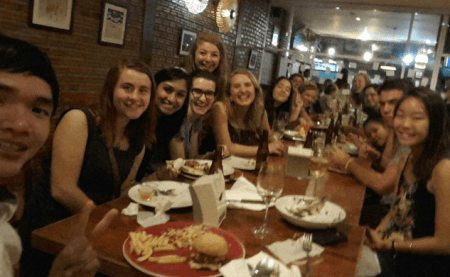
American feast with Farang!


It was not until I packed up my belongings to leave when the two girls stopped me and asked if I could be friends with them. “Of course,” I responded. I wanted to hang out with more Thai peers. Rather than exchanging phone numbers, they immediately handed me a pad of paper to write down my name, asking if I ‘facebooked’ often. They then requested a ‘selfie’ with me. Before even walking down the stairs of the small café, I had two friend requests and was tagged in a photo. Before coming to Thailand, prepare yourself. Be aware that Thais are #selfiegame strong.


Jiaqi in Italy: A Weekend In Budapest vs A Weekend In Milan

October 15, 2015

Like Milan, Budapest has been reputed as a city of endless charm. During the summer, I randomly met an Hungarian girl called Gabriella in a museum workshop and we instantly became best friends. Now that she is back in Budapest, I decided to spend a weekend with her and take the chance to visit this long-dreamed-about city. After four days of devouring delicious homemade Hungarian food and marveling at the Central European architectural wonder, I did notice some differences between the Budapest-style weekend and the Milanese weekend. Here are some insights from me, a casual tourist who observes seriously:

  • Breakfast. Hungarian weekend breakfast is long, sumptuous, and conversation-friendly. The Milanese breakfast, instead, is …? Wait what? Does that even exist? It did baffle me many times that a country obsessive with food does not have an extensive breakfast menu. Breakfast in Milan and northern Italy usually consists of only a few biscuits and a cup of cappuccino. At the most, you add a brioche and some orange juice. The breakfast I had in Budapest, however, is probably the type of big meal you will eat in your grandma’s country kitchen when you go back once a year. Locally-produced ham, hummus, whole wheat bread, fresh butter, cheese platters, pastries, milk and coffee…etc. “A great weekend always starts with a satisfying long breakfast,” said my Hungarian friend.
  • Cafe Culture. There is no need to re-emphasize how a cafe functions as a semi-religious institution in Italy. Yes, there is a certain ritual and drinking pattern that you are forced to respect and follow. In Hungary, everything about coffee is much more casual. An even more casual and relaxing atmosphere dominates the cafes in Budapest. The former Jewish quarter, now turning into a hip, “ruined” pub district, hides a collection of gem-like cafe bars.
  • People and Style. The Milanese fashion style is hard to miss even when you are visiting the city for just one day. Take a look of this street fashion blog  which generates a sense of how the Milanese dress themselves. “La bella figura” (the beautiful figure), said by Italians, defines their attitude toward everyday elegance. Fashionistas in Budapest, are relatively more reserved. It’s hard to spot flashy color and revealing jewelry in the fanciest neighborhood of Budapest, while even the shop cashier in Milan wears a pair of Valentino-labeled shoes. In the subway, most people prefer to wear darker colors and their coats are more conservatively designed. For me, this is rather a difference of personality than a difference of taste.


Turkish bath cafe


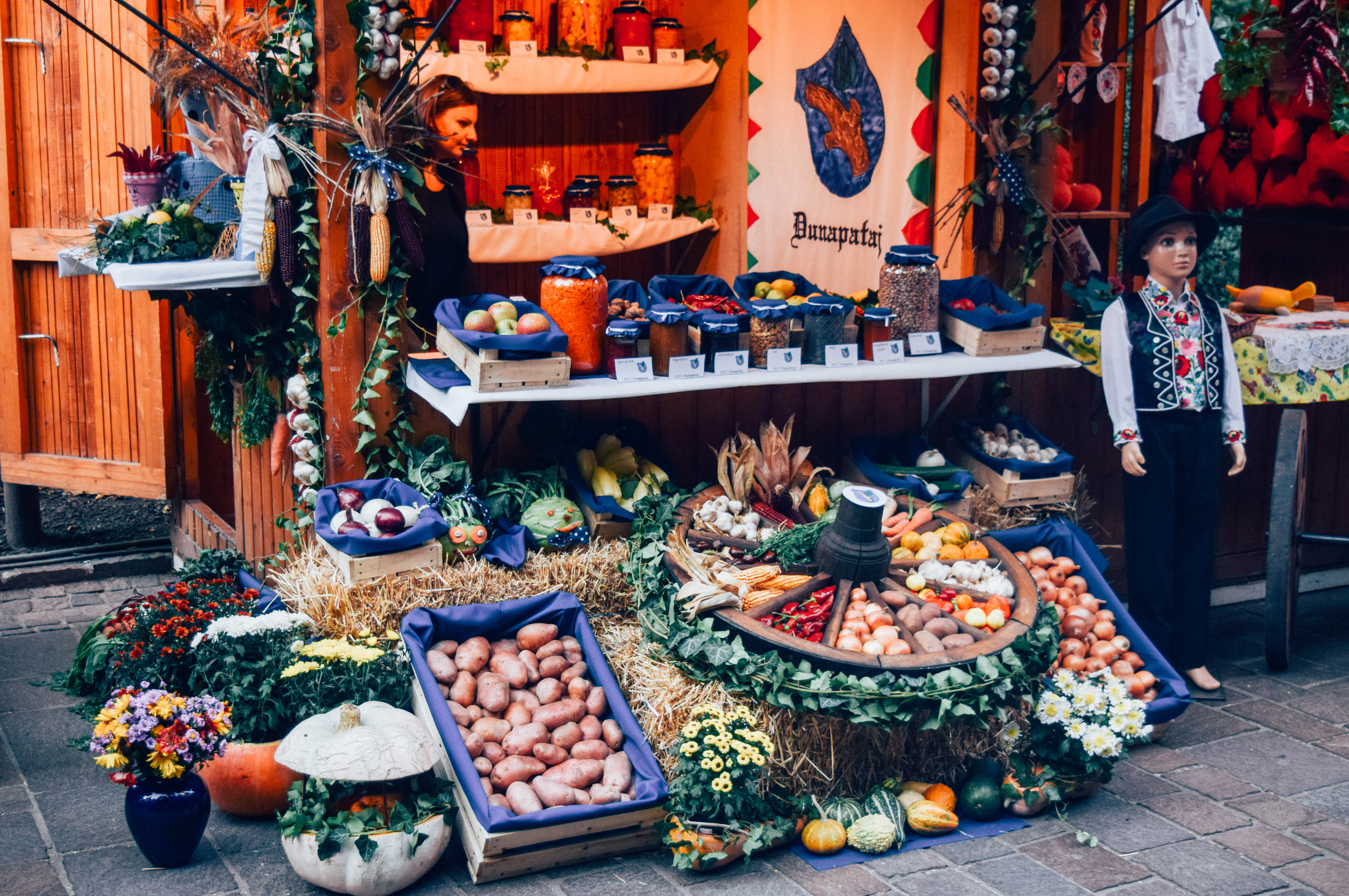
The Budapest Market Hall


Local Farmer's market


Impressve Parliament Building


Hungarian style ham


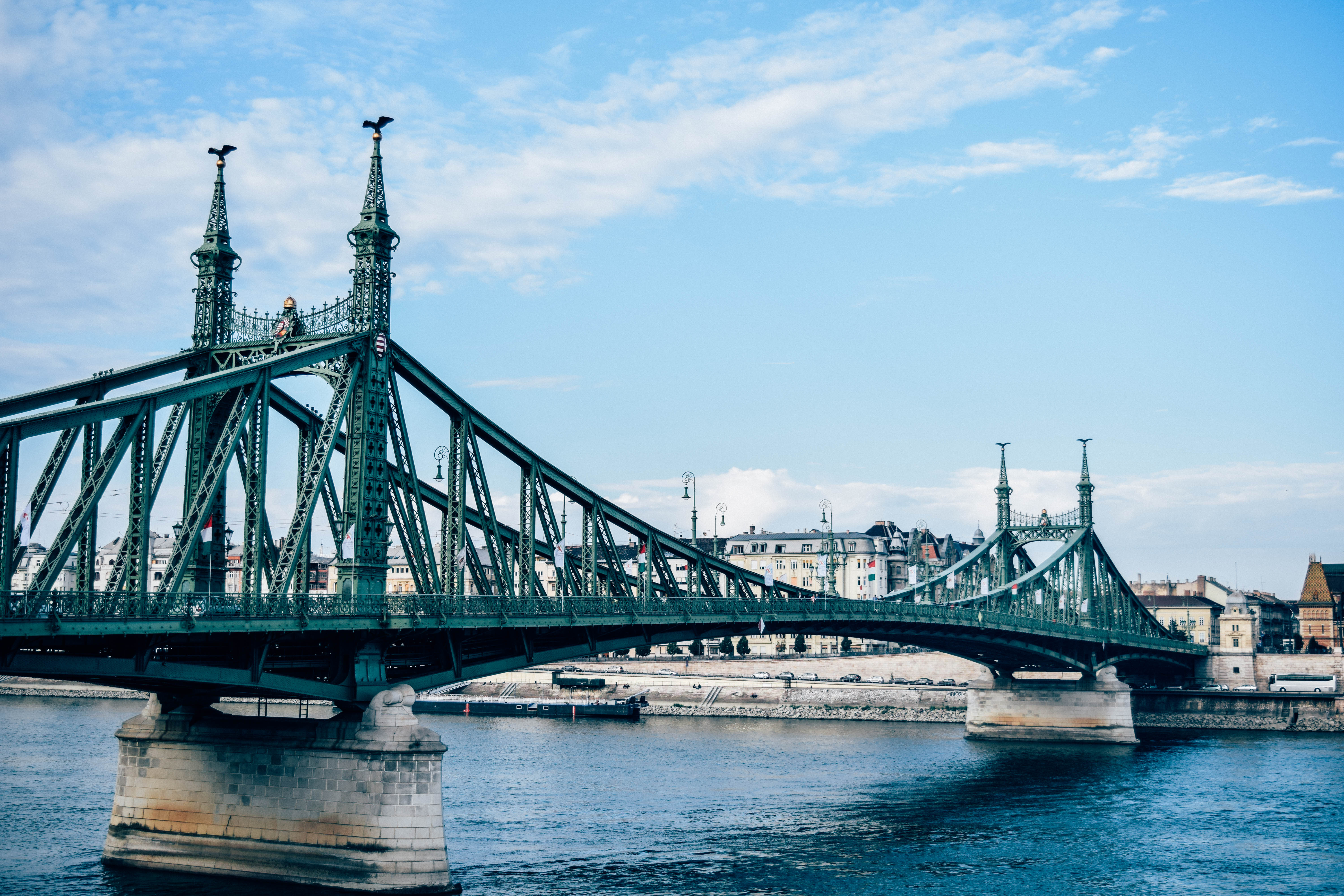
Budapest Chain Bridge


Beautiful Budapest riverside


Jiaqi in Italy: How to Make the Best Italian Pasta From Scratch

October 15, 2015

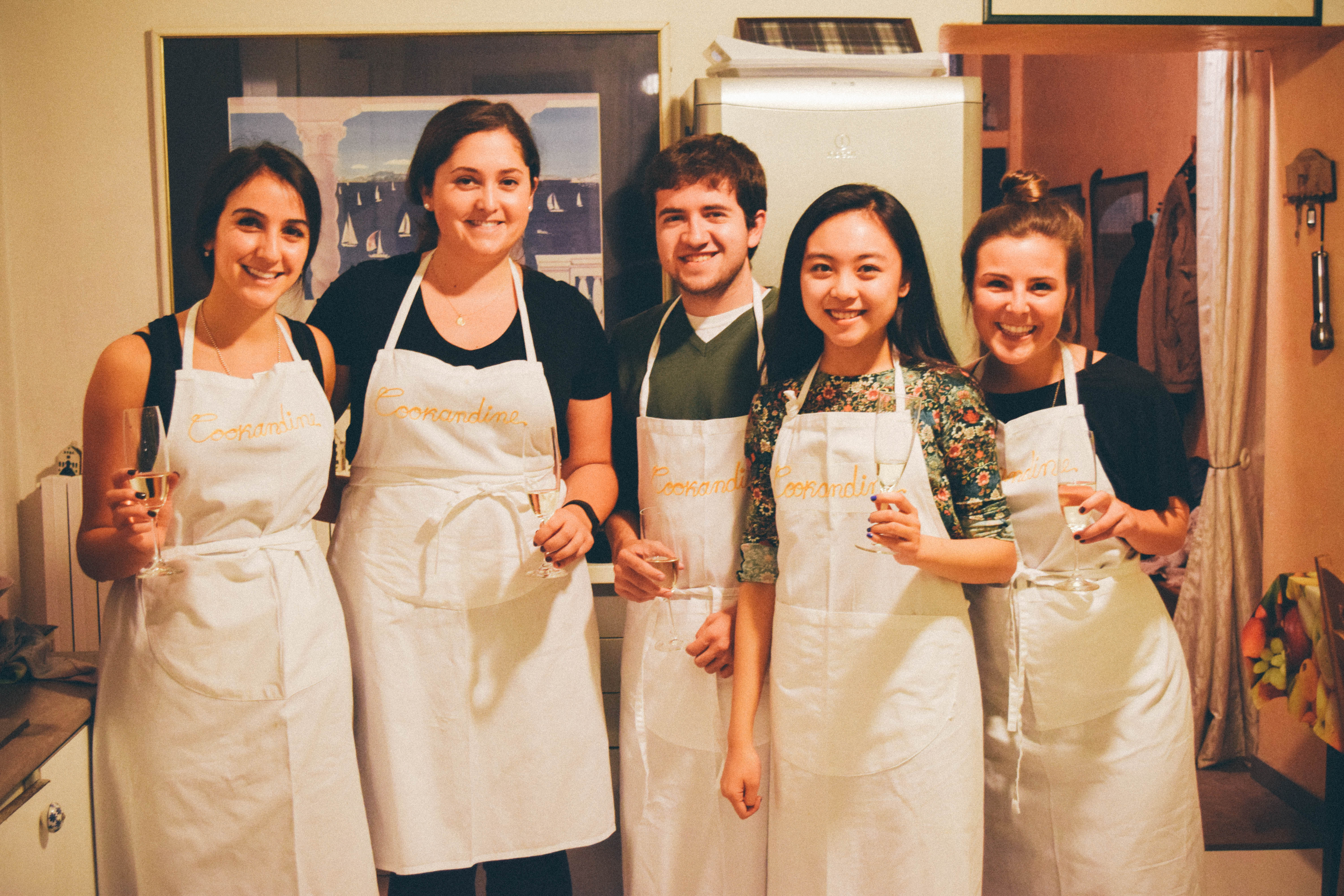
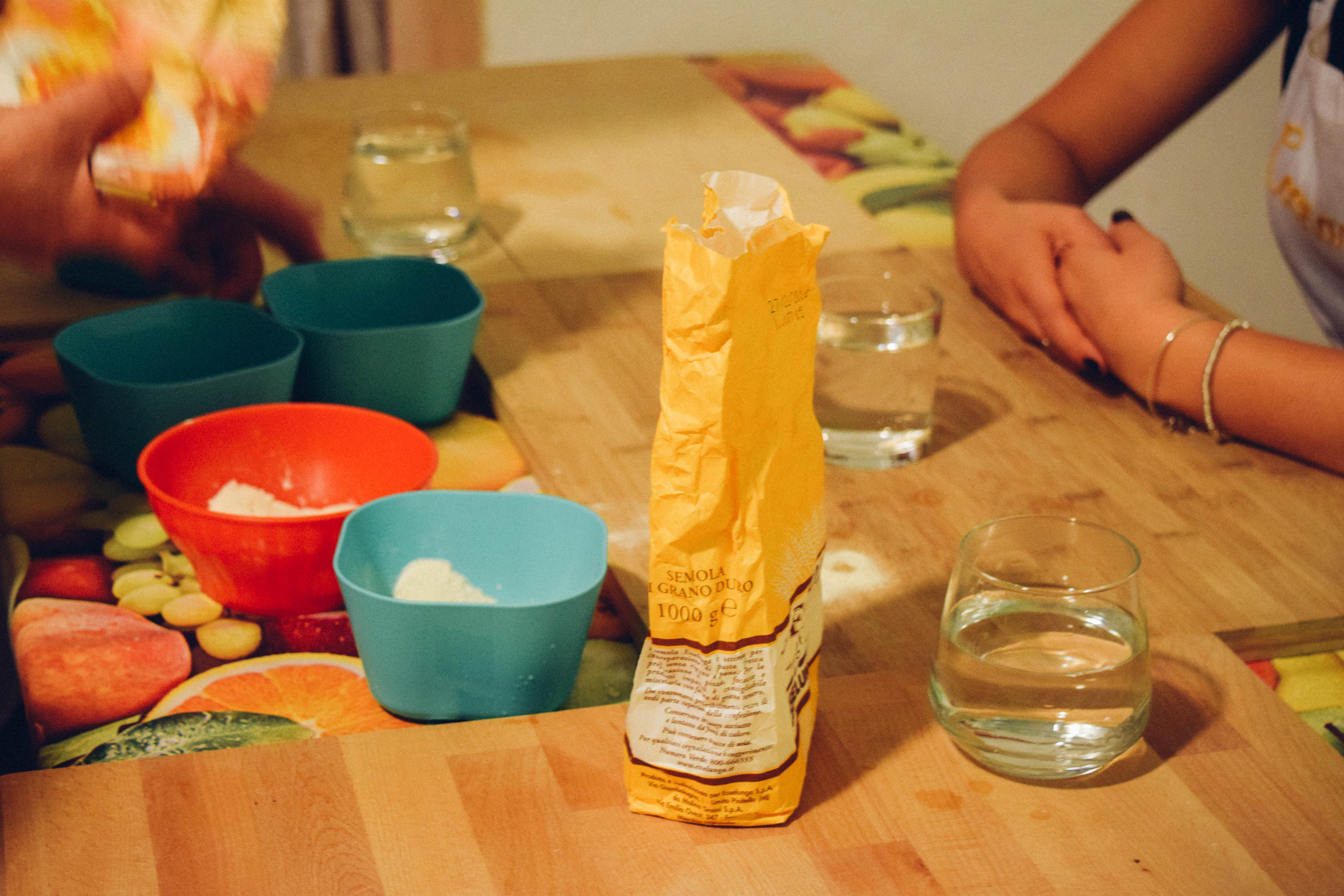
There is no better way to learn about a culture than learning a typical grandma-style recipe at her home. Especially in Italy, a country obsessed with producing everything by hand and with a culture of passing down learning to create “from-scratch” meals. Last night, I signed up for a pasta-cooking lesson in Milan and invited my friend Ryan to come with me. There were three other Canadian girls to practice with us and have a peak into the masterful universe of home pasta making.


Cook and dine


Our chef Aurora, is a certified chef in Italian cuisine that has several years of experience working in a top Italian restaurant in Australia. Her cooking philosophy, like most of the Italian chefs, features fresh ingredients and handmade traditional methods. Our menu for the day is:

  • Tagliatelle from Bologna (with ragu sauce)
  • Vegie lasagna from Liguria
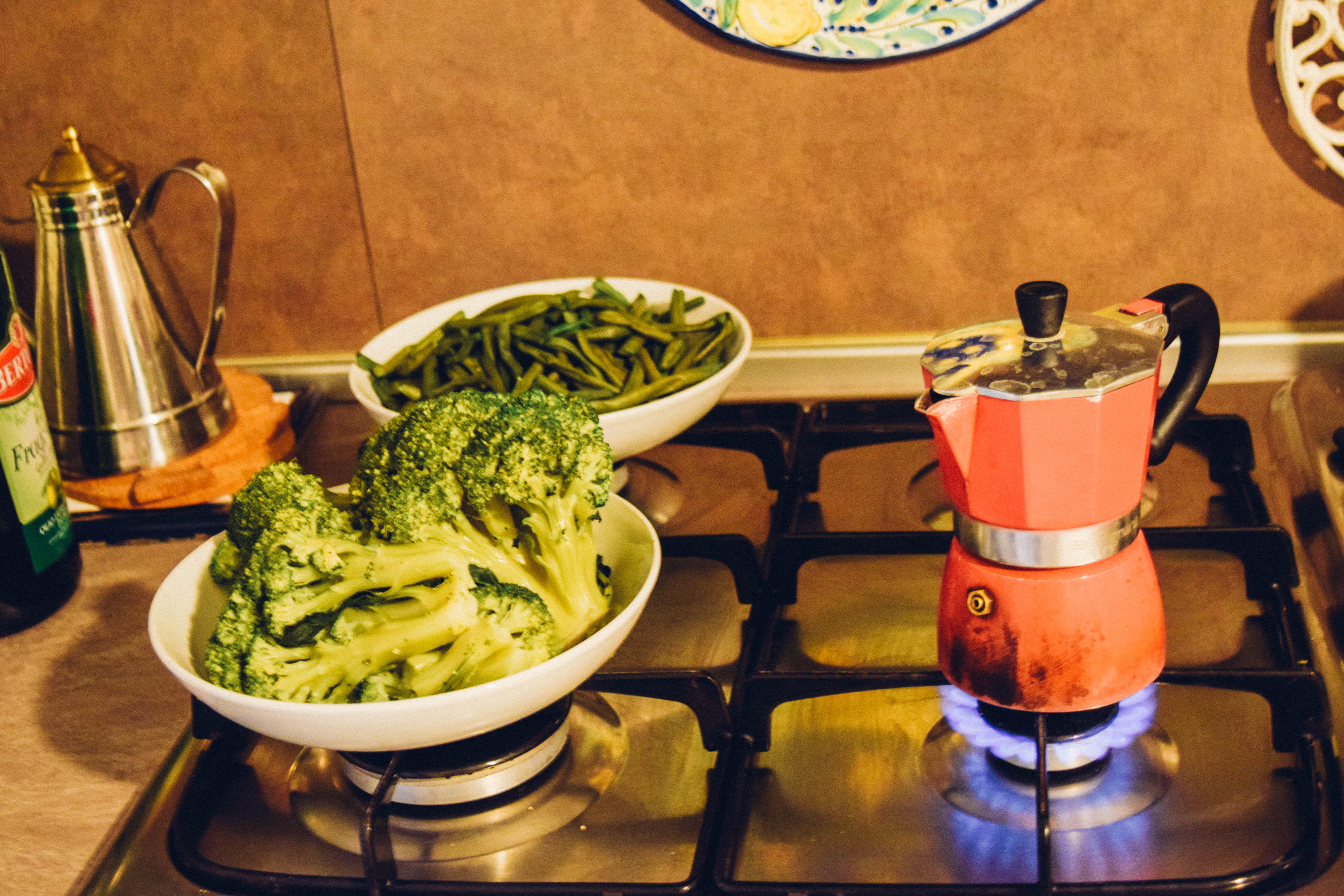
  • Orecchiette from Puglia (small pasta with Broccoli sauce)
  • Tiramisu


Preparing for Tiramisu

Preparing Tiramisu


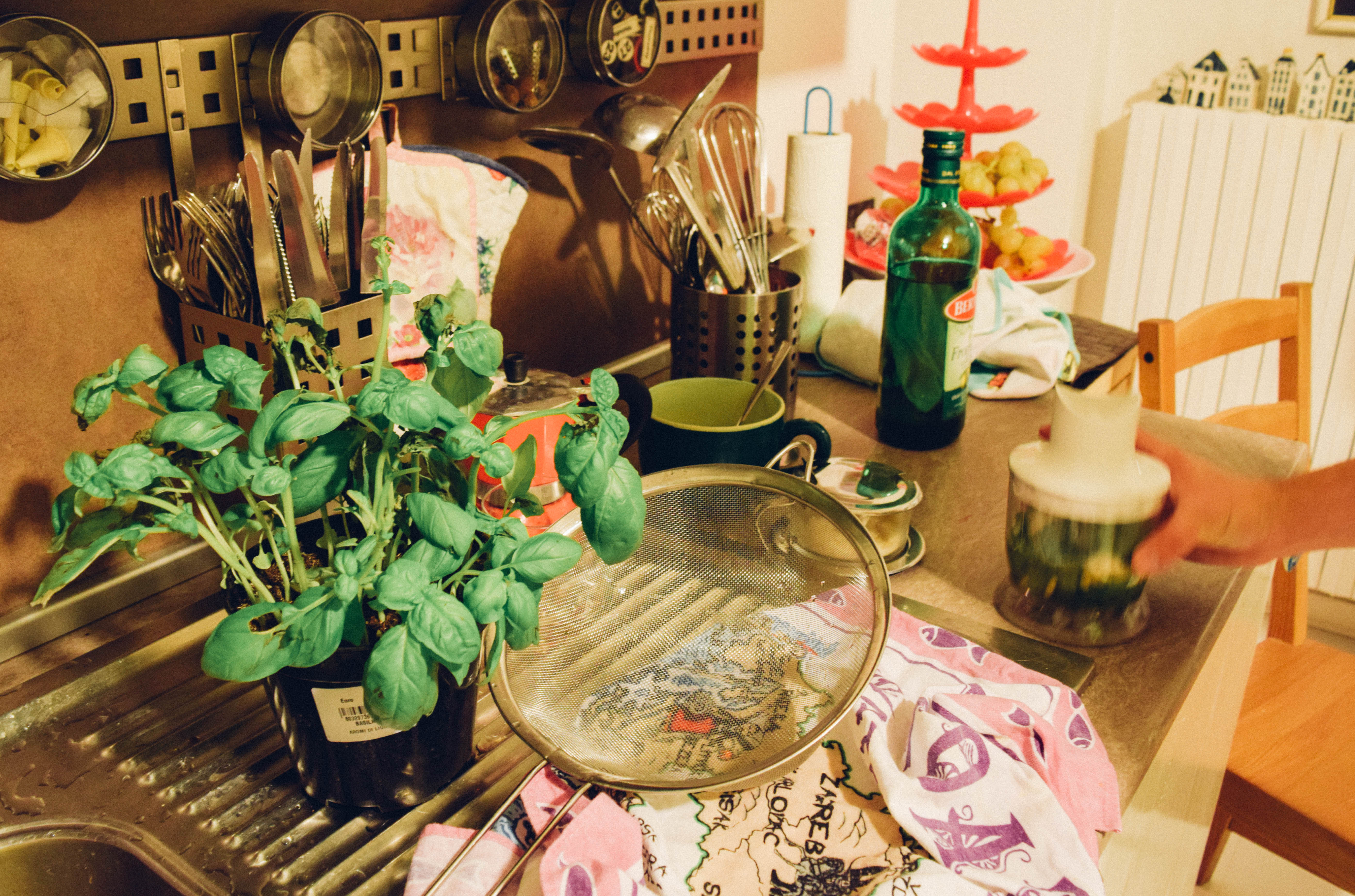
Fresh basil pesto sauce

Fresh basil pesto sauce


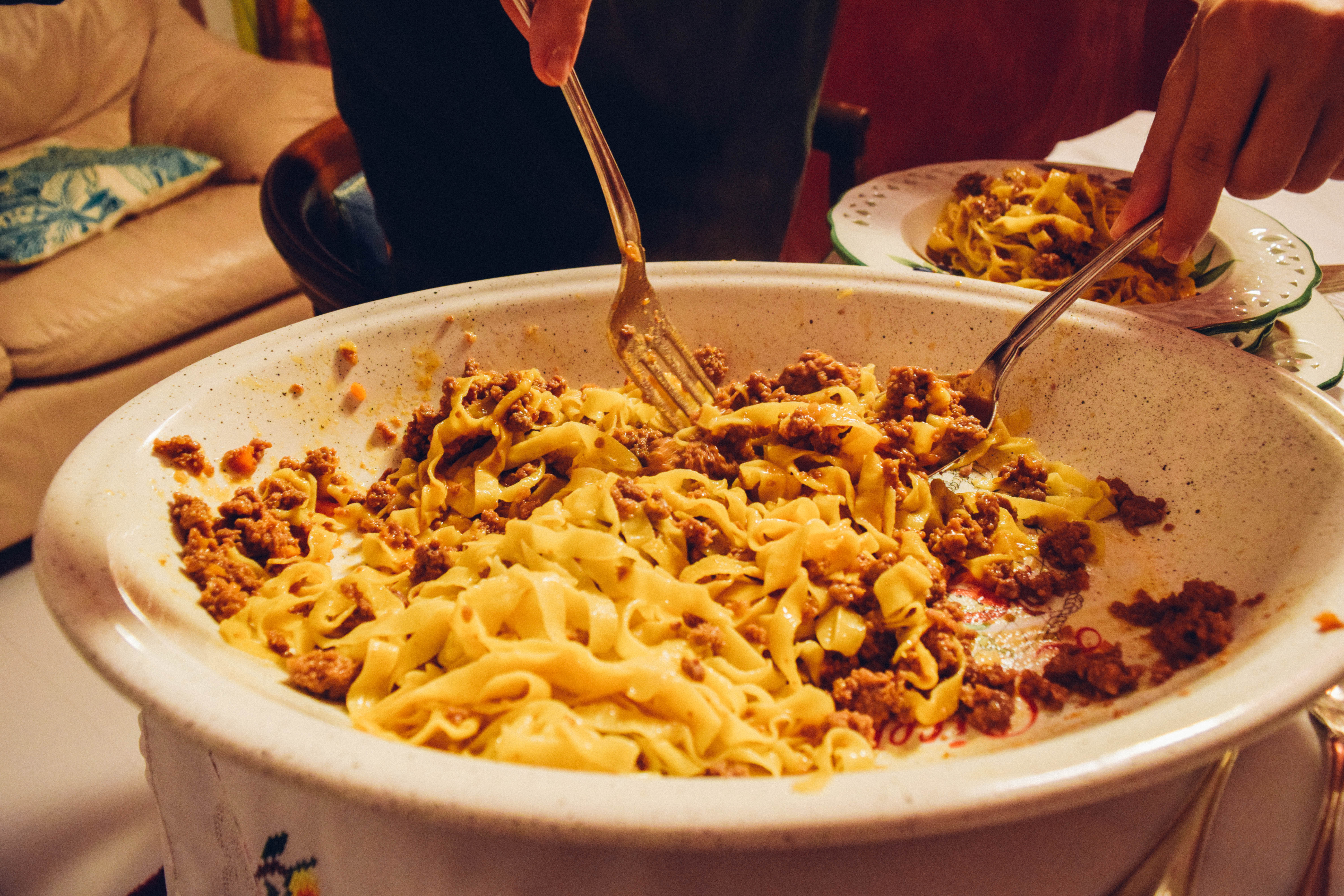
First, we prepared the coffee for making Tiramisu. Finger biscuits, fresh milk, egg yolks, every ingredient are bought from the open market by our chef in the morning. Later, we chopped the meat and sausage to make the delicious Bolognese sauce for pasta. Here comes the secret word – Massage. With a little bit of a hand massage to the meat mixture, the sauce becomes more flavorful and the texture will be much softer.

In the pasta-making session, everyone seems a little stressed out. It is always pleasant to watch the chef preparing everything from scratch and people rarely realize how much effort it takes. It is in fact, a very, very tiresome job. We have to not only make sure the consistency of moisture is perfect but also force the pasta into standard shape.  After half-an-hour of pasta making, we are all amazed by the amount of effort and heart it takes for a wholesome meal.


Making pasta from scratch

Making pasta from scratch


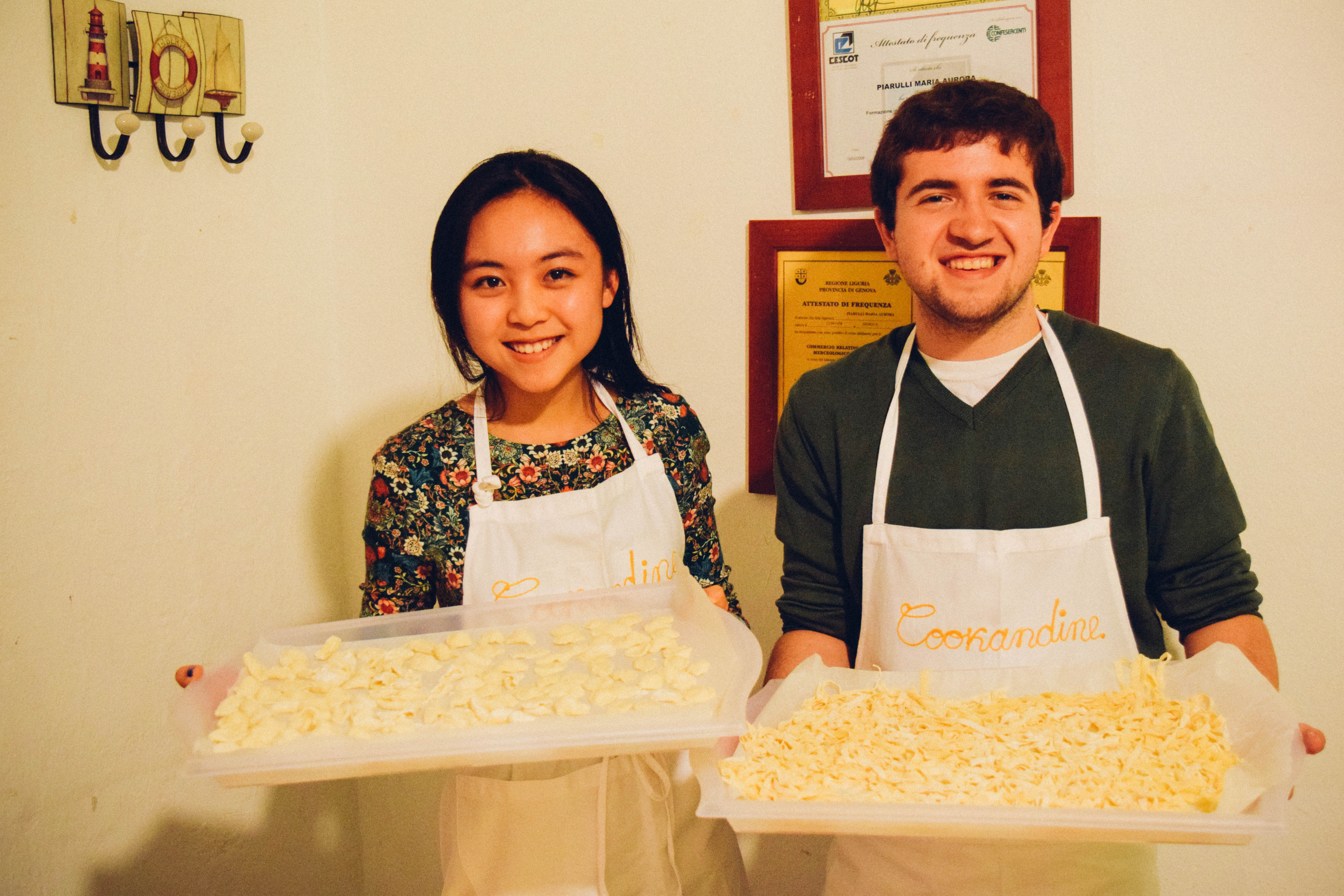
Our first product

Our first product


Now, time to dine. Having tasted our results after two and half hours’ preparation, we were all overjoyed by how delicious it tasted. Fresh made pasta really tasted entirely different than the hard pasta packet from the supermarket. The texture, consistency, and chewiness totally converted me into a believer of “from-scratch” Italian cuisine now.

Pasta, Bologna-style

Pasta, Bologna-style


Layla in Australia: A Day in the Life

October 15, 2015

Today I received a reminder on my phone telling me to renew my travel notification for my bank. My bank only lets you notify them that you’ll be traveling abroad for 90 days at a time, which means this notification means I’ve been in Australia for just about 3 months. Needless to say, I didn’t realize how long it’s been! I’m just over halfway through my time abroad, and in 3 more months I’ll be starting the spring semester back at Richmond. To say I’ve settled here in Australia is an understatement – I feel just as home here as I do in the United States, if not more. To use some of my Australian slang that I’ve picked up, I’m really not keen to come home… in fact, I still haven’t booked my return flight to the States. Here, I’m going to describe a typical day for me here in Sydney, and hopefully show why I love it so much.

9 AM, any given Thursday: Wake up… after hitting the snooze button on my phone about three or four times. While I was never a breakfast person in America, the lack of a meal plan and a dining hall on campus means that buying lunch is expensive. Instead, I typically eat a bowl of Weet-Bix, a classic Australian cereal, for breakfast and bring a granola bar and some fruit for lunch. After getting ready, playing around on my phone, and eating breakfast, I make the ten- to fifteen-minute walk up the road to uni.

11 AM: Macroeconomics lecture. While it’s tough to keep focused for the entire two hour lecture, the material is interesting enough to stay awake and the ten-minute break in the middle helps. The professor tends to show how what we’ve learned about in class applies to the Australian economy, so I get to learn about not only general macroeconomics but Australian policies as well.

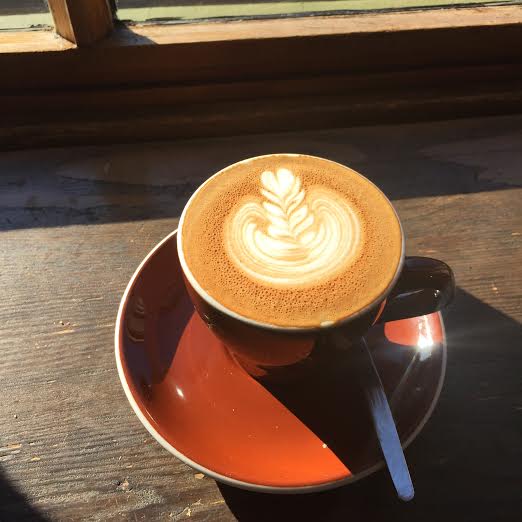
1 PM: With lecture over, I cave to my biggest weakness: coffee. I don’t really drink coffee at home – I’ve never liked the taste. I did drink caramel macchiatos while studying for the MCAT, but mostly the appeal was the caramel sauce. The coffee was just the bitter obstacle that I drank quickly so I could indulge in caramelly goodness. However, Australia is known for its delicious coffee, and I decided that I couldn’t come here and without trying a flat white, the classic Australian coffee drink that’s like a less foamy cappuccino. Needless to say – I had one, and I was hooked. Coffee here is so good that I don’t even need sugar to make it palatable like I do in America. My guilty pleasure at uni is a flat white and a croissant from the café in the New Law Annexe.


A flat white from the coffee shop where I first tried Australian coffee, Campos in Newtown.

A flat white from the coffee shop where I first tried Australian coffee, Campos in Newtown.


For the first half of the semester, I had four hours of gruelling chemistry lab directly after my economics lecture. This lab, which I had multiple times a week, was the bane of my existence, endlessly frustrating me with my inexplicable failures in it. But luckily, as of a few weeks ago, the lab has ended and I can finally go to quidditch trainings! Trainings on Thursdays are 3-5 PM in Victoria Park, the park bordering the USYD campus. I’ll generally do a little study after my coffee break and then head to training, where we run drills, play scrimmages, and play netball. Netball is a sport that’s pretty popular in Commonwealth countries but almost unheard of in America. It’s similar to basketball, but one major difference is that you can’t run with the ball. Needless to say, I often forget this rule, so netball isn’t my favorite. Practice usually has about fifteen people present.

5 PM: After practice, the quidditch team heads to the pub! Generally we start at the Forest Lodge Hotel (affectionately nicknamed the “flodge”) just north of campus in the suburb of Glebe for dinner and then head to the neighboring Roxbury Hotel for trivia at 7:30. Weirdly, pubs are called hotels here… as are hotels. That was definitely confusing at first!


Me and a handful of quidditch mates at the Roxbury hotel. This was actually taken after my very first training at USYD. I'm in the purple jacket, and pictured clockwise are my friends: Kat, Cameron, Lachlan, Laurel, Nat, Tom, Lachlan, and Paul. Usually our table is two or three times the size!

Me and a handful of quidditch mates at the Roxbury hotel. This was actually taken after my very first training at USYD. I’m in the purple jacket, and pictured clockwise are my friends: Kat, Cameron, Lachlan, Laurel, Nat, Tom, Lachlan, and Paul. Usually our table is two or three times the size!

Since Australian universities are mostly commuter schools, the focus of social life is off-campus, typically at pubs. On-campus or house parties are almost unheard of, except for students who live in colleges (which are akin to American fraternities, and generally only for students who don’t live in the metropolitan area.) Since there are no communal dining halls, dorms, or apartments for students to socialize in after classes, pubs fulfil that role. Speaking sociologically, drinking is much more of a focus in daily life at university here than it seems to be in America, even accounting for the lowered drinking age.  ‘Mateship’ is one of the cornerstones of Australian culture, and buying drinks for your mates and having them reciprocate is one of the ways that it is expressed.

Typically, my friends and I will stay at the pub until it closes, around midnight, with some people filtering out earlier to catch public transport home. Usually then we will split up to go home, or if we’re still feeling sociable, some will come over to the apartment complex where my friend Sam and I live, Urbanest. It has a TV room on the ground floor filled with couches that is typically empty by the time we get there, and is great for late-night hangouts. Once everyone goes home, all I have to do is take the elevator up four floors and I’m home.

Hopefully this post has given you a little insight on what it’s like to be a university student in Australia. My life isn’t glamorous by any means, but it’s definitely fun. While I’m not jetting off to a new country every weekend like many study abroad students, I think that by immersing myself into Australian culture, I’ve gained a much deeper appreciation for where I am studying abroad. I think for a lot of study abroad students, between all of the traveling and lack of deep connections with local students, their host country becomes interchangeable with any other place. Not to say that traveling often or being friends with other exchange students is bad, but I think that by making local friends and really getting to know Sydney on a deeper level, my study abroad experience has been infinitely richer. I can’t even fathom how much it would have lacked without my Australian friends – they have made this experience what it has been so far for me, and I will miss them terribly when I go back to America.


Dan in Argentina: Playing the Tourist Role

September 23, 2015
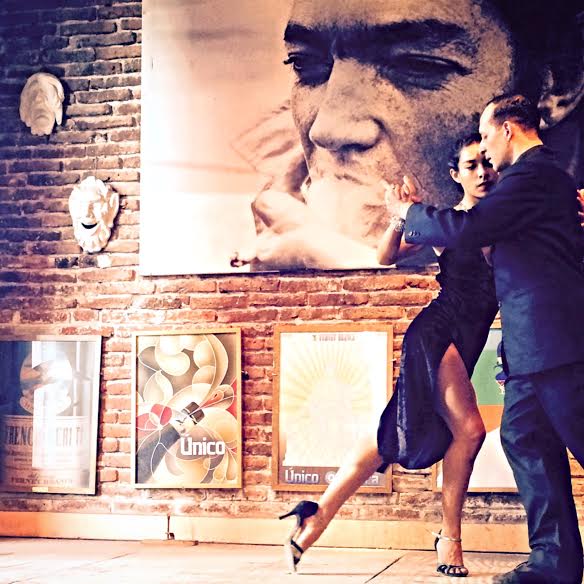
Ahh, el Tango... The Tango is not only a seductively romantic dance but also a popular type of music. In Buenos Aires, although the Tango may be becoming antiquated to everyday culture, it is still very much alive for the tourists and those authentic porteños (residents of Buenos Aires) who wish to maintain the tradition. I went to a traditional milonga where the locals go to dance, and it was amazing. The sounds of the accordion and violin create the perfect backdrop to the most beautiful dances you can witness.

Ahh, el Tango… The Tango is not only a seductively romantic dance but also a popular type of music. In Buenos Aires, although the Tango may be becoming antiquated to everyday culture, it is still very much alive for the tourists and those authentic porteños (residents of Buenos Aires) who wish to maintain the tradition. I went to a traditional milonga where the locals go to dance, and it was amazing. The sounds of the accordion and violin create the perfect backdrop to the most beautiful dances you can witness.


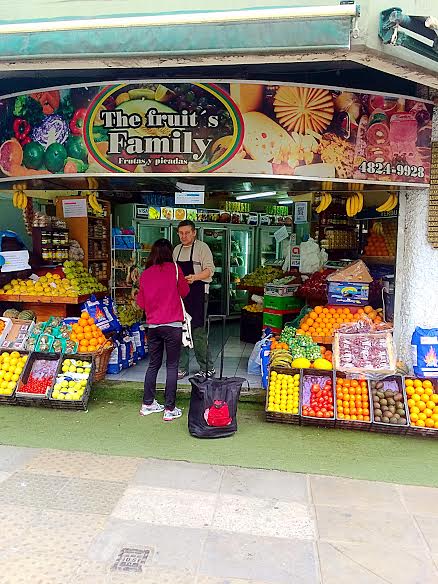
As one might expect in Latin America, the fruit is very fresh. At the bottom of my apartment building is a fruit and vegetable shop. Every day, my host mom buys fresh vegetables for that night's dinner and fresh fruit for the next morning. Every day, when I get home, I always peer over and smile at the vibrant colors and amazing smells!

As one might expect in Latin America, the fruit is very fresh. At the bottom of my apartment building is a fruit and vegetable shop. Every day, my host mom buys fresh vegetables for that night’s dinner and fresh fruit for the next morning. Every day, when I get home, I always peer over and smile at the vibrant colors and amazing smells!


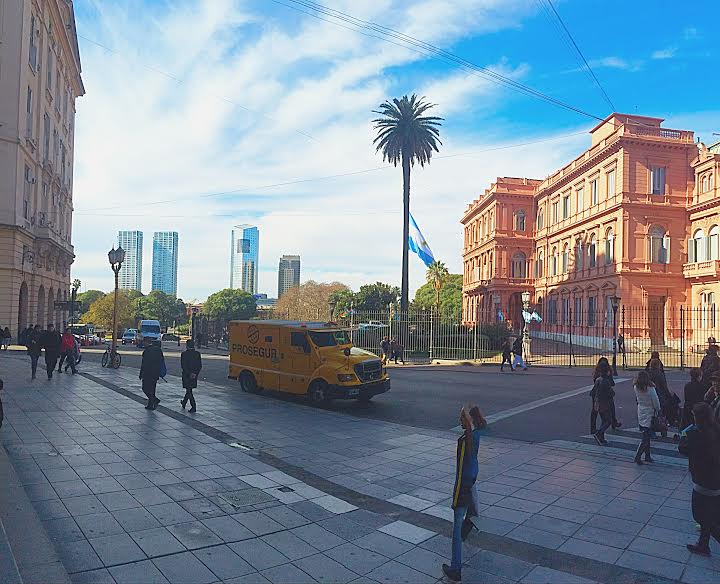
From the steps of the Central Bank, you have a beautiful view of the modernity of great skyscrapers and the history of the Casa Rosada (Pink House). The Casa Rosada holds the executive offices of the President. I toured the building and got to see all its beauty inside and out. While some old wallpaper held small stains and the original floors looked a little beat up, these imperfections added to the authenticity of its history. Interestingly, the building is pink because at one point it was believed that, to protect against the summer humidity in Buenos Aires, it was good practice to preserve the exterior walls with a mixture of lime and cows blood.

From the steps of the Central Bank, you have a beautiful view of the modernity of great skyscrapers and the history of the Casa Rosada (Pink House). The Casa Rosada holds the executive offices of the President. I toured the building and got to see all its beauty inside and out. While some old wallpaper held small stains and the original floors looked a little beat up, these imperfections added to the authenticity of its history. Interestingly, the building is pink because at one point it was believed that, to protect against the summer humidity in Buenos Aires, it was good practice to preserve the exterior walls with a mixture of lime and cows blood.


The Colon Theater is ranked as the third best concert hall in the world. Its acoustics are unmatched and its beauty is ridiculous. I am unsatisfied with the photos I got inside because they do not properly display the grandeur of the building. I plan to go back with my friends from UR and we'll be sure to get a group pic!

The Colon Theater is ranked as the third best concert hall in the world. Its acoustics are unmatched and its beauty is ridiculous. I am unsatisfied with the photos I got inside because they do not properly display the grandeur of the building. I plan to go back with my friends from UR and we’ll be sure to get a group pic!


Dan In Argentina: …and Chile

August 19, 2015
04_friends

This weekend, I went to Chile with a bunch of Richmond friends! We stayed in Santiago, skied in the Andes and lunched in Valparaíso. Bergen, Lauren, Sam, Jackie, Ben and I did a lot of planning and had a lot of luck to result in an amazing trip. Despite an unintentional hour of cross-country skiing across the mountain and a delayed flight, everything seemed to fall right into place.


buildings

Santiago was an incredible city. Compared to Buenos Aires, it has a lot more nature. They have sky scrapping palm trees, large patches of green grass and a wall of massive mountains surrounding the city. The view from our (*clears throat*) “penthouse” apartment perfectly displayed the city’s landscape with the amazing Andes backdrop. Here, in Plaza de Armas, the historic (1748-1800) architecture of the Metropolitan Cathedral of Santiago contrasts lovely with a modern office building.


paintings

Valparaíso, Chile is one of the country’s largest port towns, receiving more than 10 million tons of goods annually. The city is known for its large hills filled with vibrantly-colored houses and funicular railways. The quaint town was relaxed on a Sunday afternoon and was filled with street vendors, artisans and boutique shops. This artwork gives you a sense of the masterfully-painted and historic city.


poterillos

When traveling on a budget, sometimes direct flights aren’t the best option. Four of us had a 10 hour layover in Mendoza, Argentina. Seems horrible, right? Not exactly. We traveled an hour from the airport to Potrerillos, a small town at the base of the Argentine Andes. If you ask me, this beautiful lake and the breathtaking views of snow-capped peaks was a pretty incredible solution to our layover situation. Shout-out to our taxi driver, Daniel (no relation), for making it all possible.


market

El Mercado Central in Santiago was expansive beyond belief. It was the same size as a Costco, and with the amount of vendors as a major state fair. The fresh fish and fruit were displayed gorgeously. As the shopkeepers run around to sell their produce, customers enjoy the smells, taste-tests and people watching. Of course, when in Chile, I made many “it’s chilly in Chile” jokes and was excited when I saw chili peppers.