The Spirit of Collaboration: Grassroots Movements

December 9, 2011

On an alternative education program, it is not final exams that we have, but rather, final projects.  After working with communities all semester long, learning about their struggles, successes, and current projects, we as students finally get to be a part of it.  When I initially came I was confused what out projects were.  I did not understand the process; and that process is collaboration.  My final project is unlike anything I have ever worked on because I am not only working with a group of five other students, but with an entire community.  And these people not only want, but need, it to be perfect, because it changes their livelihoods.  (Also, everything has to be translated into Thai.)

For my project, I am working with the Rasi Salai community as they begin the very early stages of starting a Green Market, or an organic market.

We created surveys and the conducted them both in the city with consumers and on potential producers’ farms.  After collecting our data, we returned to Khon Kaen to analyze it, create an educational pamphlet on organic food, and prepare for our annual Human Rights Festival.  What a crazy two weeks it has been!  So now, as it nears an end, I finally have clarity on what it means to collaborate with a community, and I have a better idea of what grassroots movements really are.  I came into this program thinking there needed to be outside involvement, but after having worked with a community that has been organizing for 17 years, I understand that motivation and passion are what drives movements, not power or money.  A dam was built in the community, and rather than giving up, they fight (“sou sou!”)  In this case, that means working within their situation, and making it better.  So currently, that means an organic market.  I know it is early stages, but I am really looking forward to years from now when I return to Thailand and go to the Wetlands Peoples’ Green Market.

As for now, well it’s time to wind down.  (No, that doesn’t mean free time).  We will have the Human Rights Festival, which is a gathering of many communities and NGOs presenting their issues and networking together.  Then off to the retreat to reform the program structure and reflect on my experience.  It is hard to believe that its all coming to an end, but nice to know I have a community at Richmond to come home to.


The Work of a Giant.

December 6, 2011

As the final weeks of term loom ahead, I would like to reminisce about being new to this whole living in Europe thing. Back in the day (sure seems like a heck of a lot longer than just 3 months), I felt the electric excitement of exploring Derry and its surrounding areas. Early on in the semester, a group of American students and I decided to hop on a train one Saturday morning and take it to the coast. Two hours and a long stream of breathtaking landscapes later, we arrived at the Giant’s Causeway on Northern Ireland’s Antrim Coast.

When researching the must-see sights of Ireland, the Giant’s Causeway always tops the list. Ever since I saw a picture of this geological phenomenon, I knew I needed to see it. My American companions all had the same thought. Just as we stepped off the bus, rain began to fall. It didn’t matter to us, though — we were determined. An advisor here at Magee actually told me that going to the coast in less-than-perfect weather was kind of a good idea. She said that seeing the waves violently crash against the coast made the cliffs and sights dramatic to behold. Anticipation was building as we made it all the way down the winding coastal path, passing signs warning of falling rocks. We rounded a final rock wall, and then we saw it. There is no way to describe it. Pictures don’t even do it justice. It’s one of those sights that you have to experience in person. Here are some pictures to give you an idea:

The Giant’s Causeway is basically a path of huge circular rocks projecting into the sea. Millions of years ago, the lava of an erupted volcano cooled in a certain way to form the almost perfectly circular rocks. It is really amazing because they look completely manmade. Even more interesting than the science behind the causeway is the Irish myth (and its namesake) about the place. The story is that an Irish giant named Finn MacCool wanted to battle with a Scottish giant known as Benandonner. Finn built a great stone bridge to link Ireland with Scotland so that Benandonner could cross. As Benandonner began approaching Ireland, his sheer figure terrified MacCool into hiding. The myth goes that MacCool was disguised as a baby and was placed in a giant crib. Upon seeing the ‘baby’, Benandonner did not want to imagine how massive MacCool would be if that was the size of his child. Quickly he turned around and ripped up the pathway as he ran back to Scotland.

As we were exploring the Causway, the rain finally let up and we were able to see the sights really well. We then took another bus to the nearby town of Bushmills. The attraction here? Ireland’s famous Bushmills Whiskey brewery, of course! We took a tour of the plant and learned about how “the water of life” is made. This is the literal translation of the Irish word for whiskey! They sure do love it here. A picture of the factory even appears on some Irish £20 notes. At the end of the tour we were offered a sampling of the whiskey. I’d have to say it was a wee bit strong for my tastes… Here is a picture of me next to a bunch of Bushmills barrels:

The next stop on our journey of the coast was the resort town of Portrush. Seeing it during the month of September obviously wouldn’t reveal all that the place has to offer, but it was beautiful in any case. The city is a place where many families in Ireland and the UK come to vacation. Here I finally had my authentic Irish Fish and Chips that I had been dying for! Here’s a picture:

Reflecting on it now, that trip really opened my eyes to the wonders that exist outside the borders of the United States. It made me hungry to see more and more of what else is out there! This is probably the reason why Megan and I planned a last minute trip over to Scotland. With only 2 weeks until all my final artwork is due, it’s proper crazy if you ask me! Well, at least I’m making progress. Here’s a wee picture of my latest work-in-progress creation… he will end up being a dinosaur of sorts:

Fun Fact #13: The Titanic was built in Northern Ireland’s capital of Belfast.

Fun Fact #14: The HBO series Game of Thrones is shot here. I met someone who was actually an extra in next season’s filming that took place earlier this semester. Also, Rihanna’s video for “We Found Love” was shot near Belfast. Apparently she was filming in a farmer’s field, but the shoot got a little too risqué, so the farmer kicked her off his land.


Time for Harvest, and Final Projects

December 5, 2011

Harvest time means that all the green fields from the beginning of my journey have turned golden yellow.  It is a physical representation of truly how much time has passed.  Pretty cool, though, because just as the rice has changed through process, so have I, through our group process.

This last unit before final projects was based on mining, and it brought together everything we have learned so far.  Water gets poisoned, land rights are violated, and of course, the farmland is destroyed.  What was most interesting about this unit was its complexity.  I, as an American consumer, contribute to this issue.  At our reading discussion, we had to take everything that had mined products in it and put it at our feet.  Jewlery, electronics from our backpacks, notebooks, pens — everything was sitting at our feet.  It was a scary realization.  Then we went off to the communities, and they, too, use products that have been mined.  It’s really a “not in my backyard” argument, but it needs to happen in our current economy, so whose backyard do we put it in?  More importantly, how do we ensure that those people have a say? That seems to be one of the biggest problems here in Northeast Thailand.  The villagers simply are not heard when the proposed projects will change their livelihood forever.

Despite all the work that was due, two friends and I decided to take our personal days and return back to the organic village.  What an adventure it was.  I could not stay with my host family, so I stayed with my friends and Paw Wan.  Paw is the local rice varieties expert, so it was cool harvesting rice in his farm.  It wasn’t just Jasmine 105 or Gaw Kaw 6; we were harvesting black rice, and then for dinner, we had the most delicious red sticky rice.  (Which doesn’t mean the rice is sticky — it is a different kind of rice that is eaten in this region.)

The trip back was where the adventure happened.  A driver brought us to the city nearby, then we got on an open air bus to take us to the bus station, and then there was only standing room on the four-hour bus ride.  Plus, the air conditioning was broken.  I found myself sitting on the floor (because it was cooler) scrunched between my friends, and just hoping that time would pass quickly.

We got home safe and sound as always, appreciating the adventure and impressed with our language skills.  It is now time for final projects, so off to the village to assess the feasibility of a Green Market.  But more on that soon…


Adventures in Paris.

November 29, 2011

Since we met each other in September, Megan, Lauren, and I had been talking about taking a trip together. We all wanted to venture deeper into Europe and have a wee vacation away from Derry. We unanimously decided on Paris. We had been told several times that we would fall in love with the city if we visited. A professor had also mentioned that an airline called EasyJet always had cheap tickets for travel within Europe, so our planning began.

We researched several different hostels within the city and settled on one that had pretty good reviews online. The only downside to this particular establishment was that management only spoke French. Having a history with the French language, our little group relied on me to deal with any transactions in my very simple French.  It turned out to be no problem at all.

On our first night in the City of Love we explored a bit trying to find somewhere suitable to eat. I’m not sure about my friends, but I know that I was a bit nervous to walk into a restaurant and order off a menu only written in French. We happily stumbled upon a restaurant/café with the menu posted outside (written in both French and English). The waiter happened to be standing outside when he heard us speaking. It must have been a novelty for him to run into Americans because he seemed excited to learn where in the States we all were from. He guided us inside and immediately recommended the duck- a French classic. Lauren and I decided to try as many French foods as possible while we were in Paris, so we went with his suggestion. It was absolutely lovely. At the end of our meal we chose crème brulee as our dessert to celebrate our trip to Paris. To our surprise, the waiter (who we later referred to as “nice French man”) also brought out a dish of chocolate mousse to welcome us to the great city. As we were leaving he also quickly wrote down metro directions to the Eiffel tower which we were planning to see the next morning. My experience in Paris proved the stereotype that the French dislike Americans completely false.

The next morning we took the lift all the way to the tip top of the Eiffel Tower. The views were remarkable to say the least. I have been in some pretty tall buildings (like the Sears Tower in Chicago) but it is much different to be that high in the open air. Megan and Lauren were a bit skeptical in taking the second lift all the way to the topmost level. I was too excited to look around the be nervous. My knees however did start to quake a bit when we took the stairs down from the second level to the first level. Its very strange to be that high up on an open air structure when you can feel the wind blowing. It will definitely be something I will never forget.

After we made it all the way back down, we walked a good distance away to get a view of the monument from afar. We walked by a street artist with work displayed and I fell in love with some of his drawings. I ended up buying 4 of them and the artist gave me another one for free- see, the stereotype being broken. You can see his work at this website: http://www.mario-paris.com/.

While taking some pictures, we ran into another group of American students. They were all from St. Cloud in Minnesota and were currently studying in Germany. It was very strange to hang out with some other Americans for a while. I love the people here in Europe, but it was just refreshing to talk to people going through a similar experience. From the tower we all walked to the Arc de Triomphe and the Champs-Élysées. We walked around for a while then made plans to meet up with the other Americans later for drinks. Being the American girls that we are, Lauren, Megan, and I decided to see all the stores lining the Champs-Élysées- a big shopping location in Paris. We grabbed dinner which included a lovely appetizer of snails. I have had escargot before, so I knew what I was getting myself into. It was great to see Megan and Laruen’s faces as they tasted it for the first time. I was then able to check that off the foods-to-eat-in-Paris list.

While talking to the American students we had met, we came up with the best meeting place ever- under the Eiffel tower. That night we actually ended up going to and Irish themed pub which made the three of us feel at home.

The next morning we had three things on our to do list- Versailles, the Louvre, and Notre Dame. Because Versailles is further out of the city, we decided to go there first. After several buses and trains, we finally got there. And all the traveling was well worth it. The place is massive. And beautiful. In fact, it is so massive and beautiful that there are bikes for rent to take around the gardens and that is exactly what we did. We rode all around the grounds and the pond and just enjoyed the lovely day. Before we left we took a tour of the larger palace and were amazed at the size and grandeur of the place. There are countless rooms with crystal chandeliers and hundreds of pieces of artwork. There were salons with paintings big enough to take up the entire wall. In several rooms, the ceilings were completely painted with Bible scenes. Here are a few  pictures of Versailles:

After we felt so completely like princesses, we decided to head to the Louvre. Not having planned much of our trip in advance, we sadly arrived at the Louvre to find that the museum portion was closed for the day due to a national holiday. This was slightly disappointing, but who can be sad in Paris?! We headed on to the Notre Dame and realized that day was November 11, 2011. That’s 11/11/11. So at 11:11 pm on 11/11/11 we could make the most epic wish ever underneath the Eiffel tower. We had a bit of time to kill so we enjoyed the Notre Dame Cathedral from every angle and wandered the streets of Paris for a while. Then our last night in Paris ended while sitting underneath the Eiffel Tower making wishes. It was magical.

Fun Fact #11: Young people in Northern Ireland are paid a “living expense” to go to school when they are around the age of people in high school. My friend Tomas said, “Aye, I think we were given about 30 quid a week”.

Fun Fact #12: “Aye” means “yeah”. People here never say “yeah”. They also never say “little”. Everything is always just “wee”.


The River Runs Free (or should) and Chiang Mai

November 16, 2011

Here in Khon Kaen, Thailand, working as a member of a group and visiting villages every few weeks, the term solidarity has come up a few times. It seems that the more time that passes, the more frequently the term is used. What does solidarity mean in relation to these issues? What does it mean in the villages?

On a journey to discover what solidarity really means, one telling village was Ban Huay Top Nai Noi. Not only does this protest village share passion and drive, but they have a plan. Made up of villagers from two different surrounding villages, this village was formed to protest a dam project upstream. These villagers’ homes were not going to be flooded, but their farms and their livelihoods were. In 1995, the protest village formed in the flood zone of the proposed dam project. Paw Sampone said, “We moved to the flood zone because if they want to build the dam, build the dam. But, if you retain any water, you will be killing people.” The power of their mission is not just for themselves, however —  it is for the land and the people around them.

For communities we visited during unit 4, which are potential or previous dam sites, the river is more than a source of water. The flooding created or exacerbated by dams is not just detrimental to the crops in the farmland or the homes in the area, but completely destroys livelihoods.

For example, in communities in Rasi Salai, the end of the rainy season has led to absolutely no source of income for the people. The wetlands, their original source of food and crops, is flooded. They cannot gather crops that have been sustaining their families for hundreds of years. Because of the dam reservoir, their farmlands are also flooded to the point where they can only get around some parts by boat. Many cannot even walk to their farms to see how much damage has been done. The final portion of these villagers’ income comes from handicrafts made and sold at the local learning center. The center is up to the roof with water because the land the people were given for the project is located on the banks of the reservoir. The supplies to make most of the crafts come from their fields, as well. So without farmland just a few weeks before harvest, plus no crafts and no place to sell them, the dam has led to no financial stability or security for the people of Rasi Salai. Their homes may not be flooded, but they continue to band together because without the other community members, some families could easily go hungry.

This community serves as a mentor for that of Ban Huay Top Nai Noi. They have provided guidance, comfort, and support during the hard times. They inspire the people of Ban Huay Top Nai Noi, and encourage their fight. Even through the violence that occurred, the people of the protest village stayed in their new location. Their presence is a fight, and it is a message. “We do this for the land. Land cannot regenerate, but people are born everyday.” Their strength comes from each other. “Wherever we go, we go together. We share everything, not just knowledge.” These words of the community members is what enables the movement they are part of. They have a cause and support and the strength of their community is what true solidarity looks like. They stand, fall, live and fight together.

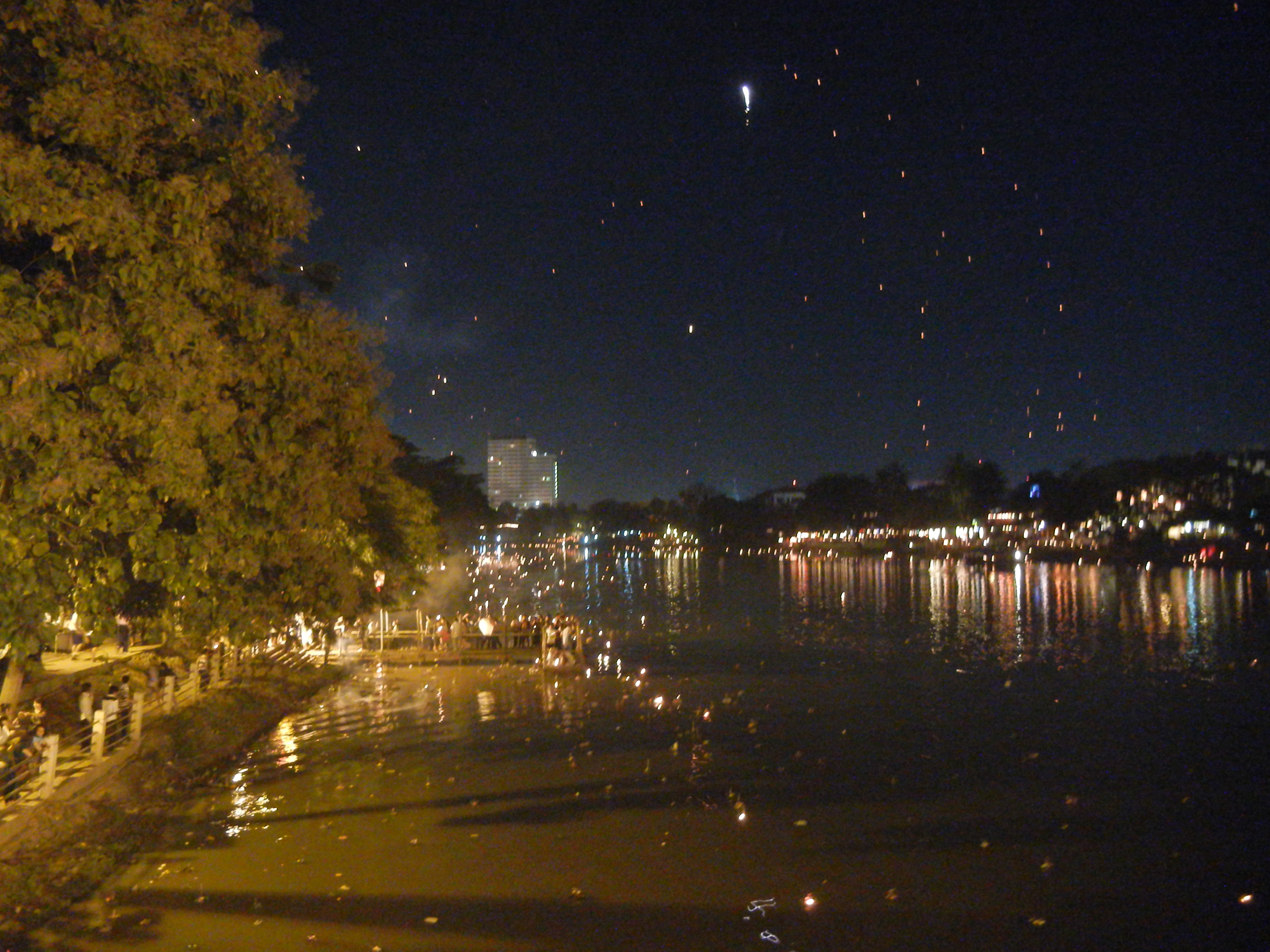
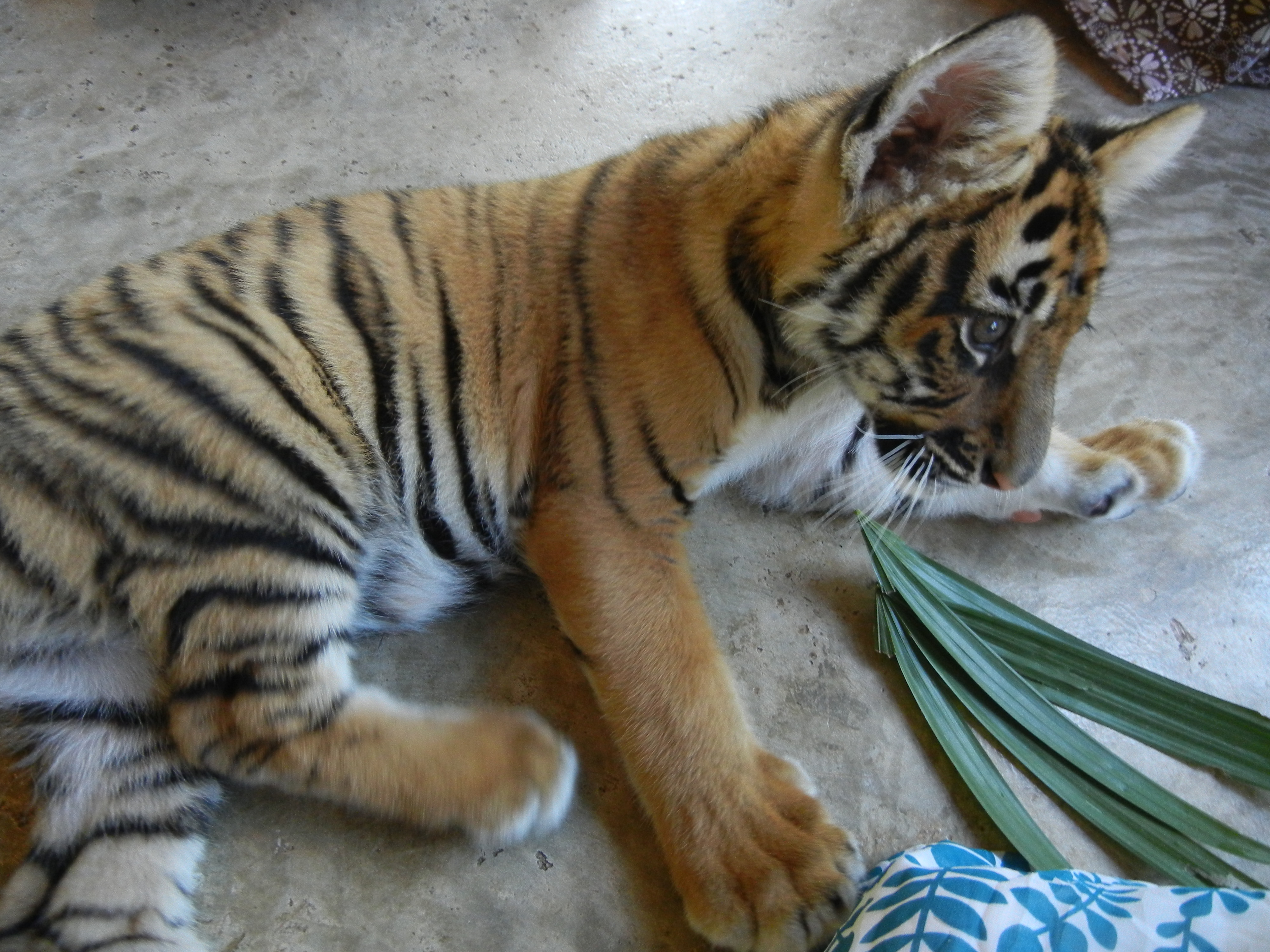
After the water unit was our four-day break, which came and went quickly, and what an amazing adventure it was! Just a quick summary — I went to Chiang Mai and saw the floating lantern festival. It was the most amazing thing, and it is a time to pay tribute to the river, so it was fitting following our water unit. I rode an elephant, played with baby tigers, and went bungee jumping (never thought I would…)  Although I indulged in foreign food like burritos and falafel, it’s good to be back in Isaan where there aren’t tourists and I get to speak Thai.

Onto the mining unit, which should be really interesting and I’ll have more time with internet to blog in a more timely fashion!


Adventure Wednesday and Cinque Terre

October 24, 2011

As any college student knows, or any future college student will find out, having a good class schedule can make or break your semester.  In my experience, a higher number of early morning classes has a direct correlation to being unhappy most mornings, but also improves your productivity (when you’re up early, you have nothing better to do then be productive… or go back to bed). Also, the holy grail of class schedules for almost everyone is setting a schedule that gives you off on Fridays, as 3-day weekends are a college student’s best friend. Because I had to get courses that I knew would transfer credits back to Richmond, and because I had to take all of my classes in English (which gave me far less options), I could not be very creative with my schedule this semester. This, unfortunately, left me with the reality of two 8:45am classes, two classes that actually overlap on Tuesdays, and instead of Friday off, or even Monday, I have a day off on Wednesday…. Wednesday. What can you do with an off-day on Wednesday? You can’t take a long weekend, it splits your week in half completely, and is just generally unnecessary. But as I have done (or attempted to do) with most things on this trip that have seemed to not go my way, I turned it into a positive. This was done through the creation of Adventure Wednesdays, which is my brain child that is exactly what it sounds likeEvery Wednesday… I go on an adventure. Whether in the city, out of the city, taking a train, plane, or automobile, I find something to do that will make a memory and create an experience (some positive, some negative).

As my test trial for Adventure Wednesdays, I decided to go to a place that tops many experienced travelers’ list of “must-see places” and now that you have heard of it (I hadn’t heard of it before I came), it should top yours. It is called “Le Cinque Terre,” or “The Five Lands.” In the Liguria region of Italy, Cinque Terre was a place I knew I needed to see. Most of my friends had already gone, and even though it was a little far (about a 3 hour train ride) I decided I would make the trip on my own, to uncharted lands, with no background knowledge, as a great way to kick-off Adventure Wednesdays.

To give you a minute-by-minute breakdown of my solo adventure would be both time consuming and long winded, so I suppose I will give you a plethora of highlights instead.

After a tram and metro ride to the train station, I missed my first train at 8:05am because of a malfunction with the ticket machine, delaying my departure  until 9:10am, the next available train. After an hour and a half, I switched trains in Genoa and had a lovely train ride along the western coast of Italy and the Mediterranean.  After reaching my train’s destination, I was told I needed to board a regional train that stopped at each of the 5 lands (Riomaggiore, Manarola, Corniglia, Vernazza, and Monterosso al Mare) but reached another snag when I boarded the incorrect train, headed in the wrong direction. After asking an elderly Italian woman (with my little Italian) where to go, I got off the train, only to find myself stranded in the nearby town of Moneglia because the next train to Le Cinque Terre would not be coming for over an hour. It turned out Moneglia wasn’t the worst place to get stuck in, and I had a wonderful lunch there while enjoying the small and beautiful town along the Mediterranean Sea.

Finally, I arrived in Cinque Terre, and started at the bottom of the 5 towns in Riomaggiore.

A leisurely 30-minute walk along cliffs over looking the sea brought me to the lovely Manarola. It might sound girly, but Manarola was definitely the cutest of the 5 lands.

Because of a rock slide, the hiking path was out between Manarola and the next of the five towns, Corniglia. Despite receiving warnings, I decided to see for myself, so I got to the edge of this cliff before deciding it was best to turn around.

Next was a train ride from Manarola to Monterosso al Mare (by far the biggest of the Cinque Terre, almost like a small city) which was full of tourists enjoying the beautiful restaurants and beaches. After walking through the city, I began a grueling 2 hour hike up steep stairs, rocks, and along cliffsides (without railings of any kind) to the most beautiful of the 5 towns, Vernazza.

With sore feet, out of breath, and sweat pouring down my face, after walking through trees and wildlife (very beautiful), I turned a corner to see a breathtaking view of this incredible city.  In what seemed like the middle of nowhere stood this city as beautiful as a painting that took my breath away and made the near torture of the last 2 hours more than worth it. A giddy 15 minute walk down to the city to get a closer look opened my eyes to the true atmosphere of Vernazza. Incredibly impressed and worn out, I decided to take a swim in the bay in Vernazza as I watched the sun set slowly over the Mediterranean, signifying the ending of a seemingly perfect day.  After grabbing a pizza in Monterosso, sadly without time to enjoy the glorious seafood restaurants of the area, I boarded the final train for Milan, capping off my first-ever Adventure Wednesday, which supplied me with memories that will truly last a lifetime. This solo adventure proved to be a rollercoaster ride, but I wouldn’t have had it any other way. The imperfections and perfections combined to make it a perfect trip in my eyes, and to a place I would be extremely lucky to get to see again.


Food For Thought

October 24, 2011

So, I am in Italy, quite possibly the birthplace of amazing food. Amazing, expensive food. If you have 15-30 euros to spend on dinner every night (roughly $25-45), you will eat like a king. You will think that America has been tricking you for your entire life and that only now have you discovered what food is truly supposed to taste like– like Columbus or Marco Polo conquering a new world with the greatest food imaginable.  However, the criteria for me being able to indulge you with my stories is that I need to be a college student, and generally, a basic characteristic of any college student is being broke. So needless to say, I can’t eat like a king every night, but on the rare occasions that I have, my taste buds were taken to a place far surpassing any previous level of enjoyment and satisfaction– a place they still long for when I bite into my cold pizza left over from the night before.

I have needed to find new ways to feed myself while saving money and still enjoying eating some delicious food. So early on in my trip, I took a trip down to the supermarket and walked around indecisively, looking for food that I could cook with my extremely limited cooking skills. We’re talking microwave pizza limited… actually, we’re talking a stove or an oven might as well be alien technology limited… but anyway, I decided I had to learn, or I would be broke and starving on the street come December.  I had been longing for red meat since my pizza and pasta Italian diet left me with a big hole in my usual diet, so I got 2 packaged steaks and put them in my basket. I decided then that I would be a little adventurous and try to add some flavor to the steak, which turned out to be best served by a small bottle of soy sauce located in the corner of the grocery store. So I walked back, proud of myself, and excited to begin my experimental cooking. I met my friend in one of the communal kitchens in our dormitory and we both tried to decipher the stovetop. It was an electric induction stove (much safer for dorm rooms, no gas or fire) and it took us 10 minutes to figure out how to turn it on.  We had to ask an Italian girl across the way that after a strange look walked in, pressed one button, and walked away with heat emitting from the stove. “Grazie mille,” (“Thank you very much,”) we said as she left, probably adapting the old adage, “How many dumb Americans does it take to turn on a stove?”

Our excitement was short-lived when we discovered the pan we put on the stove was not getting hot. That led to another 20 minutes of confusion and stress, my stomach growling, and us stupidly pressing every button to make it work. The Italian girl was gone, so with no more help from her, we found a manual for the stove… written in Russian, and we had no experience with something like this before. Frustrated and hungry, on the verge of giving up, we were about to be saved. My friend’s Italian roommate and his girlfriend came in to cook and saw us struggling. He was confused at first too, but after diagnosing the problem, he told us in broken English that induction stoves need induction pots and pans to work (duh). He happened to have some in his room he would let us borrow, and the four of us cooked and enjoyed our meal, them teaching us some Italian, and us teaching them some English. My soy sauce steak was actually quite delicious.

Since that run-in, I have had some more cooking struggles, with every time being a learning episode, but I am slowly becoming a world-class chef (self-proclaimed). I am getting more daring with my recipes, trying new foods, and I know that stovetop like the back of my hand.  When cooking gets boring, or if I haven’t made a supermarket trip in a while, I enjoy getting a kebab from one of the many places around the city (basically gyro meat in a sandwich or wrap that is insanely good), a salamella con tutto (a sausage sandwich with lettuce, tomatoes, onions, mushrooms, ketchup and mayonnaise, which I am basically obsessed with at this point) for lunch from the sandwich cart in the middle of campus, or I will spring for a 3 dollar pizza from my favorite hole-in-the-wall place around the corner where they always greet me with a friendly “Ciao caro” (“Hello, dear”).

I have come to greatly enjoy the food here, made either by myself or by others. And when I have some money saved up, I can always treat myself to a delicious four- or  five-course meal in downtown Milan. Adapting to my situation wasn’t quite smooth, but very effective, so it is always important to stay open minded and versatile… so I guess that, right there, is a little food for thought.


Community, Globalization, and Tons of Trash

October 24, 2011

So many villages, so little space to write about them…  so I’ll keep up with the highlights principle.  The highlight of the Land unit was definitely Baw Kaew community.  It is a protest village where the people were kicked off of their land, and two years ago they returned and have built a community.  There were people from all different villages, and through the shared struggle and passion, they have created something unbelievable.  The grandmothers share their stories of being kicked off their land with the children, who will continue to fight based on the devotion.  This unit showed me that an outside force or a powerful figure is not needed for a successful grassroots movement.  Anyone and everyone has agency, and it just takes motivation and passion to create change.  It was a really moving exchange and experience.

My Paw from this unit, other than the two one-nighters, was incredibly educated.  I was sitting watching Meh cook one night when Paw came into the cooking area.  He sat down next to me, pen in hand, and started to lecture.  All in Thai, of course, but the essence of the conversation was, “Julie, do you see this papaya—we grow them in Thailand.  You don’t grow them in America, yet you are able to eat them in America.  That is just one reason why globalization is so amazing.”  The lectures continued and got more and more complex over the course of the three days. There was a lot of guessing based on what was said or drawn (one day he got out his grandson’s coloring book and drew for us—an upgrade to the hand), but it was all an amazing lesson on both communication and globalization.

After the unit ended, there was an optional trip to the landfill near our campus.  Just 17km away, 200 tons of trash is brought in each day.  There is a community of 60 families that live there, started by just one man who went to make a living off of the trash.  Not only does it bring to light the realization of scavengers (those who work 20 hours a day picking through garbage to find plastic bottles to recycle), but it brings to light the realities of consumerism.  I literally climbed a trash mountain.  Not to mention the irony of the laundry detergent package I saw in the mud that read, “Hygiene”.

I was so blown away by the Paw that we exchanged with there.  He no longer works in the landfill, nor does his wife and children, but he lives there because he owns his land and he wants to make the community a better place.  Unlike in America, where people strive to get out of the slums, Paw was trying to improve the village.  He chooses to live in a dump — literally.

The problems with each village we visit are hard to stomach.  With each unit and each exchange, I continue to recognize the realities of a developing country.  It is natural to make comparisons to the United States, and we have many of these issues.  We have medical problems associated with damming and mining (the coming two units).  We have poverty that is solved by cash cropping.  There are so many problems in our world.  This country is so amazing, and my time here is invaluable, but it is hard meeting amazing people and learning about their suffering, unable to fix it.


Good Craic.

October 17, 2011

When visiting Ireland, it is essential to know the meaning of this expression. No, it’s not what you’re thinking, and I didn’t misspell anything. The noun craic basically means “fun” or “what’s going on”. Expressions such as “It will be good craic” or “What’s the craic for tonight?” are used often. And let me tell you, Derry is good craic.

Up until now in my blog, I have discussed my issues with traveling, as well as information I have learned about my new place of residence. Now it is time for me to let my hair down and talk about all the fun and excitement there is to be had – I mean, it is college for heaven’s sake. I am currently in the UK and, as many of you may know, the legal drinking age here is 18. This is by no means a reason to study here or even study abroad in general. It is just a fact that changes aspects about the college lifestyle. And by that, I mean it brings pubs into the picture.

Here in Ireland, pubs are a huge part of the culture. When walking in the city, you pass pub after pub after pub. There are hundreds of them and they are all packed almost every night of the week. I can only imagine the great economic impact these establishments have on the local economy. (They sure have an impact on the weight of my wallet.) Pubs are not places to drink too much beer and get wasted every night. They are places to gather socially — to catch up with friends and to listen to music together (and a lot of the time, it’s traditional Irish music). When explaining to some American students, an Irish woman actually made a comparison between Irish pubs and American coffee houses. They provide that type of atmosphere. So, it is no surprise that Irish students go to pubs, bars, and clubs 4 to 5 nights out of the week. Not to mention, there’s a uni bar with events every Monday and Thursday. This may seem impossible to an American student with class every day of the week and piles of homework. Here, the style of teaching is much different. Each module (or class) only meets once a week for a few hours and most students only take 3 modules. This allows for loads of free time in which students are expected to do the majority of work independently. It also allows time for us to get dressed up and go out during the week.

During my first weekend here, I had the great fortune of meeting an Irish guy, Tomas, who goes to school with me at Magee (that’s the name of my campus). I became friends with two American girls, Megan from Idaho and Lauren from North Carolina, during our week of orientation. On our first Friday night, we went to a pub where we ran into Tomas… see, a social atmosphere. Since then, he has introduced us to many of his Irish friends who we have been having great fun with. One thing I will always say about Derry after my trip is that the people here are ridiculously nice — so helpful and generous. It feels really nice to be accepted into a group of friends who have known each other since primary school (elementary to us). I definitely have met one of my goals: making friends with Irish students. Here’s a picture of Megan, Me, and Tomas at a club one night:

Through the process of having fun and creating a lifestyle here, sometimes I forget where I am. I have to sit and think a minute: wow, I am in Ireland; I am on a completely different piece of land than the one where I grew up and have lived my whole life. I can’t drive 20 minutes and go see my Ma and Da (Mom and Dad to Irish kids). I suppose this phenomenon is a positive thing; it means I am comfortable here and that it is becoming home. But sometimes the realization that I am not in America anymore slaps me across the face or literally rumbles the ground under my feet. One night this week, I was out shooting pool with some friends, having a normal night, when there was a loud bang and the ground shook. It was a bomb. Yeah, not in Virginia anymore.

The police had found a bomb in the City of Culture office and set it off as a controlled explosion. They barricaded the area so no one was injured. Here is a picture from outside the bar I was in when the explosion went off:

From what I have heard, a car was blown to pieces and the building was pretty damaged. What surprised me was the reaction of my Irish friends. They were so nonchalant about it. The explosion was literally a block away. They just looked out the window of the bar and continued on with our game of pool. Startled, my friend Lauren said, “Why the heck was there a bomb?!” Our Irish friend Brian simply replied, “It’s Derry.”  It makes me realize that, although it may not seem very different here, there are struggles going on that I will probably never face at home.

Fun Fact #5: In Ireland, the solid balls in pool are called “plains”.

Fun Fact #6: Exit signs are little green running men. You see them EVERYWHERE. Here’s a picture:


In The Jungle, The Mighty Jungle

October 17, 2011

Well, this time, it’s “the students sleep tonight”.  Part one of our second unit, Land, takes place in villages that have had recent struggles with their land.  Whether it is a protest village, a community that has recently returned to their land, or exchanging with the governmental agency that protects the forest, we are seeing all sides of land rights in Issan.  The journey started with a six hour van ride to a village just north of Cambodia.

Our van slowed to a stop at a group of houses, but we were told this was not our village.  We all loaded onto the back of a truck and headed into the jungle.  The Suan Ba, or forest, was through deep woods and the land had flooded recently- our vans would not make it.  Little did I understand flooding.  After community members finished nailing wooden boards as two longs rows of seats, we loaded up.  Thus began the most exciting hour long ride of my life.  Somewhere between rollercoaster and safari, we found ourselves on a real life version of a Disney World ride.

The village only got better.  It started with bananas hanging by a pole for us to eat at our leisure, then there was some wading through a river, an exchange, and then a slumber party of the whole group sleeping in the community “room”.  There was a light bulb, but no other electricity.  The exchangee was willing to answer all questions, so after our allotted time, questions were asked about Cambodia, the Vietnam War, and ended by talking about elephants. (We saw one while driving through the city, of all places, on the way home– just a baby walking on a leash led by a man down a busy street.)

We returned for the evening to meet the U.S. Ambassador, have finger food and mingle.  So it’s a nice relaxing evening, and then off to the next village! It has become a trend that at all villages, our host parents like to feed us a lot, and so I am a bit nervous for Yom Kippur tomorrow.  The Ajaans (teachers) know I am fasting, so they will explain it—hopefully it is understood as religious and not as an insult to their food, because village food is so delicious.