Janus in Singapore: Which God?

March 20, 2017

The Cathedral of the Good Shepherd – Singapore’s oldest church, right across from the SMU Library

Something struck me when I was going through the various photos I’ve collected from my time here in Singapore – there are quite a number of religious buildings in the city. I’ve never thought of Singapore as a particularly holy place, unlike certain parts of China or the Philippines that I’ve been to with comparable numbers of religious buildings, nor did I think that an extremely industrialized and advanced city would have such a strong presence.
There are five religions that have a significant presence in Singapore. According to the 2015 census, 33% of Singaporeans practice Buddhism, 18.8% practice Christianity, 14% practice Islam, 11% practice Taoism, and 5% practice Hinduism. These numbers make sense to me; a majority of Singaporeans are Han Chinese, with Malay and Indian groups representing about 10% of the population, each. It makes sense that Buddhism, Taoism, Islam, and Hinduism play such a big role in the lives of Singaporeans – these religions are the religions in the various ancestral homes of the people living in this city.

The Masjid Sultan

I didn’t expect such a large Christian presence, though. While I was in China, I didn’t encounter many Chinese Christians, nor do I know of a large enough presence of Christianity in Malay and Indian countries that could explain the 18.8% figure, a percentage that has apparently increased in recent years. According to census figures, 12.7% of the population was Christian in 1990 and 146% in 2000. While one I can understand that there should be a a small presence – Singapore, after all, was a British colony – I’m not quite sure why Christianity has a growing presence. You would expect that the Singaporeans’ ties to religions more closely related to their ancestral homes would increase in popularity, rather than a religion that was introduced by foreigners that no longer have a strong hold on the country.

One of the larger Buddhist temples/museums in Chinatown

Another interesting aspect of religion in Singapore is that the number of highly educated Singaporeans practicing a religion, particularly for Taoism, Hindiusm, and Islam, is increasingly noticeably. This goes counter against a fairly commonly observed phenomenon where religion becomes less and less important the higher the level of education. I’ve seen this myself at SMU – the various religious clubs are very active in the community, and it isn’t uncommon for me to run into classmates at Sunday masses during the weekends, or even the odd weekday mass that I attend. Practicing my Catholic faith has definitely been much more easy to do in Singapore, simply due to the number of parishes that make it almost impossible to not attend Sunday mass. There’s a church a 10-minute walk away from my flat, and on weekdays or Sundays spent at the library, Singapore’s oldest cathedral is simply across the street.
There’s much more to learn about religious life in Singapore, particularly for the non-Christian religions. While I feel like I’ve touched the surface of what can be learned – living in Little India lets me experience many of the Hindu religious holidays, my many visits to Chinatown have allowed me to enjoy the various Buddhist temples, and the largest mosque happens to be on my favorite food street in Singapore – I do plan to eventually attend a service for each of the major religions in Singapore. It’s an opportunity that I wouldn’t necessarily have elsewhere, and my fellow exchange students who have done the same say that it’s a truly interesting experience to have.

Decorations outside a Hindu building in Little India, a minute or two’s walk from home.

St. Joseph’s Church – another relatively large Church in Singapore. Unfortunately, the building isn’t very well kept, and almost seems like a relic of a past decade.


Olivia in Sweden: Flogsta Cat and Chocolate!

March 14, 2017

I’ve met a celebrity here in Sweden!

His name is Ingefära, which means “ginger” in Swedish.


He is a cat that lives here in Flogsta and he is known for traveling. He even published a book about his travels and he’s only 2 years old! What were you doing when you were 2?


We were pleasantly surprised to open the elevator door outside our corridor only to find him waiting inside! We played with him, fed him, and provided him time to sleep before he took off on his next journey. I look forward to seeing him again.


Since he’s been gone, I’ve kept myself busy with a new job. Last week was my turn to take out the trash! Sweden is very environmentally conscious and we have 6 different containers depending on the type of trash being disposed of: plastic packaging, colored glass, metal packaging, newspaper, cardboard, and clear glass.

Looking forward to not having to deal with that for a while!


Thankfully I didn’t have to spend too much time wallowing over Ingefära’s absence or my trash duty. Last weekend, a nation hosted a “Chocolate Gallop” with over 40 different chocolate treats. We arrived late but were still able to make off with some delicious treats. Woo-hoo! Until next time!


Janus in Singapore: Bali, Bali, Bali!

March 14, 2017

For most exchange students coming to Singapore, Bali is usually the second destination for a weekend away after Kuala Lampur. It’s one of Indonesia’s many islands, known for its gorgeous and varied landscapes that include beaches, forested mountains and volcanoes, and rice fields. Home to most of Indonesia’s Hindu population, Bali is also famous for its many temples and places of reflection, and is a popular destination for yoga enthusiasts and meditative retreats.

Enjoying a quick snack!

In truth, it was a bit of a surprise to hear that Bali was such a popular place for exchange students. I took a class back at Richmond centered on Balinese and Javanese music, and our professor, who spent a not-so-insigificant amount of time in those islands, told us that much of the area was calm and traditional. A few older friends of mine spent honeymoons on the islands, too, and told me they thought of Bali as more a romantic place than a tourist-y destination. Nevertheless, I went with an open mind – my flatmates had gone through the effort to organize the trip, from booking a villa for several days, a driver, and our tickets to and fro, and all seemed to be quite excited – if they went through that much effort, it must be worth, it right?

Main building of our villa

I was blown away by the quality of Bali’s Ngurah Rai International Airport. When I think of Indonesia, I think of a country very similar in terms of economic development to the Philippines, and I had grown accustomed to dirty, slow, and disorganized airports. When we landed in Ngurah Rai, however, it felt like I was landing in Shanghai or San Francisco or Dubai. The area was spotlessly clean, with high ceilings and an excess of windows giving the building a sense of grandeur. It was busy, suffocating crowded in the ways that Beijing’s Capital Airport or Manila’s Ninoy Aquino Airport were.

Enjoying a giant coconut

Outside the airport, however, we were faced with the usual tourist conundrums. Our villa was about a forty minutes drive away from the airport given the mid-day traffic, so we wanted to book an uber or grabcab to make sure that we had a driver who knew how to go somewhere fairly far away, and a driver who wouldn’t trick and scam us. We didn’t do our research thoroughly enough, though; in many tourist-y destinations (like an airport) grabcabs and ubers are not allowed to enter to give local taksi drivers an advantage. Instead of a $8-10 uber ride, we ended up paying around $25 because the taksi drivers knew we didn’t really have leverage. It was early in the morning, we were tired and in a new country – they could just ask just about any price to take us to a villa 40 minutes away, and they knew we would pay it.

The pool offered a relaxing end to each day

The villa itself was probably the highlight of our stay in Bali. 8 of us shared the 4 bungalows with king sized beds. There was a sizeable pool in the middle of villa, along with a gorgeous kitchen and patio area where we spent most of our nights relaxing and swapping stories about home. Besides two of my flat mates, the rest of the people I travelled were exchange students at SMU who I knew through friends of friends, so it was interesting to hear about their experiences at university. The gap year in college is much more common than I imagined – some of them spent time in Canada or Central Africa all on their own with no real plan besides “experiencing the world.” To be honest, the idea appeals to the romantic inside of me. A year without any real responsibilities besides just getting to know yourself and another part of the world better? Sign me up. But there’s also the part of me that’s already accustomed to the way life works in the U.S. I wouldn’t be able to totally enjoy the experience because I know I’d be constantly thinking about what comes after.

A view at Kuta Beach

Kuta Beach, which was only a few minutes’ walk from us, was unfortunately quite a disappointment. Although we caught an absolutely gorgeous sunset, the beach was quite dirty, with litter scattered virtually all over the dirt-colored sand. The water was foamy and even at shallow depths, you couldn’t see the sand because of how dirty it was. It was quiet a shame – the waves were large and powerful, and a few free spirits spent all day surfing. It would have been an absolute joy to swim around and play that game where you see how long you can stand upright before getting knocked down by the waves, but I would need to take a day long shower before I could clean the muck off of me if I did that.


Karaoke and the Flogsta Chef!

March 1, 2017

img_4366


There is a stereotype that Swedes are very reserved and don’t like to let loose. Au contraire! Saturday night, some friends and I trekked to the nearest karaoke bar! Volunteers sang many hits that were very familiar to my American ears. I also heard some Swedish songs that all of the locals seemed to know! Very talented performers remain to be discovered in little Uppsala.


I, of course, am one of them. Before I get embarrassed and take this video down, take a peek at us revolutionizing “Oops!…I did it again!” by the incomparable Britney Spears. (I’m the one in green)


img_4387


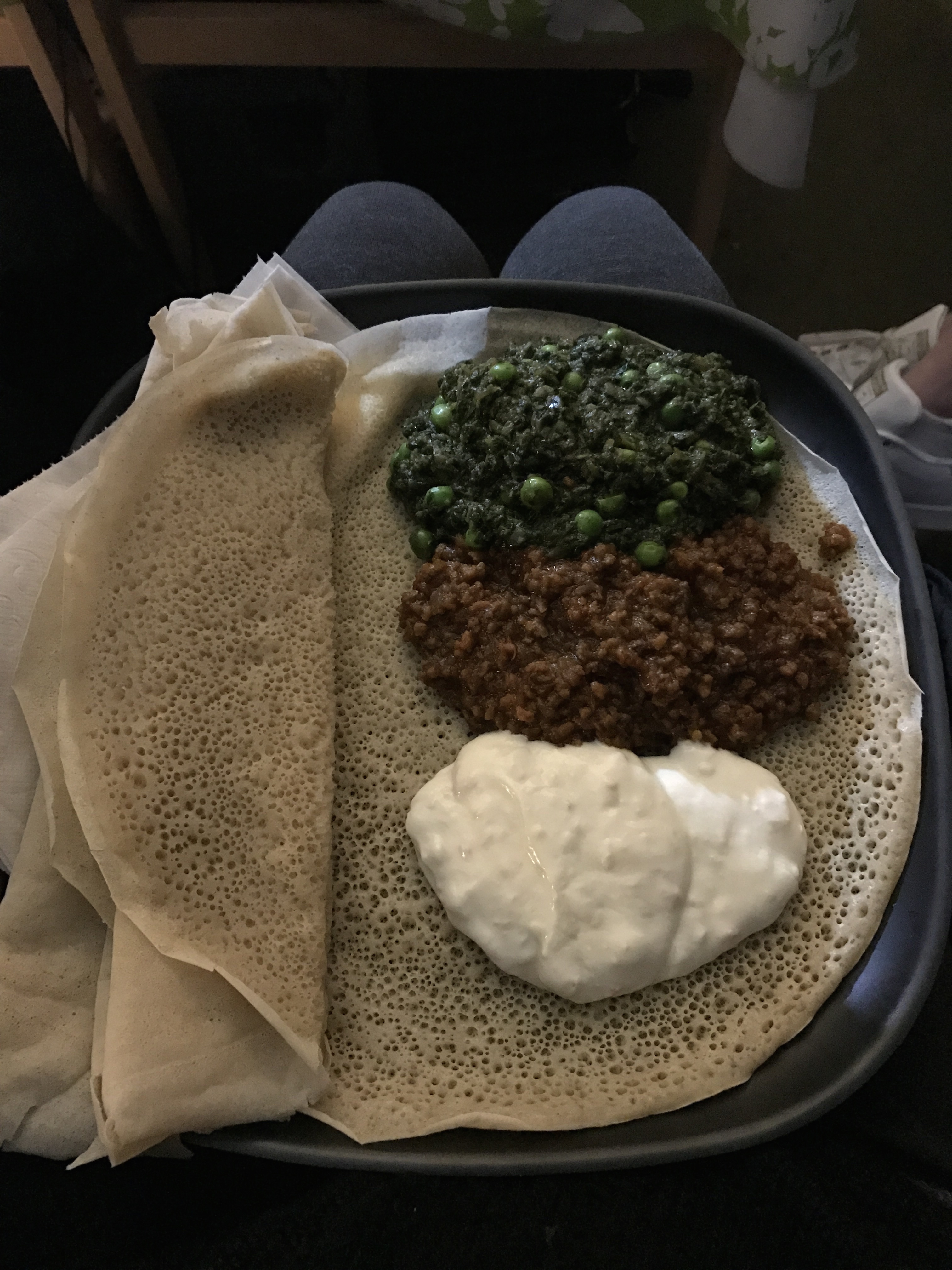
I also had the pleasure of being served food by the Flogsta chef. Yes, there is a chef that has lived in the typically student residential dorms since the 1980s. He likes to live here because he travels often and doesn’t need a lot of space to feel at home. Students are encouraged to text him in advance of their arrival and share the level of spiciness they are comfortable with. Then that very day, they can come by for dinner and eat to their heart’s desire.


img_4390


My dish had a 50% spicy level. It’s an Ethiopian dish! Funnily enough, that’s one of the few countries the Flogsta chef has never visited, yet it’s his favorite style of food to produce. This is injera bread, which is used as a vehicle for the sauces, meat, and lentils on top.


img_4401


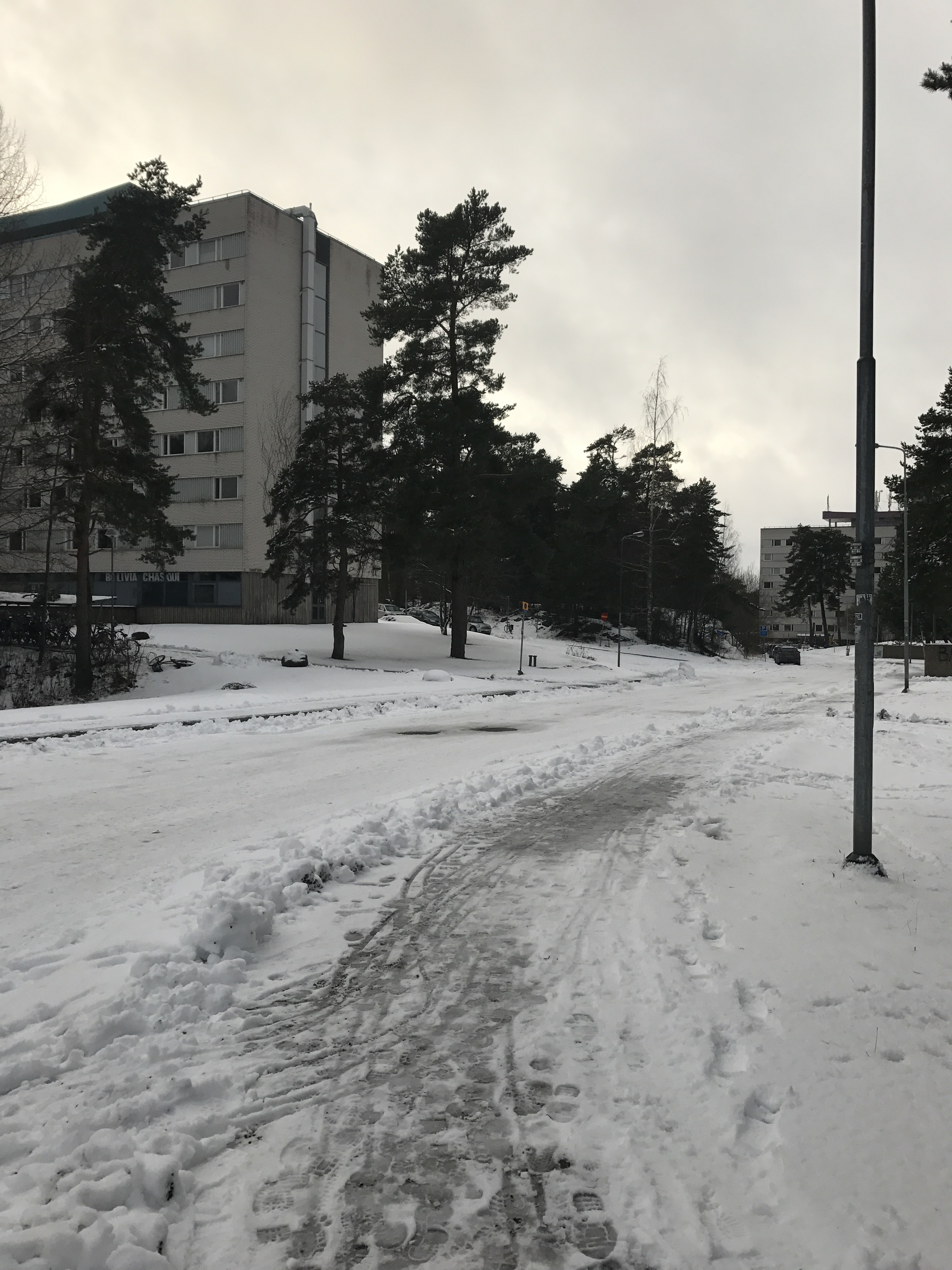
Finally, we got our last wave of snow! Ain’t she a beaut?


Until next time!


Olivia in Sweden: Back in Stockholm!

February 23, 2017

Went back to Stockholm!

img_4129

We went to one of the Royal Palaces that hosted the Treasury! This museum hosts some of the monarchy’s most treasured jewels, crowns, and swords. We were not permitted to take photos of the artifacts but here’s a stunning picture of what you see when you first enter the museum.

img_4124 img_4123 img_4125

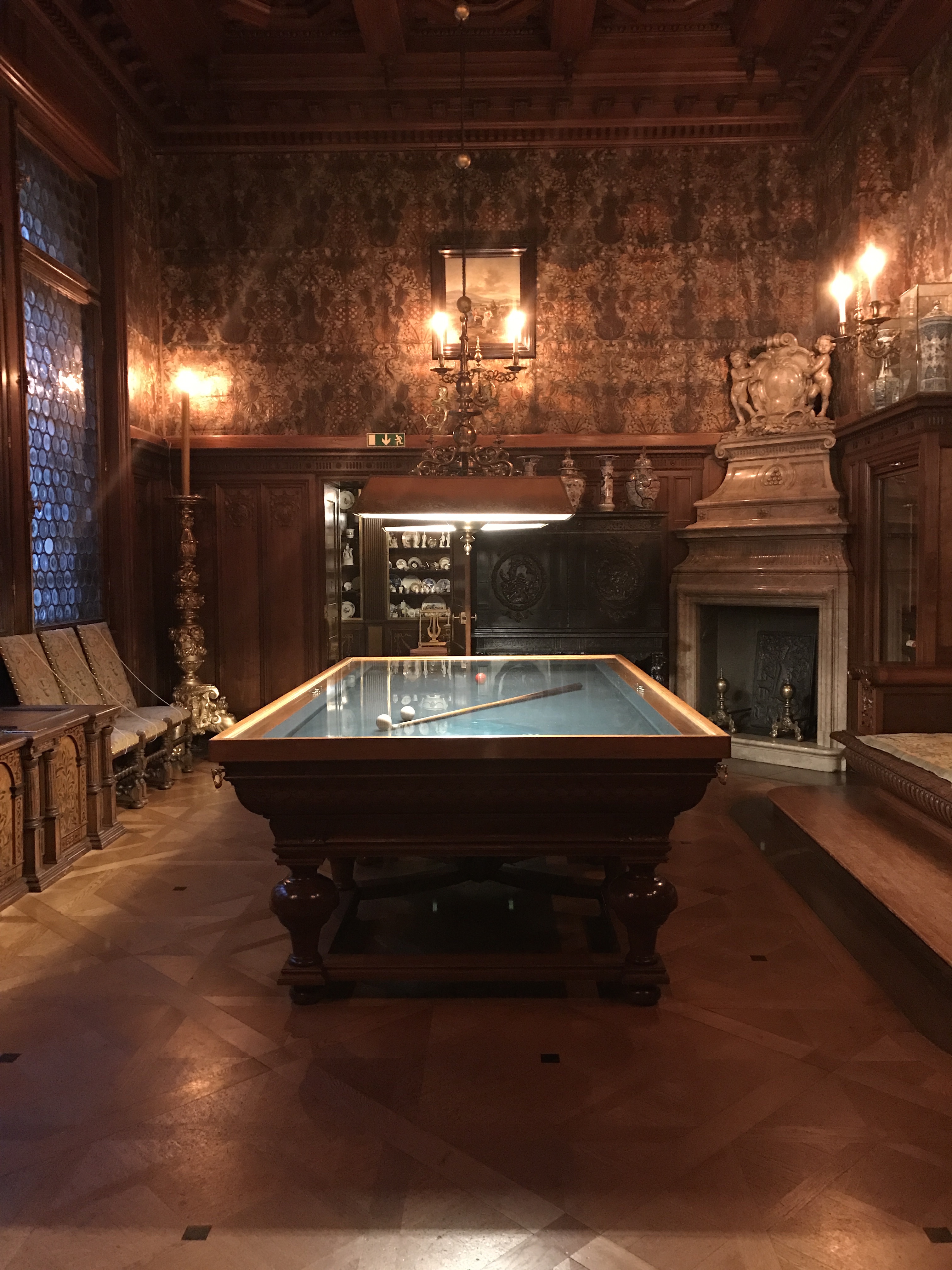
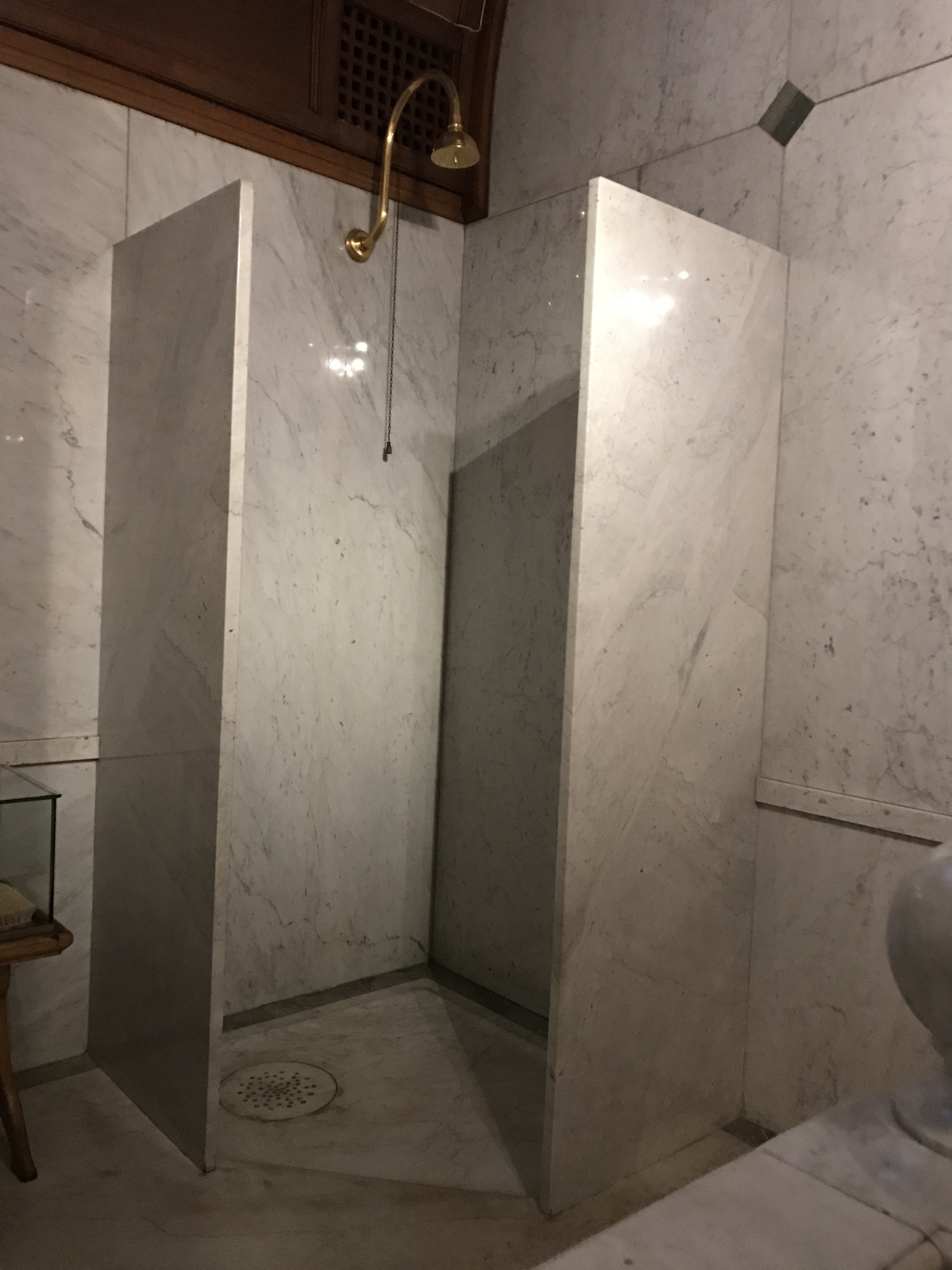
The Hallwyl Museum allowed for some photography! This house once belonged to the Count and Countess von Hallwyl and boy oh boy did they live up to their noble names. It was a really cool insight into the late Victorian period of Stockholm (and it was free!) Check out their pool table, their marble bathtub, and marble shower!

img_4103

We also swung by the Royal Dramatic Theatre. The beautiful building was founded in 1788 and renowned architects, artists, and interior designers worked to make it so breathtaking. Unfortunately, most of the shows are solely Swedish, but maybe if I learn Swedish in time I can give it a try?

img_4097

Here is also a pic of Gamla Stan, or the Old Town. Very interesting to see where old meets new. It’s one of the greatest preserved medieval areas in Europe. Stockholm was founded in 1252.

img_4090

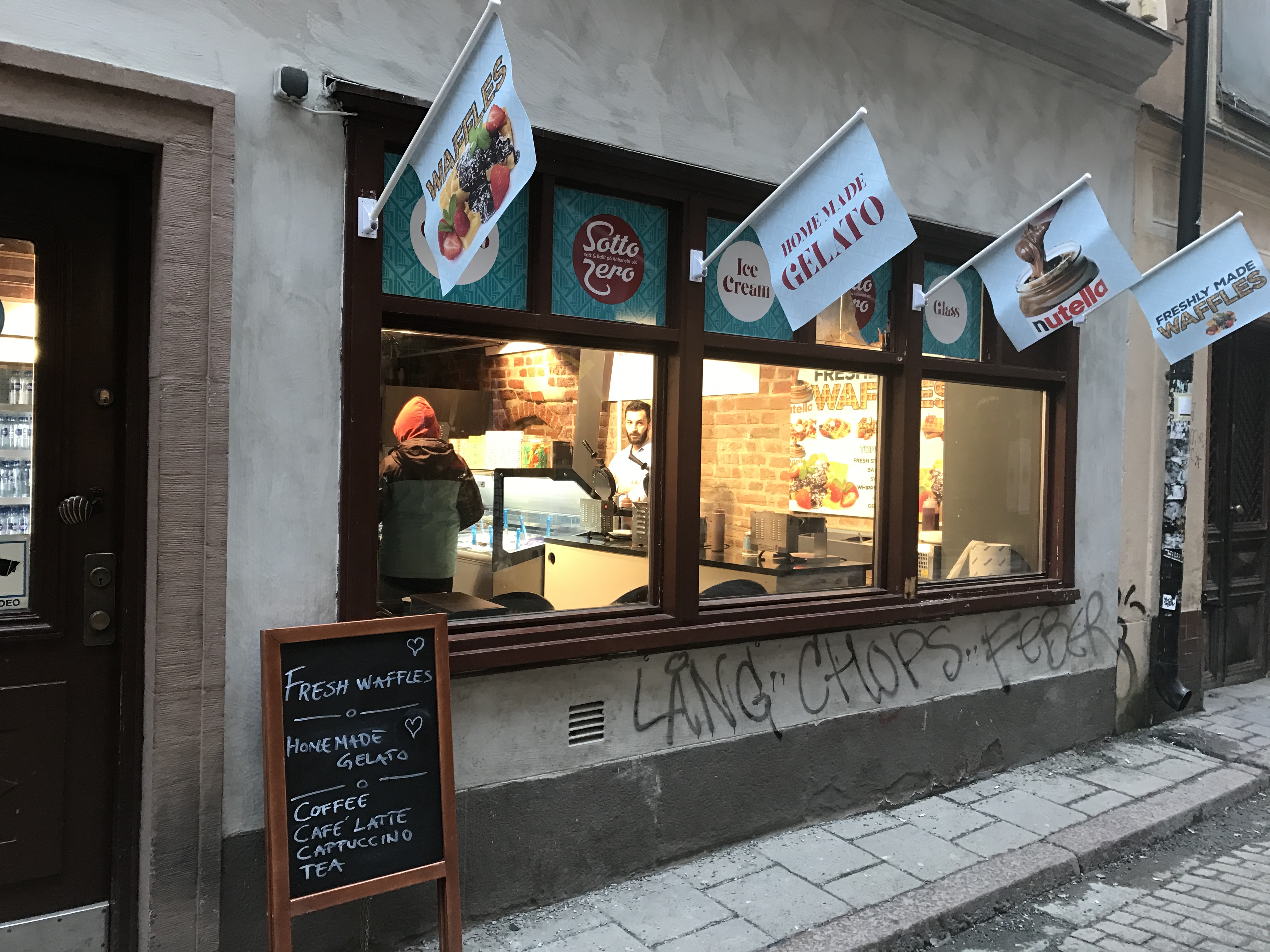
There were many attractions, such as bookstores, bars, restaurants, and little ice cream shops, including this Nutella haven.

img_4067

There’s so much to do in this city. It is so convenient that it’s only 40 minutes from Uppsala. Uppsala itself has some great historical attractions, which I can’t wait to share.


Olivia in Sweden: Screaming and Food!

February 3, 2017

I’m a little biased but I’m pretty sure I live in the best student residential area in all of Uppsala University.

To prove it, here’s a little tradition I’d like to share:


The Flogsta Scream occurs every evening at 10 p.m. sharp. Students open their windows and scream out into the night. Simple, right? The tradition goes back decades! Though I haven’t measured the decibels, I think the loudest screams occur on Sunday nights.


In addition to traditions, I have made some wonderful friends in Flogsta. In the Flogsta residential area there are several apartments. The apartment I live in has 7 floors. Each floor has two corridors on opposing sides. Each corridor has one kitchen shared by approximately 12 people. I share a floor with native Swedes and other international students hailing from Brazil, Australia, the Netherlands, Japan, Canada, and USA.


Swedes really love cabbage. I tried a stuffed cabbage roll, which proved to be very savory.

img_4193


It’s also been confirmed by some Swedish friends that they like to put bananas in almost anything. It can be found on pizza or mixed with some rice and chicken. I had the latter, which made my dinner subtly sweet.

img_4194


As I’ve been introduced to food from Sweden, I’ve also been introduced to food from other areas of the world.


img_4144

Here is some fairy bread, which is sliced white bread spread with butter and covered with sprinkles. Apparently, it has to be cut into triangles and the Australians are quite proud of this delicacy!

img_4145


This is a Dutch Stroopwafel. It tastes best when placed in a microwave for 2 seconds! This lets the caramel inside melt. It was heavenly!

img_4171


We also had a sushi night on Sunday hosted by my Japanese friend. I got to roll Sushi for the first time in my life! We were all proud of our handiwork.


It’s nice to know that wherever you go, you can discover other cultures!


Tori in Spain: Saying Yes to Hard Things

February 2, 2017

“How was abroad?” “Did you love Madrid?” “Your semester looked amazing, tell me about it.”

These are the questions I returned to. I have found it incredibly hard to sum up such an impactful experience, and honestly since being on campus abroad has felt like a distant dream. I lived in a faraway land for 4 months, got to learn a different language, and developed friendships that I wasn’t quite able to pack up in my suitcase and take home.

The one theme that has permeated my thoughts and reflections on abroad is how rich life is when we say yes to hard things. “Say yes to hard things” has become my slogan of the semester, and it is my biggest take away.

Showing up at a Spanish speaking church alone was not the most comfortable thing in the world. The prospect of leading a group of students, into a city I barely knew, to speak with strangers living on the street, in a foreign language, left me feeling unequipped and frustrated. Walking into the little bar next door to Amalie & I’s apartment on our last night in Madrid felt very inconvenient due to the flight I had to catch in the morning. Stopping to chat with Karrol when I was late to class seemed unproductive. Initiating conversation with the woman next to me on the subway felt awkward.

None of my sweetest memories abroad came from choosing to do what was the most convenient, socially acceptable, or comfortable. Life begins when we get out of our comfort zone and push ourselves. This can manifest itself in big ways or little ways, but it always involves leaning into the moment and being present. Even when I said yes to hard things begrudgingly, it lead to really special times. I need to ask, Lord, what do you have for me here? And it will lead me to love and think in a way that is more people-conscious, out of the knowledge that God is enamored with every soul I encounter on the street. Every little human bopping along in Madrid, Richmond, Winston Salem, or wherever I am, is created in the image of God and so in my every interaction I am interacting with one whom is dearly and sacredly loved by God.


JanusInSingapore: The Flat, The Mates

February 2, 2017

A Filipino, a German, a Belgian, a Brit, and two French girls walk into a bar…

It sounds like the beginning to a drawn-out and not-so-funny bar joke, but it’s a weekly reality for me in Singapore as I happen to live with these people. One of the things that makes that’s made this semester abroad so special for me is that I actually have had the opportunity to spend time with and get to know people from all over the world.

Yes, last semester, I did get to interact with Chinese people every day. Yes, I did get to meet a bunch of Europeans and Australians and New Zealanders while playing rugby in Beijing. But, there’s something different about actually sharing a living space with foreigners every day: sleeping in the same house, eating dinner on the same table, and telling jokes and exchanging stories on the same couch. It feels like a deeper connection because the conversations extend beyond “so how is your country different when it comes to ___?” You actually get to experience the differences yourself rather than hearing the redacted version from someone telling you about their country and culture, and start seeing habits or common themes in how they perceive things, particularly the mundane.

An example. Stereotypes are obviously quite harmful, but many of them exist for a reason and are probably based on some truth in the real world. I’ve heard of the stereotype of German uber-efficiency before, but didn’t quite realize how widespread it was until I found myself in our flat for the first time with my Belgian roommate Loic, one of my French flat mates Lucille, and our German flat mate, Anna. While Loic, Lucille, and I were stunned at how wonderful the space was, Anna walked around and started listing the things that were less than ideal about flat.

Most people in Singapore live in public housing commissioned by the HDB, the Housing & Development Board

Most people in Singapore live in public housing commissioned by the HDB, the Housing & Development Board

The refrigerator wasn’t cold enough. There was a slight smell in the kitchen. The shelf is a bit dirty. There aren’t enough sockets in the living room. Is the air conditioner inverter? If you were to just listen in to the conversation happening in the room, it would seem like we were scammed into an awful living situation for the next four months. To be honest, I started doubting myself – are my standards that low that I didn’t notice all these faults?

2

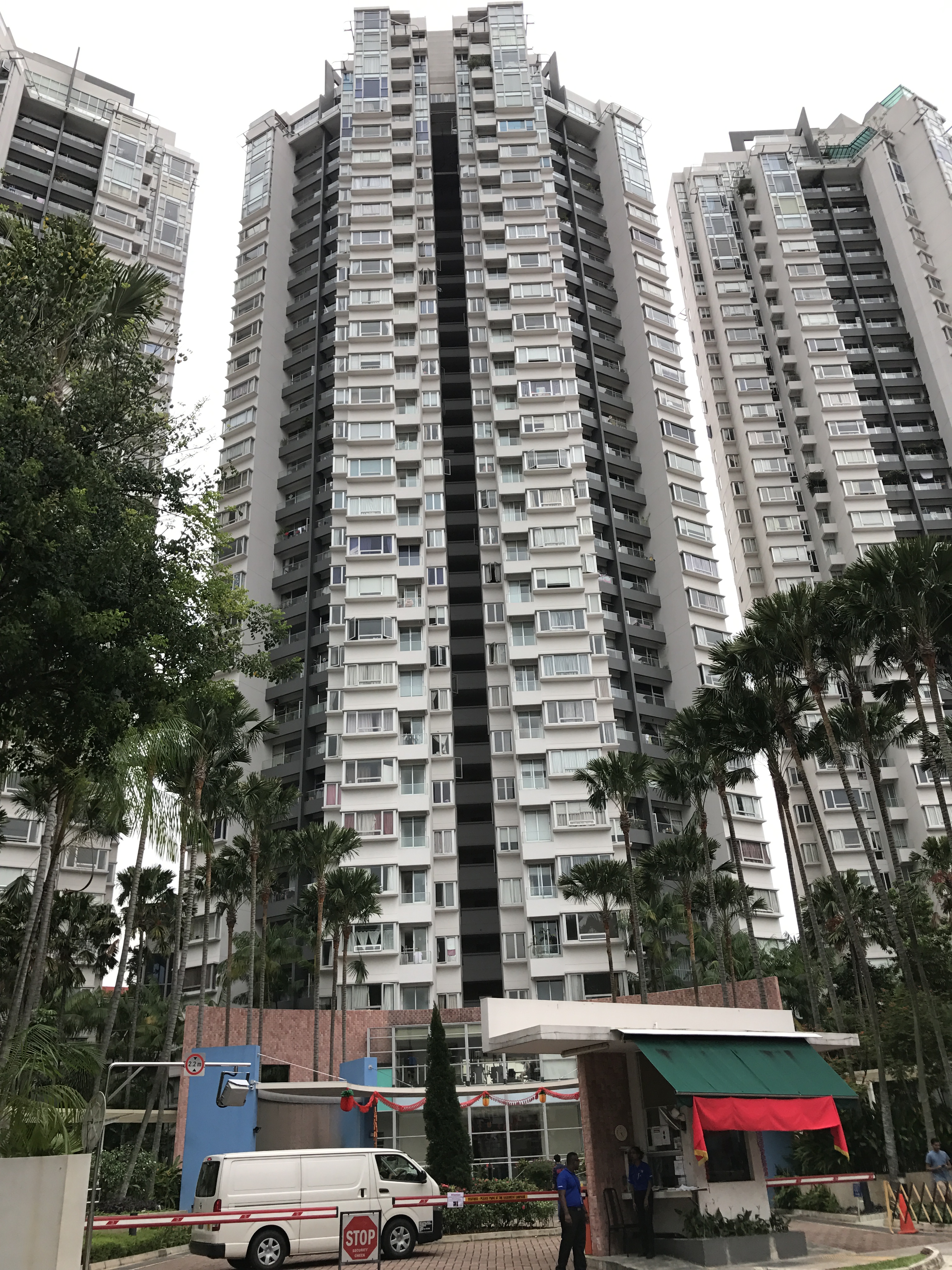
The front of our apartment complex, the most common form of housing chosen by exchange students at SMU

When we went out for lunch afterwards, Anna split off to run errands, and the three of us that remained looked at each other and started laughing. “I’m not crazy, right? The flat is sick,” I said. Loic and Lucille agreed. “Germans,” they said in unison.

We need someone like that in the flat, though, and I appreciate what Anna brings because I think of myself as a fairly wasteful person. While it’s a bit annoying to have someone remind me to close the the door and shut the lights every time I finish using the bathroom, I do admit that some of my habits, like leaving the AC on when I leave the room for an extended period of time or using two laundry loads when one would suffice are habits that I can change. And every time Anna leaves for a trip to Malaysia or Indonesia, the flat quickly ends up becoming something of a mess. The chairs in our dining/study table don’t get pushed in, the dishes start to pile up, and doors and windows are left open all over.

One look at the difference between my room and Anna’s tells me that I have a lot to learn from her, however annoying it can be.

. . . . . . . . . . . . . . . . . . .

The flat itself is gorgeous. We six exchange students share a three-bedroom flat on the 24th floor with a fantastic view for the price of S$1000 a month, or roughly $700. While the price may seem excessive for a shared bedroom, the flat’s location and the complex’s amenities more than make up for it.

The complex’s lap pool – usually filled with children taking swimming lessons in the morning, but empty at night!

The complex’s lap pool – usually filled with children taking swimming lessons in the morning, but empty at night!

There’s an outdoor lap pool as well as few smaller pools for children or for those who prefer to lounge about in shallow waters, as well as both an indoor and outdoor Jacuzzi. At one end of the lap pool are a few barbeque stations that can be reserved for parties and events, something we definitely want to take advantage of before the semester is over. There’s a gym, too. It’s a bit small, so I’ve decided to purchase a membership at a local gym, too, but it does allow me to get a morning or evening run whenever I decide to be particularly ambitious.

The complex’s lap pool – usually filled with children taking swimming lessons in the morning, but empty at night!

The complex’s lap pool – usually filled with children taking swimming lessons in the morning, but empty at night!

The flat’s common area. The six of us spend most evenings together here, eating, watching Netflix, or doing what work we couldn’t finish at the library.

The flat’s common area. The six of us spend most evenings together here, eating, watching Netflix, or doing what work we couldn’t finish at the library.

We’re located just outside the city center. Kerrisdale Residences (our complex) is right smack in the middle of Little India, so there are already a variety of unfamiliar food choices to explore. Kampong Glam, the Malaysian/Middle Eastern ethnic quarter is a twenty minutes walk or five-minute bus ride away, while Chinatown is a ten minute MRT ride. A fairly large mall, CitySquare Park, is a three minutes walk away, complete with an MRT and bus station. SMU and Clarke Quay, the nightlife center for college students, are both fifteen minutes away by public transportation.

The flat assembles for its first night out!

The flat assembles for its first night out!

The one downside to having all these opportunities to try new foods or visit sights in Singapore is that I’m already way over budget for the month I’ve been here. Hopefully, I can catch my parents in a good mood sometime soon.


Janus in Singapore: On the First Weeks

January 27, 2017

“Discuss your preparations to go abroad – how you are feeling, anxieties or excitements, last minute projects or plans you are making, etc.”

It feels a little strange writing about my “feelings, anxieties, or excitements” about studying abroad in Singapore when I’m already three and a half weeks through my semester. Singapore Management University (SMU) has this strange schedule where exchange students are encouraged to attend a student orientation on December 29, and classes start as early as January 2, so while many of my classmates were still enjoying the final trips of their study abroad programs or tucked into their comforters back home, I was already on the other side of the world, roaming the streets of Singapore looking for a hostel that had open beds on New Year’s Eve.
Then again, it’s still quite early, and the first three weeks have really been a frenzy of getting my immigration formalities done, attending student orientations, adding and dropping classes, and of course, turning my new flat into a something that resembles home. There hasn’t really been a lot of time to “feel” or “be anxious.” Writing this entry feels like my first real opportunity to reflect on what’s already happened and what I think will happen.
I spent my last semester abroad, too, in Beijing. When I hear about study abroad, usually I hear that students will do significantly less work than they do back home, spend a lot of time traveling or exploring the city, and generally have a lot of time to relax. In a way, it’s a lot like a vacation to another school. My experience was the exact opposite.

I participated in a language immersion program that required me to speak Chinese on weekdays, and classes were from 8:30 to 4:30 daily, and each of us in the program did at minimum 3-4 hours of homework and studying each night. Somehow, there was still ample time for most of us to enjoy the semester and bring home stories that weren’t just about being locked up in a classroom. We still managed to explore Beijing, travel all over China, experience the Beijing nightlife, and even fall into study abroad romances. It was a complete semester, but it definitely came at the expense of sleep. By the end, many of us sported the deepest eye bags we’ve ever had.

I expect that a semester at SMU will be more of the “traditional” study abroad experience. I’m only taking four classes (7-12 hours of out of class work rather than UR’s “10-15”), and they’re all on Mondays and Tuesdays, so I expect I can use this semester to sleep in to catch up on all the sleep I missed in Beijing. Given my five day weekends and Singapore’s proximity to many of Southeast Asia’s tourist destinations – Bali, Vietnam, Thailand, or even a trip home to the Philippines – I wholly expect to drain my bank account by the end of the semester taking flights out to a few of these places.

For now, though, I plan on figuratively walking every street in Singapore. Strangely enough, a lot of students who study abroad in Singapore say that their biggest regret is not exploring Singapore enough, because the presence of all these other destinations makes the city-state a practical home base, and something that you can always say “next week” to, until there aren’t any weeks left. It’s only a little bit bigger than Manhattan, so the process shouldn’t take that long.

Anxieties. I think, given that this is my second semester studying abroad, that Singapore is often described to me as “An Asian New York,” and that I’m used to moving around a lot, I don’t have the usual fears of culture shock or “will I fit in?” or “will I find my group of friends?” Instead, I’m worried about people back home. A semester away isn’t too bad because just about everyone does it at some point. Two semesters, however, seems a bit too long, especially since I spent the holidays in the Philippines instead of New York. It’ll be a full year before I’m back in the United States. I already feel myself losing contact with many of my friends, even close ones.

But that’s something I should worry about after Singapore, I think. For now – enjoy the semester to its fullest.


Olivia in Sweden: Abroad at Last!

January 27, 2017

Hi! I’m Olivia and I am a junior at University of Richmond. I am majoring in Biology with a minor in Healthcare Studies.

plane

I’ve never been to Europe before and, as the baby of the family, never experienced much independence either. I set out to form new experiences by studying abroad in Uppsala, Sweden. Uppsala University is a leading international research university, and I was anxious to join its numbers.

Postponing the inevitable of being alone in Sweden, I was joined by my mom and aunt in Uppsala on January 11th. This was a sneak peak of my new home from the window of the airplane. Frozen ice and snow never looked so appealing!

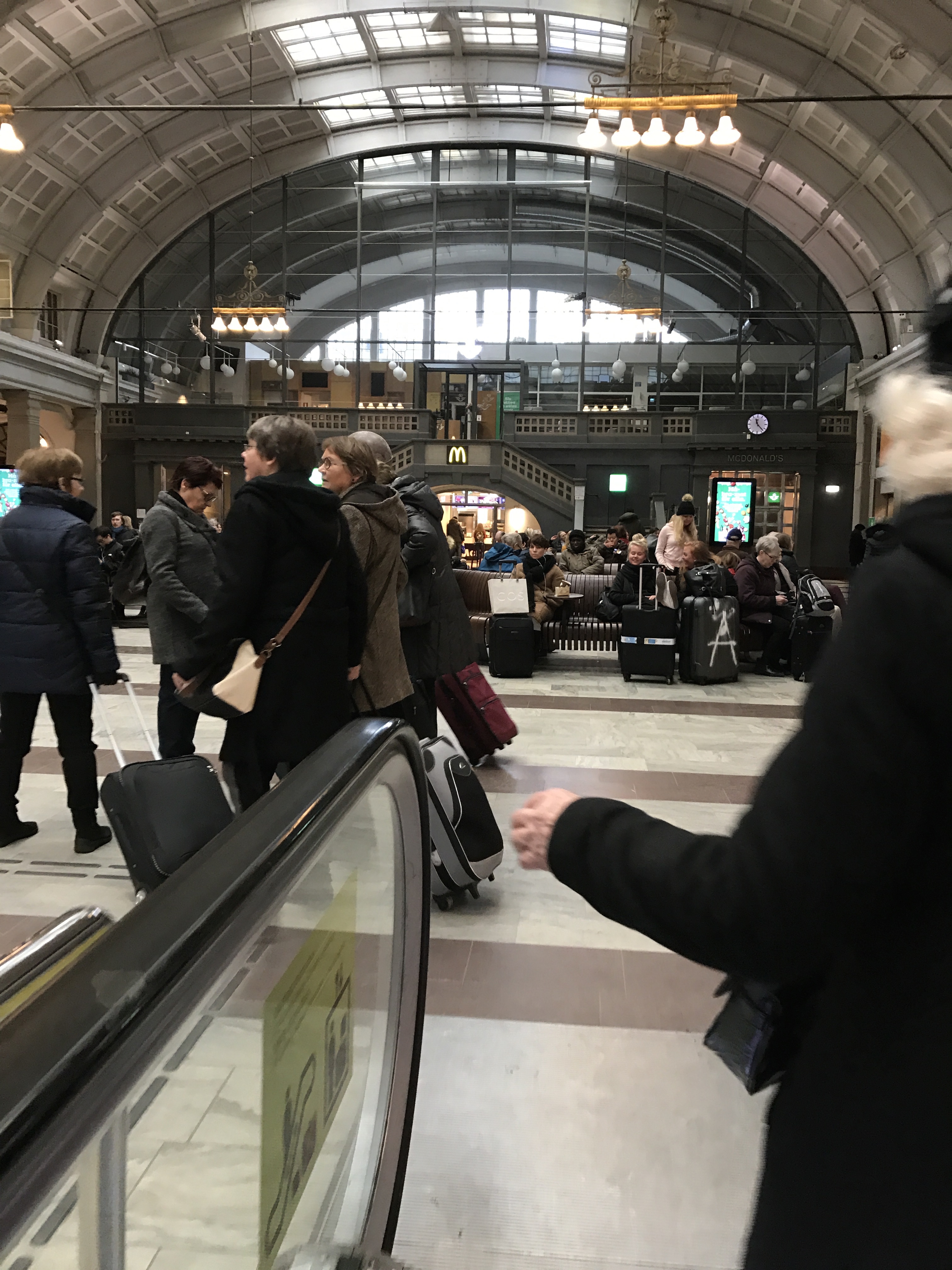
train

Before I could move in, I had to explore Stockholm with my family. On a train, Stockholm is only 40 minutes away.

street

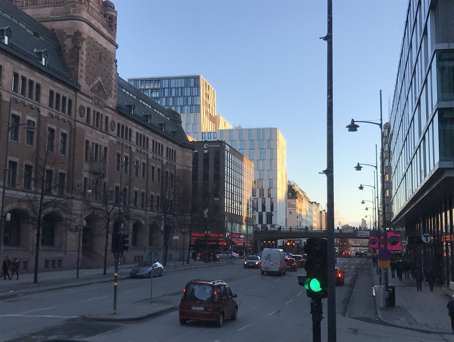
This is one of the many busy streets of Stockholm. We went on a Hop-On Hop Off, which is an all day bus service that provides tours of cities. My mom and aunt were too tired to explore the royal palace, libraries, and museums of Stockholm, but I imagine since the city is only 40 minutes away, I’ll be back soon to explore properly.

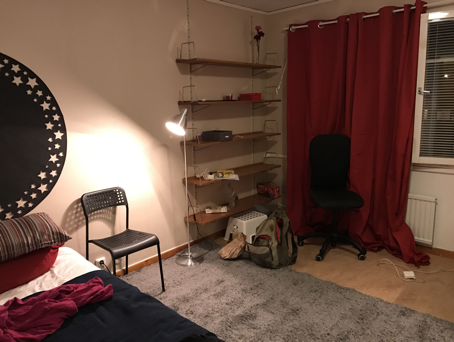
This is a peak into my room. At Uppsala University, the rooms for students are owned by different housing companies. You pay rent each month. It is typical to have a single room with each room having a private bathroom. Each hall shares a kitchen.

room

Classes started this week, and while many people feel comfortable biking (in icy cold weather!) I prefer the bus. The city buses in Uppsala are extremely punctual. They have an app that provides timetables, and if you enter your location and where you wish to go, there is always a bus ready. While it’s simple enough, I’m still getting used to it as I have fallen victim to being at the wrong bus stop many times!

app

Alas, practice makes perfect, right?