Fabiana in China: First Day

January 12, 2015

“Why is it this hard?” I asked.

“What is?” he answered.

“Leaving. I knew I was going to leave the minute I got here. So why is it this hard?”

“Maybe it’s because every time you leave somewhere that’s important to you, you leave a part of you there.”

He was right. Parting Bolivia always meant leaving a part of me. Painful, but in my eyes, necessary.

I left home when I was sixteen because I felt limited. Bolivian youth was bred under the idea that we could not change the reality of our country, they set boundaries between what was “do-able” and “unreachable” and with that limited our possibilities.

I was lucky enough to be able to build the path I was eagerly looking for and become someone that now realizes that taking roads less traveled are difficult but essential. The innumerable experiences and qualities I found along the way have taught me that my horizon must not be full of dreams, but also actions.

The feeling I get after leaving Bolivia reminds me of the work I’ve started and still have left to complete.

2 days, 13 hours and 10 minutes.

That was the insane amount of travelling it took for me to get from Bolivia to China. It took only 1 minute however, to forget about how tired I was as soon I saw Lang 老师 (Jun Lang) and a sign that read “Chinese Studies Institute.” I couldn’t believe I was that happy to see a familiar face.

Lang 老师 (“lang laoshi” which stands for Teacher Lang) was my Elementary Chinese teacher back in Richmond. She was the one who encouraged me to apply for the program and since then, never left my side. She hugged me and put us both in a cab on our way to my new apartment.

I was the last one to arrive to the apartment where I and 5 other girls would be sharing it with a teacher. The apartment was quite fancy for Chinese standards, it was pretty big and clean, and seemed to have covered the basic necessities. Ma 老师 (the teacher I would be living with) showed me around and introduced me to my beautiful and exotic roommate, Ble. Ble is from Madagascar and attends Wooster College back in the States. She was warm and friendly, so we started on the right track.

It’s getting late now and I should be heading to bed. Tomorrow will be a big day.

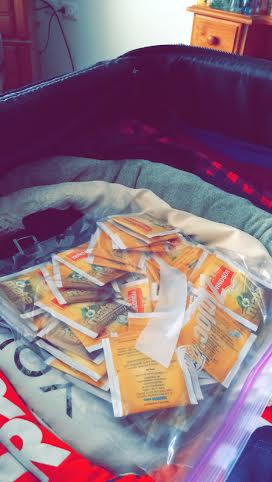
Taking a taste of home with me: Trimate Tea, a mixture of anise, chamomile and coca leaf tea.

Taking a taste of home with me: Trimate Tea, a mixture of anise, chamomile and coca leaf tea.

Defrosted in Chicago

Defrosted in Chicago

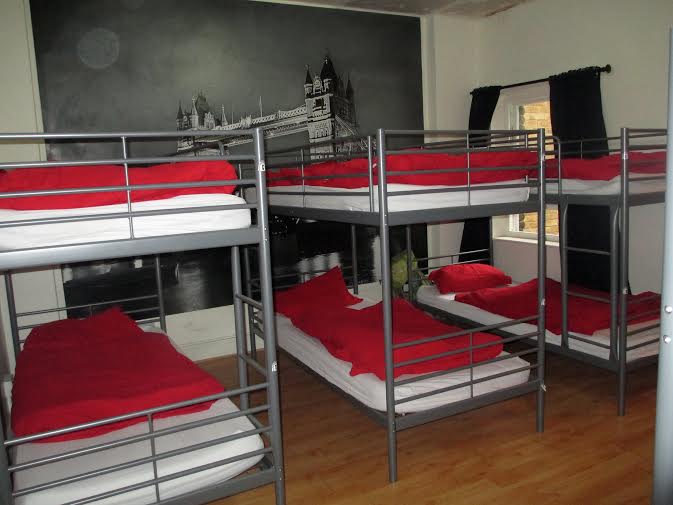
A bed I'll call my own for the next 4 months

A bed I’ll call my own for the next 4 months


KyungSun in Scotland: The Departure Countdown

January 5, 2015

Hello everyone! My name is KyungSun and I will be studying abroad this semester at the University of Edinburgh. I’m currently a junior studying Social Entrepreneurship as part of an Interdisciplinary Studies major. Social Entrepreneurship is the idea of finding innovative solutions to solve some of our world’s pressing social problems such as poverty or lack of access to healthcare. I decided to create my own major after going to the Dominican Republic with my Global Health living and learning community. I realized that poverty is not just a political issue, but an interdisciplinary issue that requires locals and people across all disciplines to work together.

At the University of Edinburgh, I received an amazing opportunity to work with these social issues as an intern at the Scottish Parliament. I’m really excited to get out of the classroom and see how the Parliament tackles its toughest issues. But first, I’ll be taking three political science classes which end in – believe it or not – mid-February. I can’t believe I’ll be diving right into final exams once classes end – wish me luck!

As far as the city of Edinburgh itself, I know three things:

1. It’s a beautiful, diverse, and photogenic city.

2. It’s going to be crazy windy! One student told me he broke three umbrellas while he was there!

3. It’s a place with endless stories. I’m not just talking about J.K. Rowling writing her first draft of Harry Potter in Edinburgh. Everyone I’ve talked to from former abroad students to professors have had a story to tell about the city.

Some of the differences do make me nervous. The University of Edinburgh will be very unlike UR. I’ll be going from a class size of 20 to lectures with over 100 students. I’ll also be living at the heart of a bustling city which is a big change to our isolated campus. I definitely love visiting cities, but I haven’t lived in one since I was five. However, I came across this video that showed me what living in Edinburgh will be like, which I discovered is going to be pretty cool. Check it out:

The main thing my friends and family keep telling me is that I’ll have a great time abroad. Subconsciously, this makes me feel pressured to make every day momentous and fun. However, I know that in reality I’ll have days where I won’t have anything exciting planned. That’s why my number one goal is to go out and explore every day. I may not end up doing anything memorable or significant. But if I find myself with two hours of free time, I’m going to spend that time getting to know Scotland better. I’ll try a new cafe. Hang out in the castle. Maybe take a bus to the outskirts. I’m open to wherever the road may take me.

The countdown for my departure has already begun and in less than a week I’ll be in Edinburgh. If there was a word for being nervous and excited simultaneously, then that’s how I’m feeling right now. I can’t wait to be in the city that I’ve heard so much about and I’m excited to have you all following me on my adventures. Stay tuned and I’ll talk to you all next week!


Diana in Copenhagen: Final Reflection

January 5, 2015

As I sit and write this from my bed in Massachusetts I can’t wrap my head around the fact that I’m home. After one hundred and twenty eight days, thirteen cities, ten countries, four classes, and countless memories, my time abroad came to a close and I could not be more grateful for the experience.

As I look back on the semester I decided to revisit some of the questions I asked myself before embarking on the adventure. I was unsure about living in a single room for the first time in college, but doing so certainly had its perks. I liked having my own kitchen and not having to work around someone else’s schedule, but I’m not as concerned as I was about having to go back to having a roommate in the future. As much as I liked living alone, having a roommate can be a lot of fun and it’s nice having someone to hang around with all the time.

I was concerned about Copenhagen being so expensive, and it really is, but I like to think I handled my budget well. I became pretty obsessed with saving money on day-to-day items so I could instead spend on things like traveling that were more important to me. This meant shopping at the discount grocery store for only the cheapest items, cooking in for nearly every meal, rationing instant coffee, and not buying many souvenirs. I also saved a lot of money on public transportation by having a bike. I’ll be honest, it was hard to part with my bike, Gwen, but I sold her at a good price causing it to only have cost me $32 for the entire four months. I feel like I got much more value out of putting my money towards experiences over material goods, and think that contributed to a much fuller and happier experience.

One last thing I voiced concern for in my first Travelogues post was how my directionally challenged self would manage getting around a city. While I’ve gotten slightly better in this arena, I would be lying if I said I was much more capable now. I decided to purchase a phone plan in Denmark providing lots of data, so I sadly still used Google Maps as a crutch to get around. I didn’t have phone service when traveling though, so I did do better job navigating from memory and by using with good old fashioned maps out of necessity.

Beyond these few concerns, my semester abroad made me exponentially more independent, which is best evidenced by my final trip of the semester. Since I wanted to book my Copenhagen flights round trip, I picked a date to fly home before knowing my finals schedule. As it turned out, I had enough time between my finals and my flight home to take advantage of the ease of European travel one last time. After failing to find someone to travel with me though, I decided to take a chance and book a trip to Spain alone. You might remember I traveled alone in London, but Spain was different, considering this time I had no one to meet up with when there. As the trip neared closer I started to get pangs of regret thinking I should have just pushed my return flight up a few days, but now I am so happy I followed through.

Beautiful benches at Plaza de España in Seville

Beautiful benches at Plaza de España in Seville

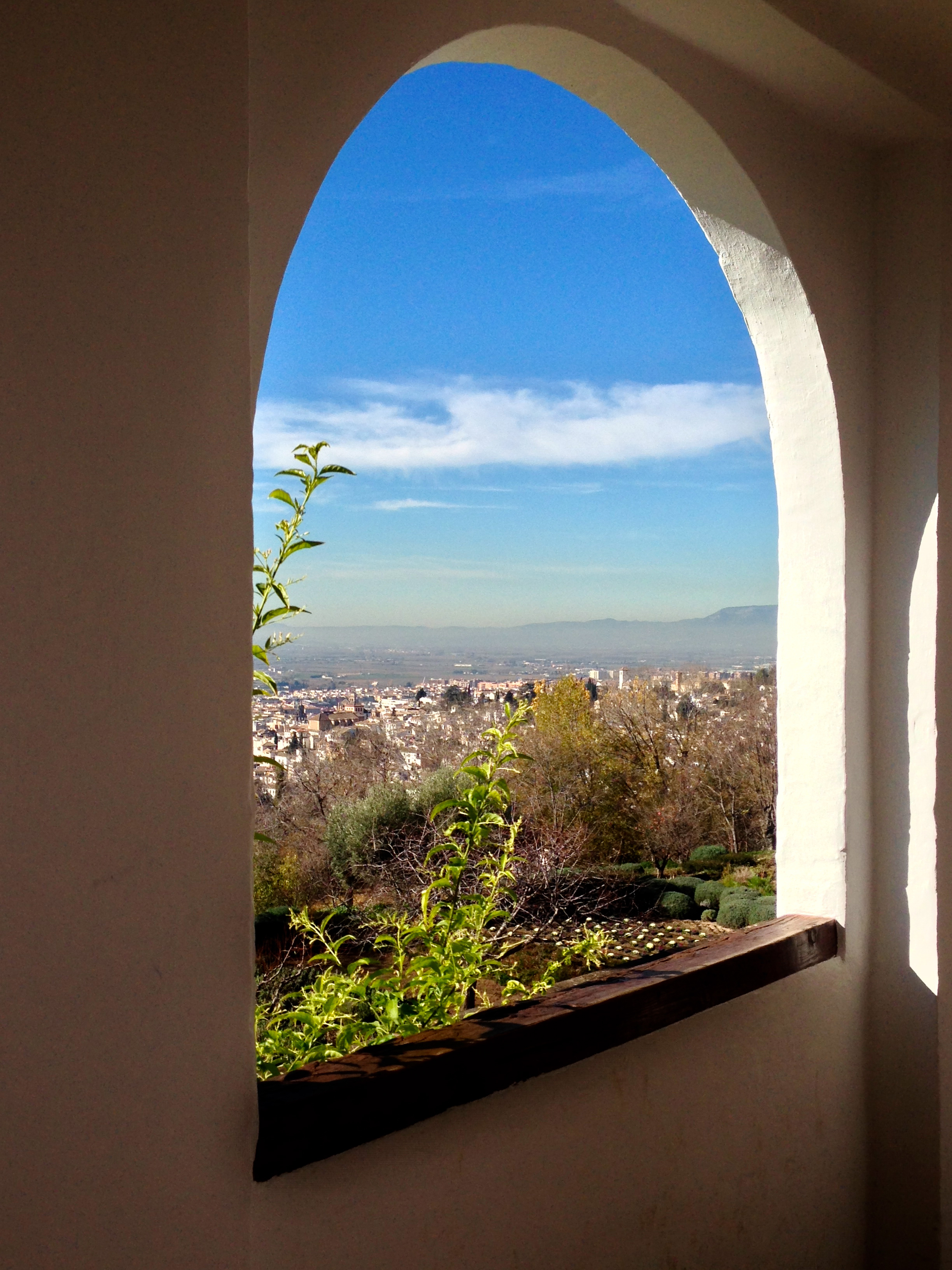
A view from the Alhambra in Granada

A view from the Alhambra in Granada

The trip was the perfect culmination of my experience abroad. It forced me out of my comfort zone more than others had because I was completely solo, had few things planned since I lacked time to do so during finals week, and had a language barrier to deal with. While this trip was indeed more challenging than others, being by myself made me deeply appreciate everything I saw and let me reflect on everything I’d done in the four months leading up to it too. I was able to be more observant, think about and process things on my own time, more readily meet other travelers, demonstrate the highest degree of independence, and do everything I could to appreciate a culture different from mine for the last time before coming home. Comparing this trip to my others, especially my solo trip in London, made me realize the true growth I’ve undergone from living abroad. In a post from a few weeks ago I wrote about using my little notebook to not feel uncomfortable when eating alone. I brought the same little notebook to Spain and put it to use again, but for a different reason this time. While having tapas alone one day in Triana, a neighborhood of Seville, I wrote, “This time I’m writing in the notebook while sitting alone not because I feel awkward, but because I don’t want to forget a single thing.” Being alone that day in Seville was probably one of my favorite days abroad, and it made me realize how far I’d come in such a short time.

Diana food
While the trip to Spain was an amazing way to culminate my experience abroad, the entire four-month span I was away had a profound effect on me. There are many reasons why I’m happy to be home, but am forever grateful for the friends, lessons, and memories from my semester in Denmark.

Thank you all for reading. Farvel!

Me, at the Alhambra in Granada

Me, at the Alhambra in Granada


Oliver in Spain: Traveling Solo

December 1, 2014

I just got back from my first major solo trip and, with the exception of a few hiccups, it was very successful! It was a three day trip to London, England in order to spend some time with one of my best friends from UR as well as see some family that is based around London. The best part about this trip was the feeling of independence that was running through my system the entire time I was flying or on a train. A semester studying abroad has this kind of independence but so far I had travelled with other friends on my program, so I was never truly by myself. They were a welcome crutch to keep me on track and focused. Additionally, when you are traveling with others you can easily split up the responsibility of various legs of the trip between each other. A great example of that was this past fall break with Will and Chris. Each of us were responsible for one of the countries we visited (my responsibility was Prague).

This time around it was just me booking flights and trains. It was a brief trip, only three days, but since I flew into Gatwick Airport (over an hour outside of center city) instead of Heathrow it had its fair share of drama. You don’t realize how reliant you are on having wifi or 4G internet access until it is taken from you. That is exactly what happened to me and it caused me all sorts of issues. However, even with all that everything was going smoothly until I had to catch a 7:30 am flight out of Gatwick Sunday morning. I’m going to summarize this by saying I had to take three different taxis to get there because the train station was closed and I had no other options. I have never been so stressed from travel then I was this Sunday morning. But thanks to Christmas music in my headphones and a refined travel sense (due to the 10 or so other trips I’ve done in the last three months), I managed to stay calm and figure it out. Needless to say, I took a long and deserved nap as soon as I got back into Valencia!

unnamed

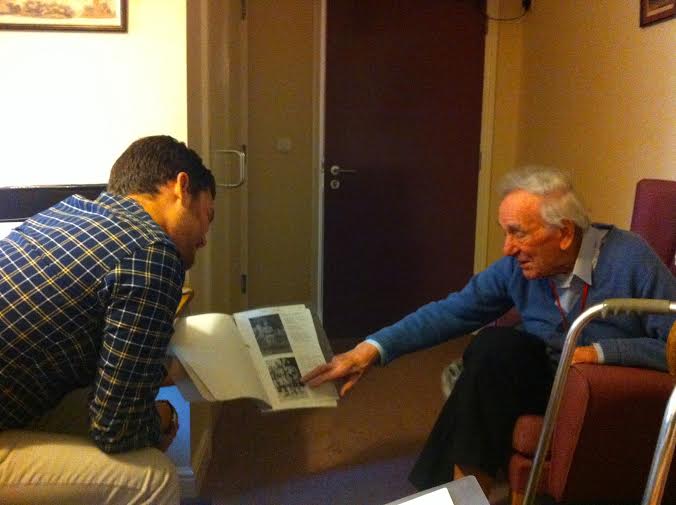
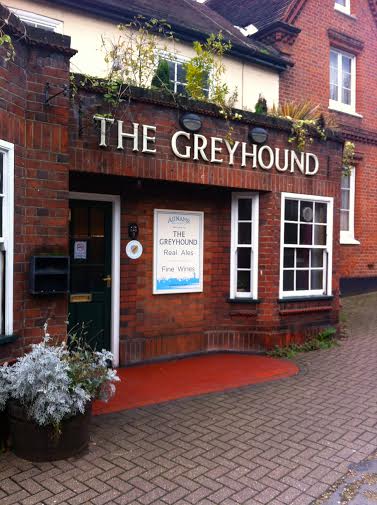
With all that, I think I should probably talk a little bit about my weekend! Matt is one of my closest friends so I was very happy to see him again and spend a weekend in our collective favorite country in Europe. He’s always been an Anglophile for some reason, so we got along pretty quickly, considering my English heritage. This late in the semester he was happy I was visiting because it meant he didn’t have to do all of the cliché touristy stuff like Big Ben and the London Eye. We took a train out to my see my Grandpa Friday morning and see a little bit of a classic small English town, Ipswich. The rest of the trip was spent visiting various small pubs across the city. I couldn’t really have planned a more relaxing weekend in London. As much as I love the city, I would never study abroad there…my god it is an expensive city.

unnamed-1

I have only one more trip away from Valencia planned, and this semester has blown by. Next weekend I will be heading to Pisa, Florence, and Rome. I’ve been wanting to see Florence for years so I am already counting down the days. I’m starting to think study abroad goes so fast because mid week is spent looking forward to the trips on the weekend. After this weekend, I only have one more weekend in Valencia. Things are wrapping up here pretty fast so I have to get to that Valencia aquarium (biggest in Europe)!


Diana in Copenhagen: Time to be Spontaneous

October 27, 2014

After spending about two and a half months in Copenhagen I have started to get comfortable in my life abroad here…too comfortable. I’ve adopted a normal routine consisting of cooking, grocery shopping, going to class, going out, making it to the gym on occasion, traveling, and watching Netflix. Somewhere along the line I lost the passion to explore my surroundings and seek out all the amazing things I have at my fingertips in Copenhagen. This realization came with an overwhelming sense of guilt and worry that I was taking my short time here for granted.

So I decided to get off my butt and do something.

A friend was feeling a similar way and we made a plan to be spontaneous, that’s not too contradictory is it? We decided to simply get on the metro and ride it until we saw fit. Originally unsure of our final destination, we got off at the Kongens Nytorv stop and started walking.

This dropped us onto the longest pedestrian street in the world, Strøget. The street is packed with shops of all varieties, ranging from the more affordable stores like H&M and Zara to ones like Emperio Armani and Burberry that will make your bank account cry. I ventured into a few stores but even the “cheap” ones were pricier than I would have liked (remember how expensive Copenhagen is), and I wasn’t really in the mood to shop anyway.

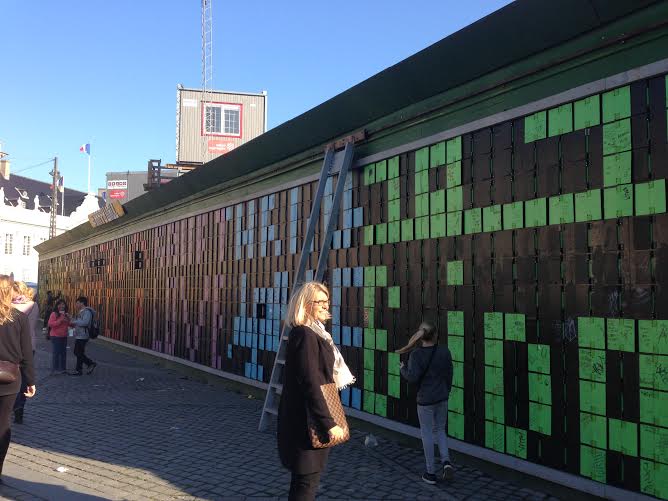
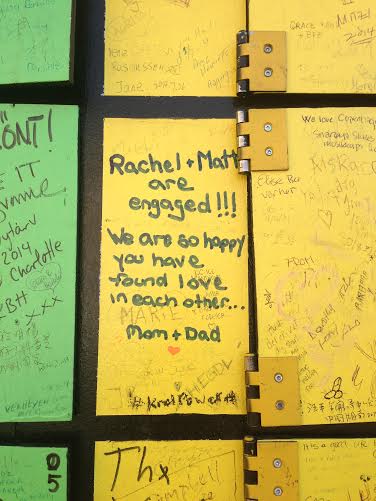
This walking tour also took us to something called the “Happy Wall” which is an interactive art piece made of brightly colored wooden boards. Visitors can flip the boards between colored and black sides to create their own vision, whether it be a message, a picture, or a symbol. Many also sign the wall with happy thoughts and well-wishes. It is a really cool piece in the middle of the city and acts as a glowing representation of Copenhagen’s renowned happiness. If you’re not aware, Denmark was voted the happiest country in the world in both 2012 and 2013, and fell to a more-than-respectable third place standing in 2014.

The Happy Wall

The Happy Wall

One nice message I saw.

One nice message I saw.

For lunch we got sandwiches at a small shop that offered a student discount and took them to one of the most beautiful spots in the city. If you have yet to see the picturesque colored houses lining the canals of Nyhaven you have done a shockingly impressive job at avoiding Instagram. It’s practically a requirement for visitors to snap a photo of the vibrant homes along the water, and it’s not difficult to see why. Nyhaven is a stunning place that was bustling on this beautiful Saturday afternoon. We became mere faces in the crowd of both tourists and locals alike out enjoying the scenery on a nice fall day.

Many people were out enjoying food and drinks by the canal.

Many people were out enjoying food and drinks by the canal.

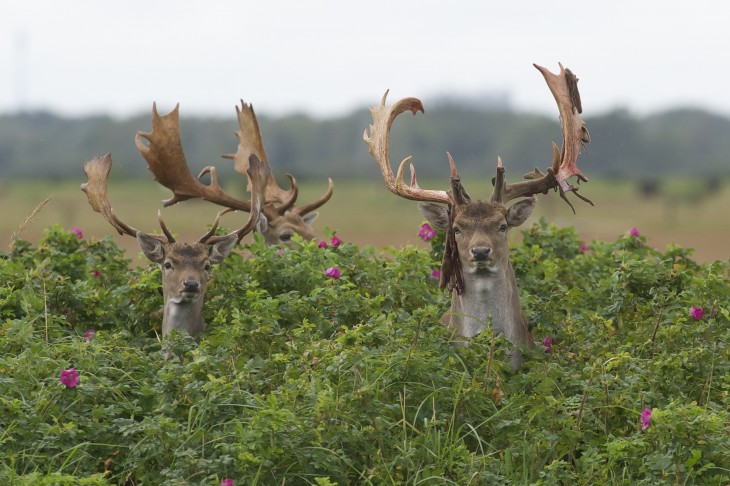
My favorite thing we encountered that day though, was an open-air photography exhibit called Copenhagen Green. Right off Kongens Nytorv Square, there were rows of pictures depicting scenic locations around the city where you can visit for free. There were images of water sports and nature centers as well as gorgeous cemeteries and parks. Not only are the people of Denmark happy, they are very eco-friendly as well. Denmark is one of the “greenest” countries in the world so the fact that their capital city boasts such beautiful sanctuaries was no real surprise.

The best part about this exhibit was that each photograph provided a description of the location. Outlining activities you can do at each place, the photographs made each look enticing enough to visit that day. Of course, our theme of spontaneity continued and we followed one photo’s posted directions to our next stop.

The photograph advertising the Amager Nature Park.

The photograph advertising the Amager Nature Park.

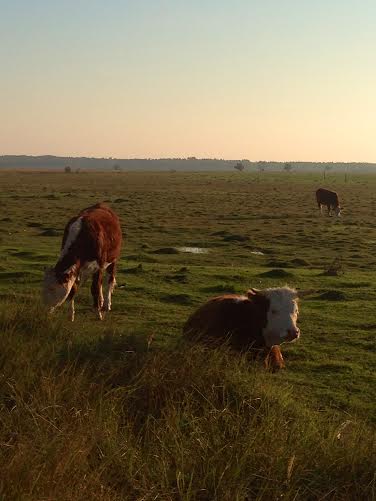
We found our way to Amager Nature Park, the last stop on one of the two metro lines Copenhagen has. I wasn’t quite sure what to expect from the exhibit’s photo showcasing curious deer-heads, but what we found was beautiful. The park was expansive and made home to many animals. On a backdrop of the silhouetted city, various cows, deer, sheep, and horses meandered around the spacious green and we could walk right up beside them. The juxtaposition of the wildlife with the nearby city was beautiful and I felt lucky that happenstance had brought me there.

unnamed-5

unnamed-4


I loved the contrast this green open area had with the city. This is a great example of what Copenhagen can offer being a small and eco-friendly city.

I loved the contrast this green open area had with the city. This is a great example of what Copenhagen can offer being a small and eco-friendly city.

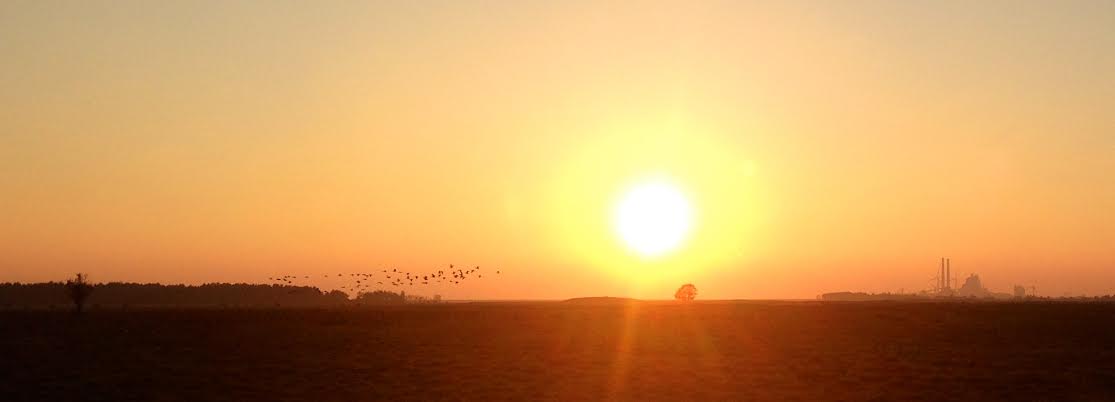
As dusk approached it got a bit too cold to be outside, but we didn’t head back before witnessing a gorgeous sunset over the Nature Park. A flock of birds flying through the sunset made for a cliché day’s end but I can’t say I didn’t enjoy the cheesiness. It was a great culmination to a day that successfully revived my curiosity and appreciation for the city I’ve made my temporary home.

A beautiful end to the day.

A beautiful end to the day.


Diana in Copenhagen: Alone but not Lonely

October 24, 2014

I know this post is very delayed but I have a good reason, I promise! We had a fall break this past week and I had the opportunity to travel around Europe and visit Dublin, London, and Amsterdam. While they were all amazing and I loved each for different reasons, this post focuses on London where I had a very different trip from those I’ve grown used to. Hopefully I’ll get to write about the other cities in another post.

The walk from my hostel to this point was just about 5 minutes long. It was so easy to get to and such a cool place to explore.

The walk from my hostel to this point was just about 5 minutes long. It was so easy to get to and such a cool place to explore.

If any of you remember my first entry, you’d know that I’ve been lucky enough to make many international friends in my years working at a YMCA summer camp. Many of those friends are strewn about England, so I saw it fit to visit London and meet up with as many as I could in the city. Unfortunately, I forgot to consider the whole concept of people having “lives,” and how they would restrict my friends from abandoning their universities and jobs to parade around London when it was convenient for me. This meant I was unable to connect with many good friends, but it did not mean that I wasn’t going to go to London. Rather than view it as a failure of a trip, I took it as an exciting opportunity to travel alone for the first time.

“Alone” might be too strong a word because I did end up meeting up with some amazing friends, but I stayed in a hostel by myself and was on my own to explore on most days. I did have a friend I could have stayed with in London, but she worked during the day and I chose to stay in a hostel to have more independence with timing and such.

My friend Laura and I met up for dinner and had drinks with this beautiful view of St. Paul's Cathedral. There are many places like this one (Madison) that give you great views of the city without having to pay the London Eye or the Shard's high prices.

My friend Laura and I met up for dinner and had drinks with this beautiful view of St. Paul’s Cathedral. There are many places like this one (Madison) that give you great views of the city without having to pay the London Eye or the Shard’s high prices.

I can’t say I wasn’t anxious about deciding to face the city on my own (I mean, I’ve seen Taken), but I was eager to use it as a chance to learn something about myself—to learn if I could do it, and to enjoy it too.

It was a great choice.

A few specific things stood out to me as being most notably different when traveling alone including planning, openness, and eating. I’ve outlined my feelings on each as honestly as I could, and I hope you enjoy my insights!

Planning
You can’t rely on anyone else to do the planning when you’re alone. This meant I spent an exorbitant amount of time arranging every aspect of my trip. Where was I to stay? What sights did I want to see? Was I going to stay in London for the whole trip? When and where could I meet up with people? There was no shortage of variables to manage but the organizer in me, which has been dormant as of late, got oddly excited planning out the four days. I even made an itinerary for my parents.

Where to stay was probably the most important decision I had to make since it was most vital to safety and convenience. After spending hours scouring websites, I decided to book three nights in a twelve person mixed room at the Horse & Stables Hostel. The location was nearly perfect as it was just a five-minute walk to the Thames and London Eye, and the hostel boasted great Trip Advisor reviews for solo travelers. I ended up really enjoying the hostel and would recommend it to anyone, solo or otherwise! There was a bar and restaurant right downstairs that gives discounts to hostel patrons, the workers were very friendly and helpful, the facilities were clean, and the location was amazing.

My bed was the one on the top right. It wasn't too difficult sharing a room with other people, but the mornings were tough to get ready in the dark without disturbing anyone.

My bed was the one on the top right. It wasn’t too difficult sharing a room with other people, but the mornings were tough to get ready in the dark without disturbing anyone.

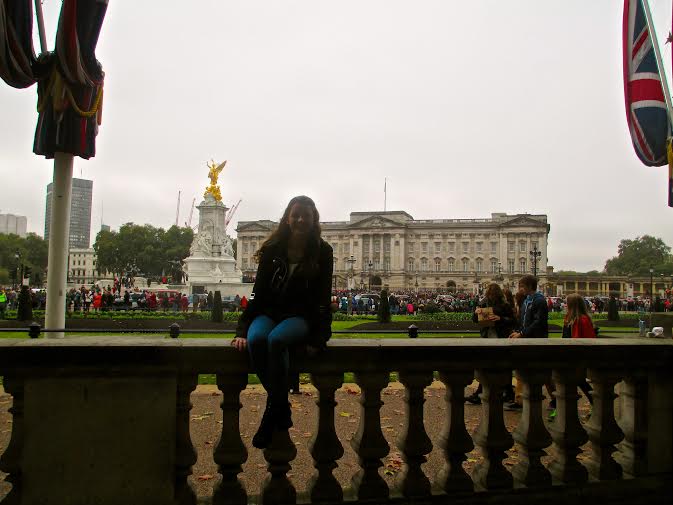
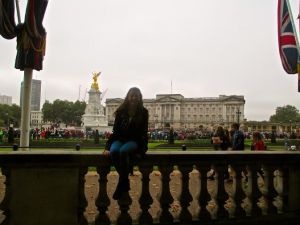
Planning activities was also important to me, because I wanted to make the most of my time in the city. London is quite expensive, which directed my research to deciding which attractions were worth visiting and which could be done in a walk-by. I saw all the major sights in city center: The Shard, The London Eye, Palace of Westminster, Buckingham Palace, Tower Bridge, St. Paul’s Cathedral, and Westminster Abbey to name the highlights, and only decided to go into The Tower of London after some friends’ recommendations. I saw everything I wanted and then some, and the foresight helped me to save money on the attractions that were less worthwhile.

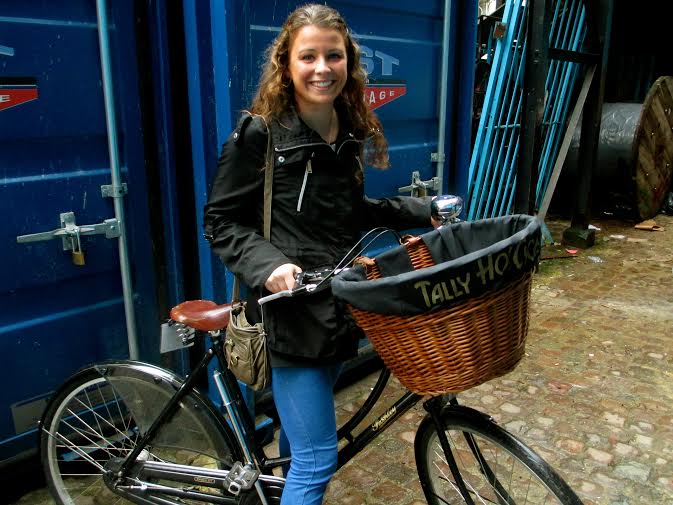
As my last point on planning, I’d like to say how much I enjoyed signing up for guided tours. I did two group tours during my stay and liked the structure and personal aspect that came with both. It was good to join a group every once in a while to break up the alone time and provide a chance to hear interesting facts on some awesome places. I did a bicycle tour one day that took me around all of London’s major landmarks. My guide was both charismatic and informative, and I only shared the tour with one other girl! It was more like a friend was showing us around than a tour, and it was cool to see the city by bike. I did my second tour my last day and ventured out of the city to visit Oxford University and the Cotswolds. This was a day trip run by London Walks and it’s a great alternative to strictly staying within bounds of the city. Even though I was the only person buying a student discount when the rest of the group was buying senior ones, I loved what this trip had to offer. I would have gotten an incomplete perspective of the places we visited if I had gone alone, and it was worth the money to have an expert paint you a fuller picture. I wouldn’t have known the elaborate backstories or history of each location and the quirky facts each guide shared enhanced the trip exponentially.

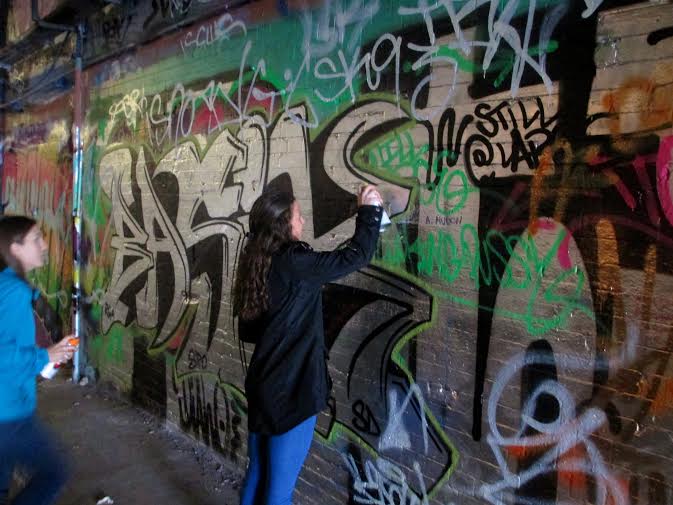
This was one of the stops on my bike tour. This was at the Leake Street Tunnel where graffiti art is legal!

This was one of the stops on my bike tour. This was at the Leake Street Tunnel where graffiti art is legal!


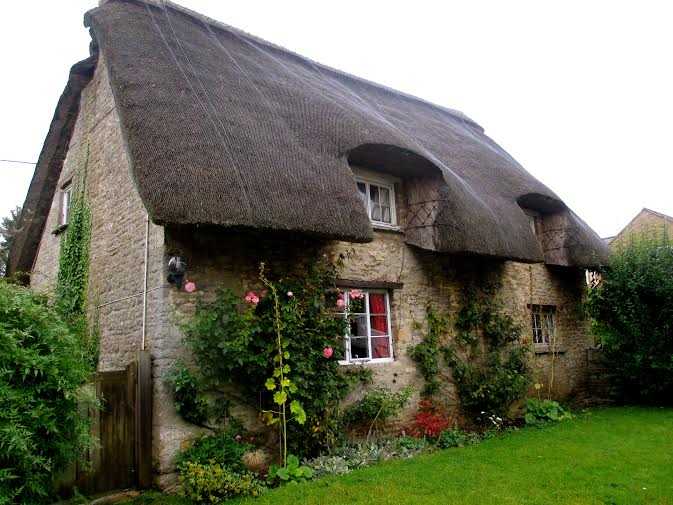
his picture is from my trip to the Cotswolds. This village only has a couple dozen people who live there during the week.

his picture is from my trip to the Cotswolds. This village only has a couple dozen people who live there during the week.

Openness
The main reason why I chose hostel-living over crashing on my friend’s couch (for free) was the possibility of meeting new people. I figured making friends for a short while was a superior alternative to being alone every second. I consider myself a friendly and outgoing person and feel comfortable befriending people pretty easily. When you’re traveling with a predetermined group though, as I have done on all my previous trips, you are less likely to seek any kind of deeper connection with the people you come across. You don’t need to. Alone though, you are much more willing to befriend the guy at your hostel you met by the toaster at breakfast, just as I did on this trip. Actually, the night before he was lucky enough to witness me spastically try and plug in the hostel door’s code to use the bathroom. Our second encounter was by the toaster at breakfast.

After a few second exchange, we discovered we were both flying solo and spend a few minutes eating breakfast together. After a bit we decided to tag-team our explorations instead of each going alone and spent the entire day sightseeing to the point where I could hardly walk. We shared a nice fish n chips lunch and sat in the hostel bar having tea to warm up when we got back that evening. Many people I know wouldn’t be open to meeting someone on a whim like this but the friendship felt quite natural to me. I can’t speak for him, but I believe the day was far more enjoyable spent with a buddy than traipsing about the city alone.

The issue of trust and safety should not be ignored, but neither should the value of being open to new people. Being cautious and aware is an absolute necessity, but you can do so without sacrificing opportunities to meet some really interesting people.

Eating
I am an extrovert who thoroughly enjoys being alone. I cherish time by myself in my thoughts and often find it calming. One time where I am less secure in that solitude however, is when I’m eating. For whatever reason I have a personal stigma against eating alone, and these were the times I found most difficult during my trip. As I mentioned earlier, I took a day trip to Oxford and the Cotswolds and really loved the outing. One portion of the excursion was difficult though, and that was when we stopped for an hour in a village of the Cotswolds for lunch. I brought a notebook with me to take notes along the trip, and I think my notes from lunch will give a more honest representation of my feelings than anything I’d try and express after the fact. I wrote:

“Went to a second village for lunch, we had about an hour. This was one place where it was very apparent that I was on my own. I like being on my own, I really do. I didn’t feel awkward of self-conscious at a lunch table for myself at all really, I was more just lacking on what to do.

I didn’t want to be a person staring at my phone by any means, not that I had any service or data to do anything. People watching and taking in my surroundings was an obvious choice of activity but that can only continue for so long before those around you think they’re being observed like zoo animals.

This time was when I was very appreciative of the little notebook I brought with me to take down notes. I feel more connected with my surroundings than I would have staring at a screen and get to document this moment that is an important one, in my opinion, to paint a full picture of my first real experience traveling alone.”

I was at such a loss of what to do I even put my terrible artistic skills to work and sketched my chai latte. It tasted supremely better than it looks in my rendition, believe me.
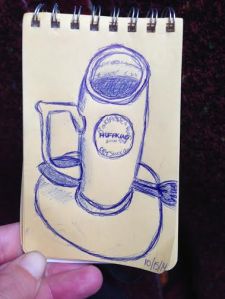
unnamed-5

I found my time traveling alone to be particularly enjoyable. I loved the independence to do things on my own time, thrived on making connections with other travelers, and appreciated what the experience helped me discover about myself as an individual. I just might have caught the travel-bug on this London excursion and I would absolutely do another solo-trip in the future. Maybe onto Morocco next? Only time will tell.
Traveling alone means you get a plethora of awkward solo pics...

Traveling alone means you get a plethora of awkward solo pics…

...lots and lots of solo pics.

…lots and lots of solo pics.


Diana in Germany Week Six: Ecology and Management of Forests

October 20, 2014

My second class of the semester is already over! Also about 35% done my stay in Germany to put things in perspective. So these past few weeks in Ecology and Management of Forests in Southwestern Germany and the Swiss Alps we have gone on field excursions a total of 6 times, and they were all amazing.
 

Schauinsland

Our first excursion was an all day hike at the nearby Shauinsland hill. We took a bus up the mountain to save time, and we made it to the summit by foot shortly afterwards. There is a tower on top, but we decided not to climb as it would not have offered more of a view that foggy morning. Here we discussed how the Black Forest, Rhine River Valley, and Vosges Mountains were formed by the shifting of tectonic plates millions of years ago.

As we walked down through the hill paths we stopped to talk about the economy, the shift from grazing meadow to coniferous forests for timber, and the forest diebacks Germany experienced in the late 1900’s. We saw beech trees that are naturally predominant in this area and also many Douglas firs that have been introduced for timber and tree coverage.

Unfortunately I did not bring my camera on this trip, so no photos. Sorry!!


Rhine River Valley

Our next field trip brought us to the border of France and Germany, which is delineated by the Rhine River itself. It was intriguing to see that the land and vegetation were different on opposite sides of the river!

​The Rhine River. France on the left and Germany on the right. In class a point was made how the banks look different and have different vegetation.

​The Rhine River. France on the left and Germany on the right. In class a point was made how the banks look different and have different vegetation.

We studied the signs of flooding that frequently occurs in riparian areas. For instance, there were trees that were slanted and buildup of vegetative litter that had been carried by floodwaters. Closest to the rivers there were only new grasses and sometimes no vegetation at all since species had not been able to establish since the last flood. Trees were further up the banks. The rocks also gave it away. Smaller, finer sediment deposits higher up on the banks because it travels in the water whereas the largest rocks stay put near the river.

​Flood waters made these trees bend and stay slanted.

​Flood waters made these trees bend and stay slanted.

Our next stop on the trip brought us to the side channel of the Rhine. Here we discussed the human impacts that literally shaped the river. Way back when there were many small side channels and more bends in the river. The riparian areas were relatively undisturbed and stretched a lot wider geographically than they do currently. All of this changed through a serious of straightening and damming projects. Now there are only two major channels with fewer curves. This was wonderful economically as it straightened and shortened the river, so shipping and boating took shorter periods of time. Unfortunately it exposed villages to flooding and destroyed huge areas of riparian habitat.

To reduce flooding and promote a more natural ecology, the Integrated Rhine Program was established. So far 3 out of 13 projects have been completed. It takes a long time to restore riparian ecosystems, but one step at a time things should improve.


Coventwald

Forestry relies on scientific research nowadays and Coventwald is one such research forest. Our guide for that day has been studying chemical deposition rates in the forest depending on tree type/amount of tree cover. The factors that increase chemical deposition in forests are the leaf area index and age of the trees. basically chemicals in the air (a lot now input by industries and humans) stick to leaves and then when it rains the chemicals wash off the leaves and deposit themselves into the soil. When soil chemistry changes, some trees are not as suited to the environment.

​​​This is an example of the equipment used to get water out of soil.

​​​This is an example of the equipment used to get water out of soil.

The major results of the studies so far have been the following:

  • Higher deposition under canopy and in soil of spruce trees than under beech trees
  • Soils are becoming more acidic
  • Nitrate levels have decreased

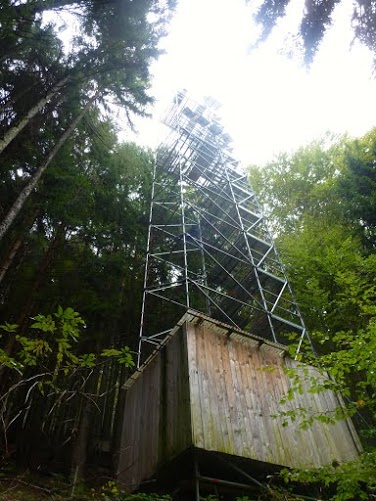
The coolest part of the trip was walking up a research tower. We had an amazing view from there, but it was scary! The stairs were wet, so walking up to and down from the top made me think I was on Fear Factor or The Amazing Race. At the top I also pondered the fact that my father would never be able to be there (he is pretty afraid of heights).


​We got to go on top of the research tower at Coventwald! 11 flights of stairs was a work out. On top, we could feel the tower moving in the wind.

​We got to go on top of the research tower at Coventwald! 11 flights of stairs was a work out. On top, we could feel the tower moving in the wind.

Swiss Alps

7am sharp this past Monday my class gathered outside of the Konzerthaus in Freiburg to start our 4 hour bus drive to Disentis, Switzerland. When we arrived in the Alps it was absolutely pouring (which is why I don’t have pictures from this first day of the trip FYI). To make a long day short, the class hiked hard terrain up into Scatlé forest that has been untouched by humans since before the 13th century, which makes it extremely unique. Very few tourists go through it and only a few researchers interact with the forest at all. We were out there for a long time with no facilities, so I unfortunately had to “interact” with the forest. You got it… I peed in a primeval forest. Soaking wet, we made it back to our hostel for showers and a great dinner with schnitzel, vegetable soup, and caramel flan. We were all very grateful to be warm and dry indoors.

Our second day welcomed us with beautiful weather. The excursion for that day consisted of taking a cable car up to the top of a mountain and walking back down it, similar to what we did during the Shauinsland excursion. Our speaker for the day had an extremely thick Swiss German accent and I could barely pay attention to anything said. That was fine because the surrounding area was gorgeous!

​The cable car we took our second day in the Swiss Alps.

​The cable car we took our second day in the Swiss Alps.

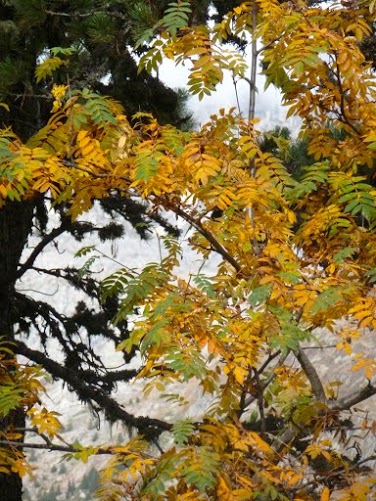
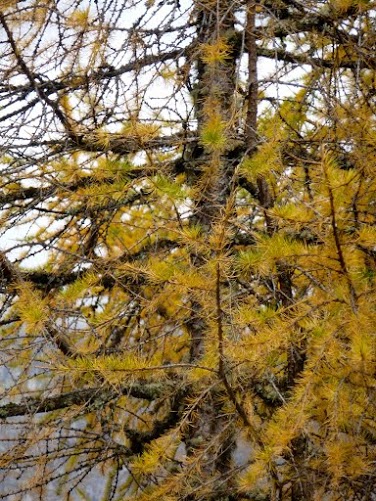
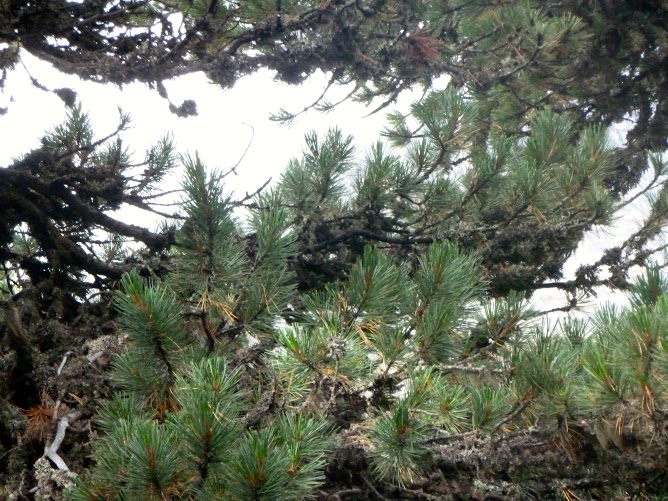
The final day of our trip started very early. We left our hostel at 7am and then had a few hours on the bus to sleep. We arrived at Aletsch mountain, which is the most beautiful natural place I have been so far during my study abroad experience. There were trees turning yellow and conifers that were green. The tops of the mountains are covered in snow. We even got to see Aletsch Glacier and, off in the distance, Matterhorn! We had to rush through our hike a bit because of the bus driver wanting to get back to Freiburg (about 6 hours away at this point).

​Mountain ash​

​Mountain ash​

​Larch​

​Larch​

​Swiss Stone Pine​

​Swiss Stone Pine​

​Aletsch Glacier​

​Aletsch Glacier​

​A stunning view from the top of the Alps.

​A stunning view from the top of the Alps.

On the way home our bus drove onto a train… it carries cars and busses. I had never even heard of this mode of transportation before! (Have you?) At 8pm, all us tired students made our way off the bus and back to bed.


Last Day of Class

The last day of class we started with a student presentation on the ways forests are managed all around Europe. However the most interesting part was that our teacher then spent the rest of the class period asking us for our critical input about the course. He took notes about our suggestions and what things we liked best. At University of Richmond we’re supposed to fill out forms online with our evaluation of a class, but this was such a more rewarding experience. Having a conversation as a class with a teacher and hearing what the teacher thought of our suggestions gave me a huge feeling of independence and control over my education.


Next Post

Alright guys I have to admit it – homesickness has finally gotten to me a tiny bit. I want to devote a blog post to what things I do to handle those feelings and about how my relation to home has changed a lot since I came to Freiburg.


Oliver in Spain: Time to Travel

October 16, 2014

Fall break came and went and it is about time that I recap that experience for you all. The itinerary was as follows: 4 days in Paris, 2 days in Prague, 1 day in Berlin, and 2 days in Amsterdam. The 10 days that I spent traveling around these cities defined the best fall break I have ever had without a shadow of a doubt. I’ll do my best to recap each of these cities and try to keep it brief.

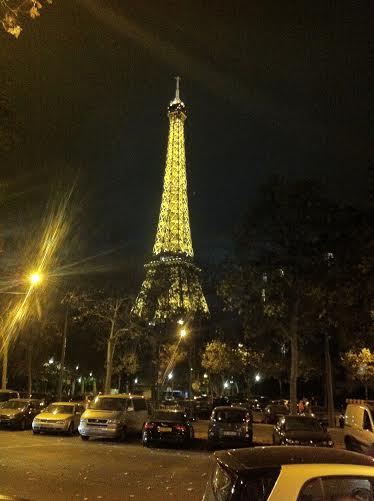
I flew into Paris on Thursday night and ended up being without my luggage for 48 hours. The funny thing was that I didn’t have a worry in the world. I know it’s a little gross to be touring a city in the same clothes for two days but Paris left such an impression on me that I will soon forget the inconvenience of not having a change of clothes. As soon as the plane landed I had the type of feeling that I got the first time I stepped onto Richmond’s campus. It is inexplicable but I felt so excited and ready to go. Along with five of my friends I found my way to the apartment that we would be sharing for the next four days. It was a small two room apartment but we did not spend much time in it. The next four days were a balance of tourism, relaxation, and fun. We hit all of the big stops like the Eiffel Tower and the Louvre.

The Louvre

The Louvre

The Eiffel Tower

The Eiffel Tower

We also went out to dinner one night to a great street side restaurant. The wine was flowing and the escargot was sizzling. Everything about that dinner left me satisfied for the night out.

Escargot and wine

Escargot and wine

Looking back on my time in Paris, I think it is my favorite city I have ever visited and I would move there in a heartbeat.

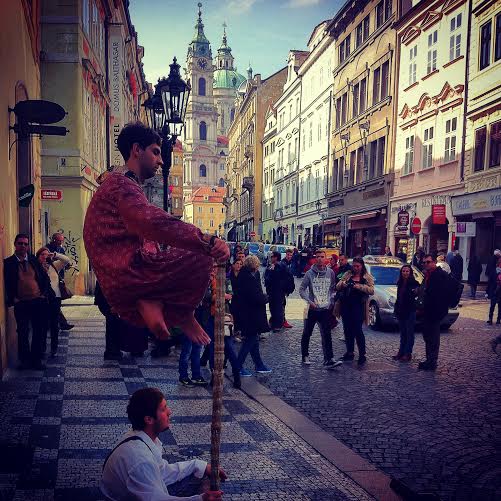
Next was Prague. My friend Will and I traveled by train and bus and arrived early afternoon. We moved into our “penthouse” apartment (at least it felt like a penthouse after our tiny place in Paris) and immediately went out to walk the city. Pink, green, and red painted buildings lined the streets and I felt like I was in a children’s book. We walked across the Charles Bridge and up to the main castle.

The castle entrance.

The castle entrance.

The street view

The street view

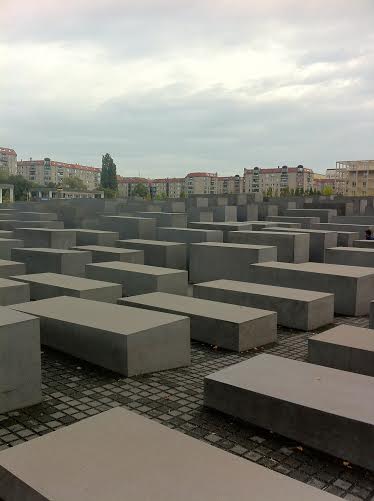
Berlin was a short, under 24 hour, stop. It wasn’t great weather but we still made the most of it and walked to the Holocaust Museum and Berlin Wall.

The Berlin Wall

The Berlin Wall

The Holocaust Museum

The Holocaust Museum

Finally came Amsterdam. This city was my second favorite stop on this trip. The canals running through the city gave a unique vibe to the city that made it feel similar to Copenhagen. I made an attempt to go into the Van Gogh museum but after 9 days of traveling through Europe I was feeling a little frugal. I settled for a picture with the “I AMsterdam” sign and continued to walk through the city. Even though it was raining quite hard, I was thoroughly enjoying the walk. There is a very different, and enjoyable, feel to a city when it is raining.

The canal

The canal

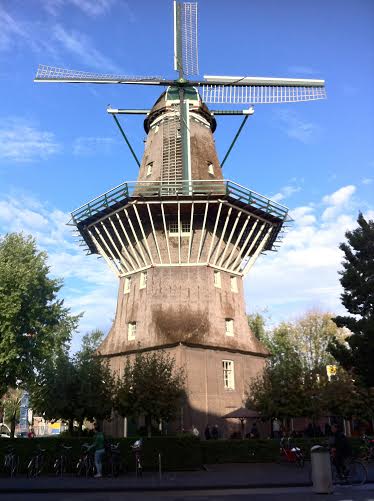
The windmill.

The windmill.

I know these descriptions were all very brief but I did not want to write an overwhelming post. I could go on forever with each of these cities separately so if you are interested in hearing more, please reach out to me. I returned to Valencia and was greeted by 75 degree weather. Valencia is truly home for me and I am excited to stay grounded in Spain for a little while. Time to perfect my Spanish and see what cities like Barcelona and Madrid have to offer me.


Garrett in Bonaire – Mi trep na Kursou (My trip to Curaçao)

October 16, 2014

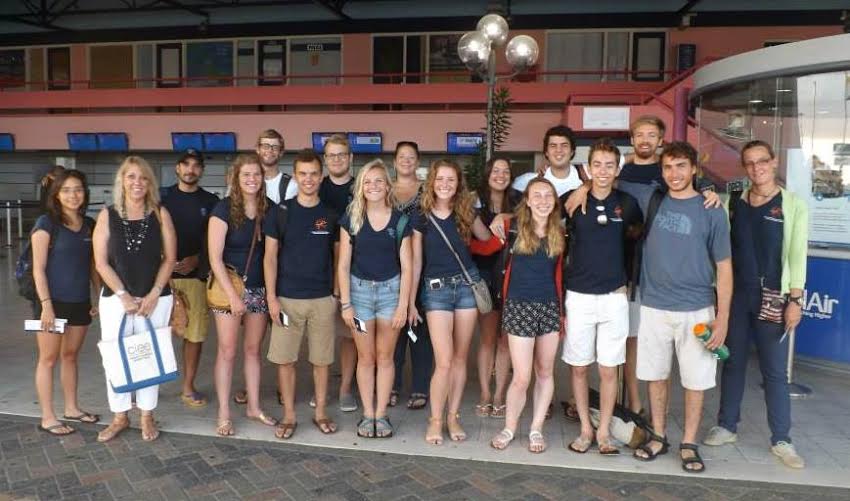
The time was 6:15AM. All 11 students climbed aboard the trucks and were off to Flamingo International Airport. As part of the program, my classmates, professors, and I hopped islands and took an extended two-day field trip to Curaçao.

The group of students and professors at Flamingo International Airport ready to hop over to Curaçao at 6:15AM.

The group of students and professors at Flamingo International Airport ready to hop over to Curaçao at 6:15AM.

For those of you who don’t remember, Curaçao is the “C” in ABC islands and is the largest of the three islands. Curaçao lies only about 30 miles west of Bonaire, making for a short 20-minute flight. Similarly to Bonaire, Curaçao was once a part of the Netherland Antilles. However, in 2010, when Bonaire became a municipality of the Netherlands, Curaçao became its own independent country. So, here I am, taking a casual field trip to another country for class during my study abroad experience in the Caribbean.

My classmates and I enjoying the sun in Curaçao!

My classmates and I enjoying the sun in Curaçao!

The itinerary for this trip was jam-packed.

First up: The Sea Aquarium. The aquarium itself was much like any other aquarium with a plethora of marine life on display in various tanks. However, nothing beats swimming with the same fish on the reef outside my residence hall, so I was slightly unimpressed by the inside. The outdoor facilities were another story. As the aquarium is oceanfront, they have multiple lagoons that have channels leading out into the ocean where they take care of a dozen or so dolphins. Let me just say, the Dolphin Academy is amazing! We got a behind-the-scenes tour from the leader of the dolphin program. He has been working with these dolphins for over 20 years and knows them so well. He took us around to the different lagoons stopping at each to tell us about the dolphins. In one, three male teen dolphins were participating in a snorkel session. Here he told us about the reproductive tendencies of dolphins, which are extremely interesting (if you’re ever bored and want to read up on their habits). In another lagoon, dolphin trainers had just finished putting on a wonderful show and were beginning afternoon training sessions with the dolphins. The next lagoon over was occupied by three female dolphins, two of which had given birth in the past month and the third is due in the near future. We stopped here to watch the two-week old dolphin interact with its mother and hear an explanation of dolphin familial structure and group behaviour. In the last lagoon, a dolphin therapy session was underway. The Dolphin Academy on Curacao is one of the best dolphin therapy facilities in the world. Here the dolphins help children of varying disabilities overcome challenges. While they are not the actual therapists in the scenario, they are used as a reward system for the child. Just look at these guys! No wonder they connect so well with children!

The two-week old baby dolphin swims alongside its mother and offers a shy smile for the camera!

The two-week old baby dolphin swims alongside its mother and offers a shy smile for the camera!

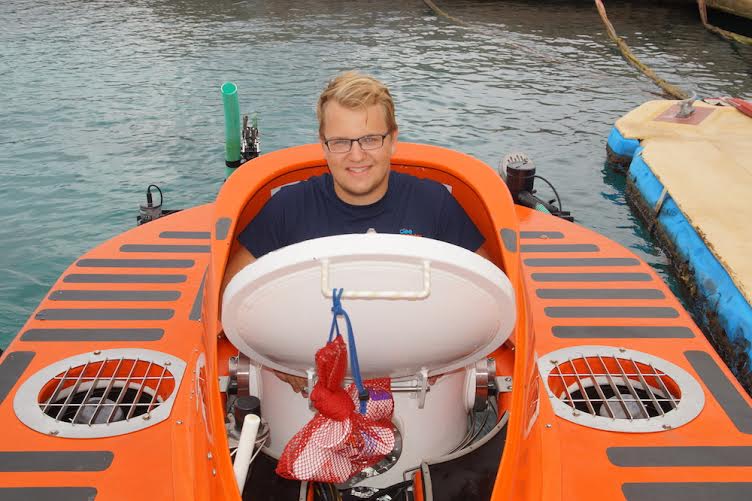
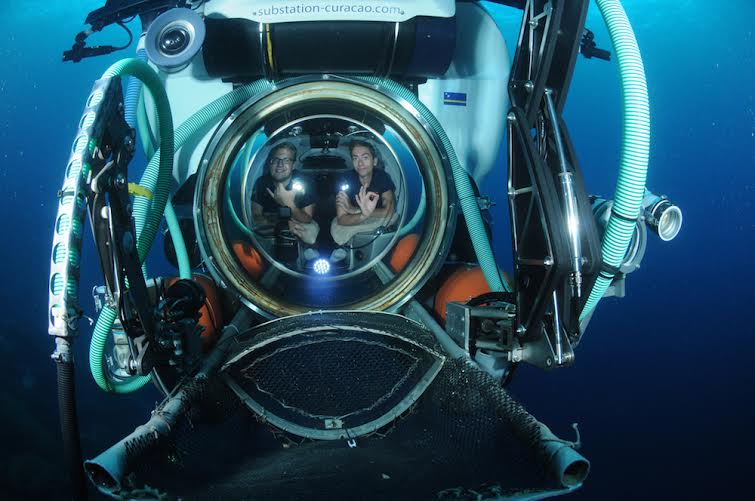
Up next: The Curasub! Just down the pier from the Sea Aquarium was Substation Curaçao. That’s right, a submarine. And not just any submarine; a 5-person scientific mini-submarine. In fact, the day before our arrival, the Smithsonian had taken the sub down to 1,000 feet and brought up countless specimens for analysis in the lab. While we weren’t there to bring up samples or anything, we still got to take a trip down in the sub. It sure was cozy! All complaints aside, the experience was breathtaking. The sights were just beautiful and it is eye-opening to just witness the vast array of life that occurs at that depth. Once the majority of visible light disappears from the water column, corals slowly start to fade out and sponges take their place. As a member of the marine biology lab on campus that focuses on sponge research, this was sponge heaven! Continuing past 200 feet, marine live gets even sparser and more interesting. Our max depth was 530 feet! On our way back up, we stopped by a wreck site of two tugboats, which were teeming with life, including countless lionfish, multiple green moray eels, and all kinds of sponges. The whole adventure was absolutely incredible!

Smiling before I drop down into the Curasub for my first submarine ride

Smiling before I drop down into the Curasub for my first submarine ride

My buddy Graham and I smiling out the glass dome of the sub.

My buddy Graham and I smiling out the glass dome of the sub.

A view from inside the sub looking out at the reef. Note the depth of 510 ft!

A view from inside the sub looking out at the reef. Note the depth of 510 ft!

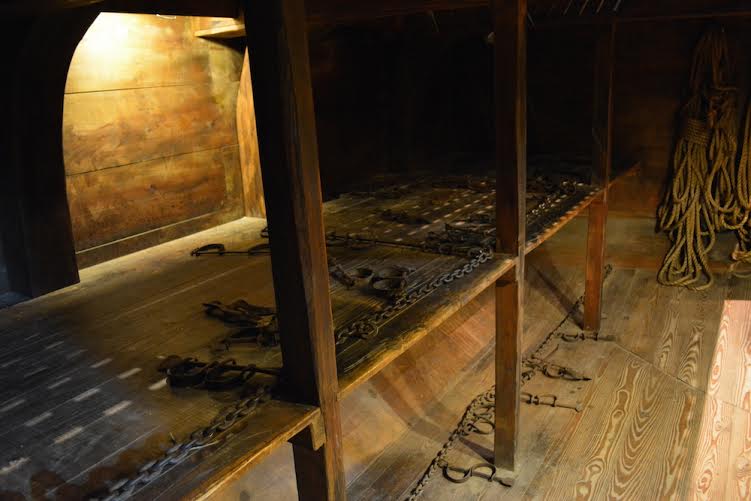
The following day: Kura Hulanda, possibly one of the best museums I have ever been to. Kura Hulanda is a cultural museum, with a focus on slavery and its impact on the world, specifically in the Caribbean. In the US, when we are taught history, the topic of slavery is often glazed over and its horrors are hidden from view; instead we focus on the Civil War and the biggest battles. However, slavery has killed more people than the Holocaust and this museum shed some light on their stories. During our tour of the slavery museum, we saw the devices used to torture slaves that were disobedient, we ducked inside a model of a ship’s hold where the slaves were kept during the trans-Atlantic voyage, and we heard the terrible tales of the conditions they were exposed to throughout the trek. The museum really opened my eyes to the horrors of slavery and offered another cultural lens with which to view the practice as a whole. It was interesting to learn and be exposed to the history of slavery from this other perspective.

A common device used to torture slaves. Disobedient slaves were stripped and placed in this metal chair in the scorching sun, often until they died.

A common device used to torture slaves. Disobedient slaves were stripped and placed in this metal chair in the scorching sun, often until they died.

Replicate model of the hold of a slave ship. Our tour guide estimated that close to 100 slaves would be crammed into this small space. And to think, it felt crowded with just the 7 of us in the tour group

Replicate model of the hold of a slave ship. Our tour guide estimated that close to 100 slaves would be crammed into this small space. And to think, it felt crowded with just the 7 of us in the tour group

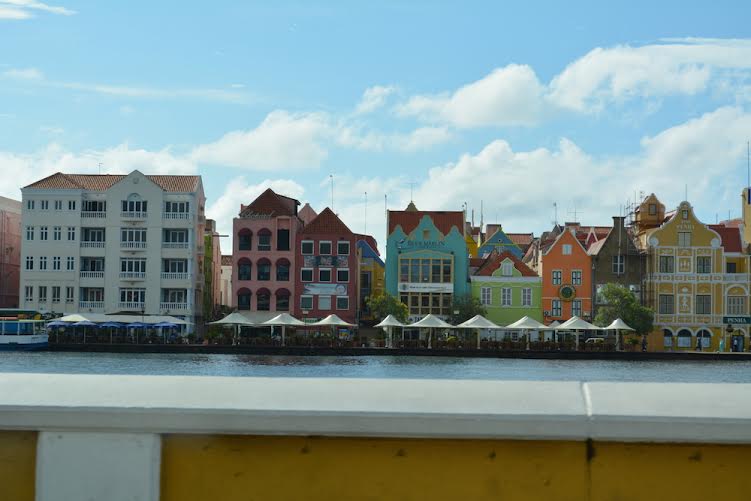
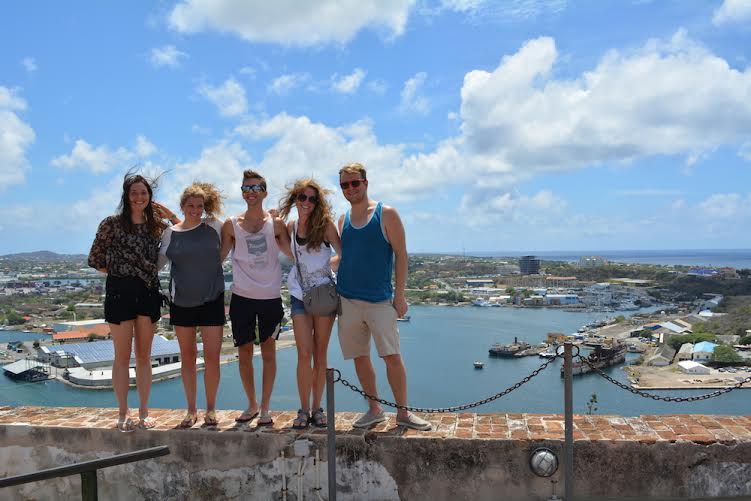
Lastly: Bus tour. With such a limited time on the island, we didn’t really get to see much more than the cove where the Sea Aquarium and our accommodations were located. The bus took us around Punda and Otrobanda, two quarters of the capital city of Willemstad. Literally meaning “other side,” Otrobanda is located directly across Sint Anna Bay from Punda. Together, these quarters are important not only for tourism, but also their history and their proximity to the ocean, which allows for easy trade. In addition, to touring the city, we also were taken to Fort Nassau, which provided a stunning 360 degree view of the city, as well as Fort Beekenburg, which was an old military fort stationed at the back of the bay meant to keep pirates and the British off the island.

A view of Punda across the channel from Otrobanda.

A view of Punda across the channel from Otrobanda.

A few of us pose for a picture with the capital city of Curaçao behind us.

A few of us pose for a picture with the capital city of Curaçao behind us.

Fort Beekenburg standing tall.

Fort Beekenburg standing tall.

All in all, while we were only on the island for less than 36 hours, the country of Curaçao was amazing! I absolutely loved the field trip and appreciate the experience! Guess I can check “Go 530 feet underwater in a submarine” and “Visit Curaçao” off my bucket list too!


Garrett in Bonaire – Sopi Yuana i Ekperens Nobo (Iguana Soup and New Experiences)

September 23, 2014

After a busy first week of learning to identify 82 fish, mumbling through our first Papiamentu lesson, and completing the Open Water diver certification, we were ready for the weekend. Kicking off our first weekend we had Dia di Boneiru, Bonaire’s national Flag Day, a holiday filled with high-spirited displays of patriotism – something I would liken to Fourth of July in the States. During the day, we walked a few blocks and strolled around the local booths selling handmade jewelry, artwork, and various other knick-knacks.

My buddies and I milling around downtown Kralendijk during the festivities of Dia di Boneiru

My buddies and I milling around downtown Kralendijk during the festivities of Dia di Boneiru

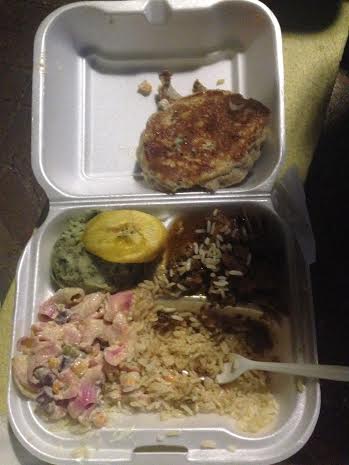
When we went back a few hours later, the scene had changed dramatically as the sheer number of people milling around the plaza in downtown Kralendijk had increased 100-fold. Local musicians were jamming out on stage, everyone was on their feet dancing the night away, and the smell of booze and street food filled the air. After realizing that we couldn’t read much of anything on the menus, which were entirely in Papiamentu, my friends and I approached a vendor and attempted to decipher the menu. With some help from other locals who spoke some English, we quickly realized that “Everything on the menu is $10” was not something that could be ordered and were goaded into ordering sopi yuana and karko stoba. We were handed a small cup of iguana soup and a plate of conch stew served over rice, plantains, and pumpkin pancakes. It was positively delicious! Now I can check “Eat iguana” off my bucket list!

My friend Jack's dish of karko stoba, or conch stew, served with rice, pasta salad, mashed potatoes, plantains, and a pumpkin pancake. Yum!

My friend Jack’s dish of karko stoba, or conch stew, served with rice, pasta salad, mashed potatoes, plantains, and a pumpkin pancake. Yum!

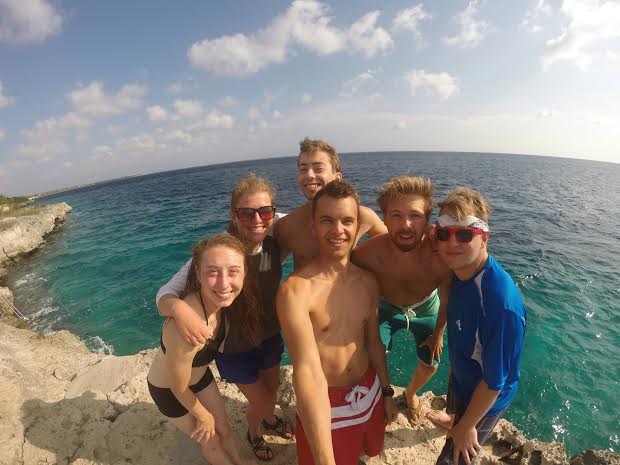
The following day we set out to cross another item off my bucket list – cliff jumping! While on a tour of the island last week, one of our professors mentioned a dive site a few miles north of the residence hall where one can jump into the water off a cliff and return via a ladder. So that afternoon, six of us took out our bikes and began the 4-mile trek to Oil Slick. In what seemed like no time, we were there. We all took turns jumping off the cliff, which admittedly was only about 15 feet above sea level. Nevertheless, it was quite thrilling to jump into the crashing waves of the ocean below!

Selfie atop the cliff at Oil Slick!

Selfie atop the cliff at Oil Slick!

And the habitat! We were only a few miles up shore from our normal dock; however, the habitat differed greatly. It was a blast to get the chance to get out of the house and explore a new section of the reef!

A photogenic banded butterflyfish (Chaetodon striatus) poses with a soft coral and a brain coral!

A photogenic banded butterflyfish (Chaetodon striatus) poses with a soft coral and a brain coral!

Speaking of exploring the reef, the diving has been nonstop intense since my first four certification dives. Since then we have been working on becoming trained as Advanced and Rescue Divers. For a new diver, jumping straight into this is intimidating to say the least. Most nerve-racking of all – the night dive (only my sixth dive ever). We waded into the water just as the sun disappeared below the horizon. With our dive lights illuminated, we descended into the darkness. Everything aside from the beams emitting from our torches was covered in stale blackness. However, what our lights did unveil was an entirely different biotic reef community. Parrotfish were sleeping on the sandy bottom, eels fluttered across the corals, and two gigantic tarpin hovered nearby hunting for food. Oh, and moon jellies descended from the heavens. Imagine the Finding Nemo jellyfish scene, but at night. One “Cool! Look at that!” jelly turned into a crowded middle school dance with everyone bumping into the jellies. We were quick to find out that these jellies are nonlethal and quite harmless, aside from the minor panic attacks they cause. Needless to say, it was another successful and amazing dive!

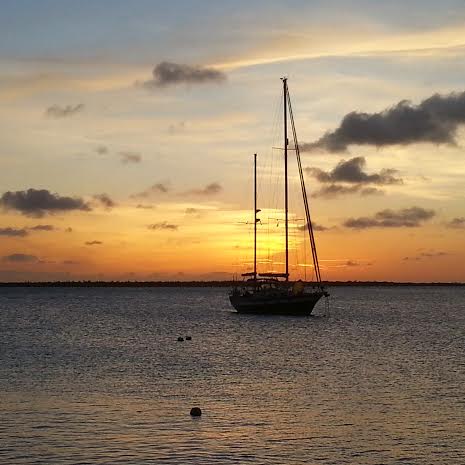
Beautiful sunset before the night dive!

Beautiful sunset before the night dive!

As for the above water portion of Bonaire, we haven’t really gotten much time to do a lot of exploring. With our only transportation being bikes and the weather being as hot as it is here, it can be tough getting to places outside of the capital city of Kralendijk. However, we have weekly field trips to various parts of the island with our Cultural and Environmental History of Bonaire class. This week we took a tour of the Cargill Salt Works production plant. Salt production on the island goes back hundreds of years. Initially dubbed “the useless islands” by the Spanish for their lack of gold, Bonaire and the rest of the ABC islands were soon taken over by the Dutch and transformed into a hub for slave trade. At this time, Bonaire was discovered to have natural salt, which was necessary for keeping and curing meats. Without going into too much detail, the process is actually quite intriguing. The process here uses the energy from the sun and wind to drive salt production. Water is taken in from the sea and collected in pools. As it sits there, the water evaporates, thereby increasing the salinity. Eventually, (over-simplifying the whole process) salt is left. The process itself is actually quite beautiful!

The piles of sea salt at Cargill Salt Works

The piles of sea salt at Cargill Salt Works

Two saliñas on the Cargill property. The rosy-pink color indicates a higher salinity, which means the salt is almost ready to be harvested.

Two saliñas on the Cargill property. The rosy-pink color indicates a higher salinity, which means the salt is almost ready to be harvested.

Eating iguana, jumping off cliffs, swimming with jellyfish, and visiting a salt production plant. Here’s to having new experiences! And having many more!