The Smartest Man in the Room (posted by Jimmy in England)

October 22, 2012

I woke up this morning and couldn’t exactly remember what had happened last night.  I tried to piece together the bits of information that were coming back to me but there was just so much missing.  Good thing that I wrote everything down. Let me take you back to when it all started.  During orientation week, thousands of college societies set up in a big auditorium so that every student has an opportunity to explore their interests.  Various societies include Sports Clubs,  A capella, Harry Potter Society, Philosophy Society, and my personal favorite, the Scientific Society.  I signed up for a few different societies and on Monday I received an email about different lectures that the Scientific Society holds throughout the year.  This week’s seminar was to be given by Ian Fleming.  There are probably many Ian Flemings in the world, but two of them particularly ring a bell in my mind.  The first is the English author that wrote the James Bond novels and the second is the man who appears in all of my organic chemistry textbooks.  Since this email was from the Scientific Society, I presumed that the organic chemist was coming to Oxford.  For those of you that have never heard of Ian Fleming, he is one of the most important organic chemists of the 20th century.  He was the first person to determine the full structure of chlorophyll in 1967, he helped synthesize vitamin B12 during a one year postdoc at Harvard, and he created a mechanism (Silyl-Hydroxy Conversion, also called the Tamao-Fleming reaction) that is used in many organic chemistry research labs today.  He also did all of this at a time when there were not accurate ways of determining chemical products based on computers. Dr. Fleming is included in the panel that nominates Nobel Laureates for Chemistry as well.  Simply put, he’s big time.

I jumped at the idea of going to hear this man speak and so I emailed the Scientific Society and told them that I would definitely be attending. An amazing woman, Aimee, who is from Oklahoma and doing her postdoc with her husband at Oxford, responded and asked if I would like to attend dinner with Dr. Fleming before his speech!  The simplicity at which you can make things happen via email astonishes me.  Within a few hours I went from potentially listening Dr. Fleming speak, to walking to a little dinner with an extreme sense of anticipation as I prepared to meet him.  The dinner was at an Italian restaurant off of Banbury road.  I have yet to mention the fact that it has been a few weeks and I still can’t get used to people driving on the left side of the road.

Banbury Road, the location of my dinner with Ian Fleming

Banbury Road

I expected that I would be one of about 30 or 40 people at dinner and I would probably introduce myself and eat with some graduate students.  When I got there, I couldn’t have been more surprised.  Dr. Fleming was sitting with one graduate student having a conversation.  I ended up joining them, along with another undergraduate and Aimee and her husband.  There were 6 of us in total, including Dr. Fleming, and I can’t even begin to explain how incredible it was.  If you want to talk about brilliance, look no further.

I want to share some of the advice that Dr. Fleming gave us throughout the night.  First off, he knew he was brilliant, but he didn’t act better than anybody.  He is 78, but still quick as a whip.  He told us to understand that we are smart, to be thankful for it, and to get better.  He also absolutely loves what he does.  He simply loves being in a lab, synthesizing organic compounds.  “It’s all about the chemistry” he would say.  At the time that he was doing all of his research, he couldn’t connect the dots, but random things would come to him later in life that ended up helping him in all of his work.  He was asked what makes him see the answers to problems that others have questioned for years and he responded, “My group of colleagues have the ability to think about a problem longer than anybody else.  We didn’t know what we were doing, but something would eventually work.  We would stare at a problem for weeks and something would click.”

During the lecture, I sat in front of two Ph.D students, one was from Canada and another from France.  Before Dr. Fleming started, these students were reciting the periodic table from memory.  They knew every element in order, all they way through.  At the end of the lecture, the French man said, “Wow, I feel like a schmuck compared to him!” His answers to problems are so simple, but they always work.  He says that most answers stare at you, and if you just think a little bit harder, they appear.  I ended the night by simply walking home and going to bed.  There was so much information that my mind was trying to wrap itself around so I made sure that throughout the night I wrote everything down.  My mind had been blown, and it clicked that I was in such a special place with the opportunity to meet one of the most important chemists of the last hundred years.

“All the greatest men are maniacs. They are possessed by a mania which drives them forward towards their goal. The great scientists, the philosophers, the religious leaders – all maniacs. What else but a blind singleness of purpose could have given focus to their genius, would have kept them in the groove of purpose. Mania … is as priceless as genius.” 
-Ian Fleming, Doctor No


Social Events Overload in Uppsala: International Gasque, Birthday, Kanelbulledag and a Stolen Bike (posted by Indira in Sweden)

October 19, 2012

Last week was so overloaded with social events. Every single day there was something going on and so many times I would just come to my room to drop off my bag and in 5 minutes I would be on the move again. I am not complaining though – I enjoy this rhythm that allows me to experience as much of Sweden as possible (especially taking into consideration that half of the time I’m supposed to study abroad in Uppsala has already passed).

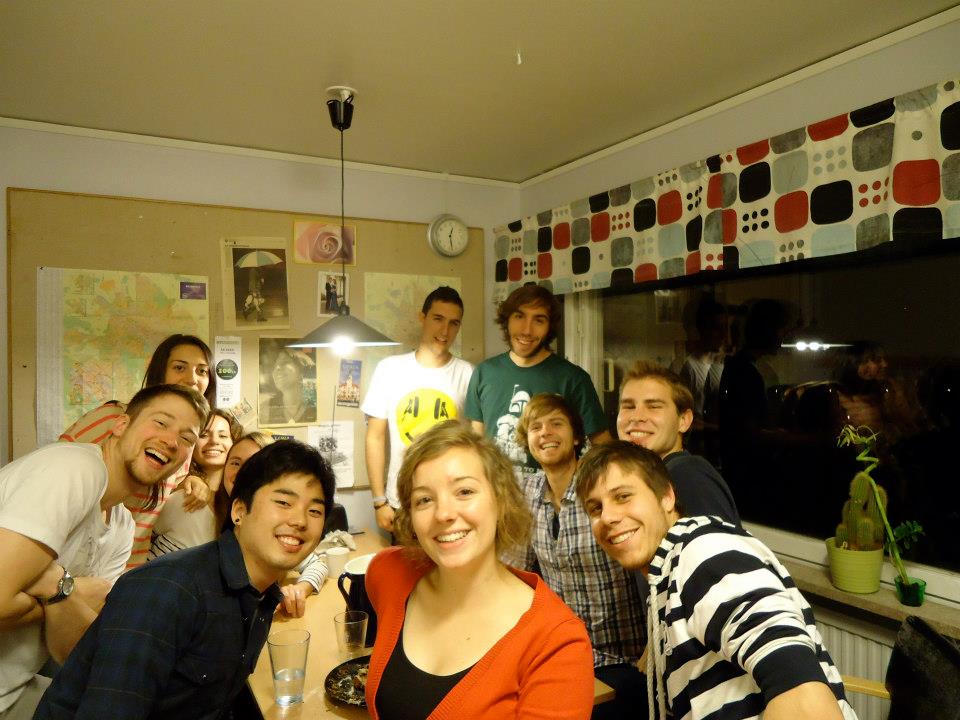
One of my friends, Marine, had her birthday a few days ago so we organized a birthday dinner for her (it was a pot luck style dinner where everyone brought something). I made a traditional Bosnian dish called “sataraš” and I was happy to see that people liked it. We had a really great time talking over the dinner, and then we had our own private concert: two guys played guitars and sang for about an hour before the clock struck 12. It was a really nice bonding experience!

My friend's Birthday Dinner, celebrated with a potluck

My friend’s Birthday Dinner

On Thursday last week it was the official Kanelbulledag (cinnamon bun day – Swedes really love their Kanelbulle and I know why: they are super delicious and go really well with fika!). It is a tradition that on the Kanelbulledag Swedes make homemade Kanelbulle, so my Swedish corridor-mates organized the event. We all got together and enjoyed some quality time together while making some delicious cinnamon buns. 🙂

Kanelbulle, a swedish cinnamon bun

Kanelbulle

On Friday we had the long awaited International Gasque. As I wrote earlier, gasque is a formal 3 or 5 course dinner where all the students dress up and have a nice meal, drink snaps and sing songs, as well as enjoy the entertainment. The International Gasque was very long, lasting 6 hours (6pm-midnight). There was some stand up comedy, a choir performance and skits to make it all incredibly enjoyable. After all the delicious food was eaten, all songs sung, and the entertainment program finished, there was an after party with Karaoke and a live band. I really enjoyed karaoke since so many people came on stage and everyone was having fun, not really caring about how well (or bad) they could sing. The live band was also very good. They were singing mainly popular mainstream songs that brought everyone to dance. All in all, it was a great night! I was really happy to be part of it all!

International Gasque: a picture of the seating arrangement for the dinner

International Gasque: Seating arrangement for the dinner

The twist came later on. The night, unfortunately, ended not so well for me. On our way back home when I wanted to get my bike, it was not there. I couln’t believe that someone had stolen my bike! We were all warned that this might happen, but I was always optimistic about it. It took 2.5 months for my bike to get stolen. At first I was really sad because I went through so many adventures on that bike (including me falling off it multiple times, and over-inflating the tire so it exploded). By now I have accepted what happened and got a new bike (I was really lucky that a friend of mine had 2 bikes, so he let me borrow one for the rest of the time I’m in Sweden). Life goes on!

The week ended with me trying to cook (and actually succeeding)! I cooked Bosnian for 7 of my friends. I made three traditional dishes and they all turned out amazing! I am happy I got a chance to learn how to cook. Those are the skills one will always need and find useful. 🙂

Of course, apart from many events in Uppsala, our classes went on. My only class for this month, Critical Perspective on Sustainable Development in Sweden, started integrating more study group work in the course. We divided into a few groups and now we will work within those groups on the case studies of interest. My study group (which is, by the way, very international. We are 5 people: Swede, Japanese, Korean, German and I) is working on urbanization and we will be looking at two districts in Stockholm in oder to see how sustainable they are. In the end we plan to come up with a list of recommendations for other districts in Stockholm, as well as other cities that are looking into urban resilience.

It was truly a good week with a lot of things going on and very little free time, but it all made my week much better! I guess that is the point of study abroad – do as much as possible and enjoy whatever country you’re in. 🙂


A Glimpse of the Beauty (posted by Jimmy in England)

October 12, 2012

“On Thursday at 4:30 walk to the first white house on Longwall street and knock on the window in between the front door and the entrance to the courtyard.”  That was the message that my tutor sent me for the time and location of our first tutorial. In the previous week , visiting students had been warned that the cardinal sin of Oxford was being late for a tutorial. So I naturally decided to show up a little early for my first lesson and like every other day at Oxford, it was raining. When I arrived at the house,  I knocked on the window in between the front door and the courtyard and there was no response. At exactly 4:30, a man came biking up to the house.  He was fully equipped with all the essentials of biking in the rain.  He had a neon raincoat, thick rain pants, a case for his backpack, and even goggles for his eyes.  On that note, let me tell you that this is not that out of the ordinary.  There are two guarantees at Oxford: It rains and everyone uses bikes as the main form of transportation. As he got off his bike he introduced himself as my tutor.  He opened the front door and we went into the living room.  On the outer edge of the room was a couch, a desk that faced the window, and a bookshelf containing many Human Evolutionary Genetics textbooks.  In the middle was a table and at the table there were chairs.  In those chairs we were to sit and talk for an hour about the genetic differences and variation among populations of humans and chimpanzees. The tutorial, a little daunting a first, turned out to be typical of the Oxford lifestyle.  Academic life is not a job that you go to and then leave behind at the end of the day. As seen by my experience in a random house, it is something that is part of your everyday life.  It is essential to who you are.  My first week of tutorials made me realize that.

I will be completely honest with you, academic events have taken up every bit of my time here.  No matter what I am doing, there is always some component of learning involved.  Now that may seem a bit excessive, but I absolutely love it.  Every day this week I would wake up and pick a random lecture that I wanted to go to.  I sat in on biophysical chemistry  lectures and went to seminars on various biological processes.  Is this completely academic? Yes. Do I love it? Absolutely!  I may not be travelling through Europe too much this semester, but I am gaining invaluable experience by working here.

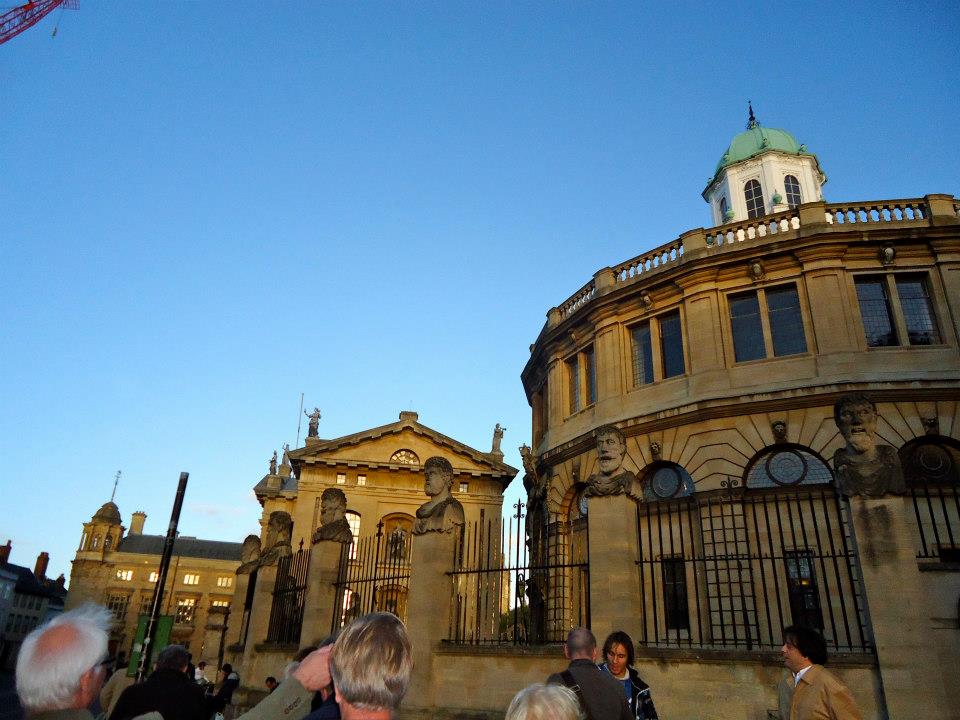
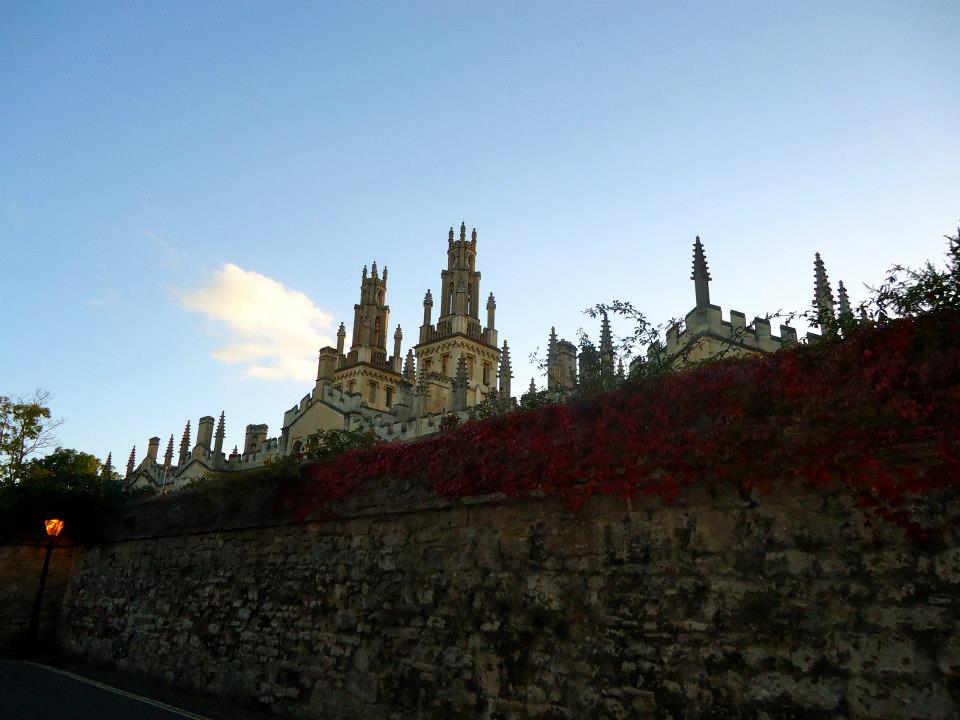
I will admit that I did take a break last night.  I went to the Turf Tavern with some other visiting students and got some very good advice from a woman who was reminiscing on old times with a long friend.  She said, “One of the problems with people in Oxford is that they all look down.  It rains all the time, so they naturally put their heads down.  While you’re here, look up.  You’re in a beautiful city, why not take it in and enjoy it.”  With that in mind, I spent most of today just ‘looking up’ and I found a lot of different sites at Oxford. The first are the Heads at Bodleian library.  I live about 30 seconds away from there and do not know the story behind the heads.  When I find it out, I will let you know.  The other two pictures I have included in this blog are from Christ Church.  Christ Church is not only one of the 38 colleges that are part of the University of Oxford, but it is also the cathedral church of the diocese of Oxford.  It is a very good representation of the beautiful architecture of this city.

Bodleian Heads at the Bodleian library in Oxford

Bodleian Heads, the Bodleian Library, Oxford

Christ College a cathedral at Oxford University

Christ Church, Oxford

Christ College at Oxford

Christ Church, Oxford

“Life is full of beauty. Notice it. Notice the bumble bee, the small child, and the smiling faces. Smell the rain, and feel the wind. Live your life to the fullest potential, and fight for your dreams.”- Ashley Smith


Academics at Oxford (posted by Jimmy in England)

October 9, 2012

Today Times Higher Education came out with their yearly rankings of the 400 best universities in the world.  The top seven universities were:

7. University of Cambridge

6. Princeton University

5. Massachusetts Institute of Technology

4. Harvard University

Tied in 2nd– University of Oxford and Stanford University

1. California Institute of Technology

The rankings use a system based on specific performance indicators including teaching, research, knowledge transfer and international outlook.  With that news buzzing around campus and the lurking start of my term coming up in a few days, I wanted to dedicate this entire post to the academic side of Oxford.  In the months prior to my arrival, I knew that Oxford was an incredible institution, but I didn’t know what set it apart from the rest of the world.  After being here for a week, I can begin to understand why people think so highly of it.

To start, by the time you apply for admission to Oxford you are already expected to know what degree you want to receive.  This is very different from the liberal arts system of the U.S. where we can spend a few years taking different courses to see what interests us.  Included in the admissions process to the university, prospective students take specific examinations in the subjects that they want to pursue.  If they do well enough on the exam, they are offered an interview with a college professor.  During the interview, they are not asked the typical U.S. college interview questions like, ‘Why do you want to attend our university?’ or ‘what are some of your strengths and weaknesses?’ Rather, they are asked questions to see if they really grasp the academics that they have studied prior to the application process.  I spoke with an engineering student that is starting his first year at Oxford.  He was telling me some of the questions that he was asked, one being incredibly interesting. The interviewer showed him a picture of a man running with prosthetic legs and asked him to describe how we would build a replica.  I have been in university for two years and would not have a clue how to answer that.  This institution is world renowned because they demand that you know what you want to study.  They don’t allow you to take any time thinking about potential majors, they want you ready to come in and work.

A second reason that Oxford is world renowned is because of its academic system.  The school year is broken up into three terms.  Each term a student takes one major tutorial and one minor tutorial. Major tutorials meet 8 times over the course of an 8 week term and minor tutorials meet 4 times.  It may seem like only meeting 12 times in a trimester is easy…. Ask any student here and they would laugh.   A tutorial is nothing like the American lecture style learning.   Tutorials, in the simplest analogy, are a 60 minute one-on-one cage match with a tiger…. A massive tiger that is easily capable of destroying you, like the ones in The Gladiator.  In a tutorial, you meet a professor in an assigned location.  It could be an office, a lecture hall, a public café, or anywhere that you decide.  The meeting lasts for one hour and is based entirely on the work that you have done in advance.  All of the work for one tutorial, which usually includes reading mounds and mounds of books and papers and preparing one essay, must be turned in 48 hours before the meeting.  The tutor then reads your work and prepares questions/ commentary for you.  When you arrive, you have to defend your points for one hour against a Ph. D. My first tutorial is next week and I have to read 15 scientific papers and 8 chapters from 3 different text books.  Then I have to write a 2000 word essay answering a specific question outlined in the document that my tutor sent me.  At the visiting student introduction ceremonies yesterday, the Dean of the college said that the minimum amount of time that is usually spent on academic work per week is 40 hours.

Oxford does not have regular tests or mandatory lectures.  They hold end of the year collections exams which rank students and they also hold beginning of term exams which force students to retain the knowledge from the previous years.  Every subject at Oxford offers optional lectures that correspond with it.  None of the lectures are mandatory and anyone can go to them.  This means that even if someone is a linguistics or history major, they can sit in on a biophysical chemistry lecture.  This system is different from any educational system that I have ever experienced.  In America, it seems like there is a lot of structure and if you follow the right path you can succeed.  Here, you are fully independent.  You cannot hide in the back of a classroom or cram the night before a big test.  They demand that you start your work early and continue throughout the week.  At many universities across the U.S. libraries are open 24/7.  At Oxford, there are many library buildings, but all of them close before 10pm on the weekdays and some are closed on Sundays.  The most famous of the libraries is Bodleian Library.  Aside from holding many historical texts and being a frequent place of work for J.R.R. Tolkein and C.S. Lewis, the library’s architecture is a favorite location for filmmakers. It can be seen in the opening scene of The Golden Compass and the first two Harry Potter films, in which the Divinity School acts as the Hogwarts hospital wing and Duke Humfrey’s Library as the Hogwarts library.  

While on the topic of Harry Potter, yes, it does feel like I go to school at Hogwarts.  Aside from Harry Potter actually being filmed at various locations in Oxford, there are many strikingly similar features.  The main one is in Oxford’s formal dinners.  Every evening the colleges have optional formal dinners that go from 7-8:15pm.  Most students attend these dinners every night.  Students arrive at 7 and sit down at a table.  At 7:15, the dining staff stops admitting students and all of the people in the hall stand up.  The professors and deans walk through a door dressed in their college robes (black, like in Harry Potter).  All of the students are quiet and must stand until the faculty has sat down at the head table, which is located at the front of the Hall and is elevated higher than the other tables.  Some colleges do not have a dress code for students but others require students to wear formal dress along with a black robe.

This place may not have any ‘Defense Against the Dark Arts’ courses and I am not likely to play quidditch, but there are reasons why Oxford consistently produces people who go out and make the world a ‘magical’ place.  See what I did there?  Until next time, keep drilling life.  How good are you going to be?

Here’s to the Crazy Ones.
The misfits.
The rebels.
The troublemakers.
The round pegs in the square holes. The ones who see things differently.
They’re not fond of rules.
And they have no respect for the status quo.
You can quote them, disagree with them,
disbelieve them, glorify or vilify them.
About the only thing that you can’t do, is ignore them.
Because they change things.
They push the human race forward.
While some may see them as the crazy ones, we see genius.
Because the ones who are crazy enough to think that they can change the world,
are the ones who do.

-1997 Apple Commercial


Fall in Uppsala: Seminars, Skansen und Richmond Re-union (posted by Indira in Sweden)

October 5, 2012

I started understanding how busy it can get here at Uppsala University over the past couple of weeks. Papers, reading, assignments, seminars, and exams have all come with the first days of Fall.

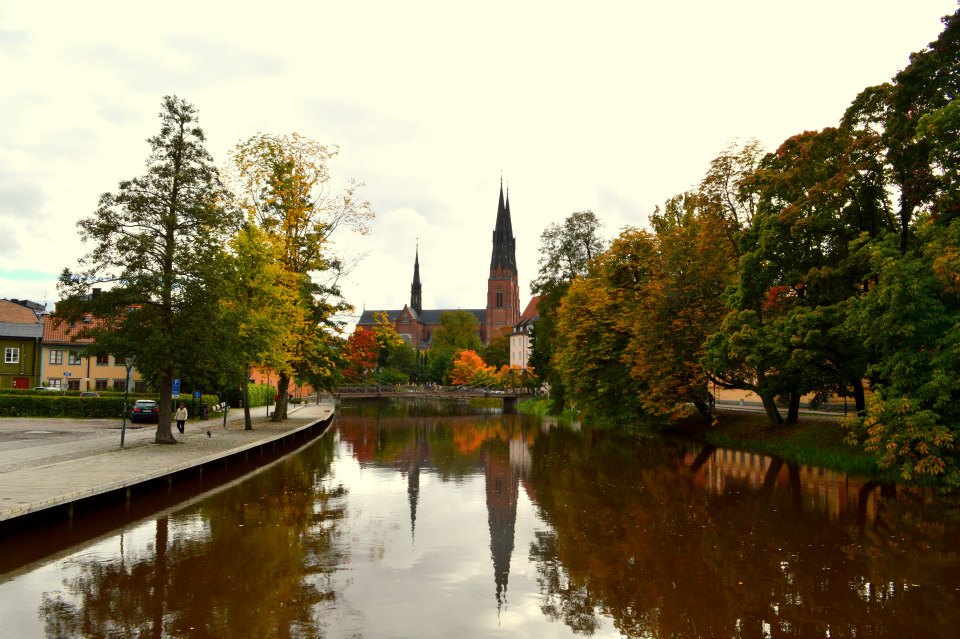
On the bright side – I don’t think Uppsala could look any more beautiful than it does right now. Leaves are changing colors and the whole city looks very majestic in different shades of yellow, orange, and red. I don’t need to do anything more than just look out of my window to enjoy this beauty. When the weather allows and it is not raining (unfortunately , it doesn’t happen all too often here) taking a walk in the forest close to the accommodation area Flogsta (where I live) is very calming and true food for all senses.

Fall in Uppsala, a gorgeous scene of the changing leaves on the trees

Fall in Uppsala

With all the school work, it is not always easy to enjoy Uppsala. Just last week I experienced the Uppsala University education system to its fullest. As I wrote earlier, there are lectures and seminars, and in seminars you are in a group of about 15 students where you discuss specific questions and have tasks to complete. My seminars so far have involved writing papers, preparing a debate and preparing a presentation. This way the students do more work on their own (but professors and lecturers are always available in case one needs help) and get to work on the questions and issues they take interest in. All lecturers encourage group and pair work. I worked on all of my seminar assignments with Izabelle who is a freshman from Stockholm. I really like that I got to work with a Swede since it provided an opportunity to meet someone new, to understand more about Sweden and Swedish culture, possibly learn new Swedish words, and also create a stronger link with someone who can be seen as an insider. I enjoyed working with Izabelle and I feel like we learned a lot from each other. Actually, all of the members of my seminar group are amazing and I got to know them pretty well. Unfortunately, as soon as we became friends (and not just classmates), our course ended (this class was basically an intensive 5 week class where I had classes every day. I wrote about this “one class at the time” system earlier). Not having a class together makes it harder to see people. On Monday I had my exam and it went really well. Uppsala University has a specific building where all the exams are held so it all feels very official. It felt somewhat weird to walk out of that exam and realize that my first Government class is over.

A view of Stockholm from Skansen, a park/zoo that I recently visited in Sweden

A view of Stockholm from Skansen, a zoo/open air museum I recently visited

Classes here are not all about having loads of reading and being stuck in the classroom. My other class, Critical Perspectives on Sustainable Development in Sweden, tries to incorporate the fieldwork in the course as well. A week ago we took a class trip to Skansen, which is a mixture of a zoo and an open air museum in Stockholm. We got to see brown bears, lynx, and many other animals, but we also learned more about sustainability in Sweden throughout its history by visiting small settlements and houses built as examples of how people used to live in different parts of Sweden at different points in history (my group, for instance, had to learn more about Sami). My personal highlight was a visit to a bakery where there was a cook who makes the Knäckebrot the way it was made traditionally. One can watch and then enjoy the delicious Knäckebrot with some salted butter. Yummy!

A brown bear at Skansen, a park/zoo in Sweden

A brown bear at Skansen

Another exciting thing happened recently: I finally managed to meet with Carl-Johan (or CJ as he was known in Richmond), who was an exchange student at UR last year and who was a great support and source of information about Uppsala (in essence, he is the one who made me think about applying to Uppsala Uni in the first place and I am so glad he did since coming here was the best decision ever). We had a nice fika and it was great to talk about Richmond with someone in person (I am the only student from UR here this semester). I really enjoyed meeting him!

Now I’m eager to see what October brings and I am looking forward to my trip to Tallinn at the end of the month! 🙂


The First 5 Days (posted by Jimmy in England)

October 3, 2012

In the words of Marv Levy, the Hall of Fame Buffalo Bills head coach, “Where else would you rather be than right here, right now?” I arrived in Oxford last Thursday and have been in awe ever since. I spent the first two nights living in a hostel (Central Backpackers) ten minutes from the center of the city. If you have never stayed in a hostel before, I highly suggest it. Being an American college student, I feel like I was ignorant to the way in which many people live. In the hostel, I met people from many different walks of life. I was only there for 48 hours, but I met people from Spain (southern and Basque regions), Norway, Germany, Greece, Columbia, China, Sweden, Mexico, India and Australia. Even though there were many different world views, we all shared one common interest. Whether we were studying at a university or traveling city to city to find jobs, we were all working towards what we thought would bring us happiness. After my two day stay in the hostel, I was able to move into my dorm in the city of Oxford. For those of you that do not know, Oxford is a mid-sized city with a population of more than 150,000. There are many shops, restaurants, and cafes that I plan on visiting during my stay. My room is located in Jesus College in the center of the city.

Second quad at Jesus College, Oxford University

Everybody in Oxford has been incredibly friendly. When I arrived a few days early, I was invited to attend two afternoon cream teas for postgraduate students. (Oxford runs on a trimester schedule. Trimesters run from 0th week-9th week. Last week was -1st week and this week is 0th week. Postgrads arrive in -1st week while undergraduates and exchange students arrive in 0th week. Classes start in 1st week. It’s a little confusing.) These cream teas were part of the postgrad orientation and were a chance for students to meet and listen to prominent speakers. The main speaker was Dr. Andrew Briggs, a professor of nanomaterials at Oxford. His research team is trying to build what is known as a ‘quantum nanocomputer’. I have spent the last few days trying to figure out what it is, but his talk had nothing to do with complex physics. He introduced an idea, one that I have seen is a common theme among the faculty at Oxford. He said, “When you mix the personal desire to learn with an environment like Oxford, magic happens. But the reason that we succeed is due to a combination of work and personal reflection. We spend one day in deep thought over life’s biggest questions. We leave our research labs and ask ‘who am I’ and ‘why does any of this matter’. An Oxford education is not simply about academics, but rather about finding out who you really are.” These cream teas were very helpful in understanding how people succeed at this university.

Being at Oxford has not been entirely about academics. One night I went with another American exchange student to the Turf Tavern. It is a famous pub where Bill Clinton frequently hung out while studying at Oxford. The next night I visited another famous pub called The Bear Inn, which was built in the late 17th century. They are famous for their collection of ties that they collect. Years ago, if you ran out of money at the pub you could cut off the end of your tie in exchange for a drink. The tradition became famous and the collection is still growing.

Tie collection at The Bear Inn

These last five days have helped me adjust to English life. I feel fully prepared to immerse myself in all that this city has to offer over the course of the next year. Today I start orientation. I will keep you all updated. Until next time, keep being great!

When the world knocks at your front door, clutch the knob tightly, open on up, and run forward and far into its widespread greeting arms with you hands outstretched before you. Fingertips trembling, though they may be.- Anis Mojgani


First Week of Classes, Culture Night and the Reccereception (posted by Indira in Sweden)

September 14, 2012

It seems like the semester (which ironically in Swedish actually means vacation) has officially started.

The first week of classes is over and I have to admit that it was a long week. At first I was really surprised by how the teaching system here operates in a completely different way than back at UR. Here, everyone usually takes one class at the time – basically you take one class for 5 weeks and you have that class every day – which means that you focus on only one field/area at a time. I think this is rather good approach. Right now I am taking two classes simultaneously (which is also one of the options), one in the Department of Government and the other in the Department of Sustainable Development. The way these classes run is very different. My Government class is very informal, and classes (lectures and seminars) are not mandatory, while the final exam is mandatory (of course!). There are lectures where we have about 50 students (mainly Swedish freshmen and exchange students) and seminars where there are about 15 students. During the seminars we discuss the class material, while during the lectures we simply listen to what the professor/lecturer has to say on a topic. My Sustainable Development class, on the other hand, is mandatory, but it is organized in essentially the same way as my other class (lectures and seminars). We also get a new lecturer for each class, so it’s rather dynamic and you learn from the experts in specific fields. In the beginning I was truly confused by this system, but now I understand it better. 🙂

After my last class on Friday I had a Reccereception. As a member of the Värmlands Nation I signed up for the Reccereception and Reccegaque which are basically a semi-formal and a formal dinner that help the new members (recce) get acquainted with the Nation.

Värmlands Nation's Big House in Uppsala

Värmlands Nation’s Big House


During the Reccereception we had a guided tour of the Nation houses and then we had a dinner. Dinner was more of a lesson for all of us newbies on how to act during the real formal Reccegasque. We learned about drinking snaps and singing songs (we even got special Songbooks so we can sing along with the Songmaster). I would say that the Reccereception was a real success and I had a lot of fun.

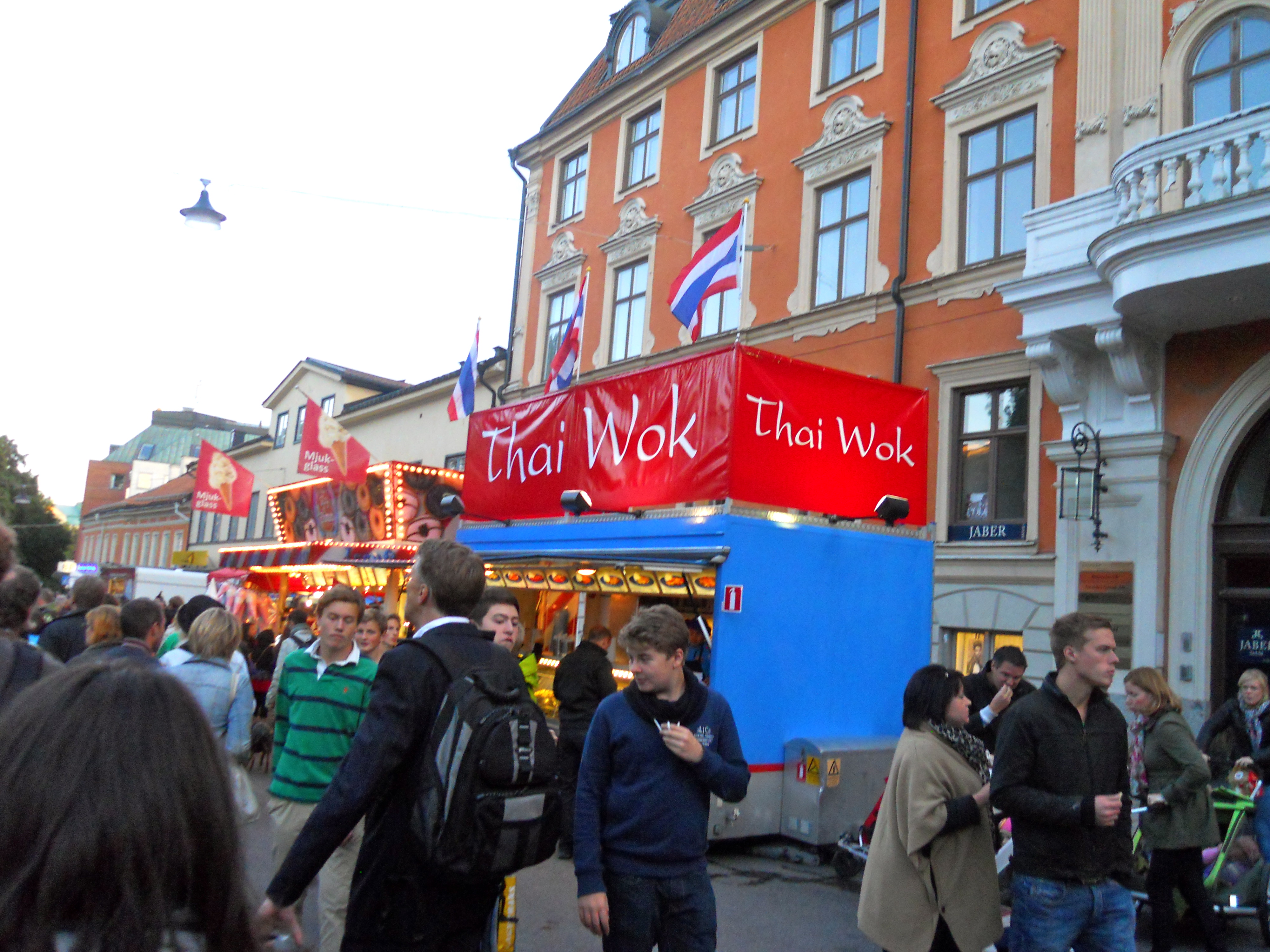
Crowded streets of Uppsala during the Culture Night in Sweden

Crowded streets of Uppsala during the Culture Night

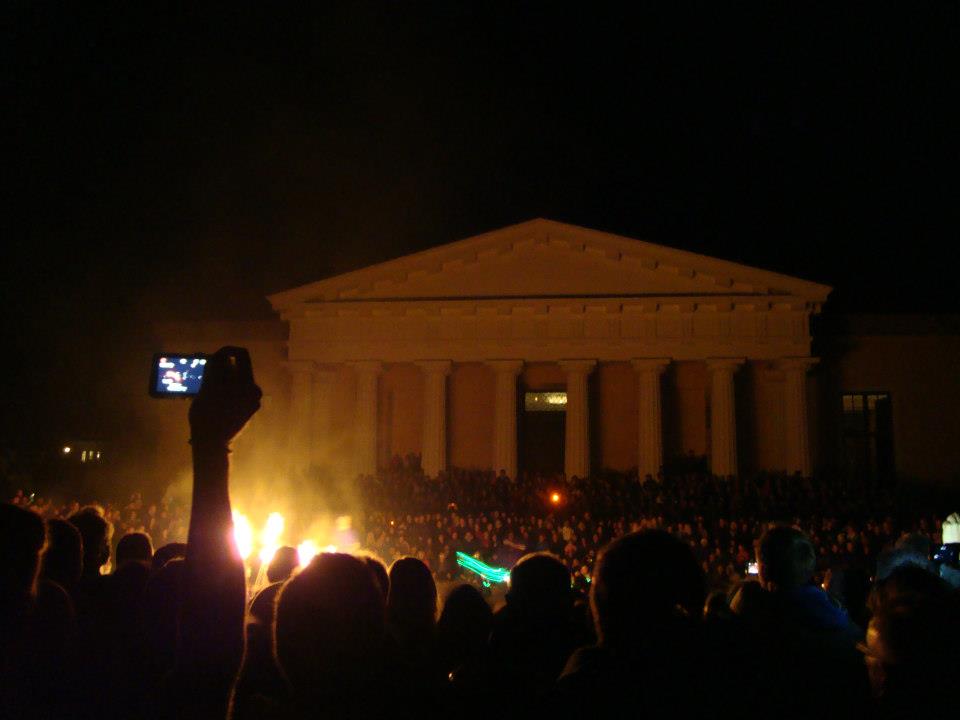
Last week there was also the Culture Night here in Uppsala. All museums had free entrance and were open during the night. There were also a lot of various cultural events across town. It is very interesting to see how so many different cultures come together in such a small city like Uppsala. The streets were very crowded and everyone attended at least one event. My favorite part was the fire display. There were fire dancers who showed us their most mystical moves and kept us warm during the cold night. If you are ever in Uppsala during the Culture Night – make sure you take part in it, it is definitely worth it!

Fire Display at the Botaniska trädgården, at a cultural fair in Uppsala, Sweden

Fire Display at the Botaniska trädgården

Right now I am looking forward to the Reccegasque! I am sure it will be a blast 🙂


Lively Uppsala: Orientation Week, Nollning, Värmlands and Aurora Borealis (posted by Indira in Sweden)

September 7, 2012

Just as I was walking to my class yesterday I noticed that the streets of Uppsala have never looked so lively. Beautiful sunny day (a rarity here nowadays), a lot of people (mainly students) on the streets, and all the different languages spoken in every corner – summarize the 5 minute walk I took from the Cathedral to the Department of Government. I was used to a calm and peaceful Uppsala and familiar faces everywhere. Well, I guess this makes it official – summer break is over and school just started!

Orientation Week was so much fun! The International Office, Student Nations and the Student Union put so much effort into making the past week as amusing as possible. Club nights, games in the park, barbecues and a crash course in “the Swedish” helped us all learn more about Sweden, but also bond with other exchange and international students. The official welcome reception held in the University Main Building was possibly the most breathtaking part of the Orientation. In the most amazing hall I’ve been to, the University’s vice chancellor, the City of Uppsala Mayor and other representatives welcomed 740 exchange and 400 international master students. One was truly able to see how majestic Sweden is!

Unfortunately, there is always something that can (slightly) ruin things, and in Sweden it’s usually the weather. Constant rain and relatively cold weather (55F) did their part and many of the exchange students got sick (including myself); but that is also a reason for more socializing. Forget about being in bed all sick, in Sweden we do ‘sick fika’ (usually coffee or tea with a cinnamon bun). I can’t help but notice that Sweden is a country where so much energy is focused on creating a cozy and warm atmosphere. I guess that is the best way to fight off the winter and darkness. 🙂

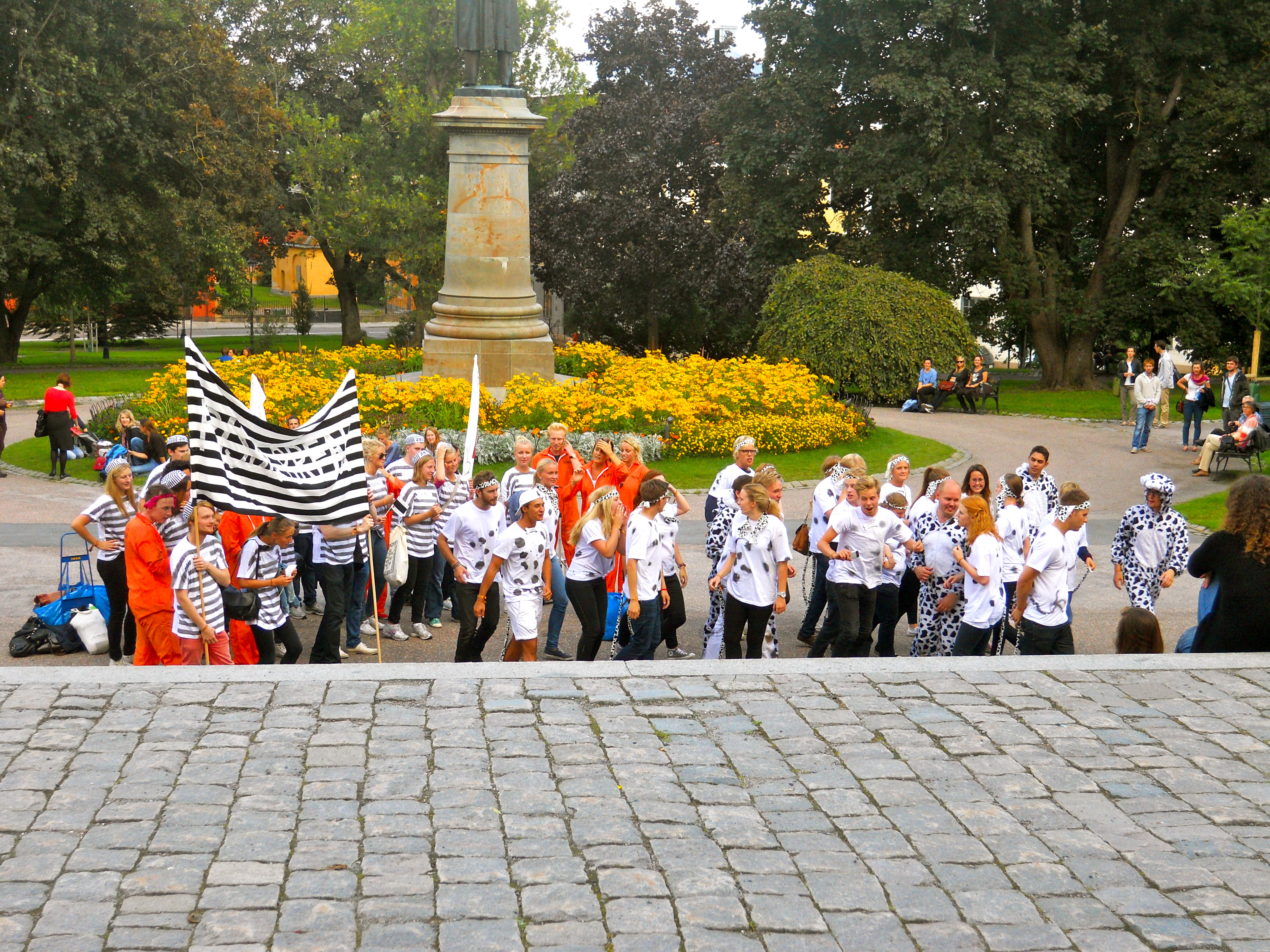
Last week was not only Orientation Week for the international students, Swedish freshmen also had a lot of fun. As far as I understood it, there is some sort of a ritual called ‘nollning’ (roughly translated it means zeroing) where each department at the University has a theme and all the people who participate in nollning wear costumes, sing and make music around the town. It is actually quite stunning to see how good their dance moves and chanting are. The funniest thing, of course, was their costumes. I had a chance to see the Middle Ages, Dalmatians, Super Mario, Prison Break and Lightning groups.

Nollning, essentially Freshman orientation

Nollning

I also completed another important ritual or task of becoming an Uppsala University student: I finally joined a student nation. My choice was Värmlands Nation because they have an amazing restaurant, cozy library, great Friday club and all the members I met are amazing and so helpful. This week we will have Reccereception (reception for all the new members) and next week we will have formal dinner – Reccegasque. I am looking forward to both of those!

Official School Welcome Reception as part of orientation

Official Welcome Reception

And that is not the end of the past week’s adventures in Uppsala – the most amazing thing happened last night! We were very lucky to see the Northern Lights here in Uppsala. Clear skies and time spent outdoors around midnight were more than helpful in seeing this beautiful phenomenon. After about 30 minutes we could no longer see the light. Hopefully we will have more clear skies at night soon (September is a perfect month for spotting Aurora Borealis).

Aurora Borealis (the Northern Lights)

Aurora Borealis

I am excited to see what new adventures await in Uppsala!


Week 2: Little Steps (posted by Kati In Spain)

September 4, 2012

This week has been focused on the administrative details of moving to Spain and matriculating in a university that has procedures and customs that are very different from those that I am used to. It has been a long week of ups and downs, and although Monday was a rocky start, Sunday was a perfect finish.

Ninety days before leaving for Spain I applied for a yearlong student visa via the Boston Spanish Consulate, following their directions to a T. After eight weeks of waiting, I was told that the Consulate is no longer permitted to grant yearlong student visas and that I would have to apply for residency at the local police station within thirty days of arriving in Spain, or else I would be deported. I waited a week after arriving to begin my residency application, as the director of my orientation program, the person I was told to ask for help, was on vacation until Monday. First thing Monday morning I went to the Cursos Internacionales Office to ask Carmen for guidance. She patiently explained to me her understanding of the application process, and she gave me directions to the police station. Colleen, my unconditionally supportive roommate, accompanied me.

By the time we arrived at the station it was one o’clock in the afternoon, and after being loudly hissed at and thoroughly evaluated by the male officers standing outside of the station, we were told that we would not be helped today and that we must come back early tomorrow. Feeling slightly dispirited, we continued with Carmen’s directions and made our way to the University’s International Relations Office, where my thoroughly confused advisor told me that I must have done something quite wrong on my original visa application and that I needed to fly to Madrid to speak with the U.S. embassy and bring her a written explanation as to why I did not have the correct visa. Thankfully, Michele Cox, the head of Richmond’s Study Abroad Office, was able to help me determine the best course of action, and so I returned to the police station early Tuesday morning.

My experience on Tuesday was much better than the treatment I received on Monday. The man who helped me sported a grey Canada T-shirt, jeans, and sneakers, and upon realizing that I hail from Boston, he immediately started talking about the Celtics, the Red Sox, and thick Boston accents. He gently told me that my application was not complete because I did not have my permanent Spanish address yet, that I needed additional photos, and that he had to add me to a deportation watch list until we could proceed with my application. Wednesday saw me back at the International Relations Office begging for my final address, and Thursday saw me modeling for an overly enthusiastic photographer as she snapped visa headshots from every angle possible. Finally, on Friday, I returned to the police station armed with a folder of paperwork and pictures, and Sarah, a USC graduate, accompanied me to help smooth the process. The same kind man helped me again, and after waiting in line, filling out more forms, traveling to the bank for a money order, waiting in line again, and finally being seen, I was told that I could return to the station in forty days to retrieve my extended visa. Halleluiah!

Despite missing several hours of class to deal with my visa, I successfully graduated from the Cursos Internacionales intensive immersion program on Friday. It feels strange that I will not be in class with my wonderful professor Juan or my new friends again! Although my grammar did not improve very much through the course, my speaking ability and my knowledge of Spanish culture and daily life improved at lot, and I am so glad that I took the class. On Wednesday I took a placement test for another intensive immersion course that begins in October, and I have high expectations for my experience!

Also dotted throughout this week have been preparations for class registration. Class registration for international students is an arduous process that is not well understood by anyone and is confusing for everyone. As with any university, the student peruses the rich course catalog and creates a list of classes that are of interest to her and fit with her major areas of study. She then emails and receives an almost immediate response from the heads of each relevant University of Richmond department to make sure that she will be able to transfer credit from the classes she is interested in back to Richmond. The student spends a few hours arranging various possible schedules with different combinations of the classes that she might like to take, and then she pursues a meeting with her academic coordinator at the University of Santiago de Compostela.

But this is where it gets tricky: international students are not assigned an academic coordinator. The student must select a home faculty even though she is taking courses across various faculties, ask the International Relations Office staff to craft her a new acceptance letter so that professors will allow her to take classes in multiple faculties, email the faculty secretaries repeatedly over the course of a week until she finally gets a response, schedule an appointment with the coordinator of each faculty, trek all over the city for appointments with each coordinator, and then beg each coordinator to answer her questions about class schedules, the language of instruction, final exams, and the class registration process, which is different for every faculty and not at all self-explanatory. Finally, with signed learning contracts, final acceptance letters, and certificates of matriculation, the student may finally register for her classes, receive a student ID card, and gain access to the Internet in the dormitory. Needless to say, I cannot wait to be done with this process and registered for the classes that I am so excited to take!

Keeping me well fed and sane as I wade my way though these processes is Pepita, my incredible host mother. Every day has begun with a piping hot cup of English tea, toast, various yogurts, and fruit, and every evening has concluded with an overwhelming amount of delicious food and an hour or two of Spanish TV game shows. After receiving my final address and dorm room number on Wednesday, Colleen and I wandered over to the residence hall to see if we could see our rooms. Unfortunately, my room was occupied by a summer student, but after much negotiating and pleading, the man behind the desk finally agreed to show us a room. We have certainly been spoiled by the wonderful dorms at Richmond, and the stark nature of these rooms made that clear. After much deliberation and conversations with all parties involved, Colleen and I asked if it would be possible for us to remain with Pepita for the rest of the semester. Sadly, after some tense last minute negotiating, it was determined that we have to relocate to the dorm or lose all of our housing deposit. We will really miss Pepita, her grandchildren, and her wonderful cooking and caring smiles, but upon hearing the news she made us promise to visit her, and as she hugged us and patted our backs she told us that we are always welcome in her home. Even though it is sad to leave Pepita, I know that we will have an equally beneficial cultural experience by living in the dorms and by participating in the many clubs, sports programs, and social events that are planned through the residence halls, and I am looking forward to meeting even more people my age!

One of the social resources Colleen and I have taken advantage of is the ERASMUS program. ERASMUS is a student-run social and academic resource for exchange students at universities across Europe. By joining ERASMUS Colleen and I have gained access to uniquely discounted trips to important places around Spain, specially organized group outings for tapas around the city, tours of Santiago in both English and Spanish, and to the buddy program, which has partnered us with a current USC student who will help us navigate the university and the city and answer any questions we might have. Plus we get a fancy ID card…how could we pass up that opportunity?

Saturday at the food market in Santiago, fruits and vegetables

Saturday at the food market in Santiago

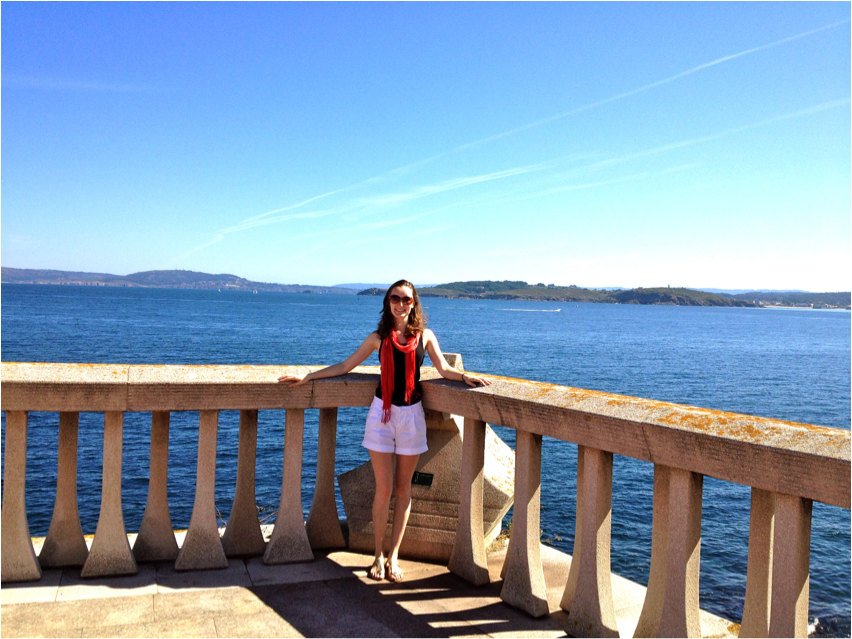
On Saturday we spent the morning at an amazing open-air food market in Santiago, and we concluded our week with a perfectly lazy day on a beautiful beach in A Coruña, a city located a short train ride north of Santiago. We spent the morning walking along the port and the city coast from the train station to the Plaza de Maria Pita observing the gorgeous architecture and the beautiful coast. We ate lunch at a little Mexican restaurant that was the best bang for your buck in town, and the owner was so excited to have Americans in his restaurant because he believed that we could better identify with his experiences with violence and the drug trafficking in Mexico than could the Spanish. After lunch we continued on to the Tower of Hercules. The Ancient Romans built the tower almost 2000 years ago, and it is one of the oldest lighthouses in the world.

A picture at the A Coruña coast, a gorgeous view of the sea

Kati at the A Coruña coast

From the base of the tower we got an incredible view of the city and the coast, and then we continued on to a lovely little beach that is obviously a favorite of the locals. After a few hours of relaxing in the sand, refreshing ourselves in the water, and catching up on some sleep we wandered over to a little ice cream shop before catching the bus back to the train station. We all tried turrón ice cream, which tastes like almondy burnt sugar ice cream – so delicious! A sunny day with friends, ice cream, and ocean water was the perfect anecdote to a hectic week.

A perfect Sunday at the beach in Spain

A perfect Sunday

Quote of the Week: “Finish each day and be done with it. You have done what you could. Some blunders and absurdities have crept in; forget them as soon as you can. Tomorrow is a new day and you shall begin it serenely and with too high a spirit to be encumbered with your old nonsense.” ~ Ralph Waldo Emerson


Uppsala, we love you! (posted by Indira in Sweden)

August 14, 2012

I can’t believe that another week of classes, fun and sightseeing is over. We are all always very busy and have barely any free time, so it feels unbelievable to me when I have to sit down and reflect on the past week.

First of all, my Swedish is getting better. I was so proud of myself when I went grocery shopping and managed to talk to the cashier in Swedish! I really feel that the past two weeks of intensive Swedish classes are starting to pay off: I can watch Swedish TV programs or listen to people talk and I’m able to understand a bit (hey, it’s a progress!). It really is a great feeling! After only two weeks of classes, I’m able to say that there are some fundamental differences in the teaching systems here and at UR. Here everything (by everything I mean the final grade) depends solely on your final exam and attendance (you can’t miss more than 15% of classes), while homework and class participation contribute only in a way that you don’t really have to review the class material per se. Otherwise, I feel that we are all a bit more independent here in Uppsala. This applies not only to the classes, but to the other activities as well.

It is us, the students, who organize events, picnics, parties and trips. The school as an institution is far less present, which is probably a result of the fact that Uppsala University does not have a campus that is similar to the UR one – it is spread all across the city and there is less isolation. The entire city is the campus (Uppsala is traditionally known as a university city) and yet the city is a place you don’t necessarily have to relate to the University.

It might sound like an almost dysfunctional system where students are not connected at all, but I feel that this level of independence makes us bond more both among our exchange group and with local students. Meeting every morning to ride bikes to school together, picnics that gather both international and Swedish students, and fika (drinking coffee/tee/hot chocolate with some pastry or cake) in the multiple cafes around Uppsala allow us to make friends on few different levels.

rooftop BBQ

Rooftop BBQ with friends

I find it also interesting that I meet new exchange students every day! Today, for example, we went on a tour to Stockholm and I met few new people. We always get a chance to experience Sweden from a highly international perspective due to our diversity.

And Stockholm is an amazing city! The royal palace, architecture, difference between the north and the south part of the city, museums, as well as the countless cozy cafes are all welcoming and make one fall in love with the Swedish capital instantly. Stockholm is definitely a place I plan to go back to (that won’t be hard since it’s only a 45 minute drive away from Uppsala).

Stockholm

Stockholm

So far my time here has been better than I could have ever dreamed of. I did have my fears about the new environment, people and system, but it is all working out exceptionally well. Every new day is a new adventure that makes me feel more at home and more attached to Uppsala.

I’m off to do my Swedish homework and tomorrow is the Swedish food festival. Definitely looking forward to tasting some typical Swedish dishes.