The Classroom Culture

March 12, 2012

After two and a half months of studying abroad in Thailand, it seems fitting to actually blog about the studying part of this experience.  The much-discussed stereotype about studying abroad is that the classes will be easy and there will be no work.  Well, clearly those students did not study at Thammasat in the BBA program. There is definitely work, and classes are not at all something you can blow off…it will eventually catch up with you.  So here are four of the most notable differences between University of Richmond courses and Thammsat BBA courses (Disclaimer: the academic faculties at Thammasat are very different from one another, so this blog post only applies to the BBA program).

1.  Unlike Richmond, there is not much day-to-day homework at Thammasat, but classes are very much oriented around case studies and group projects. While I don’t have to worry about day to day homework in each class, there is always a group project meeting that I have to attend – and this has been the case since the first day of school, not just something that has crept up at the end of the semester.  While sometimes the group projects are overwhelming, doing case-based learning is extremely helpful for applying what we are learning in class and understanding “real-world” examples.

2. Attendance is extremely serious.  The rule is that if you miss more than 30% of a class, then you are not eligible to take the midterm or the final.  Because all of my classes are three hours long, I am allowed to miss three classes throughout the whole semester – which seems like a lot, but when I’d love to be traveling around Southeast Asia most weekends, those missed classes can add up quite quickly.  During the first fifteen minutes of each class, a few BBA administrators sit in the hallways, each assigned to watch over one clipboard as students sign in for their respective courses. Students are required to sign in wearing a full uniform — otherwise, they are considered absent.

3.  Regarding class format, most professors use the typical PowerPoint lecture model.  I learned very quickly that Thais love PowerPoint.  In the US, it is sometimes encouraged for students to ditch PowerPoint and find a more creative way to prepare a presentation, but here it is mandatory to use PowerPoint for presentations.  I have to say, though, the presentations that Thai students create are incredible, and much more creative than anything I have ever done with PowerPoint.

4. Classroom culture.  This has been one of the biggest paradoxes of my time in Thailand.  I have remarked in previous posts about how Thai people are so respectful, and how they value hierarchy and respect their elders and teachers.  Yet the actions of the students in classes do not seem to fully reflect these values.  Students talk throughout the class, they constantly text on their phones (above their desks, in plain sight!) Some even take calls and just stick their heads under the desks while on the phone. Most students are constantly checking their email or Facebook on their iPads or laptops.  Some will leave classes in small groups and come back with Starbucks or other drinks in hand.  And throughout class, there are students continuously walking in and out of the room to print something, get a snack, or take a phone call.  I have had only one professor actually address this behavior in class, on one occasion.  I would never be comfortable acting so informally in a class at Richmond, and professors at UR strongly discourage this behavior.  Certainly an interesting nuance of classroom culture compared to Thai culture in general.

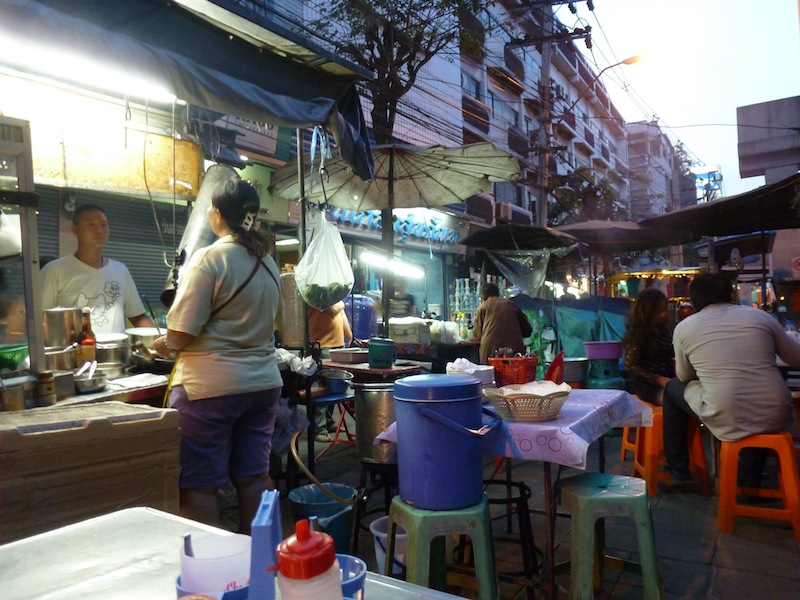
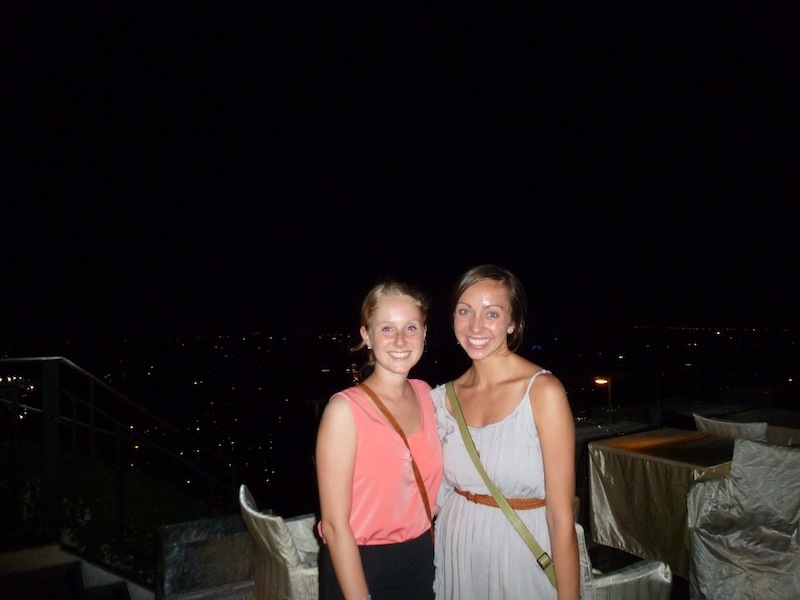
Note: I don’t have any pictures relating to this blog, but enjoy some of the pictures from around the city these past few weeks.

Jerusalem: Steeped in Faith

March 12, 2012

On the 26th of February, I went on the  International School’s tour of Jerusalem.  It was the longest touring day of my entire life.  Leaving campus at 6:30 A.M, we had a beautiful two hour drive through farmland, small cities, and the Judean Hills to Jerusalem.  Approaching Jerusalem, it was hard to believe I was actually going to see the city that has existed for centuries in the imaginations of Jews, Christians, and Muslims as a city of great holiness and significance to their faith.  Jerusalem is the object of songs, poetry, paintings, and religious longing for so many throughout the world, and I now had an opportunity to experience it for myself.

Somehow, though, the reality is quite different from the idealized images and feelings many have come to associate with Jerusalem.  The tension is almost tangible, and as we visited King David’s tomb, the site of Jesus’ Last Supper (a former church that has now been turned into a mosque), the Western Wall, and the Church of the Holy Sepulchre, I realized the extent to which the people and faiths of Jerusalem live intertwined with each other, yet are distanced by the conflict and perpetual state of unsettled feelings between the varied groups within the city.  Jerusalem is a mixture of so many different people, with such widely varied backgrounds.  Israeli soldiers carrying guns walk through the streets across from Catholic nuns in their habits, and groups of American tourists with their huge cameras and enthusiastic tour guides make their way through the vibrant, lively Arab market.  I was struck by how you can often tell what group someone is affiliated with by their clothes or head coverings – Orthodox Jewish married women wear a different head covering than the hijab of Muslim women, and Hassidic Jews in their tall black hats stand out from the other Jewish men wearing kippahs, or smaller head coverings.  The clothes they wear identify the differences they have with each other, making the religious and cultural divisions within the city physically apparent.

In both my Biblical Theology and Literature of the Shoah (Hebrew word referring to the Holocaust) classes, we have discussed the idea of memory, and how it influences and shapes people and nations.  Reflecting back on my time in Jerusalem, I realize that national memory is one of the factors that make Jerusalem so important.  Jews pray at the Western Wall because it is a tangible piece of their national memory. The Wall is all that remains after the destruction of the Second Temple, but it stands as a symbol of what they have survived as a people.  Jerusalem is full of symbols, from the Dome of the Rock standing on the site of Mohammed’s Night Journey as recounted in Muslim tradition, to the Mount of Olives, turned white by the graves of Jews awaiting the Messiah’s arrival.  Made up of physical locations that past events or promises for the future have made crucially important to so many, it is no wonder Jerusalem is one of the most fought over places on earth, historically and today.

Sometime before this semester ends, I want to visit Jerusalem again, but this time to take it slower, letting the experience sink in more deeply.  I need a fuller picture in order to begin to understand the city.  There was a lot I didn’t see, and a lot I need to see again before I can begin to process the full significance of what Jerusalem stands for.


A Different Side of Bangkok

March 2, 2012

For the first time in weeks, I did not travel this past weekend.  Granted, it was because I had a huge group presentation and midterms to study for, but still, it was quite an event.  Sadly, studying took up most of the weekend, and there was a lot of studying required, because, truth be told, I have not been great at keeping up with school work here. With it being 96 degrees every day, so many places to visit, and so many delicious types of food to discover, it sort of feels like I am on summer vacation.  It’s just so difficult to concentrate with so many fun things to do.  So to have midterms now is like having exams in the middle of summer vacation… which is not easy.

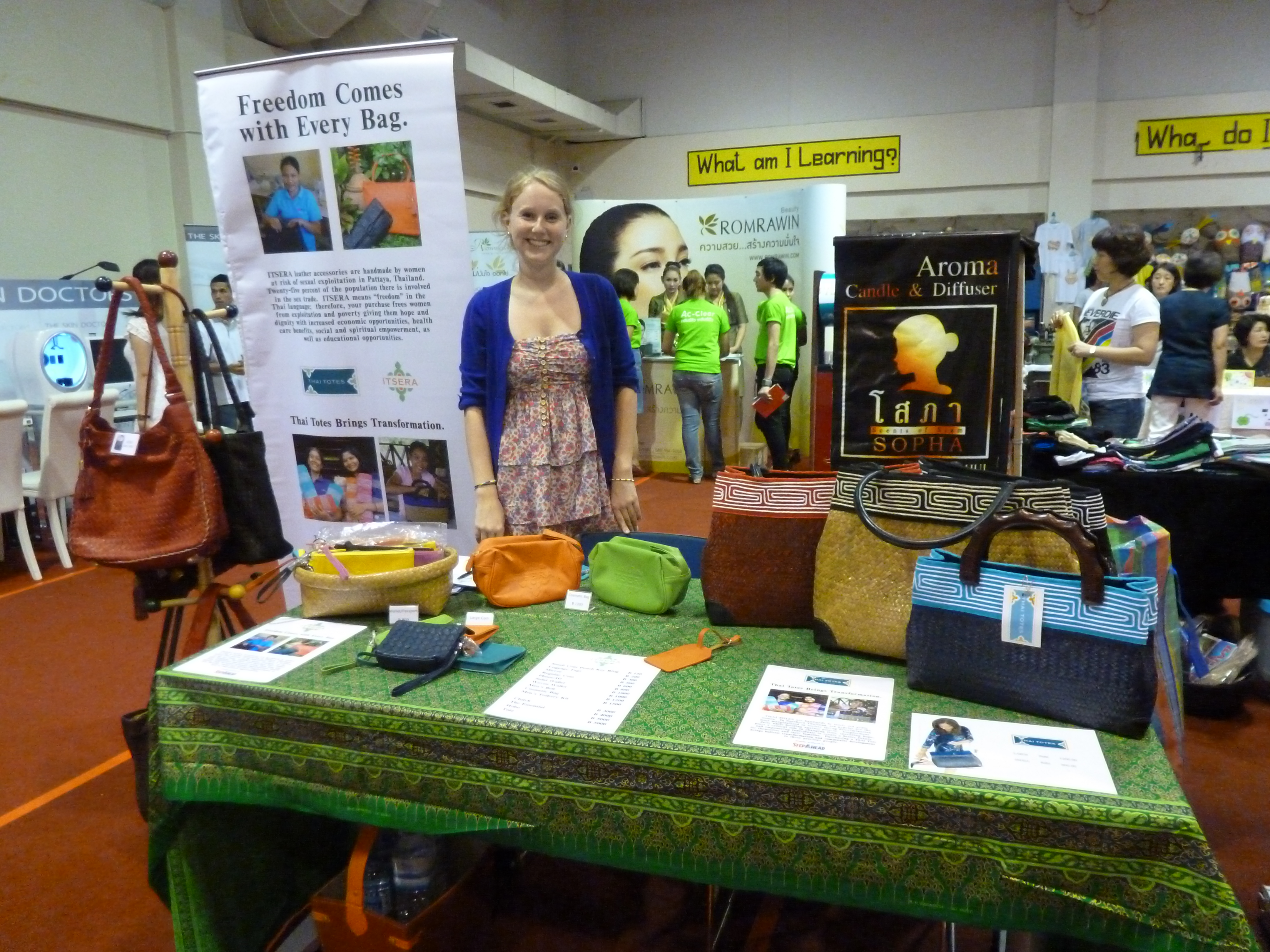
Nonetheless, I spent Saturday at an event for my internship. I am interning part-time with Step Ahead, a fantastic NGO headquartered here in Bangkok.  Step Ahead was founded by John and Kim Quinley, whose daughter, Carter Quinley, graduated from Richmond this past May.  Step Ahead is a community development organization that works all over Thailand with various populations.  One of their projects is a “Purse Project” that works with women in Pattaya, Thailand.  One in four people living in Pattaya are involved in the sex industry, so this purse project aims at prevention: to prevent poor women from being sexually exploited by giving them an alternative way to make a stable living by making these leather purses.  The products are beautiful — the link to the website is stepahead.myshopify.com.

As part of this internship, my roommate and I went to the International School of Bangkok for a Food Fair event to sell these Itsera bags; the event revolved around a huge room filled with large stands representing the nationalities of  students at ISB, each serving their own traditional food.  So, for example, at the “Israel” stand they were serving falafel, and at the “American” stand, there were delicious brownies, cookies, and apple pie.  Next to this large room was a smaller room where we were selling our bags along with other vendors.

All in all, this was quite a different side of Thailand.  Addie and I live in a very local Thai neighborhood, so we don’t see foreigners on our side of the river often.  ISB, however, is located in a planned community (there is literally a sign at the entrance gates that say “Planned Community”).  It’s like magic; as soon as you pass the guards and drive through the gates you are literally in what looks like an American suburb. There are clusters of gorgeous houses that all surround their own pools; there is a country club, a shopping center, and – get this – golf carts.  The residents get around the enclosed neighborhood (which includes the international school) in golf carts.  Literally, the outside of the school is lined with golf carts belonging to residents. I attended an international school when I lived in Holland when I was younger so this was a bit nostalgic, remembering a similar event we held at my school, overflowing with nationalities from around the world.  But, my goodness, this was also reminiscent of the Stepford Wives.  Nonetheless, I am extremely grateful to be able to experience so many different sides of life in this wonderful city.


Have you bought a costume yet?!?

February 27, 2012

For approximately two weeks leading up to Sunday, February 19th, this is the question I was repeatedly asked.  Sunday the 19th through Tuesday the 21st marked the official dates of the Carnival (or Carnaval — I’m still not sure which is the correct spelling, since I’ve seen them both used interchangeably) before Ash Wednesday.

Here’s what I knew about Carnival before it started:

1. Basically everyone dresses up in some kind of costume, whether it’s just a mask or a full-blown outfit.

2. Carnival is celebrated most in the southern part of The Netherlands, which is where I’m located.

3. Because of this, classes would be cancelled for one week in order to celebrate.

Going into Carnival with this knowledge did not fully prepare me for what I like to call the “Carnival Experience”.  When I first arrived to the Vrijthof, which is the heart of Maastricht– and also where the main festivities were going to be taking place– I was confused.  Although there were people there, and they were in costume, the Vrijthof seemed fairly empty compared to what I was expecting.  It seemed like people were constantly saying that this was such a big deal, yet it wasn’t much more crowded than it would be on a normal weekend.

While we were waiting for the parade to come, there were sporadic hailstorms, and then, in the blink of an eye, the Vrijthof was extremely crowded!  Allow me to put it in perspective for you.  A street that would normally take about one or two minutes to walk down took 10-15 minutes.  This part of the experience is what I’d like to call organized chaos.  Everyone was having a good time and trying to get to their next destination within the Vrijthof, but it could have been perceived as chaotic from someone who was completely unprepared.  My friends and I, however, did what the locals were doing; made a little train by putting our hands on each others’ shoulders and moved through the crowd.

Below is a picture where you can see some people in costume unsheltered during the first hailstorm.

The parade arrived just as the last hailstorm took its leave.  There were bands and of course everyone was wearing a unique costume!  The parade was interactive; the people on the floats saying “hip hip!” and the crowd responding “hooray!” (all in Dutch of course).  My friends and I had a really nice time.

After the parade was over, it was time for food!  One of my friends and I decided to be brave and try Herring, which historically was the traditional food eaten on Ash Wednesday.  Even though it wasn’t Ash Wednesday, we ate it anyway.

This fish was probably the largest piece of fish served to one person that I’d ever seen in my entire life, and it was absolutely amazing! The picture doesn’t do it justice, but it really was a large piece of fish.  After we were fed, it was time to explore and see the costumes.  The Carnival colors for Maastricht (located in the southern province of Limburg) are green, yellow, and red, so that tended to be a common color scheme, especially amongst the older generations.  I was one of the exceptions.  I realized that I may not have the opportunity to experience Carnival again, so I decided to “dress-up” with some of Limburg’s colors.

I bought a cheap purple costume dress, because purple is my favorite color, and accessorized with Limburg’s Carnival colors!  I was surprised to get so many compliments; I felt Dutch 🙂  As the day went on, more and more people kept showing up, including people of all ages (including little children whose parents had dressed them and/or their strollers up in order to celebrate).  As I mentioned earlier, Carnival is a three-day event, and people did not stop wearing costumes and celebrating at any point during those three days.  It was quite impressive that it was still going strong on day three!  I suppose when you plan and wait for months for Carnival, you’re going to enjoy every minute of it.


The Temples of Angkor Wat: Cambodia

February 24, 2012

This weekend, I took my first international trip to one of Thailand’s neighbors, Cambodia.  Specifically, we went to Siem Reap, which is the center for all of the tourism surrounding Cambodia’s famous Angkor Wat.  The journey to get there is not exactly quick; it began with a four-hour minivan ride to the Cambodian border, then about one hour spent actually crossing the border, an hour spent waiting at the bus station, a two-hour minivan ride to Siem Reap, and then a 20-minute tuk tuk ride to our hostel.  All in all, about a ten-hour journey door to door.  We arrived in Siem Reap Saturday afternoon and left early Monday afternoon – it may seem crazy to some of you to travel to Cambodia for such a short time, but a) with the very strict attendance policy at Thammasat it is the only way I can travel, and b) we really felt we did not need any more time in Siem Reap.  So here are the notable highlights:

1) Cambodia is not Thailand.  It may seem obvious, yes, but I have always had a magical view of Southeast Asian countries – friendly, smiling people always willing to help you, greenery everywhere, rice fields lining both sides of the road.  I assumed that the hospitality and kindness that are normal in Thailand would also be present in Cambodia.  But from the second that we stamped out of Thailand and started the visa/entry process into Cambodia we immediately noticed a change in atmosphere.  The guards at the border were not friendly whatsoever, and immediately after officially entering Cambodia we were overwhelmed by men trying to get us to go into their taxi, or in their minivan to Siem Reap.  We have very much become accustomed to Thai courtesy and friendliness; in Thailand I never have to worry about being scammed.  But Cambodia is known for its scams, particularly at the border, so we had to be extremely cautious.  There is even a “fake” border that has been set up.  Literally, a building was built complete with guards, and signs, and visas.  They bribe tuktuk and minivan drivers to bring tourists to the fake border, who then pay a lot of money for what may or may not be a valid visa.

2) Siem Reap is essentially the main city where tourists go in order to see Angkor Wat and the surrounding temples.  The city provides a stark contrast between wealth and poverty – while there are five-star hotels lining both sides of the streets, between those manicured lawns and marble entryways are dirt roads filled with children, running around begging tourists for money.  It was a surprising and uncomfortable reality.  Despite the hotels everywhere, we opted for a much more modest accommodation in a fantastic hostel near the old town, for only $3 USD per night.  Saturday evening we had traditional Khmer red curry for dinner, which was easily the most delicious curry I have had since landing in Southeast Asia.

3) The temples.  The temples of Angkor Wat are located about a 20-30min tuktuk ride from Siem Reap.  The area surrounding the temples has been well preserved, so instead of endless hotels and restaurants, Ankor Wat is surrounded by beautiful forest.  We hired a tuktuk for the whole day (only $15) and left Siem Reap at 5am to see the sunrise over Angkor Wat.  We were joined by many tourists, but the early start was completely worth it – Angkor Wat is incredible and utterly breathtaking.  It is an expansive structure (only pictures can do it justice) that is considered to be the largest religious structure on earth; some place Angkor Wat in the same category as Machu Picchu and other wonders of the world.  It is this fact that I could not get over.  Construction of the temple was started in the year 1112 by the king of the Khmer empire at the time.  It is thought that he created the Hindu temple, which ended up being changed to a Buddhist temple, in dedication to the Hindu god Vishnu.  It took 37 years to complete. The thing is, in my lifetime, I have visited many castles that immediately strike any visitor by their opulence and grandeur.  For example, the Château de Versailles, in France, created by King Louis XIV, is just ridiculously extravagant.  But Angkor Wat was not created for the purpose of living, it was purely in dedication to a Hindu god.  It is purely religious — that’s just hard to fathom, because it is so big!  Though commoners used it for prayer throughout the year, our tour guide explained that the king usually only visited it once per year.

4) Angkor Wat is not the only temple to see. We also visited Ta Prohm, which is the only temple in the area that has not been protected against the jungle.  It is therefore covered with trees and roots that have wound their way around the ruins.  Fun Fact: Ta Prohm was featured in the film “Tomb Raider.”  We then visited Ta Keo, and Bayon, and ended our day by going back to Angkor Wat and having a guided tour of the temple.  I am definitely glad we spent the $3 for a tour guide, because it is not easy to understand the meaning of the temple without some history and explanation. We spent nine hours, from 5:30 am to 2:30pm on our feet visiting temples.  And it was completely worth it.

All in all, Cambodia was incredible – once I realized that Cambodia has only been out of Civil War since 1998, it became very clear as to why there is such a stark contrast between wealth and poverty in Siem Reap.  Cambodia is very much still recovering from the Khmer Rouge regime, and as of now the country relies heavily on tourism, which is why so much money has been poured into hotels and restaurants in Siem Reap, but nowhere else.  I would have loved one more day to travel the six hours to Phnom Penh, the capital of Cambodia, to learn more about the history of the country as well as to see some of the museums there chronicling Cambodia’s recent history.  But otherwise, by the end of our stay we felt we had seen all there was to see in Siem Reap. I have to say, after a nine-hour trip  back to Bangkok which included one very offensive, drunk Irish man, who didn’t stop talking for our four hour-minivan ride, offended every race and religion represented in the van, swore every other word, smoked in the van, threatened to kill most of us, and almost assaulted one of the guys in our minivan – it certainly felt good to be back “home” in Bangkok!


Botswana, Week 4: The City!

February 24, 2012

I’ve been in Gaborone, Botswana since mid-January, but I’ve only had a chance to explore the city and surrounding area for about 3 weeks. This is mainly due to the fact that we either have to take a taxi, combi, or walk to local areas. However, the weather here is almost always the same (hot and sunny) which means walking is sometimes out of the question.

Most of our shopping centres are located at the local Main Mall, convenient River Walk Mall, and the highly commercialized Game Mall. Game Mall and River Walk Mall have the most options, but are still very similar to any other, smaller mall in Gaborone.  They basically have everything you would find in a local mall back in the States, except with an African touch to it. The Botswana ways and culture are different than American customs. Even customer service, buying items, and viewing items is different. Also, 90% of the items bought in department stores in Botswana come from South Africa.

The Main Mall

River Walk Mall

Game City Mall

In terms of restaurants, we have several here. Nando’s serves delicious wraps, pitas, and salads, etc. It’s equivalent to a sit-down Panera Bread with available wi-fi and they even bring the food to you. Tip: If you ask for french fries, the employees and locals will stare at you for what seems like an eternity. They call it “chips” and they’re just as good as they are in the states!

Nando’s is well known for their international sauces. Be careful when ordering because what we consider “mild” back home is actually very spicy and hot here. Nando’s is also known for hilarious billboards and signs across Africa such as the one below.


Believe it or not, they have KFC here. And yes, it’s delicious. However, the menu is completely different, but the secret recipe is the same and still a “secret,” so they say, even on the African continent. It’s very interesting to see the same KFC logo of Colonel Sanders smiling when walking by local vendors and local businesses as I would see back in Richmond, VA.

Chicken Licken is the equivalent to KFC, but the African version. It’s good food for the great price one would pay for a piece of chicken and chips. Interesting event: KFC sued Chicken Licken and took them to court. KFC claimed that the slogan “Finger Licken Good” resembled Chicken Licken’s company name and confused customers. Needless to say, KFC lost their claim in court.


Belonging

February 24, 2012

In Hebrew, there is no “to be” verb in the present tense.  I studying Hebrew.  Kind of awkward, right?  My brain always wants to stick another word in there, forcing the sentence to comply with my English-centered demands.  I’ve realized I am expecting more than just the language of Israel to fit my idea of what is ‘right’.  I want the washing machines to wash my clothes like they do in the US, I want my salad dressing to taste like it does in the US, I want to just walk in and out of a shop on the street without being hassled by the overbearing shop owner, I want people to wait politely in line at the bus stop instead of always shoving their way to the front. But there is something really amazing about realizing the rest of the world doesn’t do everything exactly like you do.  And when you can get over trying to find the American equivalent for everything, you allow yourself to truly become a part of your host culture.

Last weekend, two friends and I traveled to Sefad, a small, heavily religious city a couple hours by bus from Haifa.  Winter probably isn’t the best time to travel to Sefad — it was cold and rainy most of the time, and it even snowed!  The owner of the hostel we stayed in was really excited about the snow, so it was hard to be annoyed at it for spoiling our plans.  Israel really treasures its water, so I have really tried to have a good attitude about the copious amount of rain we have gotten the past couple of weeks.  Despite the weather, we managed to have a nice, cozy time, except for two hours on Saturday when our power was out due to the rain. Sefad is beautiful, and I was amazed by the height and beauty of the mountains surrounding the city.

When I arrived back in Haifa late Sunday afternoon, just as the sun was setting, I realized how much I have come to love this city.  I feel like I have really become a part of Haifa’s diverse, beautiful community.  I don’t miss UR like I thought I would.  There is so much to discover and accomplish here, both in my language learning ambitions and in growing as a person.  The surreal feeling I have had since arriving here has started to fade, and in its place has grown a sense of belonging and permanence.   For a country whose right to exist is constantly questioned by the international community, and one that seems to stand perpetually on the verge of international conflict, life in Haifa is surprisingly rhythmic and normal.  Falling into that rhythm has been one of the greatest things I have ever experienced.


The Ins and Outs of PBL and UCM

February 20, 2012

Before I begin telling you all about PBL and UCM, I’d like to congratulate everyone who was accepted to study abroad next fall!  For the future UCM students, I’m sure you’ll have a wonderful experience in The Netherlands.  With that being said, I thought this blog might be a good crash course so you know what to expect from the academic environment while you’re studying at UCM.

First thing’s first — UCM’s campus is noticeably smaller than UR.  The following picture helps prove my point:

This is a picture of the one and only building for UCM students.  Although there is a library which can be used by anyone who is a student in any of the faculties of University of Maastricht, this is the main building specifically for UCM students.

This is a picture of the common room.  It is the main place of socialization in the UCM building.  People meet up with each other in this area, wait between classes, have a snack, do homework, have meetings or receptions; it’s basically an all-purpose room.

Now that you have a general idea about the size of UCM, I’ll go into some detail, without overwhelming you, about PBL.  PBL, Problem Based Learning, is exactly what it says it is.  Before classes start, you receive a course manual/handbook for each course you are registered to take.  This manual includes the syllabus, compulsory reading, deadlines, and contact information for your tutor.  Each course generally has one lecture and two tutorials per week.  Both the lectures and the tutorials are two hours each.  Classes are longer at UCM compared to UR, because the semester is divided into two periods followed by a project period.  Each period, you are expected to take two courses and a skills course for Richmond to consider you a full-time student.   A few examples of skills courses are Research Methods, Presentations Skills, or Strategy and Negotiation.

Now that you have an overview of the logistics of how course work at UCM, I’ll tell give you some details about PBL itself.  You begin a lecture with a pre-discussion.  The discussion leader (a student in your tutorial group) will give everyone a few minutes to read a brief synopsis and thought-provoking piece on a topic that’s relevant to your course.  The students discuss it and come up with learning goals.  These learning goals are then used to guide the students’ at-home study session.  The next time the students meet again, they have a post-discussion about the reading and help each other answer the previous learning goals.  Everyone is expected to contribute to the discussion, and the tutorial groups are generally no more than about 8-10 students.

 All of the classrooms are colorful, but I think this is my favorite one.

It may take some getting used to, but overall, I think PBL is an interesting system, especially if you like to do self-study and speak in class.  Once again, I’d like to congratulate those of you going to UCM next semester.  I hope you have a wonderful time!


The Power of The Uniform

February 17, 2012

Here in Bangkok, the uniform that I wear gives me more privileges and attention than I could ever have imagined. Some previous exchange students had warned me about this before coming, but I didn’t fully understand it until I started spending 95% of my time in a uniform. So, here goes uniform 101:

1. Anyone with any excuse to wear a uniform does so. I don’t know why, or where the tradition came from, but it is just the way it is. During my first few weeks in Thailand, I kept seeing pictures and posters of individuals in what looked like military uniforms everywhere. Their uniforms were white and decorated with all sorts of medals and badges. Well, it turns out that they are government workers, and that all government workers wear a uniform. Even bank workers wear a uniform. Each bank has its signature “color,” and their employees (many of them women) all wear what looks like an flight attendant’s uniform.

2. “No Uniform, No Service.” All Thammasat University BBA (business administration) students are required to wear a uniform to all classes. At the BBA counter, there is a sign in English, and then translated into Thai that clearly states “No Uniform, No Service.” And they mean it. I have a friend who went to the counter to ask the BBA staff a question, and they refused her because she was not wearing a uniform.

3. No Uniform, No Attendance. Thammasat has a strict attendance policy – miss three classes and you cannot take the midterm or final exams. If you don’t show up within the first 15 minutes of class, you are counted late, and then another 15 minutes and you are counted absent, no exceptions. The kicker is that if you show up perfectly on time, but are not wearing the proper uniform, you will be counted as absent. No. Exceptions.

4. Thammasat is the Harvard of Thailand. And therefore, wearing the Thammasat uniform speaks volumes. The most crucial components of my uniform include a black skirt, a white short-sleeved collared shirt, official Thammasat pin, and a belt with an official Thammasat buckle. It is these buckles and pins that differentiate a Thammasat student from a student in any other school, as most student also wear a black skirt and white shirt. Here is a photo from the Thammasat website that shows some students in uniform:

The other night, I went straight from school to meet up with some friends on Khao San Road, Bangkok’s official tourist/backpacker/hippie heaven. As I was walking through the streets, everyone was staring at me. The foreigners were staring, seemingly wondering “Who is this white person in a school uniform?!” and the Thais were probably thinking the same thing. I went into a McDonalds to buy a water, and the girls behind the counters were whispering, and all I understood was “Thammasat, Thammasat.” So in Thai I said “Yes, I am a Thammasat student.” They couldn’t believe it.

Most days, if I am walking in my uniform, I hear the people behind me whispering “Thammasat” or the people crossing my path in the other direction staring at my belt with intense eyes, trying to see which school I study at. When and if they are able to figure it out, I hear a chorus of “Ahhhh, Thammasat!” My favorite uniform moment came this evening when I was in a 7-eleven with my roommate, and the employees behind the counter were obnoxiously greeting incoming tourists in Thai, which I’m sure is their way of messing with tourists to make a boring work shift fun. It was hilarious, so we couldn’t help but laugh. Soon, the employees were also laughing, and they quickly noticed my uniform and figured out that I was a Thammasat student. As soon as I confirmed this, they started saying “Ohhhh, Thammasat, Thammasat!!” and each of them reached to shake my hand, meanwhile repeating “Ahh, Thammasat, Thammasat.” I have to say, one of my favorite Thailand moments.


Botswana, Week 3: Protests

February 17, 2012

A couple of weeks ago, there was some tension on campus. The University of Botswana (UB) is working very hard to improve the image, credibility, and stability of the school. However, the actions being taken by the university caused an uprising among students. Although the students that I have spoken with understood the circumstances surrounding the situation, they disagreed upon how to handle it.

Some of the measures UB indicated they would take included:

Close 411:

All of the buildings on campus have a number, unlike at U of R, and most schools in the States, where we name our buildings for other numerous reasons. The bar we have on campus is referred to as “411” and is located only walking distance away.

UB decided that they would consider the closing of 411. The intended date for permanent closure was fall 2012. UB chose to close 411 due to the fact that it caused many problems, such as excess consumption of alcohol, unwanted physical and emotional risks, and constant visitation from outside guests that were not students. Also, unless one orders a soda (known as pop), then he or she will receive a fragile glass bottle with no way of recycling or properly disposing it around campus; trash cans and other forms of waste are still ongoing issues in most developing countries, including Botswana.

However, the UB students are looking at it in a differesent perspective. They know that closing of 411 does not just mean that there will not be a bar on campus – it’s a matter of student rights and freedom. The school has offered to compromise by moving the bar on the edge of campus, instead of closing it entirely, but students’ protests only gained momentum. This is mainly due to the fact that the students saw the real meaning of moving the bar away from middle of campus: Botswana law says that alcohol may be consumed only 500 meters away from any alcohol-serving establishment. Therefore, if the bar is moved to the edge of campus (away from student housing and comfortable seating areas), then that means that any forms of alcohol in open areas of campus, and especially living hostels/dorms, is strictly prohibited.

End Supplementary Exams:

UB’s rules and procedures for students are very different from schools in the United States. For example, if a student fails any subject during the semester, then they are allowed to take what is called a “Supplementary Exam.” This exam is taken once at the end of the year and can erase the previous failing grade received (if passed, of course). The students became very angry upon hearing the news that supplementary exams might be done away with.

Lower Allowance:

Currently, most UB students have their tuition and most other academic needs paid for by the government. Also, a monthly allowance is given in what is considered “to be used for living purposes” only. The allowance comes in cash form and may be used for anything, without any restrictions. UB has been contemplating lowering the allowance because they believe that it is being used for alternative and undesirable purposes that lead to unhealthy choices. Although there is no substantial and realistic evidence for the school to believe this, 411 always happens to be at full capacity immediately after the 23rd of each month – the date that the allowances are distributed.

No More Games:

The Inter Varsity games are like the Olympics, but on a college level, with surrounding country universities participating against each other. UB has decided to not host the Inter Varsity games this semester. This angered students and contributed to the protests that were to come. The school’s reasoning for this was for the safety and security of the students, because the IV Games attract the general population and students from other schools, which can create security concerns.

—————————————————————————————————-

Fortunately for my friends and I, we had left for a trip to Namibia. Windows, signs, buildings, and many other things were broken during the protests. Many students, especially those in charge, were arrested and suspended.

UB closed from January 25th-27th, and upon re-opening, there have been no more protests. As of now, none of the initial propositions by the school have been put in place. Even the IV games seem like a possibility, but a very unlikely possibility. Even though the school has not initiated anything yet, they seem to be moving in the direction of what they originally intended. For example, although they haven’t closed down 411 yet, but we’ve noticed the prices have gone up 15% – slowly pushing students and guests to go elsewhere.