Happy Thai New Year!

April 23, 2012

This past weekend I celebrated Songkran, the official Thai New Year (Thais observe the Buddhist calendar).  Students were given two days off from school forming a nice four-day weekend, so of course in true exchange-student style, this only meant an opportunity to travel.  The plan had been to go to Laos, but last minute travel changes, and completely sold out tickets for all of the days surrounding Songkran, instead sent me to Koh Tao, a small island off of the east coast of the Thailand.  Songkran is the most important holiday for Thai’s, so most locals leave Bangkok to go back to their “hometown,” wherever that may be.  We were disappointed we weren’t able to go to Laos, but Koh Tao was not a bad second choice!

Songkran itself is often described as one, huge, non-stop waterfight: and that is EXACTLY what it is.  We left from Khao San road on Thursday evening, the night before the official day of celebration.  Khao San is the official backpacker haven, so Thursday night the Songkran festivities had already begun.  We had a short walk on the actual Khao San road, but little did we know what was in store for us: one BIG water fight.  Involving baby powder.  What? Yeah, that’s what we thought too.  But part of the Songkran fun is mixing baby powder with water to create a nice white paste that you smear all over yourself, and strangers.  Let me try and set the scene for you: loud music…waterguns…buckets of water…young Thais and foreigners (but mostly Thais) jumping up and down in the streets throwing water everywhere…store owners and their children outside their shops throwing water on everyone…small children with squirt guns…small plastic pouches around each persons neck protecting valuables…hoards of people running through the streets…I’m walking, I’m hoping that people will take pity on a dry girl clearly prepared for travel, but no luck: squirt gun in the back, slap on the cheek smearing baby powder all over my face, shoved in all directions; no mercy.  Needless to say, in a country where the locals are so kind, normally shy and very conservative, this was a side of Thailand I had never seen before. (and because of the water….sadly I have no pictures of the whole event).

Koh Tao (a seven hour bus ride, and a two hour boat ride away) was also crazy the day we arrived, the official Songkran holiday.  Imagine there being no social rules about pouring water onto strangers, or drenching them with a water gun.  Everyone we walked by had a water gun in hand, many of them with a water supply on their back.  It was hilarious.  Those riding on motorbikes, small children, families: no one was spared.  Needless to say after Songkran was over things quieted down a lot –  and from there on we enjoyed an amazingly relaxing weekend: lying on the beach, enjoying the INCREDIBLE views, venturing over to a nearby island with an amazing viewpoint, and snorkeling.  We had delicious meals on the beach, and saw some of the most beautiful sunsets I have ever seen!  Koh Tao is known for its scuba diving, and  while we didn’t have the time or the money to scuba dive, the snorkeling was breathtaking: just two feet off-shore on my first venture into the water and there was a school of about twenty rainbow fish: neon orange, yellow, pink, green, and blue: truly magnificent!

Enjoy the pictures from my trip!

Koh Tao

Samantha in Koh Tao


Barbados, Week 12: The American gets a Cooking Lesson

April 23, 2012

Upon being notified that I would be living on Halls this semester, a certain idea crept up in my mind:  I may actually have to learn how to cook for myself.  I had no idea what sort of eating venues UWI would have, and my mother was extremely excited that her generally helpless son would develop some valuable life skills.  However, you can take me out of America but it is not as easy to take the American out of me; no sooner had I arrived in Barbados in late January than I made it priority number one to find where I could buy ready-made food to consume.  Thus my diet consisted of chicken, rice, and salad at the school cafeteria, pizza from the local Esso gas station, and snacks or microwaveable goods from the Campus Mart.  Now this was no particular issue for me, for as I’ve previously mentioned, the cafeteria food is very tasty and Esso pizza is probably the best pizza on the island.  But I couldn’t help but feel a twinge of longing and jealousy as I would walk by one of the girls’ blocks, ham and cheese sub in hand, and smell some of the most delicious aromas to have ever hit my nostrils.

So one night, as I walked back to my block with a sizeable bag of KFC delivery under my arm, the RA on hall stopped me.  “Man how long have you been here?  You need to stop eating this fast food and start making some real Caribbean food.”  I secretly agreed, but decided it would be easier to come up with excuses such as “I would…but I have no time” (a blatant lie).  As it turns out my blockmate Nickoy is something of a master chef, and the RA quickly roped him into teaching me how to make a West Indian dish to “impress your parents when you get back!”.  Nickoy was skeptical I would actually follow through when I told him that I would buy the ingredients if he taught me how to make a simple Caribbean dish.  He was happily surprised when, on Monday, I walked through the door with a bag of chicken from the local supermarket, proclaiming that it was time to make a feast.  We would be making chicken stew, Caribbean style.

As Nickoy and I cut up the chicken breast and legs into manageable sizes, he told me how he had been cooking since he was fourteen years old.  Needless to say I could barely create a sandwich at that age, much less become a self sufficient cook.  As we went along it became apparent that, with cooking, practice does indeed make perfect, as Nickoy effortlessly skinned and diced up three potatoes in the time it took me to completely mangle one into small pieces.  However, it was really cool to see how such a delicious meal was created, and once mastered probably wouldn’t even take too much time to finish.

My blockmate Nickoy hard at work preparing the chicken.

Instead of meticulously describing how we went about making the chicken stew, I will include something of a recipe below in case anyone wants to learn how to do it themselves.  Bon Appetit.

– Chop up chicken breast and legs into thirds or quarters (about 6 pieces), wash in a bowl with water

– pour a handful of vinegar in the bowl, then wash again with water to remove the “rawness”

– cut up into fine segments and add onions (two), garlic (3 cloves), hot pepper (one), and a pinch of ginger to give it “attitude”

– thoroughly mix together by hand before covering, refrigerating, and let sit for three hours

– put olive oil in a sizable pot (enough to cover bottom), and turn oven on high

– chop up three potatoes into fine segments and mix in with the chicken, then add browning sauce (for coloring)

– wait until oil is steaming, then put chicken (with onions, etc) and potatoes into the pot, mix up with spoon

– keep oven on high for a few minutes before turning down to below medium until stew sauce is boiling

– add pepper or other ingredients as necessary by periodically tasting the stew sauce

– after stew sauce is boiling, turn oven on high again for a few minutes and then let sit for a few minutes

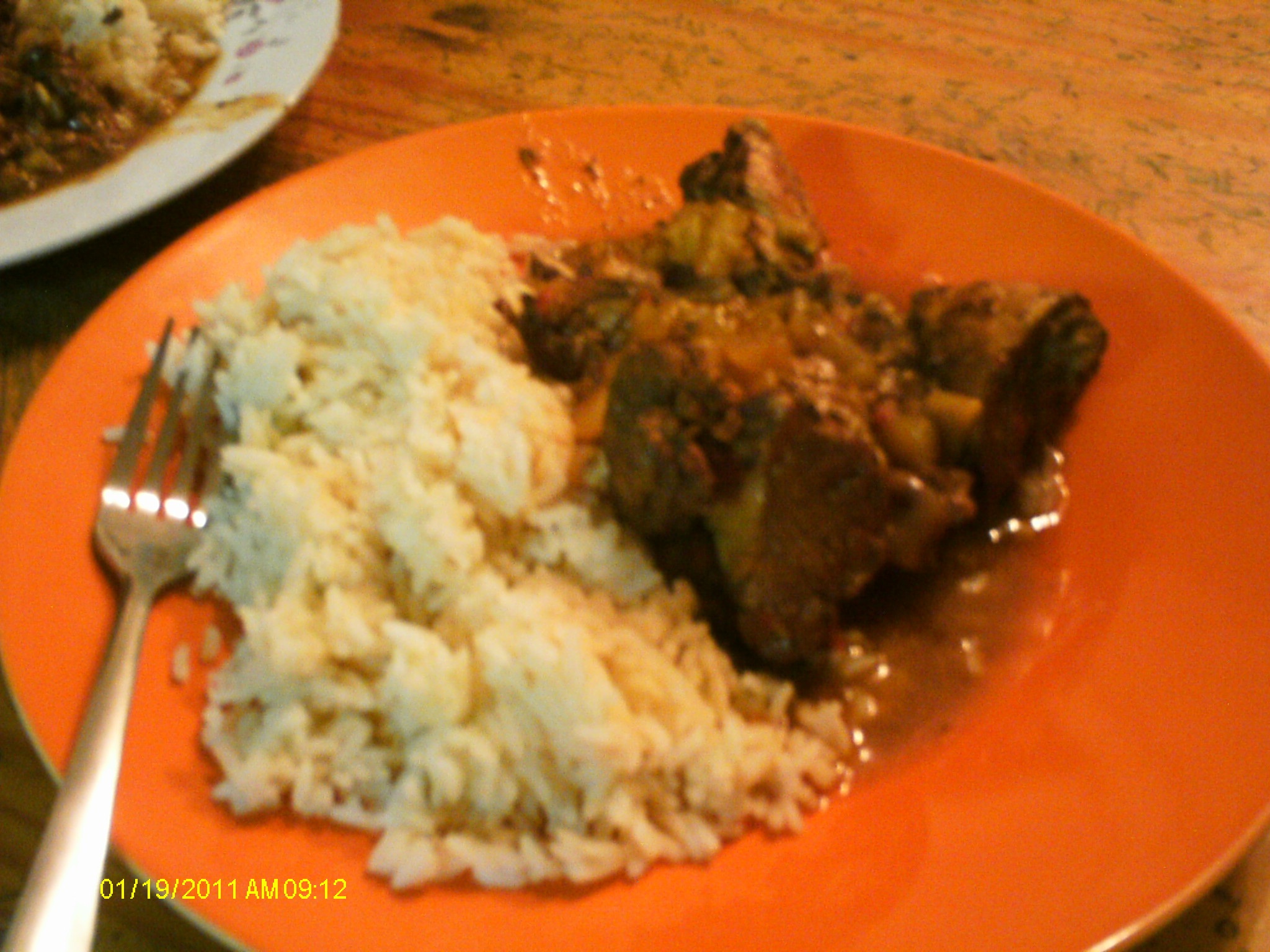
The finished product – delicious.

I wrote this recipe from memory shortly after completing the chicken stew, so chances are I may have left out a few steps here and there, but if you follow the recipe I’m sure you’ll have a delicious chicken stew dinner nonetheless.  Nickoy and I made a pretty big pot of chicken stew and rice, so we decided to share some with our fellow blockmate Richie.  Per usual, my eyes were bigger than my stomach, and I ended up eating myself into a near food coma.  Somehow food tastes better when you’ve helped to make it with your own hands, and so it was with the chicken stew.  And gentleman, FYI, telling girls you’re making dinner/can cook at all makes them swoon pretty hard.  So if you don’t consider it a manly undertaking and refuse to learn, just know that Nickoy and I will probably be entertaining your girl this weekend.

Richie, Nickoy and Jevaughn digging in.


Two Unforgettable Weeks

April 23, 2012

Five cities.  Two sunrises.  The Lowest Point on Earth.  One mud bath. Two Passover Seders.  Two rooftop hostel gardens.  A 5 a.m. mountain climb.  Seven long bus rides and one train ride.  Old friends and new friends.  Dancing across Israel.  Life advice from 71 year old Peggy, a dorm mate in a hostel in Jerusalem.  The best hummus in Israel.  The best hot chocolate in the world.  A literary café in Jerusalem. Spying on a wedding reception in Tel Aviv. Burning leavened bread in Be’er Sheva in preparation for Passover.  A shepherd with his flock next to the Sea of Galilee. Coming home to Haifa.

It is hard to know how to begin to describe my spring break.  Just as my friends and I thought as we were planning the trip, where do you begin a whirlwind tour of a country that has so much to offer?  All I know is I am convinced more than ever that studying in Israel was the right decision.  There are moments here that are hard and confusing, such as when I witnessed a young man hissing at an Israeli soldier in the Old City of Jerusalem. At times like these, I wonder what I have gotten myself into.  Who am I to be a cheerful, curious tourist when the reality of the situation in Israel is very serious for so many people?  But it is this confrontation with a human experience so different from my own that makes studying in Israel so incredible.

Another occasion in the past two weeks that showed me the high intensity of life in Israel was when my friend and I had Shabbat dinner with a lovely, generous Orthodox Jewish family in Jerusalem. They had an eighteen year old daughter named Shlomiya who was preparing to begin her army service in a few weeks.  Army service is mandatory in Israel, women serve for two years and men for three.  Observing Shlomiya and the mature, thoughtful way she spoke and acted throughout the evening, I thought of myself when I was eighteen, and how the most important thing on my mind was my next Spanish test.  Constantly living on edge, young Israelis must mature quickly as they are faced with challenges that never crossed the minds of me and my American friends as we were growing up.

I spent the majority of my break with my friends Emma and Heather, fellow international students who attend Brandeis University in the U.S.  I met Heather during the intensive Hebrew Ulpan at Haifa University at the beginning of the semester, but she is now doing a complete Hebrew immersion program at Ben Gurion University in Be’er Sheva, during which she is not permitted to speak in English.  To be completely honest, after the first day we spent together I did not have a very good attitude toward the situation.  What was I thinking, spending my spring break with someone I can’t even have a normal conversation with?  But within a couple of days, I was amazed by how Hebrew really started clicking for me.  I had always thought I learned almost exclusively from reading and writing, but I was proved wrong as I learned more from a few days of conversations than I had in weeks of classes.

This semester has held some challenges for Heather.  On top of the difficulties of having to speak Hebrew all the time, several weeks ago she had to run to the bomb shelter in her dorm several times as over ninety rockets were fired at Be’er Sheva from the Gaza Strip over the course of a few days.  She said the Israelis in the shelter with her would sit and count the booms as the Iron Dome, Israel’s missile defense system, destroyed many of the rockets in mid-air.

I accomplished a lot of bucket list items over break – climbing to see the sunrise on the desert mountain fortress of Masada where almost one thousand Jewish rebels committed mass suicide rather than be taken by the Roman army, floating effortlessly on the buoyant salty water of the Dead Sea, and seeing the sun rise over the Sea of Galilee and set over the Mediterranean in the same day.  Most importantly, though, I had a lot of time for reflection, and when new thoughts to ponder came my way I was able to soak them in, trying to expand my understanding of what it really means to live in Israel.

Sunrise over Masada

Standing on Masada

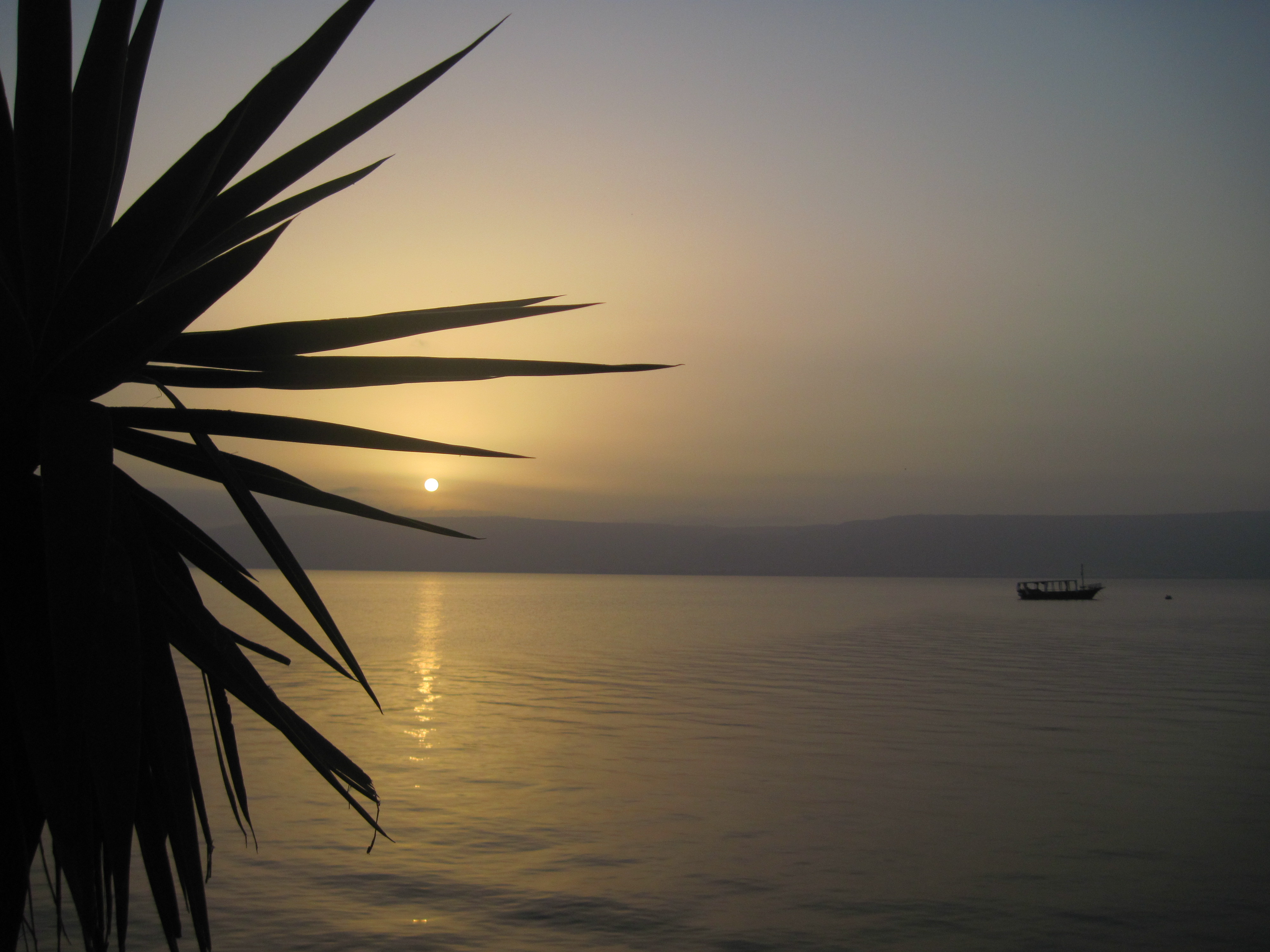
Sunrise over Sea of Galilee

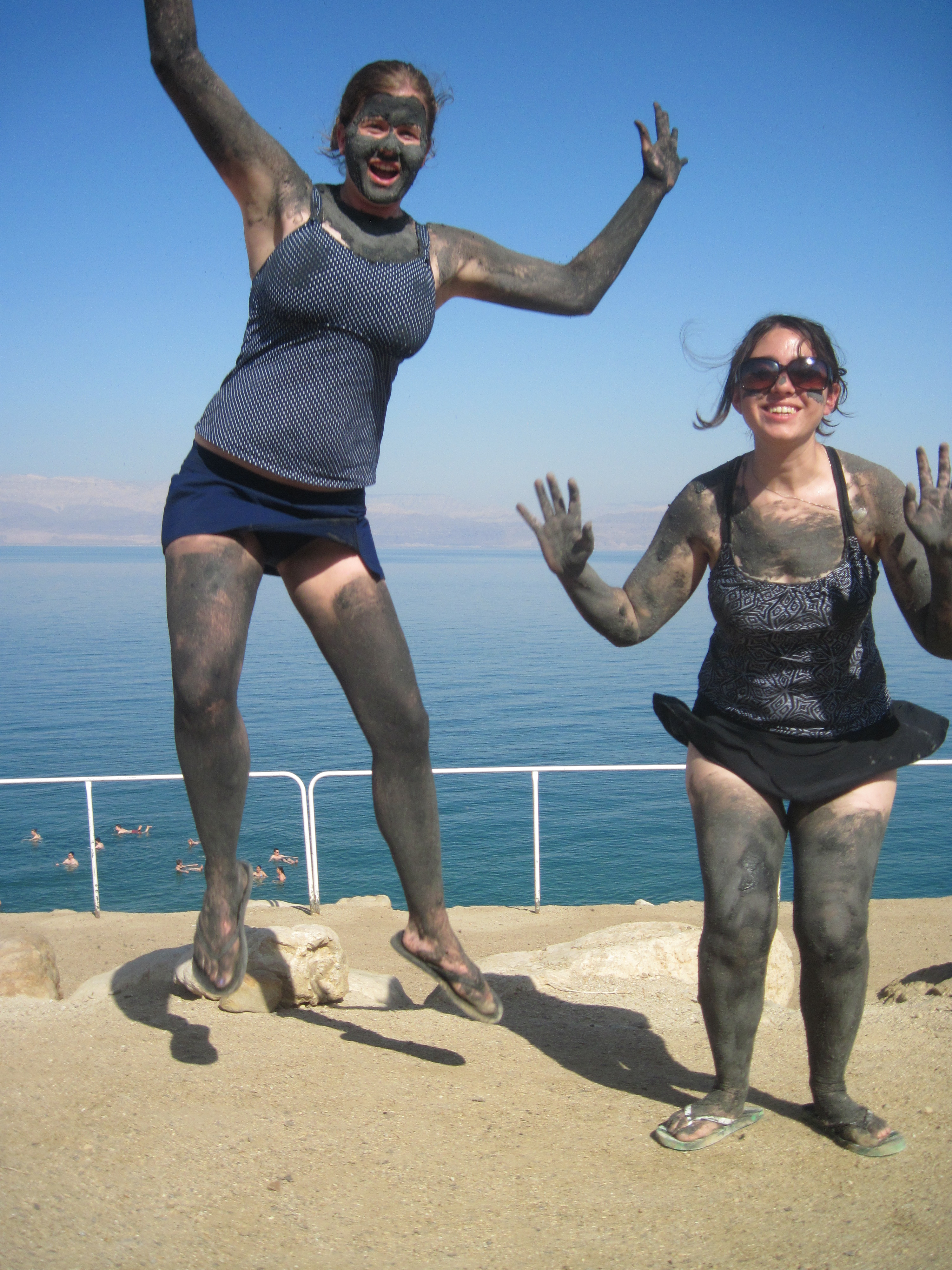
Mud bath at Dead Sea


Cooking with Poo and Thai Massage

April 23, 2012

What a FANTASTIC weekend! I checked two things off my Thai bucket list that I have been wanting to do since arriving in Bangkok: a cooking class, and a Thai massage.

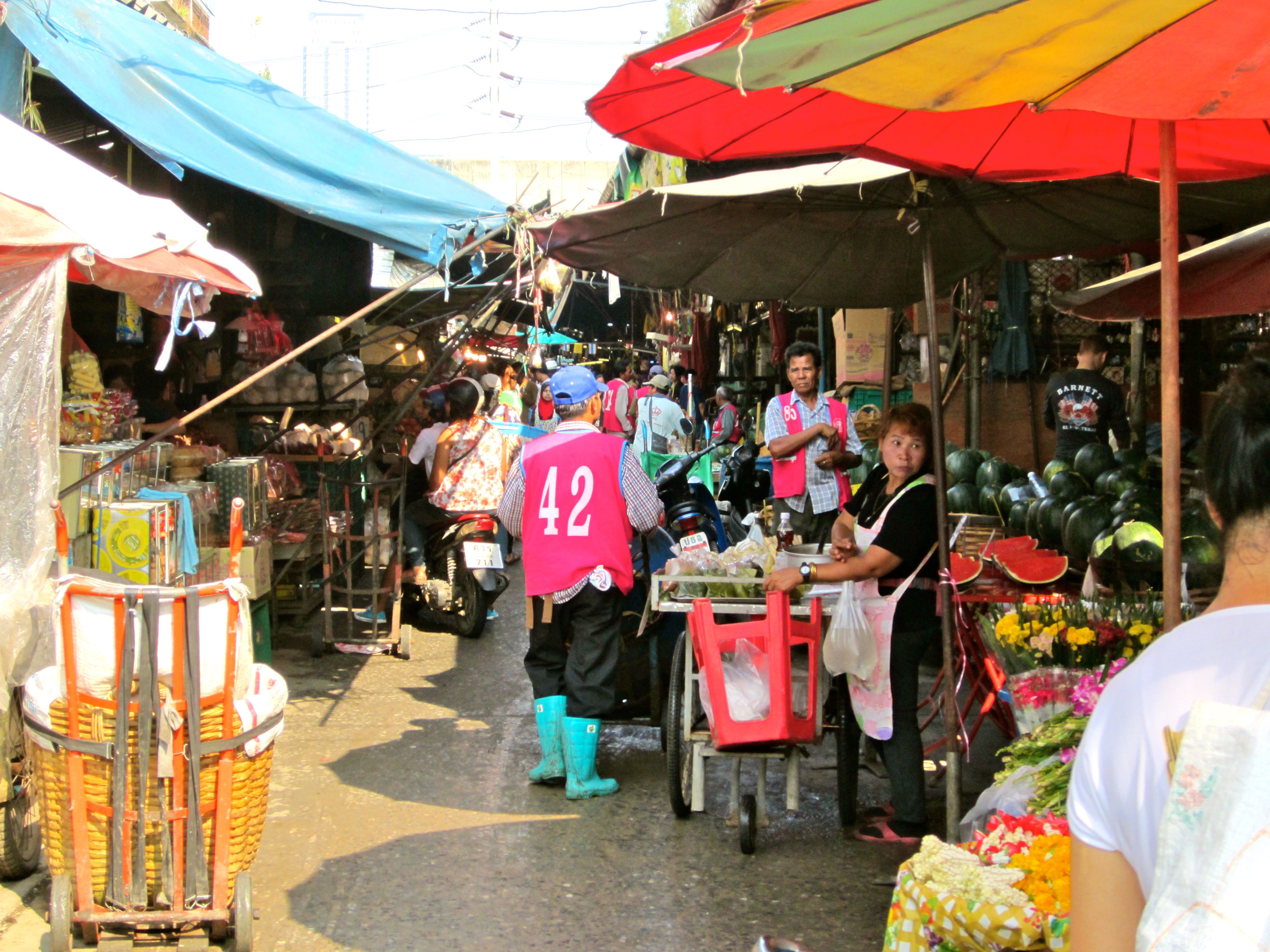
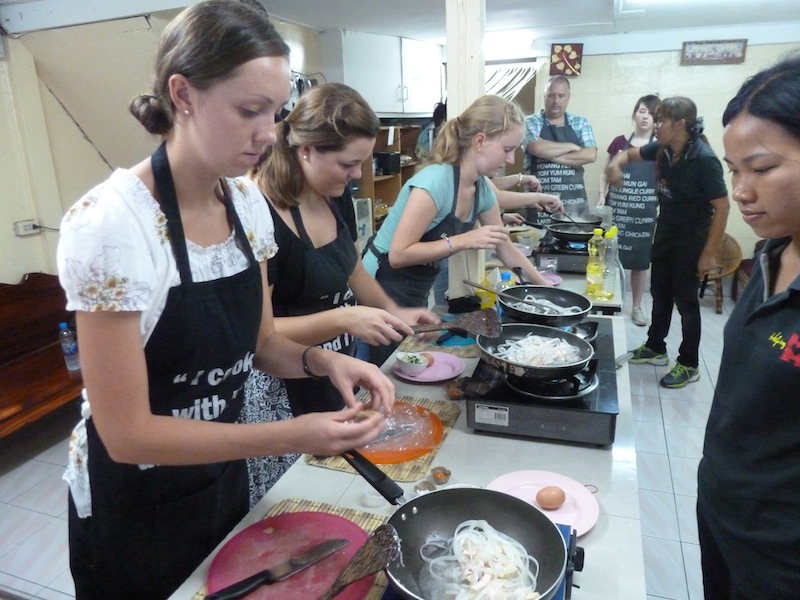
This morning I cooked with Poo and it was fantastic! Poo is an incredible Thai woman living in one of Bangkok’s slums, Khlong Toei.  She was given a microfinance loan through the “Helping Hands” organization, and using that loan she has become incredibly successful operating her cooking school.  The morning started off with a small tour of Klong Toei’s market.  It is an extensive market with everything and anything you could imagine.  We started by going through what Poo called the “Issan” area.  Issan is a Northeastern province in Thailand, and the food there is quite different than the food in Bangkok.  That row of the market has everything and anything strange you could imagine: live frogs, skinned frogs with hearts still beating, an endless assortment of bugs, eels, catfish, cow innards, skinned chickens etc… I did not once breathe in through my nose that entire walk. The rest of the market contained more “normal” items – beef, vegetables, and every possible exotic fruit.  Poo explained that most stall owners start work at 2am, and don’t stop until 6pm, they only way they can scrape by to make a living.  This market is incredibly cheap and has a wide variety of foods.  As a result it is the source of product for many of the street vendors and many of the hotels in Bangkok.  What an experience!

market

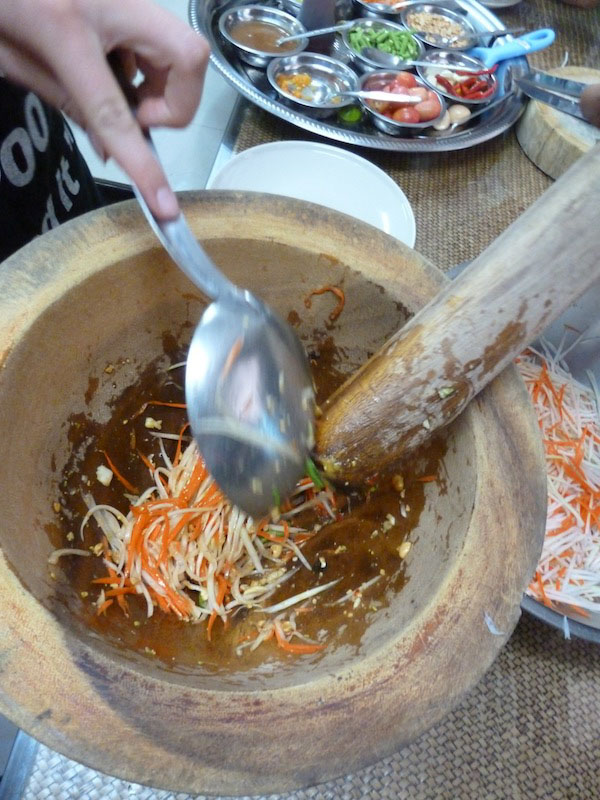
The second portion of the morning was the actual cooking.  The class is not meant to transform you into a Thai chef, but it gives a nice introduction to basic Thai dishes and lets you cook your own portion each time.  We cooked three dishes: Som Tham (papaya salad), Tom Yam (a delicious spicy soup with many different flavors), and Pad Thai.  The food was delicious, and now that we know how easy it is to make these foods it is definitely something I will take back to the US with me.  The only obstacle in the US: trying to find all of the ingredients.  What was most fascinating to me, is realizing what goes into the dishes I have been eating all semester.  For example, one of the strongest flavors in Tom Yam soup, comes from lime leaves.  Before putting the lime leaves into the pot, we broke the leaves apart which emitted the strongest and most delicious smell.  All the taste from this dish comes from breaking a green leaf apart–AMAZING!  Part of the fun of the experience was Poo herself.  She is a hilarious and kind woman, with completely broken English, yet she is sweet, enthusiastic, and eager to share her story, and the story of Klong Toei.  She explained to us that following her great success, she has also seen a change in the people in her community, and deliberately tries to uplift them as well.  For example, some of the ingredients we used to cook were handed to us in small cups made of banana leaves.  Poo said she purchased these from a woman in her community who is very sick and strapped for cash, so she thought she could help her by buying her product.  For each need of her business, Poo employs a member of her community, and tries to evenly distribute where she buys things so that as many people in the community can benefit from her success.  It truly is an incredible project.

The other event of the weekend was getting a Thai Massage: two hours for $12.  Yes, really, it’s that cheap.  But my goodness, that was a massage like nothing I have ever experienced.  First of all, I was in pain the first 45 minutes.  My masseuse literally dug her feet/fingers/hands into ever inch of my leg, almost as if she was trying to separate every muscle fiber.  Because the massage is two hours, the women can thoroughly cover every part of your body.  They also stretch you in every which way which was quite intense, because they completely ignore whether you are flexible or not.  They are also very hands on – you are lying on a mattress, and they sometimes use their whole bodies, for example contorting you around them to stretch you.  Not necessarily relaxing in the same way as a typical massage, but I certainly feel like I had a work out! Our fantastic evening massage ended with some Thai tea, before heading home.  I have to say I feel so content after such a fantastic long weekend.  Yes, some people may complain that Bangkok is crowded, or that the city is too dirty and smells bad, but I love the fact that there is never a dull moment in Bangkok: there is always something new to do, something to learn, and something incredible to experience, and I LOVE it!


Barbados, Week 11: Joining the Tennis Team

April 23, 2012

When I first came to Barbados for study abroad, joining a sports team on campus was literally not even on my priority list.  I hadn’t played any sort of organized team sport since high school, and it didn’t seem realistic to me that I would start up again on a Caribbean island three quarters through my collegiate career.  But mid-February rolled around, and a couple things began to happen:  I started to become socially and physically complacent, and I started to put on some pounds.  Luckily, one of my hall-mates walked by me one day, tennis racket in hand, and a solution began readily forming itself.  Eager to figure out what opportunities there were to play tennis on UWI campus, I discovered that there were Intermediate level practices every Monday.  Recognizing that joining the tennis team would solve both of my current issues, I told him I’d be there next Monday ready to go.

I cannot speak for all of UWI sports, but from what I have experienced and heard, sports practices are a bit different at American colleges as opposed to the University of the West Indies.  If you want to play sports on the varsity level in the United States, you’re going to most likely have to be recruited, regardless of the sport.  Practices are generally everyday, with strict workout regimens and rules about attendance and conduct.  If you play football for the University of Richmond, for example, you’re more or less eating, sleeping, and breathing Richmond Spiders Football.  Here at the University of the West Indies, multiple exchange students have just shown up at practice and walked on the basketball, field hockey, and volleyball teams.  The sports facilities on campus consist of a field hockey field, the cricket oval (duh), cricket batting cages, an indoor “coaching center”, one tennis court, one basketball court, and a soccer field down the road.

Now one thing I need to make clear before I continue is that I am in no way saying that UWI sports are a joke compared to collegiate sports programs in the United States, but rather that they have a refreshingly laid back approach toward most of their sports programs.  You won’t find UWI students having meltdowns or burn-outs over sports-related stress (save cricket, maybe), like many United States’ students will have before they even get to the collegiate level.  I find most students with which I talked about their experience playing sports for UWI love it, and some even get the chance to play in games throughout the Caribbean.

Tennis practices, however, are tough.  If I had managed to convince myself that I wasn’t out of shape before I joined the tennis team, well, that changed fast.  The Intermediate level team is composed of about 10-12 students, about 9 boys and 3 girls, on any given practice day.  Needless to say the coaches have a tough job trying to get 12 players sufficient playing time on one court, but they do a great job of creating a program beneficial for everyone.  They’ll have four stations, for example:  One station will be a ground-stroke or volleying drill, another two will be some sort of cardio exercise (think burpees or frog jumps), and the last might be hitting against “the wall” (the tennis court is right next to the indoor coaching center).  The Intermediate group was a great bunch of people and I made friends quickly, but one of the coaches, Raymond, decided I needed a bigger challenge.  Thus about three weeks after joining the team I was bumped up to the Advanced group.

The multi-sport court used for our tennis practices.

Now, I’m a competitive dude and was  thrilled about getting more playing time with the Advanced group, but I was also pretty nervous.  What if I showed up on Wednesday and just got absolutely thrashed?  Well, it turns out a little bit of pressure can go a long way when it comes to motivating me.  I crushed a red bull after my Wednesday night class and headed over for my first practice with the Advanced group.  This was a smaller, more intense group, with only about 4-6 players per practice day, and it quickly became apparent that they were good.  But as I said, I was extremely determined not to embarrass myself, and I played my guts out for two hours in an attempt to win their respect.

A month later, and I am like a giddy child before Wednesday and Friday night tennis practices.  The coaches really want to see us improve, and are extremely constructive in their advice.  One of them even plays on the Davis Cup Team for Barbados!  I feel incredibly fortunate that I am more or less getting semi-private lessons twice a week for free.  And my teammates are awesome- we’re all extremely competitive but it doesn’t take much for us to break down and start laughing when someone shanks a ball over the fence.  It’s not uncommon for us to stay an hour later after practice hours and just hit around, even though we’re all exhausted from the two hours of drills and cardio beforehand.  There have been many incredible things that I’ve done and seen in Barbados, but I would say joining the UWI tennis team has had the biggest impact upon my study abroad experience thus far.


Waterfalls and a little bit of history

April 9, 2012

I just got back from an amazing weekend getaway in Kanchanaburi, Thailand.  Kanchanaburi is about two hours (by bus) northwest of Bangkok.  The city itself is quite small – it is most frequented by visitors on their way to Erawan Falls, but the city does boast its own attractions– for example, the Bridge over River Kwai, which we visited the morning we arrived.

The bridge was commissioned by the Japanese during World War II in order to secure a better supply route between Thailand and Burma.  The bridge was built by both local Thais and prisoners of war, thousands of whom died during its construction.  The bridge is primarily famous because of the movie “The Bridge over River Kwai.”  There is not much really to see– it is quite literally a bridge over a river–not too thrilling.

The rest of the day we saw two more sites: temple caves and a World War II allied cemetery. The temple was an incredible labyrinth of underground, natural caves–very claustrophobic at some points! Each cave contains a shrine or Buddha.  Near the caves, our tuktuk driver took us to see the most incredible view of Kanchanaburi – the beautiful river surrounded by greenery and mountains on either side.  The natural beauty in Thailand is magnificent, and that was particularly evident this trip.  After spending so much time in a city, it is refreshing to see a more rural side of the country.

Our last stop of the day was to an allied war cemetery, which serves as the resting place for many of the soldiers killed building the bridge.  It was actually quite intense walking around and seeing all the name plaques – reading the quote written on the headstone, each name and nationality engraved, and particularly reading the soldier’s age; most were between 20 and 25, around the same age as I am.  I have to admit after my four months in Thailand I don’t know that much about its role in World War II so this was certainly a glimpse into some of Thailand’s history.

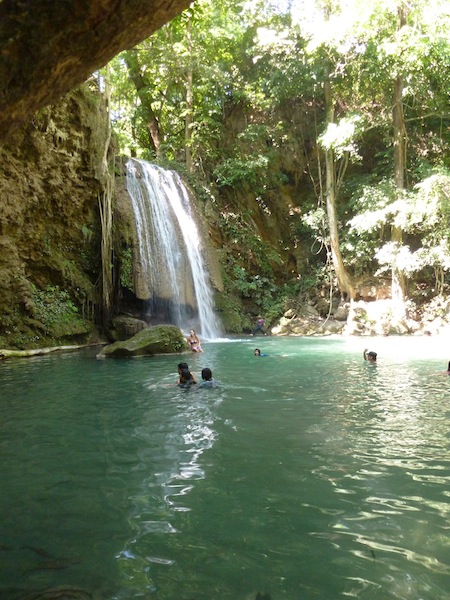
The next day we made the trek to Erawan National Park, located two hours from Kanchanaburi.  We had no idea how incredibly beautiful the national park would be! We literally spent four and a half hours walking along a path through the jungle, passing waterfalls as we went.  There are seven primary waterfalls that make up the national park, though there are small ones spread throughout.  There were tons of people – both international and Thai – and like everyone else, we walked from one waterfall to another and jumped in whenever we couldn’t stand the heat anymore.  It was incredibly beautiful, and so nice and peaceful to spend an afternoon just walking through nature, and enjoying it.

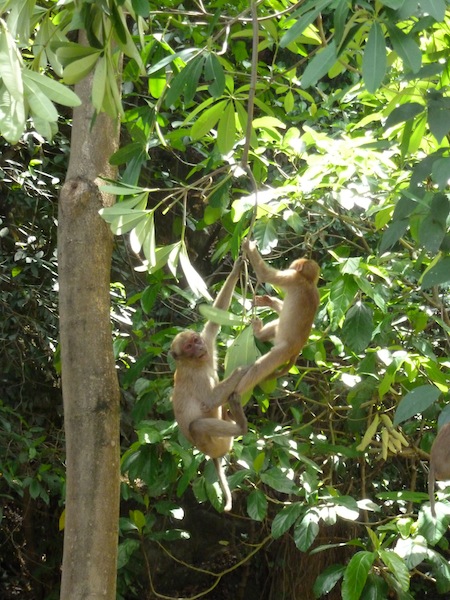
The most intense part of the trek was the 7th waterfall – much less crowded than the others because not as many people make it that far up.  As we approached the waterfall, the friend I was with, Rebecca, pointed out the monkeys overhead.  We had seen signs throughout our trek warning us to be careful of the monkeys because they can be dangerous, but hadn’t actually seen any monkeys until this point.  They were adorable climbing all over the branches, a mother and her babies.  While we were swimming in the waterfall, however, a large monkey got a little too close for comfort and started hissing at anyone who came too close.  It then went over to someone’s backpack, unzipped it, and started pulling out every piece of clothing in there and flinging it to the side.  Just as we were leaving, Rebecca pulled out a bag of peanuts, and within .2 seconds, the monkey was right in front of her, looking threatening as ever, moving exactly as the peanuts moved.  Completely scared, Rebecca just threw the bag of peanuts at the monkey – as we hurried off, we looked back to see the monkey rip the bag of peanuts open, and one by one, pop peanuts into its mouth, as he sat on the ground looking for his next target.


Reflection week

April 9, 2012

Hello everyone!  Period 4 is done, and now we have a one week break.  Most international students refer to this break as spring break, but at UCM, it’s known as reflection week.  It’s my understanding that reflection week was just implemented last semester. I decided to spend the first few days of my reflection week in Berlin, Germany.  My sorority sister is currently studying abroad in Copenhagen, Denmark, so we decided to meet up in Berlin and see all of the wonderful pieces of history in the city.

The first day we were there, we visited the Victory Column, the Brandenburg Gate, the Reichstag, and a monument dedicated to Atlas Shrugged and other mythological figures.  Below is a picture of the Victory Column.  My sister and I walked all 285 steps, and I must say, we were feeling the burn after the walk back down.

This next picture is of me with two “German soldiers” at the Brandenburg Gate.  Being at the Brandenburg Gate was a lot of fun; there was music and people everywhere.  As you can see in the picture, there were also people dressed up in a variety of costumes (most of them looking to earn money).  In my opinion, these two “soldiers” were by far the best dressed.

Being able to see the Reichstag in person was an experience that I’m not sure I’ll ever be able to explain.  Just knowing that I was at a building that, for a period of time, basically served as the headquarters for Hitler and the rest of Nazi Germany left me speechless.  This building is truly a part of Germany’s history and I felt privileged to be able to see it in person.

Seeing a version of Atlas and being able to recognize him as someone I’d learned about in school was a really good feeling.  Below is a picture of me and my sorority sister in front of Atlas, Sybil, and some others.

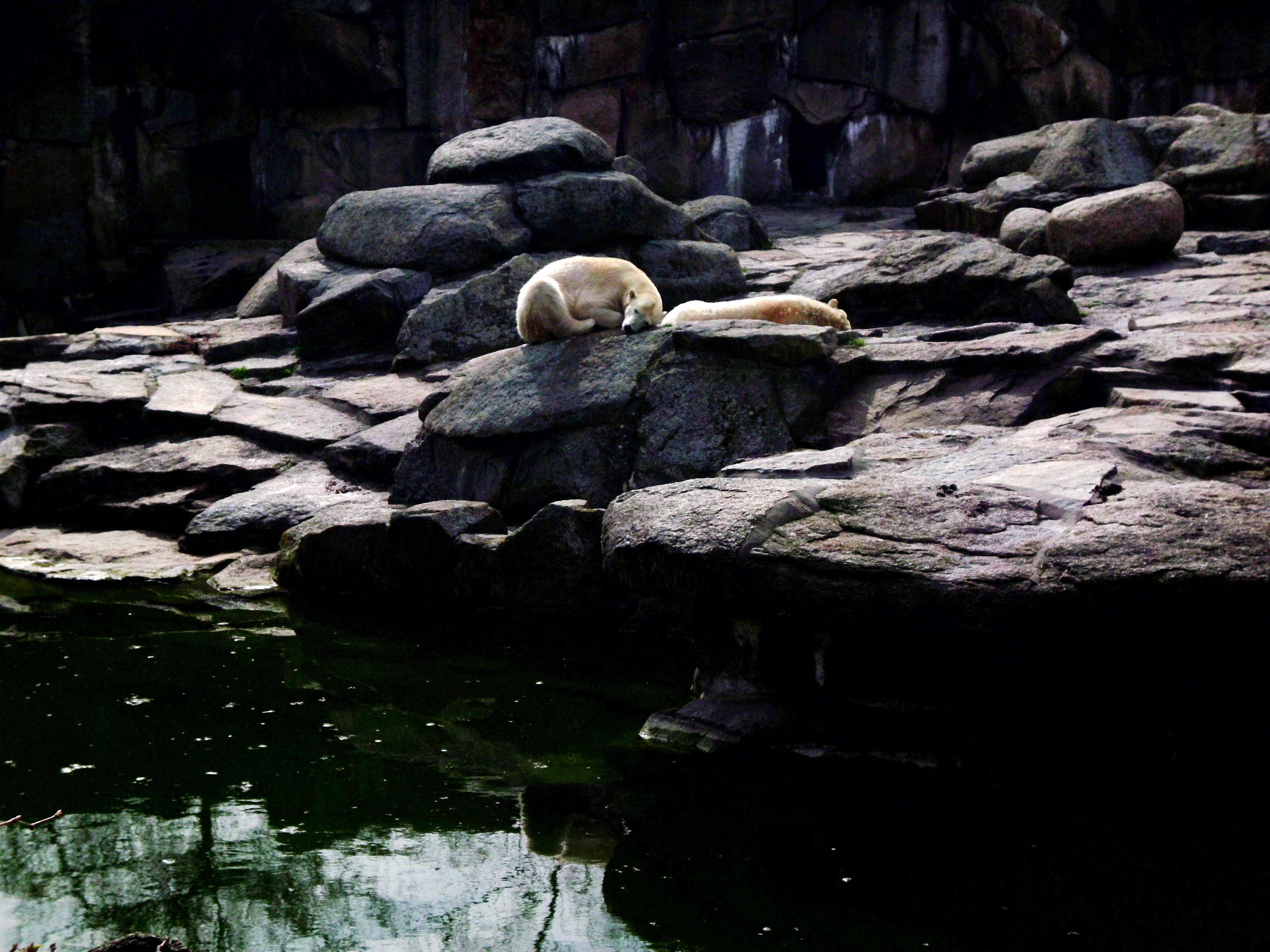
The next day of our trip, we visited the zoo, the aquarium, and of course, the infamous Berlin Wall.  The zoo and aquarium were both nice, but if I had to pick, I’d say the zoo was better, since it had a larger selection of animals and more variety.  Below is, in my opinion, one of the nicest pictures I took while at the zoo.

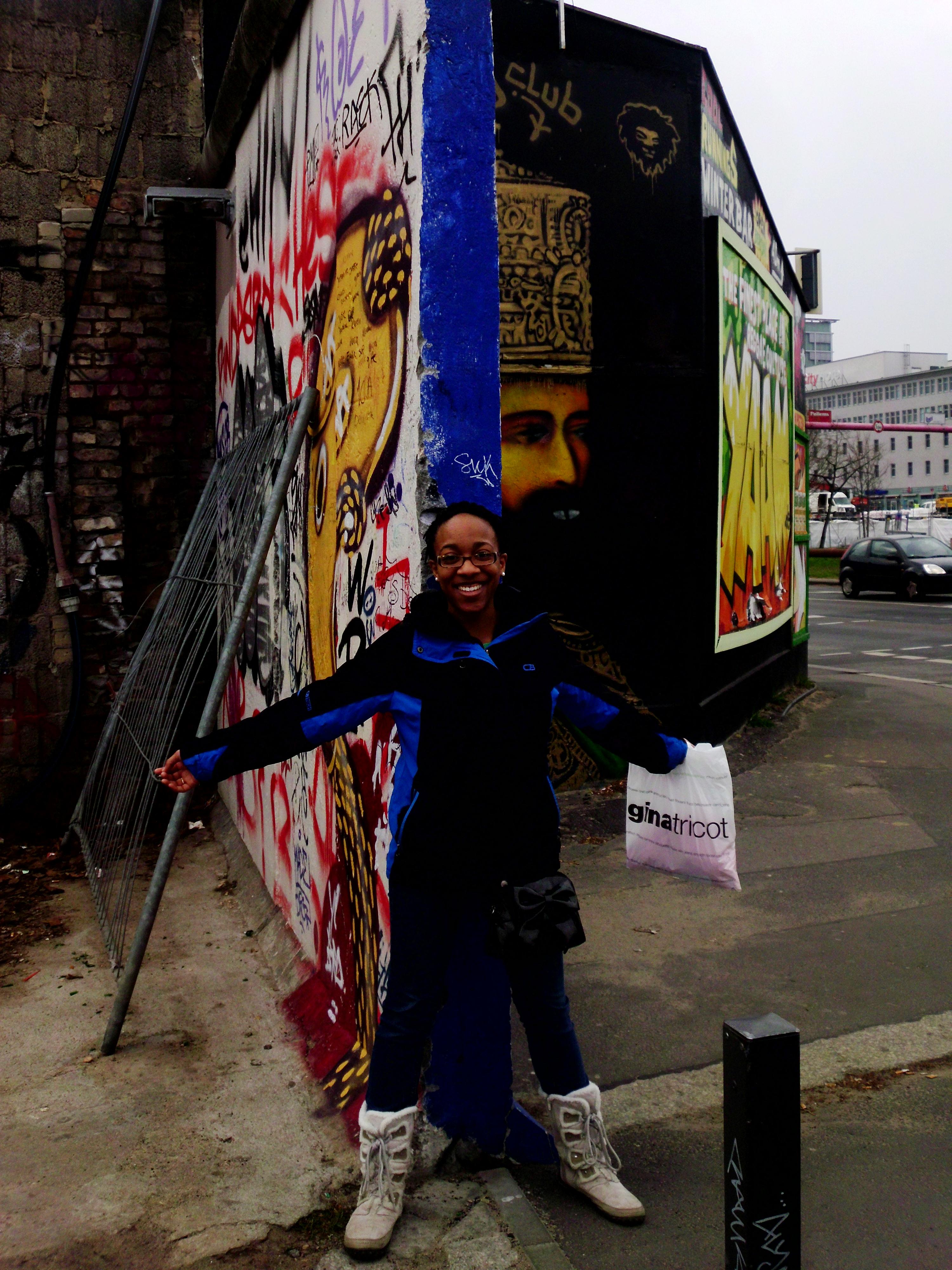
Last, but certainly not least, was our visit to what’s left of the Berlin wall, which for so long divided Germany into East and West.  I knew that if I didn’t do anything else while I was in Berlin, I couldn’t leave without seeing the remainder of the wall.  As I walked along both sides of the wall, I honestly couldn’t imagine that this wall, which is currently beautifully decorated by artwork, was a source of division. It was mind-boggling.  Non-tourists walked, biked, and drove past the wall without really looking at it, but for me, this was a piece of history that people will probably learn about forever and, once again, I just felt privileged to have been able to see this in person.  In the following picture you can see a glimpse of the wall from both the East and the West side.


Barbados, Week 10: Life on Campus- UWI, Cavehill

April 6, 2012

A strange thing has happened in the beginning stages of my third month studying abroad:  I have begin to think of Barbados as my home.  The first two months of my study abroad experience were often a constant, ever-progressing comparison to how my life normally would be back home.  Yet now that all these irregularities, cultural differences, and lifestyle changes have been successfully synthesized into daily norms, something finally clicked.  I no longer wake up surprised to hear the boisterous beeps and buzzes of constant traffic directly outside my window, nor do I freak out if a scheduled event or bus is half an hour late…or an hour late, for that matter.  I’ve begun to compile a master playlist of island Soca, Dancehall, and Pop songs that I’ve heard enough times to sing in my sleep.  I’ve even caught myself looking at large groups of sunburnt tourists, fresh off the cruise ship, thinking “Here come the Americans…”

So after weeks of making everyone green with jealousy over tales of cross-island adventures and a weekend trip to St. Lucia, it is only fair that I also give everyone a taste of what it’s like 80% of my time in Barbados, on campus.  Put bluntly, University of Richmond’s (Virginia, United States) campus seems like Yellowstone National Park in comparison to Cave Hill.  UWI, Cave Hill has prime real estate at the top of a long hill overlooking the Caribbean, and no space is left wasted; One of the dorms connects to the cafeteria, which connects to the student guild, which connects to the health office, which connects to the bookstore.  While Americans like to number their classrooms in numerical order, classrooms at UWI have fun distinctions such as LT1, LR1, LH1 (lecture theater 1, etc).  After the first week of mistakenly stumbling into every room possible, I actually think i’ve probably been in more rooms than not on campus.  Students, for the most part, come to class on time and NEVER pack up before the professor is finished, even if class time is over.  I was amazed at this phenomenon, because American students are almost always packed up and ready to go at least five minutes before class is over.

Some things I love about school here?  My professors.  They are engaging, personable, and brilliant people whose work can be found in academic journals throughout the Caribbean.  Also, the cafeteria food.  Save for Oistins Fish Fry, one of the best fish steaks I’ve had all semester long came from none other than Cave Hill Campus Cafeteria.  It probably cost me less than US$5.

Some things I don’t love about school here?  The library. After getting used to one of the nation’s chillest, most comfortable libraries —  Boatwright Memorial Library at UR — the Cave Hill Campus Library just has a hard time stacking up.  While Boatwright not only lets you bring a day’s worth of food into the library for a studying marathon, it also lets you bring in your entire bag, making it easier to study for multiple subjects in one sitting.  Now, there’s nothing necessarily wrong with the Cave Hill Library, but it’s more of a no-nonsense establishment.  Wanna take your entire bag in?  Nope.  You turn in your bag for a card at the front entrance and then proceed to clumsily drop your 4 books, computer, calculator, and glasses as you’re somehow supposed to open the entrance door.  Wanna bring food and water in so your mind is properly fueled?  Nope. You can chug your water bottle outside and then throw it away before entering.  Would you like to borrow a book for an hour and then return it to the shelf?  Nope.  First, please fill out every single detail possible about the book before handing the slip to a library employee who will take twice as long as you would to find the book.  Then, wait patiently as they scan your card and stamp your info slip and give you back a copy.  It’s good to have physical memoirs to remind yourself that you did, indeed, study, in case you ever forget.

Sorry about the library rant, but it was a long time coming.  To tip the scales back in UWI’s favor, however, are the students.  I have the incredible opportunity to go to school with and talk to people from Barbados, St. Lucia, Dominica, Antigua, the Bahamas, Guyana, Belize, Trinidad, Finland, Sweden, Denmark, Germany, and Canada.  Most Caribbean students I’ve met have displayed a cheerful, laid-back attitude and, like most other university students, are constantly laughing and looking to have fun.  It’s truly rare to find a loud, in your face, attention-craving student from the Caribbean, and most are very down to earth people.  I advise learning some Caribbean expressions and honing one’s listening skills, however, because understanding the different dialects has been one of my biggest challenges while abroad.  I can’t tell you how many times I’ve answered “Where are you from?” with “My name’s Ryan” or just “…yes…”.  I’m getting better at understanding the nuances of the Bajan dialect though, and may or may not have tried it out on a couple of occasions.

There’s probably another 1,000 words I could say about life on campus at The University of West Indies, but there’s no point in continuing to talk about the library.  Jokes aside, I moved up to join the Advanced Team in tennis last week, so I guess I can now say I’ve played tennis on the collegiate level?  Cross that one off the bucket list.  I’ll be taking some pics and giving you the lowdown on that next week, though, so stay tuned.


Botswana – Mokoro!

April 2, 2012

Last week we had spring break, or what the locals would call “mid-time.” It was possibly one of the most amazing experiences that I have had! However, it wasn’t easy to maneuver around Botswana during the trip — especially the Delta!

We started off by stuffing ourselves into a 15-seater bus to the local bus station. There were about 30 of us. Needless to say, it wasn’t the most comfortable experience, but it did bring everyone closer together to sit 3 in one seat!

After packing into the next bus, we realized that it seated 60, but there were only 30 of us. So, we initially thought to ourselves, “Excellent! We can finally relax, lay back, and enjoy this 15 hour bus ride up to the Okavango.” We couldn’t have been more wrong: The bus stopped every 15-20 km to a new stop that always had at least 2-5 people entering the bus. Some of the windows did not open correctly, and others made strange noises; it was very uncomfortable.  The majority of the time, about 1/4 of the people were left without anywhere to sit, and had to stand the entire time. Yes, 15 hours of standing! Thankfully, we had very generous passengers and students offer their seats to others and interchange over time. I offered my seat to an elderly gentleman with a cane. He was more than grateful. Although the bus ride seems like somewhat of a drag, everyone still enjoyed themselves and I understood that this was more of a learning experience than anything else!

Finally, after arriving, we were quickly welcomed by other locals, goats roaming the streets, cows eating grass, and stray dogs looking for food. An interesting experience. We even had a few locals attempt to speak to us in their own version of English. It was very hard to understand them, but their smiles said enough about them and the wonderful country of Botswana. Soon afterwards, three large safari trucks pulled up, let us jump in the tour seats, and took us away to our campsite.

As we arrived, we noticed that the crew we had hired had completely done everything for us — from setting up the tents and our sleeping bags, to even making us a welcoming dinner with dessert! Due to our long 15-hour journey, we were exhausted and decided to stay in for the night at the campsite.

I woke up the next morning at 4am, with no shower, no combs, no mirrors, and only the ability to brush my teeth with a limited supply of water from a water bottle and my own toothpaste and toothbrush. I, and the others, did not realize how real and serious this trip really was. It was a reality check for us; we were in the Okavango Delta. The nature of Africa. Anything could go wrong at any time, and help is a 10-13 hour safari truck ride away. No KFC, Nando’s, or school food, nor showers or bathrooms.

Our guides drove us to a secluded, marshy area of the Delta. We thought to ourselves, “What in the world is this place, and why are we here?” We passed over 15-20 local Botswana who all had long sticks measuring at least 20 feet. Again, the same question of confusion came to our mind.

Our Guide, Mr. Costa:

As we pulled up and parked in the Bush, we noticed that the locals with long sticks were coming towards us. At first, we were fearful of what was going on, but then we realized that they are part of our tour; they were our water guides!

Before departure:

We quickly jumped into our Mokoros with our partners and our personal guides took us into the high water grasses. At first, it was amazing to be in the Okavango waters – where anything can happen in any second. However, we slowly realized that the Mokoro trip was 3 hours long, and none of us brought sunscreen, nor any way to cover up from the sun. We were as red as the sun after the first 30 minutes.

Although the trip was long, it was still amazingly beautiful and interesting. Our Mokoro guide was very knowledgeable and even showed us a few tricks of nature: how to make a flower necklace and leaf hat!

Everywhere we travelled in the Mokoro, we encountered beautiful white flowers growing out of the muddy and brown water. After an hour of gently streaming through, our guide leaned down into the water, took a drink (he advised us not to), and then pulled out the flower by the stem. Most of these flowers’ stems are around 3 feet long. He bit the bottom off, then started to peel one end of the skin from the bottom to the top of the flower and same for the other side, but also breaking the strong core of it each time. Then he tied the ends together and said to put it around our neck. We were trying to keep our body temperatures cool by stacking as many wet flower necklaces around ourselves as we could!


Outside of the Classroom

April 2, 2012

One of the primary reasons I came to Bangkok was to be able to work with Step Ahead, an integrated community development organization that works in many capacities in Thailand.  Step Ahead’s work includes programs in one of the slums in Bangkok, called Khlong Toei.  There, Step Ahead runs a microfinance loan project, organizes sports activities for children, runs health clinics, and much more.  I, however, am primarily working with Step Ahead in a marketing capacity, helping them to market the products of their purse project.

The purse project is located in Pattaya, Thailand, where it is estimated (and this is a low estimation) that 25% of all residents are in some way involved in the sex industry.  Therefore, just by virtue of being born in Pattaya, residents are at risk for sexual exploitation.  Identifying this need, Step Ahead created Itsera, a brand of high-quality handmade bags, made by women in Pattaya.  This project was created as a prevention mechanism; the hope is that by earning a good wage making these bags, the women will be able to avoid the trap of sexual exploitation.

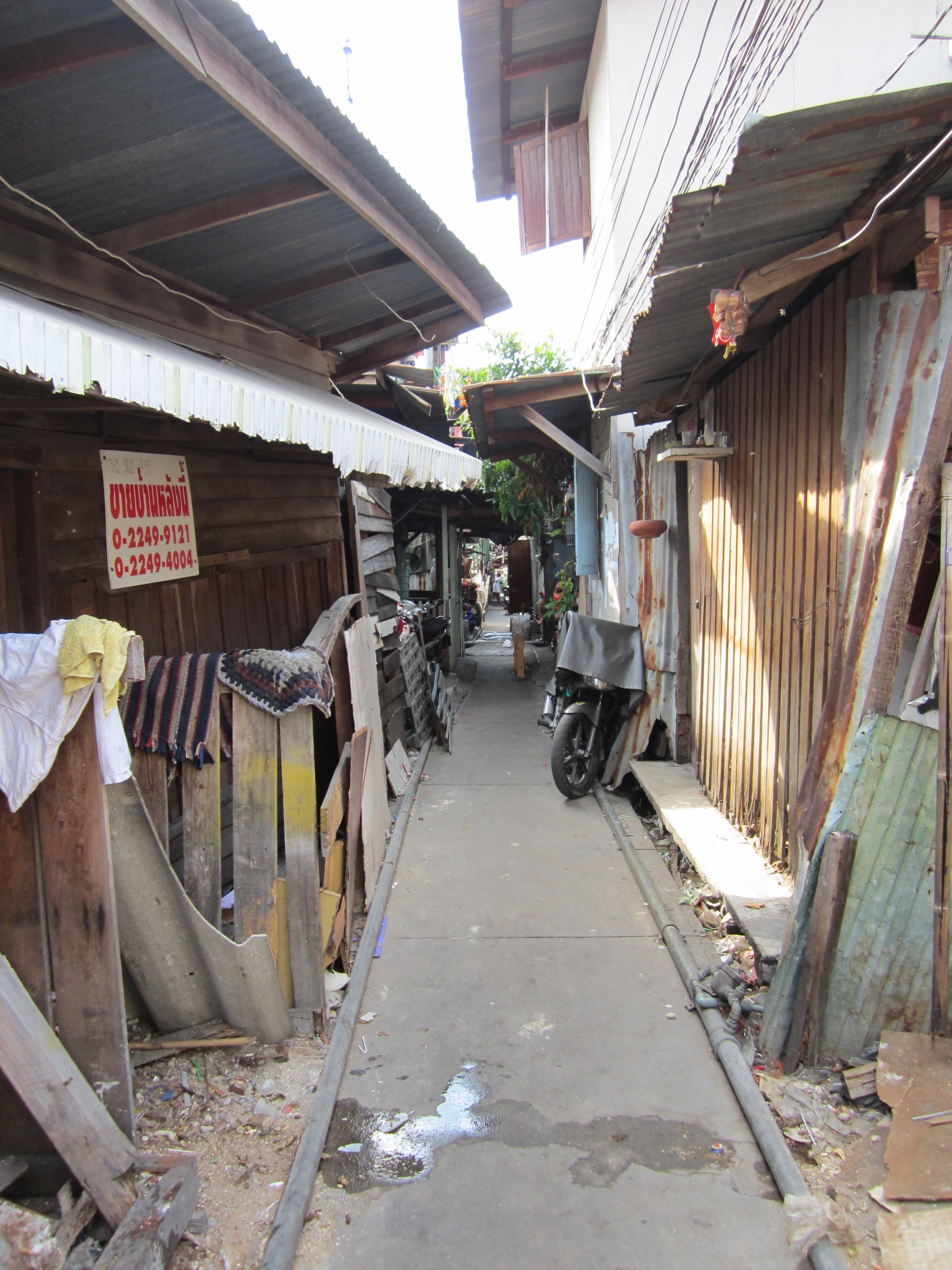
Despite being focused on marketing for Step Ahead, I had the chance to visit Khlong Toei last week.  It was so interesting to see where Step Ahead works, most of all because I spent last semester living and working on the edge of a slum in Kenya.  I could not help but make comparisons between the two in my mind.  To be honest, the slum that we saw here was much more permanent and formal compared to the slum in Kenya.  Most of the slum had paved roads weaving in and out, closed homes with roofs overhead, some people even living in permanent structures, most shacks having electricity and plumbing.  There are even a few small businesses that operate within the slum — for example, we walked by computers and washing machines, which residents can pay to use.  Not to say that Khlong Toei isn’t still very much a slum community, but it was certainly an interesting comparison to Kibera, in Kenya.

During our walk through the slum, we met one of Step Ahead’s clients, a single father with three children.  He has used a microfinance loan that he received from Step Ahead to run a chicken-foot business.  He sells chicken feet, which are a delicacy in Thailand.  School is not in session at the moment, so he and his three children were all sitting around and extracting the bones and nails from the chicken claws with the aim of selling them at the market.  It is refreshing to get a glimpse into the social issues that many Thai people are facing.  After a semester in Kenya where I only studied health and development, I have been craving that knowledge and interaction here.

Earlier this week, I was also able to attend a Needeed event.  Needeed is a new non-profit organization, which seeks to bring together professionals from the expatriate community here in Thailand.  The aim is to have organizations present at monthly meetings and identify volunteer opportunities within that organization. The hope is that expatriates with particular expertise would be able to fulfill those volunteer opportunities.

The meeting was really incredible…after the visiting organization presented, we had a brainstorm session — all 25 attendees.  It was almost magical to watch all of the ideas flying around – not only were there many nationalities in the room (Hungarian, American, Belgian, Australian, French, British), but there were also an incredible variety of different professional backgrounds represented.  There was a woman who had previously been involved in public policy, a nurse specializing in neonatal care, a psychologist doing her masters degree on post-partum depression and PTSD in Congolese refugees, a woman involved in the hospitality business – the list really goes on.  Most of these women are in Thailand because of their husbands’ jobs, and they are all well-educated and have a lot of experience in some professional capacity. Needeed seeks to bring together these untapped talents to make a difference for non-profits.  It truly is incredible to be able to not only experience another “side” of Thailand, but to meet so many fascinating people and explore potential career possibilities at the same time!