Diana in Copenhagen: Getting Around the City

October 6, 2014

As in any city, there are many ways to get around Copenhagen. It is quite small, 34 square miles and about half the size of Richmond, which makes moving throughout it pretty simple. Unlike Richmond, however, very few people choose cars as their primary mode of transportation. Danes prefer two wheels to four, and bike more than anywhere I’ve ever seen. They also walk a fair amount and take full advantage of their great public transit system. I have found Copenhagen to be quite navigable and thought I would give a breakdown of the different modes of transportation available to residents here.


Biking
Denmark is famous for its biking culture. Before I came here, people told me that everyone bikes and they bike everywhere. I took this note in passing and greatly underestimated what they meant by the word everyone. Danish businessmen and businesswomen bike in their suits to and from work. Women bike in heels and stylish dresses. Children bike behind their parents on small plastic tricycles. People even bike to go out at night, which is one thing I actually might advise against. The weather hasn’t gotten too wintery yet, but I’ve been told people won’t even let driving rain and brutal temperatures keep them off the bike paths.

A tiny boy riding a tiny bike outside of my dorm. There's a school or kindergarten right next door so I see lots of children around drop-off and pick-up times. Sorry the picture's a little blurry!

A tiny boy riding a tiny bike outside of my dorm. There’s a school or kindergarten right next door so I see lots of children around drop-off and pick-up times. Sorry the picture’s a little blurry!


Hopefully this will give you an idea of what I'm talking about. So. Many. Bikes.

Hopefully this will give you an idea of what I’m talking about. So. Many. Bikes.

On that note, I’ll add that the infrastructure of the city completely allows for this bike-obsession. Bike lanes run parallel to every street and they even have their own separate traffic lights. There are smooth ramps up stairs at metro stations to make it easier for riders to bring their bikes along too. At any metro stop or train station you’ll see upwards of a hundred bikes and the trains themselves have cars where you can actually “park” your bike and find a place to sit. Biking is a good way to save money on a car or public transit, and it is also popularized for being an environmentally friendly way to get around.

A parking station for your bike on the train. There are different cars where bikes are allowed and not.

A parking station for your bike on the train. There are different cars where bikes are allowed and not.

My take: If any of you readers follow me on social media you might already know that I bought a bike upon my arrival to Denmark. I went to a few bike shops and worked my negotiating magic before finding a great deal with a woman through a Buy-Sell-Trade Facebook group. I named my bike Gwen and, I’ll admit, became a little obsessed. I would recommend that anyone staying in Copenhagen for a semester or longer buy a bike. Economic reasons aside, having one has been an amazing experience and has made me feel like I’m really immersing myself in the city’s culture. It’s easy to bike to class, to the gym, and to friends’ places and it gives me a much fuller view of the city than I ever would have from a metro seat. I’ll spare you the cliché of talking about the wind blowing through my hair and how freeing it feels, but take my word for it.

This is my beautiful bike Gwen! (Please withhold judgment of me for naming her.

This is my beautiful bike Gwen! (Please withhold judgment of me for naming her.


Walking
Like I said in the introduction, Copenhagen is small, which means walking is a pretty good option to get around. It takes longer than other alternatives, of course, but if time is a non-issue walking is a great choice. Pedestrians here are different from those in the States though, in that they actually follow the rules. At every crosswalk where you see a little red “do not walk” illuminated man people actually stop—an action I rarely see or practice back home. In my experience, I will cross a street if there are no cars coming and it is safe to do so. In Denmark, however, if you happen upon a crosswalk in the middle of the night on an empty street you will likely find pedestrians waiting their turn to legally cross. Their lawful obedience is due in part to a threat of a 700 kroner ($118.86) fine if they are caught. That being said, I have only seen one police officer roaming the streets in my ten-week stay in Copenhagen so far. This leads me to believe that Danes are generally just a very respectful and rule-abiding people who enjoy a much safer, yet inefficient, way to walk.

My take: I respect their obedience, I really do. I just don’t understand it. Even when I’m in no hurry I find it silly to halt my progress and wait on one side of the street when there isn’t a car in sight. Besides this, walking is quite nice here. The sidewalks are kept very clean, they are well lit, and you don’t have to worry about sharing the space with cyclists because of the expansive network of bike lanes. Like biking, walking also gives you a nice chance to take in the city and explore its personality.


Public Transportation
Public transportation in Copenhagen falls into one of three categories: metro, train, or bus. All are really easy to use and the same slip or pass will gain you access to any of the three. They’re all very clean, sleek, and modern too which makes for a pleasant ride. The options for payment differ from systems in the US by operating on somewhat of an honor system. That is, you can get on and off as you please without paying and just hope you won’t encounter a uniformed agent asking for your ticket. Like jaywalking, this system runs on honor and the threat of a fine, this one for a whopping $130. There are other options to buying a ticket each ride though, including getting a monthly pass or purchasing a card called a Rejsekort. Since I bike most places, I chose the latter option which gives me a discounted fare. To use it, I put money on the card and simply tap it against a sensor to check in and out at the different stations. With the Rejsekort, each trip costs about $2.50 where a monthly pass is priced around $55. There are other options available too, and which is best for you depends on how frequently you’ll be riding the lines.

The metro line we use. The "S" marks where trains leave from, my dorm is off Flintholm, Norreport is city center, and Lufthavnen is the airpo

The metro line we use. The “S” marks where trains leave from, my dorm is off Flintholm, Norreport is city center, and Lufthavnen is the airpo

My take: I took the Commuter Rail to school every morning in high school and I have to say, the Danish network of public transit is an upgrade. I’ve also ridden the metro in Boston and New York and the system in Copenhagen is significantly nicer and more pleasant to use. As for the honor code method, I’m indifferent. Once or twice I’ve accidentally ridden a few stops without a ticket and was lucky enough not to get caught. I have friends who do so frequently and have never been stopped. That being said, I’ve been checked for my ticket about five times and an agent recently fined three friends when they risked travelling with expired monthly passes (I feel for you guys). A quick calculation shows that if I rode the metro more than fifty-two times without being caught it would be financially worthwhile in the end. I’m smart enough to recognize though, that those odds are not ever in my favor and I pay for my rides.


Cars
There are far fewer cars in Copenhagen than you would expect to find in a city, and that’s because of their unbelievable expense. There is a 180% sales tax on cars. Let that sink in. Furthermore, gas prices are astronomical. If you think prices in the US are bad, I would think again. A gallon of regular gas in Copenhagen will cost you about $8 compared to $3 ones in the States. Considering this, most cars you do see are tiny. There are more hatchbacks than anything else and it makes me think my 2008 Scion xD would fit in great over here. As far as taxis go, they exist but aren’t frequently used. You can imagine how expensive fares would be and they’re relatively unnecessary when the metro runs 24 hours a day.

The cars in Denmark are very small compared to most you see in the United States.

The cars in Denmark are very small compared to most you see in the United States.

My take: I’ve been in a car once since arriving in Denmark and that was when I left Copenhagen to visit a friend in the city of Aarhus. She was borrowing her parents’ car for the week so we made a small trip instead of walking to the bus. Other than that though, I haven’t used a car and also haven’t missed them. Taking a taxi never even crosses my mind considering they are expensive even in the cheapest of cities. I like the lack of dependency on cars though as it provides me with a polar opposite experience than what I’ve had growing up in a suburban area. I’ve always been very reliant on cars for getting around and I’ve enjoyed becoming familiar with other alternatives.


If you ever visit Copenhagen, I have a few tips for you. After you fly,  do not take a taxi from their airport because it will be expensive, I assure you, and the metro conveniently leaves from inside the airport. Metro stops are prevalent also so I would save the money you’d spend on a taxi to buy food or get a nice drink somewhere. I would also suggest renting or borrowing a bike on your trip because it will help you to get around efficiently and give you a taste of the Danish way.

This breakdown should help you understand how to get around this amazing city, and now you should all visit so you can try them for yourselves!


Jack in Czech Republic: Oktoberfest: Truths and Myths

October 2, 2014

Ah, Oktoberfest. An event that somehow combines the best parts of Halloween, Disney World, a family reunion, and Beerfest into a one-month celebration. One of the few things larger than the fest itself is the aura surrounding it. Because I have a whopping 48 hours of Oktoberfest under my belt, I deem myself credentialed to separate the truths from the myths, the facts from the legends, and the moderately exaggerated from the ludicrously overstated.

You need to get there early – Myth

The tents that serve beer open at 10:00 on weekdays and 9:00 on weekends, but people line up much earlier to ensure they get into the tent of their choice as soon as the gates open. As the fateful weekend approached, everyone’s supposed wake up times grew earlier and earlier. “Dude, you better get there by 7:30 or there’s no way you’re getting in.” “My friends went last weekend and they said you need to be there by 6:45.” “I’m gonna set my alarm for 5:45.” I did not arrive before noon on either of the days I attended. And guess what? I still got into a tent. Yes, some waiting was involved, but not as much as there would have been had I woke up at some devilish time. Maybe I missed out on the fun of waking up and hating yourself for a couple hours. Oh well.

You should book Oktoberfest well in advance – Truth

You don’t really have to. But do it. Your life will be easier. I knew people who booked their trips the week before, but they seemed pretty stressed out trying to get all the logistics together. Also, many places, especially cheap hostels and nice hotels, sell out well in advance. My advice: once you know you’re going to study in Europe, link up with your friends who will also be in Europe and book the trip. It will make for a great European reunion.

Oktoberfest is all about beer and nothing else – Myth

To me, this is probably the most exaggerated myth of all. There is so much more to Oktoberfest than the beer, which I was happy to see. In fact, Oktoberfest has activities for everyone. I saw people of all ages, including babies in strollers, at the fest. There are rides on rides on rides, a bunch of different types tents and exhibits, and almost too much different food to try. You could spend a whole day at Oktoberfest without approaching one of the beer tents and not see the entire grounds.


Some friends and ventured away from the wildness inside the tents and checked out some of the rides.

Some friends and ventured away from the wildness inside the tents and checked out some of the rides.

Beer, however, is important – Truth

While beer is certainly not the be-all end-all of Oktoberfest, it certainly has a role. The beer is delicious, but more importantly, it comes in steins. Few things are more fun than drinking large quantities of liquid out of a massive German stein. Most of the beer is served in gigantic tents, which have an unbelievable atmosphere. Thousands of people fit into these tents, and there is continuous singing and dancing on the tables. A personal highlight was when the large band played a great version of Sweet Caroline.

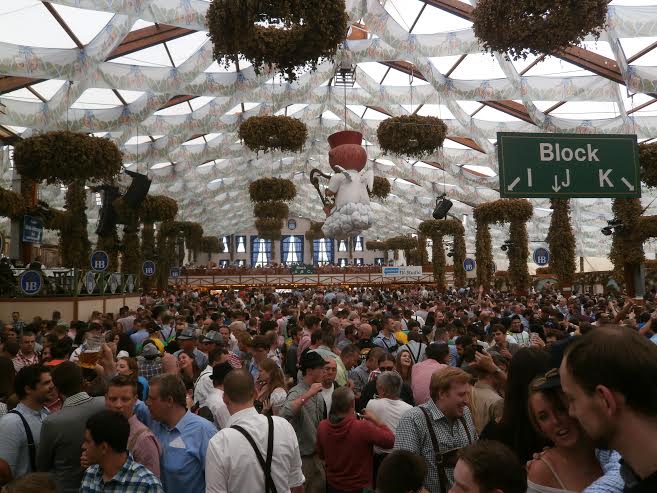
Gigantic is not an understatement.

Gigantic is not an understatement.

Oktoberfest defines German culture – Myth

Whenever I brought up Oktoberfest to a Czech or German, they all seemed to give me an odd smirk and a quick chuckle before responding. It’s actually amazing how they all do it the exact same way. I’m not positive, but I’m pretty sure it’s code for “Haha silly, naïve American. Look at you trying to be all cultural. You’re annoying.” I asked one German from Hamburg in one of my classes if he goes most years. Mistake. He legitimately laughed in my face, and said he never went and has no real desire to go. While there certainly was some celebration of German culture, Oktoberfest seems to be as much of a tourist event as anything else.

Stay out of the waitresses’ way – Truth

The waitresses are absolute machines. They are machines partially because of their work ethic.  They carry large amounts of drink and food, navigate through dense crowds, and practically never spill nor slow down. They are also machines in the sense that they will not stop to talk and they won’t slow down if there’s an obstacle. So if you’re in their way, uh, move, or you will get steamrolled. And don’t ever trying tapping them on the shoulders or getting their attention when they are carrying food. You could get yourself a good ole’ German tongue-lashing. And you won’t get whatever it was you wanted.

Holding one stein is hard enough. These waitresses are constantly carrying eight. Eight!

Holding one stein is hard enough. These waitresses are constantly carrying eight. Eight!

Oktoberfest is overhyped – Myth

After months of build up, the hype surrounding Oktoberfest reached extreme levels. The anticipation began at UR last spring and carried through the summer. In Prague, it exponentially grew, as it seemed like someone was always talking about Oktoberfest. Despite the absurd amount of hype, Oktoberfest easily exceeded my expectations. There is just so much to do, so many people to see, and so much fun to be had. After Oktoberfest, most people who I spoke with about it said the same thing. If you study abroad in Europe, you have to check out Oktoberfest.

I must have mixed up my lederhosen with my Hawaiian shirt. Maybe next time I’ll get it right.

I must have mixed up my lederhosen with my Hawaiian shirt. Maybe next time I’ll get it right.

Thanks for Reading!

Selfie of the week: Because I am an egotistical millennial, here is the selfie of the week:


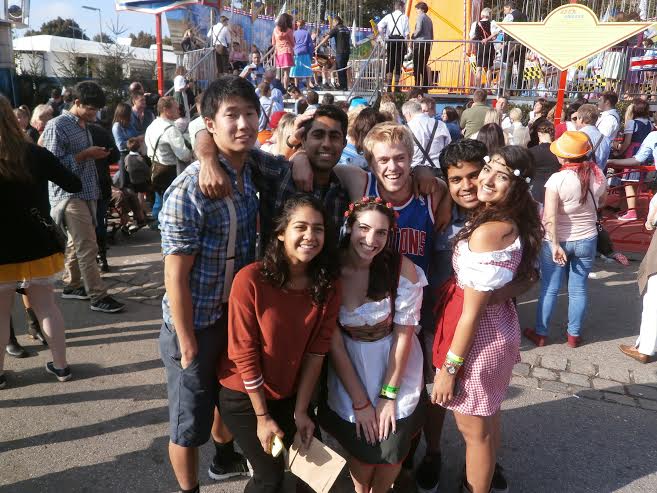
A few thousand of my friends and I at Oktoberfest.

A few thousand of my friends and I at Oktoberfest.


Oliver in Spain: Education

October 2, 2014

It has been a little while since I’ve posted here, but I have nothing but good things to report. Last week I continued my weekend travel and went to Munich to celebrate Oktoberfest. I even had the pleasure of seeing a handful of UR students that I did not expect to see. Munich is a pretty special city and I was excited at the opportunity to work on my German, or lack there of.

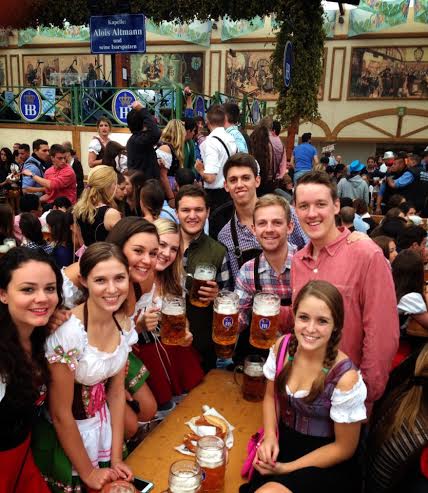
With friends at Oktoberfest

With friends at Oktoberfest in Munich

I want to focus this post on a the education/academics of Spain because it is one of the areas that differs tremendously from that of the US. After a month in Valencia, it becomes pretty easy to pick up on patterns. One of these patterns is seeing my 21 year old host brother at home regularly. In the United States a 21 year old would be at his or her University, living in a dorm and studying every day. In Spain, it is common for students to stay with their family and be a part time student. Another point of interest here is what comes post graduation. I am lucky enough to attend UR and be given a more than 90% chance that I will have a job lined up after college. The students here are not as lucky. For men and women 25 years and younger, the unemployment rate is over 55%. Compare that with our number hovering around 12% and you can see the difference. It is highly unlikely that a student will have a job coming out of college so they just carry on and get their masters.

This might have seen like more of a report than a blog post but these are the things that are visible in my day to day life. I go to school right across the street from the University of Valencia and I can’t help but feel sorry for the students I see.

I’ve decided to keep this one short as my fall break is upon me and I am two hours away from boarding a flight to Paris. Fall break plans include Paris, Berlin, Prague, and Amsterdam so I will have a lot to write about when I get back. I’ll keep the next one focused on travel!


Diana in Copenhagen: The Difference Between Danish and American Classes

September 25, 2014

While I’ve written a lot about the “abroad” aspect of studying abroad, I would now like to pay some attention to the “study” component. I’ve found that academics in Denmark, more specifically at Copenhagen Business School (CBS), are strikingly different from what I’m familiar with back in the States. CBS has over 20, 000 students attending the university, which is significantly more than the 3,000 undergraduate ones at Richmond.

Despite the large discrepancy in total enrollment, the class sizes are not grossly different from school to school. I’m currently taking three classes, all lectures, and will have a fourth starting halfway through the semester. Just one of these lectures is overwhelmingly large and fits my expectations for a school that’s roughly seven times the size of the one I’m used to. The other two are comparably sized to those I see in the Robins School, though, and professors engage students by asking questions and knowing the names of some class attendees.

This is my biggest class but it should give you an idea of what class sizes are like. I took this right after our teacher called our first break. We usually get 2-3 breaks every class because each lecture is about three hours long!

This is my biggest class but it should give you an idea of what class sizes are like. I took this right after our teacher called our first break. We usually get 2-3 breaks every class because each lecture is about three hours long!


All of my teachers teach from a PowerPoint and students take notes on their computers.

All of my teachers teach from a PowerPoint and students take notes on their computers.

The reason why class sizes seem so comparable, however, is because far fewer students actually attend lectures from week to week. Teachers say things like, “Now pull up the Excel spreadsheet to work on problems. If you don’t want to participate you can go take your break now” during class. No attendance is taken. No homework is checked. There are no quizzes, papers, or midterms, and one hundred percent of your final grade is your exam score. There is barely any accountability throughout the semester to keep up with your studies despite the looming thought of that four-hour long written examination at the end of the course. And even that is usually open book!

This system is completely different from ones I’ve experienced in attending small private schools all my life. I have never been granted the anonymity that accompanies large lecture halls with countless unfamiliar faces and I’ve always been expected to do work and participate. Since first grade, my class sizes have been small and I’ve had teachers who saw it as their job (well, because it was) to keep engagement high and ensure students learn the material at every step.

At Richmond, there are some professors who believe that their students are truly adults and therefore expect more independence from them. In my experience, however, this means that those professors don’t walk around and check homework, but instead use checkpoints throughout the course to keep their students accountable. They utilize tools like papers, quizzes, and midterms to ensure that the work is always being completed. The expectation of independence in Denmark is astounding compared to the standard I’ve seen back home.

In the Danish classroom, if a teacher asks a question that results in silence they will not cold call (randomly choosing a student to respond), but rather answer the question themselves. Yet again, this differs from what I’ve come to expect in America. I vividly remember my first class in the Business School, Microeconomics with the late Dr. Dean. I found him to be an amazing professor, one of the best I’ve had, because of his ability to make me want to excel and impress him. Yes, he had daily quizzes on required readings, but the greater incentive to do well for me was grounded in the fact that he called on his students randomly. You had to come prepared if you wanted to convey your intelligence and avoid the social awkwardness of saying something dumb in front of your peers. I also felt satisfied in answering these questions correctly—it felt as though I had been personally challenged and emerged victorious. I have yet to feel this kind of desire to prove myself and excel in Danish classrooms so far.

This is Solbjerg Plads where I have my Competitiveness and Operations Performance class. It also has a cafe that turns into a bar/nightclub on Thursdays (when is 815 going to start doing that?)

This is Solbjerg Plads where I have my Competitiveness and Operations Performance class. It also has a cafe that turns into a bar/nightclub on Thursdays (when is 8:15 at Boatwright going to start doing that?)

That being said, the Danes handle their structure well. To American students and those who have a similar educational system, the Danish structure seems like a free ride. No homework? No quizzes? No problem! I would analogize the feeling to the freedom that results in the infamous freshman fifteen. Danish class is like D-Hall to a naïve eighteen year old. They have finally escaped the paternal eye and wagging finger that used to stop them from eating froyo for dinner every night and now they answer to no one. Obviously this is not without its negative repercussions.
I like to think that I would better fit in this system if it weren’t so disparate from what I’m accustomed to. That is, if I didn’t experience that wave of freedom I just explained. That being said, I’ve identified three alternate incentives to work hard and do best in the Danish educational system.

  1. Group Projects: I have yet been assigned a group project, but they are quite common in the Danish school system. This activity encourages more work because you are faced with a responsibility to others. It is easy enough to forego reading to your own detriment, but most people respond to the social obligation of not bringing the whole team down with you. You work so you don’t let your classmates down, but end up benefiting yourself in the process too.
  2. Professional Connections: Professors at CBS are highly qualified and connected in their respective fields. Many students are focused and driven to excel professionally and recognize the value of building a relationship with the man or woman who stands at the front of the lecture hall. This means many students work hard to participate in class, speak with professors during breaks, and work diligently in the hopes of building a connection that could lead to a job or internship.
  3. Reduce Myopia: This one is simple in theory but challenging in practice. You can be less nearsighted in academics by looking at your circumstance from two different perspectives. The first is recognizing that even though there are fewer checkpoints along the way in Danish classes, the journey still culminates in an exam. To excel, you must constantly remember that end and disperse work over time to avoid a tsunami of cramming in the final weeks. You can extend your sights even further though and consider why you’re even enrolled in college in the first place. For most, the final goal is not simply to get a good grade in a class, although that is often integral to the process. The driving objective of these classes is to learn and to use your acquired knowledge to find success in life personally, financially, professionally, or otherwise. With long-term objectives like these, you won’t even need a teacher singling you out to keep you on track. Granted that is easier said than done.
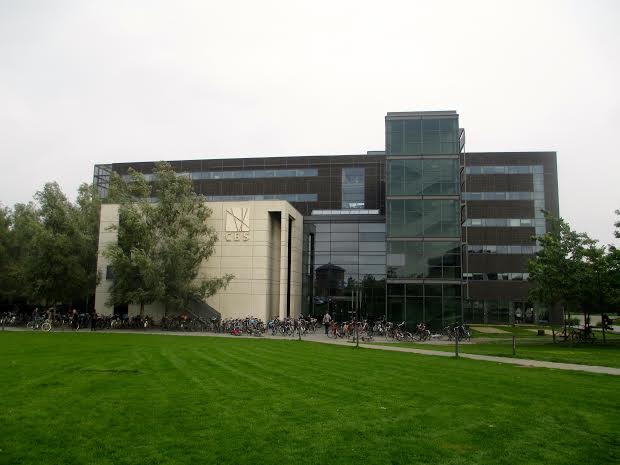
    This is one academic building on campus called Kilen. I don't have class here but I think it's absolutely beautiful. The campus also has lots of outside areas like this to relax and you see students hanging out in them all the time.

    This is one academic building on campus called Kilen. I don’t have class here but I think it’s absolutely beautiful. The campus also has lots of outside areas like this to relax and you see students hanging out in them all the time.

    This is the inside of Kilen. I've been amazed at the architecture and design in all of the buildings at CBS and this is certainly one of my favorites.

    This is the inside of Kilen. I’ve been amazed at the architecture and design in all of the buildings at CBS and this is certainly one of my favorites.

The Danish and American higher educational systems have their differences, but each meets the needs of students differently. I have found that I much prefer having methods in place that make me accountable for information before the exam, as they make me work more diligently throughout the semester. With that being said, I can learn and grow in the Danish system and use its approach to improve myself in other ways. It is my hope that I find my own success at this Danish university. I hope to leave Denmark with tools, like self-discipline, that will help me wherever I go.


Jack in Czech Republic: Jack and the Three Girls

September 25, 2014

If anyone knows of a place in Prague where I could stay, would you please let me know? I might be homeless once this post is published, due to multiple threats from my suitemates. Any help is appreciated.

I did not know what to expect heading into a panicked apartment hunt two days after arriving in Prague, but one thing I certainly did not expect was that I would end up being the only male in a four-person flat. Guess what happened.

Let’s meet my suitemates:

Leading off is Mariah. Mariah, A Westhampton College student, is the suitemate I knew best before coming to Prague. Just because I knew her best does not mean that I knew much about her. We had roughly two conversations in our first two years at Richmond, so we weren’t exactly bffs. In Prague, however, she has been like a mother to me, which she despises being referred to.

Then there’s Steph. Steph is also a Westhampton College student, but we met for the first time in a hostel lobby in Prague. I also met her father in the same lobby after us four decided we would live together. I thought meeting a girlfriend’s father was the pinnacle of intimidating first encounters, but meeting the father of a girl who you are about to live with in a foreign country for more than three months certainly rivals that nerve-wracking feeling.

Finally, there’s Catherine. Catherine is a sorority diva from The College of New Jersey. She’s probably the suitemate whom I feel most bad for (excluding myself obviously), because she has to live with three Spiders and can be left out of our constant Richmond discussions. She will be an expert on all things UR by the time she leaves.

Two weeks in and I already feel like I’m starring in my own cheesey sitcom that few people would watch before it gets cancelled midway through the first season (I’m still working on potential titles). There are certainly pros and cons with my situation. Let’s explore a few:

Pro – My Room None of my suitemates wanted to share a room with me, understandably. Therefore, we took our two-bedroom apartment meant for two doubles and created a triple for the gals and massive single for Jack. My room in Prague is significantly larger than my room at home. And don’t even try comparing my current room to a dorm room. It’s a waste of time. Then there’s the fact that we live on Wenceslas Square, which is like the Times Square of the Czech Republic. So yea, I have an ideal set up.


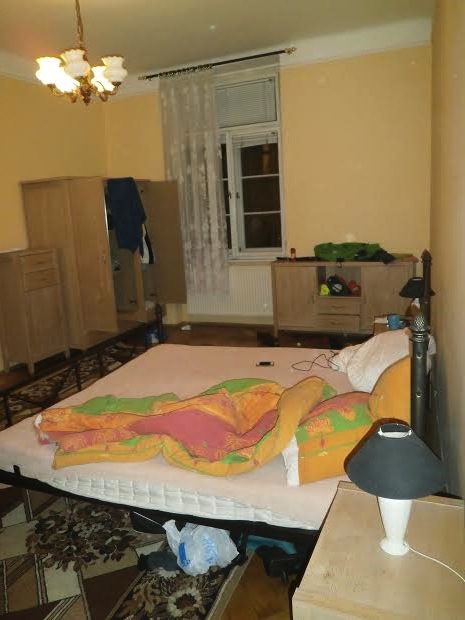
Can you tell I didn’t clean my room before taking this picture?

Can you tell I didn’t clean my room before taking this picture?

Con – Leaving the Apartment When we decide to go somewhere as a group it takes forever to leave the apartment. And when I say forever, I mean for. ev. er. There are just too many tasks that quickly leaving is impossible. First, decide to leave. Then shower, which requires blow-drying hair. Then discuss outfits. Then put one on. More discussion. New outfit. Makeup. Discussion. More makeup. Then maybe, just maybe, we leave.


Because the mirror is in my room, naturally it serves as the makeup station. The girls spend a good amount of time in front of this mirror.

Because the mirror is in my room, naturally it serves as the makeup station. The girls spend a good amount of time in front of this mirror.

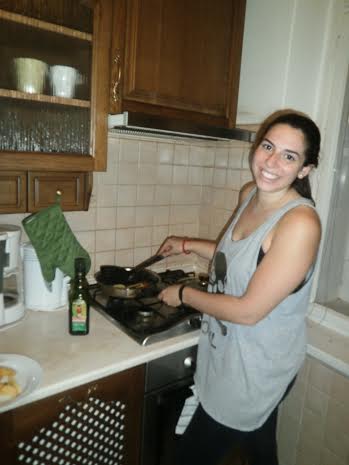
Pro – Cooking As I mentioned in my first post, I lack cooking skills. While they have slightly expanded since I’ve been here – I can use the stove! – they remain limited. My suitemates have been instrumental in keeping me well fed in Prague. And oftentimes I don’t even need to ask for help. They just know. For example, about a week ago Mariah said, “Jack you don’t eat enough. We’re making you food tonight.” And they made me a delicious stir fry (I did the dishes, I swear). Additionally, all three have taught me simple techniques that even I can do. They have been a great help.

I’ve learned a good amount about cooking thanks to my suitemates, but my struggles are still very much real.

I’ve learned a good amount about cooking thanks to my suitemates, but my struggles are still very much real.

Con – Lack of Dude Time Sometimes I need to escape for some time with the guys when the estrogen level gets too high. But heading over to a different apartment is a commitment that requires a decent amount of walking and public transportation. After being used to walking up or down a flight of stairs to see some friends, this has been, at times, a struggle.

Would I live with these three again? Right now, I say absolutely. So far, everything has been great, and the pros outweigh the cons. But then again, it’s only been two weeks. Check back with me in a few months and we will see if my answer has changed.

unnamed

Thanks for reading!

Selfie of the week: Because I am an egotistical millennial, here is the selfie of the week:

Last weekend, our program took us on our trip to Cesky Krumlov, a small town in the Southern Czech Republic. The town, which I swear was taken right out of a fairytale, was absolutely gorgeous.

Last weekend, our program took us on our trip to Cesky Krumlov, a small town in the Southern Czech Republic. The town, which I swear was taken right out of a fairytale, was absolutely gorgeous.


Garrett in Bonaire – Sopi Yuana i Ekperens Nobo (Iguana Soup and New Experiences)

September 23, 2014

After a busy first week of learning to identify 82 fish, mumbling through our first Papiamentu lesson, and completing the Open Water diver certification, we were ready for the weekend. Kicking off our first weekend we had Dia di Boneiru, Bonaire’s national Flag Day, a holiday filled with high-spirited displays of patriotism – something I would liken to Fourth of July in the States. During the day, we walked a few blocks and strolled around the local booths selling handmade jewelry, artwork, and various other knick-knacks.

My buddies and I milling around downtown Kralendijk during the festivities of Dia di Boneiru

My buddies and I milling around downtown Kralendijk during the festivities of Dia di Boneiru

When we went back a few hours later, the scene had changed dramatically as the sheer number of people milling around the plaza in downtown Kralendijk had increased 100-fold. Local musicians were jamming out on stage, everyone was on their feet dancing the night away, and the smell of booze and street food filled the air. After realizing that we couldn’t read much of anything on the menus, which were entirely in Papiamentu, my friends and I approached a vendor and attempted to decipher the menu. With some help from other locals who spoke some English, we quickly realized that “Everything on the menu is $10” was not something that could be ordered and were goaded into ordering sopi yuana and karko stoba. We were handed a small cup of iguana soup and a plate of conch stew served over rice, plantains, and pumpkin pancakes. It was positively delicious! Now I can check “Eat iguana” off my bucket list!

My friend Jack's dish of karko stoba, or conch stew, served with rice, pasta salad, mashed potatoes, plantains, and a pumpkin pancake. Yum!

My friend Jack’s dish of karko stoba, or conch stew, served with rice, pasta salad, mashed potatoes, plantains, and a pumpkin pancake. Yum!

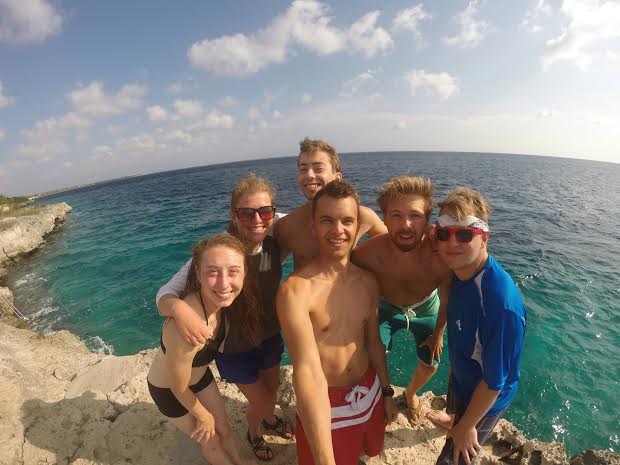
The following day we set out to cross another item off my bucket list – cliff jumping! While on a tour of the island last week, one of our professors mentioned a dive site a few miles north of the residence hall where one can jump into the water off a cliff and return via a ladder. So that afternoon, six of us took out our bikes and began the 4-mile trek to Oil Slick. In what seemed like no time, we were there. We all took turns jumping off the cliff, which admittedly was only about 15 feet above sea level. Nevertheless, it was quite thrilling to jump into the crashing waves of the ocean below!

Selfie atop the cliff at Oil Slick!

Selfie atop the cliff at Oil Slick!

And the habitat! We were only a few miles up shore from our normal dock; however, the habitat differed greatly. It was a blast to get the chance to get out of the house and explore a new section of the reef!

A photogenic banded butterflyfish (Chaetodon striatus) poses with a soft coral and a brain coral!

A photogenic banded butterflyfish (Chaetodon striatus) poses with a soft coral and a brain coral!

Speaking of exploring the reef, the diving has been nonstop intense since my first four certification dives. Since then we have been working on becoming trained as Advanced and Rescue Divers. For a new diver, jumping straight into this is intimidating to say the least. Most nerve-racking of all – the night dive (only my sixth dive ever). We waded into the water just as the sun disappeared below the horizon. With our dive lights illuminated, we descended into the darkness. Everything aside from the beams emitting from our torches was covered in stale blackness. However, what our lights did unveil was an entirely different biotic reef community. Parrotfish were sleeping on the sandy bottom, eels fluttered across the corals, and two gigantic tarpin hovered nearby hunting for food. Oh, and moon jellies descended from the heavens. Imagine the Finding Nemo jellyfish scene, but at night. One “Cool! Look at that!” jelly turned into a crowded middle school dance with everyone bumping into the jellies. We were quick to find out that these jellies are nonlethal and quite harmless, aside from the minor panic attacks they cause. Needless to say, it was another successful and amazing dive!

Beautiful sunset before the night dive!

Beautiful sunset before the night dive!

As for the above water portion of Bonaire, we haven’t really gotten much time to do a lot of exploring. With our only transportation being bikes and the weather being as hot as it is here, it can be tough getting to places outside of the capital city of Kralendijk. However, we have weekly field trips to various parts of the island with our Cultural and Environmental History of Bonaire class. This week we took a tour of the Cargill Salt Works production plant. Salt production on the island goes back hundreds of years. Initially dubbed “the useless islands” by the Spanish for their lack of gold, Bonaire and the rest of the ABC islands were soon taken over by the Dutch and transformed into a hub for slave trade. At this time, Bonaire was discovered to have natural salt, which was necessary for keeping and curing meats. Without going into too much detail, the process is actually quite intriguing. The process here uses the energy from the sun and wind to drive salt production. Water is taken in from the sea and collected in pools. As it sits there, the water evaporates, thereby increasing the salinity. Eventually, (over-simplifying the whole process) salt is left. The process itself is actually quite beautiful!

The piles of sea salt at Cargill Salt Works

The piles of sea salt at Cargill Salt Works

Two saliñas on the Cargill property. The rosy-pink color indicates a higher salinity, which means the salt is almost ready to be harvested.

Two saliñas on the Cargill property. The rosy-pink color indicates a higher salinity, which means the salt is almost ready to be harvested.

Eating iguana, jumping off cliffs, swimming with jellyfish, and visiting a salt production plant. Here’s to having new experiences! And having many more!


Diana in Germany Week Three: Rumor Has It

September 22, 2014

Hi everyone! I feel my focus so far has mainly been on surface details – the nuts and bolts of my experience and of Freiburg, Germany. This week I want to delve a little deeper and analyze some observations I have made. **Disclaimer** The following are my interpretation of experiences and discussions with Germans and Americans that I know. This does not reflect every possible opinion, experience, or perspective.


Analysis of Observations
Almost instantaneously upon arrival, I noticed that Germans tend to be more reserved in public spaces as compared to Americans. In grocery store lines at home I’m used to striking up conversation with others – maybe about the weather, or how I like their outfit, anything to pass the time more pleasantly. So far people in stores and on trams in Germany do not joke or chit-chat with strangers. This difference is most notable between when I ride the tram with and without my IES group. Without the group, the trains are mostly silent. When a whole group of IES students get on the tram speaking in English, all eyes are on us because of how loud we are. I think both systems have their perks and that a respectful volume on public transportation has been enjoyable.

I understand such formality in Germany to be much more fundamental to the culture, especially as compared to the US. In German class our first day, we learned the difference between addressing someone formally and informally. In the US we also tend to address older strangers as Mr. and Mrs. (Herr and Frau auf Deutsch), while referring to younger strangers and familiar people by their first name. However, grammar and language changes due to formality in German. Verb conjugations in German rely on whether you want to be formal or informal, which to my knowledge does not exist in English.

The issue of formality may also seep into how quickly people become friends between the two countries. Before I came to Germany I read that personal relationships take more time to build here than in the US. One of the IES staff members put it differently: Americans tend to make “friendships” faster, but these are often superficial. Maybe what Americans recognize as friendship is acquaintanceship through another lens? Is this why we differentiate between our “best friends” and people who are only our “friends”? Either way, the people I spend time with here are very friendly and helpful and I strive to be friendly and helpful back — even if we aren’t technically friends. And that’s the way it should be!

P.S. People do not walk around in lederhosen and dirndls (traditional dresses) here. Unless you go to Munich right now or you are in a supremely traditional rural area. Sorry if this disappoints anyone.

Social Updates
There is so much to do during study abroad that it starts getting to be too much to remember to blog about it! Last week I left out an amazing exploration of Freiburg’s art galleries with Tobi, my flatmate and Simon, a houseguest from Toulousse. We visited an art gallery in addition to several smaller private collections with art for sale. The gallery is called Stadische Museen Freiburg im Briesgau, and it was full of contemporary/modern art. I found my new favorite piece of art (as shown below). Unfortunately I did not write down the name or artist, but that only means I will have to go back! We visited two smaller galleries as well, and I have never been to such a small gallery with prices listed next to the artwork. There were a multitude of mediums and techniques utilized in the artwork. Some of my favorites included paintings on aluminum using lacquer, 3-D boxed city collages, and amazing line portraits.

​My new favorite painting. Though the subject is quite gruesome (a huge massacre of animals?), the mark-making is powerful and expressive in a way that I admire

​My new favorite painting. Though the subject is quite gruesome (a huge massacre of animals?), the mark-making is powerful and expressive in a way that I admire

​A painting of Martinstor using lacquer on aluminum. This medium blows my mind and I need to try it sometime!

​A painting of Martinstor using lacquer on aluminum. This medium blows my mind and I need to try it sometime!

​The simplicity of a few lines can still capture the complexity of a portrait. Amazing.

​The simplicity of a few lines can still capture the complexity of a portrait. Amazing.

I also forgot to mention the Apple Pie Contest. Simon created several wonderful dishes and desserts while here. Somehow we ended up challenging each other to a duel where apparently I would have the home field advantage… because all Americans know how to make apple pie, right? Instead of going fully traditional, which would have taken way more baking experience and time, I decided to create an apple crumble Gordon Ramsey style. In addition to apples and caramel and cinnamon crumbles, this dessert has cranberries and lemon zest for extra pizzaz. The Gordon Ramsey apple crumble Youtube video and Simon’s help on making caramel sauce all contributed to me winning in taste. Simon won for presentation with a huge piece of caramel and obviously won for technique. Still – I won in a category against someone who has been cooking and baking his whole life!

​The apple crumble seriously crumbled on the plate - but it was still delicious!

​The apple crumble seriously crumbled on the plate – but it was still delicious!

​Me with my creation. Simon, my competitor, is still cooking in the background.

​Me with my creation. Simon, my competitor, is still cooking in the background.

This week, I also participated in a few social events. My friend Sarah and I went swimming at an indoor public pool. To our dismay there was no hot tub and everyone was swimming laps. I guess the pool is as serious as the gym here in terms of a workout! The planned trip to Titisee on Saturday fell through because I had a cold and ended up sleeping in bed all day. My friend Anne finally got me out of bed with the promise of all you can eat sushi. We ended up each eating 15 pieces of sushi (3 rolls more or less), 2 miso soups, a side dish, and 3 scoops of ice cream. I am definitely going back on a weekday at lunch when the same deal is available for a full 10 euro less. The green tea ice cream was the highlight of my entire day.

Sunday I knew I needed to get out of the house, sick or not. With that goal in mind, I went on the 10km hike through Ravennaschlucht in the Black Forest as planned. Originally there was a group of 8 students, some from Ukraine and Japan in addition to Anne, another IES girl named Katherine, and I from the US. There were gorgeous waterfalls all along the trail and here or there I saw water wheels. The train stop was only one away from Titisee, so we originally planned on hiking then eating lunch in Titisee. Unfortunately, it started raining! This was not the best for my health, but it still was worth it. Katherine, Anne, and I celebrated successfully making it back to Freiburg with a nice, warm falafel pita.

​Goats greet us as we make our way to the start of the Ravennaschlucht trail.

​Goats greet us as we make our way to the start of the Ravennaschlucht trail.

​Me with our guide Mimi on a bridge in the Black Forest.

​Me with our guide Mimi on a bridge in the Black Forest.

One of the many beautiful waterfalls along the Ravennaschlucht trail.

One of the many beautiful waterfalls along the Ravennaschlucht trail.


Next week
-Goals in Freiburg and beyond!
-Common topics of conversation during my trip so far
-The end of German class
-Brussels trip


Oliver in Spain: This place is starting to feel like home

September 22, 2014

I’m finishing up my third full week in Valencia, and this place is starting to feel like home. I have become very comfortable with my family, and Mark and I frequently play FIFA and other games together. He’s definitely starting to look up to me, and is practicing his English with me too! Coming back to the house after a long day out feels very relaxing too.

I feel lucky to have an awesome friend group of about 15 people on my program with me. Friendships strengthen very quickly when everyone is put into a new culture with a new language. It’s nice to know that everyone is going through the same transition and that we have come to rely on each other a lot.

Valencia vs. Espanyol

Valencia vs. Espanyol

Last weekend I had the opportunity to go to a Valencia football (soccer) game. I went with a few other friends and the atmosphere was like nothing in the United States. These people live and die by their football team. The stadium, La Mestalla, crams almost 60,000 screaming and jumping fans together for 90 minutes of pure enthusiasm. I have to be honest, I’m getting very attached to this team and will be picking up a jersey very soon. ¡Amunt Valencia!

Celebrating a goal! Final score: 3-1 Valencia

Celebrating a goal! Final score: 3-1 Valencia

This was also my first weekend of travel outside of Valencia. Along with 8 of my friends, I went to the island of Ibiza off the East coast of Spain to celebrate my 21st birthday! Needless to say, we had a blast. We rented an apartment through Air B&B which we used as a base and as a place for family meals.

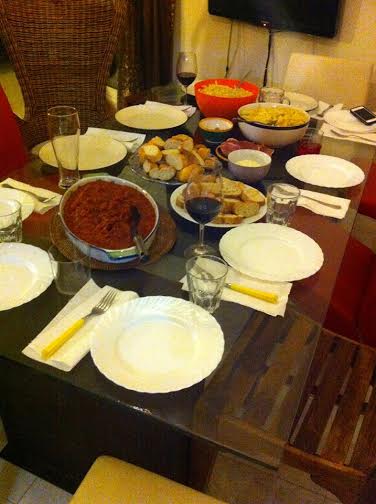
Spaghetti with a Chorizo and tomato sauce

Spaghetti with a Chorizo and tomato sauce

Ibiza has a great nightlife, but it also has amazing beaches and cliffs. It was not at all what I was expecting going into it but we all had a great, and tiring, time.

Incredibly clear, blue water

Incredibly clear, blue water

Next weekend I’ll be crossing off another box on my bucket list by going to Oktoberfest from Thursday through Saturday. I’ll have another update next Sunday to let you all know how that goes!


Diana in Copenhagen: Eating in Denmark

September 18, 2014

Greetings Travelogue-ers! Sorry it’s been so long since my last update. Classes are finally fully underway and it feels like I’m finally starting to get the hang of everything. I’ve also spent a lot of time planning trips around Europe, which has been really exciting (and expensive…) for me so far!

I was thinking of what to write about this time, and settled on the thing that has surprised me most about Copenhagen so far. Coincidentally, the topic is also one of my favorite things on the planet…food.

I have come to learn that Denmark is not a place you should visit for the food. It doesn’t boast world-renowned pasta like the Italy or delicious tapas like Spain. While Denmark is home to Noma, the restaurant frequently voted the best in the world, I have found that the average visitor or resident here is deprived of food that you would describe as traditionally Danish. I am sure this is due in part to how expensive the city is, as only very wealthy families go out to eat and those restaurants might be where most Scandinavian cuisine is hiding. Alas, this has meant that I have been cooking for myself quite frequently and getting takeout sometimes as well.

After already completing two years at Richmond, I have to say I was surprised I yet to feel the quintessential pressure to survive on Easy Mac and Ramen Noodles that so many associate with their college years. Perhaps it’s because I’ve always lived a convenient distance from D-Hall that I’ve always found myself eating fairly diverse and well-balanced meals in my time as a university student. Or maybe it’s because of my fondness for Lou’s salads, it’s hard to say. One thing that is clear though is that that trend has not followed me across the pond to Denmark nor have I had much chance to try much Danish food.

Instead of the streets of Copenhagen being lined with Danish food trucks or eateries serving up traditional dishes, they’re saturated with pizza places. They also have tons of shops selling to-go food like Thai, shawarma (an Armenian equivalent of a gyro), and burgers. I’ve also found myself cooking a lot in my time here, which so far has left little to the imagination. My small kitchenette hasn’t seen much variety thus far as I’ve found myself eating an astounding amount of pasta and grilled cheese. Pizza, pasta, grilled cheese, burgers…
I came to Denmark and am finally eating like a college student.

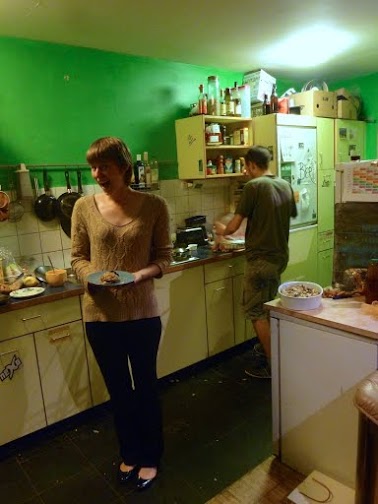
A photo of my kitchenette and one of my grilled cheese masterpieces

A photo of my kitchenette and one of my grilled cheese masterpieces

This being said, I have tried to actively seek out Danish meals to help broaden my understanding of the culture here. My first experience was when my CBS buddy invited me to his apartment to cook some authentic Danish food. We started out by walking downstairs from his apartment to the grocery store, and I mean “downstairs” very literally. The closest supermarket was just steps from the door of his apartment. That’s another thing about Copenhagen—there are grocery stores everywhere. While each is much smaller than the ones we have in the States, they are much more abundant here in Denmark. I can’t say which I prefer yet to be honest, but it is remarkably convenient to have four stores within seven minutes walking from my dorm.

We picked up some potatoes, flour, beets, and butter at the grocery store and then set on making stegt flæsk med persillesovs, which directly translates as “roast pork with parsley sauce.”

Even though my buddy Kristoffer and his apartment-mates wouldn’t let me help, I sat back and took mental notes on how they were preparing the food should I ever want to be adventurous and give it a go myself. They started by boiling the potatoes, which I am fully confident in my ability to do, and making the parsley sauce (basically a gravy). The sauce itself probably made me gain ten pounds as it was comprised exclusively of some parsley and lots of butter, flour, and milk. Parts of each were added in increments while constantly stirring the mixture at a light boil. The parsley was added at the end, which not only added flavor but also made the sauce speckled green in a pretty way.

The meat out of the oven and ready to be flipped

The meat out of the oven and ready to be flipped

Then came the meat to prepare, and I learned I was foolish to think the gravy was to be the thing to make my pants tighter. The meat was described to me as more thickly cut bacon (imagine my excitement), and they cooked it in the oven on moderate heat and flipped it to brown both sides. They made sure to cook some pieces more thoroughly than others since people have different preferences on how well-done they like the slices. I think I preferred the crispier pieces but I’m not opposed to giving the others a second audition.

We sat down to eat, drowned the meat and potatoes in gravy and served it with a side of beets, a food that I’ve always surprised myself by loving. It was a great meal and I thank those guys not only for welcoming me into their apartment but also for sharing some of their culture with me. Frederik, one of Kristoffer’s apartment-mates, also gave me some insight on my aforementioned observation of the lack of traditional Danish food.

The final product! One of the most traditional Danish dishes called stegt flæsk med persillesovs.

The final product! One of the most traditional Danish dishes called stegt flæsk med persillesovs.

It was clear the meal before us was hearty and, while delicious, full of fat. He explained that dishes like these were what Danes typically ate back when Denmark was an agricultural country and the farmers needed a hefty supply of fuel to work in the fields all day. Since the country has evolved away from this physically strenuous agriculture, the people could no longer consume the same food and lead a healthy lifestyle. I found this description fascinating because of how a simple shift in the occupational norm could affect food, something integral to a nation’s culture, with such magnitude. Hopefully I will be successful in tracking down some more Danish dishes, but until then I might venture to cook some more elaborate things myself.

I make no promises.


Diana in Germany Week Two: “The Skinny” on Freiburg

September 18, 2014

Every week of study abroad is like a month in “normal” time. I am experiencing so much and hopefully I can summarize all of it for you without it being really long!

The City of Freiburg
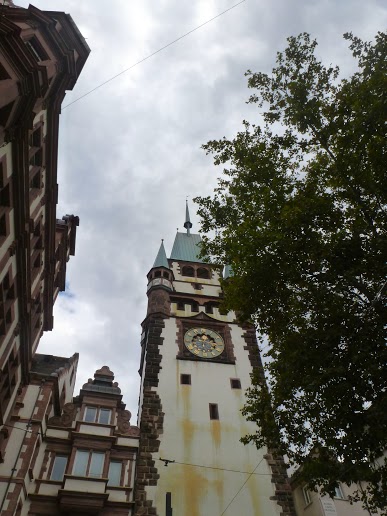
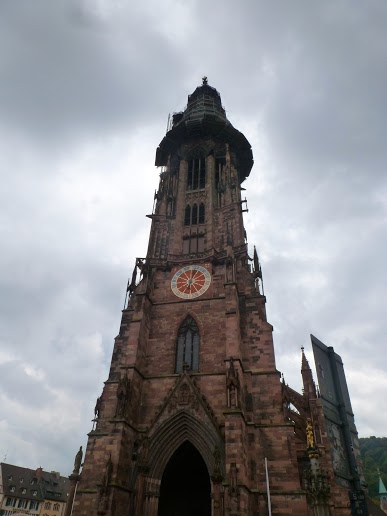
Probably the most notable landmark in Freiburg is the Münster cathedral. It is a 12th century church with amazing organs (I went to a concert there last week). There is a farmers market in front of it almost every day. There are also shops and restaurants on the square. Two other notable structures are the city gates. I see the one called Martin’s Gate every single day when I get off of my tram stop for school in the morning. The University of Freiburg itself was founded back in 1457 and is one of the oldest universities in Germany. It has buildings scattered throughout the city and many have their own history.

Münster Cathedral

Münster Cathedral

Martin’s Gate

Martin’s Gate

There are little stone paths for water, called Bächle, that crisscross through the streets of Freiburg. They are the old source of water for the town. If you accidentally step into one of these then the legend is that you will marry a Freiburger. This reminds me of the tales of kissing on the gazebo at University of Richmond – if you do not marry the person you kissed, you must walk backwards around Westhampton Lake.

Bächle - watch your step!

Bächle – watch your step!

The ways that I access the city are through tram, bike, and by foot. The tram station is only a 3 minute walk from my flat. It takes 10 minutes by tram to get to the Holzmarkt stop, which is a 1 minute walk from my German classroom and a 2-3 minute walk from the IES Abroad office. For longer travel here, there is a large area for trains and buses that meet up by the “Hauptbahnhof” or Central Station. It is amazing how few people drive cars on a day to day basis. I love this custom so much I am beginning to consider only settling down in an area where it will be possible for me to walk, bike, or take public transportation easily. Biking is barely possible on the University of Richmond campus due to the amount of stairs and steep hills that cut off bike paths.

Food/Drink
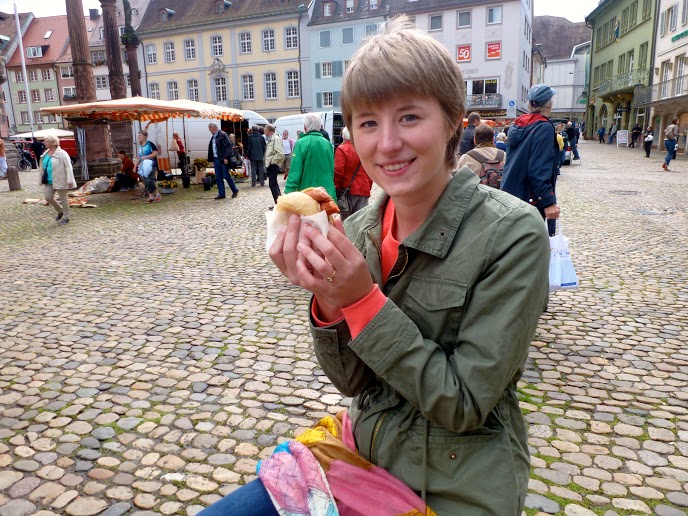
So far I tried many different foods typical in Germany. At Münster market I have eaten bockwurst and bratwurst. Yes, they are different! A bockwurst is basically a hot dog (a LONG hotdog) and the bratwurst is a fried sausage. Both are put into a baguette and you can add beer mustard and curry ketchup, two delicious condiments. One night I ate a a fancier restaurant on the Münster square and got local fish. I tried a piece of someone else’s schnitzel, but still need to go order my own. I will tell you how that goes in my next post for sure! For Heather’s birthday we made a traditional Black Forest cake. It was SO delicious that I ate four pieces. No shame.

This fish looks as fresh as it tasted. The accompanying butter sauce was sehr gut.

This fish looks as fresh as it tasted. The accompanying butter sauce was sehr gut.

On weekdays I tend to eat lunch at Mensa, the student dining hall. It is about 3 Euro for a meal and the portions are so huge that I bring a Tupperware container with me. This saves me a lot of money so I do not feel as bad when I splurge once or twice a week on a meal. I go there with friends Sarah and Dave from my language class and Anne from IES right now. For meals at home, I shop at a store called Rewe. There’s amazing pasta, sauces, fresh baked goods, fruit and vegetables.

I’ve tried a few different beers: Pilsner, Radler (lemonade + beer = yes), and Kristallweizen. Alcohol is plentiful and not as expensive as in the states. The main non-alcoholic drinks here are sparkling water and Apfelsoft or sparkling apple juice. I carry around my own still water from the tap at all times to keep hydrated, though a person may not drink from their water bottle inside a restaurant. You have to pay quite a bit of your own still table water, so my advice is to drink water before and after walking into a restaurant, that’s my advice.

Bockwurst Delight in Münster Square

Bockwurst Delight in Münster Square

Academics
The overall system of education as part of the IES Environmental Studies Program is that we take 5 classes. We only take 1 class at a time for three weeks each. My classes for the semester are as follows:

1) Intensive Elementary German
2) Ecology and Management of Forest Landscapes in Southwest Germany and the Swiss Alps (counts as an Environmental Elective)
3) Environmental Ethics (fulfills this Environmental Studies major requirement)
4) Sustainable Policy (fulfills another Environmental Elective)
5) Freiburg Green City (fulfills the Environmental Economics major requirement)

This past week in German class, we learned how to order food and discuss families and furniture. This video shows me performing the role of Verkäuferin (seller) and Quinn playing the role of Käufer (buyer).

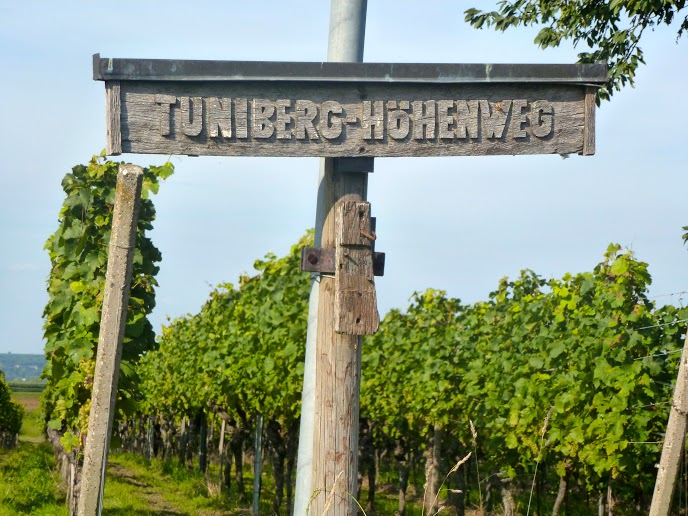
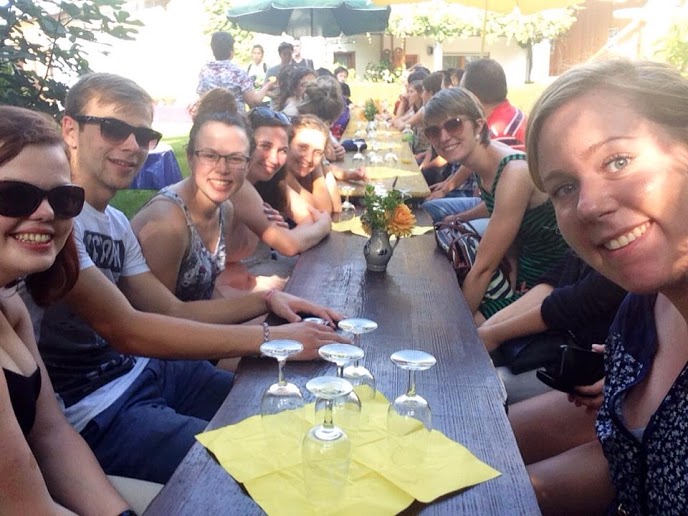
There is an added social aspects outside of the classroom because the Language Institute puts on different programs such as day tips to Switzerland and France, local hiking trips, and other activities. So far I participated in a bar hopping experience and went on a vineyard tour in Tuniberg. This coming week I will be swimming at the University pool, going bowling, going to Titisee, and going on a 10km hike!

A Vineyard in Tuniberg

A Vineyard in Tuniberg

A Most Welcoming Meal: The owners of the vineyard brought us to their house and cooked for us.

A Most Welcoming Meal: The owners of the vineyard brought us to their house and cooked for us.

Next Week
I will update you about how all the social events went and the analysis of stereotypes that I left out this week (I had so much to write about)! There may be other topics I explore as well. Tschüs!