Rhiannon in India: Missing Life in Hyderabad

November 22, 2013

Right now, I am on a plane on my way to Kochi, Kerala. As I wrote in my last post, I am spending the next two weeks travelling through the southern states of Kerala and Karnataka, known for their coastlines, mountains, and coconuts. As soon as my Hindi exam ended today, I rushed home to pack my things and headed to the airport, eager to finally escape school life and being an amazing adventure. But this excitement came at a price. I have been so engulfed by exams and planning for this trip, I had not realized that I would be seeing many of my friends for the last time today. When we left the exam room this afternoon, many of my friends and I realized that our end-of-semester travels would be separating us until it was time to go home in December. We said our goodbyes, but it seemed so rushed and unexpected that it left me feeling strange about leaving for my trip. I know I’ll see many of my American friends again, whether it be in India before we leave or once we are back home, but these goodbyes made me realize something even worse. Even though I’ll be in India for a few more weeks, I will never be in the daily routine that I developed earlier this semester. I may never get to experience the little things that became so normal and part of my everyday life, like being greeted by the familiar auto-wallahs in our neighborhood, riding my bike to class with two flat tires, or eating a pound of rice at my favorite canteen on campus. So although I am thrilled to start my two-week trip, it is a bittersweet excitement.

I know I’ll miss every experience, every interaction, and every person at some point when I get home, because it is often the little things that come to mind first when I am reflecting on my stay in India. Nevertheless, there are a few people that I will really miss having as a part of my everyday life once I am home.

The first is my host family – Nivedita, my host mom, and Prerna, my host sister. Looking back on the semester, I feel so lucky to have been placed with this host family. Nivedita and Prerna were always so kind and patient with us when we would ask endless questions about Indian culture. Nivedita would always let us crowd around her in the small kitchen while she was cooking dinner to watch and write down recipes. She would also spend hours after dinner telling us the religious stories about different gods behind all of the holidays we were celebrating, and was the primary source behind many of my blog posts this semester. Prerna was also a very good source of information when it came to understanding the ins and outs of Indian culture. We really got to bond with Prerna when she came with us on a long weekend trip to Mumbai. She had never been to Mumbai before, so we all went together to explore the big city, see some sites, and go shopping for “western” clothes. My favorite part about hanging out with Nivedita and Prerna was when we go on trips with them. Last weekend, Nivedita’s sister and her two kids, Sanskar (12) and Isha (5), were visiting us from Pune to pick up Nivedita’s mom, who we called Aji (grandma in Marathi). While they were all staying with us, we went for a day trip to a town to the north of Hyderabad called Warangal, known for its farmland and historic temples. We spent the whole day hopping from site to site in the taxi while we had the best time hanging out with the family, especially the two kids, Sanskar and Isha. Everyone welcomed us into the family and treated us like we were one of them, especially Isha, who attached herself to Jennie and me the whole day.

Family at Warangal

Our host family at a temple in Warangal

Jennie Sanskar Isha rice field jumping

Jennie, Sanskar, Isha, and I jumping in a rice field near Warangal

I am also fortunate to have had the opportunity to meet the neighbors in our apartment building. One of the first people we met when we moved into the apartment was Moulali, the watchman. A middle-aged Telugu man, he knew very little English (and I knew even less Telugu), but somehow we always managed to communicate about where our host family was, what he was having for dinner that night, where we were going, and when we’d be back. Every time we came into the carport, where he and his family lived in a small room, he would yell, “Namaste!” and fold his hands dramatically. He was always extremely energetic, and my best memory of Moulali was when Jennie and I gave him a flower for him to give it to his wife, Narasimha. He took the flower, then sang and skipped all the way across the carport to his wife to give it to her.

Moulali and Narasimha

Moulali and Narasimha, the watchman and maid for our apartment building

Throughout the semester, we formed a close relationship with the other family on our hall, spending many afternoons or weekends hanging out in their apartment watching TV, or eating lots of snacks, and playing with their two kids Binnu (9) and Quiny (5). Madhu and Sandiya, the parents, were so kind and welcoming to us, and now seem like an integral part of our host family. We also became really close with the family living in the “penthouse” apartment on the roof. They also had two kids, Lalith (14) and Spandana (9), who we also spent a lot of time with. Lalith, a super smart rubix cube master, would always hang out in our apartment and tell us about the things he was learning in school. Spandana loved to come over to color or learn English songs from YouTube on our laptops. As the semester went on, our three families spent more and more time together, sharing meals, going to the park, and even doing sunrise yoga on the roof.

Binnu and Quiny Diwali

Binnu and Quiny in their Diwali outfits

There are many other people I will miss as well. I will miss spending evenings with Jennie doing homework, making cookies, and watching old episodes of Disney channel shows. I will miss traveling to new, exciting places with my friends from CIEE. I will miss meeting with my peer tutor Rajini twice a week to attempt at speaking Hindi. I will miss going to dinner and concerts with my friends from Hyderabad. And the list goes on.
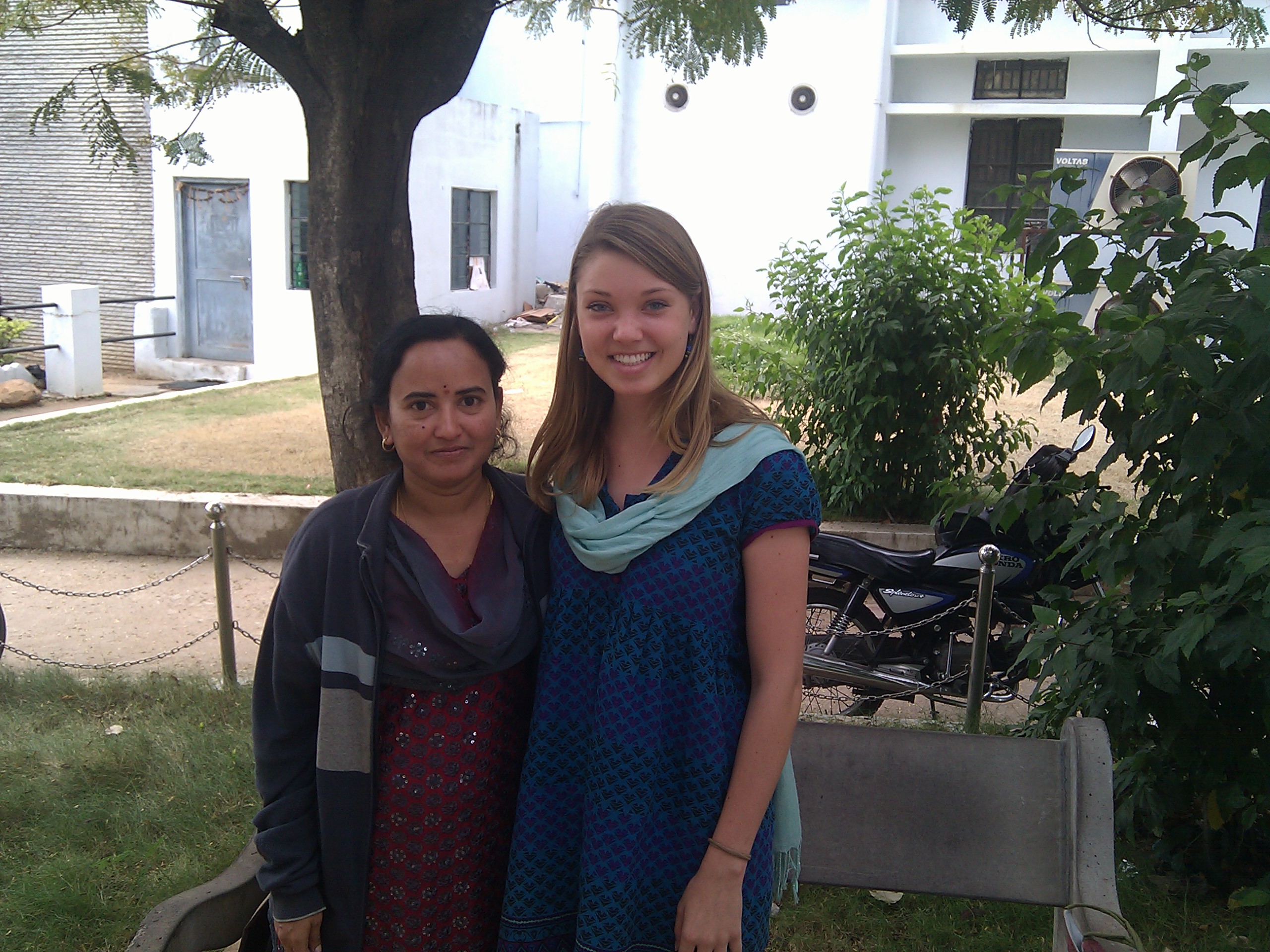
Rajini

My peer tutor Rajini and me at our normal meeting spot in front of the library

Of course, I could list just as many, or more, things that I miss from home right now too, and I’m excited to go back to my family and friends in America. But now that my time in India is coming to a close, I wish that I could stay here for a little longer and prolong the end to these wonderful experiences I have had this semester.


Alyssa in New Zealand: The end

November 12, 2013

It seems that I’m constantly on the move. I never run out of things to do no matter where I am. And it’s saddening to think that this will all come to an end very soon. The day I fly out from New Zealand is going to approach quickly and I won’t realize this until the actual moment comes.

The past couple of weeks have progressed much quicker than I thought. It felt liberating to finally finish my last exam because from that point on, I did not have to worry about schoolwork anymore. All I had to think about was what I was going to do with my remaining time in the country. I took advantage of my free time right away. I had made plans to leave after my exam to travel the north part of the South island, which was a 900 kilometer trip from Dunedin.

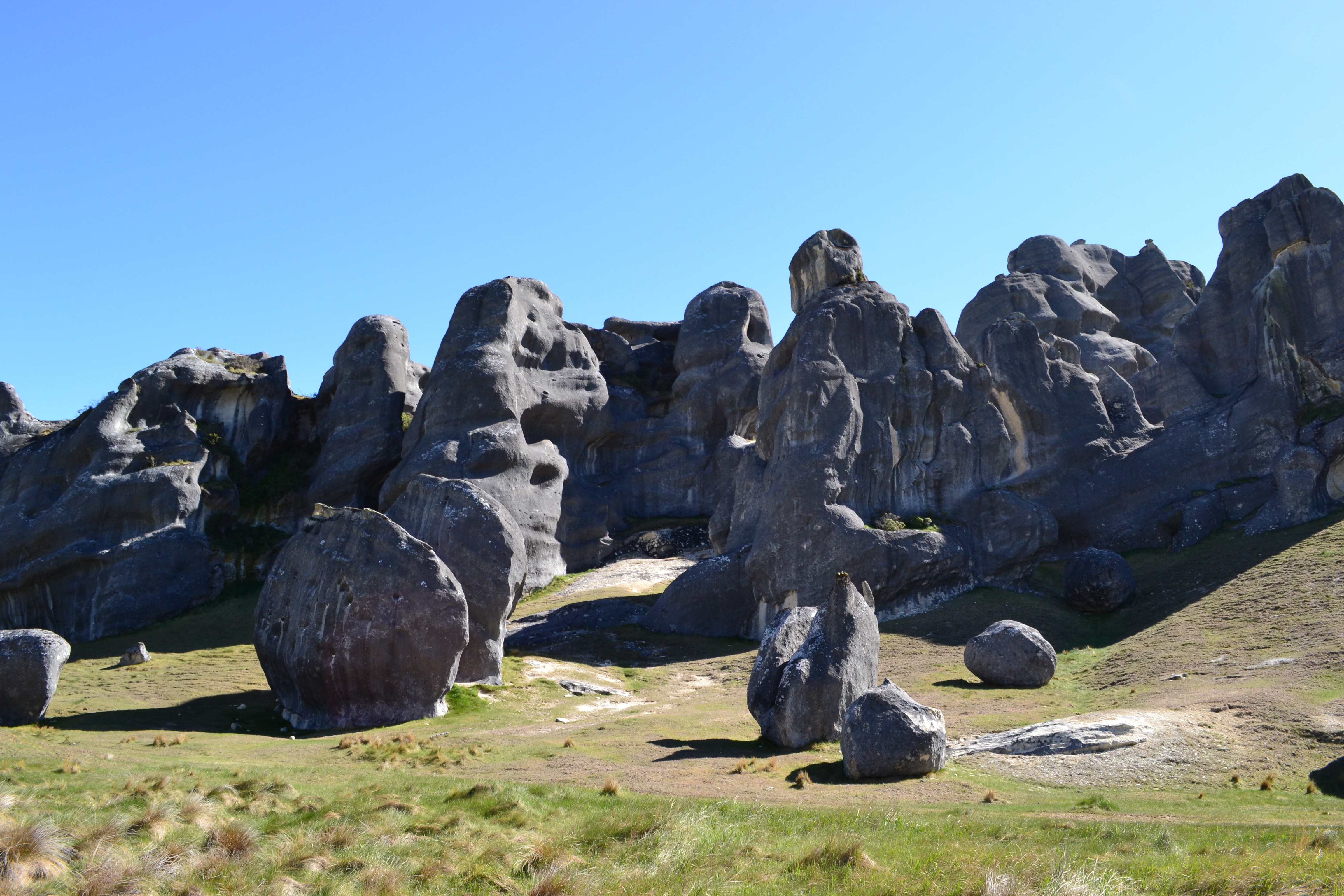
As my three friends and I drove in the northern direction, we made stops along the way. After five hours of driving, we ventured out to Castle Hill, which had been named the “Spiritual Center of the Universe” by the Dalai Lama. The location seemed to be at absolute peace and serenity. As we walked towards the entrance, we were greeted with vast green land which was completely occupied by several limestone boulders. Each stone varied in size, for they ranged from 8 to 40 feet. The area was the epitome of New Zealand’s climbing scene. Every corner we turned, there was a new bouldering opportunity that we were drawn to. It became our glorified playground and my favorite place that I’ve visited in New Zealand.

DSC_0012

Castle Hill

DSC_0010

The ideal location for climbing and bouldering

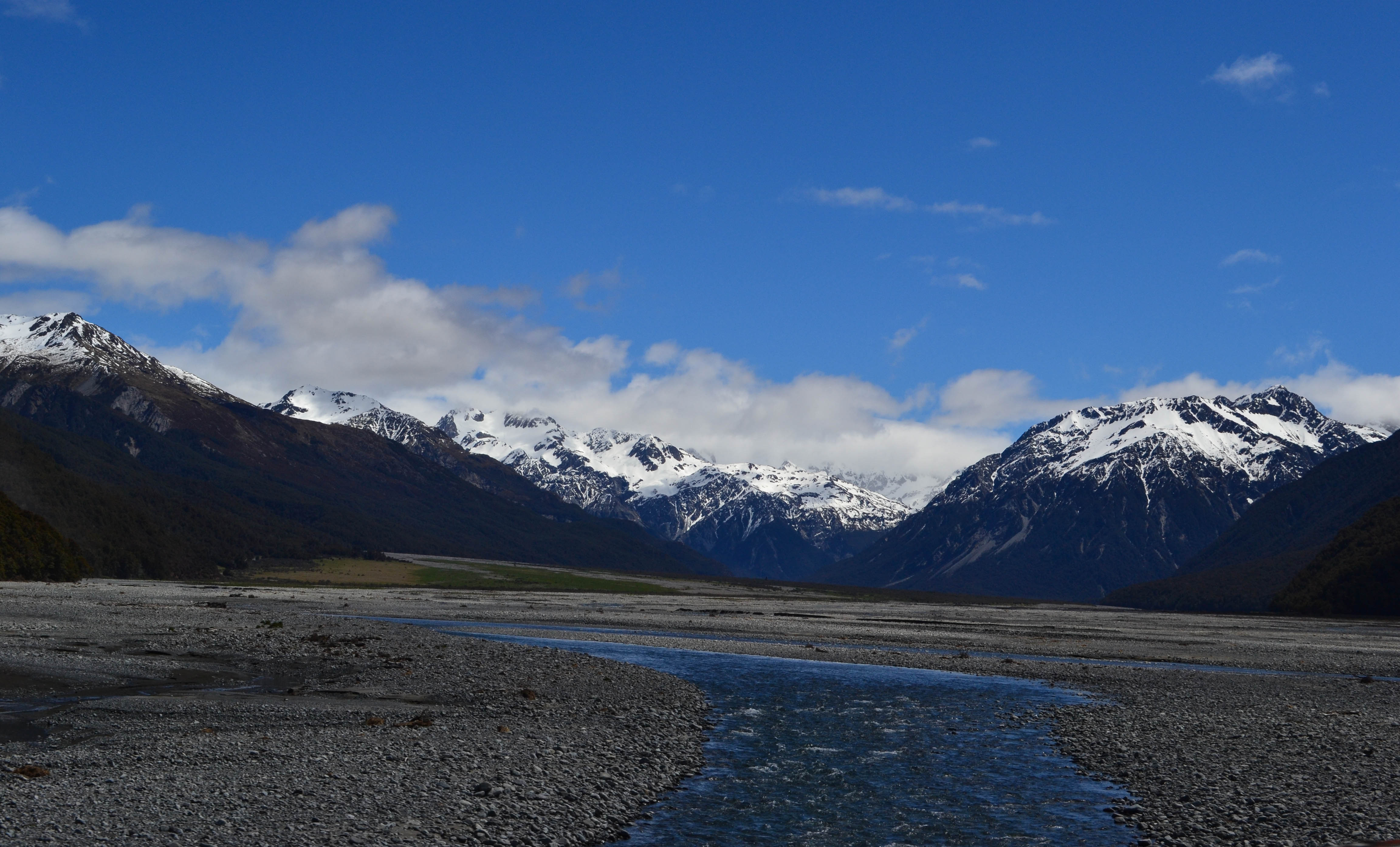
As we proceeded north, we drove through Arthur’s Pass National Park, a scenic highway route. The further we immersed ourselves into the valleys, the more impressive and vast the mountains became that surrounded us. Just when you thought you couldn’t imagine anything bigger, something even more immense came along. Such remarkable scenery reminded me of how much I haven’t seen, and I became more than grateful to find myself venturing out to places that I had never thought about encountering.

Abel Tasman National Park was our final destination, for we wanted to tramp one of the Great Walks, the coastal track. It is located in the northwestern part of the island. The weather was noticeably different from the weather in Dunedin. The temperature was warmer and the sun wasn’t constantly hiding behind the clouds. The track as a whole was fairly easy mostly because there was very little elevation. As we hiked the track, we came across several different accesses to beaches, which made it even more enjoyable. One could almost say that it was more relaxing than a strenuous activity for us.

abel (1 of 1)

As we drove through Arthur’s pass, I captured this shot when we were crossing over a bridge

DSC_0073

Arthur’s pass

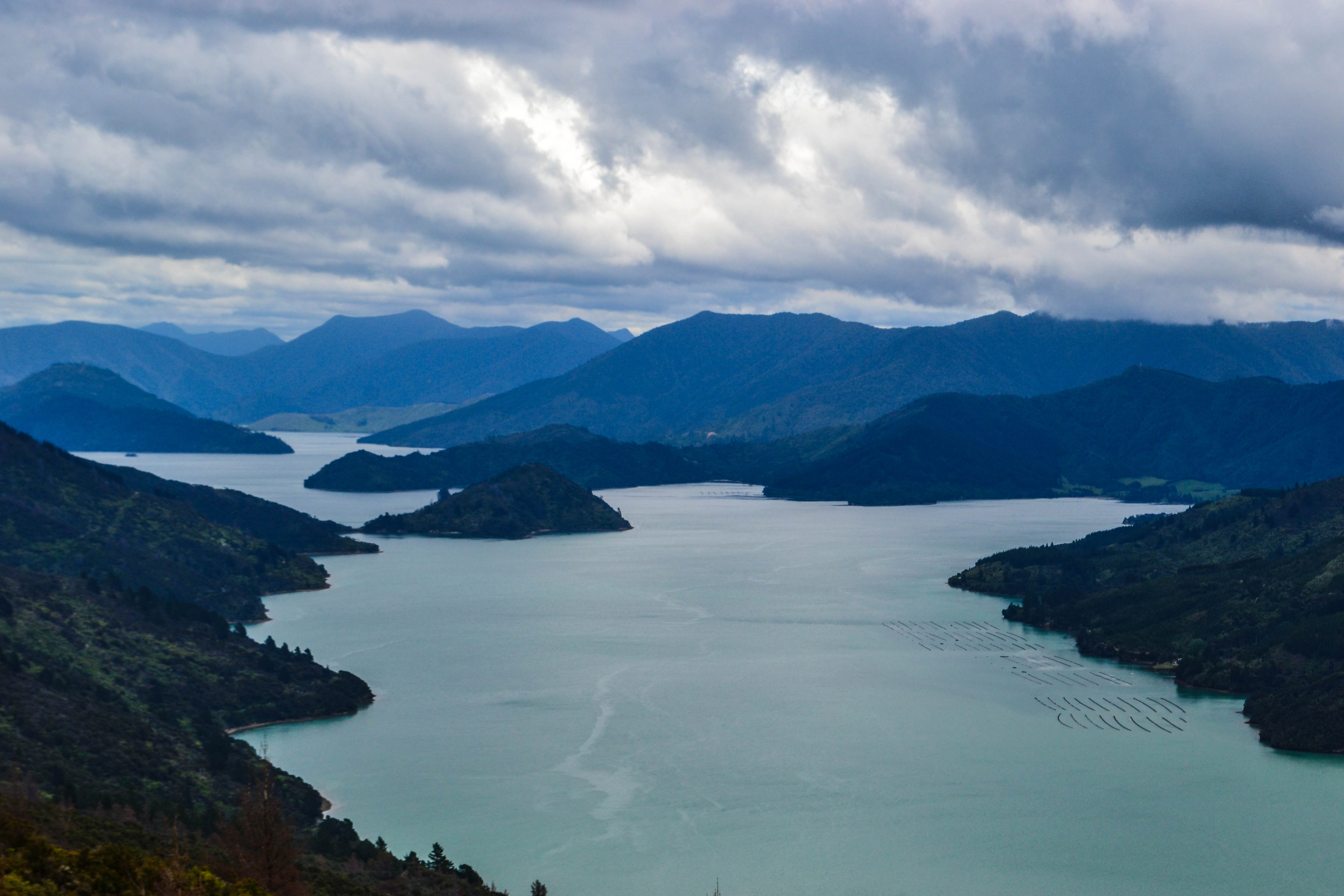
Once we finished the track, we traveled east to Picton so that we could start another tramp, the Queen Charlotte track. Since we didn’t have the time or stamina to do the entire track, we decided to start in the middle where we would get the best views of the Marlborough Sounds. As we reached to an elevation of just over 400 meters, we concluded that we could have not picked a better spot to be on the track. Out of 71 kilometers, we chose the perfect place.

abel9 (1 of 1)

Marlborough Sounds

After six days, we made our way back to Dunedin. The thought of leaving has finally become a reality now that my packing has begun. My flight to return to home is November 21st and I leave Dunedin with my flatmates on the 10th. For those remaining 11 days, we will be traveling the entire North island. It will be our last and final stretch of traveling in New Zealand. The Auckland airport will be where we depart back to our home countries.

Tonight is my last night in Dunedin. The town has become not only the place where I reside, but it has also become my home. Traveling around in New Zealand would not have been the same if I had not been with the people that I have met here. As I’ve gotten to know them, they have become an important aspect in my life as we have all supported each other regardless of the fact that we are all from extremely different places and cultures. We all came to New Zealand for our own yet similar reasons, all of which have naturally forced us to make the experience much more meaningful in a way we never imagined.

Expectations are never met. We can never be absolutely certain about anything until we have experienced it for ourselves. Thus, it is best to go in without any expectations or set plans. Keep an open mind. You never know what changes and occurrences will present themselves, for it could potentially be for the better in the end. If you knew everything that was about to happen to come, to what degree would you actually enjoy it?

Seeing that this is my last blog post for the semester tells me that the journey is finally coming to an end. I highly enjoyed writing about my study abroad experience. It has been recorded and now I have something to always look back on to reflect the entire semester. Thank you for providing me with this opportunity, Richmond; you have helped me make my memories and experience permanent.

With my last words, I will say that if you have any desire to study abroad, do it. Some inconveniences may present themselves, but they can be solved. As cliché as it sounds, the experience as a whole is unlike anything you could ever imagine and there is no reason for anyone to miss out on that. No one should be deprived from seeing the world.

To consider myself lucky is an understatement. Thank you to everyone who has made my time more than enjoyable over here in New Zealand. As for all the other study abroaders, it will soon be time for us to go back home and return reality back at school.

Not all those who wander are lost.”
J.R.R. Tolkien, The Fellowship of the Ring


Mel in Chile: The South Part 3

November 8, 2013

Last time you heard from me, I finished writing about my homestay with a Mapuche family in a small valley called Valle Elikura.

We left Valle Elikura early Monday morning. We spent the next part of the trip in Dichato, a small town in the southern coast of Chile. We also took two classes in Universidad de Concepción about the economic, political and social influence of the forestry industry.

Before I start talking about the activities during the final days of our trip, I would like to share how I felt after Valle Elikura.

I think it’s safe to say when we travel and spend time with other people who are culturally or ethnically different than our own group, we tend to hope our time with them will attend to some questions, or curiosities. Likewise, I hoped that my time in the homestay in the Valle Elikura would answer many questions I had thought of in preparation for the trip. How did they feel about being surrounded by the forestales (general term for forestry companies)? Is there a space for the community and the forestales to discuss terms of mutual agreement for future plans? How had the concept of “ser Mapuche” (literally meaning “to be Mapuche) evolved through history? In which ways did this identity adapt to the political context of each time period? What are the major discontents of the Mapuche community in Valle Elikura with the Chilean state?

I refer specifically to the community in Valle Elikura because I wanted stay away from the fallacy of assuming that the Mapuche are a homogenous group. I did assume that everyone in Valle Elikura would share the same identity, have similar political views, and generally organize around the same “vision” for the community. I quickly found out my notion was embarrassingly wrong. To begin with, most of the families in Valle Elikura have one Chilean parent. My host father was a priest in an Evangelical church while the director of our homestay expressed great discontent with the infiltration of Western, monolithic religions in the Mapuche community. As I became aware of these dichotomies, I raised questions that tried to go deeper into learning more about the people living in Valle Elikura.

The more I tried to “learn” during the five days of my homestay, the more I felt I didn’t understand. It’s as if I walked into a cave. In the beginning, I had a torch with a small fire. I could see clearly as far as the light from the fire would allow me. But, as the fire grew and the light became bigger, I realized the immensity of the cave.

At the end of our second day, I wrote ten pages front and back of reflection in my journal. My mind never stopped thinking.

I never got to the bottom to any of my questions. It is impossible.

In this post, I wanted to share a bit of my personal reflection of the trip.

It was a milestone experience. I didn’t answer questions. It was the first time I put incredibly effort into resolving my inquiries and realized I could not do it. I could not reduce thousands of years of history and social processes and point to one fragment to say “this is the answer.” This may sound like an amazing and valuable epiphany, and it is. But when I was just understanding the complexity, I was very discouraged that I would never “fully” understand.

In my own opinion, I say I have a passion for the pursuit of knowledge. When I realized this pursuit would raise more questions than it answered, I became very cynical. I thought, “If I will never fully understand these concepts, then I should stop wasting my time trying.”

I am thankful I took some time to track where I learned to relate obtaining answers with successful pursuit of knowledge. I need not look any further than my current curriculum as a university student. My classes thus far have taught me to look for answers. They have taught me that assets should always equal liabilities. They taught me to model consumer behavior according to models and mathematical equations. I think somewhere in my 14 years of schooling, I learned to appreciate and value linear ways of thinking. The problem is at the top and through several processes of analyses and deconstruction, I arrived at the bottom; “the answer”.

The experience in the south broke that nonsensical concept.

road

On the way to Dichato from Valle Elikura


Diego in Brazil: A day in Ipanema

November 8, 2013

It’s been exactly three months since I first came to Rio de Janeiro. Before starting my study abroad program I had spent the last half of July working in Lima and the Peruvian Amazon. On August 5th I finally took a bus to Lima’s airport and flew during the night to the Galeão International Airport in Rio. Just yesterday I was having dinner with my host family and we talked about that first day when I moved into their apartment.

Three months and today is the first day I post an entry about a trip in Rio! As I have written several times before, one of my main goals for my program was to avoid becoming yet another tourist in this city. I understand why many friends tend to disagree with my goal, but having this objective in mind was a mix of previous experiences in other regions of Brazil, some geography and sociology classes, and the desire to have a different approach towards one of the world’s most dynamic metropolis.

After countless conversations with my host family, classmates, professors, and many people I have met so far, I finally felt ready to visit and write about some of Rio’s neighborhoods. So here it goes.

Last weekend I packed a backpack and left my apartment early in the morning. I took a bike (every month I pay about $4.00 to have access to one of Rio’s biking programs) and began my trip to a neighborhood in Rio’s southern area: Ipanema. I had planned to visit a number of places that my host family had suggested, but I mainly wanted to spend a day walking around Ipanema’s streets without a set destination.

Ipanema1

A small market with great fruit in Ipanema.

You may recognize the name Ipanema. The song “Garota de Ipanema” (“The Girl from Ipanema”), written and composed by João Gilberto and Stan Getz in 1962, made the name of this neighborhood widely known (here’s a version of the song for you to enjoy:

I biked for about 25 minutes before reaching Ipanema and left my bike to start walking. My host family truly wanted me to visit the Praça Nossa Senhora da Paz and the Igreja Nossa Senhora da Paz, so that is where I went first. Thinking about this entry I stopped to look for “good” pictures but in the end decided to submit the ones with cars, buses, and people walking through the church and park. In my experience, contrasting images of nature, people, and culture is one of Rio’s main characteristics.

Ipanema2

Not a great picture of the Nossa Senhora da Paz church, but the contrast is certainly common in Rio’s streets.

I bought two oranges from a street market and sat in the park to read “Perto do Coração Selvagem” (Near to the Wild Heart) by Clarice Lispector – a fantastic writer. Unfortunately it was a rainy day so reading outside was not a great plan. I entered a small shop to buy water and asked if they had any suggestions for my trip. The guy in the shop sent me to visit the theater Rubens Correa and the cultural center Laura Alvim, and of course I followed his instructions. As I visited these and other places I kept asking people if they had any suggestions for my day in Ipanema. I ended up having lunch in a sandwich-shop with incredible natural juices and a nice couch to read.

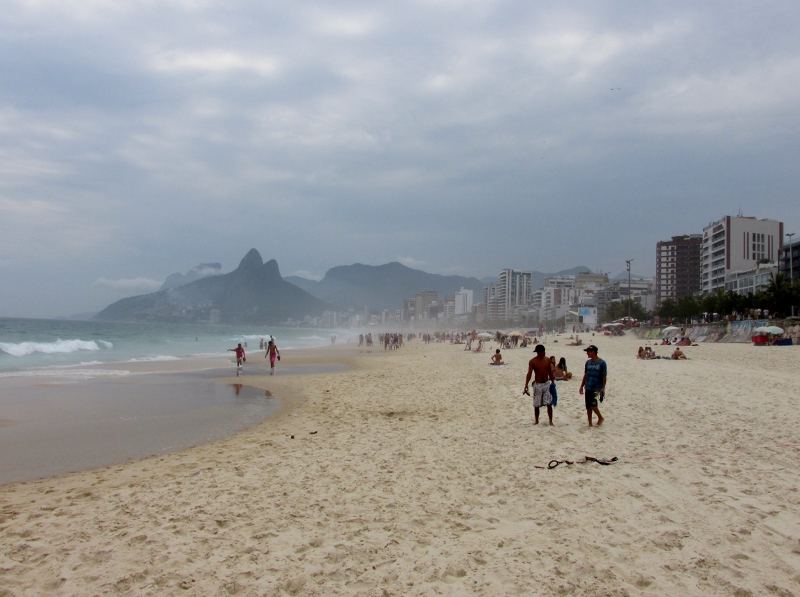
I finished Lispector’s book in the afternoon and kept walking. The weather had not improved much but several people were now in the beach (my guess is that the temperature never dropped below 70 degrees.) I knew friends and family would appreciate a picture or two from Ipanema’s beach so I walked by the beach for about forty minutes. When I finally reached the end of Ipanema (where Copacabana starts) I took another bike and began my trip back to my apartment.

Ipanema3 (2)

And of course, Ipanema’s beach on a cloudy day.

As I walked through this neighborhood I kept thinking about my “don’t be a tourist” goal. Was it worth it? Did it make any sense to wait some time before going on these trips? Would reading Lispector’s book in a sandwich-shop have been any different two months ago? Well, I suppose any “evaluation” of my goal will have to come from my overall experience in Rio de Janeiro. Two months ago I wouldn’t have known that, following a common cultural dynamic in the country, Lispector’s modern language had been widely criticized throughout Brazil as an attempt to move away from other more traditional styles. It may seem as small detail, but understanding why different literary circles in Brazil reacted differently to “Perto do Coração Selvagem” is the result of countless conversations during these three months.


Mel in Chile: The South Part 2

November 6, 2013

For those of you who have been following (don’t worry, I don’t have high expectations. Kidding- I actually suspect hundreds of thousands of people read my blog. Wow this must be the world’s biggest parenthetical insert) this post “The South Part 2” is the second of a three part series that reflects on the ten day excursion I took with my program in the South of Chile.  I apologize to readers who do not like long sentences.

We left Ralco after three days and two nights of relaxation as well as an hour long research methods class sitting on grass, in a circle, with a mountain split three ways as the background.

We headed for Valle Elikura. This valley, located close to the Pacific Ocean, between Contulmo and Cañete, has a population of about two thousand. Valle Elikura is historically territory that belongs to the Mapuche indigenous peoples. While there continues to be a strong Mapuche population, many of the families are also mixed with one of the parents being Chilean. Here we participated in a homestay for five days.

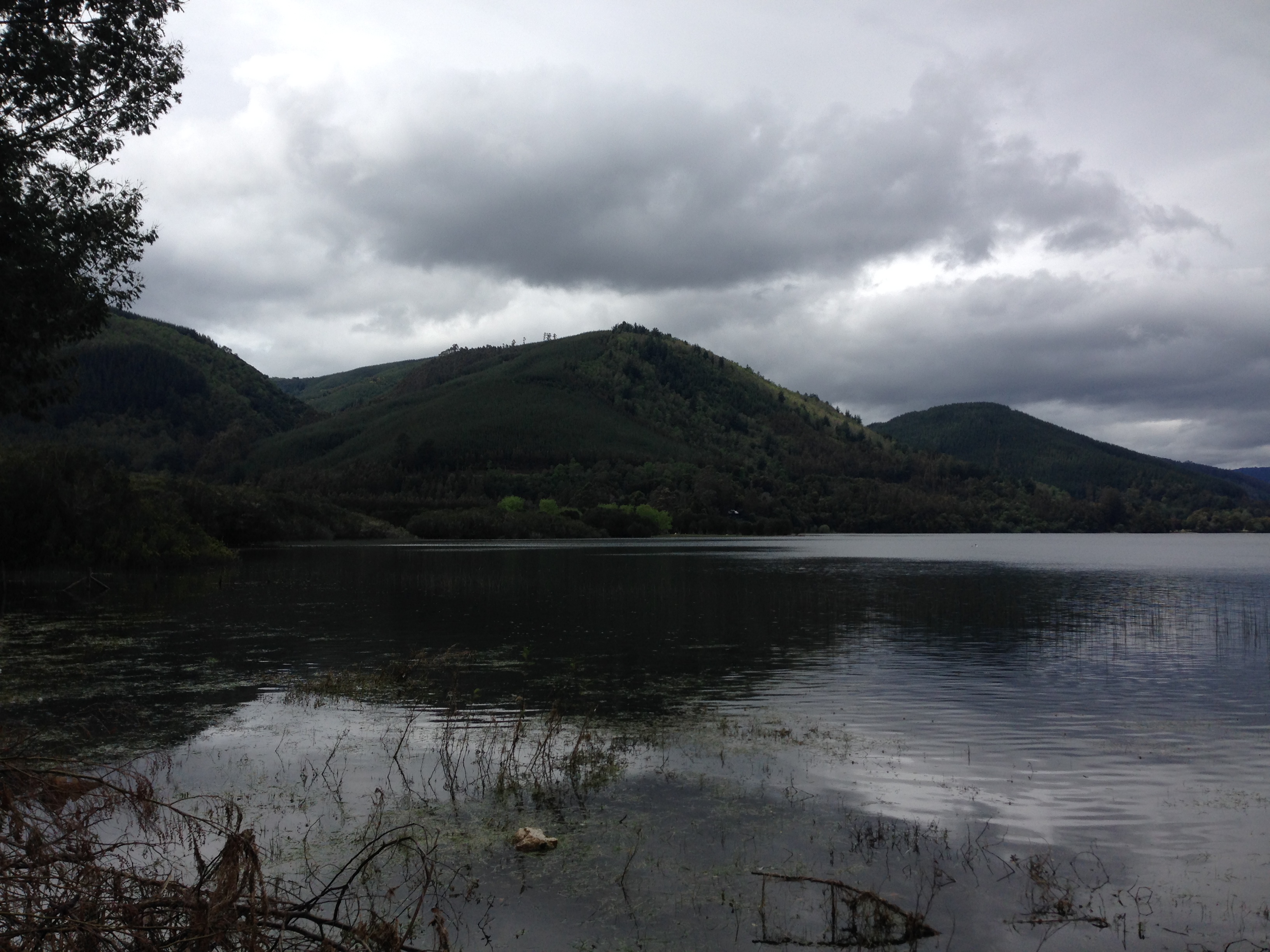
lake

A lake in Valle Elikura

During the day we had several planned events as a group; lectures, hikes through native forest, discussions with community members, community work, and most importantly time to be with our host family. Many families in the community have built cabins on their own property where they receive tourists. We were broken up into groups of two or three and each group lived in the cabins. The cabins are separate from the main house, but all we spent a lot of time with the family during meals and free time.

An important reason we traveled to Valle Elikura was to learn about the concept of community tourism. Many of us have traveled outside of the country. In these instances we have all participated in tourism where we experienced a different culture. At first glance, tourism seems as nothing more than exciting new adventures. Through this program, I have studied the legacies and implications of tourism and came to realize some unsettling characteristics.

Many times tourism, especially showcasing “other” ethnicities, resonates with colonial legacies. I will give some clearer examples.

1. Recently wed US couples travel to Fiji and are greeted by locals dressed in “traditional attire” and presented exotic drinks.

2. Twenty something young women step out of their comfort zone and take a much deserved vacation in India where they ride an elephant and get henna tattoos

3. Bold backpackers arrive to the desert village of San Pedro de Atacama and walk around the dirt streets of the village center passing through stores with “hand made/local” products, touring agencies, restaurants, and hostels made of adobe. Meanwhile Atacameño people, whose culture is being replicated for consumption, are nowhere to be seen.

I hope you get my point. Most times, the purpose of tourism is to explore, or more directly, consume, a different culture. The colonial legacy comes mainly from two circumstances. The first is that many times tourism is imposed on communities. The decision to welcome tourists in particular territories originates from higher political or economic agencies. Touring agencies offer services, companies build nice hotels, and the local people in the stores selling “artisanal products”. Tourists are not aware that the “local” people selling artisanal souvenirs are simply hired to sell. They do not own the store and they did not make the product. The souvenirs may not even come from the culture. The overwhelming majority of profits generated from tourist related activities are channeled to national or multinational companies. Another source of the colonial legacy in tourism becomes apparent when we look at the characteristics of the tourists and of the people in the regions they tour.  It will not take long to realize many tourist are from western and/or ex colonizing countries while the destination is usually an exotic country that also most likely an ex colony.

In Valle Elikura, the practice of community tourism is trying to break this relationship. Through community tourism, the Mapuche community appropriates tourism as an instrument through which they assert agency. Tourists who stop in Valle Elikura stay in a cabin that directly belongs to a family. The tourist will buy food from families in Valle Elikura. If they want to purchase artisanal items, there are a few people  in the valley who make the items from start to finish.

Take Rosa for example. She has a store in front of her house where she mainly sells knitted items. Rosa shaves her sheep to get the wool. She washes the wools, spins it and prepares the thread so it is ready to be died. Rosa takes plants of different colors from the garden in front of her house and boils them to produce the color for the wool. She takes the threads and leaves it in the die so the wool absorbs the color. Rosa takes the dies wool and begins knitting apparel to sell in her store. The prices are incredibly reasonable.

The objective for community tourism is to decolonize both the local community and the tourist. The tourism has control over how tourism of their culture and in their territories will happen. The money generated over tourist activities is channeled directly to the families of Valle Elikura.

In my opinion, the tourist still consumes a vision of the “other” culture they traveled to see. However, in the case of community tourism, the community “shows” its own culture. More importantly the local community can directly communicate with the tourist. The communication can be a way of educating visitors on issues that may be misrepresented by the media.

The distinctive characteristic of community tourism is that the community voluntarily decides to receive tourists and how they will administrate tourism.

During our trip, we also learned about Mapuche history, their struggle for autonomy, and their effort to maintain unity within a now diverse indigenous group (diverse in terms of political views, religion, way of living, etcetera). The community was not only welcoming, but also incredibly patient in discussions with a group of young students from the United States like us.

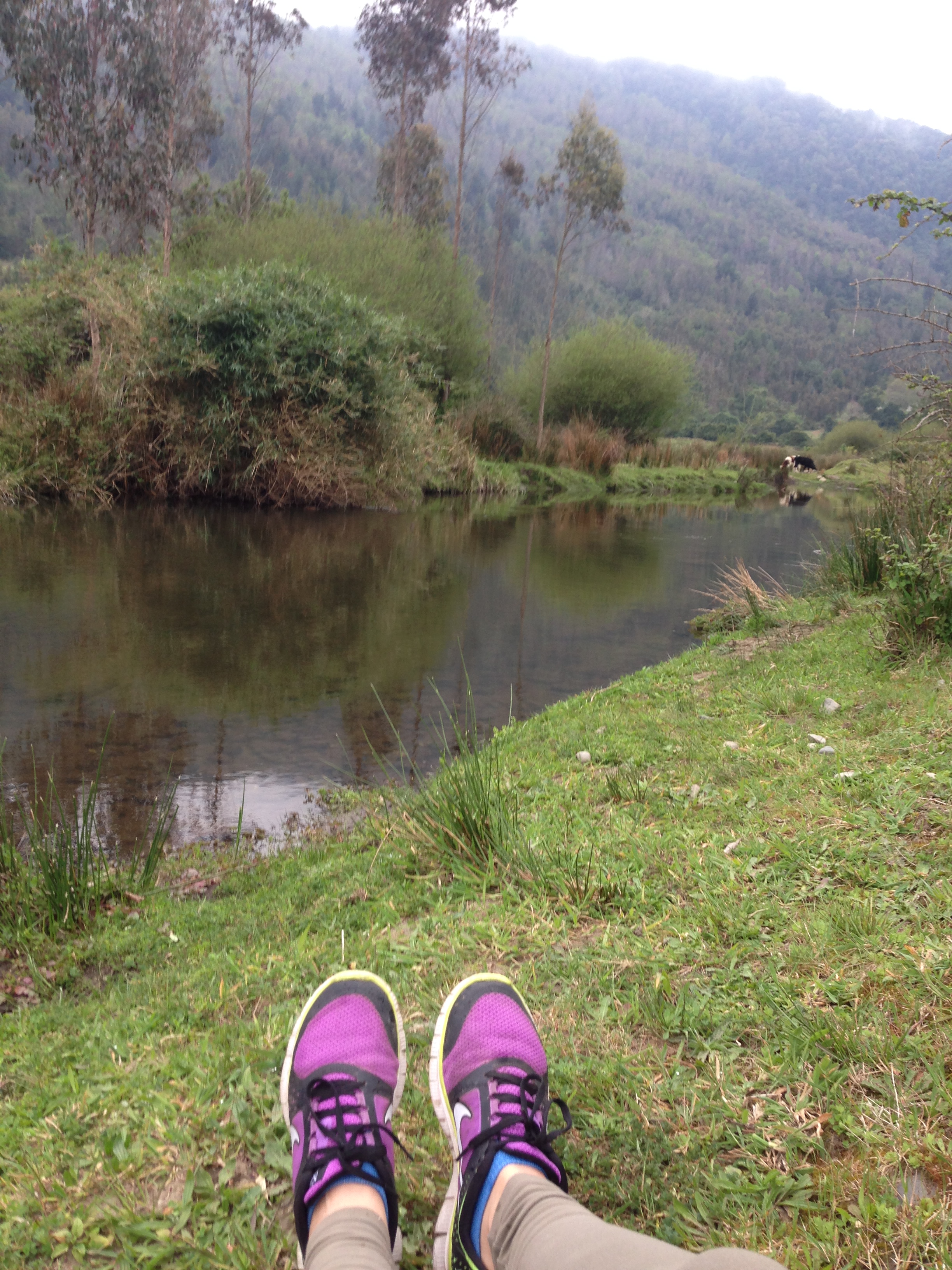
Running

I went on a run to the river and sat down a bit to take in the scenery and a quick photo!


Mel in Chile: The South Part 1

October 25, 2013

The South: Part 1

I have finally returned to Santiago from the ten-day excursion with my study abroad program. If I was promoting SIT before, I am really promoting them now! The excursions are valuable because they contextualize our lectures, readings, and discussions. The excursions allow us, as students, to move closer to the reality of the theories and discourses we are exposed to in an academic environment.

The title of this blog is “The South: Part 1” because I will divide our trip into three parts. For the first two days we traveled to Ralco, a town in the Biobío region, and stayed in cabins with the other students in our program. The next five days we participated in a homestay in small village called Valle Elikura. During this time we learned about the practice of communal tourism, engaged in discussions with community members, and heard stories of struggles and achievements of the Mapuche group. As we bid our temporary homestay families farewell in Valle Elikura, we spent the last two days around the city of Concepcion. These last days we visited a coalmine, the industrial complex of a forestry company, and had two lectures at Universidad de Concepcion.

Worry not; all of the above events will be described in detail in the upcoming posts.

So this particular post is about the first part of our excursion. We left Santiago at 10 pm on the evening of Sunday, October 13. We drove through the night and arrived to our cabins in an area just outside of Ralco at six am on a very chilly Monday morning. Biobío is the eighth region in Chile bordered by the Pacific Ocean to the west and the Andes in the east.

We all devoured breakfast like hungry wolves that morning and headed out to find our cabins. I am not a car/bus/airplane sleeper so I was tired. I planned to claim my bed and sleep well into the afternoon.

As I was wobbling through the grass, sandwiched in between the two backpacks I was carrying, I looked to the left and felt like I had been zapped awake by an electrical force. I saw the most bizarre and beautiful mountain. The peak looked like it had been split in three pieces by a lighting bolt. I thought, “Alright, this deserves some attention.” I dropped off my things in the room and, without any sleep, decided to look for a trail.

As fate would have it, there weren’t any trails leading up the mountain and the forest was too dense to create my own, so my intended hike turned into a nature walk.

The pictures will speak on behalf of the scenery much better than I will be able to describe it in words so I will not continue with descriptions.

cabins

These are the cabins we stayed in while in Alto Biobío

mountain

This is what our research methods class looked like Tuesday afternoon. The mountain is in the background.

I wanted to talk about what I enjoyed in Ralco. The town has a strong representation of Pewenche people, a group ethnically related to the Mapuche indigenous group in Chile. We were going to visit the Pewenche museum in Ralco. The last time we visited a museum trying to show “indigenous culture” we were in San Pedro de Atacama. It was an incredibly disappointing experience. Until recently the museum (in San Pedro) had an open display of a mummified body of an individual who belonged to the Atacameño group (the indigenous group in San Pedro de Atacama). The Atacameño community denounced this as incredibly disrespectful to their ancestors and an inappropriate display of the Atacameño people in general for many years. The mummified body was not removed until recently. I am positive I spoke of this in my blog post after the trip to San Pedro, but to recap; tourism in San Pedro is almost entirely based on foreign agencies. The indigenous culture is commoditized for consumption of western tourists, and the community itself is outside of any discourses and dialogue on how tourism of their region and culture is carried out. In literal terms, they are also physically outside of the center of the village. The center is now only for restaurants, tourist agencies, and hostels. It maintains a manicured “rustic” image of an “indigenous village” in order to supply tourists with the preconceived notions we have of exotic places. An anthropologist who works at the museum in San Pedro told us she will hear guides tell entertaining stories of Atacameño history to their groups that are incredibly far away from the history as told by the Atacameños themselves.

For this reason, when we were told we were going to a museum that exhibited Pewenche people and their culture, I was a bit weary and irritated.

When we entered the museum, however, I encountered a much different dynamic.

For starters, the museum was relatively small. The two people who worked there told us they were Pewenche. The young man let us know he would guide us through the museum. The museum didn’t have any displays of “ancient artifacts” produced from archeological digging sites. One section had photographs of different Pewenche people from Ralco with a caption of something they wanted to share about the Pewenche culture. Another area displayed Pewenche cuisine, including the instructions of how the food could be prepared. The other wall displayed and explained fruit and vegetables typically used by the Pewenche people in Ralco.

In the middle there were four wax figures of Pewenche males dressed in ceremonial attire, imitating a dance. Our guide told us next month he would dress in that way and participate in this dance.

This museum was a display of a living culture. The Pewenche people in Ralco designed it. They controlled the displays. Most importantly, they control the dialogue of how people outside the culture would consume what the museum exhibits.

We also visited a dam in Ralco. The building of dams is a big struggle the communities and environmental activists have in the Biobio region. I remember in my Environmental studies region we learned about the pros and cons of building dams. I particularly remember we had an exam on “clean” forms of energy so I diligently studied the flashcards of pros and cons I had created for the types of alternative energy we would have on the test. It was…a dejavu moment (i think?) to stand on the dam. I would look to my left and see a huge reservoir and look to my right and only see a tiny river. We also went inside the dam, into the control room to see the technological face of the structure. We also saw the various components of the dam, like the turbines the water turns and the magnetic sheet above it. As far as my understanding goes, the water from the river turns the turbine which causes positive and negative electrons in the magnetic sheet to move, which then generates electricity.

river

This is the river side

reservoir

and this is the reservoir side.

inside a dam

This is a section inside the dam where the crew controls….stuff.

The first part of our trip in Alto Biobío was incredibly valuable. I was incredibly happy with the museum. I also felt comfortable knowing I was not “consuming” images of an ethnic group that were built by people outside said group. It was also interesting to visit the dam and visualize not only the “pros and cons” that I kept thinking about, but also gain an understanding of how the structure functions internally.

Physically speaking, the area is incredibly beautiful

It is my second favorite museum in Chile.

Stay tuned for Part 2!


Alyssa in New Zealand: Two is better than one

October 23, 2013

Doing something more than once is anything but a waste of time. In fact, it allows you to see more of what you have initially missed. As pointless as it may seem to visit the same place for a second time, it is actually very beneficial.

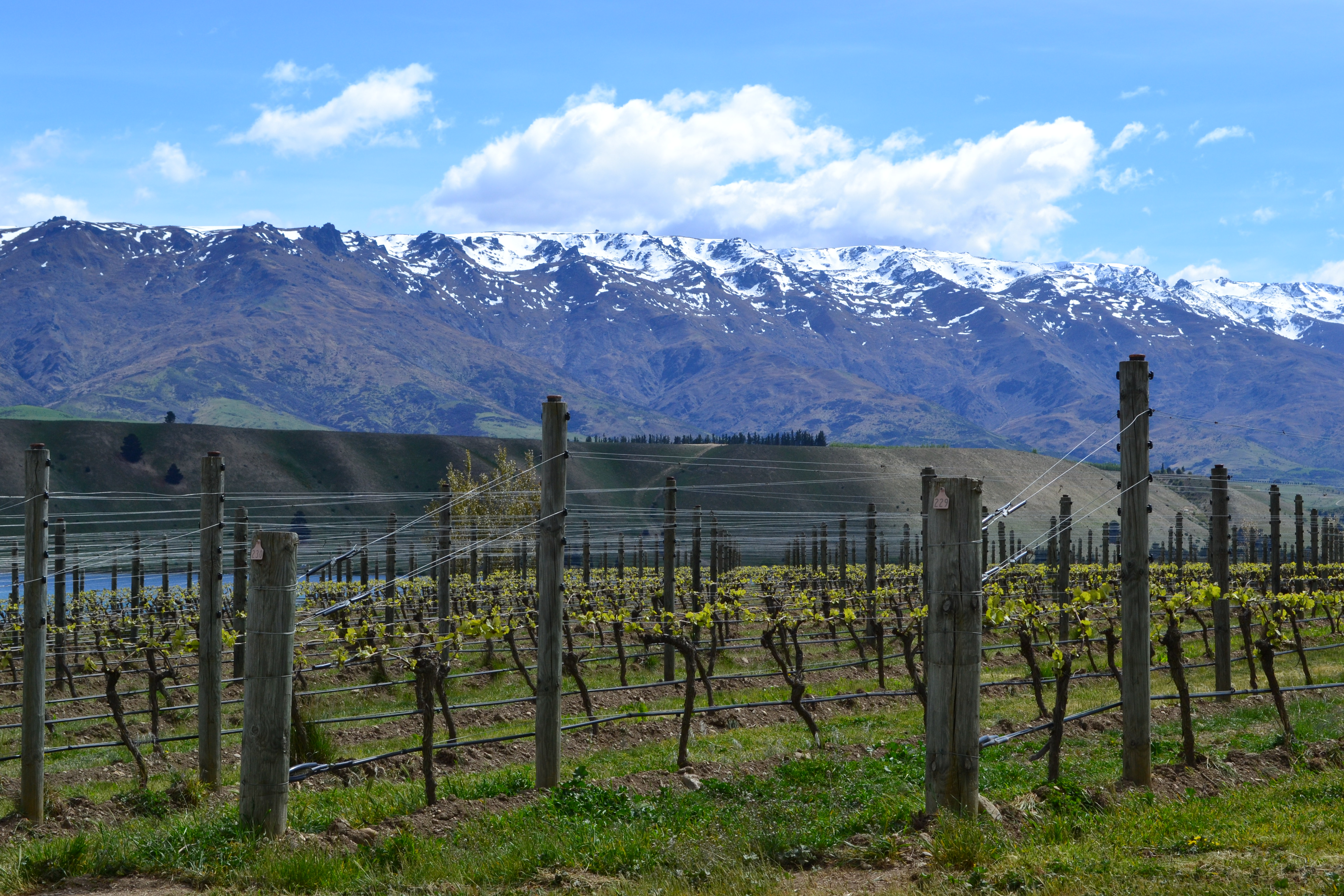
After returning to Queenstown once more with my parents, I was exposed to some of the more geographical aspects of the area. As we drove to several different vineyards throughout the day, I got the chance to see the nature that truly surrounded Queenstown. It was quite strange to think that vineyards could thrive in such a dry, cold area in the region. However, such wineries have learned to adapt and grow successfully in New Zealand’s weather conditions, even if they are situated near mountainous areas.

DSC_0859

Northburn Station winery

DSC_0863

A taste of Queenstown scenery

I also returned to the Milford Sound, except this time, instead of just standing at the entrance, I went on a boat cruise that took us deeper within. Despite the fact that it was raining fairly hard (Milford Sound is considered to be one of the wettest places on Earth), the beauty of Milford was not overshadowed by the dismal weather. As a matter of fact, the rain only contributed to its magnificence, for there were several waterfalls, most of which formed from the rainfall, that were running down from the mountain peaks into the sound. At one point, we encountered one of the more powerful waterfalls. As we made our way closer, the vibrations began to increase from the impact of the water hitting the sound. We were several meters away, but we still managed to get completely sprayed and covered by the water. The force of the water was immense, but it did not prevent us from approaching it.

milford23 (1 of 1)

The reverberations from the waterfall became more and more immense as we approached it.

There were vast amounts of fog which made it hard to make out some of the peaks of the mountains in the distance. However, the magnitude of the mountains were fully revealed when the boat made its way through the fog. Throughout the cruise, we were all kept in suspense, waiting to see what more Milford Sound had in store for us beyond the layers of haze.

milford2 (1 of 1)

A layer of mist floated over Milford Sound as we made our way deep within

The minute I returned to Dunedin, I finally had to put myself to work, for it was officially final exam period at Otago. Even though I was disappointed by the fact that I had to stop traveling for the time being, I knew that papers were a priority during my time over here as well. It felt a little weird to abruptly put my travels to a halt, for I had become so used to being on the go for the entire semester.

There was a significant amount of work that I had to do in order to prepare for my exams. My theatre exam was a take home exam, for which I had to write two essays. For my microbiology exam, the paper consisted of over thirty lectures. There were forty multiple choice and three short essay questions, all of which had to be answered in three hours (very similar to Richmond’s exams). The only difference was that these exams were more heavily weighted on my final grade.  As a result, the exams covered a lot of material and it was obligatory for me to do well.

Since my theatre exam was a take home, microbiology has been my only exam so far that has taken place during a given time slot. The location for each exam is usually very random. For instance, my exam was set in the old physical education gymnasium instead of a classroom or lecture hall. The room held an exam for not only my class, but for another class as well. The desks in the room were set up in rows and each person was assigned a number. As we took the exam, three proctors continuously walked around the room, watching almost our every move. The room atmosphere was tense, and the experience was similar to being a room full of students taking the SAT’s.

Now that two out of three of my final exams are out of the way, I have free time to myself once again. Having only one exam left makes the end of the semester seem so soon. The end is quickly creeping up and I’ve barely begun to notice it up until now. I continue to explore Dunedin in my free time, for I still haven’t seen everything. Whether it consists of me waking up early to watch the sunrise, hiking tracks that are not typically highlighted or discovering new beaches around the peninsula, everything still seems new and exciting. I still find it astonishing that all of these amazing sights and spots are so close by. Their proximity and easy access just reminds me that I have to take advantage of them while I’m living here for the last four weeks of this experience.

The odds of me seeing these people again in the near future is very slim, for we are all from very different places. Being from Boston, having friends all the way from Michigan to Norway does not make visiting each other very easy. Nevertheless, I plan on making the most of my time with the friends that I have made over here until the very end. It’s never too late for us to arrange a last minute trip in our last few weeks. The end may be near, but that does not turn us away from continuing to travel more.

Having been to most of the highlighted areas of the south island, I find myself wanting to return to the same places again. I have a fear that I will forget the sights that I have seen. Something new is always discovered the second time, which makes me think that there is still more out there. Even if I don’t see everything, it always gives me an excuse to come back all over again.

st clair10 (1 of 1)

Sunrise at Saint Clair Beach on the Otago Peninsula


Done with Classes!

October 16, 2013

Alright, before all of the other study abroad students look at this title and feel themselves overcome with jealousy, I should explain.

I am not doing a traditional exchange program with a university in Chile. Technically I go to Universidad de Santiago de Chile, but that is only true in part. The School for International Training (SIT) is an independent organization that offers themed study abroad programs around the world. The program I am participating in right now is called “Chile: Political Systems and Economic Development”. All of the students in SIT programs take classes together. For example, my program has thirteen students and all of our lectures are in a classroom of just SIT students; we do not have classes with Chilean students as part of the program. With that said, I am not lying when I say I am done with classes. One of the characteristics of SIT is the month long independent research project students work on during the last month of studies, so for me this means November. Today we are starting a ten-day excursion in southern Chile where there are high concentrations of Mapuche communities (Chile’s biggest indigenous group). The drive will be about ten hours and we will do this during the night. The purpose of this trip is to engage in dialogue with the Mapuche community and the community leaders about Mapuche political participation, economic development, and the struggles over land rights that the government sells to multinational forestry corporations, and the Mapuche perspective of identity within a nationalist country that marginalizes indigenous identity.

We will return from this trip in late October. During the next couple of days I need to create a research proposal and make the decision to reside in Santiago for November or relocate to a place that would be more useful for my work. Then November will come and I will be in full swing on my independent research.

Now that I am done advertising for SIT, I would like to express some thoughts on how it feels to be finished with classes.

Time has passed by faster than anyone can understand until they participate in a similar study abroad arrangement. Of course this is because we literally have less time in the classroom with the excursions and the independent month. However even taking into consideration those circumstances, I still feel it is honest to say time passed very quickly.

I have truly enjoyed the group with which I spent the past two months. There are only thirteen students so we had the opportunity to become close to one another. I can say that all of them are people I would have chosen to be friends with under different circumstances. We learned about Chile together, we learned a different language, we explored Santiago, and we traveled to magnificent places and came back to hotel rooms discussing them under the lens of social progress. We sat in class together every day for the past two months learning and exchanging ideas. It goes without saying I will miss the group.

We are all meeting at the metro station in two hours to start our journey to the south. I feel ready for this next experience.

Stay tuned 🙂

Screen Shot 2013-10-13 at 8.03.01 PM

This is a picture of almost all of us…we cannot be contained within the dimensions of one photo! This is in Valle de la Luna, in the North of Chile.


Mel in Chile: The North

September 25, 2013

(Warning: the pictures for this blog post are awesome.)

I ended the last blog post with a picture of the Atacama Desert I took from the plane right before we landed in Antofagasta. During the next five days we (the 13 students in the SIT program) traveled through the driest desert in the world. The purpose of the trip was to bring life to the lectures about the Chilean economy. We were to do this in two ways: three days exploring the copper industry and two days in a small village which in the past two decades has become almost entirely economically dependent on tourism.

The itinerary included two classes at a university in Antofagasta- one explaining the importance of mineral mining that is done in the region for the Chilean economy, and the other one focused on the social and environmental implications of the industry. Other major experiential learning components of the trip involved a two-hour tour of one of the biggest copper mines in the world, and an informal lecture/discussion with an anthropologist in San Pedro de Atacama. The anthropologist is also from an Atacameño community, which is the indigenous group in San Pedro de Atacama.

First up, the two lectures at Universidad Catolica del Norte in Antofagasta and the visit to the Radomiro Tomic mine in Calama:

The lectures were widely different but also complimentary. The first one was on the regional economic development of Antofagasta and the second one was on the economy and human rights. Fear not, this blog will not be a drawn out summary of the lectures. I mention them because they add to the perspective I am gaining about Chile and help to shape my experience here.

The region of Atacama is rich in minerals. There is an immense area including the south of Peru and parts of Bolivia that are lucky enough to be on the fault line of Pacific and South American tectonic plates that endow the countries with a rich variety of minerals. Unfortunately, this also generates what I judge to be modern colonialism.  Foreign investment pours into mineral rich regions like Antofagasta, international companies begin to mine, make unbelievable profits while draining regional resource wealth, and at the same time secure support from the national government . Open and unregulated markets seem to be the unspoken rule for developing countries. Many economists say this generates jobs for the local communities but it hardly seems to be the case for such a highly technological industry like copper mining. I learned that for every million dollars of investment in the copper mining industry in Chile, only one direct job is created.

Another issue is the danger of an export-driven national economy based on natural resources. How far away are we from developing a sustainable substitute for copper? How much longer until the minerals run out? What if the costs associated with mining and refining copper become greater than the market value of this resource?  Who will suffer from these probable future events? Will it be the CEOs of international corporations or the national economy dependent on the mineral? What about the effects on communities who for 100 years have been dependent on jobs related to the mining?

That is for you to ponder (I like to imagine I have thousands of avid readers.)

After the lectures we traveled to Calama and had a free afternoon of shenanigans until the next day when we visited the Radomiro Tomic copper mine. According to the booklet (more like book) the communications department gave the group, “each day the mine extracts 600,000 metric tons of material.” In the Radomiro Tomic mine, and I think throughout the region of the Atacama where most mines operate, only 0.5% of the rock is copper. I will not continue listing facts about the mine because those can be accessed from anywhere. My personal experience in the tour was a very overwhelming one. The number 600,000 metric tons sounds ridiculous when you read it and I do not imagine it produces a specific image in anyone’s mind. After the rock is leached and the copper has been extracted, the rest of the rubble is simply taken to the dumping site. It was at this point that I understood the mountain-like formations a bit further away were rubble.  During the time that we were on the observation site at the mine, they had planned an explosion to the left of where we were standing. We heard the sound, the ground shook, and within minutes the sky was covered in dust. To stand on the edge of  one of the biggest mining sites in the world was nothing but extraordinary and to be honest I do not think my mind will ever fully psychologically process the sheer size of the mining pit. It is bizarre to “see” what it means to extract 600,000 metric tons of rock per day.

0

The mines

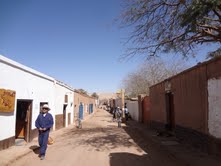
The next most significant part of the trip was our stay in San Pedro de Atacama and the anthropologist, Jimena, who spoke with us about the implications of the recent tourist boom for the indigenous community. A couple of comments about San Pedro de Atacama itself: it looks like a movie set. You walk around and see an “authentic” typical village in the dry highlands of Chile with its dirt roads, adobe walls, and low “houses”, but it’s as if the place is too manicured. The adobe walls and the dirt roads are perfectly rustic. Then you actually notice the people walking around and it is all western tourists. What looked like “houses” are actually hostels (very expensive,) touring agencies that will take you to do 136,455,478 activities you can do in the desert that include everything from sand surfing to star gazing.

0-2

San Pedro de Atacama

We met with Jimena in the afternoon. She started with telling the history of the Atacameño people and how things were when she arrived during the period in the 1990s when the tourism boom had just begun. The first comment she made about the change of lifestyle in the village was how tourism had brought some drugs to a place where they had never before been used. She also spoke extensively that national and international travel agencies harvest the profits from tourism. In her view, the normal lifestyle of her indigenous group is being “commoditized” and its “rustic” image sold to western tourists. At the same time, most of the locals have been pushed to the outskirts of the village to make room for the shops, agencies and hostels, which essentially sell their lifestyle.

I stayed half an hour after the discussion was over and everyone had left to talk more with her. Without a doubt, I can say this was one of the greatest conversations I have had.

hike-1

I went on a hike with a friend through the mountains right outside of San Pedro (not with a touring company)

sunset-1

Later on that day, the entire group took a hike up a mountain in Valle de la Luna to watch the sunset. One of the most beautiful places on Earth


Alyssa in New Zealand: Hidden beauty

September 20, 2013

Changes are happening in Dunedin. The days are becoming longer. Flowers are practically fully bloomed. The temperature is gradually increasing. Spring time is just around the corner and winter will soon come to an end.

It is much easier to appreciate a country in warmer weather when nature is at its peak. Such great climate conditions motivates me to continue with my exploring of the country.

South of Dunedin is an area called the Catlins, the “forgotten corner” of southern New Zealand. Even though most don’t initially think to visit this region of the country, it is still well worth the visit. As my friends and I traversed through these roads, nothing could have prepared us for what we encountered. We weren’t expecting to come across anything that would particularly impress us.

We couldn’t have been more wrong.

Several waterfalls, cliffs and coastal beaches surrounded us everywhere we went. They were simply examples of New Zealand’s hidden, authentic beauty. We had only traveled for an hour from Dunedin and we had already entered a zone full of incredible pieces of nature. I couldn’t believe how easily accessible all of these spots were. To think that all of this was so close to where we have been living this entire time is mind-boggling. It doesn’t take much effort to see the amazing things that New Zealand beholds, no matter where you are in the country.

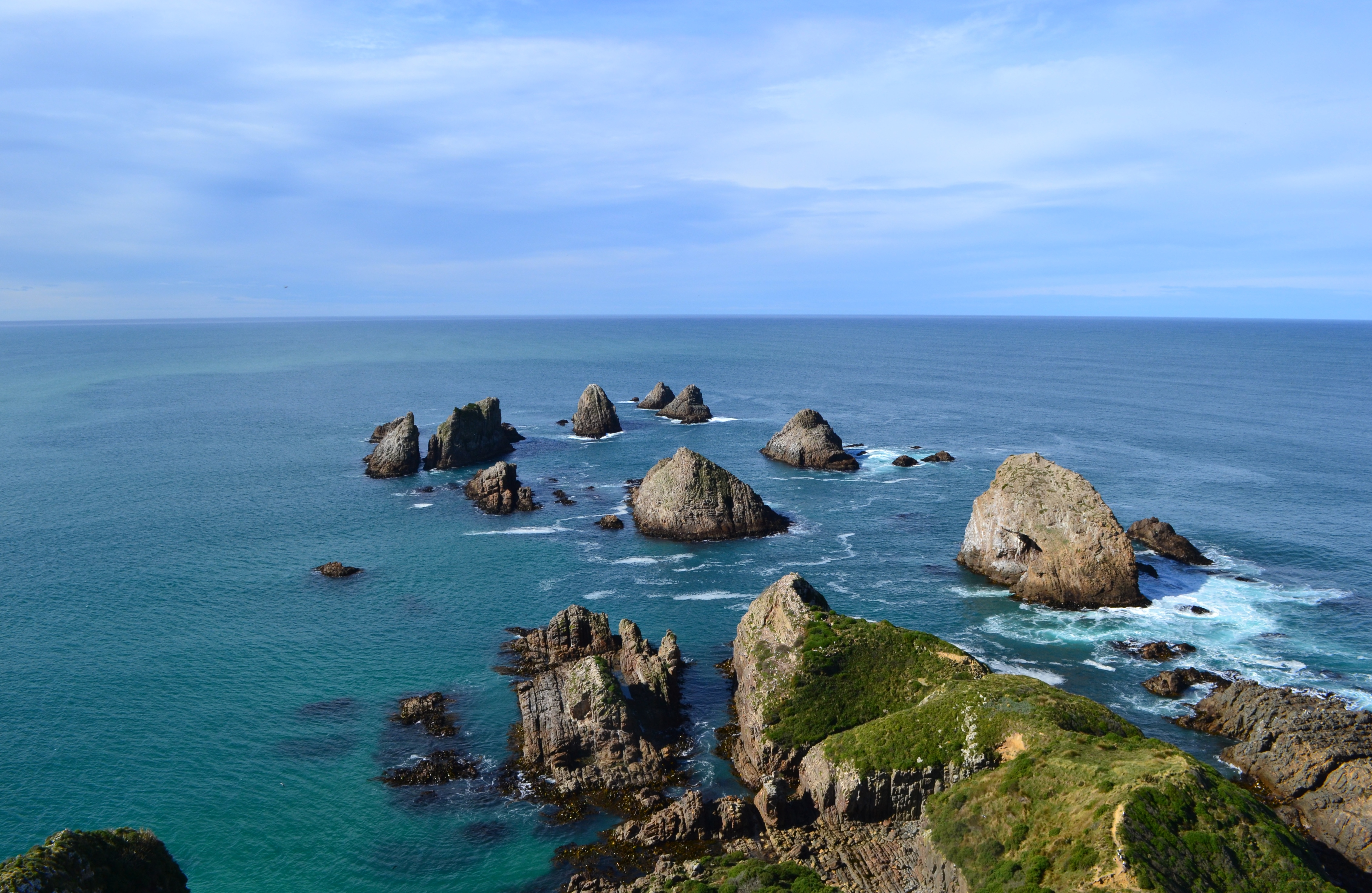
DSC_0357

A coastal view from Nugget Point Lighthouse, which is an hour and a half south of Dunedin

As the semester is soon coming to an end, students are doing their best to finish their last minute assignments. Sometimes it is very easy to get caught up with exploring, for we forget that we have school obligations as well. I have become motivated to complete all my assignments early due to the fact that I don’t want to waste any of the time that I have left. The easiest solution is to get them done and out of the way so that I won’t have to worry about them when I’m off traveling.

Numerous plans are being organized and made for the remaining weekends that are left. My entire schedule has become completely booked with adventures that I have been waiting to do for the past seven months. Knowing that we don’t have all the time in the world, we’re doing our best to fit in everything in.

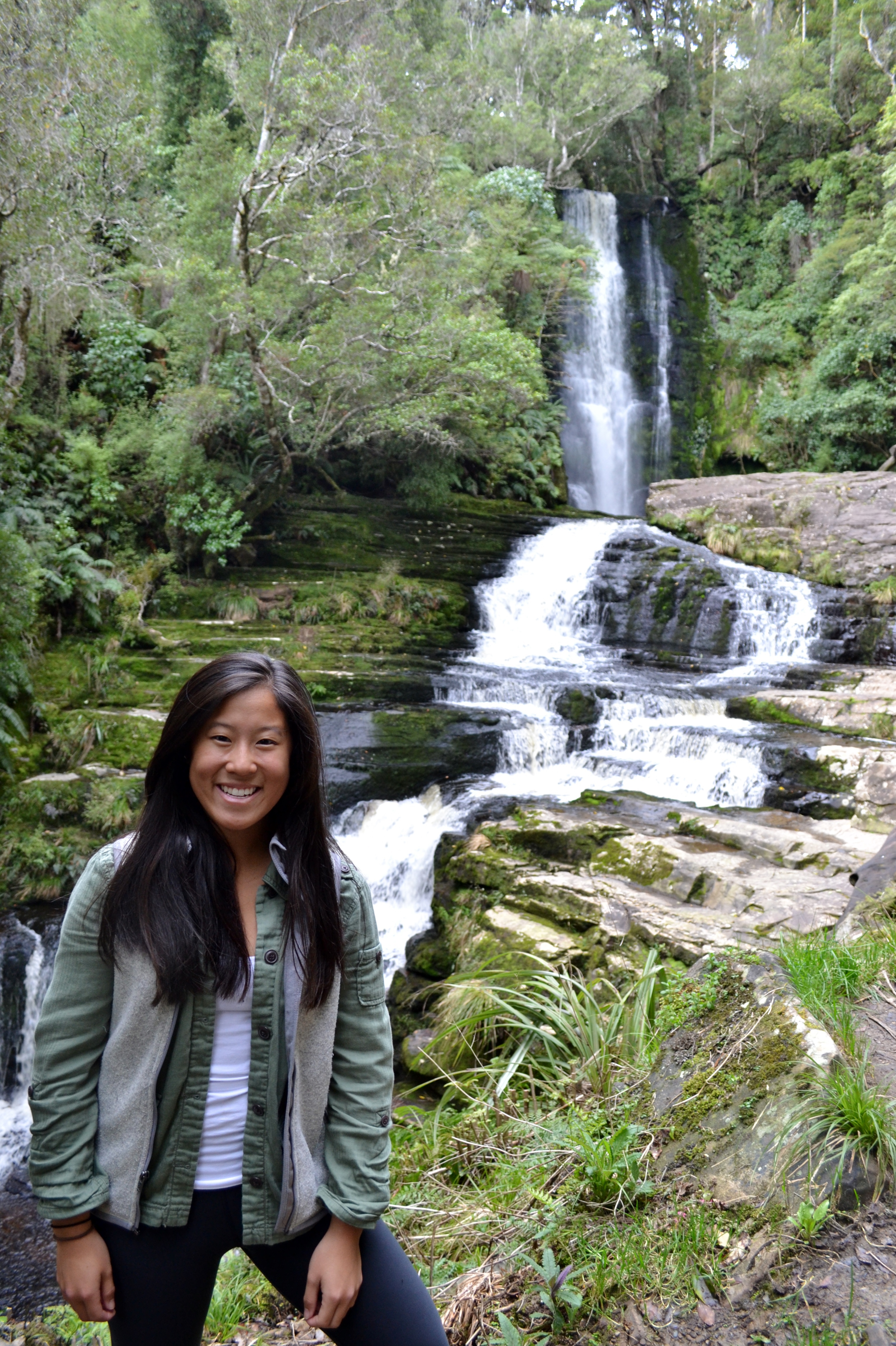
DSC_0406

McLean Falls

One of the most recent adventures involves tramping the Routeburn track, another one of the Great Walks of New Zealand. To much of our chagrin, there was so much snowfall that had occurred a couple days before, my friends and I were told that we would be unable to hike the entire thing. After accepting such disappointing news, we didn’t let that stop us from proceeding to parts of the track that we could discover.

The majority of the track was covered in heaps of snow, making hiking a little more challenging (and wet) than usual. Regardless of the fact that there was snow on the ground, the sun continuously graced us with its presence throughout our entire tramp. Likewise, the snow made the scenery much more rewarding. As we walked along the bush line, the snow capped mountains that jutted into the sky were in plain sight the entire time. Even though we didn’t reach our desired elevation, we were not deprived of any sort of views. The conditions of the track may not have been ideal, but being outside in this setting could not have felt any more worthwhile.

DSC_0434

As we made our way through, we encountered the massive, fresh Earland Falls

Staying overnight in one of the huts that is provided on the track is common. We stayed at Lake Mackenzie hut for the night after hiking for 4 hours to an altitude of 1,081 meters. Since we were tramping during the winter season, all of the power and running in the hut was turned off. However, we were able to make a fire and all that really mattered to us was that we had a roof over our heads. The world seems to take on an entirely different position when you set yourself outside of society. When you’re fully immersed in the wilderness and completely remote from civilization, the only thing that seems to really matter is the nature itself.

DSC_0435

We finally concluded our day at Lake Mackenzie hut and were rewarded with beautiful views at the site.

Since our journey was shortened, we decided to embark on a last minute visit to one of the most beautiful places in New Zealand, Milford Sound. After driving through many narrow roads, down valleys and through the mountains, we finally arrived at scenery that took my breath away instantly. With the sun beginning to set, it brightly shone over the lake and cliffs that lay in front of us. The silhouettes of the cliffs were pristine, each possessing its own kind of shape and dimension. We were only standing at the entrance to Milford Sound, so the features are still indefinite to us. The entrance was so astonishing, one can only imagine what it is like to explore within.

DSC_0447

A kea, one of New Zealand’s native birds

The world of New Zealand has much to offer. Because of its distance from every other continent of the world, it seems to be forgotten. Yet, that makes it much easier to appreciate everything within it. Not everyone seems to realize its magnitude of splendor. When it comes to exploring, I enjoy the fact that I am cut off from technology, electricity and modern necessities. Because of these conditions, I am able to fully focus and value what’s in front of me. Unlike technology, sights like these aren’t always accessible.

Traveling within the country has become practically a second nature to me. Every weekend, I am always anticipating that I will be on the move, going somewhere. I have become accustomed to a completely new lifestyle. It’s full of so much adventure and animation that it’s hard to imagine that it’s all going to stop once I go back to the states. Even though the end is coming soon, it’s vital to enjoy the time that I have left.

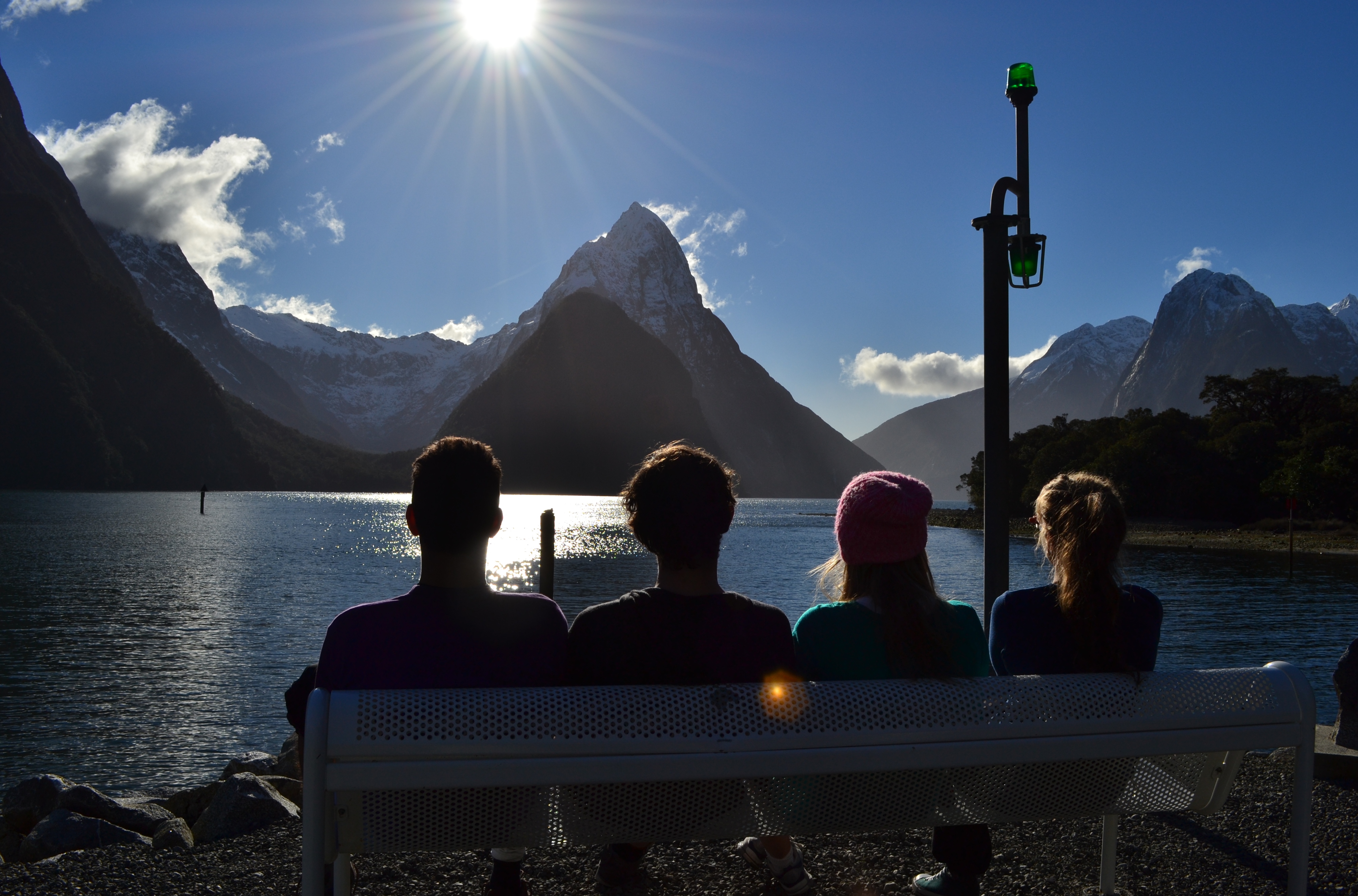
DSC_0456

The team at the end of the day at Milford Sound