Alyssa in New Zealand: End of Orientation, First Week of Classes

July 11, 2013

No one knows exactly what to expect when exploring. Expectations are usually set, but thoughts and predictions aren’t set in stone. Whether the expectations are exceeded or not met, something new is always discovered.

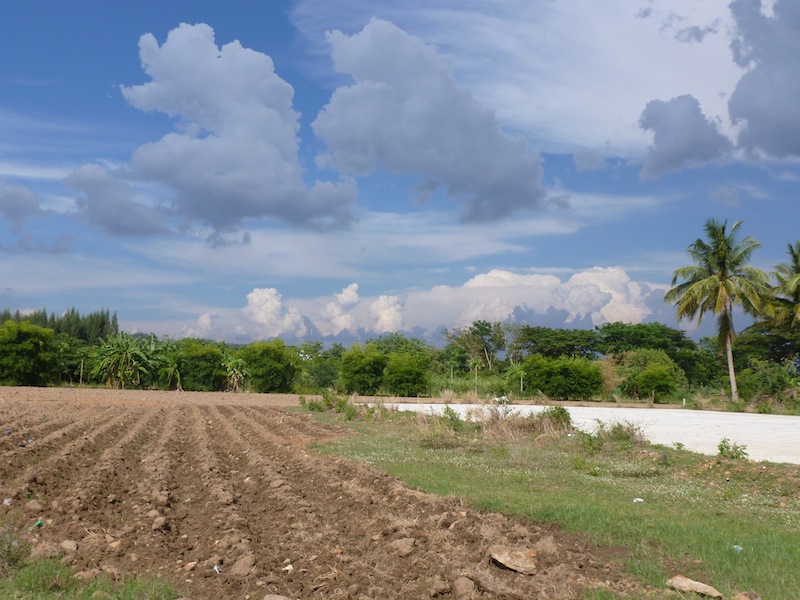
The countryside outside of Dunedin cannot be imagined. You must see it for yourself in order to understand what New Zealand has to offer. The further the Taieri Gorge train traveled from Dunedin, the more the country began to reveal its true character. Nature completely surrounded us approximately twenty minutes after leaving the Dunedin Railroad station. Throughout this five hour trip, the scenery was flawless.

One cliff melded into another, making it seem like one large panoramic view. The clusters of trees gave off a hue of a vibrant, forest green even though they were currently enduring the winter. Streams were following in and out between almost any nook and cranny that they could find, trying to replenish the dryness of the atmosphere. Regardless of the cold air and season, the sun continued to shine brightly throughout the entire excursion.
train trip

Along the route on my train trip

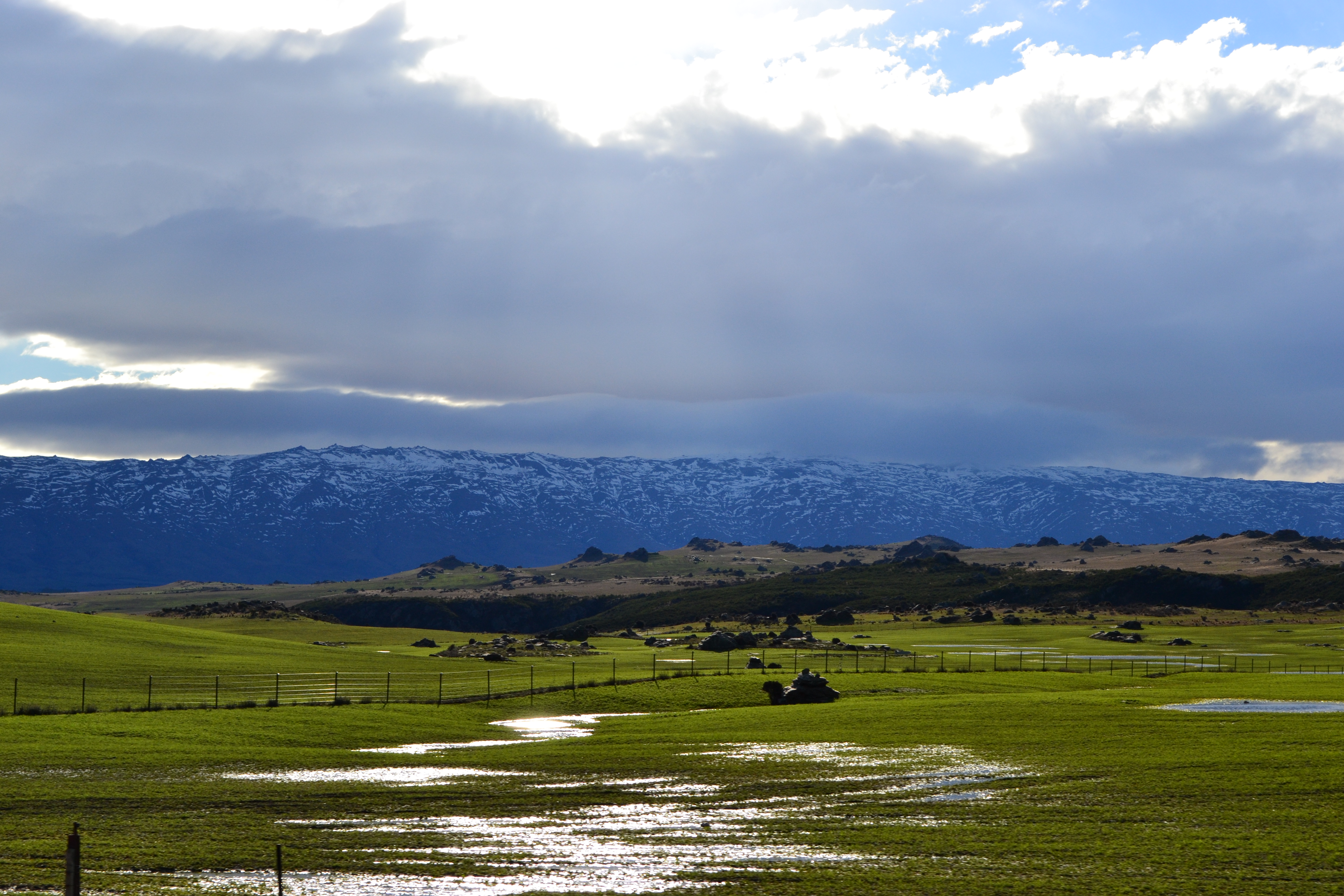
At the final stop, I finally saw the snowy mountains beyond all the hills and greenery, confirming that it was indeed the winter season. We were allowed to get off the train and walk around the area for fifteen minutes, but that almost didn’t even seem like enough to me. As we made our way back home, I did my best to keep mental pictures in my head in addition to the photos I took on my camera, for that was most likely the best way to remember every detail that I had just seen.

final stop

The final stop of the train trip

The next day was Saturday, which oddly motivated my Kiwi host, Jenny, to get up early in the morning. However, this wasn’t out of the ordinary, especially for most Kiwis in the vicinity. The reasoning behind their surge of energy is because there is a farmers’ market that takes place near the Dunedin railroad train station every Saturday morning. Here, all kinds of stalls are set up in the area and the freshest kinds of foods from local areas are sold. My flat all pitched in to buy a solid bag of pure, organic apples. We all also got the chance to try our first bacon buttie, a sandwich that consists of bacon, tomato sauce, onions and mustard. Needless to say, it was delicious.

It is definitely a rewarding experience living in the Uni-Flats, for the Kiwi host provides all of the ins and outs. Lucky for me, Jenny knows almost everything there is to know in Dunedin and she has helped me out a great deal thus far. On Sunday, she took my neighbor, Malachi, from New York, and me for a walk around the Botanical Gardens. As we explored, I continued to be more amazed by what Dunedin has to offer. The gardens were quite expanded and full of much attraction. I never would have been able to appreciate it without Jenny’s help, for she showed us all the best views and the most beautiful parts.

at bot gards with jenny and malachi

At the Botanical Gardens with Jenny and Malachi
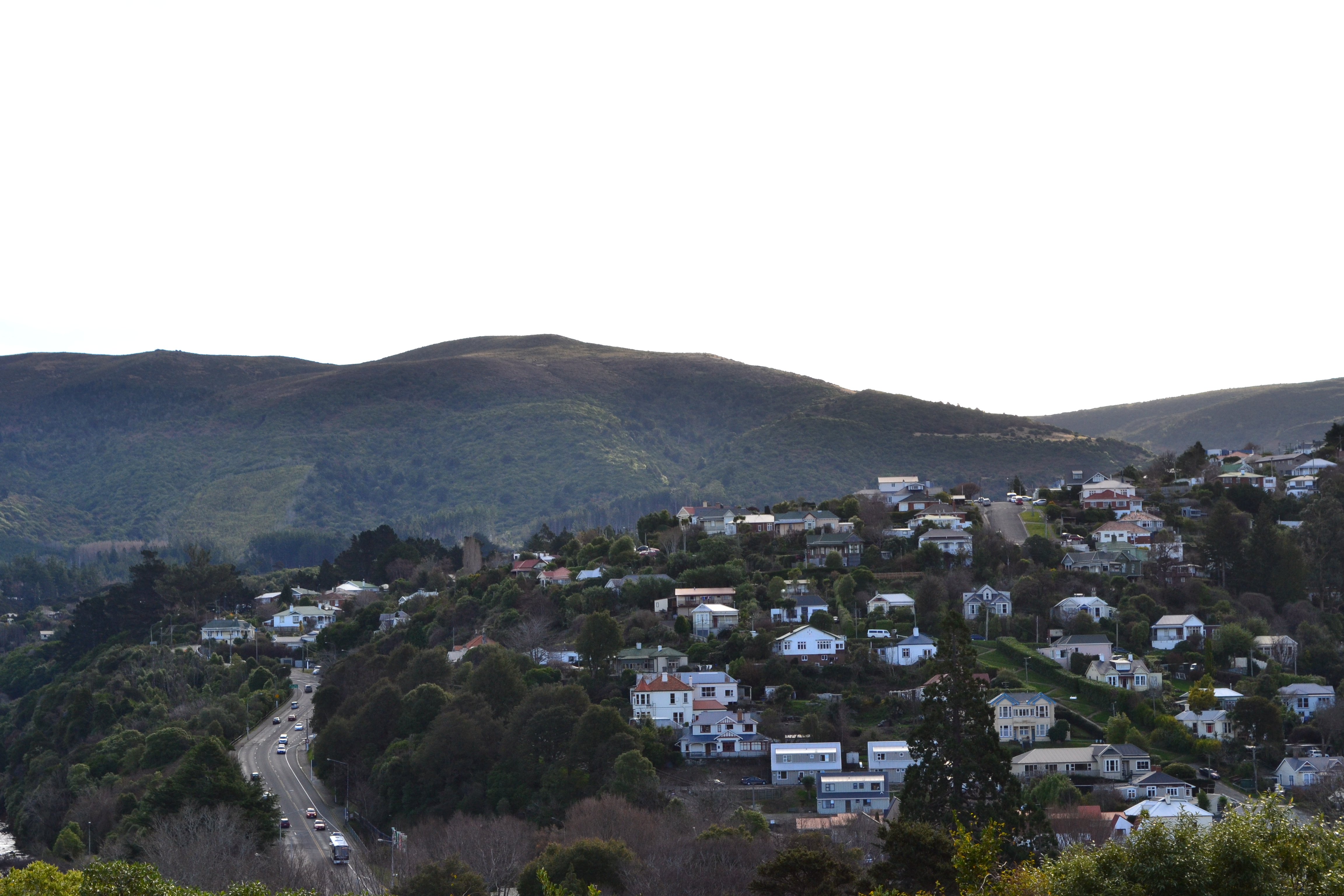
dunedin from bot gards (2)

View of Dunedin from the Botanical Gardens

Once Monday came around, everyone on campus had to come back to reality and start classes. I ended up dropping my music class and picking up a theatre class instead, for the music class was above my level. I was the only student in the class that had very little musical experience, while everyone else was quite talented at reading and playing music already. I attended my biology classes with ease, for I am used to learning about this kind of material.

Furthermore, the main difference with the classes here is that the class sizes are much bigger than they are at Richmond. I am so accustomed to having classes with 16 students and a professor knowing exactly who I am. Yet, when I went to all my lectures this week, the class sizes were at least 100 students and I am just another face in the crowd. Instead of talking and participating in the class, the professor is talking at the students and it is not as interactive. Even though I think this way of education is very out of the ordinary, I find it very interesting and I will never have the chance to learn this way again. This whole semester is about leaving the comfort zone.

Since this was the first week, most of the classes that were held consisted of just introductions and syllabi. Hence, there was more free time for all the students, which allowed me to make last minute adjustments to my schedule and to finally ease into my home. As easy as the first week was, I am expecting to receive more work in the upcoming weeks. I am preparing myself to not get too caught up in all my free time. Nevertheless, I am not worried about finding a balance between schoolwork and exploring the country.

I feel like I’ve been here for a month already and yet, it’s only been a week. Each day beholds something new. No matter how simple or complicated it may be, I find myself discovering more and more. You really can’t understand another world until you experience it yourself. As I am experiencing this new way of life, I am not only beginning to understand but also appreciate what’s in front of me.


제주도: Jeju Island is a Heaven on Earth (posted by Indira in South Korea)

May 31, 2013

As the time I have left in Korea is slipping out of my hands like the grains of sand, I definitely try my best to balance traveling and school. Korea is such an amazing country and I don’t think that a lifetime of traveling and exploring would be enough to see everything the place I now call home has to offer. Knowing that I have about 3 weeks left and so much to see, do, and experience, and also to make sure I finish all my assignments on time is somewhat putting me under pressure. But the motto should be “work hard, explore hard” and it is all possible.

Last weekend a group of 15 of my friends and I decided to go and see Jeju-do, an island that contains the natural World Heritage Site Jeju Volcanic Island and Lava Tube. The entire Island is dominated by the Halla Mountain (Halla-San) and there are many beautiful waterfalls, caves, cliffs, and beaches to see and spend time exploring. The island itself is located to the south of the Korean peninsula and it undoubtedly offers a scenery that is truly unforgettable.

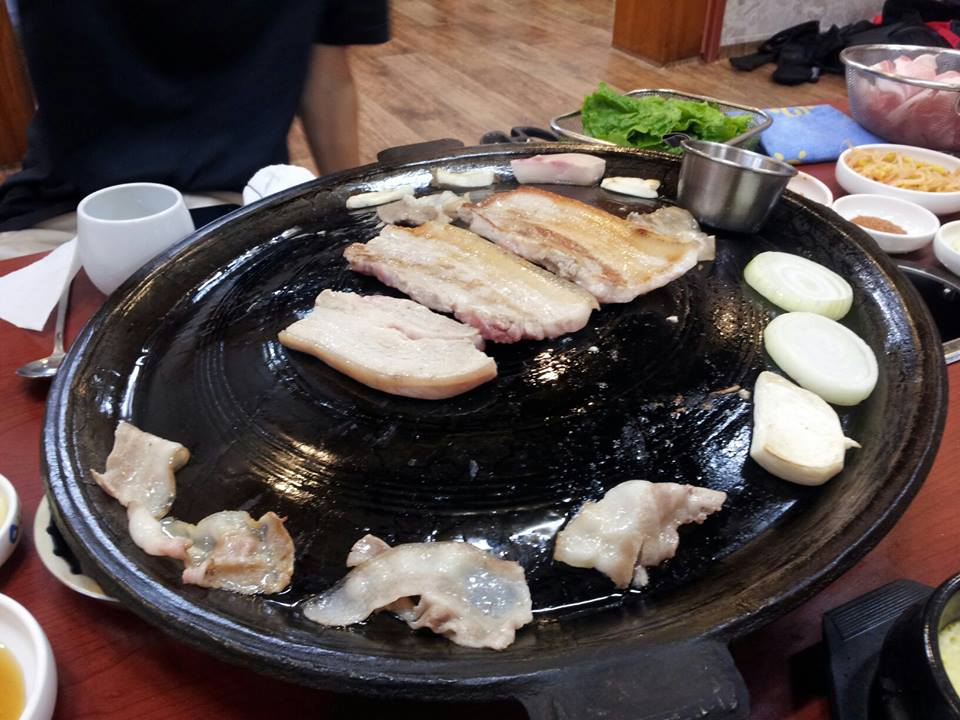
Out trip started by taking a plane (fairly inexpensive one hour fight) Seoul to Jeju City from where we took a two hour bus ride (5000 won = less than 5 dollars) to Segowipo, a city in the south of the island. It is interesting that the Jeju Island consists of two cities only: The entire north part of the city is Jeju-City and the south half is Segowipo. We stayed in Segowipo as most of the tourist attractions are located there. First day we went to one of the waterfalls that is very close to the harbor. The area is really beautiful and there are quite some tourists. Afterwards we went for a lunch at one of the numerous Korean restaurants serving famous Jeju black pork, which was by all means delicious.

pork

Jeju black pork

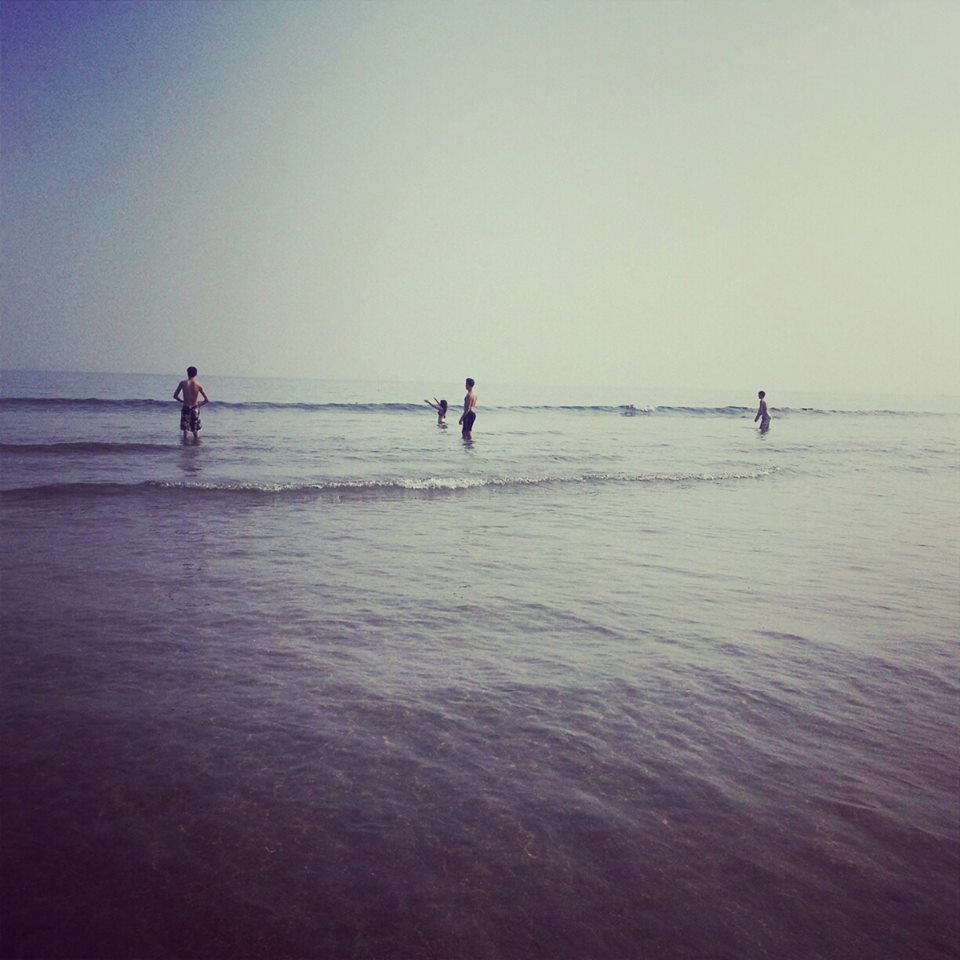
Afternoon was reserved for a lazy day at the Jungmun beach, which is one of the most famous beaches in Jeju. Since everything on the island is located somewhat far from each other taking a cab or a bus is highly necessary. Beach was about an hour or so from the city. Even though the swimming season was not open and the water was cold some people were brave enough to swim. I didn’t dare to do so. Laying in the sun was also nice  and relaxing! Since Jeju is in the south, it is much warmer and sunnier there so it was perfect weather for sunbathing and frisbee on the beach.

frisbee

Playing frisbee on the beach

The second day at Jeju was by far the most intense day of my life. Hallu-San is 2000m high mountain and smaller group of us decided to hike up to the top to see the crater. After about 5 hours of hiking steep mountain in extremely high temperatures, I made it to the top! This was one of the biggest challenges of my life and I was actually able to prove myself wrong (I am not much of a person who does sport or exercise, but I definitely did manage to hike up to the top of one of the tallest mountains in Korea). Since it is a drought season we were not able to see beautiful lake in the crater (Google “Hallu-San” and you’ll know what I’m talking about) and the view was blocked by the clouds of smog. It was very disappointing not to be able to get any reward after enduring so much pain to hike up the mountain. The hike down was, however, really nice and the trail was very beautiful, which somewhat made up for the bad summit. The aftermath came right after I made it down to the starting point 8.5 hours after the hike started – my whole body was aching. Despite my muscles being sore and my ankles swollen, this was definitely one of the most interesting experiences that will shape my semester in Korea and the idea of pushing personal borders. It is good knowing that I can challenge myself and actually win the challenge.

trail

Trail down the Hallu-San

Our last day in Jeju we spent visiting yet another waterfall, which was very hidden. We heard from the locals that it is a great spot to visit and not so many tourists know about it. The small waterfall hidden from the world was definitely one of the most beautiful wonders of nature I’ve ever seen. We spent quite some time there climbing the rocks and swimming in the crystal clear water. The rest of the trip we spent in Jeju City exploring the cuisine of the region.

waterfall

Hidden waterfall

Overall, Jeju is definitely worth a visit and I am so happy I managed to visit this island before leaving Korea. Coming back to Seoul was a bit hard since we were welcomed by rain and loads of schoolwork. Now I am trying to finish everything before I leave for an adventure to Cambodia on Friday. I can’t even put into words how excited I am about this upcoming trip! 🙂


Profiter (posted by Pierre en Suisse)

May 16, 2013

Hello, once again, from Switzerland. A few weeks have passed since my last journey outside of the country, which means that recently my time has been spent en profitant de la Suisse. The title of this blog, Profiter (pronounced like prof-eet-ay), is the French verb to mean to benefit from, or to take advantage of. In adding de la Suisse, I mean to say that I have spent the past few weeks in Switzerland  taking part in more of what my European home has to offer. From bake sales to road races and group hikes, the past few weeks have been pretty action packed, but I am not complaining one bit.

Two weeks following the Monument 10k in Richmond–a race I have always wanted to partake in–I ran in the Lausanne 20km, which I ran instead as my first road race. It is called the 20km because the main race is that distance, however I only ran 10km because I was running it with my University team, the Social Erasmus Committee. If you are like me and thought at first that Social Erasmus meant organizing social events, well, this is only partially correct. I serve on this committee here in Lausanne, which is responsible for organizing community service and volunteering events for exchange students. Together, we decided to run as a fundraiser, and it turned out to be a great event. While this was my first time ever competing as a runner, I grew up a swimmer, so I am very familiar with racing. What I wasn’t familiar with were French motivational expressions, since I had never heard any before. That changed during the race when I heard spectators who lined the streets shouting out to everyone, “Allez! Voici! Allez!” It was a shock at first to hear my name called out several times, but then I remembered people could read it from my number on my shirt! I must say, I quite enjoyed hearing the cheers in a foreign language.

The weekend following the race, the committee put together a bake sale, or vente de patisseries as it is called in French. We sold different desserts and delicacies from all around the world, and collected money for a children’s association here in Lausanne. I must say, we had quite the spread before us. We had fresh, homemade tiramisu, a “tarte aux pommes,” which is basically an apple pie of sorts, but different from our American version, and my contribution of chocolate chip cookies, just to name a few. Since I am quite accustomed to at least saying hello to people as they pass by when I am working a stand, a few of the other volunteers and I began to say bonjour to people in the streets. We were quickly stopped by our Swiss friend who was working with us. She explained that she felt like it wasn’t a good idea because she thought it would be bothersome to people and make them feel uncomfortable rather than more willing to stop and look at what we had. This wasn’t really something that people did in Switzerland, she told us. Instead, we ended up gathering everyone’s attention with, I kid you not, a mix of amateur musical performances orchestrated by our iPods and own voices with words on the screen, which was met with many laughs, and smiles, and even the participation of some kids who passed us. At first I was puzzled by the idea that we couldn’t say hi to people, but instead could dance in the streets. But, because we were all having so much fun and bringing people to our stand, I didn’t question it.

The view from our stand at the bake sale

The view from our stand at the bake sale

While still staying in Switzerland, it was about time to take a quick journey out of Lausanne. The following weekend the exchange association had organized a hiking trip to a location north of Lausanne. We headed up to a place called Creux du Van, a rocky circular formation that was cut into what appeared to be some form of a mountain that became a complete plateau on top. We would stand just along the edge and be able to look down into what was an abyss of trees and straight, vertical rock from the top, in addition to seeing the valley and surrounding villages and very small cities in the distance. It was absolutely gorgeous. Although we weren’t very high up by the standards of other Swiss mountains, there was still some snow at the top in the middle of May. It was an incredible sight for me to see snow this late in the year. I did learn that this winter has been particularly snowy and cold across Europe (much like I read happened in the United States), so this too was abnormal. However, being the winter enthusiast that I am, I was not saddened by the sight.

View from Creux du Van

View from Creux du Van

While exams are now beginning to approach, my time in Switzerland is still not complete. I have about two more months here, as my exam schedule extends pretty late in the semester. I guess this means only one thing: I will have more time to continue exploring this wonderful country I have come to love so much. I will be sure to profite bien from every opportunity that comes my way, as a reward for getting school work and studying done. Until next time…


White, white Uppsala: Julgasque, Snowball Battle, and Fireworks (posted by Indira in Sweden)

December 7, 2012

I don’t think I have ever lived in a place that could get this much snow at once! Right now snow is knee-deep and it’s white everywhere. It is both beautiful and dreadful (it can get really cold – last week we had -7 degrees Fahrenheit!). I find it funny how no one really cares about how cold it gets; we all try to make the best out of the very few weeks we have left in Uppsala.

Since it’s all so snow covered what can we do – well, how about a snowball battle with 250 participants? Sure, we’ll organize it and take part in it! Definitely an epic 1 hour long fight with more and more people joining in every moment. Due to the excitement and adrenalin rush you don’t even care about the snow getting into your mouth or your eyes, and eventually you get used to the fact that you can no longer feel your fingers. It was worth it in every possible way.

Snowball Battle with 250 people!

Snowball Battle

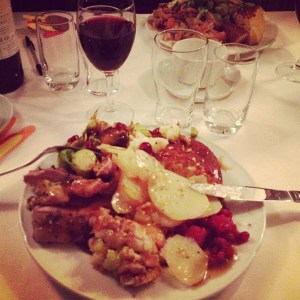
Right after the snowball battle, we all rushed to get warm and ready for yet another gasque of the semester – Julgask (Christmas gasque). Värmlands nation was fully in Christmas spirit – Christmas tree, decorations, presents, and the smell of the pepparkakor (gingerbread) was everywhere in the Big House. During the gasque we had a huge choice of typical food you eat in Sweden during Christmas, and Christmas drinks, (here they have this thing called Julmust which is the most popular soft drink during the Christmas and Easter season; it has a very strong smell and taste, but it’s really good – I love it!). Entertainment did not lack either. Choir performances, Christmas songs, dancing, and a visit from the Göteborg nation made this gasque so amazing. Of course, if you are surrounded by the right people at your table the night is guaranteed to be a blast. Even though the seating arrangement is random and you don’t have any say in it, I have had great table-buddies during all of the gasques I have attended. One of the Julgask highlights was Santa. Since Värmlands nation got a new First Qurator (officer), he had to dress up as Santa and take pictures with the gasque attendees. After the dinner, we had the after party until 4am. I am definitely glad I was a part of this gasque since it was my last gasque in Uppsala and I had loads of fun with my friends, but I also made a lot of new friends.

My table buddies and I during the Julgask, a Christmas celebration!

My table buddies and I during the Julgask

Last week I also had a lot of school work. My biggest assignment was due – a 9000 word case study on sustainable urbanization in Stockholm. It felt so good clicking submit after spending hours and hours working on it. Countless group meetings, articles and books read, interviews, and hours spent putting it all together payed off. I was really happy with our case study and our group effort. Next week we have a presentation, but after that my Sustainable Development class will be over.

And what is a better way to finish off a week than watching the fireworks? Well, I can’t think of any. Luckily, Uppsala has a few tricks up its sleeves and rewarded us all with amazing fireworks on Sunday. The Uppsala Lights Festival ended and it was also the First Advent, so there was a huge closing ceremony that included the fireworks. Even though we had to wait for half an hour in the freezing cold, we all enjoyed the show. We also learned that the best way to stay warm is to just randomly dance to whatever music they are playing – lifesaver.

Fireworks, a perfect way to end the week

Fireworks

Now I’m anxious to see what my last three weeks in Uppsala will bring. 🙂


Thanksgiving in Uppsala (posted by Indira in Sweden)

November 30, 2012

Who said you can’t celebrate Thanksgiving unless you were in the US? Well, exchange and international students at Uppsala clearly showed the opposite! As the time for Thanksgiving approached American students at Uppsala University (and there are quite a lot of them, especially from California) decided to organize a dinner for about 50 people in order to show them what is so special about Thanksgiving.

I was amazed by the amount of food prepared by just a handful of hard-working people who made the commitment to organize such a big dinner. Everyone was taken by surprise, and the food was amazing (plus it’s nice when you get to eat great food with amazing people without having to cook yourself!). It was nice seeing how Thanksgiving is celebrated among an international community (last year I spent Thanksgiving with an American host family in Richmond so I got to see how it is celebrated among Americans), but it was also nice knowing the story behind it, as well as the traditions related to this holiday. I enjoyed sharing the knowledge I have gained during my two years in Richmond about Thanksgiving with other students who never actually thought they would be celebrating it. It’s funny how Uppsala keeps proving itself to be an international city where one can encounter the world.

Thanksgiving Dinner in Uppsala, Sweden

Thanksgiving Dinner

Thinking about it, it definitely is time to be grateful! Even though I keep pushing the thought of leaving away, it always hits me in random moments that I will be actually leaving the place I call home in about three weeks. Where did the time go? I can swear that it was just yesterday that I moved into my room in Flogsta, took my Swedish language course and met so many amazing people. It’s funny how I can still remember August warmth and barbecues on the rooftops, buying the bike and pushing myself into mastering the art of cycling. Those are just some of the things, moments and lessons I can be grateful for. There are so many more. I experienced so much in the last four months that it will take me years to remember and retell everything, as well as figure out how much this study abroad experience shaped me as a person, as a student, and most of all as a global citizen. It all lingers in my mind. The worst thing is that I am already nostalgic about this place and I haven’t even left yet. That is a sign that there will be a lot of tears shed and that leaving Uppsala will be one of the hardest things I’ve ever had to do. At least I have something else to look forward to: a semester at Yonsei University in South Korea.

Even though I do get lost in my thoughts about leaving Uppsala, I don’t actually have all too much time to think about it. First of all, I try to keep myself busy at all times by taking part in all kinds of activities offered in Uppsala through student nations or the student union because I know this is my last chance to do it all. Secondly, I still have classes to attend. And since the end of the month (and semester) is approaching, most of my exams, papers and projects are due in this and next week. I’ve been working like crazy in order to  balance everything. One of the biggest challenges, also one of the most interesting projects, I’ve worked on is the group paper on sustainable urbanization and urban resilience in Stockholm. After weeks and weeks of intensive literature reviews, interviews, weekly group meetings and extensive writing, we are wrapping up paper up. I am extremely proud of our piece of work since I learned so much on the subject, but also got a chance to work with a very international group of people learning a lot from them and about their countries (one girl in my group is actually from Seoul so she’s been giving me loads of information on life there in preparation for my next semester abroad!).

My class on feminism, role of women and international development is also ending this week and I will be taking an exam next week. That class was amazing – I learned so much; academically on the subject, and technically though ‘expert model’ seminars where absolutely everything was student led. Also, my new class – Armed Conflict and Development – starts next week as well, so it’s going be really tricky balancing all of that.

On a happy note – Uppsala looks amazing. Today it snowed. A lot!

Snow in Uppsala, where its very cold!

Snow in Uppsala

Everything is white and pretty (unfortunately it’s cold too) and the snow is sticking to the ground so it’s beautiful. There are already plans to organize snowball fights at some point soon. As much as I like snow and enjoy winter, going to class in 2 degrees Fahrenheit is not going to be fun. Today when I was cycling back from my class it started to snow and it was already a challenge. The worst part about it is getting all the snowflakes in your eyes. I am definitely not a fan of that. I will be using bus and other means of public transportation from now on, though. It is just much safer (it’s really easy to fall off the bike on slippery paths) and warmer.

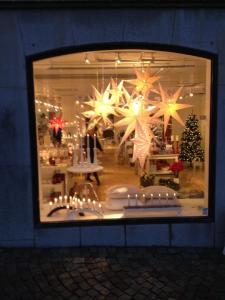
And since it is a winter season, Christmas craziness has already began in Uppsala. There are Christmas decorations on streets, in stores, and even in our kitchen on my corridor. I will be also attending Julgask (Christmasgasque) on Saturday and rumor has it that Santa will be present. I am looking forward to that! 🙂

Christmas Decorations in a shop in Uppsala

Christmas Decorations


November in Uppsala: New Course, Uppsala Light Festival, and Endless Fikas (posted by Indira in Sweden)

November 12, 2012

As it is getting colder and colder (it gets as cold as 17 degrees Farenheit), I find myself drinking more tea and spending more time at fika enjoying the warm atmosphere of the Swedish kafferummet (cafes). The fika and coffee drinking traditions are a big deal in Sweden. I have a feeling that Swedes can manage without some things, but if you take away their fika time – well, that would not be tolerated. In between our lectures we get 15 minute fika breaks, and professors bring in fika (coffee/tea and cookies) to class so you can have fika during their seminar. If you want to meet with someone, you meet for fika. Everyone fika (yes, you can use the word ‘fika’ as both a noun and a verb)! The peak hour is at 3pm. It becomes really hard to find a kafferummet that is not full. Luckily, there are cafes all over Uppsala and all the student nations serve fika as well.

One could spend an eternity at fika – especially when you find that one cafe you really like – but we also have classes to attend. Last week my new course started: (En)Gendering International Development. So far we have had 3 lectures and a seminar, and the class seems really good. The professor is amazing! I also know most of the people who are in class with me since we already took one class together back in September. The class is organized in more or less the same way as my other courses. There are lectures which consist of a professor lecturing (I have a feeling that the lectures for this course are a bit more interactive than for the other course I took earlier, which I like), and there are seminars. In seminars we mainly discuss the course literature and prepare presentations. I will have to present on anti-colonial movements in India next week. And this is the first time there are Americans in my class. I kind of got used to being surrounded by mainly Swedes and other European students. Uppsala University is highly international and it is really easy to find yourself to be the only representative of your country in your class or group of friends. I actually quite like this since it gives me the opportunity to meet so many new people. Basically, everyday I meet someone new. I guess that is what makes study abroad so exciting and worthwhile – the experiences one gains are hard to gain in any other way.

And Uppsala is full of surprises. Taking a simple walk before the sunset can show the best of this place. If you’re blessed and it is not raining, the Fall in Sweden can be magical. There are so many places one can go wandering or hiking. The nature here is just breathtaking. Luckily (kind of), it is pretty cold now and it doesn’t rain, so we get clear skies and can enjoy the most amazing sunsets (here, the sun sets very early. By 4pm it is already super dark outside).

Sunset in Uppsala, near Flogsta, my housing area in Sweden

Sunset in Uppsala, near Flogsta, my housing area

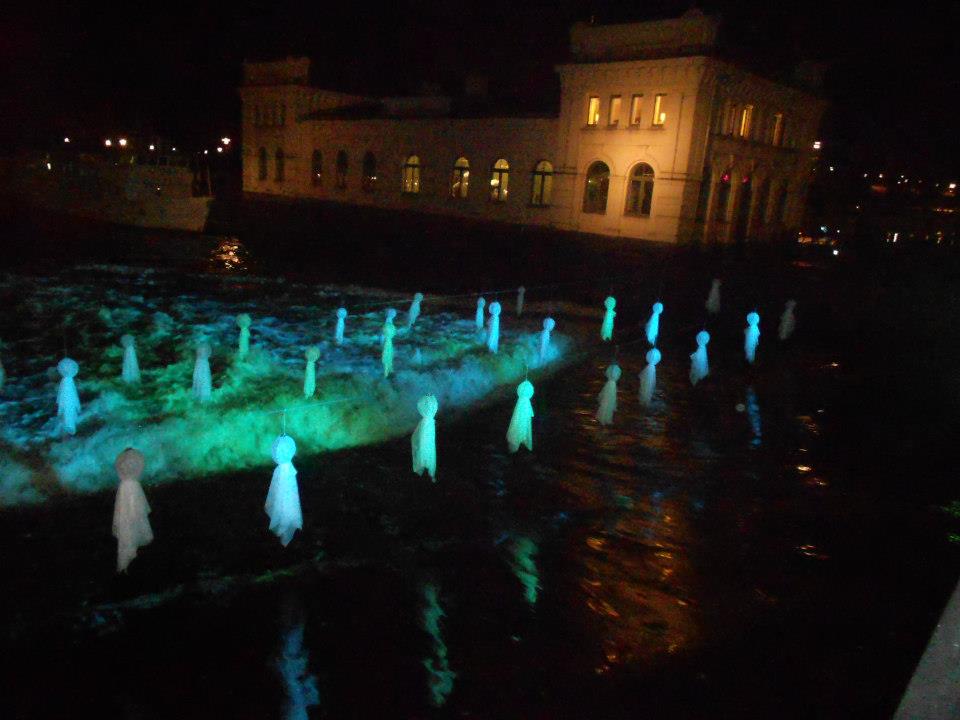
The City of Uppsala has its own beauty display whether it rains or not. Namely, in the month of November there is the Uppsala Light Festival (Allt ljus på Uppsala) and some buildings (this year it is 15 buildings and even two University buildings are part of the Festival: Museum Gustavianum and the Munken block on Trädgårdsgatan) are selected to be part of the Festival so they are lit. It all looks really beautiful, especially the light installations on the river in the City Center. It is somewhat magical to take a walk through the city and follow the ‘light trail’ and enjoy the Festival.

 Light Installations in Stora Torget, the City Center for the Uppsala Light Festival

Light Installations in Stora Torget, the City Center

Light Installations at the Fyrisån River, part of the Uppsala Light Festival

Light Installations at the Fyrisån River


Even if it does get really cold, Uppsala has its way of keeping people warm. November in Uppsala can’t possibly be boring or eventless!


Vintern kommer till Uppsala: First Snow, Tallinn, and a New Bike (posted by Indira in Sweden)

October 26, 2012

It has arrived! I have feared it for so long, and it has finally reached the region of Uppsala. Yeah, it’s winter and the cold that I’m talking about. Temperatures below 30 degrees (Fahrenheit, of course), morning frost, and the very first snow of the season caught me by surprise.

Morning frost in Uppsala, the first sign of winter

Morning frost in Uppsala

As I was leaving Blåsenhus, the place where I have my Sustainable Development class, I was hit by unexpected cold and small white particles flying in the air. It took me  a moment to realize that it was actually SNOWING! The weather forecast said that we might get some snow next week, but not now. It snowed for about half an hour or so and right after that one could see some snow sticking to the ground. Luckily it melted quickly. When choosing Sweden as my study abroad destination I decided to simply ignore the weather since I liked everything else so much. I am not  a fan of snow and winter, but I will have to deal with it here, I guess. With a warm pair of winter boots and a good winter jacket it shouldn’t be too hard (or at least I hope so)! 🙂

 First snow in Uppsala, though it melted quite quickly!

My German friend, Nadine, after the first snow in Uppsala!

Another thing I am concerned with is the fact that once we switch to daylight savings time (and this will happen in a week or so) by the time I have to go to my class, it’ll be completely dark outside (my class starts at 5pm). My next class will start on November 5th and it will be mainly during the afternoon so that will be fine. Speaking of classes, I have to say that it’s getting really busy now. For my Sustainable Development class we are working within our study groups on the case studies (which in my case is the Urban Resilience and Sustainable Urbanization in Stockholm), but we also have other things due at the same time. This is the only class where I don’t have a final exam that is 100% of the final grade: Here, we have to write 3 smaller papers, one big case study, and hold a presentation, which all count for the final grade (it is more similar to the system at UR). For my Government class, there is only one thing that decides the final grade – a final exam that lasts 4 hours. I really like having more papers and assignments contribute to the grade than only one exam. One exam only creates so much more pressure and requires students to do the entire course work load at once. But, it is doable! 🙂

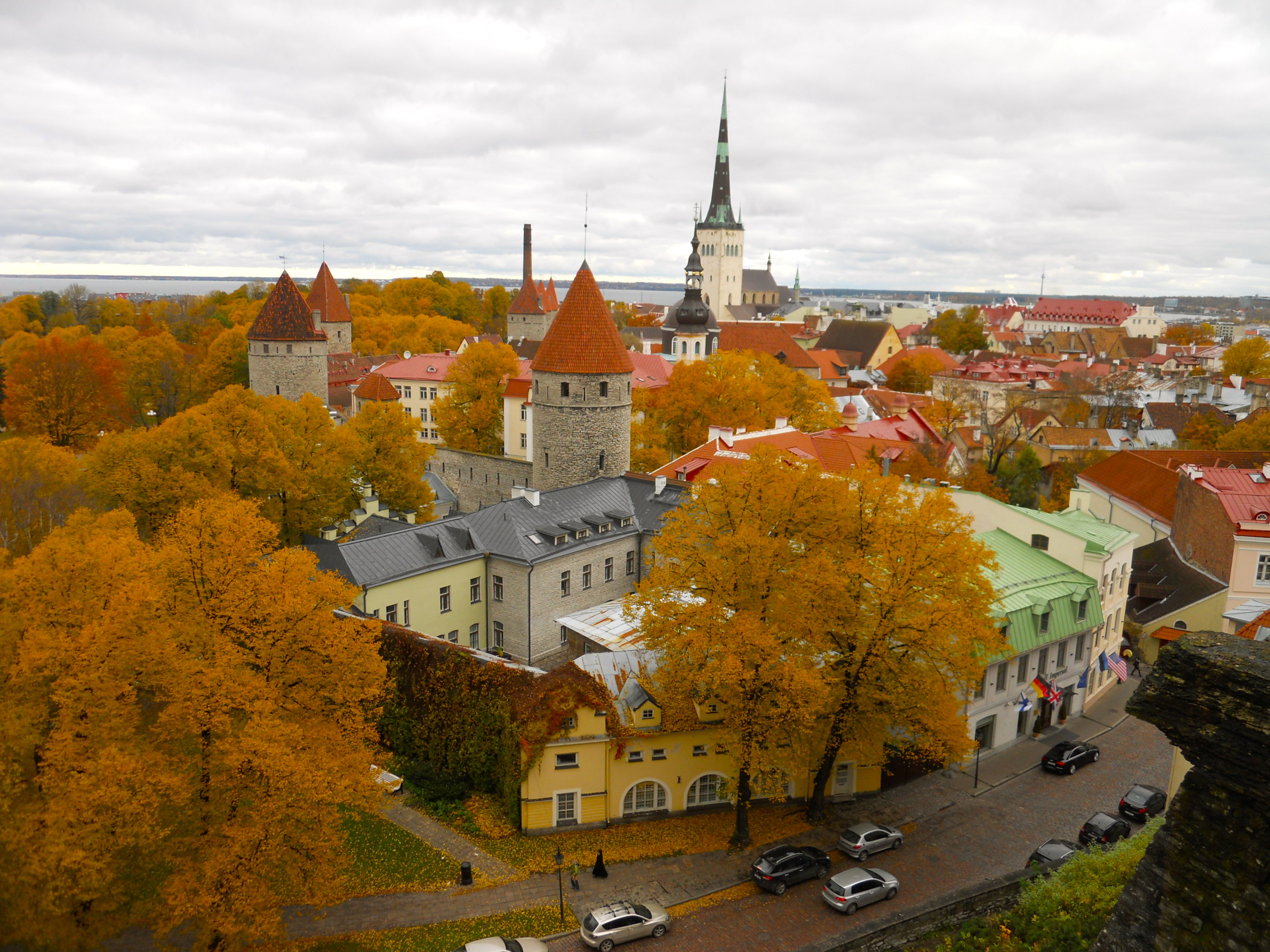
Before it got really busy I managed to go on a trip to Tallinn, Estonia, with some of my friends. First we took a train to Stockholm (40 mins away from Uppsala) in the morning and spent the entire day there just sightseeing and enjoying the city (I am pretty sure that Stockholm is becoming my favorite city. I fell in love with it from the very first time I visited it. I really love the multiple islands and the sea that make Stockholm to “Venice of the North”). After that we boarded the ship and got ready for our cruise to Tallinn (Stockholm being a harbor, it is really easy to go on a cruise to Helsinki, Riga, Tallinn etc. from here). I enjoyed spending time in Tallinn. It was my first time ever in this Baltic country. Luckily we had a friend, Gretta, who is an Estonian on exchange at Uppsala University, to help us navigate the city. She was an excellent tour guide and made the best out of our stay in her city. Tallinn is beautiful. We were lucky it didn’t rain so we saw Estonian capital in its fall colors at their best! It was interesting to see the Soviet and more modern, EU if I can say so, influence fight and yet coexist in this city. Definitely worth a visit on so many levels!

Beautiful colors of changing leaves in Tallinn, Estonia

Beautiful colors of Fall in Tallin, Estonia

Another big news of the week is that I bought a new bike! I was using my friend’s bike for some time, but since it was too big for me, I decided to get a new one. I also made sure to get a safe lock to avoid my bike being stolen again. 🙂 Having a bike in Uppsala is truly a necessity. Even thought there are busses (public transportation in Uppsala is super effective and well developed), it is so much easier to have  a bike and ‘free will’ when deciding when to leave to go somewhere.

Now, I need to get ready for the Swedish winter by buying warmer clothes and bike lights (new bike = new lights)!


Happy Thai New Year!

April 23, 2012

This past weekend I celebrated Songkran, the official Thai New Year (Thais observe the Buddhist calendar).  Students were given two days off from school forming a nice four-day weekend, so of course in true exchange-student style, this only meant an opportunity to travel.  The plan had been to go to Laos, but last minute travel changes, and completely sold out tickets for all of the days surrounding Songkran, instead sent me to Koh Tao, a small island off of the east coast of the Thailand.  Songkran is the most important holiday for Thai’s, so most locals leave Bangkok to go back to their “hometown,” wherever that may be.  We were disappointed we weren’t able to go to Laos, but Koh Tao was not a bad second choice!

Songkran itself is often described as one, huge, non-stop waterfight: and that is EXACTLY what it is.  We left from Khao San road on Thursday evening, the night before the official day of celebration.  Khao San is the official backpacker haven, so Thursday night the Songkran festivities had already begun.  We had a short walk on the actual Khao San road, but little did we know what was in store for us: one BIG water fight.  Involving baby powder.  What? Yeah, that’s what we thought too.  But part of the Songkran fun is mixing baby powder with water to create a nice white paste that you smear all over yourself, and strangers.  Let me try and set the scene for you: loud music…waterguns…buckets of water…young Thais and foreigners (but mostly Thais) jumping up and down in the streets throwing water everywhere…store owners and their children outside their shops throwing water on everyone…small children with squirt guns…small plastic pouches around each persons neck protecting valuables…hoards of people running through the streets…I’m walking, I’m hoping that people will take pity on a dry girl clearly prepared for travel, but no luck: squirt gun in the back, slap on the cheek smearing baby powder all over my face, shoved in all directions; no mercy.  Needless to say, in a country where the locals are so kind, normally shy and very conservative, this was a side of Thailand I had never seen before. (and because of the water….sadly I have no pictures of the whole event).

Koh Tao (a seven hour bus ride, and a two hour boat ride away) was also crazy the day we arrived, the official Songkran holiday.  Imagine there being no social rules about pouring water onto strangers, or drenching them with a water gun.  Everyone we walked by had a water gun in hand, many of them with a water supply on their back.  It was hilarious.  Those riding on motorbikes, small children, families: no one was spared.  Needless to say after Songkran was over things quieted down a lot –  and from there on we enjoyed an amazingly relaxing weekend: lying on the beach, enjoying the INCREDIBLE views, venturing over to a nearby island with an amazing viewpoint, and snorkeling.  We had delicious meals on the beach, and saw some of the most beautiful sunsets I have ever seen!  Koh Tao is known for its scuba diving, and  while we didn’t have the time or the money to scuba dive, the snorkeling was breathtaking: just two feet off-shore on my first venture into the water and there was a school of about twenty rainbow fish: neon orange, yellow, pink, green, and blue: truly magnificent!

Enjoy the pictures from my trip!

Koh Tao

Samantha in Koh Tao


Waterfalls and a little bit of history

April 9, 2012

I just got back from an amazing weekend getaway in Kanchanaburi, Thailand.  Kanchanaburi is about two hours (by bus) northwest of Bangkok.  The city itself is quite small – it is most frequented by visitors on their way to Erawan Falls, but the city does boast its own attractions– for example, the Bridge over River Kwai, which we visited the morning we arrived.

The bridge was commissioned by the Japanese during World War II in order to secure a better supply route between Thailand and Burma.  The bridge was built by both local Thais and prisoners of war, thousands of whom died during its construction.  The bridge is primarily famous because of the movie “The Bridge over River Kwai.”  There is not much really to see– it is quite literally a bridge over a river–not too thrilling.

The rest of the day we saw two more sites: temple caves and a World War II allied cemetery. The temple was an incredible labyrinth of underground, natural caves–very claustrophobic at some points! Each cave contains a shrine or Buddha.  Near the caves, our tuktuk driver took us to see the most incredible view of Kanchanaburi – the beautiful river surrounded by greenery and mountains on either side.  The natural beauty in Thailand is magnificent, and that was particularly evident this trip.  After spending so much time in a city, it is refreshing to see a more rural side of the country.

Our last stop of the day was to an allied war cemetery, which serves as the resting place for many of the soldiers killed building the bridge.  It was actually quite intense walking around and seeing all the name plaques – reading the quote written on the headstone, each name and nationality engraved, and particularly reading the soldier’s age; most were between 20 and 25, around the same age as I am.  I have to admit after my four months in Thailand I don’t know that much about its role in World War II so this was certainly a glimpse into some of Thailand’s history.

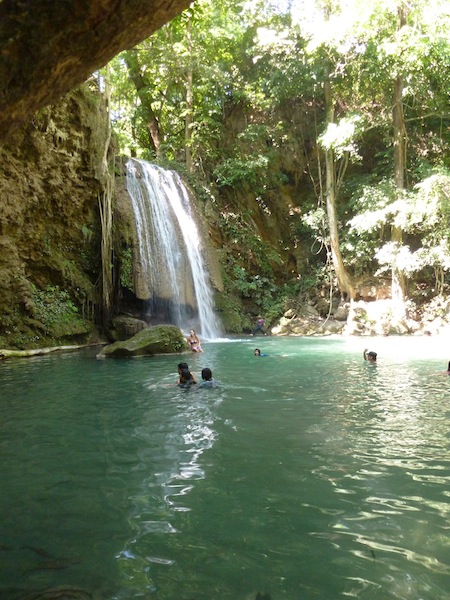
The next day we made the trek to Erawan National Park, located two hours from Kanchanaburi.  We had no idea how incredibly beautiful the national park would be! We literally spent four and a half hours walking along a path through the jungle, passing waterfalls as we went.  There are seven primary waterfalls that make up the national park, though there are small ones spread throughout.  There were tons of people – both international and Thai – and like everyone else, we walked from one waterfall to another and jumped in whenever we couldn’t stand the heat anymore.  It was incredibly beautiful, and so nice and peaceful to spend an afternoon just walking through nature, and enjoying it.

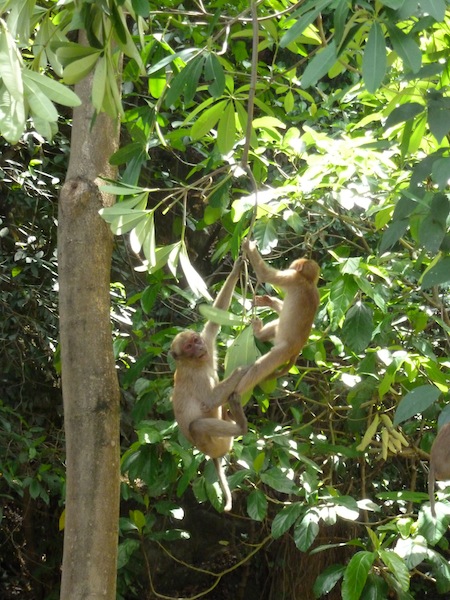
The most intense part of the trek was the 7th waterfall – much less crowded than the others because not as many people make it that far up.  As we approached the waterfall, the friend I was with, Rebecca, pointed out the monkeys overhead.  We had seen signs throughout our trek warning us to be careful of the monkeys because they can be dangerous, but hadn’t actually seen any monkeys until this point.  They were adorable climbing all over the branches, a mother and her babies.  While we were swimming in the waterfall, however, a large monkey got a little too close for comfort and started hissing at anyone who came too close.  It then went over to someone’s backpack, unzipped it, and started pulling out every piece of clothing in there and flinging it to the side.  Just as we were leaving, Rebecca pulled out a bag of peanuts, and within .2 seconds, the monkey was right in front of her, looking threatening as ever, moving exactly as the peanuts moved.  Completely scared, Rebecca just threw the bag of peanuts at the monkey – as we hurried off, we looked back to see the monkey rip the bag of peanuts open, and one by one, pop peanuts into its mouth, as he sat on the ground looking for his next target.


Botswana – Mokoro!

April 2, 2012

Last week we had spring break, or what the locals would call “mid-time.” It was possibly one of the most amazing experiences that I have had! However, it wasn’t easy to maneuver around Botswana during the trip — especially the Delta!

We started off by stuffing ourselves into a 15-seater bus to the local bus station. There were about 30 of us. Needless to say, it wasn’t the most comfortable experience, but it did bring everyone closer together to sit 3 in one seat!

After packing into the next bus, we realized that it seated 60, but there were only 30 of us. So, we initially thought to ourselves, “Excellent! We can finally relax, lay back, and enjoy this 15 hour bus ride up to the Okavango.” We couldn’t have been more wrong: The bus stopped every 15-20 km to a new stop that always had at least 2-5 people entering the bus. Some of the windows did not open correctly, and others made strange noises; it was very uncomfortable.  The majority of the time, about 1/4 of the people were left without anywhere to sit, and had to stand the entire time. Yes, 15 hours of standing! Thankfully, we had very generous passengers and students offer their seats to others and interchange over time. I offered my seat to an elderly gentleman with a cane. He was more than grateful. Although the bus ride seems like somewhat of a drag, everyone still enjoyed themselves and I understood that this was more of a learning experience than anything else!

Finally, after arriving, we were quickly welcomed by other locals, goats roaming the streets, cows eating grass, and stray dogs looking for food. An interesting experience. We even had a few locals attempt to speak to us in their own version of English. It was very hard to understand them, but their smiles said enough about them and the wonderful country of Botswana. Soon afterwards, three large safari trucks pulled up, let us jump in the tour seats, and took us away to our campsite.

As we arrived, we noticed that the crew we had hired had completely done everything for us — from setting up the tents and our sleeping bags, to even making us a welcoming dinner with dessert! Due to our long 15-hour journey, we were exhausted and decided to stay in for the night at the campsite.

I woke up the next morning at 4am, with no shower, no combs, no mirrors, and only the ability to brush my teeth with a limited supply of water from a water bottle and my own toothpaste and toothbrush. I, and the others, did not realize how real and serious this trip really was. It was a reality check for us; we were in the Okavango Delta. The nature of Africa. Anything could go wrong at any time, and help is a 10-13 hour safari truck ride away. No KFC, Nando’s, or school food, nor showers or bathrooms.

Our guides drove us to a secluded, marshy area of the Delta. We thought to ourselves, “What in the world is this place, and why are we here?” We passed over 15-20 local Botswana who all had long sticks measuring at least 20 feet. Again, the same question of confusion came to our mind.

Our Guide, Mr. Costa:

As we pulled up and parked in the Bush, we noticed that the locals with long sticks were coming towards us. At first, we were fearful of what was going on, but then we realized that they are part of our tour; they were our water guides!

Before departure:

We quickly jumped into our Mokoros with our partners and our personal guides took us into the high water grasses. At first, it was amazing to be in the Okavango waters – where anything can happen in any second. However, we slowly realized that the Mokoro trip was 3 hours long, and none of us brought sunscreen, nor any way to cover up from the sun. We were as red as the sun after the first 30 minutes.

Although the trip was long, it was still amazingly beautiful and interesting. Our Mokoro guide was very knowledgeable and even showed us a few tricks of nature: how to make a flower necklace and leaf hat!

Everywhere we travelled in the Mokoro, we encountered beautiful white flowers growing out of the muddy and brown water. After an hour of gently streaming through, our guide leaned down into the water, took a drink (he advised us not to), and then pulled out the flower by the stem. Most of these flowers’ stems are around 3 feet long. He bit the bottom off, then started to peel one end of the skin from the bottom to the top of the flower and same for the other side, but also breaking the strong core of it each time. Then he tied the ends together and said to put it around our neck. We were trying to keep our body temperatures cool by stacking as many wet flower necklaces around ourselves as we could!