There is no better way to learn about Italy than visiting its less-known, more relaxed cities. With the intention of going off the beaten paths, I visited Parma and Bergamo last weekend for a weekend escape from the 24/7 dynamic Milan. I want to hunt for the humble trattorias and their simple, satisfying, inexpensive cooking. I want to look into those elegant, tranquil courtyards inside of the residential houses with historic outlooks. I listen to how people talk on the train, how they converse with the baristas while quickly sipping their espressos, and how they complain about the weather over phone.
Town of Parma
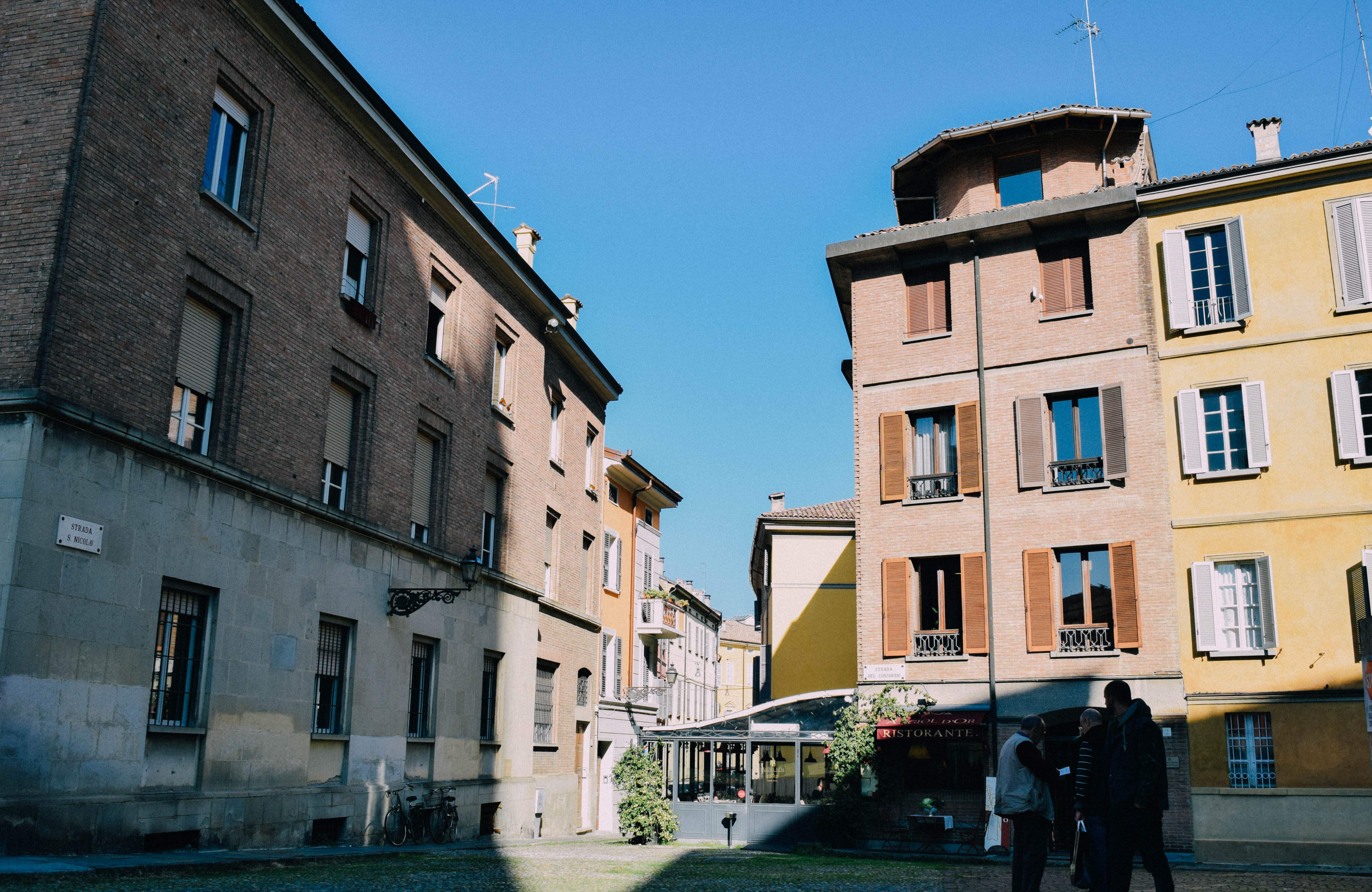
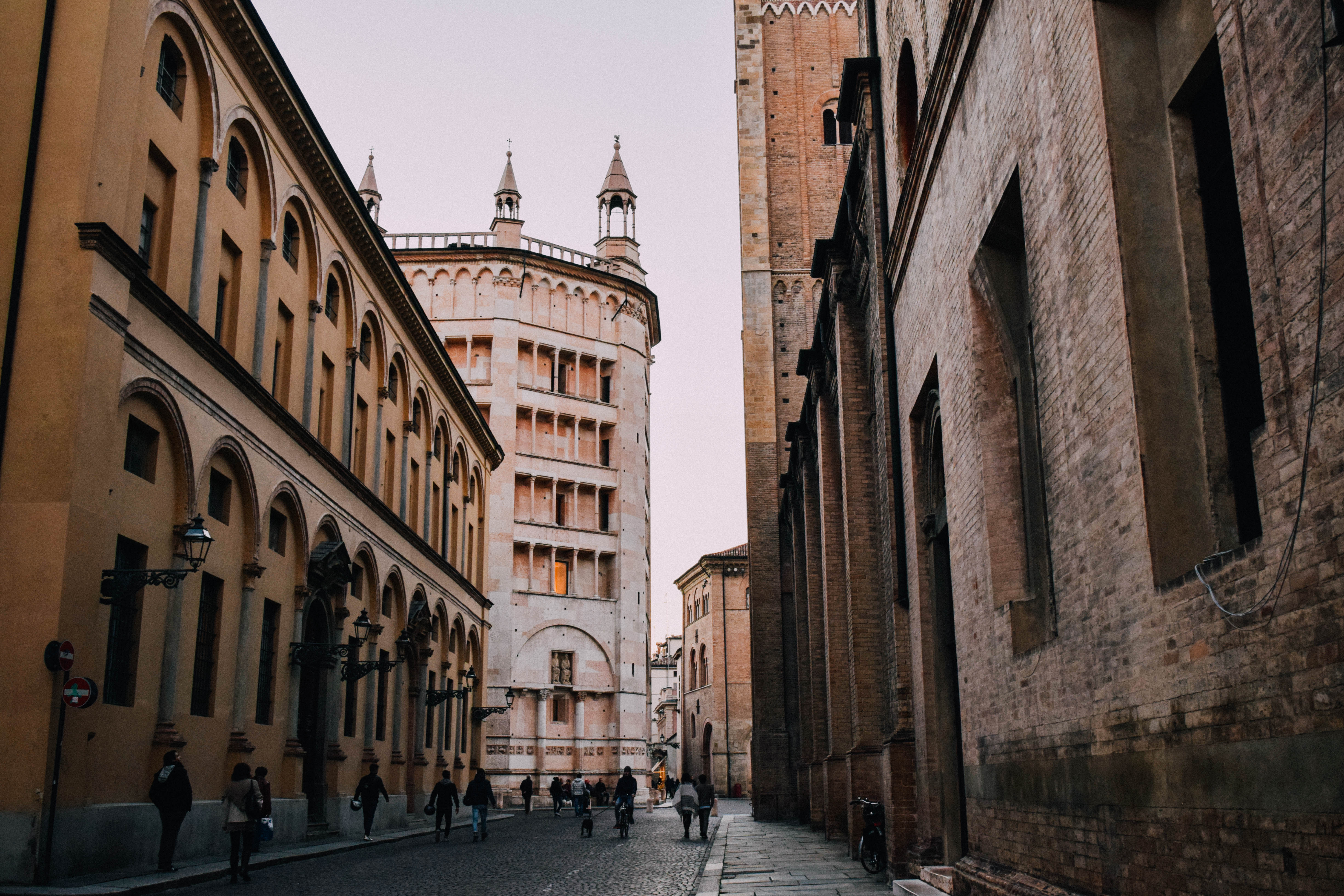
Historic center of Parma
I come to Parma because like everyone, I want to pretend for a day at least, that I am Italian. There is no easier city to do that in than Parma. One can walk the markets without bumping shoulders with other tourists, eat a sandwich made of the irresistible local prosciutto at any hour of the day, have a late aperitif down an alley cast in an orange sunset glow. Walk along a narrow street in the historic center and see grandmas hang wet clothes from the balcony.
Teatro Farnese di Parma
Parma and high art don’t collide often in the same sentence, but when I am standing in the middle of Teatro Farnese and reading through Correggio’s fresco masterpieces in National Gallery of Parma, I am left completely speechless. Those artists have built these works with meticulousness and extreme attention to details. Looking at these frescos and wooden panels, I can truly feel the religious piety that these artists have devoted into their art.
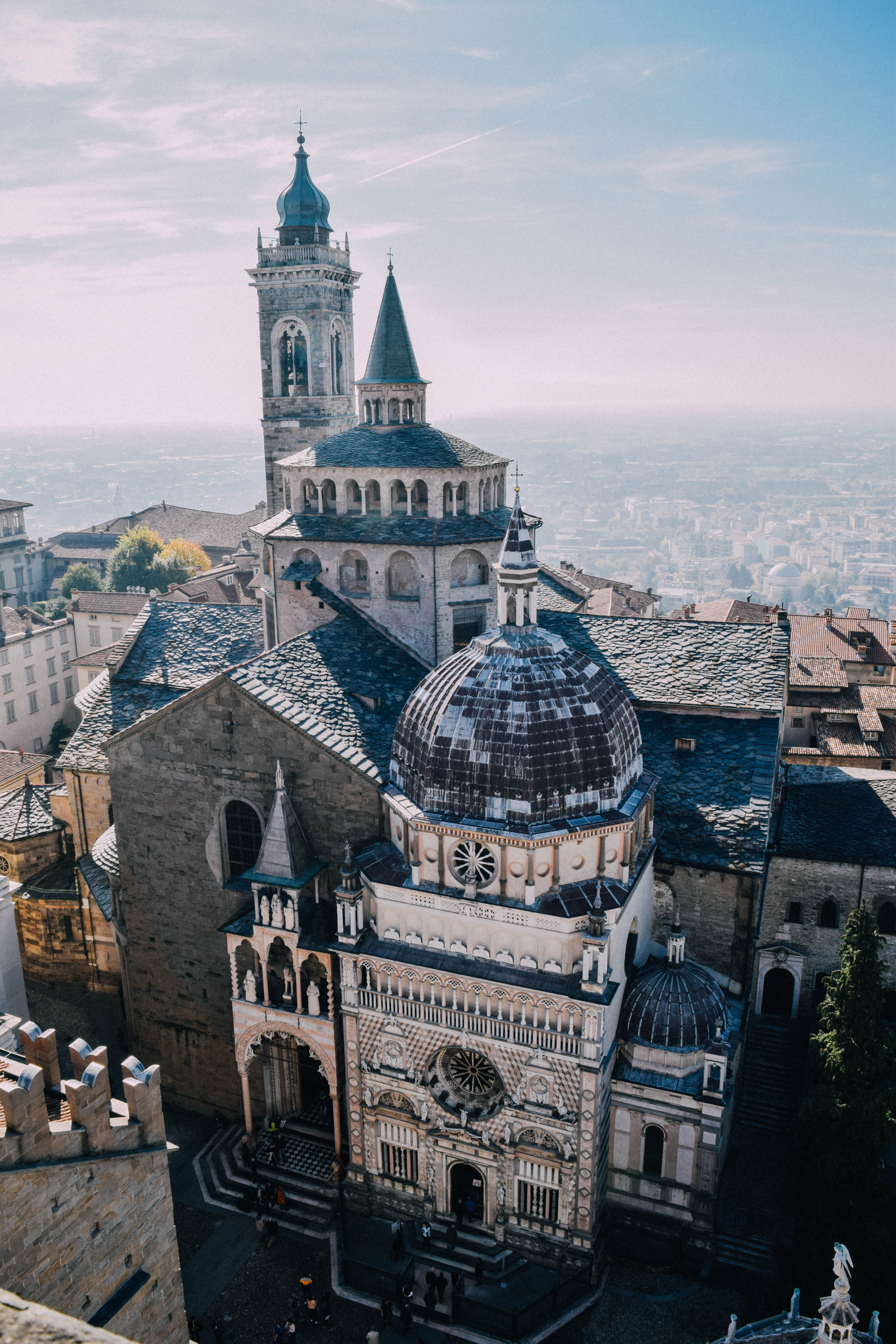
Historic Bergamo
A peak inside-Bergamo
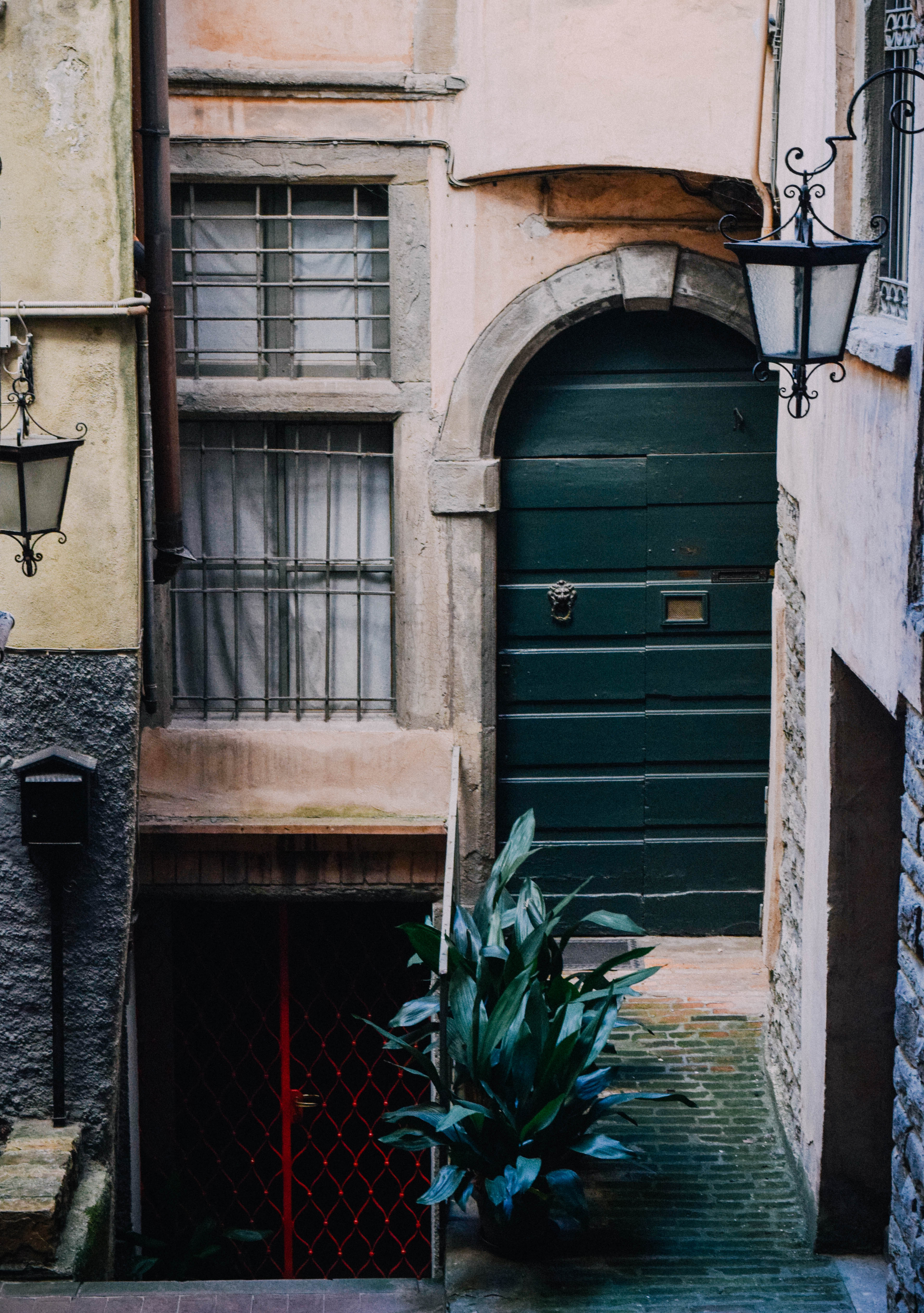
Under the roof-Bergamo
Bergamo, a gorgeous city slightly north of Milan, is also a precious gem overshadowed by its metropolitan neighbor. Housed the stunning Renaissance-style Basilica di Santa Maria Maggiore, Bergamo also features Venetian rocky city walls and fascinating underground waterways. Hidden and understated elegance, is the characteristic that Bergamo shares with Milan. Inside of every torn down residence exterior, there is always a cozy and chic courtyard. La dolce vita to the core.
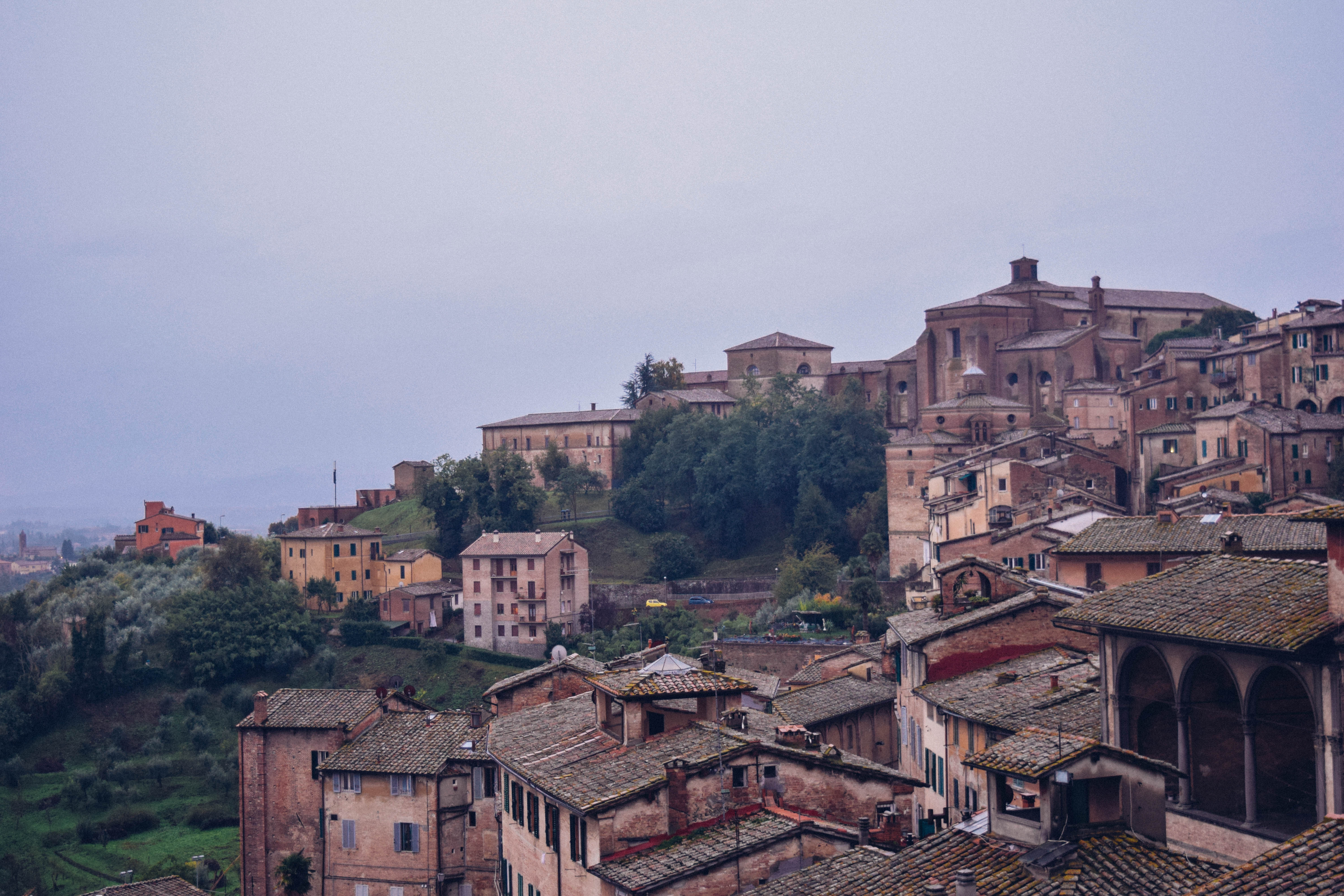
Not a single trip to Italy is complete without going to Tuscany. A slow-cooking food tradition, the famous Chianti wine region, and the rich artistic tradition of Renaissance style all originated from this territory. In early October, I hopped on the bus with my IES Milan program to Siena, a medieval town in central Tuscany. Although it was a weekend filled with drizzling rain and crisp fall air, my experience of Tuscany was in fact much more tranquil and authentic. The rain suddenly became a “stop” sign to the big tourist groups that are always present in every Italian city, turning Siena into a quaint town, as it has always been.
City of Siena
Siena view
Typical door in Siena
Siena is not one of the grand cities of Italy. It doesn’t have the history of Rome, the charm of Florence, the energy of Milan. It doesn’t even have the tourist crowd as you would imagine, probably because of the rainy weather. But greatness is often defined by one’s personal response to a certain place. After climbing 500 steps to go on top of the Museum of Opera, I was on an emotional state looking down at this incredible panorama. Ancient, a little messy, medieval-style, tranquil, Siena defines the essence of a typical Tuscan town.
Montalcino
Tuscany in the rain
Speaking of Tuscany, it is impossible not to mention its gastronomic richness and fine vineyards. Being the little gem of Chianti region, Montalcino produces Tuscany’s best Brunello and, arguably, Italy’s most distinguished wine. Up in the hills, Montalcino is tucked away by vast greenness and wavy mountains. The fogginess, tranquility, and elegance of Montalcino exemplifies the renowned Tuscan landscape.
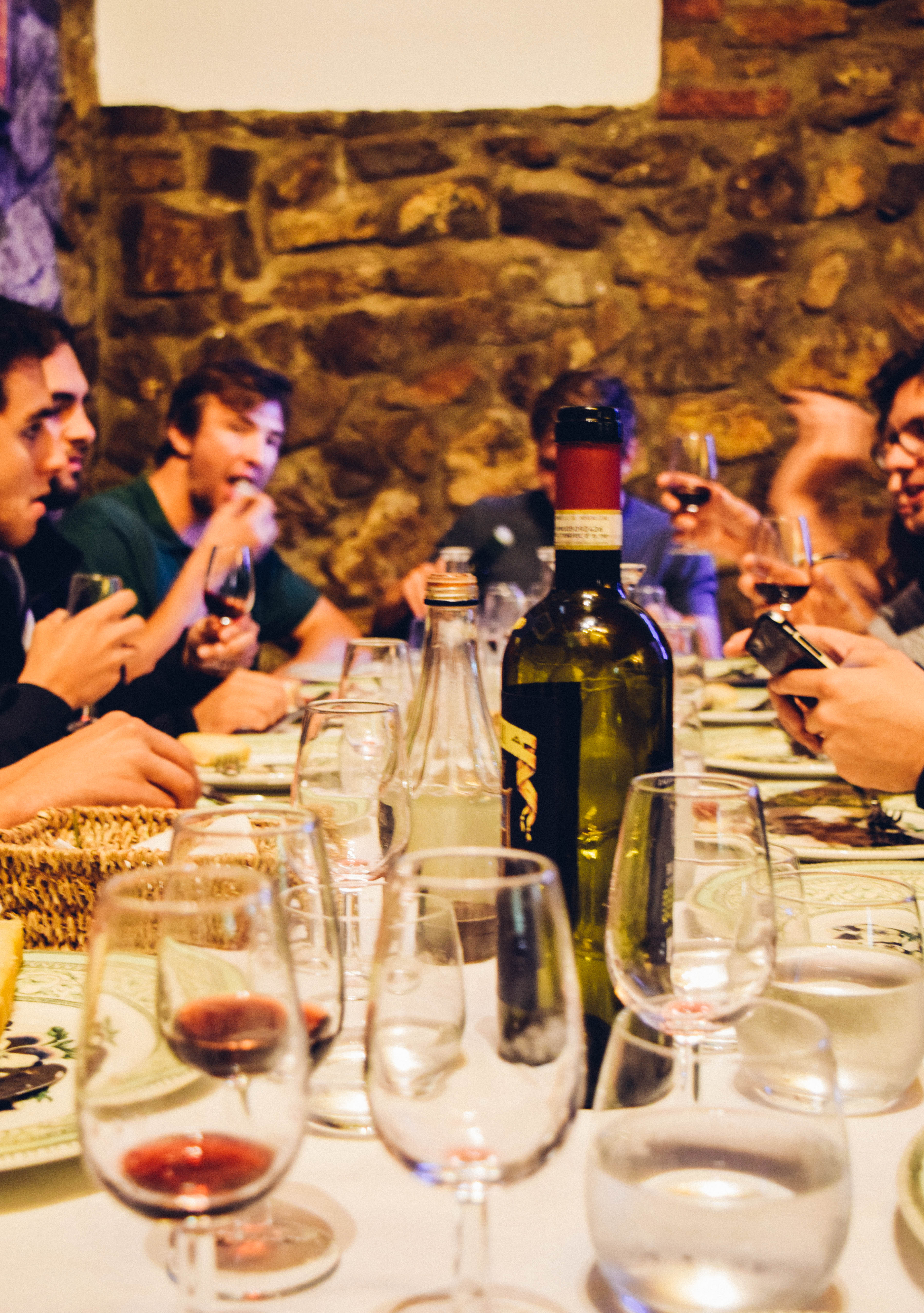
Dine with style
After a brief tour of a family-runned vineyard, we had lunch at their farm-to-table style restaurant. A plate of homemade tagliatelle with ground pepper, butter, and Parmesan cheese, paired with locally produced Brunello, constitutes the menu of the day. Simple, fine, irresistibly delicious, this homemade meal defines the Tuscan cooking philosophy.
Pisa Tower
Now, after two days of immersing in tranquil Tuscan landscape, it’s time to head to Pisa. As touristic as Pisa has always been, the city undoubtedly offers some of the most incredible architectural wonders of the world, including the Pisa tower and much more.
Like Milan, Budapest has been reputed as a city of endless charm. During the summer, I randomly met an Hungarian girl called Gabriella in a museum workshop and we instantly became best friends. Now that she is back in Budapest, I decided to spend a weekend with her and take the chance to visit this long-dreamed-about city. After four days of devouring delicious homemade Hungarian food and marveling at the Central European architectural wonder, I did notice some differences between the Budapest-style weekend and the Milanese weekend. Here are some insights from me, a casual tourist who observes seriously:
Breakfast. Hungarian weekend breakfast is long, sumptuous, and conversation-friendly. The Milanese breakfast, instead, is …? Wait what? Does that even exist? It did baffle me many times that a country obsessive with food does not have an extensive breakfast menu. Breakfast in Milan and northern Italy usually consists of only a few biscuits and a cup of cappuccino. At the most, you add a brioche and some orange juice. The breakfast I had in Budapest, however, is probably the type of big meal you will eat in your grandma’s country kitchen when you go back once a year. Locally-produced ham, hummus, whole wheat bread, fresh butter, cheese platters, pastries, milk and coffee…etc. “A great weekend always starts with a satisfying long breakfast,” said my Hungarian friend.
Cafe Culture. There is no need to re-emphasize how a cafe functions as a semi-religious institution in Italy. Yes, there is a certain ritual and drinking pattern that you are forced to respect and follow. In Hungary, everything about coffee is much more casual. An even more casual and relaxing atmosphere dominates the cafes in Budapest. The former Jewish quarter, now turning into a hip, “ruined” pub district, hides a collection of gem-like cafe bars.
People and Style. The Milanese fashion style is hard to miss even when you are visiting the city for just one day. Take a look of this street fashion blog which generates a sense of how the Milanese dress themselves. “La bella figura” (the beautiful figure), said by Italians, defines their attitude toward everyday elegance. Fashionistas in Budapest, are relatively more reserved. It’s hard to spot flashy color and revealing jewelry in the fanciest neighborhood of Budapest, while even the shop cashier in Milan wears a pair of Valentino-labeled shoes. In the subway, most people prefer to wear darker colors and their coats are more conservatively designed. For me, this is rather a difference of personality than a difference of taste.
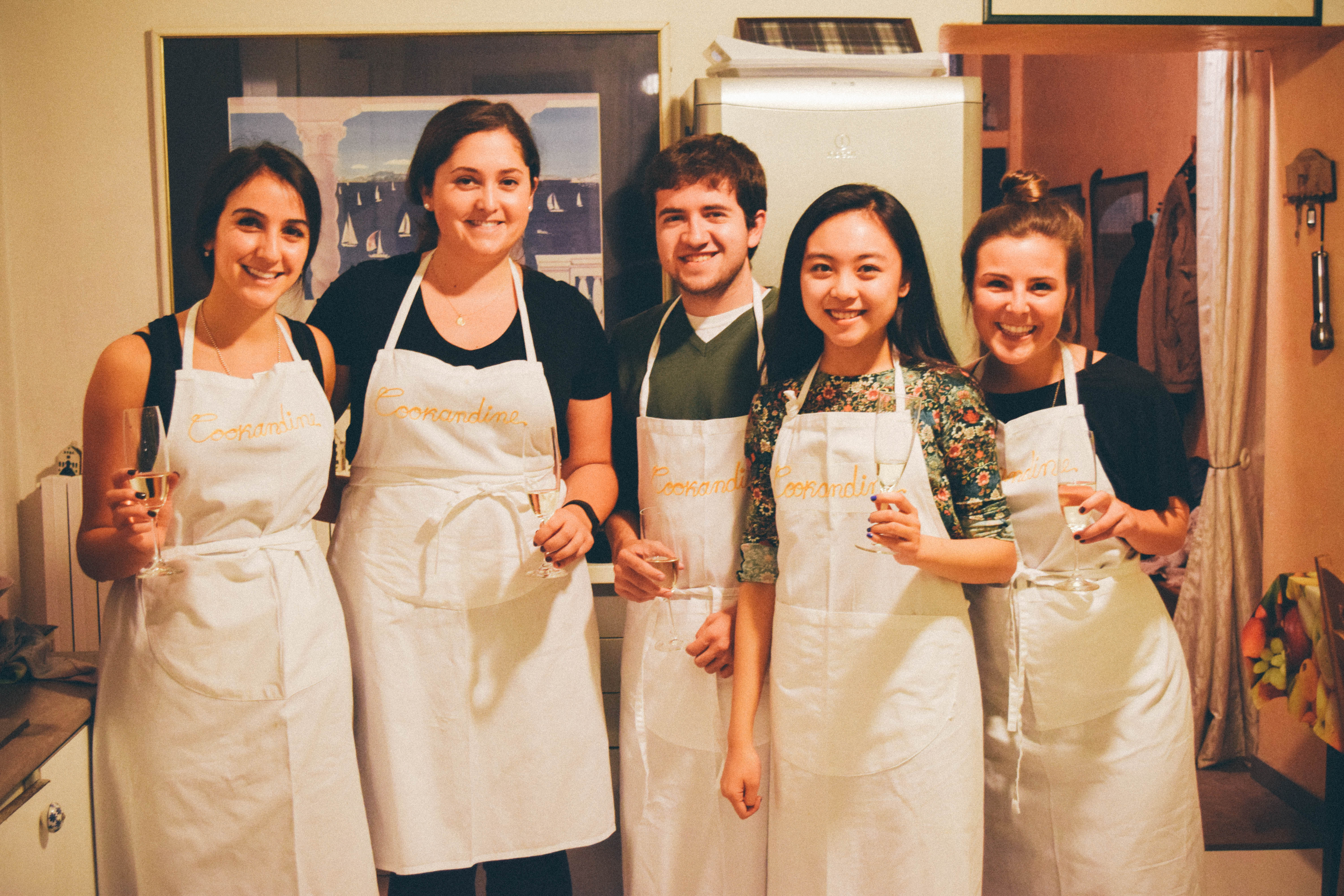
There is no better way to learn about a culture than learning a typical grandma-style recipe at her home. Especially in Italy, a country obsessed with producing everything by hand and with a culture of passing down learning to create “from-scratch” meals. Last night, I signed up for a pasta-cooking lesson in Milan and invited my friend Ryan to come with me. There were three other Canadian girls to practice with us and have a peak into the masterful universe of home pasta making.
Our chef Aurora, is a certified chef in Italian cuisine that has several years of experience working in a top Italian restaurant in Australia. Her cooking philosophy, like most of the Italian chefs, features fresh ingredients and handmade traditional methods. Our menu for the day is:
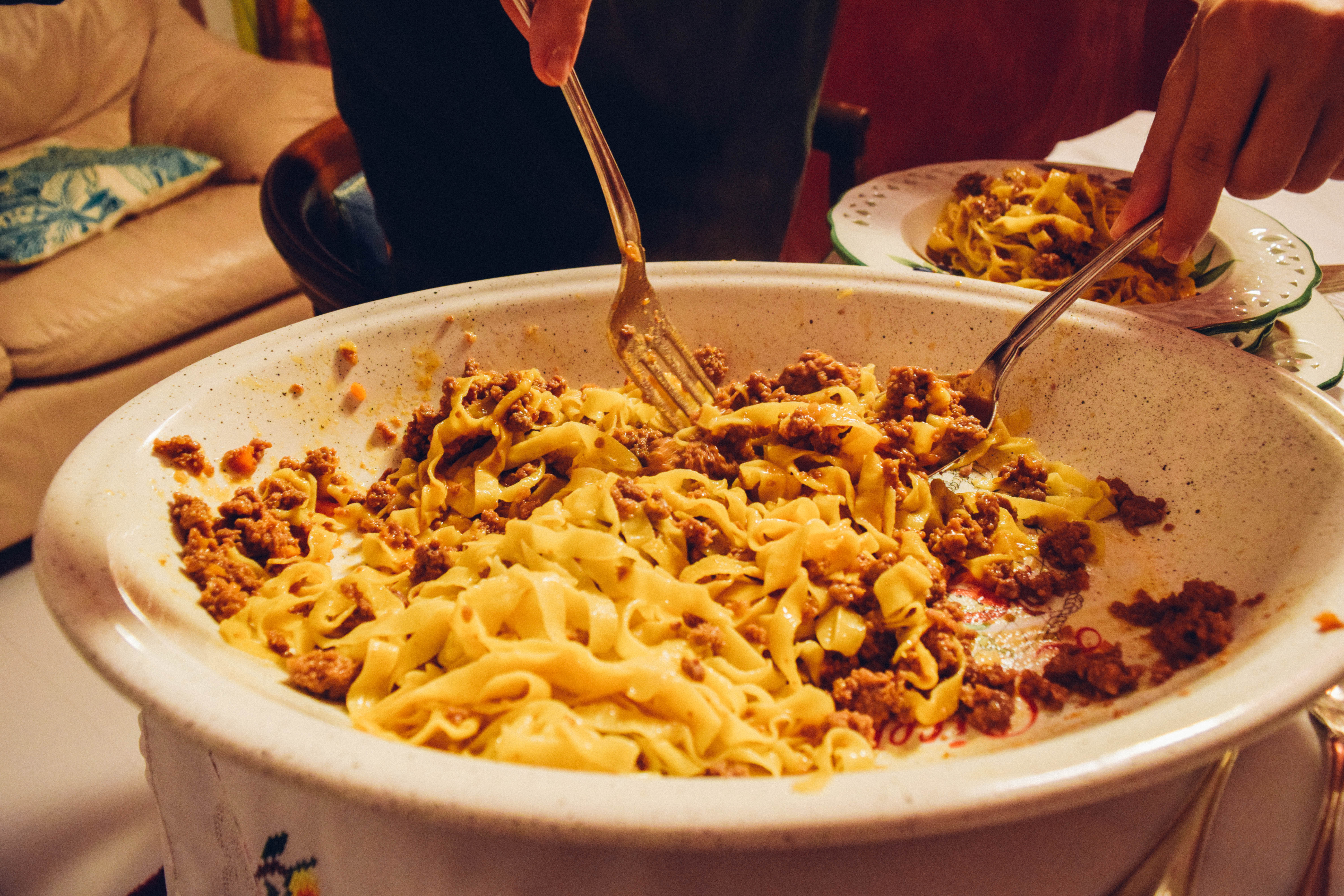
Tagliatelle from Bologna (with ragu sauce)
Vegie lasagna from Liguria
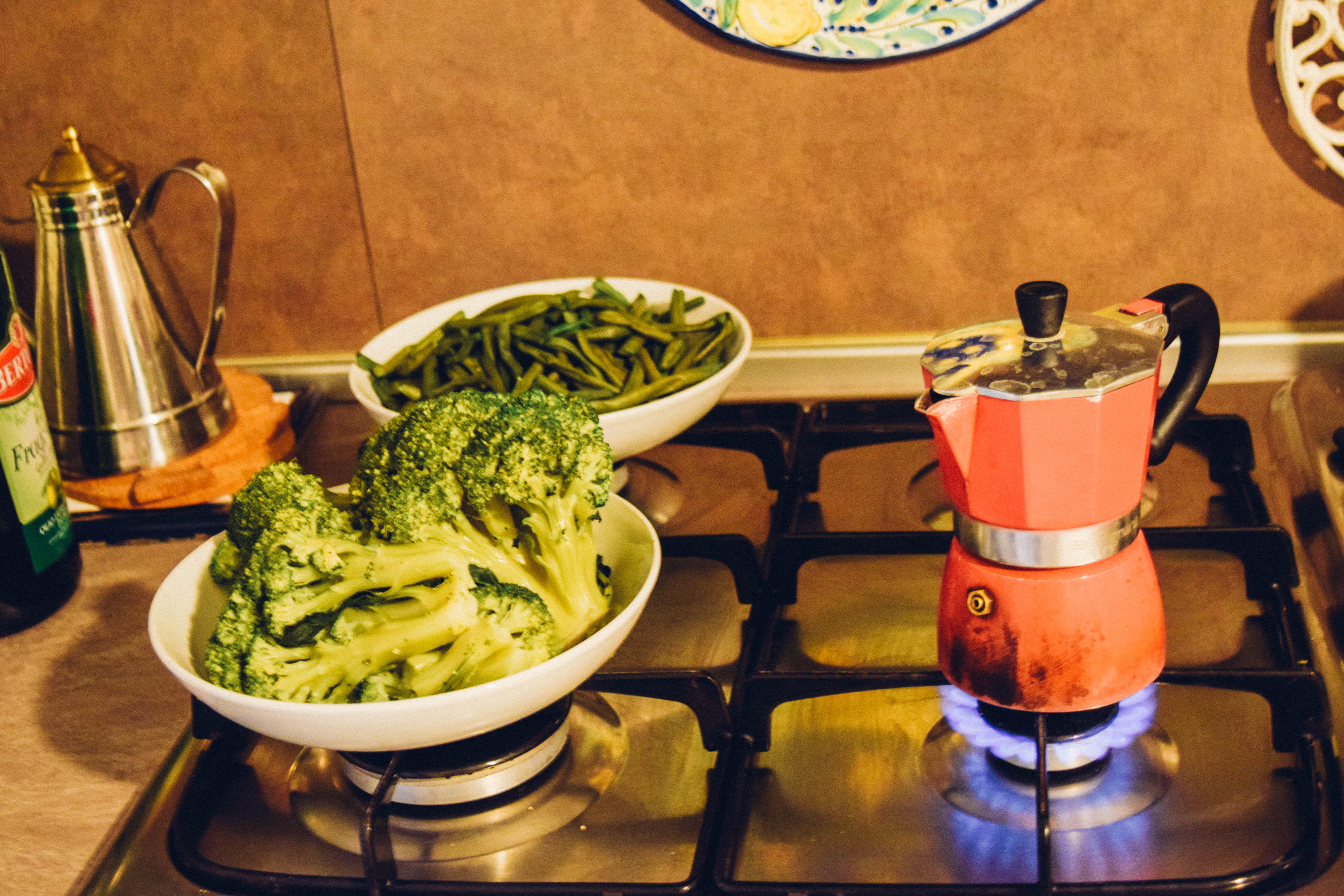
Orecchiette from Puglia (small pasta with Broccoli sauce)
Tiramisu
Preparing Tiramisu
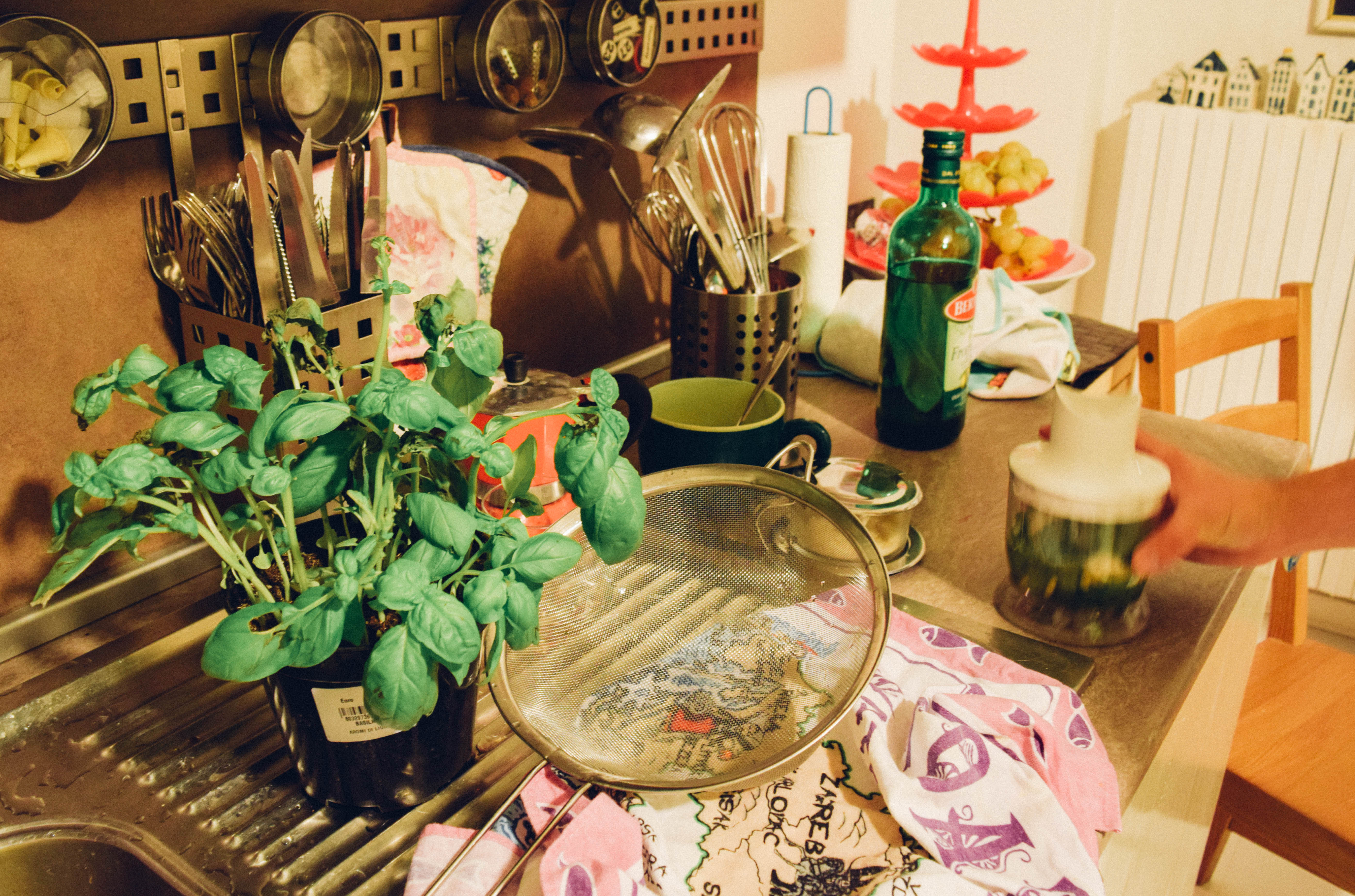
Fresh basil pesto sauce
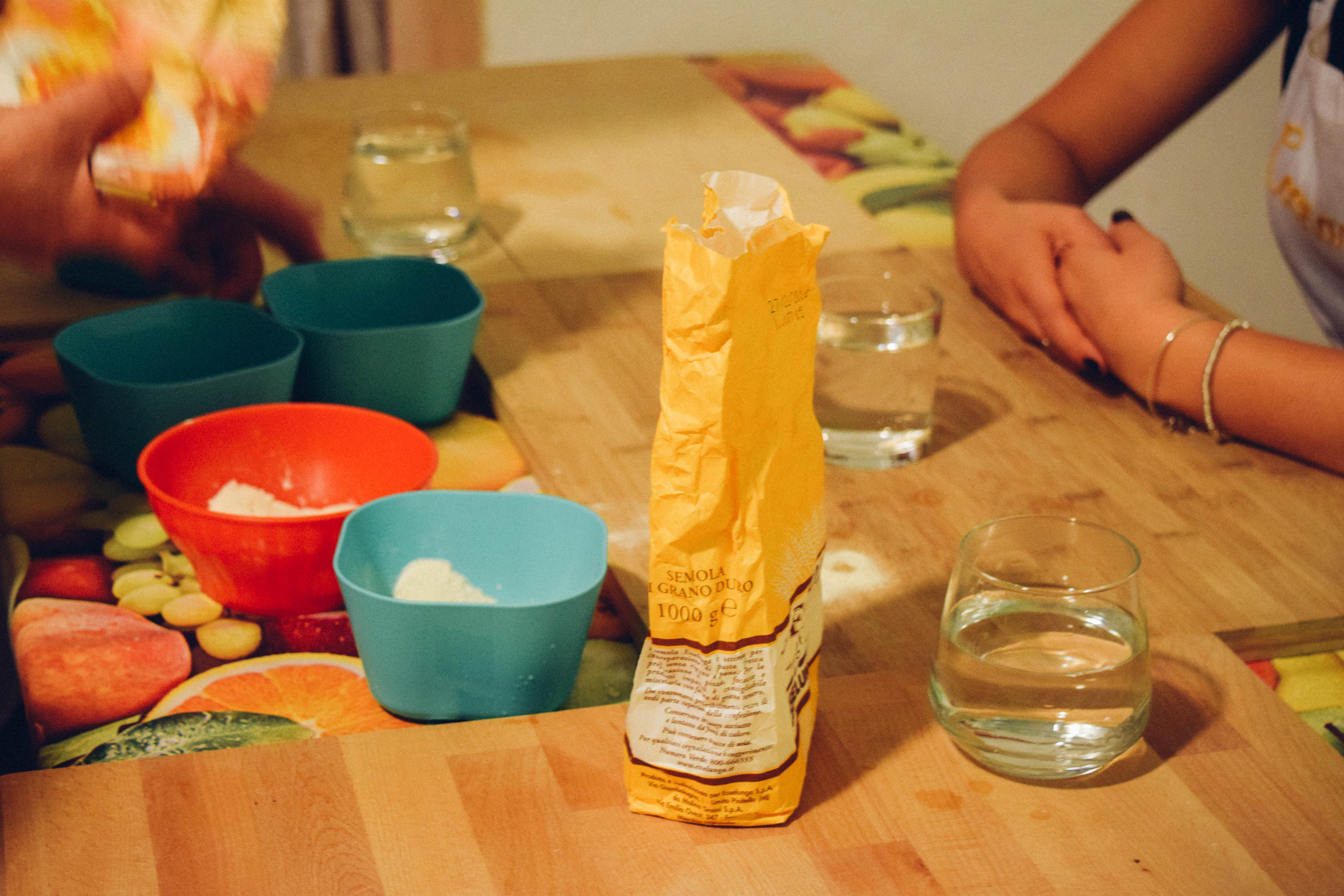
First, we prepared the coffee for making Tiramisu. Finger biscuits, fresh milk, egg yolks, every ingredient are bought from the open market by our chef in the morning. Later, we chopped the meat and sausage to make the delicious Bolognese sauce for pasta. Here comes the secret word – Massage. With a little bit of a hand massage to the meat mixture, the sauce becomes more flavorful and the texture will be much softer.
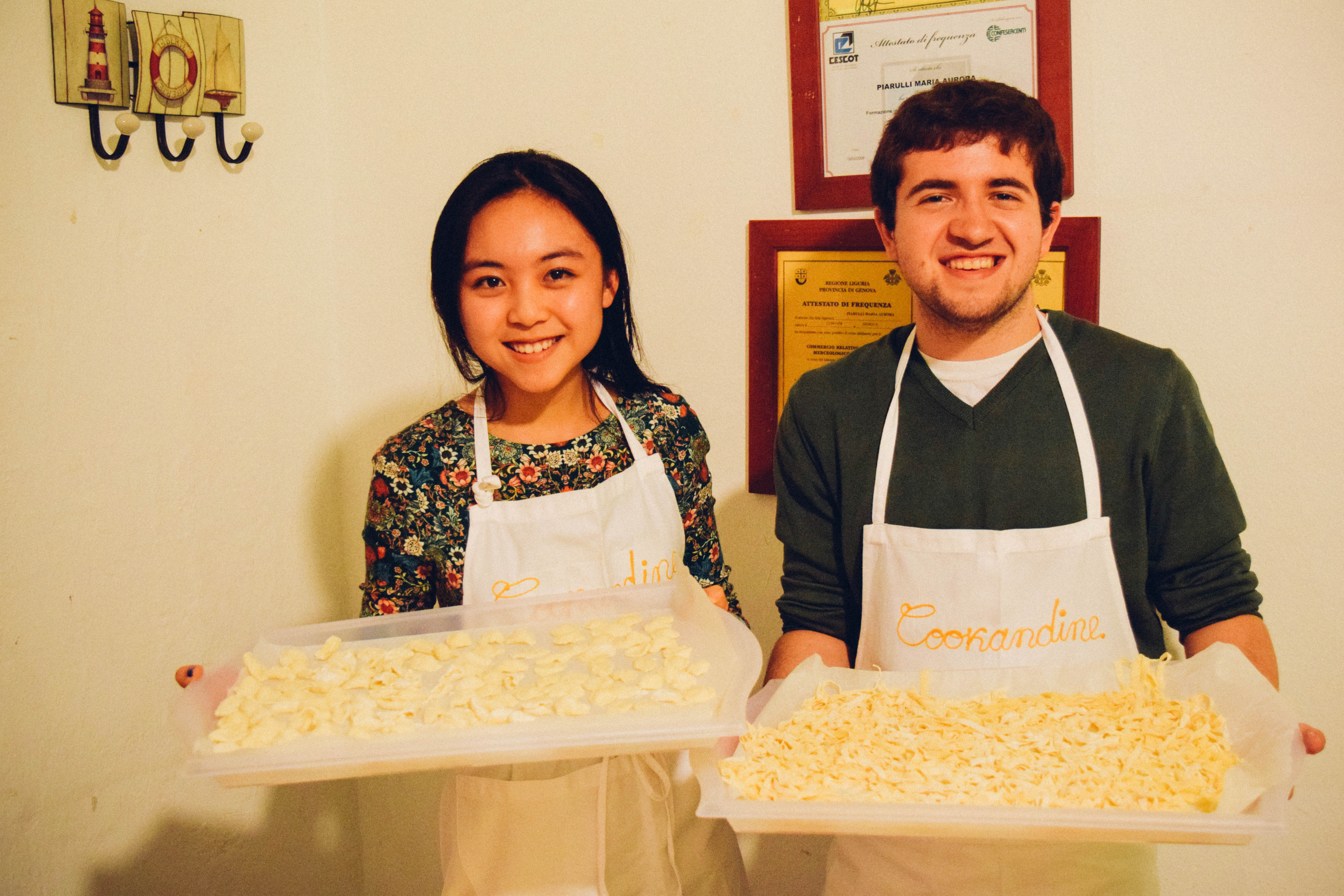
In the pasta-making session, everyone seems a little stressed out. It is always pleasant to watch the chef preparing everything from scratch and people rarely realize how much effort it takes. It is in fact, a very, very tiresome job. We have to not only make sure the consistency of moisture is perfect but also force the pasta into standard shape. After half-an-hour of pasta making, we are all amazed by the amount of effort and heart it takes for a wholesome meal.
Making pasta from scratch
Our first product
Now, time to dine. Having tasted our results after two and half hours’ preparation, we were all overjoyed by how delicious it tasted. Fresh made pasta really tasted entirely different than the hard pasta packet from the supermarket. The texture, consistency, and chewiness totally converted me into a believer of “from-scratch” Italian cuisine now.
Venice is arguably the most touristic city in Italy, or maybe Europe. Indeed, it is such a beautiful city that I decide to go anyway despite the frenetic tourist crowd. After staying in Venice for four entire days, here are some tips that I invite you to read through before you step into this most dreamy city. It could be a nightmare if you don’t know where to go, trust me.
Spend at least two full days in Venice, or any city in the world. The reason is pretty clear – how are you supposed to get the best out of a place if you just step out of a tourist bus and haven’t learned the transportation map yet? It is impossible to move around and spot any interesting locales if you are still having a headache trying to figure out where you are. In a city where streets and signs are so intricately woven into the fabric of the city to fool its ordinary visitors, you don’t want to fall into that trap. Stay at least two days to walk around, learn the main areas, and go to cafes to learn the local coffee specialty (probably every Italian city has some sort of coffee to claim its own).
Do get lost, occasionally. Before I went to Venice, a wise elder who is an expert of traveling in Italy told me, “getting lost in Venice is the best thing that could happen to you.” It turns out he is totally right. Narrow alleys, restaurants that will pop your heart out by showing the fish-killing process in front of customers, and little artist workshops fill up the city’s less-traveled streets. Travel off the beaten paths, and you will find the endless secrets of Venice.
Eat seafood, but at the right place. Venice is known for its fresh sea products. The renowned spaghetti with clams, not only a tourist must-try, is also the local favorite. Do some research about the most-loved bars by locals before you go, and plan yourself a bar hopping night: stop at lovely decorated bars with dim light, try a bit finger foods made of sea-to-table fish, and sing about your wonderful life.
After two weeks staying in Milan, I found out that the Milanese locals really fancy using the word “equilibrio”, meaning “equilibrium” in English. Depending on the context, it usually refers to balance, a middle point, or perhaps perfection. And now I have found the most accurate word to describe my experience in Milan. It is all about the balance.
Like every other big international city, Milan is definitely chaotic sometimes. Traffic and all-year-round fog become a part of the Milanese identity. Here, the Northern Italians who are known for respecting punctuality and efficiency might actually disappoint cliché tourists for their non-Italianess. To me, Milan’s answer to”la dolce vita” is simply smart and respectful. It is the golden middle doctrine, not too lazy, but no rush. The Milanese are definitely in the know of gastronomy, cafe culture, art and design, and all the other disciplines that build out the Italian identity that we are familiar with. They spend the weekdays working hard, sipping espresso, and all weekends hanging out with friends without notion of time. It’s the balance that keeps the city so charming.
This weekend, I explored the Navigli neighborhood famous for aperitifs and design cafés. It was a typical rainy day, but the vintage market is still going strong. Antique accessories, vintage clothes, housing furnitures…They have everything that you and your grandma both defined as “beauty”. Orto Botanico di Brera, is another my surprising find. This hidden gem, tucked away from the Brera museum district, is probably the most tranquil spot in the heart of the city.
After the first three days of orientation, IES program has arranged a retreat for us to Sirmione and Lake Garda, architectural and natural gems in northern Italy. Here are some snaps of this amazing trip.
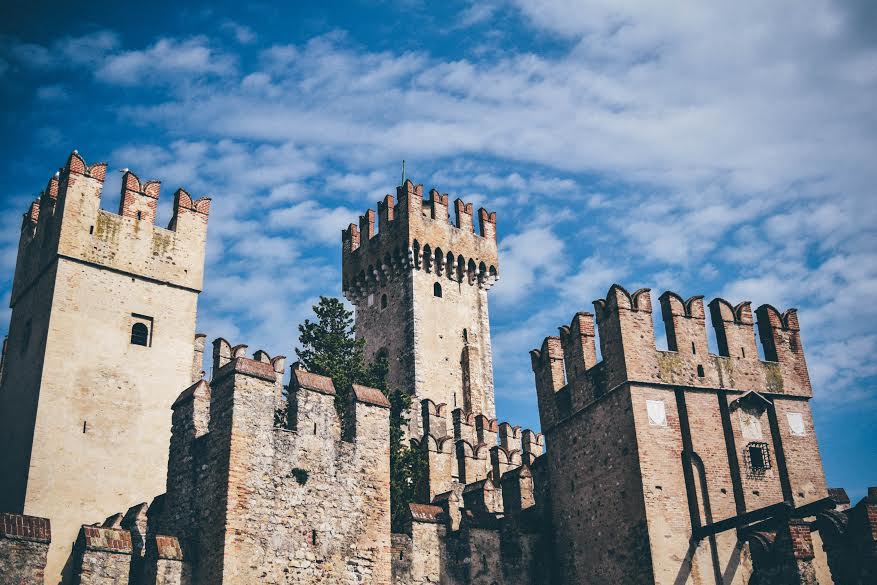
In the great town of Sirmione, history is embedded in every intricately shaped stone that we roamed through. This great castle at the entrance of Sirmione was built during 12-13 century as a fortification against enemies from both outside and inside. Our director Roberto made an insightful point — many Italian castles are facing to the inner city since most of the times the enemies come from inside the country.
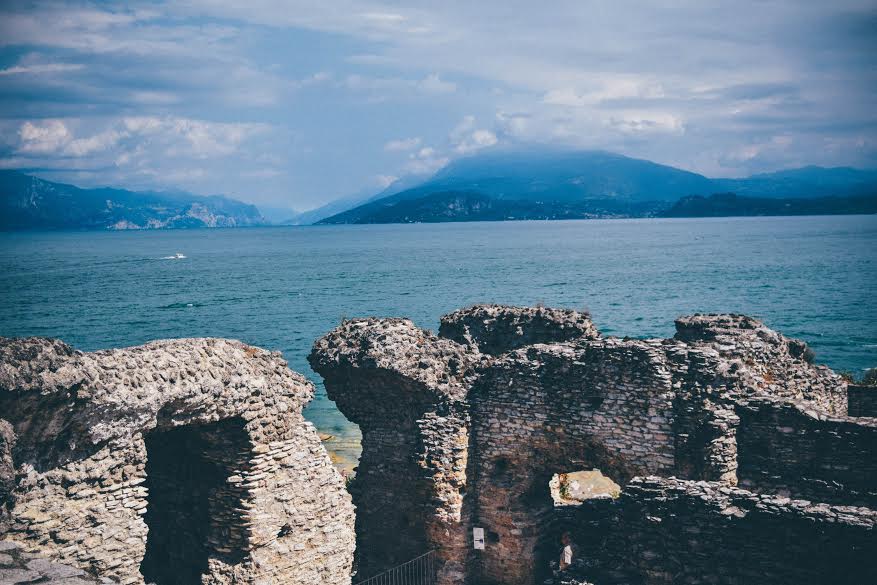
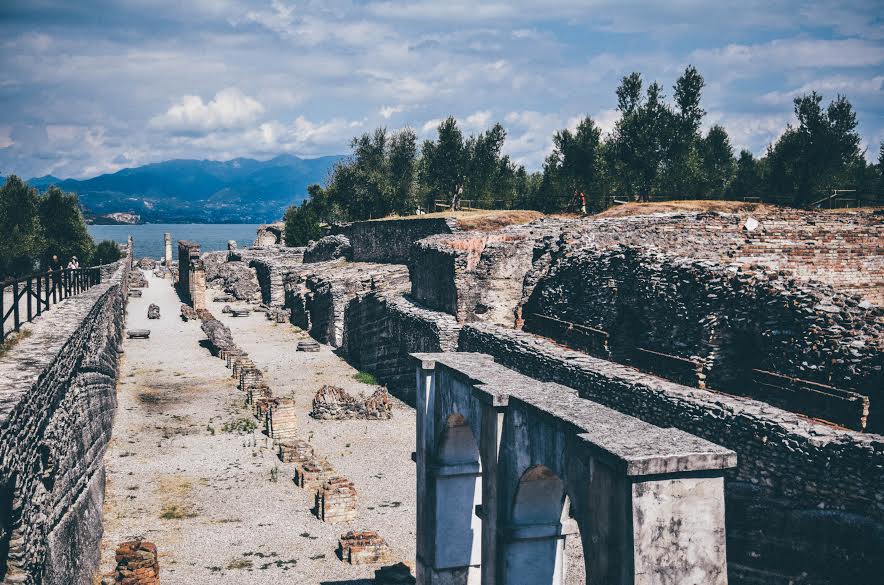
Grotte di Catullo is a Roman villa built during the Augustan period. Pieces and fragments of the wall paintings and archeological treasures are displayed in the museum now. Walking along the Roman ruins, one can still feel the past grandeur while immersing in the fresh air from the surrounding lake.
The Roman villa is probably the best point to have a panoramic view of Lake Garda. We held our breath, admiring the view of the turquoise blue lake and the architectural wonder at the same time.
On the second day of our retreat, we visited the Parco Giardino Sigurtà, probably the most picturesque botanical garden in Italy. Located above the surrounding historic towns, the park offers a fresh bird’s-eye view of the beautiful northern Italian countryside.
Italian gardens are delicately designed and carefully maintained. Unlike the rustic feel of English gardens, this northern Italian garden is incredibly elegant and polished. Every detail of the pond and forest hills show the efforts of human touch.
My new friends, Fonnon from Nigeria and Zdenek from Czech Republic, were wonderful companions during the trip.
Ciao tutti, it’s time to get serious about blogging my experience in Milan and around the world.
For me, Milan has always remained to be a city full of auras and dreams – waves and generations of artists, designers, writers have lived, written, wandered, and produced wonderful works in this city. There must be something about this land of creative minds. As a student studying Art History and Studio Art, I have been fascinated at the idea of living in Milan. Now the chance has come. Here are the ten things you need to know about the sparks between Milan and me.
I am not looking for la dolce vita. At least not the cliché Italian cinema version: I didn’t choose Milan to just unwind in a café for all afternoons and consume all weekends eating gelatos. There are many other idyllic places to do that sort of activities. Word of mouth has educated me that Milan is something different. It probably shares more characters in common with London or Paris than anywhere in Italy. Cosmopolitan, busy, glossy, Milan has every aspect ready for my ideal future.
I love exploring off the beaten paths. Travel has been part of my life in such a way that I find it lame to describe it as my passion. My passion, instead, is to connect cultures and different people. Over the summer, I had an amazing time interning at Absolute Travel in the Marketing department. Through the internship with this premium luxury travel brand, I’ve learned so much knowledge about independent, in-depth travel like I never had before. Meeting travel professionals and having long conversations with destination experts has intrigued me even more about uncommon discoveries in new countries.
I am an art enthusiast and design aficionado. Getting lost in a museum, having my breath taken away by a brightly colored and vaguely contoured painting sounds 1000 times more appealing than snapping a photo of the Duomo to me. Long before departing for Milano, I researched lists of must-see spots in every up-and-coming neighborhood. Fondazione Prada, Milan Fashion Week are of course on top of everything, while galleries on a smaller scale around the artsy Brera district seem to be fascinating as well.
Outdoor trips can never go wrong. Although growing up around an overwhelmingly busy metropolis in Asia, I am an urban soul with a real country heart. Camping, hiking, trekking, or simply walking along the seashores excite me more than window-shopping. In June, I went to the Greater Smoky Mountains for a camping weekend and many small botanical garden explorations every once in a while.
Speaking Italian inspires the romantic part of me. A polyglot in progress, I am fluent in Cantonese, Mandarin, English, and Spanish, and can make friends in Italian. It’s true that speaking different languages reflects the distinct characters of me. When I am speaking Italian, I feel myself becoming more emotional, romantic, and interesting than ever. With this enthusiasm for Italian language, a semester immersing in Milan sounds just right.
Having just landed in Milan, I have already fallen in love with the creative vibe along every street corner and of course, those the Milanese glamorous street styles. Tune in next week to see more romantic stories between Milan and me!
I know most study abroad students dread going back home, but I was ready to go back. Traveling, believe or not, is 60% stress and 40% enjoyment. Before arriving home in the States, I traveled to Athens (Greece), Rome (Italy), Budapest (Hungary), and London (UK). Let’s just say that every travel nightmare you could imagine happened to my brother and me during our trip.
Missed our flight? Check.
Had to pay to check our carry-on luggage? Check.
Got mobbed by selfie-stick and tour group vendors? Check.
It was definitely a learning curve for both of us. We can’t explain exactly why everything happened the way it happened. All we can tell you as fresh travelers is that you just have to keep calm and carry on. I kept repeating these words to myself during the entire trip. The best story to exemplify what my travels were like and how I emerged stronger, wiser, and utterly exhausted is our Rome story. Here’s how it went:
After the bus waved us off, my brother and I made our way along the dark streets to our hostel. We made our way with my phone glaring with low-battery warnings and picked up our pace when suddenly, we were hit with the strong smell of fresh urine. When we at last found our hostel, we dished out some extra Euro to pay city taxes that were not included in our initial booking. We were ready for some fluffy pillows by this point. I saw the open door to our mixed dorm room, walked in, and found five shirtless guys lazing around. I was the only girl. Sounds like a dream, but all I wanted was to freely strip out of my clothes, wear my fluffy PJs, and snore my heart away. After a long and surprise-ridden day, I longed for some comfort and privacy. But, I kept calm and carried on hoping for a more relaxing tomorrow.
***
The next morning we were ready for the amazing Rome experience everyone raved about. We grabbed our extra battery pack and set out for the Colosseum, Roman Forum, and the many Roman piazzas. My brother and I aren’t really big on having a fixed schedule. We like to have an idea of where we want to go and what places we want to see that day, but we welcome detours to hole-in-the-wall restaurants and signs pointing toward other cool looking places.
We ended up hitting a lot of tourist sites, gelato shops, and a hole-in-the wall bakery that had the most scrumptious desserts we’ve ever had. This was the Italy I had imagined. What I hadn’t imagined was how hard it was to find food. How can this be you may ask? Well, first we had to get lost. Friends have told us that the best Italian food were in the hole-in-the wall places hidden from the touristy areas. But somehow we always ended up right back on a bustling street. Maybe we weren’t trying hard enough or maybe subconsciously our fear of getting too lost led us back where we unknowingly wanted to be. Whatever our issue was, we were so hungry we sat down at the next restaurant on a semi-quiet street only to discover that it had been a tourist restaurant. After a couple of bites of the pasta, I had a King Kong roar moment. The pasta disappointed my Italy-expectations. But it was only our first day out and we were hopeful for the next meal.
***
Day 3 of Rome was the. most. challenging. day. It’s supposed to get easier right? But in order for this to be a reality, we should have hit the Vatican on day 1. We got up extra early and rushed to the subway in hopes of getting in line early for the museum tickets. Little did I know, it was rush hour, and the metro was PACKED. I tried to make myself as small as I could as more people streamed in with every stop, and eventually ended up underneath someone’s armpit. When we finally squeezed our way out, we walked to the Vatican only to be welcomed with a flood of questions. Questions seemed to fly from all directions – Are you a student? Do you know where you’re going? We have free information! Do you have a reservation? Sensing they were vendors, we quickly pushed our way past only to be stopped by a vendor who gave us her spiel. Thankfully, she told us that we were going in the wrong direction – that the museum was on the other side. We kindly declined her tour and headed off to the museum line only to be bombarded by more vendors.
At one point I responded in Korean just so they would leave us alone. It was honestly overwhelming. I felt like the guy in Temple Run where the vendors were the monster and my brother and I were the poor fellow running for his life. Getting in line was the worst because we were sitting targets. One vendor came up to us and tried to convince us the line was on the other side of the street and that the “discounted” cost for students was 28 euros! I thankfully did my research beforehand and knew that the EU student discount was 7.50 euros. After what seemed like endless “No thank yous” we were halfway up the line and finally got some peace.
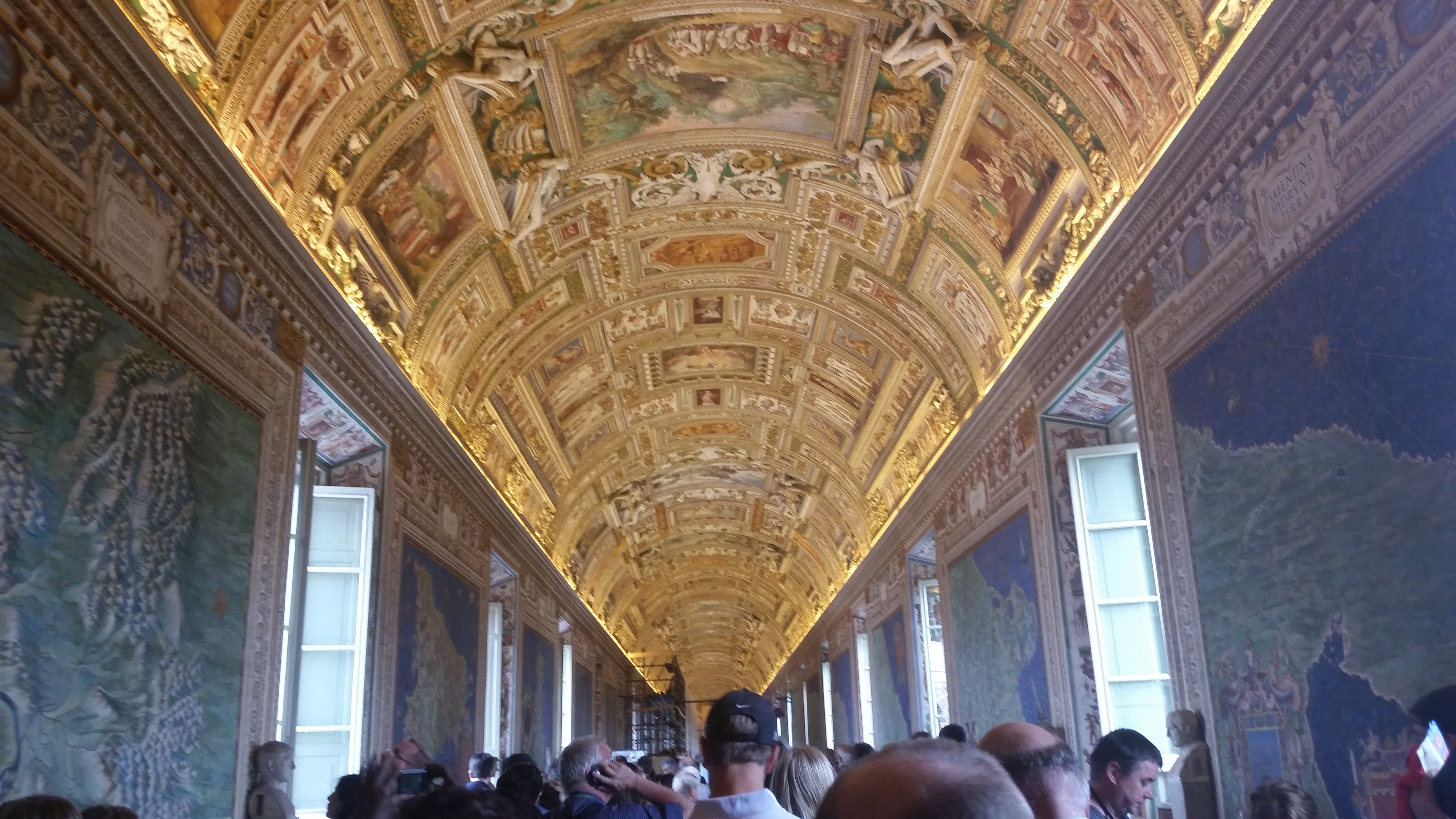
The Vatican itself was amazing. Beautiful. Stunning as we had been told.
One of the many intricate ceilings at the Vatican Museum
Vatican City
Rome was one of our early trips, so the obstacles that we faced with every step stuck out the most mostly because they were the first memories of our travels. However, although in the beginning our trip was 60% stress and 40% enjoyment, the percentage did change as the trip went on. We were exhausted, but each day we were able to walk a bit further. We had a better gauge of when to rest, where to eat, and who to ask for information. By the time we ended up in Budapest, we were eating all the traditional local foods, hitting up the tourist sites with ease, and ended up well-rested and financially sound at the end of the day.
St. Stephen’s Basilica in Budapest was particularly breathtaking.
The process in getting to the 90% enjoyment, 10% stress took longer than we expected, but I’ve learned that this is the main theme of a study abroad experience. You’re thrown into a new environment where you don’t know anyone or anything. All you have are your past experiences, instincts, a dying battery, and the flood of people around you. Although it was scary in the beginning, I’ve found that embracing my vulnerability and tapping the shoulder of the stranger in front of me for directions was usually the best next step for new travelers like my brother and me. The “worst” we’ve faced is when someone ran away because they couldn’t speak English (happened to us in Athens) and the best was when we met someone in line at a Hungarian restaurant and we ended up having an entire dinner conversation with them.
I am extremely grateful to have had the comfort and familiarity of being in a country that uses the same language and has similar cultural aspects and traveling around the EU definitely made me appreciate this fact ten times more. However, my travels were the final growing stretches I needed before arriving back home. Being back home has already made me appreciate all the comforts and joys of familiar things like homemade Korean food, my beautiful countryside town, DINERS, my fluffy blankets, and greatest of all – my friends and family who supported me throughout the journey.
Home sweet home
Thank you to all who have followed me on this life-changing experience. I wish you all the best of luck in your next big step – I hope you get to travel someday as well and visit the places you’ve always wanted to – I hope you break your expectations of the things that have been romanticized and discover new loves that you never thought of before – but most importantly, I hope you have wonderful people to share them with along the way like you all have done for me. Thank you!! 🙂
You have not done spring break until you have done spring break in Europe. A few weeks ago, all of my friends at Richmond were on Spring Break – at the beach in warm, sunny weather. Meanwhile, I was still wearing a winter coat here in Lausanne. But it was all worth it. For my Spring Break in Europe, I went to Nice, Monaco, Venice, and Milan and they were all amazing!
I am always happy to be back in France, and Nice was the perfect place to go. Heading from the cold temperatures in Lausanne and seeing people in bathing suits on the beach in Nice was a huge shock! I had another one of those “wow I am really here” moments as I took a nap on the beach on the French Riviera (!!). Other than the amazing weather, the city itself was incredible. It was definitely a touristy beach city, but it was very clear that only the wealthiest people actually vacationed there. I am proud to say that I had the time of my life, even living on a student budget.
This picture of the Cote d’Azur is iconic, I couldn’t believe how blue the water was!
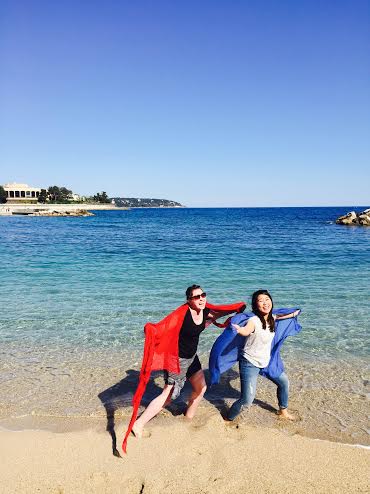
While we were in Nice, we decided to head to Monaco for a day to see the Monte Carlo and more amazing clear blue beaches. While we thought that Nice was a city for the wealthy, it was nothing compared to Monaco. Everywhere we turned, there was a new luxury car or limousine. Every building looked like a palace, and the stores were all the best European designer brands. I’ve decided that I need to live there one day. I think my love for Monaco was quite apparent to my friends, as I repeatedly explained how I would become the future Princess of Monaco (let me dream!)
Ayumi and I decided to recognize the fact that we were in one of the classiest cities in Europe. This was the result. Very mature.
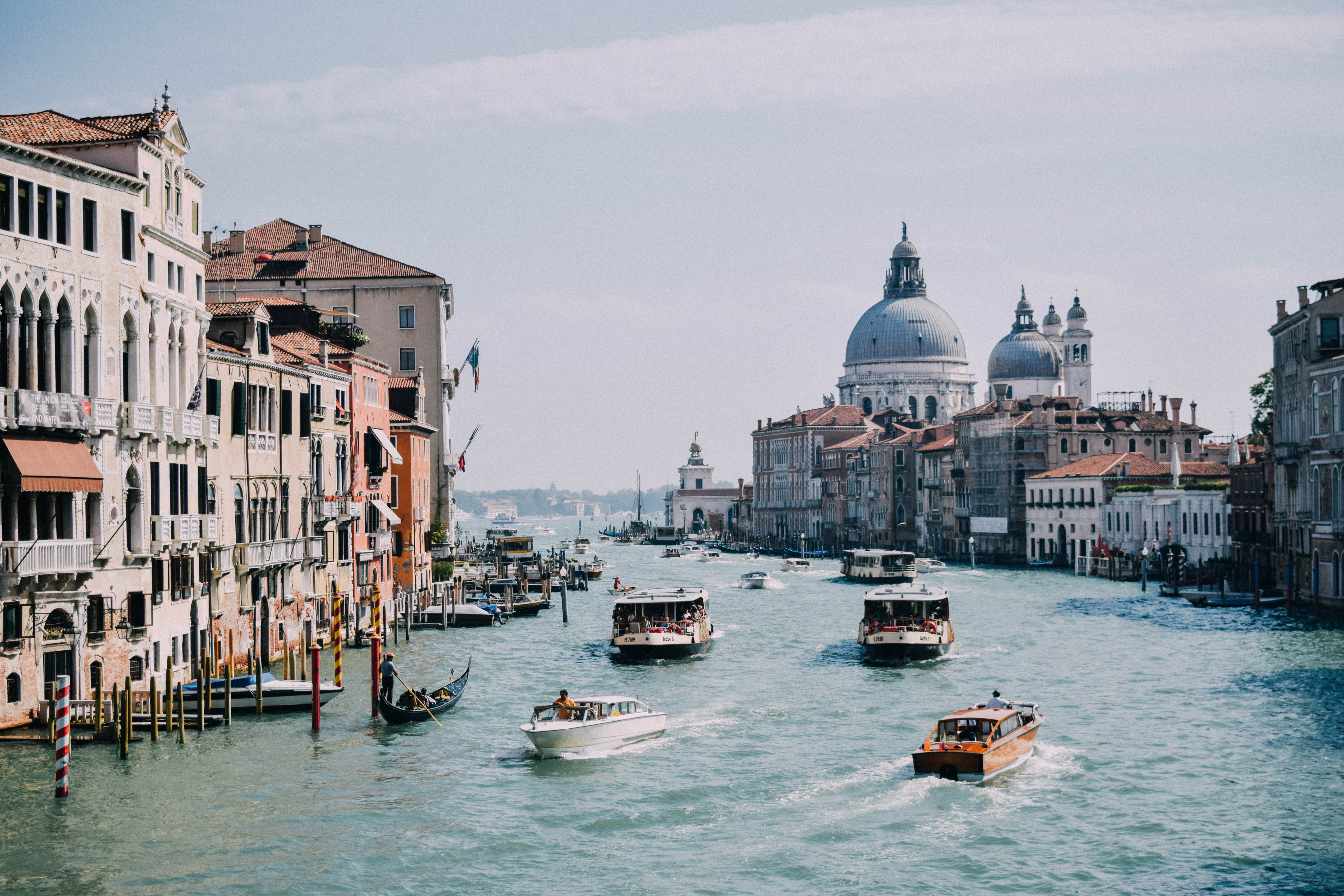
After visiting Monaco, it was time to head to Venice. Before coming to Europe, Venice was the one city that I really wanted to visit, so I was unbelievably excited to see the city! I arrived at the airport and had to take a water taxi onto the island of Venice, which was one of the coolest things ever. What other city has water taxis and waterbuses? My friend and I stayed in an old, traditional Italian building that had been converted into a hotel, and that experience was amazing! The whole city felt so lively and filled with history, and there were hardly any modern buildings.
In Venice, it is hard to get anywhere. You need to take a boat to get to the mainland, and you can only get to some places on the island by boat. Still, it was an amazing place to visit
Of course I had to be a super tourist and take a gondola ride in the Grand Canal. Even though I knew I was WAY overpaying for the experience, it was totally worth it! We got to see a lot of the city from the water, which was a completely different experience than seeing it from walking around! Our gondola driver didn’t sing to us (which was probably for the best), but my gondola experience was amazing nonetheless.
The gondola ride was actually my favorite part! It was so cool to see the city from the water.
After Venice, we made it to our last leg of the trip; Milan. This city was so totally different from Venice with its modern skyscrapers and sleek, new buildings. It was definitely the most cosmopolitan city that I have been to recently, and the change was nice.
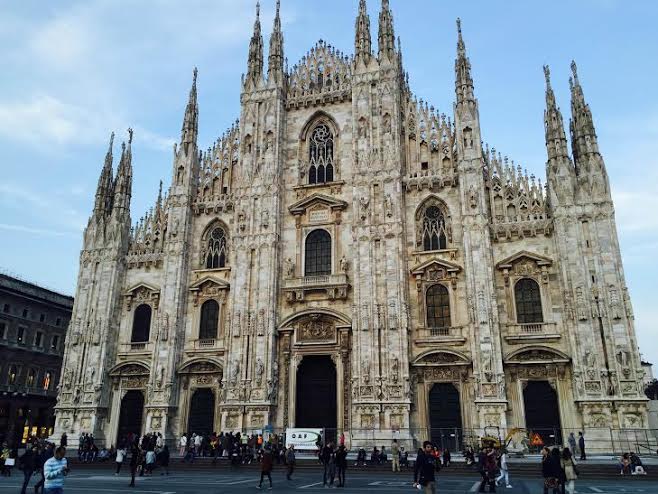
We climbed all the way up to the top of the Duomo, the church in the center of town. The view was amazing and we spent about an hour just lying on the roof of the building.
As the fashion capital of the world, there were plenty of designer stores throughout the city. Prada was begun in Milan, and this is the first ever store!
And now for the bad news. I was being the most American tourist in the world, eating a snack in McDonalds. A few girls came over to our table asking for food or money and it was shortly after they left that I realized that my phone was missing! I went through the whole trip feeling like a savvy traveler, not falling for any of the tourist traps that would make me a target for pickpockets. In the end, I really was *that* tourist that doesn’t notice that their phone was stolen. I never thought that it would actually happen to me, and I thought that I would be smart enough to recognize what was happening, but it really is so easy to get caught off guard. I reported the theft to the police (who were DEFINITELY sick and tired of hearing of phone thefts from American tourists), but I know that my phone is gone.
I think that I handled my first pickpocketing experience pretty well, with minimal tears, but it still feels horrible to feel like something was taken right from you. In the end, the process of getting a new phone hasn’t been too stressful, so I really am just lucky that I didn’t lose anything more important!
In addition to the theft, our train home was almost 2 hours late and I didn’t end up getting home until 1am on Sunday night (before my 10am Monday morning class). Needless to say, I was so overwhelmingly happy to come back home to Lausanne! I really missed being ‘home’ and I’m really excited to spend some time going back to normal life with school and friends.
P.s. There was a slight delay in this post because while I had all of my pictures of my trip all planned out, they were all saved on my phone! I’m crossing my fingers and hoping against hope that all of pictures were somehow miraculously saved onto iCloud even though I have no clue what that even really is (I am clearly a tech genius). Stay tuned for the verdict on the state of my pictures, but for now, special shout out to Ayumi for letting me use her pictures of our trip!



 Posted by jiaqiinitaly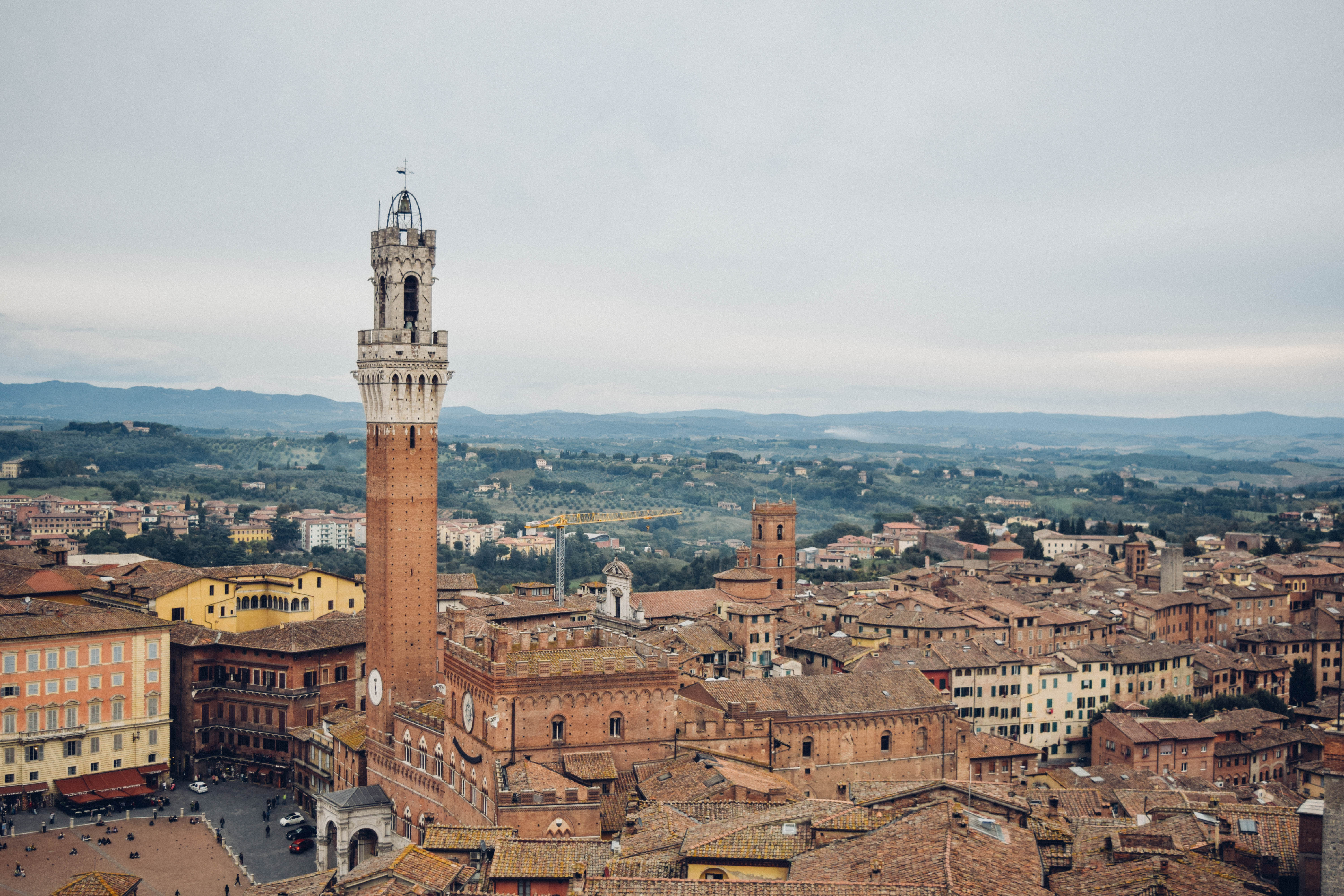






















 urtravelogues.com