The First 5 Days (posted by Jimmy in England)

October 3, 2012

In the words of Marv Levy, the Hall of Fame Buffalo Bills head coach, “Where else would you rather be than right here, right now?” I arrived in Oxford last Thursday and have been in awe ever since. I spent the first two nights living in a hostel (Central Backpackers) ten minutes from the center of the city. If you have never stayed in a hostel before, I highly suggest it. Being an American college student, I feel like I was ignorant to the way in which many people live. In the hostel, I met people from many different walks of life. I was only there for 48 hours, but I met people from Spain (southern and Basque regions), Norway, Germany, Greece, Columbia, China, Sweden, Mexico, India and Australia. Even though there were many different world views, we all shared one common interest. Whether we were studying at a university or traveling city to city to find jobs, we were all working towards what we thought would bring us happiness. After my two day stay in the hostel, I was able to move into my dorm in the city of Oxford. For those of you that do not know, Oxford is a mid-sized city with a population of more than 150,000. There are many shops, restaurants, and cafes that I plan on visiting during my stay. My room is located in Jesus College in the center of the city.

Second quad at Jesus College, Oxford University

Everybody in Oxford has been incredibly friendly. When I arrived a few days early, I was invited to attend two afternoon cream teas for postgraduate students. (Oxford runs on a trimester schedule. Trimesters run from 0th week-9th week. Last week was -1st week and this week is 0th week. Postgrads arrive in -1st week while undergraduates and exchange students arrive in 0th week. Classes start in 1st week. It’s a little confusing.) These cream teas were part of the postgrad orientation and were a chance for students to meet and listen to prominent speakers. The main speaker was Dr. Andrew Briggs, a professor of nanomaterials at Oxford. His research team is trying to build what is known as a ‘quantum nanocomputer’. I have spent the last few days trying to figure out what it is, but his talk had nothing to do with complex physics. He introduced an idea, one that I have seen is a common theme among the faculty at Oxford. He said, “When you mix the personal desire to learn with an environment like Oxford, magic happens. But the reason that we succeed is due to a combination of work and personal reflection. We spend one day in deep thought over life’s biggest questions. We leave our research labs and ask ‘who am I’ and ‘why does any of this matter’. An Oxford education is not simply about academics, but rather about finding out who you really are.” These cream teas were very helpful in understanding how people succeed at this university.

Being at Oxford has not been entirely about academics. One night I went with another American exchange student to the Turf Tavern. It is a famous pub where Bill Clinton frequently hung out while studying at Oxford. The next night I visited another famous pub called The Bear Inn, which was built in the late 17th century. They are famous for their collection of ties that they collect. Years ago, if you ran out of money at the pub you could cut off the end of your tie in exchange for a drink. The tradition became famous and the collection is still growing.

Tie collection at The Bear Inn

These last five days have helped me adjust to English life. I feel fully prepared to immerse myself in all that this city has to offer over the course of the next year. Today I start orientation. I will keep you all updated. Until next time, keep being great!

When the world knocks at your front door, clutch the knob tightly, open on up, and run forward and far into its widespread greeting arms with you hands outstretched before you. Fingertips trembling, though they may be.- Anis Mojgani


Majestätisk Värmlands Reccegasque (posted by Indira in Sweden)

September 24, 2012

Last week was amazing! I don’t think I have ever had more fun and bonding time with my corridor-mates, as well as people from my nation.

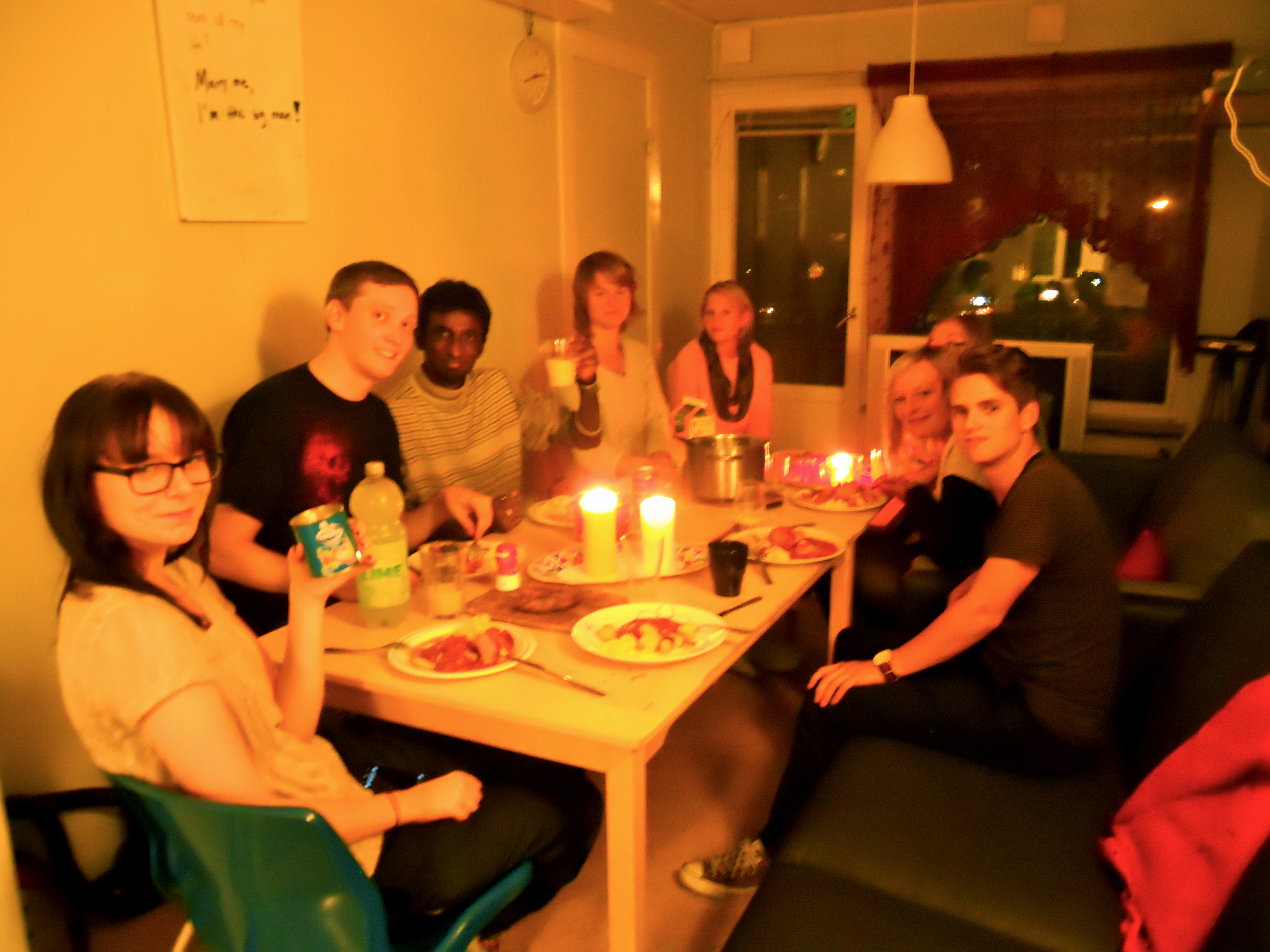
I live on a corridor with 11 other people and we share a kitchen together. There are 4 other international students, and the rest are Swedish. Last week we decided to have a corridor dinner so that we could get to know each other and to discuss some corridor rules. This was truly an amazing idea! We all got together, cooked, and then had a nice meal. The best thing about the corridor dinner is that you get to know people in a way you can’t in class or at fika. Everyone is so much more relaxed and there is a sort of  positive vibe around them. It was fascinating to see how none of us study the same thing or have classes together (we even have few Master students), but we all get along really well. Student life in a residence here is very different than at UR, since the residence halls are not specific to any grade, group, major, or area of interest.  It would seem like all of the residents would be more disconnected as a result, however that is not the case. Sharing a kitchen and a corridor makes us more likely to hang out and to spend time together. I really enjoy this part of being an Uppsala student. And all of my corridor-mates are really great, which makes it all so much better!

 Dinner with the 11 other students living on my hall

Dinner with my corridor-mates

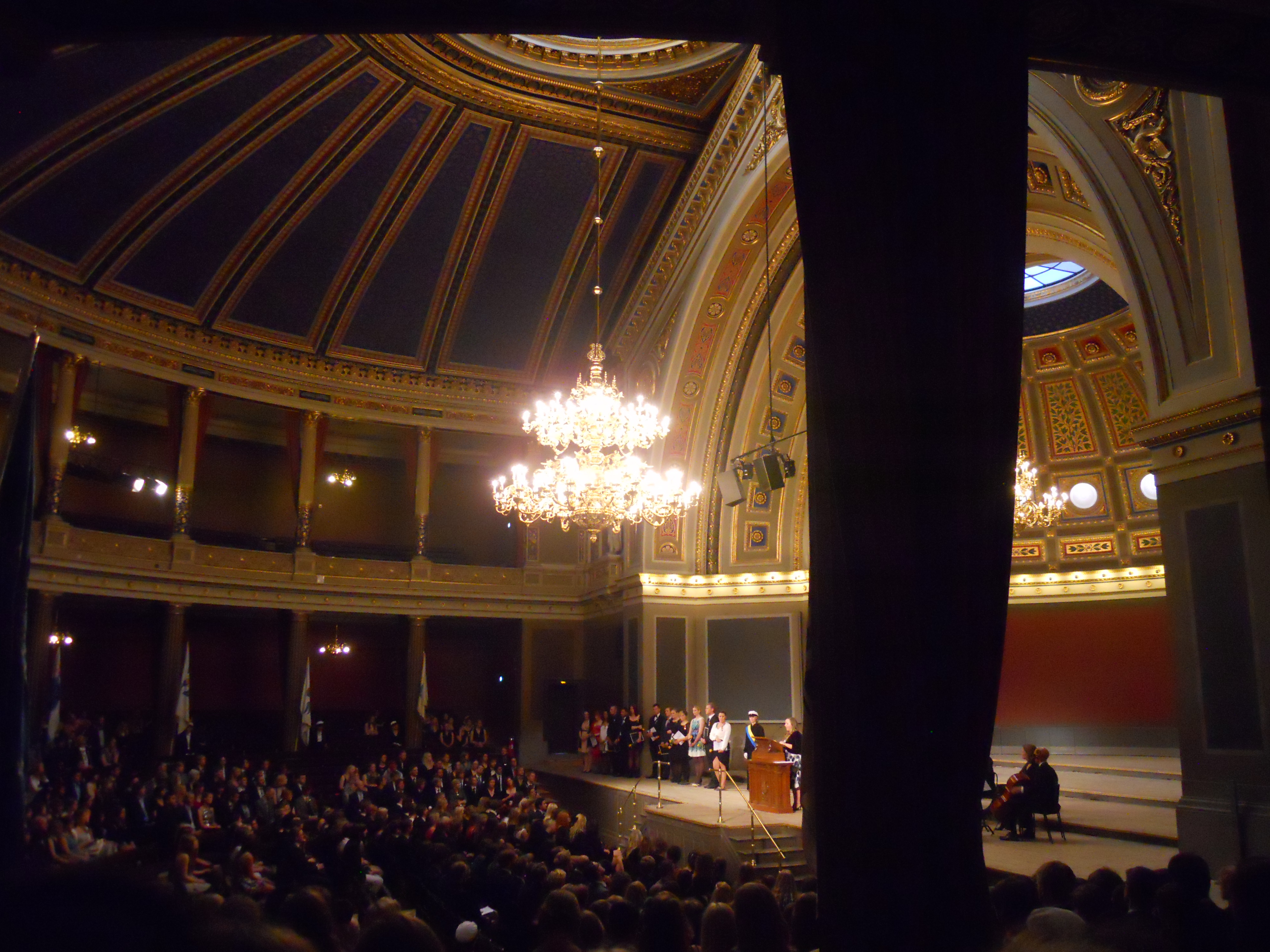
The big part of my week was the Reccegasque I was so excited about. On Friday, we all got ready, dressed in cocktail dresses and suits and all gathered at our respective nations (each of the 13 nations had a Reccegasque at the same time). Uppsala never looked so fancy! We were very lucky to have clear skies and no rain (it rained in the morning). First we gathered at Värmlands Nation (my nation) and then we walked over to the University Main Building. There was a senior member of the nation who carried the nation’s flag and we followed him in a line. This entire ritual made me feel like a part of something bigger. The sense of community is on a really high level here. When we got to the University Main Building (which is conveniently 2 minutes away from our Nation’s house) other nations’ members were also gathering on a patio in front of the building. After about 10 minutes of waiting and chatting  with people standing around me, new nation members, lead by the flag bearer, started entering the building. We were seated in the Great Hall where we had the reception for international students. The program was amazing. We had representatives from the University and Student Union speak, and there was also an entertainment program. It all looked very majestic, especially with the classical music playing while the flag bearers entered the Hall. The weird thing was that most of the speeches were held in Swedish and I, along with all other international students, didn’t understand much. Luckily we had some Swedes around willing to help us. It was funny that there was an a capella group singing, and they performed “Levels” by Avicii. Does it get any more Swedish than this? 😀

Speeches and entertainment in the Great Hall of the University Main Building with all the nations

Speeches and entertainment, in the Great Hall of the University Main Building, as part of my first Reccegasque

After the program in the University Main Building we headed back to our Nations. There we had a looooooong dinner (5.30-10.30pm). The food was amazing (we had typical Swedish food like salmon and potatoes). Of course we sang a lot and heard a lot of speeches. There were also a few short performances by the Värmlands’ drama club and choir. The funniest thing for me was when we had to make a hat out of napkins, put them on our heads, sing a song, and then wave with the napkin after the song. For the last song of the night we had to get up on our chairs and sing. If, after the song, you sit down on your chair you will fail your exams. So we all stood a bit until the dinner was officially over. After the dinner we had an after-party in Värmlands’ own club “State of Mind” that was open to every student (not only the students who attended the Reccegasque). I really enjoyed the Gasque and I can’t wait for the next one (which is in October!). This is a great way to learn more about traditions, have a very formal dinner, and meet new people (the nation arranges the seating so you are almost never sitting next to your friends. I was lucky and had amazing table neighbors).

Waving the "hats" that we made out of napkins at the Gasque, our nations dinner

Waving our “napkin hats” at the Gasque

Uppsala is a place where you can experience so much and I am more and more sure of this every week. 🙂


Week 2: Little Steps (posted by Kati In Spain)

September 4, 2012

This week has been focused on the administrative details of moving to Spain and matriculating in a university that has procedures and customs that are very different from those that I am used to. It has been a long week of ups and downs, and although Monday was a rocky start, Sunday was a perfect finish.

Ninety days before leaving for Spain I applied for a yearlong student visa via the Boston Spanish Consulate, following their directions to a T. After eight weeks of waiting, I was told that the Consulate is no longer permitted to grant yearlong student visas and that I would have to apply for residency at the local police station within thirty days of arriving in Spain, or else I would be deported. I waited a week after arriving to begin my residency application, as the director of my orientation program, the person I was told to ask for help, was on vacation until Monday. First thing Monday morning I went to the Cursos Internacionales Office to ask Carmen for guidance. She patiently explained to me her understanding of the application process, and she gave me directions to the police station. Colleen, my unconditionally supportive roommate, accompanied me.

By the time we arrived at the station it was one o’clock in the afternoon, and after being loudly hissed at and thoroughly evaluated by the male officers standing outside of the station, we were told that we would not be helped today and that we must come back early tomorrow. Feeling slightly dispirited, we continued with Carmen’s directions and made our way to the University’s International Relations Office, where my thoroughly confused advisor told me that I must have done something quite wrong on my original visa application and that I needed to fly to Madrid to speak with the U.S. embassy and bring her a written explanation as to why I did not have the correct visa. Thankfully, Michele Cox, the head of Richmond’s Study Abroad Office, was able to help me determine the best course of action, and so I returned to the police station early Tuesday morning.

My experience on Tuesday was much better than the treatment I received on Monday. The man who helped me sported a grey Canada T-shirt, jeans, and sneakers, and upon realizing that I hail from Boston, he immediately started talking about the Celtics, the Red Sox, and thick Boston accents. He gently told me that my application was not complete because I did not have my permanent Spanish address yet, that I needed additional photos, and that he had to add me to a deportation watch list until we could proceed with my application. Wednesday saw me back at the International Relations Office begging for my final address, and Thursday saw me modeling for an overly enthusiastic photographer as she snapped visa headshots from every angle possible. Finally, on Friday, I returned to the police station armed with a folder of paperwork and pictures, and Sarah, a USC graduate, accompanied me to help smooth the process. The same kind man helped me again, and after waiting in line, filling out more forms, traveling to the bank for a money order, waiting in line again, and finally being seen, I was told that I could return to the station in forty days to retrieve my extended visa. Halleluiah!

Despite missing several hours of class to deal with my visa, I successfully graduated from the Cursos Internacionales intensive immersion program on Friday. It feels strange that I will not be in class with my wonderful professor Juan or my new friends again! Although my grammar did not improve very much through the course, my speaking ability and my knowledge of Spanish culture and daily life improved at lot, and I am so glad that I took the class. On Wednesday I took a placement test for another intensive immersion course that begins in October, and I have high expectations for my experience!

Also dotted throughout this week have been preparations for class registration. Class registration for international students is an arduous process that is not well understood by anyone and is confusing for everyone. As with any university, the student peruses the rich course catalog and creates a list of classes that are of interest to her and fit with her major areas of study. She then emails and receives an almost immediate response from the heads of each relevant University of Richmond department to make sure that she will be able to transfer credit from the classes she is interested in back to Richmond. The student spends a few hours arranging various possible schedules with different combinations of the classes that she might like to take, and then she pursues a meeting with her academic coordinator at the University of Santiago de Compostela.

But this is where it gets tricky: international students are not assigned an academic coordinator. The student must select a home faculty even though she is taking courses across various faculties, ask the International Relations Office staff to craft her a new acceptance letter so that professors will allow her to take classes in multiple faculties, email the faculty secretaries repeatedly over the course of a week until she finally gets a response, schedule an appointment with the coordinator of each faculty, trek all over the city for appointments with each coordinator, and then beg each coordinator to answer her questions about class schedules, the language of instruction, final exams, and the class registration process, which is different for every faculty and not at all self-explanatory. Finally, with signed learning contracts, final acceptance letters, and certificates of matriculation, the student may finally register for her classes, receive a student ID card, and gain access to the Internet in the dormitory. Needless to say, I cannot wait to be done with this process and registered for the classes that I am so excited to take!

Keeping me well fed and sane as I wade my way though these processes is Pepita, my incredible host mother. Every day has begun with a piping hot cup of English tea, toast, various yogurts, and fruit, and every evening has concluded with an overwhelming amount of delicious food and an hour or two of Spanish TV game shows. After receiving my final address and dorm room number on Wednesday, Colleen and I wandered over to the residence hall to see if we could see our rooms. Unfortunately, my room was occupied by a summer student, but after much negotiating and pleading, the man behind the desk finally agreed to show us a room. We have certainly been spoiled by the wonderful dorms at Richmond, and the stark nature of these rooms made that clear. After much deliberation and conversations with all parties involved, Colleen and I asked if it would be possible for us to remain with Pepita for the rest of the semester. Sadly, after some tense last minute negotiating, it was determined that we have to relocate to the dorm or lose all of our housing deposit. We will really miss Pepita, her grandchildren, and her wonderful cooking and caring smiles, but upon hearing the news she made us promise to visit her, and as she hugged us and patted our backs she told us that we are always welcome in her home. Even though it is sad to leave Pepita, I know that we will have an equally beneficial cultural experience by living in the dorms and by participating in the many clubs, sports programs, and social events that are planned through the residence halls, and I am looking forward to meeting even more people my age!

One of the social resources Colleen and I have taken advantage of is the ERASMUS program. ERASMUS is a student-run social and academic resource for exchange students at universities across Europe. By joining ERASMUS Colleen and I have gained access to uniquely discounted trips to important places around Spain, specially organized group outings for tapas around the city, tours of Santiago in both English and Spanish, and to the buddy program, which has partnered us with a current USC student who will help us navigate the university and the city and answer any questions we might have. Plus we get a fancy ID card…how could we pass up that opportunity?
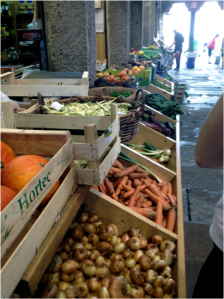
Saturday at the food market in Santiago, fruits and vegetables

Saturday at the food market in Santiago

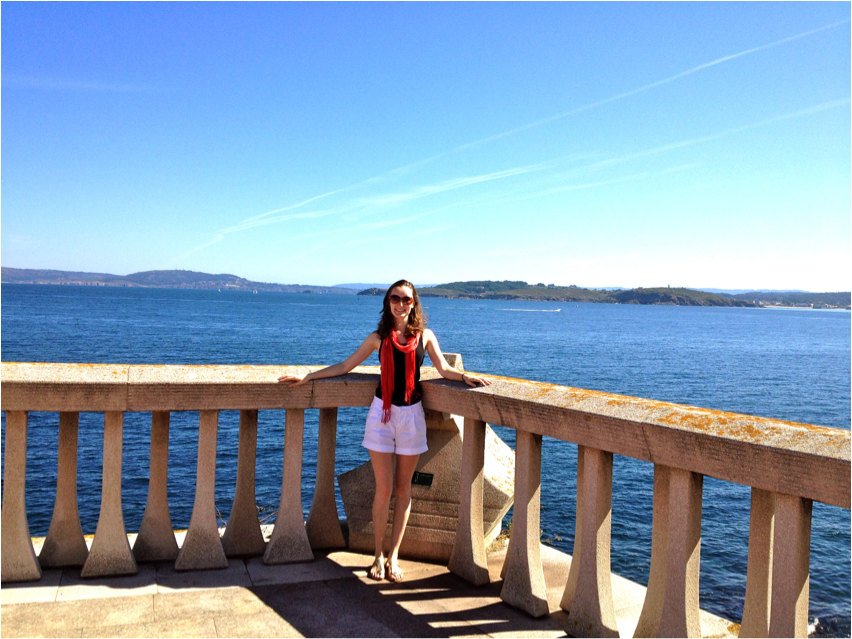
On Saturday we spent the morning at an amazing open-air food market in Santiago, and we concluded our week with a perfectly lazy day on a beautiful beach in A Coruña, a city located a short train ride north of Santiago. We spent the morning walking along the port and the city coast from the train station to the Plaza de Maria Pita observing the gorgeous architecture and the beautiful coast. We ate lunch at a little Mexican restaurant that was the best bang for your buck in town, and the owner was so excited to have Americans in his restaurant because he believed that we could better identify with his experiences with violence and the drug trafficking in Mexico than could the Spanish. After lunch we continued on to the Tower of Hercules. The Ancient Romans built the tower almost 2000 years ago, and it is one of the oldest lighthouses in the world.
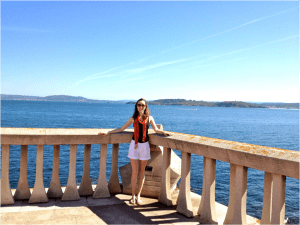
A picture at the A Coruña coast, a gorgeous view of the sea

Kati at the A Coruña coast

From the base of the tower we got an incredible view of the city and the coast, and then we continued on to a lovely little beach that is obviously a favorite of the locals. After a few hours of relaxing in the sand, refreshing ourselves in the water, and catching up on some sleep we wandered over to a little ice cream shop before catching the bus back to the train station. We all tried turrón ice cream, which tastes like almondy burnt sugar ice cream – so delicious! A sunny day with friends, ice cream, and ocean water was the perfect anecdote to a hectic week.

A perfect Sunday at the beach in Spain

A perfect Sunday

Quote of the Week: “Finish each day and be done with it. You have done what you could. Some blunders and absurdities have crept in; forget them as soon as you can. Tomorrow is a new day and you shall begin it serenely and with too high a spirit to be encumbered with your old nonsense.” ~ Ralph Waldo Emerson


Barbados, Week 12: The American gets a Cooking Lesson

April 23, 2012

Upon being notified that I would be living on Halls this semester, a certain idea crept up in my mind:  I may actually have to learn how to cook for myself.  I had no idea what sort of eating venues UWI would have, and my mother was extremely excited that her generally helpless son would develop some valuable life skills.  However, you can take me out of America but it is not as easy to take the American out of me; no sooner had I arrived in Barbados in late January than I made it priority number one to find where I could buy ready-made food to consume.  Thus my diet consisted of chicken, rice, and salad at the school cafeteria, pizza from the local Esso gas station, and snacks or microwaveable goods from the Campus Mart.  Now this was no particular issue for me, for as I’ve previously mentioned, the cafeteria food is very tasty and Esso pizza is probably the best pizza on the island.  But I couldn’t help but feel a twinge of longing and jealousy as I would walk by one of the girls’ blocks, ham and cheese sub in hand, and smell some of the most delicious aromas to have ever hit my nostrils.

So one night, as I walked back to my block with a sizeable bag of KFC delivery under my arm, the RA on hall stopped me.  “Man how long have you been here?  You need to stop eating this fast food and start making some real Caribbean food.”  I secretly agreed, but decided it would be easier to come up with excuses such as “I would…but I have no time” (a blatant lie).  As it turns out my blockmate Nickoy is something of a master chef, and the RA quickly roped him into teaching me how to make a West Indian dish to “impress your parents when you get back!”.  Nickoy was skeptical I would actually follow through when I told him that I would buy the ingredients if he taught me how to make a simple Caribbean dish.  He was happily surprised when, on Monday, I walked through the door with a bag of chicken from the local supermarket, proclaiming that it was time to make a feast.  We would be making chicken stew, Caribbean style.

As Nickoy and I cut up the chicken breast and legs into manageable sizes, he told me how he had been cooking since he was fourteen years old.  Needless to say I could barely create a sandwich at that age, much less become a self sufficient cook.  As we went along it became apparent that, with cooking, practice does indeed make perfect, as Nickoy effortlessly skinned and diced up three potatoes in the time it took me to completely mangle one into small pieces.  However, it was really cool to see how such a delicious meal was created, and once mastered probably wouldn’t even take too much time to finish.

My blockmate Nickoy hard at work preparing the chicken.

Instead of meticulously describing how we went about making the chicken stew, I will include something of a recipe below in case anyone wants to learn how to do it themselves.  Bon Appetit.

– Chop up chicken breast and legs into thirds or quarters (about 6 pieces), wash in a bowl with water

– pour a handful of vinegar in the bowl, then wash again with water to remove the “rawness”

– cut up into fine segments and add onions (two), garlic (3 cloves), hot pepper (one), and a pinch of ginger to give it “attitude”

– thoroughly mix together by hand before covering, refrigerating, and let sit for three hours

– put olive oil in a sizable pot (enough to cover bottom), and turn oven on high

– chop up three potatoes into fine segments and mix in with the chicken, then add browning sauce (for coloring)

– wait until oil is steaming, then put chicken (with onions, etc) and potatoes into the pot, mix up with spoon

– keep oven on high for a few minutes before turning down to below medium until stew sauce is boiling

– add pepper or other ingredients as necessary by periodically tasting the stew sauce

– after stew sauce is boiling, turn oven on high again for a few minutes and then let sit for a few minutes

The finished product – delicious.

I wrote this recipe from memory shortly after completing the chicken stew, so chances are I may have left out a few steps here and there, but if you follow the recipe I’m sure you’ll have a delicious chicken stew dinner nonetheless.  Nickoy and I made a pretty big pot of chicken stew and rice, so we decided to share some with our fellow blockmate Richie.  Per usual, my eyes were bigger than my stomach, and I ended up eating myself into a near food coma.  Somehow food tastes better when you’ve helped to make it with your own hands, and so it was with the chicken stew.  And gentleman, FYI, telling girls you’re making dinner/can cook at all makes them swoon pretty hard.  So if you don’t consider it a manly undertaking and refuse to learn, just know that Nickoy and I will probably be entertaining your girl this weekend.

Richie, Nickoy and Jevaughn digging in.


Botswana, Week 3: Protests

February 17, 2012

A couple of weeks ago, there was some tension on campus. The University of Botswana (UB) is working very hard to improve the image, credibility, and stability of the school. However, the actions being taken by the university caused an uprising among students. Although the students that I have spoken with understood the circumstances surrounding the situation, they disagreed upon how to handle it.

Some of the measures UB indicated they would take included:

Close 411:

All of the buildings on campus have a number, unlike at U of R, and most schools in the States, where we name our buildings for other numerous reasons. The bar we have on campus is referred to as “411” and is located only walking distance away.

UB decided that they would consider the closing of 411. The intended date for permanent closure was fall 2012. UB chose to close 411 due to the fact that it caused many problems, such as excess consumption of alcohol, unwanted physical and emotional risks, and constant visitation from outside guests that were not students. Also, unless one orders a soda (known as pop), then he or she will receive a fragile glass bottle with no way of recycling or properly disposing it around campus; trash cans and other forms of waste are still ongoing issues in most developing countries, including Botswana.

However, the UB students are looking at it in a differesent perspective. They know that closing of 411 does not just mean that there will not be a bar on campus – it’s a matter of student rights and freedom. The school has offered to compromise by moving the bar on the edge of campus, instead of closing it entirely, but students’ protests only gained momentum. This is mainly due to the fact that the students saw the real meaning of moving the bar away from middle of campus: Botswana law says that alcohol may be consumed only 500 meters away from any alcohol-serving establishment. Therefore, if the bar is moved to the edge of campus (away from student housing and comfortable seating areas), then that means that any forms of alcohol in open areas of campus, and especially living hostels/dorms, is strictly prohibited.

End Supplementary Exams:

UB’s rules and procedures for students are very different from schools in the United States. For example, if a student fails any subject during the semester, then they are allowed to take what is called a “Supplementary Exam.” This exam is taken once at the end of the year and can erase the previous failing grade received (if passed, of course). The students became very angry upon hearing the news that supplementary exams might be done away with.

Lower Allowance:

Currently, most UB students have their tuition and most other academic needs paid for by the government. Also, a monthly allowance is given in what is considered “to be used for living purposes” only. The allowance comes in cash form and may be used for anything, without any restrictions. UB has been contemplating lowering the allowance because they believe that it is being used for alternative and undesirable purposes that lead to unhealthy choices. Although there is no substantial and realistic evidence for the school to believe this, 411 always happens to be at full capacity immediately after the 23rd of each month – the date that the allowances are distributed.

No More Games:

The Inter Varsity games are like the Olympics, but on a college level, with surrounding country universities participating against each other. UB has decided to not host the Inter Varsity games this semester. This angered students and contributed to the protests that were to come. The school’s reasoning for this was for the safety and security of the students, because the IV Games attract the general population and students from other schools, which can create security concerns.

—————————————————————————————————-

Fortunately for my friends and I, we had left for a trip to Namibia. Windows, signs, buildings, and many other things were broken during the protests. Many students, especially those in charge, were arrested and suspended.

UB closed from January 25th-27th, and upon re-opening, there have been no more protests. As of now, none of the initial propositions by the school have been put in place. Even the IV games seem like a possibility, but a very unlikely possibility. Even though the school has not initiated anything yet, they seem to be moving in the direction of what they originally intended. For example, although they haven’t closed down 411 yet, but we’ve noticed the prices have gone up 15% – slowly pushing students and guests to go elsewhere.


Botswana, Week 2: The Botswana Way!

February 6, 2012

We’ve kicked off our second week with an intense reality check… except this reality check has a Botswana twist to it! Our week consisted of an immersion to Botswana culture and way of life.

https://fbcdn-sphotos-a.akamaihd.net/hphotos-ak-ash4/395155_10150482057608015_514083014_8971467_1298084400_n.jpg

We met some really nice local Batswana in a tiny village, named Mmokolodi, just about 2 hours away from University of Botswana. The chief greeted us with open arms, the older ladies of the village sang for us, and the younger males taught us how to dance African style!

https://fbcdn-sphotos-a.akamaihd.net/hphotos-ak-snc7/398016_10150482058378015_514083014_8971481_918416941_n.jpg

As soon as sun hid away under the beautiful Botswana trees and mountains, we began the festivities. We kicked it all off with sounds of dance and rhythm! The males were told to go with the young boys and older males, while the females were sectioned away to watch the males dance right before they began their own group dances.

https://fbcdn-sphotos-a.akamaihd.net/hphotos-ak-snc7/397821_10151184865300451_673750450_22932065_2047271341_n.jpg

Botswana traditional dancing is much different than what I am accustomed to in the States and back in Europe. Instead of using machine-made instruments, such as a guitar, microphone, or keyboard, the locals use handmade –with very dependable and strong materials from animals — instruments to make sounds and with their hands and feet, accompanied by vocal rhythms! It was very interesting to see, and partake in, the traditional Botswana dances, especially in groups. It had a lot of soul and sense of individualism and community within it. We weren’t dancing to an iPod or a repeated sound; everything felt personal and special in the dances and music. It was as if I was a part of something special with my group and the Batswana people and it really bonded us by forcing us out of our shells!

I played a traditional Botswana game with the local Chief (on the left of the above photo). It involves going in circles around a sketched piece of wood with rocks and trying to overlap the opponent to take away his rocks. It’s very simple and clearly traditional. I’ve learned quickly that even items and objects as simple as a piece of wood, rocks, a board, and a friend to play with can pass time by the hours as quickly as any video game back home!

https://fbcdn-sphotos-a.akamaihd.net/hphotos-ak-snc7/381531_10150482058518015_514083014_8971483_260130149_n.jpg

During our stay, we had a chance to hike a mountain nearby and take a scenic walk around the villages. We even ran into a sectioned-off piece of land in the mountains that we were told held a 2,000 year old cave drawing.

https://fbcdn-sphotos-a.akamaihd.net/hphotos-ak-ash4/403840_10150482060563015_1430147558_n.jpg

https://fbcdn-sphotos-a.akamaihd.net/hphotos-ak-snc7/407069_10150482061888015_514083014_8971525_1526760536_n.jpg

Our last stop consisted of us driving about 30 minutes away to view the oldest living tree in the Southern African region. This tree is named The Livingstone, in honor of the African explorer and missionary David Livingstone, and it was originally dated to be over 200 years old, but is expected to have been growing much longer than documented. It is said that Livingstone’s heart was buried under this Mvula tree by a local tribe – appreciating his love of nature.

https://fbcdn-sphotos-a.akamaihd.net/hphotos-ak-ash4/378975_10150482063188015_514083014_8971545_429038321_n.jpg

When the entire weekend was finished, it was finally bedtime. We didn’t expect anything but the stars above us and our sleeping bags below us at the Botswana village. To our surprise, we ended up in a very well-constructed traditional hut. Not only was it well built, but it also had doors, windows, and even seats with thin, cool blankets inside. Also, the pyramid-shaped roof with specially designed wooden vents created breezes throughout the night to allow us to escape the African heat!

https://fbcdn-sphotos-a.akamaihd.net/hphotos-ak-snc7/401078_10150482058698015_514083014_8971486_54403790_n.jpg


Only in Bangkok

February 3, 2012

I thought I would share some details about what I did this past Saturday, to give you a good idea of an average, ordinary day in Bangkok.

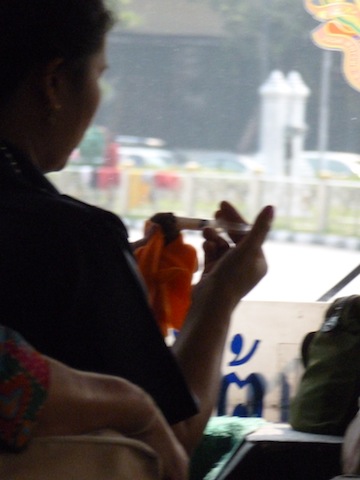
My day began by meeting a friend in the lobby of my apartment building, so that we could catch the bus together to meet a few friends for breakfast.  We said our usual “Sa wat dee kha”  to the lovely guards at the bottom of our building, and headed out on a walk to the bus.  At only 10am, it was already 85 degrees outside; the sun was shining, and all of the street vendors who crowd the Bangkok streets were just beginning to set up their food and clothing stands to begin their long weekend of work.  We climbed up the stairs of the overpass, which provides a safe way to cross the huge, 10-lane highway, passing the usual homeless men lying on the concrete, and the standard installments of individuals singing into a microphone hoping to make some money.  We hopped onto our bus, being careful not to touch the monks, clad in their orange robes, who were also boarding the bus.  We sat down, and the bus “tout” came over to collect our money – only 8 baht (about 25 cents), because the bus was open-air and not air-conditioned.  I quickly noticed what looked like an animal’s cage resting at the front of the bus next to the driver – based on the tail that was visible we assumed it must be a squirrel.  Well, that’s odd.  After the bus tout was finished collecting money, she proceeded to the front of the bus, opened the cage, pulled out what we think was a baby squirrel, wrapped it up in a small baby-squirrel-sized blanket, and proceeded to feed it with a syringe, squeezing something into its mouth for the remainder of the ride.  I tried to get a good picture, but the bus ride was so bumpy that a blurry one will have to do.

We then proceeded to Ethos, our new favorite earthy-crunchy, all-natural, sing-kumbaya, can’t-wear-shoes-inside, sit-on-the-floor type of restaurant. We had the most incredible banana mango gluten-free pancakes. I know it doesn’t sound like much, but they were delicious.

Afterwards, we ventured out to the main road in the now sweltering heat.  We waited for a bus that we knew would take us to the mall right by our apartment complex.  We fully expected to have at least a 30 minute bus ride – it takes minimum of thirty minutes to get anywhere in Bangkok, because there is always traffic.  Well, no one had mentioned to us that this bus takes the most roundabout, absurd path to go from point A to point B.  The ride ended up taking us 2 hours.  Don’t get me wrong, seeing the scenery of a weekend in the city was great, but my gosh, in that heat, with no air-conditioning, it was rough.

After two hours, our mall destination was finally in sight, so we got up and pressed the red button which signals to the driver that we want to get off at the next stop.  He was driving particularly aggressively at this point, especially considering how bad the traffic was.  And then, like slow motion, I saw it: bus jerking left, small helpless car turning right, and then — CRRUUUNCCHHH.  The horrible sound of metal crunching.  Our bus crashed straight into the car next us.  We all looked at each other, decided it would be best to just get off that bus as fast as possible, and into the refuge of the huge and nicely air-conditioned Central Pinklao mall.

Just another morning in Bangkok, Thailand.


Barbados: In the Land of Fish and Cricket

January 23, 2012

As I bounced around in the back of a jam-packed ZR (pronounced Zed-R), which is more or less an industrial mini-bus, with loud Bajan music blasting through the air, the stark contrasts of Bajan versus American life were definitely in the forefront of my mind.  Minutes earlier, 20 exchange students managed to cram into the mini-bus on our way to Bridgetown, the capital of Barbados, with an older Bajan women and her son, unfazed by the apparent invasion of everyone’s personal space.  When you’re forced to nearly sit on a relative stranger’s lap, becoming comfortable around the other exchange students has been comparatively easy.  All things considered, however, the ZRs are a great way to travel, as they’ll take you anywhere on their respective routes for a mere US $1.00.  I joked to the only other American male exchange student, Glen, that I should start one of these ZRs in America, but he shook his head, responding, “they would never let this many people in a vehicle this size in the states… too much of a safety hazard”.

Transportation, though, was just one of the many great unknowns I faced as I stepped out of the taxi and onto campus at the University of West Indies.  It became clear to me that my first few days in Barbados would consist of a less severe state of survival mode.  After I moved into my on-campus single room, my goals for the afternoon broke down to 1) find an ATM to get money 2) find food 3) find my way back to campus.  Part of the studying abroad experience, I suppose, is not always figuring out things the easy way, as I ended up walking for two hours in the rain in my search for a local restaurant; I ended up getting bread, chips, and Sprite from a local mini-mart, which sufficed for my first night’s dinner on the island.  Being the American that I am, I assumed there would be at least five different types of restaurants on every corner, especially near a University campus.  Evidently, Bajans are much more self-sufficient and opt for the cooking at home option rather than spend their hard-earned money out on the town.

My fortune changed the next morning, however, as I discovered at our foreign exchange orientation that the typical exchange student here at UWI was Canadian, female, and very friendly.  Facebook was able to quickly unify everybody in our coordination of daily plans, and after a day of touring campus and doing the mandatory meet-and-greet, we decided to head down to the famous Friday night Oistins Fish Fry for our first cultural experience.  The fish fry is exactly what it sounds like: a ton of small food vendors and restaurants all lined up in between the beach and the road with local bands or DJs providing some background music.  It was packed full of tourists fresh off the cruise ship, so we all settled down with some food and drinks and continued to figure out who’s who, where they live, and other basics.  I hadn’t met so many new people at one time since freshmen year at Richmond, so it took all my brain power to keep names and faces together.

The first truly cultural event I went to, as the beach does not count (in my opinion), was the Caribbean Cricket Championship at the Kensington Oval in Bridgetown.  If you want to get a good perspective on how important cricket is to Bajans, just know that the entire UWI campus is literally centered around the “Oval”, which is baseball’s equivalent of a diamond.  A US$10 ticket got us great seats for not only the 3rd place match between Barbados and the Windward Islands, but the championship match between Trinidad and Jamaica.  The group who went consisted of 19 girls from Canada, the United States, and Finland — oh, and me.  Being in a fraternity back at Richmond, and thus hanging out with a lot of guys most of the time, this was definitely a different scene.  While I grappled with figuring out the rules of cricket as the game progressed, the girls were busy discussing future baby names and how they wanted their dream weddings to go.  I cracked up laughing as the conversation turned to which cricket player they thought was the cutest.  Unfortunately, Barbados had a terrible day and only scored 101 runs after 10 batters — a very poor showing, I eventually discerned — and they lost to the Windward Islands in the 3rd place game.  I actually really enjoyed watching the game and the reactions of the crowd, who were a lot of fun — there was a ragtag band of percussionists who played from time to time, and we ended up doing the wave numerous times.  After nearly five hours of cricket, however, I was pretty saturated and ready to head back to campus, where I fell asleep streaming the Giants vs. 49ers playoff game on my computer.  I guess after a weekend of pure exploration and discovering new people and places, an NFL playoff game was too familiar an entertainment to keep me awake.

The rowdy Bajan crowd cheers on the national cricket team.

Swinging from the rope swing at the Boatyard Beach Club.

Batt’s Rock Bay Beach — just a five minute walk from campus.


Christmas time in Milan

January 20, 2012

Christmas, to me, is a very traditional time of year. While, in many cases, I like to shake it up, try new things, and have new experiences, Christmas is one thing I always like to keep the same. For me, Christmas creates the magic of the season, and I always try to keep to my traditions, which highlight my holiday. These traditions include: not listening to Christmas music until after Thanksgiving, but then listening to it every day, slowly building myself up to a Christmas frenzy that culminates in Christmas Eve midnight mass; watching A Muppet Christmas Carol with my family; and waking up to Christmas at my house.

However, knowing Bocconi’s final exam policy for international students would keep me from home until late on December 23rd, I knew I had to take action to get me into the Christmas spirit before then.

Now, I already mentioned how traditional I am about Christmas, but I have to say, my attitude of being open to new experiences helped propel me to success yet again. The City of Milan took on a great atmosphere, with Christmas lights, ornaments, and garland decorating streets throughout the city. Decorations were out, people were in great spirits, and despite being distracted by an intense amount of studying, this helped to make my last weeks in Milan quite enjoyable.

The enjoyment started with the Milan Christmas Market, which opens annually from the 13th – 19th of December. This market was incredible. With tents completely surrounding the large Castello Sforzesco (a castle) and leading up to the beautiful Parco Sempione (a park), it was in a perfect central location of the city. Flooded with people everyday, it was a mad house, with people purchasing antiques, CDs, wood carvings, paintings… anything you could think of, besides mainstream consumer products. The best thing for me had to be all of the food and snack carts. For the traditional eater, there were Italian pastries (including incredible cannoli, fried donuts, and my favorite, Nutella crepes), delicious panzerotti, sausage sandwiches, and even a cart with 100 different types of jelly beans. Braver participants could even try a fried, hollowed-out coconut, or a grilled and sugared corn-on-the-cob-on-a-stick. The weather was certainly cold, but the crowds of people, amazing food, and festive music kept you more than distracted. (I even got my grandparents a real Italian newspaper there from 1929!)

The next of my fond Christmas memories came during a final night out with all of my friends from Richmond. With 15 of us studying in Milan, we had all had a great opportunity to bond and decided to celebrate our strengthened friendships and shared memories with one last goodbye dinner. A classic Italian dinner, complete with meat, pasta, and red wine, was excellent and led to a casual stroll around downtown Milan in order to digest. We walked to the Duomo, which was home to a beautiful and enormous Christmas tree for the holiday season. It was quite a sight to see, and helped all of us forget about the stresses of finals for a little bit and be launched quickly into the Christmas spirit. After being in awe at the tree’s beauty, taking some pictures, and even participating in some impromptu American caroling, we all felt much more comfortable about spending our holiday season away from home.

http://www.youtube.com/watch?v=ctq3V1pT9z8&feature=related

My third, and final, lovely Christmas memory from my abroad experience came in the form of a final goodbye party with all of my international friends. Over the course of the semester, I made many friends from around the world through my intensive Italian class, through living in an international dorm, and by coaching my intramural soccer team. With friends from France, Spain, Switzerland, Brazil, Germany, Netherlands, Australia, and, of course, Italy, I was able to meet people I never would have otherwise met and was able to see parts of the world in a new light. My international friends and I decided to have a goodbye party complete with a Christmas gift exchange, or Polyanna. We all bought gifts for a specific person with a 15 euro limit (we are still broke college kids) and many people cooked dishes from their home countries, so we had a wonderful Christmas feast and gift exchange. While it was hard saying goodbye to these people, knowing I might never see them again, we went out on a high note with a really nice night, and the promise to keep in touch.

Overall, this was far from my normal Christmas, but in some ways, it was more meaningful. When I returned home, I was reminded of the importance of family and friendship, which is what Christmas is truly about, and I truly wanted nothing for Christmas besides being around the people I love and care about. Christmas time in Milan is lovely, and being together with my loved ones for the first time in 4 months for Christmas proved to be a magical occasion. Once again, Milan gave me one final great experience.


The Start of an Incredible Adventure

January 4, 2012

I can’t believe that I am beginning another blog, and with that, another adventure abroad.  My name is Samantha and I have been back at home in Concord, Massachusetts, for about two weeks since returning from a semester abroad in Kenya.  I am a junior international business major, and could not help but take full advantage of the opportunity to go abroad, by choosing to go abroad for two semesters in two different locations.  My semester in Kenya actually had nothing to do with my business major; rather it was an SIT (School of International Training) program focused on community health and development, which are both passions of mine.  It was an incredible four months, involving living in two different homestays, experiencing life with no running water and no electricity, navigating daily life in a dangerous city, and learning an incredible amount by living as much a typical Kenyan life as possible.  I have a feeling Bangkok won’t be quite the same experience….

In Bangkok I will be studying at Thammasat University, through the university’s international business exchange program.   As part of the exchange program I will be there with students from all around the world, which I am incredibly excited about.  I will also be there with one of my best friends from Richmond, Addie.  We are planning to live in an apartment together, and from what I have  heard these apartments are are a far cry from the village living I experienced in Kenya: most that I have come across resemble apartments in the US, fully equipped with a gym and a pool.  In addition to school, I am planning to do an internship with the non-profit organization called Step Ahead, which is a fantastic NGO that was founded by two Richmond alumni.  To be honest I don’t know exactly why I chose Thailand; I went back and forth for months about whether to study abroad for two semesters or not, and then it just all fell in to place.  I have always heard so many incredible things about Thailand, and hoped to one day travel there.  When an internship in Bangkok as well as the opportunity to study business fell into my lap, I couldn’t say no, especially because I know that this is truly the opportunity of a lifetime.

I don’t think it has quite hit me that I am leaving to live on the other side of the world for the next five months.  But then again it didn’t really sink in that I had been in Kenya until a few days after I got back to the US.  I am incredibly excited though– I can’t wait to live a completely different lifestyle than I did in Kenya.  I am so excited to meet a dynamic group of people, to explore a completely new culture, and to see a new part of the world.  I am also intrigued to be involved in the development world in Bangkok through my internship; it will be fascinating to not only compare the different issues that exist in Bangkok versus Nairobi, but also to get a feel of how those issues are addressed differently in each city.  I am eager to start my life in Bangkok, but I also have a lot to do in the week that I have left at home.  As I learned from my trip to Kenya, it is best not to worry, not to consume myself with “what-ifs” and to just go with it.  That is the best and only way to travel!