Diana in Germany Week One: Travel Nightmares, but Living the Dream

September 11, 2014

Arrival
So you know how people ask if you want the good or bad news first? We’re starting with the only thing that could be described as “bad” because it came first. Traveling was extremely stressful and full of sleep deprivation. I went a full 25 hours without sleeping and I have never done anything close to that in my life.

The goodbyes were somewhat easy (I didn’t cry! I totally thought I would). Thankfully I traveled with Heather, a girl from my living-learning community “Earth Lodge” from sophomore year. Heather and I both ordered white wine with our dinners on the plane, which marked the first legal drink of our trip. After this, things went downhill for me. I thought I would get 5 hours of sleep or so on the 8 hour flight, however several people kept their lights on or were watching movies the entire time. Regret filled me as I realized I had left my eye mask at home and there was no way I’d be sleeping before I made it all the way to Freiburg.

The train from Frankfurt to Freiburg was the worst part of the journey. Heather and I got in on the completely wrong end of the train and were 9 cars down from where we should have been. A bunch of Germans laughed at us for even trying. Heather helped keep things in perspective for me and we eventually made it to the right seats. Soon we got off, caught a taxi, and visited the IES Freiburg Center to get instructions. 24 hours after I woke up for my flight to Germany, I was finally in my dorm room. I quickly set it up and took a nice long nap before IES took us out for dinner.


Housing
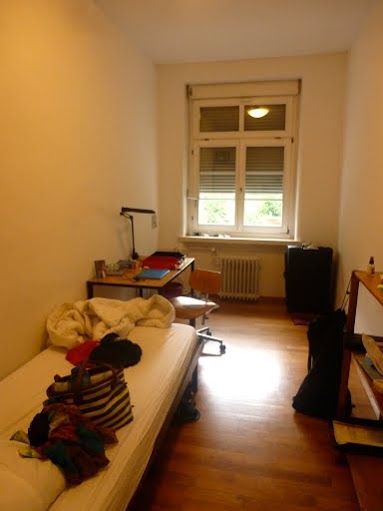
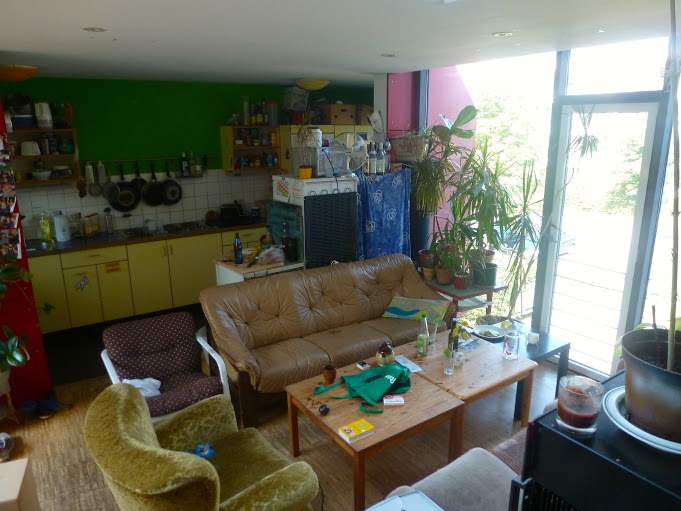
My dorm is, in my opinion, the best possible dorm in terms of its “cool factor” and its “awesome flatmate factor.” Plants everywhere, huge shared kitchen, large lounge couches, party space with awesome speakers, very hippie vibe. My dorm room is plain, but who cares when the shared space is so spectacular?! Here are some pictures to really help you visualize this:
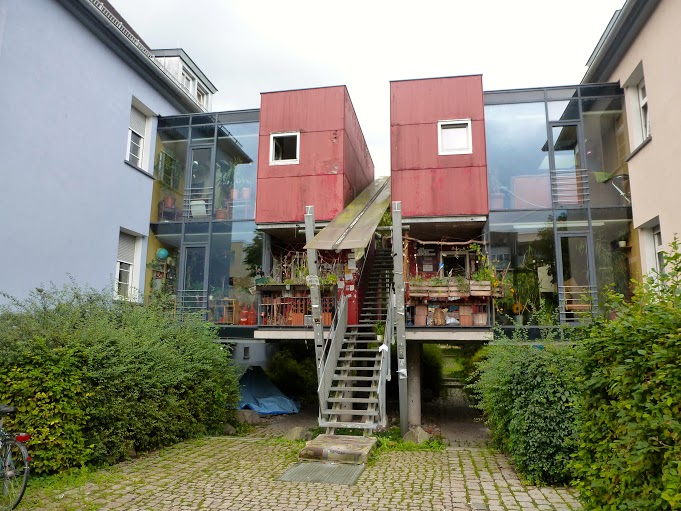
The outside of my hippie dorm
The outside of my hippie dorm

Kitchen and living room

Our kitchen and living room

My plain dorm room

My plain dorm room

In terms of my flatmates, they immediately started inviting me out to things. Most of them are German, but they all speak English. They are Conny, Tobi, Sarah, Felix, Theresa, and Lovisa (who actually just left for a month for Algeria and lent me her bike in the meantime!!!). We also have a French guy named Simon who is here for 2 weeks. There is a lot of turnover in the household, especially in October when the “real” semester starts at Uni Freiburg. Apparently, other people in the IES program are not in contact with their flatmates much at all. I do not know a single other one who has a social life with their flatmates, so I consider myself EXTREMELY lucky to have them in my life as friends.

We’ve hiked up mountains, picked fruit, biked, swam in the Flückigersee lake, played games, shared dinner/wine, gone clubbing, and had a trilingual jam session together. In addition one of our neighbors, Judith comes over here a lot. She was the first person to do “cheers” with me, but here in Germany you say “Prost!” She also was the first to “invite” me to join her for ice cream, which here means she invited to pay for me! Thank you, Judith!
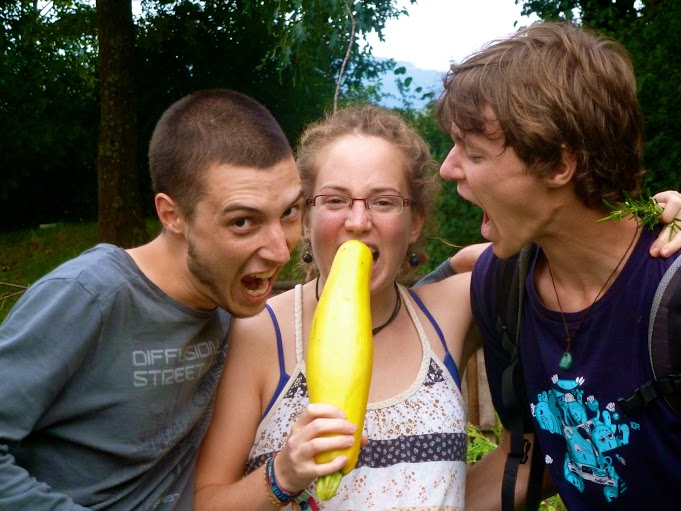
Flatmates Simon, Youdid, and Felix with zucchini

Flatmates Simon, Judith, and Felix with zucchini


Swimming at Lake Flückingersee

Swimming at Lake Flückingersee

Orientation
IES had small orientation sessions on Monday and Tuesday to give us basic information about the surrounding area, such as where the best places to eat are, where to seek medical attention, where to buy things, and how to stay safe while doing it. Freiburg is relatively safe, but according to one of the IES employees, there has been a rise in thefts recently. We also were asked to attend a presentation on Thursday in order to learn more about getting involved in clubs or volunteering. There is also a Tandem Partner program that allows a German speaker and English speaker to informally practice conversing in the opposite language. I’m considering horseback riding, a cappella, dance, badminton, and am 100% sure that I will be volunteering at some point.

IES so far has mainly functioned as a “home base” in case we need them. I believe that some of my environmental classes later in the semester will be there though. Speaking of which….


Academics
German class started on Wednesday. My teacher is Andrea Snuggs (yes, her last name is awesome). She is very sweet, always open to questions, and creates an extremely interactive environment in the classroom. It is crazy, but I can already ask a lot of basic questions or ask how to say things in German without using any English in the process! German class and listening to my flatmates is obviously working. Monday marks our fourth day of class and we are already having a quiz on verb conjugations!

Basic German verbs and their conjugations

Basic German verbs and their conjugations


Next week
I will cover more about academics, such as the city of Freiburg and its surrounding, food and drink, stereotypes, and updates about travel and fun I am having. Tschüss!


Garrett in Bonaire – Mi prome siman! (My first week!)

September 8, 2014

Bon dia!

I have been on island a week now and I cannot begin to tell you how amazing this semester is going to be.

All checked in and ready to go on a 5AM flight to Bonaire!

All checked in and ready to go on a 5AM flight to Bonaire!

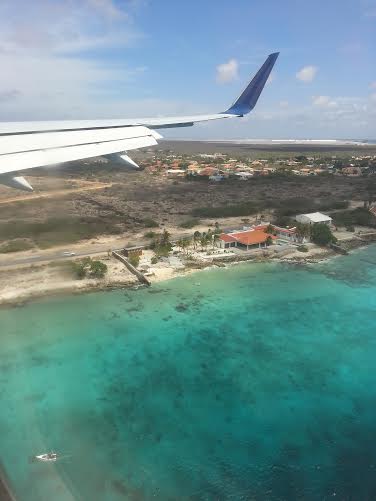
As I said my goodbyes at the Philly airport at 5:00AM last Saturday, I was beaming with excitement. Time seemed to drag on as I sat in the airport waiting for my flight, but once we were in the air it wasn’t long before I was blissfully greeted by the teal blue waters of Bonaire just outside the plane window.

The brilliant waters of Bonaire greet me as we begin to descend!

The brilliant waters of Bonaire greet me as we begin to descend!

Upon arriving at Flamingo Airport at about 2:00PM, two of the CIEE interns, Sasha and Noah, holding a stereotypical clipboard sign, welcomed me and another student, Jack. We then packed our luggage into the research station’s open-backed truck, hopped in, and drove off to our new home. We arrived at the residence hall to find that it was more like a large house; it has a communal full-service kitchen, living area, and study area, with seven 2-4 person rooms. We also were happy to learn that we were the first two students to arrive. There are normally 3 flights to Bonaire on any given day, and we arrived on the first. The remaining 9 students were arriving on later flights that would both get in after dinner. This basically meant, Jack and I had plenty of time to hang out before everyone else arrived. In fact, after unpacking most of our stuff, the interns took us to go swim in the ocean.

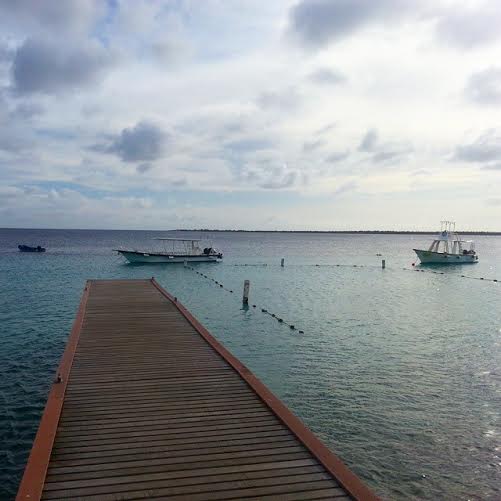
The ocean just outside of Yellow Sub will be my classroom for the next 90 days!

The ocean just outside of Yellow Sub will be my classroom for the next 90 days!

Directions: Walk one block north, make a left, and splash. Time: 30 seconds. After making the hike to the ocean, we all donned our snorkel gear and jumped into the brilliantly blue water. Just off the edge of the pier, the water is 8 feet deep. Here there are many bright colored fish, whose images I vaguely recalled from the flashcards I had made prior to coming to the program and whose computer images barely do them justice. However, if you swim just a hundred yards further, you reach the reef crest where the bottom rapidly slopes into the dark blue. This area is teeming with life! I won’t go in to too much detail here, as I will have plenty of opportunities to explore this amazing habitat that’s practically in my back yard. I mean, think about it; this is my classroom for the next 90 days!

The next day, after everyone had made it here safely the night before, we had a fun day of orientation complete with a trip to the grocery store, a formal tour of Kralendijk, stereotypical icebreakers, another dip in the ocean, and of course talks about the various logistical aspects of the program. And this wonderful day would not have been complete without a CIEE staff and student sunset BBQ overlooking the water.

Students, interns, staff, and professors gather for a BBQ dinner overlooking the setting sun over the ocean!

Students, interns, staff, and professors gather for a BBQ dinner overlooking the setting sun over the ocean!

As the program is only 13 weeks, Monday, even though we had been here less than 48 hours, meant the start of classes. Luckily, our first day of classes consisted of a snorkeling field trip to the other side of the island to a protected shallow bay, which is one of the few seagrass habitats on the island. Not only is Lac Bay known for its seagrass and mangrove habitats, but it is also a perfect place for windsurfing, as it’s protected by the reef from heavy wave action, yet catches the wind all the same. While here, we took advantage of the opportunity to talk to the owner of the windsurfing club, Elvis Martinus. He was the first local to view windsurfing as more than just recreation and instead as a way to get the kids of the island involved in a sport and produce world-class level windsurfing champions. It was amazing to hear the about the culture of windsurfing in Bonaire, straight from the guy who started it all.

Later in the week, after some classes on how to identify various fish, corals, and coral diseases, it was time for our first scuba dives! Coming into the program, I had only acquired a PADI referral. This basically means that I had no prior open water diving experience. So these dives would count towards my four Open Water certification dives. Spread out over two days, we completed four open water dives exploring the reef just off shore and with that I am now a certified Open Water diver!

Congrats to Graham, Allison, and myself for completing our Open Water certification! We are the three newly certified divers!

Congrats to Graham, Allison, and myself for completing our Open Water certification! We are the three newly certified divers!

As you can probably tell, I’m having a blast and cannot wait to further explore the island, the culture, and the reef of Bonaire!


Diana in Copenhagen: My First Week

August 29, 2014

Hello from Copenhagen!


After I had less than 48 hours to get ready and pack, I somehow made my way to Logan airport in time for my big European sendoff. I waddled around the airport equipped with a backpack “carry on” that was about the size I am, a tote bag “purse” heavier than most children I’ve seen, and a suitcase that tested the airline luggage worker’s strictness on weight limits. I was ready to begin my journey.

Me at the gate at Logan

Me at the gate at Logan Airport

To be fair, the said journey had a rocky start when I found that I was the lucky one placed at a middle seat with a broken screen on the seven-hour flight to Germany and, of course, the air conditioning on the flight was broken. Alas, things started to look up once a flight attendant restarted my screen and the AC finally started working.


The flight from Germany was short though, and before I knew it I was touching down in my new home. The Copenhagen weather welcomed me with rain, which I’ve learned is not surprising. Rare is a day here where there’s not a single shower—something I have yet gotten used to. On a brighter note, I walked into the lobby area of the airport to a smiling Dane waiting there to greet me.


This semester I’ll be attending Copenhagen Business School (CBS) and they have a program that matches its exchange students with a Danish student to show us the ropes. I greeted my buddy Kristoffer with a hug and spent the entire metro ride to my dorm asking him all of my questions about Denmark. Topics of conversation ranged from what Danish food is (apparently lots of heavy foods), Danish clothing (all black everything), and Danish people (extremely happy but not often outwardly friendly).


Time went quickly and soon we were walking into my dorm Kathrine Kollegiet in a municipality called Frederiksberg. The dorm room is for exchange students only and my hall has students ranging from Connecticut to China, so I’m even expecting dorm living to be a multicultural experience. My single here is huge too! I’ve got a kitchenette, two big windows that open to a playground area, and my own bathroom. The kitchenette with two burners, a small sink, and a microwave is…quaint. It’s served me well to make pasta, grilled cheese, and eggs so far but we’ll see how far I can survive on those meals. I’m hoping to write a food entry later once I get more creative!

My single in Kathrine Kollegiet

My single in Kathrine Kollegiet

The bathroom really surprised me though, because in Denmark they don’t differentiate the shower from the rest of the bathroom. The “shower” is really just a curtained off corner of the room. Just a curtain—yep. Getting used to this has been interesting, but I guess the system has its perks? I never need to worry about tripping on the little lip on the ground when getting in and out of the shower and I can put my foot on the toilet to shave my legs with ease. The whole room gets soaked though; I can only defend the system so much. Outside of this odd cultural design difference, I’ve truly enjoyed playing house so far and I know it will grow my independence tenfold.

The shower area

The shower area

I arrived in Denmark a week earlier than most to take something called a “Danish Crash Course” consisting of classes to help familiarize us with the Danish language. While I’m still quite the novice (this is a nice way of telling you I can say hello, thank you, and goodbye), this course was an easy way to get to know people. Now comes the real orientation week where we have the opportunity to meet even more students and hear about life at CBS. I’ve loved my time in Denmark so far and can’t wait to have more adventures.


Thanks for reading!


Kimberlee in Mongolia: Lessons from my Nomadic Homestay

April 21, 2014

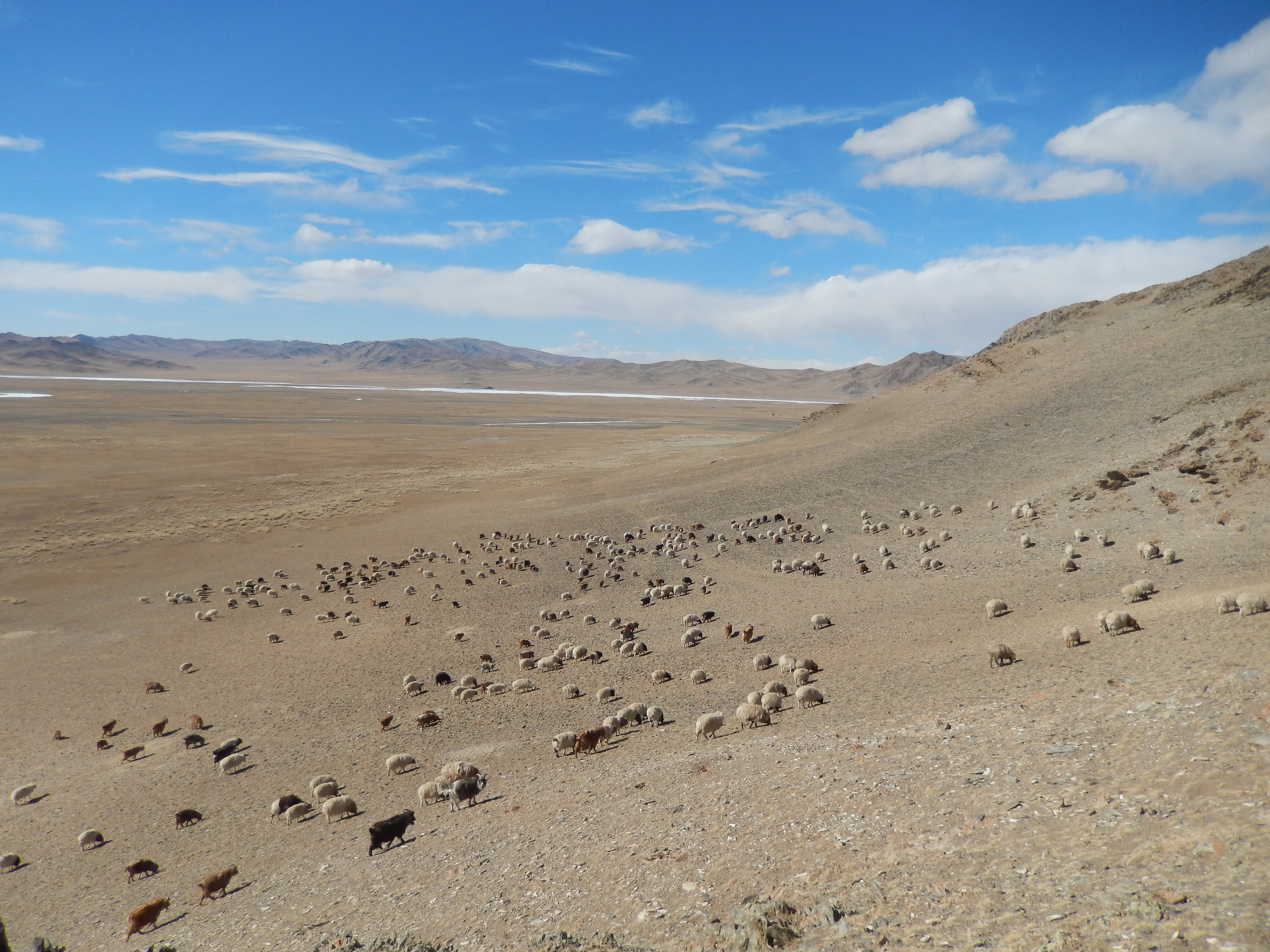
It feels strange to be sitting here at my computer and trying to find a way to explain these past 2 weeks. Each of the over 800 pictures that I took have their own story to tell, and there are a million moments that I want to share. I have to admit that I’ve been putting off writing about my experience because explaining 2 weeks of my nomadic homestay is impossible to condense. How do I accurately describe how it felt to spend my days telling time by the sun? How it felt to sit in the grass and only hear the sound of hundreds of animals chewing? Or what it was like to watch a goat give birth on a mountain?


DSCN1374

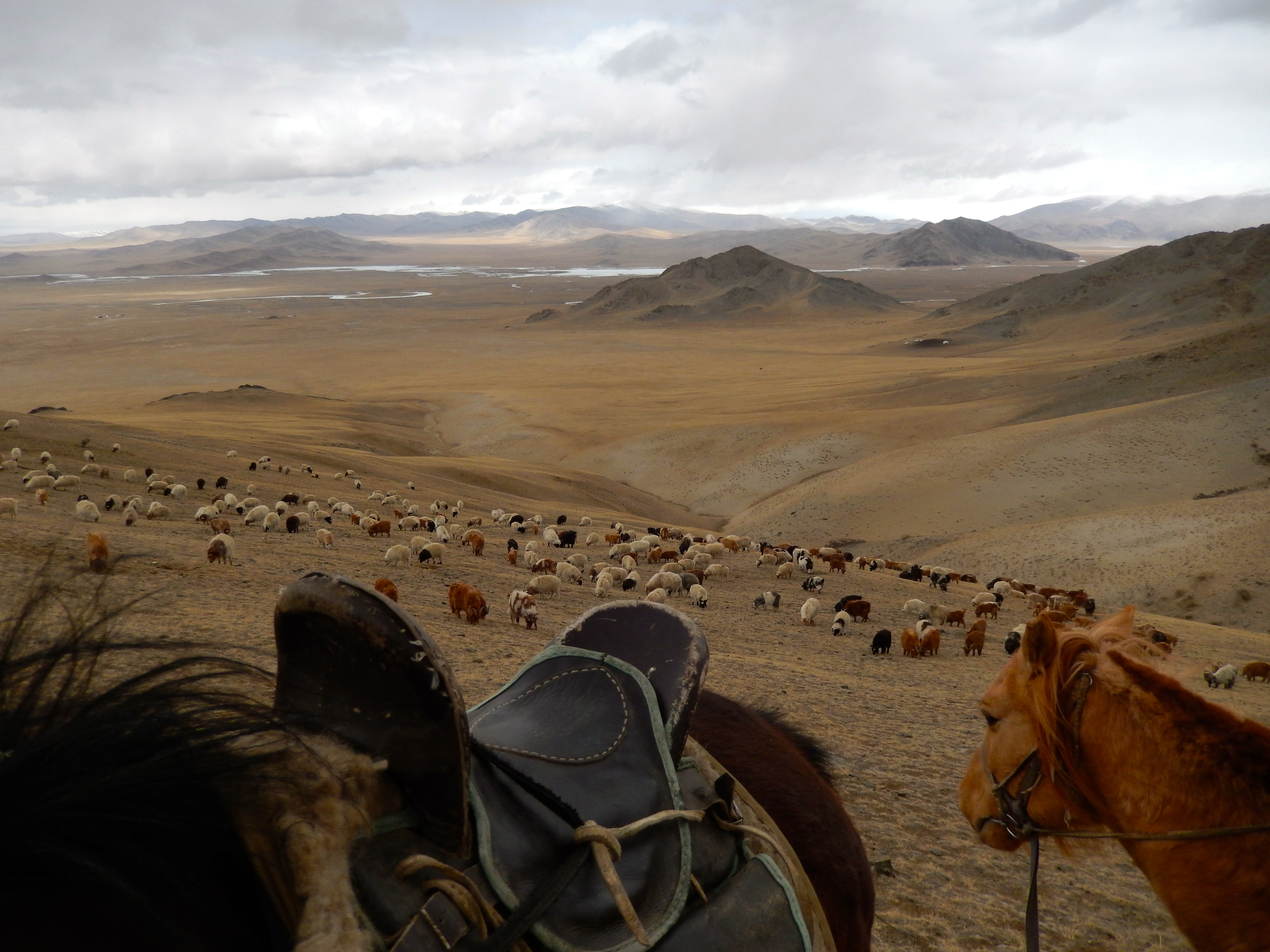
How can I fully explain how it felt to see this view everyday?


I ended up surprising myself with the amount of unexpected lessons that I learned. If you had asked me at the beginning to outline my expected challenges, only half would have been accurate. I probably would have mentioned challenges like: not bathing for 2 weeks, having no internet connection, the Mongolian language barrier, and the food. However, I would say that out of these challenges, the only one that turned out to be true was the language barrier. But even this was not as challenging as I thought. I became an expert mime by the end.


The challenges that I ended up having were completely different than I anticipated, which I think is the beauty of this experience. During my lows, I tried to accept these difficulties and get something out of it. The biggest challenge that I dealt with was boredom. The chores were not always exciting. Learning to herd was a beautiful experience, but there were days when 10 hours of herding became less exciting. Sometimes I would make up poems in my head, which made me understand why storytelling and singing are important to Mongolian herding culture. Other times I thought about life and all of it’s complexities (as stereotypical as that sounds). I can’t imagine another time in the near future where I’ll nothing to do but simply think for 2 weeks straight. As our academic director said: “Boredom is starting to become a luxury”.


DSCN0988

At least I experienced boredom while looking at this beautiful scenery

Along with boredom, the extreme feeling of isolation was incredibly overwhelming and unexpected. I anticipated isolation in a different way. I thought that being disconnected from the internet would be isolating, but I mostly felt isolated from the group and people who speak the languages that I understand. I wanted to process with someone in words, and yet I had to deal with all of my emotions on my own. This was independence at its most extreme. It was difficult to deal with, but it was completely worth the struggle.


One thing I can say for certain is that this homestay was twice as difficult as my rural Ugandan homestay. In Uganda, I had a fellow student as a host sibling, my family spoke English, and our whole group lived in the same village. Here, the closest student to me was at least a 45-minute walk away. It was also only 5 days in Uganda, compared to almost 2 weeks in Mongolia. I didn’t experience any boredom or feelings of isolation, which was my biggest challenge here. But I will say that I think that I got more out of this experience partly because of the unexpected challenges I faced.


Once I was able to bond well with my family, I immediately found a great amount of joy. When I look back in my memory, I first think of my positive experiences: playing cards, brushing goats for cashmere, playing with the toddler, seeing the sunset while herding, and catching baby goats. Even though I had lots of lows, it was well worth my time and energy to work through them by myself. The whole time I lived there, I never felt like I’d made a better decision than coming here to Mongolia.


DSCN1447

DSCN0851

DSCN0886

When I look back at my time there, this is what I see in my mind


Austen in Ireland: Packing for the Voyage

January 20, 2014

So, I have started packing and I leave in a couple of days for Ireland!  I’ve realized just how challenging it is to pack four months worth of stuff into two suitcases.  It has been tough to figure out how much of what types of clothing and toiletries I need to bring but I think I’m in good shape (even the outlet plugs are different in Ireland).  The weather in Dublin will be cold for the majority of the semester and definitely a lot colder than Richmond weather so I brought a lot of jackets and heavier clothes.

Packing

Getting ready for the trip. Just have one more suitcase to pack!

As I look ahead to the trip I am looking forward with excitement to learn about a new culture and to see new places.  I am getting there a week before classes start so I can get used to the layout of the campus of UCD and Dublin.  But I am also very anxious because I am living in a new place by myself while also cooking some of my own meals.  On the plus side, I get my own bedroom and bathroom, something I did not have at UR!  I have never been this many months away from my parents, so it should be interesting.  I’m sure that it will be one of the best experiences of my lifetime, as I had one of the greatest times in France studying abroad this past summer.  I am used to traveling so I’m not too worried about the airplane ride and getting to UCD and I don’t really get homesick too easily so I should be fine.

During my time in Ireland, I am planning on traveling throughout the countryside, Cork and possibly Northern Ireland as well.  I will definitely also visit Edinburgh, Scotland because I know a few students from UR studying abroad there.   A plan for a Euro trip after the end of the semester is also in the works because I really want to take advantage of being in Europe and seeing some of the greatest cities in the world!


Mel in Chile: A lot of time in a few places

December 3, 2013

Last week I went back to Valle Elikura, the location where we engaged in a home stay about a month ago with my study abroad program.

I went back this time because of two main reasons. My research project is an analysis on the experience with community-based tourism in the area. I gave some interviews when I was there with the group but as my research developed and I had a better grasp of the topic in question, I naturally developed questions that were more analytical. Ready with my informed consent forms, I walked down to the bus station as if I was walking to my deathbed, to buy tickets for the overnight nine-hour bus ride to Cañete. My journey would not end there; from Cañete I needed to take another hour-long bus ride to Valle Elikura.

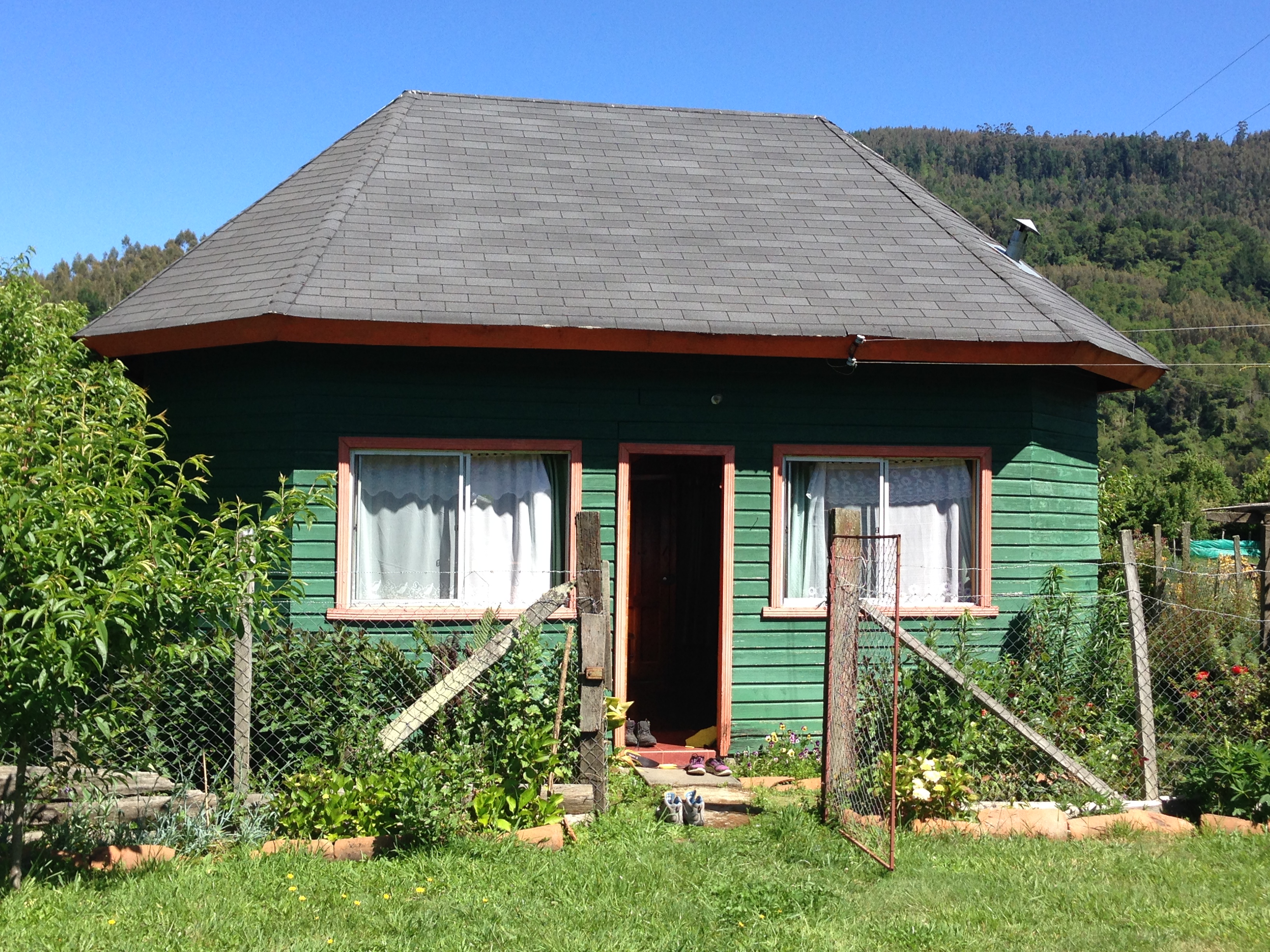
Nevertheless I arrived in Valle Elikura early Sunday morning. Silvia was my host mother when we traveled with my group and I had called her prior to my coming to ask if I could rent the cabin again. She cheerfully agreed and told me she would also provide all three meals. Silvia had left the house early to come meet me at the location where the bus form Cañete dropped me off.

I arrived at the cabin fourteen hours after I left my home in Santiago.

I took the rest of Sunday to rest. Valle de Elicura is an incredibly peaceful place. My room in Santiago faces a very busy street so I was more than happy to trade in the noise of 8 am traffic for the chirping of birds.

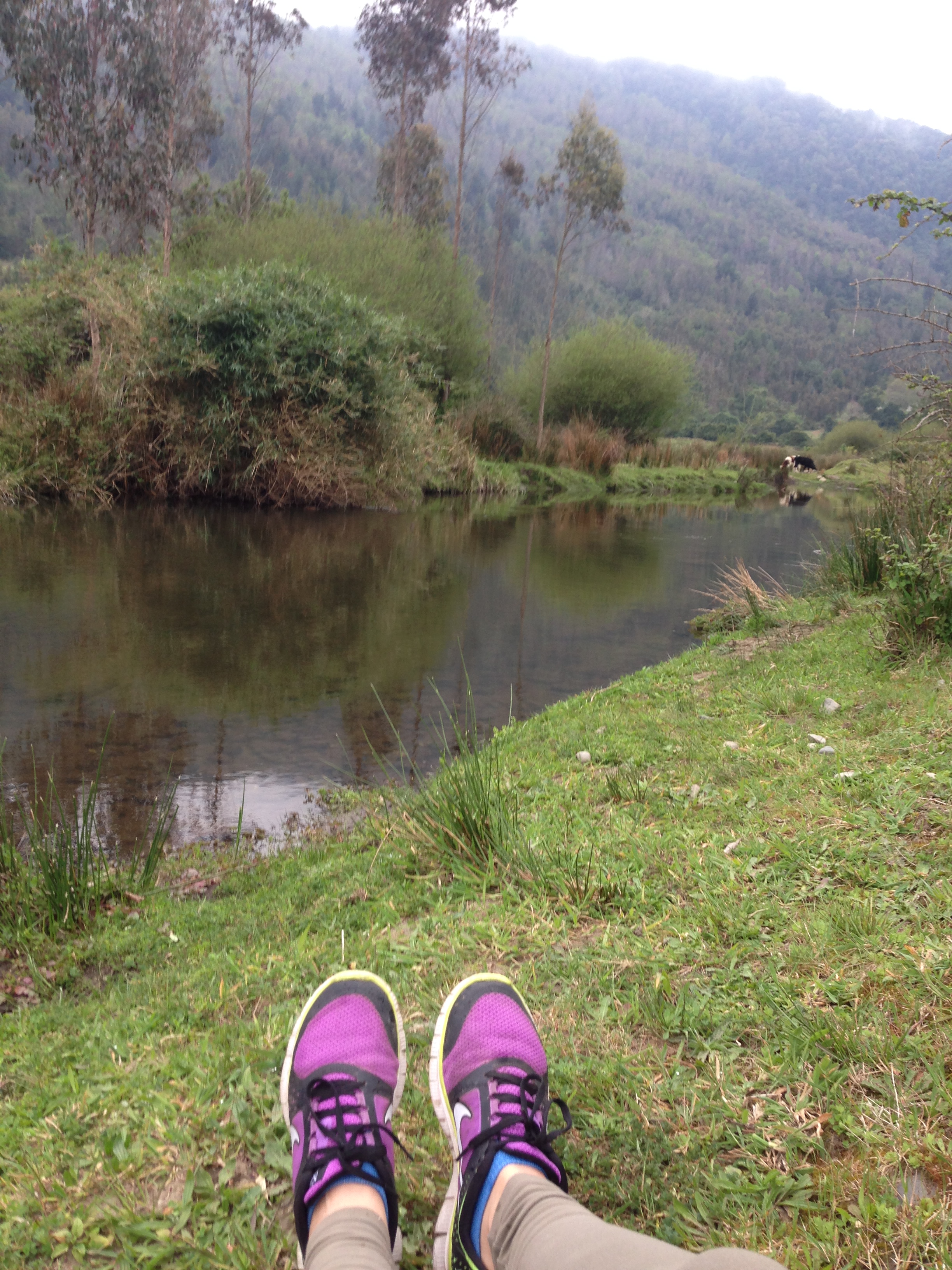
I began Monday by starting my work right away. As I greeted familiar faces in Valle de Elicura I felt more and more comfortable every time I spoke with someone I had previously met. This is when I suddenly and pleasantly realized that coming back to visit a place for the second time is an entirely new experience. I enjoyed going back to the river where I ran by on my first visit. After some exploring I found a beautiful meadow. As I lay in the grass, tranquil, away from noise, distractions and other people, I could not help but feel as though I was inside my own conscience. I allowed myself to bathe in this beautiful solitude.

I stayed in Valle de Elicura until Wednesday. I ate all of my meals with Silvia, Lautaro, and Kata (Silvia’s husband and granddaughter). I enjoyed staying with Silvia’s family the first time, but this was even better. It is precisely what I referred to in the above paragraph. I went to visit the people I had interviewed a month ago. The feeling of familiarity, of “Hey! It’s nice to be here again. Nice to see you, how is everything?” is something that feels incredibly warm for me.

Many people have a thirst for constant travel; to hike through as many beautiful mountains as possible, to visit vibrant cities, to jump around countries and see different cultures.

I imagined I would have the same mentality during my study abroad semester in Latin America.

I can assert with confidence that I belong to the other group. I found that I subscribe to the spend- a- lot- of- time- in- a- few- places  philosophy of travel.

cabin

Silvia’s cabin in Valle de Elicura


Mel in Chile: The South Part 2

November 6, 2013

For those of you who have been following (don’t worry, I don’t have high expectations. Kidding- I actually suspect hundreds of thousands of people read my blog. Wow this must be the world’s biggest parenthetical insert) this post “The South Part 2” is the second of a three part series that reflects on the ten day excursion I took with my program in the South of Chile.  I apologize to readers who do not like long sentences.

We left Ralco after three days and two nights of relaxation as well as an hour long research methods class sitting on grass, in a circle, with a mountain split three ways as the background.

We headed for Valle Elikura. This valley, located close to the Pacific Ocean, between Contulmo and Cañete, has a population of about two thousand. Valle Elikura is historically territory that belongs to the Mapuche indigenous peoples. While there continues to be a strong Mapuche population, many of the families are also mixed with one of the parents being Chilean. Here we participated in a homestay for five days.

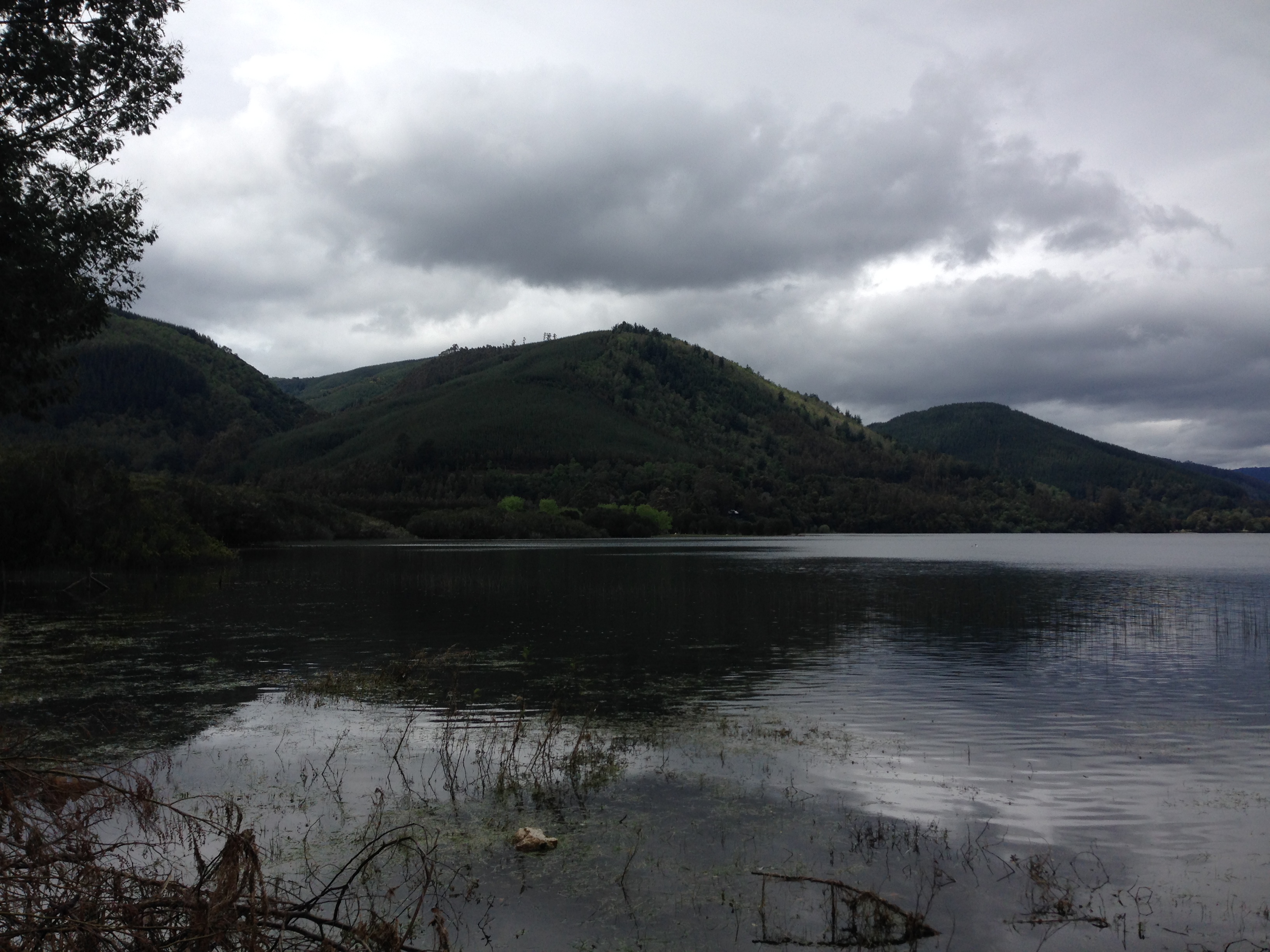
lake

A lake in Valle Elikura

During the day we had several planned events as a group; lectures, hikes through native forest, discussions with community members, community work, and most importantly time to be with our host family. Many families in the community have built cabins on their own property where they receive tourists. We were broken up into groups of two or three and each group lived in the cabins. The cabins are separate from the main house, but all we spent a lot of time with the family during meals and free time.

An important reason we traveled to Valle Elikura was to learn about the concept of community tourism. Many of us have traveled outside of the country. In these instances we have all participated in tourism where we experienced a different culture. At first glance, tourism seems as nothing more than exciting new adventures. Through this program, I have studied the legacies and implications of tourism and came to realize some unsettling characteristics.

Many times tourism, especially showcasing “other” ethnicities, resonates with colonial legacies. I will give some clearer examples.

1. Recently wed US couples travel to Fiji and are greeted by locals dressed in “traditional attire” and presented exotic drinks.

2. Twenty something young women step out of their comfort zone and take a much deserved vacation in India where they ride an elephant and get henna tattoos

3. Bold backpackers arrive to the desert village of San Pedro de Atacama and walk around the dirt streets of the village center passing through stores with “hand made/local” products, touring agencies, restaurants, and hostels made of adobe. Meanwhile Atacameño people, whose culture is being replicated for consumption, are nowhere to be seen.

I hope you get my point. Most times, the purpose of tourism is to explore, or more directly, consume, a different culture. The colonial legacy comes mainly from two circumstances. The first is that many times tourism is imposed on communities. The decision to welcome tourists in particular territories originates from higher political or economic agencies. Touring agencies offer services, companies build nice hotels, and the local people in the stores selling “artisanal products”. Tourists are not aware that the “local” people selling artisanal souvenirs are simply hired to sell. They do not own the store and they did not make the product. The souvenirs may not even come from the culture. The overwhelming majority of profits generated from tourist related activities are channeled to national or multinational companies. Another source of the colonial legacy in tourism becomes apparent when we look at the characteristics of the tourists and of the people in the regions they tour.  It will not take long to realize many tourist are from western and/or ex colonizing countries while the destination is usually an exotic country that also most likely an ex colony.

In Valle Elikura, the practice of community tourism is trying to break this relationship. Through community tourism, the Mapuche community appropriates tourism as an instrument through which they assert agency. Tourists who stop in Valle Elikura stay in a cabin that directly belongs to a family. The tourist will buy food from families in Valle Elikura. If they want to purchase artisanal items, there are a few people  in the valley who make the items from start to finish.

Take Rosa for example. She has a store in front of her house where she mainly sells knitted items. Rosa shaves her sheep to get the wool. She washes the wools, spins it and prepares the thread so it is ready to be died. Rosa takes plants of different colors from the garden in front of her house and boils them to produce the color for the wool. She takes the threads and leaves it in the die so the wool absorbs the color. Rosa takes the dies wool and begins knitting apparel to sell in her store. The prices are incredibly reasonable.

The objective for community tourism is to decolonize both the local community and the tourist. The tourism has control over how tourism of their culture and in their territories will happen. The money generated over tourist activities is channeled directly to the families of Valle Elikura.

In my opinion, the tourist still consumes a vision of the “other” culture they traveled to see. However, in the case of community tourism, the community “shows” its own culture. More importantly the local community can directly communicate with the tourist. The communication can be a way of educating visitors on issues that may be misrepresented by the media.

The distinctive characteristic of community tourism is that the community voluntarily decides to receive tourists and how they will administrate tourism.

During our trip, we also learned about Mapuche history, their struggle for autonomy, and their effort to maintain unity within a now diverse indigenous group (diverse in terms of political views, religion, way of living, etcetera). The community was not only welcoming, but also incredibly patient in discussions with a group of young students from the United States like us.

Running

I went on a run to the river and sat down a bit to take in the scenery and a quick photo!


Mel in Chile: Missing Richmond

October 8, 2013

Here it is!

I cannot accurately chronicle my time abroad if it didn’t include a post about how I am starting to miss Richmond. This also comes a couple of days after I decided that I would will go back to Richmond in lieu of another semester abroad.

Maybe the blog about missing UR and being excited to come back and the nostalgia that starts to hit me, would be more romantic or fitting if it were my last blog. But I will break with tradition here and talk about how I miss the red brick and grassy heaven that is the University of Richmond only a month and a week into my program.

Evidently, I am not the only one who feels this way. Our program director walked in today and said “Look, I imagine the month long excitement of being in a different country has waned by now. I know you all want to eat hamburgers again and are getting tired of eating so much bread (NEVER!). But this will pass. I promise it doesn’t last.”

After the one-month mark, I get the feeling the excitement of being abroad turns into a routine of waking up, having class during the day, hanging around a bit before going home, and finally coming in for dinner at 8 pm. After this, I start with homework/skype/reading news/reading things that don’t matter/answering emails until all this culminates into a trip downstairs for some pan con aji pebre (bread with the best spicy salsa concoction to ever be put on the market). I will be bringing 5 bottles of aji pebre upon my return to the states. This will probably last me a month or so and then I will suffer through a withdrawal phase. I could write an entire blog post about aji pebre.

The title of this post is “missing Richmond” and before I wrote the main body, I thought I was going to write about how much I missed Richmond, what I missed about it, and how I am so excited to come back.

All of this is certainly true, and I was going to write about it all without being too “You don’t know what you have until it’s gone” –ish

But then I decided not too. I will be back in Richmond and “have” all of what I miss in a couple of months.

So instead, I decided to write some things I love about living in Chile.

Pebre

Aji

Aji Pebre

How it is socially acceptable to eat a copious amount of bread

The movements for social progress

The people who perform in front of rows of cars stopped at red lights

The hot dog with fried potato chips around it

THE HOME MADE ALFAJORES BY THE LA MONEDA STATION (I can never buy just one)

The colorful stones the country has

The friendly Chileans

Chilenismos (Spanish words used exclusively by Chileans)

The Human Rights Museum

The National Library I go to study in every day after school

My walk to the university

The Andes.

The Andes.

The Andes.

San Pedro de Atacama

That good pizza place I went to on Tuesday after visiting Pablo Neruda’s house

Pablo Neruda

Pablo Neruda’s houses

Especially the one in Isla Negra

$2 Yoga classes at the studio close to my house

My host family

The delicious meals they cook
But most of all, I love sitting in the kitchen at 1 in the morning, when everyone is asleep, doing my homework while listening to a radio station that plays old Spanish, English, Portuguese, and French classic songs, with the volume super low.

The kitchen at night is my favorite place in all of Chile.

The list could be long enough to circle around the equator at least 13 times.

But nobody has time to read that!

IMG_1897

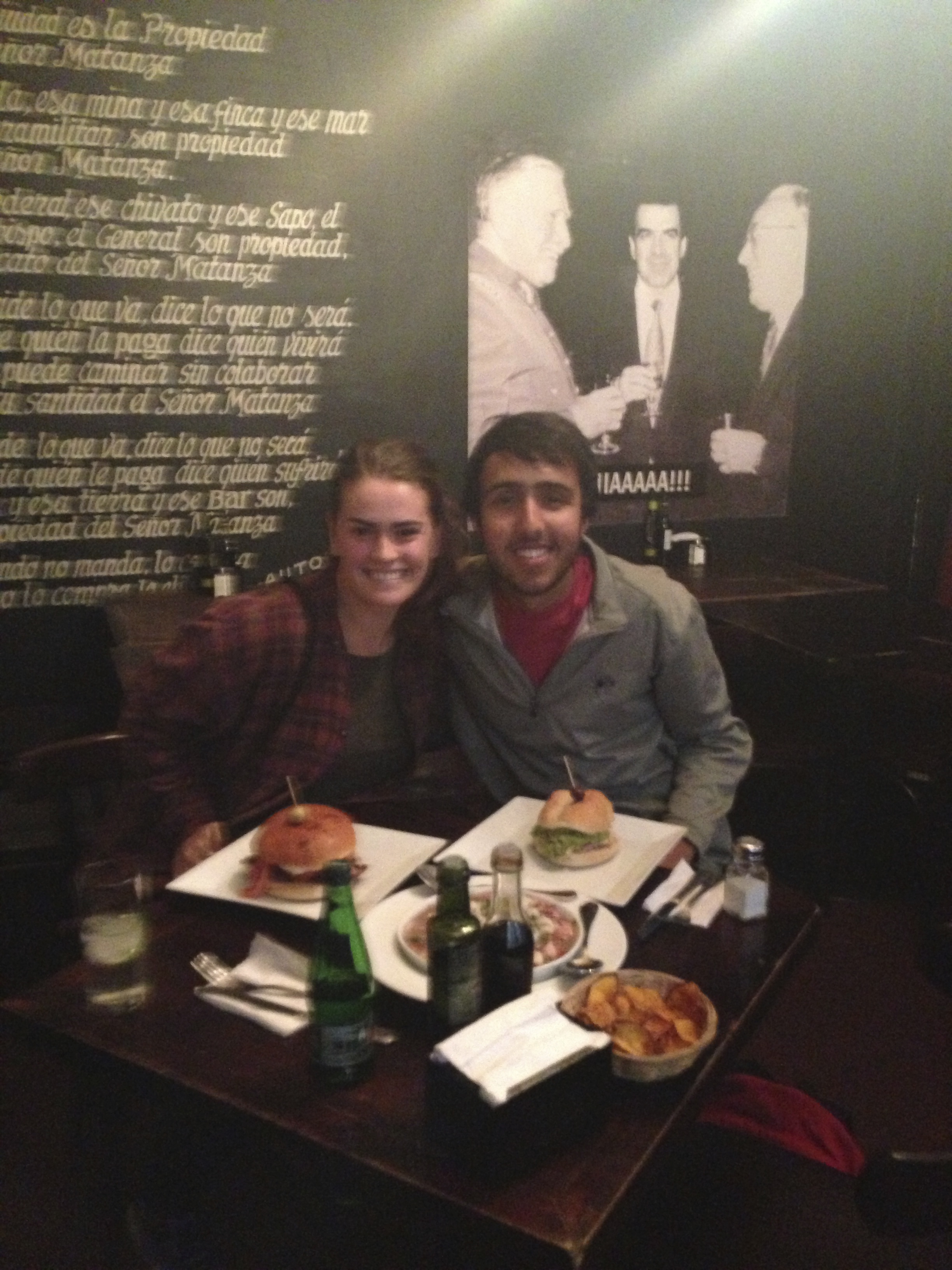
One of the most memorable days in Santiago! Neal, a UR student studying in Valparaiso, Chile, came to visit me for the day. We stopped for dinner at my favorite bar/restaurant “The Clinic”

IMG_2675

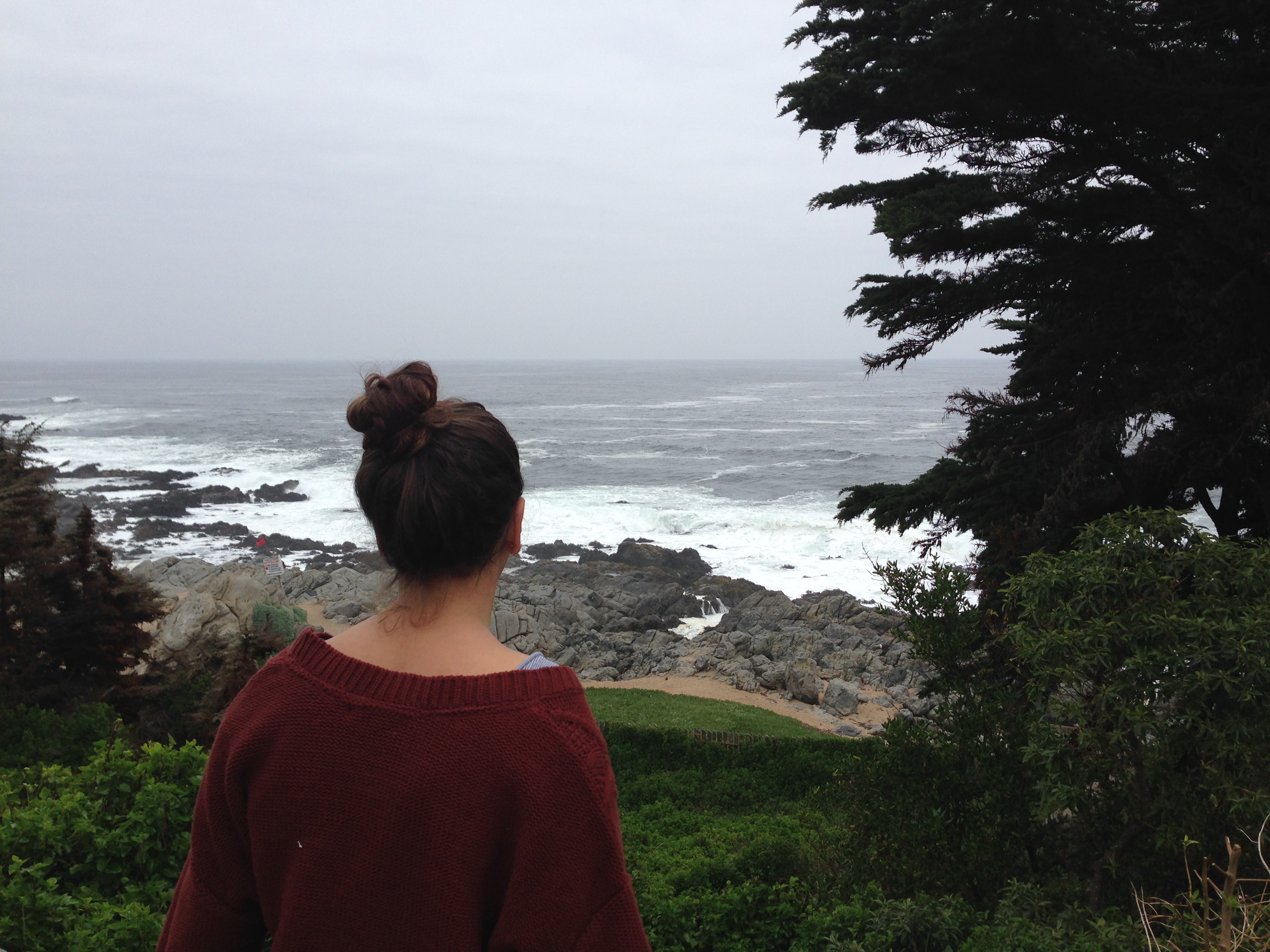
This view is from Pablo Neruda’s house in Isla Negra. I can definitely see what he loved about the place!

IMG_1823

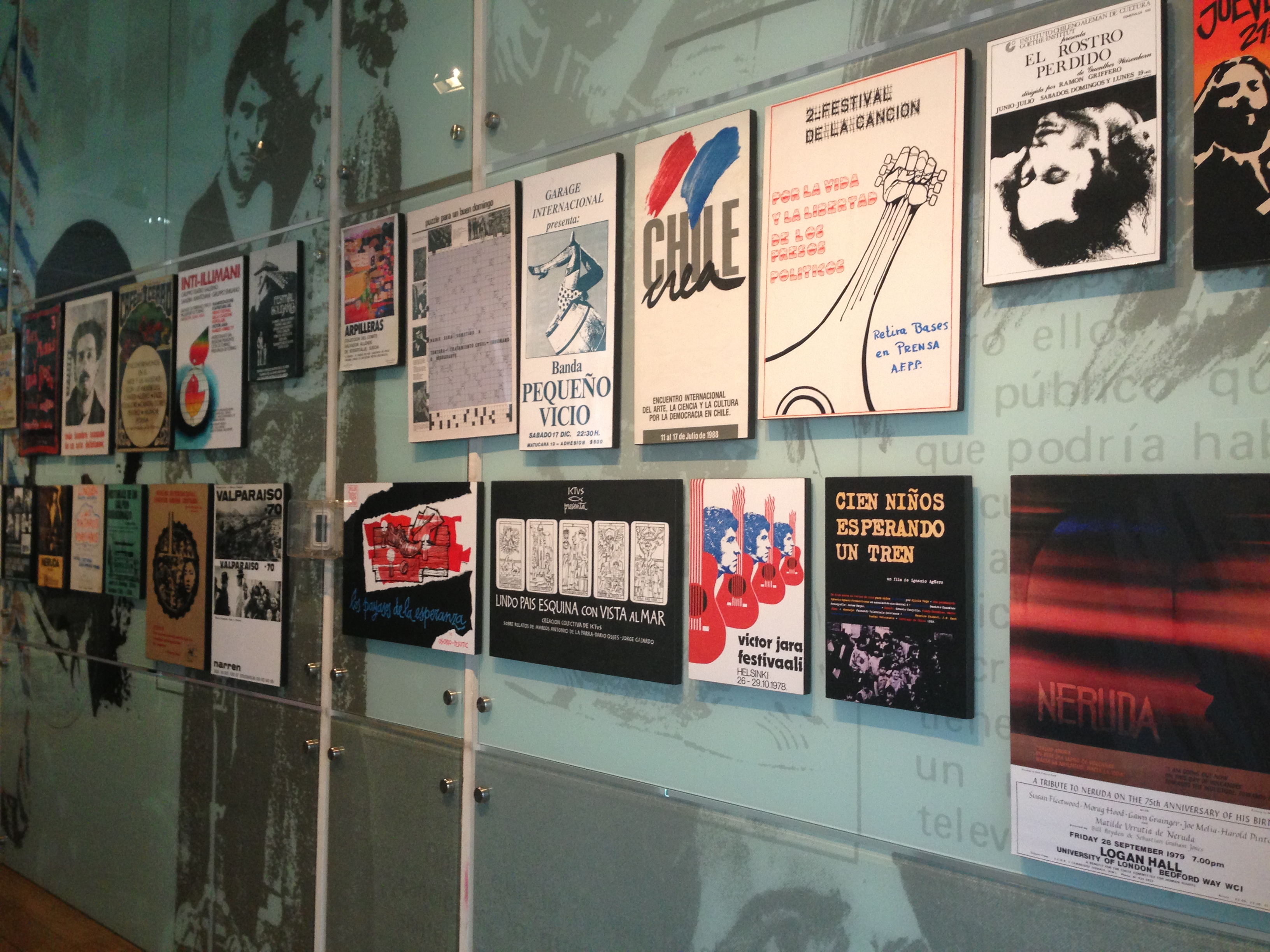
Picture from a section of the Museum of Memorial and Human Rights in Santiago. This is a museum dedicated to the 17 years of dictatorship (1973-1989/1990) in Chilean history

IMG_1765

This is the porch in my Chilean house. Now that summer is coming, it makes for a lovely place to spend a Saturday morning. We will start to have many barbecues here as well!

Hasta la próxima (until next time!) 🙂


Alyssa in New Zealand: A New Comfort Zone

July 19, 2013

There is a very broad definition for “home.” It can simply mean where you live. Or where your family resides. Where you’re from. In the end, one is usually very accustomed to the lifestyle, wherever that “home” may be.

It’s definitely not the easiest thing to develop a routine in a brand new environment. The surroundings are unfamiliar. People are unrecognizable. The buildings are foreign. You simply don’t know where to go or what to do just for the sake of not knowing. Living somewhere new takes time to get used to.

However, everything finally seems to be coming together. I’m starting to attain a better understanding of the Dunedin environment day by day. I can navigate myself around campus and town with ease. Time management has become simpler to handle. I’ve finally solidified and mastered my class schedule (no Fridays, which will make it much easier for traveling purposes). Faces are becoming more familiar. Friendships are continuing to grow and expand.

In addition to that, my flatmates and I have become closer and closer, for the dynamic of the flat has turned out to be fairly strong. There is a lot of support that is shared between all of us. We keep each other company, even if we are just sitting in the lounge in silence. The silence is anything but uncomfortable, for it is understood that we are all at ease around each other regardless if there are words exchanged or not. Likewise, we will cook and eat dinner together occasionally throughout the week, keeping the direct interactions between us alive. Even on the weekends, we spend much of our time together keeping each other entertained and happy. Our schedules do not coincide very well throughout the weekdays, for they’re all very different. Yet, when we come back and find each other in the end, not much distance has been generated between us.

DSC_0421

Me with my flatmates

Here in Dunedin, I have found that I am actually living. Instead of going to the on campus dining hall, I have to go to the grocery store, buy my own food and do my own cooking. Different responsibilities are shared between everyone in the flat in order to keep our living conditions in good shape. There are bills that have to be taken care of. I have to be aware about the amount of internet and power that I utilize. I even constructed a budget plan so that I can organize my money and keep my spending under control.

As difficult and strange this was to me at first, I have become very comfortable with this type of lifestyle. Being conscious of almost everything I do and plan to do has only helped me build character. It not only prepares me for the semester I return to Richmond (I’ll be living in an off campus apartment spring semester), but it prepares me for the real world as well (as scary as that is to think about). Independence has been taken to a new level.

This past Saturday, I had the opportunity to explore even more of Dunedin. My entire flat complex and I ventured out to the Otago Peninsula, where beauty and landscapes were intensified. We specifically went to an area called Lover’s Leap. As we hiked through paths, valleys and plains, we were able to see spectacular views of the coast of Dunedin. Life had a different dynamic out there. Everything seemed carefree, yet full of adventure all at the same time.

DSC_0435

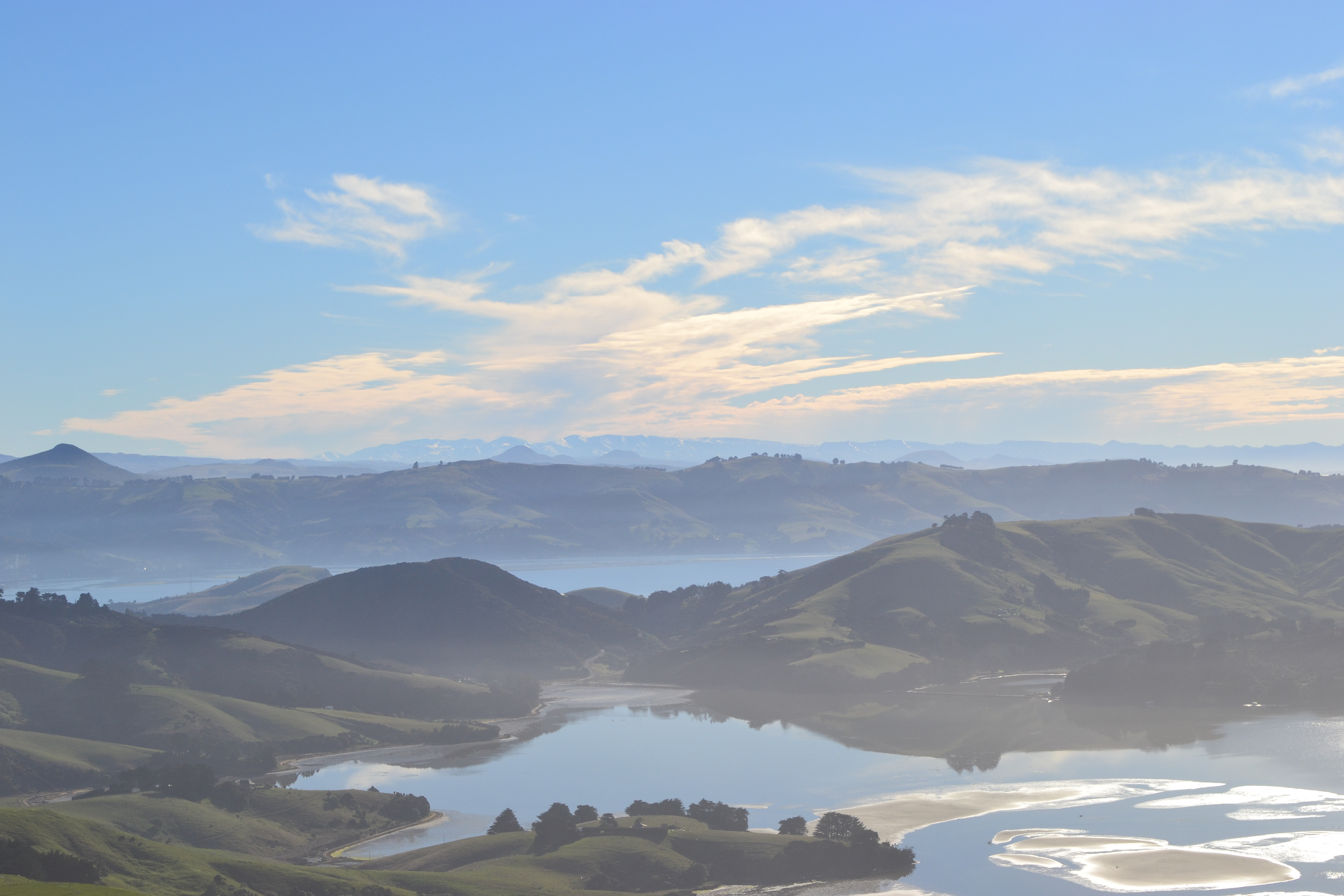
At the Otago Peninsula – I told you it was breathtaking!

I felt no fear when walking out to the edge of the cliffs. In fact, there was no feeling that was actually felt at that moment when standing on the edge of a 200 foot fall into the ocean. All I know is that I just wanted to stay there forever, or at least for as long as I could. It’s hard to even think about seeing the remainder of the country, for according to the Kiwis, there are other places and sights that are even more breathtaking than what I saw at that point.

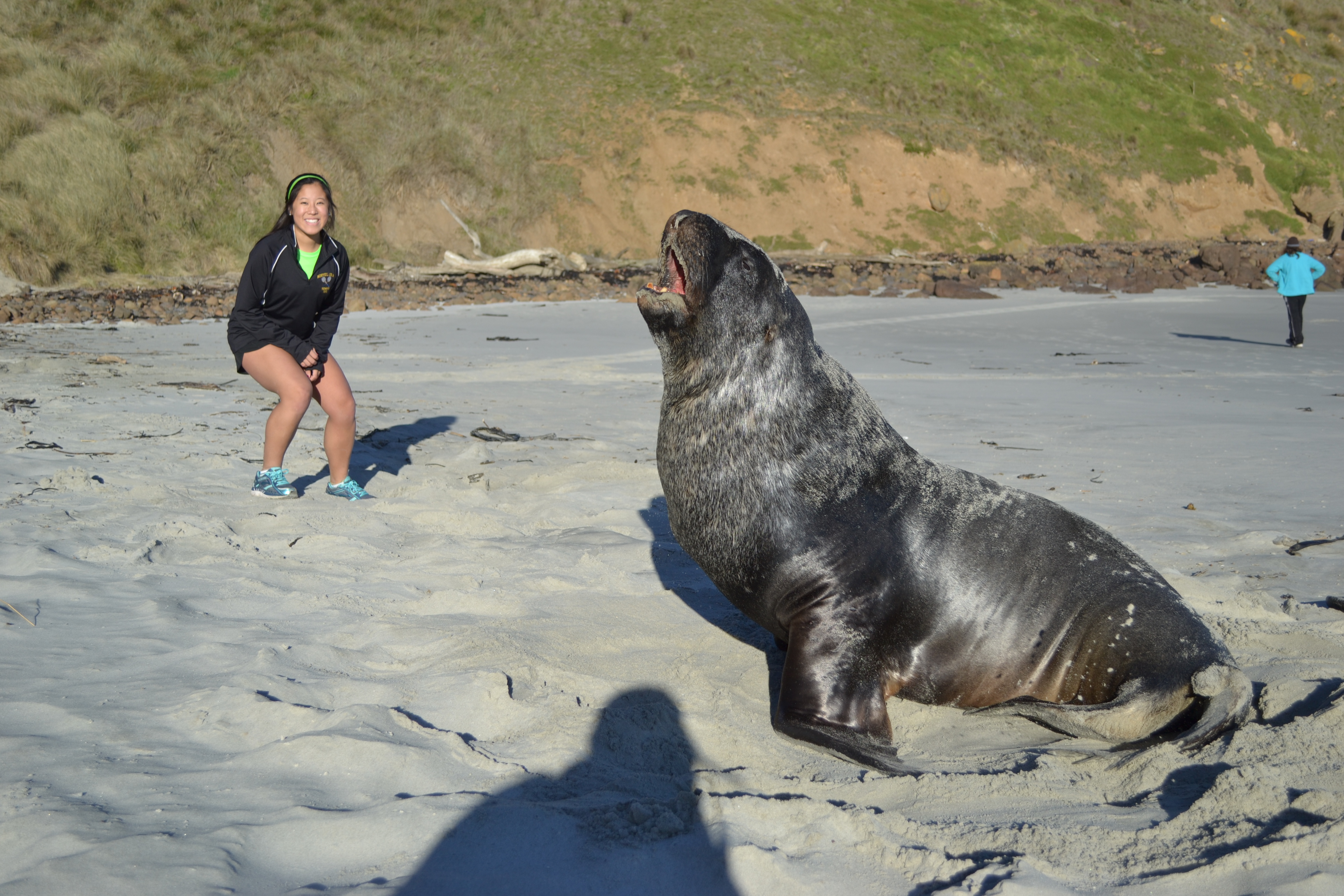
After we were through seeing what was at the top, we decided to make our way to the bottom to the beach, Sandfly Bay. We made our descent from where we were parked after returning from the cliffs for about 20 minutes until we finally reached the ocean. As we explored the land, we ran into several seals sunbathing out on the rocks. We even encountered a sea lion at one point. The hike back up to the top was a little challenging due to the fact that we had to trek through excessive amounts of soft sand. It took about a total of 30-40 minutes for the group as a whole.

DSC_0581

My new sea lion friend at Sandfly Bay

Dunedin continues to surprise me more and more, especially when it comes to weather. It could be 55°F and sunny outside, and the next thing we know, the temperature can rapidly drop to 28°F with rain coming down hard within the next hour. Luckily, the weather was ideal when hiking through the peninsula. Despite its unpredictable nature, none of it stops me from enjoying my time here. The quick changing climate has only encouraged me to be prepared for the unexpected.

Now that I have finally settled in, I’ve been able to start planning for even more adventures. As of two days ago, I’m officially going to Australia for my mid-semester break with my flatmates.  I’m finally making progress on my bucket list, but there is still much more to cover.

I have encountered a lot of changes just in the past two weeks. Not only am I seeking out new adventures, but I’ve also created a new kind of life in here in New Zealand. It’s ironic to think that the more new experiences that I expose myself to, the more at home I feel.

So “home” is not simply where you live or where you’re from. “Home” is where you feel settled. Where you’re comfortable. Where you’re happy. As a matter of fact, I have found all these elements in my life recently. I haven’t necessarily forgotten or pushed aside my homes back in Massachusetts and Richmond. I’ve just happened to create another one somewhere else.


Rhiannon in India: Orientation Week

July 17, 2013

After 3 flights, a night in the Mumbai airport, and a harrowing cab ride (traffic here is crazy!), I arrived at my dorm in Hyderabad at 6 a.m. on Tuesday morning. I am staying at the International House on campus with 13 American students in my group and many more from around the world. The dining hall at the house prepares authentic Indian food for us, but thankfully holds back on the spiciness and gives us purified water that our sensitive stomachs can handle. I love the food and all of the unique spices here! A local restaurant owner came to talk to our group and explained that Indian food is unique because of its many spices that must be mixed in a specific order, much like chemistry. He told us that, historically, widows in India were often confined to communal homes (watch Deepa Mehta’s Water to see it in action), so they spent time experimenting with spices and came up with these scientific mixtures. According to the restaurant owner, an Indian meal usually includes between 5 and 50 different spices!

One of the first things I noticed when I arrived in Hyderabad was that the weather is wonderful! May is the hottest month of the year in this part of India, so by now, it has cooled down to a temperate 84 degrees Fahrenheit. To make it better, the monsoon rains don’t hit Hyderabad nearly as badly as they do up north.

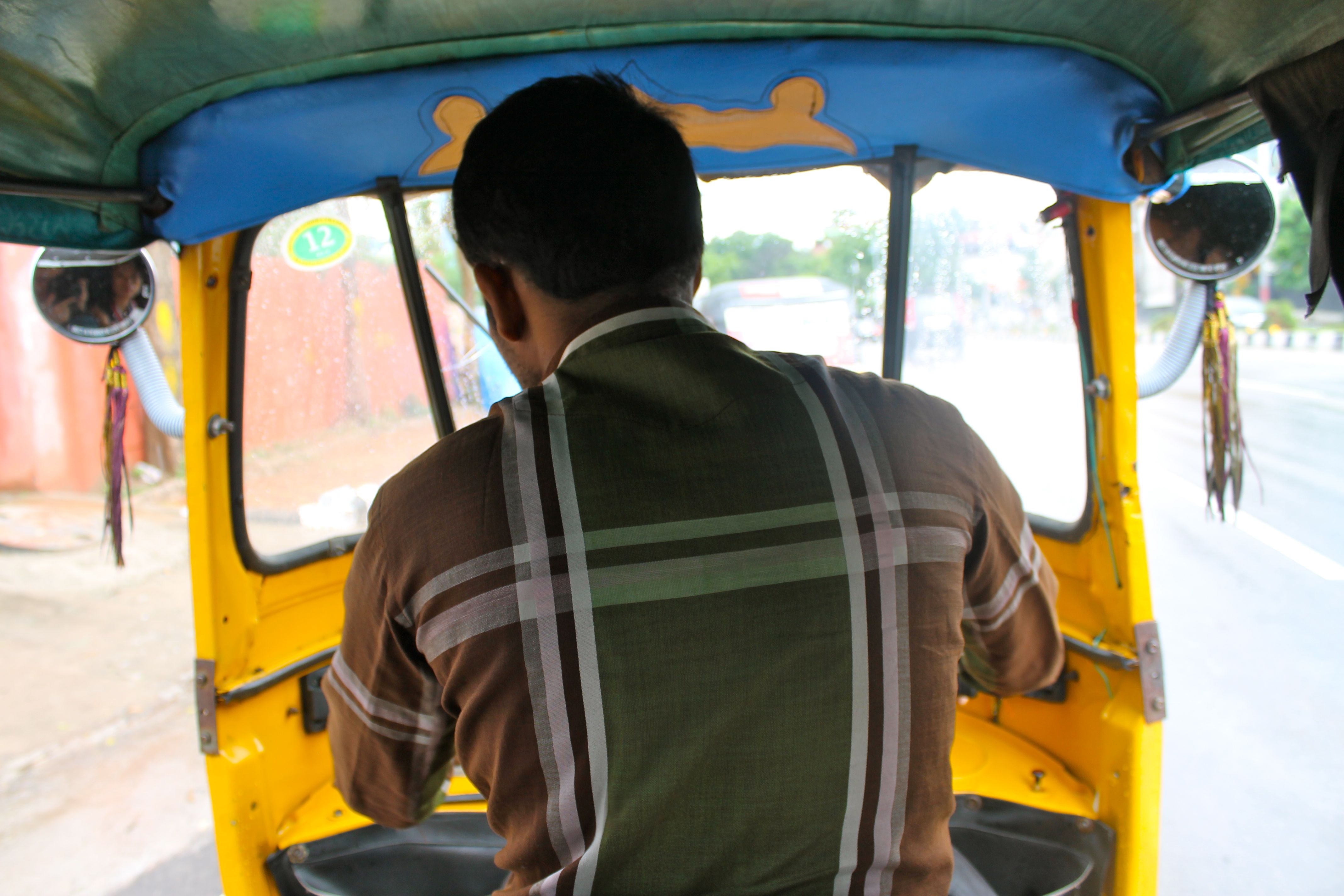
Orientation this week has been a whirlwind of lectures and excursions around the city. We have already discussed many interesting topics such as food, transportation, and living as a woman in India. After learning about transportation in Hyderabad, we split into small groups for a hands-on navigation exercise. Lead by our language peer tutors (Indian students who will be helping us with language practice this semester), we spent the afternoon taking auto rickshaws, buses, and direct autos all over the city to get used to navigating and bargaining. This just happened to be an afternoon when the monsoon was in full force here in Hyderabad, but splashing through puddles on the auto rickshaws made the day even more exciting! My friend Jennie and I, with our peer tutor Salomi, took two “sharing autos” to a restaurant for lunch, then a “direct auto” to the mall to shop for some Indian clothing. Both types of autos are open-air rickshaws, but sharing autos are cheaper because the drivers pack as many customers in as possible as they drive along a set route. Direct autos will take you exactly you want to go, but they are more expensive.

Auto Rickshaw

Here’s an auto rickshaw

Inside Auto Rickshaw

The view inside an auto rickshaw

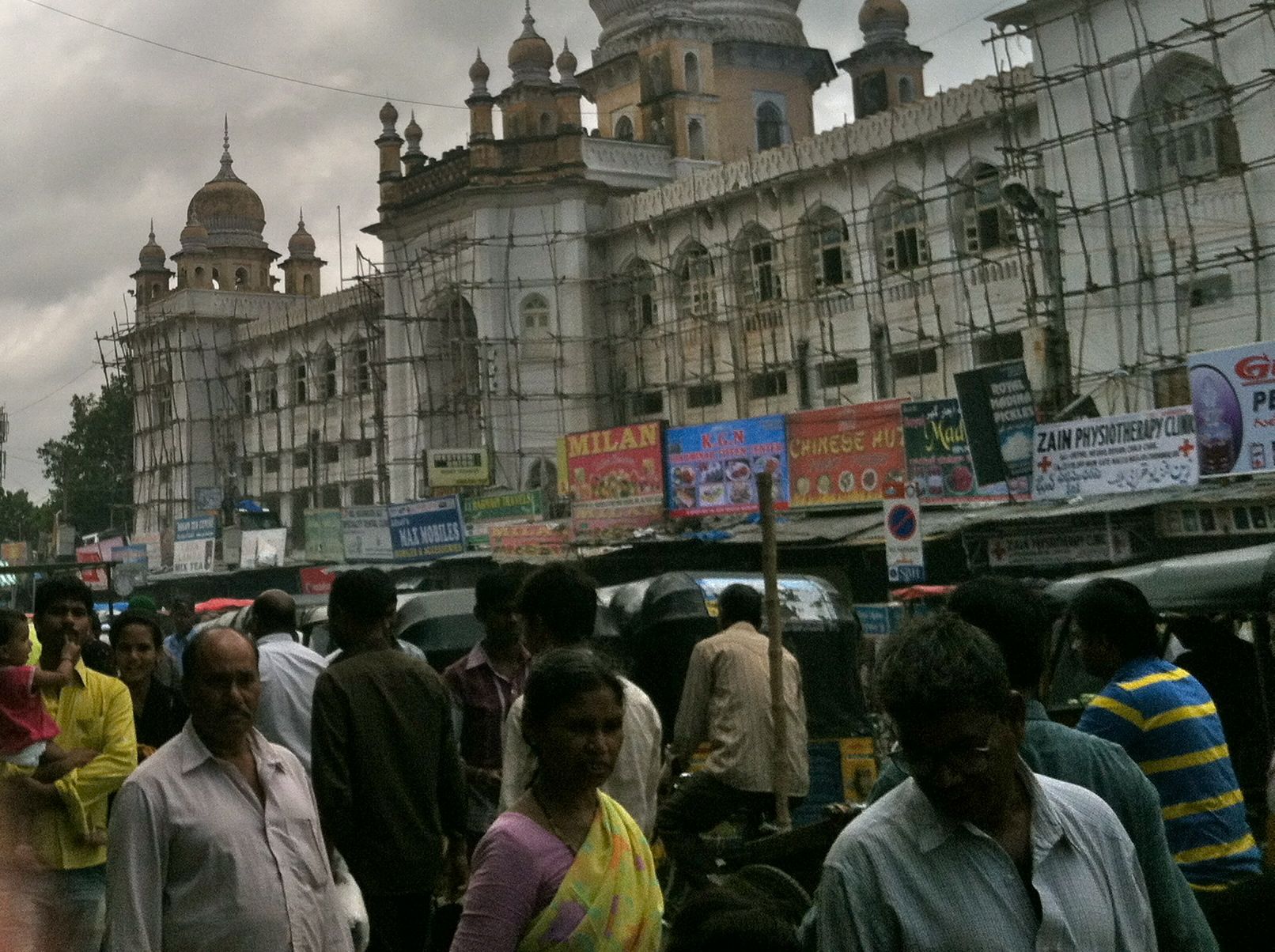
One of our trips that stood out most this week was to the Old City, which is often considered “downtown” Hyderabad. Because Hyderabad was never fully colonized, there is no trace of urban planning as there is in other Indian cities. The bustling streets of the Old City seem too narrow for traffic, but somehow cars, bikes, motorcycles, and pedestrians seem to pile on top of one another between never-ending rows of shops. Local women say that the Old City is the best place to shop for anything shiny or sparkly, including saris and bangles.

Old City

The Old City of Hyderabad

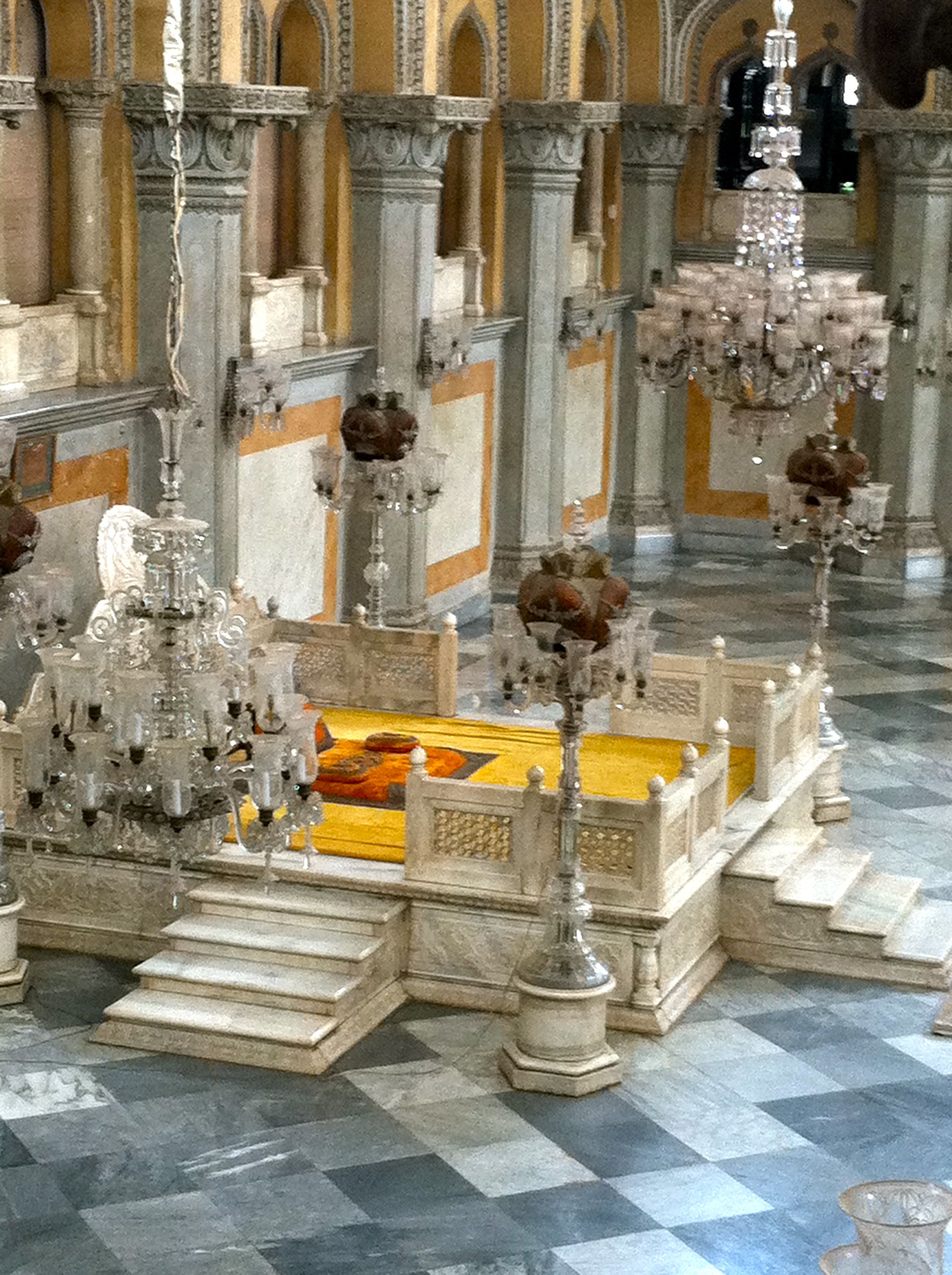
While we were in the Old City, we visited its most prominent landmarks: Chowmahalla Palace, Charminar, and Mecca Masjid. Chowmahalla Palace is an estate with four palaces, which were home to the Nizam monarchy from the late 1800s until Indian independence in 1947. The palaces, now turned into museums, are magnificent and reminiscent of a time much earlier than when they were actually used. The high ceilings are covered in ornate carvings and chandeliers, and in one of the main rooms there is even a large thrown where a prince may have sat less than 70 years ago! As we walked through the gardens of the estate, we could hear the call to worship being played over loud speakers from the Mecca Masjid mosque near by.

Chowmahalla Palace

Me at Chowmahalla Palace

Chowmahalla Throne

Chowmahalla Throne

Mecca Masjid

Mecca Masjid

Although I am staying on campus now, I will be moving into a home stay next week! I will be living with my friend Jennie and an Indian mother and daughter in an apartment about 30 minutes from campus. I am anxious to meet the family because my program directors say they are very welcoming and exciting to live with. I was a little nervous about the commute at first, but now that I am getting used to using autos and busses, I’m not so worried. Hopefully Jennie and I will have similar schedules and will be able to ride to and from campus together most of the time.

Tomorrow I will go to my first class at an Indian university! I will be “shopping for classes” at first, so I’ll just go to a few different ones each day until I decide which ones I like and which professors I can understand. I am excited to start classes because it will give me an opportunity to meet Indian students and hopefully engage in some events or clubs on campus.

I can’t believe I have only spent one week in Hyderabad! I have seen and done so many things this week that it is difficult to put it all into words, but hopefully as the semester continues, it will all get easier to process. Despite what a great week I have had, my semester really has yet to begin!