Austen in Ireland: Orientation Week

January 27, 2014

So I’ve been here a week now and gone through orientation but it feels like I’ve been here so much longer with all that I’ve done!  Classes start tomorrow.

On Monday, I arrived in Dublin and took a bus to the UCD campus (luckily there were other study abroad students with me on the flight so I wasn’t completely lost).  I then checked in and unpacked all my stuff (two suitcases worth) for basically the rest of the day.  I also took a walking tour of campus to help me get adjusted to the campus, it’s a lot different from the brick buildings of Richmond because most of UCD’s buildings are concrete.  I then feel asleep at about 8 from the jetlag and slept for 12 hours!

On Tuesday, I went to IKEA (my first experience in an IKEA- it was possibly the biggest store I’ve ever been in) and purchased a bunch of things for my bathroom, bed, and kitchen.  I then went out into Dublin for the first time with some other students to eat dinner and go to a pub.  We went to a burger place and then went to a pub, where I knew I had to order a pint of Guinness, which was actually better than Guinness in the USA.  It was nice being able to see Grafton Street, the main pedestrian-only street with many shops in downtown Dublin.

Grafton Street

Top of Grafton street, a pedestrian-only street with mostly shops

On Wednesday, the actual orientation events began and they had an international student welcome.  It was in their biggest lecture hall of over 500 students so it was pretty intimidating compared to our small Richmond classrooms!  There then was an international student fair where they had some organizations with tables displaying their services to international students.  There was, for example, the career development centre as well as the library.  Also, there were the two main organizations that coordinate events and trips for internationals, the International Students’ Society (ISS) and Erasmus Student Network (ESN), which I joined for two euros each.  Both of these have trips and other events throughout the semester; I am hoping to go to Galway with ISS in a couple of weeks!

On Thursday, there were more orientation events.  There was one talk in the morning that was catered to study abroad students and laid out some tips about living on campus, safety, and how to register with immigration.  Then, in the afternoon there was an academic advisory for arts students (I’m technically an arts student).  This was centered more around academics and adding/dropping classes.  There was an Irish professor and he cracked joke after joke!  He went on about how they don’t allow guns on campus like in America or iPhones in class.  His jokes were sometimes borderline offensive but hilarious!  I then went to the on-campus pub after dinner, which was pretty nice and modern for an on-campus place.

Friday was finally a relatively down day for me.  I went to throw the Frisbee around with a friend for a little in the afternoon.  At night, the Erasmus Student Network held a pub crawl, so I decided to take that.  There were over 200 students on it, so we had a large group but we were divided into three groups.  We went to four pubs over the course of the night and it was really fun.  Some pubs were better than others but I would definitely return to a couple of them.
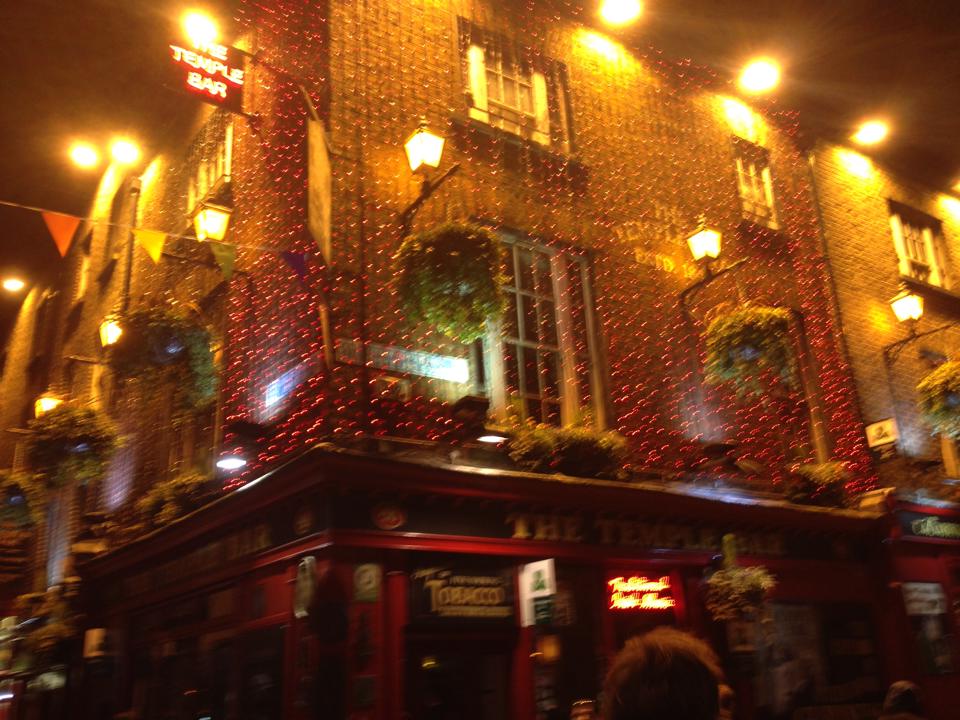
Temple Bar

Temple Bar is a world famous!

On Saturday, they held a “Discover Dublin” day trip so I decided to go on that.  In the morning, we went to the Guinness storehouse, a must-see when in Dublin.  It went over the process of brewing Guinness, which was really interesting.  There was a room at the top of the building at the 7th floor which had a 360 degree view of the city which was awesome to look at!  I had  delicious Guinness stew for lunch which and then we went to the “Guinness academy” where we learned how to pour Guinness, learning it is a two pour process.  We got certificates after we learned how to “pour the perfect pint of Guinness.”  For the second part of our day, we went to Croke Park, the fourth largest stadium in the world with over an 80,000 person capacity.  The all-Irish games are held here where all the counties of Ireland fight for the trophy in the sports of Gaelic football and hurling.  It was really neat learning about these two sports because I’ve never seen them before.

Croke Park

Croke Park: home of gaelic football and hurling; all Ireland games

For Sunday, I went on a Dublin walking tour of the city.  We saw St. Stephen’s Green, Trinity College, and many other sights in the city.  It was nice to finally be able to get my bearings somewhat.  I then finally got an Irish phone so I can now communicate with other students at UCD.

I’m looking forward to classes in one way but in another way I wish I could just discover Dublin, Ireland, and Europe for the next four months!


Austen in Ireland: Packing for the Voyage

January 20, 2014

So, I have started packing and I leave in a couple of days for Ireland!  I’ve realized just how challenging it is to pack four months worth of stuff into two suitcases.  It has been tough to figure out how much of what types of clothing and toiletries I need to bring but I think I’m in good shape (even the outlet plugs are different in Ireland).  The weather in Dublin will be cold for the majority of the semester and definitely a lot colder than Richmond weather so I brought a lot of jackets and heavier clothes.

Packing

Getting ready for the trip. Just have one more suitcase to pack!

As I look ahead to the trip I am looking forward with excitement to learn about a new culture and to see new places.  I am getting there a week before classes start so I can get used to the layout of the campus of UCD and Dublin.  But I am also very anxious because I am living in a new place by myself while also cooking some of my own meals.  On the plus side, I get my own bedroom and bathroom, something I did not have at UR!  I have never been this many months away from my parents, so it should be interesting.  I’m sure that it will be one of the best experiences of my lifetime, as I had one of the greatest times in France studying abroad this past summer.  I am used to traveling so I’m not too worried about the airplane ride and getting to UCD and I don’t really get homesick too easily so I should be fine.

During my time in Ireland, I am planning on traveling throughout the countryside, Cork and possibly Northern Ireland as well.  I will definitely also visit Edinburgh, Scotland because I know a few students from UR studying abroad there.   A plan for a Euro trip after the end of the semester is also in the works because I really want to take advantage of being in Europe and seeing some of the greatest cities in the world!


Mel in Chile: The Final Project

December 10, 2013

Some days ago we closed our SIT Chile: Political Systems and Economic Development study abroad semester. During November I had been working hard (or hardly working?) towards the thirty-page research paper that we submit at the end of a semester abroad with SIT. I have to admit the month of research was an incredible opportunity to test out my ability to work independently. The only deadline to keep in mind was December 4th.

November was full of activities and my schedule looked busy even though I did not have classes. I needed interviews for my research and when you are in Latin America scheduling interviews/any meeting situations with people will prove to be a difficult process. I also chose a topic for my research that I had not studied through classes at Richmond or study abroad. It was a critical analysis of community-based tourism in Valle de Elikura within a mix of post-colonial/anthropological/orientalist theoretical frameworks. I spent half of the month simply looking for articles and reading as much material as I could so I developed a strong background before I started the actual writing.

I sometimes wonder what will happen with the thirty-three-page research paper I wrote in Spanish. It is difficult to convince myself that it will be useful for a class in Richmond since I know the rest of my time will be devoted to fulfilling business class requirements. If I want to use the paper anywhere in the US I would need to translate the entire thing to Spanish. So I sometimes ask myself “Why did you chose to do something ‘irrelevant’? Why didn’t you choose something that is more related to what you study at UR? Chile is would have been a fantastic country for research in any neoliberal related topic.” I am lucky I do not have to think very far to find my reasons. The truth is that I absolutely loved my topic. More importantly I enjoyed the journey of learning something entirely new, processing it, and then applying it as analysis to my fieldwork. I realized I was also wrong to refer to my work as “irrelevant”. This may sound cliché but I understood from personal experience how seemingly distinct areas of study are actually not as unrelated as we sometimes imagine. My research project gave me an opportunity to relate tourism, anthropology, orientalist theory, post colonial theory, Foucault’s notions of relations of power, and basic demand-supply relations within a capitalism economic structure. My study abroad experience allowed me to step back and explore the relationships between different disciplines. I would strongly argue that a study abroad experience is essential to a liberal arts education.

diploma

My certificate from Universidad de Santiago de Chile!


Diego in Brazil: Final exams at PUC-Rio

December 3, 2013

Yesterday I had my first final exam at my host university. I would not say that my time in Rio de Janeiro simply flew by, but I certainly feel that the second half of the semester was somehow much shorter. It seems as if just two weeks ago I was writing my mid-term exams. Yet here I am, about two weeks away from closing this experience abroad. As with my post about mid-term exams, I am posting pictures of PUC-Rio’s campus. This time I took two pictures right outside the main campus entrance.

IMG_0796 (800x600)

The main entrance to PUC’s central campus. Several public buses either go through or end their routes right in front of these doors, making the campus quite accessible.

This week I wrote my Portuguese final exam. It was incredibly short and I suppose PUC simply wants to test how much its foreign exchange students are learning. Rather than bombarding us with fifteen or twenty exercises on the same topic, my professor asked us to complete about twelve sentences in total that tested whether we can use different tenses and conjugate verbs. She also gave us a short reading and asked us to answer two short questions. Tomorrow we will have the oral section of my exam in which we will discuss racism in Brazil.

All of my other classes (Geography of the Contemporary World, Political Economy of Latin America, Brazilian Foreign Policy, and Poverty and Social Inequality) are mainly based on academic readings. Final grades in each class heavily depend on how students do in final exams, so I suppose my professors will be asking for two or three long, essay-type answers for each exam.

Interestingly enough, my four classes (or maybe my four professors) have different approaches to tests. Today my Poverty and Social Inequality professor distributed six essay questions for us to prepare at home, each relating to a particular text we read during our course. For our exam she will choose three of the six questions and ask us to develop a relatively long response for each. While this may seem rather simple, she expects us to incorporate our in-class debates into our responses, turning our exam into quite an interesting exercise.

My Brazilian Foreign Policy class will also have a “traditional” exam. We will be given three essay prompts that ask us to compare different authors, theories, and historical periods. This will certainly be my heaviest exam in terms of the amount of content I will need to prepare and study. Luckily, this has been my favorite course at PUC-Rio and it will be quite interesting to look back and realize how much I have learnt about Brazil and Latin America through this class.

The exciting moments of my next two weeks will most likely come during my Geography and Political Economy exams. These two professors have a very interesting approach to final exams. They both believe that having students simply reproduce what they have already read in academic texts does not show how much they have learnt. Instead, we will be given a newspaper article (or an image in the case of Geography) to analyze using the theories and arguments we have studied so far. My professors’ objective is to determine whether students have developed the skills to put new knowledge in practice.

This was probably not the most entertaining post of my semester, but I wanted to give you an idea of how different academic systems may be abroad. About 60% of my final grade for each class will be based on these exams. My experiences at the University of Richmond and at PUC-Rio have been different in this aspect, yet I am confident both systems have allowed me to learn immensely.

I will definitely let you know how my exams go!

IMG_0797 (800x600)

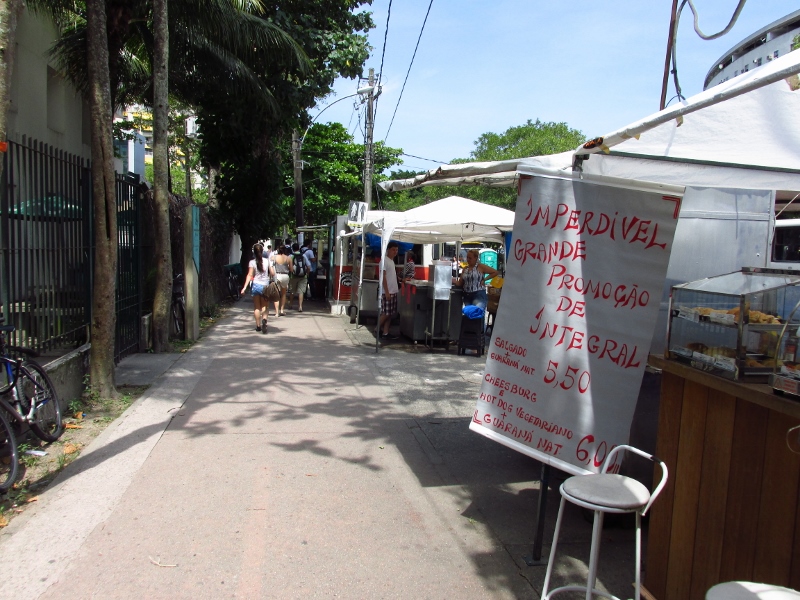
Step outside PUC’s campus and you will find several options for a quick lunch or even some Acaí (a highly popular “drink” made from the fruit of a particular palm tree.)


Rhiannon in India: Missing Life in Hyderabad

November 22, 2013

Right now, I am on a plane on my way to Kochi, Kerala. As I wrote in my last post, I am spending the next two weeks travelling through the southern states of Kerala and Karnataka, known for their coastlines, mountains, and coconuts. As soon as my Hindi exam ended today, I rushed home to pack my things and headed to the airport, eager to finally escape school life and being an amazing adventure. But this excitement came at a price. I have been so engulfed by exams and planning for this trip, I had not realized that I would be seeing many of my friends for the last time today. When we left the exam room this afternoon, many of my friends and I realized that our end-of-semester travels would be separating us until it was time to go home in December. We said our goodbyes, but it seemed so rushed and unexpected that it left me feeling strange about leaving for my trip. I know I’ll see many of my American friends again, whether it be in India before we leave or once we are back home, but these goodbyes made me realize something even worse. Even though I’ll be in India for a few more weeks, I will never be in the daily routine that I developed earlier this semester. I may never get to experience the little things that became so normal and part of my everyday life, like being greeted by the familiar auto-wallahs in our neighborhood, riding my bike to class with two flat tires, or eating a pound of rice at my favorite canteen on campus. So although I am thrilled to start my two-week trip, it is a bittersweet excitement.

I know I’ll miss every experience, every interaction, and every person at some point when I get home, because it is often the little things that come to mind first when I am reflecting on my stay in India. Nevertheless, there are a few people that I will really miss having as a part of my everyday life once I am home.

The first is my host family – Nivedita, my host mom, and Prerna, my host sister. Looking back on the semester, I feel so lucky to have been placed with this host family. Nivedita and Prerna were always so kind and patient with us when we would ask endless questions about Indian culture. Nivedita would always let us crowd around her in the small kitchen while she was cooking dinner to watch and write down recipes. She would also spend hours after dinner telling us the religious stories about different gods behind all of the holidays we were celebrating, and was the primary source behind many of my blog posts this semester. Prerna was also a very good source of information when it came to understanding the ins and outs of Indian culture. We really got to bond with Prerna when she came with us on a long weekend trip to Mumbai. She had never been to Mumbai before, so we all went together to explore the big city, see some sites, and go shopping for “western” clothes. My favorite part about hanging out with Nivedita and Prerna was when we go on trips with them. Last weekend, Nivedita’s sister and her two kids, Sanskar (12) and Isha (5), were visiting us from Pune to pick up Nivedita’s mom, who we called Aji (grandma in Marathi). While they were all staying with us, we went for a day trip to a town to the north of Hyderabad called Warangal, known for its farmland and historic temples. We spent the whole day hopping from site to site in the taxi while we had the best time hanging out with the family, especially the two kids, Sanskar and Isha. Everyone welcomed us into the family and treated us like we were one of them, especially Isha, who attached herself to Jennie and me the whole day.

Family at Warangal

Our host family at a temple in Warangal

Jennie Sanskar Isha rice field jumping

Jennie, Sanskar, Isha, and I jumping in a rice field near Warangal

I am also fortunate to have had the opportunity to meet the neighbors in our apartment building. One of the first people we met when we moved into the apartment was Moulali, the watchman. A middle-aged Telugu man, he knew very little English (and I knew even less Telugu), but somehow we always managed to communicate about where our host family was, what he was having for dinner that night, where we were going, and when we’d be back. Every time we came into the carport, where he and his family lived in a small room, he would yell, “Namaste!” and fold his hands dramatically. He was always extremely energetic, and my best memory of Moulali was when Jennie and I gave him a flower for him to give it to his wife, Narasimha. He took the flower, then sang and skipped all the way across the carport to his wife to give it to her.

Moulali and Narasimha

Moulali and Narasimha, the watchman and maid for our apartment building

Throughout the semester, we formed a close relationship with the other family on our hall, spending many afternoons or weekends hanging out in their apartment watching TV, or eating lots of snacks, and playing with their two kids Binnu (9) and Quiny (5). Madhu and Sandiya, the parents, were so kind and welcoming to us, and now seem like an integral part of our host family. We also became really close with the family living in the “penthouse” apartment on the roof. They also had two kids, Lalith (14) and Spandana (9), who we also spent a lot of time with. Lalith, a super smart rubix cube master, would always hang out in our apartment and tell us about the things he was learning in school. Spandana loved to come over to color or learn English songs from YouTube on our laptops. As the semester went on, our three families spent more and more time together, sharing meals, going to the park, and even doing sunrise yoga on the roof.

Binnu and Quiny Diwali

Binnu and Quiny in their Diwali outfits

There are many other people I will miss as well. I will miss spending evenings with Jennie doing homework, making cookies, and watching old episodes of Disney channel shows. I will miss traveling to new, exciting places with my friends from CIEE. I will miss meeting with my peer tutor Rajini twice a week to attempt at speaking Hindi. I will miss going to dinner and concerts with my friends from Hyderabad. And the list goes on.

Rajini

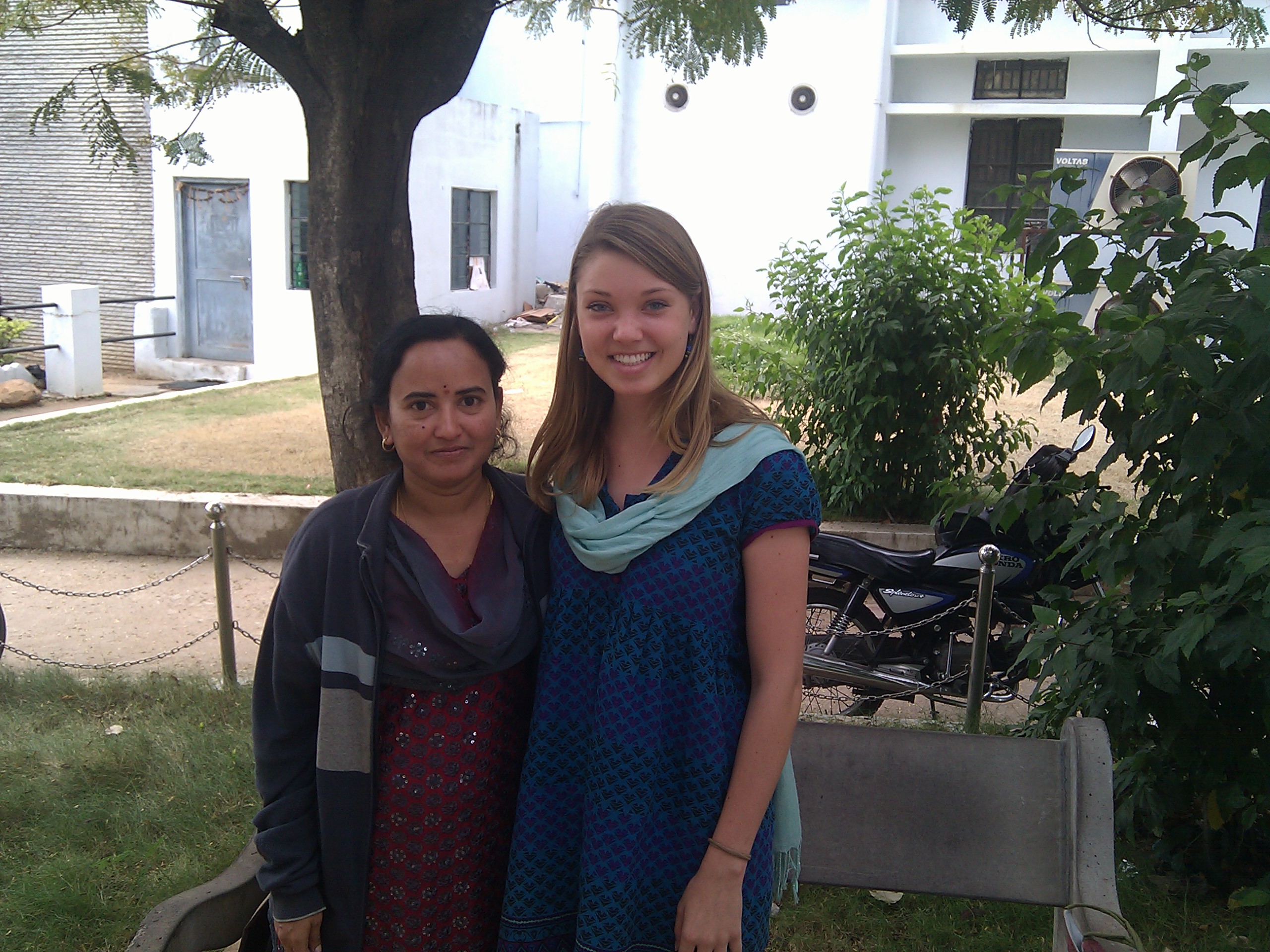
My peer tutor Rajini and me at our normal meeting spot in front of the library

Of course, I could list just as many, or more, things that I miss from home right now too, and I’m excited to go back to my family and friends in America. But now that my time in India is coming to a close, I wish that I could stay here for a little longer and prolong the end to these wonderful experiences I have had this semester.


Alyssa in New Zealand: Two is better than one

October 23, 2013

Doing something more than once is anything but a waste of time. In fact, it allows you to see more of what you have initially missed. As pointless as it may seem to visit the same place for a second time, it is actually very beneficial.

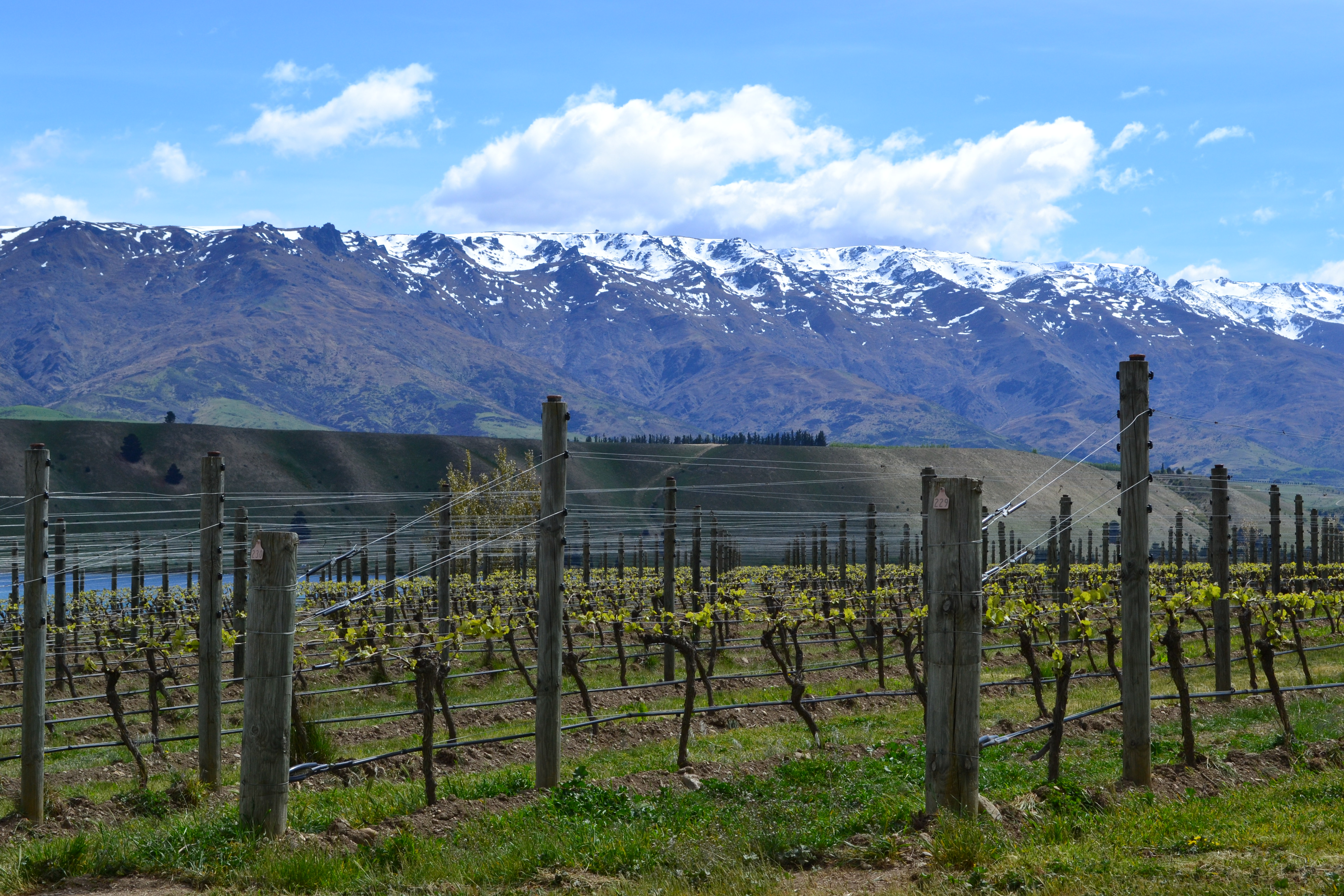
After returning to Queenstown once more with my parents, I was exposed to some of the more geographical aspects of the area. As we drove to several different vineyards throughout the day, I got the chance to see the nature that truly surrounded Queenstown. It was quite strange to think that vineyards could thrive in such a dry, cold area in the region. However, such wineries have learned to adapt and grow successfully in New Zealand’s weather conditions, even if they are situated near mountainous areas.

DSC_0859

Northburn Station winery

DSC_0863

A taste of Queenstown scenery

I also returned to the Milford Sound, except this time, instead of just standing at the entrance, I went on a boat cruise that took us deeper within. Despite the fact that it was raining fairly hard (Milford Sound is considered to be one of the wettest places on Earth), the beauty of Milford was not overshadowed by the dismal weather. As a matter of fact, the rain only contributed to its magnificence, for there were several waterfalls, most of which formed from the rainfall, that were running down from the mountain peaks into the sound. At one point, we encountered one of the more powerful waterfalls. As we made our way closer, the vibrations began to increase from the impact of the water hitting the sound. We were several meters away, but we still managed to get completely sprayed and covered by the water. The force of the water was immense, but it did not prevent us from approaching it.

milford23 (1 of 1)

The reverberations from the waterfall became more and more immense as we approached it.

There were vast amounts of fog which made it hard to make out some of the peaks of the mountains in the distance. However, the magnitude of the mountains were fully revealed when the boat made its way through the fog. Throughout the cruise, we were all kept in suspense, waiting to see what more Milford Sound had in store for us beyond the layers of haze.

milford2 (1 of 1)

A layer of mist floated over Milford Sound as we made our way deep within

The minute I returned to Dunedin, I finally had to put myself to work, for it was officially final exam period at Otago. Even though I was disappointed by the fact that I had to stop traveling for the time being, I knew that papers were a priority during my time over here as well. It felt a little weird to abruptly put my travels to a halt, for I had become so used to being on the go for the entire semester.

There was a significant amount of work that I had to do in order to prepare for my exams. My theatre exam was a take home exam, for which I had to write two essays. For my microbiology exam, the paper consisted of over thirty lectures. There were forty multiple choice and three short essay questions, all of which had to be answered in three hours (very similar to Richmond’s exams). The only difference was that these exams were more heavily weighted on my final grade.  As a result, the exams covered a lot of material and it was obligatory for me to do well.

Since my theatre exam was a take home, microbiology has been my only exam so far that has taken place during a given time slot. The location for each exam is usually very random. For instance, my exam was set in the old physical education gymnasium instead of a classroom or lecture hall. The room held an exam for not only my class, but for another class as well. The desks in the room were set up in rows and each person was assigned a number. As we took the exam, three proctors continuously walked around the room, watching almost our every move. The room atmosphere was tense, and the experience was similar to being a room full of students taking the SAT’s.

Now that two out of three of my final exams are out of the way, I have free time to myself once again. Having only one exam left makes the end of the semester seem so soon. The end is quickly creeping up and I’ve barely begun to notice it up until now. I continue to explore Dunedin in my free time, for I still haven’t seen everything. Whether it consists of me waking up early to watch the sunrise, hiking tracks that are not typically highlighted or discovering new beaches around the peninsula, everything still seems new and exciting. I still find it astonishing that all of these amazing sights and spots are so close by. Their proximity and easy access just reminds me that I have to take advantage of them while I’m living here for the last four weeks of this experience.

The odds of me seeing these people again in the near future is very slim, for we are all from very different places. Being from Boston, having friends all the way from Michigan to Norway does not make visiting each other very easy. Nevertheless, I plan on making the most of my time with the friends that I have made over here until the very end. It’s never too late for us to arrange a last minute trip in our last few weeks. The end may be near, but that does not turn us away from continuing to travel more.

Having been to most of the highlighted areas of the south island, I find myself wanting to return to the same places again. I have a fear that I will forget the sights that I have seen. Something new is always discovered the second time, which makes me think that there is still more out there. Even if I don’t see everything, it always gives me an excuse to come back all over again.

st clair10 (1 of 1)

Sunrise at Saint Clair Beach on the Otago Peninsula


Rhiannon in India: Classes at the University of Hyderabad

October 22, 2013

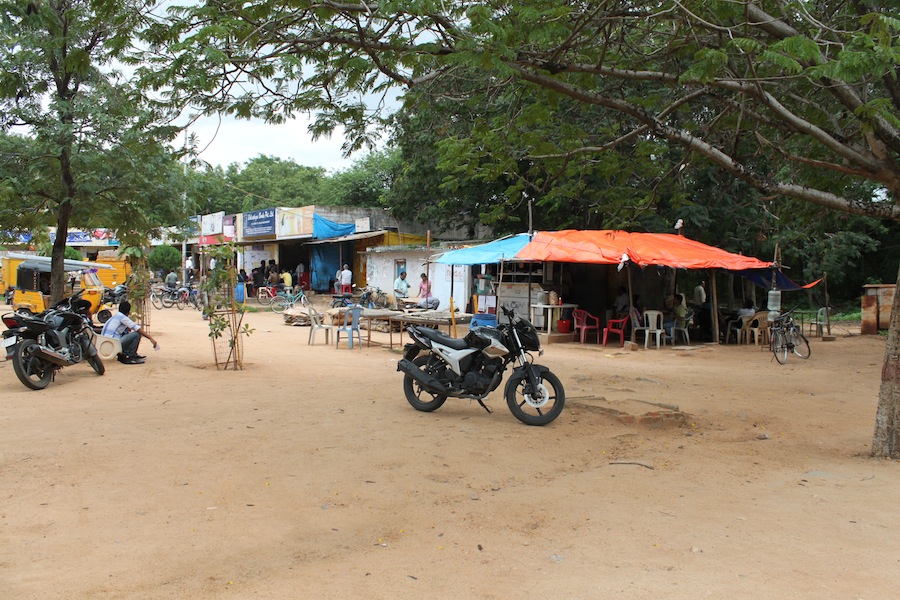
Now that I have been taking classes at the University of Hyderabad (or Hyderabad Central University, as it is called here) for about three months now, I have started to reflect a bit more on my academic experience. As I wrote at the beginning of the semester, the University of Hyderabad is a predominantly graduate-level university about 20 minutes outside the center of Hyderabad. Although the university has a small student body of about 5,000 students, the campus is vast, full of greenery, and serves as a nice sanctuary within the bustling city. Much of the campus still lies untouched, so despite the long, hot walks to South Campus every afternoon, it is nice to be in an environment with lakes, trees, and wildlife like peacocks and water buffalo.

IMG_6716

It’s like walking through the jungle to get to class, and sometimes I see peacocks on the sidewalks and in the trees

IMG_6729

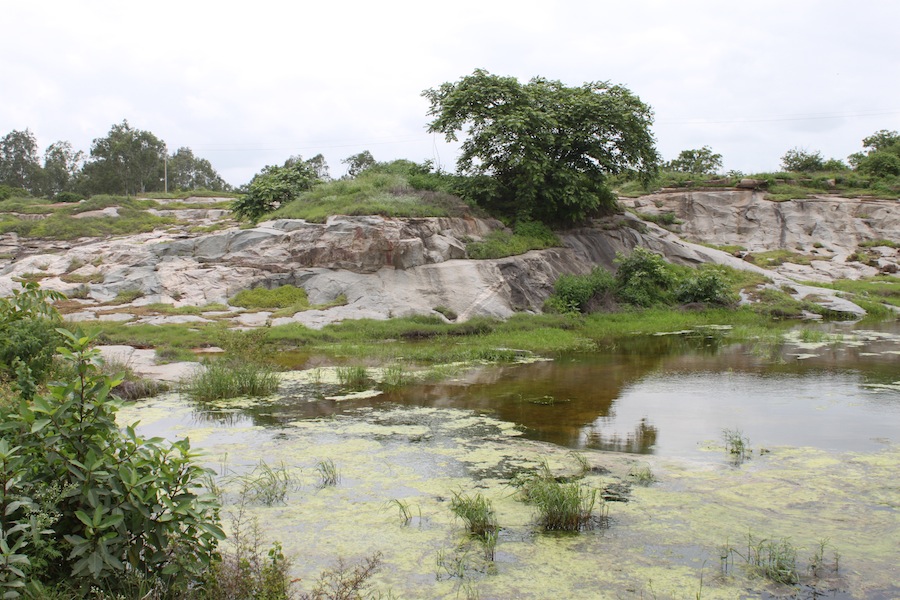
The natural, untouched landscape

I am taking four classes this semester, two that are direct-enrollment with Indian students and two that are only for international students and are held in the Study in India Program building all the way in South Campus (which is quite far from the rest of the academic buildings). My two SIP courses, Basic Hindi and Indo-US Policies, are structured much more like classes at home and cater more to our home school programs and majors. These classes are great because our professors give us tons of opportunities to do things outside of the classroom and experience different aspects of Indian culture. Our Hindi professor, Bhavani, who is also a home stay mom for some girls in my program, holds cooking classes in her home for us. And our Indo-US Policies professor, Ramesh Babu, took us on a trip to Osmania University in another part of Hyderabad, had us over to his sister’s house for dinner, and invited our whole class to his cousin’s wedding. Even though we are just their students, they really embody the Indian culture of welcoming guests and want us to see India in the best way possible.

For the most part, my classes in India are very similar to my classes at Richmond, but there are definitely some differences as well. My workload so far pales in comparison to my usual workload in Richmond, not because the class content is less challenging, but because the grading system here is much different. At home, professors generally decide the number and nature of assignments in each class. Here, however, there is a university-wide policy for assignments and grading. Professors must assign three “internal” assignments, counting only the best two, and one final. This means that you can skip one of the internal assignments because only your best two are counted. Other than these two assignments, no other work is really required, except studying for the final. This system makes it really easy to fall behind with readings because there isn’t much incentive to do them, especially if the class is lecture-style and you aren’t expected to contribute in discussions. What’s worse (or better, depending on your perspective) is that you only need 75% attendance to pass, so generally speaking, it is much easier to get by with much less effort than at Richmond.

IMG_6712

The shopping complex (Shop-Com), where all the students hang out, eat, and socialize

I really notice this in my Indian Philosophy class, which has about 15 students, five of which are SIP students like me. We are learning about three schools of Indian philosophy, including Yoga, but the professor is very new to teaching and, according to my Indian classmates, studied art in graduate school – not philosophy. Because of this, her lectures are usually pretty confusing, not only to the international students, but to the Indians too. And to add to that, the Indian style of teaching tends to emphasize repetition, so many of our lectures are about very similar things for days at a time. After the first few weeks, many of the Indian students even stopped coming to class. For the international students, this class gets pretty frustrating, and we usually just read outside material on Indian philosophy to complete our assignments.

IMG_3286

It’s pretty common for the campus dogs to go in and out of the academic buildings. This one in particular sits in on our philosophy class every morning.

On the other hand, my Technology and Politics professor is very interesting to listen to and engages the students a lot in class. We talk about a wide range of topics – from philosophy to new technological advances with regards to caste and gender issues – and the students get really excited to contribute in class. The structure is mostly discussion-based, and our professor engages the class by assigning presenters and discussions on each reading assignment. If you don’t speak up during the discussion, she will inevitably call you out and ask if you have anything to add. She can be pretty intimidating, but her way of challenging students seems to work well. For our second internal assignment, we have to research a topic of our choice and present on it, but instead of presenting what we have learned about the topic, we present our research proposal to the class. The class and the professor critique our research and then we have to write a formal research report by the end of the semester. I have never had to do this type of project before, so I’m not sure if this is a difference between U.S. and Indian schools, or if it is because this is a masters-level course and I have only had undergraduate classes so far. Regardless, I am glad that I took this class because I feel like I am learning about Indian culture, not just through the course content but also by hanging out with my classmates.

IMG_20130918_115649

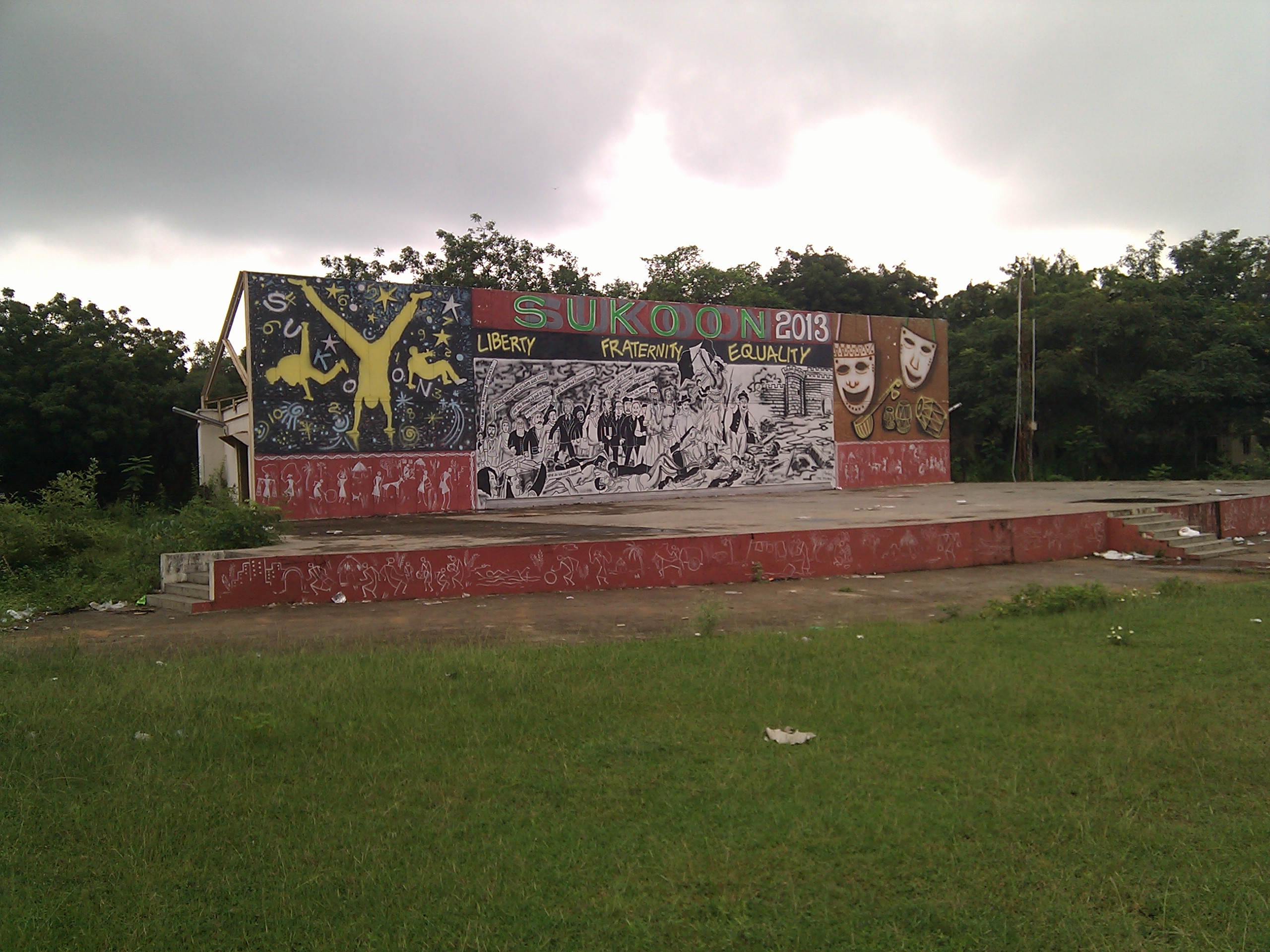
The outdoor auditorium on campus – the site of many student events and protests

Overall, I am really enjoying my classes in India and they are adding a lot to my experience. Not only do I enjoy learning about ancient Indian philosophy, India’s foreign policy, and caste and poverty issues, but I also think that observing my professors and classmates is a valuable way to learn about Indian culture.


Diego in Brazil: Exams at PUC-Rio

October 18, 2013

[Taking pictures of my classes during exams was not a real option for this post, so I am sharing with you some pictures of PUC’s campus during a beautiful rainy day in October.]

Picture 1 (800x572)

This is where you can find the International Cooperation Office – a fantastic and very helpful team!

Five classes and five mid-term exams. One of my major concerns about studying abroad at PUC-Rio without having taken some Portuguese classes was writing exams. Your time is limited, looking up words in a dictionary may make you lose some valuable minutes, and what you write simply may not make much sense.

Apart from my Portuguese language class, four of the courses I am taking at PUC strongly rely on reading, writing, and analyzing texts. I knew in every class I was going to be asked to write an essay as a response to a question. I was nervous, definitely. But how did it go in the end? Well, I am not sure yet. But let me tell you what my experience was with these exams.

I hope you read one of my previous posts in which I wrote about PUC’s grading system. To summarize that post I can say that PUC grades students mostly based on two exams per semester, allowing those who study here to have some space to work and have internships outside their time at the university. This made me think during the first two months of my semester that my exams would be very heavy in terms of content and would require me to carefully do the assigned readings for each of my classes.

And yes, I was right. Two of my professors told me that what we had done in class was not extremely important for the exam. “Everything will be based on the readings,” my professors told me. I spoke to my four professors before the exams to get an idea on how I should go about studying, and every single one of them told me to simply do the readings and not worry about their in-class lectures.

Picture 2 (800x600)

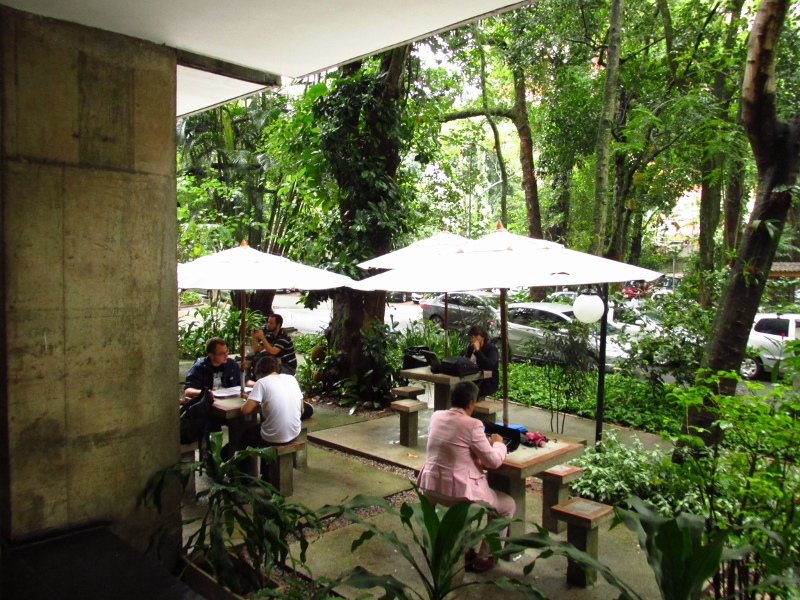
One of my favorite places to read on campus

Coming from UR, this was quite a new approach for me. I could not understand how my professors’ great in-class lectures were not important for my exams. I have four classes on Brazilian Foreign Policy, Latin American Politics, Contemporary Geography, and Social Inequality. If you are into social sciences, imagine how fantastic it has been to see professors teach how these topics relate to Brazil (of course, being in Rio de Janeiro and doing all of this in Portuguese makes it ten times better.) But hey, “that does not really matter as long as you do the readings” seemed to be the general rule.

My experience at UR has been quite different. Of course, you always need to do the readings and get through those assigned books. Yet you can expect your exams to also include some questions about discussions, projects, papers, assignments, and many other aspects of your courses. Both at PUC and UR I was asked to analyze a particular subject based on what we had done in my course. The difference is, and this is just my impression based on my first round of tests, that at PUC you can do well in those exams by attending classes, preparing each reading, and learning the dry, classing theory for each course.

Now, before I close the post, let me be really clear that I am not suggesting you should not go to classes when you are abroad. I can guarantee you that your exams will not go well if you pretend you can read 15 papers before your test and sit there analyzing a new question in two hours. Understanding how my professors tackle each question in class using our readings was essential to write my exams. How did my tests go? Well, I still have not got results back, but let’s all hope everything worked out.

Picture 3 (800x600)

PUC’s main road on campus. It was a beautiful rainy day in October


Done with Classes!

October 16, 2013

Alright, before all of the other study abroad students look at this title and feel themselves overcome with jealousy, I should explain.

I am not doing a traditional exchange program with a university in Chile. Technically I go to Universidad de Santiago de Chile, but that is only true in part. The School for International Training (SIT) is an independent organization that offers themed study abroad programs around the world. The program I am participating in right now is called “Chile: Political Systems and Economic Development”. All of the students in SIT programs take classes together. For example, my program has thirteen students and all of our lectures are in a classroom of just SIT students; we do not have classes with Chilean students as part of the program. With that said, I am not lying when I say I am done with classes. One of the characteristics of SIT is the month long independent research project students work on during the last month of studies, so for me this means November. Today we are starting a ten-day excursion in southern Chile where there are high concentrations of Mapuche communities (Chile’s biggest indigenous group). The drive will be about ten hours and we will do this during the night. The purpose of this trip is to engage in dialogue with the Mapuche community and the community leaders about Mapuche political participation, economic development, and the struggles over land rights that the government sells to multinational forestry corporations, and the Mapuche perspective of identity within a nationalist country that marginalizes indigenous identity.

We will return from this trip in late October. During the next couple of days I need to create a research proposal and make the decision to reside in Santiago for November or relocate to a place that would be more useful for my work. Then November will come and I will be in full swing on my independent research.

Now that I am done advertising for SIT, I would like to express some thoughts on how it feels to be finished with classes.

Time has passed by faster than anyone can understand until they participate in a similar study abroad arrangement. Of course this is because we literally have less time in the classroom with the excursions and the independent month. However even taking into consideration those circumstances, I still feel it is honest to say time passed very quickly.

I have truly enjoyed the group with which I spent the past two months. There are only thirteen students so we had the opportunity to become close to one another. I can say that all of them are people I would have chosen to be friends with under different circumstances. We learned about Chile together, we learned a different language, we explored Santiago, and we traveled to magnificent places and came back to hotel rooms discussing them under the lens of social progress. We sat in class together every day for the past two months learning and exchanging ideas. It goes without saying I will miss the group.

We are all meeting at the metro station in two hours to start our journey to the south. I feel ready for this next experience.

Stay tuned 🙂

Screen Shot 2013-10-13 at 8.03.01 PM

This is a picture of almost all of us…we cannot be contained within the dimensions of one photo! This is in Valle de la Luna, in the North of Chile.


Alyssa in New Zealand: The capital and Maori culture

October 11, 2013

The reality that the end is approaching has finally hit everyone. Since it’s the last week of classes, we have all started to realize that living here is not going to last forever. As we hand in our last minute assignments and prep for the upcoming exam period, we can’t but help ourselves to keep planning more and more last minute trips. What have we not done? What are we missing? Surely we’ve seen a lot, but have we seen enough? The thought of leaving something behind seems to be more worrisome than preparing for our final exams.

Yet, it is important to focus on the next few weeks, for typically, the final exams account for the majority of our final grades. My microbiology final is 70% of my grade and my zoology final is 50%.  As much as I would prefer to put most of my efforts on my travels, it is essential for me to focus on my work as well.

That doesn’t necessarily mean the traveling comes to a complete halt. In fact, I continue to explore the country. Nothing stopped me from flying into Wellington (the North Island) last weekend. What made this experience a little more special was that I was with the people that I have known my entire life: my parents.

Being with mom and dad was such a great way to spend my time in the nation’s capital. I found myself very lucky to have had visitors. I got to have a little taste of home in America, even though I’m several thousand miles away from it.

welly2 (1 of 1)

Golem, a main character from Lord of the Rings, greets those who arrive in the Wellington airport everyday

Wellington is a very walkable city, for we continuously weaved in and out of the streets. Since the city is situated on the southern part of the North Island of New Zealand, much of the main activity is centered near and around the waterfront. It it typically known as “Windy Welly” due to the high amount of winds that blows into the city from the ocean. A boardwalk that turns into a path runs along the perimeter of the city right by the waterfront, making everything very accessible and creating an enjoyable walkway. Near the water, Wellington seems almost like a beach town. Nevertheless, the further you walk away from the waterfront, the more urban it becomes. The city turns into a more hectic and active version of Dunedin. There are several more people that are walking around as well as cars drive through the streets.

welly4 (1 of 1)

The leaning posture of the statue indicates the magnitude of wind in Wellington.

Variety is integrated all throughout Wellington. Every corner that you turn is something completely new. Whether it be shops or restaurants, no two places that you encounter are the same. I finally got to go out to eat and have a taste of some of the New Zealand food. The food isn’t significantly different from American food. Most of the options that they offer on the menu are somewhat similar. However, the way it all tastes is fairly different, for it tastes much more natural. Everything that I tried seemed like it was a more flavorful, healthier version of what the American dish would be.

welly5 (1 of 1)

A view an area of the waterfront from Mount Victoria, a prominent hill in Wellington. Wellington is the first city one would enter if traveling by ferry from the South to the North Island.

The waterfront is a very populated area, for there are several different kinds of attractions located there. One of the main appeals is the Te Papa Museum, New Zealand’s national museum. As we walked around each level, I found myself learning a lot more about the kiwi culture than I had throughout the entire semester. The Maori culture is highly preserved and respected in the country, for they are the indigenous Polynesian people of New Zealand that have their own language, mythology, crafts and performing arts. Sadly, the presence of the Maori seems to be slowly shrinking in New Zealand, but the kiwis make a great amount of effort to sustain and uphold the customs in the country.

welly6 (1 of 1)

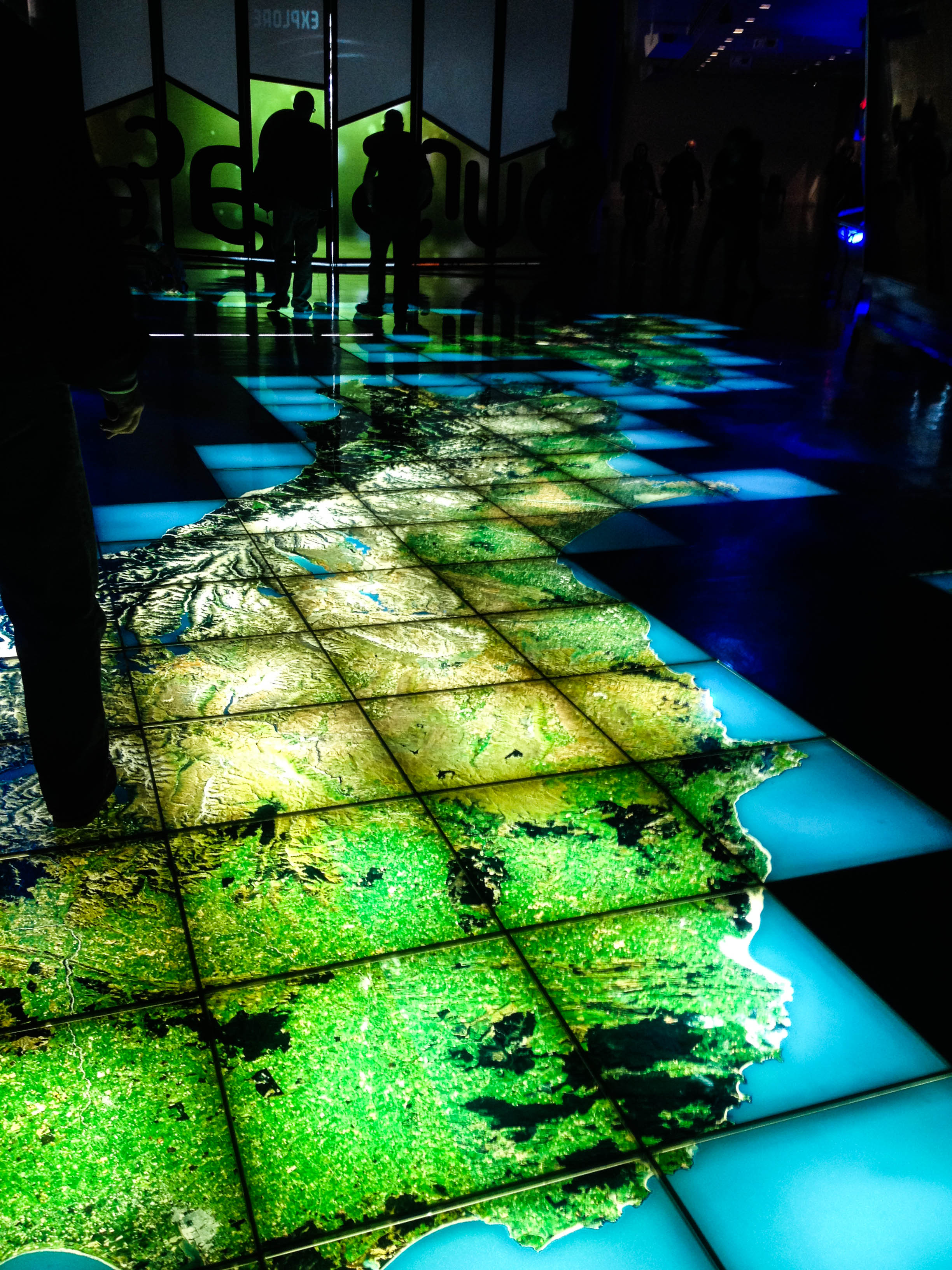
A light up map of New Zealand in the Te Papa museum

Pounamu (also known as “greenstone”) plays a very important role in Maori culture. It is a very highly valued type of stone found in southern New Zealand and each piece of stone carries some sort of significance to it. The piece of greenstone that I attained (a gift from my parents, for it is advised that you should never buy greenstone for yourself) is a “fish hook”, the symbol of plenty. It represents strength and determination and it provides safety for travelers, especially those who venture out overseas (which seemed to be quite fitting for me).

welly9 (1 of 1)

Maori greenstone – the fish hook

After returning to Dunedin, I was inspired to attend the end of the semester concert that was performed by the students enrolled in the Maori papers (both 100 and 200 level). Over half the students in the 100-level paper were international students. I saw the people that I was familiar with walk on stage in costumes that made them seem like strangers. The females were dressed in all black, wearing knee-length skirts, black lipstick and black designs drawn right beneath their lower lip on their chin, almost making it look like they had fangs. The males were shirtless and wore grass skirts that seemed to be constructed by some type of fiber.

Throughout the performance, the students were only singing in Maori with a peaceful melody. Even though I did not understand what they were saying, I was still very entertained. Typically, the dance starts off so that the females are situated in the front and the males in the back and they’re standing very close to each other. Eventually they all spread apart, and the females continue to gently sing in the front. The highlight of the performance is when the males make their way to the front to perform the haka, the traditional ancestral war cry. Much of the dance involves stomping of the feet, vigorous movements and rhythmic shouting and chanting. The signature mark of the dance is the widening of the eyes and sticking out the tongue. New Zealand rugby teams perform the haka before every game, trying to intimidate their opponents and to increase the intensity of the team.

Even though the semester is finishing, that does not prevent me from learning more about the New Zealand tribal culture. I’m glad that I finally had proper exposure to the culture, for there is much more to New Zealand than amazing sights; it has plenty to offer. It’s never too late to discover something new, even if it seems like you’re quickly running out of time (which is exactly how I do feel). The end may seem intimidating, but it is also motivating.