Koninginnedag

May 3, 2012

For those of you who don’t speak Dutch that means Queen’s Day.  Queen’s Day is a national holiday celebrated in the Netherlands and that meant I didn’t have classes.  It’s celebrated April 30 every year (unless it falls on a Sunday) and it’s to celebrate the Queen’s birthday, but not the current Queen Beatrix’s.  Queen Beatrix’s birthday is in January; Koninginnedag is meant to celebrate her mother’s birthday, Queen Juliana. At first, I was a bit weary at the thought of celebrating Queen’s Day because it sounded like there would be a massive amount of people dressed in orange stuffed in the trains on the way to and from Amsterdam, kind of like Carnival, but this time everyone would be wearing the same color and instead of going to Maastricht, people would be going to Amsterdam.

After hearing several exaggerated stories, I was pleasantly surprised at how tame things were in Maastricht.  It was shocking that not a lot of people were wearing orange, but it’s always nice to see how supportive Dutch people are of their national holidays.  The day was nice (about 65 degrees and sunny) and the majority of people convened in the park for the vrijmarkt.  Luckily, I’ve become quite fluent in Dutch and can tell you that vrijmarkt is a flea market.  It was the biggest flea market I had ever seen in my life.  People apparently got there around 7 a.m. to get a good spot to sell their things.  There was something for everyone. You could literally buy anything and everything there.

People were everywhere!  It was a lot of fun.  My friends and I walked around for a while before sitting down and relaxing with some of our other friends who were selling things.  According to my Dutch friend, the flea market is such a big deal since there are very strict laws about selling things in the Netherlands.  The laws are quite simple and straightforward: you can’t sell anything anywhere without a permit (and yes, that means you couldn’t have a yard sale at your home either).  Koninginnedag is the only day that people are allowed to sell things without a permit, hence the large crowd of sellers.  It was a nice breath of fresh air from my daily routine and it was definitely nice to relax and learn a little bit more about the history of the country I now call home.


Barbados, Week 12: The American gets a Cooking Lesson

April 23, 2012

Upon being notified that I would be living on Halls this semester, a certain idea crept up in my mind:  I may actually have to learn how to cook for myself.  I had no idea what sort of eating venues UWI would have, and my mother was extremely excited that her generally helpless son would develop some valuable life skills.  However, you can take me out of America but it is not as easy to take the American out of me; no sooner had I arrived in Barbados in late January than I made it priority number one to find where I could buy ready-made food to consume.  Thus my diet consisted of chicken, rice, and salad at the school cafeteria, pizza from the local Esso gas station, and snacks or microwaveable goods from the Campus Mart.  Now this was no particular issue for me, for as I’ve previously mentioned, the cafeteria food is very tasty and Esso pizza is probably the best pizza on the island.  But I couldn’t help but feel a twinge of longing and jealousy as I would walk by one of the girls’ blocks, ham and cheese sub in hand, and smell some of the most delicious aromas to have ever hit my nostrils.

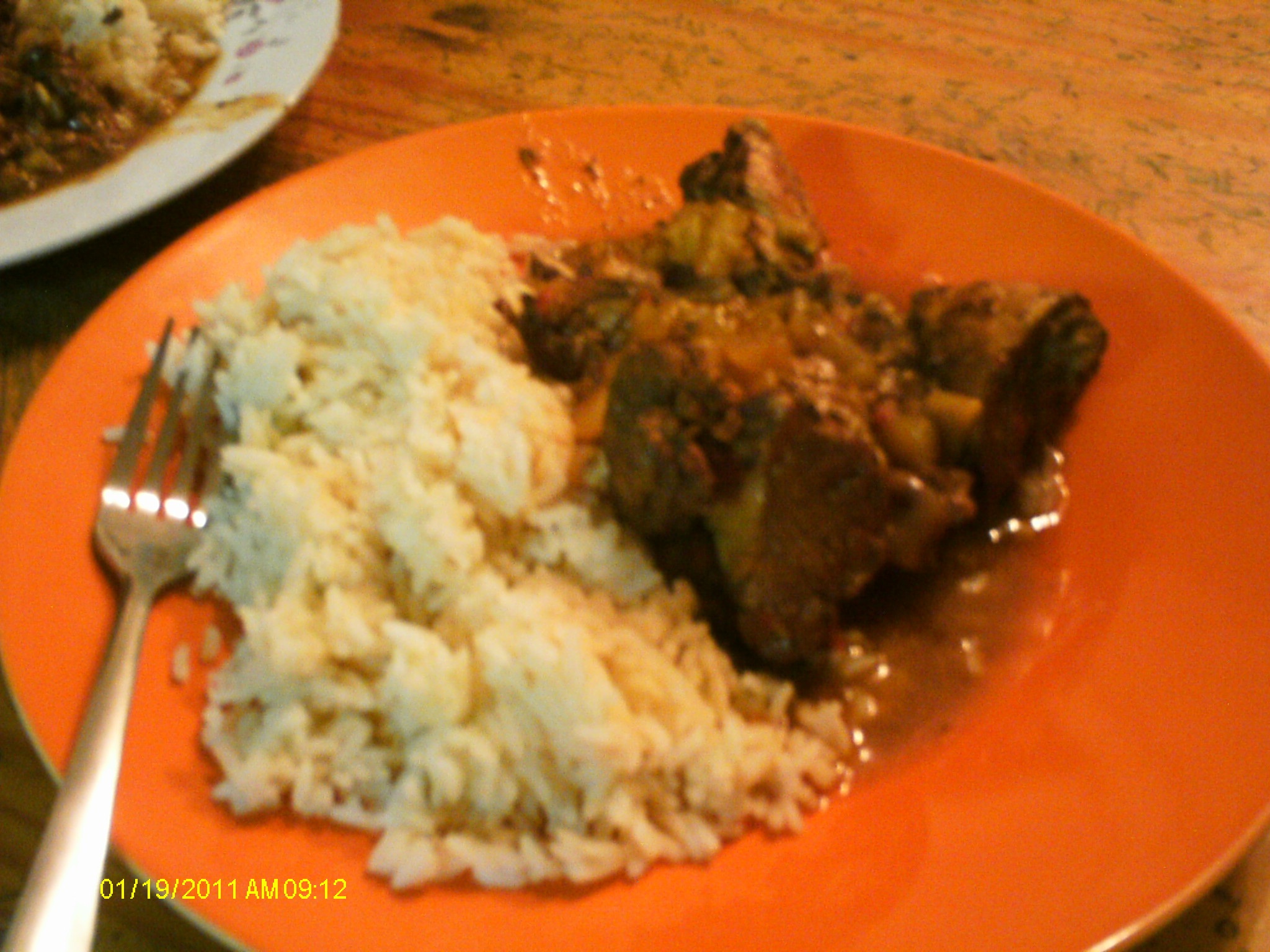
So one night, as I walked back to my block with a sizeable bag of KFC delivery under my arm, the RA on hall stopped me.  “Man how long have you been here?  You need to stop eating this fast food and start making some real Caribbean food.”  I secretly agreed, but decided it would be easier to come up with excuses such as “I would…but I have no time” (a blatant lie).  As it turns out my blockmate Nickoy is something of a master chef, and the RA quickly roped him into teaching me how to make a West Indian dish to “impress your parents when you get back!”.  Nickoy was skeptical I would actually follow through when I told him that I would buy the ingredients if he taught me how to make a simple Caribbean dish.  He was happily surprised when, on Monday, I walked through the door with a bag of chicken from the local supermarket, proclaiming that it was time to make a feast.  We would be making chicken stew, Caribbean style.

As Nickoy and I cut up the chicken breast and legs into manageable sizes, he told me how he had been cooking since he was fourteen years old.  Needless to say I could barely create a sandwich at that age, much less become a self sufficient cook.  As we went along it became apparent that, with cooking, practice does indeed make perfect, as Nickoy effortlessly skinned and diced up three potatoes in the time it took me to completely mangle one into small pieces.  However, it was really cool to see how such a delicious meal was created, and once mastered probably wouldn’t even take too much time to finish.

My blockmate Nickoy hard at work preparing the chicken.

Instead of meticulously describing how we went about making the chicken stew, I will include something of a recipe below in case anyone wants to learn how to do it themselves.  Bon Appetit.

– Chop up chicken breast and legs into thirds or quarters (about 6 pieces), wash in a bowl with water

– pour a handful of vinegar in the bowl, then wash again with water to remove the “rawness”

– cut up into fine segments and add onions (two), garlic (3 cloves), hot pepper (one), and a pinch of ginger to give it “attitude”

– thoroughly mix together by hand before covering, refrigerating, and let sit for three hours

– put olive oil in a sizable pot (enough to cover bottom), and turn oven on high

– chop up three potatoes into fine segments and mix in with the chicken, then add browning sauce (for coloring)

– wait until oil is steaming, then put chicken (with onions, etc) and potatoes into the pot, mix up with spoon

– keep oven on high for a few minutes before turning down to below medium until stew sauce is boiling

– add pepper or other ingredients as necessary by periodically tasting the stew sauce

– after stew sauce is boiling, turn oven on high again for a few minutes and then let sit for a few minutes

The finished product – delicious.

I wrote this recipe from memory shortly after completing the chicken stew, so chances are I may have left out a few steps here and there, but if you follow the recipe I’m sure you’ll have a delicious chicken stew dinner nonetheless.  Nickoy and I made a pretty big pot of chicken stew and rice, so we decided to share some with our fellow blockmate Richie.  Per usual, my eyes were bigger than my stomach, and I ended up eating myself into a near food coma.  Somehow food tastes better when you’ve helped to make it with your own hands, and so it was with the chicken stew.  And gentleman, FYI, telling girls you’re making dinner/can cook at all makes them swoon pretty hard.  So if you don’t consider it a manly undertaking and refuse to learn, just know that Nickoy and I will probably be entertaining your girl this weekend.

Richie, Nickoy and Jevaughn digging in.


Two Unforgettable Weeks

April 23, 2012

Five cities.  Two sunrises.  The Lowest Point on Earth.  One mud bath. Two Passover Seders.  Two rooftop hostel gardens.  A 5 a.m. mountain climb.  Seven long bus rides and one train ride.  Old friends and new friends.  Dancing across Israel.  Life advice from 71 year old Peggy, a dorm mate in a hostel in Jerusalem.  The best hummus in Israel.  The best hot chocolate in the world.  A literary café in Jerusalem. Spying on a wedding reception in Tel Aviv. Burning leavened bread in Be’er Sheva in preparation for Passover.  A shepherd with his flock next to the Sea of Galilee. Coming home to Haifa.

It is hard to know how to begin to describe my spring break.  Just as my friends and I thought as we were planning the trip, where do you begin a whirlwind tour of a country that has so much to offer?  All I know is I am convinced more than ever that studying in Israel was the right decision.  There are moments here that are hard and confusing, such as when I witnessed a young man hissing at an Israeli soldier in the Old City of Jerusalem. At times like these, I wonder what I have gotten myself into.  Who am I to be a cheerful, curious tourist when the reality of the situation in Israel is very serious for so many people?  But it is this confrontation with a human experience so different from my own that makes studying in Israel so incredible.

Another occasion in the past two weeks that showed me the high intensity of life in Israel was when my friend and I had Shabbat dinner with a lovely, generous Orthodox Jewish family in Jerusalem. They had an eighteen year old daughter named Shlomiya who was preparing to begin her army service in a few weeks.  Army service is mandatory in Israel, women serve for two years and men for three.  Observing Shlomiya and the mature, thoughtful way she spoke and acted throughout the evening, I thought of myself when I was eighteen, and how the most important thing on my mind was my next Spanish test.  Constantly living on edge, young Israelis must mature quickly as they are faced with challenges that never crossed the minds of me and my American friends as we were growing up.

I spent the majority of my break with my friends Emma and Heather, fellow international students who attend Brandeis University in the U.S.  I met Heather during the intensive Hebrew Ulpan at Haifa University at the beginning of the semester, but she is now doing a complete Hebrew immersion program at Ben Gurion University in Be’er Sheva, during which she is not permitted to speak in English.  To be completely honest, after the first day we spent together I did not have a very good attitude toward the situation.  What was I thinking, spending my spring break with someone I can’t even have a normal conversation with?  But within a couple of days, I was amazed by how Hebrew really started clicking for me.  I had always thought I learned almost exclusively from reading and writing, but I was proved wrong as I learned more from a few days of conversations than I had in weeks of classes.

This semester has held some challenges for Heather.  On top of the difficulties of having to speak Hebrew all the time, several weeks ago she had to run to the bomb shelter in her dorm several times as over ninety rockets were fired at Be’er Sheva from the Gaza Strip over the course of a few days.  She said the Israelis in the shelter with her would sit and count the booms as the Iron Dome, Israel’s missile defense system, destroyed many of the rockets in mid-air.

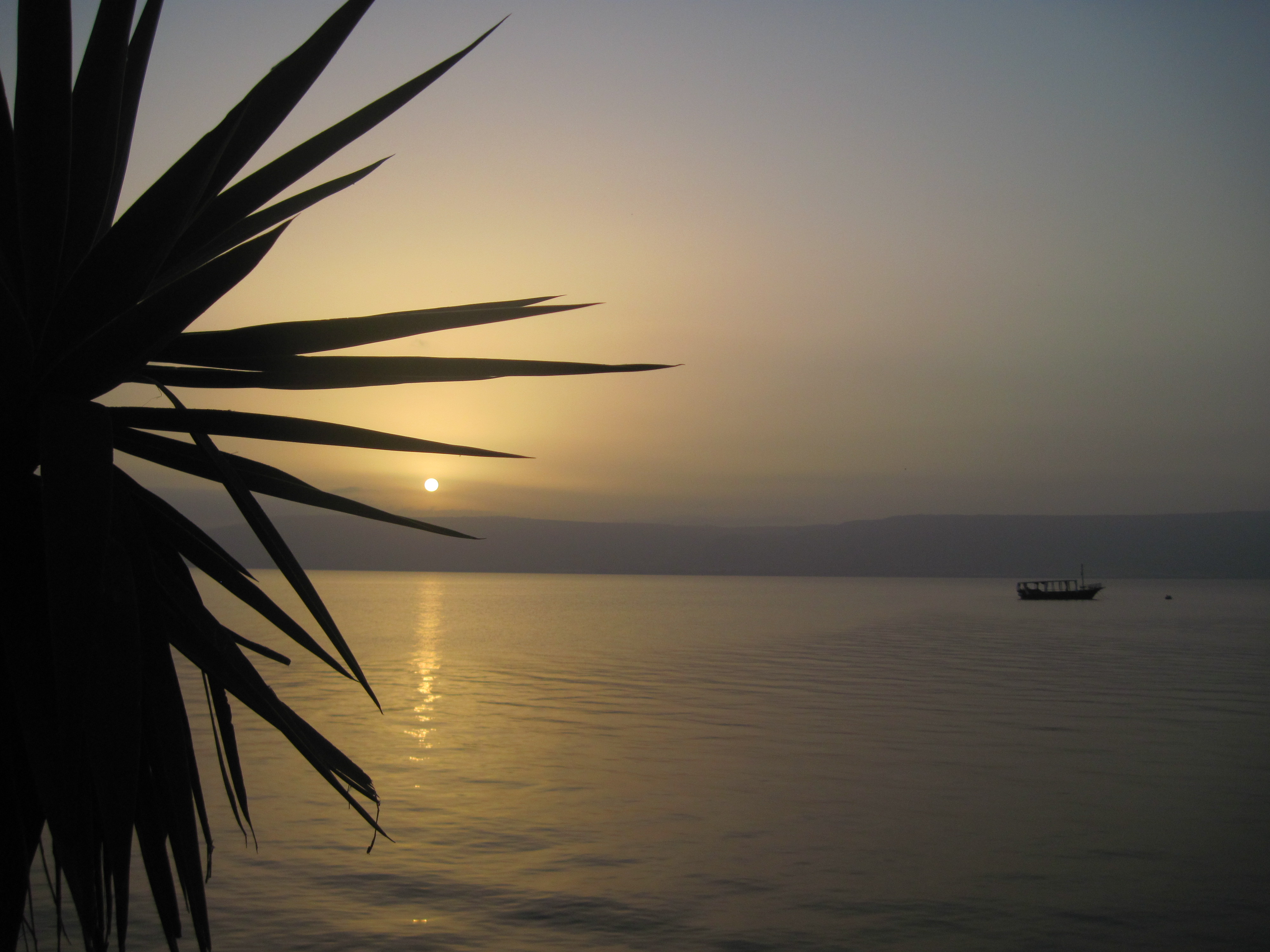
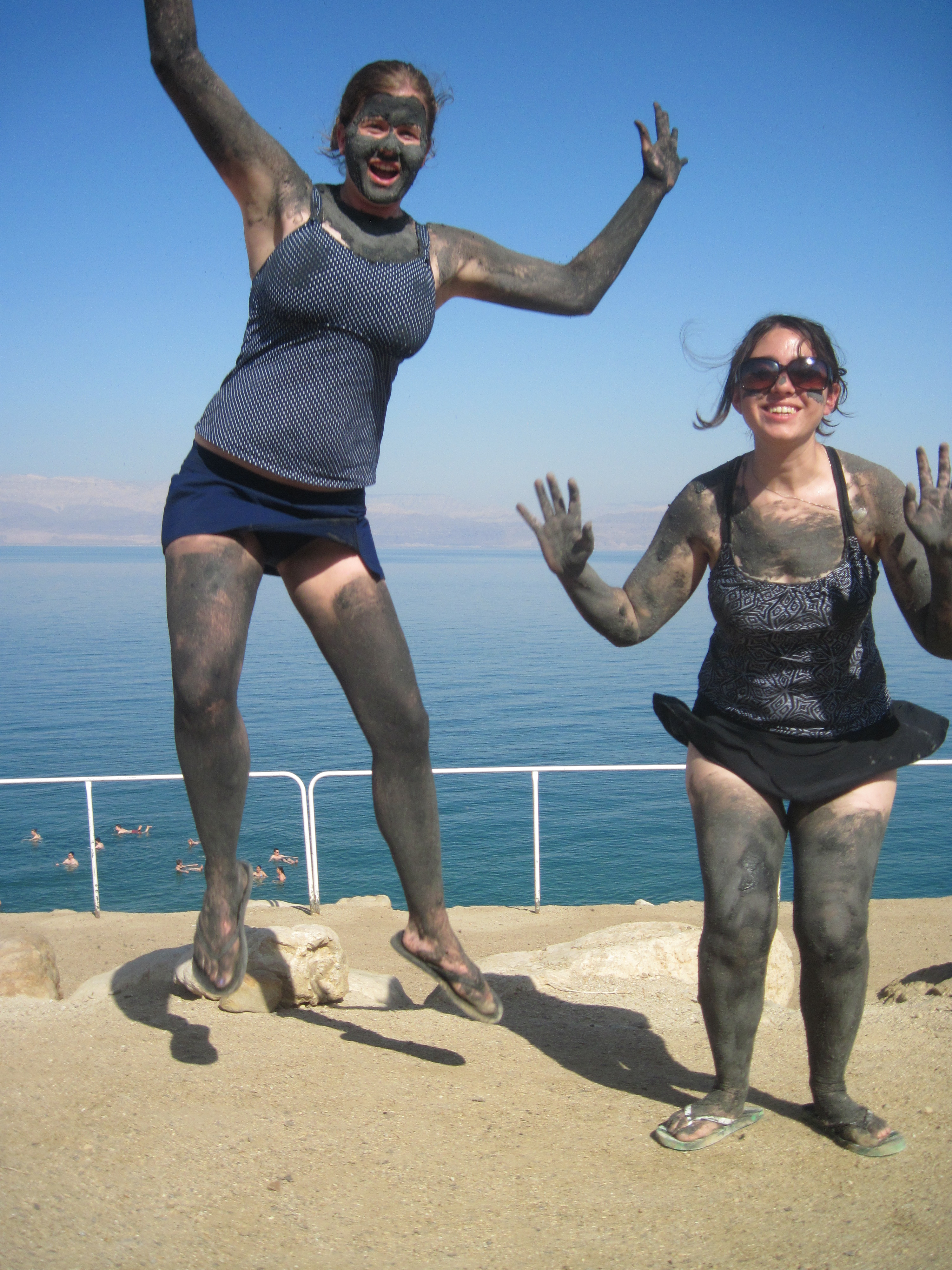
I accomplished a lot of bucket list items over break – climbing to see the sunrise on the desert mountain fortress of Masada where almost one thousand Jewish rebels committed mass suicide rather than be taken by the Roman army, floating effortlessly on the buoyant salty water of the Dead Sea, and seeing the sun rise over the Sea of Galilee and set over the Mediterranean in the same day.  Most importantly, though, I had a lot of time for reflection, and when new thoughts to ponder came my way I was able to soak them in, trying to expand my understanding of what it really means to live in Israel.

Sunrise over Masada

Standing on Masada

Sunrise over Sea of Galilee

Mud bath at Dead Sea


Barbados, Week 11: Joining the Tennis Team

April 23, 2012

When I first came to Barbados for study abroad, joining a sports team on campus was literally not even on my priority list.  I hadn’t played any sort of organized team sport since high school, and it didn’t seem realistic to me that I would start up again on a Caribbean island three quarters through my collegiate career.  But mid-February rolled around, and a couple things began to happen:  I started to become socially and physically complacent, and I started to put on some pounds.  Luckily, one of my hall-mates walked by me one day, tennis racket in hand, and a solution began readily forming itself.  Eager to figure out what opportunities there were to play tennis on UWI campus, I discovered that there were Intermediate level practices every Monday.  Recognizing that joining the tennis team would solve both of my current issues, I told him I’d be there next Monday ready to go.

I cannot speak for all of UWI sports, but from what I have experienced and heard, sports practices are a bit different at American colleges as opposed to the University of the West Indies.  If you want to play sports on the varsity level in the United States, you’re going to most likely have to be recruited, regardless of the sport.  Practices are generally everyday, with strict workout regimens and rules about attendance and conduct.  If you play football for the University of Richmond, for example, you’re more or less eating, sleeping, and breathing Richmond Spiders Football.  Here at the University of the West Indies, multiple exchange students have just shown up at practice and walked on the basketball, field hockey, and volleyball teams.  The sports facilities on campus consist of a field hockey field, the cricket oval (duh), cricket batting cages, an indoor “coaching center”, one tennis court, one basketball court, and a soccer field down the road.

Now one thing I need to make clear before I continue is that I am in no way saying that UWI sports are a joke compared to collegiate sports programs in the United States, but rather that they have a refreshingly laid back approach toward most of their sports programs.  You won’t find UWI students having meltdowns or burn-outs over sports-related stress (save cricket, maybe), like many United States’ students will have before they even get to the collegiate level.  I find most students with which I talked about their experience playing sports for UWI love it, and some even get the chance to play in games throughout the Caribbean.

Tennis practices, however, are tough.  If I had managed to convince myself that I wasn’t out of shape before I joined the tennis team, well, that changed fast.  The Intermediate level team is composed of about 10-12 students, about 9 boys and 3 girls, on any given practice day.  Needless to say the coaches have a tough job trying to get 12 players sufficient playing time on one court, but they do a great job of creating a program beneficial for everyone.  They’ll have four stations, for example:  One station will be a ground-stroke or volleying drill, another two will be some sort of cardio exercise (think burpees or frog jumps), and the last might be hitting against “the wall” (the tennis court is right next to the indoor coaching center).  The Intermediate group was a great bunch of people and I made friends quickly, but one of the coaches, Raymond, decided I needed a bigger challenge.  Thus about three weeks after joining the team I was bumped up to the Advanced group.

The multi-sport court used for our tennis practices.

Now, I’m a competitive dude and was  thrilled about getting more playing time with the Advanced group, but I was also pretty nervous.  What if I showed up on Wednesday and just got absolutely thrashed?  Well, it turns out a little bit of pressure can go a long way when it comes to motivating me.  I crushed a red bull after my Wednesday night class and headed over for my first practice with the Advanced group.  This was a smaller, more intense group, with only about 4-6 players per practice day, and it quickly became apparent that they were good.  But as I said, I was extremely determined not to embarrass myself, and I played my guts out for two hours in an attempt to win their respect.

A month later, and I am like a giddy child before Wednesday and Friday night tennis practices.  The coaches really want to see us improve, and are extremely constructive in their advice.  One of them even plays on the Davis Cup Team for Barbados!  I feel incredibly fortunate that I am more or less getting semi-private lessons twice a week for free.  And my teammates are awesome- we’re all extremely competitive but it doesn’t take much for us to break down and start laughing when someone shanks a ball over the fence.  It’s not uncommon for us to stay an hour later after practice hours and just hit around, even though we’re all exhausted from the two hours of drills and cardio beforehand.  There have been many incredible things that I’ve done and seen in Barbados, but I would say joining the UWI tennis team has had the biggest impact upon my study abroad experience thus far.


Reflection week

April 9, 2012

Hello everyone!  Period 4 is done, and now we have a one week break.  Most international students refer to this break as spring break, but at UCM, it’s known as reflection week.  It’s my understanding that reflection week was just implemented last semester. I decided to spend the first few days of my reflection week in Berlin, Germany.  My sorority sister is currently studying abroad in Copenhagen, Denmark, so we decided to meet up in Berlin and see all of the wonderful pieces of history in the city.

The first day we were there, we visited the Victory Column, the Brandenburg Gate, the Reichstag, and a monument dedicated to Atlas Shrugged and other mythological figures.  Below is a picture of the Victory Column.  My sister and I walked all 285 steps, and I must say, we were feeling the burn after the walk back down.

This next picture is of me with two “German soldiers” at the Brandenburg Gate.  Being at the Brandenburg Gate was a lot of fun; there was music and people everywhere.  As you can see in the picture, there were also people dressed up in a variety of costumes (most of them looking to earn money).  In my opinion, these two “soldiers” were by far the best dressed.

Being able to see the Reichstag in person was an experience that I’m not sure I’ll ever be able to explain.  Just knowing that I was at a building that, for a period of time, basically served as the headquarters for Hitler and the rest of Nazi Germany left me speechless.  This building is truly a part of Germany’s history and I felt privileged to be able to see it in person.

Seeing a version of Atlas and being able to recognize him as someone I’d learned about in school was a really good feeling.  Below is a picture of me and my sorority sister in front of Atlas, Sybil, and some others.

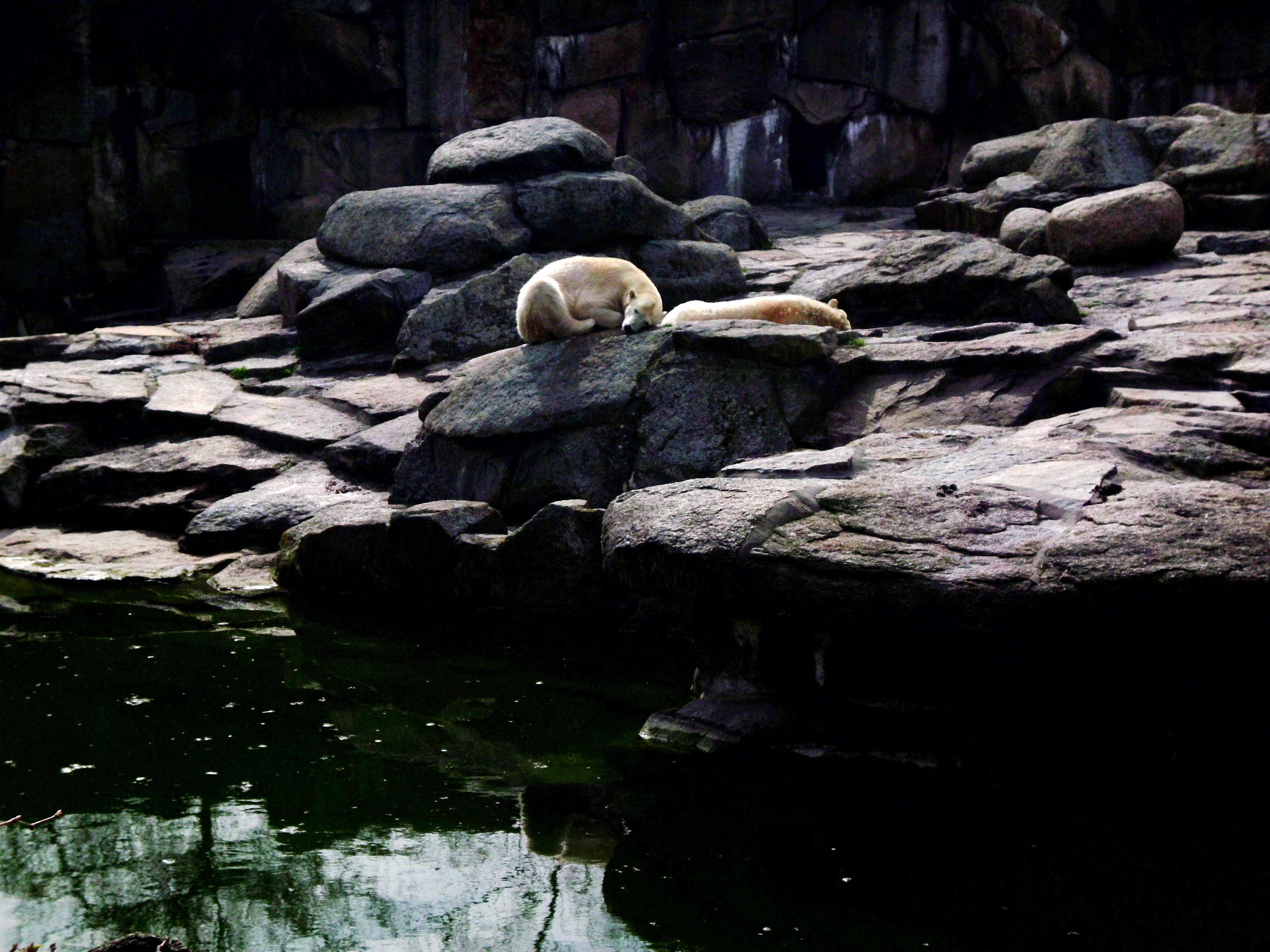
The next day of our trip, we visited the zoo, the aquarium, and of course, the infamous Berlin Wall.  The zoo and aquarium were both nice, but if I had to pick, I’d say the zoo was better, since it had a larger selection of animals and more variety.  Below is, in my opinion, one of the nicest pictures I took while at the zoo.

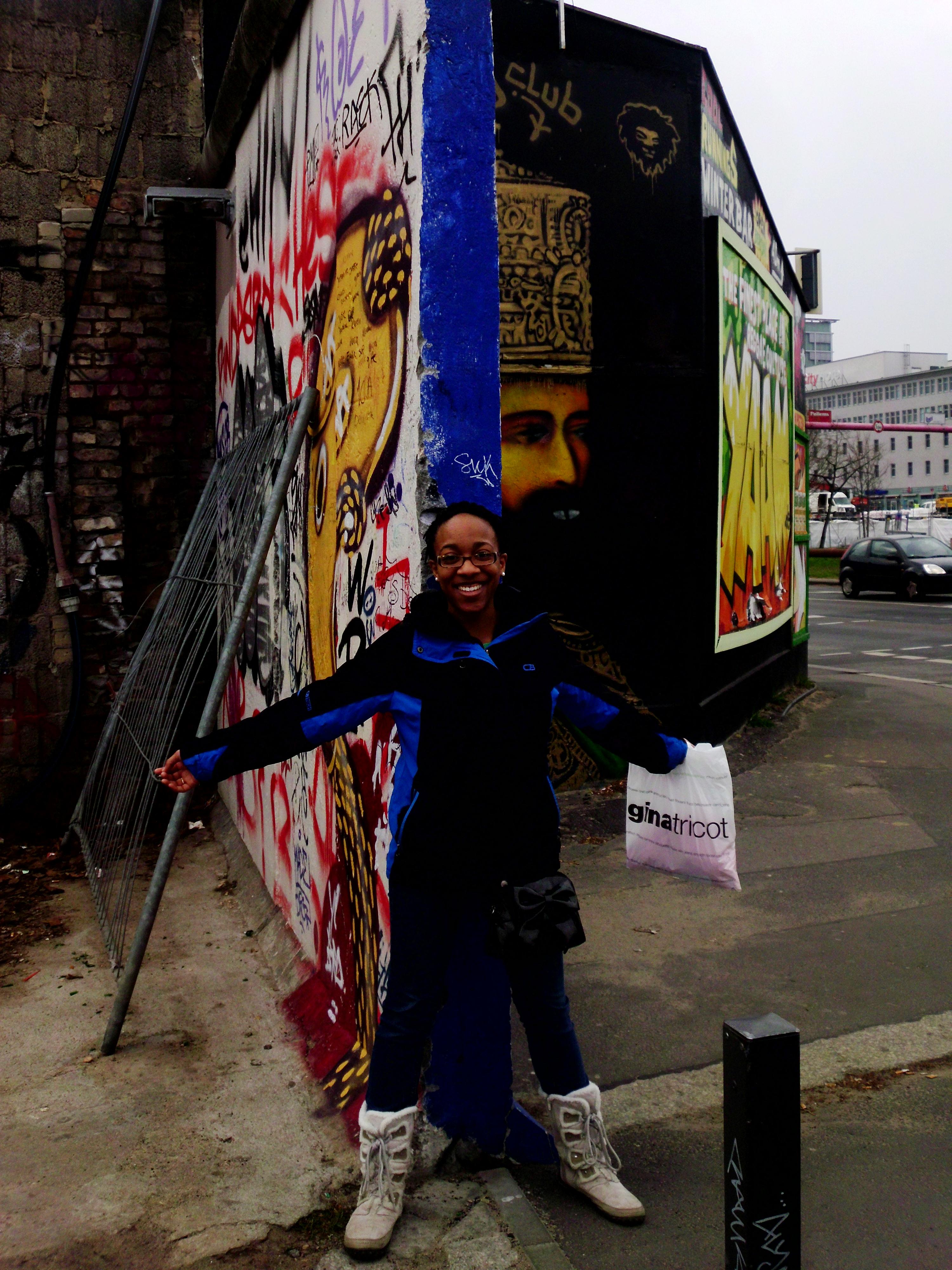
Last, but certainly not least, was our visit to what’s left of the Berlin wall, which for so long divided Germany into East and West.  I knew that if I didn’t do anything else while I was in Berlin, I couldn’t leave without seeing the remainder of the wall.  As I walked along both sides of the wall, I honestly couldn’t imagine that this wall, which is currently beautifully decorated by artwork, was a source of division. It was mind-boggling.  Non-tourists walked, biked, and drove past the wall without really looking at it, but for me, this was a piece of history that people will probably learn about forever and, once again, I just felt privileged to have been able to see this in person.  In the following picture you can see a glimpse of the wall from both the East and the West side.


Barbados, Week 10: Life on Campus- UWI, Cavehill

April 6, 2012

A strange thing has happened in the beginning stages of my third month studying abroad:  I have begin to think of Barbados as my home.  The first two months of my study abroad experience were often a constant, ever-progressing comparison to how my life normally would be back home.  Yet now that all these irregularities, cultural differences, and lifestyle changes have been successfully synthesized into daily norms, something finally clicked.  I no longer wake up surprised to hear the boisterous beeps and buzzes of constant traffic directly outside my window, nor do I freak out if a scheduled event or bus is half an hour late…or an hour late, for that matter.  I’ve begun to compile a master playlist of island Soca, Dancehall, and Pop songs that I’ve heard enough times to sing in my sleep.  I’ve even caught myself looking at large groups of sunburnt tourists, fresh off the cruise ship, thinking “Here come the Americans…”

So after weeks of making everyone green with jealousy over tales of cross-island adventures and a weekend trip to St. Lucia, it is only fair that I also give everyone a taste of what it’s like 80% of my time in Barbados, on campus.  Put bluntly, University of Richmond’s (Virginia, United States) campus seems like Yellowstone National Park in comparison to Cave Hill.  UWI, Cave Hill has prime real estate at the top of a long hill overlooking the Caribbean, and no space is left wasted; One of the dorms connects to the cafeteria, which connects to the student guild, which connects to the health office, which connects to the bookstore.  While Americans like to number their classrooms in numerical order, classrooms at UWI have fun distinctions such as LT1, LR1, LH1 (lecture theater 1, etc).  After the first week of mistakenly stumbling into every room possible, I actually think i’ve probably been in more rooms than not on campus.  Students, for the most part, come to class on time and NEVER pack up before the professor is finished, even if class time is over.  I was amazed at this phenomenon, because American students are almost always packed up and ready to go at least five minutes before class is over.

Some things I love about school here?  My professors.  They are engaging, personable, and brilliant people whose work can be found in academic journals throughout the Caribbean.  Also, the cafeteria food.  Save for Oistins Fish Fry, one of the best fish steaks I’ve had all semester long came from none other than Cave Hill Campus Cafeteria.  It probably cost me less than US$5.

Some things I don’t love about school here?  The library. After getting used to one of the nation’s chillest, most comfortable libraries —  Boatwright Memorial Library at UR — the Cave Hill Campus Library just has a hard time stacking up.  While Boatwright not only lets you bring a day’s worth of food into the library for a studying marathon, it also lets you bring in your entire bag, making it easier to study for multiple subjects in one sitting.  Now, there’s nothing necessarily wrong with the Cave Hill Library, but it’s more of a no-nonsense establishment.  Wanna take your entire bag in?  Nope.  You turn in your bag for a card at the front entrance and then proceed to clumsily drop your 4 books, computer, calculator, and glasses as you’re somehow supposed to open the entrance door.  Wanna bring food and water in so your mind is properly fueled?  Nope. You can chug your water bottle outside and then throw it away before entering.  Would you like to borrow a book for an hour and then return it to the shelf?  Nope.  First, please fill out every single detail possible about the book before handing the slip to a library employee who will take twice as long as you would to find the book.  Then, wait patiently as they scan your card and stamp your info slip and give you back a copy.  It’s good to have physical memoirs to remind yourself that you did, indeed, study, in case you ever forget.

Sorry about the library rant, but it was a long time coming.  To tip the scales back in UWI’s favor, however, are the students.  I have the incredible opportunity to go to school with and talk to people from Barbados, St. Lucia, Dominica, Antigua, the Bahamas, Guyana, Belize, Trinidad, Finland, Sweden, Denmark, Germany, and Canada.  Most Caribbean students I’ve met have displayed a cheerful, laid-back attitude and, like most other university students, are constantly laughing and looking to have fun.  It’s truly rare to find a loud, in your face, attention-craving student from the Caribbean, and most are very down to earth people.  I advise learning some Caribbean expressions and honing one’s listening skills, however, because understanding the different dialects has been one of my biggest challenges while abroad.  I can’t tell you how many times I’ve answered “Where are you from?” with “My name’s Ryan” or just “…yes…”.  I’m getting better at understanding the nuances of the Bajan dialect though, and may or may not have tried it out on a couple of occasions.

There’s probably another 1,000 words I could say about life on campus at The University of West Indies, but there’s no point in continuing to talk about the library.  Jokes aside, I moved up to join the Advanced Team in tennis last week, so I guess I can now say I’ve played tennis on the collegiate level?  Cross that one off the bucket list.  I’ll be taking some pics and giving you the lowdown on that next week, though, so stay tuned.


Botswana – Mokoro!

April 2, 2012

Last week we had spring break, or what the locals would call “mid-time.” It was possibly one of the most amazing experiences that I have had! However, it wasn’t easy to maneuver around Botswana during the trip — especially the Delta!

We started off by stuffing ourselves into a 15-seater bus to the local bus station. There were about 30 of us. Needless to say, it wasn’t the most comfortable experience, but it did bring everyone closer together to sit 3 in one seat!

After packing into the next bus, we realized that it seated 60, but there were only 30 of us. So, we initially thought to ourselves, “Excellent! We can finally relax, lay back, and enjoy this 15 hour bus ride up to the Okavango.” We couldn’t have been more wrong: The bus stopped every 15-20 km to a new stop that always had at least 2-5 people entering the bus. Some of the windows did not open correctly, and others made strange noises; it was very uncomfortable.  The majority of the time, about 1/4 of the people were left without anywhere to sit, and had to stand the entire time. Yes, 15 hours of standing! Thankfully, we had very generous passengers and students offer their seats to others and interchange over time. I offered my seat to an elderly gentleman with a cane. He was more than grateful. Although the bus ride seems like somewhat of a drag, everyone still enjoyed themselves and I understood that this was more of a learning experience than anything else!

Finally, after arriving, we were quickly welcomed by other locals, goats roaming the streets, cows eating grass, and stray dogs looking for food. An interesting experience. We even had a few locals attempt to speak to us in their own version of English. It was very hard to understand them, but their smiles said enough about them and the wonderful country of Botswana. Soon afterwards, three large safari trucks pulled up, let us jump in the tour seats, and took us away to our campsite.

As we arrived, we noticed that the crew we had hired had completely done everything for us — from setting up the tents and our sleeping bags, to even making us a welcoming dinner with dessert! Due to our long 15-hour journey, we were exhausted and decided to stay in for the night at the campsite.

I woke up the next morning at 4am, with no shower, no combs, no mirrors, and only the ability to brush my teeth with a limited supply of water from a water bottle and my own toothpaste and toothbrush. I, and the others, did not realize how real and serious this trip really was. It was a reality check for us; we were in the Okavango Delta. The nature of Africa. Anything could go wrong at any time, and help is a 10-13 hour safari truck ride away. No KFC, Nando’s, or school food, nor showers or bathrooms.

Our guides drove us to a secluded, marshy area of the Delta. We thought to ourselves, “What in the world is this place, and why are we here?” We passed over 15-20 local Botswana who all had long sticks measuring at least 20 feet. Again, the same question of confusion came to our mind.

Our Guide, Mr. Costa:

As we pulled up and parked in the Bush, we noticed that the locals with long sticks were coming towards us. At first, we were fearful of what was going on, but then we realized that they are part of our tour; they were our water guides!

Before departure:

We quickly jumped into our Mokoros with our partners and our personal guides took us into the high water grasses. At first, it was amazing to be in the Okavango waters – where anything can happen in any second. However, we slowly realized that the Mokoro trip was 3 hours long, and none of us brought sunscreen, nor any way to cover up from the sun. We were as red as the sun after the first 30 minutes.

Although the trip was long, it was still amazingly beautiful and interesting. Our Mokoro guide was very knowledgeable and even showed us a few tricks of nature: how to make a flower necklace and leaf hat!

Everywhere we travelled in the Mokoro, we encountered beautiful white flowers growing out of the muddy and brown water. After an hour of gently streaming through, our guide leaned down into the water, took a drink (he advised us not to), and then pulled out the flower by the stem. Most of these flowers’ stems are around 3 feet long. He bit the bottom off, then started to peel one end of the skin from the bottom to the top of the flower and same for the other side, but also breaking the strong core of it each time. Then he tied the ends together and said to put it around our neck. We were trying to keep our body temperatures cool by stacking as many wet flower necklaces around ourselves as we could!


Tel Aviv Without a Plan

March 30, 2012

So far this semester, I have only been to Tel Aviv once, only for a weekend.  Many of the international students have gone several times to experience Tel Aviv’s vibrant night life, but that aspect of the city doesn’t have that much appeal to me.  So I hadn’t been aching to go, but when my friend Eva asked if I wanted to join her, I didn’t refuse.

A little background on Eva:  She was born in Hong Kong, lived part of her life in Texas, returned to Hong Kong, and now goes to college in the States.  Last semester, she did a Semester at Sea program, where she lived on a ship that traveled literally all the way around the world.  So, needless to say, she is a seasoned traveler. We chose a hostel with no problem, and planned our bus and train times for the trip. When we arrived in Tel Aviv on Thursday, we spent the day hanging out and touring Old Yafo with a couple other international students who were there for the day.  When we woke up Friday morning, I expected to carefully plan our day so that we would be able to visit all the museums and such that would be closed on Saturday.  So I started making suggestions of possible plans.

Me: “So, what do you think of checking out this Bible Museum, or going to the Art Museum to find the street festival the lady at the tourist counter mentioned yesterday?”

Eva: “Meh.  We’ll see what happens.”

Taken aback, I tried a couple more times to suggest plans, but each time, she refused to discuss them with me.  I was rather frustrated.  So we set out walking, really in no particular direction at all.  I wasn’t sure how to handle it at first, and the controlling side of me was rebelling at the thought of aimlessly wandering the city with no plan or goal in mind.  Finally I made up my mind to try my best to forget about a plan, and just go with the flow.  I guess really that was my only option anyway, as Eva had pretty much taken control of the situation.

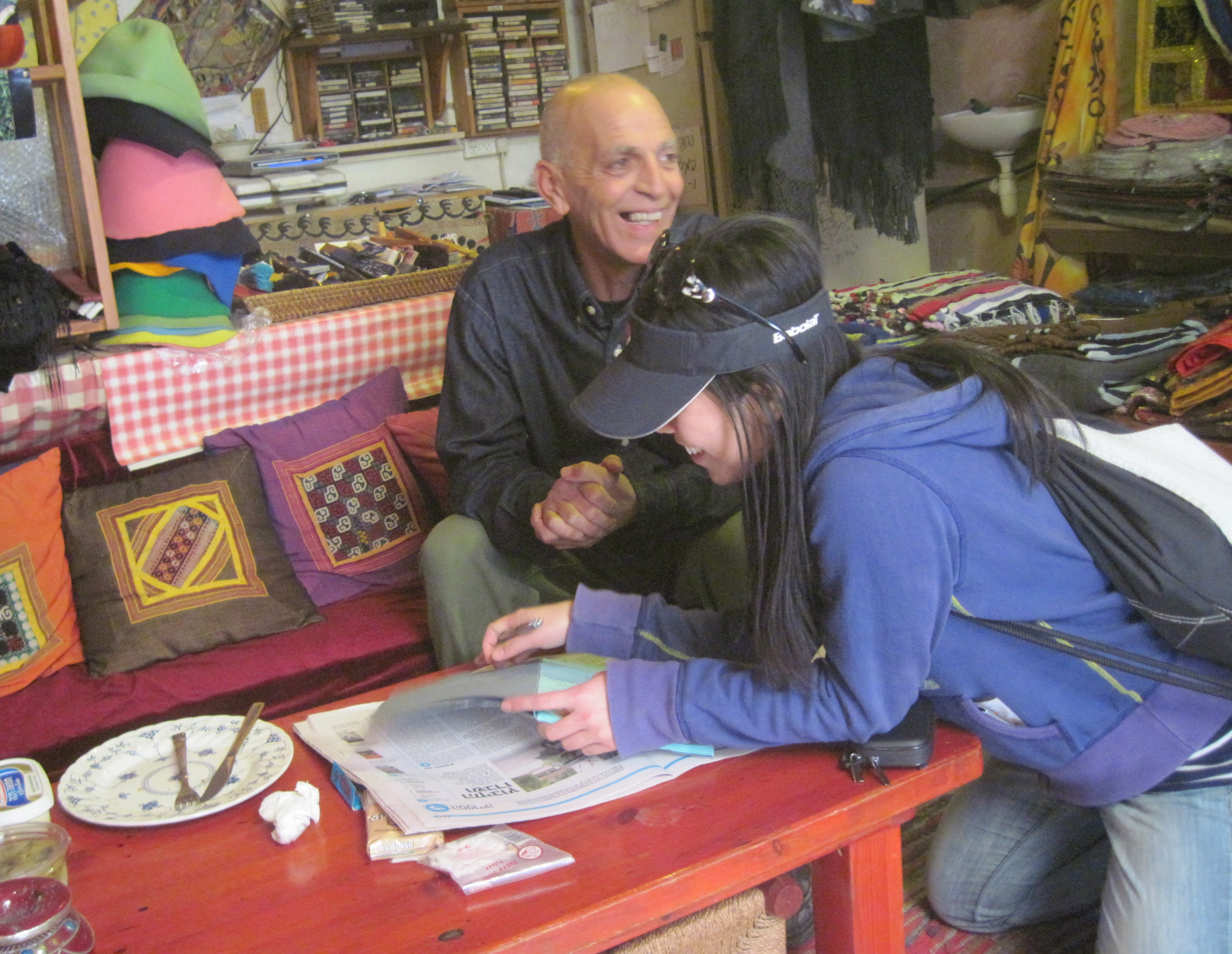
So we continued wandering, and entirely by accident, we bumped into this really neat crafts market, with some really amazing handcrafted items made by the vendors.  There was a lady who made baskets with rolled up, painted newspaper, there were painters, jewelry makers, you name it.  It was really fun, and we ended up spending a couple hours just wandering around.  Eva also was determined to practice her basic phrases of Hebrew with every shop owner that would give her the time of day, and hilarity ensued.

After the market and a stop for some freshly made carrot juice, we continued our wandering and ended up at the beach, where we ended up hanging out and playing a strange form of tableless beach ping pong that is really popular on the Tel Aviv beach.  Then we explored a little more and met a couple friends for dinner that we had run into the day before.

That is how our weekend progressed, and once I was able to leave my comfort zone of carefully planning every step of the day, it turned out to be one of the most relaxed, enjoyable weekends of touring I have ever had.  The weather was beautiful, and the Tel Avivians were extremely helpful when we were standing on a street corner trying to figure out our map; on multiple occasions  people even stopped to ask us if we needed help.  I think if we had minutely planned the day, I would have been focused on our next destination in my mind, and I would not have noticed all the life going on around me.


Barbados, week 9: Carnival Chaos

March 30, 2012

The most hyped weekend of the year, at least for college students, is now in the books: Carnival, or KadUWIval as it is formally called, came with much fanfare and it certainly proved to be one of the most culturally different experiences of which I had the pleasure of being a part.  You see, back in the United States, there are parades, and there are circuses, and there are parties, but never has one event been so bold as to combine elements of all three.  It was one of those special times where you don’t really know what something truly IS until you’re smack in the middle of it, going “Ohhh… so THIS  is carnival”.

I may have taken some liberty with my previous statement, as, in reality, if one searches for UWI and/or Barbados on YouTube, videos of Carnival are the first thing that appears.  Carnival, for the avid YouTube video consumer, should be the first thing one will have known about Barbados before actually being there.  My experience was a little different, however.  I was walking across the campus lawn, noticing a greater buzz of activity surrounding the area than normal, when a tall Bajan guy approached me, “Hey man, you jumpin’ for Carnival?”  “Jumping? Uhm, no, I don’t think so, man, what exactly is it?”

Simmz,  as I would later find out he was called, gave me the rundown on how it would work.  First, you join a ‘band’.  This is the group you will be organized into and ‘jumping’ with at the beginning of Carnival.  Each band has specific outfits the members wear, with different costumes for girls and guys.  The Carnival parade starts down near the cruise ship port in Bridgetown and ends on campus in Cave Hill.  What takes place during ‘jumping’ is this; the bands line up behind a huge truck stacked with speakers and posters, and once the music starts and the truck tires begin to roll, you have nonstop dancing, socializing, and picture-taking until the sun goes down and one finds themselves back at UWI.

I liked what Simmz told me, so I signed up for Carnival with his band, Island Army.  Now, usually, friends confer with friends before choosing his/her band, but since I didn’t really know what was going on and if there was a deadline or not, I dismissed the notion of conferring before choosing.  After all, Simmz had approached me out of nowhere and wanted me to be in his band — who am I to deny such adamant recruitment?  It turned out to be a good choice, anyways, as I talked to my Bajan friends Devito and Quaisy and they, as well, had joined Island Army.  The rest of the exchange group students had either joined the Halls Band or a band called Island Roots.

Fast forward three weeks, and it’s the morning of Carnival.  Girls are running around freaking out about how small their outfit pieces turned out to be, and the guys are still sleeping because all they have to do is wear their band t-shirts.  Carnival, I was beginning to realize, is maybe 5% about the guys and 95% about the girls.  No one is lining up to see me in my t-shirt — they’re there to check out the girls in their hot pink or leopard print outfits.  And as far as the outfits are concerned, less is definitely more.  Feminists may decry the event as objectifying women, but I think it is 100% cultural that they dress like that, and I don’t think you’ll find many Bajans that’d say otherwise.

Now, as far as the dancing that went on…well, that was cultural, too, I guess.  Caribbean women know how to dance — as children they are dancing soon after they can walk.  It’s no timid “I don’t really know how to dance, and I’m scared that people are looking at me” type of dancing one might frequently encounter in the United States, but a more full-bodied expression of rhythm and feeling.  I’m not going to lie, it was a little nerve-wracking for someone not completely sold on his own dancing ability to dance with exotically dressed, beautiful Caribbean women, but I was set on partaking in Carnival to its fullest, so dance I did.  For nearly three hours.  But Carnival was also a time of fraternizing with friends as well, and it was fun to see all the people I’ve met in the past two months out on the same street having fun together.  You begin to feel like maybe you’re not so much of a stranger after all when a friend comes up to you every five minutes and tries to get another girl to dance with you.

The Carnival procession finished up on UWI campus, and there everybody immediately remembered what they somehow forgot for the previous six hours: I’m incredibly hungry.  I had another “American” moment when I thought the contents of a yellow bottle was obviously mustard and so doused my hotdog in it.  It was Bajan hot sauce, and thus I proceeded to eat one of the spiciest hotdogs of my life.  But the day was far from done.  A big draw for a lot of the UWI students was the Carnival after-party, with one of the parking lots being craftily turned into a penned-in version of the last five hours’ various activities.

I liked Carnival for two reasons: One, nothing, or at least nothing I am aware of, exists like this in the United  States’ Northeastern region.  Nothing.  Two, it was a genuinely fun time dancing and socializing out in the beautiful Caribbean sun.

In fact, some past exchange students had flown down just to relive the epic weekend that is Carnival.  God-willing I save up enough money, I hope to be that guy next year.


I get by with a little help from my friends

March 30, 2012

Hello to all of my faithful readers.  It makes me happy when people tell me that they’ve been keeping up with my posts.

In a few days, I will have officially been here for two months, and I’m still enjoying my time here.  One of the main reasons I’ve been enjoying my time here is because of all of the new friends I’ve been making.  I’ve literally made friends from all over the world; Australia, Denmark, Canada, Chile, and of course The Netherlands.  When we’re not in class, we do a variety of things: going to the movie theater, travelling, cooking and having dinner together, sitting outside studying and relaxing, and playing cards.  Those are just a few examples of some of the things we do in our spare time.

Living in a foreign country for a significant amount of time with people from other countries is an eye-opening experience.  I was born and raised in the U.S. (Virginia, to be exact) so the way things are done in Virginia seem to be the most natural way of doing things.  With that being said, learning about how things are done in other countries reminds me that there isn’t one right way to do things.  I’ve compiled a short list of cultural differences that you may or may not be familiar with.

1. Chips can mean chips, or they can mean fries, depending on the context.

2. Biscuits can mean biscuits or cookies, depending on where you are.

3. Outside of the U.S., football and American football are two different things.

4. The Netherlands is, thankfully, not as humid as Virginia.

5. “Convenience” stores are not necessarily convenient (most stores are not open on Sunday).