Emily in Samoa: Worlds Without Walls

March 1, 2016

Picture your world, the one where you live out each day, where you go to work or school or coffee, where you interact with family and friends—and those people who, unfortunately, fall into an often unpleasant third category—and where, at the end of the day, you return home to peace and quiet. Now, eliminate every wall from this world. Start by taking down the physical walls, then go to the interpersonal ones, and demolish those, too.

If you do this right, you have a pretty good image of what a Samoan village homestay is like. While many people have switched to palagi (foreigner) homes, the fale (open house) mentality has stuck, and everyone’s life is out in the open to the rest of the village. We have lived in this wall-less world for ten days, and it is a definite cultural adjustment. We visitors have had to get used to a new style of living, in which the hardest part has definitely been derived from the lack of walls. And what are the implications?

Seaside fales provide the best views out and in

Seaside fales provide the best views out and in

Physically, no privacy. And I mean None. Windows are open, doors are few, and getting dressed in the morning is an adventure that often results in accidental flashing. Showers have no curtains, and are done in lavalavas (sarongs usually worn as skirts, but converted to tube dresses for the purpose). A shower is the biggest adventure in this wall-less world, and, as I found, a number of obstacles ensue once one is showering. What would you do if your host father decided to strike up conversation? Or if your shower happened to be next to a popular pig hangout? Or if your six siblings decided it would be good fun to turn on music and watch you?

My universal solution has been to dance. I am not an adept dancer by any means, but anyone who decides to be a part of the audience when this palagi showers is in for a good show…


My curious siblings surround my bed whenever I arrive at the house. This time, I gave them all pigtails.

My curious siblings surround my bed whenever I arrive at the house. This time, I gave them all pigtails.


With no privacy comes no alone time. You can approach this however you like: many students chose to be frustrated by it. “Why does my homestay family want to spend time with me?” they would mope. We discovered as we progressed that when we found times of alone-ness, “alone time” took on a new image. Instead of soaking in the peace, you sit puzzled, wondering where everyone is. And, in contrast to the US, this place with no alone time also has no room for loneliness.

A lack of being alone manifests itself in a variety of ways. Socially, everyone is always watching, gossiping, and peeping in on neighbors. If voices are raised in a house, everyone on the street will crowd the windows to see what is going on. If a group of palagi girls goes to the beach, at least ten village boys will be there within the hour.

This isn’t as oppressive as it seems, since the flipside of communal life offers benefits for all members. The most surprising example I found was when I was playing with my siblings. In the US, I rarely have found children who, come snack time, don’t snatch and devour their food. Here, however, a few children got snacks, and within seconds I and the others had piles of food in our hands. Three- and five-year-olds had evenly divided up their food for the rest of us, with no qualms whatsoever.

There are no walls around personal property, nor are there walls around individuals as they age or weaken. Samoa does not have Social Security, and care is taken on by the family and the village. Money is pooled for weddings, funerals, and hospital visits, so that everyone is taken care of by those around them.


Fa’alavelave is a Samoan term that refers to any major occasion in village life. We were able to attend a funeral fa’alavelave. Life is celebrated with singing, euglogies, and gift exchange. Fine mats (left) take weeks of work, and are a major gift.

Fa’alavelave is a Samoan term that refers to any major occasion in village life. We were able to attend a funeral fa’alavelave. Life is celebrated with singing, eulogies, and gift exchange. Fine mats take weeks of work, and are a major gift.


matais

A group of matais (chiefs, shown right) receive gifts for their deceased friend as they sit next to his grave, and others wait with the body in the house, singing and eating.


Most uniquely, perhaps, is that there is also no wall around death. Those who die are buried next to their front door, so that they can continue to take part in the goings on. Unlike in the US, where elders are shooed away to nursing homes and those who die are compartmentalized in far-away cemeteries, Samoans keep their family close by long after they die. Brightly-painted graves often match the houses they guard, and memories stay alive as children play on the stones and families have sunset conversations while sitting among deceased relatives. Maybe it sounds bizarre, but I think this is a good deal for the dead—why go to a cemetery when you can continue to be part of the family?

Taking down walls has made me more open, and enabled me to grow closer with those around me. It is certainly exhausting at times, but it has made me wonder about why we build all of these walls in the first place, and why we feel the need to keep building more.


Emily in Samoa: Home from the Sea

February 18, 2016

One day, around six months ago, I was struck by a craving for Book. I was somewhere in transition—a train station, an airport, a car, a couch in a busy room—and decided that it was time to supplement life with a story. As many may in such a situation, I picked Treasure Island by Robert Louis Stevenson, having never read the book, and figuring it was time I did.

Never did I imagine that my book choice would come full circle for me here in Samoa. Stevenson spent the last five years of his life in Vailima, a town in the inner hills of the island of ʻUpolu, where he would meander through the rainforest behind his house for hours on end, climbing to the top of Mount Vaea to look down into the valleys and out to the bay in Apia. Arriving at the age of 40, Stevenson and his family were welcomed by Samoans and befriended many locals, even giving support and advice to native independence movements. He wrote a number of books in his Samoa years, inspired by his Pacific travels, and gained the Samoan name Tusi Tala, or “teller of stories.”


View from Stevenson’s veranda

View from Stevenson’s veranda


However, Stevenson had come to the island to die. He had never been in good health, and had traveled to the Pacific in hopes that the climate would have a positive effect on it. He died in 1894, and asked to be buried at the top of Mount Vaea, overlooking the ocean. His Samoan friends forged a path through the forest as they carried his casket, mounting steep slopes in often scorching heat. He was buried, at his request, looking out over the island and wearing the boots he had worn throughout his stay in Samoa. His requiem, written on his grave, says the following:

Under the wide and starry sky,

Dig the grave and let me die.

Glad did I live and gladly die,

   And I laid me down with a will.

This be the verse you grave for me:

Here he lies where he longed to be;

Home is the sailor, home from the sea,

    And the hunter home from the hill.

The Samoans have set the verse to music, and now sing it (in English and Samoan) as a song of grief. Our museum guide sang the English version, telling us that she would cry if she sang it in Samoan. We climbed with the melody on our minds, and when we reached the top of the mountain, it was both tranquil and…chilling. The verse Stevenson wrote becomes more than a poem when you see the view it accompanies. The home he talks about is no longer Samoa, though the island welcomed him and he gladly became a part of its society. The home, from the top of the mountain, is the world he created for himself in his writing.


Hidden pirates

Hidden pirates


It’s possible that I idealize the place, but for me, the end of the climb was reverent. I could imagine Stevenson, a man whose health would prevent him from fighting pirates or going on the grueling adventures that fill his books, sitting atop Mount Vaea and looking out at the jagged mountains and sparkling sea. Devising, letter by letter, a world in which anything was possible; painting on the canvas that the view provided him.

I like to think, after this experience, that everyone will one day find their mountain. Wherever we are, we are looking to create a home for ourselves, be it physical, social, or literary. A place or a state of mind from which we may look out and survey what we have lived and shaped. And I am indebted to this experience for showing me that.


The group at the end of our climb

The group at the end of our climb


Maddie in Ireland: One Month In (Part 1)

February 18, 2016

Hey kids!

I’d like to start off by apologizing to you. I just know you’ve been refreshing this page anxiously for two weeks straight, waiting for my next installment about my adventures in Ireland and I am sorry for leaving you hanging. I am a horrible person and I apologize for an increases in blood pressure that may have occurred as a result of your prolonged wait.

“Where have you been Maddie? Why haven’t you kept in touch with me?” I’m sure you’re frantically asking. “Well,” I calmly reply to you, “I’ve been alllll over. Horribly busy actually. But I’m here now, children, and I have ~so~ much to tell you!”

Where should I start? Should I tell you about the people I know? Perhaps my visit to the Cliffs of Moher as promised? How about my Valentines Day spent with my girls? Or should I tell you about my visit to the Aran Islands? Maybe I’ll talk about going to Oxford to visit fellow Spiders studying abroad? Or the few days I spent exploring London by myself? What about the time I visited Stonehenge? Maybe my classes?

But then I think, porque no los dos? Or rather, porque no los siete?… Is, is that how you say it? Because, honestly, I have no clue. I took Italian, sooo I’m way out of my depth here. Well, however you say it, how do you feel about me telling you about all of it? (Spoiler alert: regardless of how you feel, I’m gonna tell you all about it).

Since I’d rather not skimp on the details, but I also don’t want to force you to read an entire novel, tonight I will write about the first tres activity-thingies listed and will continue the next few tomorrow. Good? Good.

The People

You know how in the beginning of any new program— high school, college, summer camp, a Super Bowl party at your weird friend Jeremy’s house— everyone tends to clump together? Like, everyone finds someone, sticks with them, gradually sticking onto new people, until there’s a group of about fifteen (secretly scared) people who are trying to navigate their new world without leaving each others side? Studying abroad works like that, too. You find a group right off the bat during Orientation and you do things constantly together before even finding out if you have things in common or even if you really like each other. Lucky for me, it has now been six weeks and I am very sure that the group I happened to cling onto, the first few people I met, were the right group to cling onto. They are all wonderful people with whom I actually have things in common and 100% like. We go on trips together (knowing that we like each other), we go to Trivia Night at the pub, we go cheese-tasting, we go on searches for a place that sells milkshakes at 2 a.m., we try and dissect Irish culture, we fight over who actually ate the last piece of pie, we help each other study, we battle the rain together, we have fun together, we experience Ireland, we explore new things, and we do it all together. The world is beautiful and awesome and strange and terrifying, but the people you’re with— whether you met them at Orientation, or because you saw them performing magic tricks one night, or because you’re both part of the Mountaineering Society— are the ones who can help you most see that.


Ain't we cute?

Ain’t we cute?


In conclusion, my friends— who, as you may have guessed, I have met through Orientation, seeing them perform magic tricks, and being part of the Mountaineering Society, among various other social interactions— are the best. Irish, Americans, Thai… we’re all awesome and are all helping each other through this beautiful, awesome, strange, terrifying world.

How precious.


The Cliffs of Moher

Lol, I told y’all I’d talk about this awhile back, so lets get down to bidness. After the first week of school, we— meaning my core group of friends who had found each other during Orientation— decided we had had enough of dumb Galway and its rich history, quaint streets, and charming people. We needed to leave this town.

So, we booked a tour, hopped on a quick bus, drove for two hours on the incredibly windy “Make-ye-sick” road (as our bus driver delicately put it), and just randomly pulled up to an ancient castle. No biggie. Just a centuries old building built in the middle of a lake. After spending half an hour or so at Caisleain Dhun Guaire, or Dunguaire Castle, we then headed off to Ailwee cave*. There was a tour of the cave, but I chose to stay behind and wander around the mountain. Technically there was a path I was supposed to follow if I wanted to explore— and I am in no way condoning going off designated paths—, but I totally went off the designated path (What can I say? I was raised in the mountains. If I see a cool tree in the distance, I’m gonna go look at that tree). I was rewarded by:

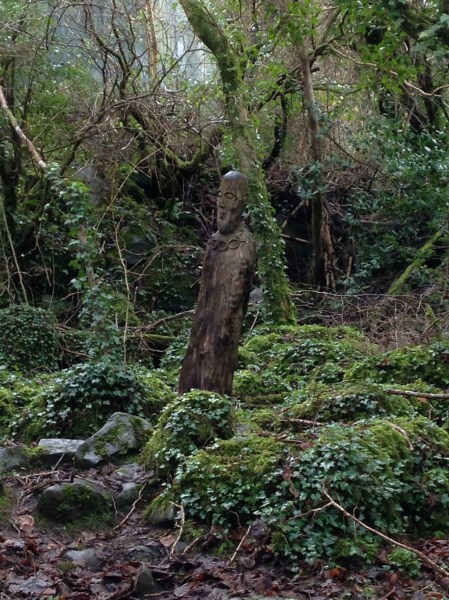
1) Finding some random statues of humanoid figures among the trees far away from the path. If I’m being honest, they were pretty frightening at first, but when you got closer turned out to be very beautiful and almost comforting.


Statue


2) Climbing to the top of the mountain and feeling the pure ecstasy you can only feel when standing at the top of a mountain. I will openly admit to raising my arms above my head, jumping, and yelling, a la Rocky finally climbing the Philadelphia Stairs.

3) Finally, finally, finally understanding why there the Landscape is such a large part of the Irish identity. The Land is haunting and halfway here, halfway there, half real, half a dream, faded, vivid, and so absolutely alive. The forest and the hills and the sun… it all just fills you. You don’t just see the land, you feel it. It sticks with you, even when you return to the city with all of its concrete and plastic and swarms of people.


Land


After the cave we hopped on the bus again and were taken to the legendary ~Cliffs of Moher~. The Cliffs were incredible. No poet, no painter, no photographer— and certainly not me— could ever convey the beauty and mystery of the cliffs. If Sir Patrick Stewart could be a geographic feature, that geographic feature would be only be half as awesome and wise as those cliffs.

After a few hours at The Cliffs of Moher, the bus returned to pick us up, we stopped by a seashore to take a few obligatory Instagram sunset pictures, and returned home.

I was exhausted, freezing, grouchy, covered in mud, had cut my hand pretty badly on a sharp rock, and it was all worth it.

*Fun fact, Ailwee actually served as the inspiration for Gollum’s cave in JR Tolkien’s “Lord of the Rings” trilogy.


Valentines Day Wif Ma Femayls

Hey you guys, guess what! I just celebrated my twentieth time being single on Valentines Day! Isn’t that just the greatest? There is no way I’m cynical and bitter! I must love seeing all the couples happy in their loving relationships! Yay!

…Did you read those sentences with a sarcastic voice? You shouldn’t have. I actually do love Valentine’s Day. I’m neither cynical nor bitter, cute couples make me happy, and I don’t mind being single, because I have some rad friends that I get to celebrate with. This year we celebrated the power of female friendship with Galentine’s Day and then later the power of friendship of both genders with Palentine’s Day.

The original plan was to go to a local restaurant and treat ourselves to a wine and cheese tasting, but then it started to rain, yada, yada, yada… long story short, we were really not up to walking the 20 minutes to the restaurant. Lucky for us— meaning myself and two female friends— there is actually a restaurant in our apartment complex. We headed straight to Scotty’s Steakhouse, sat down next to a family with three adorable children who played peek-a-boo with us and frequently blew kisses, and proceeded to eat our massive hamburgers until we were uncomfortably full. One friend passed around presents she had gotten us (I started to cry, because of course I did… it was really sweet) and thus, with that wonderful gesture, concluded Galentine’s Day. This conclusion was immediately followed by the beginning of Palentine’s Day as a male friend joined us for dessert.

After dessert we, still uncomfortably full, headed back to all of our apartments. I immediately went to bed where I, no joke, dreamt of chocolate. How Valentine’s-Day-ish is that?


Well, thats it for tonight, dear readers. Check in for the other cinco activities soon.

Isn’t it a wonderful world?

Maddie


Emily in Samoa: a Sunday kind of Samoa

February 9, 2016

I am not a religious person, but I love church services here in Samoa. This is our second day here, and our director, a former Peace Corps worker who married a Samoan matai (chief), took us to a local Catholic church. The vast majority of Samoans are Christian, and church is a big deal here. Most people wear white on Sundays, and close their shops for family and worship that often takes most of the day. The priest is the most important male figure in town, and is the recipient of the services and contributions of the rest of the community. Because of this, the community dedicates ample time and money to the welfare of the church.


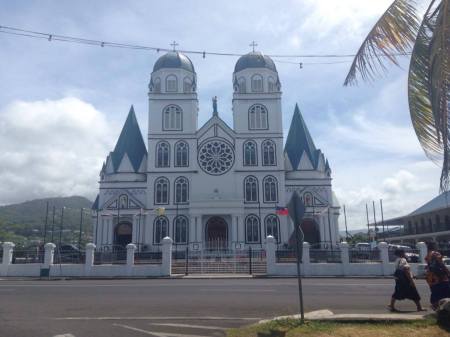
The newest Catholic Church in Samoa

The newest Catholic Church in Samoa


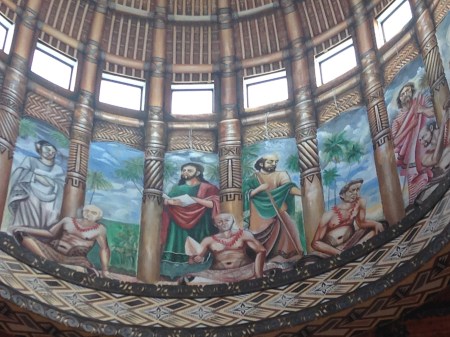
We explored Apia a bit yesterday after our flight arrived, and the newest churches are impressive. The largest Catholic church was built in 2014, after much of the city was decimated by a 2012 cyclone. This church is beautiful inside now: wood slats make up the ceiling, and form geometric patterns with each other. The floors are a light pink tile, adding to the brightness to the rich wood of the ceiling and the colorful frescoes of grape bunches (of all things). My favorite part of this particular church is a rotunda at the top, which features various Catholic saints doing whatever saints like to do, and important Samoan chiefs sitting among them and conferring. I think that this painting reflects a lot of the Samoan mentality toward religion and their existence in general—while they venerate and extoll their religion, they also know the importance of their own identity.


Saints and chiefs ponder

Saints and chiefs ponder


A story that we were told in class the other day also reflects this. Missionaries who had come to Samoa, and imparted lessons from the Bible to the chiefs and villagers. One of these “lessons” was that all people could trace  themselves back to Jesus Christ and the Holy Land. At this point, the Samoans interrupted. The teachings of the Bible were good, they said, but that part was wrong. Perhaps the rest of the world came from the Holy Land, but the Samoans came from Samoa.

Similar reactions have occurred when historians “teach” Samoans about human migration from Polynesia to the Pacific—it’s simply not true, they say. The pride that Samoans take in their identity is both overt and tenacious, and, although you might see it in any aspect of daily life, I found it striking today at church.

Only the choir sings the mass, and, as the priest sings a verse, he is answered in a beautiful four-part harmony. Voices raise in song and echo off the wooden ceiling of the church, in a melody that one would almost expect in a European cathedral, but which is much to bright for the darkness and solemnity a cathedral would bring.


Inside the new church

Inside the new church


As the offertory is played, baskets are passed amongst the congregation, as one family distributes leis made of frangipani blossoms to high-ranking elders. A statue of the Virgin Mary has her own lei, and a row of older women dressed in white receive more. Our director also receives a lei, and exchanges kisses with the woman who gives it to her. The sweet smell of flowers mingles with the darkness of the incense, carried around the church by the gentle breeze of people’s fans.

This portrayal of a Samoan church service is somewhat romanticized—it is incredibly hot and humid in the church, and feeling the sweat dripping down my back does not necessarily make me feel spiritual. However, it provides a picture of an essential part of the Samoan life, and one that I hope I will experience more of in the future.


Tony in Switzerland: Mountain Views and Olympic Dudes

February 9, 2016

Hey everyone! I’m reaching the end of my first week here in Lausanne. Between my intensive French pre-semester class and paperwork, I’ve been pretty busy all week long, but I couldn’t have imagined a better host city. Before coming to Switzerland, I received advice from different people concerning studying abroad: how to be safe, how to have fun, and what to look out for. When the advice concerned Switzerland, I started getting this idea of entering a homogenous area that doesn’t particularly cater to international visitors. I have spent about a week exploring the city now, and with each day, I find so much of an international emphasis and a city whose university attracts innumerable exchange students.


Everywhere I go, I can always see the mountains behind buildings. It's a beautiful combination of the natural landscape and the modern cityscape.

Everywhere I go, I can always see the mountains behind buildings. It’s a beautiful combination of the natural landscape and the modern cityscape.


I found this graffiti at the train stop in front of UNIL. It translates (roughly) to "Let us not be sheep." Coincidentally, I found the message the same day I was assigned to explore an original research topic that ties in with the city of Lausanne.

I found this graffiti at the train stop in front of UNIL. It translates (roughly) to “Let us not be sheep.” Coincidentally, I found the message the same day I was assigned to explore an original research topic that ties in with the city of Lausanne.


 The Cathedral of Lausanne is absolutely breathtaking. It may not be featured in the art history textbooks I've used in the past, but its interior rivals that of any parallel architecture in Europe.

The Cathedral of Lausanne is absolutely breathtaking. It may not be featured in the art history textbooks I’ve used in the past, but its interior rivals that of any parallel architecture in Europe.


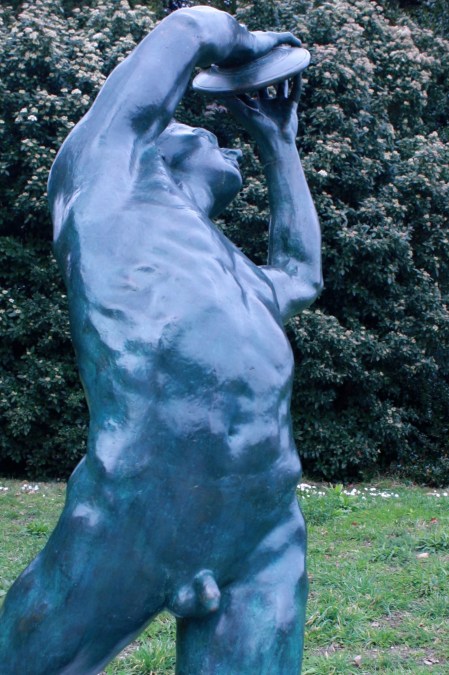
In my travels throughout the city, I have encountered the Olympic Museum. Lausanne will host the winter Olympics in 2020, and in anticipation of the event, the museum displays replicas of well known statues from their Classical origins.

In my travels throughout the city, I have encountered the Olympic Museum. Lausanne will host the winter Olympics in 2020, and in anticipation of the event, the museum displays replicas of well known statues from their Classical origins.


The museum also showcases modern representations of the Olympics and offers fun facts about Rio de Janeiro all around the grounds.

The museum also showcases modern representations of the Olympics and offers fun facts about Rio de Janeiro all around the grounds.


Colleen in Singapore: Final Reflection

January 26, 2016


I cannot believe how quickly my abroad experience has flown by! After a 20 hour flight back home from Singapore, I am extremely jet-lagged but also excited to reunite with family and friends. After reflecting about my travels on my flight back home, I feel that I have grown both intellectually and emotionally in the past three months.

Last week, I travel to Myanmar with a few friends. We biked around the Inle Lake, rode motobikes in Bagan, and walked around the city of Yangon. The different landscapes were breathtaking. There was a combination of modern skyscrapers, colonial architecture, and Buddhist Pagodas, making it feel like a live history textbook. I felt like I could envision Myanmar at the time of Buddha, but also saw the modern world within the high rises strewn throughout the city. It was here that I reflected on the passage of time, an idea that has always been quite challenging for me to grasp. Yet, I saw this concept of time hidden in the various landscapes of Myanmar.


I am quite sad that my abroad experience has come to an end. I will miss the friendsly strangers that I to ta

I am quite sad that my abroad experience has come to an end. I will miss the friendly strangers that I talked to alongside street cafes, I will miss all the different cultures within Southeast Asia, I will miss the friends that I have made, I will miss the warm weather, and most of all I will miss the thrill of adventure.


IMG_1800

Even though I will miss my abroad experience in its entirety, I will cherish these moments for the rest of my life.


Before going abroad, I told myself to always keep an open mind. This helped to remind me to say yes to new adventures, and get to know people from around the world. At times, I was scared and uncertain, but it was in these moments that I learned that no matter how big and diverse the world may seem, we are connected in some way. I learned that, at the end of the day, no matter how different we may appear to each other, we all want quite similar things out of life.


DCIM100GOPRO


DCIM100GOPROGOPR0366.


IMG_0243


I know that his post does not do any justice to the feeling of gratitude I have for everyone who made this possible. Thank you to my family and friends who have supported me throughout this journey, and thank you to the University of Richmond Office of International Education for believing in and inspiring any student that walks through its doors.


singapore


Maddie in Ireland: The Devil is in the Details

January 26, 2016

When I submitted my application to study abroad in Galway, one question asked of me was, “How are you going to acclimate to the new culture?” At the time, I was like, “Pfffft, piece of cake. Ireland is a first-world, English-speaking country with access to the internet, plus I have a working knowledge of rugby and know the lyrics to the song “Danny Boy”, soooo….. yeah, Im good lol.”  And the thing is, I was right. Ireland is a first-world, English-speaking country with access to the internet. For the most part, there are very few differences between America and Ireland and I have had very few difficulties acclimating to my new home culture. However, they say the devil is in the details and, whoever ”they” are, they are right.

It’s the little things like not knowing which brands of bread are good or forgetting that dates are written in the day-month-year format that getcha. They’re the little things that trip you up and remind you that, oh yeah, you aren’t home; and since the internet is all about lists, I have decided to compile a list of those little things, those little differences, that I have noticed during my first two weeks in Ireland.

1. Adidas & Hollister

So you know in middle school how Hollister graphic tees were the thing? Like, grab a shirt from Hollister and presto, you’re instantly the coolest kid in class? And then a few years later Hollister was just kind of out? Well, Hollister is not out in Ireland (at least in the male population). Everywhere you look there is a boy wearing a Hollister hoodie, carefully zipped only halfway up to subtly reveal the Hollister tee underneath… unless, of course, said boy is wearing an Adidas track suit. You know the kind I’m talking about. In summary, the entire male population in Ireland either looks like your eighth-grade class or like they just came straight from soccer/football practice. Its not a bad look, it just kind of throws you off for awhile, makes you look around and think “Something is different about these boys,” until you realize that they’re wearing exactly the same thing that Yanni Thanopolous my…I mean your… crush wore in seventh grade.

2. Uppercuts

On the subject of differences between American and Irish boys, I’d say 70% of Irish guys have some version of an uppercut. Again, its not a bad look— in fact, I’d even argue its a darn good look— it’s just different.

3. Brands

The first time I entered a grocery store it took me 45 minutes to buy bread, cheese, gnocchi, and a candy bar. Why was I such an deficient shopper? Because I didn’t have a single clue about what I was buying. I didn’t recognize a single brand in the entire store (except for international brands that I only recognized because the logo was the same. For example, Lays chips are known as Heilmans chips. Go figure). Was this a good brand? Was this a yummy brand? Is this the hippie, vegan brand? Am I giving off an air of hippie, vegan-ness by buying this brand? I’m not a vegan though… I really like pork. And beef. And cheese. Aww man, I’m so out of my element here.

4. Electric Sockets

Real quick I’m going to tell you an absolutely thrilling tale about my first hour in Ireland: When I landed in Shannon two weeks ago, my phone was dead. 0%. I knew my wonderful, loving parents would be worrying out about my safety and the longer I didn’t call them the more they would stress out. I don’t like stressing my parents out. It’s just not a thing I enjoy, so I frantically ran around the airport looking for an outlet. I found one, plugged my phone in, and waited. After about fifteen minutes, I checked my phone and it had not charged a single bit. At this point I was freaking out— was the adapter not working? Had my charger burnt out from the voltage? Why was I so bad at technology? I saw a flip next to the outlet and even though I was 75% sure if I touched it I would kill the entire airport, I decided that my first world problem of a dead phone warranted me taking that chance.

Yep, turns out that electricity doesn’t automatically go to every outlet. You need to flip a switch to direct the electricity to the outlet and then do ~whatever~ you do with the electricity…. Hmmm, looking back, I now realize I didn’t need to preface that bit of info with my story, but, hey, I’m sure you’re super bored and have nothing better to do than read about my minor, insignificant, amateur observations. Right?

5. Pulp

Pulp in orange juice. We all have opinions about it. I, for instance, am a firm supporter of the “Pulp is absolutely delicious and should be included in all juice” camp… but when I first went looking for juice I could find no evidence of “pulp” vs “light pulp” vs “no pulp”. Where was the conflict? How was I supposed to get in a fight about what texture juice should be? After a hasty conversation with a grocery worker, I was informed that the Irish referred to pulp as “juicy bits”, which I find to be absolutely hilarious. “Cream cheese” is called “creamy soft cheese”. A “half pan” is a small loaf of bread. “Tap” doesn’t refer to fresh beer, which is just called beer, but instead a water faucet. “Joggers” are all sweat pants, not just those used by athletes. “Bonbons” are toffee-type candies, instead of chocolates. I could go on. Either way, each trip to any store is an adventure and experiment, because frankly I am very rarely aware of what exactly it is I’m buying.

6. Walking

In America you walk on the right side of the sidewalk. It’s etiquette. In Ireland you walk not on the left, mirroring how the roads work, but just wherever you decide to walk. This means you need to be much more aware of your surrounding and who is approaching you from each direction when you walk. No zoning out allowed. It’s etiquette.

Its also means you need to size up anyone who walks towards you and decide which of you is going to move. Every stroll is a power struggle

7. Cheese

CHEESE IS SO MUCH BETTER IN IRELAND AND SO MUCH CHEAPER AND SO MUCH MORE VARIED.

8. Ice Cream

ICE CREAM IS SO MUCH BETTER IN IRELAND. I DON’T EVEN CARE THAT FROZEN YOGURT DOESN’T EXIST, BECAUSE THE ICE CREAM IS SO FACE-MELTINGLY DELICIOUS.

9. Dairy Products in General

IRISH DAIRY PRODUCTS > AMERICAN DAIRY PRODUCTS. I feel like its un-American to admit anything from a non-American country is better than something from America, but I also feel like its un-American to appreciate phenomenal butter.

10. Makeup

We’ve been over Irish boys’ appearances, but we haven’t talked about the girls yet. For the most part they dress pretty similarly to how we would have dressed in America (but in Ireland, out of our natural habitat, we tend to wear significantly more jackets than they do). Makeup though. Irish girls are masters of makeup and it doesn’t matter how little sleep they got, how few people they are going to see that day, whether they’re just going to the grocery store or mechanic’s shop, they will step out of their apartment with flawless, full-on makeup. Props to the Irish ladies, that requires some energy and effort.

11. Classrooms

When we navigate schools, classrooms are generally referred to by the building and then the room number. In contrast, at NUI Galway almost every single classroom has its own unique name. No “North Court 213”s or “Booker 156”s, only “D’Arcy Thompson Theater”s or “Cairnes Theater”s. Frankly, its awesome and each room feels so special and fancy-schmancy.

12. Baking Shops

There are a ton of baking shops around Galway. I don’t mean bakeries, I mean shops that sell cake decorating tools and cute aprons. Apparently there is a huge audience for cute cupcakes in this area and I have absolutely no problem with that being the case.

13. Phones

Just a small observation, but Irish college— or should I say university— students, use their phones significantly less than American students do <shrug>.

14. Parents

When American students go away to college, they’re gone for months at a time, only returning for holidays. Irish students— and I’m being completely serious here— return home every single weekend. Every Friday you can see all the twenty-somethings carrying their roller suitcases to the train station, returning to their mammy and her home-cooked meals. Tbh, I would do the same thing if I could.

15. Prices

You’d think something like “prices” wouldn’t fall under the umbrella of “details”, but I couldn’t leave it out. Things are so cheap here. Guess how much I just paid for a loaf of bread. Go ahead, guess. I dare you. I paid 0.70€. Thats 75¢. For an entire loaf of bread. An entire loaf of delicious bread. I don’t understand it, but I also don’t want to question it.

The only, only exception is the fruit. Coming from California it kills me to pay a lot of money for fruit, but hey, Ireland cant be too perfect, right?


Well, for the moment, th-th-that’s all, folks!

Maddie

Ice-Cream Eater, Girl Who Can Very Rarely Force Herself To Put on Makeup, Pulp-Fan, Proud Member of the Westhampton Class of ’17


P.S. I feel bad that there aren’t many pictures I can use to accompany this list, so for now enjoy some sneak-peek pics from my recent visit to The Cliffs of Moher which y’all will hear about soon.


Muggin’ it with Oscar Wilde
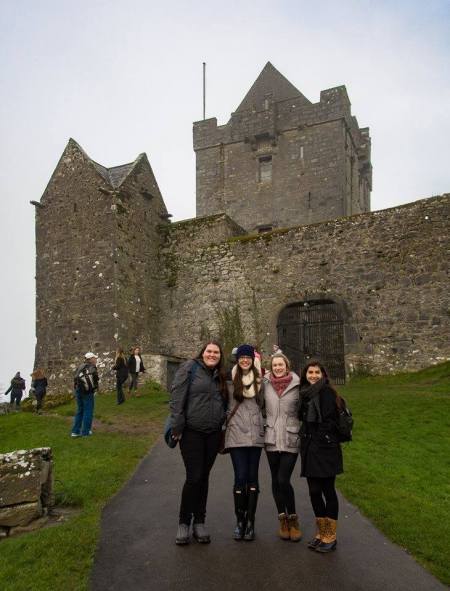
Muggin’ it with Oscar Wilde


Muggin’ it castle style

Muggin’ it castle style


Muggin’ it on The Cliffs of Moher
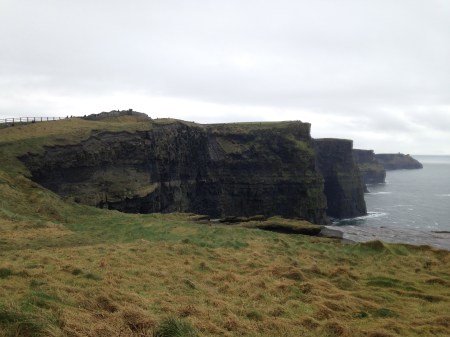
Muggin’ it on The Cliffs of Moher


The Cliffs of Moher, a.k.a. The Cliffs of Insanity (according to The Princess Bride) or The Really, Really Scary Cliffs Dumbledore and Harry Land On (according to Harry Potter and the Half-Blood Prince
The Cliffs of Moher, a.k.a. The Cliffs of Insanity (according to The Princess Bride) or The Really, Really Scary Cliffs Dumbledore and Harry Land On (according to Harry Potter and the Half-Blood Prince


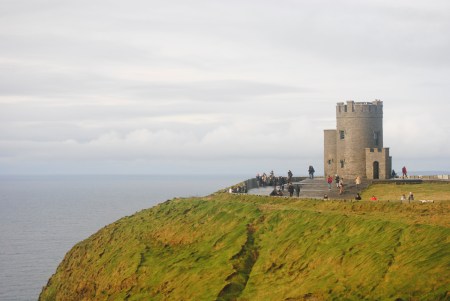
Here we see O’Briens Tower, the highest point of the Cliffs of Moher, and a ruin strongly associated with ~traditional~ Irish music for some reason that nobody could seem to provide.

Here we see O’Briens Tower, the highest point of the Cliffs of Moher, and a ruin strongly associated with ~traditional~ Irish music for some reason that nobody could seem to provide.


Caption: And here we see my friend Murphy leaning off the top of the 400ft cliffs for some reason that he couldn't seem to provide.

And here we see my friend Murphy leaning off the top of the 400ft cliffs for some reason that he couldn’t seem to provide.


Me on the Burren shores (which are not to be confused with the Jersey Shores

Me on the Burren shores (which are not to be confused with the Jersey Shores)


Another pic of those gorgeous Burren shores.
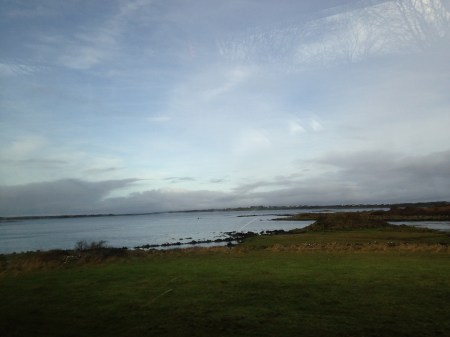
Another pic of those gorgeous Burren shores.


angit, I just said Ireland can’t be too perfect. Stop being too perfect, Ireland.

Dangit, I just said Ireland can’t be too perfect. Stop being too perfect, Ireland.


SERIOUSLY IRELAND. Stop with your perfection right now

SERIOUSLY IRELAND. Stop with your perfection right now


Emily in Samoa: Beginning the Adventure

January 19, 2016

Talofa! My name is Emily, and I am an Anthropology and Women’s, Gender and Sexuality Studies (WGSS) major at Richmond. I’m originally from Leominster, Massachusetts, where I grew up on my family’s vegetable farm. I am excited and honored to be sharing my South Pacific adventures with you, and look forward to your feedback and questions.


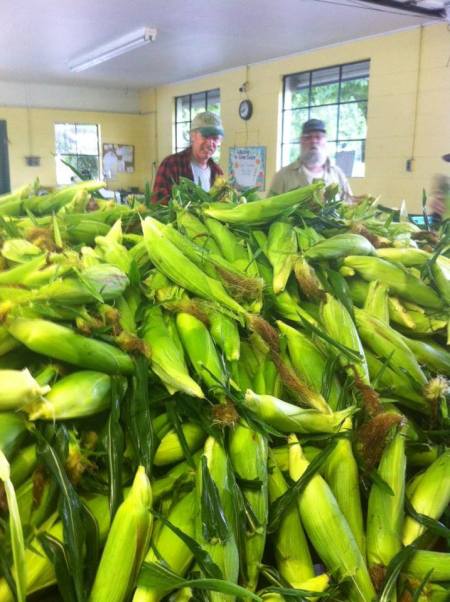
My dad at the corn wagon in the summer

My dad at the corn wagon in the summer


I leave for Hawai’i in five days, and will be staying at the Polynesian Cultural Center on ‘Oahu for two weeks of orientation (preceded by four days of solo exploration). As I shuffle around my New England home wrapped in a sweater, a robe, and two blankets, I am cheerily folding up my t shirts and shorts for warmer climes, and fawning over phrases on my information sheets like “bring your own snorkel.” As indicated by my blankets, I am a person who likes to be warm. But, as I will explain, that was not the reason I chose Samoa.

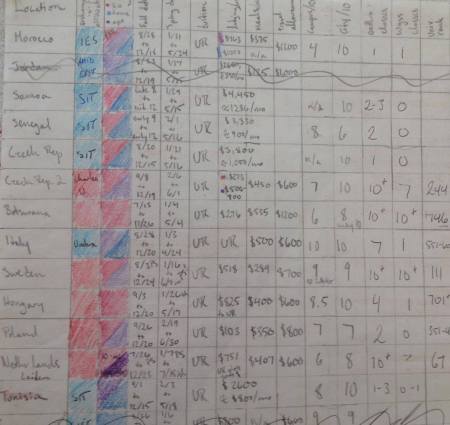
I chose this program much like I chose my majors, and much like I choose many things in my life. I started by looking at all the options and making an extensive, comprehensive, somewhat color-coded spreadsheet of what I was interested in, which turned out to be almost everything. When I decided on a major, items on the list ranged from performance classical oboe to poetry to physics. I then used criteria to narrow down my choices, which ended up expanding them. Finally, I disregarded the entire list, and went back to the things I had liked from the beginning. Simple, no?


The Study Abroad Spreadsheet- an excerpt

The Study Abroad Spreadsheet- an excerpt


Thus, my majors emerged sophomore year after bouts with a range of other classes, and I cast aside my list of programs abroad in favor of Samoa…and a few other places. Due to my indecision on a specific program, I have spent my year abroad, interning in India over the summer, and doing a food studies program in Italy in the fall. I realize that this suspiciously mirrors the book Eat, Pray, Love, but that was a happy accident, and I assure you that the year has been centered mainly on eating. It’s hard to pinpoint the exact reason for my choosing Samoa, but two big factors were distance: it is quite far out of my comfort zone, and even further from anywhere I’ve lived or traveled.


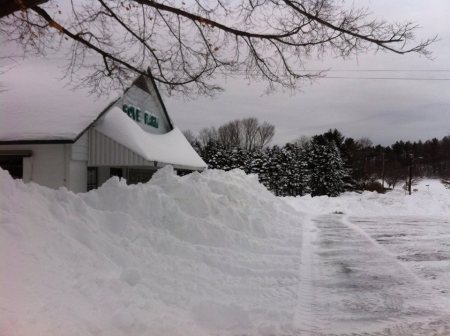
My current situation: the farm post-snow

My current situation: the farm post-snow


With my decision made, I have spent my winter break learning Samoan, hunting down gifts for my host families, and reading about the islands I will be visiting. I will be based in Apia, capital city of Western Samoa (not an American territory), going on excursions to rural villages, as well as to American Samoa and Fiji.

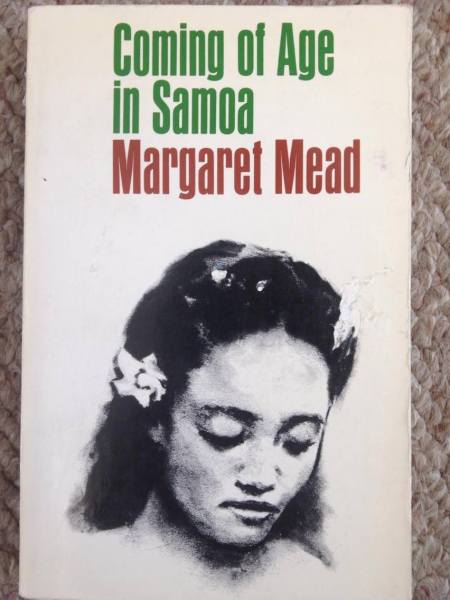
It is easy to be led astray reading about Samoa, as it was home to one of the biggest names in anthropology. Margaret Mead, and served as her place of study in the 1920s. It is therefore known by the stereotypes she created for its people, more than what it really is. At the beginnings of Western anthropology, Samoa was seen as a place so isolated as to show an example of culture that was small and isolated—in a Pacific fishbowl, if you will. Mead’s book Coming of Age in Samoa describes the oft promiscuous sexuality of scantily clad Samoan girls that she observed, and was a best-seller in the US after publication.


Mead’s book, featuring one of “her girls” on the cover

Mead’s book, featuring one of “her girls” on the cover


That book has been a source of shame and disgust for Samoans ever since, who have worked to promote native anthropology, cultural analysis from those actually participating in the culture. Rather than the Other, they emphasize the Us, and the interconnection of a sea of islands instead of islands isolated in a sea. I am interested to learn more about new and emerging Oceanic identities, as well as how the islands are adapting to a changing world, which wants to connect with them through internet, economic exchange, and tourism.

There is so much more I could say, but I will save it for next time. Thanks for reading!


Colleen in Singapore: Northern Thailand

December 28, 2015

How lucky am I to have a mother that traveled halfway around the world to come visit during my recess week? Meet my mother, Patty. After giving her a tour of Singapore we made our way to the city of Chiang Mai, located in Northern Ireland.


IMG_0951

After flagging down a tuk-tuk at the airport, we made our way to our charming hotel, Tanita House. Tanita is a family-owned hotel, made up of a few wooden cabins with plenty of greenery. There is also a great little cafe on the hotel grounds. The almond iced coffee did not disappoint.


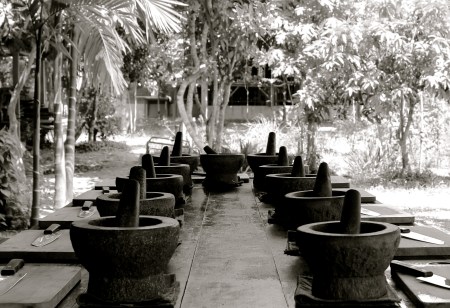
Patty and I decided to take a thai cooking class on Sunday. Before being taken to Thai Cooking School's organic farm for the class, we made a quick stop at a local market to learn about classic Thai ingredients.

Patty and I decided to take a thai cooking class on Sunday. Before being taken to Thai Cooking School’s organic farm for the class, we made a quick stop at a local market to learn about classic Thai ingredients.


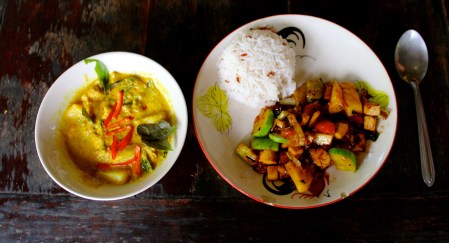
The cooking class lasted for several hours, and I can confidently say that I ate more than any previous Thanksgiving dinner. It was cool to use ingredients straight from the farm (we handpicked them ourselves) and to see all of the ingredients come together to make delicious curry, stir fry, tom yum soup, pad thai, and mango sticky rice.

The cooking class lasted for several hours, and I can confidently say that I ate more than any previous Thanksgiving dinner. It was cool to use ingredients straight from the farm (we handpicked them ourselves) and to see all of the ingredients come together to make delicious curry, stir fry, tom yum soup, pad thai, and mango sticky rice.


The next morning, Patty and I had a full day tour of CHiang Mai. Our guide for the day, Tong, picked us up at Tanita early so we could make morning alms as offerings to the monks . After morning offerings, Tong gave us a tour of Doi Suthep, the most famout temple in Chiang Mai. Today, Doi Suthep is a Buddhist Monastery.

The next morning, Patty and I had a full day tour of CHiang Mai. Our guide for the day, Tong, picked us up at Tanita early so we could make morning alms as offerings to the monks . After morning offerings, Tong gave us a tour of Doi Suthep, the most famout temple in Chiang Mai. Today, Doi Suthep is a Buddhist Monastery.


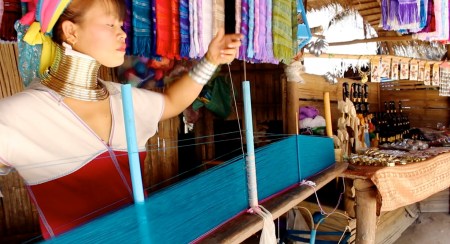
After grabbing lunch at a local joint, Tong took us to visit the Karen Long Neck Hill Tribe. Here, we learned about the various traditions and culture of the tribe.

After grabbing lunch at a local joint, Tong took us to visit the Karen Long Neck Hill Tribe. Here, we learned about the various traditions and culture of the tribe.


The last activity of the day was elephant riding at a local elephant conservatory. We took a bamboo raft to get there, passing many elephants on the way.

The last activity of the day was elephant riding at a local elephant conservatory. We took a bamboo raft to get there, passing many elephants on the way.


Lindsay in Thailand: Putting the “Study” in Abroad

December 23, 2015

Thailand is full of random adventures, and I myself have had many since my arrival, but I thought this week I would clue you all in a little more on the reason for my being in Thailand—my studies in Khon Kaen.

My program through the Council on International Educational Exchange (CIEE) has a catchy name, Development and Globalization (DG), but you may wonder what actually falls under this umbrella term? My answer? I’m still figuring it out. In the information packet I received, I understood this program as one that allows me the opportunity to “study complex environmental, development, and globalization issues.” It has done that, and so much more.

Unlike our sister program, Public Health, the DG program is not associated with Khon Kaen University near our CIEE school headquarters. It is an entirely separate program that has its own educational model that is much different from most classroom learning models. This program focuses on learning from a ‘human perspective’ by speaking with villagers, NGOs, and government officials among other individuals in the Northeastern Isaan region of Thailand.


The Development and Globalization group met with water buffalo herders during our land and agriculture unit.

The Development and Globalization group met with water buffalo herders during our land and agriculture unit.


This semester, our program focused on the development and globalization issues of organic agriculture, water management, land rights, mining, and also did a Laos agricultural comparative unit. These five units are primarily student-led and are divided into two-week segments. The first week is comprised of reading…reading…and more reading. In this mix, we also have a few guest lectures, Thai language courses and Thai peer tutor sessions focused on our unit topic as well as two discussion and information-based meetings led by the two student unit facilitators. These “UFac” individuals are responsible for not only planning this week, but also providing the link between the Thai ‘ajaan’ professor’s as well as preparing for the following week of exchanges.


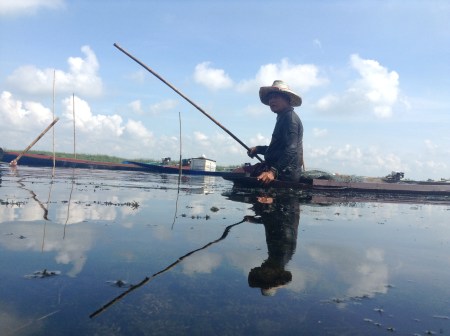
In an area affected by a dam construction, this man now fishes where homes used to be.

In an area affected by a dam construction, this man now fishes where homes used to be.


In the second half of the unit, our 10-person DG group, two ajaans, and our beloved ‘wan’ driver make the trek to the local village affected by the development issue we are studying. Throughout our five-day stay, we speak with villagers about their situations and struggles to gain an overview of the issues facing the area. In order to view the situation from the other side, we also meet with government officials who offer the political context. Additionally, we interview local Non-government organizations and NGO persons who are knowledgeable on the subject not only in our current focus area, but also in other areas throughout Thailand.


The infamous “wan” ride with the DG “wamily,” including our translator and driver.

The infamous “wan” ride with the DG “wamily,” including our translator and driver.


Something especially unique about this program is that, during this week of unit exchanges, we actually live with villagers. Two DG students are assigned to one family and homestay, and we reside with them all week. Being able to follow them through their daily routines, learn to cook traditional foods from them, take showers with a bucket of water and a bowl, help them in their garden, round up the qwai (water buffalo), and communicate with them as well as we are able has really made this semester something special for me. In such a short time, we seem to become a member of the ‘krop kruwah’ (family). I have been “a daughter to them” and have even cried when I left some of my homestays. These families have not only taught me so much about Thai language and the social justice issues they face, but they have taught me the true meaning of kindness and making someone ‘feel at home.’

IMG_0459

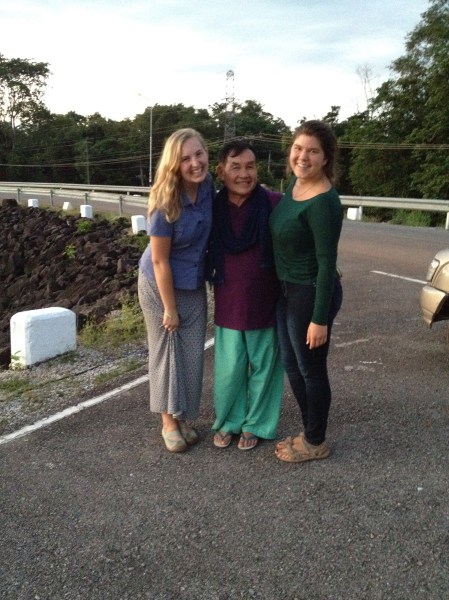
Some of my homestay families and villagers who stole my heart


IMG_0569


OLYMPUS DIGITAL CAMERA

Upon arrival in Khon Kaen, our group is tasked with making a unit ‘output.’This final project is supposed to be a reflection of what we learned over the past two weeks, and often incorporates aspects that would benefit the affected community in some way. After brainstorming as a group, we work vigorously to finish our project and plan a two-hour “workshop” where we present our findings to our ajaan professors and student interns. Some unit outputs have included a lesson plan on organic agriculture, a 25 page report on organic farming barriers, info-graphics concerning land rights issues, paintings reflecting Laotian agency and dependency, and an information packet provided to the European Union before a visit to a mining affected community.


 Kaori, myself, Elyssa, and Megan showing our support for Na Nong Bong, a community we exchanged with who is negatively impacted by a mine in their community.

Kaori, myself, Elyssa, and Megan showing our support for Na Nong Bong, a community we exchanged with who is negatively impacted by a mine in their community.


Following this workshop is the ever so popular “plus, minus, delta” evaluation where we evaluate as a group what we did great and what could have been done better. Additionally, we have a “sadthi” quaker-style meeting to allow personal reflection and expression of our current feelings after an educationally and emotionally exhausting week. Finally, it is time for a good night’s sleep before the repeat.

I have to be honest with all of you. In the beginning of the program, I thought I was in over my head. I saw the little black program planner book as daunting with so many scheduled classes and outside exchanges. I questioned how much time I would have to myself. Yes, I am fully aware that I signed up to ‘study abroad’ but I questioned how much studying was too much abroad. This program is far from what might seem like traditional abroad expectations. I may have not hopped from country to country every other weekend and I may not have shared experiences with many other Richmond students, but I was able to really see Thailand for all its beautiful wonders and civil flaws. I was able to see big city lights and little village dirt roads, I became a ‘regular’ at the local coffee shop, I befriended the coconut ice cream stand lady who knows my order by heart, and I was able to reflect on all these things and more as time passed me by. Although I am sad to be leaving here in a few short weeks, I know that this place, those Thai villagers, and my program friends was, and always will be, a home and family to me.