Jack in Czech Republic: Jack in Vietnamese Town While in Czech Republic.

December 8, 2014

One of my more cultural days in Prague opened my eyes to a culture far, far away from Prague. It came at Sapa, the largest Vietnamese community in central Europe. This day led to deep conversations about this minority culture, its conflicts with Czech culture, and how this divide impacts young Vietnamese Czechs.

***

Who brought you there? Numi, a local-Czech Vietnamese girl who immigrated to the Czech Republic when she was four. Mariah, one of my three suitemates, and I met Numi on our second night in Prague, because she was working at our hostel. We started casually talking about where we were from, what we do etc. “We go to a small school you’ve probably never heard of called Richmond,” Mariah said. Turns out Numi knew a thing or two Richmond, since she is studying abroad there this spring. I still can’t over how incredible it is that Mariah and I met Numi so early in our stay in Prague. We were so lucky to meet Numi, who helped us out with anything and everything we needed in Prague, and we are stoked our friendship will continue in Richmond next semester.

Why did you go? Numi had to try on a bridesmaid dress for her friend’s wedding, so we went with her.

No really, why did you go? Um…

Ok, well, how was the trip? It was so much fun. Although we were still technically in Prague, I felt like I was in a different country when I stepped off the bus. We met with Numi’s friend Oli, whose wedding Numi needed a dress for, at a coffee shop before heading to the dress store. After an incredible, thick Vietnamese coffee, I was ready to run a marathon, write a book, and wrestle a horse. Instead, we went to go try on dresses.

Believe it or not, I’m not a guy who gets stoked about dresses. This time, however, was different. For one, we were looking at traditional Vietnamese outfits, which I found more interesting than a standard dress. More importantly, though, is that I also got to dress up.

Jack girls dress up

Jack dress up
Yes, I know, we all look incredible.

Next up was the feast. We went to a restaurant, and Numi and Oli ordered everything for us. I’m not exactly a food connoisseur, so I was a tad nervous about what was coming our way. Five minutes after ordering, some waiters brought us way too much food for four people. There was duck, which I ate for the first time, pork, rice, salad, and tea. And all of it was great.

Jack food

Yea, we didn’t finish all of this.

After our meal, we were all stuffed. So, naturally, Numi told Mariah and me that we needed to try a Vietnamese dumpling. And we did. And we loved it. And we entered a nice food coma on our bus ride back.

***

I loved the coffee, I loved dressing up, and I loved the food. But my favorite part of the day was learning about the Vietnamese community, and its relationship with traditional Czech culture. The Vietnamese make up the third largest group of immigrants in the Czech Republic, yet I sensed a divide with mainstream Czech society. I asked Numi about this separation and, believe it or not, the divide is deeper than I imagined.

The Vietnamese flocked to then-Czechoslovakia in the 1960s with help from the Soviet Union. Many left after the fall of communism, yet a sizeable group stayed in the new Czech Republic. Naturally, the Vietnamese maintained much of their cultural norms, but these differences made integration difficult. In some ways, integration wasn’t one of their original goals anyway. For example, Vietnamese parents often push their children to marry someone who is Vietnamese. If a Vietnamese person is dating a Czech, they often need to hide the relationship from either their parents or the Vietnamese community, Numi said. As a whole, the older Vietnamese generation tends to stick together, making it hard for Czechs to get to know them well, she said.

The Czechs don’t seem to be the most welcoming either. Numi told us Czechs don’t typically visit Sapa, and I saw only a few Czech couples that Sunday afternoon. According to Numi, Czechs are scarred of Sapa because it’s, well, different then what they are used to. Oh yea, and then there are the fabricated rumors that Sapa is a dangerous place. Then, of course, there’s the whole bigots-throwing-cigarettes-at-my-friends thing. I asked Numi about xenophobia in the Czech Republic, and she said she had had faced bigots throughout her life, too. She stressed, however, that most Czech people are more than accepting of her differences. As is the case in any culture, it just takes a few bigots to cause problems.

People like Numi – local Czechs with Vietnamese heritage – are stuck in the middle of this divide. According to Numi, she is part of the initial second-generation Vietnamese community that is trying to fully assimilate with new, communist-free Czech culture while uniting these two distinctly different groups. And it’s not easy. First there’s the issue of upsetting your parents by swaying from traditional norms. “We are very different from of our parents,” Numi said. Then there’s dealing with the xenophobia, which could either be obvious, like the football game experience, or more hidden, like getting passed over for jobs for ethnic Czechs. All college students are nervous about getting a job out of school, but Numi has extra angst because she doesn’t know if her race will play a factor. To be honest, no one really knows how much of a factor race will be for this new group of second-generation Vietnamese people.

Trang, one of Numi’s friends who is also part of this linking generation, gave a Ted Talk (Sick, I know) on this topic. Growing up, Trang only had the chance to see her parents on weekends, because they worked so much during the week. She had a Czech nanny, which is not uncommon amongst Vietnamese families. She had a Czech childhood, consisting of watching Czech movies, eating dumplings, etc., which she greatly enjoyed. As she got older, though, her parents began to tell her she was too European. Too European? What does that even mean? If she wasn’t European enough how could she assimilate into Czech culture? At the same time, should Trang have to discard her family’s history to appease Czechs? People like Trang and Numi face the difficult task of balancing the two cultures. No matter how well they balance both cultures, some people will always be upset. Trang, however, views this divide more favorably. She is grateful for the chance to live in two very different cultures, so she can choose the most beautiful aspects of each, she said.

Trang closes her talk discussing the label “banana kid”. This label is used for people who are yellow on the outside (Asian) and white on the inside (European). “Many people do not agree to identify themselves as a fruit but others have no problem with this,” Trang said. Trang chose not to identify as a banana. “I perceive myself as a banana shake, which can be added by all kinds of flavors,” she said.

***

This post, by no means, is meant to be a slight toward either the Czech or Vietnamese cultures; it’s not like America is doing so well in the whole race-relations thing right now. In fact, my hope is that these sorts of experiences and discussions will allow me to develop deeper, more thoughtful feelings on American race issues, which are only going to get more heated in years to come. Observing two different cultures coexist will allow me to develop more thoughtful opinions on the problems back home.

I did not expect to have so many thoughts on Vietnamese culture before I came to Prague. Yet these topics, questions and realizations of the unexpected are what have made this adventure so worthwhile and enriching. My experiences with the Vietnamese culture in the Czech Republic have forced me to think deeper on race relations in the Czech Republic, in America, and in the world at large.

Selfie of the week: Because I am an egotistical millennial, here is the selfie of the week:

OLYMPUS DIGITAL CAMERA

The Cliffs of Moher (Ireland) were all right, I guess. This selfie is from my last trip, which was in October. I’ll explain why I haven’t traveled much – relatively, of course – next time.


Diana in Copenhagen: Christmas Spirit

December 2, 2014

Winter in Denmark is upon us. The sun doesn’t rise until eight in the morning and calls it quits early at about four. Temperatures are cold but that’s nothing compared to the wind that will nearly blow you over and make you cry involuntarily. As a Massachusetts native, I am no stranger to these facets of winter, but I have to say they do make days drag on a bit slower.

There’s one thing though, that makes the cold and darkness all worthwhile. Christmastime! The Danes don’t hold back when in comes to Christmas, and they enjoy celebrations early since they (obviously) lack the need to wait until after Thanksgiving to kick off the holiday season.

Christmas markets have popped up all around the city selling an array of goodies like fuzzy hats, honey, and glassware. The markets have a magical aura about them with everyone in the holiday spirit enjoying outings with their friends, families, and loved ones.

A display at one of the Christmas markets

A display at one of the Christmas markets

A personal favorite sold at the markets is a Nordic traditional holiday drink called gløgg. Gløgg is a mulled wine consisting of red wine, sugar, and spices like cinnamon, cardamom, ginger, and cloves and it smells like Christmas in a cup. You can buy gløgg, hot chocolate, waffles, warmed nuts, and many other goodies for your stroll—there’s something for everyone.

Another wonderful part of Christmas in Copenhagen is the iconic Tivoli Gardens. Tivoli is the second oldest amusement park in the world and it is truly a magical place. The Gardens close for winter but open twice to celebrate the Halloween and Christmas season respectively. While Tivoli is always characterized by beautiful lights and landscapes, its Christmas displays take things to a whole new level.

The main entrance to Tivoli Garden

The main entrance to Tivoli Garden

Tivoli is a winter wonderland surrounded by lights, fake snow, and rides for people of all ages. You can purchase unlimited rides with your entrance fee, buy individual tickets inside, or not go on any at all. I had already tried all the rides (multiple times each, in fact) earlier this year when the weather was warmer, but even the wind chill couldn’t stop me from getting on the swings on my latest visit. The ride is simple: a bunch of chain-swings that get raised up a tall pole that spins. While it’s not the most exhilarating ride in the park, the swings give a magnificent view of Copenhagen. The ride is most stunning at night when you have the best seat in the house to see the wonderfully illuminated park and city. Perks of the swings: the wind drowns out sound so you can sing whatever song you want up there and no one will know. My go-to has been Aladdin’s “A Whole New World” but “I Believe I Can Fly” and “I’m Like a Bird” are viable alternatives.

Inside Tivoli Gardens

Inside Tivoli Gardens

We were lucky enough to happen upon the light show that night as well, and it was a great way to culminate a wonderful visit to the Gardens. Every night, there is a light show over a pond in the middle of the park and the Christmas show was Nutcracker themed. It’s a Christmas tradition in my family to listen to the Nutcracker soundtrack when we decorate our tree at home so seeing a beautiful light show with spinning holograms and colorful shooting streams of water was an awesome experience that reminded me of my traditions at home.

It’s not just the Christmas Markets and Tivoli that make this Copenhagen festive though—the whole city is lined with lights and wreaths. The excitement is infectious, so much so that even Santa needed to pay a visit. Last Sunday, hundreds of people gathered in City Hall Square to celebrate the lighting of the tree. Enthralled faces watched as Santa climbed his way up the ladder and little children hopped frantically up and down believing it would help him light the tree. It really felt like I was part of a great community when everyone started counting down in Danish and the energy was palpable. At “en” or “one,” Santa’s wand sparked, the tree lit up, people cheered, and Christmas carols started playing. It was a beautiful tree and an even more beautiful moment I was lucky to enjoy.

If you’re looking to escape wintertime happiness and festivities, Scrooges of the world, don’t come to Copenhagen.

Happy Holidays everyone!!

unnamed-3


Jack in Czech Republic: I Go to School Too

November 6, 2014

I really don’t want to do schoolwork right now. So why not blog about school? Before I discuss the differences (or lack thereof) between Charles classes and Richmond classes, here’s a brief description of my five courses:

U.S. in the 1960s and 1970sRefer to Ohio by CSNY from my mid-semester mixtape to get my passionate thoughts on this course. The discussions in this class are consistently thought provoking and sometimes ridiculous, in a good way.

Introduction to Photojournalism – You know your photojournalism course is impacting you when you stare at a wall in a bathroom wishing you had your camera on you. This course has already forced me to view photography, Prague’s landscape, and, I guess, bathrooms in completely different manners.

Global Communication – The one course I am taking with an American institution taught by an American professor from an American university. Yea, there’s not a whole lot of cultural realizations coming from this course. Overall, it’s been a fun class, though. I get to spend the next five weeks defending China’s censorship, so that’s kind of cultural, right?

Here’s an action shot of Tim, who also gets to defend China’s censorship, working hard on our group project.

Here’s an action shot of Tim, who also gets to defend China’s censorship, working hard on our group project.

Czech for Beginners – Thanks to the Eastern Europeans, whose native tongue is somewhat similar to Czech, this is far and away my most difficult class.

Arms Control and Disarmament – This is a master’s level course on a subject I knew little about when I enrolled. So that should give you a sense on how difficult I find Czech language. Additionally, this is the one course that is vastly different than my Richmond courses. There are no assigned readings or written tests. Instead, students write weekly two-page research reports on one nuclear state (I’m the U.K.) that lead to our eventual end-of-class debate. My guess is that this class is different not because it’s in Prague, but because it is a master’s course.

With the exception of my Global Communication course, my courses are primarily composed of a mix of Czech students looking to improve their English and European students studying at Charles University for a semester. Despite the diverse composition of students, these courses don’t differ too greatly from my Richmond courses. There are, however, a few differences worth mentioning before I expand on how the two institutions’ similarities.

Punctuality, or lack thereof: At Charles, on time means 10 minutes late. And early means on time. It blows me away how many people show up to class late. My American history class, for example, always starts on time, yet it’s rare that at least two-thirds of the students are there when class begins. One reason for the constant tardiness could be that getting to class isn’t as simple as a five-minute walk from your on-campus dorm.

All around the city: Charles does not have a campus. Instead, the school consists of several buildings splattered throughout Prague. My five classes are taught in four buildings spread throughout the city. I still can’t decide which system I like better. I enjoy the different sceneries I’m forced to see, but the vast distances create more obstacles when going to class. Take, for example, when the city decided to change the tram lines without any heads up. Later that day I eventually realized my tram was not headed toward my usual Czech Language stop. I had to quickly get off and run through the city, so that I would not be too late. When I busted into class, out of breath and five minutes late, I noticed three or four other students in this small class had yet to arrive. Based on the students’ timetable, I was five minutes early.

Once-a-week classes: Except for my Czech language class, which meets twice a week, my courses meet once a week. I cannot overstate my love for once-a-week meetings. The workload isn’t too much different from Richmond’s, but having a full week in my grasp to spread out my work is fantastic.

Grading: I’m sure the grading at Charles is different from Richmond, since final grades are based on one or two assignments and class participation. I can’t tell you much more, however, because, well, I’ve barely received any grades. Typing that sentence gave me way too much anxiety.

Oral exams: Two of my courses culminate with oral exams, where I will have to speak with my professor about the course rather than filling in bubbles or answering short-answer questions. This feels like the biggest difference because I have no idea what to expect for an oral exam, and, well, it will be crucial to my grade.

So there are a few differences between the Richmond and Charles, but the most important aspect of a school – the way students learn – is quite similar. My educational experience – workload, types of assignments, discussion, professor availability, etc. – is quite similar to Richmond. Here’s the Spark Notes version of my classes’ syllabi: Do a reading assignment, maybe answer some discussion questions, discuss the reading in class, and ultimately take an exam/write a term paper/give a presentation. Strikingly similar to Richmond, I’d say. This certainly isn’t a bad thing – I love the whole reading/writing/discussing basis of my leadership studies and journalism majors. Additionally, I, like most UR students, I assume, didn’t go abroad for an out-of-this-world classroom experience. Sure, taking classes with a different faculty and different students offers a nice change of pace, but my true foreign education comes outside of the classroom. I came to Prague for a real-world academic experience – for example, meeting professional journalists and learning about the daily tasks of an online publication through my internships, traveling around Europe, and having to learn a city where English is not the first language. Hell, I’ve met a lot of fascinating people by having a couple drinks at Czech bars. I’ve been told for many years that learning doesn’t only take place in the classroom, but my time in Prague has given me a new perspective on that idea.

Selfie of the week: Because I am an egotistical millennial, here is the selfie of the week:

I was super happy to spend a day with this guy on his business trip. Thank you Teradata for sending my father to Prague!

I was super happy to spend a day with this guy on his business trip. Thank you Teradata for sending my father to Prague!


Oliver in Spain: Personal Growth

October 27, 2014

My previous posts have been full of various activities and travels that I have been experiencing throughout the last two months and my future posts will probably be along the same vain. That being said, I wanted to take this opportunity to talk about the changes in my confidence, maturity, and self-awareness.

I have now been out of my comfort zone of the American East Coast for a couple months and I have been having the time of my life. But, this semester hasn’t always been fun and easy, the first two weeks were some of the most challenging weeks I have had in my life. Entering a completely new country with a different language was a bold move that threw me into the deep end from day one. I was picked up by my host mother upon arrival and immediately was thrown into Spanish conversation (keep in mind that I hadn’t spoken Spanish since April of last year…). This was quickly followed by a full introduction to every member of my host family. Needless to say, my brain was spinning by the time I lay down for the night.

The next few days were no easier. I was transitioning to a new culture while also not being permitted to speak English in class, at school, or at home. It is hard enough to get to know people that speak the same language as you, but becoming friends and even family with people while only speaking Spanish is easily the hardest thing I have ever had to do. The first two weeks were very difficult, but by week three I was beginning to find comfort in my language abilities.

For all of you who are reading this and are looking to study abroad, I have some advice. Whether you are in a country that speaks your language or not, you will feel overwhelmed. Every country has its own, unique, culture that you will not be used to. Whenever I was feeling overwhelmed I went outside. No matter where you are, fresh air is huge to relax your senses. Go for a run or walk around your new city. It will calm you down and will help to familiarize yourself with this new location. Also, reach out to the students on your program. They are going through the exact same things you are and will be a good resource, even if it means just talking football or baseball.

Overcoming something like this has an incredibly positive effect on your persona. I have never felt so self-assured in my life. Booking flights and apartments, navigating a new city during fall break, and approaching people who know zero english come easy. These are all things that I would still be very hesitant to do had I stayed in the States this semester. As my friend Andy said, “necessity brings about greater development than anything else.” You come to rely on yourself a lot when you have no comfort zone and you have not found someone to trust yet.

I apologize for all of the text but I wanted to inform you guys on what has been going on in my head since coming to Valencia. It has been tough at times, but you don’t grow without facing challenges.

Now for the fun:

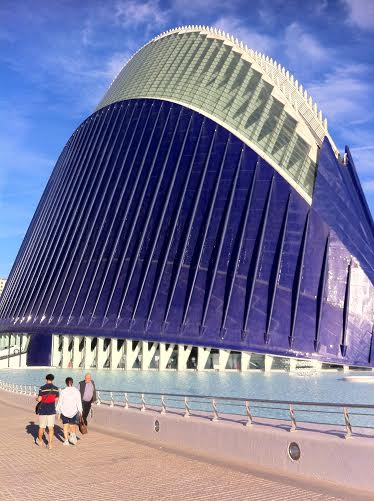
This weekend has been full of sports for me, specifically the Valencia Open and another football (soccer) game! I spent pretty much all day friday at the Ágora, a small building that houses the Valencia Open. In this building I checked off one the biggest ticks on my bucket list, watch Andy Murray play. Murray went on to win the tournament!

Ágora

Ágora

Saturday night I went to my second Valencia football game, and it did not disappoint. In this derby game, Elche (another team from the Valenciano region) came to la Mestalla and took a thrashing from los Che. The final score 3-1! Valencia now stands at fourth place in la Liga, only two points away from first place Barcelona.

unnamed-1

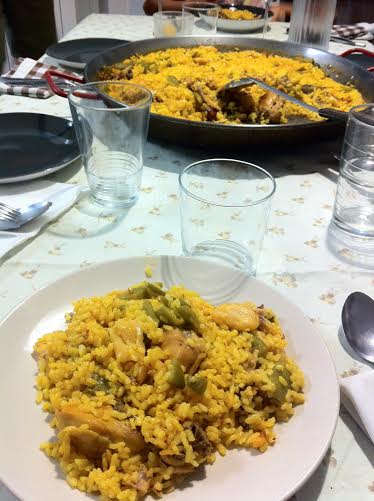
Finally, I cannot believe I have not posted a photo of Paella yet, but here is a picture of my Sunday lunch!

unnamed-2

This coming weekend I will be heading to Barcelona, so if the post is delayed I apologize in advance! Talk to you all soon.


Oliver in Spain: Busy Weeks Call for Relaxation

October 23, 2014

This week I have been putting my nose to the grindstone as it is midterms week. It has pretty much revolved around studying for these exams, however I was able to find some fun in between chapters.

Last weekend my program offered a free (that’s right free!) excursion to a small town in the Valenciano province known as Xátiva. In Valenciano it is pronounced sha-ti-vah, for those of you who were interested. We were given a tour through the city which included a look into its famous church. This church is permitted to bear the symbol of the Vatican because it is one of the only cities in the world that is the birthplace of two Popes.

Collegiate Basilica, built in the 16th century

Collegiate Basilica, built in the 16th century

The catholic history isn’t even the most interesting part of this city. On the cliff tops that protected the city from invasion lies a castle. Lucky for us, we were given the opportunity to hike up to this castle and explore. I took that opportunity to heart and frequently went off the main road to make the trek a little more interesting. When we got to the castle we were rewarded with incredible picturesque views of the rolling mountains that surround this small city.

Castle of Xátiva, built in the 11th century

Castle of Xátiva, built in the 11th century

In addition to this “field trip” my friends and I decided to embrace the European culture and get haircuts. We went to a local peluquería (salón) in Valencia and showed them pictures of popular soccer players while asking the hair dressers to make us look like them. This resulted in the shortest haircut I have ever had, but also resulted in the best game of soccer I have ever played with 4 goals…there’s no way that was just a coincidence.

A shorter version of Paco Alcacer!

A shorter version of Paco Alcacer!

Since this has been one of my longest, uninterrupted, stints at home in Valencia, I have become a lot closer with my host family. My host sister has moved to Zaragoza, about three hours north by car, so she is more or less out of the picture for now. My older host brother, Guille, has been busy with late classes so I do not see him very much either, other than the late night movie watching. That leaves Mark. Mark and I have been spending my downtime playing videojuegos and watching dibujos (cartoons). He is a funny little guy who has become very comfortable with me being around. I look forward to coming home so I can beat him in Fifa. He may have Spanish blood but I trained all last semester to play Fifa with the best.

Hermanos

Hermanos

I have big plans for this weekend that include going to see my favorite tennis player, Andy Murray, play in the Valencia Open this friday, going to a home soccer game at la Mestalla on Saturday night, and the beach on Sunday. Even in the midst of a busy week this place never ceases to make me smile. I absolutely love it here and am a little sad that I only have…what…8 weeks left? Gotta make the most of it!!


Jack in Czech Republic: My One-Month Mixtape

October 21, 2014

I’ve been in Prague for a little more than a month, and I can’t decide if that’s an eternity or a blink of the eye. On one hand, I feel like I just got here, and I am still in the process of learning the city. Yet midterms (yay, midterms!) are creeping up, which will in a way mark the midway point. At the same time, last week feels like, well, a lot longer than a week ago. Time doesn’t really make sense to me.

Originally I decided to write a one-month summary of my time in Prague. I then realized how boring of a post that would be. So instead, I figured I’d have my pals John Lennon, TLC, and some others help tell my tale. This is my one-month mixtape:

Small Town –John Mellencamp

I’ve lived in small towns for most of my life, so living in the heart of a large city has been an adjustment. So far, so good, though. My one complaint would be the constant noise coming from the street below my second-story window, but the accessibility of, well, everything and the constant activity makes up for the noise. I’ve heard cities are typically expensive, but…

Thrift Shop – Macklemore

Prague is like one massive thrift shop in the sense that everything is so cheap. This creates a problem, however, because since everything is cheap, I buy too many unnecessary things to embrace the cheapness. So because Prague is cheap, I’m spending a lot of money. Makes sense, right?

No Scrubs — TLC

People dress too nicely in Prague, which leaves me, a scrub, trying to keep up. So many sweet shirts, and nice pants! Ugh, all I want to do is go to class in sweatpants.

You Are a Tourist – Death Cab For Cutie

That’s right, Ben Gibbard. I am indeed a tourist. Since I’ve been here for a month, I try to convince myself I’m a local – but, let’s real; I’m not. I still get all googley-eyed walking around this gorgeous city. And the Czech students in my classes sometimes remind me I am a tourist. Thanks guys!

Imagine – John Lennon

Naturally, my favorite spot in Prague is a popular tourist attraction. The John Lennon Wall just has such a sweet aura, though. Students created the wall in the 1980s as a means of protesting against the slowly dying Communist regime. They would decorate it with Lennon quotes, Beatles lyrics, and practically any message of peace. People have continued sharing their messages of peace and love, and the wall seems to transform every few weeks. I’m looking forward to making my fourth trek to the wall this weekend when a few friends visit me.

Tie Up The Tides – Quilt

Additionally, the wall embodied Prague’s underground music scene that existed during the Communist era. Communism is gone, but the music scene remains. There seems to be some cool show every night. I’ve managed to check out a few places, and have yet to leave unhappy. Quilt was my favorite random show I’ve seen here.

Taking Care of Business – Bachman-Turner Overdrive

I swear I do some productive things too. For example, I intern at Transitions Online, an online publication covering Eastern Europe and Central Asia, two or three days a week. Typically, I write a piece for the site’s daily news briefing, which I love. In addition to the work, I’ve met some interesting people from around Europe and have been exposed to a part of the city I probably wouldn’t have explored otherwise.

Save Tonight – Eagle-Eye Cherry

We get social at Transitions, too. One night, a group of us did some trivia-night event, and had a blast. I didn’t help the team too much though. My one contribution: for a name-that-tune portion I nailed Save Tonight when no one else in the group knew it. Score one for Jack.

Ohio – Crosby, Stills, Nash, & Young

I go to school too, I promise. My favorite course thus far has been a 1960s and 1970s U.S. history course. Before registration, I knew I wanted to take some sort of American history course so I could compare it to American teachings. I pounced on this course as soon as I could, since this era is so fascinating. I hoped for a new perspective, and wow, did I find one. My ultra-traditional professor and my forward-thinking class constantly clash, which creates great discussion. In one discussion, he blamed the students for the Kent State shootings. In another discussion, he mentioned his distaste for Crosby, Stills, Nash and Young. So here you go professor, CSNY criticizing the government for the Kent State shootings.

Rather Be – Clear Bandit featuring Jess Glynne

Yes it’s cheesy. Yes it’s cliché. But right now, there’s nowhere I’d rather be than Prague. The past month has been incredible.

Thanks for reading!

Selfie of the week: Because I am an egotistical millennial, here is the selfie of the week:

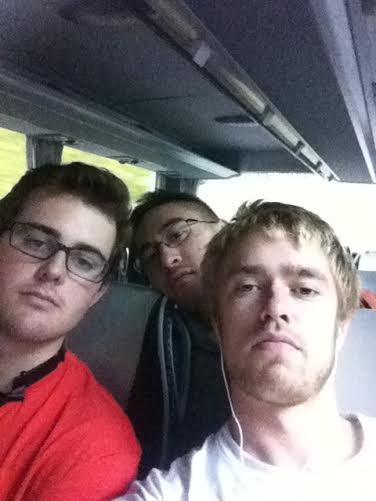
You’re in luck… Two selfies!

The only bad part about our trip to Krakow was the eight-hour bus rides. And even they weren’t terrible.

The only bad part about our trip to Krakow was the eight-hour bus rides. And even they weren’t terrible.

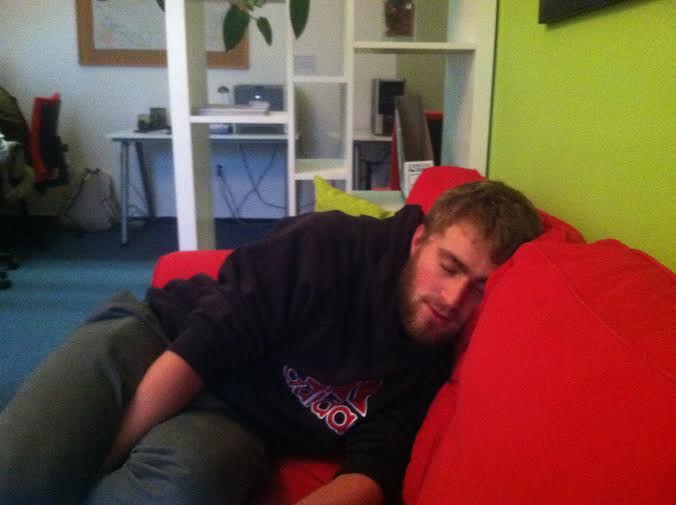
Doug slept, though. Lame.

Doug slept, though. Lame.


Diana in Germany (Delayed) Week Four: Double Dose Part 1

October 6, 2014

Sorry for the delay everyone! I have been so busy with academics and travel that I am behind by a week! So what does this mean for you? Glad you asked. This means two blog posts are coming your way next week in a little thing I like to call Double Dose Diana. One post about travel and one post about everything else. This is the post about everything else.

Flat Talk

My flatmates are flabbergasted by the price of college in America. This spurred many a conversation so far. The students I have talked with barely pay anything or get paid to attain a higher level of education. In America there are several more affordable options than paying the sticker price for a private school, such as University of Richmond at almost $57,000 a year. For instance UR gives wonderful aid – I attend on full scholarship. There are also 4-year public schools averaging $21,000 a year and community colleges for much less. All told though, the average student debt in 2013 for U.S. college graduates was over $30,000, a decently horrifying number to some Europeans whose governments subsidize post-secondary education. Germany actually just passed a resolution that public college tuition would be free for all German students. Lucky them!

​A viral photo on Facebook after the announcement that German university will be tuition free.

​A viral photo on Facebook after the announcement that German university will be tuition free.

I brought up another issue close to my life and to University of Richmond: rampant sexual assault in colleges. About 12% of female German Uni students experience attempted or completed rape in German colleges vs. 25% of female American college students. So basically, it’s too dang much in both places. It also seemed to me that the German uni students I know rarely have conversations about sexual violence as they had to research what the rates were.

Of course we have also discussed obesity and the general (lack of?) health in America. Simon notably stated, “America has one day of independence and 52 of eating badly… land of the free, home of the fat.” That one stung a bit. I think there is a general lack of healthy food available in America, especially for people who do not make a ton of money. We have a lot of work to do here as a country. Only recently I learned about food deserts in America. These areas have no nearby, accessible grocery stores. Many people in inner city areas like this rely on public transportation, but that isn’t going to take you to the grocery store 20 miles away quickly, if at all. Here in Freiburg, I can walk for 3 minutes and see 2 grocery stores.

Finally, I always knew Europeans eat with their fork in their left and their knife in their right, no matter if they are left or right handed. As a right-handed American I always eat with my fork in my right hand until I need to cut something and switch hands briefly. My flatmates had never noticed this phenomenon! Last night during my weekend travels, I looked down and realized I finally was eating in the European style!


Study Abroad Bucket List

I was supposed to have this list before leaving the US. However, I knew I had no clue what my life would be like and set to settling in first before solidly deciding on an official “I have to do this” list. Here are the top 20 left to do, accompanied by pictures of some of the ones I have already completed so far!

1. Climb the Münster Cathedral Tower
2. Go to the rooftop restaurant, Skyda
3. Eat international food from every stall in the Markthalle
4. Eat a Turkish Döner from Euphrat
5. Try on a dirndl
6. Eat at the most stereotypical restaurant for German food in Freiburg, Martin’s Bräu
7. Hike up to the tower on Schauinsland mountain
8. Go skiing for the first time
9. Take a paddle boat out on Titisee Lake
10. Getting through a meal without the waiter or waitress switching to English
11. Enjoy the thermal baths of Baden-Baden
12. Visit nearby French cities such as Colmar and Strasbourg
13. Slide down the longest tunnel slide in Europe at Baumkronenweg
14. Explore Neuschwanstein castle
15. Travel through the exhibits at the Augustiner Museum
16. Watch a soccer game in the Freiburg stadium
17. Ride a boat on the Rhine River
18. Join a University of Freiburg extracurricular activity
19. Watch a Baltimore Orioles game in an Irish pub called O’Kelly’s
20. Lounge in the botanical gardens


​The Black Forest cake my friend Anne and I made. This was one of the items on my bucket list that I already checked off!

​The Black Forest cake my friend Anne and I made. This was one of the items on my bucket list that I already checked off!

The End of German Class

The last week of German class was much more difficult as we leaned new verbs called separable verbs in addition to learning travel vocabulary. Frau Snuggs made no signs of letting the class off easy, which is wonderful. When a professor expects a lot from me, I tend to work harder. All in all, we made it through 10 of the 12 chapters in our book in just 3 weeks! Our test was on a Wednesday and I’m proud to say my 10 hours of studying paid off. I got a 1,0 on the test and in the class, which is an A! This is how grades work for class:

​German gradingsystem as compared to American grading system

​German gradingsystem as compared to American grading system

The morning of our last day, which was two Fridays ago, we went to the student café together for breakfast. Then we had a “graduation ceremony.” This ceremony was pretty awesome as all of the German students for this three week program attended. One of my classmates, Quinn, and his wife sang with a choir in front of the whole crowd. We received our grades afterwards and enjoyed the spread of food and drink the program set out for us. I am so thankful to Frau Snuggs and my other German classmates – this was an amazing beginning on the journey to German fluency.

OH yeah, I also surprised my class by showing up with a completely new hairstyle and color.


​​I loved all the people in my German class!

​​I loved all the people in my German class!

​Our teacher, Frau Snuggs was amazing.

​Our teacher, Frau Snuggs was amazing.


First time getting my hair dyed!

First time getting my hair dyed!

A New Class

This past week my first environmental class began, but we only had a three day week! This class is called Ecology and Management of Forest Landscapes in Southwest Germany and the Swiss Alps. The format of this class is very unique. We have lecture and student presentations one day and then the next we go out into the field. This week, we took a bus up Schauinsland mountain and hiked down the rest of the way. We made frequent stops to talk about the history, geology, vegetation, etc. at different altitudes. At the end of the day I was tired and very content to take a hot shower. Hopefully our trip next week to the Rhine River Valley will be a bit less strenuous!

Next Post

Stop by the blog mid-week as I am planning to post about my travels outside of Freiburg! It will include details and analysis of my solo trip to Brussels and my trip with fellow UR Spider, Masnoon Majeed, in Paris and the Loire Valley. Finally, read some travel tips that come from my recent experiences.


Diana in Copenhagen: Getting Around the City

October 6, 2014

As in any city, there are many ways to get around Copenhagen. It is quite small, 34 square miles and about half the size of Richmond, which makes moving throughout it pretty simple. Unlike Richmond, however, very few people choose cars as their primary mode of transportation. Danes prefer two wheels to four, and bike more than anywhere I’ve ever seen. They also walk a fair amount and take full advantage of their great public transit system. I have found Copenhagen to be quite navigable and thought I would give a breakdown of the different modes of transportation available to residents here.


Biking
Denmark is famous for its biking culture. Before I came here, people told me that everyone bikes and they bike everywhere. I took this note in passing and greatly underestimated what they meant by the word everyone. Danish businessmen and businesswomen bike in their suits to and from work. Women bike in heels and stylish dresses. Children bike behind their parents on small plastic tricycles. People even bike to go out at night, which is one thing I actually might advise against. The weather hasn’t gotten too wintery yet, but I’ve been told people won’t even let driving rain and brutal temperatures keep them off the bike paths.

A tiny boy riding a tiny bike outside of my dorm. There's a school or kindergarten right next door so I see lots of children around drop-off and pick-up times. Sorry the picture's a little blurry!

A tiny boy riding a tiny bike outside of my dorm. There’s a school or kindergarten right next door so I see lots of children around drop-off and pick-up times. Sorry the picture’s a little blurry!


Hopefully this will give you an idea of what I'm talking about. So. Many. Bikes.

Hopefully this will give you an idea of what I’m talking about. So. Many. Bikes.

On that note, I’ll add that the infrastructure of the city completely allows for this bike-obsession. Bike lanes run parallel to every street and they even have their own separate traffic lights. There are smooth ramps up stairs at metro stations to make it easier for riders to bring their bikes along too. At any metro stop or train station you’ll see upwards of a hundred bikes and the trains themselves have cars where you can actually “park” your bike and find a place to sit. Biking is a good way to save money on a car or public transit, and it is also popularized for being an environmentally friendly way to get around.

A parking station for your bike on the train. There are different cars where bikes are allowed and not.

A parking station for your bike on the train. There are different cars where bikes are allowed and not.

My take: If any of you readers follow me on social media you might already know that I bought a bike upon my arrival to Denmark. I went to a few bike shops and worked my negotiating magic before finding a great deal with a woman through a Buy-Sell-Trade Facebook group. I named my bike Gwen and, I’ll admit, became a little obsessed. I would recommend that anyone staying in Copenhagen for a semester or longer buy a bike. Economic reasons aside, having one has been an amazing experience and has made me feel like I’m really immersing myself in the city’s culture. It’s easy to bike to class, to the gym, and to friends’ places and it gives me a much fuller view of the city than I ever would have from a metro seat. I’ll spare you the cliché of talking about the wind blowing through my hair and how freeing it feels, but take my word for it.

This is my beautiful bike Gwen! (Please withhold judgment of me for naming her.

This is my beautiful bike Gwen! (Please withhold judgment of me for naming her.


Walking
Like I said in the introduction, Copenhagen is small, which means walking is a pretty good option to get around. It takes longer than other alternatives, of course, but if time is a non-issue walking is a great choice. Pedestrians here are different from those in the States though, in that they actually follow the rules. At every crosswalk where you see a little red “do not walk” illuminated man people actually stop—an action I rarely see or practice back home. In my experience, I will cross a street if there are no cars coming and it is safe to do so. In Denmark, however, if you happen upon a crosswalk in the middle of the night on an empty street you will likely find pedestrians waiting their turn to legally cross. Their lawful obedience is due in part to a threat of a 700 kroner ($118.86) fine if they are caught. That being said, I have only seen one police officer roaming the streets in my ten-week stay in Copenhagen so far. This leads me to believe that Danes are generally just a very respectful and rule-abiding people who enjoy a much safer, yet inefficient, way to walk.

My take: I respect their obedience, I really do. I just don’t understand it. Even when I’m in no hurry I find it silly to halt my progress and wait on one side of the street when there isn’t a car in sight. Besides this, walking is quite nice here. The sidewalks are kept very clean, they are well lit, and you don’t have to worry about sharing the space with cyclists because of the expansive network of bike lanes. Like biking, walking also gives you a nice chance to take in the city and explore its personality.


Public Transportation
Public transportation in Copenhagen falls into one of three categories: metro, train, or bus. All are really easy to use and the same slip or pass will gain you access to any of the three. They’re all very clean, sleek, and modern too which makes for a pleasant ride. The options for payment differ from systems in the US by operating on somewhat of an honor system. That is, you can get on and off as you please without paying and just hope you won’t encounter a uniformed agent asking for your ticket. Like jaywalking, this system runs on honor and the threat of a fine, this one for a whopping $130. There are other options to buying a ticket each ride though, including getting a monthly pass or purchasing a card called a Rejsekort. Since I bike most places, I chose the latter option which gives me a discounted fare. To use it, I put money on the card and simply tap it against a sensor to check in and out at the different stations. With the Rejsekort, each trip costs about $2.50 where a monthly pass is priced around $55. There are other options available too, and which is best for you depends on how frequently you’ll be riding the lines.

The metro line we use. The "S" marks where trains leave from, my dorm is off Flintholm, Norreport is city center, and Lufthavnen is the airpo

The metro line we use. The “S” marks where trains leave from, my dorm is off Flintholm, Norreport is city center, and Lufthavnen is the airpo

My take: I took the Commuter Rail to school every morning in high school and I have to say, the Danish network of public transit is an upgrade. I’ve also ridden the metro in Boston and New York and the system in Copenhagen is significantly nicer and more pleasant to use. As for the honor code method, I’m indifferent. Once or twice I’ve accidentally ridden a few stops without a ticket and was lucky enough not to get caught. I have friends who do so frequently and have never been stopped. That being said, I’ve been checked for my ticket about five times and an agent recently fined three friends when they risked travelling with expired monthly passes (I feel for you guys). A quick calculation shows that if I rode the metro more than fifty-two times without being caught it would be financially worthwhile in the end. I’m smart enough to recognize though, that those odds are not ever in my favor and I pay for my rides.


Cars
There are far fewer cars in Copenhagen than you would expect to find in a city, and that’s because of their unbelievable expense. There is a 180% sales tax on cars. Let that sink in. Furthermore, gas prices are astronomical. If you think prices in the US are bad, I would think again. A gallon of regular gas in Copenhagen will cost you about $8 compared to $3 ones in the States. Considering this, most cars you do see are tiny. There are more hatchbacks than anything else and it makes me think my 2008 Scion xD would fit in great over here. As far as taxis go, they exist but aren’t frequently used. You can imagine how expensive fares would be and they’re relatively unnecessary when the metro runs 24 hours a day.

The cars in Denmark are very small compared to most you see in the United States.

The cars in Denmark are very small compared to most you see in the United States.

My take: I’ve been in a car once since arriving in Denmark and that was when I left Copenhagen to visit a friend in the city of Aarhus. She was borrowing her parents’ car for the week so we made a small trip instead of walking to the bus. Other than that though, I haven’t used a car and also haven’t missed them. Taking a taxi never even crosses my mind considering they are expensive even in the cheapest of cities. I like the lack of dependency on cars though as it provides me with a polar opposite experience than what I’ve had growing up in a suburban area. I’ve always been very reliant on cars for getting around and I’ve enjoyed becoming familiar with other alternatives.


If you ever visit Copenhagen, I have a few tips for you. After you fly,  do not take a taxi from their airport because it will be expensive, I assure you, and the metro conveniently leaves from inside the airport. Metro stops are prevalent also so I would save the money you’d spend on a taxi to buy food or get a nice drink somewhere. I would also suggest renting or borrowing a bike on your trip because it will help you to get around efficiently and give you a taste of the Danish way.

This breakdown should help you understand how to get around this amazing city, and now you should all visit so you can try them for yourselves!


Jack in Czech Republic: Oktoberfest: Truths and Myths

October 2, 2014

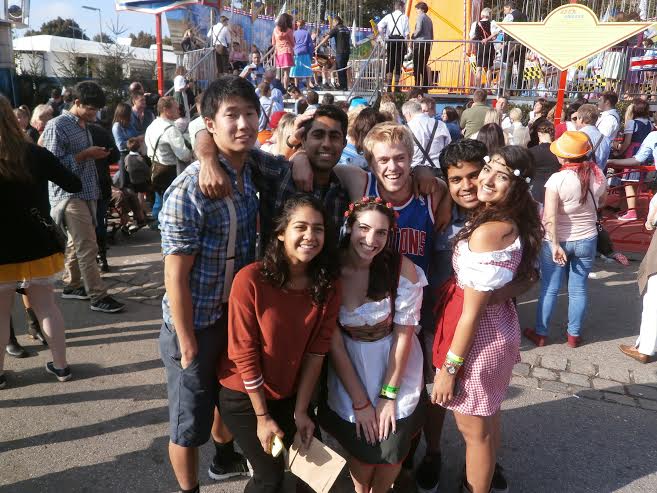
Ah, Oktoberfest. An event that somehow combines the best parts of Halloween, Disney World, a family reunion, and Beerfest into a one-month celebration. One of the few things larger than the fest itself is the aura surrounding it. Because I have a whopping 48 hours of Oktoberfest under my belt, I deem myself credentialed to separate the truths from the myths, the facts from the legends, and the moderately exaggerated from the ludicrously overstated.

You need to get there early – Myth

The tents that serve beer open at 10:00 on weekdays and 9:00 on weekends, but people line up much earlier to ensure they get into the tent of their choice as soon as the gates open. As the fateful weekend approached, everyone’s supposed wake up times grew earlier and earlier. “Dude, you better get there by 7:30 or there’s no way you’re getting in.” “My friends went last weekend and they said you need to be there by 6:45.” “I’m gonna set my alarm for 5:45.” I did not arrive before noon on either of the days I attended. And guess what? I still got into a tent. Yes, some waiting was involved, but not as much as there would have been had I woke up at some devilish time. Maybe I missed out on the fun of waking up and hating yourself for a couple hours. Oh well.

You should book Oktoberfest well in advance – Truth

You don’t really have to. But do it. Your life will be easier. I knew people who booked their trips the week before, but they seemed pretty stressed out trying to get all the logistics together. Also, many places, especially cheap hostels and nice hotels, sell out well in advance. My advice: once you know you’re going to study in Europe, link up with your friends who will also be in Europe and book the trip. It will make for a great European reunion.

Oktoberfest is all about beer and nothing else – Myth

To me, this is probably the most exaggerated myth of all. There is so much more to Oktoberfest than the beer, which I was happy to see. In fact, Oktoberfest has activities for everyone. I saw people of all ages, including babies in strollers, at the fest. There are rides on rides on rides, a bunch of different types tents and exhibits, and almost too much different food to try. You could spend a whole day at Oktoberfest without approaching one of the beer tents and not see the entire grounds.


Some friends and ventured away from the wildness inside the tents and checked out some of the rides.

Some friends and ventured away from the wildness inside the tents and checked out some of the rides.

Beer, however, is important – Truth

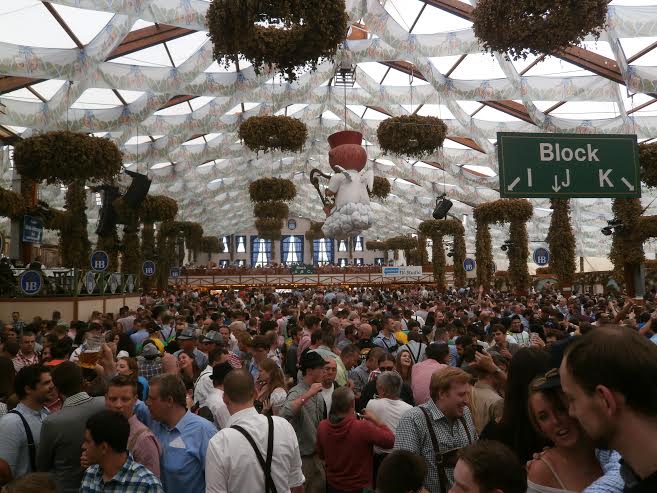
While beer is certainly not the be-all end-all of Oktoberfest, it certainly has a role. The beer is delicious, but more importantly, it comes in steins. Few things are more fun than drinking large quantities of liquid out of a massive German stein. Most of the beer is served in gigantic tents, which have an unbelievable atmosphere. Thousands of people fit into these tents, and there is continuous singing and dancing on the tables. A personal highlight was when the large band played a great version of Sweet Caroline.

Gigantic is not an understatement.

Gigantic is not an understatement.

Oktoberfest defines German culture – Myth

Whenever I brought up Oktoberfest to a Czech or German, they all seemed to give me an odd smirk and a quick chuckle before responding. It’s actually amazing how they all do it the exact same way. I’m not positive, but I’m pretty sure it’s code for “Haha silly, naïve American. Look at you trying to be all cultural. You’re annoying.” I asked one German from Hamburg in one of my classes if he goes most years. Mistake. He legitimately laughed in my face, and said he never went and has no real desire to go. While there certainly was some celebration of German culture, Oktoberfest seems to be as much of a tourist event as anything else.

Stay out of the waitresses’ way – Truth

The waitresses are absolute machines. They are machines partially because of their work ethic.  They carry large amounts of drink and food, navigate through dense crowds, and practically never spill nor slow down. They are also machines in the sense that they will not stop to talk and they won’t slow down if there’s an obstacle. So if you’re in their way, uh, move, or you will get steamrolled. And don’t ever trying tapping them on the shoulders or getting their attention when they are carrying food. You could get yourself a good ole’ German tongue-lashing. And you won’t get whatever it was you wanted.

Holding one stein is hard enough. These waitresses are constantly carrying eight. Eight!

Holding one stein is hard enough. These waitresses are constantly carrying eight. Eight!

Oktoberfest is overhyped – Myth

After months of build up, the hype surrounding Oktoberfest reached extreme levels. The anticipation began at UR last spring and carried through the summer. In Prague, it exponentially grew, as it seemed like someone was always talking about Oktoberfest. Despite the absurd amount of hype, Oktoberfest easily exceeded my expectations. There is just so much to do, so many people to see, and so much fun to be had. After Oktoberfest, most people who I spoke with about it said the same thing. If you study abroad in Europe, you have to check out Oktoberfest.

I must have mixed up my lederhosen with my Hawaiian shirt. Maybe next time I’ll get it right.

I must have mixed up my lederhosen with my Hawaiian shirt. Maybe next time I’ll get it right.

Thanks for Reading!

Selfie of the week: Because I am an egotistical millennial, here is the selfie of the week:


A few thousand of my friends and I at Oktoberfest.

A few thousand of my friends and I at Oktoberfest.


Diana in Copenhagen: The Difference Between Danish and American Classes

September 25, 2014

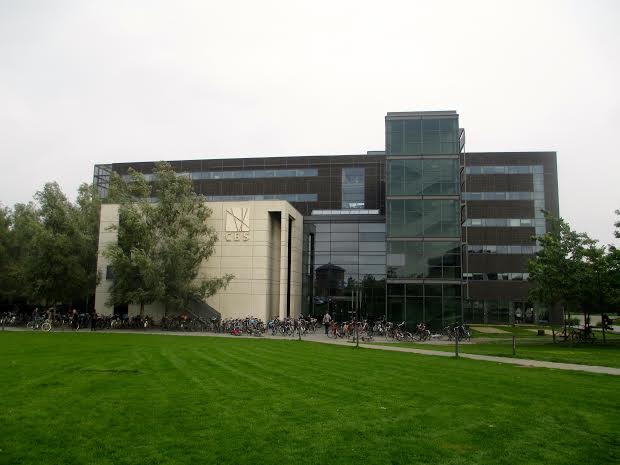
While I’ve written a lot about the “abroad” aspect of studying abroad, I would now like to pay some attention to the “study” component. I’ve found that academics in Denmark, more specifically at Copenhagen Business School (CBS), are strikingly different from what I’m familiar with back in the States. CBS has over 20, 000 students attending the university, which is significantly more than the 3,000 undergraduate ones at Richmond.

Despite the large discrepancy in total enrollment, the class sizes are not grossly different from school to school. I’m currently taking three classes, all lectures, and will have a fourth starting halfway through the semester. Just one of these lectures is overwhelmingly large and fits my expectations for a school that’s roughly seven times the size of the one I’m used to. The other two are comparably sized to those I see in the Robins School, though, and professors engage students by asking questions and knowing the names of some class attendees.

This is my biggest class but it should give you an idea of what class sizes are like. I took this right after our teacher called our first break. We usually get 2-3 breaks every class because each lecture is about three hours long!

This is my biggest class but it should give you an idea of what class sizes are like. I took this right after our teacher called our first break. We usually get 2-3 breaks every class because each lecture is about three hours long!


All of my teachers teach from a PowerPoint and students take notes on their computers.

All of my teachers teach from a PowerPoint and students take notes on their computers.

The reason why class sizes seem so comparable, however, is because far fewer students actually attend lectures from week to week. Teachers say things like, “Now pull up the Excel spreadsheet to work on problems. If you don’t want to participate you can go take your break now” during class. No attendance is taken. No homework is checked. There are no quizzes, papers, or midterms, and one hundred percent of your final grade is your exam score. There is barely any accountability throughout the semester to keep up with your studies despite the looming thought of that four-hour long written examination at the end of the course. And even that is usually open book!

This system is completely different from ones I’ve experienced in attending small private schools all my life. I have never been granted the anonymity that accompanies large lecture halls with countless unfamiliar faces and I’ve always been expected to do work and participate. Since first grade, my class sizes have been small and I’ve had teachers who saw it as their job (well, because it was) to keep engagement high and ensure students learn the material at every step.

At Richmond, there are some professors who believe that their students are truly adults and therefore expect more independence from them. In my experience, however, this means that those professors don’t walk around and check homework, but instead use checkpoints throughout the course to keep their students accountable. They utilize tools like papers, quizzes, and midterms to ensure that the work is always being completed. The expectation of independence in Denmark is astounding compared to the standard I’ve seen back home.

In the Danish classroom, if a teacher asks a question that results in silence they will not cold call (randomly choosing a student to respond), but rather answer the question themselves. Yet again, this differs from what I’ve come to expect in America. I vividly remember my first class in the Business School, Microeconomics with the late Dr. Dean. I found him to be an amazing professor, one of the best I’ve had, because of his ability to make me want to excel and impress him. Yes, he had daily quizzes on required readings, but the greater incentive to do well for me was grounded in the fact that he called on his students randomly. You had to come prepared if you wanted to convey your intelligence and avoid the social awkwardness of saying something dumb in front of your peers. I also felt satisfied in answering these questions correctly—it felt as though I had been personally challenged and emerged victorious. I have yet to feel this kind of desire to prove myself and excel in Danish classrooms so far.

This is Solbjerg Plads where I have my Competitiveness and Operations Performance class. It also has a cafe that turns into a bar/nightclub on Thursdays (when is 815 going to start doing that?)

This is Solbjerg Plads where I have my Competitiveness and Operations Performance class. It also has a cafe that turns into a bar/nightclub on Thursdays (when is 8:15 at Boatwright going to start doing that?)

That being said, the Danes handle their structure well. To American students and those who have a similar educational system, the Danish structure seems like a free ride. No homework? No quizzes? No problem! I would analogize the feeling to the freedom that results in the infamous freshman fifteen. Danish class is like D-Hall to a naïve eighteen year old. They have finally escaped the paternal eye and wagging finger that used to stop them from eating froyo for dinner every night and now they answer to no one. Obviously this is not without its negative repercussions.
I like to think that I would better fit in this system if it weren’t so disparate from what I’m accustomed to. That is, if I didn’t experience that wave of freedom I just explained. That being said, I’ve identified three alternate incentives to work hard and do best in the Danish educational system.

  1. Group Projects: I have yet been assigned a group project, but they are quite common in the Danish school system. This activity encourages more work because you are faced with a responsibility to others. It is easy enough to forego reading to your own detriment, but most people respond to the social obligation of not bringing the whole team down with you. You work so you don’t let your classmates down, but end up benefiting yourself in the process too.
  2. Professional Connections: Professors at CBS are highly qualified and connected in their respective fields. Many students are focused and driven to excel professionally and recognize the value of building a relationship with the man or woman who stands at the front of the lecture hall. This means many students work hard to participate in class, speak with professors during breaks, and work diligently in the hopes of building a connection that could lead to a job or internship.
  3. Reduce Myopia: This one is simple in theory but challenging in practice. You can be less nearsighted in academics by looking at your circumstance from two different perspectives. The first is recognizing that even though there are fewer checkpoints along the way in Danish classes, the journey still culminates in an exam. To excel, you must constantly remember that end and disperse work over time to avoid a tsunami of cramming in the final weeks. You can extend your sights even further though and consider why you’re even enrolled in college in the first place. For most, the final goal is not simply to get a good grade in a class, although that is often integral to the process. The driving objective of these classes is to learn and to use your acquired knowledge to find success in life personally, financially, professionally, or otherwise. With long-term objectives like these, you won’t even need a teacher singling you out to keep you on track. Granted that is easier said than done.
    This is one academic building on campus called Kilen. I don't have class here but I think it's absolutely beautiful. The campus also has lots of outside areas like this to relax and you see students hanging out in them all the time.

    This is one academic building on campus called Kilen. I don’t have class here but I think it’s absolutely beautiful. The campus also has lots of outside areas like this to relax and you see students hanging out in them all the time.

    This is the inside of Kilen. I've been amazed at the architecture and design in all of the buildings at CBS and this is certainly one of my favorites.

    This is the inside of Kilen. I’ve been amazed at the architecture and design in all of the buildings at CBS and this is certainly one of my favorites.

The Danish and American higher educational systems have their differences, but each meets the needs of students differently. I have found that I much prefer having methods in place that make me accountable for information before the exam, as they make me work more diligently throughout the semester. With that being said, I can learn and grow in the Danish system and use its approach to improve myself in other ways. It is my hope that I find my own success at this Danish university. I hope to leave Denmark with tools, like self-discipline, that will help me wherever I go.