Mel in Chile: The South Part 1

October 25, 2013

The South: Part 1

I have finally returned to Santiago from the ten-day excursion with my study abroad program. If I was promoting SIT before, I am really promoting them now! The excursions are valuable because they contextualize our lectures, readings, and discussions. The excursions allow us, as students, to move closer to the reality of the theories and discourses we are exposed to in an academic environment.

The title of this blog is “The South: Part 1” because I will divide our trip into three parts. For the first two days we traveled to Ralco, a town in the Biobío region, and stayed in cabins with the other students in our program. The next five days we participated in a homestay in small village called Valle Elikura. During this time we learned about the practice of communal tourism, engaged in discussions with community members, and heard stories of struggles and achievements of the Mapuche group. As we bid our temporary homestay families farewell in Valle Elikura, we spent the last two days around the city of Concepcion. These last days we visited a coalmine, the industrial complex of a forestry company, and had two lectures at Universidad de Concepcion.

Worry not; all of the above events will be described in detail in the upcoming posts.

So this particular post is about the first part of our excursion. We left Santiago at 10 pm on the evening of Sunday, October 13. We drove through the night and arrived to our cabins in an area just outside of Ralco at six am on a very chilly Monday morning. Biobío is the eighth region in Chile bordered by the Pacific Ocean to the west and the Andes in the east.

We all devoured breakfast like hungry wolves that morning and headed out to find our cabins. I am not a car/bus/airplane sleeper so I was tired. I planned to claim my bed and sleep well into the afternoon.

As I was wobbling through the grass, sandwiched in between the two backpacks I was carrying, I looked to the left and felt like I had been zapped awake by an electrical force. I saw the most bizarre and beautiful mountain. The peak looked like it had been split in three pieces by a lighting bolt. I thought, “Alright, this deserves some attention.” I dropped off my things in the room and, without any sleep, decided to look for a trail.

As fate would have it, there weren’t any trails leading up the mountain and the forest was too dense to create my own, so my intended hike turned into a nature walk.

The pictures will speak on behalf of the scenery much better than I will be able to describe it in words so I will not continue with descriptions.

cabins

These are the cabins we stayed in while in Alto Biobío

mountain

This is what our research methods class looked like Tuesday afternoon. The mountain is in the background.

I wanted to talk about what I enjoyed in Ralco. The town has a strong representation of Pewenche people, a group ethnically related to the Mapuche indigenous group in Chile. We were going to visit the Pewenche museum in Ralco. The last time we visited a museum trying to show “indigenous culture” we were in San Pedro de Atacama. It was an incredibly disappointing experience. Until recently the museum (in San Pedro) had an open display of a mummified body of an individual who belonged to the Atacameño group (the indigenous group in San Pedro de Atacama). The Atacameño community denounced this as incredibly disrespectful to their ancestors and an inappropriate display of the Atacameño people in general for many years. The mummified body was not removed until recently. I am positive I spoke of this in my blog post after the trip to San Pedro, but to recap; tourism in San Pedro is almost entirely based on foreign agencies. The indigenous culture is commoditized for consumption of western tourists, and the community itself is outside of any discourses and dialogue on how tourism of their region and culture is carried out. In literal terms, they are also physically outside of the center of the village. The center is now only for restaurants, tourist agencies, and hostels. It maintains a manicured “rustic” image of an “indigenous village” in order to supply tourists with the preconceived notions we have of exotic places. An anthropologist who works at the museum in San Pedro told us she will hear guides tell entertaining stories of Atacameño history to their groups that are incredibly far away from the history as told by the Atacameños themselves.

For this reason, when we were told we were going to a museum that exhibited Pewenche people and their culture, I was a bit weary and irritated.

When we entered the museum, however, I encountered a much different dynamic.

For starters, the museum was relatively small. The two people who worked there told us they were Pewenche. The young man let us know he would guide us through the museum. The museum didn’t have any displays of “ancient artifacts” produced from archeological digging sites. One section had photographs of different Pewenche people from Ralco with a caption of something they wanted to share about the Pewenche culture. Another area displayed Pewenche cuisine, including the instructions of how the food could be prepared. The other wall displayed and explained fruit and vegetables typically used by the Pewenche people in Ralco.

In the middle there were four wax figures of Pewenche males dressed in ceremonial attire, imitating a dance. Our guide told us next month he would dress in that way and participate in this dance.

This museum was a display of a living culture. The Pewenche people in Ralco designed it. They controlled the displays. Most importantly, they control the dialogue of how people outside the culture would consume what the museum exhibits.

We also visited a dam in Ralco. The building of dams is a big struggle the communities and environmental activists have in the Biobio region. I remember in my Environmental studies region we learned about the pros and cons of building dams. I particularly remember we had an exam on “clean” forms of energy so I diligently studied the flashcards of pros and cons I had created for the types of alternative energy we would have on the test. It was…a dejavu moment (i think?) to stand on the dam. I would look to my left and see a huge reservoir and look to my right and only see a tiny river. We also went inside the dam, into the control room to see the technological face of the structure. We also saw the various components of the dam, like the turbines the water turns and the magnetic sheet above it. As far as my understanding goes, the water from the river turns the turbine which causes positive and negative electrons in the magnetic sheet to move, which then generates electricity.

river

This is the river side

reservoir

and this is the reservoir side.

inside a dam

This is a section inside the dam where the crew controls….stuff.

The first part of our trip in Alto Biobío was incredibly valuable. I was incredibly happy with the museum. I also felt comfortable knowing I was not “consuming” images of an ethnic group that were built by people outside said group. It was also interesting to visit the dam and visualize not only the “pros and cons” that I kept thinking about, but also gain an understanding of how the structure functions internally.

Physically speaking, the area is incredibly beautiful

It is my second favorite museum in Chile.

Stay tuned for Part 2!


Done with Classes!

October 16, 2013

Alright, before all of the other study abroad students look at this title and feel themselves overcome with jealousy, I should explain.

I am not doing a traditional exchange program with a university in Chile. Technically I go to Universidad de Santiago de Chile, but that is only true in part. The School for International Training (SIT) is an independent organization that offers themed study abroad programs around the world. The program I am participating in right now is called “Chile: Political Systems and Economic Development”. All of the students in SIT programs take classes together. For example, my program has thirteen students and all of our lectures are in a classroom of just SIT students; we do not have classes with Chilean students as part of the program. With that said, I am not lying when I say I am done with classes. One of the characteristics of SIT is the month long independent research project students work on during the last month of studies, so for me this means November. Today we are starting a ten-day excursion in southern Chile where there are high concentrations of Mapuche communities (Chile’s biggest indigenous group). The drive will be about ten hours and we will do this during the night. The purpose of this trip is to engage in dialogue with the Mapuche community and the community leaders about Mapuche political participation, economic development, and the struggles over land rights that the government sells to multinational forestry corporations, and the Mapuche perspective of identity within a nationalist country that marginalizes indigenous identity.

We will return from this trip in late October. During the next couple of days I need to create a research proposal and make the decision to reside in Santiago for November or relocate to a place that would be more useful for my work. Then November will come and I will be in full swing on my independent research.

Now that I am done advertising for SIT, I would like to express some thoughts on how it feels to be finished with classes.

Time has passed by faster than anyone can understand until they participate in a similar study abroad arrangement. Of course this is because we literally have less time in the classroom with the excursions and the independent month. However even taking into consideration those circumstances, I still feel it is honest to say time passed very quickly.

I have truly enjoyed the group with which I spent the past two months. There are only thirteen students so we had the opportunity to become close to one another. I can say that all of them are people I would have chosen to be friends with under different circumstances. We learned about Chile together, we learned a different language, we explored Santiago, and we traveled to magnificent places and came back to hotel rooms discussing them under the lens of social progress. We sat in class together every day for the past two months learning and exchanging ideas. It goes without saying I will miss the group.

We are all meeting at the metro station in two hours to start our journey to the south. I feel ready for this next experience.

Stay tuned 🙂

Screen Shot 2013-10-13 at 8.03.01 PM

This is a picture of almost all of us…we cannot be contained within the dimensions of one photo! This is in Valle de la Luna, in the North of Chile.


Mel in Chile: Missing Richmond

October 8, 2013

Here it is!

I cannot accurately chronicle my time abroad if it didn’t include a post about how I am starting to miss Richmond. This also comes a couple of days after I decided that I would will go back to Richmond in lieu of another semester abroad.

Maybe the blog about missing UR and being excited to come back and the nostalgia that starts to hit me, would be more romantic or fitting if it were my last blog. But I will break with tradition here and talk about how I miss the red brick and grassy heaven that is the University of Richmond only a month and a week into my program.

Evidently, I am not the only one who feels this way. Our program director walked in today and said “Look, I imagine the month long excitement of being in a different country has waned by now. I know you all want to eat hamburgers again and are getting tired of eating so much bread (NEVER!). But this will pass. I promise it doesn’t last.”

After the one-month mark, I get the feeling the excitement of being abroad turns into a routine of waking up, having class during the day, hanging around a bit before going home, and finally coming in for dinner at 8 pm. After this, I start with homework/skype/reading news/reading things that don’t matter/answering emails until all this culminates into a trip downstairs for some pan con aji pebre (bread with the best spicy salsa concoction to ever be put on the market). I will be bringing 5 bottles of aji pebre upon my return to the states. This will probably last me a month or so and then I will suffer through a withdrawal phase. I could write an entire blog post about aji pebre.

The title of this post is “missing Richmond” and before I wrote the main body, I thought I was going to write about how much I missed Richmond, what I missed about it, and how I am so excited to come back.

All of this is certainly true, and I was going to write about it all without being too “You don’t know what you have until it’s gone” –ish

But then I decided not too. I will be back in Richmond and “have” all of what I miss in a couple of months.

So instead, I decided to write some things I love about living in Chile.

Pebre

Aji

Aji Pebre

How it is socially acceptable to eat a copious amount of bread

The movements for social progress

The people who perform in front of rows of cars stopped at red lights

The hot dog with fried potato chips around it

THE HOME MADE ALFAJORES BY THE LA MONEDA STATION (I can never buy just one)

The colorful stones the country has

The friendly Chileans

Chilenismos (Spanish words used exclusively by Chileans)

The Human Rights Museum

The National Library I go to study in every day after school

My walk to the university

The Andes.

The Andes.

The Andes.

San Pedro de Atacama

That good pizza place I went to on Tuesday after visiting Pablo Neruda’s house

Pablo Neruda

Pablo Neruda’s houses

Especially the one in Isla Negra

$2 Yoga classes at the studio close to my house

My host family

The delicious meals they cook
But most of all, I love sitting in the kitchen at 1 in the morning, when everyone is asleep, doing my homework while listening to a radio station that plays old Spanish, English, Portuguese, and French classic songs, with the volume super low.

The kitchen at night is my favorite place in all of Chile.

The list could be long enough to circle around the equator at least 13 times.

But nobody has time to read that!

IMG_1897

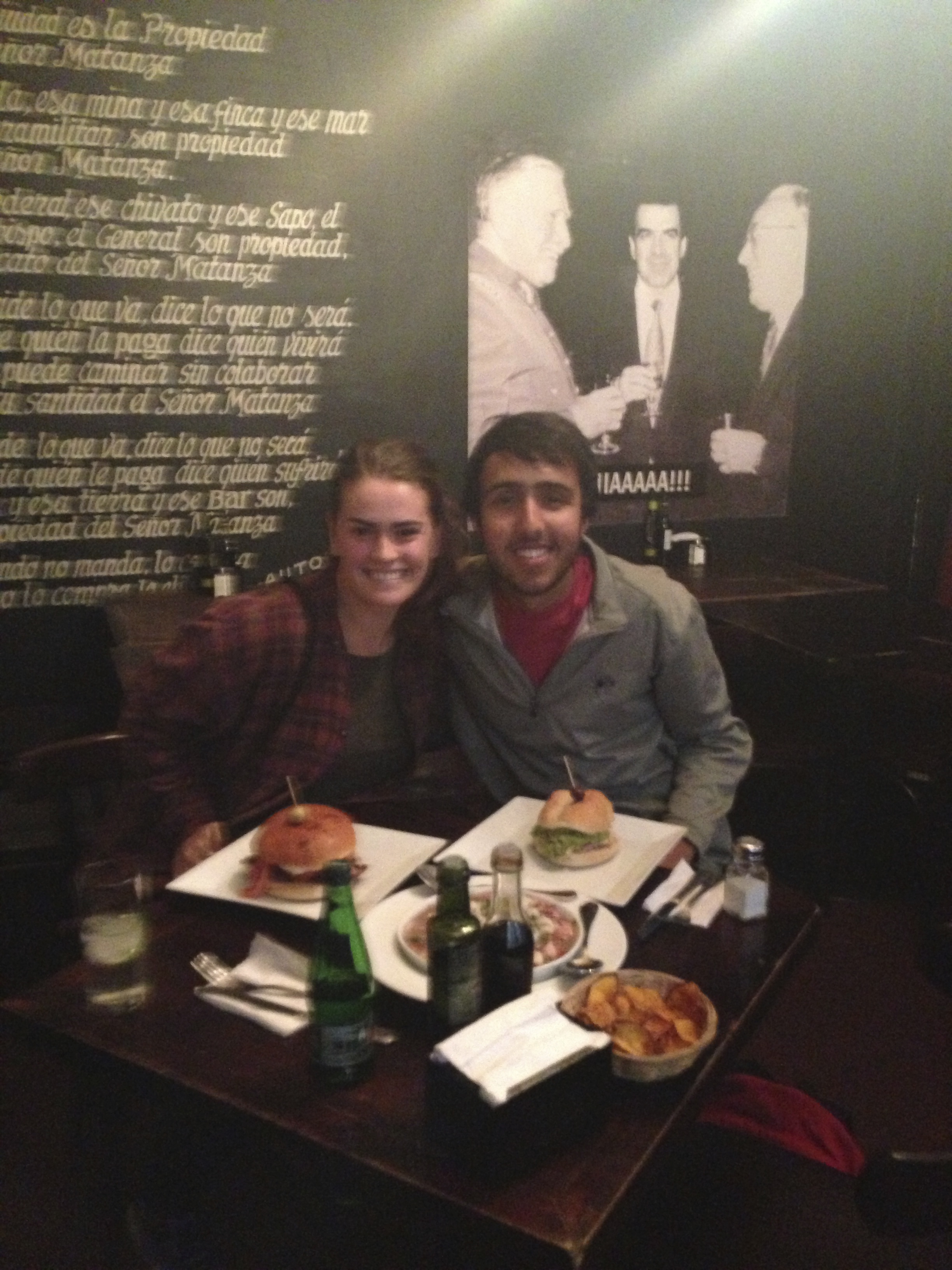
One of the most memorable days in Santiago! Neal, a UR student studying in Valparaiso, Chile, came to visit me for the day. We stopped for dinner at my favorite bar/restaurant “The Clinic”

IMG_2675

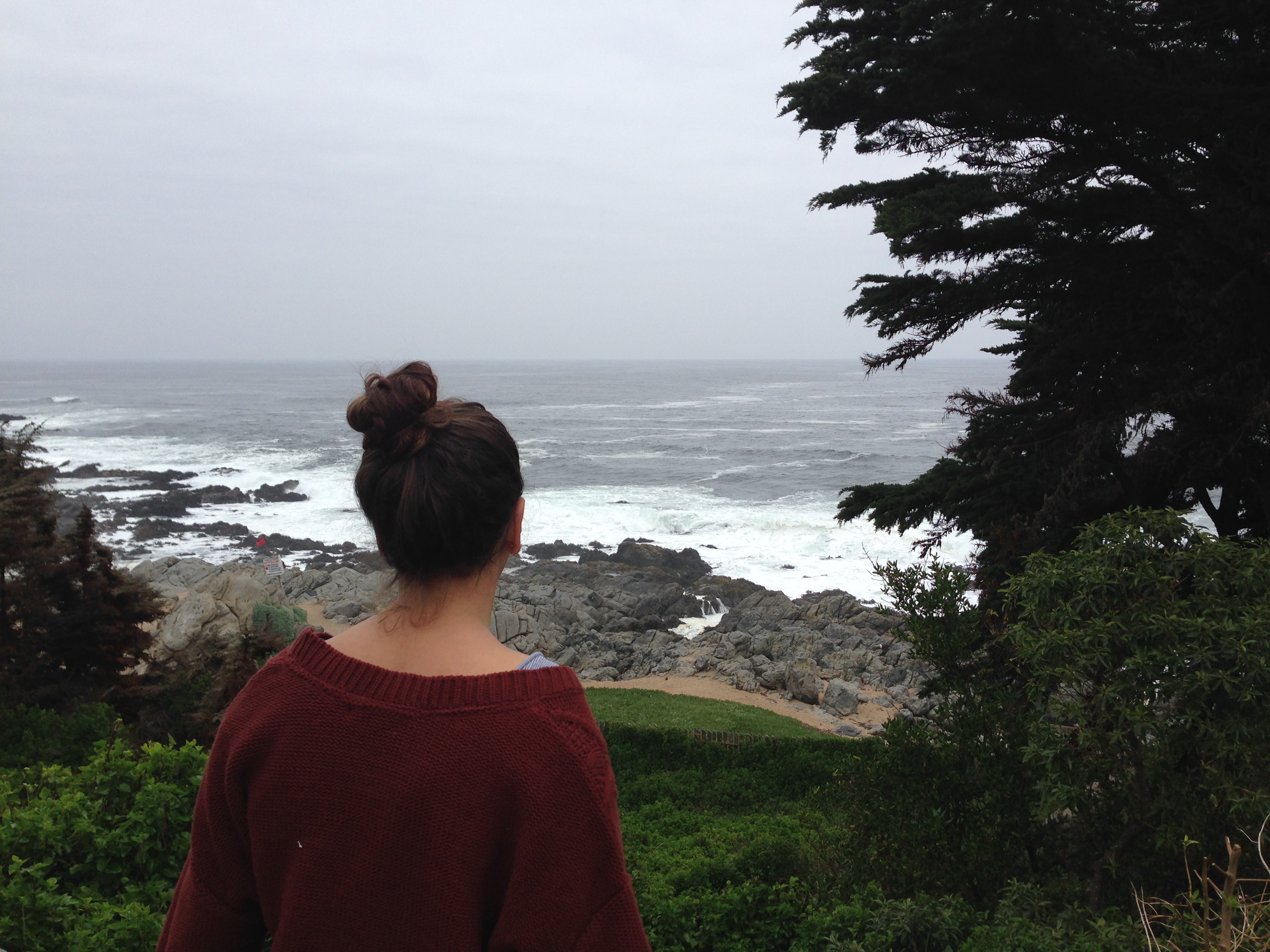
This view is from Pablo Neruda’s house in Isla Negra. I can definitely see what he loved about the place!

IMG_1823

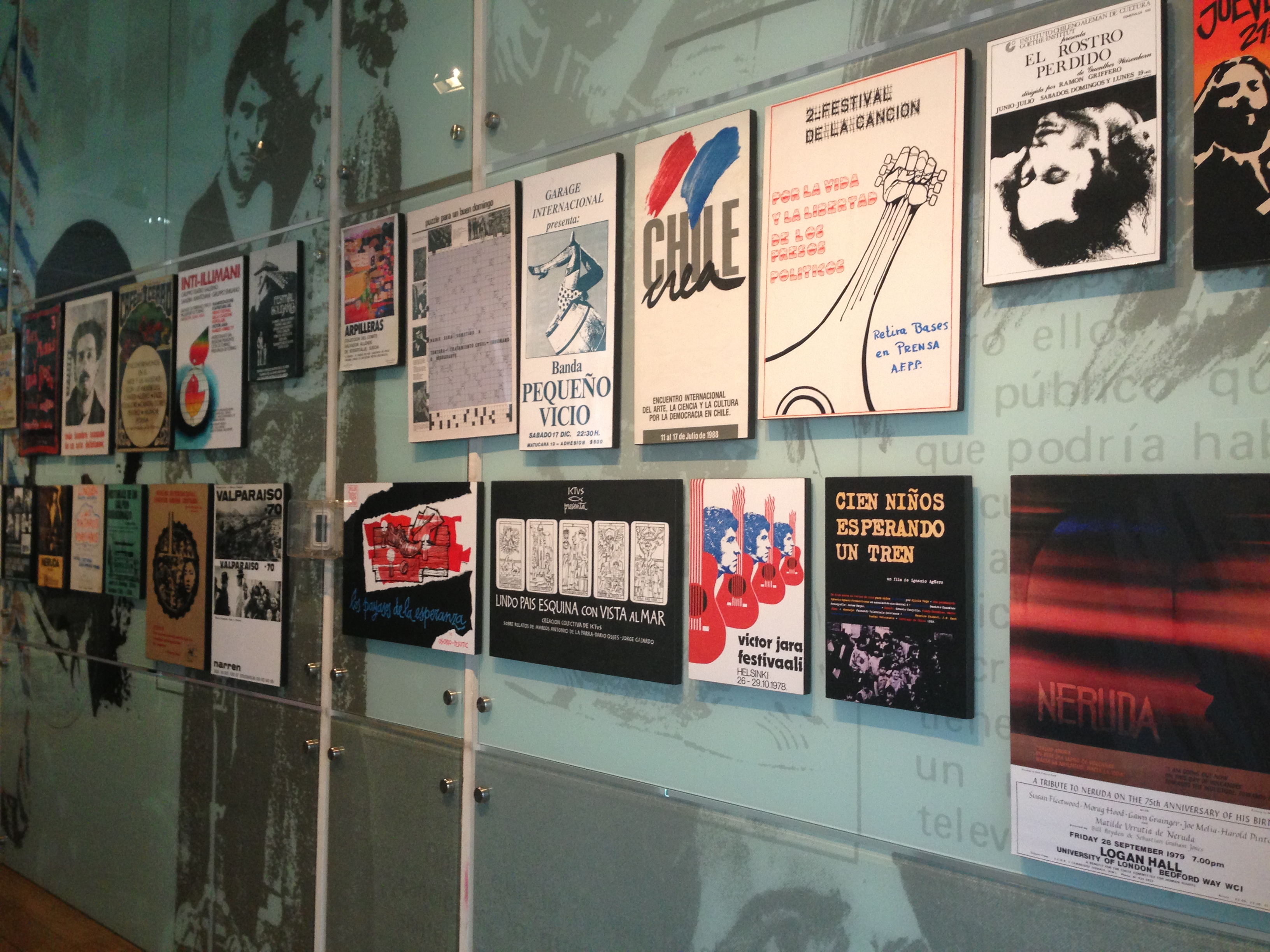
Picture from a section of the Museum of Memorial and Human Rights in Santiago. This is a museum dedicated to the 17 years of dictatorship (1973-1989/1990) in Chilean history

IMG_1765

This is the porch in my Chilean house. Now that summer is coming, it makes for a lovely place to spend a Saturday morning. We will start to have many barbecues here as well!

Hasta la próxima (until next time!) 🙂


Mel in Chile: The North

September 25, 2013

(Warning: the pictures for this blog post are awesome.)

I ended the last blog post with a picture of the Atacama Desert I took from the plane right before we landed in Antofagasta. During the next five days we (the 13 students in the SIT program) traveled through the driest desert in the world. The purpose of the trip was to bring life to the lectures about the Chilean economy. We were to do this in two ways: three days exploring the copper industry and two days in a small village which in the past two decades has become almost entirely economically dependent on tourism.

The itinerary included two classes at a university in Antofagasta- one explaining the importance of mineral mining that is done in the region for the Chilean economy, and the other one focused on the social and environmental implications of the industry. Other major experiential learning components of the trip involved a two-hour tour of one of the biggest copper mines in the world, and an informal lecture/discussion with an anthropologist in San Pedro de Atacama. The anthropologist is also from an Atacameño community, which is the indigenous group in San Pedro de Atacama.

First up, the two lectures at Universidad Catolica del Norte in Antofagasta and the visit to the Radomiro Tomic mine in Calama:

The lectures were widely different but also complimentary. The first one was on the regional economic development of Antofagasta and the second one was on the economy and human rights. Fear not, this blog will not be a drawn out summary of the lectures. I mention them because they add to the perspective I am gaining about Chile and help to shape my experience here.

The region of Atacama is rich in minerals. There is an immense area including the south of Peru and parts of Bolivia that are lucky enough to be on the fault line of Pacific and South American tectonic plates that endow the countries with a rich variety of minerals. Unfortunately, this also generates what I judge to be modern colonialism.  Foreign investment pours into mineral rich regions like Antofagasta, international companies begin to mine, make unbelievable profits while draining regional resource wealth, and at the same time secure support from the national government . Open and unregulated markets seem to be the unspoken rule for developing countries. Many economists say this generates jobs for the local communities but it hardly seems to be the case for such a highly technological industry like copper mining. I learned that for every million dollars of investment in the copper mining industry in Chile, only one direct job is created.

Another issue is the danger of an export-driven national economy based on natural resources. How far away are we from developing a sustainable substitute for copper? How much longer until the minerals run out? What if the costs associated with mining and refining copper become greater than the market value of this resource?  Who will suffer from these probable future events? Will it be the CEOs of international corporations or the national economy dependent on the mineral? What about the effects on communities who for 100 years have been dependent on jobs related to the mining?

That is for you to ponder (I like to imagine I have thousands of avid readers.)

After the lectures we traveled to Calama and had a free afternoon of shenanigans until the next day when we visited the Radomiro Tomic copper mine. According to the booklet (more like book) the communications department gave the group, “each day the mine extracts 600,000 metric tons of material.” In the Radomiro Tomic mine, and I think throughout the region of the Atacama where most mines operate, only 0.5% of the rock is copper. I will not continue listing facts about the mine because those can be accessed from anywhere. My personal experience in the tour was a very overwhelming one. The number 600,000 metric tons sounds ridiculous when you read it and I do not imagine it produces a specific image in anyone’s mind. After the rock is leached and the copper has been extracted, the rest of the rubble is simply taken to the dumping site. It was at this point that I understood the mountain-like formations a bit further away were rubble.  During the time that we were on the observation site at the mine, they had planned an explosion to the left of where we were standing. We heard the sound, the ground shook, and within minutes the sky was covered in dust. To stand on the edge of  one of the biggest mining sites in the world was nothing but extraordinary and to be honest I do not think my mind will ever fully psychologically process the sheer size of the mining pit. It is bizarre to “see” what it means to extract 600,000 metric tons of rock per day.

0

The mines

The next most significant part of the trip was our stay in San Pedro de Atacama and the anthropologist, Jimena, who spoke with us about the implications of the recent tourist boom for the indigenous community. A couple of comments about San Pedro de Atacama itself: it looks like a movie set. You walk around and see an “authentic” typical village in the dry highlands of Chile with its dirt roads, adobe walls, and low “houses”, but it’s as if the place is too manicured. The adobe walls and the dirt roads are perfectly rustic. Then you actually notice the people walking around and it is all western tourists. What looked like “houses” are actually hostels (very expensive,) touring agencies that will take you to do 136,455,478 activities you can do in the desert that include everything from sand surfing to star gazing.

0-2

San Pedro de Atacama

We met with Jimena in the afternoon. She started with telling the history of the Atacameño people and how things were when she arrived during the period in the 1990s when the tourism boom had just begun. The first comment she made about the change of lifestyle in the village was how tourism had brought some drugs to a place where they had never before been used. She also spoke extensively that national and international travel agencies harvest the profits from tourism. In her view, the normal lifestyle of her indigenous group is being “commoditized” and its “rustic” image sold to western tourists. At the same time, most of the locals have been pushed to the outskirts of the village to make room for the shops, agencies and hostels, which essentially sell their lifestyle.

I stayed half an hour after the discussion was over and everyone had left to talk more with her. Without a doubt, I can say this was one of the greatest conversations I have had.

hike-1

I went on a hike with a friend through the mountains right outside of San Pedro (not with a touring company)

sunset-1

Later on that day, the entire group took a hike up a mountain in Valle de la Luna to watch the sunset. One of the most beautiful places on Earth


Mel in Chile: Santiago

September 13, 2013

Week #2. I’ve had the chance to walk around the city a lot this past week. In fact, I walked from my house in Providencia to the University which is close to Estación Central. It takes about an hour and fifteen minutes.

In general, I try and walk anywhere that will be within an hour or so and feel comfortable saying I have seen many areas of the city and walked through similar streets several times. Although, I should disclose that I have only been through the “safe” and usually nice areas of Santiago. In other words, all of my comments about the city refer to the middle/upper-middle class regions and are not a full representation of all of Santiago.

Okay.

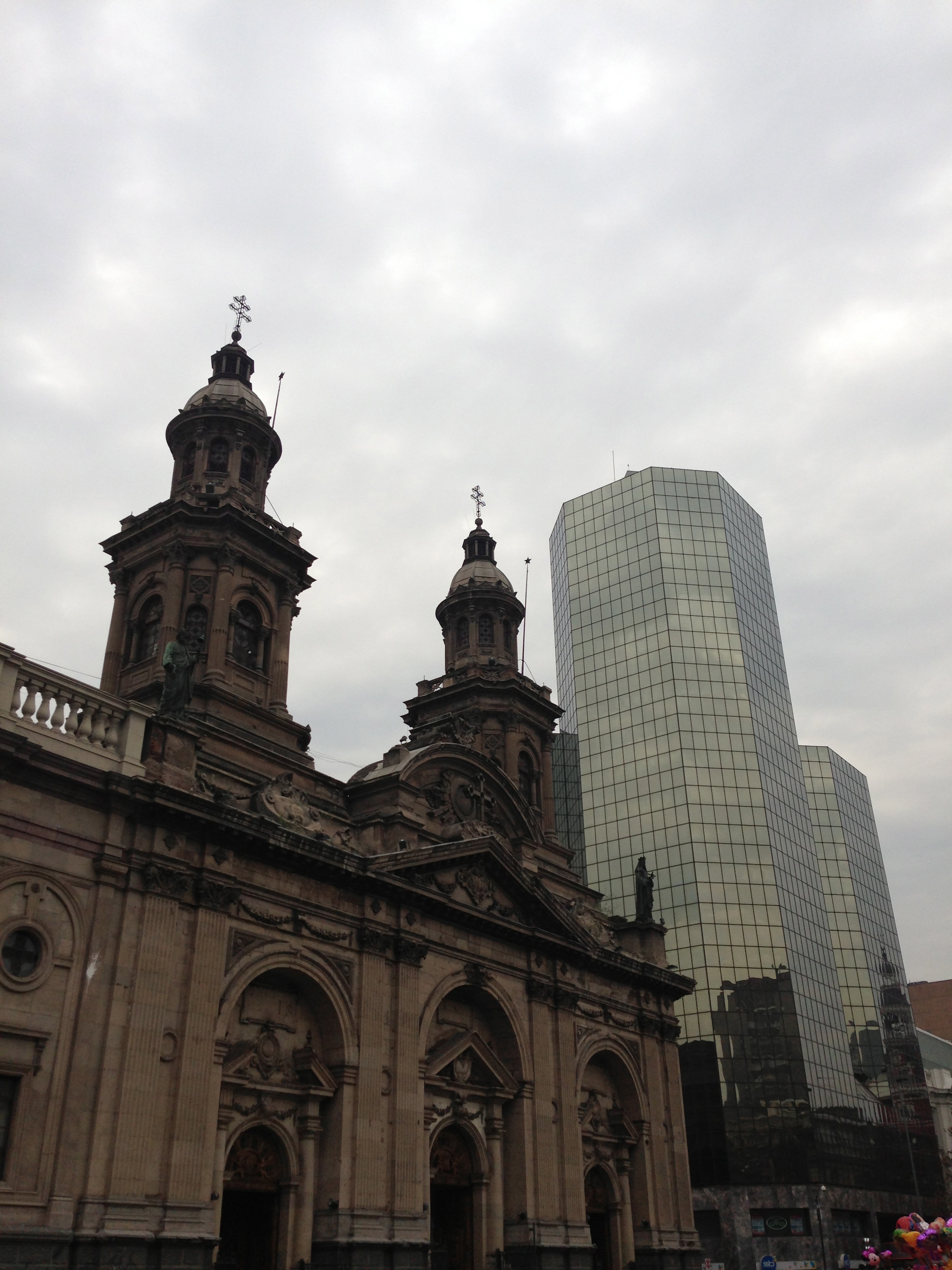
The past week and a half I walked around central Santiago confused. The architecture of the buildings seemed almost awkward. Actually, not the architecture of each individual building, rather the collective appearance of several buildings positioned close to each other. When I look one way on Avenida Providencia I see an old building with a structure screaming 18th century Spain which I imagine this to be the case in many Latin American countries. Then I look the other way and see the modern building of “Fundacion Telefónico” which holds various cultural events like theater plays and galleries. Across the street, on Plaza Italia, and I see the overbearing residential skyscraper marking it’s territory on central Santiago.

IMG_1891

On the left is the Metropolitan Cathedral of Santiago built in 1748. To the right, stands a perfect example of the many skyscrapers piercing the Santiago sky today.

Sometimes I feel I am in Spain, sometimes London and at other times even Tirana! Tirana, for the few of you who might not know (joking, I know most of you don’t know) is the capital of Albania. This is where I was born, grew up for the first ten years of my life, where most of my family lives and where I have spent many of my summers since migrating to the United States.

All last week, as I found myself in different areas of the city, I thought “What is going on here? Santiago must be confused. Is it colonial? Is it modern? Does it have its own identity? Its own niche?”

I am not suggesting cities, or even the tiniest municipality, is, or needs to be, homogeneous. Santiago is big. Of course it is diverse. I do not expect the architecture of every single part of the city to be identical. I also do not want to reduce an incredibly diverse city of almost seven million inhabitants to one single identity. That is not what I tried to do.

With that said, I still contend Santiago is a special place.

I spent the past week and a half trying to understand how the different structures and diverse architecture tell the story of Santiago.

The colonial architecture obviously comes from the colonial period. Easy. At first glance, the skyscrapers filled with offices of foreign enterprises contend that Chile does enjoy a developed economy, sophisticated financial structure and plenty of foreign investment. These are the buildings that proudly show the international community “Hey, we have made it!”. The modernity is celebrated not only by the elite who benefit from an open and deregulated market, but from also a working class who hope swallow their objections in hope that trickle down economics will eventually…well, trickle down to them.

On the contrary, the buildings are also an uncomfortable symbol  of the seventeen years of military dictatorship that aggressively implemented neoliberal economic  reforms. The reforms made possible  the most stable macro-economy in Latin America, but also created severe inequality in earnings, education, and healthcare to name a few. Consequently, for many, the modernity, the high-rises, and the “booming” economy also represent classicism, racism, and enforcement of prejudices and the further entrenchment of the degrading stereotypes that sustain them. The disrespect of human rights for seventeen consecutive years during the dictatorship which carried out a neoliberal economy and replaced citizens with consumers, and the current systematic neglect of key functions of a democratic government and civil society are oftentimes seen as an unjustifiable sacrifice for macroeconomic success.

But, this isn’t meant to be a history lesson.

So friends, I walked around for a week and a half thinking Santiago was confusing me because of how incredibly diverse the architecture is. As I thought this, I came to a street crossing. The light was red for the vehicles, but that isn’t what’s important. In front of the stopped cars was a man on top of those high unicycles, dressed as a clown, and juggling. He was putting a show for the cars during the few minutes they wait at the red light.

That is when I realized, the city isn’t confused.

It is unbelievably eclectic.

There is a fusion of past and present. The struggles and the victories. Protests on one side of town and celebrations on the other. Business men in suits and students marching in the streets. A musician playing his fiddle in the subway train and a woman dressed as if ready for a fashion show, having an extensive conversation about the current health of her nail-beds. September 11th 2013, the fortieth anniversary of the military coup, will undoubtedly result in riots across the streets (No worries, I will be in the north, and more that safe), then a week later, everyone will celebrate the fiestas patrias with friends, family, barbecues, and late night parties.

But, these “extremes” should not come as any surprise. It sort of runs in the country. Geographically speaking, Chile can make even the most experienced National Geographic photographer go “Huh. I have never seen anything like that before.” There are the Andes, an entire coast line in the Pacific, the world’s driest desert, glaciers, enormous lakes, valleys, rivers, grassland, and finally, the eclectic metropolitan city of Santiago.

Right now, I am on a plane flying north for an excursion with my program. The plane is going over the Atacama desert, the driest and highest desert in the world, and in the background I see the snow capped Andes.

Chile defies geographical norms.

IMG_1919

Birds eye view of the mountainous Atacama desert.


Mel in Chile: A Lens

September 3, 2013

It has been exactly a week. The most interesting aspect of “the life of a university student” is that political affiliation is a big part of the identity of public universities. Chile is an incredible place to study political systems as it is the only place in the world where a socialist government was elected democratically and without military intervention. This government was overthrown in a military coup only a few years after it was established. The years of Pinochet’s military dictatorship brought the implementation of strict neoliberal economic reforms and fast privatization of important industries. Many will argue it was precisely this period of free markets and capitalist ventures which brought Chile the macroeconomic “success” it currently enjoys. It is considered one of the most stable economies in Latin America. However this same period of military dictatorship also carries painful memories of vast and blatant human rights abuses the government committed against dissidents. Leaders of socialist parties were assassinated, thousands  of civilians who opposed the neoliberal reforms were tortured as political prisoners, and thousands more would simply disappear; they are called the “desaparecidos”. It is without a doubt that Chile’s “economic miracle” came at heavy price.

The bittersweet taste of “macroeconomic” success is not simply nested in the past. Chile continues to be a country with one of the highest margins of income inequality in South America. Access to health care and higher education (along with other industries) is concentrated in the hands of elites. I imagine many will remember the student led protests in 2011.

I apologize! This was not meant to be a history lesson on Chile’s economic and political evolution. I started the blog with the statement that university life for students in Santiago is very interesting. I have found that the universities in the city have a strong political identity. After only two days in the city, I heard from other Chilean students which universities were rightist and which were leftist. After walking around other campuses in the city, I also began to see the role of politics in the university.

This group of SIT students has come to study politics and economics in Chile at an incredibly special time. September 11th will be the 40th anniversary of the military coup in Chile. My host family, professors, and other students say there are many things that go on around the city. At USACH (my university), as in other universities, there are forums, discussions, panels and other events the university has organized. There are also events that will take place throughout the city. My group will actually be traveling to the North for our first excursion so we will be away from all the activity.

Then on November 17th Chileans will vote for their president.  It will be the first presidential election in which voting is voluntary.

In conclusion, I feel very lucky to be in this program during such a specific time in Chile. I am not simply here taking classes, making friends, and sightseeing. I have the opportunity to “experience” the country through a specific lens. I walk around the metropolitan areas of Santiago and I don’t simply see huge skyscrapers housing foreign companies. I also think about the implications of such economic growth. When I am in the university campus I don’t just see other university students. I think of how their identity as students was formed through the movement, and how they help form the identity of the university.

IMG_1743

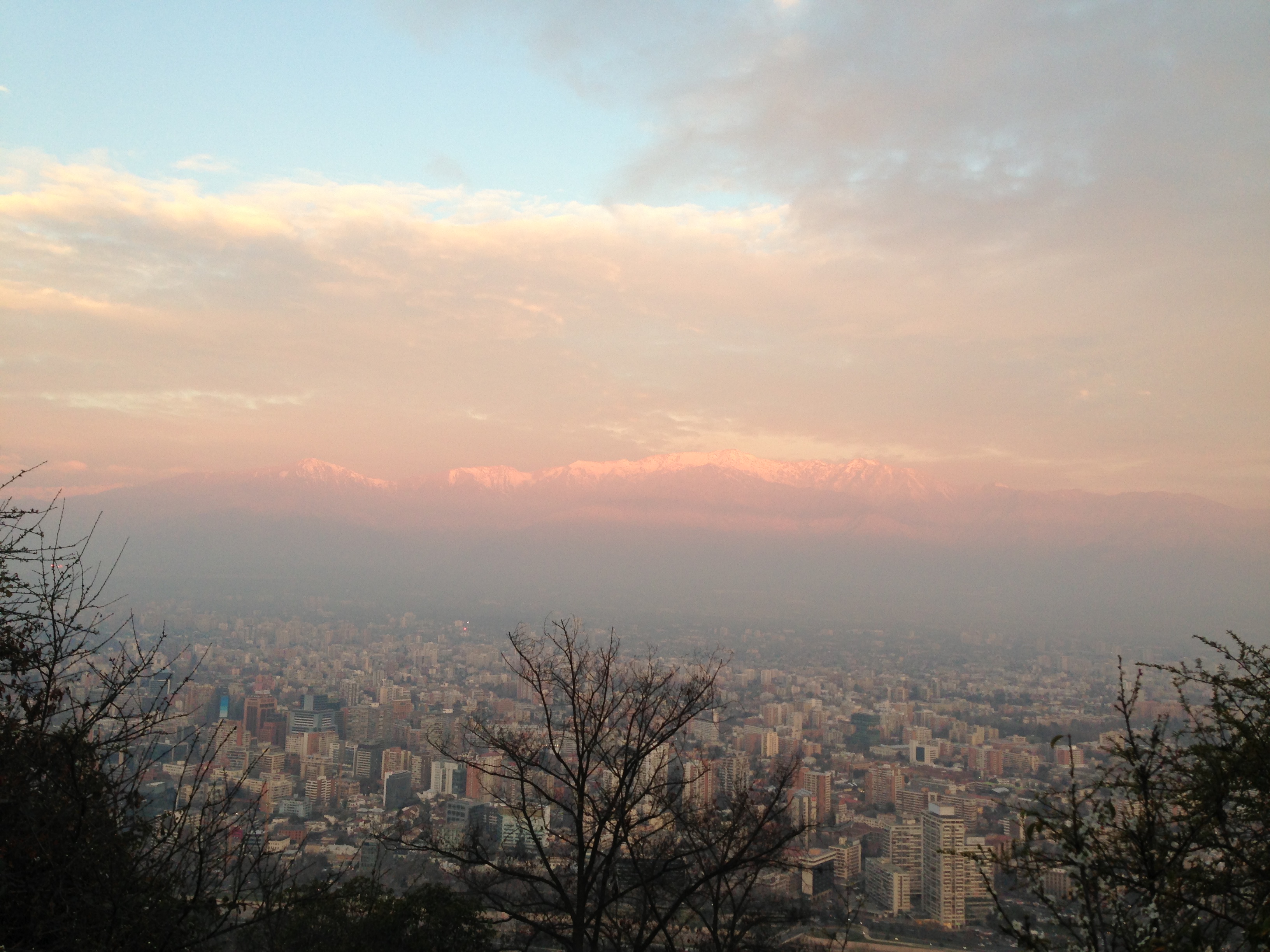
This is a view of Santiago from the San Cristobal hill. Note the Andes in the background!

It has been incredibly helpful to have this lens. Another student studying abroad in Brazil and writing for the Traveloges for UR mentions how easy it is for study abroad students to be “tourists”. Being a “tourist” is not bad. I am already planning a backpacking trip to Patagonia after the program is over with another friend studying in Valparaiso and I will do as much traveling as I can. That is to say, if you have the opportunity to travel you should take advantage of it. However you should also take advantage of the fact that studying abroad gives students an opportunity to create a lens. It gives students the opportunity to travel not to simply visit places and appreciate their presence in space but to also see what isn’t physically there.

I can feel myself becoming poetic as I sit in the cozy kitchen of Pedro and María on this cold night in Santiago, Chile.

Better to stop now before I start writing of the wisdom of the wind and the courage of the sun or something.

Have a great week everyone 🙂


Mel in Chile: Almost Done Packing

August 26, 2013

Hi all! My name is Mel and I am a junior at the University of Richmond. I was born and grew up in Albania but moved to the US about eleven years ago. As I finish packing my suitcase for tomorrow’s flight, I would like to share with you a bit about myself and my plans for this coming semester.

At UR I am a Business Administration major with a concentration in International Business and an Economics minor. My main interests revolve around socioeconomic rural development in Latin America and human trafficking in the region. This past summer I had the great opportunity to work in the Dominican Republic on micro-finance initiatives focused on Haitian workers in sugar-cane communities. These migrant populations are some of the most vulnerable communities in the Dominican Republic, and hopefully I will be going back next summer to continue working on these issues.

For now, I am moving to Chile’s capital city Santiago for the SIT Political Systems and Economic Development in Chile program. During the next four months, I will join fourteen other students to explore the social, political, and economic dynamics that have shaped Chile since the early 1970s. SIT programs are a fantastic twist on a traditional  study abroad program.  On the SIT program we will live with a host-family in Santiago, take classes at the University of Santiago, go on several academic excursions around Chile to add a practical component to our courses, live for a week with a Mapuche indigenous host family to learn about the situation of indigenous peoples in Chile, and do a one-month independent research project at the end of our program.  This month-long research component is what makes SIT programs especially unique.

I am particularly excited about the opportunity to learn about Mapuche groups and their political participation in the Chilean society. Through our program, we will establish a dialogue with Mapuche leaders to explore how these communities interact with the neoliberal political and economic dynamics that surround them. Our group will also be visiting Chile’s biggest mine, and both experiences will, I hope, allow us to gain a deeper understanding of the marginalization of the indigenous population. Since we have the opportunity to run a one-month independent research project at the end of our program, I am already thinking about exploring in depth these indigenous/mining relationships that shape part of Chile’s rural life.

Blogging about and sharing my experiences with you will be definitely fun! I now need to get some sleep before my long journey tomorrow. I feel as if I have been preparing for this particular program for at least a year, and I honestly cannot describe how much I look forward to settling in Chile! I will surely keep you updated, so come back in a week to read more!