Camellia Travels the World: Special Month in Chile

October 21, 2019

We come to Chile at a special time. September is an important month in Chilean history.

On September 11, 1973, the world’s infamous dictator Pinochet led a coup d’état to overthrow the Socialist Chilean government. On that horrific day, the city of Santiago was overwhelmed by air raids and ground attacks over the presidential palace. Under the terror, President Allende vowed to remain in the presidential palace as a confrontation against the threats. He calmly delivered his final speech to the nation via radio: “My words do not have bitterness but disappointment. May there be a moral punishment for those who have betrayed their oath…the only thing left for me is to say to workers: I am not going to resign! Placed in a historic transition, I will pay for loyalty to the people with my life.” 

Flag to commemorate President Allende. The quote is from his last speech: “The history is ours, and people make history.”

The violence did not cease after the death of Allende. Under the dictatorship, numerous citizens were abused and tortured. According to the Commission of Truth and Reconciliation, the number of direct victims of human rights violations accounts for around 30,000 people; they were taken as political prisoners in concentration camps. Approximately 4,500 people were executed, and around 200,000 people were forced to exile.

In order to commemorate these victims of political violence, people gather for peaceful marches and ceremonies on September 11 every year. After learning and discussing the dark history, we went to one memorial site – Estadio Nacional – at night for the commemoration ceremony.

The Candlelight Ceremony outside of Estadio Nacional.

Walking into the tunnel around the stadium, I was overwhelmed by the heavy ambiance inside. The ceiling of the tunnel was not too low, yet I felt it was barely above my head; the lights were brightly incandescent, yet the tunnel was still so dim; the paint on the wall had fallen out, and it was full of marks from history. On the walls, there was a photograph exhibition that reveals the  terror that people had gone through.
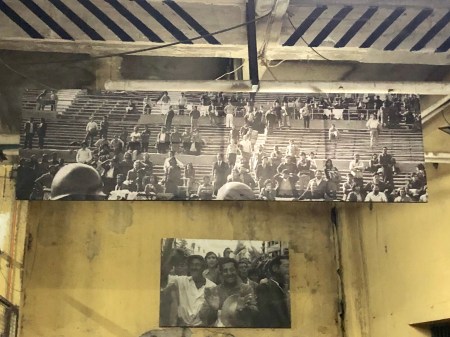
Thousands of people were captured, detained, and tortured at this specific site.

Inside the modern stadium, there was a remaining section with wooden benches surrounded by modern plastic seats. Many people put flowers and notes on the fence to pay their tribute. A group of us went inside the fence and sat on the benches for a while, trying to absorb the atmosphere and comprehend the fear and despair in the dark.
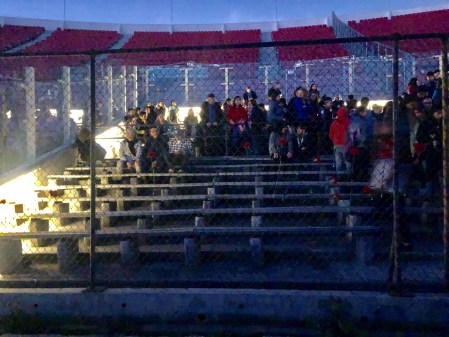
The fenced section inside the Estadio Nacional dedicated to memorializing the horror of 1973.

On a lighter note, September 18 is the National Day of Chile. On September 18, 1810, the Independence movement began in opposition to the rule of its colonizer, Spain. The Independence movement lasted more than a decade, but at last in 1826, the last Spanish troops surrendered, and the Chilean Republic was established. Thus, the Chileans have a week of celebration for their independence.

We went on a cultural “site visit” – going to a fonda. It is a carnival fair for a whole week, where people can buy food and beverages, dance Cueca (a traditional dance), play games, and watch rodeo. There were several fondas taken place in Santiago, so I went to the one at Parque Padre Hurtado, closest to my homestay.
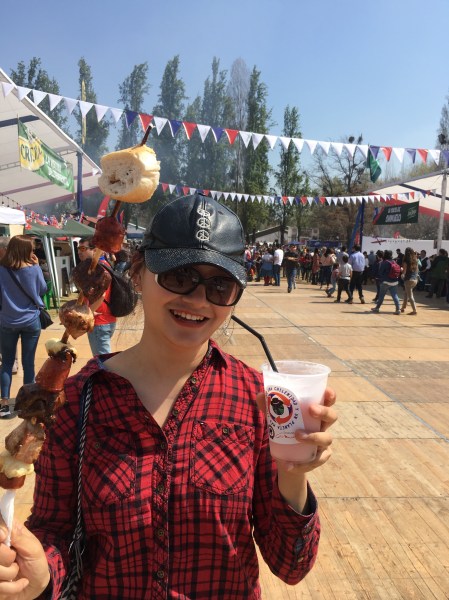
My giant smile and double chin with Terremoto (a drink made of pipeno wine, grenadine, and pineapple ice cream) and Anticucho (a meat skewer).

Anyway, it was a lot of up-and-down feelings in one week. On the one hand, we memorialized and honored the dead from the horror of coup d’etat; on the other hand, we celebrated the thrilling independence of Chile. It was a full cultural experience.


Madelyn In TCI: Classroom Outreach

October 10, 2019

This Wednesday it rained, hard. I woke up at 6:30 when the rain began, and it sounded like the entire sky was falling down on us. The wind blew the water sideways and I moved my things away from the windows to keep them dry. We don’t have classes on Wednesdays and Saturdays; they’re dedicated to waterfront and community outreach. After breakfast, we learned that all of the dives for the day were cancelled, on account of the constant thunder. Instead, I signed up for as many outreach events as possible. It was still pouring when we got in the truck, ‘Big Red’, and drove to the Christian elementary school. There were five of us, plus our staff member. We ran from the truck into a small building that looked more like a house, and the woman who ran the school opened up the door for us as we ducked inside, already dripping from the rain. Inside, we found the teacher and only one, small, lonesome student. Apparently, nobody else showed up on account of the rain so the teacher cancelled class, but this one girl ‘snuck in’. The teacher didn’t have a number to call for the girl and didn’t know who she was staying with now. The idea that this 5-year-old girl was being shuffled around in homes on the island struck me as very odd and concerning, but I didn’t feel it my place to pry. 

Big Red and Little Red

After the failed attempt for the Christian elementary school, I went to the public elementary school. My goal there was to educate the 1st grade students about a different country. However, there was only one, very dedicated girl in the 1st grade classroom. Since I don’t do well with large groups of children, I was rather relieved. She was very sweet and respectful, and she was extremely interested in the presentation of Australia and Madagascar animals that we showed her during our presentations. I was honestly most impressed when she reviewed the information that my fellow scholar showed her about Madagascarian animals and described to me how a particular lemur uses its long finger to tap on the tree and listen for the buzz of insects. It was the first very obvious proof of my making a difference in the education of a young child, and I took it to heart. For the first time, I was somewhat disappointed when the hour was up and it was time to go.

The kindergarten class that I was to go to next was also cancelled, due to nobody showing up, so we went back to the research center. There, I learned that soccer practice for the afternoon was also cancelled, which was another outreach event I was scheduled to help with. As a result, the majority of my day was very relaxed, and I had time to get caught up on my work. Fortunately for me, my livelihood doesn’t depend on these activities.

I thought it was extremely strange that school should be cancelled just for a bit of rain; what should the island do if there were to be snow?! When I expressed my confusion to the staff at School for Field Studies, they told me that the rain tends to flood most of the streets in town. The arid land isn’t used to torrential downpours and doesn’t have the capacity to absorb the water, so it just flows in rivers along the streets. Since most of the students walk to school, this creates a serious problem for their attendance. It was fascinating to learn more about the circumstances that impact areas to disproportional degrees. It also made me consider that climate change increases the intensity of weather around the world. Already, South Caicos was in a deep drought from March to September, before these massive storms began during hurricane season. On a small scale, how might the escalation of these weather patterns affect simply the education of children on South Caicos? And how might it affect the general livelihoods of the residents of this island, living in such closeness and vulnerability to the patterns of the natural world?


Madelyn In TCI: Class in the Field

October 4, 2019

This morning was a relaxed one; after a simple breakfast we had a morning debriefing for the day, and then I was free for the rest of the morning while another group went out to do the field exercise. I laid in the hammock garden and did some of the readings for our classes; it’s mostly scientific papers on fishery management, which I actually enjoy. Tropical storm Jerry is coming towards us and rain is forecasted for the next week and a half, so I enjoyed the bit of sunshine while it lasted. Lunch was delicious and healthy, as always. I was on kitchen crew today, so we cleaned up the food after lunch and washed all the dishes together. After lunch, my group and I grabbed our snorkel stuff and piled into the two trucks with our professor and teaching assistants. I sat in the bed of the truck because I love the breeze and the views, despite the mosquitoes and dust. On the way to East Bay Beach we passed the salt flats and saw numerous flamingos, which never seems to get old! As soon as the truck stopped by the beach, the mosquitoes began to swarm. It’s been raining more here, which means there is standing water on the island and hordes of mosquitoes. At least we can have freshwater showers now though (we collect and filter our freshwater from the rainwater). There’s always a silver lining 🙂

At the beach we split into groups of three with our underwater slates, a 100m transect line, and a ½ meter square made out of PVC pipe. One student in each group swam directly out from the coast laying down the transect line and sat out in the water alone until joined by the other members of his or her group. Meanwhile, the other two snorkeled along the transect line and dropped the PVC quadrat at 5 random distances, and on their underwater slates recorded the percentage of different seagrass coverage within the quadrant. Once they reached the third group member, they swam back all together and recorded all of the invertebrates they saw.

Seagrass meadows are homes for the juveniles of lots of different aquatic species; there are plenty of places for them to hide from predators until they grow up a bit. They also help keep the sediment in place and take excess nutrients out of the water, making the water more clear.

It was so much fun to do class exercises while snorkeling, and also very exciting to have a research purpose while snorkeling. It also provided a new perspective on the ecosystem; I was rather surprised at the count of live conch we found! We also found a lobster hiding in an old conch shell, several Giant Caribbean Sea Anemone, and a beautiful sand dollar.

A sand dollar in the bay

Seagrass meadows

When it was my turn to take the transect out and wait alone in the water, it was beautifully unsettling. The seagrass waved gently in unison in the surge and an occasional fish rushed by. Coming towards me from the distance I recognized a distinct, elongated shadow. Barracuda don’t actually attack humans, but they show a disturbing lack of fear around us and they simply look very mean, a perception that doesn’t improve when they allow their sharp teeth to show. They also have a very radical display when they’re hunting or aggressive: they flash black. This particular barracuda was pitch black, easily half a foot in diameter, and longer than my leg. It came up so close to me that I nervously kept my fins between us, unsure of how it might act. When my group members arrived and we swam back together, this barracuda followed us so close I was afraid I might touch it. Our data may have been a little bit skewed on the return because we were so distracted and somewhat terrified.

Laying out quadrats for seagrass coverage

When we finished our underwater surveys, my braid was entirely intertwined with a bushel of sargassum, which is a type of seaweed that has a particular affinity to my hair. It took me approximately 30 minutes under the saltwater shower to get it entirely out. The purpose of our field exercise was to collect and later analyze data on the effects of high quantities of sargassum on seagrass coverage. Sargassum is currently the highest algal bloom in all of the world of all time, and it’s causing a lot of problems all over the Caribbean, mainly with the tourism industry. Tourists don’t want to go to beaches that are clogged with rotting sargassum; it really ruins the aesthetic appeal. Researchers are still attempting to determine what is causing this massive algal bloom, but the most probable cause is from excess nutrients in the ocean due to deforestation of the Brazilian rain forest. One of our projects this semester is to help our professor determine the extent of damage that this excess alga causes on the ecosystem. It’s truly amazing to be a part of the worldwide effort to understand reverse climate change before it’s too late.


Madelyn In TCI: Diving with a Dolphin

September 23, 2019

We’ve finished Week 2 on the island, and I can’t believe it; so much happens every day! This Saturday was so unbelievably incredible. In the morning I went for a run along the salt flats of the island. The salt industry used to be huge on the island, but died off around the 60’s. Now the Salinas are a historical protected area that provide habitat for the island’s flamingos. It’s still very exciting to see their bright pink bodies apparently floating on a few feet above the water (their legs are too narrow to see from a distance). It was the full moon, which was still in the sky on the horizon as the sun rose.

Moonset over the beach.

After a quick breakfast I went on a morning dive, and the most incredible thing happened. I wore leggings and a rash guard instead of a wet-suit, which made me significantly more comfortable for the dive. The water is 85 degrees Fahrenheit, which is extremely comfortable even without a wet-suit. We dove below to the boat and there was so much coral and all sorts of fish swimming around it: Yellow Jacks, Parrotfish, Trumpet fish, Blue Tangs, and so many others that I haven’t yet learned the names to. The surf was very high, so a lot of the more flexible coral and algae swayed rhythmically as we swam along. About 20 minutes into the dive, I turned around and saw a huge shadow coming towards me. As it came closer, I wondered if it was a shark, but it wasn’t quite the right shape. After a few more seconds I realized: it was a dolphin!! It was much bigger than any of us, but I didn’t feel afraid. It swam right up to me, close enough that I could have reached out and touched it quite easily. Looking into my eyes, it swam right past me, and then circled around our group of divers, weaving between us and getting incredibly close to everybody. It also swam over top of us and I got the feeling that it was enjoying the tickling sensation of our bubbles as we exhaled under water. I was smiling so much that my mask kept flooding with water during the entire interaction, but I didn’t mind! Fortunately, somebody in my group had a camera on them and was able to film a good portion of it.

The whole interaction lasted about 2 minutes, but it felt like an eternity. It was truly the most amazing experience I’ve had. There are very few, random dolphins around Turks and Caicos, and I wasn’t expecting to see one this semester. Our dive master told us that he had been here for 25 years and had never had a dolphin interaction to that extent. I felt so blessed to be here and to have such an incredible opportunity. When we came back to land and I called my mom to tell her about it, I saw two eagle rays in the water just off the edge of the shore. It wasn’t even noon yet!

In the afternoon, we had our weekly outreach time, which is when children from the community come to our campus for games, swimming or snorkel lessons, and an all-around good time! The kids were so excited they were waiting outside over an hour before we opened the gates. This week I went out with a small group of children to the local beach with gloves and bags to pick up trash, as it was Environment Awareness Day. It wasn’t exactly fun, but I thoroughly enjoyed myself. There was a very simple but profound satisfaction with every piece of trash we picked up, and especially looking at the collective result at the end of the hour.

Picking up trash on the beach.

All cleaned up!

 We are working on a project to decorate and set up large trash bins at this beach because litter is a regular problem here. To be completely honest, I would really enjoy doing this more in my free time here. There’s so much plastic waste and I know that I can’t clean it all up. Even so, I stayed hopeful by imagining that every bottle I picked up was one less fish that would get sick or killed from pollution. Every bit counts!


Madelyn In TCI: A Morning Dive

September 16, 2019

Hey y’all! So far I’ve been on the research base for nearly a whole week. Our actual classes begin on Monday; this week has been dedicated to tours of the island, the water front, and swim/snorkel/dive tests. Our schedule is usually packed with activities from 7am to 8pm, Monday through Saturday. Saturdays are particularly fun though! This Saturday I woke up at 5:30 am (it was still dark!!!) and enjoyed some quiet time to read until breakfast at 7am. I usually sit on a bench by the conch wall, which drops down to the ocean about 30 feet below, and the sound of the waves on the rocks is very soothing. After breakfast a group of us headed out onto the boat to scuba dive for the first time of the semester. We went out to a dive site where a plane had crashed and formed an artificial reef for many different and colorful fish to congregate around. From the boat, we sunk to the sea floor, which was about 60 ft. down. There were little patches of coral with all sorts of organisms. I saw a giant Caribbean Sea Anemone and the invasive Lionfish almost immediately. I’m currently having some issues with my underwater camera but will be including pictures in future blogs, so stay posted!

On the boat to explore the ocean.

We followed our dive leader to The Wall, where the seafloor drops from 60 ft. to about 300 ft. We felt like Nemo, going to the edge of the coral reef to stare out into the great expanse of open blue water. Along this edge a Great Barracuda saw me and began swimming directly towards me, probably curious. Their scales flash black if they’re truly being aggressive and this one remained silver, but it was still a little unnerving and I was relieved when it turned away. As the group meandered our way back to the boat, I saw a Green Sea Turtle swimming through the coral off to the side. I’m always fascinated by how unbothered and relaxed sea turtles look while they swim. A bit further on in the dive, a huge black fish took an interest in our group. It was about two feet tall and long and kept swimming around all of us and getting very close. Our dive leader and interns didn’t know what kind of fish it was, but it was very cool to get checked out by a fish. The experience just emphasized the idea that we were visitors in another creature’s home.

One of my favorite parts of diving and snorkeling is experiencing such a different world without harming it. We will be doing a lot of this for my classes this semester and I’m very excited to learn more about the marine environment and the creatures that inhabit it! I’m also excited to become more comfortable and skilled underwater with all of the practice. It’s going to be a very fun semester!

Watching another beautiful sunset over the ocean.

A Caribbean sunset.


Madelyn In TCI: Starting the Next Adventure

September 12, 2019

Hey folks, I’m Madelyn, a junior and studying Biology with an Environmental Studies minor. I’m currently on a plane from Milan to Toronto. I’m actually studying abroad in Turks and Caicos Islands (TCI), but I have two 7-hour layovers in Toronto and then Montreal before heading to TCI. That’s just what happens when you buy the cheapest plane ticket, I guess! Anyways, I spent all of my summer in Greece WWOOFing (definitely look this up if you’ve never heard of it; it’s a great way to experience new countries). Then I took a terribly long ferry ride and spent five days in Bari, Italy, with my Italian host family from high school. It was really fantastic to be able to see them and my friends there again! And the food… my host mother is the best cook any of her friends know, which in Puglia, that’s saying a lot. I learned how to cook focaccia, panzerotti, fresh seafood, and so many different types of pasta. At least in southern Italy, the pasta stereotype is not much exaggerated! I also tried squid raw, which is something very unique to Puglia. It was surprisingly good with just some lemon, olive oil, and pepper!

Fresh squid from the local fish market.

So, after a lovely few days in Puglia, I took a flight to Milan. I can’t begin to explain the amount of struggle it took to make all of my suitcases fit the weight restrictions for this flight. You see, I had to pack everything for 6 months into one big suitcase, one carry-on, and one back pack. This includes my scuba and snorkeling equipment, because I’ll need it for my fall program. This flight to Milan was through Ryanair, which is usually very strict about their baggage allowances policies. By the time I was done organizing all of my stuff, I was dripping sweat and my back pack was quite possibly heavier than my suitcases. But guess who didn’t have to pay extra baggage fees!

In Milan I stayed with an old friend for a few days. Ironically, we were both neighbors in a rural Pennsylvania town, meeting up several years later in Milan. Not only did we explore the city of Milan together; we also took a train up to Lake Como, which is absolutely beautiful. If you ever get the chance to go there, definitely take the ‘funicolare’ up the mountain to the town of Brunate. It’s a quaint little town with many places to walk and enjoy nature. There is also a lot of folklore there about gnomes and fairies and it seems quite natural to imagine little mischievous creatures hiding behind the ancient trees of the mountain.

The tram station going up the mountain from Como to Brunate.


Walking through the forest by Brunate.


The Duomo at midnight.

So that is the story of how I ended up on a flight from Milan to Toronto as an American studying in Turks and Caicos. My study abroad program is a bit abnormal. It’s actually a marine biology research program, where I’ll be studying the marine environment and learning about how the population and tourism impact the ecosystem, as well as helping to develop policies to minimize the harmful effects. Most of my courses will be science-oriented, and emphasize really getting into the area of study, hence why I need my scuba equipment. My classes should spend a lot of time outside, whether it be hiking around to explore the various ecosystems on different islands, or snorkeling in the coral reefs to see in person the species that we learn about in the classroom. This sort of thing is exactly my jam, so I’m really excited to see how it goes! I’ll keep you all updated on whatever weird stuff I see or do!


Olivia in Sweden: A Swedish Easter!

April 17, 2017

Happy (Belated) Easter!


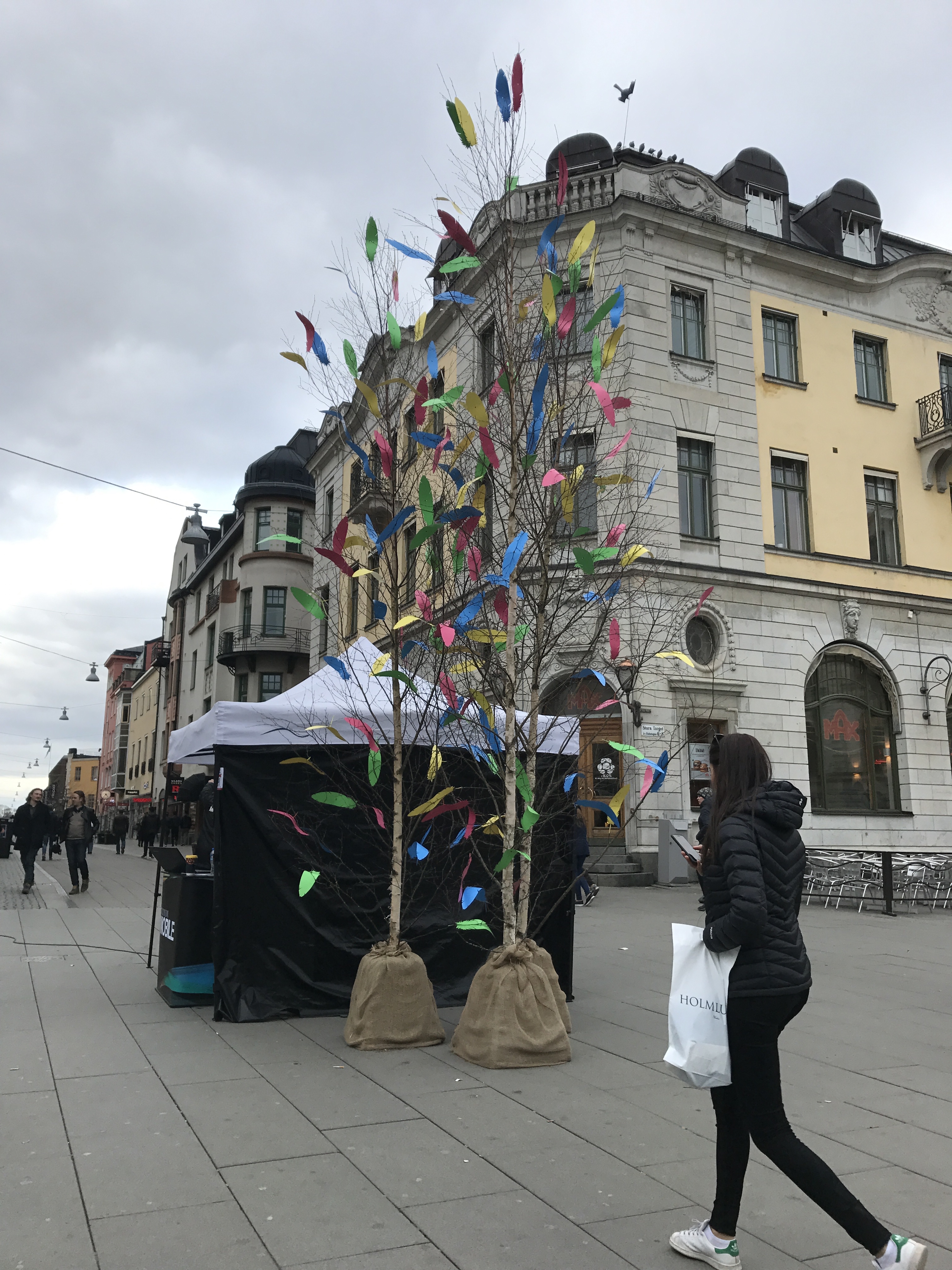
I hear that it’s common for many Swedes to travel to their holiday cottage in the countryside for a family celebration.

For those more comfortable in the city, its not uncommon to see these beautiful trees on balconies, or in this case, the city center. (Usually, they are much smaller!)


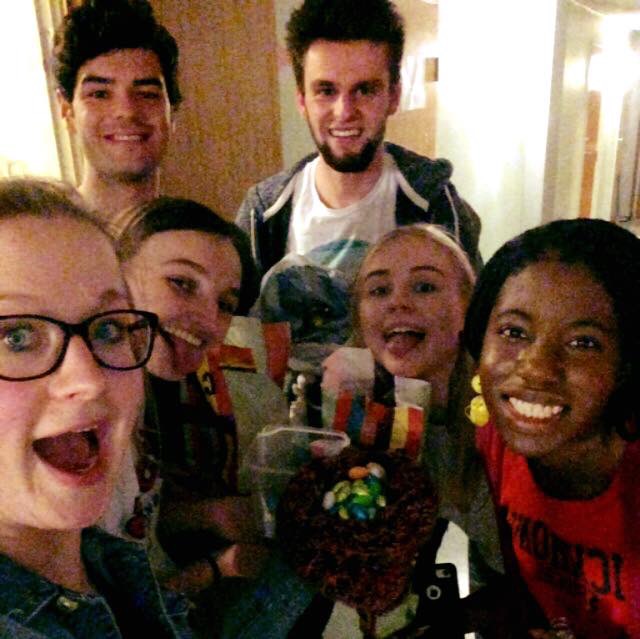
Here in Flogsta, we had our own little celebration!


We all brought meals and desserts that we had prepared.


We even put up our own little Easter tree.


And finished the day with a successful egg hunt, which we had all hidden in our rooms!


More spring festivities are on its way! Until next time!


Olivia in Sweden: School and Flowers!

April 13, 2017

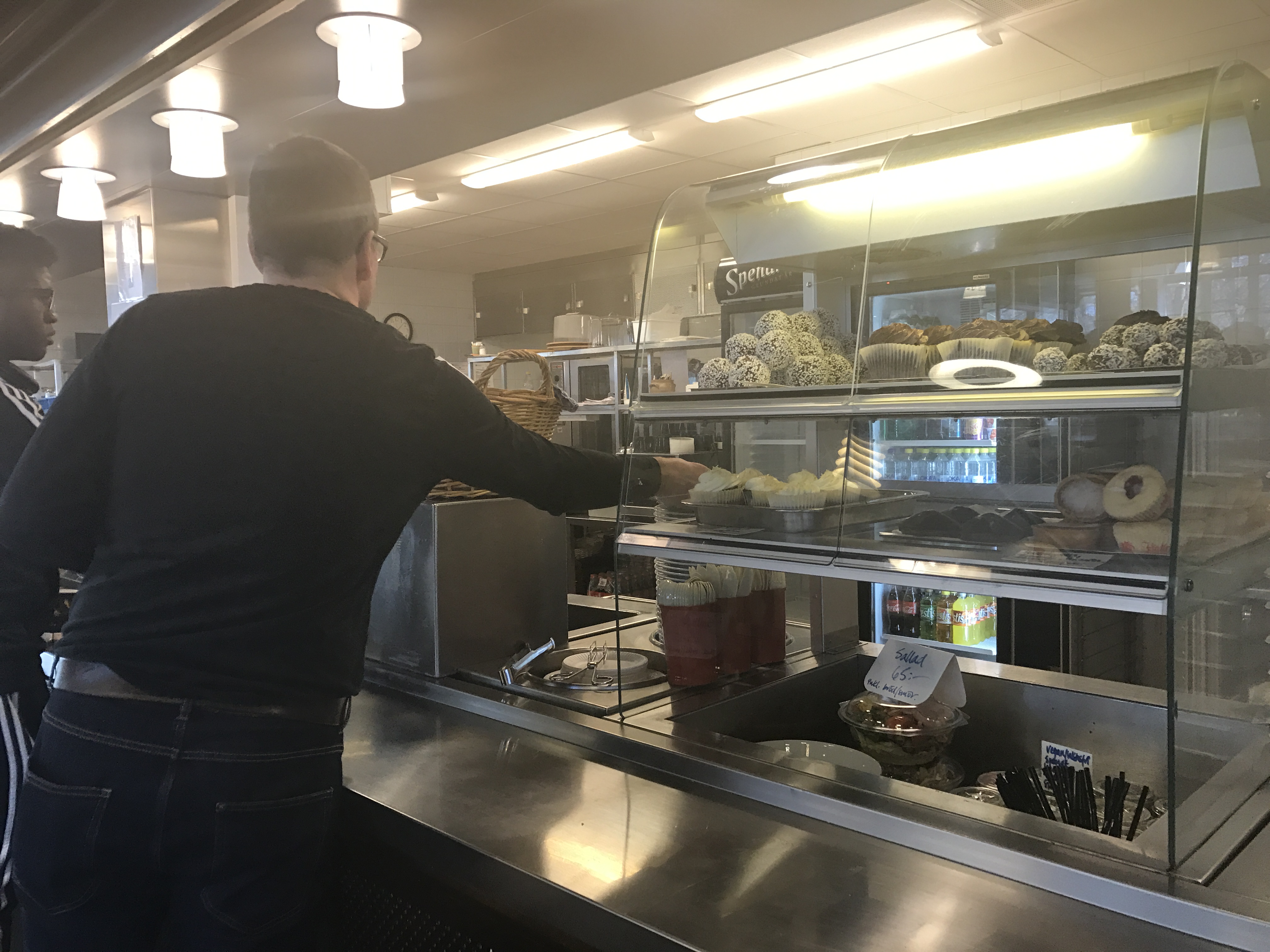
One thing I miss from UR is our dining hall, which is a sentence I thought I would never write. Students here don’t have a meal plan, and must frequent the local grocery store for all their eating needs. Thankfully, there are some eating areas to be found in the multiple academic buildings on campus.


The building I frequent the most is Engelska Parken! Here is a picture of the eating area. Not as much variety as our dining hall, eh? But the coffee and food is always delicious.


The style of teaching here is also a little different from back home.


It is very discussion based. Usually, we read an article for class, and then the professor breaks us up into smaller groups to discuss what we read. To finish up the class, we come together as a class and share what we learned. Much of what we learn is self-taught. This has taken a lot of getting used to. I am also enrolled in a class that never meets until the final exam!


The self-motivation for academic pursuits will only get tougher as the weather keeps getting more and more beautiful. At last, some flowers are beginning to bloom! So excited to see the full impact as spring gets closer!


Janus in Singapore

April 3, 2017

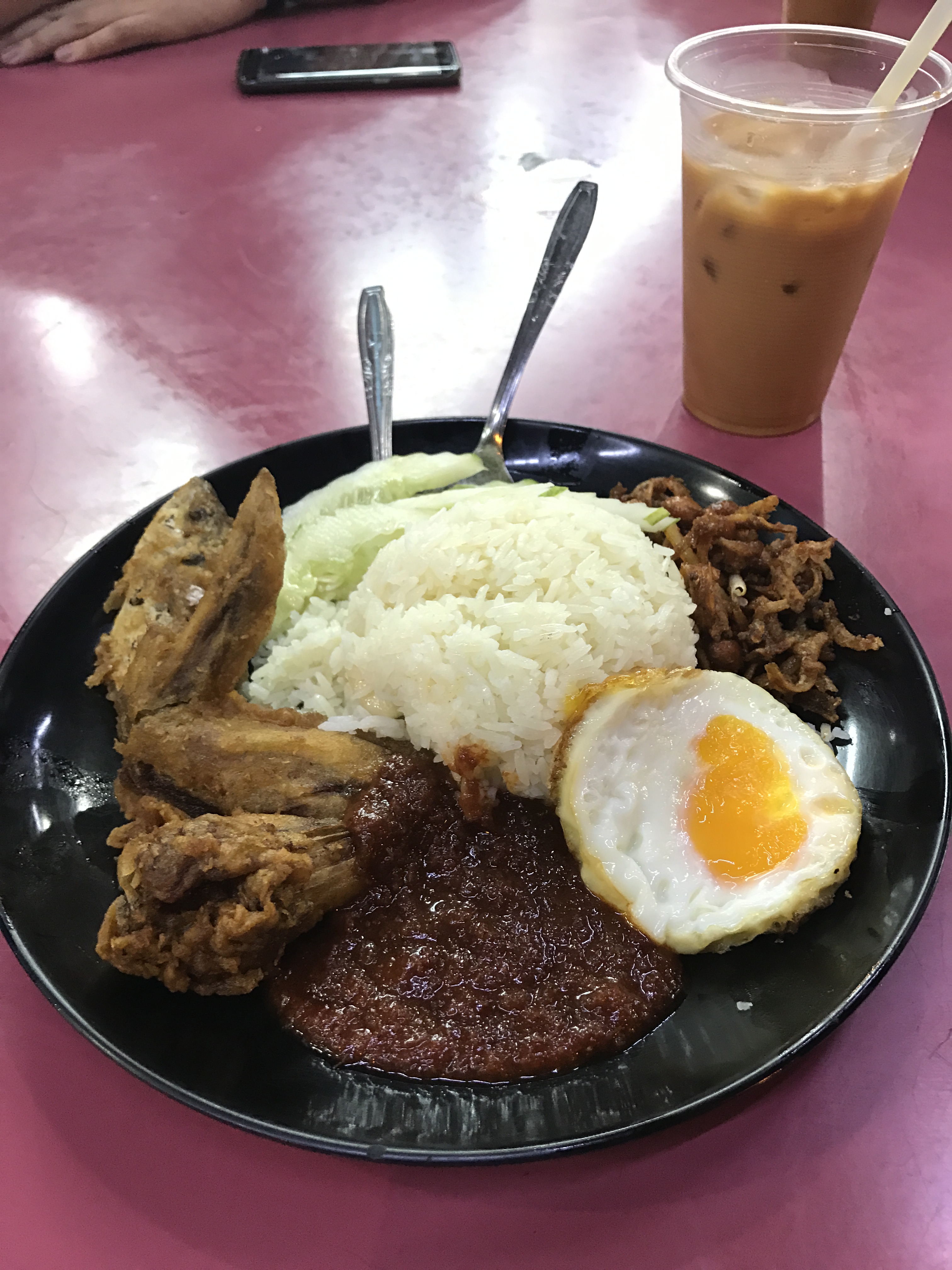
Nasi Lemak from Adam’s Corner – for S$6, the perfect post-night out meal!

It’s difficult to describe what exactly Singaporean cuisine is. It’s not like the other Asian cuisines where you can say that a certain dish is uniquely Japanese, or Chinese, or Indian, or Filipino. Rather, Singaporean cuisine, like many other facets of the nation’s characteristics, is made up of the recipes and ingredients that Singaporean citizens have brought from their home countries, modified over time by exposure to the many other cultures and tastes present. Perhaps the most famous meal in Singapore is Hainanese chicken rice, an extremely simple dish made up of rice cooked in chicken broth or chicken fat, boiled chicken, a light soup on the side, and your choice of dipping sauce, usually spicy. Like many things in Singapore, it isn’t entirely clear where it comes from. Although the name suggests that it’s a dish taken from China’s Hainan Province (an island at the southern tip of China), it’s also a fairly common meal in Malaysia.

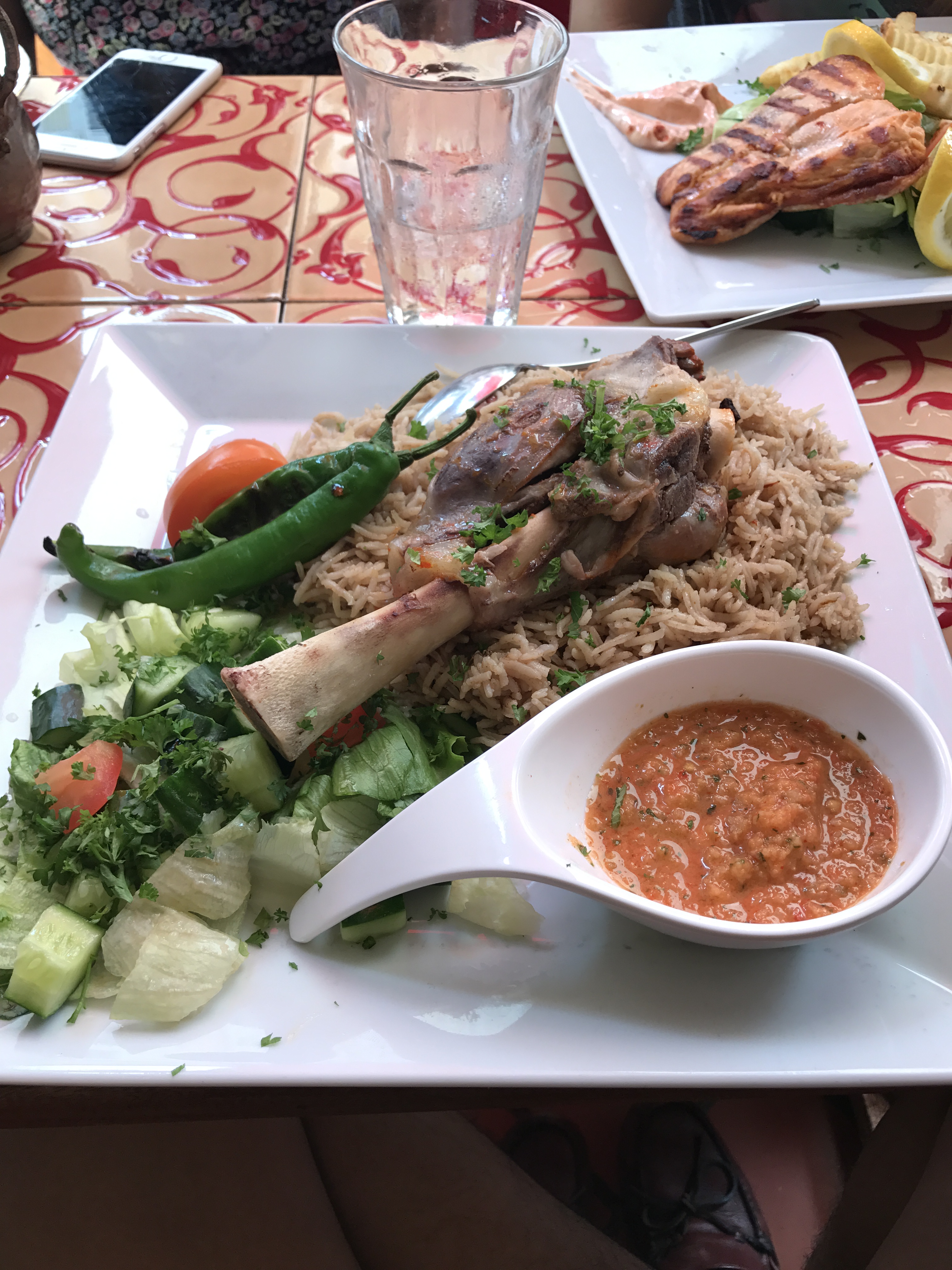
A lamb shank from a Lebanese restaurant in Kampong Glam. On the pricey (S$24) side, but the meat is unbelievable tender and flavorful

At first, I thought it was ridiculous that such a plain meal would become the face of Singaporean dining, but after spending the last three months in Singapore, I’ve come to appreciate it. It’s a dish that doesn’t have much in terms of taste – there’s only so much you can pack into boiled chicken and rice – but somehow, the restaurants in Singapore that specialize in it have all mastered it. I think part of the appeal, part of the reason it’s so famous, is because the taste is so basic and natural that you can never get sick of it. This last week, for example, I had it three or four times, a fairy low number compared to some of the busier weeks I’ve spent in Singapore. And yet each time, I was satisfied, and went home happy because I ate a meal that was cheap (around $3-4USD), healthy, and filling.

 The Singaporean take on wings and barbequed meat on a stick. S$10 gets you what’s in this picture.

Nasi Lemak, another rice dish, is also quite famous. Unlike simple-flavored Hainanese chicken rice, I would describe a Nasi Lemak dish as quite full of flavor – and at at some restauraunts I’ve eaten at, the flavor is bountiful to a fault. The rice is cooked in coconut milk and pandan leaf, which gives it a fragrant and cooling touch. I imagine this is to serve as a counterbalance, a palate cleanser of sorts for the extremes provided by the sides that come with the rice.

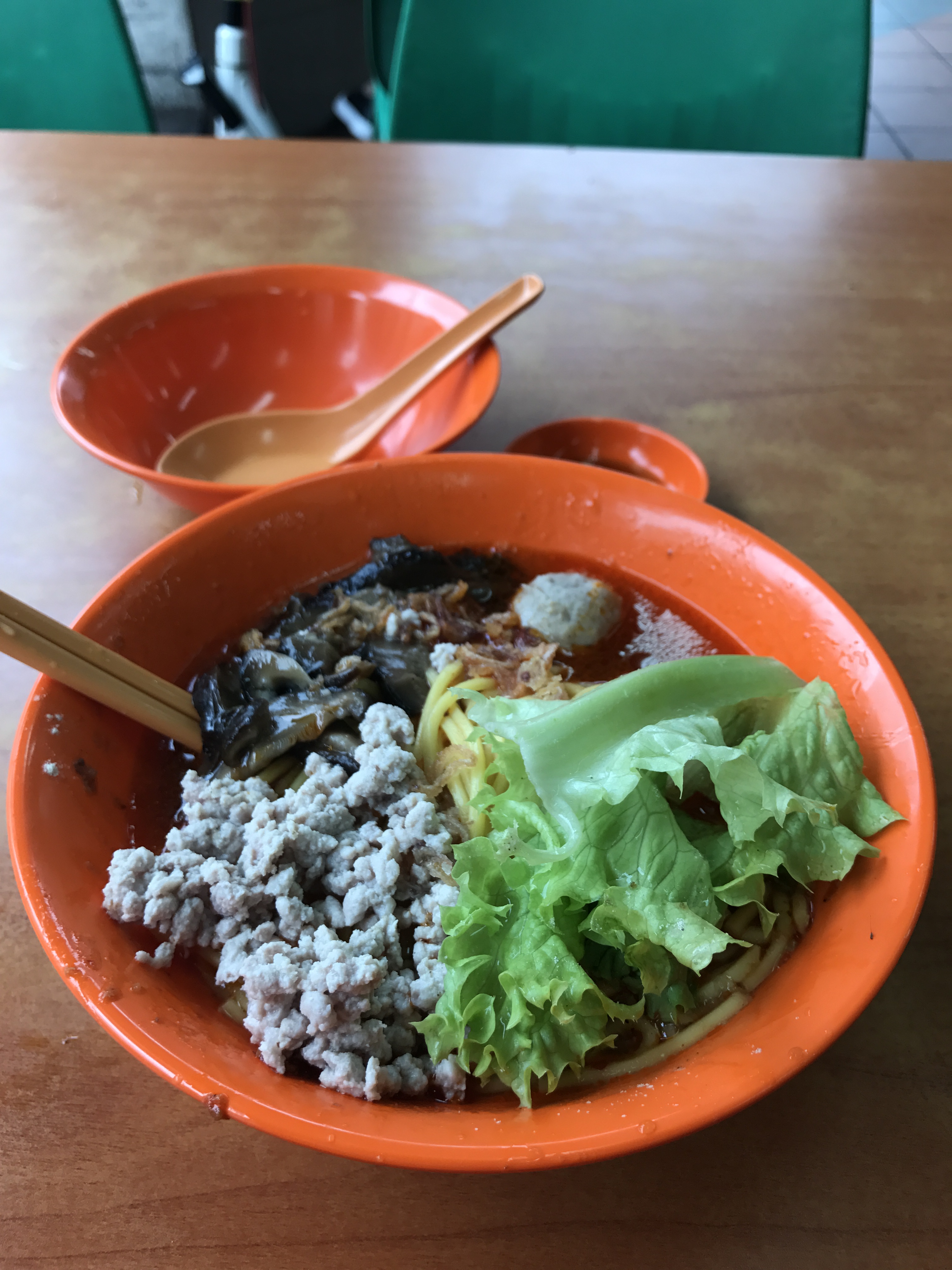
These ground beef noodles are some of the most delicious I’ve ever. When I have time in the mornings, I trek about 10 minutes to a corner of Little India and eat two of these S$2 delights.

My personal favorite Nasi Lemak comes from Adam’s Corner, a small 24-hour outdoor restaurant just a short walk away from away from our flat, which serves as the unofficial rally point for my group of friends after a night out. I order the chicken Nasi Lemak, which comes with cucumbers, fried chicken, a fried egg, VERY salty dried anchovies, and a very spicy chili paste on the side. A lot of my western classmates don’t enjoy it – they say it’s simply overwhelming. But my Singaporean classmates are all in love with the meal, and personally, it reminds me a lot of the cuisine from my home in the southern islands of the Philippines. This is unsurprising, as Mindanao is known for having quite a bit of Malaysian influence.

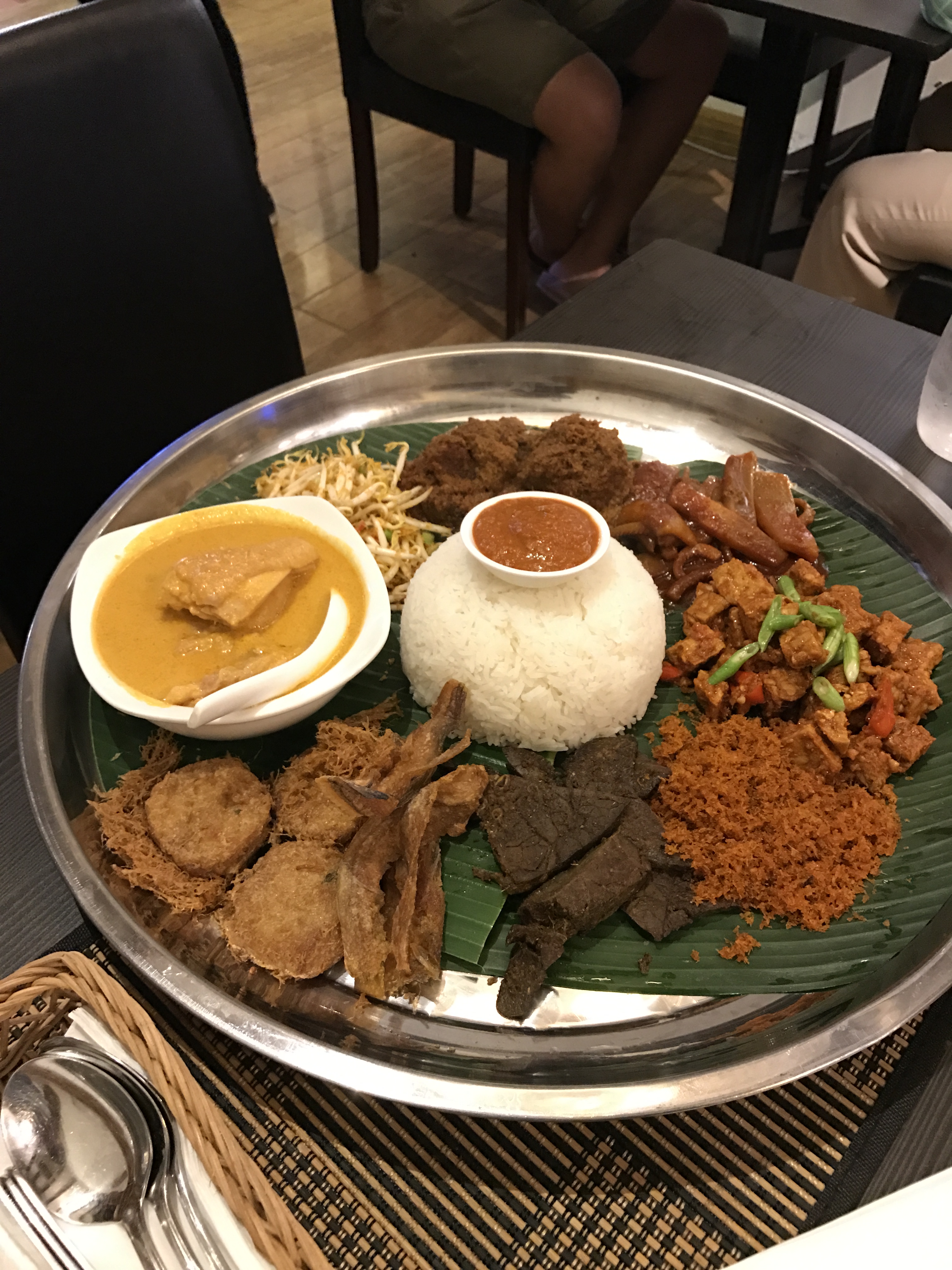
A Malaysian food platter from a resutauraunt in Haji Lane. S$30 for a dish that’s supposed to feed three, but easily fed our group of five hungry tourists who’ve been walking all day.

Nasi Lemak and Hainanese Chicken Rice are dishes that, for lack of a better term, I would describe as street food. They’re both quite cheap and common in Singapore, and often served by mom-and-dad style restaurants that often only offer outdoor seating and may not exactly meet health or cleanliness standards in the U.S. However, these types of foods are probably the most characteristic of Singapore, and the restaurants that serve them can often be found densely concentrated around Hawker Centres, which are sort of like outdoor food courts. The popularization and government support of these centres have all but eliminated actual street foods in Singapore and have made eating this kind of cuisine much more sanitary and tourist friendly.

Chicken Rice – usually, the chicken is boneless and sliced, but this one is supposedly “sea salt infused.”

However, if you’re still not convinced and want to go somewhere where that offers an opportunity to try all these different foods but in a much more upscale setting, I suggest going to the food street in Kampong Glam. Right next to the beautiful Masjid Sultan and the quirky Haji lane, this street offers a variety of cuisines, from Malaysian to Thai to Persian to Lebanese, all in a much more tourist-friendly and traditional sit-down setting. The prices are much higher and comparable to sit-down restaurants back home, and I honestly couldn’t justify eating there except to splurge on a weekend dinner with the flatmates, especially given the easy access to equally delicious food at much cheaper prices.


Janus in Singapore: The Green City

March 22, 2017

Singapore is one of those cities that’s had many names over the years. Many of them sound quite cool at first, like the literary Javanese and Malay name for Singapore, “Temasek.” Disappointingly, however this turns out to be derived the Malay word for “Sea Town,” a fairly accurate but uninspiring name for a city. The opposite is true for how the Mongol Yuan Dynasty referred to Singapore in its records. When you hear the Chinese word “Longyamen,” I imagine that most people with no exposure to Mandarin would picture a bowl of soup, or some time meat bun. Longyamen actually means something like “Dragon Tooth Gate,” a much more creative name than “Sea Town,” and a name that I could imagine in a high fantasy novel. The name Singapore itself is derived from a word in Sanskrit that means “Lion City,” which is one of city’s many contemporary nicknames. It’s interesting, though, because unless my 7th grade biology professor lied to me, I’m certain there are no lions Asia (except maybe India?), not to mention Singapore. But it’s a fitting name, anyway.

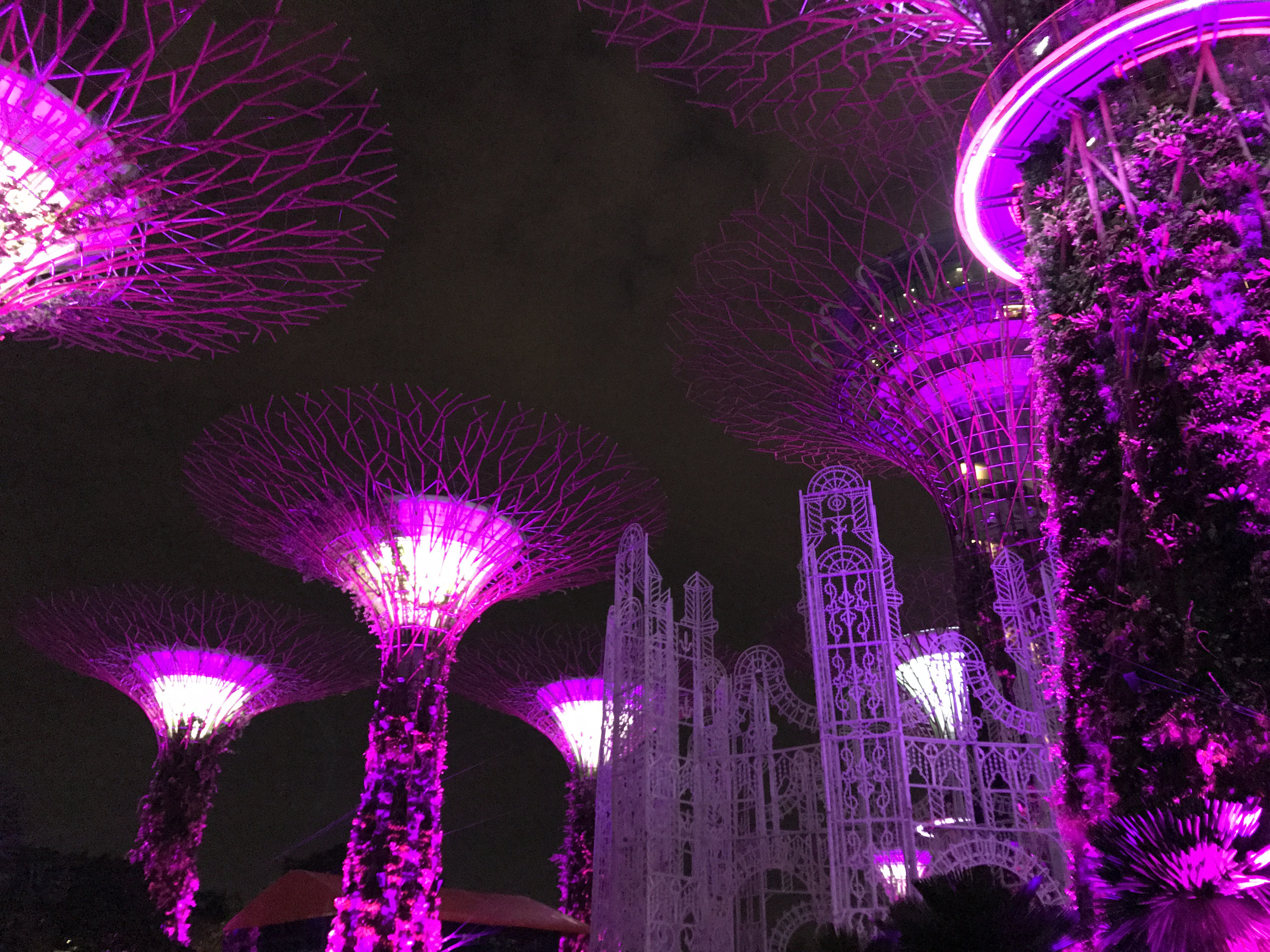
The Supertrees in the Garden, in the middle of their special holiday light performance

The moniker I didn’t expect, though, was “The Green City.” When I think of a highly dense, urban area, green is probably one of the last adjectives that come to mind. I think of some of the most densely populated and urbanized places I’ve lived in my life – New York, Beijing, Manila – and I can think of pockets of gorgeous greenery, like New York’s Central or Prospect Parks, Beijing’s Temple of Heaven or Summer Palace, and Manila’s… nevermind. But outside of these special places, I don’t think of green, and a few tourist attractions hardly justify calling a city “green.” Before I did my research, I thought Singapore would be like these places. Not quite dirty like Manila, or overcrowded and full of strange smells like Beijing. More like New York, where it’s crowded enough but not terribly uncomfortable, where some some streets can get dirty and smelly at times, and some streets are dirty and smelly all the time. I pictured that like New York, Singapore would have a few tree-lined streets and the occasional small park, but for the most part would be more ‘concrete jungle’ than actual jungle. Especially when you think of the meteoric rise of its economy over the last century its land and natural resource constraints, the thought of Singapore putting such an emphasis on nature is unfathomable. You would think that to get where it is now, Singapore would need to make certain environmental sacrifices.

SMU’s Library, hidden in greenery

But somehow, the opposite has happened. Singapore has actually become greener as its population and economy grew. In 1980, Singapore’s green cover stood at 36%, but is at an impressive 47% today. That’s a figure that seems unbelievable at first – but once you walk through the streets of Singapore, it becomes clear that the nation has really placed nature near the top of its list of priorities. Even the busiest streets in the financial and commercial centers are full of vegetation, and most roofs are covered by either gardens or solar panels. One of the nation’s biggest initiatives is its rules regarding new developments – you have to replace any greenery you remove. Additionally, many sectors in Singapore have “green rating” requirements, which requires that buildings meet a certain environmental friendliness standard.

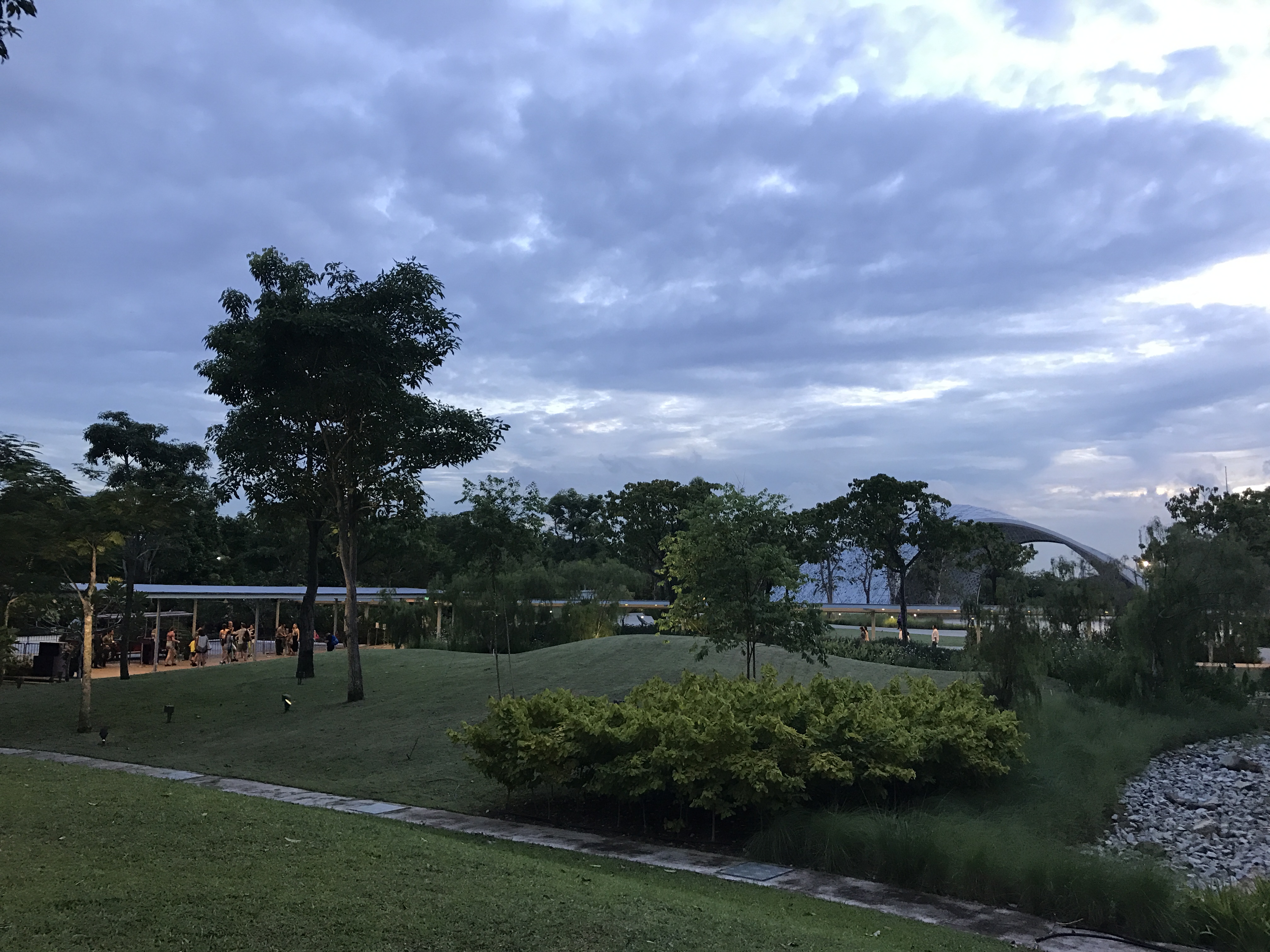
Another garden just outside the gardens – space is a premium near the Bay, as it’s one of the busiest parts of Singapore

The Gardens by the Bay, a nature park in Singapore right next to the heart of the city, and right next to the Marina Bay Sands, arguably Singapore’s most famous building, is the perfect symbol for the city’s progress. The central exhibit is a series of massive trees covered in steel rain collectors and solar panels. It was one of the first sights I got to see in Singapore, and also the most inspiring. Before I came here, I was always under the impression that economic development and urbanization are necessarily at odds with environmental protection, at least when you seek to maximize them. But Singapore disproves this idea. Singapore is indeed the greenest city in the world, but somehow all of its environmental protection is productive, too.

A view of the river running through the Gardens by the Bay