Jack in NZ: Email

August 1, 2016

“I had had an adventure, tasted forbidden fruit, and everything that followed in my life – the food, the long and often stupid and self-destructive chase for the next thing, whether it was drugs or sex or some other new sensation – would all stem from this moment.” – Anthony Bourdain on eating his first oyster

“We’re the first culture in the world that puts 1,500 miles on average under each morsel of food” – Joel Salatin

“The real voyage of discovery consists not in seeking new lands but seeing with new eyes.” – Proust

“’I do work,’ said Frederick ‘I gather sun rays for the cold dark winter days.’” – Frederick by Leo Lionni

“Drink your tea” – Eastern Towhee

To: Parents

Cc: Sister

Subject: Re: Feeling like a Kiwi yet?

Message:

Unfortunately the weather this week is pretty lame, so I’m staying around Dunedin. I’m planning on doing a local hike and catching up on work and reading/writing.

So Much to See

Penguin colony was pretty neat, saw about 20 birds (~1% of the world’s population, pretty crazy), and the surrounding area was beautiful. It was a secluded spot, protected by farmland on all sides, difficult to get to without some sort of Department of Conservation/farmer connection.
Jack in New Zealand

I’ve resolved to feed myself from the farmers market as much as possible, got a good-sized and reasonably-priced haul yesterday, including some lamb chops, ground venison, whole walnuts, and a winter savory (a thyme relative) plant. Also went to an Indian grocery store and bought some whole star anise/cardamom pods/garam masala and cheap peanuts. The owner was there and we chatted about India (he was a Sikh from Delhi) for a minute.

Otherwise, I’ve just been doing work around here. I haven’t been going to my biology or chemistry lectures because they post them online, but I do sit down for a few hours each day to take notes/do homework etc. Working at home is pretty nice, I get to stick to a sleep schedule and snack throughout the morning, also no running back and forth between my house and campus. Chemistry is very dry (and the labs are soul-sucking, I almost wish I took the upper-level section), biology is much more interesting. My writing class is very enjoyable. I’m narrowing in on a topic for my major project (something related to the philosophy of farming/food, looking at it from scientific/social/spiritual/artistic viewpoints). More stuff about classes will be in the next blog.

A friendly reminder from the local ethernet port

I’ve also been making progress in Modernist Cuisine (the massive 2500pg (only 2319 to go!) cooking tome by a former Microsoft CTO) and On Writing by Steven King, and paging through Kitchen Confidential by Anthony Bourdain, which is incredibly entertaining. I’ve been trying to sit down and write for an hour every day, but it’s been kind of hard to make it a habit, sometimes it flows and other times it doesn’t (I’ve noticed word output is generally proportional to my caffeine intake, though quality varies (I’m gradually learning that editing is a useful skill to cultivate)). The blog should be submitted by tomorrow, but it seems to take a few days before the abroad office publishes. I’m decently happy with this one. It’s a little funnier and lighter than the previous two. Sticking to the ‘ideally weekly’ schedule the office has set (but not enforced (so far)) is going to be difficult. I think I’ve come to the conclusion that it’s better for my sanity to put out something I’m happy with every two weeks than it is to rush to get something done that I’ll cringe at later, possible stipend reduction be damned (though as I continue to cultivate the writing habit I think it will get easier to churn out good quality stuff more frequently).

I’ve recently binged a bunch of Joe Rogan’s podcasts. He hosts a great talk show and has had guests like Russell Brand, Sam Harris, Eddie Huang, etc. on to chat about interesting things. My kiwi-host is a big fan of him and is a neuroscience student. He lent me one of Sam Harris’ books and we’ve had some interesting talks about, as Dewey Finn would say “your head, and your mind, and your brain too”, as well as nutrition and exercise (he’s a big weight lifter).

I’ve been running more regularly (5/7 nights this week), and I feel like I’m getting back into the swing of things. I’ve also been meditating regularly and highly recommend it (along with exercise) for everyone. I’ve been doing 15-20 mins a day and it’s been great for stress reduction, mood, general appreciation of things. Here’s a good video if you are interested in trying it:

http://www.youtube.com/watch?v=mtsdz_jhB7c

Dan Harris has a pretty interesting story on how he came to start meditating. He had a panic attack on Good Morning America as a result of cocaine/ecstasy abuse related to anxiety/depression issues. He subsequently took time off to research happiness and discovered mindfulness meditation, and wrote a book about it called ’10% happier’ (which I have not gotten the chance to read yet). He had an interview on the Colbert Report that was pretty good.

The social scene around here has also been pretty fun. I went out to a party on Thursday with some new friends I met through a Richmond friend (his flat complex is the place to be), and I met a fun Kiwi girl who I saw again on Saturday night (don’t worry Mom, haven’t fallen in love yet (with a girl, at least (the country may be a different story))). I’ve been hanging out more with one of my flat mates who’s fun and likes to cook. I went to a coffeeshop after my farmers market visit on Saturday with her and some Richmond friends. We ate chocolate chip pancakes that were as delicious as they were overpriced and drank flat whites.

I’ve also picked up a book on hydroponics and intend to get a setup going soon (no fish allowed in flats, but I don’t pay for the electricity so I can get some grow lights). My fern is on its last legs, one day it was fine, the next it was withering, gave it some water and put it closer to the sun and it’s perked up a little (though I don’t have high hopes). The other plant is still hanging on. I’ve also purchased a pretty sweet-looking cactus. It’s about three feet tall and has badass spines. It is difficult to kill, so hopefully it won’t be joining the fern.
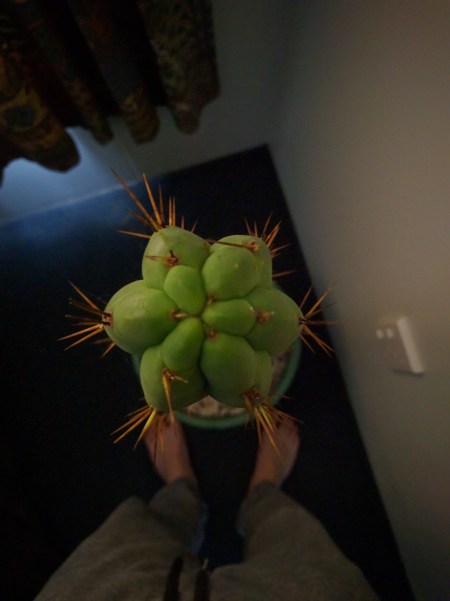
Cactus

Overall things are going very well. I’m cultivating a fun and productive routine, taking care of myself, and enjoying the outdoors (whether I like it or not (last night’s jog through the botanical garden had an unfortunate sleet interlude)). I’m hoping to get a car or some other form of transport lined up to do more weekend traveling. I think spring break will be the next big opportunity, and I may go with some friends to the Abel Tasman track in the northern part of the South Island. I also don’t have to hurry to see things as much as I thought. I’ve got about 5 weeks of time during the finals period with only two finals to take (writing project is due before the period starts and counts as my final (and it’s also going to be fun to write)), so I’ll have a large stretch of uninterrupted time to travel while the weather is nice.

New Zealand

Hope things are going well at home. I wish I had saved up more summer memories (I think I appreciate Fredrick the more I meditate), still cold and damp here.

Lots of love and safe travels,

Jack


Emily in Samoa: A Trip…Home?

April 12, 2016
A traditional canoe by Tutuila’s main road. April 17th is Flag Day for American Samoa, and each village will have a canoe in an island-wide boat race in the main harbor

A traditional canoe by Tutuila’s main road. April 17th is Flag Day for American Samoa. Each village will have a canoe in an island-wide boat race in the main harbor.


We just got back from a four-day trip to the island of Tutuila in American Samoa, where we stayed with host students and their families. The students were members of the community college’s Phi Theta Kappa honors society, and were eager to get to know us, welcoming us as friends and new members of their families.

I was excited from the moment we touched down. Like many of the students in my group, I knew the least about American Samoa going into my study abroad, and was curious about what it would be like—more so than Fiji or Savai’i. We started by driving past chains like McDonald’s and Carl’s Jr…places I would not usually frequent in the US, but which sparkled with new fascination as we drove past. A lot of the world’s American stereotypes felt true here: things seemed glittery, plastic, diverse, plentiful. Or perhaps I was just in culture shock.

The situation got even better when I met my host. We had similar personalities, and as she told me about what she had planned for our stay, I couldn’t help smiling. She wanted to take us to ice cream spots, the best ocean views, and her aunt’s function center (set on top of a hill that overlooked the island). “My dad’s an artist,” she said, “but he also loves to cook…really intricate things. He’s starting to put tattoo patterns on his cakes, and he’s going to make lasagna on Thursday for you.” Oh gosh. The L word. We went back to her house, and I was enveloped in air conditioning, basking in the feeling of cool air on my skin as I delved into Arizona iced tea and potato chips. None of us had felt like life in Samoa was particularly hard, but I was not expecting this reaction to all the food choices on my arrival in American Samoa—an island only half an hour’s plane ride away, yet a world apart.

I could go on for pages with the food, but suffice it to say that I ate my fill and more. And between eating, hikes, lectures, and late-night talks with my host family, the stay was over before we knew it.


 One of my host family's paintings, a mural at a local retreat. More artwork can be found at https://www.facebook.com/MarkAshleyFaulknerart/

One of my host family’s paintings, a mural at a local retreat. More artwork can be found at https://www.facebook.com/MarkAshleyFaulknerart/


My family was the biggest highlight of my trip, as every night they sat up for hours talking about life in American Samoa, their past, and what they hoped to do in the future. Our group advisor wants us to analyze whether culture is “blended well” there, and we’ve all found that is impossible to do so. My family called themselves weird, since they were a small nuclear family with healthy portions of Portuguese, Hawaiian, Australian, Solomon, and Samoan in their family tree. They didn’t go to church or bingo, though most of the island did. My host father created artwork based on Samoan traditional tattooing, but wasn’t widely known, since those in the community “didn’t understand his art,” and felt they could make it themselves. My host brother, who was sixteen, was a product of all this “blending,” but was closest to the Tongan population on the island, since his best friend was Tongan and they would often go to church and other events together.


flower leis find a new twist in American Samoa, where grocery stores sell leis with candy, chips, and 5-hour energy bottles

flower leis find a new twist in American Samoa, where grocery stores sell leis with candy, chips, and 5-hour energy bottles


leis close-up


So what exactly is cultural blending, and how does one do it well? And why should we assume that American Samoans do it less well than Americans or Samoans? To me, culture just is. A group might lose traditions, but it cannot lose culture…it can only adapt it, as we have been seeing in American Samoa.

One aspect of Samoan tradition and culture that is still very much alive is the legend of the turtle and shark in the village of Vaitogi. According to one version of the story, a man and woman fell in love, and ran away from their island so that the man would not have to fight a war. They were taken in by the villagers in Vaitogi, but their leaders, angry at the man’s desertion, eventually found them out, chasing them to the cliffs. The pair refused to surrender, and jumped into the ocean, where they turned into a turtle and shark. Another version claims that the pair are a mother and daughter fleeing famine. You can watch the first version in more detail here:


The pair can still be seen today, but only if the villagers come to sing their special song. Our hosts had called the village before our visit, and a woman came out to meet us when we arrived. After five minutes of singing, they both appeared, the turtle surfacing on the right, and the shark swimming in the crest of a large wave that came crashing down on the cliff. It’s easy to be cynical of legends, but much harder when they come true right in front of you.


Searching for the turtle and shark at the cliffs of Vaitogi

Searching for the turtle and shark at the cliffs of Vaitogi


Other aspects of American Samoan culture are not as Samoan…perhaps more like what many like to call a “melting pot.” There is little food waste, as is common in independent Samoa, but when this is combined with easy access to American fast food chains and junk food, health risk and obesity rates go through the roof. Add to this the inability to access fruits and vegetables, due to the lack of home gardening and mainland ships that never seem to arrive, and you end up with a difficult situation. Similar instances of blending can be seen elsewhere in the culture: strong Samoan family values are played on by recruiters to coax students with few options (the US government has prevented universities from being established on the island) to join the army. Tuna canneries employ large numbers, and enable proprietors to label their products as “made in the USA” without paying their workers national minimum wage…since American Samoa is not officially part of the nation. And the list goes on…

It may come as a surprise to some readers that American Samoa exists and is part of the US. We certainly aren’t told much about it where I’m from. Well, it’s an “unorganized, unincorporated territory,” the last US holding in which people are not citizens, and thus cannot vote or have a voting representative in Congress. They also do not pay taxes, and maintain their land without risk of eminent domain, even receiving payments from the government to rent their land as a national park. There are pros and there are cons, as there would be any place in which different cultures are coming together and attempting to successfully coexist.

I hope that one day in the future I will be able to host members of my American Samoan family at my house in Massachusetts, so that we can continue are conversations, and that I can begin to see my world through their eyes, as they tried to see their world through mine.


Sunset from my host family’s hilltop retreat

Sunset from my host family’s hilltop retreat


Tony in Switzerland: Campus Kings and Castle Queens

March 1, 2016

It’s the last full week of February, everybody, and now that classes are starting up, the exchange student network (ESN) has been keeping international students busy. Last week, I participated in welcome week activities ranging from touring the city and exploring the campus.


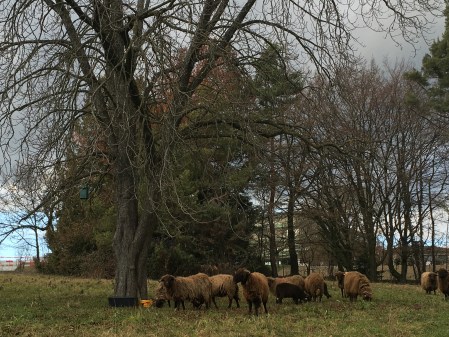
UNIL's mascot is the sheep, which gives the administration a perfect excuse to have sheep roaming the campus. The ESN highly encourages taking a selfie with the sheep before you leave UNIL. We'll see.

UNIL’s mascot is the sheep, which gives the administration a perfect excuse to have sheep roaming the campus. The ESN highly encourages taking a selfie with the sheep before you leave UNIL. We’ll see.


Welcome week also marked the end of my intensive French class that I took before the start of the semester.


To celebrate the end of the vacation class, we all went out to an authentic Swiss restaurant in front of Lausanne's cathedral.

To celebrate the end of the vacation class, we all went out to an authentic Swiss restaurant in front of Lausanne’s cathedral.


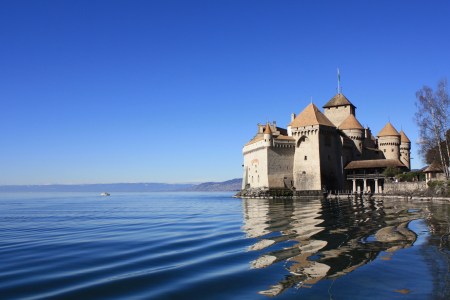
Before the semester officially began, I also went on a trip to the Château de Chillon right outside of Lausanne. The castle overlooks Lake Geneva and offers the best spots to take pictures.


Switzerland is a postcard, and I feel like every picture I take is a stock photo from Google.

Switzerland is a postcard, and I feel like every picture I take is a stock photo from Google.


My friends and I took a self-guided tour throughout the castle, which really meant looking for the best windows and towers from which to take pictures.

My friends and I took a self-guided tour throughout the castle, which really meant looking for the best windows and towers from which to take pictures.


Like I said, we searched hard for the best photo ops. This is the view from the windows in the castle's dungeon. It almost makes prison life look less miserable.

Like I said, we searched hard for the best photo ops. This is the view from the windows in the castle’s dungeon. It almost makes prison life look less miserable.


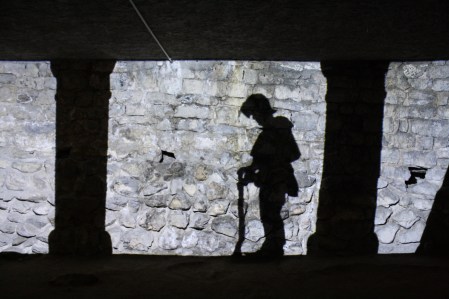
In one room of the castle, there was a video projection on the stone wall. The silhouettes of actors came in and acted out the siege of the castle in the 1400s.

In one room of the castle, there was a video projection on the stone wall. The silhouettes of actors came in and acted out the siege of the castle in the 1400s.

As of February 22nd, I am officially a student at the Université de Lausanne. In other words, I officially started classes this week, which is only mildly intimidating. I’m auditing courses to see what I might want to add on to my overall schedule by March 20th. It’s a very lenient system, but here’s hoping everything will transfer back okay!


Tony in Switzerland: Studying Abroad…in D.C.?

February 4, 2016

Hey everybody! My name is Tony, and I am a junior at the University of Richmond, majoring in Biology and French with a minor in Studio Art. ­I know…I’m all over the place. Fortunately, I was able to find a program in Switzerland that caters to all of my interests. This spring, I will be studying at the Université de Lausanne (UNIL) where I will take biology, literature, and art history classes. Plot twist: they’re all going to be taught in French.

Richmond’s French department continues to encourage me, though, which is comforting when I think of how hard biology will be when it’s taught in French. One way or another, I’m excited for the challenge, especially after being home on Cape Cod for all of winter break. Most of my friends have already gone back to their universities, and my parents have left for a month’s trip to Brazil to visit family. In other words, I spent the majority of winter break at home alone or working.

That all changed on January 25—six days before my flight to Lausanne. Throughout all of break, I never received word about my visa from the embassy in D.C., which wasn’t for a lack of effort on my part. I emailed the embassy on the 5th and the 19th with no new information. My advisor and I became so worried that we started contacting my coordinator at UNIL for help. He pulled some strings and reached the cantonal authorities in Geneva. As it turned out, my visa had been authorized January 7, but I didn’t receive any notification about it. I started planning everything I could do to get that visa in time for my flight on the 31st. Would it be difficult? Probably. Would it be impossible? I hoped not.

Day One of the Visa Adventures: I was optimistic and immediately called the Swiss embassy to ask if I could expedite the visa authorization process, but as you might remember, the weekend of January 22, 2016 was a busy weekend for snowplows. Winter Storm Jonas challenged emergency preparedness everywhere, especially D.C. The embassy was closed that Monday because Jonas completely buried the city.

I wouldn’t give up yet. I decided to drive down to D.C. the next day and gamble on the embassy’s opening. Unfortunately, I grossly overestimated how well the city would be cleaned.

Day Two: I drove all the way down from Cape Cod to the wreck that was D.C and found that the embassy was still closed. I ended up driving down to Richmond to pay my friends a visit before going back to the embassy the following day. Free housing for the night didn’t hurt either.

Day Three: my friends and I started the day with a classic DHall breakfast. I called the embassy from my preferred third room booth and discovered that it was open. However, the receptionist let me know that no visa questions are answered over the telephone or in person. After talking it over with the OIE, I drove back up to D.C. I parted ways with my friends and reached the embassy before closing time. When I arrived, I was immediately turned away because according to the embassy’s policies, visa questions are only answered in the morning. I shockingly didn’t catch that when the rule is masked by three links on their website. Back to Richmond I went to spend the night in my friend’s apartment once more.

Day Four: I woke up aggressively early this time around and headed up to D.C. This time, I actually got to speak to the visa officer who told me that she could not issue the visa within the same day. At best, she could expedite the process so that I would receive it the next morning. Considering how soon my flight was, I agreed.

Here’s where the story gets pathetic, as if it wasn’t already. My car is expecting an oil change once it reaches 41,000 miles, and at that point, I was getting really close.

Somehow, my friend Amalia anticipated that I’d be stuck in another conflict with the embassy. The night before, she offered to let me sleepover her house in Maryland should anything happen at the embassy. She had been planning to go home for the weekend and knew her father wouldn’t mind the company. I ended up taking her up on the offer to pick up my passport the next morning. Amalia and her father would not be home until the late evening, though, which meant that I had roughly 6 hours to spend before driving to her house. Here are some of the pictures of what ensued from the #tonytakesDC campaign.


No elephants were harmed in the making of this photo.

No elephants were harmed in the making of this photo.


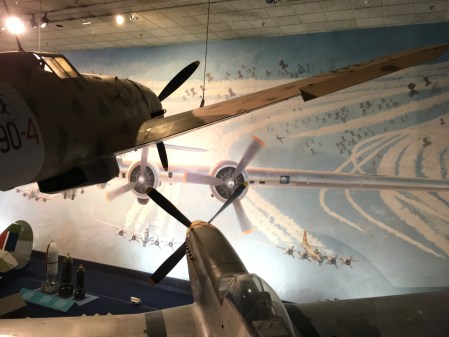
Living my brother's dream of seeing the Air and Space Museum.

Living my brother’s dream of seeing the Air and Space Museum.


I only made him mildly jealous.

I only made him mildly jealous.


At the end of the day, I toured more of D.C. than I have of Cape Cod and then drove to Amalia’s house. I was able to spend some quality time with her two cats and also Amalia and her father.


Fortunately, Amalia's cats were very photogenic. Meet Anna Maria.

Fortunately, Amalia’s cats were very photogenic. Meet Anna Maria.


And of course, the killer cat, Felix.

And of course, the killer cat, Felix.

Day Five: I got my visa. Nothing else is important anymore. I finally got my visa. Five days, 1,568 miles, and eight trips to the gas station later, I finally got my visa.


Lausanne, here I come! One day to go!

Lausanne, here I come! One day to go!

My flight to Switzerland leaves tomorrow, and now that I have my visa, I can calmly start packing. Although, what better way to procrastinate than by starting this blog? Check it out next week when I’m finally in Switzerland!


Lindsay in Thailand: Putting the “Study” in Abroad

December 23, 2015

Thailand is full of random adventures, and I myself have had many since my arrival, but I thought this week I would clue you all in a little more on the reason for my being in Thailand—my studies in Khon Kaen.

My program through the Council on International Educational Exchange (CIEE) has a catchy name, Development and Globalization (DG), but you may wonder what actually falls under this umbrella term? My answer? I’m still figuring it out. In the information packet I received, I understood this program as one that allows me the opportunity to “study complex environmental, development, and globalization issues.” It has done that, and so much more.

Unlike our sister program, Public Health, the DG program is not associated with Khon Kaen University near our CIEE school headquarters. It is an entirely separate program that has its own educational model that is much different from most classroom learning models. This program focuses on learning from a ‘human perspective’ by speaking with villagers, NGOs, and government officials among other individuals in the Northeastern Isaan region of Thailand.


The Development and Globalization group met with water buffalo herders during our land and agriculture unit.

The Development and Globalization group met with water buffalo herders during our land and agriculture unit.


This semester, our program focused on the development and globalization issues of organic agriculture, water management, land rights, mining, and also did a Laos agricultural comparative unit. These five units are primarily student-led and are divided into two-week segments. The first week is comprised of reading…reading…and more reading. In this mix, we also have a few guest lectures, Thai language courses and Thai peer tutor sessions focused on our unit topic as well as two discussion and information-based meetings led by the two student unit facilitators. These “UFac” individuals are responsible for not only planning this week, but also providing the link between the Thai ‘ajaan’ professor’s as well as preparing for the following week of exchanges.


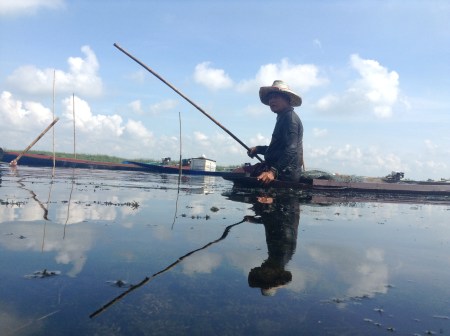
In an area affected by a dam construction, this man now fishes where homes used to be.

In an area affected by a dam construction, this man now fishes where homes used to be.


In the second half of the unit, our 10-person DG group, two ajaans, and our beloved ‘wan’ driver make the trek to the local village affected by the development issue we are studying. Throughout our five-day stay, we speak with villagers about their situations and struggles to gain an overview of the issues facing the area. In order to view the situation from the other side, we also meet with government officials who offer the political context. Additionally, we interview local Non-government organizations and NGO persons who are knowledgeable on the subject not only in our current focus area, but also in other areas throughout Thailand.


The infamous “wan” ride with the DG “wamily,” including our translator and driver.

The infamous “wan” ride with the DG “wamily,” including our translator and driver.


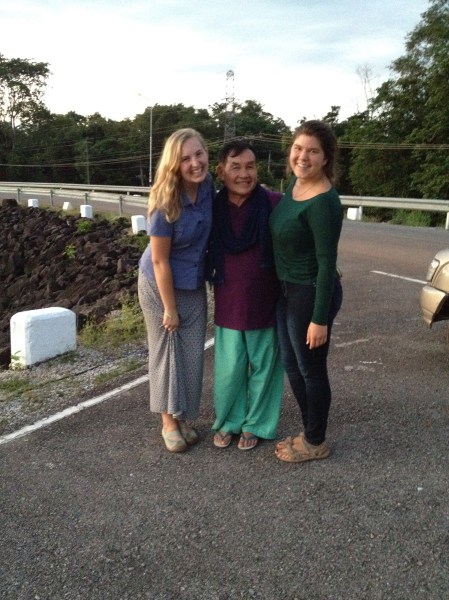
Something especially unique about this program is that, during this week of unit exchanges, we actually live with villagers. Two DG students are assigned to one family and homestay, and we reside with them all week. Being able to follow them through their daily routines, learn to cook traditional foods from them, take showers with a bucket of water and a bowl, help them in their garden, round up the qwai (water buffalo), and communicate with them as well as we are able has really made this semester something special for me. In such a short time, we seem to become a member of the ‘krop kruwah’ (family). I have been “a daughter to them” and have even cried when I left some of my homestays. These families have not only taught me so much about Thai language and the social justice issues they face, but they have taught me the true meaning of kindness and making someone ‘feel at home.’

IMG_0459

Some of my homestay families and villagers who stole my heart


IMG_0569


OLYMPUS DIGITAL CAMERA

Upon arrival in Khon Kaen, our group is tasked with making a unit ‘output.’This final project is supposed to be a reflection of what we learned over the past two weeks, and often incorporates aspects that would benefit the affected community in some way. After brainstorming as a group, we work vigorously to finish our project and plan a two-hour “workshop” where we present our findings to our ajaan professors and student interns. Some unit outputs have included a lesson plan on organic agriculture, a 25 page report on organic farming barriers, info-graphics concerning land rights issues, paintings reflecting Laotian agency and dependency, and an information packet provided to the European Union before a visit to a mining affected community.


 Kaori, myself, Elyssa, and Megan showing our support for Na Nong Bong, a community we exchanged with who is negatively impacted by a mine in their community.

Kaori, myself, Elyssa, and Megan showing our support for Na Nong Bong, a community we exchanged with who is negatively impacted by a mine in their community.


Following this workshop is the ever so popular “plus, minus, delta” evaluation where we evaluate as a group what we did great and what could have been done better. Additionally, we have a “sadthi” quaker-style meeting to allow personal reflection and expression of our current feelings after an educationally and emotionally exhausting week. Finally, it is time for a good night’s sleep before the repeat.

I have to be honest with all of you. In the beginning of the program, I thought I was in over my head. I saw the little black program planner book as daunting with so many scheduled classes and outside exchanges. I questioned how much time I would have to myself. Yes, I am fully aware that I signed up to ‘study abroad’ but I questioned how much studying was too much abroad. This program is far from what might seem like traditional abroad expectations. I may have not hopped from country to country every other weekend and I may not have shared experiences with many other Richmond students, but I was able to really see Thailand for all its beautiful wonders and civil flaws. I was able to see big city lights and little village dirt roads, I became a ‘regular’ at the local coffee shop, I befriended the coconut ice cream stand lady who knows my order by heart, and I was able to reflect on all these things and more as time passed me by. Although I am sad to be leaving here in a few short weeks, I know that this place, those Thai villagers, and my program friends was, and always will be, a home and family to me.


Colleen in Singapore: Student Life at SMU

November 5, 2015

Hi everyone! Although I have been posting a lot about my travels while abroad, I promise that yes, classes, group meetings, projects, and exams are very much prevalent in my day-to-day life here in Singapore. That’s why this post will be dedicated to my experience thus far at Singapore Management University.


IMG_1172

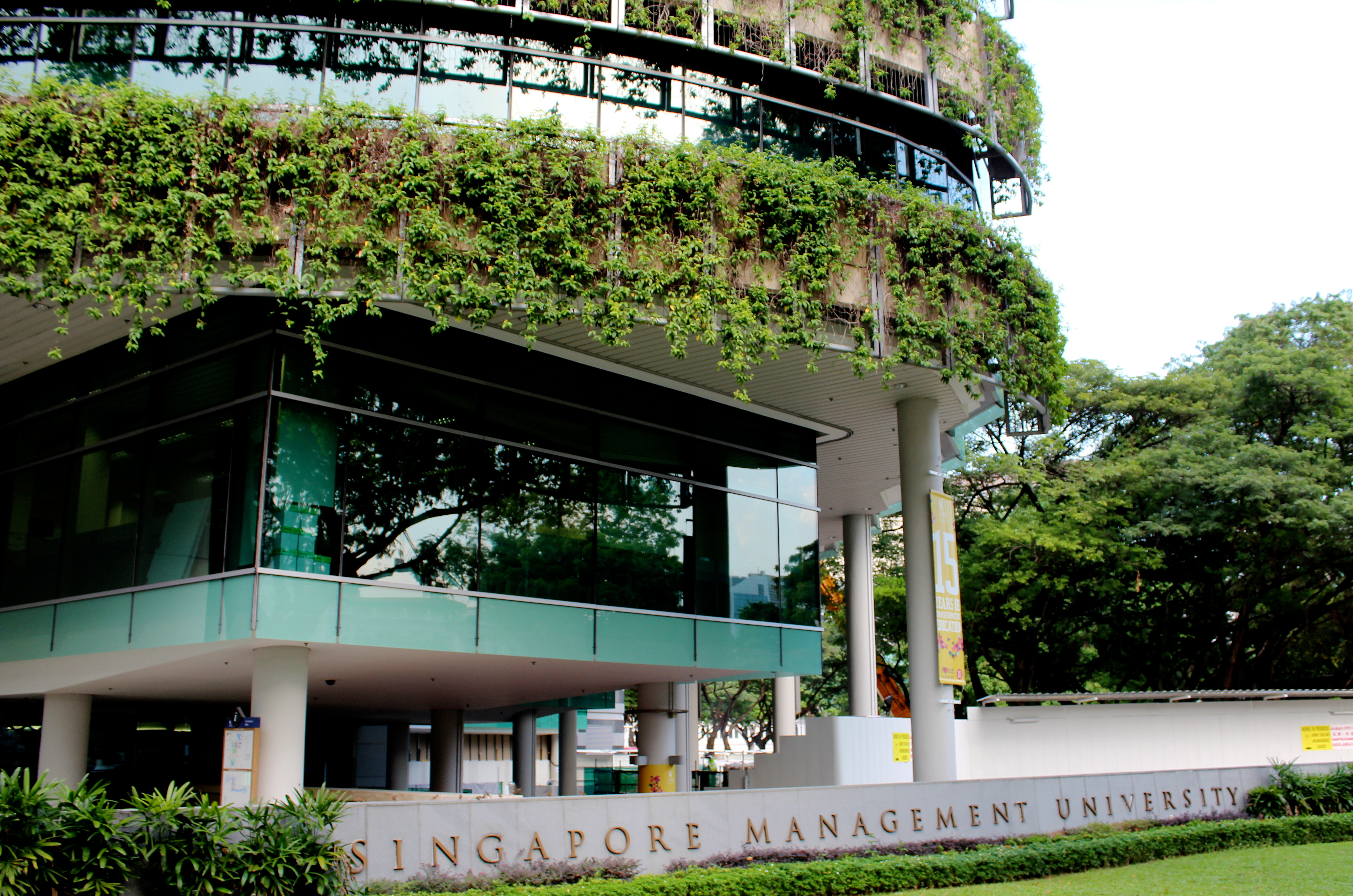
SMU’s campus is smack in the middle of the city. Campus is made up of six schools: School of Accountancy, School of Business, School of Economics, School of Information Systems, School of Law, and School of Social Sciences. There is also an administration building and a library on campus.


IMG_1168


The layout of SMU classrooms is quite similar to Richmond. While students are graded on participation, classes are more lecture-based than discussion-based. Each class is three hours and fifteen minutes, which does take some getting used to. Luckily, teachers give fifteen minute breaks in the middle of class. My biggest class size is 45 students.

The layout of SMU classrooms is quite similar to Richmond. While students are graded on participation, classes are more lecture-based than discussion-based. Each class is three hours and fifteen minutes, which does take some getting used to. Luckily, teachers give fifteen minute breaks in the middle of class. My biggest class size is 45 students.


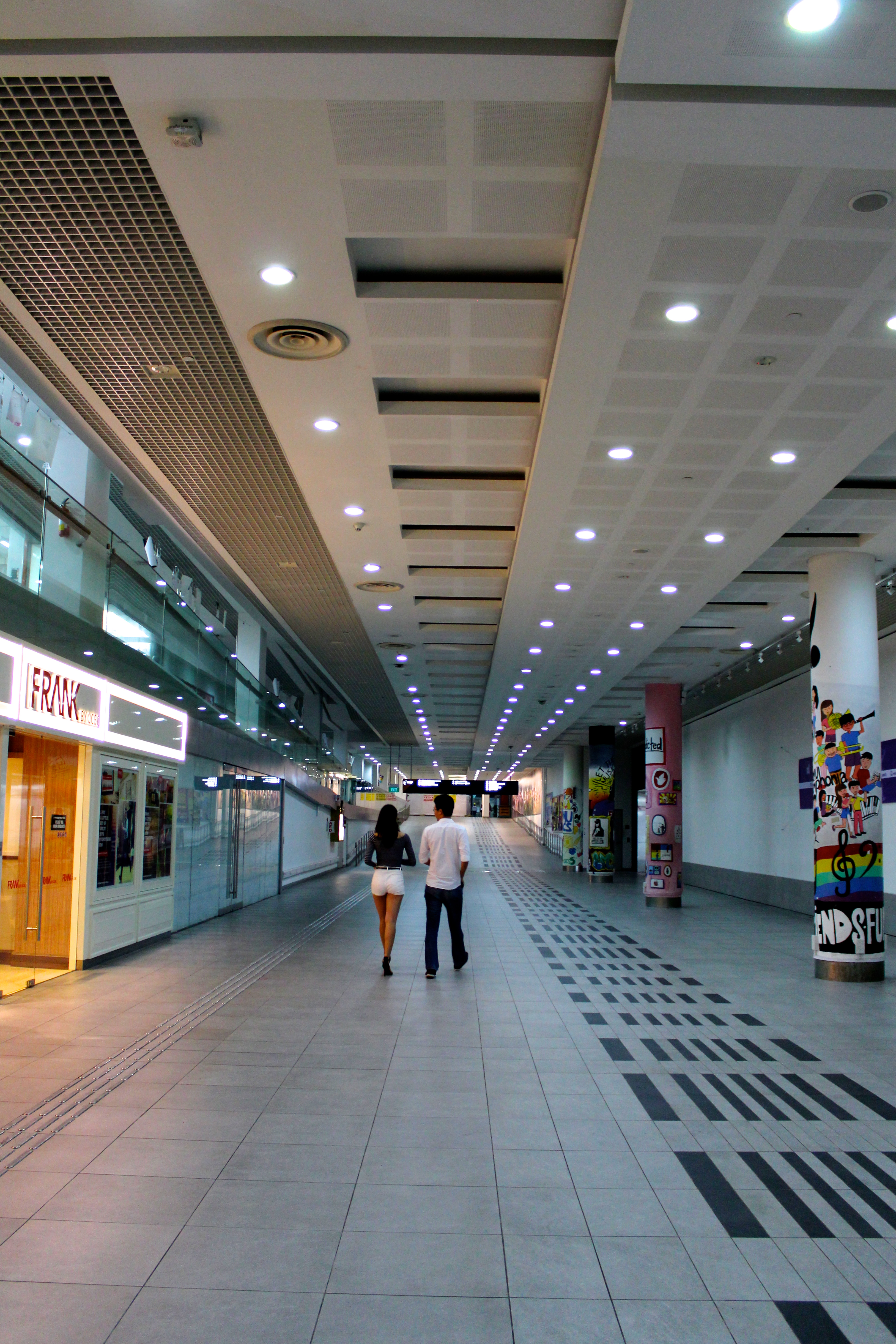
All of SMU's Buildings, with the exception of the administration building, are connected by an underground walkway. This makes getting around campus a breeze, especially on those hot Singaporean afternoons. The underground walkway is also connected to the MRT station, so getting to school is as quick as three stops on the metro.

All of SMU’s Buildings, with the exception of the administration building, are connected by an underground walkway. This makes getting around campus a breeze, especially on those hot Singaporean afternoons. The underground walkway is also connected to the MRT station, so getting to school is as quick as three stops on the metro.


SMU has a rigorous academic schedule, one that is similar to Richmond. However, grades are heavily rooted in midterms and final exams, as there is not much homework assigned. Right now, the semester is coming to an end, and the work load is definitely picking up. The last week of classes consists of many group presentations, and the following week will be final exams. I really can’t believe that my time here at SMU is coming to a close!


A panorama of SMU's campus. This photo was taken from Wikipedia.

A panorama of SMU’s campus. This photo was taken from Wikipedia.


Dan in Argentina: Putting the Study in Study Abroad

October 26, 2015
To my Auntie Donna who always jokes there's no way I go to classes because I have so much fun abroad, here's proof on the contrary. Well, I guess all this proves is that I've stood in front of the school... but trust me, I've entered the building as well. The University Torcuato di Tella was founded in 1991 and recently moved to this building in March 2013. The very modern building with cement floors and big glass doors and windows stays (aesthetically) true to its industrial roots as an automobile factory.

To my Auntie Donna, who always jokes there’s no way I go to classes because I have so much fun abroad, here’s proof on the contrary. Well, I guess all this proves is that I’ve stood in front of the school… but trust me, I’ve entered the building as well. The University Torcuato di Tella was founded in 1991 and recently moved to this building in March 2013. The very modern building with cement floors and big glass doors and windows stays (aesthetically) true to its industrial roots as an automobile factory.


Di Tella, as students commonly shorten the University's name, is known for its business and architecture programs. All located under the roof of one main building, other programs of study include political science, law, history and international studies. The school has about 1,200 undergraduate students. I, along with the other Richmond students here, am in direct exchange with di Tella and UR which means students from Buenos Aires are currently in Virginia studying on our campus.

Di Tella, as students commonly shorten the University’s name, is known for its business and architecture programs. All located under the roof of one main building, other programs of study include political science, law, history and international studies. The school has about 1,200 undergraduate students. I, along with the other Richmond students here, am in direct exchange with di Tella and UR which means students from Buenos Aires are currently in Virginia studying on our campus.


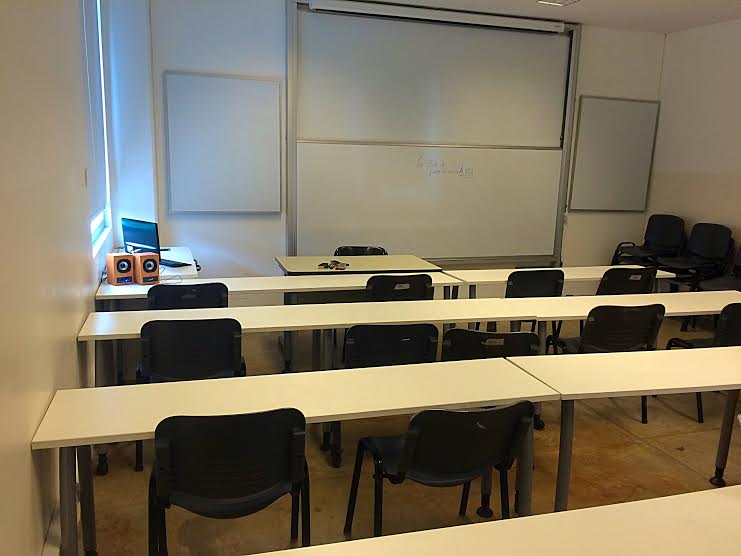
This is what almost every classroom at di Tella looks like: very simple with concrete floors, white tables, white walls, a projection screen and one of those cool sliding whiteboard things. This is the room in which I have my Argentine Literature class. I am also taking a Latin American Cinema course and a class called Dictatorships and Militancy in the Southern Cone (Argentina, Chile and Uruguay) During the 1960's and 70's. I have enjoyed all of them so far.

This is what almost every classroom at di Tella looks like: very simple with concrete floors, white tables, white walls, a projection screen and one of those cool sliding whiteboard things. This is the room in which I have my Argentine Literature class. I am also taking a Latin American Cinema course and a class called Dictatorships and Militancy in the Southern Cone (Argentina, Chile and Uruguay) During the 1960’s and 70’s. I have enjoyed all of them so far.


Getting ready for class today, I decided to have a little photoshoot. These are the materials I have for my Dictatorships class. We recently read the popular Rodolfo Fogwill novel "Los Pichiciegos." It is about a fictional group of Argentine military deserters during the Malvinas War, better known as the Falkland Islands War, between Argentina and the United Kingdom in 1983. Although a good read, I enjoy our other readings more which regard the history and the current memory of the topic. It is interesting to study how history is presented and how people remember these negative and sometimes traumatic events.

Getting ready for class today, I decided to have a little photoshoot. These are the materials I have for my Dictatorships class. We recently read the popular Rodolfo Fogwill novel “Los Pichiciegos.” It is about a fictional group of Argentine military deserters during the Malvinas War, better known as the Falkland Islands War, between Argentina and the United Kingdom in 1983. Although a good read, I enjoy our other readings more which regard the history and the current memory of the topic. It is interesting to study how history is presented and how people remember these negative and sometimes traumatic events.


Layla in Australia: A Day in the Life

October 15, 2015

Today I received a reminder on my phone telling me to renew my travel notification for my bank. My bank only lets you notify them that you’ll be traveling abroad for 90 days at a time, which means this notification means I’ve been in Australia for just about 3 months. Needless to say, I didn’t realize how long it’s been! I’m just over halfway through my time abroad, and in 3 more months I’ll be starting the spring semester back at Richmond. To say I’ve settled here in Australia is an understatement – I feel just as home here as I do in the United States, if not more. To use some of my Australian slang that I’ve picked up, I’m really not keen to come home… in fact, I still haven’t booked my return flight to the States. Here, I’m going to describe a typical day for me here in Sydney, and hopefully show why I love it so much.

9 AM, any given Thursday: Wake up… after hitting the snooze button on my phone about three or four times. While I was never a breakfast person in America, the lack of a meal plan and a dining hall on campus means that buying lunch is expensive. Instead, I typically eat a bowl of Weet-Bix, a classic Australian cereal, for breakfast and bring a granola bar and some fruit for lunch. After getting ready, playing around on my phone, and eating breakfast, I make the ten- to fifteen-minute walk up the road to uni.

11 AM: Macroeconomics lecture. While it’s tough to keep focused for the entire two hour lecture, the material is interesting enough to stay awake and the ten-minute break in the middle helps. The professor tends to show how what we’ve learned about in class applies to the Australian economy, so I get to learn about not only general macroeconomics but Australian policies as well.

1 PM: With lecture over, I cave to my biggest weakness: coffee. I don’t really drink coffee at home – I’ve never liked the taste. I did drink caramel macchiatos while studying for the MCAT, but mostly the appeal was the caramel sauce. The coffee was just the bitter obstacle that I drank quickly so I could indulge in caramelly goodness. However, Australia is known for its delicious coffee, and I decided that I couldn’t come here and without trying a flat white, the classic Australian coffee drink that’s like a less foamy cappuccino. Needless to say – I had one, and I was hooked. Coffee here is so good that I don’t even need sugar to make it palatable like I do in America. My guilty pleasure at uni is a flat white and a croissant from the café in the New Law Annexe.


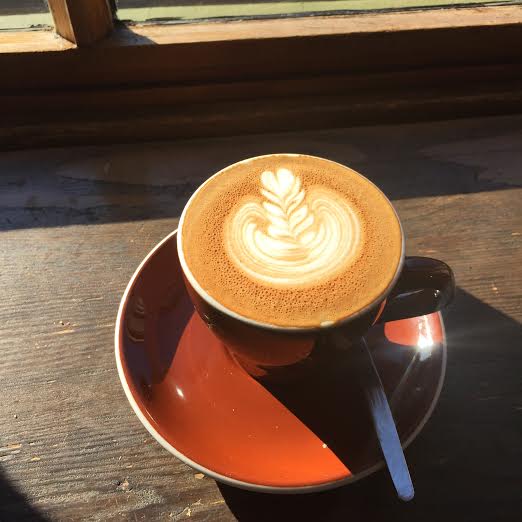
A flat white from the coffee shop where I first tried Australian coffee, Campos in Newtown.

A flat white from the coffee shop where I first tried Australian coffee, Campos in Newtown.


For the first half of the semester, I had four hours of gruelling chemistry lab directly after my economics lecture. This lab, which I had multiple times a week, was the bane of my existence, endlessly frustrating me with my inexplicable failures in it. But luckily, as of a few weeks ago, the lab has ended and I can finally go to quidditch trainings! Trainings on Thursdays are 3-5 PM in Victoria Park, the park bordering the USYD campus. I’ll generally do a little study after my coffee break and then head to training, where we run drills, play scrimmages, and play netball. Netball is a sport that’s pretty popular in Commonwealth countries but almost unheard of in America. It’s similar to basketball, but one major difference is that you can’t run with the ball. Needless to say, I often forget this rule, so netball isn’t my favorite. Practice usually has about fifteen people present.

5 PM: After practice, the quidditch team heads to the pub! Generally we start at the Forest Lodge Hotel (affectionately nicknamed the “flodge”) just north of campus in the suburb of Glebe for dinner and then head to the neighboring Roxbury Hotel for trivia at 7:30. Weirdly, pubs are called hotels here… as are hotels. That was definitely confusing at first!


Me and a handful of quidditch mates at the Roxbury hotel. This was actually taken after my very first training at USYD. I'm in the purple jacket, and pictured clockwise are my friends: Kat, Cameron, Lachlan, Laurel, Nat, Tom, Lachlan, and Paul. Usually our table is two or three times the size!

Me and a handful of quidditch mates at the Roxbury hotel. This was actually taken after my very first training at USYD. I’m in the purple jacket, and pictured clockwise are my friends: Kat, Cameron, Lachlan, Laurel, Nat, Tom, Lachlan, and Paul. Usually our table is two or three times the size!

Since Australian universities are mostly commuter schools, the focus of social life is off-campus, typically at pubs. On-campus or house parties are almost unheard of, except for students who live in colleges (which are akin to American fraternities, and generally only for students who don’t live in the metropolitan area.) Since there are no communal dining halls, dorms, or apartments for students to socialize in after classes, pubs fulfil that role. Speaking sociologically, drinking is much more of a focus in daily life at university here than it seems to be in America, even accounting for the lowered drinking age.  ‘Mateship’ is one of the cornerstones of Australian culture, and buying drinks for your mates and having them reciprocate is one of the ways that it is expressed.

Typically, my friends and I will stay at the pub until it closes, around midnight, with some people filtering out earlier to catch public transport home. Usually then we will split up to go home, or if we’re still feeling sociable, some will come over to the apartment complex where my friend Sam and I live, Urbanest. It has a TV room on the ground floor filled with couches that is typically empty by the time we get there, and is great for late-night hangouts. Once everyone goes home, all I have to do is take the elevator up four floors and I’m home.

Hopefully this post has given you a little insight on what it’s like to be a university student in Australia. My life isn’t glamorous by any means, but it’s definitely fun. While I’m not jetting off to a new country every weekend like many study abroad students, I think that by immersing myself into Australian culture, I’ve gained a much deeper appreciation for where I am studying abroad. I think for a lot of study abroad students, between all of the traveling and lack of deep connections with local students, their host country becomes interchangeable with any other place. Not to say that traveling often or being friends with other exchange students is bad, but I think that by making local friends and really getting to know Sydney on a deeper level, my study abroad experience has been infinitely richer. I can’t even fathom how much it would have lacked without my Australian friends – they have made this experience what it has been so far for me, and I will miss them terribly when I go back to America.


Layla in Australia: Uni Life

August 18, 2015

As I’m now getting into week 4 of classes (it’s absolutely incredible how fast time is flying!), I thought now would be a great time to talk about uni life here in Sydney and how it compares to Richmond. A quick aside: the word “uni”! Australians are all about abbreviations, as seen in this video we watched at orientation at USYD. And yes, it’s USYD — I haven’t heard students use the full name of “University of Sydney,” just USYD.

Thanks to a particularly stressful junior year and the maximum number of AP credits, I’ve just about finished my major, minor, and general education requirements at Richmond. This meant I got to select any classes I thought seemed interesting (and had good class times!) to take in Australia. Like Richmond, the normal course load is four classes. My four are introductory macroeconomics, introduction to computer programming, synthetic medicinal chemistry, and a course on Australian political history and ideas of nationhood.

Every class here has two components: a lecture and either a tutorial or a practical. Lectures are held in enormous lecture halls and consist of the instructor presenting on material for either an hour twice a week or two hours once a week. At first, the size of lectures was completely overwhelming — the largest class I’ve ever had at Richmond was about 35 students. I walked into my upper level chemistry class on the first day in awe at the hall with about 100 students, and commented on it to the girl next to me. She gave me a weird look and said, “Really? This is about a quarter of the normal lecture size.” Over the past few weeks, I’ve gotten more used to these large classes. It’s a lot more intimidating to ask a question in a lecture here than it is in the intimate classrooms at Richmond, but questions are not discouraged by any means. Lectures here are also recorded, so if I ever felt like I missed something in lecture, I can always go on Blackboard and re-watch the lecture.

The other parts of classes are probably more familiar to Richmond students. Tutorials (“tutes”) are once a week and essentially discussion groups with a graduate student and about 20 fellow students. The small size, mandatory attendance, and personalized attention remind me a lot of Richmond classes. Practicals (“pracs”) are the equivalent to tutes for more scientific classes like my computer science or chemistry units, and are just like labs at Richmond.

The last major difference between coursework here and in America is the number of assignments. For example, there’s only one assessment in my chemistry course — the final exam, which is worth two-thirds of the grade (“mark”). The other third of the mark comes from three labs in the practical. This means there’s little incentive to learn the material throughout the semester, compared to Richmond, where I typically have three tests during the semester in addition to the final and other assignments like homework. The responsibility for planning and learning is put directly in the hands of the students.

Getting away from academics, probably the biggest difference between uni life in Sydney and college in the States is the social life. Most students at USYD commute from home, sometimes up to three hours roundtrip, instead of living on-campus like at Richmond. This means after classes are over for the day, the campus can seem deserted. An Australian I met in my chem prac told me that his favorite parts of his exchange spent at the University of North Carolina were the school spirit and college sports, two things that are distinctly lacking in Australian universities due to the commuter atmosphere. The “Sydney University” sweatshirts embody that — they’re mostly worn by international students, not Australians.  Yes, I did get one, and I wear it proudly. No shame.

One thing that does remind me of Richmond -- this spider! I saw it painted in the middle of a busy sidewalk on campus and had to take possibly the world's most awkward selfie with it. Again, no shame.

One thing that does remind me of Richmond — this spider! I saw it painted in the middle of a busy sidewalk on campus and had to take possibly the world’s most awkward selfie with it. Again, no shame.

To integrate myself more into the campus life that does exist, I’ve joined a few societies, which are the equivalent to our clubs. I played quidditch my first two years at Richmond, so I decided to join the Quidditch Society here at USYD. This is turning out to be one of the best decisions I’ve made since coming to Sydney. Being part of a team gives you an instant group of friends (or mates as they’re called here!) and also opportunities to travel — for example, in a few weeks I’m going to the Australian capital, Canberra, for a tournament. Every week I look forward to the practices and the classic Aussie tradition of going to the pub afterwards with my mates, for a few drinks, dinner, trivia, and card games.

While university in Australia is definitely different to college in the US, it doesn’t mean that it’s bad. I’ve really enjoyed stepping out of my comfort zone and adapting to a different sort of university experience. The independence here can be overwhelming – from the anonymity of lectures, the lack of incentive to study throughout the semester, to the ability to avoid interacting on campus. So far, I’ve tried avoid the common pitfalls and keep up with my studies. We’ll see how successful I am as the first assessments come due! Next week I have a five page paper for my history class due… as a chemistry major who hasn’t taken a true writing-intensive course besides French since FYS, I’m a little nervous. But challenging myself is exactly what I came to Australia for, so I think I’m up for the task.

The main building on campus, called the Quadrangle. This marks another difference to Richmond -- while some buildings on campus are just as gorgeous as the Quadrangle and any building at Richmond, the architecture is ridiculously heterogeneous. I won't disgrace your computer screens with a picture of the hideous monstrosity that is the chemistry building.

The main building on campus, called the Quadrangle. This marks another difference to Richmond — while some buildings on campus are just as gorgeous as the Quadrangle and any building at Richmond, the architecture is ridiculously heterogeneous. I won’t disgrace your computer screens with a picture of the hideous monstrosity that is the chemistry building.


Dan in Argentina: And So It Begins…

August 11, 2015
Coffee

As I mentioned in my last post, porteños (as the people in Buenos Aires are known) live at cafés. There’s one on almost every corner, always filled with people relaxing and catching up with a cup o’ joe. My host mom knows my affinity (and frankly necessity) for coffee so she prepared the French press for my first day of classes and left a little note. “Happy first class in Argentina” she wrote.


At my host university here (Torcuato di Tella), I am taking an Argentine Literature course and a Latin American Cinema class. My last class is on the dictatorships of Chile, Argentina and Uruguay during the 60's and 70's. We got the chance to visit El Parque de la Memoria, which opened in 2001 and was completed in 2007. The park and its central monument aim to solidify a place in history for the "desaparecidos" or "disappeared ones" that were kidnapped and killed during the dictatorship  of 1976-1983. Located on the Rio Plata (where many bodies disappeared to), there are 30,000 names and counting recognized as victims of the regime.

At my host university here (Torcuato di Tella), I am taking an Argentine Literature course and a Latin American Cinema class. My last class is on the dictatorships of Chile, Argentina and Uruguay during the 60’s and 70’s. We got the chance to visit El Parque de la Memoria, which opened in 2001 and was completed in 2007. The park and its central monument aim to solidify a place in history for the “desaparecidos” or “disappeared ones” that were kidnapped and killed during the dictatorship of 1976-1983. Located on the Rio Plata (where many bodies disappeared to), there are 30,000 names and counting recognized as victims of the regime.


pensar

“To think is a revolutionary act.” This Marie Orensanz sculpture welcomes you into the park and suggests its ultimate purpose. The park is meant to be a place of remembrance and reconciliation. The use of steel, the two divided panels and the elipse at the end contribute to its symbolism. I would tell you more about it but it’s more fun for you to make your own judgements.. and the tour guides spoke in Spanish while a plane flew overhead, so I only got about 50%… Anyway, dope sculpture though.


boca

The other night, one of the most famous Argentine Soccer Clubs and the current defending champion, River Plate beat the Tigres of Mexico during the Copa Sudamericana, 3-0. After each of their three goals, an earthquake of screams erupted through the streets around my apartment and out of every surrounding window. It was, frankly, a bit scary. Fútbol is very important here. This picture was taken in the neighborhood of River Plate’s rival, Boca Juniors. These kids play pick-up soccer games here hoping to, one day, end up on the field of the giant 49,000 seat stadium two streets over.