My Final Blog: Finito

January 23, 2012

Sitting in a large, bright classroom, with a hundred students spread out evenly from front to back, and a lone professor standing at the front reading a magazine, I crossed my T’s and dotted my I’s and realized… I just finished my test.

I have taken many tests during my time as a college student, and this one was certainly no more profound than any other, but there was still something special about this one: it was my last test in Italy. I took a minute to shake my cramped hand and collect my thoughts after dedicating two hours of my life to Entrepreneurial Strategies of Small and Medium Enterprises.  I finally stood up, and a smile of relaxation came over my face, as I walked up to the front of the room feeling like a proud warrior coming home from battle. Two weeks of studying every day (to make up for a semester of general slacking) had taken its toll on me physically, mentally, and emotionally, but now I had no further responsibilities. I was free as a bird, but surprisingly, I wasn’t in an extreme rush to celebrate. The normal drive to celebrate and jump for joy was replaced by the reality that, after a couple of short days to say goodbye, I would be going home.

As I left the classroom and walked into the main lobby of this once-daunting school building that now seemed like a second home, I stood alone, and I thought back to the first time I had walked in 4 months ago. I channeled that nervous, excited, curious kid and thought about how much I had changed in the past semester. With trips to some of the most incredible places in the world, building relationships with people with diverse backgrounds from around the world, and by experiencing life in another country, I realized I had grown as a person. It happened quite gradually, but now I felt more powerful and knowledgeable. I was no longer isolated and green, but was instead affected by the experience of traveling the world and living in another country. I knew things about places I had never even heard of before, and that knowledge made me feel strong and valuable. I gained insight into world issues, and was able to connect to those around me in a way that I had never done before. I learned that the world is truly full of diverse cultures which all should be appreciated and respected.

While I learned so much about the world around me, I had also learned a lot about myself.

As I returned home and was suddenly dropped back into my old life, I realized that I was coming back into it on my own terms. Seeing life in another place, from another perspective, forced me to think about my own life and what was really important to me. I did a lot of maturing on that trip, and I realized that there were things I was doing in my old life I wanted to change, and some things that I realized I wanted to fight to keep.  Seeing first hand that the world was not Medford, New Jersey, Richmond, Virginia, or even solely the United States of America made me view the world, and my life in that world, in a new light.

My transition back into American life is nearly complete now, and has been strong and successful. I have been able to re-strengthen past relationships with friends and loved ones and am happy with where I am in my life. I feel rejuvenated and want to be even more active in affecting the world around me. As a friend, as a son, as a student, as a boyfriend, as a brother, as a grandson, as a player, and as a leader — I want to do it all better.

Around campus, answering the question, “Hey man, how was abroad?” leads to my usual answer of, “It was amazing, dude — such a great time,” but what I really want to say is, “It changed my life. It gave me incredible memories and experiences I could never have dreamed of having, and allowed me to feel like part of a bigger world.”

So while I will always have my memories of seeing London, Dublin, Venice, Rome, Florence, Budapest, Amsterdam, Munich, Cinque Terre, and Lake Como, and meeting people from Spain, Germany, France, Australia, Portugal, Brazil, England, Italy, America, and Canada in my program, the final thing that I will take from this experience is learning more about myself and about my life.

Ever since I was a freshman in high school I dreamed of studying abroad in college, as I believed that it would be an amazing experience that I would remember for the rest of my life… and I was right. I am quite glad I got to live out this dream, which allowed me to truly grow, and get a better understanding and appreciation for the world around me.


Barbados State of Mind

January 16, 2012

Hello everybody!  Welcome to my study abroad blog.  My name is Ryan, and I will be keeping you updated about my education and extracurricular experiences in the great country of Barbados.  Before I delve into why and how I chose such a location, let me give you a brief introduction of who I am: I am a junior at the University of Richmond, and I’m majoring in Business Administration with a concentration in Marketing.  I’ve done a little bit of everything at UR: I was on the crew team for one semester, ran the Entrepreneurship Club for awhile, and recently helped to bring back the Theta Chi fraternity on campus.  I had a part-time job working at ETC (the school’s convenience store) as well, and my hobbies on campus include hitting the gym and spending far too much time in D-Hall.  I hail from the best state in the country, New Jersey, and live in the best part of it:  the Jersey Shore.

When I told people I was studying abroad in Barbados, I usually received one of two responses: “Well, someone’s gotta do it” and “I hate you!”.  Both confirmed that I had made a good choice.  Upon researching my study abroad options as a business major, I had originally narrowed down my choices to Thailand and Australia.  But something inside me somehow knew I wanted to study where most people vacation, so when I stumbled upon the University of the West Indies in Barbados, I quickly shifted that location to top priority.  At first, my only focus was on the fact that it was a tropical paradise, but upon learning about the country, I discovered it is much culturally and geographically richer than that.

Yes, Barbados has some of the top beaches in the world, with a climate that most people would kill for, but it’s also a fascinating example of a Caribbean nation which emerged and developed virtually free of imperial conflict.  Originally inhabited by the Arawak and Carib indigeneous peoples, it was later claimed for the British crown, which maintained control of the country until Barbados’s independence in 1966.  Benefitting from a peaceful past and economic contributions from the British empire and Jewish immigrants, Barbados has become a model for stability and prosperity in the West Indies.  It has a 98% literacy rate, and boasts flourishing tourism, finance, and sugarcane industries.

The University of the West Indies has three campuses, located in Jamaica, Trinidad and Tobago, and Barbados.  The Cave Hill campus in Barbados was established in 1963, and the University as a whole has produced many of the region’s recent prime ministers and industry leaders.  I managed to secure a single room on campus, which was a big surprise, considering they only house around a couple hundred students.  I’ll be taking Introduction to Psychology, Introduction to Caribbean Politics, The Atlantic World: 1600-1800, and International Tourism as my one business class.

To be honest, I still can’t believe that I’ll be on a plane to Barbados in four days and staying for four months.  I’ve read Globetrotter’s travel guide on Barbados front to back, but I don’t think I’ll really be able to wrap my head around what it’s like down there until I experience it for myself.  But in the meantime, I think I’ll go pack my swimsuit and some flip flops.

– Ryan


The Two-Step Program

January 11, 2012

Finally, this is the last post. I’ve boarded my plane, reached my destination of home, and am back in the United States. My study abroad is over. But really, it doesn’t feel like it is. I think one of the hardest parts about studying abroad really is the end; the part where you leave the country you spent a significant portion of your life in. Once you get home, it hits you that you’ve just left the country, school, and friends you had just started calling your own. You start to realize that you really were in another country (in this case, halfway around the world) and going back to visit just isn’t something our current level of human technology makes simple or cheap.

Ironically enough, going home can make you feel…well, homesick. The thing about studying abroad is that no matter where you go, you throw yourself into a completely new environment. You toss away any foundation of who you are or friends you have or what you know and get to find out who you are without everything else you’re so used to identifying you. You throw away all the labels and, regardless of your experience, you realize that it’s something you’ll never forget.

I finally understand how those people from “Lost” felt. Even though they were almost murdered countless times in the most incredulous ways, they would always feel a connection to that insane place they spent a portion of their lives in. Now, I’m not saying that my experience in Australia was equal to that of being on a deserted island. But even looking back at those  low points (few and far between), I can still laugh, smile and feel some sense of wistfulness.

With that said, I have made my own patented guide to cope with returning.

Dear (insert name of study abroad student here),

(Mike), you have just returned from your study abroad experience. At times, you may feel it will be hard to cope. Therefore, someone has composed this multi-step guide for your benefit.

1. Although modern technology has yet to provide us with teleportation devices, molecular destabilizers, etc., it has provided us with Facebook and Skype. It makes keeping in touch much simpler. And though you may want to cut off your entire trip’s existence altogether to make it easier on yourself, your trip happened, so deal with it and cherish it. Miss your friends and keep in touch — it’s normal. And didn’t you make friends who are back in America now, too? Keep in touch with them as well; you can reminisce together.

2.  Refer to step 1.

With this guide, my study abroad trip really does come to an end. However, the experience really never does quite end.

P.S. Here’s that other guide I promised you– Mike’s Guide to Australian Phrases:

Arvo – Afternoon
Mate 1: Sorry mate, I don’t do the whole arvo tea thing.
Oi: An expression or interjection similar to that of “yo” or “Hey you”
Mate 1: Oi! Get over here mate, the footie game’s about to start!
Cheers
– much like the cheers said at a toast, but can also be used as a response to an act of kindness you have received.
Mate 1: I’ll get the door, mate
Mate 2: Ah, cheers, mate
Mate: A friend or acquaintance
Barrack: To cheer or support, especially an AFL Team
Mate 1: Hey mate, who do ya barrack for?
Mate 2: I barrack for the Essendon Bombers of course!
AFL: abbreviation used to refer to the Australian Football League where Australian Rules football is played
Footie: Another abbreviation used to refer to Australian rules football
Mark: A catch, used especially in AFL
Mate 1: If he had made that last mark, he would have been close enough to score and win the game!
Speckie: A spectacular mark in AFL
Mate 1: Did you see that speckie?! He got on that other bloke’s shoulders to mark that!
Bloke: another term for a man, similar usage to dude
Sheila:  Another term for a girl or a woman
Snags: another name for sausages
Get on ye mate: an expression used to express a job well done to another person
Mate 1: I finally did it! I spoke to that Shelia I’d been telling you about!
Mate 2: Ey! Get on ye mate!
No worries: an expression similar to that of “not a problem”
Mate 1: I’ll get the door mate
Mate 2: Ah, cheers mate
Mate 1: No worries
Thongs: flip flops
Troll: a prank or a joke
Zed: The letter z


A Last Minute Trip.

January 3, 2012

Seven days before all final work was due Megan, Tomas, and I hightailed it to Scotland. It was to be our final excursion of the semester. After what seemed like less than an hour flight, we arrived in Edinburgh. Being late at night, we just headed to our hotel for the night. Much to our surprise, our room was spectacularly modern- a welcome change from Derry. Our building was also right on the water so we had a great view. From what we saw, Scotland looked relatively similar to Ireland, but was much, much colder.

The next morning, we got all bundled up and headed to the train station. Our destination? St. Andrews. Not only would Megan be able to fulfill her parents’ wish of walking on the famous greens of the St. Andrews golf course, but I could see my good friend and fellow Spider, Kate. She has been studying at University of St. Andrews. Needless to say, we were all very excited about the day ahead of us.

The train to St. Andrews passed over some beautiful rivers and scenery. When you are in Europe, it is difficult not to miss something. Everything is intriguing and interesting- the nature, the buildings, the people. I could not get enough of simply looking around. Purely observing my surroundings would have been good enough for me.

Meeting up with my UR friend Kate was uplifting. It was just enough of home to help me to the end of the semester. I had been homesick lately, but seeing her washed those feelings away. After visiting the St. Andrew’s Links Golf Course, Kate showed us around a bit. We visited the ruins of a cathedral and a castle. It is amazing that such sights could not really be seen in America. Here’s a picture of Kate and me:

Back in Edinburgh at night, we happened upon a German food festival near the train station. Spontaneous events such as this have been the highlight of my trip abroad. The next day in the city we followed this trend by wondering aimlessly through the intertwining alleyways and streets of Edinburgh. The easiest way to gain the feel of a city is to just walk around and explore. Our main plan for the day was however to visit Edinburgh Castle.

Finally I fulfilled one of my main goals of going abroad- visiting a castle. Perched atop a hill in the city, the views were remarkable. We were even able to see across the water to St. Andrews where we had been the day before. In the distance, the mountains were covered with snow. We explored the dungeons, the oldest building in Scotland, chambers of Scottish royalty, as well as saw the Crown Jewels. Here’s a picture of the castle:

Our last day in Edinburgh ended with a ghost tour in the crypts underneath the city. On that frightening note, I returned to Derry where all of my final work waited for me. Famous for procrastination, I headed straight to the computer lab to get my work done. After a long week of nonstop work, I had finished and turned in the work for all three of my modules.

For graphic design, I just needed to edit projects created previously in the semester. Finishing up the work for this module took no time at all. Animation and 3D however were the most time consuming. I needed to finish up my dinosaur character for 3D as well as make my robot character walk for Animation. Both proved to be difficult tasks, but here is what I came up with:

Now all that lay ahead of me was my last week here in Derry and my long, long journey home…

Fun Fact #15: The oldest pub in Derry is called the River Inn. It has recently been converted into a much more modern bar.

Fun Fact #16: Irish people call potatoes spuds.


Not all just fun and games… Academic Excellence

December 16, 2011

So as my semester winds down, I have been able to reflect on many things, but one thing in particular has been about my classes here in Italy at the prestigious Universita’ Commerciale Luigi Bocconi… we can just call it Bocconi. Now just so you all know, Bocconi is widely considered one of the best, if not the best, schools in Italy and was recently ranked as the 7th best business school in Europe for its academic excellence, famous graduates, and links to success in future life. Some of the biggest companies in Italy were started by Bocconi graduates and a recent study showed that Bocconi grads make on average 90,000 euros a year, or roughly 120,000 dollars a year, in their first jobs after graduation; not to mention the fact that the former president of Bocconi, Mario Monti, was just named the new Prime Minister of Italy because of his knowledge and experience in economic matters. So in the words of Ron Burgundy, we’re kind of a big deal.

Now Richmond is very lucky to have an exchange program with such a prestigious university, and Bocconi’s reputation was one thing that immediately attracted me to this program, but like anything in life, there are tradeoffs. Part of having a reputation as one of the best business schools in Europe means that your classes are not always the easiest.

However while the classes were tough academically, the biggest difference for me was the organization of the classes. For instance at any time in the semester a student can decide he or she would like to be considered “non-attending.” Now this is basically exactly what it sounds. It means that you will not come to any classes all semester, but will be instead assigned a book to read and will be tested on the book  at the end of the semester. Your grade on the final test is your grade for the class, period, without ever having stepped foot in a classroom. Now for those students that decide to attend class, many of your classes depend fully on your final exam as well, however you may be given the option to complete a mid term exam or project as a way of spreading the grades out slightly so your final exam is not the holy grail of your academic success. But believe me, you better be self motivated if you intend to succeed. There is no homework… ever… so the risk of procrastinating and leaving all of your learning until the week before the final is very real, and has happened in some degree to almost everyone I have met here, including myself.  One friend even told me he plans to travel around Europe all semester and take classes at his home university in Paris next semester before returning to Italy to take finals for his next semester classes at Bocconi…. Verrryyyyy different.

As for my classes here, they have been very mixed. Some easy, some hard, some boring, some interesting, but all taught in English by professors for whom English is their second or sometimes third language.  My classes have been educational and a very good learning experience for a number of reasons. In my first class where I learned about Entrepreneurial Strategies for Small and Medium sized companies, I was able to see real life case studies of European companies and meet entrepreneurs from around the world as guest speakers who have had success in different industries throughout the world. In Innovation and Technology Management I learned about preparing for business of the future and even many differences in operating businesses in other countries compared to the United States. Finally, my favorite class was a Workshop on the Global Music Industry, how it has evolved over time, and strategies for changing it further in the future. For this class we were split into groups and asked to present a project to a music producer on plans that would help the music industry adapt to new trends and evolving markets, due to innovation and technology changing the industry.  Being able to work on a real project of this caliber was enlightening and a very valuable experience.

Overall my classes (being specifically for exchange and Italian students) allowed me to meet and work closely with students from around the world. It not only allowed me to see similar business problems and decisions in a new light, but also allowed me to see new strategies and develop new ways of interacting with my peers.

This experience has motivated me to continue learning about things on an international level. When I return to Richmond I will be enrolled in “Economics of the European Union” as well as pursuing a minor in Italian Studies.


The Spirit of Collaboration: Grassroots Movements

December 9, 2011

On an alternative education program, it is not final exams that we have, but rather, final projects.  After working with communities all semester long, learning about their struggles, successes, and current projects, we as students finally get to be a part of it.  When I initially came I was confused what out projects were.  I did not understand the process; and that process is collaboration.  My final project is unlike anything I have ever worked on because I am not only working with a group of five other students, but with an entire community.  And these people not only want, but need, it to be perfect, because it changes their livelihoods.  (Also, everything has to be translated into Thai.)

For my project, I am working with the Rasi Salai community as they begin the very early stages of starting a Green Market, or an organic market.

We created surveys and the conducted them both in the city with consumers and on potential producers’ farms.  After collecting our data, we returned to Khon Kaen to analyze it, create an educational pamphlet on organic food, and prepare for our annual Human Rights Festival.  What a crazy two weeks it has been!  So now, as it nears an end, I finally have clarity on what it means to collaborate with a community, and I have a better idea of what grassroots movements really are.  I came into this program thinking there needed to be outside involvement, but after having worked with a community that has been organizing for 17 years, I understand that motivation and passion are what drives movements, not power or money.  A dam was built in the community, and rather than giving up, they fight (“sou sou!”)  In this case, that means working within their situation, and making it better.  So currently, that means an organic market.  I know it is early stages, but I am really looking forward to years from now when I return to Thailand and go to the Wetlands Peoples’ Green Market.

As for now, well it’s time to wind down.  (No, that doesn’t mean free time).  We will have the Human Rights Festival, which is a gathering of many communities and NGOs presenting their issues and networking together.  Then off to the retreat to reform the program structure and reflect on my experience.  It is hard to believe that its all coming to an end, but nice to know I have a community at Richmond to come home to.


The Story With a Moral

December 7, 2011

My first in-class exam was in Intermediate Macroeconomics, and I was slightly terrified.

After my three days of non-stop studying (minus the bathroom breaks and nap breaks and food breaks… and Facebook breaks and TV breaks including, but not limited to, Dexter, Community and How I Met Your Mother), I was as ready as I would ever be to take this exam.  I decided I would get there relatively early, and this meant that I would get 15 minutes of reading time before the exam began, almost like a bonus for being early. I was ready to go. I had my pre-exam cup of coffee. I had pencils, pens and a calculator. I was wearing pants, unlike most typical pre-exam nightmares.  The only thing I hadn’t done was the pre-exam workout my housemate had suggested, but I figured I could do without the morning jog.

I went to the general exam hall 15 minutes early, and I learned three very important lessons. Lesson number one: not all exams are held on campus, apparently. Lesson number two: my exam that day was not held on campus. Lesson number three: I would get that pre-exam workout my housemate suggested. After asking around and discovering that my exam was a solid five blocks away from campus, I ran for my life.

When I finally got there, not only did I fail to arrive 15 minutes early, I was 15 minutes late. I jumped into my chair as the gears in my brain jumped into double overtime. I was wide awake at that point, and scribbling answers as fast as I could. I glared at test proctors as they distracted me from my exam by reminding me to fill out insignificant information like my name and student ID number. Sweat was racing down my face as if my eyes were the finish line, forcing me to waste time to clear my vision.

However, at last, I finished without a second to spare and not a second to double-check. I walked out of that exam hall to a shining sun and warm happy smiles all around. The moral of the story is…well… I don’t think it has anything to do with morning jogging, really. Maybe the moral is… “directions a day keep the lost and tardy away!” Okay, you know what? We’ll just go with the moral: “In life, the unexpected occurs.” So, in preparation, be prepared to be unprepared, because preparing can only help you to prepare for that which can be prepared for.


The Work of a Giant.

December 6, 2011

As the final weeks of term loom ahead, I would like to reminisce about being new to this whole living in Europe thing. Back in the day (sure seems like a heck of a lot longer than just 3 months), I felt the electric excitement of exploring Derry and its surrounding areas. Early on in the semester, a group of American students and I decided to hop on a train one Saturday morning and take it to the coast. Two hours and a long stream of breathtaking landscapes later, we arrived at the Giant’s Causeway on Northern Ireland’s Antrim Coast.

When researching the must-see sights of Ireland, the Giant’s Causeway always tops the list. Ever since I saw a picture of this geological phenomenon, I knew I needed to see it. My American companions all had the same thought. Just as we stepped off the bus, rain began to fall. It didn’t matter to us, though — we were determined. An advisor here at Magee actually told me that going to the coast in less-than-perfect weather was kind of a good idea. She said that seeing the waves violently crash against the coast made the cliffs and sights dramatic to behold. Anticipation was building as we made it all the way down the winding coastal path, passing signs warning of falling rocks. We rounded a final rock wall, and then we saw it. There is no way to describe it. Pictures don’t even do it justice. It’s one of those sights that you have to experience in person. Here are some pictures to give you an idea:

The Giant’s Causeway is basically a path of huge circular rocks projecting into the sea. Millions of years ago, the lava of an erupted volcano cooled in a certain way to form the almost perfectly circular rocks. It is really amazing because they look completely manmade. Even more interesting than the science behind the causeway is the Irish myth (and its namesake) about the place. The story is that an Irish giant named Finn MacCool wanted to battle with a Scottish giant known as Benandonner. Finn built a great stone bridge to link Ireland with Scotland so that Benandonner could cross. As Benandonner began approaching Ireland, his sheer figure terrified MacCool into hiding. The myth goes that MacCool was disguised as a baby and was placed in a giant crib. Upon seeing the ‘baby’, Benandonner did not want to imagine how massive MacCool would be if that was the size of his child. Quickly he turned around and ripped up the pathway as he ran back to Scotland.

As we were exploring the Causway, the rain finally let up and we were able to see the sights really well. We then took another bus to the nearby town of Bushmills. The attraction here? Ireland’s famous Bushmills Whiskey brewery, of course! We took a tour of the plant and learned about how “the water of life” is made. This is the literal translation of the Irish word for whiskey! They sure do love it here. A picture of the factory even appears on some Irish £20 notes. At the end of the tour we were offered a sampling of the whiskey. I’d have to say it was a wee bit strong for my tastes… Here is a picture of me next to a bunch of Bushmills barrels:

The next stop on our journey of the coast was the resort town of Portrush. Seeing it during the month of September obviously wouldn’t reveal all that the place has to offer, but it was beautiful in any case. The city is a place where many families in Ireland and the UK come to vacation. Here I finally had my authentic Irish Fish and Chips that I had been dying for! Here’s a picture:

Reflecting on it now, that trip really opened my eyes to the wonders that exist outside the borders of the United States. It made me hungry to see more and more of what else is out there! This is probably the reason why Megan and I planned a last minute trip over to Scotland. With only 2 weeks until all my final artwork is due, it’s proper crazy if you ask me! Well, at least I’m making progress. Here’s a wee picture of my latest work-in-progress creation… he will end up being a dinosaur of sorts:

Fun Fact #13: The Titanic was built in Northern Ireland’s capital of Belfast.

Fun Fact #14: The HBO series Game of Thrones is shot here. I met someone who was actually an extra in next season’s filming that took place earlier this semester. Also, Rihanna’s video for “We Found Love” was shot near Belfast. Apparently she was filming in a farmer’s field, but the shoot got a little too risqué, so the farmer kicked her off his land.


Time for Harvest, and Final Projects

December 5, 2011

Harvest time means that all the green fields from the beginning of my journey have turned golden yellow.  It is a physical representation of truly how much time has passed.  Pretty cool, though, because just as the rice has changed through process, so have I, through our group process.

This last unit before final projects was based on mining, and it brought together everything we have learned so far.  Water gets poisoned, land rights are violated, and of course, the farmland is destroyed.  What was most interesting about this unit was its complexity.  I, as an American consumer, contribute to this issue.  At our reading discussion, we had to take everything that had mined products in it and put it at our feet.  Jewlery, electronics from our backpacks, notebooks, pens — everything was sitting at our feet.  It was a scary realization.  Then we went off to the communities, and they, too, use products that have been mined.  It’s really a “not in my backyard” argument, but it needs to happen in our current economy, so whose backyard do we put it in?  More importantly, how do we ensure that those people have a say? That seems to be one of the biggest problems here in Northeast Thailand.  The villagers simply are not heard when the proposed projects will change their livelihood forever.

Despite all the work that was due, two friends and I decided to take our personal days and return back to the organic village.  What an adventure it was.  I could not stay with my host family, so I stayed with my friends and Paw Wan.  Paw is the local rice varieties expert, so it was cool harvesting rice in his farm.  It wasn’t just Jasmine 105 or Gaw Kaw 6; we were harvesting black rice, and then for dinner, we had the most delicious red sticky rice.  (Which doesn’t mean the rice is sticky — it is a different kind of rice that is eaten in this region.)

The trip back was where the adventure happened.  A driver brought us to the city nearby, then we got on an open air bus to take us to the bus station, and then there was only standing room on the four-hour bus ride.  Plus, the air conditioning was broken.  I found myself sitting on the floor (because it was cooler) scrunched between my friends, and just hoping that time would pass quickly.

We got home safe and sound as always, appreciating the adventure and impressed with our language skills.  It is now time for final projects, so off to the village to assess the feasibility of a Green Market.  But more on that soon…


The River Runs Free (or should) and Chiang Mai

November 16, 2011

Here in Khon Kaen, Thailand, working as a member of a group and visiting villages every few weeks, the term solidarity has come up a few times. It seems that the more time that passes, the more frequently the term is used. What does solidarity mean in relation to these issues? What does it mean in the villages?

On a journey to discover what solidarity really means, one telling village was Ban Huay Top Nai Noi. Not only does this protest village share passion and drive, but they have a plan. Made up of villagers from two different surrounding villages, this village was formed to protest a dam project upstream. These villagers’ homes were not going to be flooded, but their farms and their livelihoods were. In 1995, the protest village formed in the flood zone of the proposed dam project. Paw Sampone said, “We moved to the flood zone because if they want to build the dam, build the dam. But, if you retain any water, you will be killing people.” The power of their mission is not just for themselves, however —  it is for the land and the people around them.

For communities we visited during unit 4, which are potential or previous dam sites, the river is more than a source of water. The flooding created or exacerbated by dams is not just detrimental to the crops in the farmland or the homes in the area, but completely destroys livelihoods.

For example, in communities in Rasi Salai, the end of the rainy season has led to absolutely no source of income for the people. The wetlands, their original source of food and crops, is flooded. They cannot gather crops that have been sustaining their families for hundreds of years. Because of the dam reservoir, their farmlands are also flooded to the point where they can only get around some parts by boat. Many cannot even walk to their farms to see how much damage has been done. The final portion of these villagers’ income comes from handicrafts made and sold at the local learning center. The center is up to the roof with water because the land the people were given for the project is located on the banks of the reservoir. The supplies to make most of the crafts come from their fields, as well. So without farmland just a few weeks before harvest, plus no crafts and no place to sell them, the dam has led to no financial stability or security for the people of Rasi Salai. Their homes may not be flooded, but they continue to band together because without the other community members, some families could easily go hungry.

This community serves as a mentor for that of Ban Huay Top Nai Noi. They have provided guidance, comfort, and support during the hard times. They inspire the people of Ban Huay Top Nai Noi, and encourage their fight. Even through the violence that occurred, the people of the protest village stayed in their new location. Their presence is a fight, and it is a message. “We do this for the land. Land cannot regenerate, but people are born everyday.” Their strength comes from each other. “Wherever we go, we go together. We share everything, not just knowledge.” These words of the community members is what enables the movement they are part of. They have a cause and support and the strength of their community is what true solidarity looks like. They stand, fall, live and fight together.

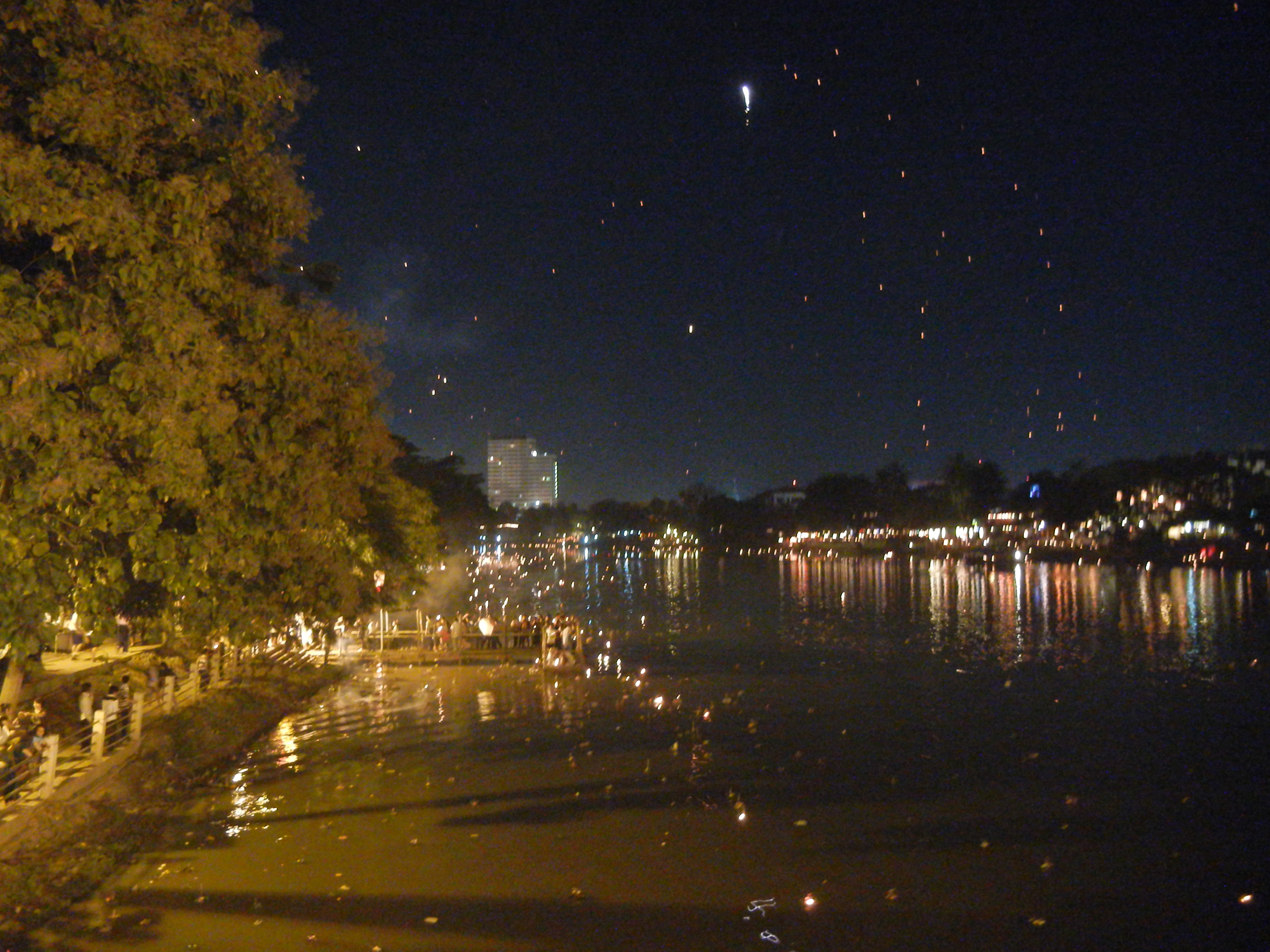
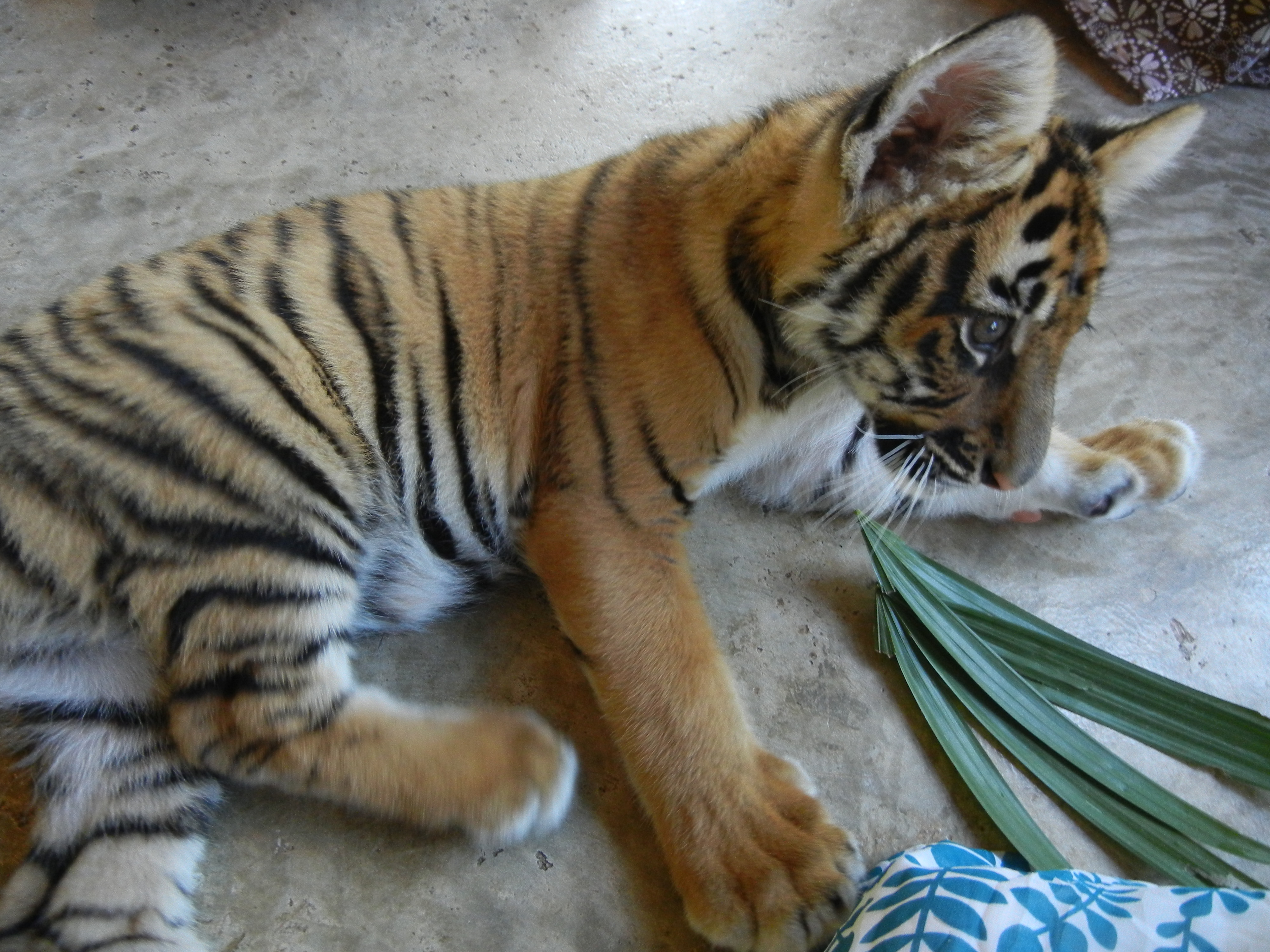
After the water unit was our four-day break, which came and went quickly, and what an amazing adventure it was! Just a quick summary — I went to Chiang Mai and saw the floating lantern festival. It was the most amazing thing, and it is a time to pay tribute to the river, so it was fitting following our water unit. I rode an elephant, played with baby tigers, and went bungee jumping (never thought I would…)  Although I indulged in foreign food like burritos and falafel, it’s good to be back in Isaan where there aren’t tourists and I get to speak Thai.

Onto the mining unit, which should be really interesting and I’ll have more time with internet to blog in a more timely fashion!