Alter Schwede: Sweden in 6 Days (posted by Indira in Sweden)

July 26, 2012

As I’m spending the last days at home I anxiously await the adventure that is about to start in only 6 days; I’m moving to Sweden to start my fall semester abroad.

I am Indira and I’m from Bosnia and Herzegovina. I am a rising junior double majoring in International Studies and German Studies. My main interests revolve around internationalism, traveling and culture – all of which are a major component of the University of Richmond study abroad program.

My fall semester I will be spending at the Uppsala University in Uppsala, Sweden. Together with other international, exchange and Swedish students I will be taking a wide range of classes with main focuses in government and sustainable development. Uppsala University is well-known for both of these fields, as well as for its natural and computer sciences departments. It is one of Europe’s oldest and best universities located in a city that it brings together tradition, education and youth. It’s a unique example of the ‘old meets new’ kind of place. These were the main reasons I chose Uppsala University over other exchange programs.

Before I start my classes in September I will participate in the IBS (Intensive Course in Swedish) program with other exchange students from around the world. This will be a perfect opportunity to settle  into a new place and learn my way around before the semester truly starts. Apart from that, I will learn some of the language so I’ll be able to make basic conversation in one of the most interesting languages I’ve encountered – Swedish. Language is a rather interesting thing in Sweden. This Scandinavian country is almost bilingual because everyone speaks English and children start having English classes from early on.

In Uppsala I will be living in the accommodation area called Flogsta, which is a complex of multiple buildings typical of the communist architecture. I am really excited to start my adventure and move to a place that is completely different from Richmond in so many ways.

Right now I’m trying to think of all the things I need to pack before Sunday and then I am ready for my Swedish adventure!


Reflection week part 2: Cheese & Delftware

April 30, 2012

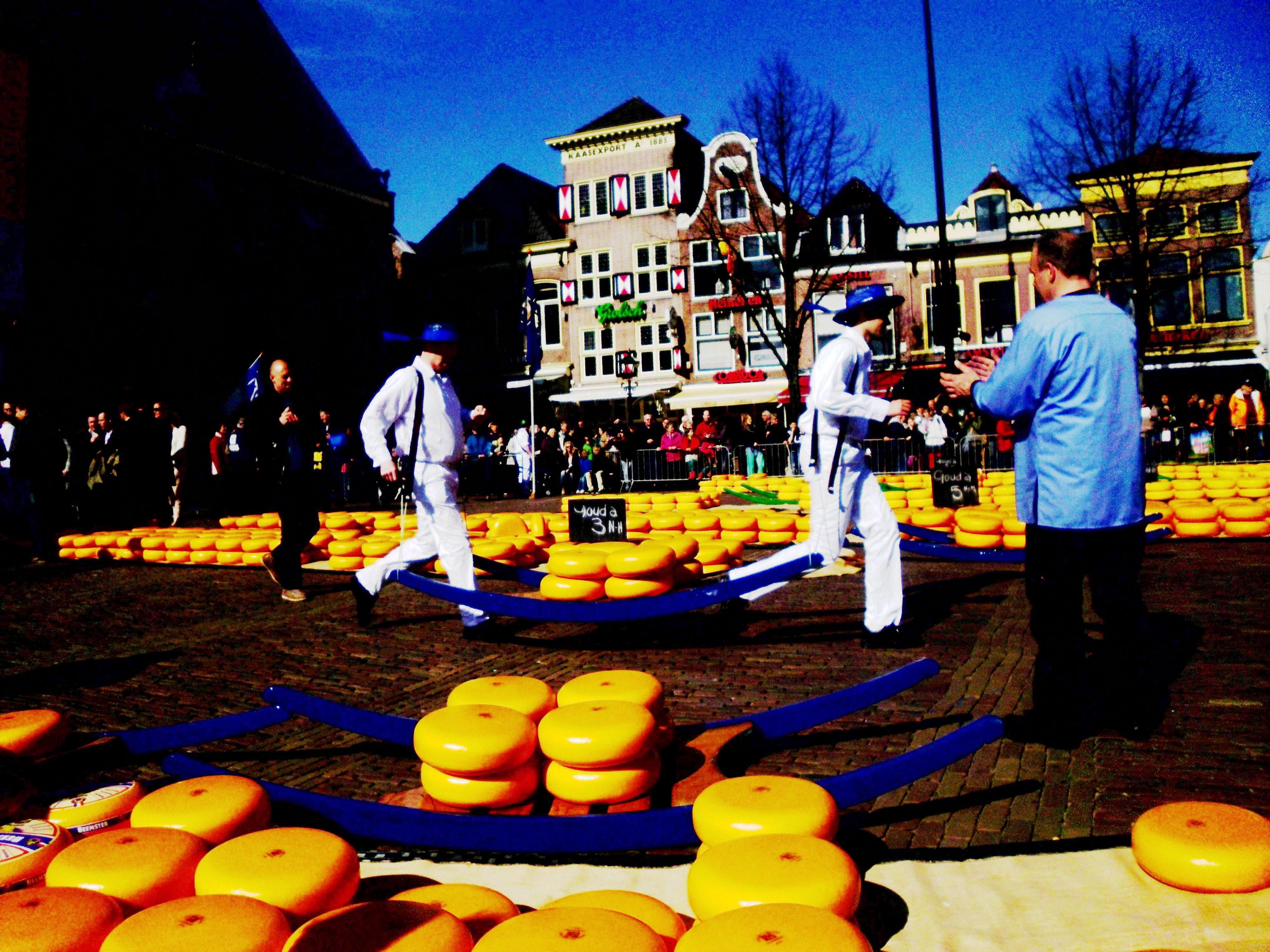
Hello everyone.  So as I told you last week, I spent the first part of my reflection week in Berlin with one of my Sorority sisters.  We had a nice few days and it was really hard to say goodbye and get on separate planes.  I don’t think I realized just how much I missed my friends and family until I had to say goodbye in the airport.  After parting ways I went back home to Maastricht to relax for a few days and mentally prepare for period 5 (the second part of the semester and my new classes).  The day after I got home a friend asked me if I wanted to go to Alkmaar and Delft with her for a day trip.  I said “why not”, so we got up early and headed up north (still in The Netherlands) to Alkmaar.  Alkmaar is known for its traditional cheese markets.  They open in April and we were going on the first day they were open to see the cheese markets in action.  People were dressed in what seemed to be traditional clothes.  Two men ran back and forth across the market carrying cheese on what looked like a sled (see picture below).

It’s funny because before I left to come to The Netherlands, I stumbled across a TV show that was about traveling around The Netherlands (specifically Holland, which is a province in the north).  One of the places they went was Alkmaar.  These TV shows were a little dated, but the cheese market looked the same.  It was kind of cool visiting a place you’d seen on TV since that doesn’t happen very often; at least not for me.

After tasting a variety of some of the best cheese I’ve had in my entire life we got back on the train and headed to Delft.  On the way to Delft my friend and I literally jumped out of our seats and moved to the seats across from us because saw tulips!  So many colors and there fields of them everywhere!  It was so pretty.  Since the weather was just starting to warm up, most plants hadn’t bloomed yet so it was nice seeing all the colors.

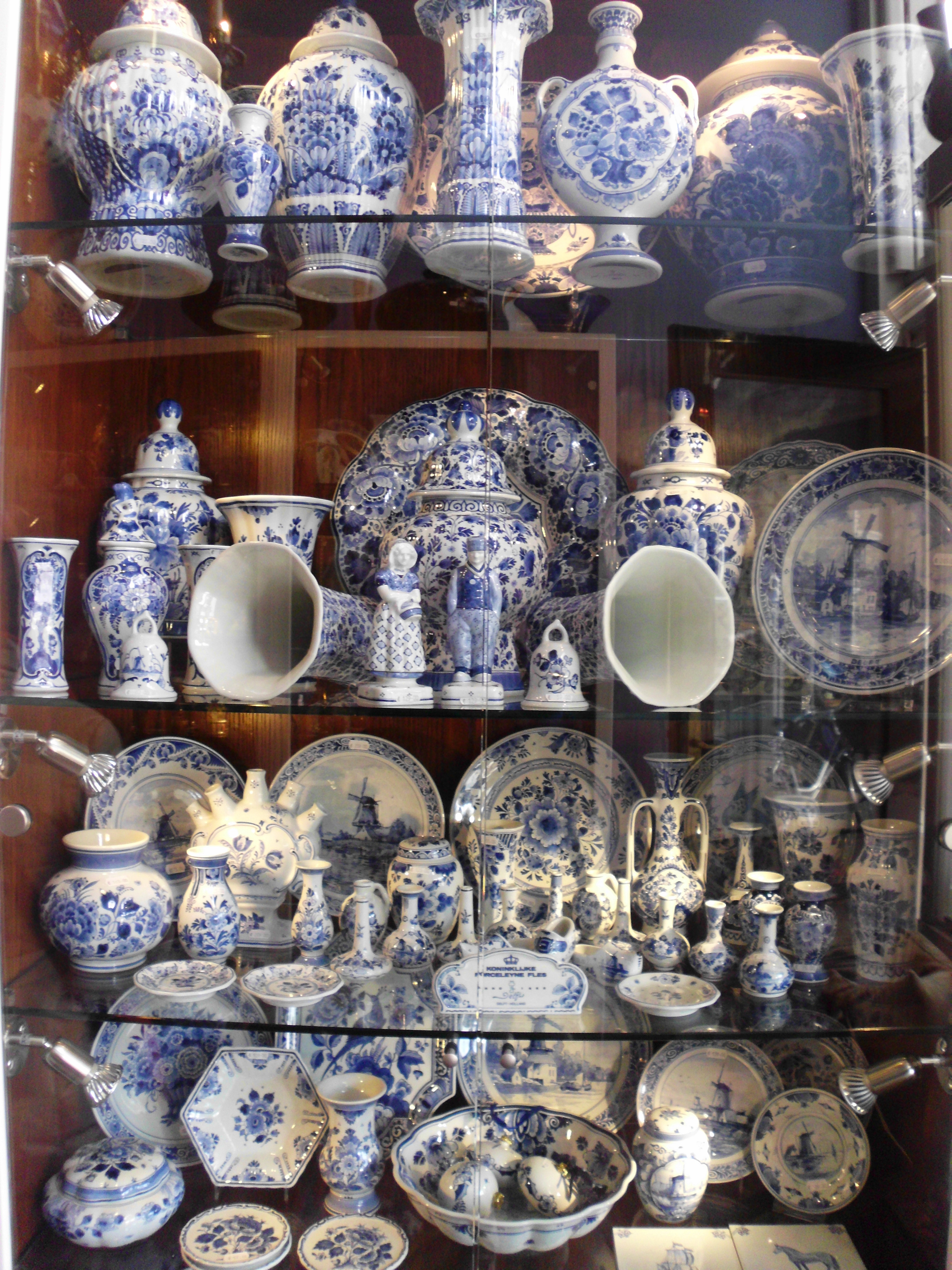
After the fields of tulips, we made it to Delft, is known for its blue and white Delftware.  It’s pretty funny because during orientation at UCM, one of the speakers told us how the majority of the things The Netherlands are known for don’t actually come from here.  One of the examples was tulips which are apparently Turkish.  Another example was the Delftware pottery which he said is from China.  I figured since I can’t go to China, I’ll go to Delft.  They have several museums dedicated to showcasing the Delftware and of course just about all of the souvenir shops claim to have “The Best Delftware” or to be “The original Delftware”.  I took a picture of a variety of it so you have an idea of what it looks like and what types of things are made.

My favorite place was probably Alkmaar for the simple fact that you could taste cheese (for those of you who don’t know me very well, I absolutely love cheese).  After a very long trip, we made it home.  For the next two days I relaxed and started preparing for the next period’s classes.  This period I’m taking Theorizing Terrorism: A Philosophical Approach, Rights of the Child, and Strategy and Negotiation Skills.  So far, and it feels really weird saying this, but I really like my Theorizing Terrorism course; I think it may be my favorite.  Although we have deep discussions and terrorism isn’t a light, fluffy subject to talk about I’m learning a lot from this course.  For example, as an American, my idea of what/who is a terrorist is heavily defined by 9/11, but this course is causing me to think outside of that isolated incident and look at terrorism from different angles in order to shape my personal definition of terrorism.

Ok well I guess I should end on a lighter note than terrorism so with that being said, I recommend a trip to Alkmaar; cheese and music everywhere!


Midterms: No Fun

March 16, 2012

Yes….another blog post about school.  School has been consuming much more of my time than usual these past two weeks because I have had midterms!  Which has meant two weeks of catching up on the whole semester.  The way midterms are administered at Thammasat was very interesting though, and something I personally would love to see implemented at UofR for final exams.

Midterms at Thammasat are scheduled just like finals at Richmond: one week is set aside with no class (usually) and three-hour midterms scheduled throughout the week.  Students are required to wear full uniform to midterms.  When you show up the day of the exam, the classroom is closed, but there is a class list outside with a corresponding number next to each name.  The numbers are completely randomized, and are not known until before the exam.  Once you walk into the classroom ten minutes before the exam, each place has an exam and answer notebook already set down, with the place number right next to it.  So after entering the room you must gather your necessary exam materials (pens, pencils, calculator, ID card, water, etc…) show the proctors that your cell phone has been turned off, and place your bag at the front of the classroom.  Then you find your number and corresponding seat, and can start the exam.  The places, however, are set far apart so that there is no possible way to cheat on the exam, which personally I find fantastic.  In one exam, we even each had our own table.  On the whiteboard at the front of the room is projected a countdown for the time left of the exam, and for the last half hour, last fifteen minutes, and last five minutes, an automated voice reminds you of the time left.  Two proctors monitor the exam and continuously walk around the classroom in and out of every aisle to make sure there is no cheating.  You are not allowed to use the restroom, and once finished, you leave your exam on the table and leave the room, while the proctors come and collect your completed test.  The only downside in this system is that the professor is not there to answer questions about the exam.  I would love to see this system implemented at Richmond for final exams.

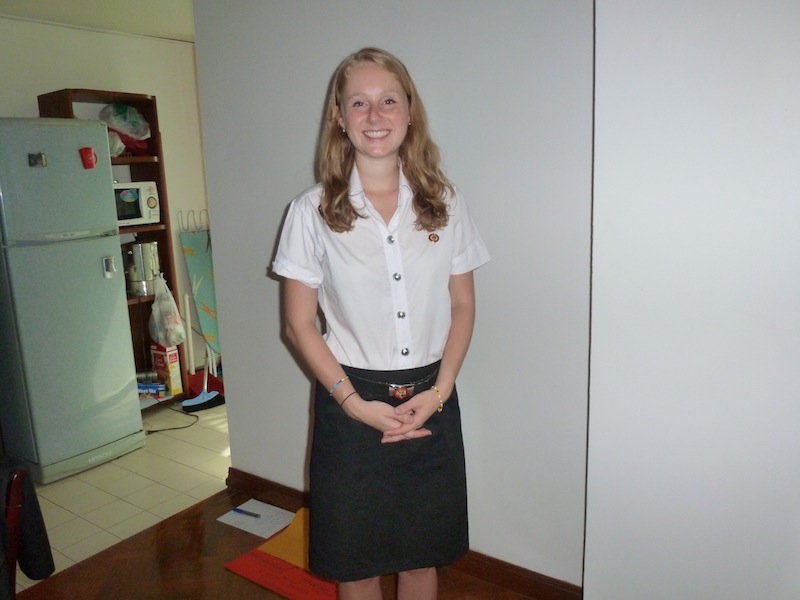
Now that midterms are over, however, I am off to Myanmar (Burma) for five days! I will leave you with a photo of me in my Thammasat uniform:


The Classroom Culture

March 12, 2012

After two and a half months of studying abroad in Thailand, it seems fitting to actually blog about the studying part of this experience.  The much-discussed stereotype about studying abroad is that the classes will be easy and there will be no work.  Well, clearly those students did not study at Thammasat in the BBA program. There is definitely work, and classes are not at all something you can blow off…it will eventually catch up with you.  So here are four of the most notable differences between University of Richmond courses and Thammsat BBA courses (Disclaimer: the academic faculties at Thammasat are very different from one another, so this blog post only applies to the BBA program).

1.  Unlike Richmond, there is not much day-to-day homework at Thammasat, but classes are very much oriented around case studies and group projects. While I don’t have to worry about day to day homework in each class, there is always a group project meeting that I have to attend – and this has been the case since the first day of school, not just something that has crept up at the end of the semester.  While sometimes the group projects are overwhelming, doing case-based learning is extremely helpful for applying what we are learning in class and understanding “real-world” examples.

2. Attendance is extremely serious.  The rule is that if you miss more than 30% of a class, then you are not eligible to take the midterm or the final.  Because all of my classes are three hours long, I am allowed to miss three classes throughout the whole semester – which seems like a lot, but when I’d love to be traveling around Southeast Asia most weekends, those missed classes can add up quite quickly.  During the first fifteen minutes of each class, a few BBA administrators sit in the hallways, each assigned to watch over one clipboard as students sign in for their respective courses. Students are required to sign in wearing a full uniform — otherwise, they are considered absent.

3.  Regarding class format, most professors use the typical PowerPoint lecture model.  I learned very quickly that Thais love PowerPoint.  In the US, it is sometimes encouraged for students to ditch PowerPoint and find a more creative way to prepare a presentation, but here it is mandatory to use PowerPoint for presentations.  I have to say, though, the presentations that Thai students create are incredible, and much more creative than anything I have ever done with PowerPoint.

4. Classroom culture.  This has been one of the biggest paradoxes of my time in Thailand.  I have remarked in previous posts about how Thai people are so respectful, and how they value hierarchy and respect their elders and teachers.  Yet the actions of the students in classes do not seem to fully reflect these values.  Students talk throughout the class, they constantly text on their phones (above their desks, in plain sight!) Some even take calls and just stick their heads under the desks while on the phone. Most students are constantly checking their email or Facebook on their iPads or laptops.  Some will leave classes in small groups and come back with Starbucks or other drinks in hand.  And throughout class, there are students continuously walking in and out of the room to print something, get a snack, or take a phone call.  I have had only one professor actually address this behavior in class, on one occasion.  I would never be comfortable acting so informally in a class at Richmond, and professors at UR strongly discourage this behavior.  Certainly an interesting nuance of classroom culture compared to Thai culture in general.

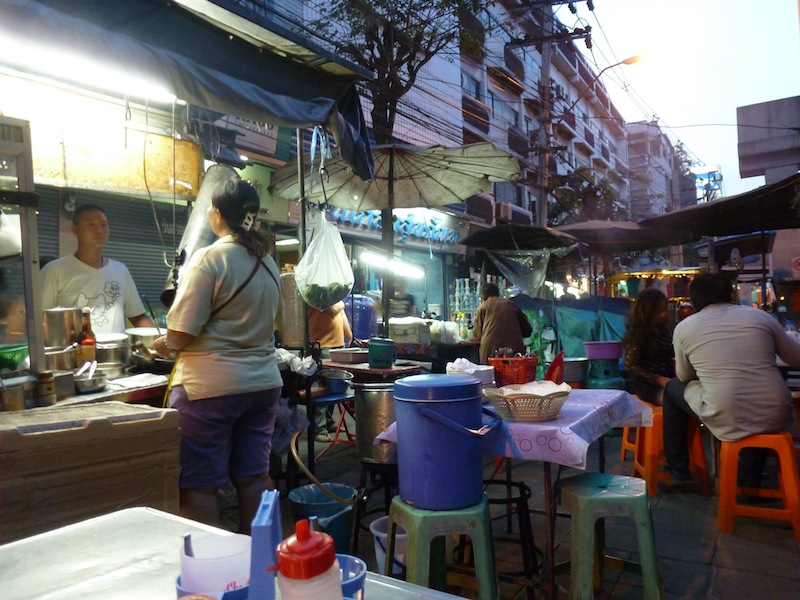
Note: I don’t have any pictures relating to this blog, but enjoy some of the pictures from around the city these past few weeks.


A Different Side of Bangkok

March 2, 2012

For the first time in weeks, I did not travel this past weekend.  Granted, it was because I had a huge group presentation and midterms to study for, but still, it was quite an event.  Sadly, studying took up most of the weekend, and there was a lot of studying required, because, truth be told, I have not been great at keeping up with school work here. With it being 96 degrees every day, so many places to visit, and so many delicious types of food to discover, it sort of feels like I am on summer vacation.  It’s just so difficult to concentrate with so many fun things to do.  So to have midterms now is like having exams in the middle of summer vacation… which is not easy.

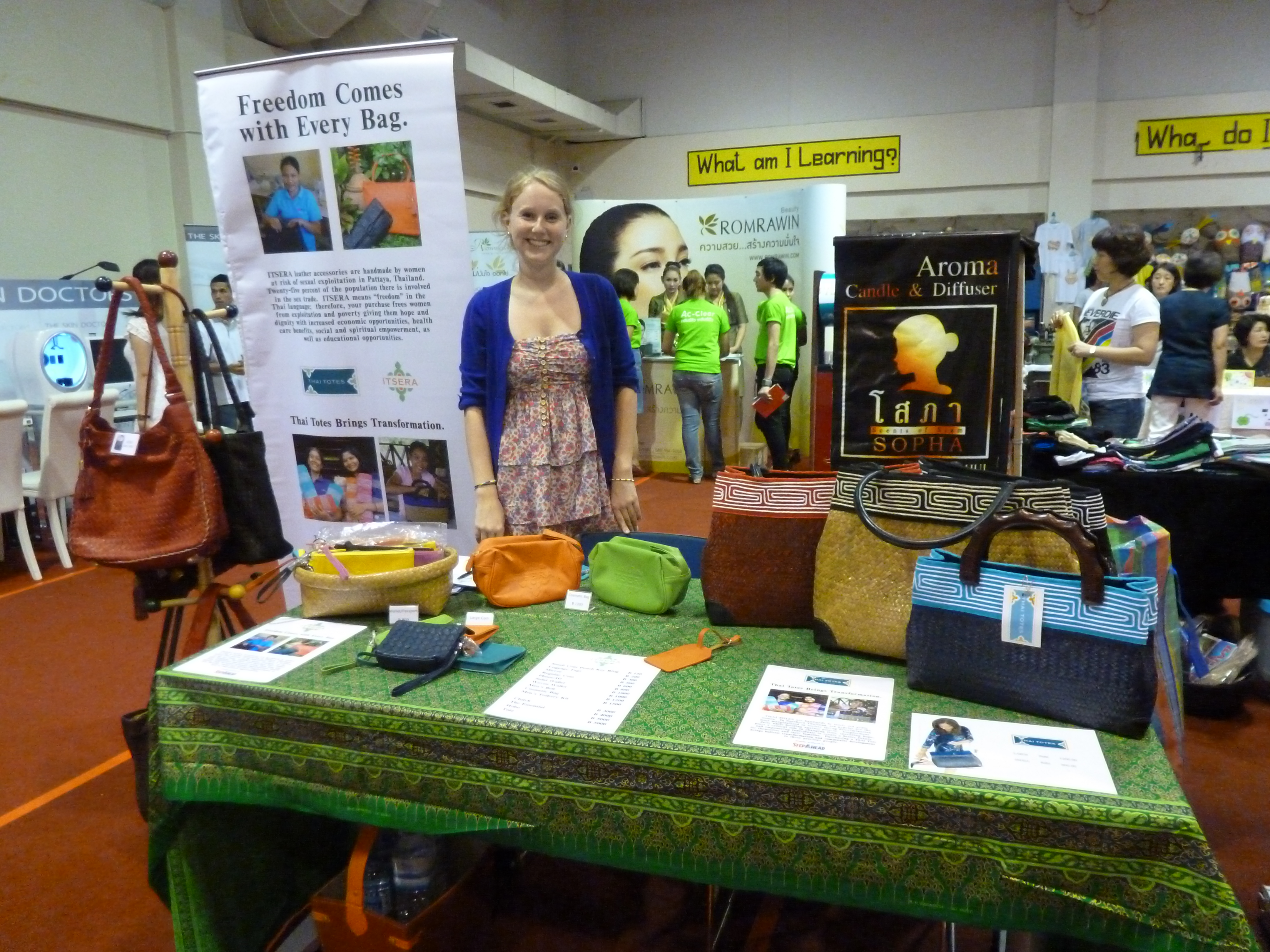
Nonetheless, I spent Saturday at an event for my internship. I am interning part-time with Step Ahead, a fantastic NGO headquartered here in Bangkok.  Step Ahead was founded by John and Kim Quinley, whose daughter, Carter Quinley, graduated from Richmond this past May.  Step Ahead is a community development organization that works all over Thailand with various populations.  One of their projects is a “Purse Project” that works with women in Pattaya, Thailand.  One in four people living in Pattaya are involved in the sex industry, so this purse project aims at prevention: to prevent poor women from being sexually exploited by giving them an alternative way to make a stable living by making these leather purses.  The products are beautiful — the link to the website is stepahead.myshopify.com.

As part of this internship, my roommate and I went to the International School of Bangkok for a Food Fair event to sell these Itsera bags; the event revolved around a huge room filled with large stands representing the nationalities of  students at ISB, each serving their own traditional food.  So, for example, at the “Israel” stand they were serving falafel, and at the “American” stand, there were delicious brownies, cookies, and apple pie.  Next to this large room was a smaller room where we were selling our bags along with other vendors.

All in all, this was quite a different side of Thailand.  Addie and I live in a very local Thai neighborhood, so we don’t see foreigners on our side of the river often.  ISB, however, is located in a planned community (there is literally a sign at the entrance gates that say “Planned Community”).  It’s like magic; as soon as you pass the guards and drive through the gates you are literally in what looks like an American suburb. There are clusters of gorgeous houses that all surround their own pools; there is a country club, a shopping center, and – get this – golf carts.  The residents get around the enclosed neighborhood (which includes the international school) in golf carts.  Literally, the outside of the school is lined with golf carts belonging to residents. I attended an international school when I lived in Holland when I was younger so this was a bit nostalgic, remembering a similar event we held at my school, overflowing with nationalities from around the world.  But, my goodness, this was also reminiscent of the Stepford Wives.  Nonetheless, I am extremely grateful to be able to experience so many different sides of life in this wonderful city.


Belonging

February 24, 2012

In Hebrew, there is no “to be” verb in the present tense.  I studying Hebrew.  Kind of awkward, right?  My brain always wants to stick another word in there, forcing the sentence to comply with my English-centered demands.  I’ve realized I am expecting more than just the language of Israel to fit my idea of what is ‘right’.  I want the washing machines to wash my clothes like they do in the US, I want my salad dressing to taste like it does in the US, I want to just walk in and out of a shop on the street without being hassled by the overbearing shop owner, I want people to wait politely in line at the bus stop instead of always shoving their way to the front. But there is something really amazing about realizing the rest of the world doesn’t do everything exactly like you do.  And when you can get over trying to find the American equivalent for everything, you allow yourself to truly become a part of your host culture.

Last weekend, two friends and I traveled to Sefad, a small, heavily religious city a couple hours by bus from Haifa.  Winter probably isn’t the best time to travel to Sefad — it was cold and rainy most of the time, and it even snowed!  The owner of the hostel we stayed in was really excited about the snow, so it was hard to be annoyed at it for spoiling our plans.  Israel really treasures its water, so I have really tried to have a good attitude about the copious amount of rain we have gotten the past couple of weeks.  Despite the weather, we managed to have a nice, cozy time, except for two hours on Saturday when our power was out due to the rain. Sefad is beautiful, and I was amazed by the height and beauty of the mountains surrounding the city.

When I arrived back in Haifa late Sunday afternoon, just as the sun was setting, I realized how much I have come to love this city.  I feel like I have really become a part of Haifa’s diverse, beautiful community.  I don’t miss UR like I thought I would.  There is so much to discover and accomplish here, both in my language learning ambitions and in growing as a person.  The surreal feeling I have had since arriving here has started to fade, and in its place has grown a sense of belonging and permanence.   For a country whose right to exist is constantly questioned by the international community, and one that seems to stand perpetually on the verge of international conflict, life in Haifa is surprisingly rhythmic and normal.  Falling into that rhythm has been one of the greatest things I have ever experienced.


The Ins and Outs of PBL and UCM

February 20, 2012

Before I begin telling you all about PBL and UCM, I’d like to congratulate everyone who was accepted to study abroad next fall!  For the future UCM students, I’m sure you’ll have a wonderful experience in The Netherlands.  With that being said, I thought this blog might be a good crash course so you know what to expect from the academic environment while you’re studying at UCM.

First thing’s first — UCM’s campus is noticeably smaller than UR.  The following picture helps prove my point:

This is a picture of the one and only building for UCM students.  Although there is a library which can be used by anyone who is a student in any of the faculties of University of Maastricht, this is the main building specifically for UCM students.

This is a picture of the common room.  It is the main place of socialization in the UCM building.  People meet up with each other in this area, wait between classes, have a snack, do homework, have meetings or receptions; it’s basically an all-purpose room.

Now that you have a general idea about the size of UCM, I’ll go into some detail, without overwhelming you, about PBL.  PBL, Problem Based Learning, is exactly what it says it is.  Before classes start, you receive a course manual/handbook for each course you are registered to take.  This manual includes the syllabus, compulsory reading, deadlines, and contact information for your tutor.  Each course generally has one lecture and two tutorials per week.  Both the lectures and the tutorials are two hours each.  Classes are longer at UCM compared to UR, because the semester is divided into two periods followed by a project period.  Each period, you are expected to take two courses and a skills course for Richmond to consider you a full-time student.   A few examples of skills courses are Research Methods, Presentations Skills, or Strategy and Negotiation.

Now that you have an overview of the logistics of how course work at UCM, I’ll tell give you some details about PBL itself.  You begin a lecture with a pre-discussion.  The discussion leader (a student in your tutorial group) will give everyone a few minutes to read a brief synopsis and thought-provoking piece on a topic that’s relevant to your course.  The students discuss it and come up with learning goals.  These learning goals are then used to guide the students’ at-home study session.  The next time the students meet again, they have a post-discussion about the reading and help each other answer the previous learning goals.  Everyone is expected to contribute to the discussion, and the tutorial groups are generally no more than about 8-10 students.

 All of the classrooms are colorful, but I think this is my favorite one.

It may take some getting used to, but overall, I think PBL is an interesting system, especially if you like to do self-study and speak in class.  Once again, I’d like to congratulate those of you going to UCM next semester.  I hope you have a wonderful time!


The Power of The Uniform

February 17, 2012

Here in Bangkok, the uniform that I wear gives me more privileges and attention than I could ever have imagined. Some previous exchange students had warned me about this before coming, but I didn’t fully understand it until I started spending 95% of my time in a uniform. So, here goes uniform 101:

1. Anyone with any excuse to wear a uniform does so. I don’t know why, or where the tradition came from, but it is just the way it is. During my first few weeks in Thailand, I kept seeing pictures and posters of individuals in what looked like military uniforms everywhere. Their uniforms were white and decorated with all sorts of medals and badges. Well, it turns out that they are government workers, and that all government workers wear a uniform. Even bank workers wear a uniform. Each bank has its signature “color,” and their employees (many of them women) all wear what looks like an flight attendant’s uniform.

2. “No Uniform, No Service.” All Thammasat University BBA (business administration) students are required to wear a uniform to all classes. At the BBA counter, there is a sign in English, and then translated into Thai that clearly states “No Uniform, No Service.” And they mean it. I have a friend who went to the counter to ask the BBA staff a question, and they refused her because she was not wearing a uniform.

3. No Uniform, No Attendance. Thammasat has a strict attendance policy – miss three classes and you cannot take the midterm or final exams. If you don’t show up within the first 15 minutes of class, you are counted late, and then another 15 minutes and you are counted absent, no exceptions. The kicker is that if you show up perfectly on time, but are not wearing the proper uniform, you will be counted as absent. No. Exceptions.

4. Thammasat is the Harvard of Thailand. And therefore, wearing the Thammasat uniform speaks volumes. The most crucial components of my uniform include a black skirt, a white short-sleeved collared shirt, official Thammasat pin, and a belt with an official Thammasat buckle. It is these buckles and pins that differentiate a Thammasat student from a student in any other school, as most student also wear a black skirt and white shirt. Here is a photo from the Thammasat website that shows some students in uniform:

The other night, I went straight from school to meet up with some friends on Khao San Road, Bangkok’s official tourist/backpacker/hippie heaven. As I was walking through the streets, everyone was staring at me. The foreigners were staring, seemingly wondering “Who is this white person in a school uniform?!” and the Thais were probably thinking the same thing. I went into a McDonalds to buy a water, and the girls behind the counters were whispering, and all I understood was “Thammasat, Thammasat.” So in Thai I said “Yes, I am a Thammasat student.” They couldn’t believe it.

Most days, if I am walking in my uniform, I hear the people behind me whispering “Thammasat” or the people crossing my path in the other direction staring at my belt with intense eyes, trying to see which school I study at. When and if they are able to figure it out, I hear a chorus of “Ahhhh, Thammasat!” My favorite uniform moment came this evening when I was in a 7-eleven with my roommate, and the employees behind the counter were obnoxiously greeting incoming tourists in Thai, which I’m sure is their way of messing with tourists to make a boring work shift fun. It was hilarious, so we couldn’t help but laugh. Soon, the employees were also laughing, and they quickly noticed my uniform and figured out that I was a Thammasat student. As soon as I confirmed this, they started saying “Ohhhh, Thammasat, Thammasat!!” and each of them reached to shake my hand, meanwhile repeating “Ahh, Thammasat, Thammasat.” I have to say, one of my favorite Thailand moments.


The Mosaic

February 6, 2012

Shalom all!  I have arrived in ארץ ישראל, the Land of Israel!  Many things are exactly as I expected, but there have also been some surprises.  For starters, I wasn’t prepared for how beautiful Haifa would be!  All the pictures I looked at before I arrived don’t even come close to conveying how amazing it feels to look out over the city, the mountains, and the Mediterranean Sea on my walk to class.  The University is situated on one of the highest points of the city, so you can see everything from here.  Someone even told me on a clear day you can see all the way to Lebanon, but I have yet to hear that from an official source.  We also haven’t had too many clear days yet, as it is the rainy season right now. We have a rain shower or thunderstorm almost every day, and it is usually overcast–  although still beautiful!

The incredibly diverse mosaic of peoples and cultures blending together in this beautiful city are unlike anything I have ever experienced.  The university is a microcosm of this.  My intensive Hebrew class is made up of six Korean students, one Japanese student, a grandfather from Vermont,  four Europeans (mostly PhD or graduate students), and six Americans.  It has been fascinating to learn of the different cultural backgrounds and motivations that have brought us all together in a classroom in Israel.  From the Japanese student of theology wanting to learn Hebrew in order to read Biblical texts in their original language, to the Political Science PhD student from Belgium interested in the political conflicts of the Middle East, our motivations for studying Hebrew are as widespread as the countries we come from.  The fast pace of the class has been overwhelming at times, but today when I took the midterm, I realized how satisfying it was to take an exam that involved reading a story and answering questions entirely in a language that two weeks ago I knew almost nothing about.  I’m really looking forward to having a working knowledge of Hebrew, and at the rate I am going, I am hopeful that it won’t be too long before I can navigate places like the grocery store with ease.  Even simple things like buying laundry detergent have been difficult. I almost bought bleach…oops! That would have been a disaster.  And I have to guess a lot when I am ordering food.  Although, the other day, I ordered coffee in Hebrew — I was quite proud of myself!

Last week the Madrichim (the social activities coordinators for the international students at the University of Haifa) took us on a tour of Haifa.  We explored the Arab Quarter, which included a large shouk, or outdoor market, with piles of fresh fruits and vegetables, fish, bread, spices, dried fruits, nuts, and olives.  We also went to the (reputedly) best falafel shop in Haifa, and a shop with delicious Arab sweets dripping in honey.  On a street running through the Arab colony, we saw the remains of their celebration of the “Holiday of Holidays” during which they celebrate Chanukah, Christmas, and Eid al Adja, the holidays of the three monotheistic faiths, all in one.  We also toured the central shrine of the Baha’i faith, and the German Colony, which was originally established by the Templars.

I am really excited about exploring the many layers of Haifa.  On Tuesday, the Madrichim took us on a hike to Elijah’s cave, believed to be the site of Elijah’s stay on his way to confront and defeat the prophets of Ba’al on Mt. Carmel.  During the hike, we passed a couple of bunkers built by the Israelis several decades ago, intended to be a last defense in case of attack.  So, side-by-side, you have Elijah’s cave standing as a remnant of ancient Israel and the spiritual battles that took place in the land, and the bunkers, evidence of the modern State of Israel’s current reality.

The adjustment to living abroad has been harder than I expected.  It is like the awkwardness of the first week of freshman year, but intensified by the new and foreign cultures and languages surrounding me.  It really helped that I was warmly welcomed by my five Arabic-speaking apartment mates, who have been fixing me delicious food and are eager to practice their English with me.

I am so blessed to have this opportunity to study here, and  I am eagerly looking forward to the friendships I will make and the many amazing experiences I will have over the next four months!


Traveling is done… let orientation begin!

February 3, 2012

As you can assume from the title of my blog, I have made it to the Netherlands!  After a long, but comfortable flight to London, a short flight to Amsterdam, and a 2 1/2 hour train ride to Maastricht, I have arrived!  I must say that although I enjoy traveling to new places, I wish I could save several hours by teleporting myself to wherever I would like to go.  Despite the long journey, I had a nice time in the London airport.

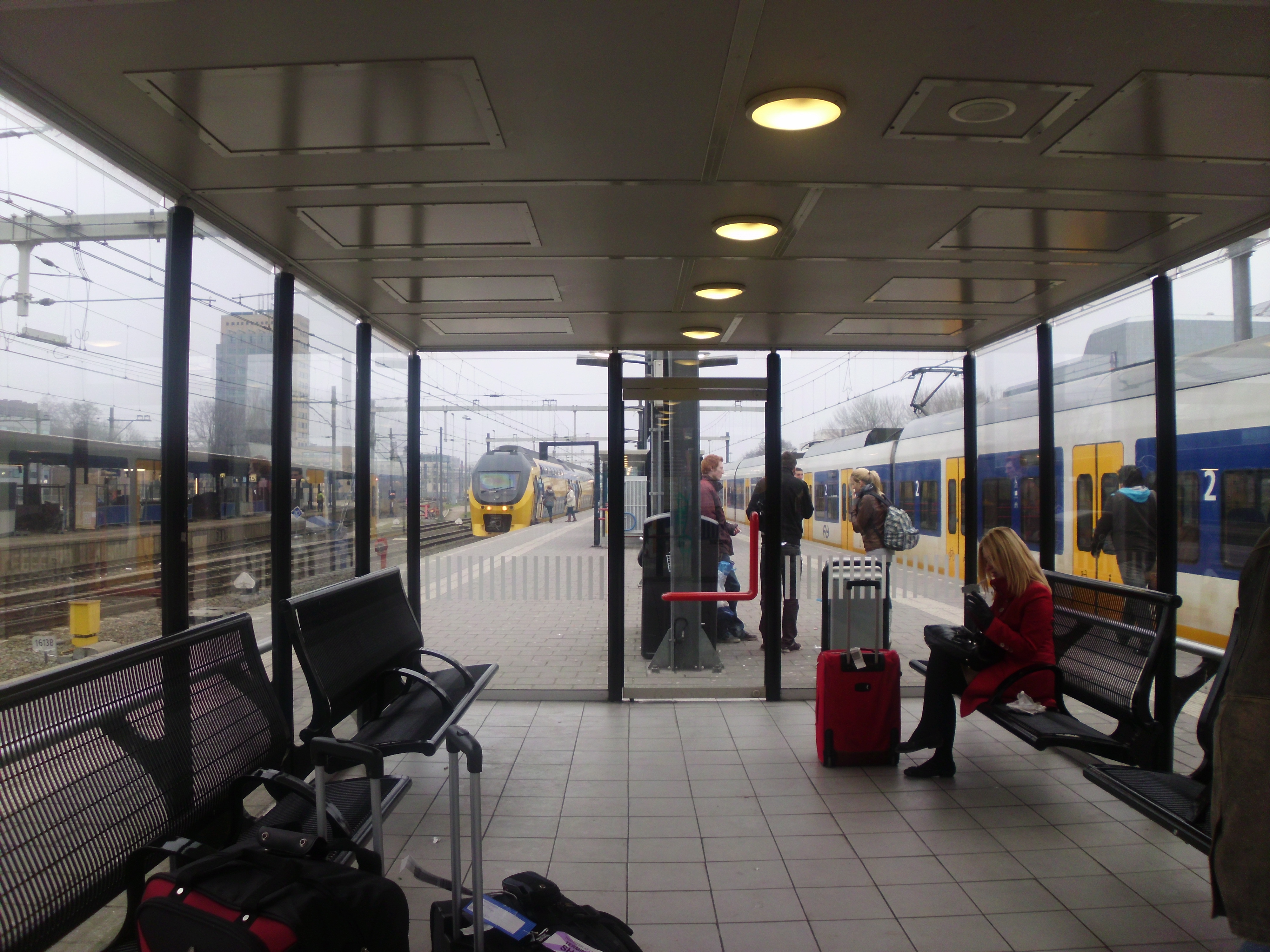
My trip was also nice because one of the student organizations at UCM picked me up from the train station and took me to what would become my home for the next 4 months.  A funny story about the train ride:  I was buying my ticket in the Amsterdam airport and the man helping me circled where I needed to transfer and made sure I understood what I needed to do (since it was in Dutch) before I walked away.  When the transaction was done I walked away, saw a young guy looking at me so I smiled out of courtesy than kept walking.  I made it about two steps before I heard someone say “Whitney?”  I was really confused as to who would be calling my name in the Amsterdam airport, but naturally I turned around to see if I knew the person.  “I couldn’t help but overhear your conversation.  Are you by any chance the Whitney who is going to UCM?”  Then I realized that he was the person who was supposed to get picked up from the Maastricht train station with me, since our train was arriving at the same time.  Once we exchanged brief introductions, we proceeded to the platform and our 2 1/2 hour ride began.

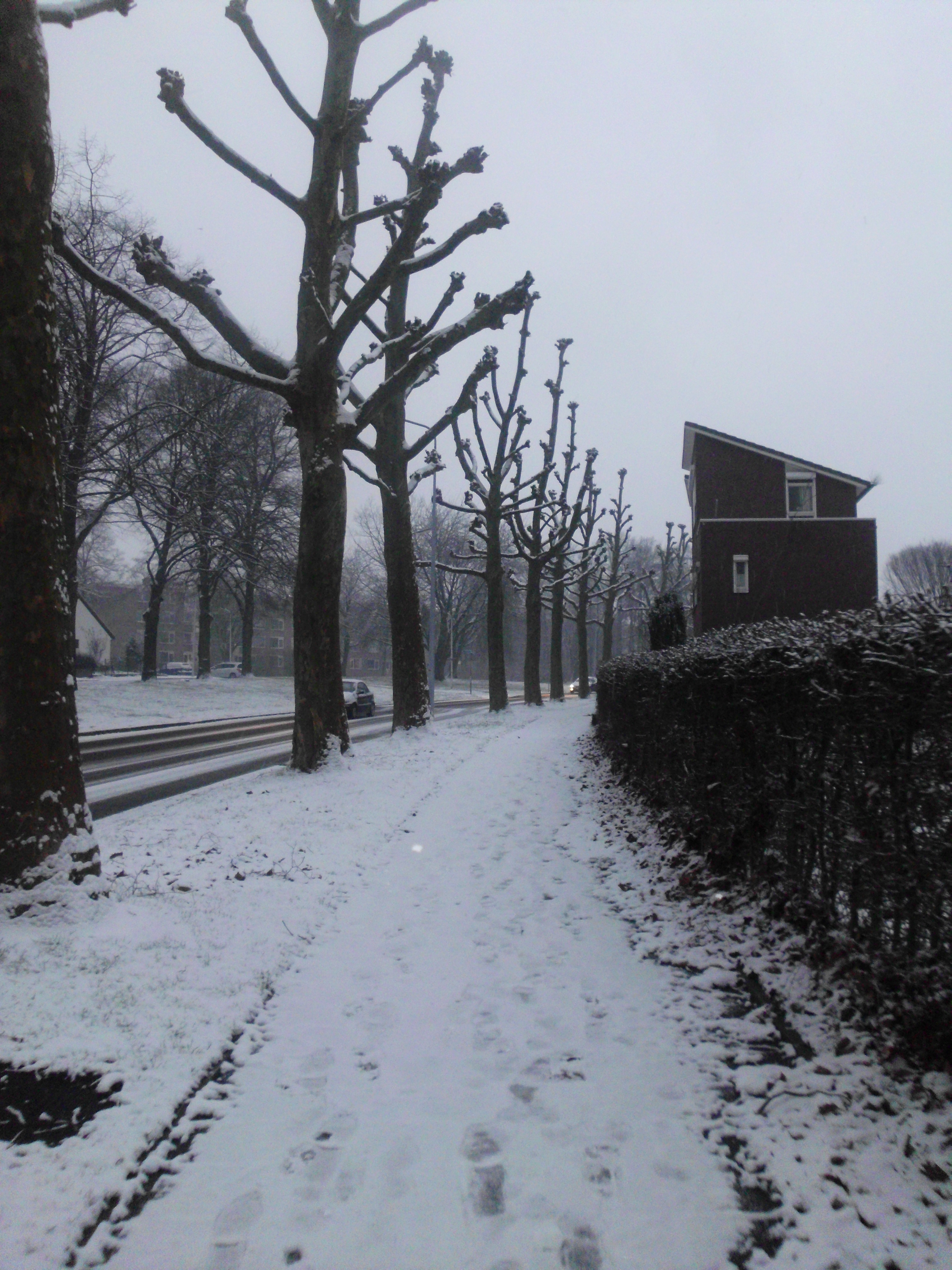
Re-focusing on the title of this entry, now: Traveling is done, so let orientation begin.  Today was my first day of orientation.  When I woke up this morning and looked out the window, snow was covering the ground, and it was still coming down.  Snow is a kind of rare occurrence in Virginia, so I was excited.  My second reaction was the realization that I needed to prepare to walk approximately 20 minutes in snow, since I don’t have a bike yet.  I also had a feeling that it was going to be extremely cold, so I put on layers and headed out.  Although the snow kept falling during my walk and continued throughout the day and most of the evening, it actually wasn’t as cold as I thought it was going to be.  I have to admit that I kind of enjoyed walking in the snow; it was peaceful.

Once I made it to UCM, I welcomed the breakfast and immediately started mingling with the other exchange, transfer, and freshmen students.  I met people from literally all over the world: Singapore, Australia, the U.S., Germany, Peru, and, of course, the Netherlands, just to name a few.  Everyone was friendly, so it was easy to talk to people.  During orientation, we received our class schedules, learned about UCM’s online programs (student email address and online file storage), and began PBL (Problem Based Learning) training.  I was worried what my schedule was going to look like, because I was told that it was possible to have class anytime between 8:30am and 6pm, Monday through Friday.  Luckily, I don’t have class on Monday, and I only have one 8:30am class.

You may be curious about PBL.  In a nutshell, it’s when a tutor (equivalent to a professor) observes the class while an appointed student (the discussion leader) leads a discussion about a specific text.  At the end of this discussion, the students collectively create learning goals to serve as a guide while they read for the next class.  These tutorials take place twice a week, whereas the lecture for the course only takes place once a week.  I’m excited to see how this works, especially since it’s very different from what I’m used to at UR.  I have orientation for two more days, and then classes will begin this Tuesday. In particular, I’m looking forward to the “Introduction to Dutch Culture” lecture.

One more thing that I found interesting about my first day of orientation: the food.  For lunch, a Dutch student took a few of us to a nearby deli place, which thankfully had an English menu.  As you can probably assume, sandwiches are not something that are unique to the Netherlands.  Also, for dinner, the student organization that picked me up from the train station organized a dinner that was only 5 euros.  Frankly, I didn’t really care what they were providing, since it was inexpensive and it meant I did not have to cook that night.  It was Chinese take-out.  It was absolutely delicious and well worth the money, but once again, Chinese food isn’t a unique part of Dutch culture.  With that said,  tomorrow I will venture to the grocery store.  Wish me luck!