Bryan in Taipei: Pre-Departure & The Calm Before the Storm

August 31, 2018

To be clear, this title isn’t exactly accurate given how hectic my last few days in the U.S. were, but I thought it would be fitting since it’s rainy season in Taiwan right now.

My name’s Bryan, I’m a History and Chinese Studies double major from Philadelphia, PA. This Fall will be my 3rd abroad experience in East Asia since coming to UR, following two summers of intensive language study with China Studies Institute in Beijing in 2017 and with State Department’s Critical Language Scholarship program in Dalian this past summer. After some careful consideration, I chose the Taipei program for a number of reasons, the most notable being my geopolitical interest in the region as well as the relative independence the program offers. I’m very excited to see how this semester unfolds.

UN_Building_View

View of the Empire State Building from the United Nations Headquarters in New York.

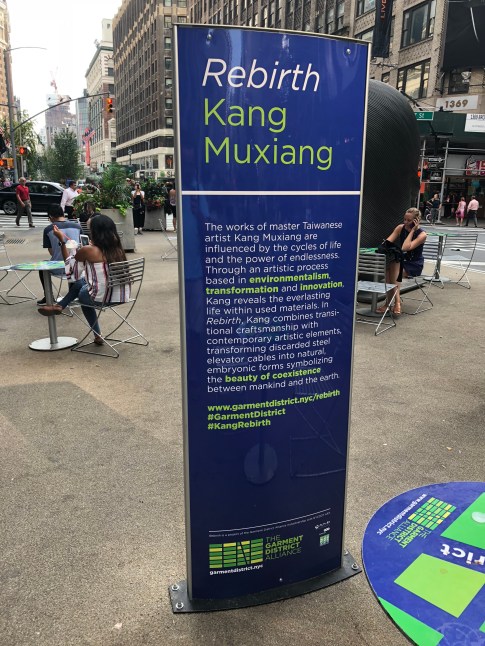
A word of advice to future study abroad applicants: apply for the visa as soon as possible, and make sure to read all of the details closely. I mailed in my visa application in August after returning from two months in China, and I almost didn’t receive it in time. It turns out the office was understaffed and the application volumes were higher than usual. I had to go to the consulate in New York and spent the whole day getting it, but on the bright side I got to visit the United Nations headquarters there! This was a really great experience that got me even more excited to go abroad and learn more about the island of Taiwan and its fascinating history and fusion of cultures. Also, I happened to see an exhibit in Times Square by Taiwanese artist Kang Muxiang, so I recommend checking that out and learning more.

Taiwan_Artist_Exhibit

Instead of being partial to a single work, I decided to show the plaque that explains the exhibit and its intentions.

Looking forward to sharing more!

Bryan In Taipei


Brooke Goes Global: Why Band-Aids Aren’t Enough

August 26, 2018

I’m currently sitting 3,500 miles above the world.  Above the people and the animals.  Above the passing trains, cars and buses.  But my concentration, instead, is on the clouds.  The clouds that seem so endless and infinite in a sky just as vast.  As I sit in this state of existentialism, my body flies to India while my mind remains in America.  My mind — filled with American customs, norms and Westernized idealisms of health — is about to experience the culture shock of one of the fasting developing countries in the world: India.  

Photo 1, Adams Morgan

After two weeks of living in a hostel in the hip and trendy town of Adams Morgan, it is time to say goodbye to D.C., and hello to New Delhi!


Processed with VSCO with p5 preset

The last night of Washington, D.C. was spent exploring the city’s monuments with a fellow Richmond student on the sister track of my program.  The monuments are a completely different experience at night.  If you get the chance, go and check it out yourself!

But I digress to my last week in Washington, D.C., simply because during a time of venturing into the unknown, focusing on something concrete and wholesome steadies my mind.    

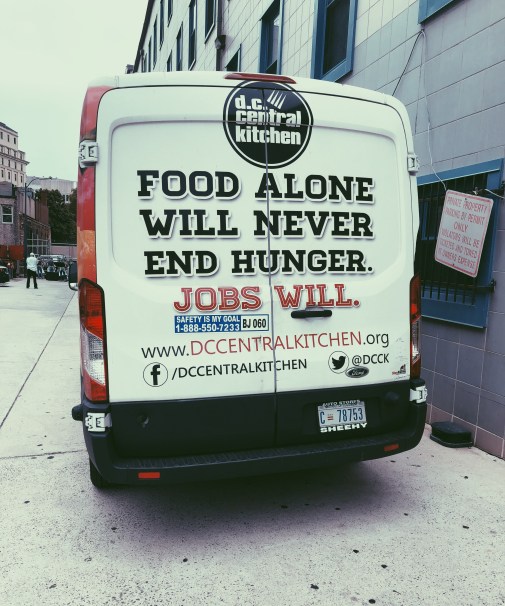
Across America, food is passed out, yet hunger still remains.  Jobs are available, yet people still can’t afford rent.  Shelters are open, yet people still sleep on the streets.  These Band-Aid approaches to health are not enough to stimulate long-term physical and mental health.  Many organizations narrow their aid to one specific focus.  It’s an incredibly complicated situation, because people have immediate needs and these needs must be met, but narrow-minded help is a temporary solution to a permanent problem.  Nonetheless, the city of Washington, D.C. has paved a new path of holistic care for its citizens.  

To help illustrate this example, I cite the streamlined and progressive non-profit of D.C. Central Kitchen (DCCK).  Their mission is to limit food waste and help lift people out of poverty.  Their motto is “Food alone will never end hunger.  Jobs will.”  With this in mind, DCCK takes many active roles within the community.  Everyday, they cook over 5,000 meals to distribute to homeless shelters and half-way houses.  They also provide a 14-week culinary arts training program for the unemployed.  The training program is for marginalized individuals with a history that typically stigmatizes them out of the job market.  This includes people who are homeless, were previously incarcerated, without a high school diploma and/or struggle with addiction.  

Processed with VSCO with p5 preset

DCCK views poverty through multiple lenses of social determinisms which enables them to have a holistic view on health.


My fascination with the program lies in its ability to treat the whole individual.  To provide support for the individual’s immediate needs while also creating a platform of stability and advancement for the future.  The culinary training has many aspects including cooking and kitchen skills but also focuses on self-empowerment and financial planning.  Rehabilitation teaches the students to believe in their worth and purpose within the larger community — something they have forgotten after years of being ostracized.  During the last stage of the program, students are assigned to an internship within a local restaurant or catering company so they can grasp what it truly takes to work in the culinary world.  Each step of the program creates one more building block to a healthy and stable life.  

However, all of these steps would be irrelevant if the students did not have the basic needs of survival.  Because without food, you cannot be productive in the kitchen.  Without a roof over your head, you cannot focus on your studies.  And without money for transportation, you cannot arrive to the designated location for learning.  Therefore, DCCK goes one step further to insure these individuals are supported throughout the training program.  The non-profit supplies its constituents with groceries weekly.  They help to organize living arrangements for the individuals.  And they also provide students with a transportation stipend.  

The cost of this program is not cheap.  However, its statistics show the programs’ funding and mission is paying off.  There is a 85% graduation rate.  There is a 90% job placement rate within one month of graduation.  And after a two year followup, 70% of the graduates are still employed long term.  These individuals now have full-time jobs, health insurance and permeant housing.  They contribute social and economic capital to America.  A holistic approach to health is the cure to a long standing and perpetuating cycle of poverty.  

So I urge you to stop the stigma.  Stop the marginalization.  Because the homeless and the jobless are typically not lazy.  In fact, 70% of the homeless population in the United States have jobs, showing they don’t suffer from laziness.  They suffer from a lack of livable wage and affordable housing.  They want to help themselves.  They want to better their lives and their family members.  However, the one-size fits all model for health and wellbeing does not work.  Instead, organizations and programs intended to help the impoverished, the hungry and the jobless need to bring care to the individual and not the individual to care.  


Brooke Goes Global: Gentrification in Washington, D.C.

August 17, 2018

Change is inevitable. The economy goes in cycles. The unemployment rate will fluctuate. And gentrification and development will overcome cities. If these processes are inevitable, how do we, as a community, adapt with the change? How can institutions, as part of the community, continue to preserve the population’s culture and diversity?

Before 24 of my fellow classmates and I take off for India, we are spending two weeks in the nation’s capital. While in Washington, D.C., we are studying America’s health systems, health inequities, and the related role of systems and institutions within the field. 

The International Honors Program pushes their students to view health holistically — understanding there are ample factors influencing one’s health. One major factor to the health of an individual is their home and community.  During a recent experiential learning day, we explored a city within the D.C. area.  My group, a total of five students, set out on the metro to study the area of Howard-Shaw. 

Processed with VSCO with p5 preset

The Howard-Shaw area has beautiful murals scattered among the neighborhood.  The street art represents and maintains the city’s rich history and culture.


When we emerged from the underground metro station at Howard-Shaw, we were met with vibrant store fronts, colorful restaurants, and a lot of construction.  I stood in the center of a city that very clearly was overcome by the controversial topic of gentrification.  To explain, gentrification is the process of developing an area.  This involves stimulating a neighborhood’s economy through the building of up-scale real estate, restaurants, and modern boutiques.  As a result, the neighborhood generally becomes more aesthetically pleasing and economically viable.  However, this also displaces the original locals of the neighborhood, as they become priced out of their current homes.  Rents increase and developers pressure homeowners to sell their homes for a portion of their worth.  In Washington, D.C., Blacks are disproportionately affected by this forced moving as a result of gentrification.  

In Howard-Shaw, as you look beyond the beautiful architecture of a historic building, you are struck by the overwhelming and ever-consuming construction cranes, trucks, and bulldozers.  This week, I had the opportunity to listen to the locals of Howard-Shaw voice their opinions on how they are directly affected by gentrification. 
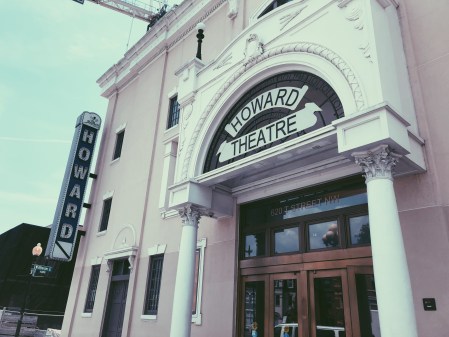
Processed with VSCO with p5 preset

The Howard Theatre is a historic landmark  in the neighborhood.  It was recently renovated in 2012, and it still acts as a functioning theatre.  The crane in the background demonstrates the ever-present condominium construction across the city.

A physical education teacher at a local school, named Pamela, had the biggest impact on me.  She works at a public school with grades pre-school to fifth grade.  Her official title is the physical education and health teacher, but unofficially she is the community liaison.  Pamela described the changing demographics within the school as a result of the last couple years’ development.  The older grades are predominately made up of Black and Hispanic students.  Whereas the younger grades are predominately made up of White students.  We asked Pamela what these new changes to the neighborhood meant for her and the students.  Her response, “I’m a half-full kind of person.  You just have to take advantage of it.”  And taking advantage of the situation is certainly what she is doing.  She creates partnerships with the new businesses that inhabit the neighborhood as a result of the development.  She brought in local businesses and their employees for a school-wide Career Day.  She partnered with a nearby recreation center so the students have the opportunity to swim.  When she was not able to stop a bar from moving in across the street from the school, she convinced the business to instead donate a portion of their profits to the school.  Last but not least, she assisted with the partnership of a nearby clinic, Mary’s Center, to open within the school.  The clinic has health services —  including mental health — for the students and their parents, open from 8am to 6pm.  A change and evolution of a neighborhood is inevitable.  Nonetheless, Pamela is bravely ensuring the change is positively influencing the children of the area. 

Additionally, to reference Lawerence, another employee of the Howard-Shaw area, individuals who contribute to gentrification are part of a complicated relationship.  As they bring something new and vibrant into the area, they also push history and culture out of its original place.  However, Lawerence believes development does not have to constitute displacement.  Lawerence urges the development companies to change their plans to accommodate those who already live in the area.  He believes condominiums should be built for a mix of incomes.  Apartments should be of mixed value, so that a range of income levels can live in a newly developed building.  Nonetheless, in order for this to happen, development companies and contractors must prioritize communities, culture, and individuals over profits.  

Neighborhoods are pleating and begging for their voice to be heard over the noise and selfishness of big businesses.  And without their voice and opinion, culture and history will be lost to modern and expensive real estate.  

Processed with VSCO with p5 preset

The future calls for development without displacement.  Beauty without a loss of history.  Diversity without isolation.  It calls for a culture that uplifts entire communities, not just particular groups of individuals.



Brooke Goes Global: Only the Beginning

August 10, 2018

It takes courage to go abroad.  It takes courage to leave the comfort of your room, the Richmond campus, to leave America.  To walk new streets and listen to an unfamiliar language. It takes nerve to disregard the boundaries and norms of a lived culture and to, instead, completely delve into a new one.  It takes commitment to leave the comfort of old friends knowing new friendships will complement the old ones.

It’s only the beginning, yet I can feel myself fidgeting with anticipation of the unknown, but I hold back tears knowing so much will be left behind for my return at the University of Richmond.  This post is for all the other fellow students who have the courage to study abroad.  I commend your recklessness, wit and spirit that pushes you to spend the semester in an unknown land.

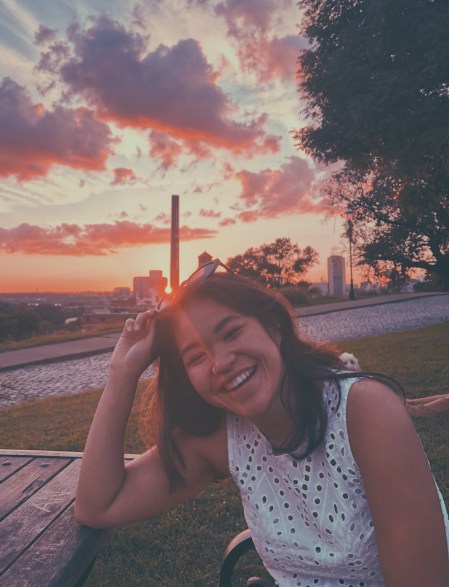
Processed with VSCO with p5 preset

Here I go, chasing the sun around the world.  I will miss the sun’s breathtaking color and beauty at Libby Hill Park.

Over the next four months, I will be traveling across oceans to four drastically different locations.  My semester begins in the local and historic area of Washington, D.C.  Then, I travel to the colorful and crowded streets of Delhi, India.  From India, I will fly to the diverse and beautiful land of Cape Town, South Africa.  And to finish off my abroad experience, I will spend my final month in São Paulo, Brazil. In these drastically different locations, health inequities are widespread and ever-consuming.  Our program challenges us to see how factors like culture, community, wealth disparities and government intermix to create a country’s current health institutions and care.

I am majoring in Health Care Studies and minoring in Anthropology and Business Administration.  Through my studies and experience, I understand health is not a one variable factor but instead multifaceted and greatly impacted by circumstances uncontrollable by the individual.  For instance, I have a mother with a full-time job providing us with healthcare coverage.  I live in a suburban area with an abundance of hospitals, clinics and health care facilities available if needed.  And I go to a university that prioritizes wellness.  But what if my family did not have health insurance? Would I be able to afford the care I need?  How would my life differ if seeing a specialist meant a 4 hour round trip every appointment?  And would my healthy lifestyle be maintained if my school refused to offer nutrition, physical activity, and wellness services?  In my experience, my health has critically been impacted by the luck of the draw.  My cards, thankfully, have been winners. However, because health worldwide is not a human right, there are countless individuals whose circumstances have not been as lucky.

As I learn from natives, hospitals, and peers across the world, I am excited to see how individuals view health based on their societal expectations and cultural opportunities. I am beyond grateful to have this opportunity to study health, culture, and community across the world. Thank you for letting me share this opportunity with you.

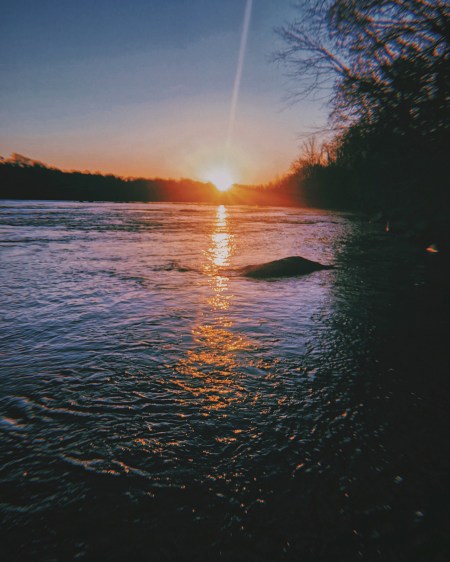
Processed with VSCO with c1 preset

I have yet to meet a sunrise that rivals the peacefulness of the early morning over the James.  New experiences and new cultures will be the theme of this semester, but I know I can rely on the steady and vast sun to put things into perspective.