Rhiannon in India: Connecting with People

August 27, 2013

Namaste mere dost! [Hello friends!]

My trip to Delhi this past weekend was a blast, but I am glad to be back in Hyderabad. In Delhi, the weather was a sticky mixture of monsoon rains followed by hot, sunny afternoons. But back in Hyderabad, the weather is generally cool and only gets up to the mid-80s. It’s nice to be back in a smaller city, too, where we aren’t treated as much like tourists, and people just seem nicer in general. Delhi was a wonderful place to visit, but being in one of the largest cities in the world made me really appreciate the great things about Hyderabad! This week, I have learned a lot about culture, not necessarily through visiting more places, but through engaging with more people in Hyderabad – my host family, my classmates and professors, and my community. Connecting with people here has proved to be a rewarding way to experience India that goes far beyond shopping at markets and seeing historical sites.
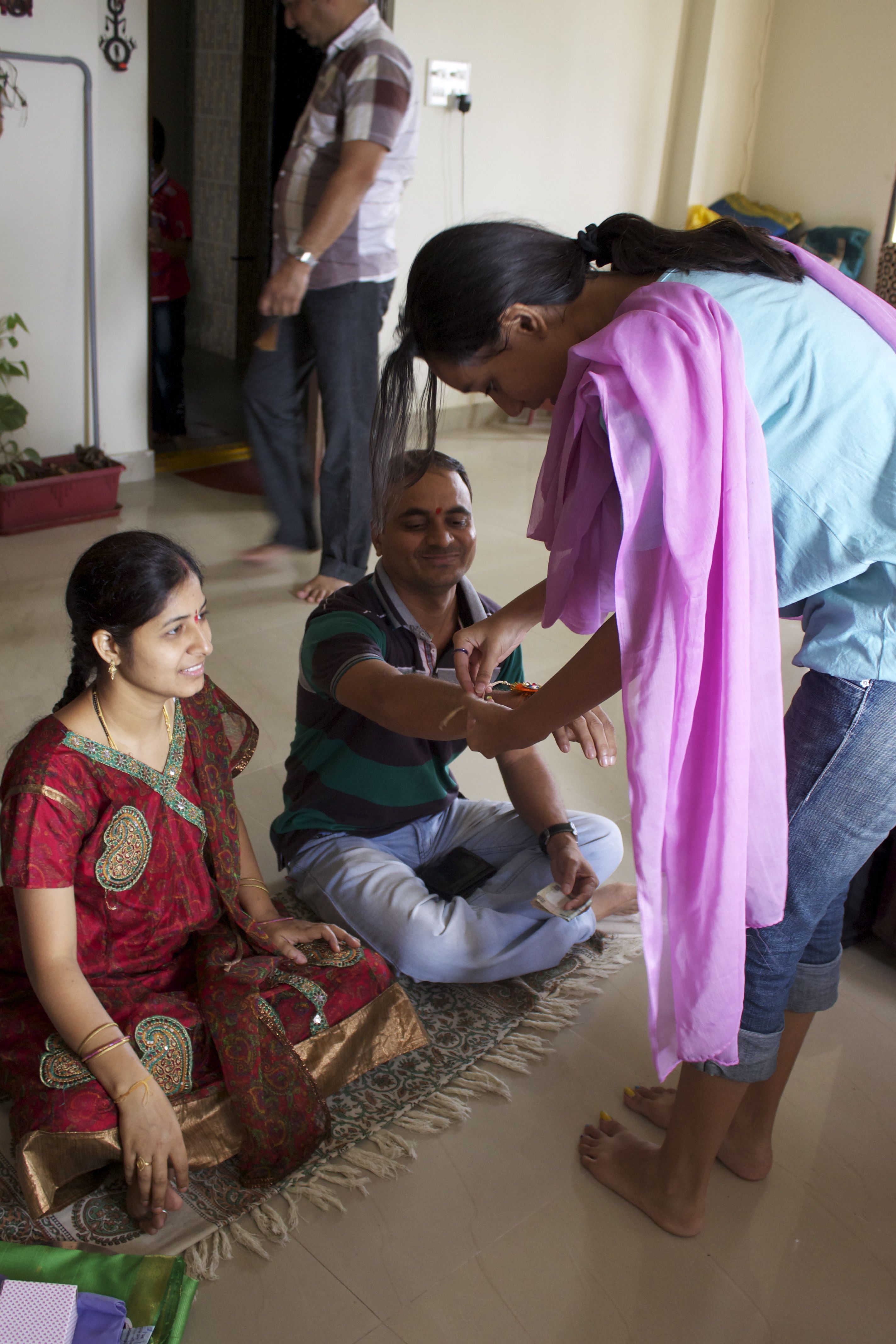
Family Poojah

Prerna celebrating Raksha Bandhan (Sibling Day) with her aunt and uncle

This weekend, Nivedita and Prerna (my host mom and sister) invited us to an event at Oakridge International School, where Prerna goes to school and Nivedita teaches art. The event was called Treasure Fest, which is a vibrant two-day arts competition for many of the schools in Hyderabad. Check out the video for some of the performances!

I also went with four friends this weekend to meet with the founders of Sankalp, the NGO that I talked about in an earlier post. Founders Anita and Sara never fail to inspire me with their dedication to helping Indian women and preventing sexual violence. They explained to us that, because they just started the organization, they are still in a research and development stage. Making connections with other NGOs, the police department, and law firms in the Hyderabad area is the most important task right now because these other organizations will help advertise Sankalp as a contact for victims of sexual violence. As volunteers, we will be researching different areas of this issue in India so that they can use the information for presentations, grants, and education. They gave us research topics on human trafficking, the effect of caste and religion on sexual violence issues, the psychology of a sexual offender, and many more. Because I am interested in law, my assignment is to research and compile the recent movements in the Indian legal system pertaining to crimes against women. Anita and Sara also mentioned that they will be doing advocacy and prevention programs in local slums and encouraged us to tag along when we can! This may not be your stereotypical semester abroad, but I am so excited that I will have the chance to meet tons of people from a variety of backgrounds and, if I’m lucky, do something to give back while I’m here.
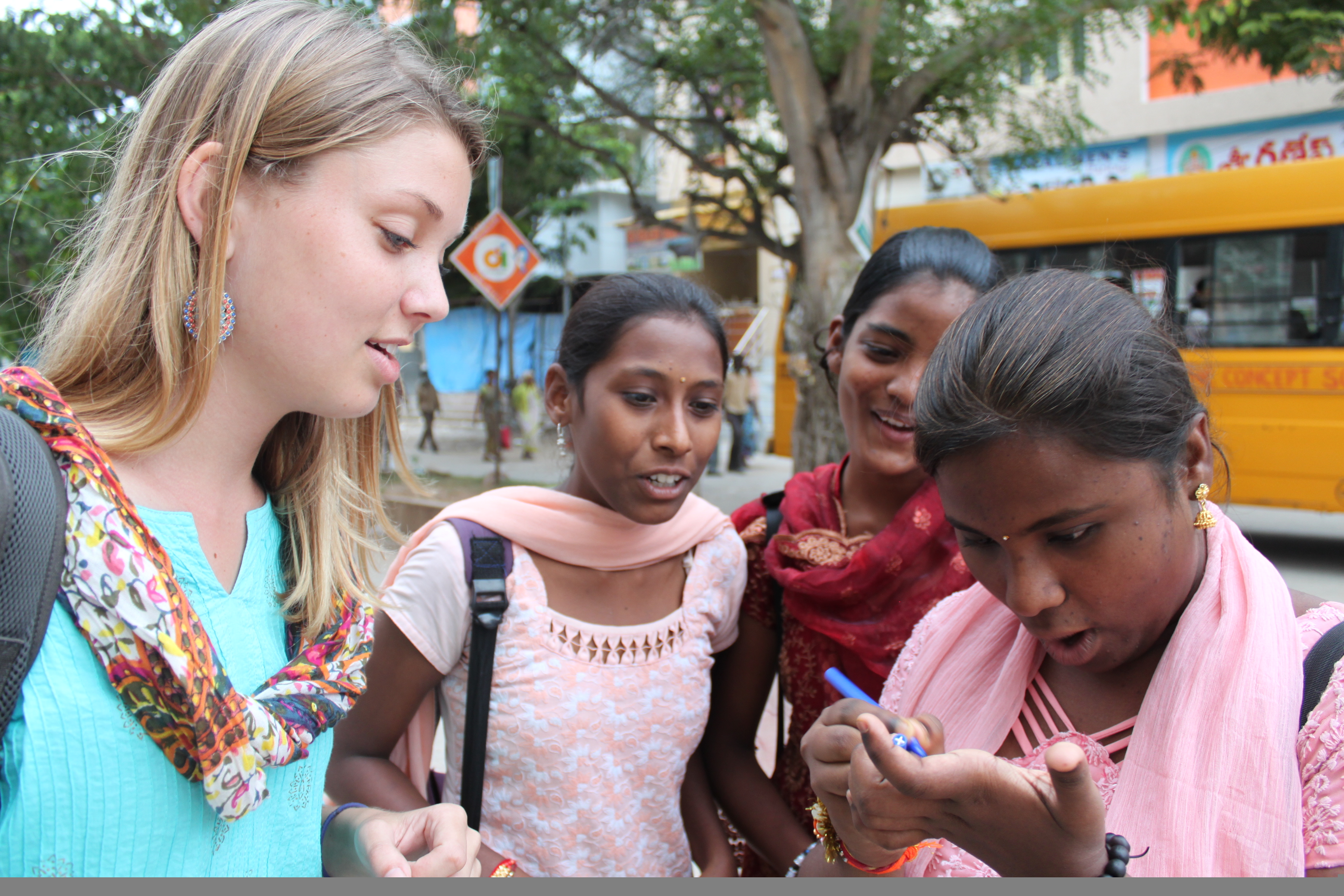
Girls in Manikonda

Meeting some friends in the neighborhood

It is also nice to be back home because the “study” in study abroad has started to kick in. Classes at the University of Hyderabad have been one of the most interesting cultural experiences yet on my trip. I am taking four classes for credit — Indian Philosophy, Technology and Politics, Indo-US Policies, and Basic Hindi — two that are direct-enrollment into the university and two that are classes for international students. I have noticed that Indian students are much more engaged in classroom debate than I am used to at home. Issues of caste, politics, education, Marxism, Indian philosophy, and Western lifestyle are topics that seem to come up in every class discussion, like the students really are thinking about these things all the time. One of my CIEE advisors mentioned at the beginning of the semester that some aspects of India remind her of what the 1960s must have been like in the US. It seems like there is a lot of passion among Indians, especially younger generations like the students at University of Hyderabad, to impact social norms and traditions, whether it be in a positive or negative way. Every week, it seems like there is another forum, rally, or protest on campus that gets students talking about their freedoms. By talking to students in my class, I have heard many different opinions of how students should act while at the university, most of which are compared to their view of “the Western way.”
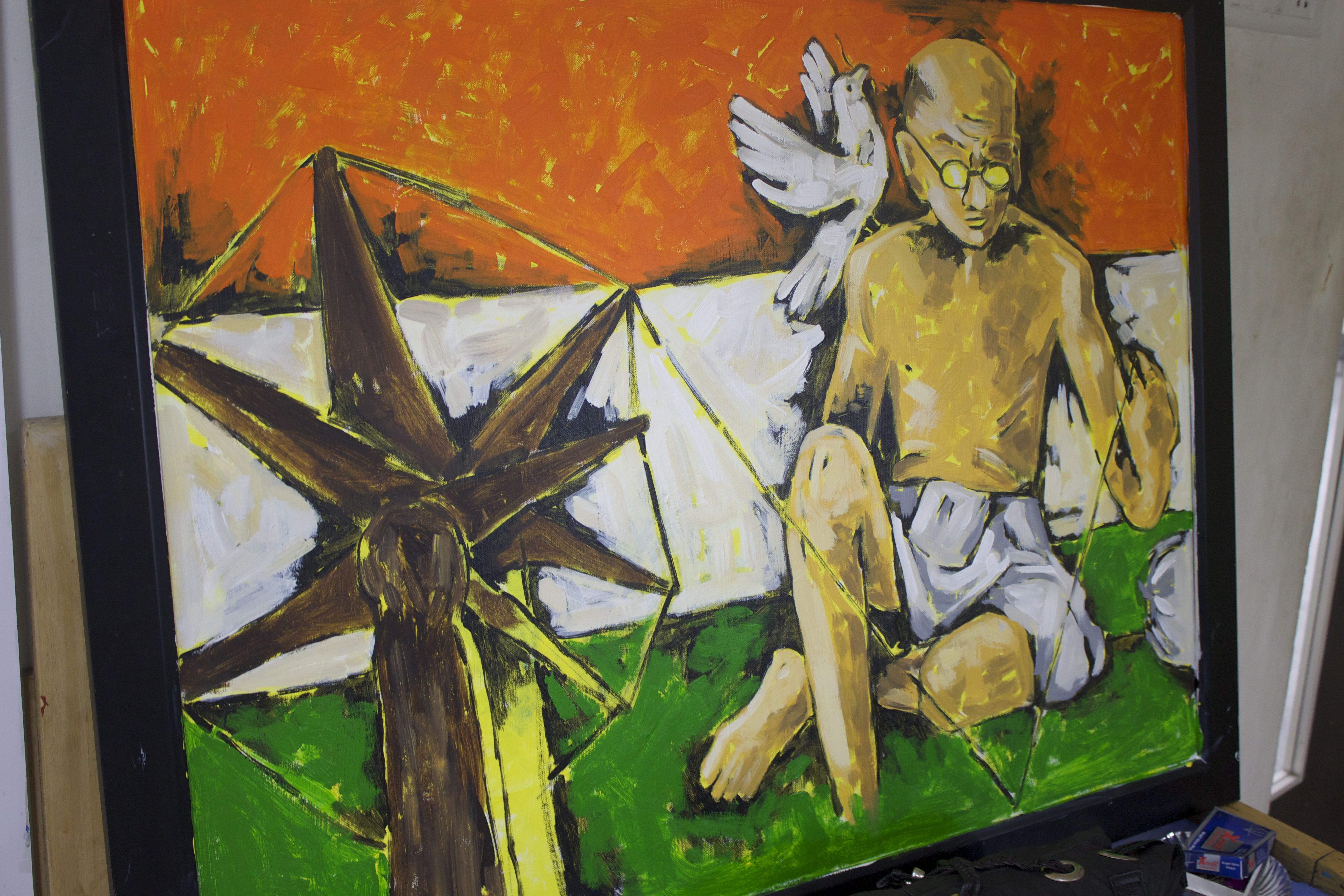
Oakridge Art

A student’s painting in the art competition at Oakridge Treasure Fest

Although my academic classes are interesting, my favorite class that I am here taking is Sitar! I take lessons two times a week with a few of my friends in the CIEE program. I thought it might be similar to playing guitar, but so far it has been totally different. To make it even more interesting, our teacher speaks very little English, so we have to follow along by listening and watching him play. So far we have learned one melody and Happy Birthday, but soon we will start working on playing a piece for the Cultural Show at the end of the semester!
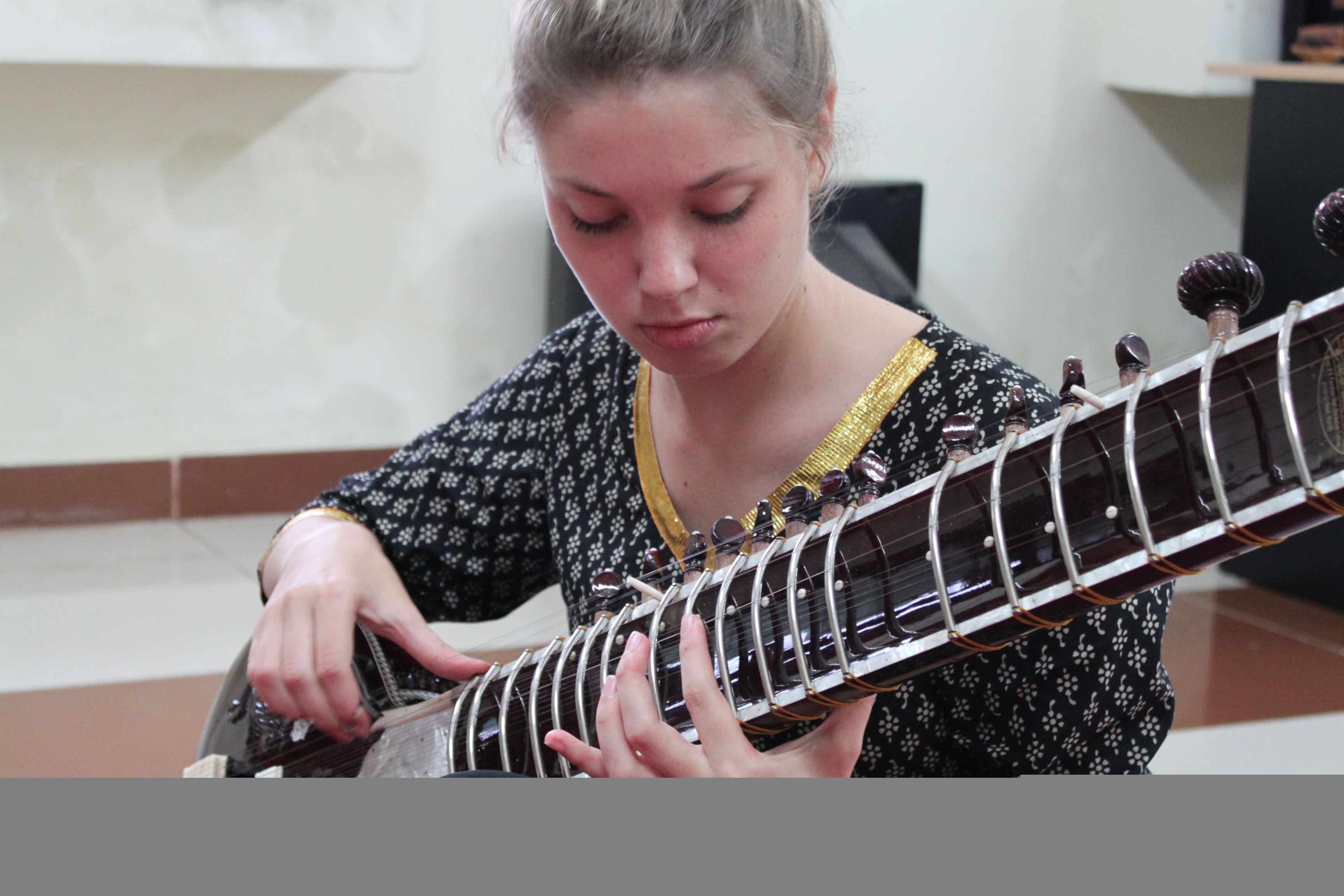
Sitar

Me practicing the sitar


Diego in Brazil: A new routine

August 26, 2013

Moving to a new place certainly has its advantages. Although feared by many (I suppose), one of my favorite aspects of settling in a new city/town is finding a new routine. Based on how everything developed this past week, I will dare to say that some sort of order is entering my life here in Rio de Janeiro. Don’t get me wrong, I pretty much depend on avoiding settling for a repetitive routine, knowing that I should not unpack my suitcase because in a matter of weeks I will be changing places, and even accepting that people I meet will stay around only for some time before I go back home or they continue their journeys. Yet these are precisely the thoughts and needs that make finding a routine so great sometimes.

From Monday to Thursday I spend about 8 hours each day at my host university, the Pontifícia Universidade Católica do Rio de Janeiro (PUC). I have two or three two-hour classes each day, and I normally stay to have lunch and dinner at the University’s cafeteria. On Monday and Wednesday I start with States, Politics, and Development in Latin America, continue with “Poverty and Social Inequality, and end the day with Geography of the Contemporary World. In between my classes I manage to escape to the University’s gym for a one-hour yoga class. On Tuesday and Thursday I go to only two classes: Brazilian Foreign Policy and Portuguese.

Exchange students at PUC have the option to choose certain courses that are taught in English. I originally considered taking some of these classes, but in the end decided to go for only courses in Portuguese. Being a native Spanish-speaker certainly gives me some advantage to learn Portuguese, but it is not by any means a guarantee that I will magically be able to communicate effectively. While I had never taken a Portuguese class before coming to PUC, I spent about a month and a half working in the northwestern region of Brazil this past summer. Sadly I did not find myself in the urgent need to speak Portuguese since many of those that I worked with spoke Spanish. However, my time in the Brazilian Amazon did help me to get used to Portuguese sounds, main endings, pronunciation, and so on. This, plus a lot of motivation and desire to learn Portuguese as soon as possible, pushed me to avoid English courses and go straight for those in Portuguese. I am afraid I will have to wait for my first tests to see how that turns out.

DiegoBrazil3(1)

PUC has a very warm atmosphere

It is an exciting time to be studying in Brazil. Next to Brazil’s socioeconomic changes in the last decade and the country’s growing economic and political influence around the world, social sciences at Brazilian universities have developed and expanded significantly. My impression so far is that my professors at PUC are much more concerned with theoretical and structural approaches to a social question than my professors at Richmond. I would say two different reasons explain what I have seen. On the one hand, the recent expansion of social studies in Brazil has led to very active debates on theories, appropriate methodologies, and other type of “larger” questions. On the other hand, Latin American social thinkers have traditionally chosen structural over particular explanations for social and political topics. To give you an example, while last semester at UR my international relations class started with readings on contemporary political structures, my Brazilian Foreign Policy course at PUC has been reading about Brazil’s foreign policy since the late 19th Century, several theoretical approaches to foreign policy, and discussions on how the study of foreign policy has developed in Brazil during the past twenty years.

Both inside and outside the classroom, the atmosphere at PUC is incredibly dynamic and welcoming for new students. As I walk towards the cafeteria, I come across hundreds of students eating, drinking coffee, and chatting in the University’s two main buildings. A friend at PUC recently invited me to a women’s rights group that meets every Tuesday to watch films, discuss, and organize for several events. Needless to say, I am incredibly excited to join them this coming Tuesday. While student-run groups may not be as common at PUC as in some US colleges, joining activities such as yoga has definitely given me a space to meet Brazilian students at PUC in a more relaxed environment.

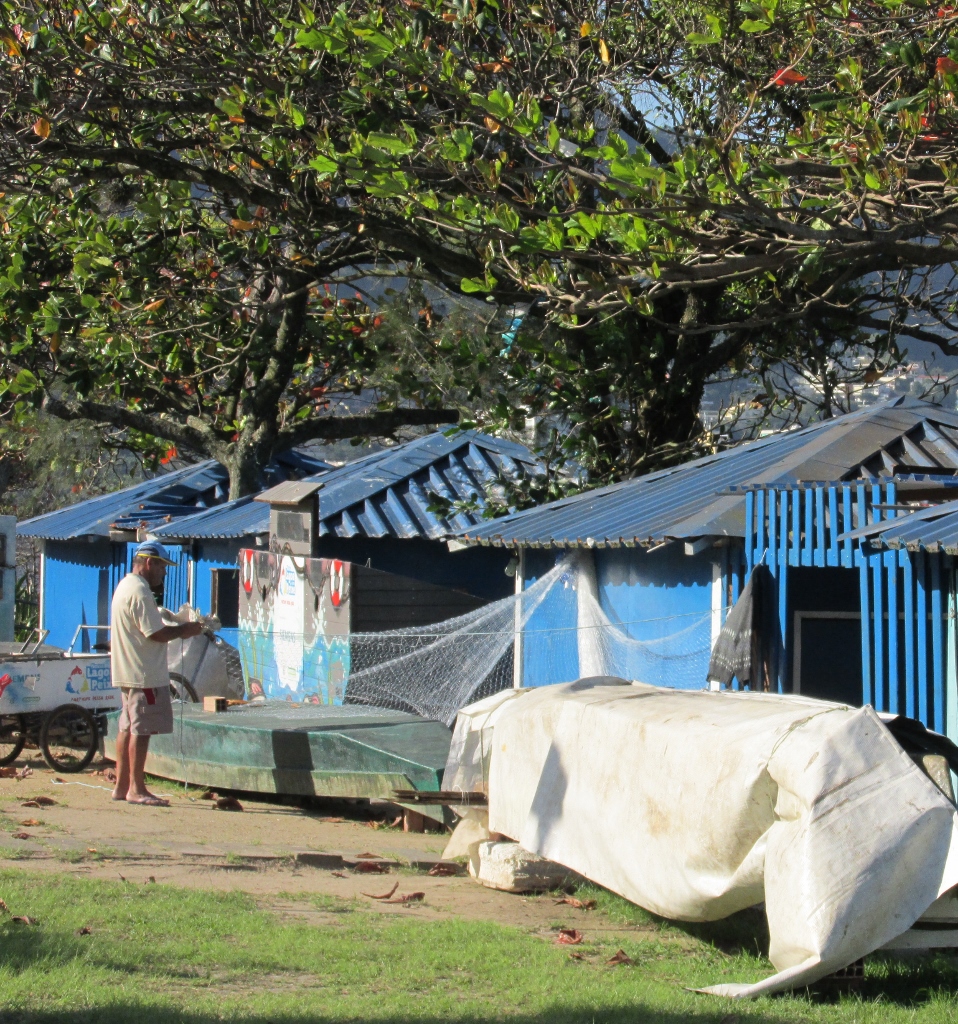
Whenever possible I bike home at the end of each busy day. On Thursday I chose to bike around the Lagoa Rodrigo de Freitas, a lagoon in Rio’s Southern Zone, and had the great pleasure to talk for some minutes with some local fishermen who have established a small community next to the Lagoa. Biking home from PUC around the Lagoa takes only about 25 minutes, and now that I met these local fishermen I will be definitely trying to avoid taking the bus more often.

DiegoBrazil3(2)

A fishermen community next to the Lagoa, a lagoon in Rio de Janeiro’s Southern Zone

As I said, there are some great things about finding a new routine!


Mel in Chile: Almost Done Packing

August 26, 2013

Hi all! My name is Mel and I am a junior at the University of Richmond. I was born and grew up in Albania but moved to the US about eleven years ago. As I finish packing my suitcase for tomorrow’s flight, I would like to share with you a bit about myself and my plans for this coming semester.

At UR I am a Business Administration major with a concentration in International Business and an Economics minor. My main interests revolve around socioeconomic rural development in Latin America and human trafficking in the region. This past summer I had the great opportunity to work in the Dominican Republic on micro-finance initiatives focused on Haitian workers in sugar-cane communities. These migrant populations are some of the most vulnerable communities in the Dominican Republic, and hopefully I will be going back next summer to continue working on these issues.

For now, I am moving to Chile’s capital city Santiago for the SIT Political Systems and Economic Development in Chile program. During the next four months, I will join fourteen other students to explore the social, political, and economic dynamics that have shaped Chile since the early 1970s. SIT programs are a fantastic twist on a traditional  study abroad program.  On the SIT program we will live with a host-family in Santiago, take classes at the University of Santiago, go on several academic excursions around Chile to add a practical component to our courses, live for a week with a Mapuche indigenous host family to learn about the situation of indigenous peoples in Chile, and do a one-month independent research project at the end of our program.  This month-long research component is what makes SIT programs especially unique.

I am particularly excited about the opportunity to learn about Mapuche groups and their political participation in the Chilean society. Through our program, we will establish a dialogue with Mapuche leaders to explore how these communities interact with the neoliberal political and economic dynamics that surround them. Our group will also be visiting Chile’s biggest mine, and both experiences will, I hope, allow us to gain a deeper understanding of the marginalization of the indigenous population. Since we have the opportunity to run a one-month independent research project at the end of our program, I am already thinking about exploring in depth these indigenous/mining relationships that shape part of Chile’s rural life.

Blogging about and sharing my experiences with you will be definitely fun! I now need to get some sleep before my long journey tomorrow. I feel as if I have been preparing for this particular program for at least a year, and I honestly cannot describe how much I look forward to settling in Chile! I will surely keep you updated, so come back in a week to read more!


Rhiannon in India: A Weekend in Delhi and Agra

August 19, 2013

After a month in India, I finally had a weekend free to do some traveling outside Hyderabad with my friends! Until now, our weekends here have been occupied by activities in Hyderabad – seeing historical sites, hiking through rocky terrain, shopping in the old markets, watching Bollywood movies, cooking Indian food… But because Thursday was Independence Day here in India, my friends and I took advantage of the long weekend and flew to Delhi! Our program directors were going to take our entire group to Hampi, a historical city in a nearby state, but because of the recent Telangana decision that I talked about in my last post, they decided to postpone our trip to a later date. Although we were disappointed, they assured us that it would be fine to travel anywhere independently as long as we didn’t take roads through the areas of agitation. What resulted from their announcement Monday afternoon was a mad rush to decide what we would be doing to take advantage of this rare opportunity: a long weekend. Within hours of the announcement on Monday, my friends Kate, Romi, Jennie and I had booked our flight to Delhi and were already reading our guidebooks for ideas!

It took hours of last-minute planning, but before we left Hyderabad, we had our travel plans intact and a list of all the interesting things to do in Delhi. We even booked an early 3-hour train from Delhi to Agra so that we could spend Independence Day visiting the Taj Mahal! We left Hyderabad early Wednesday morning and arrived in Delhi with a whole afternoon open to explore. With Lonely Planet as our roadmap for the weekend, we explored the area around our hotel and found a great restaurant that served all-you-can-eat North Indian thali, a to-die-for meal that anyone visiting India must try. For four days straight, we did one thing after another and tried to fit in as many activities as possible. But instead of listing all of them here, I’ll just give the highlights.

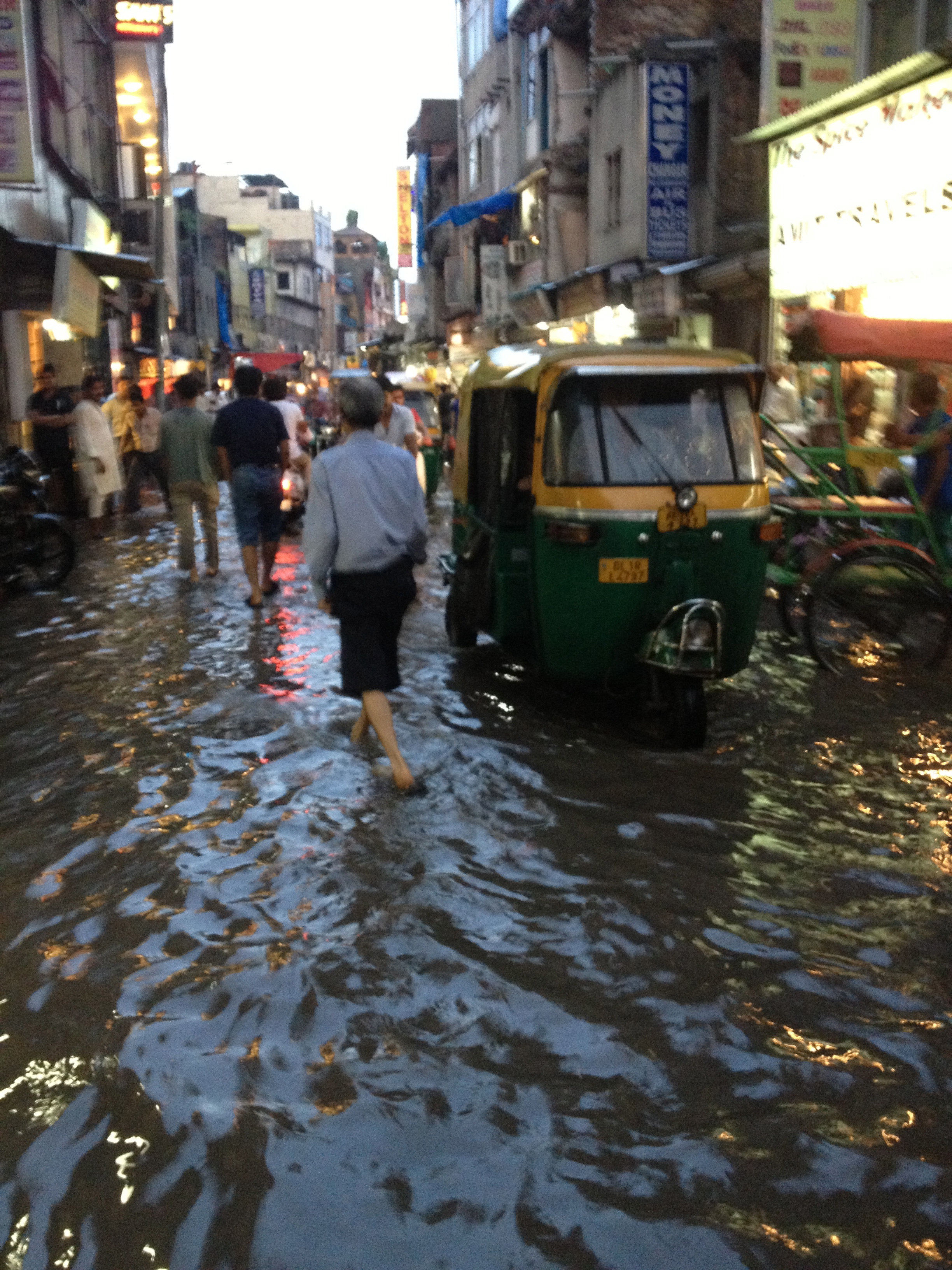
Getting from place to place may be the most mundane part of traveling for most people, but as I have explained in earlier posts, transportation in India often brings new and exciting experiences. During our last dinner in Delhi, we thought back over our 4-day trip and counted at least ten modes of transportation that we had used: planes, taxis, walking, auto rickshaws, bicycle rickshaws, city buses, sleeper buses, metros, sleeper trains, and we added, jokingly, swimming, because the monsoon was so bad in Delhi that the streets were covered in water half way to our knees. Every time we walked to and from our hotel, we had to wade through a “puddle” the size of a football field that poured into some of the shops near the road!

Flooding in Delhi

Flooding in Delhi

The sleeper train was definitely a new experience for me this weekend. When booking a long-distance train in India, there are so many options that choosing can be really overwhelming! You can choose between General (the cheapest option), Sleeper, 3 A/C, 2 A/C, and 1 A/C (the most expensive). You don’t need to book a General ticket ahead of time, but for this reason, you never know what will happen and you may have to stand for the entire trip. Because we booked our train so last-minute, the only option for us (besides the General compartment, which we were advised not to take) was the Sleeper. The benefits of the A/C compartments are that they have air conditioning and that they provide increasing levels of space, comfort, and privacy. When we entered the Sleeper compartment early Thursday morning, we found our “seats,” which actually resembled 3-level bunk beds. We slept the whole way and the trip was over in a snap! I wonder now why all transportation isn’t like this.

Sleeper Compartment

Sleeper Compartment

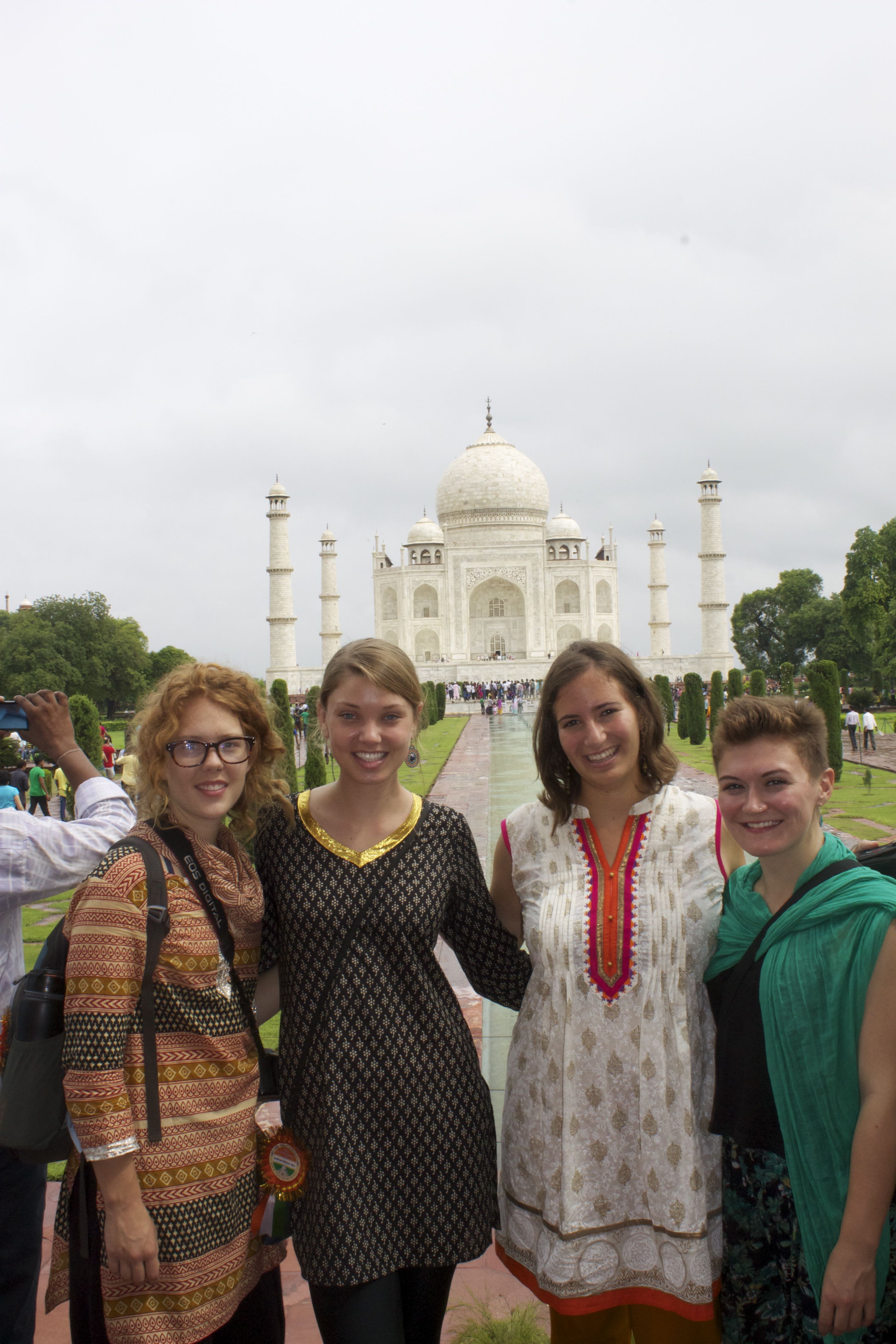
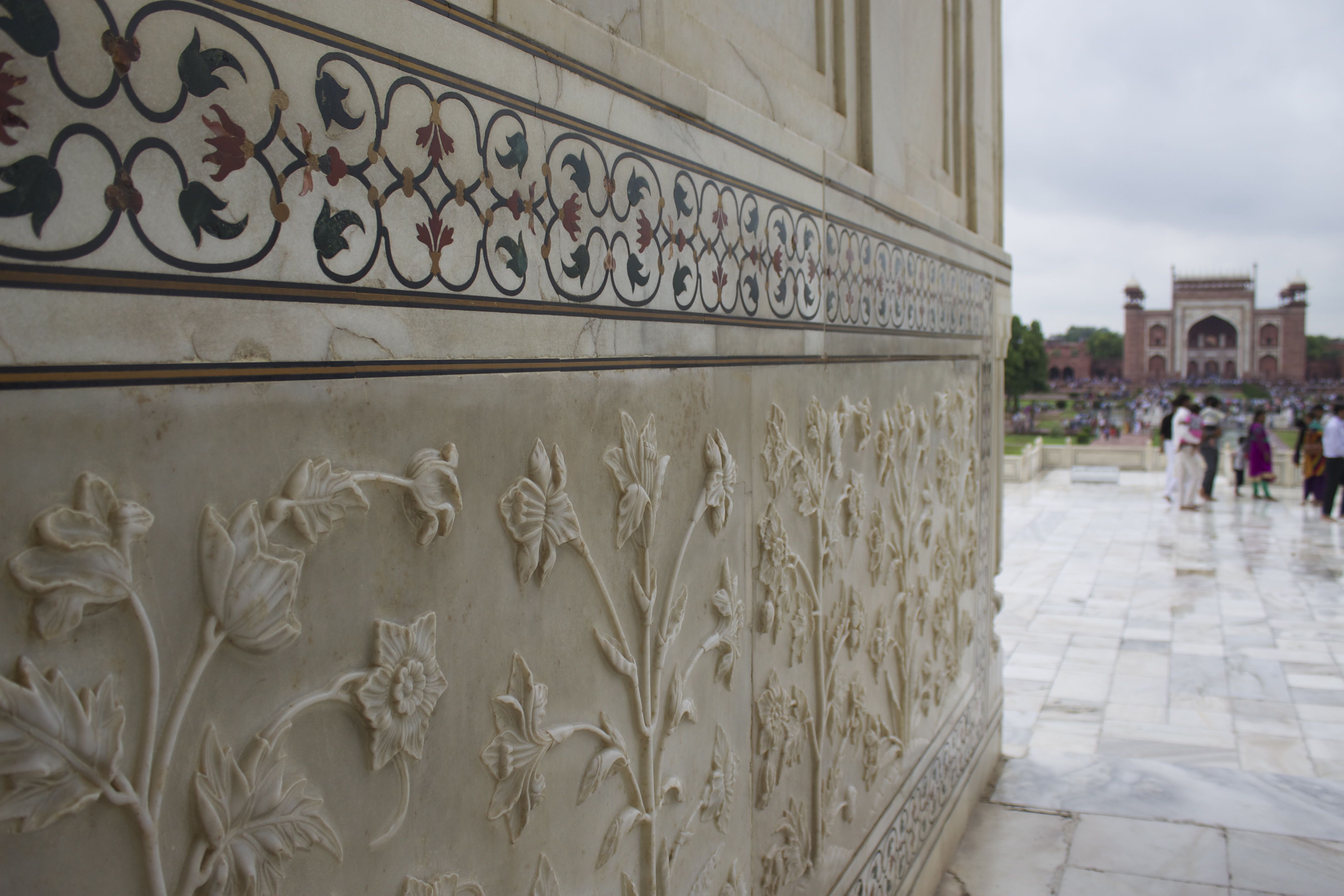
The main highlight of our trip was obviously seeing the Taj Mahal. I was a little skeptical before hand, but the Taj is even more magnificent than I could have ever imagined! Not only is it huge and glowing, but every inch is beautifully decorated with such ornate stone inlay that it is impossible to capture in a photo. We spent a whole morning at the Taj walking around the grounds and taking in the experience of being at one of the Wonders of the World! Our entire trip was a lesson on the history, culture, and religions of Delhi and Agra. We also visited many other magnificent structures in Delhi and Agra – the “Baby Taj,” two Red Forts, the Lotus Temple, numerous tombs of kings and emperors, and many shrines of religious leaders. It is difficult to count all of the sites we visited because many of them were tucked away among residential and market areas.

Taj Mahal

Our group at the Taj Mahal

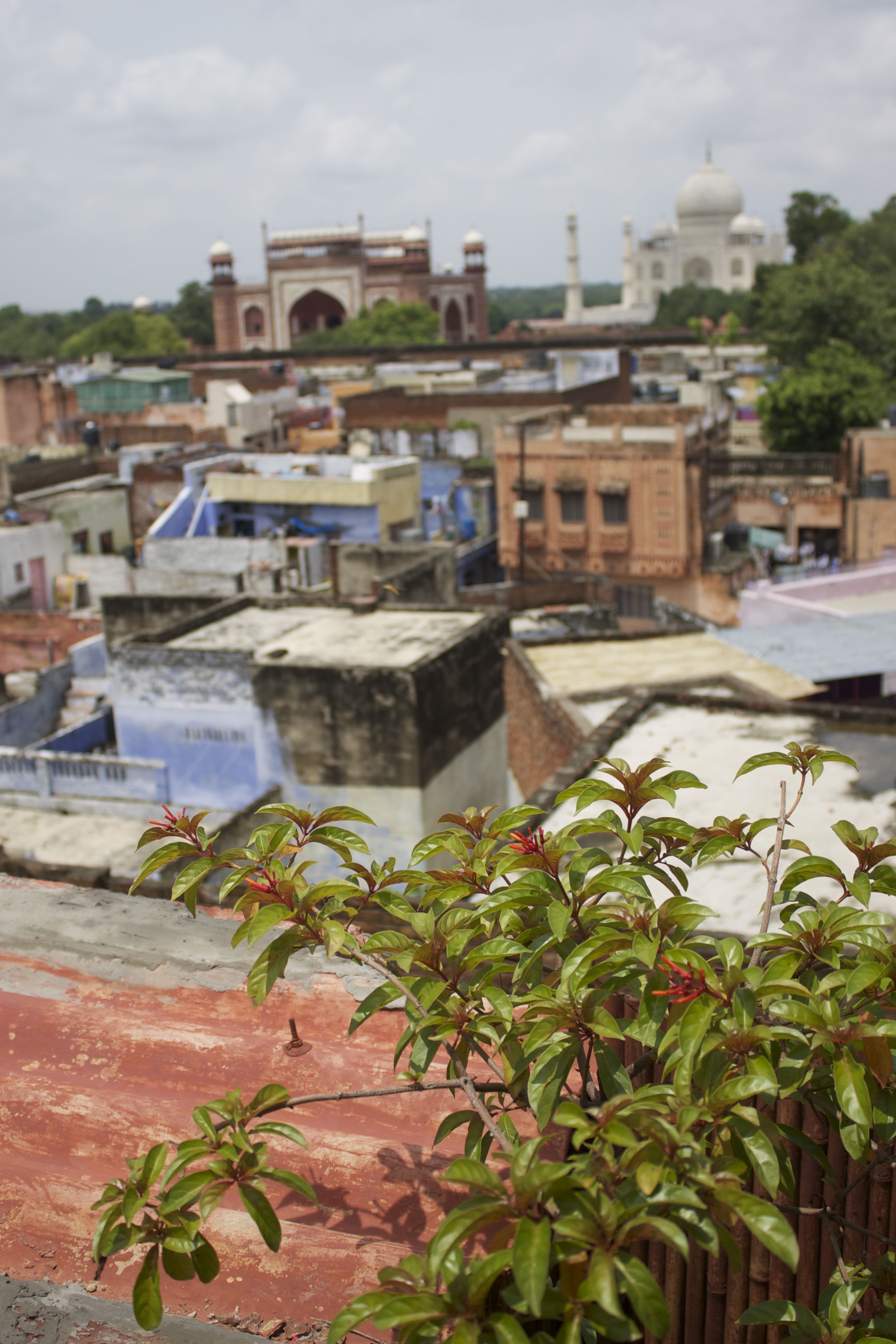
Rooftop view of the Tah

Rooftop view of the Taj Mahal

Taj Inlay and Ornamentation

Taj Mahal inlay and ornamentation

Baby Taj

Baby Taj

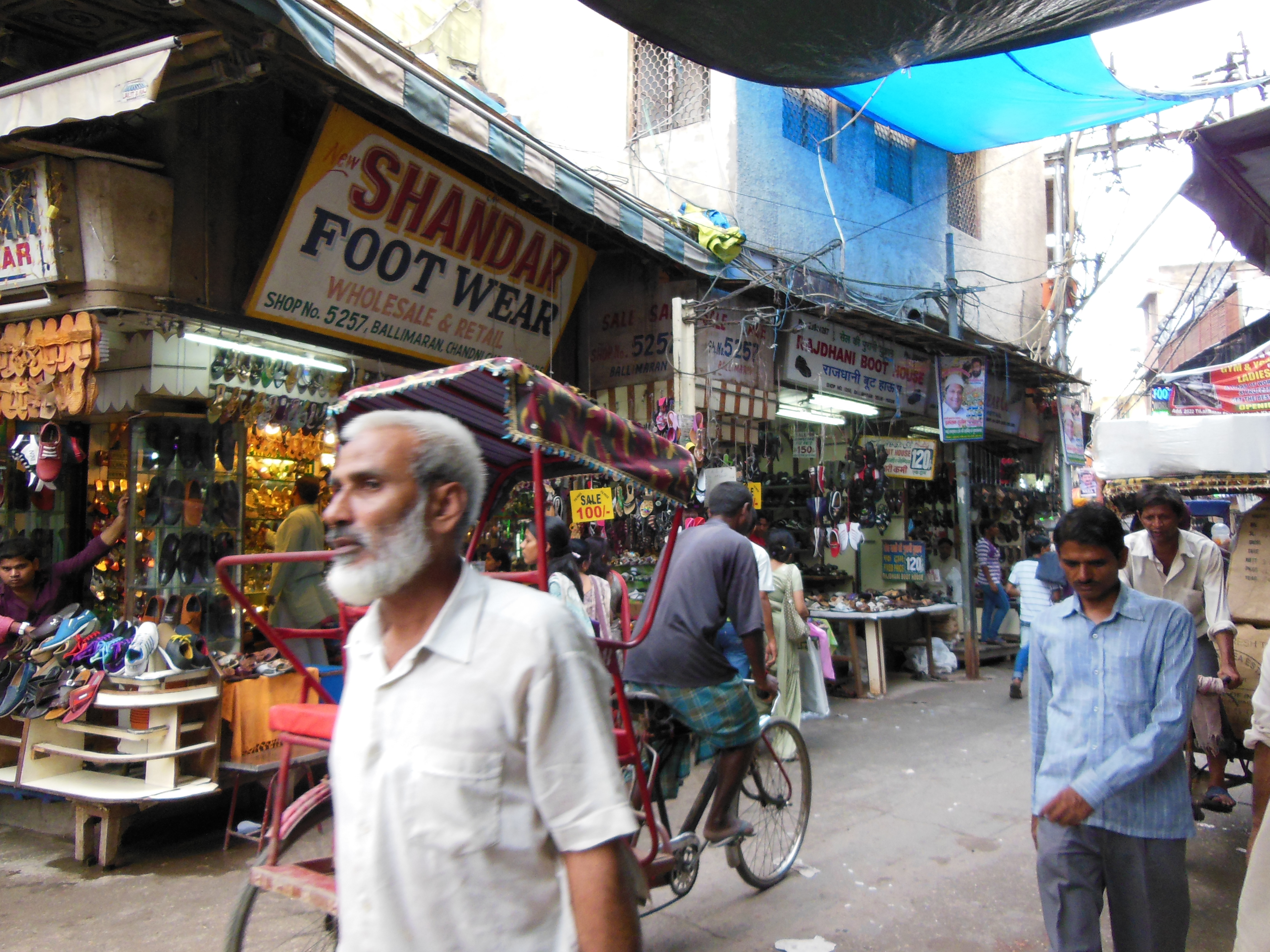
Another highlight of the trip, and the best part in my opinion, was exploring through the markets. On Wednesday, we went to a craft market in Delhi and spent the whole evening wandering through the handmade art and jewelry. On Friday, we went to a vast market called Chandi Chowk in Delhi that is supposedly the oldest running market in all of India. It is called Chandi Chowk, or Moonlight Square, because the Mughal emperor could see the moon’s reflection in a channel running through the market from the Red Fort at night. When we arrived we stayed on the main road, but we soon realized that there were small alleyways branching off in all directions that were packed with a maze of shops and vendors. The best part about the market was that it was divided into sections based on the merchandise being sold. There was one section lined with at least 20 shops selling tea and spices, and another alleyway that had nothing but shoes as far as you could see. We were in heaven!

Spice Market

Spice Market

Shoe Street

Shoe Street

We also visited a market in a Tibetan neighborhood just outside New Delhi. It was so interesting to see the immediate contrast when we arrived in the Tibetan area because it really felt like we were in a different area of the world. The vendors were selling winter clothes and Buddhist items, and the people were even dressed differently. We went to a restaurant and ate a Tibetan dumpling soup called Thenthuk, which was a refreshing change from the Indian meals we had been eating the whole trip.

Tibetan Market

At the Tibetan Market

I am so glad that we made the spur-of-the-moment decision to go to Delhi because the whole weekend was packed with exciting activities, new places, and a ton of good food. Just when I thought I was getting to know India pretty well, I found that North India is a completely different place from Hyderabad. This trip put an image into my mind of India as a patchwork of different cultures. They are all sewn together into one nation, yet each one remains distinct – from north to south, east to west, and even down to the very neighborhood. I know now that it would take a lifetime to experience all of the cultures, places, and people of India, and I am only here for one semester!


Diego in Brazil: Settling or Being a Tourist?

August 19, 2013

“Walking is a virtue, tourism is a deadly sin.” Bruce Chatwin

I wonder if it is possible to move to and establish in a new place without becoming a tourist the first few days or weeks. The countless “so how close to the beach do you live?!” questions that come through emails and phone calls from friends abroad make me think twice about how I should see Rio de Janeiro. I will get to that in a second, but first some words on this past week.

When I arrived to Rio’s international airport Galeão I realized how little time I had had to think about studying abroad. My summer internship in the Brazilian and Peruvian Amazon had ended just three days before and I still had (and have) many documents and reports to write. PUC-Rio’s (my host university) staff met exchange students at the airport the morning I arrived and in a matter of minutes we were on our way to our respective host family’s place. My host-mother came out of the apartment to receive me with a hug and a warm “Bem-vindo Diego!” She showed me my new room and before I even noticed we were in the kitchen telling each other stories about our lives with a cup of coffee. After living in Norway and the US for four years, I can’t describe how that first morning made me think of home in Guatemala. “All Brazilians are friendly” may be an exaggeration, but my experiences in Rio de Janeiro and the Brazilian Amazon so far have shown me the incredibly welcoming side of this culture.

Every morning at 8:30 a.m. I cross the street in front of my apartment to take a bus to PUC, usually with my German flat-mate who is also an exchange student at PUC. The twenty-five minute ride to PUC seems nothing compared to the hour and a half or even two hours some local students take to get from their homes to the university. Most exchange students at PUC live in Rio de Janeiro’s Zona Sul (“South Zone”) which includes the city’s richest neighborhoods and most famous beaches. I had some trouble deciding what I wanted to write in this entry about Rio de Janeiro. I could describe my neighborhood’s busy streets, Copacabana’s beaches or even the scenic path I take when I bike from the university back to my apartment in the afternoons, but I would certainly be describing just a small section of Rio de Janeiro’s reality.

Diego in Brazil Entry 2 (800x600)

My neighborhood in Zona Sul at night

I continue to wonder – is it possible to move to and establish in a new place without becoming a tourist the first few days or weeks? Tourism continues to exploit the same discourses that built Brazil’s image abroad as an exotic, happy, and social destination. In addition, a tour around the city’s favelas (typically described as low-income shanty towns) is now part of some tourists’ plans for their visit to Rio de Janeiro. These two contrasting touristic destinations (Copacabana’s famous beaches vs. some of Rio’s poorest areas) seem to dominate the tourism-related advertising I have seen around the city and online. And the conversations I have had with foreign and local students at PUC make me think such discourse is not strictly limited to tourism, but goes as far as influencing how Rio’s residents present their city to others.

Is it possible then to “experience” Rio de Janeiro under a different scheme? I have my doubts. Getting to “know” a new place is, of course, a subjective experience, yet I truly hope I find a way to step back from the common descriptions of Rio de Janeiro and settle as a student as soon as possible. My first “solution” was to read Brazilian literature with stories that take place in this city. I recently finished reading “Quando ia me esquecendo de você” [“When I almost Forgot About You”] by Maria Silvia Camargo, and as I thought about this entry I struggled to avoid presenting you with a typical “Zona Sul” description of Rio de Janeiro, an exotic presentation of the city’s high levels of socioeconomic inequality, or Camargo’s romantic view of Rio’s atmosphere. How we position ourselves within and in relation to a new space will certainly determine our views and experiences regarding such place. I just hope that in the next couple of weeks I find a position that allows me to take a step away from becoming yet another tourist in Rio de Janeiro.


Diego in Brazil: Moving to Rio de Janeiro

August 19, 2013

Hi all! My name is Diego and I am a third-year student from Guatemala at the University of Richmond (UR). I am in Lima, Peru, where I have been working for the past few weeks, and now I am on my way to the airport to take a flight to Rio de Janeiro for my semester abroad.  I wanted to introduce myself before going into a busy introduction week at the Pontifícia Universidade Católica do Rio de Janeiro (PUC-Rio).  At UR, I am an Interdisciplinary major (Latin American Politics and Social Justice) and, potentially, a Geography minor. I will be studying at PUC-Rio this fall (but don’t be surprised if I try to stay there for the entire year!).

Rio de Janeiro is located in the south-eastern region of Brazil. Once the capital city of Brazil, Rio is currently the second largest city in the country and one of Brazil’s main cultural and economic centers. Throughout the semester, I will make sure to update you with more and more information about Rio and the city’s relationship with the rest of Brazil.

Explaining the two reasons that led me to study in Brazil requires a bit of information on what I do at UR and outside. My main academic interest is to understand and explore how marginalized groups in Latin America do politics, both inside and outside governmental structures. Outside my regular classes, I have worked for a year now on issues related to indigenous peoples and their territories in the Brazilian-Peruvian Amazonian borderlands. As you may imagine, political and economic centers in both Brazil and Peru have strongly influenced the history of this remote region. Getting to know these powerful hubs, such as Lima, Brasilia, and Rio de Janeiro, is key to understanding indigenous peoples’ struggles in the Amazon.

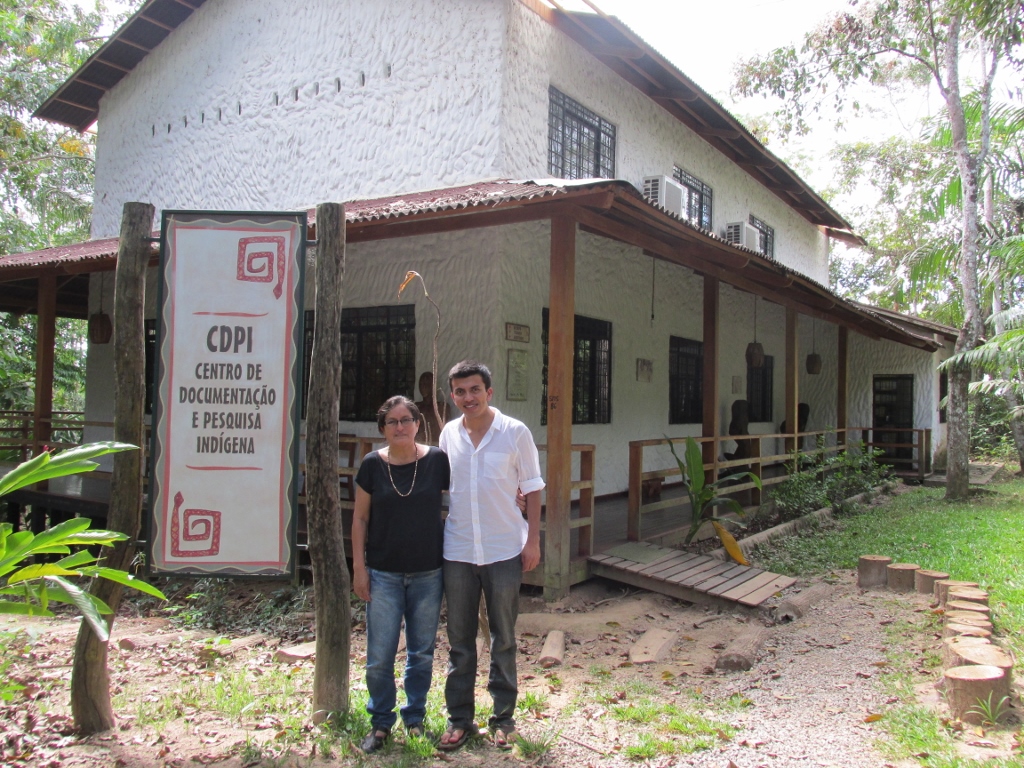
CDPI

Here I am this past summer working with the Comissão Pró-Índio do Acre in the Brazilian Amazon.

As such, my first motivation to study at PUC-Rio is to begin to understand Brazil’s relationship with its Amazonian territory to further my academic and non-academic work in the region. My second reason to study at PUC-Rio has to do with my background as a Guatemalan student and my desire to work in Latin America. From the Hispanic immigrant population in the US to the Tierra del Fuego archipelago at the southern tip of South America, notions of what Latin America is and perceptions of a Latin American culture vary drastically. My experience tells me that people both inside and outside Brazil will think differently when asked whether Brazil is part of Latin America or shares a Latin American culture. Yet Brazil’s recent economic and political growth has made the country an attractive ally for the region. How do Brazilians think of Latin America, and to which degree do they identify with the region? Do such perceptions and identification vary across different regions of Brazil? Hopefully by the end of this semester I will be able to have some initial answers for those questions!

I am almost at the Lima airport now. It is always tough to leave Peru (an incredibly interesting country) but I am truly looking forward to settling in Rio and sharing some of my experiences with you! Studying at PUC-Rio will be a great opportunity to learn more about other Brazilian regions.


Alyssa in New Zealand: Adaptation

August 15, 2013

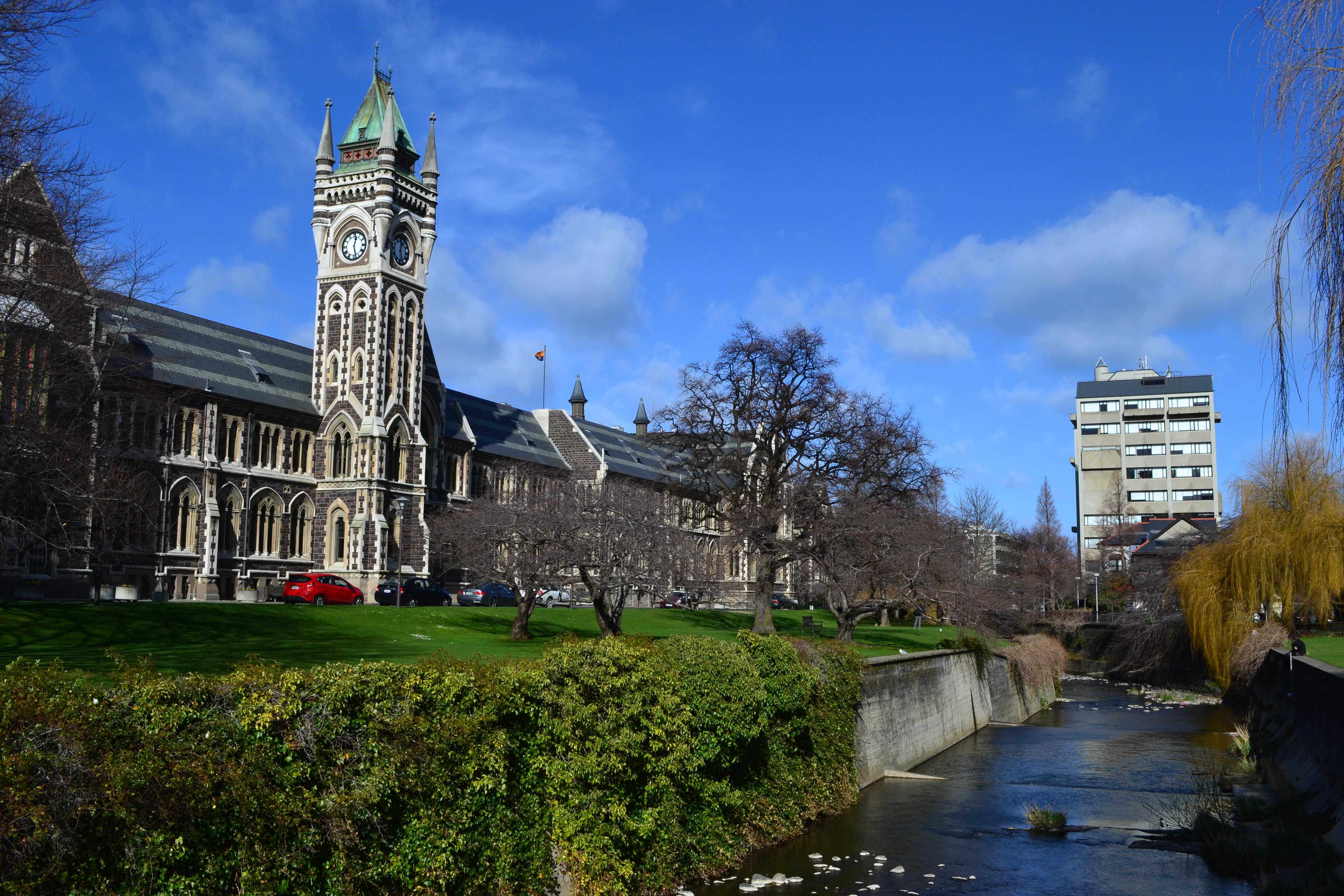
Instead of leaving my dorm room and walking through the forum in front of Gottwald, I find myself leaving my flat and walking beside the Leith river that runs by the Clock tower in order to get to class. If I walk even further through the campus of the University of Otago, I would easily wind up in the busy streets surrounded by shops and stores three minutes later. Instead of living in Richmond’s enclosed community this semester, I’m completely immersed in the middle of the city of Dunedin.

castle street outside her flat complex

Castle Street, just outside my flat

clocktower and leith river

The Clocktower and the Leith River

A typical day in Dunedin is not even remotely similar to a typical day in Richmond. Instead of strolling right through campus, I have to stop every so often at a crosswalk. The cars that pass by are driven by people that perceive us as not primarily students but as pedestrians. The shortest walk that I have to make to one of my classes is 12 minutes whereas in Richmond I would consider that to be my longest. There are constantly masses of students walking on the streets, so it becomes easy to get lost in the crowd.

crosswalks

At a crosswalk

Walking past the shops and stores on George Street (one of the most main streets in Dunedin) is quite congested as well, for it is full of both students and everyday people. It’s not hard for the two groups to integrate since the university buildings are immersed throughout the city. George Street seems like it is an ongoing avenue that is full of endless amounts of shops, restaurants and public services, making a lot of essentials very accessible. Instead of driving when I have to do an errand, I simply walk. As you make your way down the street, the sidewalk is completely covered with a vast awning due to the fact that it can rain at any point in time. Instead of having a well-predicted forecast, the rain usually makes its way to Dunedin without warning.

stores on George

Stores on George Street

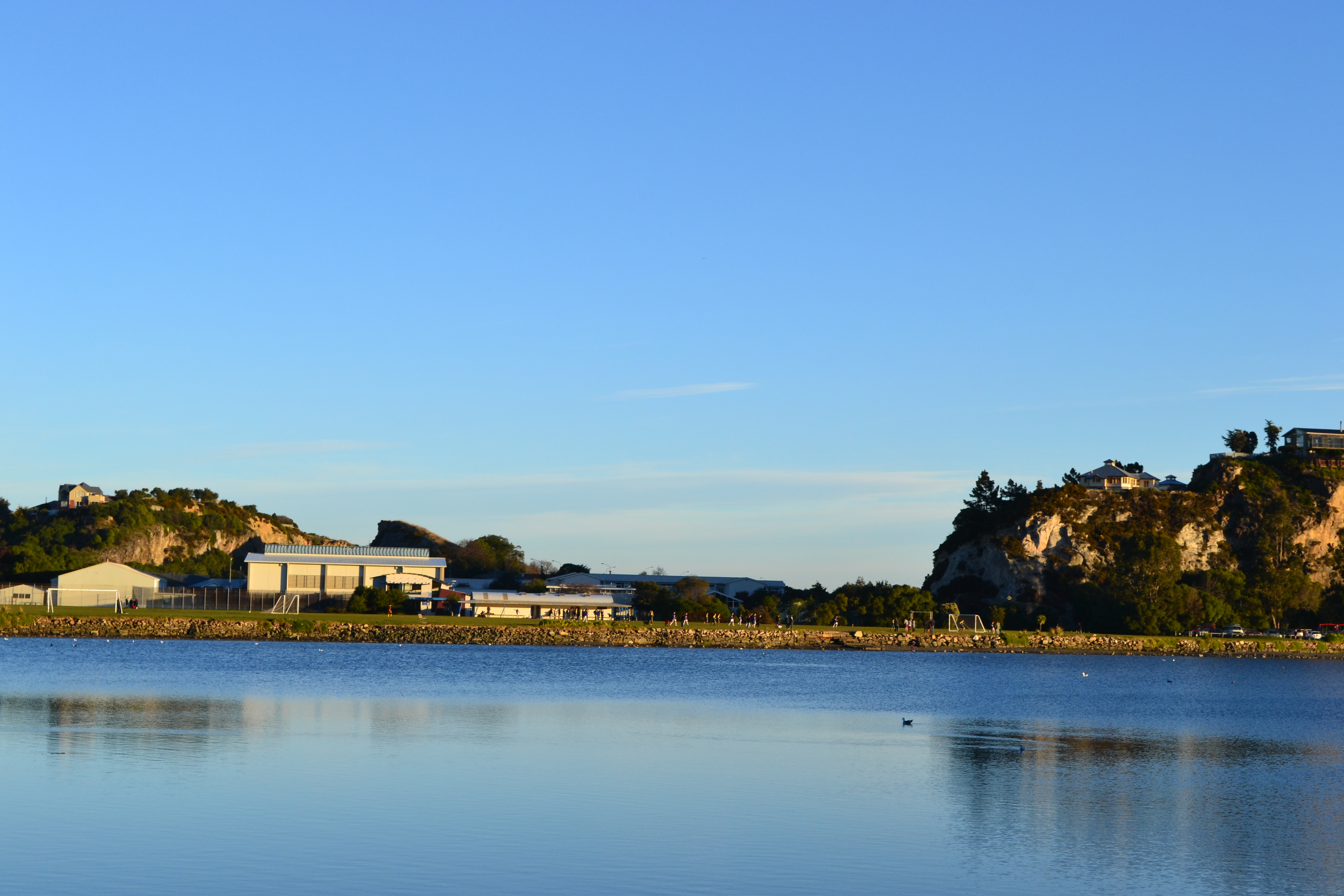
As city-like as Dunedin may be, the mountains that are just outside of town are in plain sight. All it takes is a glance down the street and you can see Mount Cargill and hills overlooking the entire town. The peninsula and beaches are within easy access, for there are several roads that run alongside the water. The vast, green countryside is even considered fairly close. All different kinds of life surround town. Even in an urban setting, New Zealand still exhibits it’s extraordinary nature without fail.

water alongside roads

Roads alongside the water

Not only is the general atmosphere of the University of Otago very distinct from the University of Richmond’s, but the classroom experience is very different as well. Instead of being into a classroom with 15 other students, I am surrounded by at least 100. The university is so large (20,000 students which is almost seven times greater than Richmond) that the odds of me running into someone that I know is slim. At Richmond, I have become so accustomed to having the professor know exactly who I am and having their assistance at hand. Conversely, the class sizes are so much bigger at Otago that the professors barely have any time to get to know all of their students individually. With over 100 students in a lecture hall, getting to know everyone one by one is just not realistic.

Not making a direct connection with the professor does present some challenges. I’ve come to realize that the nature of the student-teacher relationship is not as personal. Instead of having professors know my name, I have gotten used to the fact that my grade is the only thing they actually know about me. Their help is not as accessible, for they do not have the available time to meet up with every single student that seeks them out.

Even in both of my biology labs, there are differences. Instead of wearing goggles, we wear lab coats. We have not one teaching assistant, but five. Some of the laboratory techniques that are used are also slightly modified from the ones at Richmond. They seem to be a little more meticulous. Moreover, there is also less guidance provided throughout the procedures, which makes it a little harder to follow exactly what’s going on. Fortunately, there are several teaching assistants walking around that provide all the help that I may need.

When you come face to face with a challenge, it becomes easy to feel discouraged. The easiest choice to do is to back out and give up. But that’s not a choice here. The challenges that I’ve encountered may have generated some frustration, but I’ve learned to adapt. Living in an urban area has helped me form a sense of direction (to a certain extent) and confidence. Not having all of the necessary assistance just around the corner from professors has made me more independent and a better problem-solver when it comes to work and studying. Walking around an unfamiliar town has made venturing out more interesting. The unpredictable nature of the area has never failed to amuse me. I have only become more and more comfortable in a completely new environment.

So instead of walking through the Tyler Haynes Commons, I pass by the Otago Museum on my way to class. Instead of eating at the dining hall, I make my own meals at home. Instead of considering these changes as a burden, I see that in the end, learning to adapt to new circumstances will only benefit me!


Alyssa in New Zealand: Seeing the country

August 9, 2013

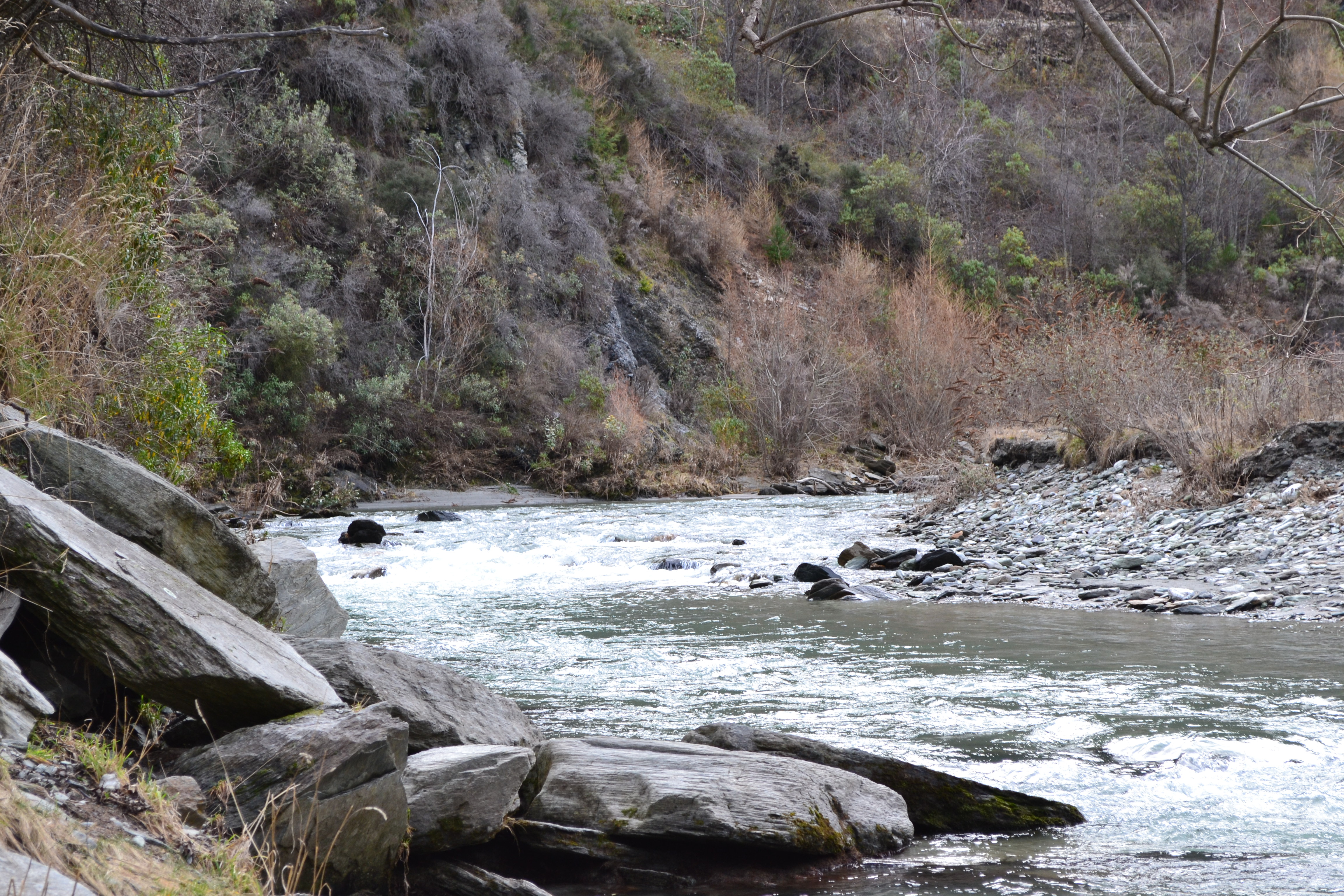
It doesn’t take much effort to see beautiful parts of New Zealand. One could even say that it’s not necessary to venture out to the most iconic parts of the country. I haven’t traveled very far from Dunedin yet (four hours maximum), but I am still impressed by everything that I have seen. Each portion of New Zealand has its own kind of magnificence to it; hiking (they call it “tramping”) and camping beyond civilization this past weekend has definitely proved that.

The new adventure began last Friday when Malachi, Andras and Edward (another Kiwi host) and I decided to explore and sight see before we embarked on our weekend tramp. After much anticipation, I finally got to see my first Lord of the Rings movie sites. What surprised me most about them was they were located near such a quaint, remote area called Arrowtown. Walking through the central part of town was somewhat comparable to walking through a ghost town of the Old West. The shops were juxtaposed very closely together consisting of tourist souvenirs such as Maori greenstone (similar to jade, except much more rare and valuable) and The Ring replicas from Lord of the Rings (ranging up to $200).

As we made our way through town, I didn’t see how it would be at all possible to reach the LOTR sites. The area was so small and it seemed like there wasn’t too much to see. However, we figured out soon that we have to venture out a little further to the outskirts of Arrowtown in order to reach our destination. After making our way through open forests, we finally arrived at the area that we were all familiar with having seen the same exact site in the movies several times (it’s typically considered a well-known scene in the movie). You can’t underestimate the potential of anywhere, for you never really know what it has to offer. The fact that this setting for the movie was found near such a humble town convinces me that anywhere in New Zealand beholds some sort of unique aspect. Nothing should be overlooked.

one of the sites where Lord of the Rings was filmed

One of the sites where Lord of the Rings was filmed

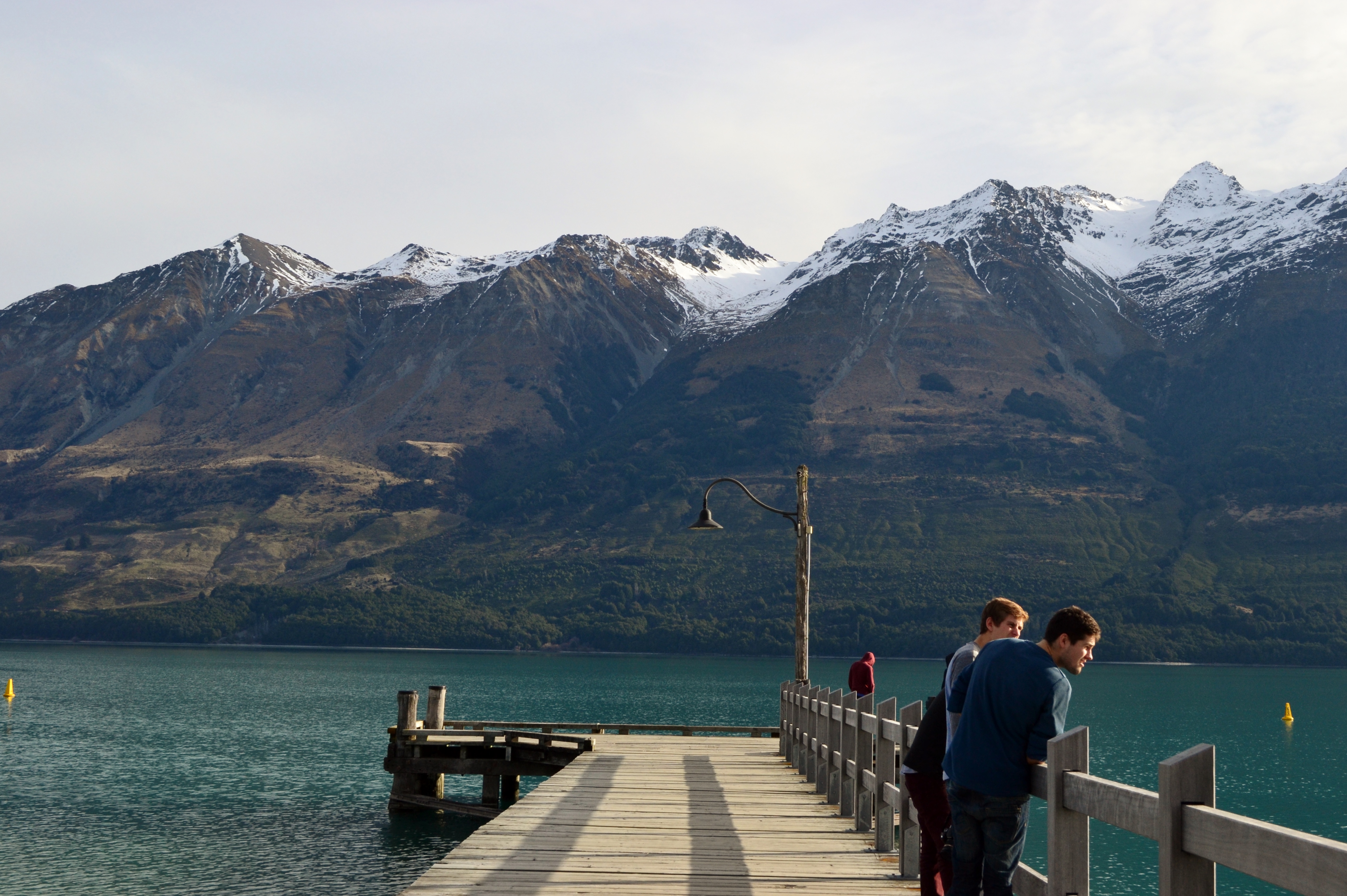
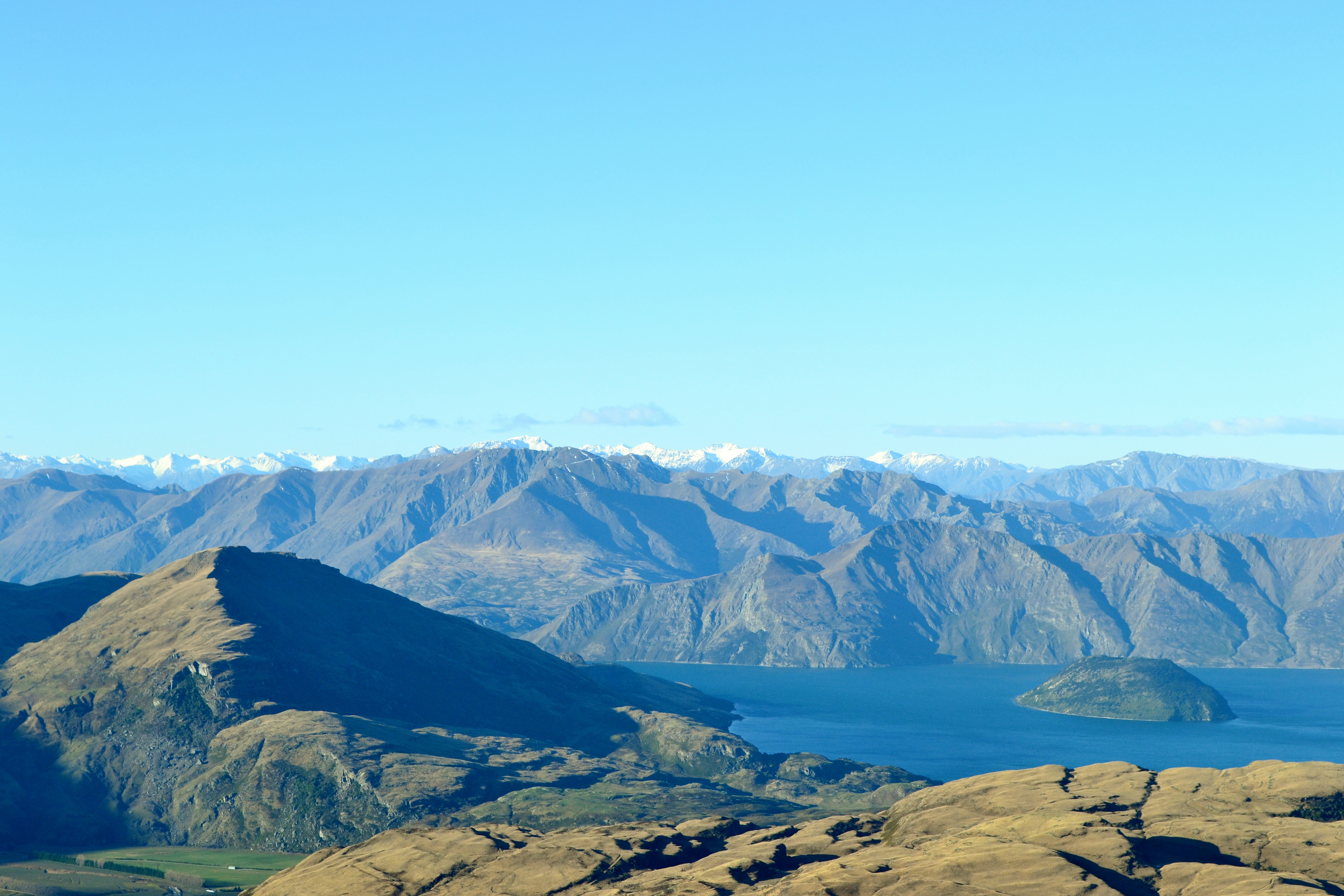
The explorations continued after we left Arrowtown and headed to Glenorchy so that we could access incredible views of the well known Lake Wakatipu. I can safely say that this area has been my favorite so far. It presented a new kind of peace and seclusion. The water was so still that the reflection of the mountains in the distance was highly distinguishable. Even though the sun was beating down hard for the wintertime, the snow on the mountains were barely affected. The entire scenery almost seemed somewhat fake, but I had to keep reminding myself that what I was seeing was not an illusion in the slightest.

A view of Lake Wakatipu on the way to Glenorchy

A view of Lake Wakatipu on the way to Glenorchy

Andras and Malachi looking out at Lake Wakatipu in Glenorchy

Andras and Malachi looking out at Lake Wakatipu in Glenorchy

I finally got a little taste of the Queenstown culture that all other international students have been constantly raving about. I now understand where all the hoopla comes from because the town itself is unmistakably full of life and excitement. Around every corner, there’s always something to do or see. The landmark that we were really looking forward to visiting was Fergburger, a recognized burger bar in New Zealand. Nothing could prepare me for the amount of food that I was about to eat, for it was the largest, yet most delicious burger that I’ve ever had. Andras ordered a burger that was practically the size of my entire head (the Hungarian was quite hungry). For the remainder of the night, we proceeded to take advantage of Queenstown by engrossing ourselves in the animated environment.

The following morning, we made our way to Wanaka in order to begin another adventure. Edward had organized a group of 27 people to hike through Mount Aspiring Park for the weekend. It’s not a well-known trek, but it allowed us to explore the less touched parts of the country. As we made our way to the starting point, we found ourselves driving further and further away from society and becoming more immersed in isolated nature. The mountains seemed to be getting bigger and the grasslands greener. Everything became more exaggerated. When we finally arrived to our starting point, it was clear that we were in a completely new environment.

Mount Aspiring Park

Mount Aspiring Park

The trek to our hut was about 2.5 hours one way. Throughout the hike, rain was coming down and it showed no mercy, yet the wetness barely seemed to phase us. Conversely, the only things that were on my mind were my surroundings. The only thing that the hut provided to us were beds. However, it was soon discovered that the beds were inaccessible due to the fact that the room was locked. Once again, none of us seemed affected by this misfortune, for we weren’t going to let it ruin the trip. Instead, we looked on the bright side and found that each others’ company was all we needed to enjoy our stay out in the depths of the mountains.

The following day, the rain continued to come down for our hike up the Rob Roy Glacier. After our 50 minute ascent, we were presented with a vast glacier and fresh waterfall. We even witnessed two avalanches. It felt so surreal finally seeing nature in action in person. For the first time on the trek, I became phased by what was in front of me.

Waterfall near the top of Rob Roy Glacier

Waterfall near the top of Rob Roy Glacier

I still find myself meeting new people with every experience. Going into the tramp, I knew a total of 8 out of the 27 people. Now that the weekend has ended, I have come out of it knowing at least 15 of those people total. Many of them in the group were Kiwi hosts and international students. After familiarizing myself with them, it’s clear that we all have the same motives. New Zealand has provided much insight into a completely new world and we have only become more motivated to explore it.

Even though we didn’t venture out to the most prominent area of the country, I was still moved by what was surrounding me. There is no doubt that I will eventually see the more well-known parts of New Zealand. However, there is nothing wrong with visiting the unconventional parts of the country for the time being, for they all have something extraordinary to offer.


Rhiannon in India: Experiencing Hyderabad

August 5, 2013

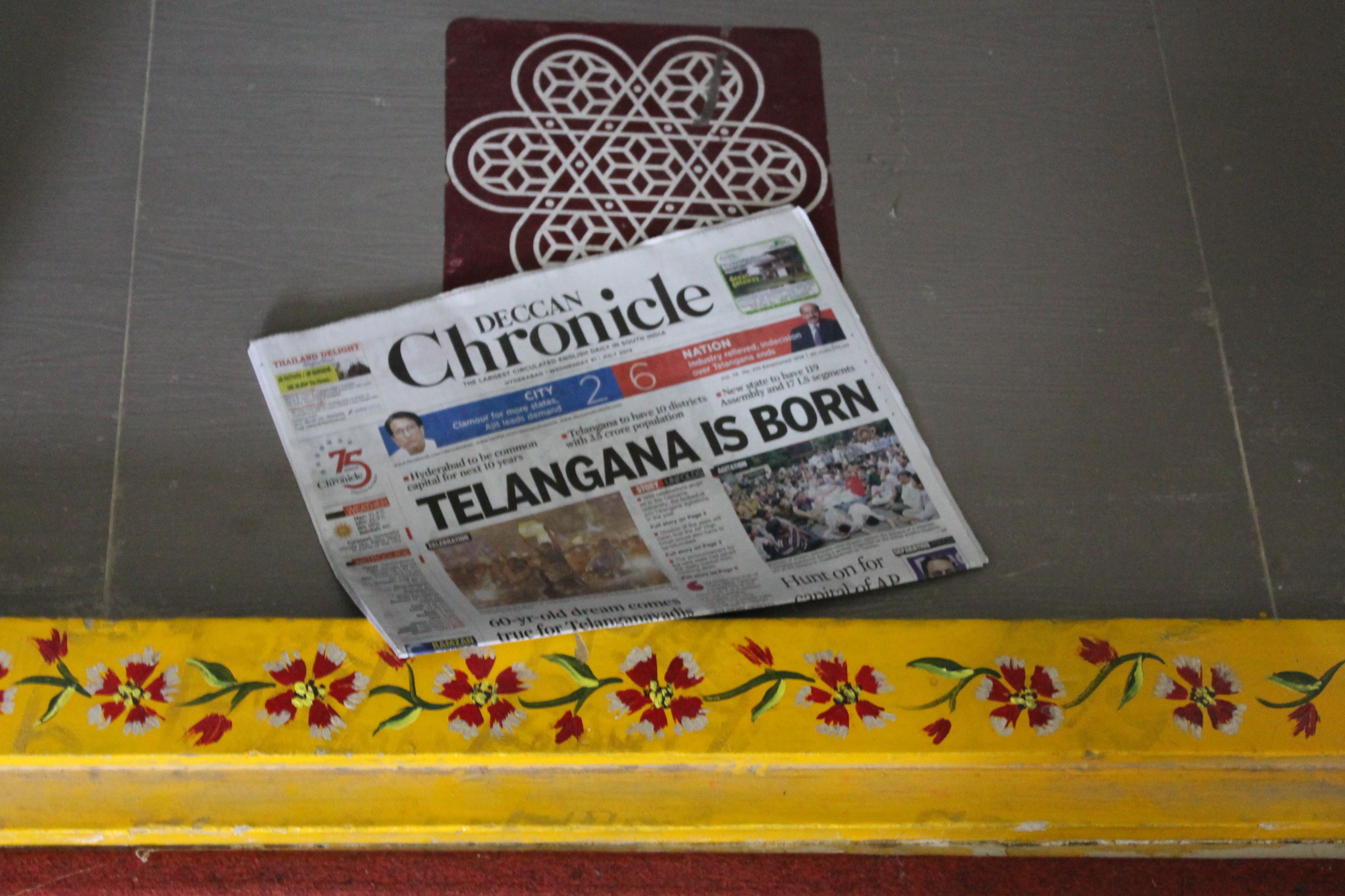
“Jai Telangana!” This phrase, “Hooray Telangana”, can’t be escaped on campus – or anywhere in Hyderabad for that matter. It is graffitied on signs, buildings, and even on the road in the middle of a busy intersection. This week, the Indian government in New Delhi made the decision to split Andhra Pradesh (the state I am in) into two new states – Andhra and Telangana. It is hard for me to distinguish between news and rumor on the subject, but a news broadcast earlier this week said that the national government made the decision based on 50+ years of persistent demand within Telangana for its own state. The question that is on everyone’s mind now is what is going to happen to Hyderabad, the former capital of Andhra Pradesh that has now landed right in the middle of the new Telangana state. The bittersweet news for Telangana supporters is that Hyderabad will remain the capital of both states for the next 10 years while Andhra, the new coastal state, creates its own capital. But what does this mean for Hyderabad? Will it become a union territory, floating within one state and governing two? Who will receive the benefits and opportunities flowing from the urban center of Hyderabad, and where will they draw the lines?

Telangana is Born

The new state of Telangana is born

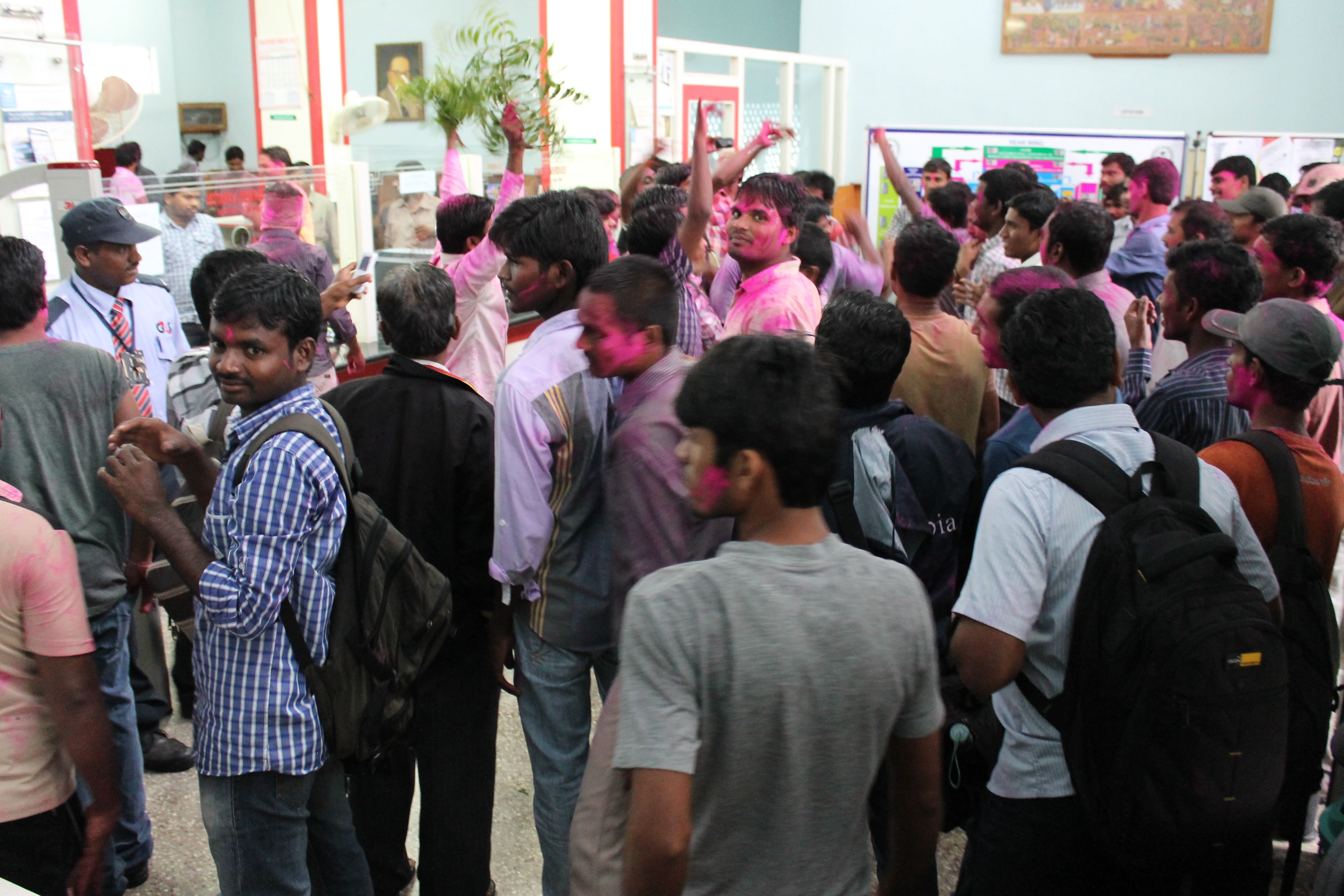
I won’t delve to far into the politics here, mostly because it is hard to say what has been decided and what is still being debated. However, what is certain is that this decision has been in the works for decades, and I am here for one of the most exciting moments in its history! The day after the announcement, campus was full of celebrations and large groups of students went from building to building cheering, banging drums, and throwing hot pink powder, the color of the Telangana movement. Without taking sides on an issue that I know far too little about, I am interested to watch the makings of a new state. Nevertheless, it comes with its ups and downs. News reports suggest that Andhra officials in Hyderabad will be forced out of their positions to make way for new Telangana officials. And on a personal note, my roommate Jennie and I were supposed to go on a hiking trip this weekend, but erring on the safe side, decided to stay home to avoid protests in a nearby area. The recent protests have not been violent, but they may pose a threat to travelers, not to mention the annoyance of roadblocks and traffic. I hope that some of the excitement dies down soon so that we can start our independent travels!

Telangana Celebration

Celebrating with pink powder, the color of the Telangana movement

I realized that I have been so busy for the last 4 weeks that I have not stopped to ask myself, “Where am I?” I know it sounds simple. I am in Hyderabad, India – I can point to it on a map. But I have struggled to piece together the history, the events, the culture, and the people that I have seen in Hyderabad to really grasp where I am. So since this week has been mostly about settling in, I thought I would dedicate the rest of this post to answering this never-ending question.

I am part of a program called CIEE (a UR-affiliate program) with 12 other American students and four advisors. Being a part of this program has made the transition to living in India much easier because our advisors are pros at helping American students acclimate themselves to living in Hyderabad. We are studying at the University of Hyderabad, a unique school with a small student body, yet the campus is vast, full of greenery, and home to tons of wildlife. While I have been here, I have seen water buffalo, peacocks, and monkeys so often on campus that it almost seems normal. The University of Hyderabad has also been described as a miniature version of India. Its students are from all parts of India, from all types of backgrounds, and speak all different languages. I always wonder, how can I understand where I am when I am surrounded by so many different cultures?

U of H

University of Hyderabad main gate

The neighborhood I live in, called Manikonda, is about 15 kilometers away from campus. It is an area packed full of apartment buildings, schools, and shops everywhere you look. Produce and street food vendors are on every corner, and there are always people, cows, and dogs walking along the streets. When we are in our apartment in the evenings, there are constant sounds of car horns, barking dogs, and the call-to-worship from the masjid (mosque) near by. Although the neighborhood is always bustling, Jennie and I have started to feel like part of the community. Some of the auto drivers and street vendors recognize us now and say hello as we walk to and from the bus stop every day for school.

Manikonda

My neighborhood, Manikonda

Hyderabad, one of the largest cities in southern India, has a rich history and, as I explained earlier, is still changing rapidly. Although the city is predominantly Hindu, it is one of the Islamic centers of India, and this dynamic plays out in many of the traditions and celebrations of Hyderabad. In fact, this is the first time in 38 years that Ramadan (an Islamic festival) and Bonalu (a Hindu festival) fall on the same month, and both are being celebrated right now around the city.

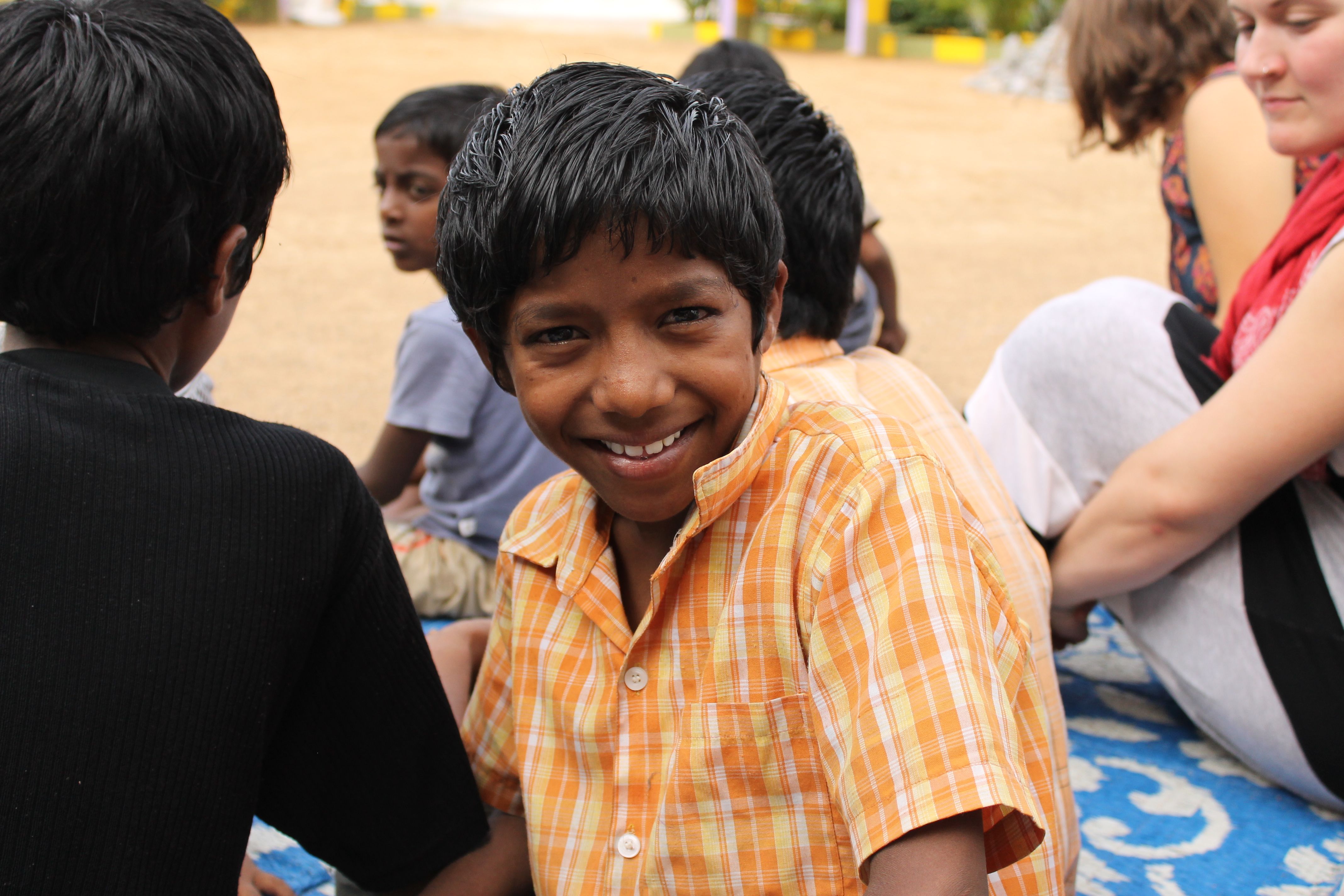
Hyderabad is also home to many interesting organizations that Jennie and I have been exploring since we got here. Today, we went on a short hike with a group called Greater Hyderabad Adventure Club through the hills near our neighborhood. We hiked, rock climbed, crawled through caves, and watched the sunset from Top Rock over the skyline of Hyderabad. The organization is full of great people from Hyderabad who just love being outdoors. We also visited another NGO this week called Desire Society. Desire Society is home to about 60 children with HIV/AIDS, most of which have been orphaned or cannot live at home with their families. Many communities in India, especially in rural villages, don’t understand HIV/AIDS and label the children as “untouchables”. Desire Society provides these children with a place to live, schooling, and daily health care. When we visited last week, we played with the children, some as young as 5 years old, and taught them songs and games.

Desire Society

Visiting with the children at Desire Society

Desire Society Camp Songs

Singing camp songs at Desire Society

So despite my reluctance to cancel our hiking trip this weekend, I am glad that I stayed in town so that I could explore a few more areas of the city. I am anxious to see new parts of India, but I am also starting to realize just how much there is to do right here in Hyderabad! I feel so lucky that there are opportunities near by to explore and to search for answers to that recurring question: Where am I?


Alyssa in New Zealand: Reflecting the month

July 30, 2013

As cliché as it sounds, I find it hard to believe that it has already been four weeks since I first arrived. The weeks seemed to have flown by and it only reminds me that my stay here is limited. Not one day should be wasted.

It was only nine days ago since I hiked so high up Mount Cargill that I was literally above the clouds. After the one hour ascent to the top of the 676 meter mountain, I was rewarded with a beautiful view of the entire city. The summit allowed me to see all that has been surrounding me for the past month. Everything was in plain sight. The peninsula, the flats, the town. Nothing could be hidden, no matter how hard it tried. I was seeing Dunedin in a completely new light.

DSC_0648

Above the clouds at Mount Cargill

I had also decided to take a slight half an hour detour in order to make my way to the well-known organ pipe rocks, which required me to channel my arm strength in order to reach the top. The unique framework of this area made the climb enjoyable and unpredictable. The rocks being so steep and uneven made the task difficult; but it was a challenge I was more than willing to take on.

DSC_0671

Climbing organ pipe rocks with Malachi

It was only seven days ago when I realized that the work in my courses is going to start picking up soon. In my zoology paper (they call courses “papers” here at Otago), I have two lab reports due, one of which is based on observations that I made at the Otago Museum. I find it very fortunate that the zoology lab (also known as a practical) took the students to the museum, for it allowed me to learn specifically even more about New Zealand biology and environment. I never would have thought to take the time out of my day to visit the museum, but this particular lab gave me the chance to discover more about not only the city of Dunedin, but the entire country as well. Likewise, my first Microbiology test is approaching next week. It will be my first test out of two for the semester. Hopefully my current studying skills are enough preparation because I don’t know what to expect out of the exam.

It was only four days ago when I left Dunedin for the first time since I had initially arrived. I ventured out by leaving the town that I was finally comfortable in and made my way to Wanaka, a town with a native sense of splendor and endless surrounding nature. The whole purpose of the trip was to ski at Treble Cone, the largest ski resort of the south island of New Zealand. I knew that the skiing experience was going to be somewhat exotic once I realized that we had to drive practically two-thirds up the mountain to get to the actual snow to ski on instead of parking at the base, like in America.

As strange as it was skiing in the middle of July, it became easier to get used to. The mountain was completely open, for not one forest or tree-line was present to be used as guidelines for the trail. Every track that I skied was completely one of my own.

Even though the chairlift did not take skiers up to the summit of the mountain, we had the option to climb to the top with our skis in order to access untouched, fresh powder. The fifteen minute trek to the peak of Treble Cone was well worth the extra effort. Everything at the top was completely natural. The cold, brisk air and vast mountain landscape of the backcountry reminded me that winter indeed has its own kind of magnificence. It will never cease to amaze me that nature can evolve unconventionally in such a complex and dignified way.

DSC_0680

View of the mountains in Wanaka from the Treble Cone ski resort

It was only two days ago when I returned back to my flat in Dunedin. As nice as it is to be back at home, I have only become more motivated to see more. My first trip being a success has set expectations for me for the rest of the semester.

It was only today when I realized that I have officially been here for exactly one month. A little less than four months left in my study abroad experience. Even though the weeks have been flying by, I am definitely satisfied by the amount of excursions that I have taken initiative to do thus far. I won’t allow myself to take my time here for granted, for I plan to make the most out of this experience as best as I can. The days left in New Zealand may be limited, but my drive to explore certainly isn’t.