Mel in Chile: A Lens

September 3, 2013

It has been exactly a week. The most interesting aspect of “the life of a university student” is that political affiliation is a big part of the identity of public universities. Chile is an incredible place to study political systems as it is the only place in the world where a socialist government was elected democratically and without military intervention. This government was overthrown in a military coup only a few years after it was established. The years of Pinochet’s military dictatorship brought the implementation of strict neoliberal economic reforms and fast privatization of important industries. Many will argue it was precisely this period of free markets and capitalist ventures which brought Chile the macroeconomic “success” it currently enjoys. It is considered one of the most stable economies in Latin America. However this same period of military dictatorship also carries painful memories of vast and blatant human rights abuses the government committed against dissidents. Leaders of socialist parties were assassinated, thousands  of civilians who opposed the neoliberal reforms were tortured as political prisoners, and thousands more would simply disappear; they are called the “desaparecidos”. It is without a doubt that Chile’s “economic miracle” came at heavy price.

The bittersweet taste of “macroeconomic” success is not simply nested in the past. Chile continues to be a country with one of the highest margins of income inequality in South America. Access to health care and higher education (along with other industries) is concentrated in the hands of elites. I imagine many will remember the student led protests in 2011.

I apologize! This was not meant to be a history lesson on Chile’s economic and political evolution. I started the blog with the statement that university life for students in Santiago is very interesting. I have found that the universities in the city have a strong political identity. After only two days in the city, I heard from other Chilean students which universities were rightist and which were leftist. After walking around other campuses in the city, I also began to see the role of politics in the university.

This group of SIT students has come to study politics and economics in Chile at an incredibly special time. September 11th will be the 40th anniversary of the military coup in Chile. My host family, professors, and other students say there are many things that go on around the city. At USACH (my university), as in other universities, there are forums, discussions, panels and other events the university has organized. There are also events that will take place throughout the city. My group will actually be traveling to the North for our first excursion so we will be away from all the activity.

Then on November 17th Chileans will vote for their president.  It will be the first presidential election in which voting is voluntary.

In conclusion, I feel very lucky to be in this program during such a specific time in Chile. I am not simply here taking classes, making friends, and sightseeing. I have the opportunity to “experience” the country through a specific lens. I walk around the metropolitan areas of Santiago and I don’t simply see huge skyscrapers housing foreign companies. I also think about the implications of such economic growth. When I am in the university campus I don’t just see other university students. I think of how their identity as students was formed through the movement, and how they help form the identity of the university.
IMG_1743

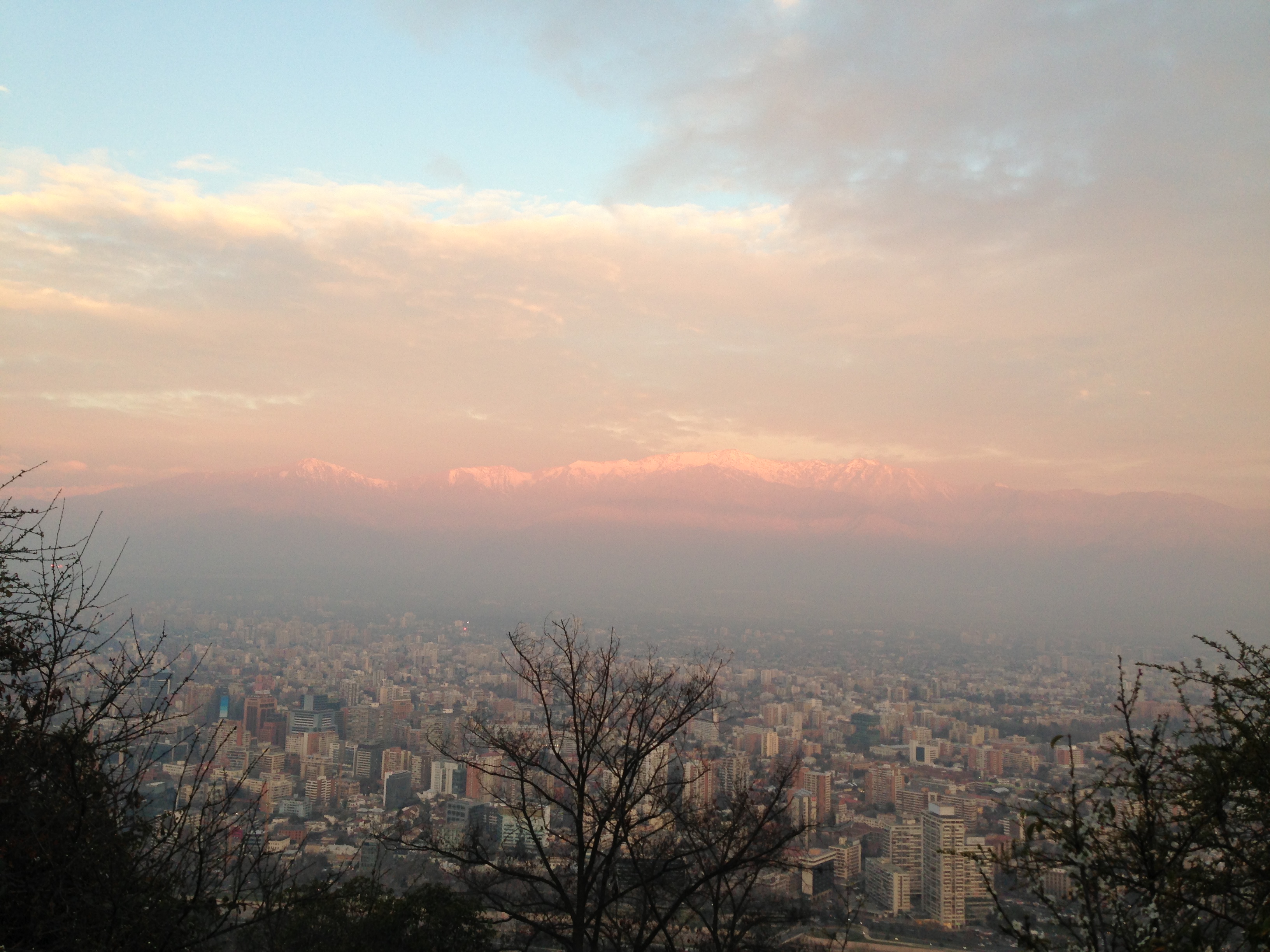
This is a view of Santiago from the San Cristobal hill. Note the Andes in the background!

It has been incredibly helpful to have this lens. Another student studying abroad in Brazil and writing for the Traveloges for UR mentions how easy it is for study abroad students to be “tourists”. Being a “tourist” is not bad. I am already planning a backpacking trip to Patagonia after the program is over with another friend studying in Valparaiso and I will do as much traveling as I can. That is to say, if you have the opportunity to travel you should take advantage of it. However you should also take advantage of the fact that studying abroad gives students an opportunity to create a lens. It gives students the opportunity to travel not to simply visit places and appreciate their presence in space but to also see what isn’t physically there.

I can feel myself becoming poetic as I sit in the cozy kitchen of Pedro and María on this cold night in Santiago, Chile.

Better to stop now before I start writing of the wisdom of the wind and the courage of the sun or something.

Have a great week everyone 🙂


Rhiannon in India: Connecting with People

August 27, 2013

Namaste mere dost! [Hello friends!]

My trip to Delhi this past weekend was a blast, but I am glad to be back in Hyderabad. In Delhi, the weather was a sticky mixture of monsoon rains followed by hot, sunny afternoons. But back in Hyderabad, the weather is generally cool and only gets up to the mid-80s. It’s nice to be back in a smaller city, too, where we aren’t treated as much like tourists, and people just seem nicer in general. Delhi was a wonderful place to visit, but being in one of the largest cities in the world made me really appreciate the great things about Hyderabad! This week, I have learned a lot about culture, not necessarily through visiting more places, but through engaging with more people in Hyderabad – my host family, my classmates and professors, and my community. Connecting with people here has proved to be a rewarding way to experience India that goes far beyond shopping at markets and seeing historical sites.

Family Poojah

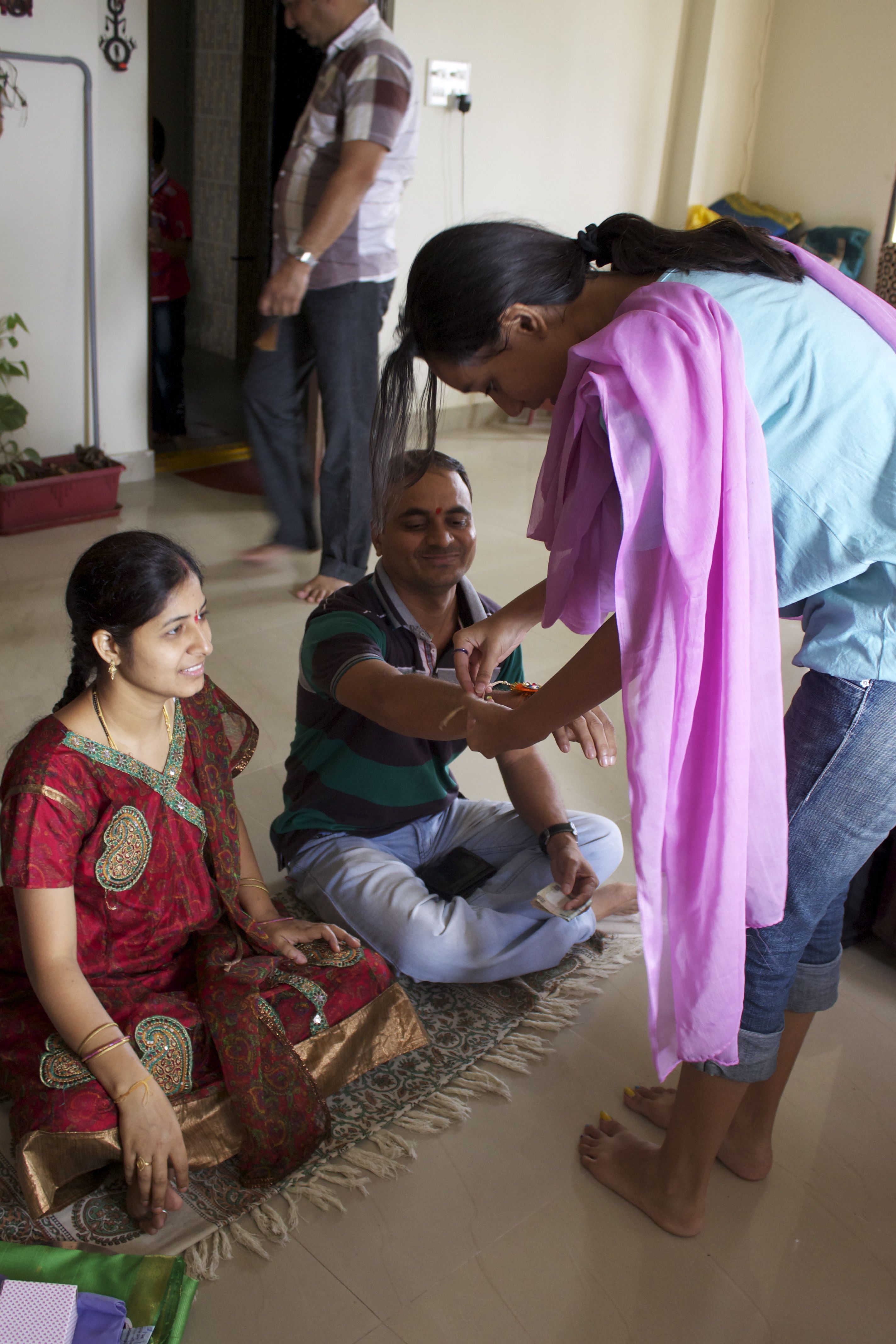
Prerna celebrating Raksha Bandhan (Sibling Day) with her aunt and uncle

This weekend, Nivedita and Prerna (my host mom and sister) invited us to an event at Oakridge International School, where Prerna goes to school and Nivedita teaches art. The event was called Treasure Fest, which is a vibrant two-day arts competition for many of the schools in Hyderabad. Check out the video for some of the performances!

I also went with four friends this weekend to meet with the founders of Sankalp, the NGO that I talked about in an earlier post. Founders Anita and Sara never fail to inspire me with their dedication to helping Indian women and preventing sexual violence. They explained to us that, because they just started the organization, they are still in a research and development stage. Making connections with other NGOs, the police department, and law firms in the Hyderabad area is the most important task right now because these other organizations will help advertise Sankalp as a contact for victims of sexual violence. As volunteers, we will be researching different areas of this issue in India so that they can use the information for presentations, grants, and education. They gave us research topics on human trafficking, the effect of caste and religion on sexual violence issues, the psychology of a sexual offender, and many more. Because I am interested in law, my assignment is to research and compile the recent movements in the Indian legal system pertaining to crimes against women. Anita and Sara also mentioned that they will be doing advocacy and prevention programs in local slums and encouraged us to tag along when we can! This may not be your stereotypical semester abroad, but I am so excited that I will have the chance to meet tons of people from a variety of backgrounds and, if I’m lucky, do something to give back while I’m here.

Girls in Manikonda

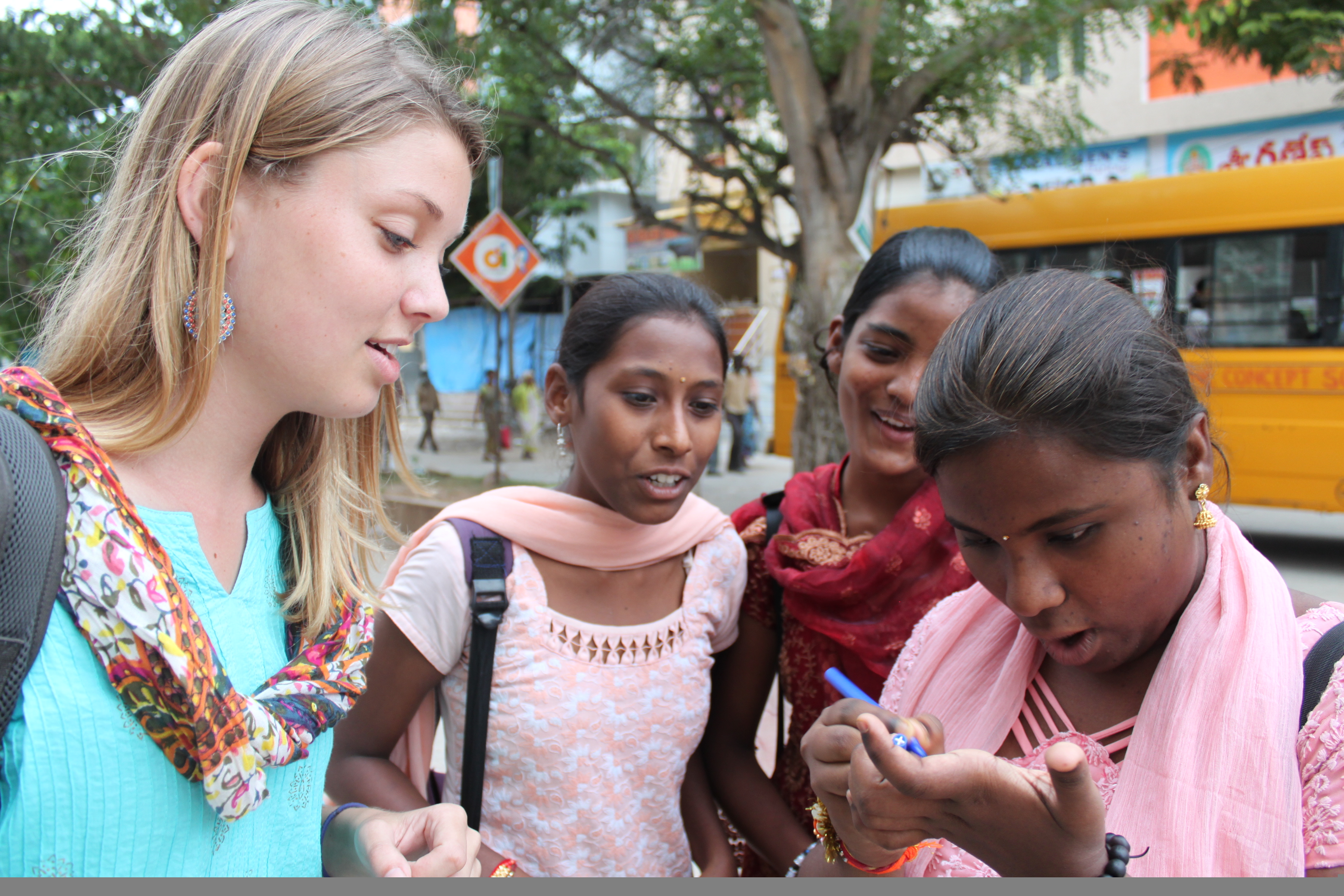
Meeting some friends in the neighborhood

It is also nice to be back home because the “study” in study abroad has started to kick in. Classes at the University of Hyderabad have been one of the most interesting cultural experiences yet on my trip. I am taking four classes for credit — Indian Philosophy, Technology and Politics, Indo-US Policies, and Basic Hindi — two that are direct-enrollment into the university and two that are classes for international students. I have noticed that Indian students are much more engaged in classroom debate than I am used to at home. Issues of caste, politics, education, Marxism, Indian philosophy, and Western lifestyle are topics that seem to come up in every class discussion, like the students really are thinking about these things all the time. One of my CIEE advisors mentioned at the beginning of the semester that some aspects of India remind her of what the 1960s must have been like in the US. It seems like there is a lot of passion among Indians, especially younger generations like the students at University of Hyderabad, to impact social norms and traditions, whether it be in a positive or negative way. Every week, it seems like there is another forum, rally, or protest on campus that gets students talking about their freedoms. By talking to students in my class, I have heard many different opinions of how students should act while at the university, most of which are compared to their view of “the Western way.”

Oakridge Art

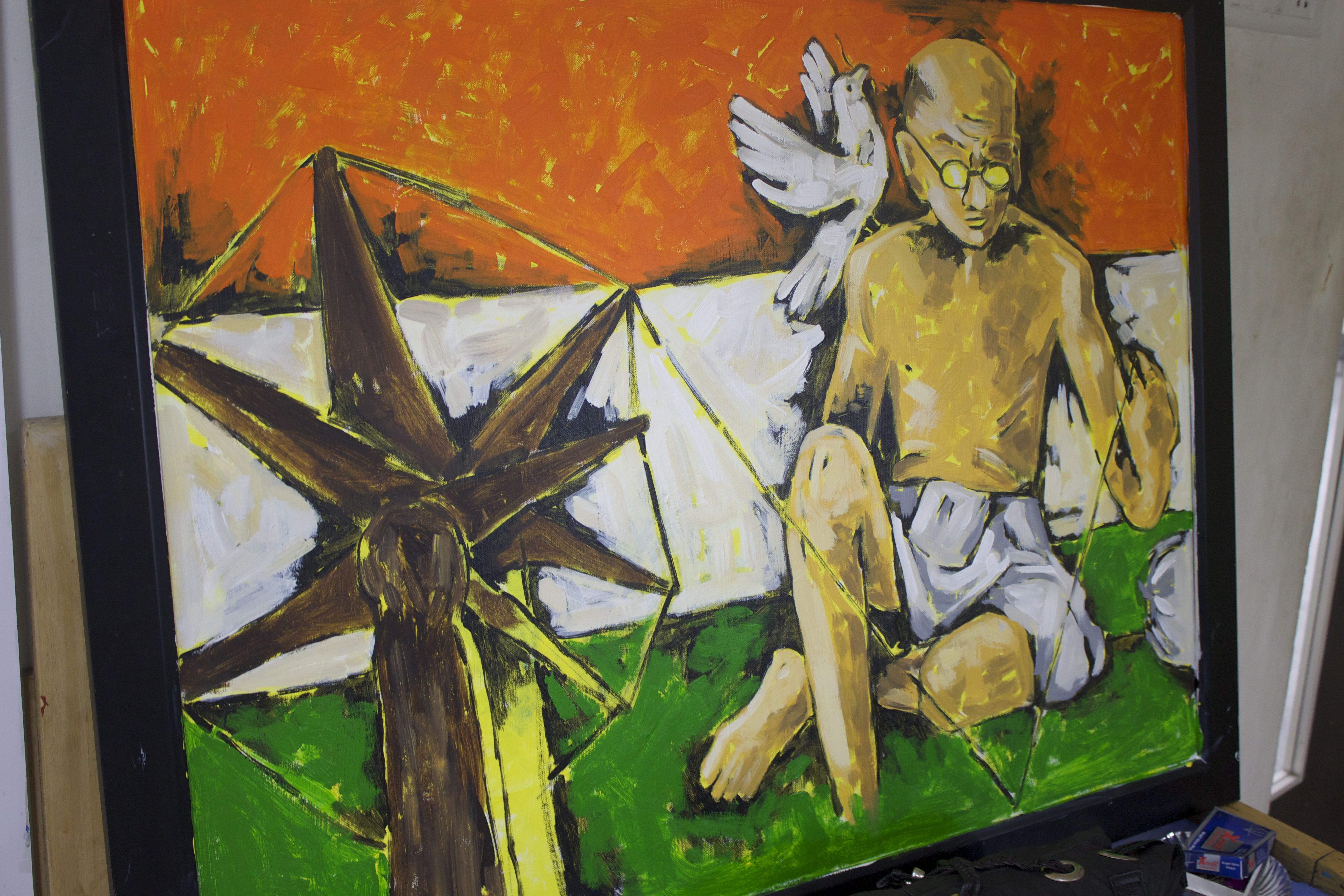
A student’s painting in the art competition at Oakridge Treasure Fest

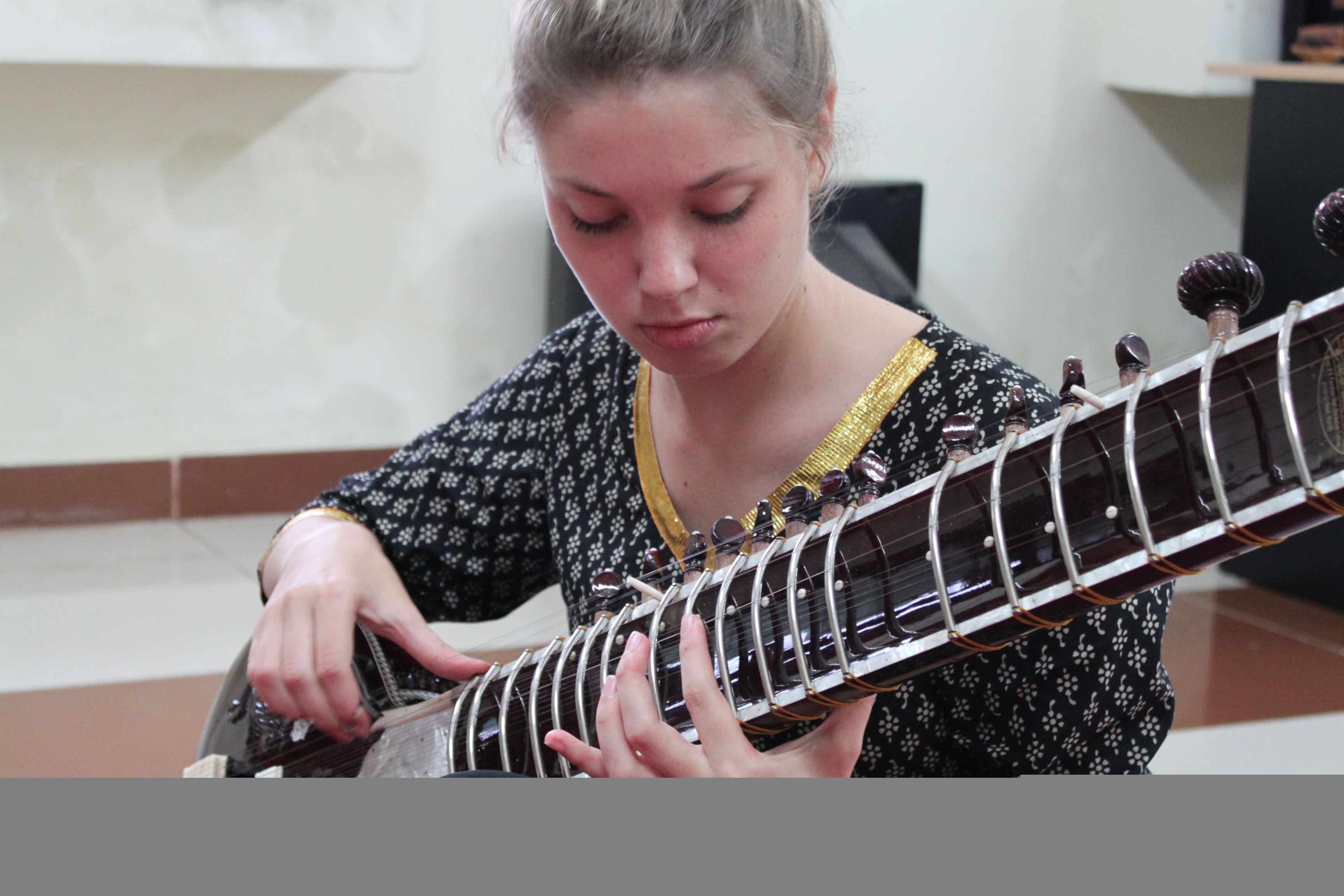
Although my academic classes are interesting, my favorite class that I am here taking is Sitar! I take lessons two times a week with a few of my friends in the CIEE program. I thought it might be similar to playing guitar, but so far it has been totally different. To make it even more interesting, our teacher speaks very little English, so we have to follow along by listening and watching him play. So far we have learned one melody and Happy Birthday, but soon we will start working on playing a piece for the Cultural Show at the end of the semester!

Sitar

Me practicing the sitar


Diego in Brazil: A new routine

August 26, 2013

Moving to a new place certainly has its advantages. Although feared by many (I suppose), one of my favorite aspects of settling in a new city/town is finding a new routine. Based on how everything developed this past week, I will dare to say that some sort of order is entering my life here in Rio de Janeiro. Don’t get me wrong, I pretty much depend on avoiding settling for a repetitive routine, knowing that I should not unpack my suitcase because in a matter of weeks I will be changing places, and even accepting that people I meet will stay around only for some time before I go back home or they continue their journeys. Yet these are precisely the thoughts and needs that make finding a routine so great sometimes.

From Monday to Thursday I spend about 8 hours each day at my host university, the Pontifícia Universidade Católica do Rio de Janeiro (PUC). I have two or three two-hour classes each day, and I normally stay to have lunch and dinner at the University’s cafeteria. On Monday and Wednesday I start with States, Politics, and Development in Latin America, continue with “Poverty and Social Inequality, and end the day with Geography of the Contemporary World. In between my classes I manage to escape to the University’s gym for a one-hour yoga class. On Tuesday and Thursday I go to only two classes: Brazilian Foreign Policy and Portuguese.

Exchange students at PUC have the option to choose certain courses that are taught in English. I originally considered taking some of these classes, but in the end decided to go for only courses in Portuguese. Being a native Spanish-speaker certainly gives me some advantage to learn Portuguese, but it is not by any means a guarantee that I will magically be able to communicate effectively. While I had never taken a Portuguese class before coming to PUC, I spent about a month and a half working in the northwestern region of Brazil this past summer. Sadly I did not find myself in the urgent need to speak Portuguese since many of those that I worked with spoke Spanish. However, my time in the Brazilian Amazon did help me to get used to Portuguese sounds, main endings, pronunciation, and so on. This, plus a lot of motivation and desire to learn Portuguese as soon as possible, pushed me to avoid English courses and go straight for those in Portuguese. I am afraid I will have to wait for my first tests to see how that turns out.

DiegoBrazil3(1)

PUC has a very warm atmosphere

It is an exciting time to be studying in Brazil. Next to Brazil’s socioeconomic changes in the last decade and the country’s growing economic and political influence around the world, social sciences at Brazilian universities have developed and expanded significantly. My impression so far is that my professors at PUC are much more concerned with theoretical and structural approaches to a social question than my professors at Richmond. I would say two different reasons explain what I have seen. On the one hand, the recent expansion of social studies in Brazil has led to very active debates on theories, appropriate methodologies, and other type of “larger” questions. On the other hand, Latin American social thinkers have traditionally chosen structural over particular explanations for social and political topics. To give you an example, while last semester at UR my international relations class started with readings on contemporary political structures, my Brazilian Foreign Policy course at PUC has been reading about Brazil’s foreign policy since the late 19th Century, several theoretical approaches to foreign policy, and discussions on how the study of foreign policy has developed in Brazil during the past twenty years.

Both inside and outside the classroom, the atmosphere at PUC is incredibly dynamic and welcoming for new students. As I walk towards the cafeteria, I come across hundreds of students eating, drinking coffee, and chatting in the University’s two main buildings. A friend at PUC recently invited me to a women’s rights group that meets every Tuesday to watch films, discuss, and organize for several events. Needless to say, I am incredibly excited to join them this coming Tuesday. While student-run groups may not be as common at PUC as in some US colleges, joining activities such as yoga has definitely given me a space to meet Brazilian students at PUC in a more relaxed environment.

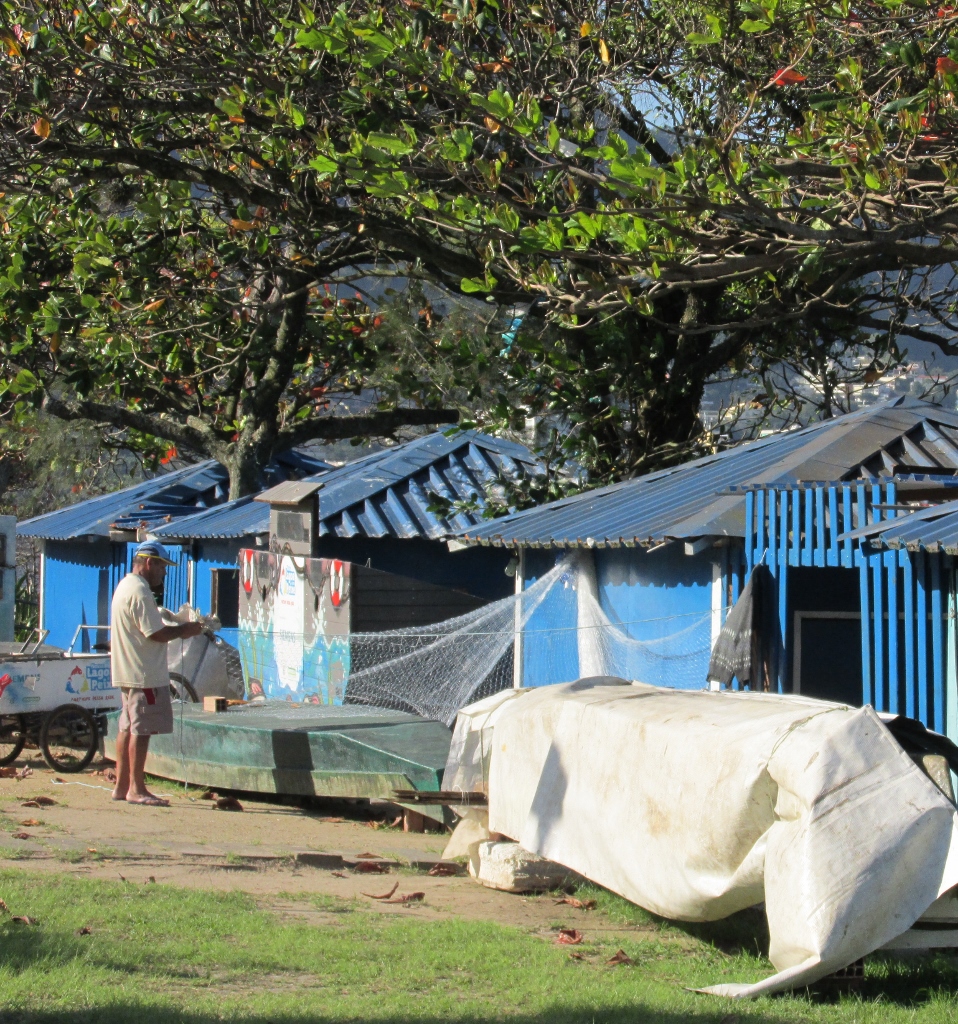
Whenever possible I bike home at the end of each busy day. On Thursday I chose to bike around the Lagoa Rodrigo de Freitas, a lagoon in Rio’s Southern Zone, and had the great pleasure to talk for some minutes with some local fishermen who have established a small community next to the Lagoa. Biking home from PUC around the Lagoa takes only about 25 minutes, and now that I met these local fishermen I will be definitely trying to avoid taking the bus more often.

DiegoBrazil3(2)

A fishermen community next to the Lagoa, a lagoon in Rio de Janeiro’s Southern Zone

As I said, there are some great things about finding a new routine!


Diego in Brazil: Settling or Being a Tourist?

August 19, 2013

“Walking is a virtue, tourism is a deadly sin.” Bruce Chatwin

I wonder if it is possible to move to and establish in a new place without becoming a tourist the first few days or weeks. The countless “so how close to the beach do you live?!” questions that come through emails and phone calls from friends abroad make me think twice about how I should see Rio de Janeiro. I will get to that in a second, but first some words on this past week.

When I arrived to Rio’s international airport Galeão I realized how little time I had had to think about studying abroad. My summer internship in the Brazilian and Peruvian Amazon had ended just three days before and I still had (and have) many documents and reports to write. PUC-Rio’s (my host university) staff met exchange students at the airport the morning I arrived and in a matter of minutes we were on our way to our respective host family’s place. My host-mother came out of the apartment to receive me with a hug and a warm “Bem-vindo Diego!” She showed me my new room and before I even noticed we were in the kitchen telling each other stories about our lives with a cup of coffee. After living in Norway and the US for four years, I can’t describe how that first morning made me think of home in Guatemala. “All Brazilians are friendly” may be an exaggeration, but my experiences in Rio de Janeiro and the Brazilian Amazon so far have shown me the incredibly welcoming side of this culture.

Every morning at 8:30 a.m. I cross the street in front of my apartment to take a bus to PUC, usually with my German flat-mate who is also an exchange student at PUC. The twenty-five minute ride to PUC seems nothing compared to the hour and a half or even two hours some local students take to get from their homes to the university. Most exchange students at PUC live in Rio de Janeiro’s Zona Sul (“South Zone”) which includes the city’s richest neighborhoods and most famous beaches. I had some trouble deciding what I wanted to write in this entry about Rio de Janeiro. I could describe my neighborhood’s busy streets, Copacabana’s beaches or even the scenic path I take when I bike from the university back to my apartment in the afternoons, but I would certainly be describing just a small section of Rio de Janeiro’s reality.

Diego in Brazil Entry 2 (800x600)

My neighborhood in Zona Sul at night

I continue to wonder – is it possible to move to and establish in a new place without becoming a tourist the first few days or weeks? Tourism continues to exploit the same discourses that built Brazil’s image abroad as an exotic, happy, and social destination. In addition, a tour around the city’s favelas (typically described as low-income shanty towns) is now part of some tourists’ plans for their visit to Rio de Janeiro. These two contrasting touristic destinations (Copacabana’s famous beaches vs. some of Rio’s poorest areas) seem to dominate the tourism-related advertising I have seen around the city and online. And the conversations I have had with foreign and local students at PUC make me think such discourse is not strictly limited to tourism, but goes as far as influencing how Rio’s residents present their city to others.

Is it possible then to “experience” Rio de Janeiro under a different scheme? I have my doubts. Getting to “know” a new place is, of course, a subjective experience, yet I truly hope I find a way to step back from the common descriptions of Rio de Janeiro and settle as a student as soon as possible. My first “solution” was to read Brazilian literature with stories that take place in this city. I recently finished reading “Quando ia me esquecendo de você” [“When I almost Forgot About You”] by Maria Silvia Camargo, and as I thought about this entry I struggled to avoid presenting you with a typical “Zona Sul” description of Rio de Janeiro, an exotic presentation of the city’s high levels of socioeconomic inequality, or Camargo’s romantic view of Rio’s atmosphere. How we position ourselves within and in relation to a new space will certainly determine our views and experiences regarding such place. I just hope that in the next couple of weeks I find a position that allows me to take a step away from becoming yet another tourist in Rio de Janeiro.


Diego in Brazil: Moving to Rio de Janeiro

August 19, 2013

Hi all! My name is Diego and I am a third-year student from Guatemala at the University of Richmond (UR). I am in Lima, Peru, where I have been working for the past few weeks, and now I am on my way to the airport to take a flight to Rio de Janeiro for my semester abroad.  I wanted to introduce myself before going into a busy introduction week at the Pontifícia Universidade Católica do Rio de Janeiro (PUC-Rio).  At UR, I am an Interdisciplinary major (Latin American Politics and Social Justice) and, potentially, a Geography minor. I will be studying at PUC-Rio this fall (but don’t be surprised if I try to stay there for the entire year!).

Rio de Janeiro is located in the south-eastern region of Brazil. Once the capital city of Brazil, Rio is currently the second largest city in the country and one of Brazil’s main cultural and economic centers. Throughout the semester, I will make sure to update you with more and more information about Rio and the city’s relationship with the rest of Brazil.

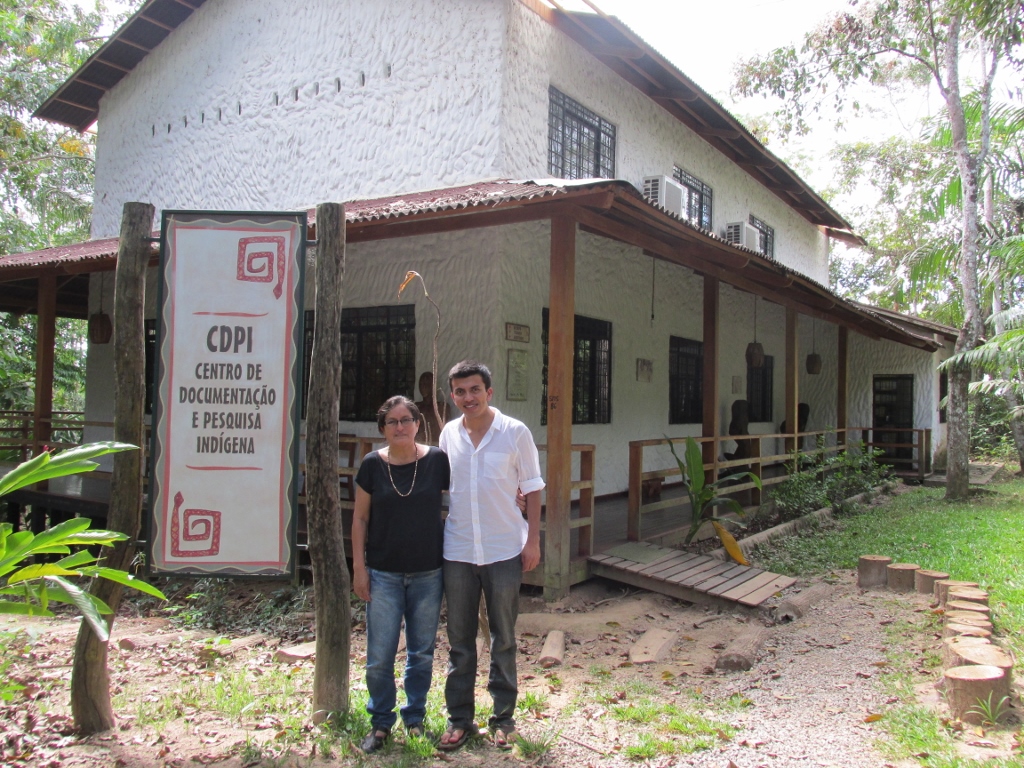
Explaining the two reasons that led me to study in Brazil requires a bit of information on what I do at UR and outside. My main academic interest is to understand and explore how marginalized groups in Latin America do politics, both inside and outside governmental structures. Outside my regular classes, I have worked for a year now on issues related to indigenous peoples and their territories in the Brazilian-Peruvian Amazonian borderlands. As you may imagine, political and economic centers in both Brazil and Peru have strongly influenced the history of this remote region. Getting to know these powerful hubs, such as Lima, Brasilia, and Rio de Janeiro, is key to understanding indigenous peoples’ struggles in the Amazon.

CDPI

Here I am this past summer working with the Comissão Pró-Índio do Acre in the Brazilian Amazon.

As such, my first motivation to study at PUC-Rio is to begin to understand Brazil’s relationship with its Amazonian territory to further my academic and non-academic work in the region. My second reason to study at PUC-Rio has to do with my background as a Guatemalan student and my desire to work in Latin America. From the Hispanic immigrant population in the US to the Tierra del Fuego archipelago at the southern tip of South America, notions of what Latin America is and perceptions of a Latin American culture vary drastically. My experience tells me that people both inside and outside Brazil will think differently when asked whether Brazil is part of Latin America or shares a Latin American culture. Yet Brazil’s recent economic and political growth has made the country an attractive ally for the region. How do Brazilians think of Latin America, and to which degree do they identify with the region? Do such perceptions and identification vary across different regions of Brazil? Hopefully by the end of this semester I will be able to have some initial answers for those questions!

I am almost at the Lima airport now. It is always tough to leave Peru (an incredibly interesting country) but I am truly looking forward to settling in Rio and sharing some of my experiences with you! Studying at PUC-Rio will be a great opportunity to learn more about other Brazilian regions.


Rhiannon in India: Experiencing Hyderabad

August 5, 2013

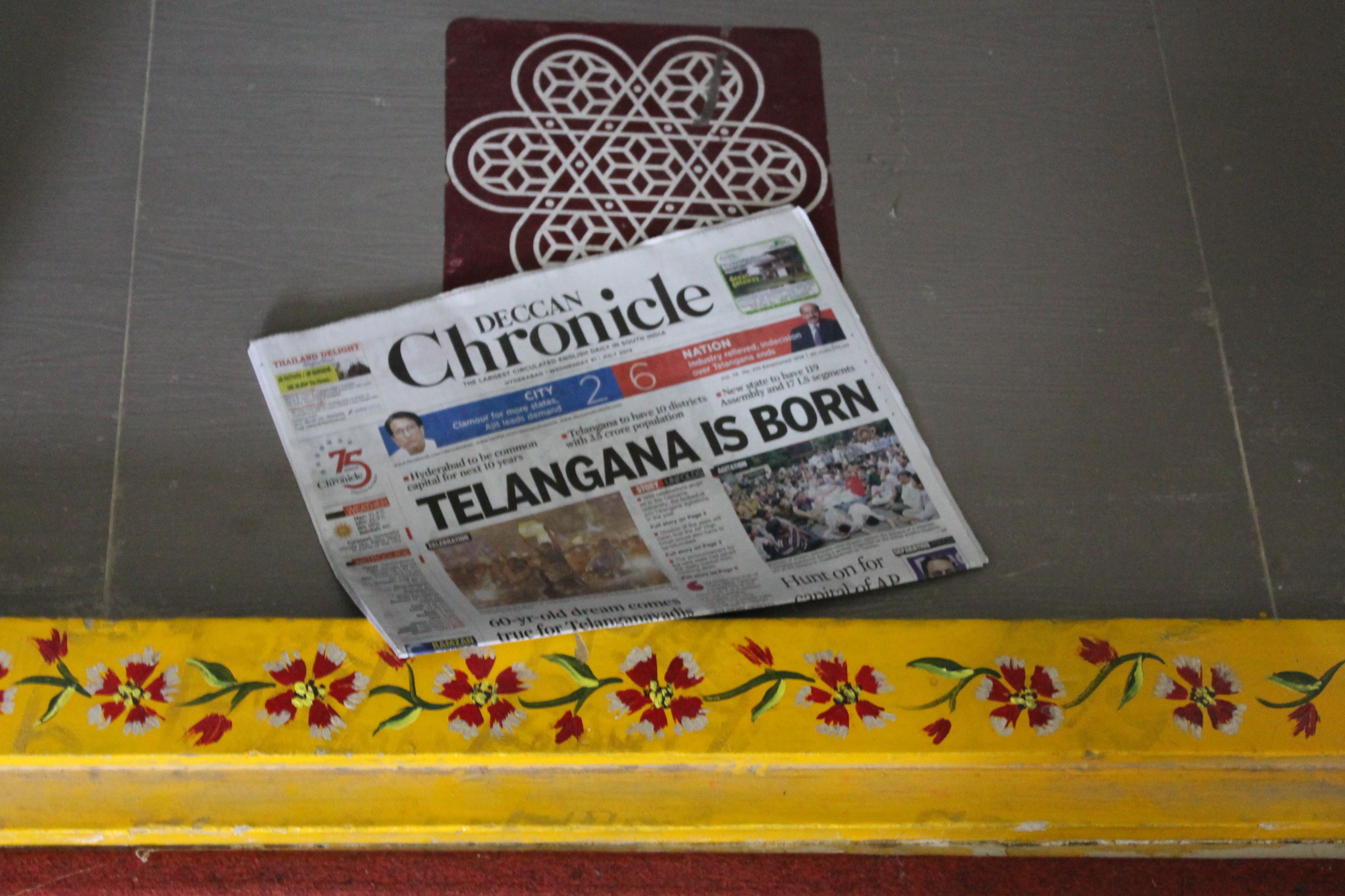
“Jai Telangana!” This phrase, “Hooray Telangana”, can’t be escaped on campus – or anywhere in Hyderabad for that matter. It is graffitied on signs, buildings, and even on the road in the middle of a busy intersection. This week, the Indian government in New Delhi made the decision to split Andhra Pradesh (the state I am in) into two new states – Andhra and Telangana. It is hard for me to distinguish between news and rumor on the subject, but a news broadcast earlier this week said that the national government made the decision based on 50+ years of persistent demand within Telangana for its own state. The question that is on everyone’s mind now is what is going to happen to Hyderabad, the former capital of Andhra Pradesh that has now landed right in the middle of the new Telangana state. The bittersweet news for Telangana supporters is that Hyderabad will remain the capital of both states for the next 10 years while Andhra, the new coastal state, creates its own capital. But what does this mean for Hyderabad? Will it become a union territory, floating within one state and governing two? Who will receive the benefits and opportunities flowing from the urban center of Hyderabad, and where will they draw the lines?

Telangana is Born

The new state of Telangana is born

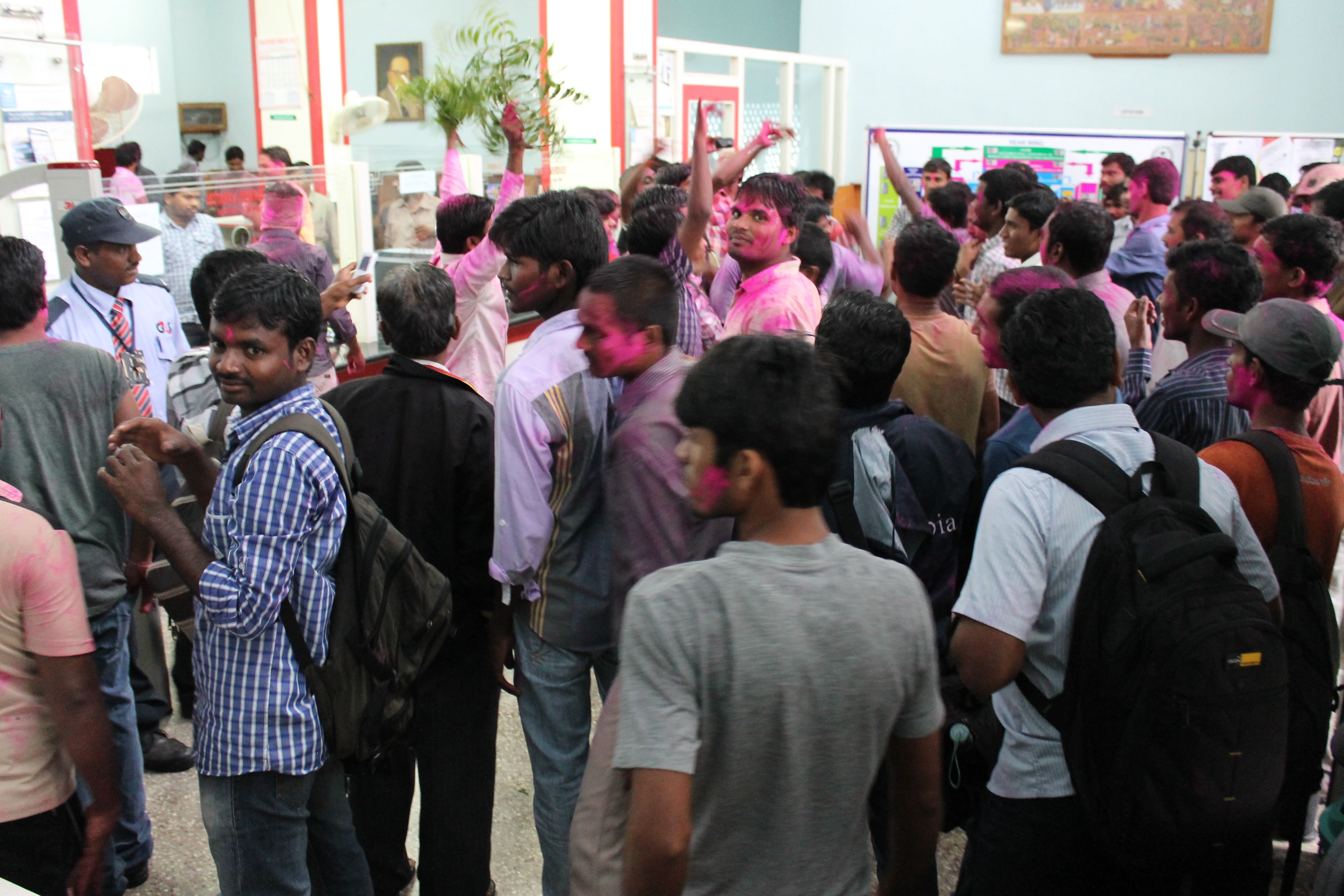
I won’t delve to far into the politics here, mostly because it is hard to say what has been decided and what is still being debated. However, what is certain is that this decision has been in the works for decades, and I am here for one of the most exciting moments in its history! The day after the announcement, campus was full of celebrations and large groups of students went from building to building cheering, banging drums, and throwing hot pink powder, the color of the Telangana movement. Without taking sides on an issue that I know far too little about, I am interested to watch the makings of a new state. Nevertheless, it comes with its ups and downs. News reports suggest that Andhra officials in Hyderabad will be forced out of their positions to make way for new Telangana officials. And on a personal note, my roommate Jennie and I were supposed to go on a hiking trip this weekend, but erring on the safe side, decided to stay home to avoid protests in a nearby area. The recent protests have not been violent, but they may pose a threat to travelers, not to mention the annoyance of roadblocks and traffic. I hope that some of the excitement dies down soon so that we can start our independent travels!

Telangana Celebration

Celebrating with pink powder, the color of the Telangana movement

I realized that I have been so busy for the last 4 weeks that I have not stopped to ask myself, “Where am I?” I know it sounds simple. I am in Hyderabad, India – I can point to it on a map. But I have struggled to piece together the history, the events, the culture, and the people that I have seen in Hyderabad to really grasp where I am. So since this week has been mostly about settling in, I thought I would dedicate the rest of this post to answering this never-ending question.

I am part of a program called CIEE (a UR-affiliate program) with 12 other American students and four advisors. Being a part of this program has made the transition to living in India much easier because our advisors are pros at helping American students acclimate themselves to living in Hyderabad. We are studying at the University of Hyderabad, a unique school with a small student body, yet the campus is vast, full of greenery, and home to tons of wildlife. While I have been here, I have seen water buffalo, peacocks, and monkeys so often on campus that it almost seems normal. The University of Hyderabad has also been described as a miniature version of India. Its students are from all parts of India, from all types of backgrounds, and speak all different languages. I always wonder, how can I understand where I am when I am surrounded by so many different cultures?

U of H

University of Hyderabad main gate

The neighborhood I live in, called Manikonda, is about 15 kilometers away from campus. It is an area packed full of apartment buildings, schools, and shops everywhere you look. Produce and street food vendors are on every corner, and there are always people, cows, and dogs walking along the streets. When we are in our apartment in the evenings, there are constant sounds of car horns, barking dogs, and the call-to-worship from the masjid (mosque) near by. Although the neighborhood is always bustling, Jennie and I have started to feel like part of the community. Some of the auto drivers and street vendors recognize us now and say hello as we walk to and from the bus stop every day for school.

Manikonda

My neighborhood, Manikonda

Hyderabad, one of the largest cities in southern India, has a rich history and, as I explained earlier, is still changing rapidly. Although the city is predominantly Hindu, it is one of the Islamic centers of India, and this dynamic plays out in many of the traditions and celebrations of Hyderabad. In fact, this is the first time in 38 years that Ramadan (an Islamic festival) and Bonalu (a Hindu festival) fall on the same month, and both are being celebrated right now around the city.

Hyderabad is also home to many interesting organizations that Jennie and I have been exploring since we got here. Today, we went on a short hike with a group called Greater Hyderabad Adventure Club through the hills near our neighborhood. We hiked, rock climbed, crawled through caves, and watched the sunset from Top Rock over the skyline of Hyderabad. The organization is full of great people from Hyderabad who just love being outdoors. We also visited another NGO this week called Desire Society. Desire Society is home to about 60 children with HIV/AIDS, most of which have been orphaned or cannot live at home with their families. Many communities in India, especially in rural villages, don’t understand HIV/AIDS and label the children as “untouchables”. Desire Society provides these children with a place to live, schooling, and daily health care. When we visited last week, we played with the children, some as young as 5 years old, and taught them songs and games.

Desire Society

Visiting with the children at Desire Society

Desire Society Camp Songs

Singing camp songs at Desire Society

So despite my reluctance to cancel our hiking trip this weekend, I am glad that I stayed in town so that I could explore a few more areas of the city. I am anxious to see new parts of India, but I am also starting to realize just how much there is to do right here in Hyderabad! I feel so lucky that there are opportunities near by to explore and to search for answers to that recurring question: Where am I?


Centers of the World (posted by Blair in Ecuador)

February 4, 2013

My first day at Quito’s 9,350 feet of altitude after a long flight began by meeting up with two girls from my SIT program (Camila and Teaghan) and two more whom they had met in their hostels. We headed to the Central Market in Centro Histórico/Old Town together to grab some breakfast before exploring the city. We were convinced that the soup we were being sold did not have actual sangre (blood), but rather an ingredient which they called sangre simply due to its color or consistency: silly assumption. We enjoyed the experience for what it was, got some extra iron in our oxygen-deprived bodies, and continued on to silly assumption number two!

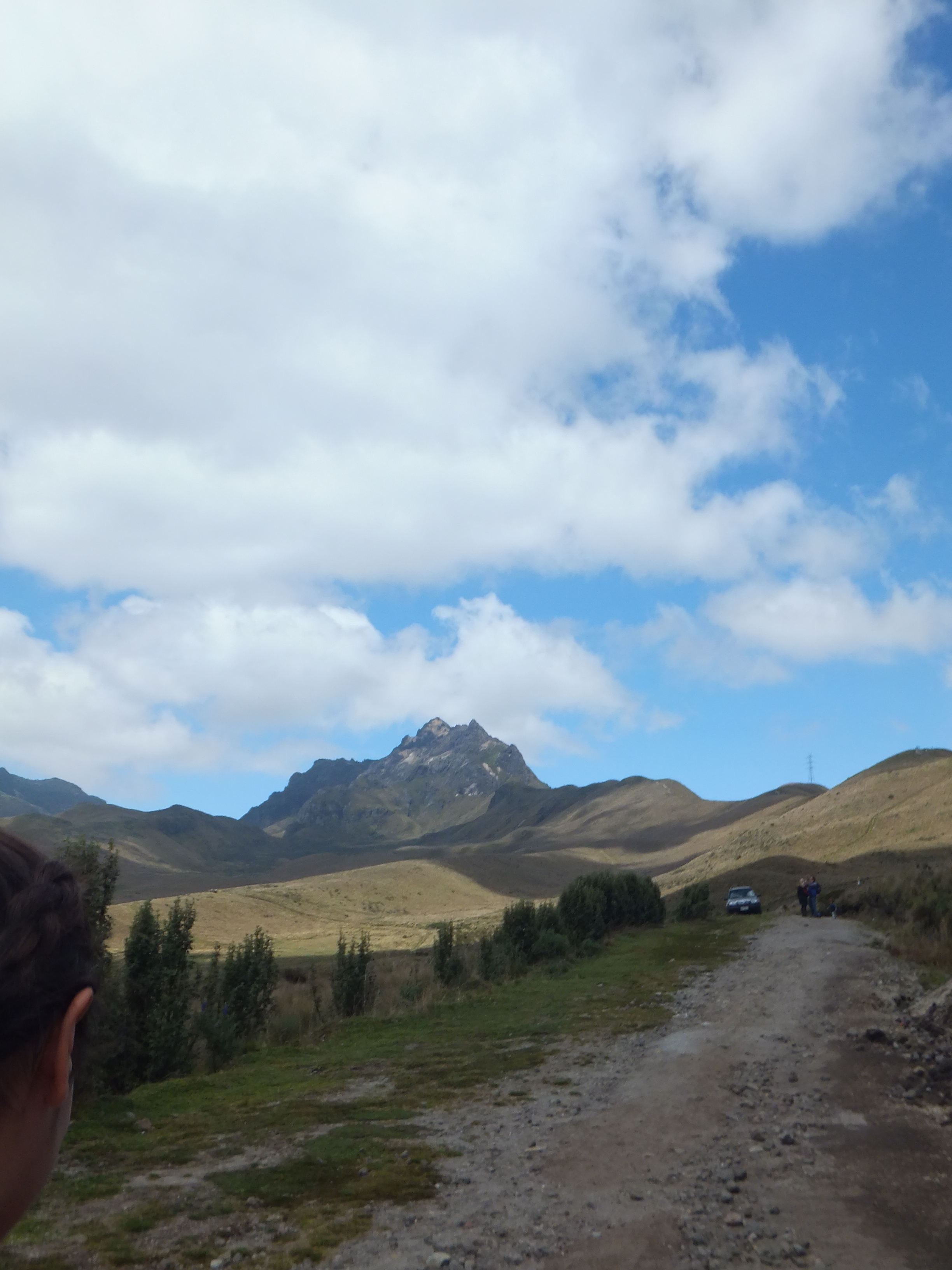
We hopped a taxi, filled it with one too many people, and went up a nearby mountain on the TeleferiQo (Quito slyly snuck their Q into that one, but it’s just like any other ski-lift style hanging cars that take you up a mountain). On the way up, I clearly remember saying to the group “Hey, maybe we should walk down on that trail, it looks like a good time.” I could hardly make it to the door of the hotel by the end of the afternoon. At the top of the TeleferiQo, I learned that we had plans to hike up higher so we started walking up. I had no idea that the plan was actually to climb the inactive volcano seen in this picture. Below is another picture showing how far we actually made it and how much relaxing had to be done.

Pichincha Volcano which we hiked near

Pichincha Volcano

Pichincha Volcano from our calling-it-quits point after we were too tired to continue

Pichincha Volcano from our calling-it-quits point

That night we met our academic directors and a bunch of the SIT group arrived in Quito! Our directors introduced themselves: Fabian, an Ecuadorian Anthropologist who seems to know absolutely everything about his country, and Leonore, a US citizen who moved to Ecuador to raise her children and who can tell some great stories. They asked us to pack a bag for a couple of days, fed us a delicious Ecuadorian corn-husk snack, and sent us off to bed. The next morning, we headed out to San Antonio de Pichincha, better known as the location of “La Mitad del Mundo,” a monument to the ‘center of the world’ with a line marking the northern and southern hemispheres; unfortunately, the line is in reality a bit off-center by current calculations.

Orientation in San Antonio consisted of reviewing schedules and expectations, health and safety guidelines, an introduction to experiential learning, lots of discussion about the homestays and cultures in which we will be living, an overview of the rules and regulations, etc. There was plenty of time to get to know one another a bit, as well as time to eat delicious typical Ecuadorian foods (we actually ate about five times a day!). We took advantage of the opportunity to practice our Spanish and to meet our first Ecuadorian friend, Roberto, the son of the Hostería owner. The directors had also set up a night to watch an Ecuadorian movie, a night to hear some Ecuadorian/Andean music, and a salsa class with Maestro Lucky! We also had a couple of “drop-offs,” in which we went to a certain part of town in groups to learn about the area; this observation and asking questions is a sort of introduction to what we will be doing with the Independent Study Project (ISP) later. Finally, we had the opportunity to talk with students from different universities of Quito about all sorts of topics: Ecuadorian slang, travel throughout the country, politics and religion, and everything in between.

Orientation also included a required reading of “The Green Banana,” a personal account by Donald Batchelder of “temporary difficulty, resulting in a discovery which resolved the problem while opening up a whole new perspective of shared belief and speculation.” He admits that the green banana had only ever been an unripe fruit to him, while the people whom he met had known of its properties and uses for years. The tale includes a rock which the people state marks the exact center of the world and how each person has his/her own center of the world; the author states, “Personal discoveries converge in a flow of learning moments, developing a healthy tug of war between that original center of the world from whence we come and the new center being experienced.”

Because of the orientation schedule, I did not get to visit La Mitad del Mundo monument in San Antonio. However, I believe my entire semester in Ecuador will be full of encounters of centers of the world, from the Intag Cloud Forest in northern Ecuador to the Rain Forest in the South, and that I have a lot of learning to do from all the people who I have the opportunity to meet along the way.  Donald Batchelder says it best: “Personal discoveries converge in a flow of learning moments, developing a healthy tug of war between that original center of the world from whence we come and the new center being experienced.”

Who knows, maybe I’ll even find a green banana or two along the way?

Quito from above: my home for the next few months

Quito from above: my home for the next few months while I study in Ecuador


You can read Donald Batchelder’s “The Green Banana” here: http://suzy-friendship.blogspot.com/2010/09/green-banana-donald-batchelder.html


Two Unforgettable Weeks

April 23, 2012

Five cities.  Two sunrises.  The Lowest Point on Earth.  One mud bath. Two Passover Seders.  Two rooftop hostel gardens.  A 5 a.m. mountain climb.  Seven long bus rides and one train ride.  Old friends and new friends.  Dancing across Israel.  Life advice from 71 year old Peggy, a dorm mate in a hostel in Jerusalem.  The best hummus in Israel.  The best hot chocolate in the world.  A literary café in Jerusalem. Spying on a wedding reception in Tel Aviv. Burning leavened bread in Be’er Sheva in preparation for Passover.  A shepherd with his flock next to the Sea of Galilee. Coming home to Haifa.

It is hard to know how to begin to describe my spring break.  Just as my friends and I thought as we were planning the trip, where do you begin a whirlwind tour of a country that has so much to offer?  All I know is I am convinced more than ever that studying in Israel was the right decision.  There are moments here that are hard and confusing, such as when I witnessed a young man hissing at an Israeli soldier in the Old City of Jerusalem. At times like these, I wonder what I have gotten myself into.  Who am I to be a cheerful, curious tourist when the reality of the situation in Israel is very serious for so many people?  But it is this confrontation with a human experience so different from my own that makes studying in Israel so incredible.

Another occasion in the past two weeks that showed me the high intensity of life in Israel was when my friend and I had Shabbat dinner with a lovely, generous Orthodox Jewish family in Jerusalem. They had an eighteen year old daughter named Shlomiya who was preparing to begin her army service in a few weeks.  Army service is mandatory in Israel, women serve for two years and men for three.  Observing Shlomiya and the mature, thoughtful way she spoke and acted throughout the evening, I thought of myself when I was eighteen, and how the most important thing on my mind was my next Spanish test.  Constantly living on edge, young Israelis must mature quickly as they are faced with challenges that never crossed the minds of me and my American friends as we were growing up.

I spent the majority of my break with my friends Emma and Heather, fellow international students who attend Brandeis University in the U.S.  I met Heather during the intensive Hebrew Ulpan at Haifa University at the beginning of the semester, but she is now doing a complete Hebrew immersion program at Ben Gurion University in Be’er Sheva, during which she is not permitted to speak in English.  To be completely honest, after the first day we spent together I did not have a very good attitude toward the situation.  What was I thinking, spending my spring break with someone I can’t even have a normal conversation with?  But within a couple of days, I was amazed by how Hebrew really started clicking for me.  I had always thought I learned almost exclusively from reading and writing, but I was proved wrong as I learned more from a few days of conversations than I had in weeks of classes.

This semester has held some challenges for Heather.  On top of the difficulties of having to speak Hebrew all the time, several weeks ago she had to run to the bomb shelter in her dorm several times as over ninety rockets were fired at Be’er Sheva from the Gaza Strip over the course of a few days.  She said the Israelis in the shelter with her would sit and count the booms as the Iron Dome, Israel’s missile defense system, destroyed many of the rockets in mid-air.

I accomplished a lot of bucket list items over break – climbing to see the sunrise on the desert mountain fortress of Masada where almost one thousand Jewish rebels committed mass suicide rather than be taken by the Roman army, floating effortlessly on the buoyant salty water of the Dead Sea, and seeing the sun rise over the Sea of Galilee and set over the Mediterranean in the same day.  Most importantly, though, I had a lot of time for reflection, and when new thoughts to ponder came my way I was able to soak them in, trying to expand my understanding of what it really means to live in Israel.

Sunrise over Masada

Standing on Masada

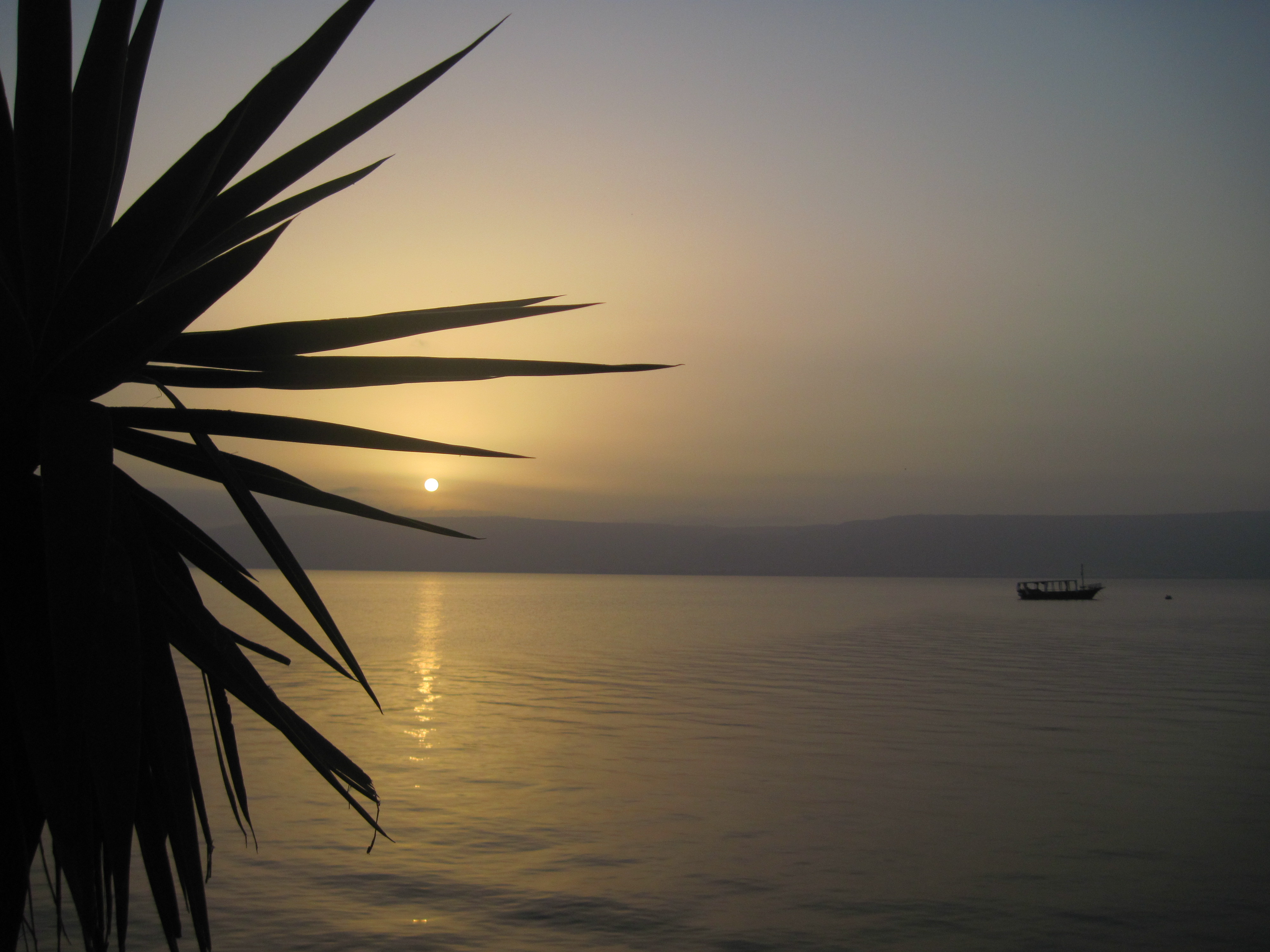
Sunrise over Sea of Galilee

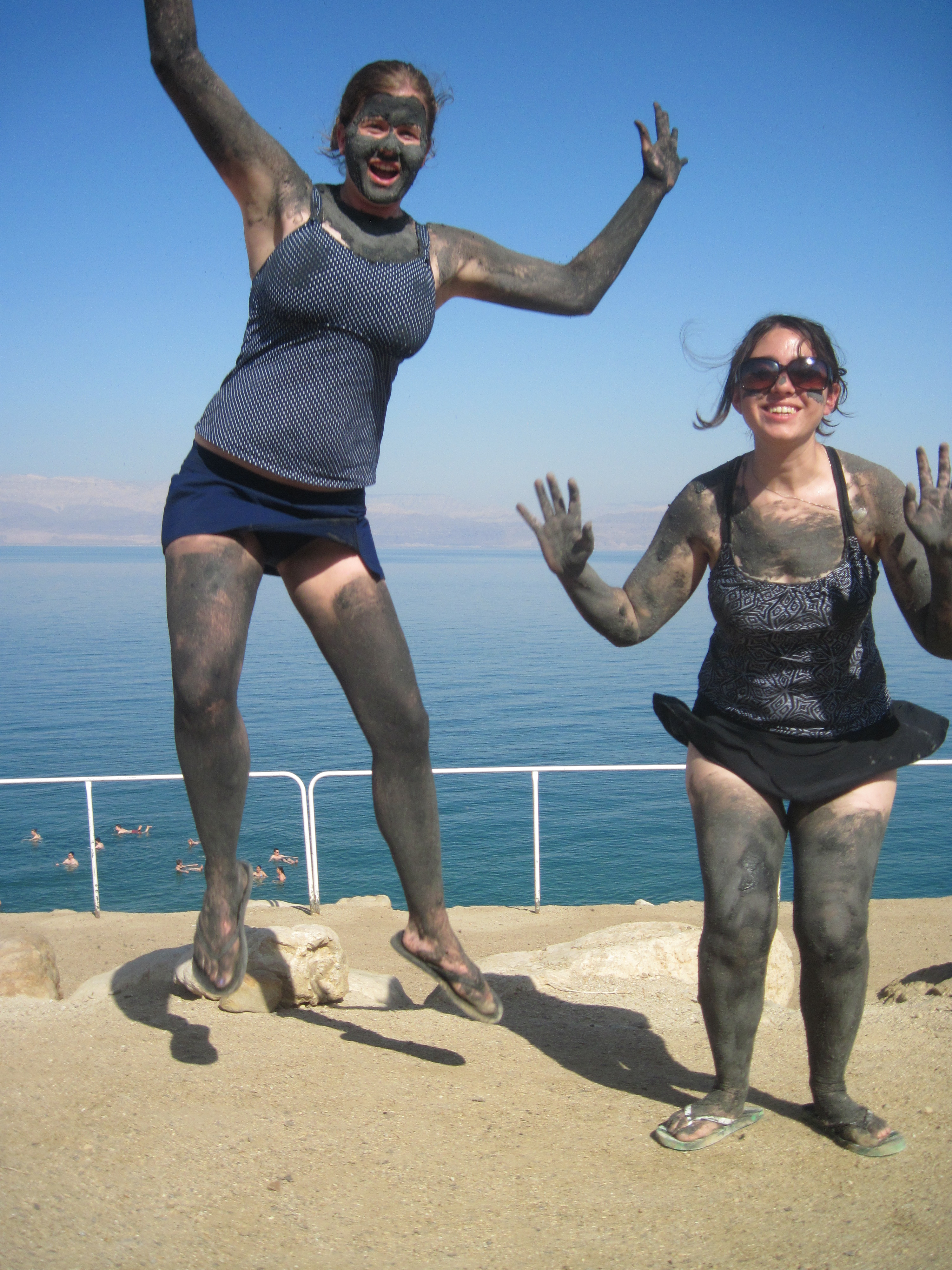
Mud bath at Dead Sea


Reflection week

April 9, 2012

Hello everyone!  Period 4 is done, and now we have a one week break.  Most international students refer to this break as spring break, but at UCM, it’s known as reflection week.  It’s my understanding that reflection week was just implemented last semester. I decided to spend the first few days of my reflection week in Berlin, Germany.  My sorority sister is currently studying abroad in Copenhagen, Denmark, so we decided to meet up in Berlin and see all of the wonderful pieces of history in the city.

The first day we were there, we visited the Victory Column, the Brandenburg Gate, the Reichstag, and a monument dedicated to Atlas Shrugged and other mythological figures.  Below is a picture of the Victory Column.  My sister and I walked all 285 steps, and I must say, we were feeling the burn after the walk back down.

This next picture is of me with two “German soldiers” at the Brandenburg Gate.  Being at the Brandenburg Gate was a lot of fun; there was music and people everywhere.  As you can see in the picture, there were also people dressed up in a variety of costumes (most of them looking to earn money).  In my opinion, these two “soldiers” were by far the best dressed.

Being able to see the Reichstag in person was an experience that I’m not sure I’ll ever be able to explain.  Just knowing that I was at a building that, for a period of time, basically served as the headquarters for Hitler and the rest of Nazi Germany left me speechless.  This building is truly a part of Germany’s history and I felt privileged to be able to see it in person.

Seeing a version of Atlas and being able to recognize him as someone I’d learned about in school was a really good feeling.  Below is a picture of me and my sorority sister in front of Atlas, Sybil, and some others.

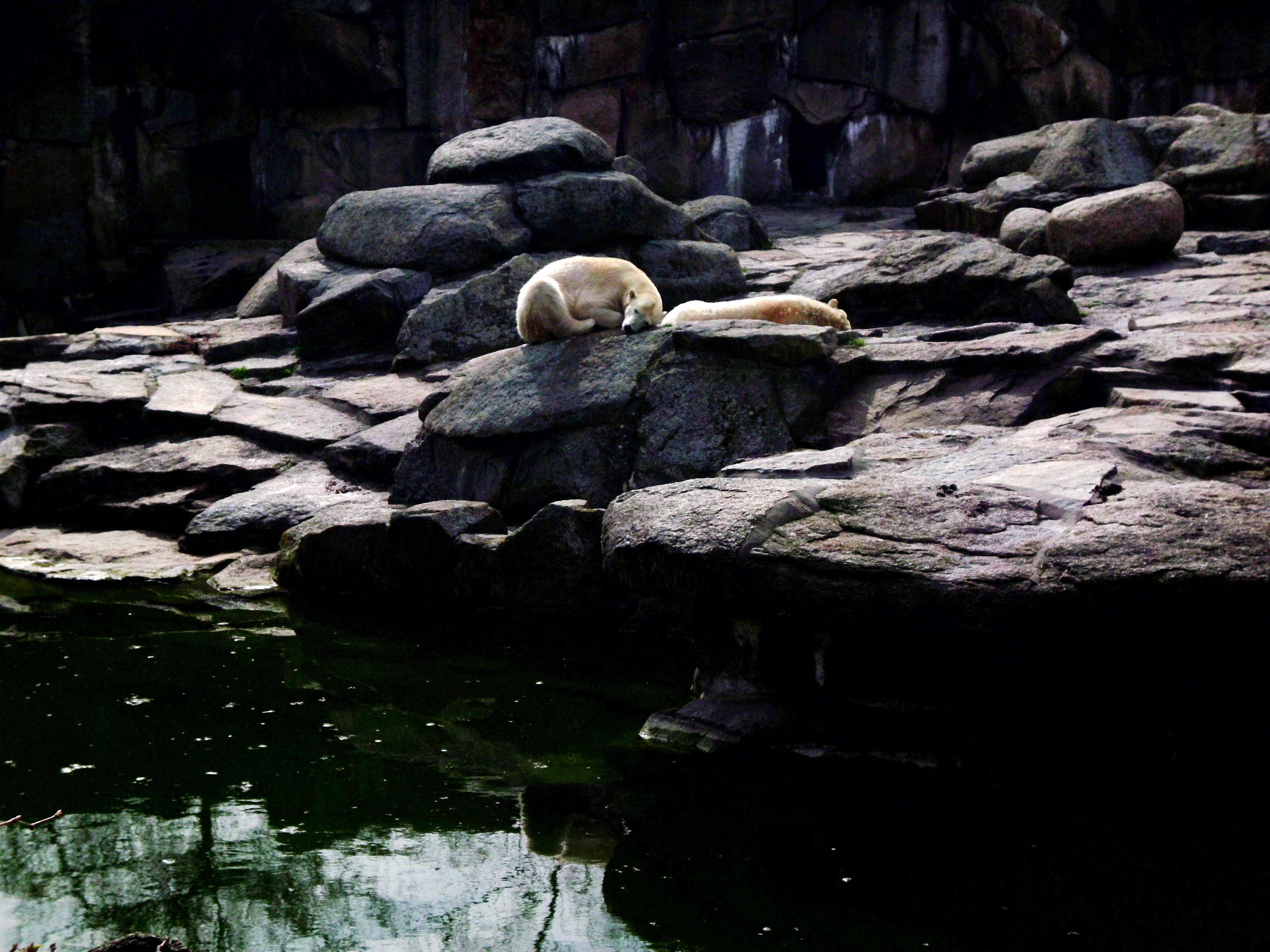
The next day of our trip, we visited the zoo, the aquarium, and of course, the infamous Berlin Wall.  The zoo and aquarium were both nice, but if I had to pick, I’d say the zoo was better, since it had a larger selection of animals and more variety.  Below is, in my opinion, one of the nicest pictures I took while at the zoo.

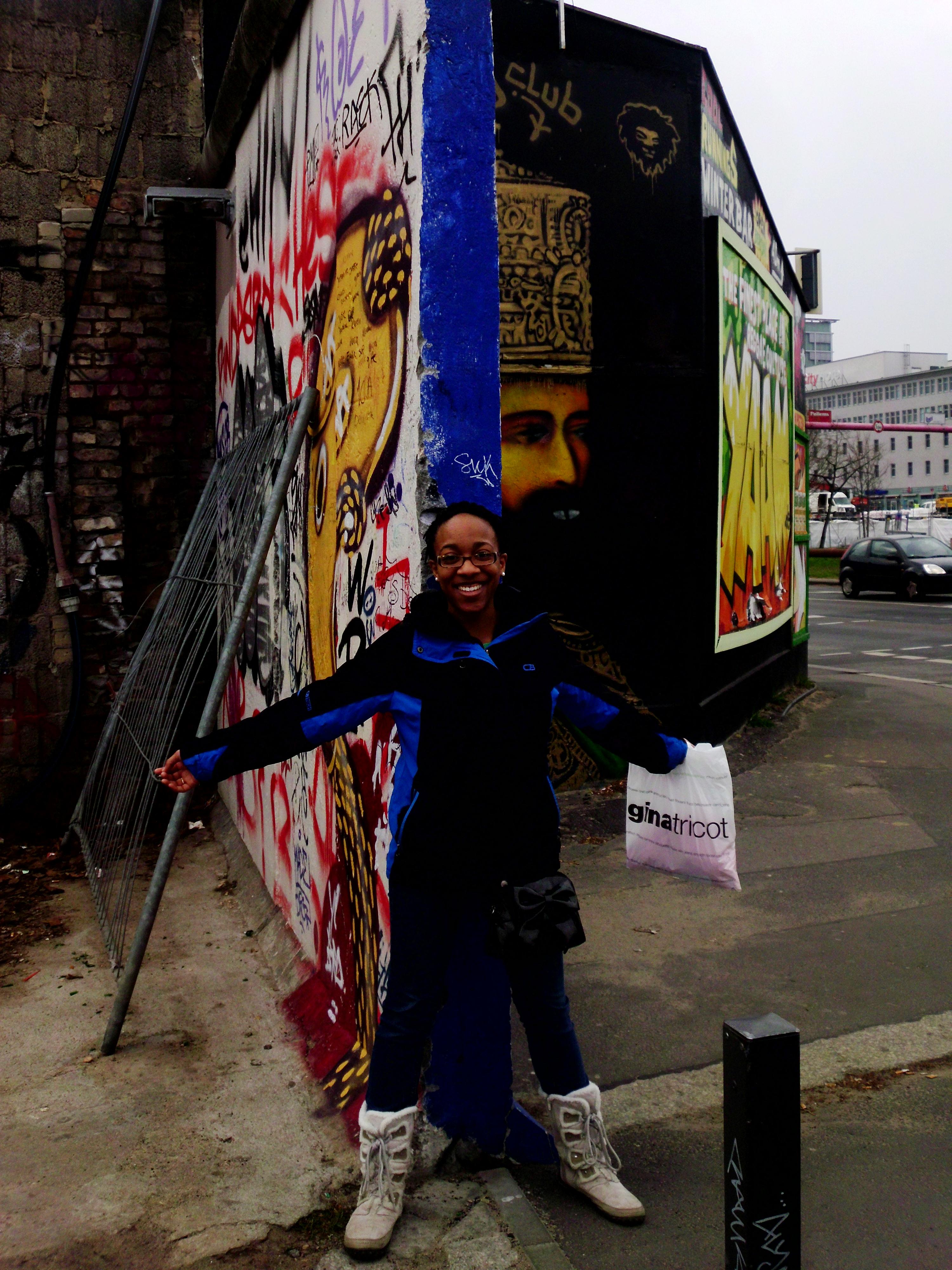
Last, but certainly not least, was our visit to what’s left of the Berlin wall, which for so long divided Germany into East and West.  I knew that if I didn’t do anything else while I was in Berlin, I couldn’t leave without seeing the remainder of the wall.  As I walked along both sides of the wall, I honestly couldn’t imagine that this wall, which is currently beautifully decorated by artwork, was a source of division. It was mind-boggling.  Non-tourists walked, biked, and drove past the wall without really looking at it, but for me, this was a piece of history that people will probably learn about forever and, once again, I just felt privileged to have been able to see this in person.  In the following picture you can see a glimpse of the wall from both the East and the West side.


Outside of the Classroom

April 2, 2012

One of the primary reasons I came to Bangkok was to be able to work with Step Ahead, an integrated community development organization that works in many capacities in Thailand.  Step Ahead’s work includes programs in one of the slums in Bangkok, called Khlong Toei.  There, Step Ahead runs a microfinance loan project, organizes sports activities for children, runs health clinics, and much more.  I, however, am primarily working with Step Ahead in a marketing capacity, helping them to market the products of their purse project.

The purse project is located in Pattaya, Thailand, where it is estimated (and this is a low estimation) that 25% of all residents are in some way involved in the sex industry.  Therefore, just by virtue of being born in Pattaya, residents are at risk for sexual exploitation.  Identifying this need, Step Ahead created Itsera, a brand of high-quality handmade bags, made by women in Pattaya.  This project was created as a prevention mechanism; the hope is that by earning a good wage making these bags, the women will be able to avoid the trap of sexual exploitation.

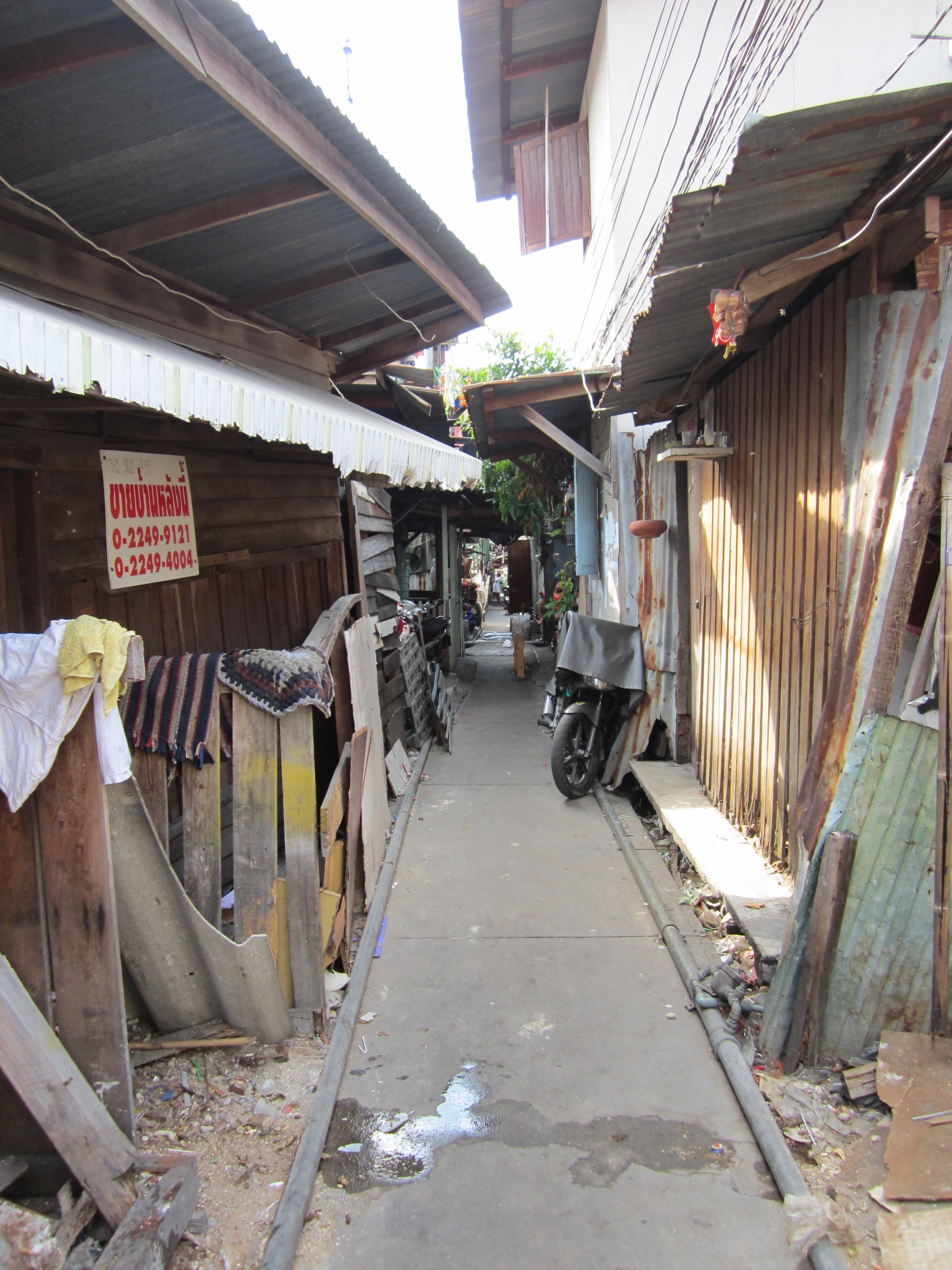
Despite being focused on marketing for Step Ahead, I had the chance to visit Khlong Toei last week.  It was so interesting to see where Step Ahead works, most of all because I spent last semester living and working on the edge of a slum in Kenya.  I could not help but make comparisons between the two in my mind.  To be honest, the slum that we saw here was much more permanent and formal compared to the slum in Kenya.  Most of the slum had paved roads weaving in and out, closed homes with roofs overhead, some people even living in permanent structures, most shacks having electricity and plumbing.  There are even a few small businesses that operate within the slum — for example, we walked by computers and washing machines, which residents can pay to use.  Not to say that Khlong Toei isn’t still very much a slum community, but it was certainly an interesting comparison to Kibera, in Kenya.

During our walk through the slum, we met one of Step Ahead’s clients, a single father with three children.  He has used a microfinance loan that he received from Step Ahead to run a chicken-foot business.  He sells chicken feet, which are a delicacy in Thailand.  School is not in session at the moment, so he and his three children were all sitting around and extracting the bones and nails from the chicken claws with the aim of selling them at the market.  It is refreshing to get a glimpse into the social issues that many Thai people are facing.  After a semester in Kenya where I only studied health and development, I have been craving that knowledge and interaction here.

Earlier this week, I was also able to attend a Needeed event.  Needeed is a new non-profit organization, which seeks to bring together professionals from the expatriate community here in Thailand.  The aim is to have organizations present at monthly meetings and identify volunteer opportunities within that organization. The hope is that expatriates with particular expertise would be able to fulfill those volunteer opportunities.

The meeting was really incredible…after the visiting organization presented, we had a brainstorm session — all 25 attendees.  It was almost magical to watch all of the ideas flying around – not only were there many nationalities in the room (Hungarian, American, Belgian, Australian, French, British), but there were also an incredible variety of different professional backgrounds represented.  There was a woman who had previously been involved in public policy, a nurse specializing in neonatal care, a psychologist doing her masters degree on post-partum depression and PTSD in Congolese refugees, a woman involved in the hospitality business – the list really goes on.  Most of these women are in Thailand because of their husbands’ jobs, and they are all well-educated and have a lot of experience in some professional capacity. Needeed seeks to bring together these untapped talents to make a difference for non-profits.  It truly is incredible to be able to not only experience another “side” of Thailand, but to meet so many fascinating people and explore potential career possibilities at the same time!