Standing on the Edge of the World

March 26, 2012

I’ve never before experienced a feeling quite like I did standing on the rim of a crater in the Negev desert this past weekend.  I felt all at once the vastness of the desert, my own comparative insignificance, and how incredibly blessed I was to be able to witness such amazing beauty.

We started our trip by leaving campus at 5:00 A.M. on Friday morning.  Driving south, we could see the diversity in Israel’s landscape as the lush green fields gave way to sand and rocks.  After a drive of about six hours, our bus left us at a trailhead on the side of the road, and we set off on our 8 kilometer (about 5 mile) hike.  We were about 75 students, plus 4 guides, two guards, and a medic.  At first, the hike was relatively flat and easy, although it was surprising cold and windy, and huge dark clouds threatened to rain on us.  Then we arrived at the edge of the Ramon crater.  The view was beyond spectacular.

We then had to pick our way down the steep descent, through the crater, then climb out the other side.  We all celebrated when we made it up the last stretch.  But alas, our rejoicing was premature – the bus had not been able to make it down the road to meet us, and we were going to have to walk another two miles!  At this point it was only our will that kept us going.  But finally we made it to the bus just as it started to rain. We then drove to the center of another crater, to the Bedouin camp where we would be spending the night.  We all pitched in and made a huge dinner of Israeli salad (chopped cucumbers, tomatoes, and onions), stir fry and rice, hamburgers and hot dogs, and of course, lots of pita.

Sleeping in the tent was quite an experience. I remember waking up in the middle of the night, and even though I was cozy in my sleeping bag, I felt how bitterly cold it was outside.  Waking up to the sun casting morning shadows across the crater, we set off on our second day of hiking.  This time we climbed up the edge of the crater and walked along the rim, and a couple of times, we had to climb rock scrambles where one slip could send you rolling down the edge of the crater.  At one point, there were even iron handles drilled into the rock; we knew when we saw those that this cliff meant business.  But we all made it through safe and sound, circling the rim of the crater around until we ended up back at our camp just before sunset.

We then set off for Eilat, where we stayed in a lovely hostel that fed us an amazing hot breakfast the next morning, which we were all incredibly grateful for.  On Sunday, we could either choose to stay at the beach or hike in the Eilat mountains to a peak where you can see Jordan, Egypt, and on a clear day, Saudi Arabia.  I chose the hike, even though I was pretty worn out from the past two days, and I was so glad I did!  Looking out over the Red Sea as it lay nestled in the midst of desert mountains was an exhilarating moment, to say the least.

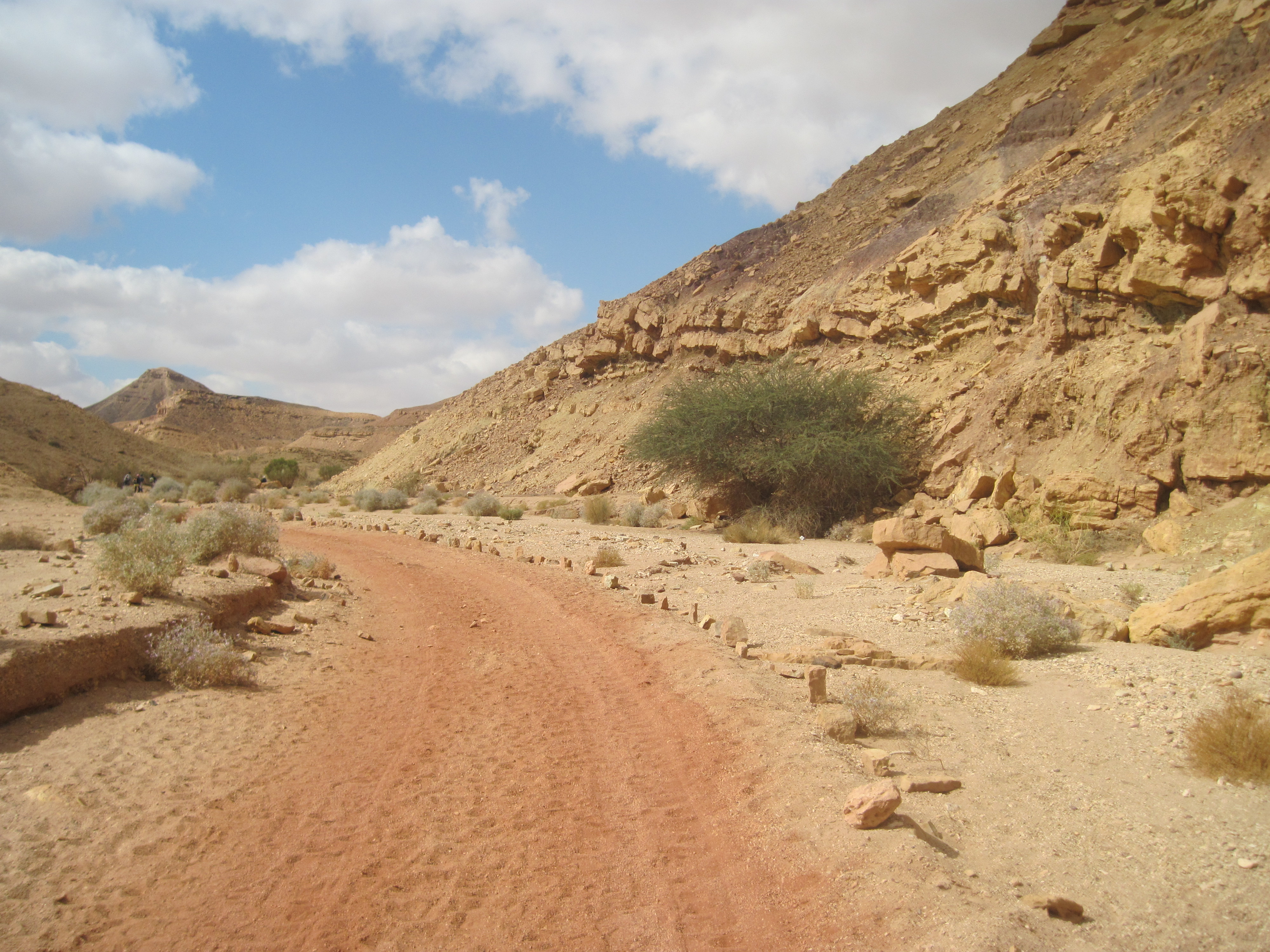
It is really hard to describe in words how I felt throughout this weekend.  It was definitely the farthest I had ever been pushed physically, and the camaraderie the shared experience built within the international students was really great.  Passing each other on the way to class on Monday morning, we all knew not only how sore we were, but that the endless sweeping desert vistas we had seen together would be printed on our minds for the rest of our lives.


A Weekend Trip….to Tropical Paradise

February 10, 2012

One of the perks of living in this beautiful country is that after a week of stress, no sleep, and lots of late nights, a tropical island is just a few hours away.  My roommate and I decided we had to take full advantage of this, and traveled to the beautiful island of Koh Samet this past weekend.  Koh Samet is located right in the Gulf of Thailand, only a 40min ferry ride offshore, so it is a popular spot for anyone in Bangkok hoping for an island retreat.  The whole process of getting there is very Thai – don’t book anything in advance, just go to a monument in the middle of the city, hand over 200 baht ($6 USD) to a woman sitting at a table, hop into a mini van with a bunch of strangers, and get driven to the coast.

On the island, we stayed at the LungWang Wonderland Resort.  The name makes it sound glamorous, but it was anything but.  Very backpacker-ish, and very simple.  Nevertheless, it had clean rooms and bathrooms, decent food, and most importantly, was right on the beach, with beach chairs and lounge chairs included.  We could have not asked for anything more – just a weekend with our Kindles, catching up on sleep, lying on the beach, and waking up to the sound of the ocean in the morning (yes, that’s how close we were to the water!). And that was all for $10 USD per night.

Our only excursion was to go snorkeling one afternoon right before sunset. I have been snorkeling before in Mexico and the Caribbean, but there the snorkeling was always in crystal clear water;  the fish and coral were at the bottom of the sea, very far away from us, but still very much visible.  Well, that was absolutely not the case here…the coral was so close to the surface of the water that I bumped into it at one point (frightening) and the fish were swarming around us the whole time.  Our excursion ended at a beautiful resort on the island where we laid on lounge chairs, ate fresh fruit, and watched an incredible sunset over the sea.  A perfect weekend getaway.


Botswana, Week 2: The Botswana Way!

February 6, 2012

We’ve kicked off our second week with an intense reality check… except this reality check has a Botswana twist to it! Our week consisted of an immersion to Botswana culture and way of life.

https://fbcdn-sphotos-a.akamaihd.net/hphotos-ak-ash4/395155_10150482057608015_514083014_8971467_1298084400_n.jpg

We met some really nice local Batswana in a tiny village, named Mmokolodi, just about 2 hours away from University of Botswana. The chief greeted us with open arms, the older ladies of the village sang for us, and the younger males taught us how to dance African style!

https://fbcdn-sphotos-a.akamaihd.net/hphotos-ak-snc7/398016_10150482058378015_514083014_8971481_918416941_n.jpg

As soon as sun hid away under the beautiful Botswana trees and mountains, we began the festivities. We kicked it all off with sounds of dance and rhythm! The males were told to go with the young boys and older males, while the females were sectioned away to watch the males dance right before they began their own group dances.

https://fbcdn-sphotos-a.akamaihd.net/hphotos-ak-snc7/397821_10151184865300451_673750450_22932065_2047271341_n.jpg

Botswana traditional dancing is much different than what I am accustomed to in the States and back in Europe. Instead of using machine-made instruments, such as a guitar, microphone, or keyboard, the locals use handmade –with very dependable and strong materials from animals — instruments to make sounds and with their hands and feet, accompanied by vocal rhythms! It was very interesting to see, and partake in, the traditional Botswana dances, especially in groups. It had a lot of soul and sense of individualism and community within it. We weren’t dancing to an iPod or a repeated sound; everything felt personal and special in the dances and music. It was as if I was a part of something special with my group and the Batswana people and it really bonded us by forcing us out of our shells!

I played a traditional Botswana game with the local Chief (on the left of the above photo). It involves going in circles around a sketched piece of wood with rocks and trying to overlap the opponent to take away his rocks. It’s very simple and clearly traditional. I’ve learned quickly that even items and objects as simple as a piece of wood, rocks, a board, and a friend to play with can pass time by the hours as quickly as any video game back home!

https://fbcdn-sphotos-a.akamaihd.net/hphotos-ak-snc7/381531_10150482058518015_514083014_8971483_260130149_n.jpg

During our stay, we had a chance to hike a mountain nearby and take a scenic walk around the villages. We even ran into a sectioned-off piece of land in the mountains that we were told held a 2,000 year old cave drawing.

https://fbcdn-sphotos-a.akamaihd.net/hphotos-ak-ash4/403840_10150482060563015_1430147558_n.jpg

https://fbcdn-sphotos-a.akamaihd.net/hphotos-ak-snc7/407069_10150482061888015_514083014_8971525_1526760536_n.jpg

Our last stop consisted of us driving about 30 minutes away to view the oldest living tree in the Southern African region. This tree is named The Livingstone, in honor of the African explorer and missionary David Livingstone, and it was originally dated to be over 200 years old, but is expected to have been growing much longer than documented. It is said that Livingstone’s heart was buried under this Mvula tree by a local tribe – appreciating his love of nature.

https://fbcdn-sphotos-a.akamaihd.net/hphotos-ak-ash4/378975_10150482063188015_514083014_8971545_429038321_n.jpg

When the entire weekend was finished, it was finally bedtime. We didn’t expect anything but the stars above us and our sleeping bags below us at the Botswana village. To our surprise, we ended up in a very well-constructed traditional hut. Not only was it well built, but it also had doors, windows, and even seats with thin, cool blankets inside. Also, the pyramid-shaped roof with specially designed wooden vents created breezes throughout the night to allow us to escape the African heat!

https://fbcdn-sphotos-a.akamaihd.net/hphotos-ak-snc7/401078_10150482058698015_514083014_8971486_54403790_n.jpg


Barbados, Week 2: Where the Wild Things Are

January 30, 2012

It’s the start of a new week, and I finally feel like I’ve got my head on straight.  Survival mode has seamlessly transitioned into “vacation” mode, as the first week of classes at the University of the West Indies consists of only one class meeting, in which the professor may or may not show up, merely handing out the syllabus and discussing it if he or she does indeed come.  The days have blended together, as my biggest daily decision is whether to head down the hill to Batt’s Rock Beach with the morning crew, the afternoon crew, or both.  There’s been days when I’ve rolled out of bed and thought to myself, “there has to be something I have to do… I can’t have this open of a schedule”, but, in reality, the only absolute necessities of the day are picking out some delicious food to eat at the cafeteria and tracking down the lecture halls for my 6:00 or 7:00 pm classes.  After the hectic hustle and bustle of the first few days — sorting out school payments, navigating the transportation systems, and getting my class schedule straightened out — things are definitely feeling more natural.

As soon as I had become comfortable with life on UWI campus, though, the urge to keep exploring was buzzing around my head.  This was probably one of the last weekends of the semester of abundant free time before my nose would be stuck in the books, I realized, and thus it was prime for checking out some of the more remote destinations on this island of 166 square miles.  Although Barbados is not necessarily known for its abundant wildlife, there were rumors that a place called the Barbados Wildlife Reserve, in the northern parish of St. Peter, had a number of different species within their confines.  Oh, and not all of them were in cages!  Our group crammed ourselves onto the local bus headed north toward Speightstown, passing the ritzy tourist-trap Holetown on the way.

The Wildlife Reserve is located in the middle of picturesque rolling sugarcane fields, but once inside the “zoo,” visitors follow winding stone pathways that are nicely shaded by hundreds of tall trees.  Immediately, the cameras were out, and before we walked more than a dozen yards into the park, many of us were excitedly snapping countless pictures of the large tortoises meandering through.  Little did we know that Bajan deers (formally known as red brocket deer), peacocks, pythons (caged, of course), parrots, and the famous green monkeys awaited our eager eyes.  A Bajan zoo-keeper distributed peanuts to those who wanted to feed the monkeys, and it was a challenge to keep a straight face as the mischievous-looking monkeys hopped up next to you, uncurled your hands with their miniature fingers, and proceeded to eat all the food in your hands in mere seconds.  Reactions ranged from one girl shaking in nervous energy to another proclaiming she could “die happy” after having had such a close encounter with the green monkeys.

The next nature adventure our group undertook was one that I, myself, had searched out and organized.  Before I arrived in Barbados, I knew two things:  One, I wanted to see as much of the island as possible; and two, I wanted to do so on a budget where I could still eat during the last month of school.  The Barbados National Trust hikes are the love-child of such ideals, as they are free hikes guided by the Barbados National Hikes every Sunday at either 6:00 am, 3:30 pm, or 5:30 pm.  This Sunday’s hike took place in Foul Bay, a complete geographic unknown to me before that afternoon, and I discovered it was all the way on the other side of the island.  I called a taxi, gave him all the logistics for the 3:30 pm hike, and estimated that about 10-15 students would be going on the hike.  Sunday afternoon, nearly 30 students came out to our meeting spot to take the taxi!

Foul Bay turned out to be quite an amazing scene.  We drove down a steep hill, parked among a thick enclave of trees, and marched out onto the beach, lined with palm trees and sandwiched between huge stone cliffs.  Our tour guide was a wizened, older Bajan man named George, who not only gave us some historical background about the area we covered, but also launched into some serious philosophical musings about the future of renewable energy, the dangers of money, and World War III.  At one point in the 6- mile, three hour hike, he took me aside and told me that “you, young man, are going to be the leader of your group.  There is a lot of you, and we need to make sure everyone makes it back”.  I took away a strange satisfaction that George would make me second in command without any previous knowledge of my abilities, but I agreed to keep an eye of our pack of 29 and make sure no one fell behind.  Our hike took us through the beachside forest, up a stone staircase to the top of the sea cliffs, and winding through the grass fields that skirted the coast.  On the way back, we took a number of back roads that would through villages of both large and small, colorful Bajan abodes, often waving to the onlooking locals as we passed.

We tramped back into the beach parking lot well after sundown, and it’s safe to say we were all tired and hungry to the bone.  As we were clambering aboard the taxis that would return us to campus, George stopped me and said “I made a good choice in choosing you as your group leader.  You did a good job, and I look forward to seeing you on more of the hikes!”  Again, I wasn’t aware of anything I did to deserve such high praise from our tour guide, but I guess someone with so much life experience was able to see in myself something that I’ve never truly noticed.  Whatever it was, I will try to cultivate it further in my time here at the University of the West Indies, knowing that it’d make George proud.

The stunning view of the east coast from Farley National Park.

A green monkey catching a ride on a tortoise at the Barbados Wildlife Reserve.

Foul Bay beach is sandwiched between rocky cliffs.

George appointed me group leader of the exchange students.


Elephants, Waterfalls, and Bamboo Rafts

January 27, 2012

I just got back from an incredible weekend in Chiang Mai, Thailand, which is a ten hour bus ride north of Bangkok.  Chiang Mai is close to the Burmese border in Northern Thailand.  I was there with my roommate, Addie, as well as two other exchange students.  Thanks to the fantastic recommendations of another Spider (thank you, Dora!), we packed a lot into a three-day weekend.

We took the night bus to and from Chiang Mai, meaning we had three full days there — Saturday through Monday.  Because we had such a short time, we wanted to make sure we made the most of our stay.  Through the hostel that we were recommended, Libra Guesthouse, we were able to book a 2-day, 1-night “trek,” which ended up being incredible.  Our trek started off Saturday morning with a stop at Mork-Fa Waterfall, in Doi Suthep Pui National Park. The water was freezing, but the sight was incredible, and in the end, very refreshing.  After the waterfall, we stopped for some delicious lunch (vegetable fried rice with fresh pineapple). and then we headed to yet another national park, which was home to hot springs.  When I say hot, I mean hot — upwards of 110 degrees Fahrenheit, or 40 degrees Celsius.  It was at this point that we begun our “walk through the jungle,” as it was advertised on Libra’s website.  Well, let me tell you, this was not just a casual stroll. This was, in fact, a 5-hour hike through the jungle.  The walk provided us with incredible views of the mountains, and in the end, it was fantastic, but certainly not what we were anticipating.

On our hike, we came across a few “hill tribes.”  Hill tribes are essentially groups of people — most of the time not recognized as Thai citizens — who, over the past few centuries, have migrated from China and Tibet, settling in the border between Northern Thailand, Laos, and Burma (Myanmar).  It was wonderful to be able to see a different part of Thailand, and to learn a little bit about the hill tribes, especially because most of our guides on the trek are members of those hill tribes.  So after five hours of trekking, crossing many unstable bridges made of bamboo, and finishing every last drop of our precious bottled water, we finally made it to our campsite for the night.  We bundled up quickly, because unlike Bangkok, where the temperature never drops below 85 degrees F (30 Celsius), it was freezing.  We had a delicious freshly made dinner by our guides (fresh fruit with homemade chicken and potato curry), and spent the evening sitting around the campfire, hearing hilarious and inappropriate stories from our guides, as well as learning an elephant song that none of us could quite understand. I must also mention that we were joined by eight crazy Russians on this trek. They did not speak a word of English, but somehow thought that speaking Russian very loudly to us would help us understand what they were saying.  After they had a few drinks that evening, it certainly made for an interesting campfire.

After a freezing cold night with only a thin, damp mat separating us from the bamboo floor, we woke up on Day 2 of the trek, and before we knew it, there were elephants in the river! We could not believe our eyes – our guides were on top of them, washing them, and the elephants casually strolled out of the river towards us, at which point we were able to feed them and touch them.  We were then mounted on the elephants – at first sitting on a contraption they had tied to the elephant, but wanting the real jungle experience, I opted to slide down and ride on the elephant’s back.  We spent about an hour just wading through the jungle and the river on the elephants.  A truly incredible experience.  Instead of hiking back down the mountain to get back to our starting point, we opted for a more relaxing variety of transport, taking a bamboo raft that our guides made for a two hour trip down the river.  Definitely a fun way to end the two day trek!

For the last day of our trip, once we were back at the hostel in Chiang Mai, we were able to see the many sights of the beautiful city.  These included the Sunday night market, the Night Bazaar, and many Buddhist temples, including the most famous temple in Chiang Mai, Doi Suthep.  Doi Suthep is situated in the mountains above the city — about a 30 minute drive away.  It has incredible views of the city, and like many of the other temples we have visited, the beauty of the temple was breathtaking.

All in all, it was a fantastic weekend! And I have to say, for anyone who is wondering… the weekend was unbelievably cheap.  For the entire weekend, door-to-door, bus, taxi, food, water, trekking, hostel, everything; the weekend came to a grand total of $140 USD.  Not bad, right? Still on a high from this weekend, Addie and I are certainly excited to plan our next adventure…we have our sights set on Cambodia next!


Barbados State of Mind

January 16, 2012

Hello everybody!  Welcome to my study abroad blog.  My name is Ryan, and I will be keeping you updated about my education and extracurricular experiences in the great country of Barbados.  Before I delve into why and how I chose such a location, let me give you a brief introduction of who I am: I am a junior at the University of Richmond, and I’m majoring in Business Administration with a concentration in Marketing.  I’ve done a little bit of everything at UR: I was on the crew team for one semester, ran the Entrepreneurship Club for awhile, and recently helped to bring back the Theta Chi fraternity on campus.  I had a part-time job working at ETC (the school’s convenience store) as well, and my hobbies on campus include hitting the gym and spending far too much time in D-Hall.  I hail from the best state in the country, New Jersey, and live in the best part of it:  the Jersey Shore.

When I told people I was studying abroad in Barbados, I usually received one of two responses: “Well, someone’s gotta do it” and “I hate you!”.  Both confirmed that I had made a good choice.  Upon researching my study abroad options as a business major, I had originally narrowed down my choices to Thailand and Australia.  But something inside me somehow knew I wanted to study where most people vacation, so when I stumbled upon the University of the West Indies in Barbados, I quickly shifted that location to top priority.  At first, my only focus was on the fact that it was a tropical paradise, but upon learning about the country, I discovered it is much culturally and geographically richer than that.

Yes, Barbados has some of the top beaches in the world, with a climate that most people would kill for, but it’s also a fascinating example of a Caribbean nation which emerged and developed virtually free of imperial conflict.  Originally inhabited by the Arawak and Carib indigeneous peoples, it was later claimed for the British crown, which maintained control of the country until Barbados’s independence in 1966.  Benefitting from a peaceful past and economic contributions from the British empire and Jewish immigrants, Barbados has become a model for stability and prosperity in the West Indies.  It has a 98% literacy rate, and boasts flourishing tourism, finance, and sugarcane industries.

The University of the West Indies has three campuses, located in Jamaica, Trinidad and Tobago, and Barbados.  The Cave Hill campus in Barbados was established in 1963, and the University as a whole has produced many of the region’s recent prime ministers and industry leaders.  I managed to secure a single room on campus, which was a big surprise, considering they only house around a couple hundred students.  I’ll be taking Introduction to Psychology, Introduction to Caribbean Politics, The Atlantic World: 1600-1800, and International Tourism as my one business class.

To be honest, I still can’t believe that I’ll be on a plane to Barbados in four days and staying for four months.  I’ve read Globetrotter’s travel guide on Barbados front to back, but I don’t think I’ll really be able to wrap my head around what it’s like down there until I experience it for myself.  But in the meantime, I think I’ll go pack my swimsuit and some flip flops.

– Ryan


Mai Chai Bouey Kem Me: Don’t Use Chemical Fertilizer

September 28, 2011

The food/agriculture unit homestay has come to an end.  These last six days were filled with excitement and unbelievable experiences.  I cannot share everything from this past week, but I’ll go over the highlights.

First stop, Roi Et province.  We stayed in a village that was in transition from non-organic to organic farming, so almost every family had pigs to make their organic fertilizer.  We got a tour of some farms, and they really tried to make it interactive.  So, I got to plant a banana tree!

Before heading to Yasothon province, the location of our last homestay of the unit, we stopped in Masaharaka to observe our future families protesting the use of chemicals in farming.  The speakers brought some to tears as they spoke of the horrors that have come as adverse effects, and the passion of these people to protect their livelihood was an unbelievable thing to watch.  Wearing green, just as the organic market they participate in is the Green Market, the street was flooded with signs and images of pesticides.  This peaceful demonstration showed more than just what chemicals can do—it showed the importance of community.  These individuals came together for a cause, and their community was shown through both the market and the signs floating down the street.

I loved my family at this homestay.  Paw and I were surprisingly able to communicate a lot,  so I got to learn about both his and Meh’s farming practices and lives.  Both have lived in the village their entire lives, and have been farming organically for 12 years now.  We took the tractor out to the farm and came back with a bounty of delicious treats.  A green papaya for Som Tom, a local dish, long beans, peanuts, sugar cane, okra, and my favorite—passion fruit.  I got to learn about the different type of rice that he grows, and then that day we stayed up late and helped prepare for the market.  Weighing peppers, sorting veggies, carrying coconuts, and watching as Meh prepared the banana snacks—coconut and rice wrapped in banana leaf.  We woke early (4:00) to meet our parents at the market, and helped sell their rice and treats. (My time at local farmer’s markets paid off, because I would not allow for bargaining).

Our week came to an end after our last exchange with a local government official who was very passionate about hating TNCs.  This past week was a great first unit trip—personal connections were formed and we got a real insight into the issues.  These next 10 days in Khon Kaen will be rough, because I can’t wait to get back into the villages.

(Oh! I almost forgot… if you put a green mango into a box for a few days, it ripens perfectly!  It’s a very useful skill when mangos are not in season.)


Navigli, discos, and the lovely Como

September 19, 2011

Now for the amazing stuff that I referenced in my last post… the fun stuff, haha. My first few nights brought me down to an area of Milan known as the Navigli. To give you a setting to imagine, the Navigli lies along 2 long canals that are perpendicular to one another, forming an L of water in the middle of the very busy city. So this nice canal and the surrounding areas have a diversity like no other, as they create a street fair with things for sale during the day, but then transform into a local hangout and boardwalk-esque area at night for people of all ages to come and enjoy. The bars set out tents with tables and chairs next to the canal, so on a nice early autumn night, the Navigli are filled with Italians and foreigners alike all coming for the atmosphere, beautiful views, and most of all, for appertivo.

All Americans, listen up… we need appertivo back in the states right away. For around 6 or 7 euros (roughly 10 dollars) you receive a free drink of any kind from the bar, plus access to an all-you-can-eat buffet (and since I’m in Italy, clearly the food is awesome). So at any bar in all of Milan from the hours of 6pm to 10pm, you can sit, relax, and have a drink, eating as much or as little as you desire, for as long as you wish. Then afterwards, especially in the Navigli, you can get a gelato (I like Nociiola or Baccio, but they are all insanely good, even the fruit ones like Pina Colada or Wild Cherry) and walk around enjoying a nice night.

After getting more acquainted with the school and my fellow peers, I went to a couple of get-togethers for exchange students hosted by the University at various night clubs known here as discos (but no Saturday Night Fever). The parties were a great way to meet people in a less formal atmosphere and let me get to know some of my new friends on a more personal level. This is where I had my conversation with my friend from Barcelona that I mentioned in my previous post. The parties regularly go from 11pm til almost 4am, but I was home in bed or on a Skype date by 2am on most of those nights.

Finally, to cap off my week of stress and transition, came my journey to one of the most peaceful and relaxing places in all of Italy and probably the entire world: Lake Como. It is no wonder international celebrities like George Clooney and Richard Branson gladly drop 40 million for villas near the amazing lake. Just stepping off the train, you are greeted with views of a lifetime, surrounded by mountains all covered with houses extending as far as the eye can see. After a nice walk through a quaint and– dare I say without sounding too girly– cute city, you reach the crème de la crème, a lake that extends throughout these mountains, touching the Alps and covering the area with beauty. Just walking around the lake is a full and relaxing day for almost anyone, with the stunning views that, believe me, pictures cannot do justice.

But in order to truly make our trip momentous, my friends and I decided to be a little more adventurous. After climbing a hidden path we found halfway up the mountain, we noticed a small recreational beach for locals down by the lake. Very curious, as well as hot and sweaty, we decided it was most definitely worth exploring. So after speaking Italian to get our way in, we changed into bathing suits and made a dash for the lake. Our thirst for adventure and our heat exhaustion persuaded us to overlook the signs warning against swimming in the beautiful but polluted lake, with my friend justifying our decision by saying:

“I see fish in there. If they can survive it, so can we.”

In retrospect, that was not the wisest advice to take, but was advice that proved to be valuable nonetheless. After jumping into the perfectly refreshing water, we swam out to a nearby dock, climbed onto it, and saw Como from a view that normally only fish can see. In awe of my surroundings and this perfectly serene moment, I succumbed to the beauty of the world and became content with simply being a spectator of the world around me.

With open eyes and an open mind, this adventure, while only the first of many, will certainly be hard to top.

I can’t wait to go back there with my loving family and amazing girlfriend on November 12th… I’m counting the days.


Lean on Me, Leech on Me

August 29, 2011

My departure from Bangkok was timely, as I was ready to experience something outside of the backpacking district of the capital. The drive to the “resort” where we stayed this past week was about 7 hours from Bangkok in Khon Kaen, Provence. We left our computers to be brought to Khon Kaen University, so the week was entirely wireless and open for bonding.  Through many group meetings and activities, we really started to work together as a group, finding our way each moment.  Whether we were transferring people through a web of string or discussing oppression, we leaned on each other through rougher moments and celebrated the positives together.  It seems like we are really forming a strong community, which is a main focus of the program both internally and within the villages we stay in.

On our way to the resort, we stopped about halfway through for a nature walk. By nature walk, of course I mean sludging through mud in gaters (which are cloth coverings for your legs and feet, because apparently there are leeches in the national park).  The scenery was absolutely gorgeous and followed by a delicious plate of kauw pad (fried rice).  As we went to get in the van, though, I noticed I was bleeding on my foot, so the med kit was grabbed so that I could bandage my apparent leech wound. It wasn’t until we were ten minutes on the road that I noticed I was bleeding on my thigh as well, and friends in the back of the van simultaneously found a huge leech on the ground. I suppose I, too, am delicious. All is fine, the leech was killed and cleaned up, and I was bandaged. Needless to say, mai pen rai (it’s all good / no problem—and a popular Thai phrase at that).

We started Thai class this week, and wow, is it a difficult language. Sure, they don’t have verb conjugations, but they have tones for each word. Use the wrong tone, and it’s a different word. So, although I will throw in some random Thai in these posts, it is not really helpful without audible dictation.

rice paddies in Thailand

The final stop before coming to Khon Kaen University, and our apartments, was a homestay in a weaving village. I was with one other girl, and together, we maybe understood 10%. Communication was not easy, and all our Meh (mom) wanted to do was feed us and have us take an abb naam (shower). However, in the course of 24 hours, we had a fresh coconut and grapefruit picked off a tree for us, ate fresh peanuts, and helped farm rice, pulling up the plants in the paddy. I also was attacked by my host mom with baby powder (which has the affect of Icy-Hot here). Before we left, some of us spent a few hours playing with the kids at school. My favorite game was their version of Duck Duck Goose, which involves a shirt instead of patting heads and a very catchy song. We were running around, slipping on the dirt, and finally “communicating” with Thais.

playing duck duck goose

It has been a long week, filled with surprises and adventure. I finally have met my roommate and moved in, and she is so cool. She is an English major, so communication is fairly simple. We were welcomed last night through a traditional Thai welcoming ceremony and we have a short weekend break before heading off to the Railroad community on Sunday.