Rhiannon in India: Connecting with People

August 27, 2013

Namaste mere dost! [Hello friends!]

My trip to Delhi this past weekend was a blast, but I am glad to be back in Hyderabad. In Delhi, the weather was a sticky mixture of monsoon rains followed by hot, sunny afternoons. But back in Hyderabad, the weather is generally cool and only gets up to the mid-80s. It’s nice to be back in a smaller city, too, where we aren’t treated as much like tourists, and people just seem nicer in general. Delhi was a wonderful place to visit, but being in one of the largest cities in the world made me really appreciate the great things about Hyderabad! This week, I have learned a lot about culture, not necessarily through visiting more places, but through engaging with more people in Hyderabad – my host family, my classmates and professors, and my community. Connecting with people here has proved to be a rewarding way to experience India that goes far beyond shopping at markets and seeing historical sites.

Family Poojah

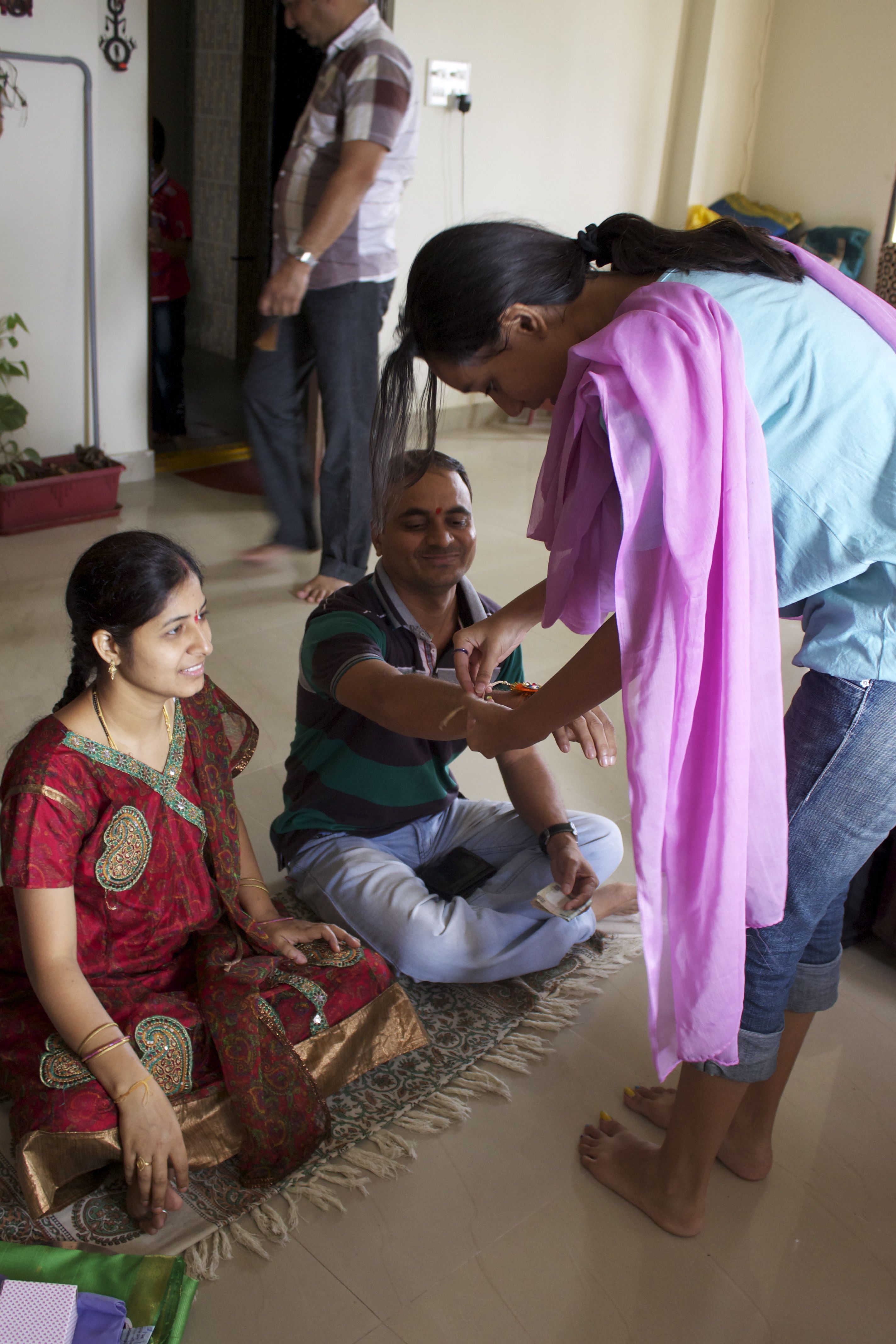
Prerna celebrating Raksha Bandhan (Sibling Day) with her aunt and uncle

This weekend, Nivedita and Prerna (my host mom and sister) invited us to an event at Oakridge International School, where Prerna goes to school and Nivedita teaches art. The event was called Treasure Fest, which is a vibrant two-day arts competition for many of the schools in Hyderabad. Check out the video for some of the performances!

I also went with four friends this weekend to meet with the founders of Sankalp, the NGO that I talked about in an earlier post. Founders Anita and Sara never fail to inspire me with their dedication to helping Indian women and preventing sexual violence. They explained to us that, because they just started the organization, they are still in a research and development stage. Making connections with other NGOs, the police department, and law firms in the Hyderabad area is the most important task right now because these other organizations will help advertise Sankalp as a contact for victims of sexual violence. As volunteers, we will be researching different areas of this issue in India so that they can use the information for presentations, grants, and education. They gave us research topics on human trafficking, the effect of caste and religion on sexual violence issues, the psychology of a sexual offender, and many more. Because I am interested in law, my assignment is to research and compile the recent movements in the Indian legal system pertaining to crimes against women. Anita and Sara also mentioned that they will be doing advocacy and prevention programs in local slums and encouraged us to tag along when we can! This may not be your stereotypical semester abroad, but I am so excited that I will have the chance to meet tons of people from a variety of backgrounds and, if I’m lucky, do something to give back while I’m here.

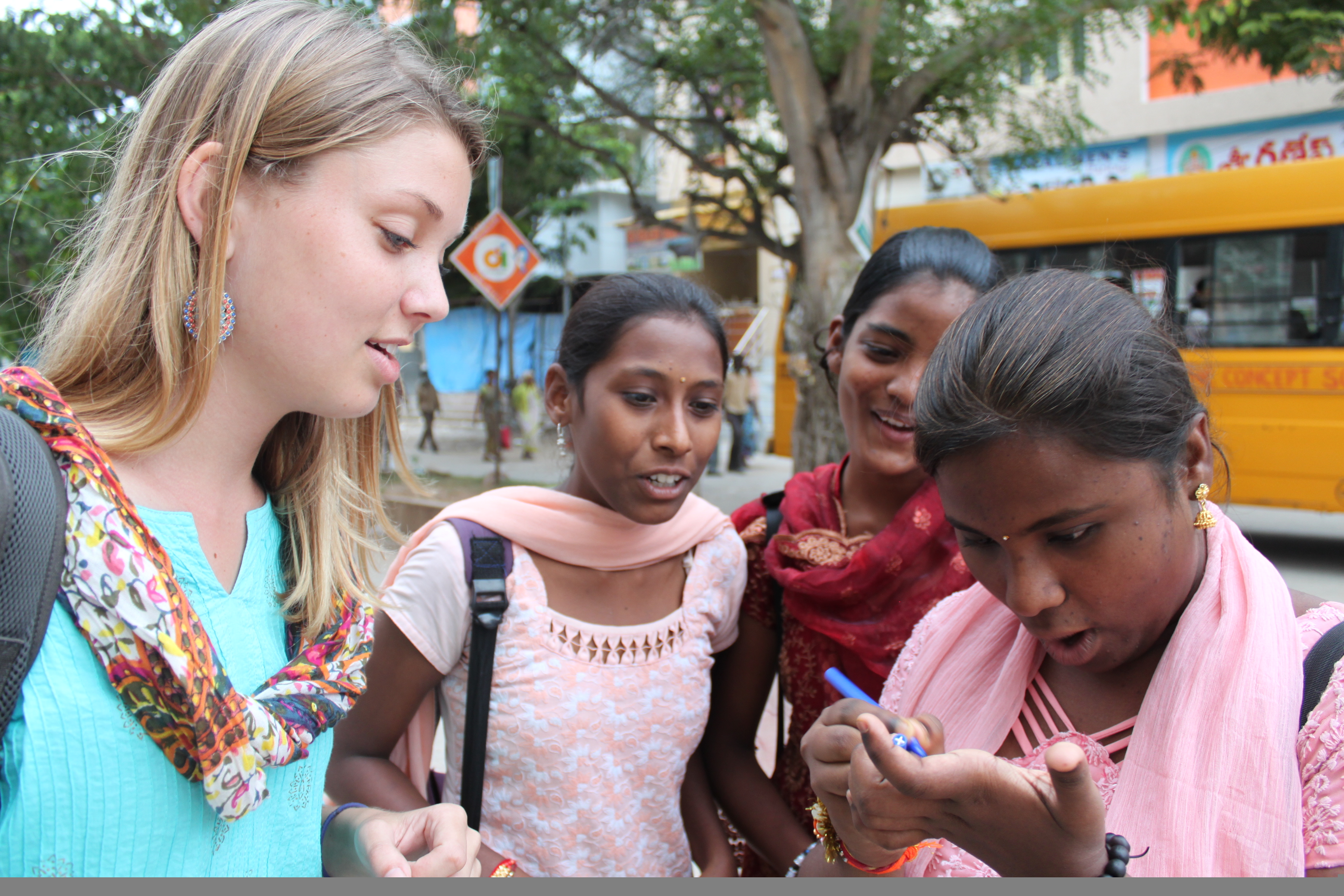
Girls in Manikonda

Meeting some friends in the neighborhood

It is also nice to be back home because the “study” in study abroad has started to kick in. Classes at the University of Hyderabad have been one of the most interesting cultural experiences yet on my trip. I am taking four classes for credit — Indian Philosophy, Technology and Politics, Indo-US Policies, and Basic Hindi — two that are direct-enrollment into the university and two that are classes for international students. I have noticed that Indian students are much more engaged in classroom debate than I am used to at home. Issues of caste, politics, education, Marxism, Indian philosophy, and Western lifestyle are topics that seem to come up in every class discussion, like the students really are thinking about these things all the time. One of my CIEE advisors mentioned at the beginning of the semester that some aspects of India remind her of what the 1960s must have been like in the US. It seems like there is a lot of passion among Indians, especially younger generations like the students at University of Hyderabad, to impact social norms and traditions, whether it be in a positive or negative way. Every week, it seems like there is another forum, rally, or protest on campus that gets students talking about their freedoms. By talking to students in my class, I have heard many different opinions of how students should act while at the university, most of which are compared to their view of “the Western way.”

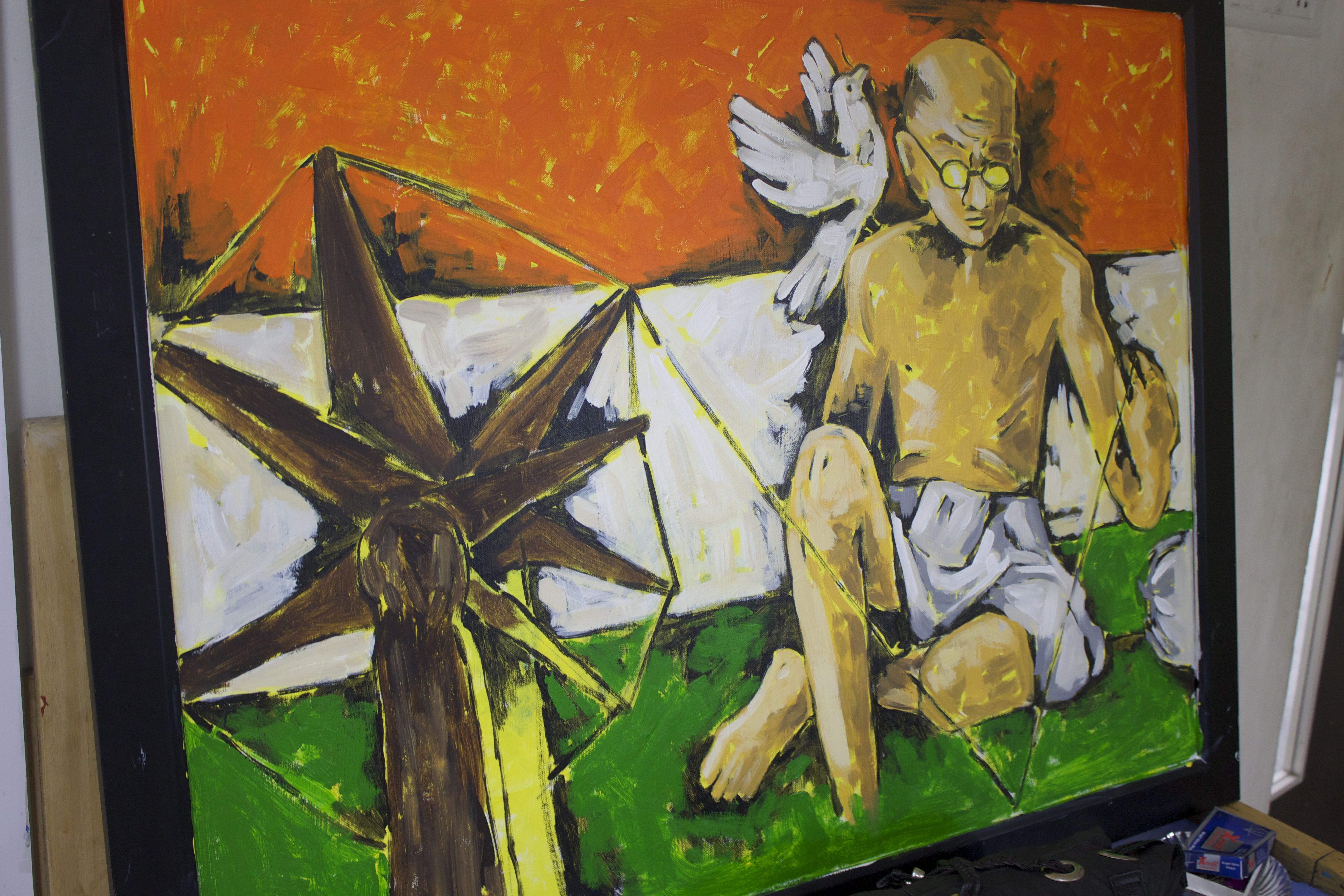
Oakridge Art

A student’s painting in the art competition at Oakridge Treasure Fest

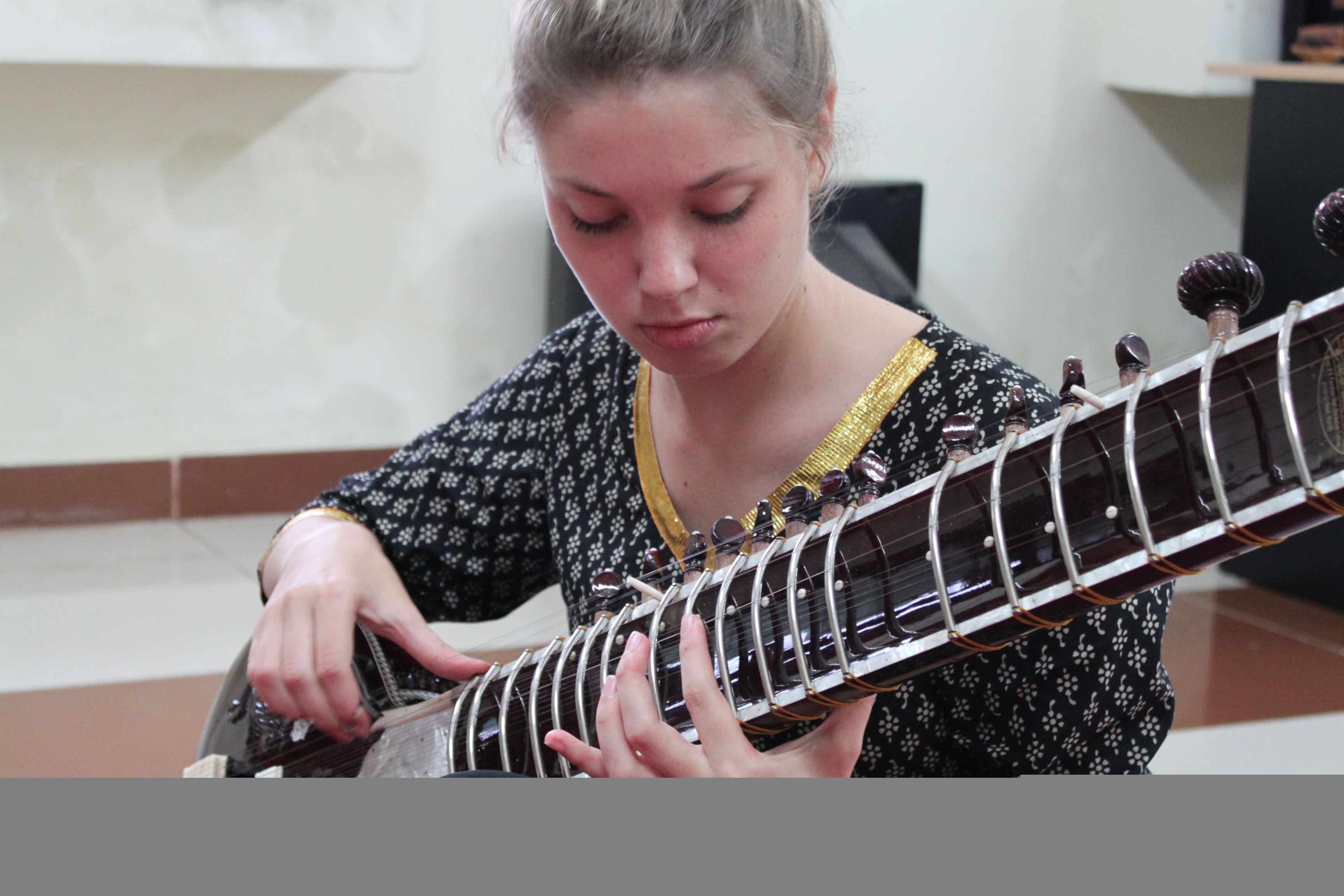
Although my academic classes are interesting, my favorite class that I am here taking is Sitar! I take lessons two times a week with a few of my friends in the CIEE program. I thought it might be similar to playing guitar, but so far it has been totally different. To make it even more interesting, our teacher speaks very little English, so we have to follow along by listening and watching him play. So far we have learned one melody and Happy Birthday, but soon we will start working on playing a piece for the Cultural Show at the end of the semester!

Sitar

Me practicing the sitar


Diego in Brazil: Settling or Being a Tourist?

August 19, 2013

“Walking is a virtue, tourism is a deadly sin.” Bruce Chatwin

I wonder if it is possible to move to and establish in a new place without becoming a tourist the first few days or weeks. The countless “so how close to the beach do you live?!” questions that come through emails and phone calls from friends abroad make me think twice about how I should see Rio de Janeiro. I will get to that in a second, but first some words on this past week.

When I arrived to Rio’s international airport Galeão I realized how little time I had had to think about studying abroad. My summer internship in the Brazilian and Peruvian Amazon had ended just three days before and I still had (and have) many documents and reports to write. PUC-Rio’s (my host university) staff met exchange students at the airport the morning I arrived and in a matter of minutes we were on our way to our respective host family’s place. My host-mother came out of the apartment to receive me with a hug and a warm “Bem-vindo Diego!” She showed me my new room and before I even noticed we were in the kitchen telling each other stories about our lives with a cup of coffee. After living in Norway and the US for four years, I can’t describe how that first morning made me think of home in Guatemala. “All Brazilians are friendly” may be an exaggeration, but my experiences in Rio de Janeiro and the Brazilian Amazon so far have shown me the incredibly welcoming side of this culture.

Every morning at 8:30 a.m. I cross the street in front of my apartment to take a bus to PUC, usually with my German flat-mate who is also an exchange student at PUC. The twenty-five minute ride to PUC seems nothing compared to the hour and a half or even two hours some local students take to get from their homes to the university. Most exchange students at PUC live in Rio de Janeiro’s Zona Sul (“South Zone”) which includes the city’s richest neighborhoods and most famous beaches. I had some trouble deciding what I wanted to write in this entry about Rio de Janeiro. I could describe my neighborhood’s busy streets, Copacabana’s beaches or even the scenic path I take when I bike from the university back to my apartment in the afternoons, but I would certainly be describing just a small section of Rio de Janeiro’s reality.

Diego in Brazil Entry 2 (800x600)

My neighborhood in Zona Sul at night

I continue to wonder – is it possible to move to and establish in a new place without becoming a tourist the first few days or weeks? Tourism continues to exploit the same discourses that built Brazil’s image abroad as an exotic, happy, and social destination. In addition, a tour around the city’s favelas (typically described as low-income shanty towns) is now part of some tourists’ plans for their visit to Rio de Janeiro. These two contrasting touristic destinations (Copacabana’s famous beaches vs. some of Rio’s poorest areas) seem to dominate the tourism-related advertising I have seen around the city and online. And the conversations I have had with foreign and local students at PUC make me think such discourse is not strictly limited to tourism, but goes as far as influencing how Rio’s residents present their city to others.

Is it possible then to “experience” Rio de Janeiro under a different scheme? I have my doubts. Getting to “know” a new place is, of course, a subjective experience, yet I truly hope I find a way to step back from the common descriptions of Rio de Janeiro and settle as a student as soon as possible. My first “solution” was to read Brazilian literature with stories that take place in this city. I recently finished reading “Quando ia me esquecendo de você” [“When I almost Forgot About You”] by Maria Silvia Camargo, and as I thought about this entry I struggled to avoid presenting you with a typical “Zona Sul” description of Rio de Janeiro, an exotic presentation of the city’s high levels of socioeconomic inequality, or Camargo’s romantic view of Rio’s atmosphere. How we position ourselves within and in relation to a new space will certainly determine our views and experiences regarding such place. I just hope that in the next couple of weeks I find a position that allows me to take a step away from becoming yet another tourist in Rio de Janeiro.


Rhiannon in India: Classes and a New Home in India

July 25, 2013

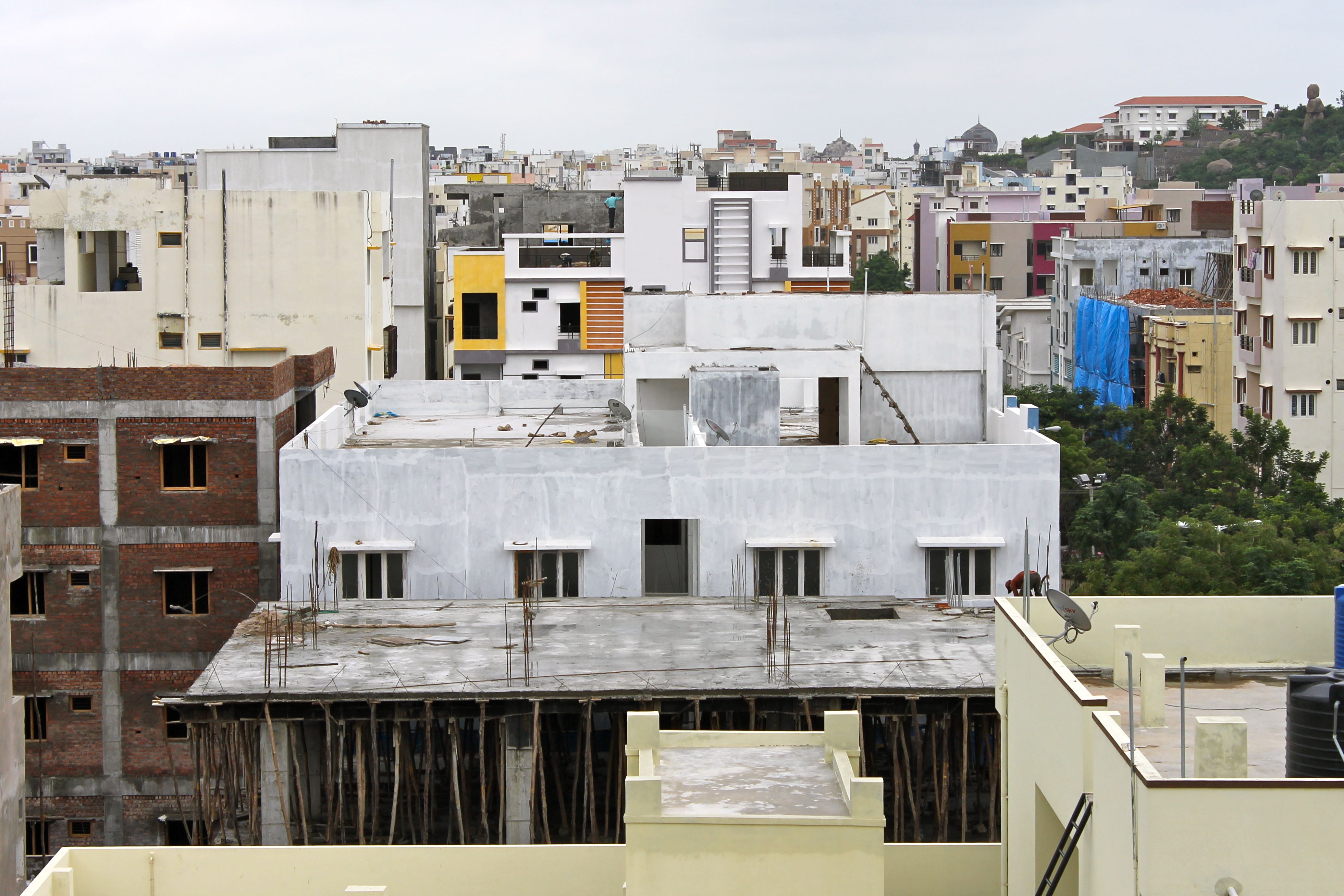
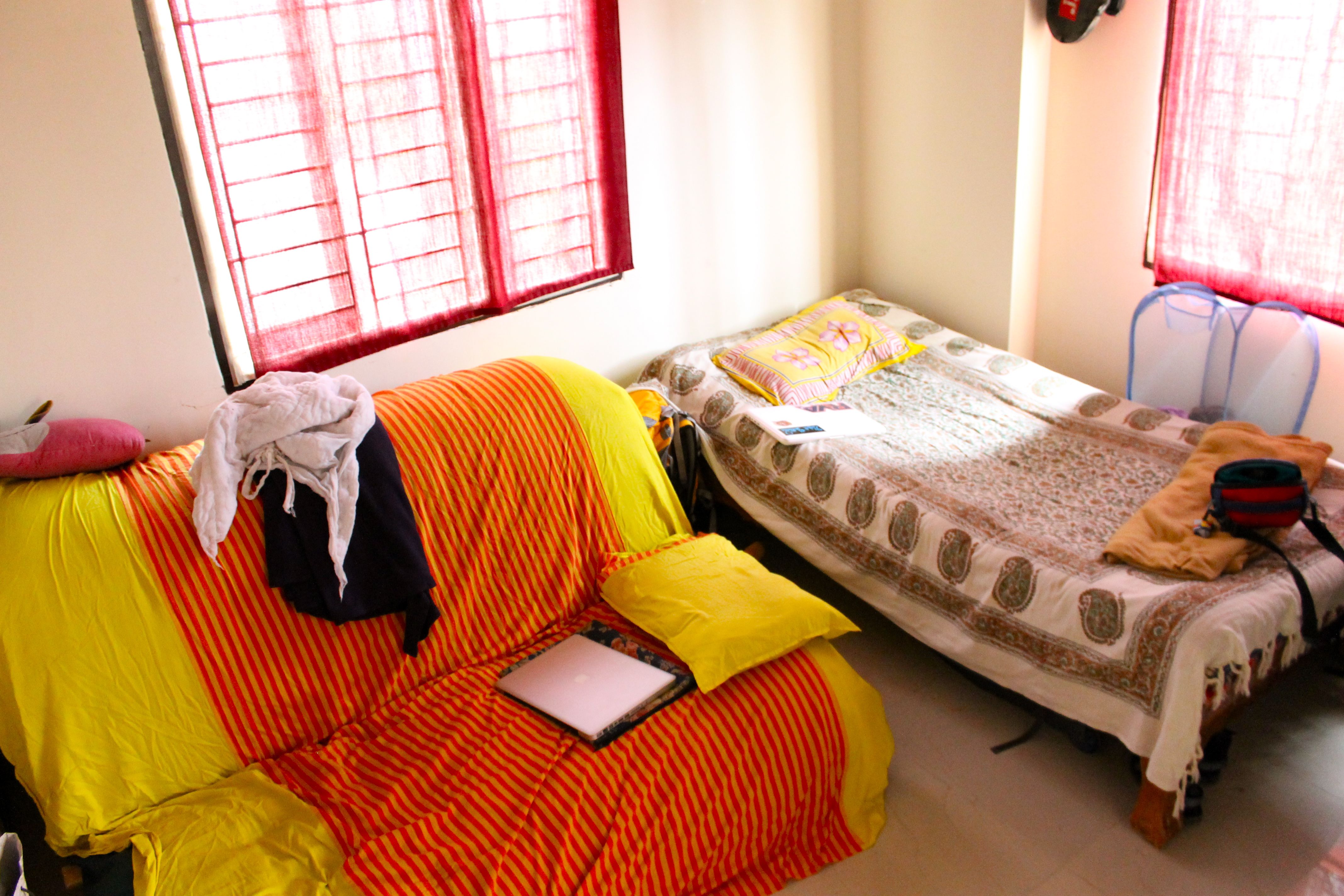
This has been yet another crazy week in India because I just moved into my new home stay and started classes at the university! This feels like the real start of my study abroad experience — finally living with an Indian family and going to classes at an Indian university. As I mentioned in my last post, I am staying in an apartment with my friend Jennie and our host family, Nivedita and Prerna. Nivedita, the mother, is an art teacher at a school in Hyderabad, and Prerna, her daughter, is 14 years old and goes to the same school. Nivedita and Prerna have been so kind and welcoming to us. They took us to the zoo on Sunday and drove us around the neighborhood so that we could learn how to get to the bus stop.

View from homestay

The view from my homestay

Homestay room

My room in my homestay

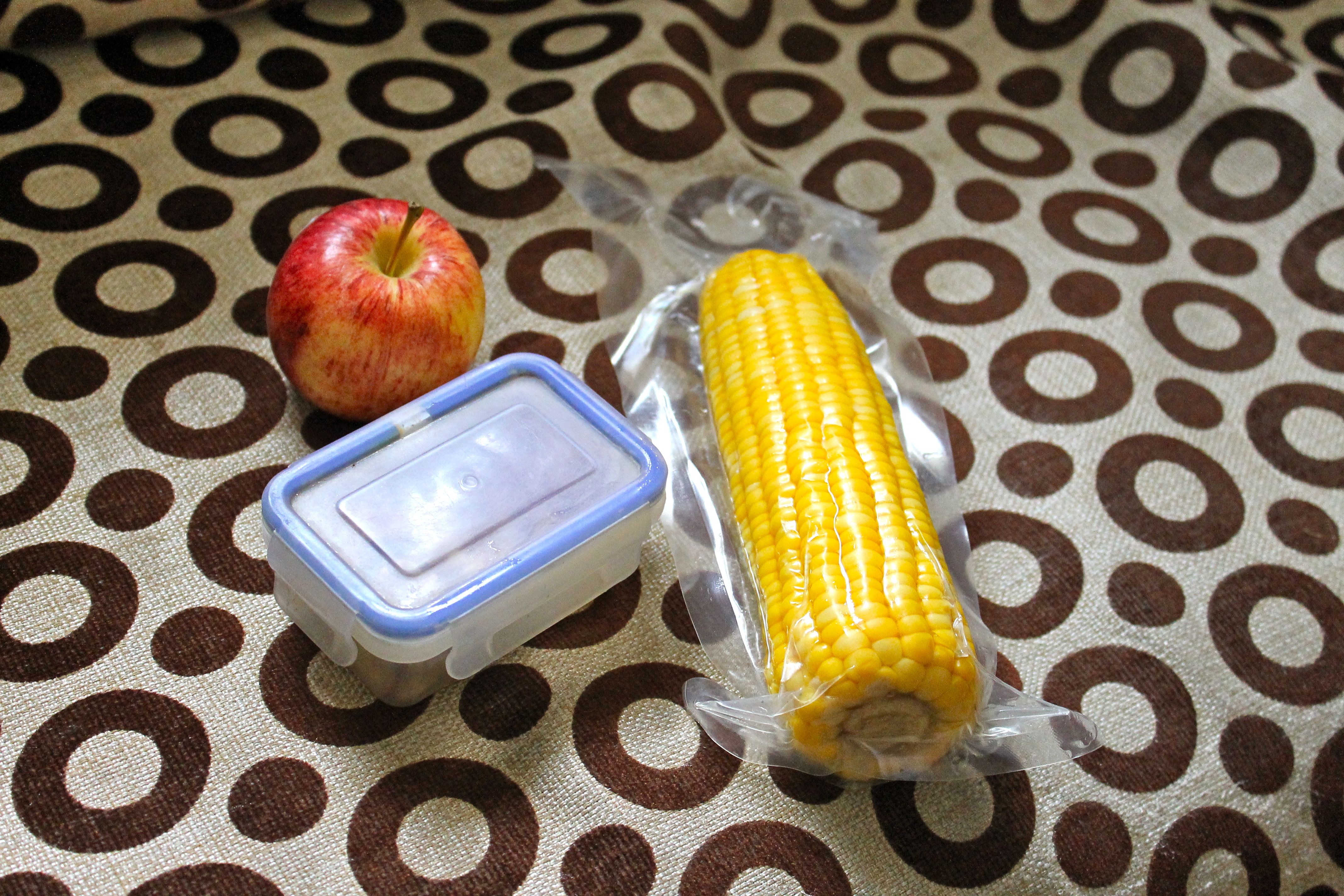
In the mornings before school, Nivedita packs us a breakfast-to-go and we start our commute to campus. Getting to and from school is probably the biggest adventure of our day! After taking the car with Nivedita and Prerna to the Manikonda intersection, a rickshaw to the main road, a bus to campus, and a bike to class, the commute takes about an hour and really wakes us up at 8 in the morning. Although it takes a while, traveling this route every day is an exciting way to see the city and integrate into the community.  Come along on my morning commute in the video below!

Breakfast

Breakfast-to-go!

Monday was my first real day of classes at the university, and so far the classroom setting has been quite a different experience from classes at Richmond. There is no “master list” of classes at the university, so departments and professors schedule classes whenever they see fit – and sometimes change them. Classes generally run for an hour on the hour, so there is no time to get between classes that are back to back. I was late to a few classes on my first day, but it is more common here for students to walk in and out of the room while class is in session. I have noticed that some things in India (class schedules, traffic rules, etc.) are much more relaxed than in the U.S., while there are other social expectations such as respecting the professor and dressing modestly that are much more strict. Because of this, I am starting to realize that when one of my professors said, “India is a nation of paradoxes,” he wasn’t just talking about its many cultures and languages. I am still processing this paradox and haven’t really made sense of it yet, but it seems that both systems work well despite how differently they are approached.

Now that classes have started, I have been struggling to decide how to balance my time in India among school activities, traveling, and volunteering. University clubs and volunteer groups have a large presence on campus here, and I hope to meet other students by joining something soon. I am also planning to take sitar lessons, which should start within a week or so.

Luckily, I don’t have class on Fridays so I will be able to travel to new places in India on the weekends. There are many cities in South India that have been recommended for weekend trips, such as Hampi, Goa, and Mysore to name a few. But since the majority of India’s vast population is rural, an Indian experience would not be complete without visiting a village or two along the way. Unfortunately, many of the great destinations in India are in the north, which are just too far away to visit during the semester, so I’ll have to wait for a long holiday weekend or until exams are over in November. It is impossible to see everything in such a diverse country in only five months, but I hope that in my short stay I will have a chance to see Darjeeling, the Taj Mahal, Varanasi, and Delhi.

I have also been thinking about volunteering for an NGO in Hyderabad called Sankulp. Sankulp works with victims of sexual violence in Hyderabad and supports them through the court process, therapy, and finding safe housing. As a more preventative measure, the organization also goes into schools to educate young girls and boys about sexual violence issues. The women at Sankulp are documenting the stories of the victims they meet, so I hope that I can get involved by transcribing these stories into English for a book they hope to publish in the future.

Looking back over the past two weeks, I am astounded at how much I have seen and experienced. Now that I am settling in, things such as navigating, haggling, and communicating that used to seem impossible are now getting easier. I know that I will always look like a foreigner here, but I hope that by the end of the semester I will be able to live like a local in Hyderabad.

Mera blog padhane ke liye shukriya!  [Thank you for reading my blog!]


Living, Learning, Loving (Posted by Blair in Ecuador)

February 22, 2013

The homestays are a very important aspect of the SIT program. I think the experience of living in a different culture almost requires this aspect. The families help us a lot with our Spanish language skills, as well as cultural behavior learning, information about Ecuadorian society, and, obviously, the quintessential family love and caring. I can go to my mamá when I have a headache, when I’m frustrated with my classes, even when I feel really confused about being here in Ecuador.

More than just living with a family, we often have homework assignments that incorporate them. Sometimes it’s something as simple as talking with them about an Ecuadorian movie we’re watching or a news item we talked about in class. Later in the semester, we have to write a Personal-National History Essay about a historical event in Ecuador that also affected some family member of ours and how his/her personal account compared to the history books. These little assignments help us learn about the history and culture, as well as to form a closer relationship with our family members.

Living in a homestay certainly has its difficulties as well. It sounds so silly, but after “moving out of the house” into university housing, I felt that I was in control of my life: how I spend my time, what and when I eat, when I sleep, when I get to simply have some alone time. This homestay is quite an adjustment. Now, I depend on my host mamá for my food, for clean clothes, and for help in absolutely every part of life.

Mamá prepares and serves us all the food, sets and clears the table, washes the dishes, stores the food, and the kitchen is spotless again before I know it. Still not sure how she does that… I still don’t know how to boil some water for tea on the gas stove because she’s in the kitchen asking what I would like before I can even find the kettle!

I have washed my own clothes for myself at home since I was about 14, when thought I was too grown-up to have my mom do my laundry (I don’t remember her objecting too much). I have no idea how to wash clothes here… and the machine is even in English! Apparently you have to hook up some hoses though, lesson learned. But my mamá simply insists upon doing it.

I went to the pharmacy with my mamá the other day when we were running some errands and I remembered I ran out of band-aids. When I went to buy them, not only did I have to ask my mamá how to say band-aid, she had to explain to me that No, you don’t buy an entire box of band-aids, who would possibly need that many? About 10 minutes of explanation later, we left the pharmacy with 5 individual band-aids.

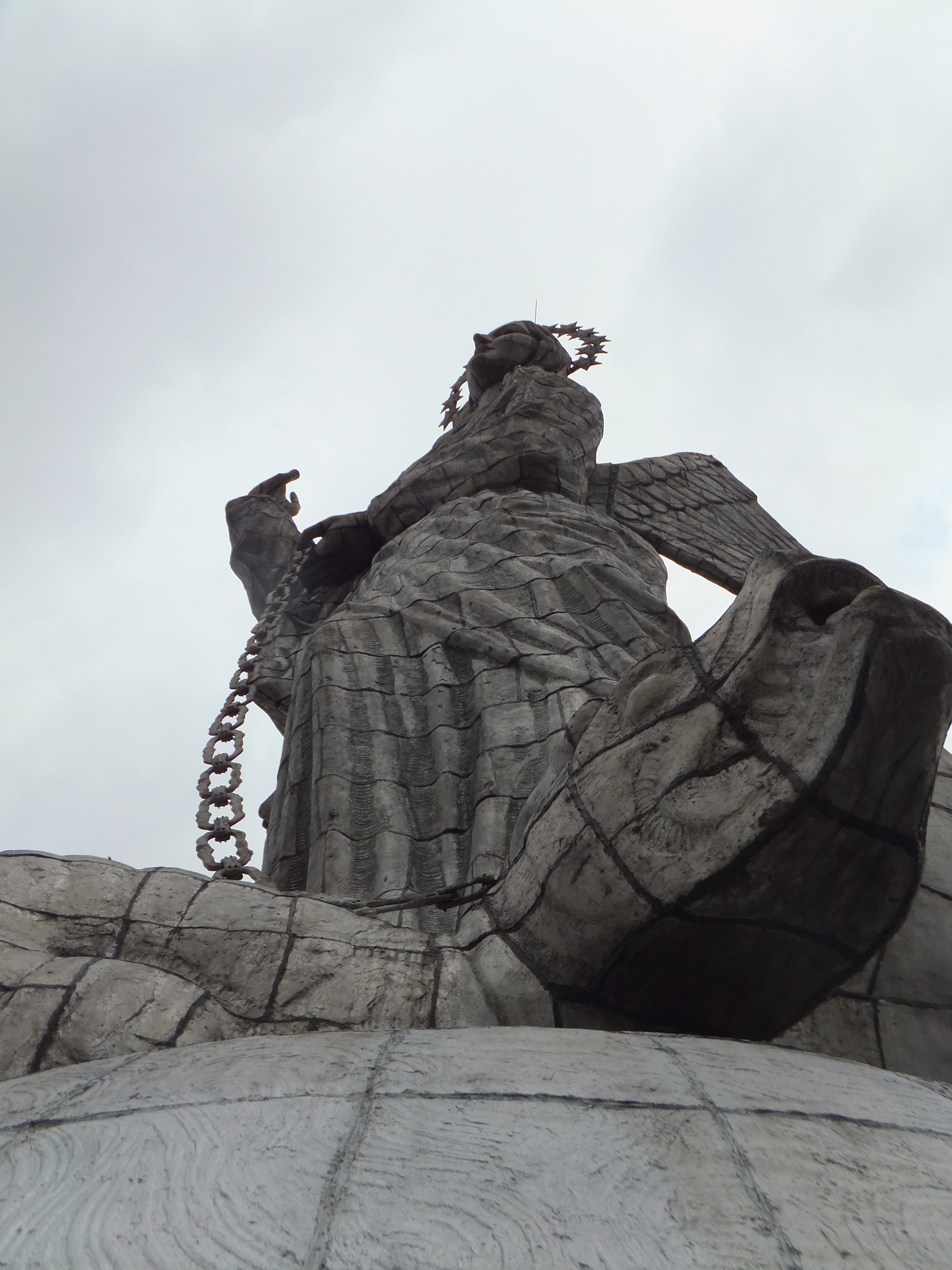
Apart from Band-aid runs, we get to go out with our families and they show us around their city. We went on Saturday afternoon to the Virgen de El Panecillo, a hill in the center of Quito where a priest built a large Virgin Mary back in 1976. From that point, you can see all around the city of Quito, much like the panoramic view I got to see from the Volcanic mountain hike on my first day here [see Centers of the World (Posted by Blair in Ecuador)].

The Virgen de El Panecillo from directly beneath, after climbing many flights of stairs for a better view of the city, Quito

The Virgen de El Panecillo from directly beneath, after climbing many flights of stairs for a better view of the city

My host dad pointing out the historical churches of Quito's Old Town, after climbing to get a better view of the city

My dad pointing out the historical churches of Quito’s Old Town

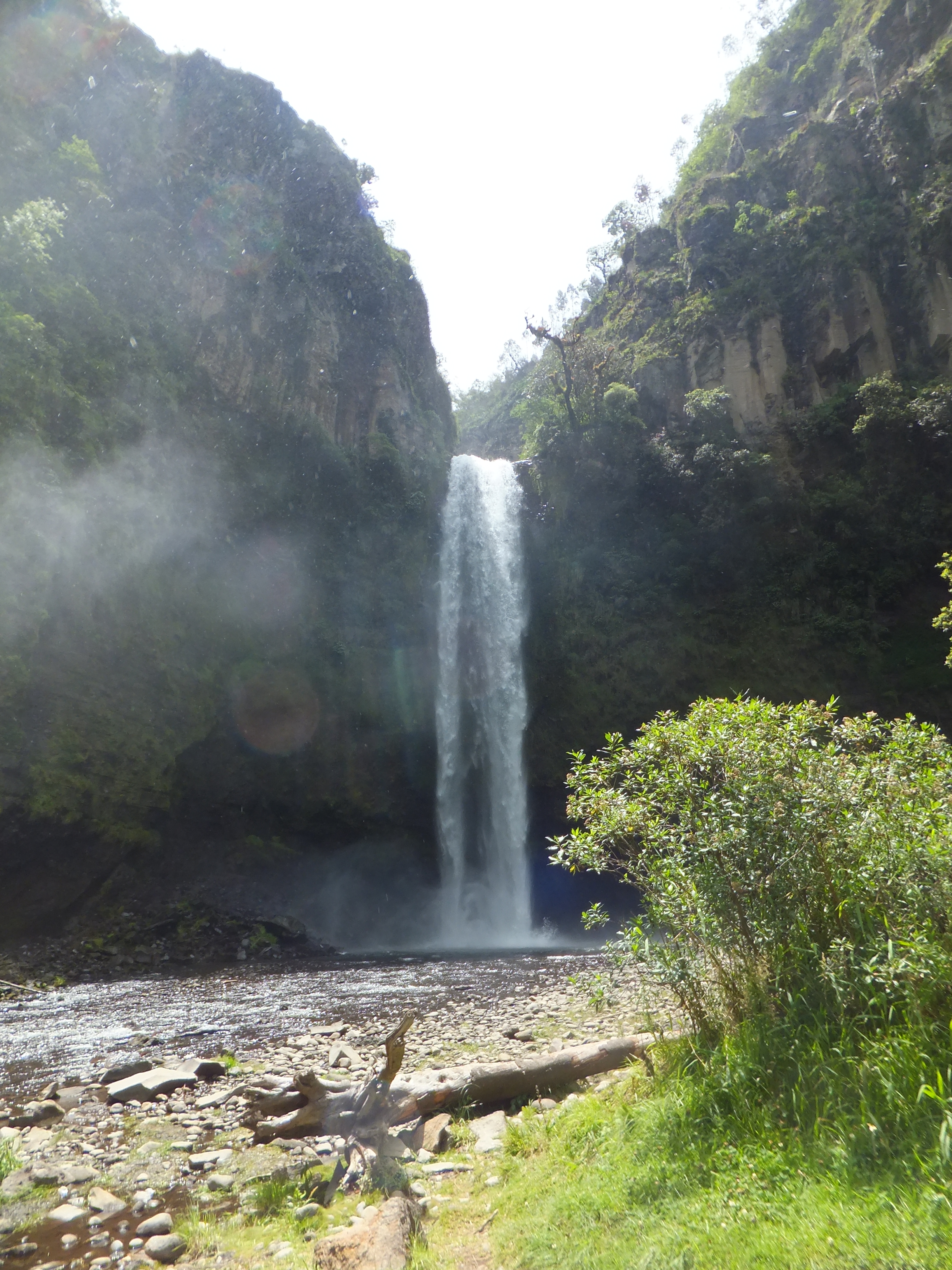
We also got to go to Molinuco Falls on Sunday, which is a HUGE waterfall at the end of a lovely hike. The walk there includes smaller waterfalls, some pools where you can swim, even a ‘Meditation Pond!’ For an idea of the size and force of this waterfall, you should know that I could feel the mist from where I was standing in the photo below!

The GIANT Cascada Molinuco (waterfall); it was so powerful I could feel the mist from where I was standing!

The GIANT Cascada Molinuco

The option to live in a different culture, in a society different from mine, to share with the people of that society, and to live for some time in a different country is a rare opportunity. Not everyone can spend a year of their life hopping between countries due to their committments. I believe many people also prefer to stay in their safe and comfortable space. However, the information and the lessons that I will have learned by the end of the program, whether learned in the classroom, in the daily activities of my family, or during the excursions we take, will make this an unforgetable semester.

Go to the people. Live with them. Learn from them. Love them.” Lao Tzu

P.S. My family prefers that I do not write about them personally in this blog. We will also be living with a family in a different section of Quito beginning in March and I hope to be able to talk a bit about them.


Introduction: Why I am Studying Abroad (posted by Jimmy in England)

September 28, 2012

This is for all the dreamers out there.  Please take a seat; I want to tell you a story.  My name is Jimmy and I am from the best city in the world… Buffalo, New York.  I am in my third year at the University of Richmond and somehow I am about to board a plane for London.  This year I will be taking my talents to the University of Oxford.  It’s not South Beach and I am not Lebron James, but I feel just about as good as anybody that has the ability to move to Miami and play for the Heat.  (If you don’t get the corny joke, YouTube ‘Lebron James Decision’)   I am currently sitting in Dulles International Airport waiting to start a long journey that will end in late June.  Over the next 9 months, I will be studying in the Biochemistry department at Oxford.  But this post is not about the future, it’s about the past.  It’s about how I got here, an hour and a half away from starting a journey that will change my life.

It all started last December after I had finished my final exams.  I had just started the long ten hour drive from the beautiful UR campus back home to Buffalo, NY.  I like the long drives because it allows me to decompress after a challenging semester of college.  This time, I spent a good amount of the drive wondering if I had made the right decision.  Before I get to that decision let me explain one thing.  I had never wanted to study abroad.  I am a manager for our Men’s Basketball program, and never wanted to miss part of the season with the team.  The official season for college basketball runs from mid October to early April.  If I had planned to study abroad, it would have cut into half of the season because most study abroad programs run one semester.

So what was the decision? Last year I was an orientation advisor (OA).  As an OA, students help incoming freshmen get adjusted to college life.  The people that are in charge of OAs are called Orientation Leadership.  I had desperately wanted to be on the Orientation Leadership team since my freshman year.  So why, then, did I turn down the job when it was offered to me for this year?  Well that was because of a lesson that my parents taught me when I was growing up- Family comes first and everything else comes second.  Now this isn’t about my real family (Mom, Dad, Phil, Joey, and PJ) but about my other family.  Like I said, I am a manager for our Men’s Basketball program.  The players have made me one of their own and the coaches have taken me under their wing.  Outside of my parents, they have been some of the most important role models in my life.  That, to me, is family.  As Maya Angelou once said, “I’ve learned through life that people will forget what you said, people will forget what you did, but people will never forget how you made them feel.”  The basketball team has made me feel like a part of the family and so  I denied a secure job for the potential of going on a two week tour of Italy and Switzerland with the team.  The dates for Orientation conflicted with the dates for the trip, so I couldn’t do both. To make the decision even harder, there was no guarantee that I’d actually go on the trip, seeing as we have 12 managers on the staff and three rising seniors.  By choosing the potential trip with the basketball team over the opportunity to be on the OA Leadership team, I inadvertently gave myself the opportunity to go abroad for a semester or year.  If I had taken the OA Leadership position, not only would I not have had a chance to go abroad with the basketball team, but I would not have been able to go abroad for a semester or year either, because members of the OA Leadership team commit to staying on campus for the remaining two years to help with orientation.  The thought of studying abroad would never have crossed my mind.

With all of that running through my head, I drove home.  It had been a long semester of 5.5 classes and I needed a break.  I had gotten caught up in lots of work that I had forgotten how enjoyable it was to be a college student. During winter break I decided that I needed to change something.  As Steve Jobs said in his 2005 commencement speech at Stanford University, “For the past 33 years, I have looked in the mirror every morning and asked myself: ‘If today were the last day of my life, would I want to do what I am going to do today?’ And whenever the answer has been ‘No’ for too many days in a row, I know I need to change something.”   One day over winter break I received an email from the Office of International Education.  They send out tons of emails to sophomores telling them that they should study abroad.  Every time that they sent one, I deleted the message before opening it.  This time, I took a look.  I needed to change something.  After that I sat down with my parents and went through every program, crossing off schools one by one.  When I got it down to my final two choices I asked a few people which one I should choose and received lots of good advice.  All of the advice pointed towards Oxford, a full-year study abroad program, and the rest is history.

Over the next 9 months I hope to learn, grow and explore a different culture.  I hope to enjoy my time abroad and work hard to study some biochemistry.  But most importantly, I hope that this blog will inspire you to get up, go and follow your dreams.  Why waste your time doing anything else?  In the words of Coach Mooney, “You’ve got a chance to be great today kid!”  Go be it and I will talk to you soon.

“Sometimes you imagine that everything could have been different for you, that if only you had gone right one day when you chose to go left, you would be living a life you could never have anticipated. But at other times you think there was no other way forward–that you were always bound to end up exactly where you have.”

― Kevin Brockmeier, The View from the Seventh Layer


Week 2: Little Steps (posted by Kati In Spain)

September 4, 2012

This week has been focused on the administrative details of moving to Spain and matriculating in a university that has procedures and customs that are very different from those that I am used to. It has been a long week of ups and downs, and although Monday was a rocky start, Sunday was a perfect finish.

Ninety days before leaving for Spain I applied for a yearlong student visa via the Boston Spanish Consulate, following their directions to a T. After eight weeks of waiting, I was told that the Consulate is no longer permitted to grant yearlong student visas and that I would have to apply for residency at the local police station within thirty days of arriving in Spain, or else I would be deported. I waited a week after arriving to begin my residency application, as the director of my orientation program, the person I was told to ask for help, was on vacation until Monday. First thing Monday morning I went to the Cursos Internacionales Office to ask Carmen for guidance. She patiently explained to me her understanding of the application process, and she gave me directions to the police station. Colleen, my unconditionally supportive roommate, accompanied me.

By the time we arrived at the station it was one o’clock in the afternoon, and after being loudly hissed at and thoroughly evaluated by the male officers standing outside of the station, we were told that we would not be helped today and that we must come back early tomorrow. Feeling slightly dispirited, we continued with Carmen’s directions and made our way to the University’s International Relations Office, where my thoroughly confused advisor told me that I must have done something quite wrong on my original visa application and that I needed to fly to Madrid to speak with the U.S. embassy and bring her a written explanation as to why I did not have the correct visa. Thankfully, Michele Cox, the head of Richmond’s Study Abroad Office, was able to help me determine the best course of action, and so I returned to the police station early Tuesday morning.

My experience on Tuesday was much better than the treatment I received on Monday. The man who helped me sported a grey Canada T-shirt, jeans, and sneakers, and upon realizing that I hail from Boston, he immediately started talking about the Celtics, the Red Sox, and thick Boston accents. He gently told me that my application was not complete because I did not have my permanent Spanish address yet, that I needed additional photos, and that he had to add me to a deportation watch list until we could proceed with my application. Wednesday saw me back at the International Relations Office begging for my final address, and Thursday saw me modeling for an overly enthusiastic photographer as she snapped visa headshots from every angle possible. Finally, on Friday, I returned to the police station armed with a folder of paperwork and pictures, and Sarah, a USC graduate, accompanied me to help smooth the process. The same kind man helped me again, and after waiting in line, filling out more forms, traveling to the bank for a money order, waiting in line again, and finally being seen, I was told that I could return to the station in forty days to retrieve my extended visa. Halleluiah!

Despite missing several hours of class to deal with my visa, I successfully graduated from the Cursos Internacionales intensive immersion program on Friday. It feels strange that I will not be in class with my wonderful professor Juan or my new friends again! Although my grammar did not improve very much through the course, my speaking ability and my knowledge of Spanish culture and daily life improved at lot, and I am so glad that I took the class. On Wednesday I took a placement test for another intensive immersion course that begins in October, and I have high expectations for my experience!

Also dotted throughout this week have been preparations for class registration. Class registration for international students is an arduous process that is not well understood by anyone and is confusing for everyone. As with any university, the student peruses the rich course catalog and creates a list of classes that are of interest to her and fit with her major areas of study. She then emails and receives an almost immediate response from the heads of each relevant University of Richmond department to make sure that she will be able to transfer credit from the classes she is interested in back to Richmond. The student spends a few hours arranging various possible schedules with different combinations of the classes that she might like to take, and then she pursues a meeting with her academic coordinator at the University of Santiago de Compostela.

But this is where it gets tricky: international students are not assigned an academic coordinator. The student must select a home faculty even though she is taking courses across various faculties, ask the International Relations Office staff to craft her a new acceptance letter so that professors will allow her to take classes in multiple faculties, email the faculty secretaries repeatedly over the course of a week until she finally gets a response, schedule an appointment with the coordinator of each faculty, trek all over the city for appointments with each coordinator, and then beg each coordinator to answer her questions about class schedules, the language of instruction, final exams, and the class registration process, which is different for every faculty and not at all self-explanatory. Finally, with signed learning contracts, final acceptance letters, and certificates of matriculation, the student may finally register for her classes, receive a student ID card, and gain access to the Internet in the dormitory. Needless to say, I cannot wait to be done with this process and registered for the classes that I am so excited to take!

Keeping me well fed and sane as I wade my way though these processes is Pepita, my incredible host mother. Every day has begun with a piping hot cup of English tea, toast, various yogurts, and fruit, and every evening has concluded with an overwhelming amount of delicious food and an hour or two of Spanish TV game shows. After receiving my final address and dorm room number on Wednesday, Colleen and I wandered over to the residence hall to see if we could see our rooms. Unfortunately, my room was occupied by a summer student, but after much negotiating and pleading, the man behind the desk finally agreed to show us a room. We have certainly been spoiled by the wonderful dorms at Richmond, and the stark nature of these rooms made that clear. After much deliberation and conversations with all parties involved, Colleen and I asked if it would be possible for us to remain with Pepita for the rest of the semester. Sadly, after some tense last minute negotiating, it was determined that we have to relocate to the dorm or lose all of our housing deposit. We will really miss Pepita, her grandchildren, and her wonderful cooking and caring smiles, but upon hearing the news she made us promise to visit her, and as she hugged us and patted our backs she told us that we are always welcome in her home. Even though it is sad to leave Pepita, I know that we will have an equally beneficial cultural experience by living in the dorms and by participating in the many clubs, sports programs, and social events that are planned through the residence halls, and I am looking forward to meeting even more people my age!

One of the social resources Colleen and I have taken advantage of is the ERASMUS program. ERASMUS is a student-run social and academic resource for exchange students at universities across Europe. By joining ERASMUS Colleen and I have gained access to uniquely discounted trips to important places around Spain, specially organized group outings for tapas around the city, tours of Santiago in both English and Spanish, and to the buddy program, which has partnered us with a current USC student who will help us navigate the university and the city and answer any questions we might have. Plus we get a fancy ID card…how could we pass up that opportunity?
Saturday at the food market in Santiago, fruits and vegetables

Saturday at the food market in Santiago

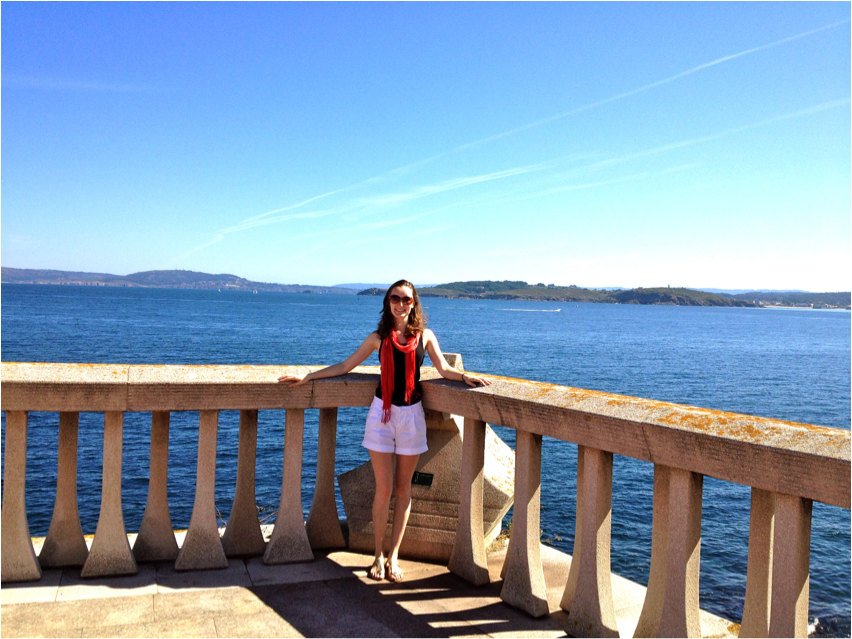
On Saturday we spent the morning at an amazing open-air food market in Santiago, and we concluded our week with a perfectly lazy day on a beautiful beach in A Coruña, a city located a short train ride north of Santiago. We spent the morning walking along the port and the city coast from the train station to the Plaza de Maria Pita observing the gorgeous architecture and the beautiful coast. We ate lunch at a little Mexican restaurant that was the best bang for your buck in town, and the owner was so excited to have Americans in his restaurant because he believed that we could better identify with his experiences with violence and the drug trafficking in Mexico than could the Spanish. After lunch we continued on to the Tower of Hercules. The Ancient Romans built the tower almost 2000 years ago, and it is one of the oldest lighthouses in the world.
A picture at the A Coruña coast, a gorgeous view of the sea

Kati at the A Coruña coast

From the base of the tower we got an incredible view of the city and the coast, and then we continued on to a lovely little beach that is obviously a favorite of the locals. After a few hours of relaxing in the sand, refreshing ourselves in the water, and catching up on some sleep we wandered over to a little ice cream shop before catching the bus back to the train station. We all tried turrón ice cream, which tastes like almondy burnt sugar ice cream – so delicious! A sunny day with friends, ice cream, and ocean water was the perfect anecdote to a hectic week.

A perfect Sunday at the beach in Spain

A perfect Sunday

Quote of the Week: “Finish each day and be done with it. You have done what you could. Some blunders and absurdities have crept in; forget them as soon as you can. Tomorrow is a new day and you shall begin it serenely and with too high a spirit to be encumbered with your old nonsense.” ~ Ralph Waldo Emerson
Week 1: Aprovechar: to take full advantage of (posted by Kati in Spain)

August 28, 2012

An announcement over the plane’s loudspeaker wakes me from my comatose state, “…flying south to Santiago. We will arrive in approximately one hour. The temperature at our destination is 27 degrees.”

Flying south? Santiago de Compostela is north of Madrid. I look out the window and see tan hills dotted with little green bushes, not the rolling green hills of Galicia that I was hoping to see. Panicking, I yank my overstuffed backpack free from under the seat in front of me and begin to excavate for one – any – of my three guidebooks. I find maps of Spain in all of them, but none of them have Santiago labeled. I open the airplane magazine to find a flight map, and my panic subsides as I see that Santiago de Compostela is the only Santiago that Iberia Airlines flies to from Madrid. I am on the right flight; the pilot must have misspoken. Whew.

A short hour later we descend through fluffy white clouds, soaring over the greenest countryside I have ever seen. After collecting my bags, I push my trolley out into the soft, fresh Galician air. After hours of travel, I am finally here.

PIcture out of window flying over Santiago de Compostela

Flying into Santiago de Compostela

A cabbie rolls his little white car forward to meet me. He is rocking a plaid flannel shirt, black Ray Bans, black skinny jeans, a graying mustache and matching hair, and a cigarette, which he promptly puts out. His accent rolls and lilts like the road we drive towards Santiago. His pronunciation reminds me of an Irish brogue just as the Galician song on the radio reminds me of Celtic music I have heard at home.

The cabbie drops me off outside of a heavy glass and iron door squeezed between an oriental clothing shop and what looks like a garage entrance. I ring the bell, and after a minute an older woman with brownish-red hair and a sweater draped over her shoulders carefully makes her way down a flight of stairs into the apartment lobby. With a big smile that crinkles her eyes, Pepita opens the heavy door and bustles me and my bags inside.

The apartment is spacious and filled with natural light. The floors are beautifully constructed from cherry wood, and although upon first inspection the kitchen appears to be in disarray, I quickly learn that everything has its place and its purpose. I am shown from my bedroom to the kitchen where Pepita has prepared a Spanish tortilla. It’s a solid disk the size of a frying pan created from eggs, milk, potatoes, and onions. Without pausing for breath in her story about an adventure she had in an airport, Pepita flips the whole tortilla onto a plate and sets it in front of me. Forty-five minutes later when I have only managed to eat half of it, she cuts me another quarter and insists that I finish.

Pepita reminds me a lot of my own grandmother. She is kind and gentle beyond words, but she is a force to be reckoned with. She is a teacher/administrator at a local high school, and she is full of stories and life lessons. Five minutes after welcoming me into her home, Pepita quizzed me on my beliefs about abortion, dating, and children, and she proceeded to tell me that no one, absolutely no one, should have children before they are thirty years old. In the mornings, Pepita serves me “English” tea: I am of British descent, and so I should, therefore, prefer English tea. She is always finding ways to make me more comfortable and more at home.

Colleen, a fellow Richmonder and my roommate for our two-week orientation period, arrived on Sunday. She is lovely and just as excited to be in Spain as I am. We are extremely similar, which makes living together an absolute pleasure. Our adventures are always full of laughs, and no day is complete without a somewhat uncomfortable cultural learning experience.

We have the best teacher, Juan, for our intensive Spanish immersion class. In class we practice grammar with exercises such as interviewing fictional characters, solving murder mysteries, writing fake roommate adds, completing TV scripts, and debating current events. We also learn how to imitate Spanish spoken with a thick French accent, the difference between tortas and pasteles, the best beaches in Galicia, and what not to miss in Santiago.

Traditional Santiago almond cake, the Torta de Santiago

Smiles all around after two big bites into the Torta de Santiago

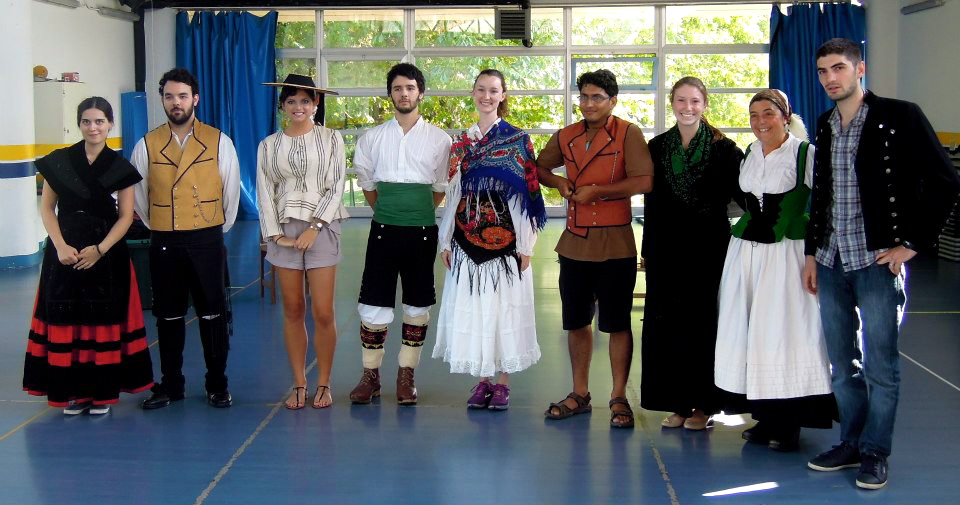
In addition to our academic orientation, Colleen and I are orienting ourselves to daily life in Santiago. We spend part of every afternoon and every evening after dinner wandering the stone streets of the city, and we discover little treasures during our walks. We have fallen in love with the Torta de Santiago, which is essentially almond pound cake with powdered sugar. We have compared prices, quality, and quantity of food in supermarkets around the city. We have investigated the rates of different mobile phone companies and compared packages. We have spent time in bookshops, bakeries, little corner stores, oriental markets, parks, culture centers, and art museums. We have gone to mass, attempted Galician dancing, and toured the buildings of the university (University of Santiago de Compostela (USC)). We have experienced Santiago nightlife (until 5:30am, which is considered early!) under the protective wing of Antonio, Pepita’s son and father of two. We have become friends with students from Kazakhstan, Tajikistan, Georgia, Germany, Brazil, Japan, Italy, and South Korea, and we cannot wait for the 40,000 full-time university students to arrive on campus.

Dressed in traditional wear for a Galician dance and music class

Kati dressed in traditional wear for a Galician dance and music class

The past seven days have been a wonderful introduction to life in Spain, and I am so happy to be here.

Quote of the Week: “The key question to keep asking is, Are you spending your time on the right things? Because time is all you have.” ~Randy Pausch (The Last Lecture)


Bangkok to INDIA!

May 16, 2012

I just came back from some of the most incredible five days of my life.  I have had a pretty fantastic year filled with travel – by the time I land back in the U.S. on May 22 I will have conquered eleven countries on four different continents in nine months.  And still this past week was one of the most life-changing and memorable weeks of my entire adventure.

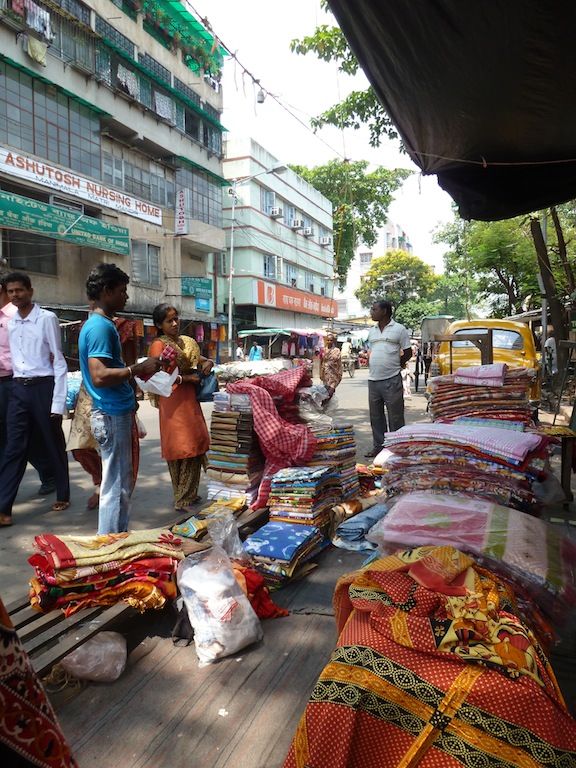
I was given the opportunity to visit Kolkata with a friend of mine who lives in Bangkok, and who has family friends who live and work in Kolkata.  I am in the middle of finals, so the decision to go was really because I was eager to visit the non-profit organizations that our hosts work for, and despite all my travels, India was still a country that made me a bit nervous about traveling to.  So all the more reason to go!  It’s funny though, because most people don’t go to Kolkata as a final destination.  So when I mentioned that I was traveling to India, specifically Kolkata, most people asked, but where are you really going?  And exactly as I was warned Kolkata itself is a dirty, dilapidated city, that is plagued with poverty; it is inescapable.  The thing is though, that once you see past the poverty, the dirt, and the grime, there is so much to discover in Kolkata, and so much hidden beauty.  I could write pages about how amazing the trip was, but I will summarize my trip into two parts: the high and the low.

The low point of the trip was the morning of Day 3.  We had just come from an incredible (and very early) morning visit to the Mother House, where Mother Teresa lived, died, and from where she did her incredible work.  Learning about her story, seeing pictures and reading quotes which give a glimpse into her life was truly incredible.  She started the organization the Missionaries of Charity. By bringing a focus to the poor and destitute in Kolkata she did something that no one in his or her time had braved to do.

Afterward we went to visit a temple in Kolkata, home to the goddess Kali, who symbolizes war, death, and destruction.  She is also the god associated with Kolkata.  From the moment we started walking to the temple, I didn’t have a good feeling.  There were people everywhere screaming at us, trying to get us to go this way or that way.  It was mass chaos, and there was a frantic and frightening energy.  We walked through the gate past a few guards with huge guns.  As we walked in one man warned us, quite bizarrely “Just do this one thing for me, go in and don’t involve anyone else in your experience.  And do not take off your shoes.”  Well we noticed that everyone waiting in line had no shoes on.  We circled the temple to get an understanding of our surroundings and where we should line up, and passed people who looked half-dead, lying on the floors everywhere. It was overwhelming.

We finally decided to take off our shoes, but knew to carry them in because if we left them outside they would be gone by the time we came back.  But as soon as we touched our shoes a woman came over screaming and frantic telling us “No! no! no!”  She truly looked insane, and would not let us pass.  After much confusion and anxiety, us three girls finally decided to leave.  We walked away – I was in the worst mood and just didn’t know what to make of the whole experience.  Depressing? Sad? Frightening? Unnerving? Disturbing? There was something.  That night when talking to our host, she explained that the temple is known for its heavy and dark atmosphere, and that they usually warn people about going there.  As recently as November, a child sacrifice of an eleven year old, was reported at that temple.  That was definitely my low.

I have two highs.  The first was our visit on Day 4 to an organization called Freeset. Freeset works by building relationships with women in the red light district Sonagachi (home to 10,000 women who work in prostitution).  Just as a comparison, 20% of users in Thai red light districts are foreign and only .01% in Kolkata, so 80% of users are local in Thailand and 99.9% in Kolkata.

while in Thailand 80% of customers in red light districts are natives, in Kolkata 99.9% are natives.  This leads to a huge stigma of women working the line.  As a result, women who would want to leave sex work, find it difficult to find work elsewhere.  So freeset provides employment for women who are coming out of prostitution or trafficking.  Freeset makes bags out of jute (typical of India).  The company actually gets 90% of its profit by filling custom orders; for example, to many grocery stores, including Whole Foods.  So next time you are at a Whole Foods check the bags there, and see whether they have a small Freeset label.

Our visit started with Freeset’s devotion time.  The organization is Christian based, and at the beginning of each morning all the women and staff come together and have worship time. It was in Bengali so of course I didn’t understand anything; but it was a beautiful and touching moment.  All of these women, dressed in their incredibly beautiful saris, surrounded by the employees who care so much about them and their children, joining together before the start of the day.  Throughout our tour we saw over and over again just how happy the women are there, but also how dedicated and down to earth the staff are.  It is incredible to see an organization that really is just as amazing as it sounds on paper.  Even more impressive is that Freeset is a business and fully sustainable.

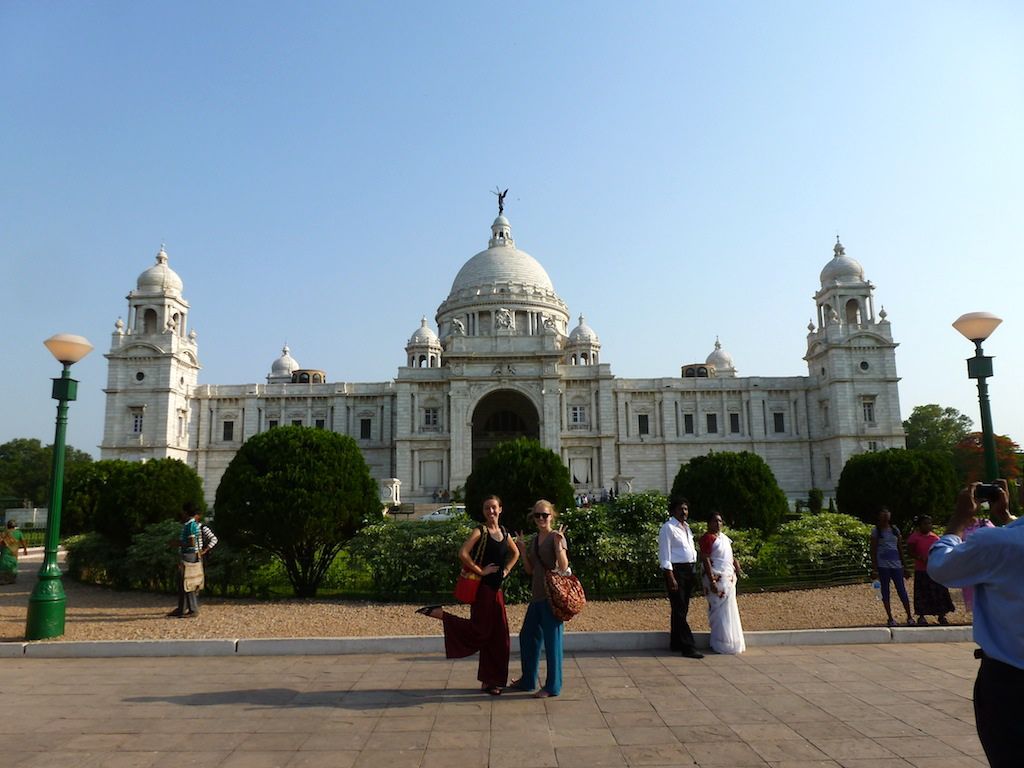
The second high of the week was talking with, and spending time with our hosts.  They are a young couple both working with human trafficking organizations.  They are well-educated, intellectual, fun, relaxed, down-to-earth, and have created a life in Kolkata doing this incredible work.  As someone who is completely unsure of what to do in the future, it was incredible to see such an example of a couple who are individually pursing their passions.  They took the time to talk to us about their work, and to give us advice for the future, and helped us to see a different side of Kolkata.  The week also included a bit of sight seeing, and observing the many sights to see in Kolkata – when you look beyond the intense pollution, you notice incredible european style buildings, and beautiful colors all around the city. The whole week was really an incredible way to end my semester in Asia!


Botswana, Week 2: The Botswana Way!

February 6, 2012

We’ve kicked off our second week with an intense reality check… except this reality check has a Botswana twist to it! Our week consisted of an immersion to Botswana culture and way of life.

https://fbcdn-sphotos-a.akamaihd.net/hphotos-ak-ash4/395155_10150482057608015_514083014_8971467_1298084400_n.jpg

We met some really nice local Batswana in a tiny village, named Mmokolodi, just about 2 hours away from University of Botswana. The chief greeted us with open arms, the older ladies of the village sang for us, and the younger males taught us how to dance African style!

https://fbcdn-sphotos-a.akamaihd.net/hphotos-ak-snc7/398016_10150482058378015_514083014_8971481_918416941_n.jpg

As soon as sun hid away under the beautiful Botswana trees and mountains, we began the festivities. We kicked it all off with sounds of dance and rhythm! The males were told to go with the young boys and older males, while the females were sectioned away to watch the males dance right before they began their own group dances.

https://fbcdn-sphotos-a.akamaihd.net/hphotos-ak-snc7/397821_10151184865300451_673750450_22932065_2047271341_n.jpg

Botswana traditional dancing is much different than what I am accustomed to in the States and back in Europe. Instead of using machine-made instruments, such as a guitar, microphone, or keyboard, the locals use handmade –with very dependable and strong materials from animals — instruments to make sounds and with their hands and feet, accompanied by vocal rhythms! It was very interesting to see, and partake in, the traditional Botswana dances, especially in groups. It had a lot of soul and sense of individualism and community within it. We weren’t dancing to an iPod or a repeated sound; everything felt personal and special in the dances and music. It was as if I was a part of something special with my group and the Batswana people and it really bonded us by forcing us out of our shells!

I played a traditional Botswana game with the local Chief (on the left of the above photo). It involves going in circles around a sketched piece of wood with rocks and trying to overlap the opponent to take away his rocks. It’s very simple and clearly traditional. I’ve learned quickly that even items and objects as simple as a piece of wood, rocks, a board, and a friend to play with can pass time by the hours as quickly as any video game back home!

https://fbcdn-sphotos-a.akamaihd.net/hphotos-ak-snc7/381531_10150482058518015_514083014_8971483_260130149_n.jpg

During our stay, we had a chance to hike a mountain nearby and take a scenic walk around the villages. We even ran into a sectioned-off piece of land in the mountains that we were told held a 2,000 year old cave drawing.

https://fbcdn-sphotos-a.akamaihd.net/hphotos-ak-ash4/403840_10150482060563015_1430147558_n.jpg

https://fbcdn-sphotos-a.akamaihd.net/hphotos-ak-snc7/407069_10150482061888015_514083014_8971525_1526760536_n.jpg

Our last stop consisted of us driving about 30 minutes away to view the oldest living tree in the Southern African region. This tree is named The Livingstone, in honor of the African explorer and missionary David Livingstone, and it was originally dated to be over 200 years old, but is expected to have been growing much longer than documented. It is said that Livingstone’s heart was buried under this Mvula tree by a local tribe – appreciating his love of nature.

https://fbcdn-sphotos-a.akamaihd.net/hphotos-ak-ash4/378975_10150482063188015_514083014_8971545_429038321_n.jpg

When the entire weekend was finished, it was finally bedtime. We didn’t expect anything but the stars above us and our sleeping bags below us at the Botswana village. To our surprise, we ended up in a very well-constructed traditional hut. Not only was it well built, but it also had doors, windows, and even seats with thin, cool blankets inside. Also, the pyramid-shaped roof with specially designed wooden vents created breezes throughout the night to allow us to escape the African heat!

https://fbcdn-sphotos-a.akamaihd.net/hphotos-ak-snc7/401078_10150482058698015_514083014_8971486_54403790_n.jpg


Full Circle: Mai Pen Rai

December 21, 2011

With Bi Si (welcoming and goodbye ceremony strings in which locals bless you) strings on my left hand and an ocean to my right, how do I even begin reflecting on this experience? I am sitting on the beach in Koh Tao, staring out at the beautiful water forgetting that I am in Thailand still. It is the brief interactions with locals and long conversations with vendors in Thai that remind me of my experience. Or the exported food items on the menu that make me wonder how far they had to travel. It is the memories of my host families and the villages that come flooding back when I see bedding or mats. These are just a few of the moments that make this experience real. Otherwise it feels like a dream. A dream that I can’t forget in the morning, a dream whose lessons I must keep with me.

I am traveling with four of my friends from the program and we often find ourselves talking about goals for going home or how to explain our program in relatable terms. The list of 55 buzz words work well when talking to another group member, but to anyone else, space just means space. It does not make you laugh, cringe, or cry. I am struggling with how to explain my tears when someone says that word, or explain my frustrations and successes with “challenging appropriately”.  However, this experience would not be meaningful if I could not take it back with me, if I could not implement the lessons I have learned.

So what will I do? For starters, write down my lessons, quotes from NGOs, villagers, and government officials, and post them around my room. Keep a constant reminder of my growth and new knowledge. And for that knowledge, bring it back to UR. Not just the content, but my new outlook of what education means. We turned it into a joke here, the basis of our education model, “Took kawn ben ajaan.” Every person is a teacher. This program put it in the structure, we learned from each other as facilitators, villagers about their lives and development, journalists about politics, and everyone we encountered. I hope to share that lesson. One can learn a lot from the experts, but experience is unmatched. Lets just hope this plays out well in VA and NJ.

So, as for my first question prior to leaving… how do you say “no worries” in Thai? It’s mai pen rai. Meaning no problem, don’t worry about it. And just like I thought, it’s more than a saying here—it’s a lifestyle. It is a lifestyle I have now understood and adapted to. So adjustment back home will surely be difficult, but mai pen rai, its all a learning experience.