Naomi at Akita: Not the Full Foreigner

August 29, 2016

Hello everyone! My name is Naomi and I’m a junior at the University of Richmond. I’m majoring in Business Administration with a concentration in Marketing (although that may change) and minoring in Women, Gender, and Sexuality Studies. On campus at UR, I’m involved with APO (co-ed voluntary fraternity), Camp Kesem (a national non-profit for kids who are affected by a parents’ cancer), WILL* (a national organization exploring gender and diversity issues), and I try to attend basketball club practices in my free time. Oh, I’m also a cook at the Cellar! This semester I am studying abroad at Akita International University in Japan.

IMG_9621 (1)

I was afraid I was going to go over the weight limit. My mom even brought three bags to the airport, in case we needed to lighten my check-in bag.

Now, there’s something you should know, I actually attended high school in Okinawa, Japan. BUT, I went to a DoDD school, which is basically any other American high school with the exception of it being on a military base. Okinawa is a tropical island south of Honshu (mainland Japan). Okinawa, a tourist destination, is completely different from Akita, as well. Actually, the other day, my mom told me that Akita is the least visited prefecture in Japan. That may sound sad, as most of my friends have said, “it sounds like you’ll be in the middle of nowhere.” However, I was actually excited to hear that. I want to be in the middle of nowhere and adventure around. I like the nature! The peace will be nice.

IMG_9558.jpg

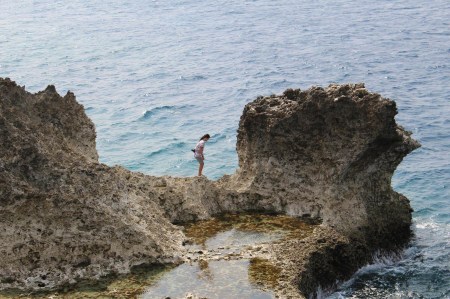
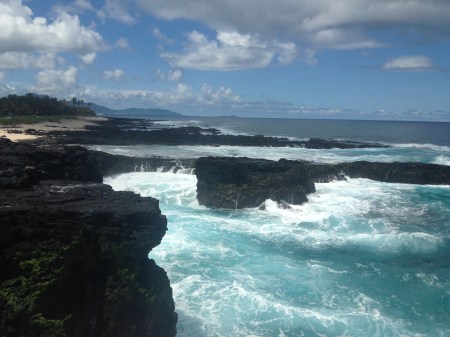
Adventuring around Okinawa one last time. I climbed that rock in front of me at Cape Zanpa. I know it doesn’t look that big but wow, I had a very hard time climbing back down.

IMG_9583

I walked outisde, ran back inside to grab my phone, and snapped this picture of one of my last sunsets in Okinawa. I was in awe.

Okay, another thing I must confess – I am half-Japanese. My mom is Japanese and I have family members that are indeed, Japanese. Now, I know when you study abroad you should be adventurous and go somewhere you’ve never been before, somewhere new and exciting, right? The thing is though; this is new and exciting to me! I only know a little bit of Japanese. I can read the hiragana, katakana, and a few kanji characters; I can pick up certain words and phrases – enough to understand what some conversations are about. I very much want to learn how to speak it fluently though. I want to be able to hold a conversation with my Obaa (grandma) without things getting lost in translation. That’s the main reason I wanted to study abroad in Japan, to finally be able to speak to family and friends.

I also want to travel around Japan since I’ve only lived in Okinawa, the tropical island I mentioned, and to Tokyo during long layovers. Osaka and Kyoto are my two main destinations. A friend from high school that just recently moved to Osaka and said she would be willing to show me around. Namba is a popular destination with the athlete positioned with his arms raised up high…that sounds funny. I’ll end up posting a picture of that later so you understand. Kyoto has the Fushimi Inari-taisha (Temple with 1,000 gates)! I hope to thrive in Akita and learn enough Japanese to get around these places.

Well, that’s a little bit about me and what I’ll be up to these next four months. I’m sad to say goodbye to Okinawa but am very excited for what Akita holds for me. I’m thrilled to share my experience with you all through my photos. I also hope to learn more about photography and pick up skills/tricks as I go along with my T5 Canon and iPhone 5S.

IMG_9640.jpg

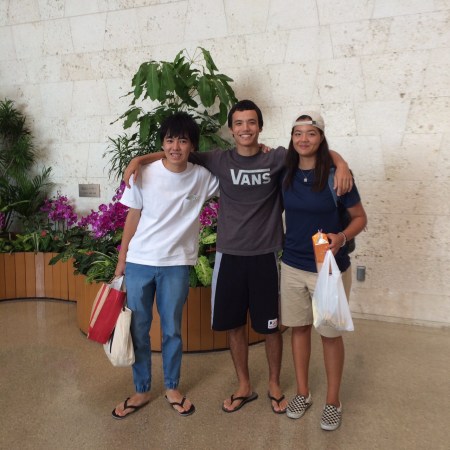
My mom’s friend’s son was also at the airport going to another prefecture (I can’t recall) for vacation. She wanted to take a picture of the three of us. I’m sure you can tell which one my brother is, after all, everyone claims that we look like twins. I don’t see it.


Tony in Switzerland: Approaching the end

July 25, 2016

My time in Switzerland is coming down to its final hours. It’s been a long semester full of traveling and learning to be independent as a francophone. I recently finished my testing on June 30th, and with the end of exams, I decided to explore more of Switzerland. I’ll show a few pictures of my most recent trips throughout the country.

“The Gate”

The Gate

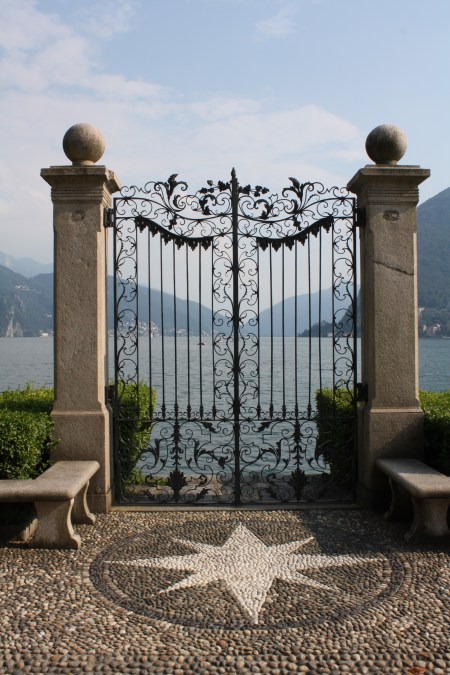
First, I went to Lugano in the Italian-speaking part of Switzerland. This is a picture of a gate overlooking the city’s lake and flanked by the city’s park.

“Station’s Street Art”

Station's Street Art

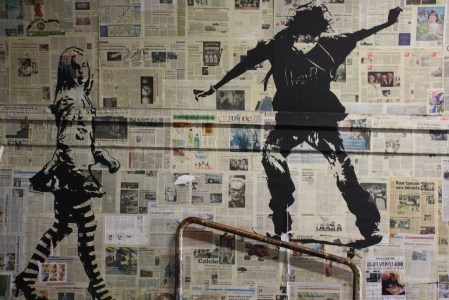
The Lugano station also had some cool street art. The artist used a stencil over newspaper, which coated the entire walls of the station’s hallway.

“Dying Lion”

Dying Lion

Lucerne was next on my Swiss train travels. One of the city’s most visited sites is a monument of a dying lion, which commemorates the soldiers of the Swiss Guards who died in battle during the French Revolution.

“Eva”

Eva

The Lucerne Museum of Fine Arts was at once a refuge from the rain and a predetermined destination for my trip. They had little stations where you could draw, paint, and emulate the artists. I enjoyed this section of a book within their libraries on Anton Henning and his works entitled “Eva”.

“Swiss Rotation”

Swiss Rotation

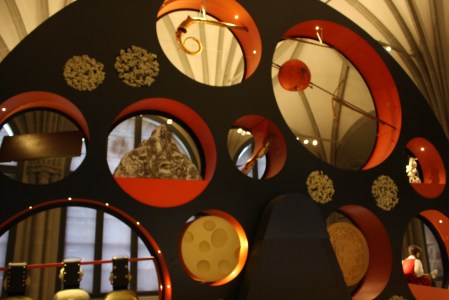
The last leg of the trip: Zurich. I still had not visited the famous city, so I took the time to learn more about the Swiss German history. Inside the National Museum of Zurich, there were several different symbols of Swiss history.

“Skyline”

Skyline

It was a great day to travel in the city: good weather and a lively air. The municipality organized a huge festival throughout the city, which allowed for scenes like this to pop up in front of the traditional architecture.

That’s all for this time. I’ll be posting a summary of this semester soon, highlighting different trips and experiences. It’s almost time to head home, but until then, wish me luck as I clean my apartment and get ready to check out.


Jack in New Zealand: Yugen

July 7, 2016

“To watch the sun sink behind a flower clad hill. To wander on in a huge forest without thought of return. To stand upon the shore and gaze after a boat that disappears behind distant islands. To contemplate the flight of wild geese seen and lost among the clouds. And, subtle shadows of bamboo on bamboo.” Zeami Motokiyo

“Discuss your preparations to go abroad – how you are feeling, anxieties or excitements, last minute projects or plans you are making, etc.” UR OIE

How do I feel about going abroad? I think this question is a little vague. I’m fairly confident that the UR Travelogue coordinator is referring specifically to the four months I will spend at the University of Otago in NZ working toward my Biology degree when he says ‘abroad’, but after several months (and in some cases, years) of students and OIE faculty throwing around the term, it’s difficult to nail down a precise definition.

If returning students and previous travel bloggers are to be believed, ‘abroad’ means ‘the best semester of college’ and ‘learning and growing’ and ‘OMFG amazing’ in so many words. If the OIE is the defining authority, then ‘abroad’ means ‘cultural exchange’ and ‘horizon broadening’ and ‘a lot of paperwork’. Even friends and family (individuals keenly aware of my specific plans) reduce ‘abroad’ to banalisms like ‘so much fun’ and ‘independence’ and ‘legally imbibing alcohol’.

‘Abroad’ has been consistently built up over the past months to mean all of these things, and while I believe everyone’s definitions come from a genuine source (perhaps from their own life-changing international study experiences, and their desires for me to have the same), I think it’s impossible for these definitions to truly encompass the ‘study abroad experience’. Each seems a little too trite to be true, and with students attending programs around the world, ‘abroad’ cannot possibly begin to define the experiences of every student.

So it’s quite difficult for me to pin down exactly how I feel about ‘abroad’. I think I’ve decided I don’t feel much about it at all. ‘Abroad’ is going to just sort of happen to me. And that’s the way I’d prefer it.

My preparations for abroad have been almost entirely practical, concentrating on packing my backpacks, leaving behind any definitional baggage that could serve as a template or filter for my experience. A laundry list of expectations will only serve to make me anxious, distance me from the present moment, and prevent me from truly marveling at my experience. A constant stream of ‘is this the best semester I’ve had so far?’, ‘am I experiencing enough cultural exchange?’, ‘am I taking enough advantage of my ability to legally imbibe?’ will prevent me from experiencing what it truly means to ‘go abroad’.

That being said, if I have any hopes for abroad, it’s that my friends, family, and the OIE turn out to be entirely right. I want to return in December to find that the only way to fully describe my experience is ‘OMFG it was so awesome’. I want the trite travel-bloggisms to be true. I want an experience so complex and amazing that I am reduced to spewing positive unintellectual platitudes upon my return, and really and truly mean them.

But in the mean time, this blog will be concerned with the experience as it happens, free from definitional filters and expectations. It may be occasionally trite. It may sarcastically spite its own triteness. Above all, I hope it will be an honest and entertaining accounting of my experience. You’ll get a sense of how I feel about my own personal ‘abroad’ along the way.


Emily in Samoa: Sega na Leqa

April 19, 2016

Sega na leqa (pronounced SENG-a na LENG-a, and don’t enunciate the g’s) is a Fijian phrase similar in meaning to hakuna matata: in other words, no worries, no problem. This is a key phrase to know in Fiji, which has taken on new meaning for me during our week-long visit to the country. Before we arrived, I’d thought it a given that we’d be chanting the “no worries” mantra–Fiji is internationally typecast as a carefree, worry-free, never-ending beach, probably with a waterfall in the background and a pink hibiscus blossom somewhere in sight. Of course we’d be saying no worries in a place like that, where there is seemingly nothing to worry about.


Spontaneous horseback riding on the beach plays up the worry-free Fiji stereotype.

Spontaneous horseback riding on the beach plays up the worry-free Fiji stereotype.


This assumption was first disproved a month before our scheduled flight, when cyclone Winston tore through the islands. A category 5.1 storm, about the magnitude of hurricane Katrina, Winston demolished crops, flattened homes, flipped cargo ships, and turned life on its head. Towns were razed to the ground, with villagers hiding in caves for weeks to protect themselves from winds and high water levels. Two of the hardest-hit towns were Levuka and Rakiraki… the main towns on our itinerary.


This was our first sega na leqa moment, where we kept our schedule and hoped for the best, knowing the trip would be hard, but that we might be of use to villagers by bringing supplies they lacked. No problem…?

Aboard our flight, the second disaster struck. We had just gotten our in-flight drinks when the plane dropped 200 feet, shooting us out of our seats and sending our food and drinks flying. Visibly shaken, we braced ourselves as the plane dipped again and again, hoping we would not be starring in a sequel to Cast Away. Hearts in our throats, we had a nerve-wracking second half of our flight, and were relieved to finally land in Suva. Our clothes were sticky with soda and juice, but we were for the most part alive. No problem. Sega na leqa…


One of Suva's main streets

One of Suva’s main streets


After two days meandering around Suva, we were scheduled to take our trip to Levuka and Rakiraki. We were ready to brave conditions there, but never followed through with the plan. The weather station grimly announced that travelers were out of luck, as choppy waters and floods in the port town of Nadi made ferry trips impossible. Another cyclone was on its way, and towns sank underwater as winds and tides picked up. Some footage of the flood can be found here: https://www.tvnz.co.nz/one-news/world/360-video-ground-in-cyclone-zena-hit-nadi


Sega na leqa. We decided to scrap all of our plans and drive around Viti Levu, the big island of Fiji. We made our way first to Sigatoka, a coastal town known for its market. But, thanks to the new cyclone brewing, we couldn’t make it all the way to our homestays. We turned on the radio to hear a worried voice: “a level 2 cyclone is headed toward Fiji, and will center on Sigatoka. Expect flooding, high winds from 120-160 km per hour, and flying debris. It is advised that everyone take shelter within the next hour. High flood advisory for Sigatoka, please evacuate.” Hurriedly we cancelled our homestay plans and checked into a hotel on a hill, skidding out of town as the river rose.

Huddled in the darkness of our hotel rooms, without power, water, or backup funds (the SIT program changed our director’s credit card without notice, and it will take a month for the mail ship bearing the new card to reach Samoa), we waited. We told ghost stories, lit candles, listened to doors slam in the wind.

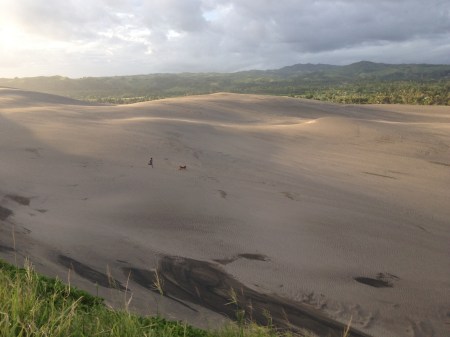
But sega na leqa. The forecast had been wrong, and the cyclone died out before the worst would have hit us. And so we drove to our village homestays, where at last, things started looking up. Our host families took us to coastal sand dunes, which towered 100 ft in the air and required us to scramble up almost vertical slopes to reach the crest of dunes. Still without power or water, we sat and socialized at night, cooking roti over open fires.


Atop the sand dunes

Atop the sand dunes


At last, the flooding subsided in Nadi, and we headed to the town. Our guide, Prem, loves spontaneity, and sega na leqa is his personal motto. When plans fell through he took us to his house for lunch, then promised to show us a special surprise later that day. We all piled into his van, and drove through town, looking at flood lines on buildings and riverbanks.

We wound through hills, and the planned, paved road turned to gravel, then to dirt, growing dustier and windier. At last, we parked on the side of the road. “Get out,” Prem ordered. “Here is your surprise.” We waded through knee-length grass, and found ourselves at the top of a mountain…transported to the cover of a National Geographic magazine. The land dropped away beneath us, giving way to rolling hills and a far-away sea, where we could see the silhouettes of neighboring islands.

Sometimes there are problems, and there are obstacles that block us from following our plans to the letter. But as we stood atop the mountain, gazing out at the lands that we been hurrying through the first part of the week, I realized that the whole time, we were exactly where we needed to be.


Our surprise

Our surprise


Sega na leqa, and here’s to all the best-laid plans that go awry.


Tony in Switzerland: Swiss you were here

April 19, 2016

Hello readers. It’s been a busy week for me here in Lausanne: classes, dissections, and a day trip thrown in the mix. Fortunately, the weather worked out in my favor. It rained while I was in classes, and as I walked out everyday, the sun started shining.


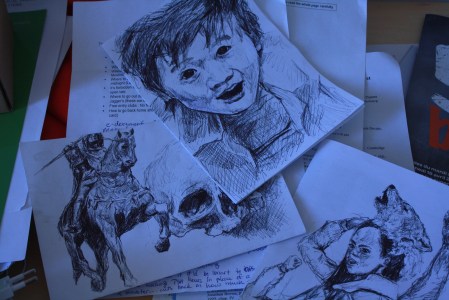
 Between a presentation, an essay, and biological literature, I've taken to doodling to de-stress a little bit.

Between a presentation, an essay, and biological literature, I’ve taken to doodling to de-stress a little bit.


Spring is here, which made for perfect timing to make a quick visit to Geneva after a stressful week of assignments. Out of all the Swiss cities I’ve visited thus far, Geneva appeared to be the most energetic.

I toured the city with a group organized by the Erasmus exchange student network. We stumbled upon a carnival as we walked to the old city section of Geneva.

I toured the city with a group organized by the Erasmus exchange student network. We stumbled upon a carnival as we walked to the old city section of Geneva.


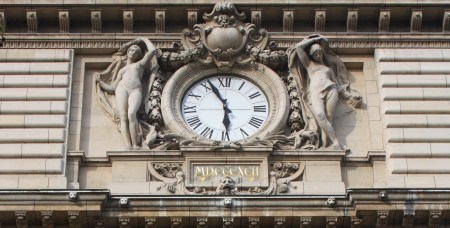
As we approached the older quarter, the classic European aesthetic started taking shape. The post office was decorated with beautiful sculptures.

As we approached the older quarter, the classic European aesthetic started taking shape. The post office was decorated with beautiful sculptures.


We eventually arrived in the old quarter where we learned about Geneva's Protestant history. This chapel is found beside the former home and workshop of John Calvin, a contemporary of Martin Luther who sought to deviate from Catholicism.

We eventually arrived in the old quarter where we learned about Geneva’s Protestant history. This chapel is found beside the former home and workshop of John Calvin, a contemporary of Martin Luther who sought to deviate from Catholicism.


Our tour guide emphasized how the Protestants opposed the corrupt nature of the Catholic church, notably its market of selling indulgences to absolve sins. To that end, the Protestants refused to decorate the interior of their chapels in the same way as a Catholic cathedral: no gold, no paintings, no stained glass.

Our tour guide emphasized how the Protestants opposed the corrupt nature of the Catholic church, notably its market of selling indulgences to absolve sins. To that end, the Protestants refused to decorate the interior of their chapels in the same way as a Catholic cathedral: no gold, no paintings, no stained glass.


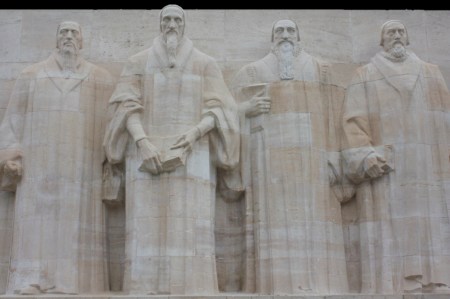
We ended the tour of Geneva in the central square in front of this monument built in honor of the Protestants, including John Calvin (second from the left).

We ended the tour of Geneva in the central square in front of this monument built in honor of the Protestants, including John Calvin (second from the left).


I appreciated taking this tour of Geneva and being reminded of events in world history that I learned about in high school. I can’t wait to discover more of Switzerland’s cities as I transition to the second half of the semester.


Emily in Samoa: A Trip…Home?

April 12, 2016
A traditional canoe by Tutuila’s main road. April 17th is Flag Day for American Samoa, and each village will have a canoe in an island-wide boat race in the main harbor

A traditional canoe by Tutuila’s main road. April 17th is Flag Day for American Samoa. Each village will have a canoe in an island-wide boat race in the main harbor.


We just got back from a four-day trip to the island of Tutuila in American Samoa, where we stayed with host students and their families. The students were members of the community college’s Phi Theta Kappa honors society, and were eager to get to know us, welcoming us as friends and new members of their families.

I was excited from the moment we touched down. Like many of the students in my group, I knew the least about American Samoa going into my study abroad, and was curious about what it would be like—more so than Fiji or Savai’i. We started by driving past chains like McDonald’s and Carl’s Jr…places I would not usually frequent in the US, but which sparkled with new fascination as we drove past. A lot of the world’s American stereotypes felt true here: things seemed glittery, plastic, diverse, plentiful. Or perhaps I was just in culture shock.

The situation got even better when I met my host. We had similar personalities, and as she told me about what she had planned for our stay, I couldn’t help smiling. She wanted to take us to ice cream spots, the best ocean views, and her aunt’s function center (set on top of a hill that overlooked the island). “My dad’s an artist,” she said, “but he also loves to cook…really intricate things. He’s starting to put tattoo patterns on his cakes, and he’s going to make lasagna on Thursday for you.” Oh gosh. The L word. We went back to her house, and I was enveloped in air conditioning, basking in the feeling of cool air on my skin as I delved into Arizona iced tea and potato chips. None of us had felt like life in Samoa was particularly hard, but I was not expecting this reaction to all the food choices on my arrival in American Samoa—an island only half an hour’s plane ride away, yet a world apart.

I could go on for pages with the food, but suffice it to say that I ate my fill and more. And between eating, hikes, lectures, and late-night talks with my host family, the stay was over before we knew it.


 One of my host family's paintings, a mural at a local retreat. More artwork can be found at https://www.facebook.com/MarkAshleyFaulknerart/

One of my host family’s paintings, a mural at a local retreat. More artwork can be found at https://www.facebook.com/MarkAshleyFaulknerart/


My family was the biggest highlight of my trip, as every night they sat up for hours talking about life in American Samoa, their past, and what they hoped to do in the future. Our group advisor wants us to analyze whether culture is “blended well” there, and we’ve all found that is impossible to do so. My family called themselves weird, since they were a small nuclear family with healthy portions of Portuguese, Hawaiian, Australian, Solomon, and Samoan in their family tree. They didn’t go to church or bingo, though most of the island did. My host father created artwork based on Samoan traditional tattooing, but wasn’t widely known, since those in the community “didn’t understand his art,” and felt they could make it themselves. My host brother, who was sixteen, was a product of all this “blending,” but was closest to the Tongan population on the island, since his best friend was Tongan and they would often go to church and other events together.


flower leis find a new twist in American Samoa, where grocery stores sell leis with candy, chips, and 5-hour energy bottles

flower leis find a new twist in American Samoa, where grocery stores sell leis with candy, chips, and 5-hour energy bottles


leis close-up


So what exactly is cultural blending, and how does one do it well? And why should we assume that American Samoans do it less well than Americans or Samoans? To me, culture just is. A group might lose traditions, but it cannot lose culture…it can only adapt it, as we have been seeing in American Samoa.

One aspect of Samoan tradition and culture that is still very much alive is the legend of the turtle and shark in the village of Vaitogi. According to one version of the story, a man and woman fell in love, and ran away from their island so that the man would not have to fight a war. They were taken in by the villagers in Vaitogi, but their leaders, angry at the man’s desertion, eventually found them out, chasing them to the cliffs. The pair refused to surrender, and jumped into the ocean, where they turned into a turtle and shark. Another version claims that the pair are a mother and daughter fleeing famine. You can watch the first version in more detail here:


The pair can still be seen today, but only if the villagers come to sing their special song. Our hosts had called the village before our visit, and a woman came out to meet us when we arrived. After five minutes of singing, they both appeared, the turtle surfacing on the right, and the shark swimming in the crest of a large wave that came crashing down on the cliff. It’s easy to be cynical of legends, but much harder when they come true right in front of you.


Searching for the turtle and shark at the cliffs of Vaitogi

Searching for the turtle and shark at the cliffs of Vaitogi


Other aspects of American Samoan culture are not as Samoan…perhaps more like what many like to call a “melting pot.” There is little food waste, as is common in independent Samoa, but when this is combined with easy access to American fast food chains and junk food, health risk and obesity rates go through the roof. Add to this the inability to access fruits and vegetables, due to the lack of home gardening and mainland ships that never seem to arrive, and you end up with a difficult situation. Similar instances of blending can be seen elsewhere in the culture: strong Samoan family values are played on by recruiters to coax students with few options (the US government has prevented universities from being established on the island) to join the army. Tuna canneries employ large numbers, and enable proprietors to label their products as “made in the USA” without paying their workers national minimum wage…since American Samoa is not officially part of the nation. And the list goes on…

It may come as a surprise to some readers that American Samoa exists and is part of the US. We certainly aren’t told much about it where I’m from. Well, it’s an “unorganized, unincorporated territory,” the last US holding in which people are not citizens, and thus cannot vote or have a voting representative in Congress. They also do not pay taxes, and maintain their land without risk of eminent domain, even receiving payments from the government to rent their land as a national park. There are pros and there are cons, as there would be any place in which different cultures are coming together and attempting to successfully coexist.

I hope that one day in the future I will be able to host members of my American Samoan family at my house in Massachusetts, so that we can continue are conversations, and that I can begin to see my world through their eyes, as they tried to see their world through mine.


Sunset from my host family’s hilltop retreat

Sunset from my host family’s hilltop retreat


Emily in Samoa: Return to Return to Paradise

March 24, 2016

This weekend, my friend got married.

We got a call from a Peace Corps volunteer, formerly in SIT, telling us that the Return to Paradise resort was looking for “travel-savvy, foreign-looking people” to feature in its new website and advertising campaign. They offered a free night, all expenses paid, at the resort as a perk. We were curious about what we might be getting ourselves into, and a group of us agreed to go.


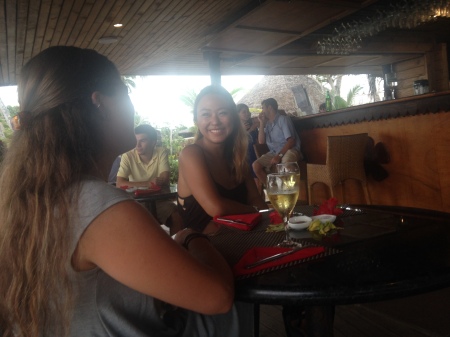
Mastering the spontaneous smile over cocktails

Mastering the spontaneous smile over cocktails


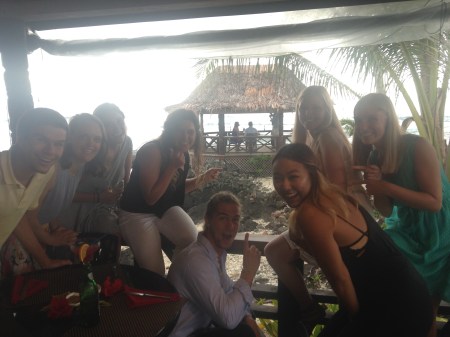
We were told to expect bikini photos on the beach. However, when we arrived, the photographer told us that the clouds made that plan impossible, and that we would instead have a wedding. We started by shooting photos of the bar, sipping specialty cocktails and showing the camera how much we were enjoying ourselves. Next, we moved to romantic dinner photos, and the chosen couple sat out in a private fale on the rocks as a drone flew around them taking candids. The rest of us were supposed to be continuing our background bar banter, but were peeking out at the couple and the photographer.


Spying on the newlyweds

Spying on the newlyweds


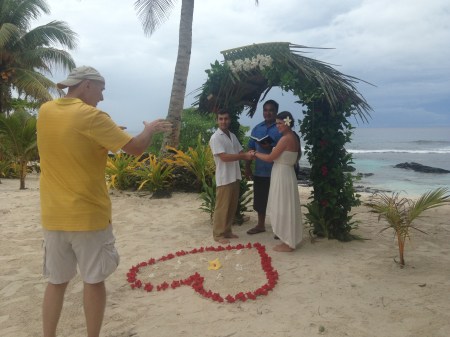
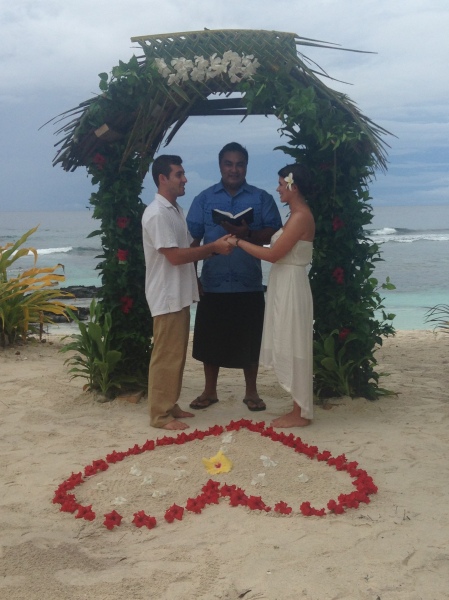
Things really heated up the next day, when we shot the wedding. Our poor friend who was picked for the bride spent the whole morning posing for photos: sitting, standing, looking at a wedding dress, getting makeup done, having a head massage (only enough for photos), and…getting married. Barefoot on the beach, we surrounded her and the Peace Corps volunteer, looking down at a heart made from hibiscus flowers.

At the last minute, the photographer realized he’d forgotten to find a pastor, and snagged a nearby gardener. “Here,” he said. “Open the bible and pretend you’re reading.” Various romantic photos were taken, but my favorite is the one of the kiss, chiefly because of our gardener/pastor, who has his eyebrows raised and mouth open.


Capturing the wedding vows

Capturing the wedding vows


wedding


After the wedding, the photographer ordered us to go out to the rocks, and we danced as the drone flew above us. I think these are some of our best photos, though also our strangest.

This was one of the most unexpected, bizarre experiences I’ve had in Samoa, but it isn’t the first time that SIT students have done something like this. Samoa’s foreign tourism is not big yet, numbering only around 20,000 non-Samoan tourists per year. And young, foreign-looking people are few and far-between; besides Peace Corps, SIT, and actual honeymooners, options are minimal.

But the biggest question arising out of this whole ordeal, for me, is “is this culturally OK?” Overall, I have my doubts, but I’ve decided to try to argue for a yes for this specific case. The Return to Paradise is owned partly by locals (not part of Hilton, Marriot, and friends), and has a policy of hiring two members from each household in surrounding villages. These higher hotel wages are a huge stimulant for the local economy, since minimum wage in other job venues is a dismal $2.33 per hour, under $1 US. And because of low wages and little surplus other than that sent in remittances, it makes sense that the hotel would be catering to wealthier New Zealanders and Australians, a population that is largely white and “foreign-looking” to the Samoans.


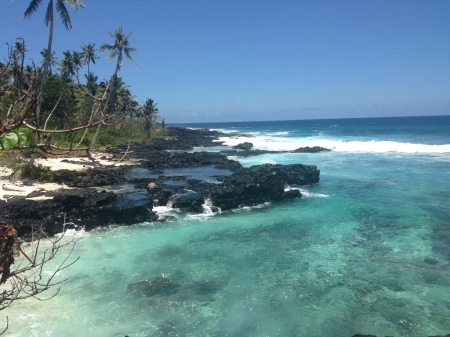
The coastline by the Return to Paradise

The coastline by the Return to Paradise


The next factor that leads me to a “yes” is the movie Return to Paradise, which was filmed on the site and which gave rise to the hotel. This film starred Gary Cooper, and was shot in the 1950s. Return to Paradise marked the first instance in which local indigenous people played leading roles, and parts were not filled by white people in blackface. The female lead was played by a bank teller from Apia, and if you watch the film with people in nearby villages, most will point out a number of aunts and uncles. So, the film is looked upon positively by locals, as it promoted their culture more positively than other films would have, and encouraged local involvement.

Finally, there is Us. Were we right to do this? The hotel probably spent over $600 Samoan on each of us, so the owners really wanted our pictures. And afterward, they plan to put my friends’ wedding photos on billboards and foreign advertisements. So there was definitely a lot of people-using-people going on here. But, if we had not come, they probably would have found someone else, someone who would not reflect back on the experience, taking the perks and moving on with life. I think that is the most dangerous scenario, and so I am glad that a group of students studying cultural issues in the Pacific agreed to the shoot.

The conversation about this should continue, since I’m still not sure what to think. I certainly enjoyed my first beach wedding, and will never look at the people in hotel photos the same way again. And I hope that this weekend of cheesy photos and questionable ethics will do something positive for locals in the end.


Our bride mentally prepares for her ceremony

Our bride mentally prepares for her ceremony


Emily in Samoa: a Fiafia, a Fale, a Fresh Dose of Zika

March 15, 2016
Our host mothers await our turn at the fiafia

Our host mothers await our turn at the fiafia


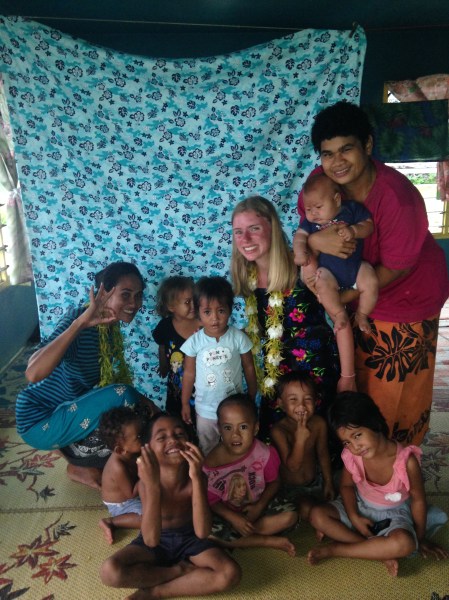
Do you ever have a feeling that your whole life has been leading up to a single event? That everything you have learned, practiced, and hoped for may culminate in a single night? Maybe it’s a graduation ceremony, a wedding, a race…or maybe you are dressed in feathers and leis, with makeup smeared on your cheeks, surrounded by village women in a Samoan fale.

If you’re not visualizing this moment yet, picture this: myself, dressed as aforementioned, seated in the middle of an open building. A group of women sit on the other side, singing traditional songs to the accompaniment of a guitar. Their music stops, and they look expectantly at me and the other students. It’s our turn. Now picture a melodica, bright pink with zigzag designs on the edges. I play a jazz riff, and my friends begin harmonizing to Elvis Presley’s “Hound Dog.”

Yes, my life was truly building up to this moment—all my piano lessons, theater camps, high school lectures… They all culminated in this melodica- and lei-filled evening. But allow me to explain how we ended up here.


The family gets me ready for the fiafia.

The family gets me ready for the fiafia.


The fiafia marks the end of our village stay, and is a noncompetitive dance-off between the students and their host mothers. The entire village comes to watch, cheering constantly regardless of performers’ talent. Between numbers, the mothers put on palagi songs, and drag us onstage individually to dance. Samoan-style dances, to melodies like “Watch Me Whip,” and “Summer Lovin’” from Grease.

The fiafia is not only a good zenith for my life in general, it is also a great end to this week’s adventures. When we were not playing with siblings, relaxing with parents, or going on excursions to gorgeous waterfalls, we immersed ourselves in various aspects of Samoan tradition. We attended a fa’alavelave, and were able to see a plethora of fine mats and cans of corned beef be exchanged in the gift ceremony.

One of the most memorable experiences we’ve had was building an umu, or traditional Samoan fire. With the umu, we participated in activities like making palu sami, a Samoan dish that is made of coconut cream wrapped in breadfruit leaves, wrapped in taro leaves, wrapped in banana leaves, and cooked over a fire. Our meal also featured dishes like beaten octopus, fresh shark, and a sweet pounded breadfruit dessert.

Breadfruit cooks on the umu. Right insert "octopus" caption: beating the octopus

Breadfruit cooks on the umu.


Beating the Octopus

Beating the octopus


The dish least for the faint of heart was the main attraction: the pig. I now know just how to kill and eviscerate one, though I don’t think I’ll be doing so in the near future.

I suppose the pictures say it all, but this week was an adventure, and we’ve had some experiences that I’d never thought I’d be a part of…the pig especially. And just when I thought there couldn’t be more surprises, I got the biggest one of them all: the Zika virus.

Don’t worry. When you aren’t pregnant, all that results from the virus is exhaustion, followed by a rash that made me look like an ambulatory Chicken Pock. Many people (including one of our directors) have gotten the virus, though I was the first in the village and in the entire SIT program to do so. It caused a bit of a stir, but once we all realized that nothing major was going to happen, we moved on. It’s quite amazing that the media in far-off countries has not been able to do so, but I’m sure it looks much more exciting from thousands of miles away.

So there you have it. I can disembowel a pig, I can play the melodica to meet anyone’s Samoan dance-off needs, and I have hopefully developed some immunity to the newest mosquito-borne sensation. It’s been quite a week!

One of our side trips to the volcanic crater, To Sua

One of our side trips to the volcanic crater, To Sua


Maddie in Ireland: Interesting People

March 14, 2016

Whenever you discuss your future plans to travel, everyone inevitably sighs a wistful sighy-sigh and says, “Oh, just think of the people you’ll meet.” Usually when such a thing is said you shake your head and say, “Ya, ya, humanity is great… but did you hear about that castle I’m going to get to see? And the one waterfall? It has a bunch of falling water. It’s awesome.”

Now, I do not mean to downplay Mother Nature or Father Ancient Architecture in the slightest, because I am definitely a nature person—


Proof. This is a picture of me literally hugging a tree taken two days ago.

Proof. This is a picture of me literally hugging a tree taken two days ago.


—but I think as young people we tend to be really interested in the more glamorous aspects of traveling and overlook the smaller things… the smaller things like the lady who runs the music store down the street or the old man sitting next to you on the bus. Waterfalls and castles aren’t the only things that have stories to tell. Stories, histories are bing created every single day, and everyone around you is a witness to those stories. That being said, here is a list of the most interesting people I have met in Ireland (and the surrounding countries):


1) The Lady Who Runs The Music Shop Down The Street

My apartment and I went on a trip to a very small, very quaint town called Dingle (lol) a few weekends ago. After spending some time touring the local harbor and beaches we decided to just wander up and down the streets and do a little window-shopping. We weren’t having much luck, but stopped when we saw a building painted bright blue with white lettering loudly proclaiming that there were musical instruments and CD’s for sale inside. As the daughter of a man has an unparalleled enthusiasm for Celtic music, I went in to purchase a few souvenirs while the others waited outside. When I emerged from the store a few euros lighter and a few CDs heavier, I noticed them huddled around a map taped to the storefront window. Beside the map there was also a picture of three men and two women in swimming gear and a clip explaining how they had swum around the entire coast of Ireland. As we read the article one of the women from the picture practically leapt out from the nearest door and eagerly told us her story. It turns out that she had been born in Dingle and from an early age she and the same group of friends had taken an interest in long-distance swimming. As well as swimming the entire coast of Ireland she had also won several European competitions and swum across the Bering Strait, even doing a circuit as a motivational speaker for a bit.

Despite all of this she would always return to her small hometown— small enough that most addresses didn’t even have street names, just numbers— and live a quiet, unremarkable life. She was the most unassuming, normal looking woman in the world, and yet she nearly quivered with excitement when discussing her swims. She only ever swam for the love of the sport— she never wanted anything more than to just say, ‘Hey, I swam,” and that is pretty damn interesting.


Look how happy she is!

Look how happy she is!


2) The Old Man Who Sat Next To Me On The Bus

Riding busses is great because a) they’re cheap, b) busses run frequently, and c) I don’t have a car here so I don’t really have any other options, buuuuut they do have the disadvantage of being public transportation. This means that every once in awhile, you will be forced to sit next  to a random, unpleasant stranger who will smell like lunch meat and be completely unaware that they are taking up half of your seat as well as the entirety of their own (I’m an incredibly patient person, but as soon as you drop me in public transportation that patience-ometer drops straight to zero). So naturally when I managed to make 4 out of the 5 hours on our trip to Dingle without anyone sitting next to me, I was a little grumpy when an old man plopped right down next to me. He looked to be in his late 80’s, was wearing one of those shepherds hats, leaned over, smiled at me, and grabbed my hand, before turning his attention out the window. He asked my name, I told him, and then he began to tell me his story. He was what you would call “a good ol’ boy”. He grew up in that area, married his childhood sweetheart, and had several children. He also happened to be the nicest person I have ever met. An Irish Mr. Rogers, if you will.

Occasionally he asked me questions, but mostly he just talked and I sat and listened, still holding his hand. Given his age he tended to repeat himself, but he always returned to two phrases— “It’s nice to be nice” and “You’re such pleasant company.” They were amazing things to hear.

We parted as the bus pulled to a stop in the middle of an country road, no buildings in sight, but he knew it was his stop and the driver waved to him as he left. He always had an air of being partially next to me on the bus, but mostly somewhere else, some other time and place. Here is what I find amazing about him: He never said goodbye to me— he saw his stop and left— and I’m fairly certain he never thought of me again, but even so, in his incredible purity and kindness, he managed to make a lasting impression he won’t even remember making.

I don't have a picture with him, so here’s some pretty scenery.

I don’t have a picture with him, so here’s some pretty scenery.


3) The Lady Who Ran The Excavation Site

One of the classes I’m taking this semester is called “Gaelic Peoples: Identity and Cultural Practices.” It is an archaeology class, so it mainly revolves mainly around the different dwellings built in the medieval period. As part of a project we were taken to The Burren to examine ruins of different cahers or cashiels. For the most part the ruins were exactly that- ruins. One site however, Caherconnell (pronounced cah-her-kahn-ol and meaning Connell’s Castle), was incredible. It was beautifully preserved, easily allowing you to picture the castle that dominated the valley. It was also a standout site in that it appeared that the Connell family had resisted adopting Anglo-Normal culture, unlike the rest of medieval Ireland. They clearly were in contact with and interacted with the English, but, in a purposeful show of loyalty to the culture of their ancestors, they lived very traditionally Irish lives. Instead of using ceramic pottery they continued to use pots made of organic materials, wove their cloth the ~Irish~ way, and decorated pins/walls/toys/etc with traditional motifs, thank you very much.

The archaeologist who ran the site had been there since the beginning of the excavation. She had devoted her life to that castle, knowing its several thousand year story (it was purposely built around the gravesite of some prehistoric women and children), every single niche, every bit of castle, every pebble’s place. She lived on the premise and spent her spare time training border collies to perform in shows in an attempt to earn extra funding for the dig (and also because herding dogs are awesome). This woman’s knowledge was incredible, but even more incredible was her visible passion for archaeology and the very visible love she held for this ancient castle.
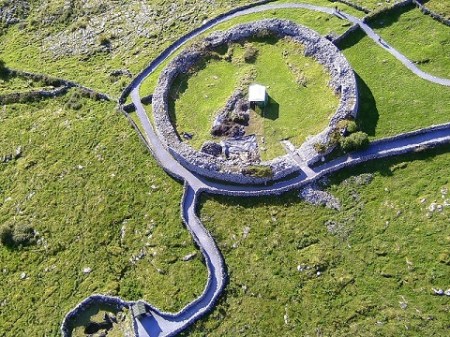
Caherconnell, the original Irish passive-aggressive “Stay off my lawn” sign.

Caherconnell, the original Irish passive-aggressive “Stay off my lawn” sign.


4) The Guy’s Grandson

I eat a lot of candy. That’s just fact.

Luckily for me, Ireland has a lot of candy shops. Mostly, however, those candy stores are filled with pretty commercial type stuff (still delicious, just widely available). One store broke that streak, being entirely and wholly and incandescently original. A very small little shop in Killarney, it had the very specific target audience of “people raised in the 80’s” and had recently grown successful enough to merit its own internationally shipping website. While sampling various sweets, the owner told us two stories. The first was how his grandfather, who had owned and run a convenience store, would often pass along candy to the owner when he was a child. Eventually the child grew up and opened a candy store in his grandfather’s honor, naming it after him and hanging his picture on the wall. The second was the story of “his chocolate lady”, who he got all his chocolate from. Her father was a very successful chocolatier in Germany, however her family was Jewish and after the onset of WW2 was forced to flee and leave their business behind. They successfully escaped to Ireland where her father taught her how to make chocolate, but was unable to resume his work due to financial strains. By her 40’s her father had died, but she was finally able to pick up where he left off. She is now in her 80’s, still making chocolate and selling it to small candy stores around the country.


Once again I don’t have a picture of the interesting person we just discussed, so here is a picture of downtown Killarney.

Once again I don’t have a picture of the interesting person we just discussed, so here is a picture of downtown Killarney.


5) The Boy Who Goes to Oxford

When I visited a fellow Spider who attended Oxford, I met the last of our very interesting people. He was by far the youngest person on this list, a student at Oxford, very tall and gangly with large glasses and a quite unidentifiable accent. His mother was a minister and his father was in the army for some unspecified country (I’m thinking America), so he had lived all over the world. Most recently he had come from Chicago where he was part of Second City’s junior troupe. I don’t know as much about him, but I can tell you that when he spoke, you listened to him with wide eyes, clinging onto every syllable and blindly believing everything he said. I mean, the guy just reeked of extreme intelligence and was positively dripping interesting stories. He was one of those mysterious people that just had some sort of… presence.

…I’m not saying he was a more advanced species of human sent back from the future to be a beacon of brilliant awesomeness, but I am saying that we don’t have any proof that he wasn’t a more advanced species of human sent back from the future to be a beacon of brilliant awesomeness.


Toodles kids,

Maddie, Class of ’17


Tony in Switzerland: Feeling the Berne

March 14, 2016

I’m unapologetically proud of the title for this post, but that might be the only sense of pride I have regarding my recent day trip to Berne. A couple of friends and I spent a few hours touring the city, and to be frank, it was the first time I experienced culture shock in Switzerland. I spend so much time in the Francophone quarter of the country that I had trouble adjusting to hearing and seeing German in Berne. Here are a few pictures of what ensued from our adventures around the city.


The city streets in Berne reflect more of a German influence than a French or Italian aesthetic. What interested me the most were the series of basements for each storefront.

The city streets in Berne reflect more of a German influence than a French or Italian aesthetic. What interested me the most were the series of basements for each storefront.


Although Berne was very different from Lausanne, there were a few similarities, notably this example of graffiti that captures existential European angst.

Although Berne was very different from Lausanne, there were a few similarities, notably this example of graffiti that captures existential European angst.


I would not refer to Berne as a tourist-heavy city. As the capital of the country, there are, of course, a few museums and nature parks to visit. However, there is a certain trademark (for lack of a better term) that defines Bern as a self-directed metropolis, as if it bears no need from the rest of the world.

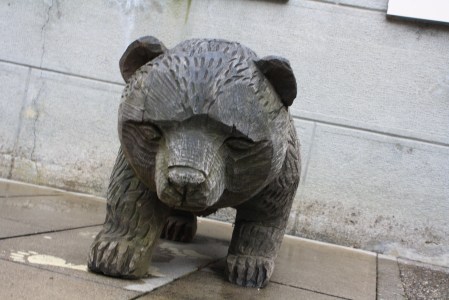
Bears are definitely emblematic of the city. There is even a park to visit bears that roam the grounds.

Bears are definitely emblematic of the city. There is even a park to visit bears that roam the grounds.


Unfortunately for us, the actual bears were hibernating, so finding the different statues around and above the city made do.

Unfortunately for us, the actual bears were hibernating, so finding the different statues around and above the city made do.


This might be the most curious thing I've ever seen in my life. It is a statue of an ogre eating babies. Some historians speculate it has anti-semitic roots. Others refer to it as a representation of Krampus. If you want to find out more, google Kindlifresserbrunnen!

This might be the most curious thing I’ve ever seen in my life. It is a statue of an ogre eating babies. Some historians speculate it has anti-semitic roots. Others refer to it as a representation of Krampus. If you want to find out more, google Kindlifresserbrunnen!


Stay tuned for my next post! You might be surprised to find out who will be making a guest appearance.