Alyssa in New Zealand: A New Comfort Zone

July 19, 2013

There is a very broad definition for “home.” It can simply mean where you live. Or where your family resides. Where you’re from. In the end, one is usually very accustomed to the lifestyle, wherever that “home” may be.

It’s definitely not the easiest thing to develop a routine in a brand new environment. The surroundings are unfamiliar. People are unrecognizable. The buildings are foreign. You simply don’t know where to go or what to do just for the sake of not knowing. Living somewhere new takes time to get used to.

However, everything finally seems to be coming together. I’m starting to attain a better understanding of the Dunedin environment day by day. I can navigate myself around campus and town with ease. Time management has become simpler to handle. I’ve finally solidified and mastered my class schedule (no Fridays, which will make it much easier for traveling purposes). Faces are becoming more familiar. Friendships are continuing to grow and expand.

In addition to that, my flatmates and I have become closer and closer, for the dynamic of the flat has turned out to be fairly strong. There is a lot of support that is shared between all of us. We keep each other company, even if we are just sitting in the lounge in silence. The silence is anything but uncomfortable, for it is understood that we are all at ease around each other regardless if there are words exchanged or not. Likewise, we will cook and eat dinner together occasionally throughout the week, keeping the direct interactions between us alive. Even on the weekends, we spend much of our time together keeping each other entertained and happy. Our schedules do not coincide very well throughout the weekdays, for they’re all very different. Yet, when we come back and find each other in the end, not much distance has been generated between us.

DSC_0421

Me with my flatmates

Here in Dunedin, I have found that I am actually living. Instead of going to the on campus dining hall, I have to go to the grocery store, buy my own food and do my own cooking. Different responsibilities are shared between everyone in the flat in order to keep our living conditions in good shape. There are bills that have to be taken care of. I have to be aware about the amount of internet and power that I utilize. I even constructed a budget plan so that I can organize my money and keep my spending under control.

As difficult and strange this was to me at first, I have become very comfortable with this type of lifestyle. Being conscious of almost everything I do and plan to do has only helped me build character. It not only prepares me for the semester I return to Richmond (I’ll be living in an off campus apartment spring semester), but it prepares me for the real world as well (as scary as that is to think about). Independence has been taken to a new level.

This past Saturday, I had the opportunity to explore even more of Dunedin. My entire flat complex and I ventured out to the Otago Peninsula, where beauty and landscapes were intensified. We specifically went to an area called Lover’s Leap. As we hiked through paths, valleys and plains, we were able to see spectacular views of the coast of Dunedin. Life had a different dynamic out there. Everything seemed carefree, yet full of adventure all at the same time.
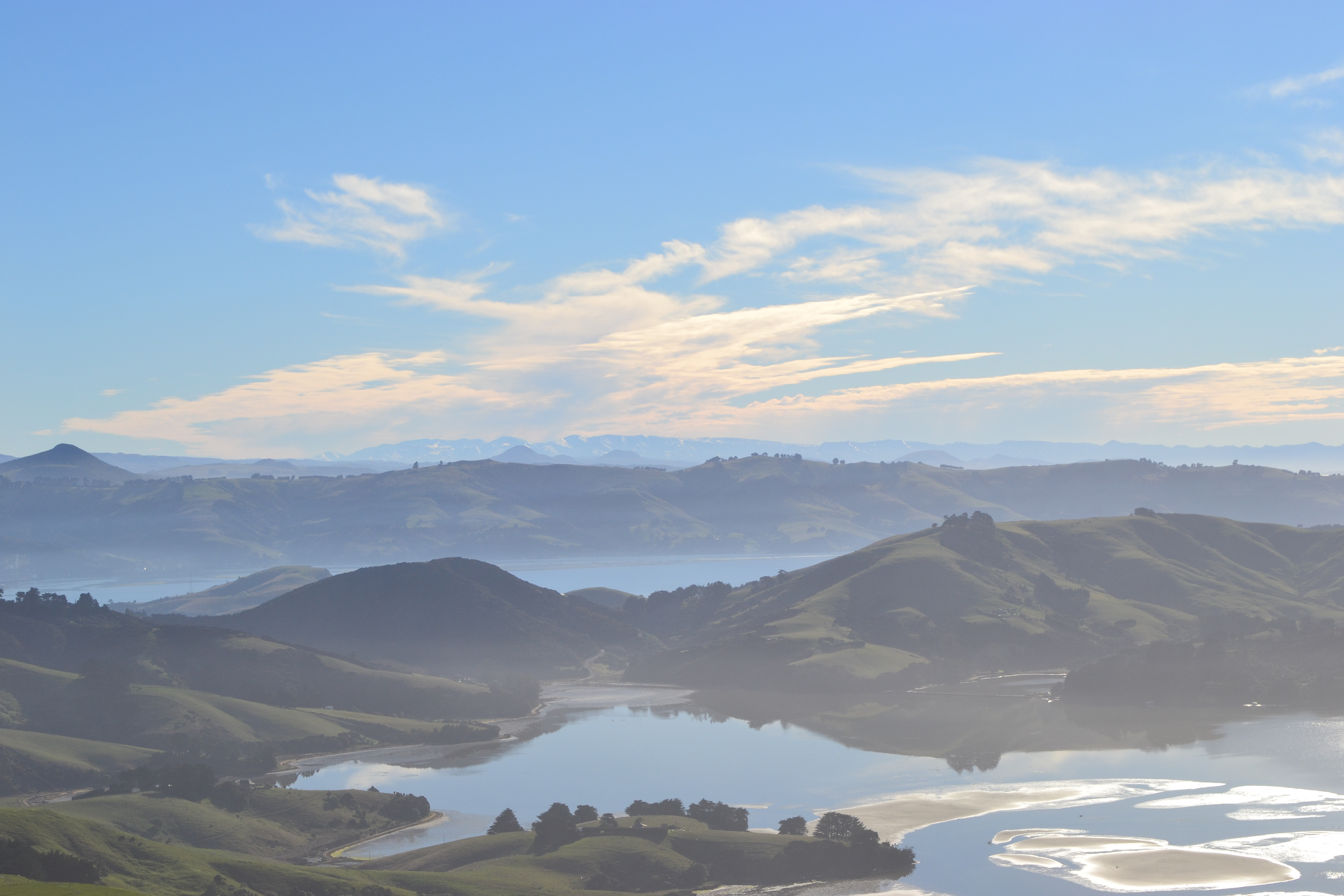
DSC_0435

At the Otago Peninsula – I told you it was breathtaking!

I felt no fear when walking out to the edge of the cliffs. In fact, there was no feeling that was actually felt at that moment when standing on the edge of a 200 foot fall into the ocean. All I know is that I just wanted to stay there forever, or at least for as long as I could. It’s hard to even think about seeing the remainder of the country, for according to the Kiwis, there are other places and sights that are even more breathtaking than what I saw at that point.

After we were through seeing what was at the top, we decided to make our way to the bottom to the beach, Sandfly Bay. We made our descent from where we were parked after returning from the cliffs for about 20 minutes until we finally reached the ocean. As we explored the land, we ran into several seals sunbathing out on the rocks. We even encountered a sea lion at one point. The hike back up to the top was a little challenging due to the fact that we had to trek through excessive amounts of soft sand. It took about a total of 30-40 minutes for the group as a whole.
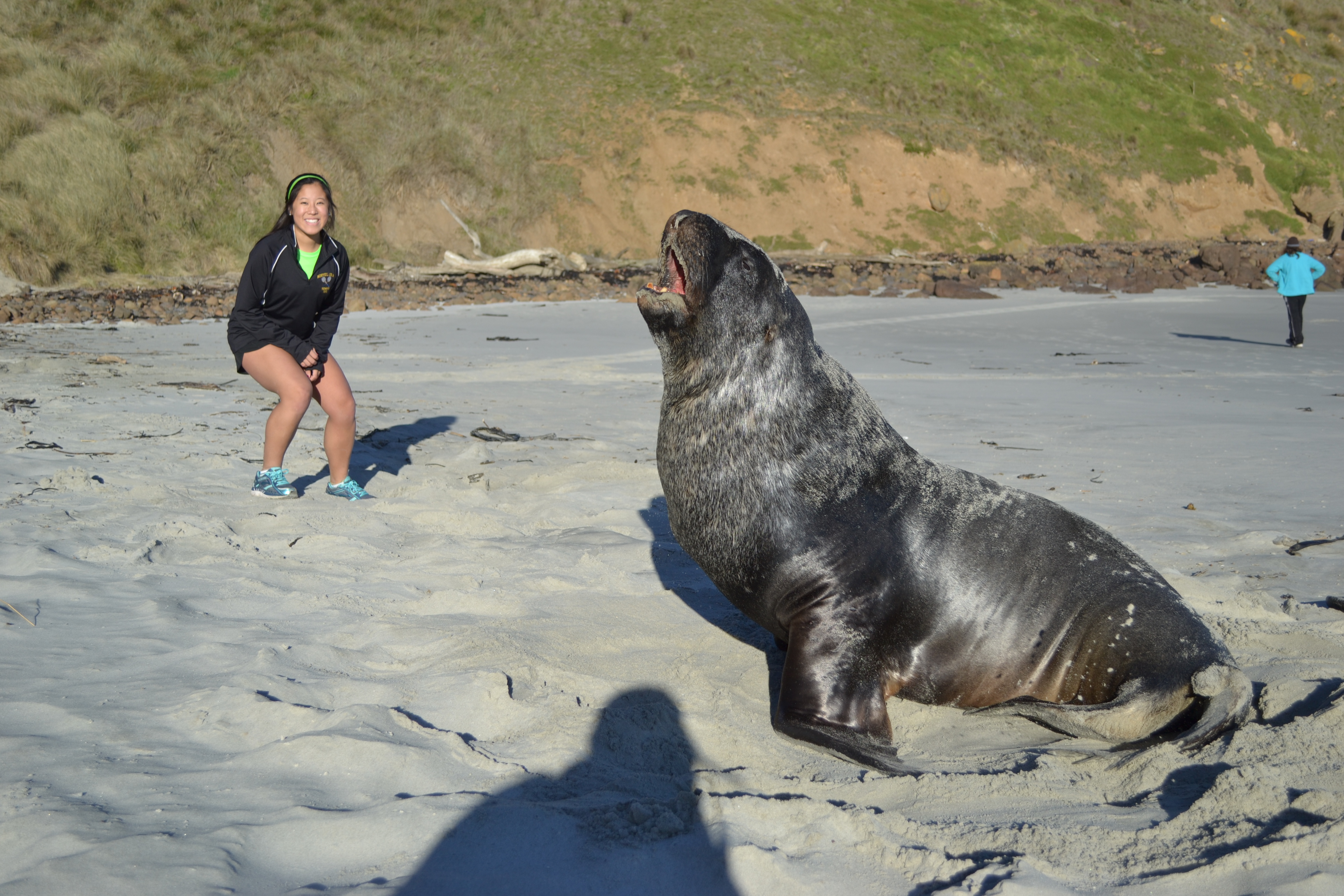
DSC_0581

My new sea lion friend at Sandfly Bay

Dunedin continues to surprise me more and more, especially when it comes to weather. It could be 55°F and sunny outside, and the next thing we know, the temperature can rapidly drop to 28°F with rain coming down hard within the next hour. Luckily, the weather was ideal when hiking through the peninsula. Despite its unpredictable nature, none of it stops me from enjoying my time here. The quick changing climate has only encouraged me to be prepared for the unexpected.

Now that I have finally settled in, I’ve been able to start planning for even more adventures. As of two days ago, I’m officially going to Australia for my mid-semester break with my flatmates.  I’m finally making progress on my bucket list, but there is still much more to cover.

I have encountered a lot of changes just in the past two weeks. Not only am I seeking out new adventures, but I’ve also created a new kind of life in here in New Zealand. It’s ironic to think that the more new experiences that I expose myself to, the more at home I feel.

So “home” is not simply where you live or where you’re from. “Home” is where you feel settled. Where you’re comfortable. Where you’re happy. As a matter of fact, I have found all these elements in my life recently. I haven’t necessarily forgotten or pushed aside my homes back in Massachusetts and Richmond. I’ve just happened to create another one somewhere else.


Back Home: End to a Great Adventure and a Million Memories (posted by Indira in South Korea)

July 8, 2013

I honestly can’t believe I’m back home. When the plane touched down in Frankfurt and I was finally in Europe, I felt weird. It is then that it hit me that my South Korean adventure was over. Last four months have been absolutely amazing and I’ve enjoyed every single bit of it: Trips, friendships, food, classes, culture, history, tradition, but also sleepless nights I spent with the people that have made my last semester as great as it possibly gets.

The morning I left Korea I said goodbye to the people I shared so much with over the past four months; people I got to know so well in such a short period; people I hope to stay in touch despite the fact I won’t be seeing them on a daily basis any longer. Choosing South Korea as my study abroad location for the spring semester was a great decision, no doubt about that. In fall 2012 I studied abroad in Sweden and I already had what I thought to be the best semester yet. When I decided to go to Korea in spring instead of staying in Sweden for a year many were surprised especially since they knew how much I came to love Sweden and my experience there.  To be honest, I was very anxious to see how my semester in Asia would turn out to be. I choose a country I knew almost nothing about and didn’t speak the language, but also a country that was so different compared to my previous experiences. The beginning was rough: Getting used to the new culture where modernity and tradition meet, making new friends, getting used to the new system of classes and teaching style – it was all a challenge. I was, however, more than happy to embrace that challenge and make the best out of it.

It was the embracing the unknown and enjoying the adventure that made my semester in Korea so amazing. Oftentimes I’m asked whether I liked Sweden more than Korea. To be honest, I like them both equally! The two semesters I had were so much different in so many ways and yet they were both so amazing. Each was the best in its own way. I find it amazing how much I’ve grown over the past year I spent abroad and how this year came to shape my personality in a slightly different way than before. I am more self aware of the world, more patient, more flexible and easy to adapt, but I’m also richer for so many new experiences and amazing memories.

My semester in Korea will always be one of the most amazing experiences in my life. I got to live in a big city of 10.6 million people, try all these different dishes, experience Korean and Asian culture firsthand, and travel. I also find it fascinating how little I knew about Korea before going there and how much I know now: All my classes were focused on Korea and I learned a lot about this country socially, historically, demographically, economically, as well as about the relations between Korea and other countries. The best thing was learning about the country and then seeing it all unfold in front of  my eyes: I would learn something about Korean history and a short subway ride would take me to a museum that would add colors to the pictures in my head. I really enjoyed that kind of learning.

Discovering Korea was also amazing: I got to travel all around Seoul, Incheon, Muuido Island, Busan, Jeju Island. All of these places gave me a different perception of Korea that together formed a perfect image about the country I had such a hard time leaving.

A week-long trip to Cambodia was undoubtedly one of the most amazing things I ever have – and possibly ever will – experience. This country in the southeastern Asia with high temperatures and humid air was something I’ve never seen before: Riding elephants, admiring centuries old temples, riding tuk-tuks, and exploring the part of the world I never even thought of visiting. Visit to Cambodia is definitely one of the highlights of my year abroad. Actually, this entire year has been one big highlight and I am so happy I took the chance to spend it abroad.

Possibly the most important part of the semester in Korea are the people I met: My core group of friends, my classmates, my roommate, my Korean friends, my mentor, my language exchange partner, all of them are a reason behind everything great that happened in Korea. Now I know I have friends all over the world, friends I can rely on even if I’ve known them for merely four months. That is the beauty of the study abroad – people bond and create friendships really fast. But that is also the saddest part of it all: Leaving is so much harder when you know that you might never again see some of the amazing people you met. It is all, nonetheless, an important aspect of study abroad.

I can only wholeheartedly recommend Yonsei University and South Korea to any student interested in study abroad. Regardless of your major (Yonsei is a big university and it offers classes in English in a wide range of subjects), weather preference (it can be both hot and cold in Seoul), or size of the city (Seoul is a big city, but you can always find that little street or the part of the city that will just about fit your preferences) Korea won’t disappoint. I promise. I was very skeptical in the beginning and now I can’t wait to visit Korea again. So many great things await students and visitors in this city: Technology is everywhere, cafes too, the food is amazing, it is easy to travel around (just make sure you get a T-Money card and the subway is all yours to explore and use), people are so warm and hospitable, culture and tradition is breathtaking.

I will miss you Korea. Actually, I already do.

Seoul

Farewell Seoul – Thanks for a great semester!


Alyssa in New Zealand: Three days before departure

July 2, 2013

When it comes to traveling across the globe, you really can’t afford to forget to bring anything. I run through a mental checklist at least five times each day. Yet, I still have this gut feeling that I’m inevitably going to leave something behind (which is usually the case).

Everything that I plan on bringing with me is currently laid out on my bedroom floor. Or at least…I think it’s everything.

I’ve traveled many times before. Packing is practically a second nature to me.  However, I’ve had to take on a slightly new approach to packing when it comes to preparing to live across the world for the next five months, which is something I have definitely never done before. I find myself taking out extra clothes that I don’t necessarily need and consolidating all my essentials in unusual ways. In some way, it’s been stressful. Not stressful to do, but stressful to think about. How am I supposed to fit five months worth of living into three pieces of luggage? How is that a reasonable thing to pull off?

DSC_0275

Working on getting five months into just three suitcases

I have always enjoyed traveling far away from home. Leaving Boston has never been hard, for I know what it’s like to be away from home. I’ve ventured out to Spain, France, Italy, Vietnam and Ireland. Homesickness is not a feeling that I come across often.  As my departure gets closer, I don’t think leaving home is going to be difficult for me this Sunday either, which is when I leave for New Zealand. So no, I was not exaggerating when I said that I would be traveling across the globe. I’ve traveled far, but I’ve never traveled this far before. Soon enough, I will be arriving in Dunedin and ready to study for a semester at the University of Otago.

Being primarily a biology major on the pre-P.A. track (and a journalism major as well), my choices were limited when I was choosing where to study abroad. I was almost afraid that I wouldn’t be able to find a program suitable enough to help me fulfill my major requirements. However, when I came across an institution that offered appropriate science classes for me to take in New Zealand, everything seemed to fall into place.

While abroad, I plan on taking courses that include evolution, microbiology and music (for my Visual Arts requirement at Richmond). Now that I will be able to take biology courses and not fall behind in the major going into my junior year, there are other priorities that I have in mind as well…

My bucket list for New Zealand continues to grow longer and longer. I keep finding more and more things to add to it. Much of it consists of a lot of traveling, exploring and adventure. Glow worms, hiking, glaciers, volcanoes and the Adventure Capital of the World lie ahead in my future. I can only hope that I have enough time to do it all. Luckily, I will be living with a Kiwi host (a New Zealand student studying at University of Otago) throughout my stay, so she will be able to give me extra tips and pointers (my other three roommates are from Australia, Norway and Hungary). Keep in mind that my bucket list is not restricted to New Zealand, for I plan on making my way to Australia and Fiji as well.

After six weeks of working hard and preparation at home, it would be an understatement to say that I am eager and anxious to leave. I almost find it hard to believe that this is actually happening. This entire experience already seems so surreal and yet, this is only the beginning.

On Sunday, I will fly from Boston to my first destination, San Francisco. From there, I will fly for thirteen hours and eventually land in the north island of New Zealand in Auckland for my second layover. Finally, I will fly to the south island to Dunedin, where I will arrive at on July 2. Maybe then the fear and nervousness will hit me…but I highly doubt that.

As I prepare to depart the U.S., I am promising myself to take advantage of my time on the other side of the world. This is my chance to see everything that takes my breath away. Explore the wonders of the country.

If something is left behind in Boston, I’ll find a way to get by.  Forgetting something should be the least of my concerns. In fact, the only thing I should be focused on is making it over there so that I can finally begin my adventure.


Cambodia: Heat, Tuk Tuks, Temples, and Discovering the Country (posted by Indira in South Korea)

June 11, 2013

This semester I spent in South Korea and it was my very first visit to Asia. This continent has always been something different and somewhat far, but once I was in one of the Asian countries I tried to do my best to see as much as possible of it. Even though I decided to spend quite some time traveling in South Korea and discovering the beauties of this amazing country, I also knew I wanted a big trip to some other Asian country. Luckily two of my friends were of the same opinion so we planned a week long trip to Cambodia, a country I actually never even thought of visiting up until we started discussing the possibility of it.

Denis, Michael, and I were all very excited to board our Korean Air flight (definitely the best airline I flew with so far) to Phnom Penh, the Cambodian capital. We left Seoul on Friday afternoon and embarked on the adventure of lifetime. We landed around 10pm Phnom Penh time and were instantly greeted by the heat and humidity. It was quite a shock, I have to admit! A temperature of almost 100 degrees and humid air made it hard to breathe, but one can get used to it after a while. After going through immigration, getting our arrival visas, and making it through Customs, the biggest culture shock of my life took place (and we haven’t even left the airport, mind you). It was really interesting seeing all the tuk-tuks (the most common means of transportation in Cambodia) waiting for their customers, people trying to sell you all kinds of products for a super low price just to make enough for living, and the general atmosphere. We took a short cab ride to the place where we would stay that night before we headed to Siem Reap the morning after. On our arrival we also tried some Khmer (local Cambodian cuisine) so we had some soup, which pretty much discouraged us from trying anything else local.

On Saturday we traveled from Phnom Penh to Siem Reap by bus. This was not a really good idea. Very cheap, but not a good idea (that is why on the way back we got a private car: A bit more expensive, but much faster and comfortable). We spent over 8 hours in the bus with almost completely broken air conditioner. I tried to sleep through most of the trip in order to avoid the heat. Once we arrived to Siem Reap we were overwhelmed by all the tuk-tuk drivers who wanted to take us to our hotel and be our tour guides for the time we stayed in Siem Reap (there are not that many tourists in Cambodia at this time since it gets too hot and humid and the wet season is starting).

During our 4 day stay in Siem Reap we visited all the major temples including Angkor Wat, Bayon, Ta Prohm, and Angkor Thom. It is amazing to see how an ancient civilization managed to build such impressive temples a 1000 years ago but this beautiful country is facing such poverty nowadays. The temples we visited were by all means fascinating and something that is worth seeing just to understand how small a human being is compared to what he can make.

Ta Prohm temple, Tomb Raider

Ta Prohm temple, used in the film “Tomb Raider”

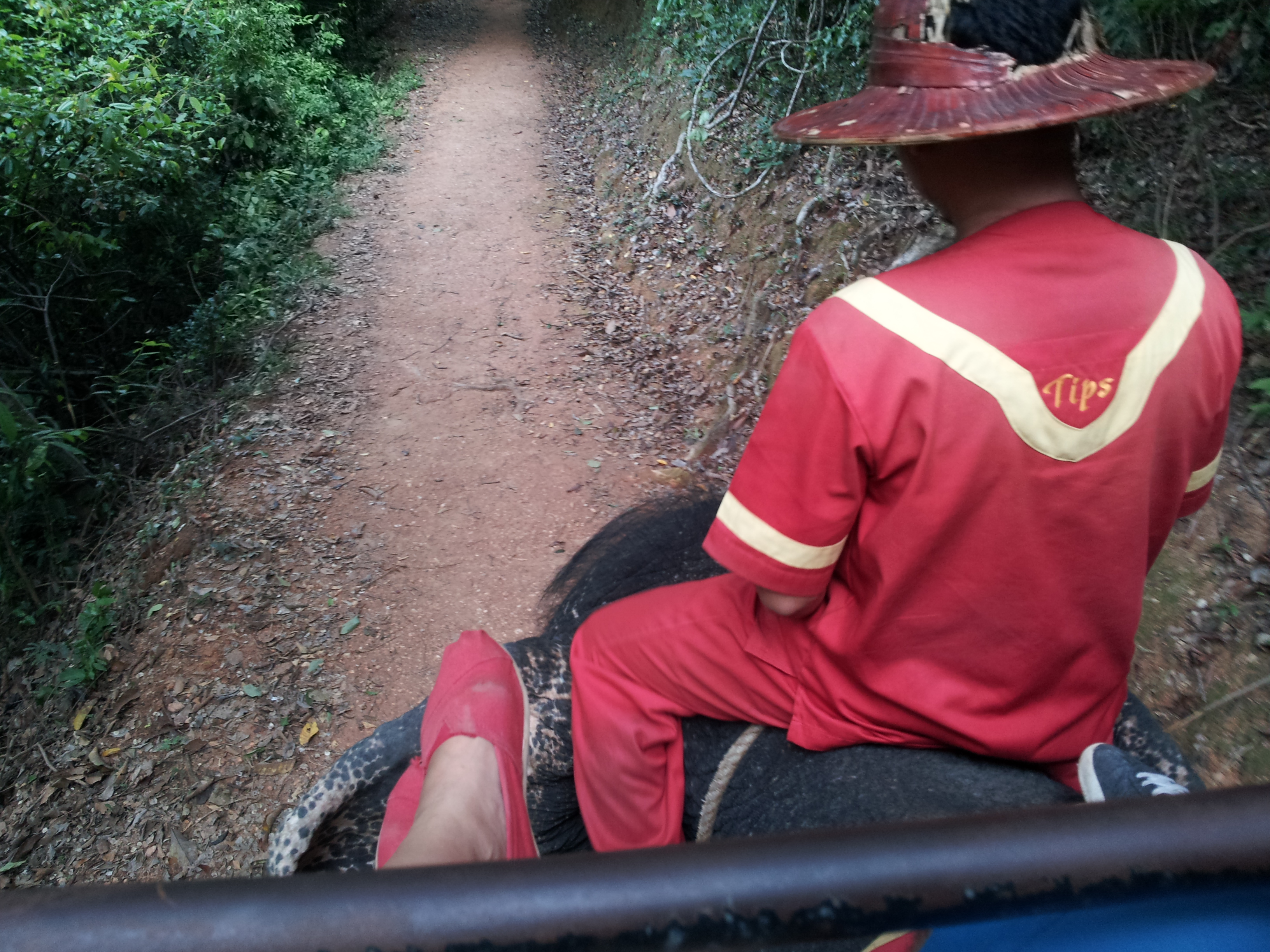
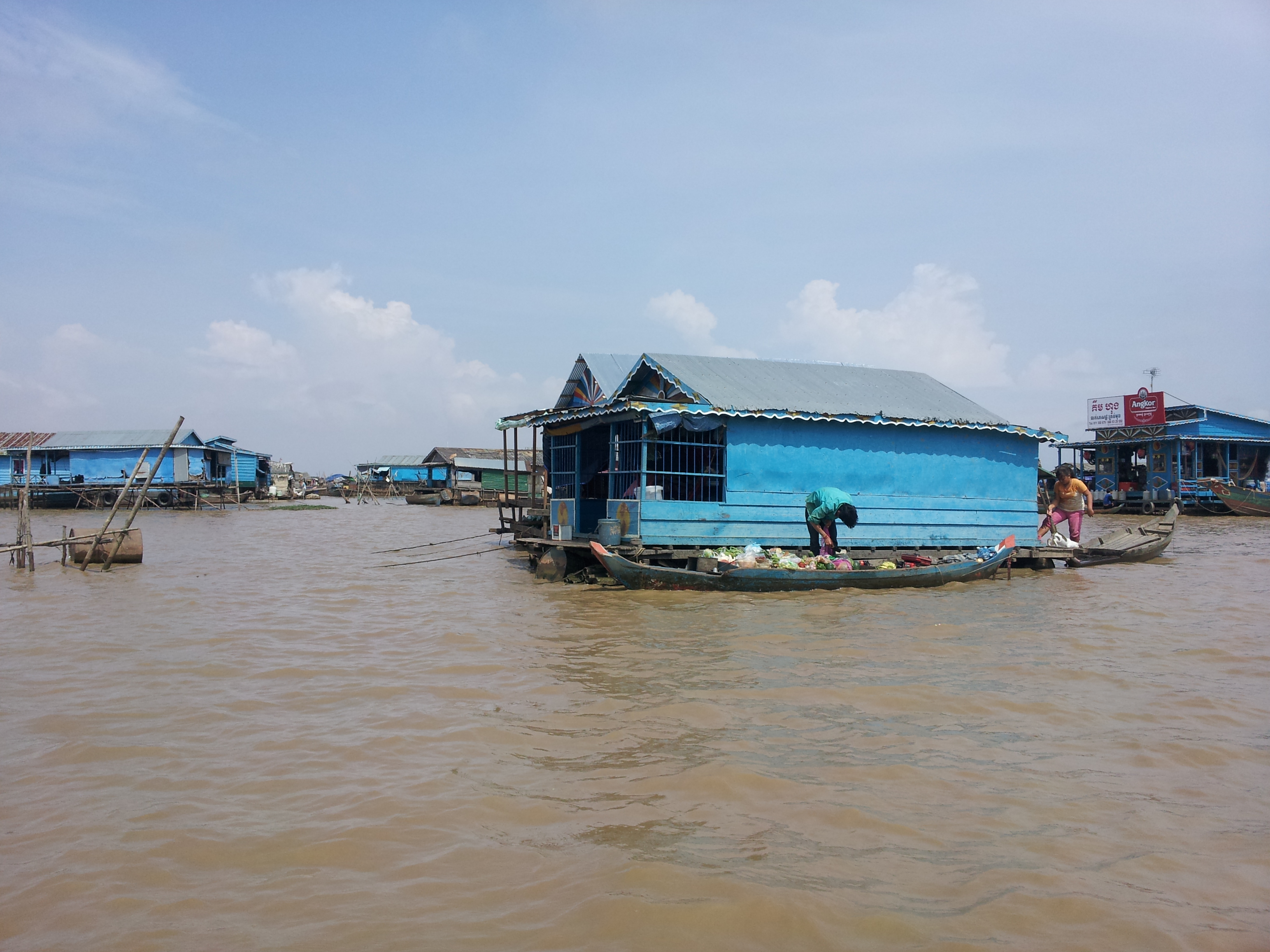
We also went to see the sun rise at Angkor Wat but unfortunately due to bad weather we weren’t able to see it. Another day we tried to see the sunset at Phnom Bakheng, a temple located on the top of the hill. We actually rode an elephant to the top of the hill and it was quite an interesting and fun experience. Unfortunately, there was no spectacular sunset that we were expecting due to the fact it was cloudy. Nevertheless, we had fun since the view of the jungle and Angkor Thom was very nice. Siem Reap is a really great place to visit as you can see the temples, but also get a more up-to-date Cambodia experience since the city is quite modern. Most of the city, however, caters to the tourists so there are lot of shops where you can buy souvenirs and there are plenty of western restaurants. We also went to see the floating village located on the lake just outside the city.

riding the elephant

Riding the elephant

floating village

The floating village

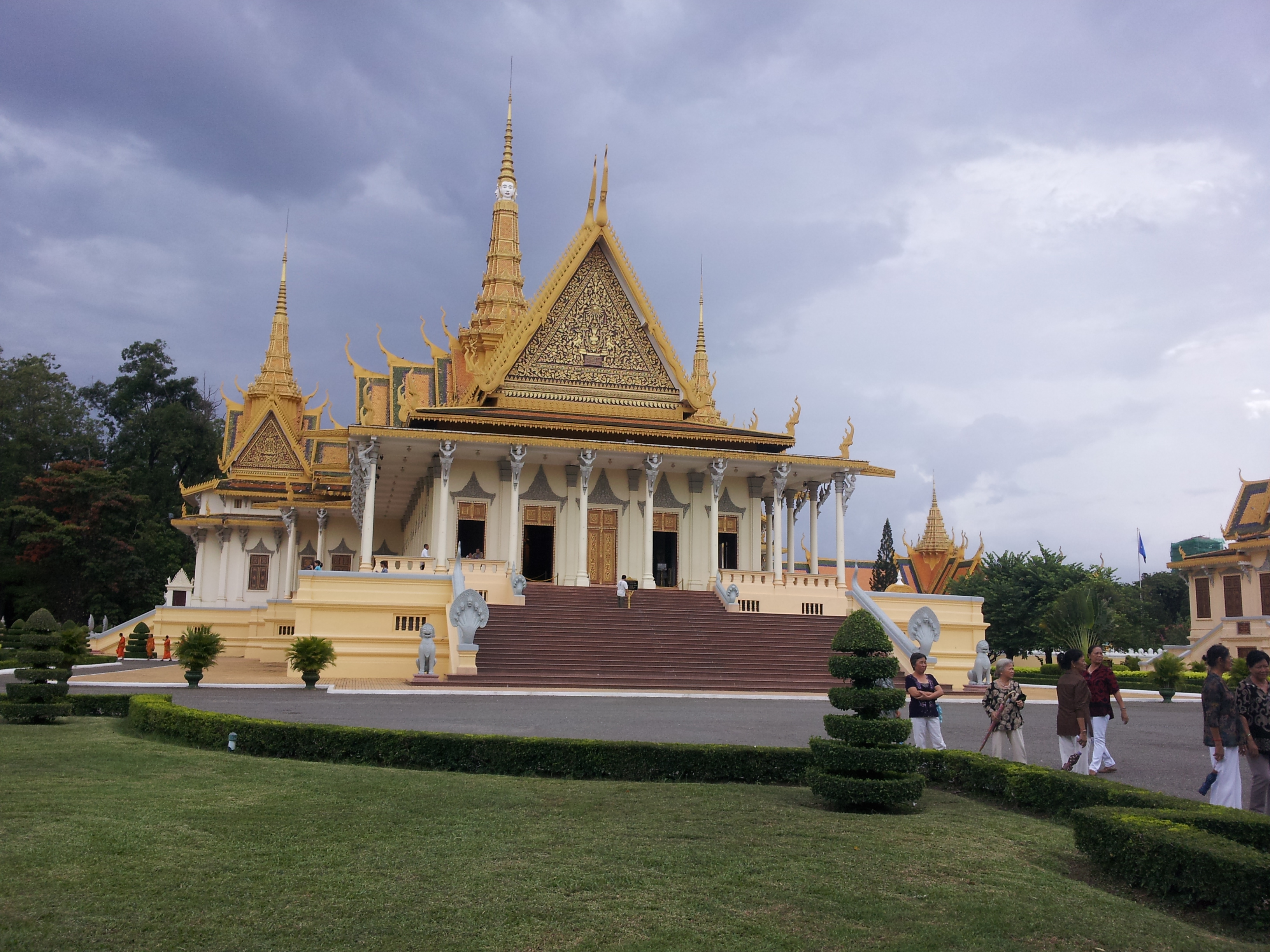
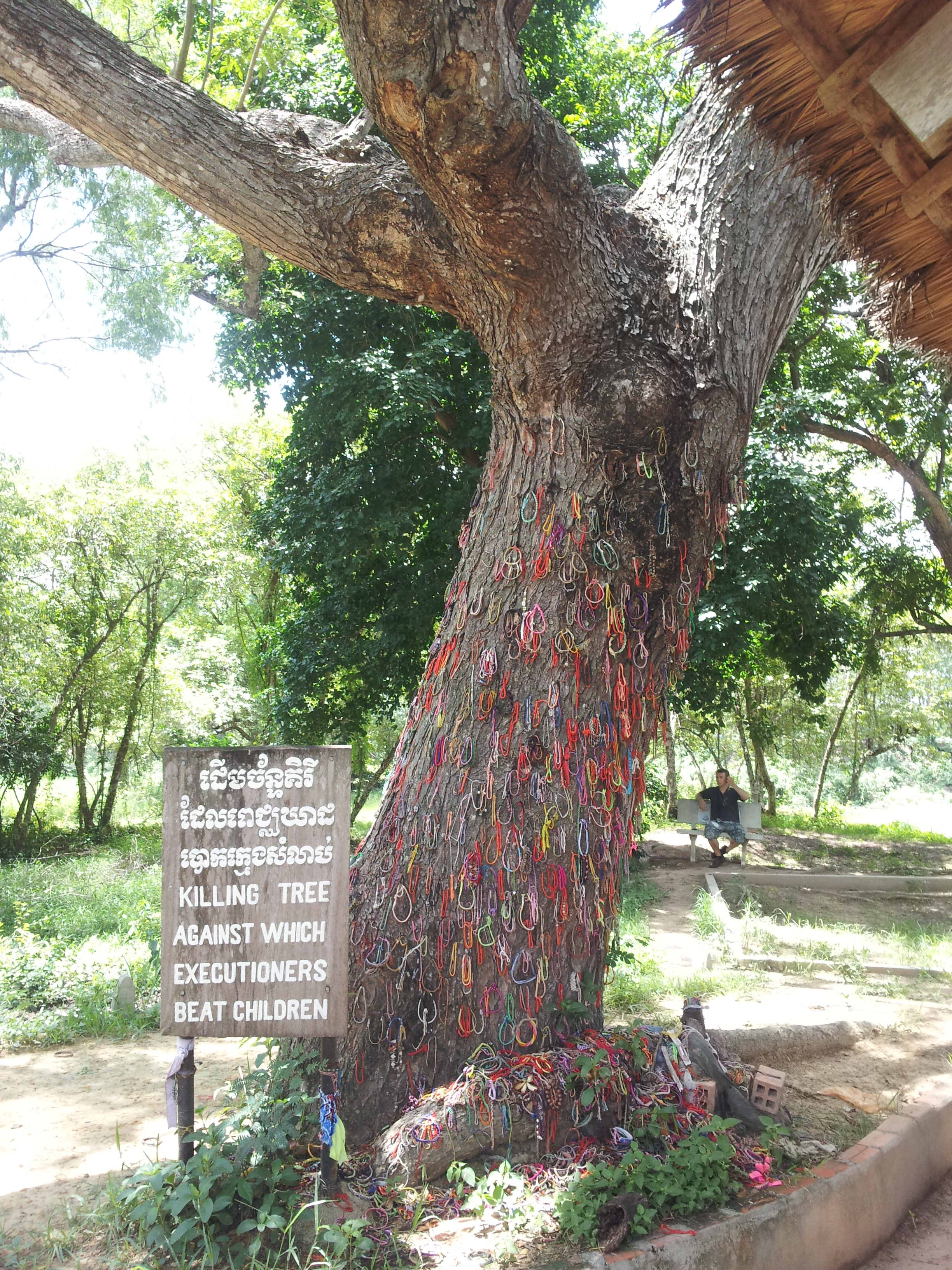
Our last day we spent in Phnom Penh visiting the Royal Palace and the Killing Fields. It is quite a contrast to see the streets of the Phnom Penh and then the riches of the Royal Palace. It is very beautiful and worth a visit!  Visiting the Killing Fields was a very emotional experience since I learned more about the genocide that happened during the Khmer Rouge regime in Cambodia. Seeing the mass graves, the killing tree where babies were killed, and hearing personal stories of the people who survived the atrocities of Pol Pot’s regime was very moving and I learned  a lot. Even though it was very hard being there, I am happy we got to visit the Killing Fields and learn more about the history of this beautiful Asian country.

royal palace

The Royal Palace

killing tree

The Killing Tree

Once you get past the humidity and heat, and get used to the tuk-tuk rides, it is very easy to enjoy Cambodia. No matter whether you visit the temples, the Killing Fields, or just engage in a conversation with the friendly locals (they all speak at least some English!) the beauty and the rich (no matter whether gloomy or fascinating) history of Cambodia shows through. The most impressive part was meeting Cambodians who are so helpful and have this great will to live and to be happy. Cambodia won my heart and it is definitely a country that I would visit again and recommend others to visit. This trip is surely one of the biggest highlights of my semester.


제주도: Jeju Island is a Heaven on Earth (posted by Indira in South Korea)

May 31, 2013

As the time I have left in Korea is slipping out of my hands like the grains of sand, I definitely try my best to balance traveling and school. Korea is such an amazing country and I don’t think that a lifetime of traveling and exploring would be enough to see everything the place I now call home has to offer. Knowing that I have about 3 weeks left and so much to see, do, and experience, and also to make sure I finish all my assignments on time is somewhat putting me under pressure. But the motto should be “work hard, explore hard” and it is all possible.

Last weekend a group of 15 of my friends and I decided to go and see Jeju-do, an island that contains the natural World Heritage Site Jeju Volcanic Island and Lava Tube. The entire Island is dominated by the Halla Mountain (Halla-San) and there are many beautiful waterfalls, caves, cliffs, and beaches to see and spend time exploring. The island itself is located to the south of the Korean peninsula and it undoubtedly offers a scenery that is truly unforgettable.

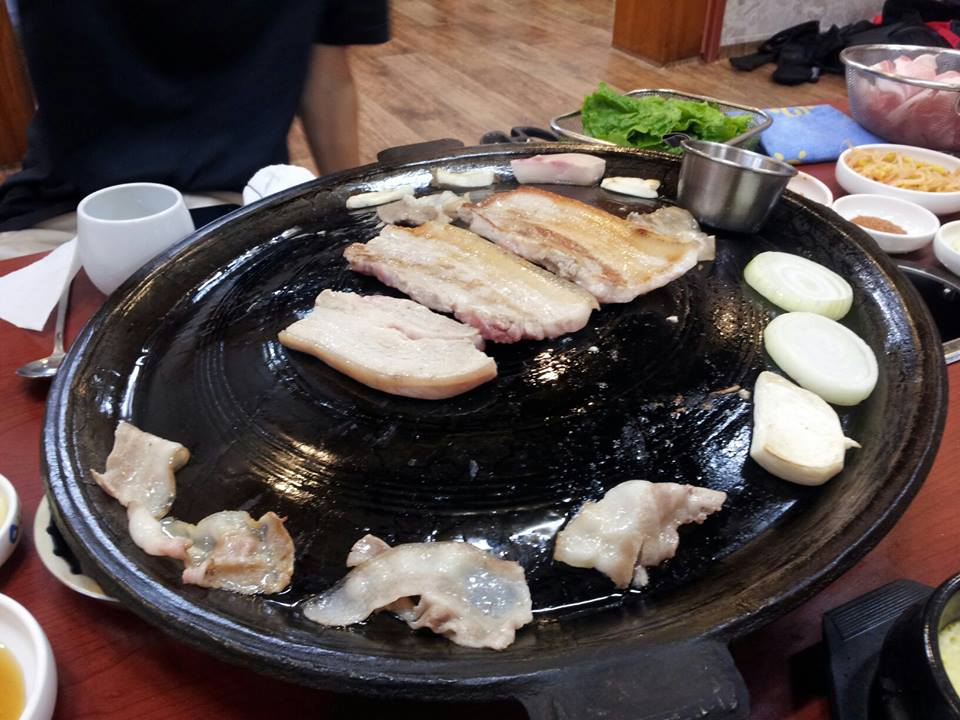
Out trip started by taking a plane (fairly inexpensive one hour fight) Seoul to Jeju City from where we took a two hour bus ride (5000 won = less than 5 dollars) to Segowipo, a city in the south of the island. It is interesting that the Jeju Island consists of two cities only: The entire north part of the city is Jeju-City and the south half is Segowipo. We stayed in Segowipo as most of the tourist attractions are located there. First day we went to one of the waterfalls that is very close to the harbor. The area is really beautiful and there are quite some tourists. Afterwards we went for a lunch at one of the numerous Korean restaurants serving famous Jeju black pork, which was by all means delicious.

pork

Jeju black pork

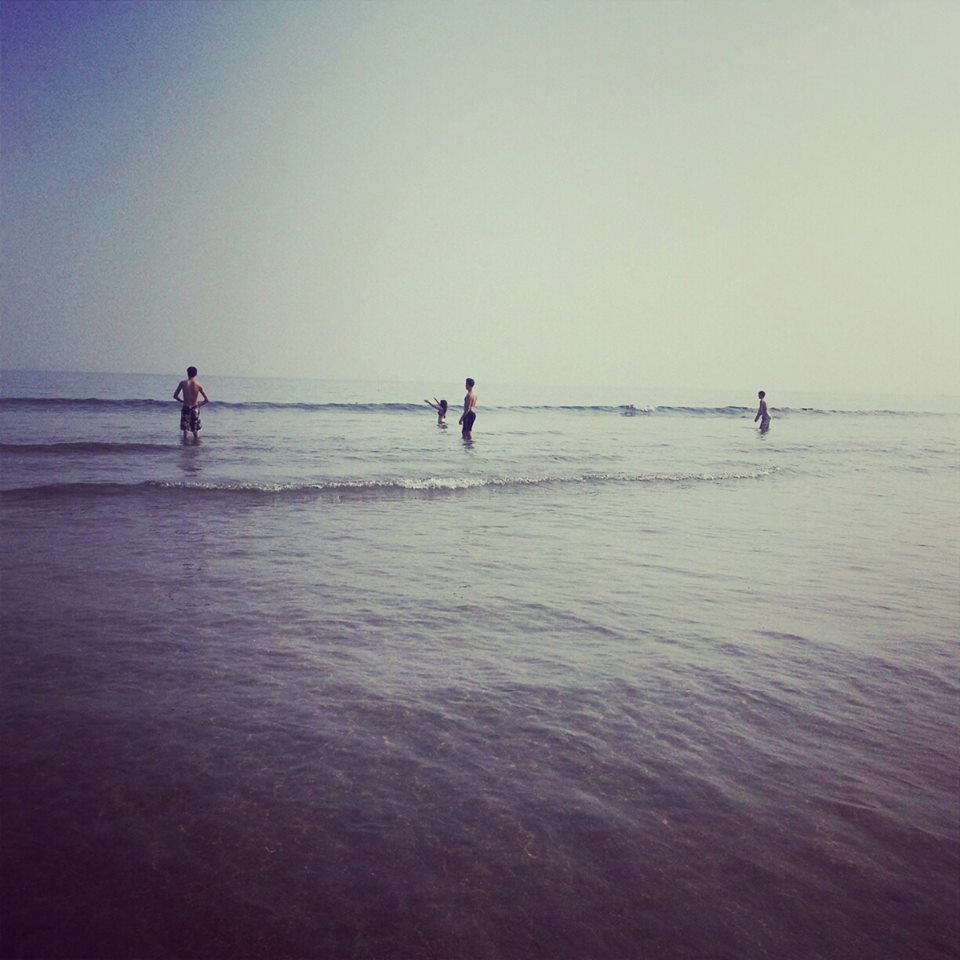
Afternoon was reserved for a lazy day at the Jungmun beach, which is one of the most famous beaches in Jeju. Since everything on the island is located somewhat far from each other taking a cab or a bus is highly necessary. Beach was about an hour or so from the city. Even though the swimming season was not open and the water was cold some people were brave enough to swim. I didn’t dare to do so. Laying in the sun was also nice  and relaxing! Since Jeju is in the south, it is much warmer and sunnier there so it was perfect weather for sunbathing and frisbee on the beach.

frisbee

Playing frisbee on the beach

The second day at Jeju was by far the most intense day of my life. Hallu-San is 2000m high mountain and smaller group of us decided to hike up to the top to see the crater. After about 5 hours of hiking steep mountain in extremely high temperatures, I made it to the top! This was one of the biggest challenges of my life and I was actually able to prove myself wrong (I am not much of a person who does sport or exercise, but I definitely did manage to hike up to the top of one of the tallest mountains in Korea). Since it is a drought season we were not able to see beautiful lake in the crater (Google “Hallu-San” and you’ll know what I’m talking about) and the view was blocked by the clouds of smog. It was very disappointing not to be able to get any reward after enduring so much pain to hike up the mountain. The hike down was, however, really nice and the trail was very beautiful, which somewhat made up for the bad summit. The aftermath came right after I made it down to the starting point 8.5 hours after the hike started – my whole body was aching. Despite my muscles being sore and my ankles swollen, this was definitely one of the most interesting experiences that will shape my semester in Korea and the idea of pushing personal borders. It is good knowing that I can challenge myself and actually win the challenge.

trail

Trail down the Hallu-San

Our last day in Jeju we spent visiting yet another waterfall, which was very hidden. We heard from the locals that it is a great spot to visit and not so many tourists know about it. The small waterfall hidden from the world was definitely one of the most beautiful wonders of nature I’ve ever seen. We spent quite some time there climbing the rocks and swimming in the crystal clear water. The rest of the trip we spent in Jeju City exploring the cuisine of the region.

waterfall

Hidden waterfall

Overall, Jeju is definitely worth a visit and I am so happy I managed to visit this island before leaving Korea. Coming back to Seoul was a bit hard since we were welcomed by rain and loads of schoolwork. Now I am trying to finish everything before I leave for an adventure to Cambodia on Friday. I can’t even put into words how excited I am about this upcoming trip! 🙂


City of dreams! (posted by Pierre en Suisse)

April 26, 2013

Salut tout le monde! If you remember reading my last post, Voyageur du monde, you may remember that I hinted at another upcoming voyage, but I did not reveal my destination. My country count is now officially at four, as I just returned from a trip to Paris! What a weekend that was! Before heading off, I had quite a few expectations of the city, all of which are possibly the most cliché images one could produce of the city. This included wanting to eat crêpes at the Eifel Tower, hearing accordion players at various street corners, and going on long walks through the city’s gardens and famous streets, namely the Champs Elysée. But against all the stereotypes, I was most excited about just being in the presence of such history and culture. Not to mention the fact that I’d be able to visit a European capital city with such importance for politics, finance, and culture.

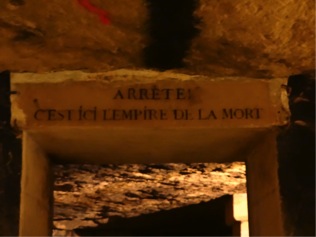
As always, the first thing that I was super excited about upon arriving in Paris was the fact that I could speak the language of the country. I didn’t have to ask someone at an information window to speak English, but instead, me and my friends who traveled together (other exchange students at UNIL) could all pose our questions in French and continue practicing our language skills. I also have to say that knowing the language definitely enriched the experience for me. The first site we visited was the city catacombs. Buried 45 million years under the Earth, the catacombs are the city’s former stone mines where the materials to build structures like Notre Dame Cathedral were taken from. As a more touristy twist, they have been turned into the burial site of more than six million people. Posted throughout the catacombs were writings, in both French and Latin, with very thought provoking quotes about human nature. Without knowledge of French, I would have missed out on what became my favorite part of the catacombs!

The entrance into the tomb area of the catacombs, underground in Paris

The entrance into the tomb area of the catacombs

Of course, our tour of the city moved above ground after our first stop. We later found ourselves visiting an old train station turned museum, le Musée d’Orsay, where we saw the works of some famous artists I had first learned about in elementary school, such as Monet! My group and I had all decided that it was a necessity to go to a museum in Paris, even though not all of us were crazed for looking at art, just because it was such an important part of the city.

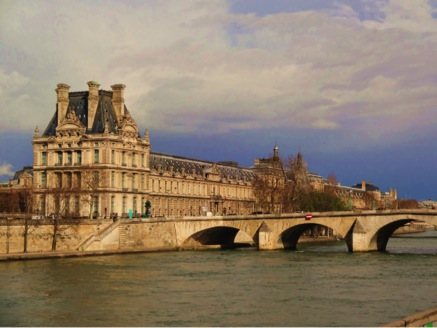
Right in the heart of the city, Paris, with the Louvre and the river Seine in sight

Right in the heart of the city, with the Louvre and the river Seine in sight

We found ourselves right downtown in the city when we left the museum, and by that point we all had food on our mind. After meeting up with a friend from France who had studied abroad at U of R last semester, we went off for our first real adventure into French cuisine. Luckily, our local was able to help us out with choosing some of the more traditional French dishes. I definitely branched out when I chose a duck dish for my dinner, and tasted my friend’s dish. She had ordered something called tartare de boeuf, which is essentially raw, ground meat with various seasonings for flavor. If you thought sushi is a terrifying concept, think again. I was at first really hesitant to try this, since all of my prior food knowledge was telling me something like this needed to be cooked, but I figured if French people can eat it, so could I, so I decided to be open and try it. I rewarded myself afterwards with crêpes, and then we finally made our way to the Eifel Tower.

And of course Paris' most famous site, the Eiffel Tower!

And of course Paris’ most famous site!

That being just our first day in Paris, it would require a much longer post for me to recount everything that we did during this trip. Four days in the city gave us the opportunity to see and do so many things, from just aimless touring to visiting some historical museums as well, notably L’Hôtel des Invalides, a a military hospital that Louis XIV ordered to be built for his forces in 1670. In some of the areas where the walls were newly renovated, it became so easy to place yourself in this time period, and feel like you were a part of it for a moment. It was an amazing feeling, when looking up at all of the stone walls and blue roofs. We also got to see the tomb of Napoleon in Les Invalides, which for a history nerd such as myself was pretty exciting.

Did Paris live up to my expectations? It certainly did, and then some. In the end, I don’t think that I embodied the clichés that I felt like I would before heading off, minus the fact that me and my group all bought berets the very last day and wore them through the airport and all the way back to Lausanne. I do count on the fact that I will be back there one day, but as always, coming back to Lausanne a third time from a trip abroad helped to solidify just how special I regard this city and country, as my first ever home away from home.


지평선: N Seoul Tower, Richmond Reunion, and Our Husky Friend (posted by Indira in South Korea)

April 24, 2013

Seoul is a big city and it is always interesting to go and explore different areas as each part of the city is very unique: Sinchon (where Yonsei University is located) is very busy and there are many young people, Ewha is full of cute little stores and shops as this is where Ewha Women’s University is located, Insa-dong is a touristy place, while Itaewon is very Western-like as most of the Westerners who work in Seoul live here, and Gangnam is very modern with skyscrapers everywhere. This city has so much soul and spirit that it is rather hard to comprehend it all. There is, however, one place where you can take a good look at the entire city of nine million people and enjoy the view of a place where modernism and tradition coexist – N Seoul Tower.

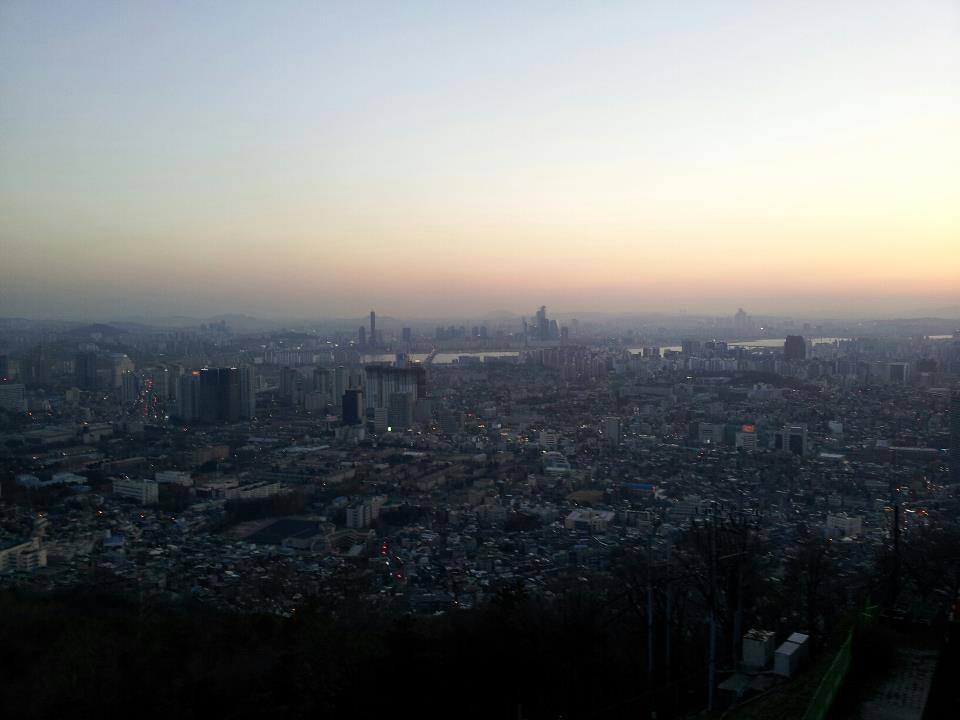
Last week a group of my friends and I decided to go to N Seoul Tower and see Seoul in its full beauty. It was really good that we had nice weather as the sunset was beautiful and the skyline was breathtaking. Getting to N Seoul Tower gave us a view of different parts of the city  as we had to go to the subway stop in Sinchon, walk through Myeondong, take a cable cart and finally hike up to the Tower. The best part of it all was seeing how different Seoul is and then getting a good view of the entire city, which makes you wonder how is it possible that so many diverse areas are so united and make this city what it is. The view is rather breathtaking – you can walk around in the 360° observatory platform and see the city from all the sides. We managed to see the sunset from the outside before we took an interesting elevator ride (they show you a short video clip that basically takes you from the Tower to outer space when going up, and when going down it takes you from the outer space to the Tower in Seoul in a mere 30 seconds) to the top of the Tower. This is definitely one of the top touristy activities I’d recommend to anyone (even though it took me over a month to do it). I’ll definitely go back to N Seoul Tower in late spring!

Sunset over Seoul from the N Seoul Tower

Sunset over Seoul

View on the City of Seoul from the N Seoul Tower one of the biggest tourist destinations in Seoul

View on the City of Seoul from the N Seoul Tower

Being so far away from Richmond doesn’t mean it’s impossible to find Richmond affiliated people in this part of the world. Since Ms. Leslie Stevenson from the CDC was on a conference in Seoul, she invited all the Richmond graduates and students currently in Seoul, as well as Yonsei students who either were, or are going, on an exchange to UR for a dinner in Gangnam (unfortunately no one thought of getting a group picture as we were all too excited for the reunion). It was really great having dinner in a Richmond spirit, as well as getting to know so many new people. I also enjoyed talking to three Yonsei girls who will be studying abroad at Richmond in Fall 2013. I tried to give them some advice and they seemed super excited to start their semester at UofR. Seeing Ms. Stevenson was also great! She accompanied my Leadership and the Common Good SSIR group trip to Spain in January last year and seeing her in Korea this year was just wonderful. It truly shows how global Spiders are!

Seoul is a diverse, modern, and global city full of surprises – you never know who you might meet/see. One of my favorite things in Sinchon is seeing a Husky dog that is usually chilling outside one of the numerous Korean restaurants in the area (supposedly since his owner works there or something of a kind). This big fluffy ball of fur is just about the most amazing dog ever. He is so friendly and playful and it is always great running into him when walking around Sinchon.

Husky dog we always see when walking around Sinchon.  He is the dog of a local restaurant owner

Husky dog we always see when walking around Sinchon

I have also noticed that as midterms are approaching (last week of April) I have more school work to do. The beautiful spring weather, blossom, and temperature of about 67 degrees is unfortunately hard to ignore. However, it is very much possible to stay on top of the schoolwork and also enjoy the life in Seoul. All it requires is a bit of sacrifice and hard work, but it is completely worth it.


여행: A Weekend Trip to Muuido and Silmido, Silkworms, and Korean Hospitality (posted by Indira in South Korea)

April 19, 2013

If you ever get sick and tired of Seoul (which is by any means absolutely IMPOSSIBLE) or you just need a couple of days away from the big city, the rush, and the notion of being busy all the time, you can always take a trip. A group of eight exchange students at my host University – including myself – decided to take advantage of a free weekend and go on a trip to a nearby island – Muuido. Muuido is a small island located about a 15-minute ferry ride from Incheon (which is a city located an hour subway ride from Yonsei University) and it is the perfect getaway place for a weekend: you can go hiking, climb the rocks on the beach, walk around, ride horses, go zip-lining and much more!

Our trip started with an early Saturday morning gathering in the SK Global House (one of the student dorms) lobby, meeting some people at the subway station, and a long subway ride to Incheon airport. From there we took a bus to the place where we hopped on a ferry that took us to Muuido. Upon our arrival we noticed many stands and Koreans willing to sell corncobs and silkworms (!). Being tourists, we got a cup-full of silkworms. A very bad idea, I may add. Only three of the people from our group were brave enough to try the silkworms: it must have been one of the worst things they have tried, according to their faces and their reactions (which made me happy to be one of the group who didn’t dare to try weird smelling silkworms). Unfortunately, the silkworm adventure did not end here. Right after we tried the silkworms, the bus that was supposed to take us to the other side of the island, where the beach is, arrived. So we got on it (with the cup of silkworms, which ended up being the worst decision possible). The bus was full! Crowded! It was so hard to stand while being pushed from all sides and, of course, my motion sickness kicked in, especially since the silkworm smell was so overwhelming. I honestly don’t know how I survived the 30 minute bus ride which definitely was the worst bus ride ever, but the torture stopped once we reached our bus stop close to the beach entrance. I have never felt move relieved or happier to get off a bus and get some fresh air!

My friends - Denis (France), Jina (Germany) and Mike (USA) - eating silkworms on our way to our weekend getaway

My friends – Denis (France), Jina (Germany) and Mike (USA) – eating silkworms

Since we arrived to the island during the low tide we used this chance to climb the rocks along the beach and enjoy some amazing views (despite the fact it was very cloudy) right after getting a quick lunch. It was so much fun climbing big rocks and racing to see who would make it to the top first. Afterwards we went on a three hour hike to the top of the island. That was a challenge for me. I am not really a person who does sports, but I very much enjoyed this hike. The reward – the view from the top – made me forget the pain and the thought of how sore I was going to be the next day. It also happened to snow for a couple of minutes while we were on the top, which made this experience so much more unique and special. When we got back to our huts on the beach we got dinner and then made a bonfire. It definitely was a day of new experiences and bonding with people I had met fairly recently (some of them I met that day).

Rocks we climbed along the beach on Muuido when the tide was low, on our first day on the island

Rocks we climbed along the beach on Muuido when the tide was low

The second day of our weekend trip we went back to the bus stop thinking we would have to endure another horrible bus ride in order to get to Silmido, a small island that you can walk over to when the tide is low. Luckily, we met the most amazing, generous, and hospitable group of Koreans ever. Jina, a German-Korean girl who speaks perfect Korean (it’s very useful to have her around as it is much easier to get by with someone who speaks the local language), approached the group of Koreans to ask them about the bus and they happened to be producers of a Korean TV broadcaster KBS, and after a short conversation they gave us traditional Korean snacks and offered us a ride to Silmido as they were heading there too. KBS had rented a whole bus for the crew and they had nine free spots on the bus, which worked out extremely well for us (there were eight of us). Their generosity did not stop there: once we arrived to Silmido they invited us to join their barbecue on the island. They were so welcoming and warm. I couldn’t believe that a group of people would be so nice to eight strangers they had just randomly met on an island. Afterwards we walked over to Silmido, picked up some trash (since it was what the KBS producers did), and then joined in for an afternoon of games (frisbee and a sport that is a mixture of volleyball and soccer). As if that was not enough, the KBS crew gave us a ride back to Seoul for free. We were all very much surprised and happy about meeting the greatest group of people possible. They definitely made our weekend trip that much more enjoyable.

Enjoying the barbecue provided by the KBS producers, the most generous and amazing group of people I have ever met.  KBS is a Korean television broadcaster

Enjoying the barbecue provided by the KBS producers, the most generous and amazing group of people I have ever met

Coming back to Seoul meant that we had to get back to school and our regular everyday duties and work, but this weekend will definitely be one of the best weekends in Korea. Not only have I experienced so many new things and seen a new side to this country I now call home, but I have also met an amazing group of people who will always be on my mind when I meet strangers that might need help or are on a search for good time. 🙂


Voyageur du Monde? (posted by Pierre en Suisse)

April 19, 2013

Zero: the number of foreign countries that I had ever visited before coming to Switzerland. Three: The number of countries I have visited (or lived in) so far by the time that I am writing this. Four: The number I will have reached by the end of this week when I head to another famous European destination! Compared to the “Pierre” I was before leaving the US, I am definitely on my way to becoming a voyageur mondial (global traveler)! This is far from being an actual title I can claim, I still have some other continents to get to, however it certainly feels this way, being so new to this whole traveling thing. After coming back from Italy during my Spring Break, I spent one day back in Switzerland before hopping on a plane to Barcelona!

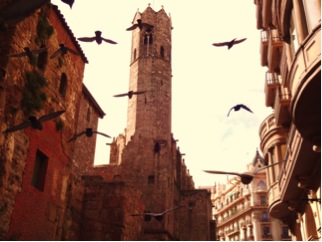
I had quite a different experience in Barcelona compared to Italy, just from the standpoint of language. In Italy, I did not know a single word of Italian, which made me feel bad every time I needed to ask someone for English, and even worse when I was on a train and had no idea how to say “excuse me” or “I’m sorry!” However, after having a single year of Spanish combined with my French, I did pretty well in Spain. As Barcelona is in the Catalonian region of Spain, the people speak both Catalan and Spanish. Luckily, I was able to meet up with a friend I met at Richmond who comes from Barcelona and did a semester of exchange at U of R. She helped me out with some key phrases that I would need to know as well, and explained to me the language. She said that Catalan sounds like Italian, and has a lot of influence from the French language, such as some of the letters and even words, since the region is so close to the French border. Luckily, she also spent a great deal of time with me, showing me some of the streets and main areas that tourists would not normally go down on their own. In the sunlight, it was so easy for me to fall in love with such a beautiful place very quickly, when looking up around me and seeing the narrow streets lined by buildings with terraces and plants coming down from them, walking into a main square and seeing a group of people start performing a dance show, and then being introduced to the main tapas dishes of the region.

Managed to capture this image of the birds while in the oldest parts of the Barcelona. Completely fits my image of the stereotypical European image

Managed to capture this image of the birds while in the oldest part of the city. Completely fits my image of the stereotypical European image

My guide also explained to me one of the most notable features of the architecture in Barcelona. The modernist style is unlike anything I had ever seen before. Just like my friend told me, it is something you just have to see, and not anything that is easily explained, but with the help of my friends at Wikipedia I will attempt. The movement began towards the end of the 19th century, and combines very rich, ornate decoration and detail, while preferring curves over straight lines. One of the most famous sights in Barcelona, the Basilica I Temple Expiatori de la Sagrada Familia, designed by one of the most renowned modernist architechts, Antoni Gaudi, was designed and meant to feel like a forest on the inside, for example. Still unfinished, it was one of the most impressive sights I have ever seen!

Feel like you’re looking up into the tops of a manmade-forest? Well, this would be the inside of Gaudi’s famous Basilica, La Sagrada Familia!

Feel like you’re looking up into the tops of a manmade-forest? Well, this would be the inside of Gaudi’s famous Basilica!

Among other things that we did in Barcelona, aside from just seeing amazing architecture, I also got to tour the Olympic park where the city hosted the summer Olympics in 1992, in addition to finally seeing the beautiful Mediterranean Sea for the first time! While I know I am still so far away from being able to call myself a world traveler, it certainly is beginning to feel like it, having been exposed to two fairly different countries within the same week. Despite all the excitement of the travels, I still get beyond excited when I return to Switzerland, and feel back at ease with the language and get back to the certain degree of familiarity I have with what is still this foreign land. But in any case, the travels shall continue, so stay tuned for what is to come!

One of my famous images of the city, the fountains in this park were absolutely gorgeous!

One of my famous images of the city, the fountains in this park were absolutely gorgeous!


What’s hidden in the Cloud Forest? (posted by Blair in Ecuador)

April 10, 2013

At the beginning of the semester, we had the opportunity to spend a long weekend in the Bosque Nublado (Cloud Forest) of Intag in the Northern Sierra (mountain) region of Ecuador! On Saturday morning, 22 SIT gringos, Fabian (one of our directors), and Leonore (our other director)’s son, Nico, all piled on a bus. We drove for about five hours, an additional two hours than expected because there had been a landslide that blocked our highway. Fabian pointed out the Imbabura and Cotacachi Mountains/Volcanoes, telling us the indigenous legend of how the two fell in love and that when they have an argument, there’s a volcanic eruption.

When the bus stopped, we hopped out and tossed our bags into a truck, then started out on a walk. We walked for another hour, learning about the flora and fauna, the legends of the area, and a bit more about our plans for the weekend from Fabian. Along the way, we passed a bunch of horses tied up that were going to carry our stuff where the truck could no longer pass. There is no way to get in or out of this place without walking for half an hour, and that’s in good weather!

We arrived at La Florida, the hostería (a long-term resort-type lodging arrangement) to an already prepared, and much appreciated lunch of salad, veggie enchiladas with beans and rice, and oatmeal-chocolate chip cookies with tea and coffee! It was quite delicious; all the food comes from their fields, which operate with a very specific system of natural equilibrium. They don’t use any chemicals on the plants because it is the natural combination of distinct species that keeps weeds and bugs from taking over.

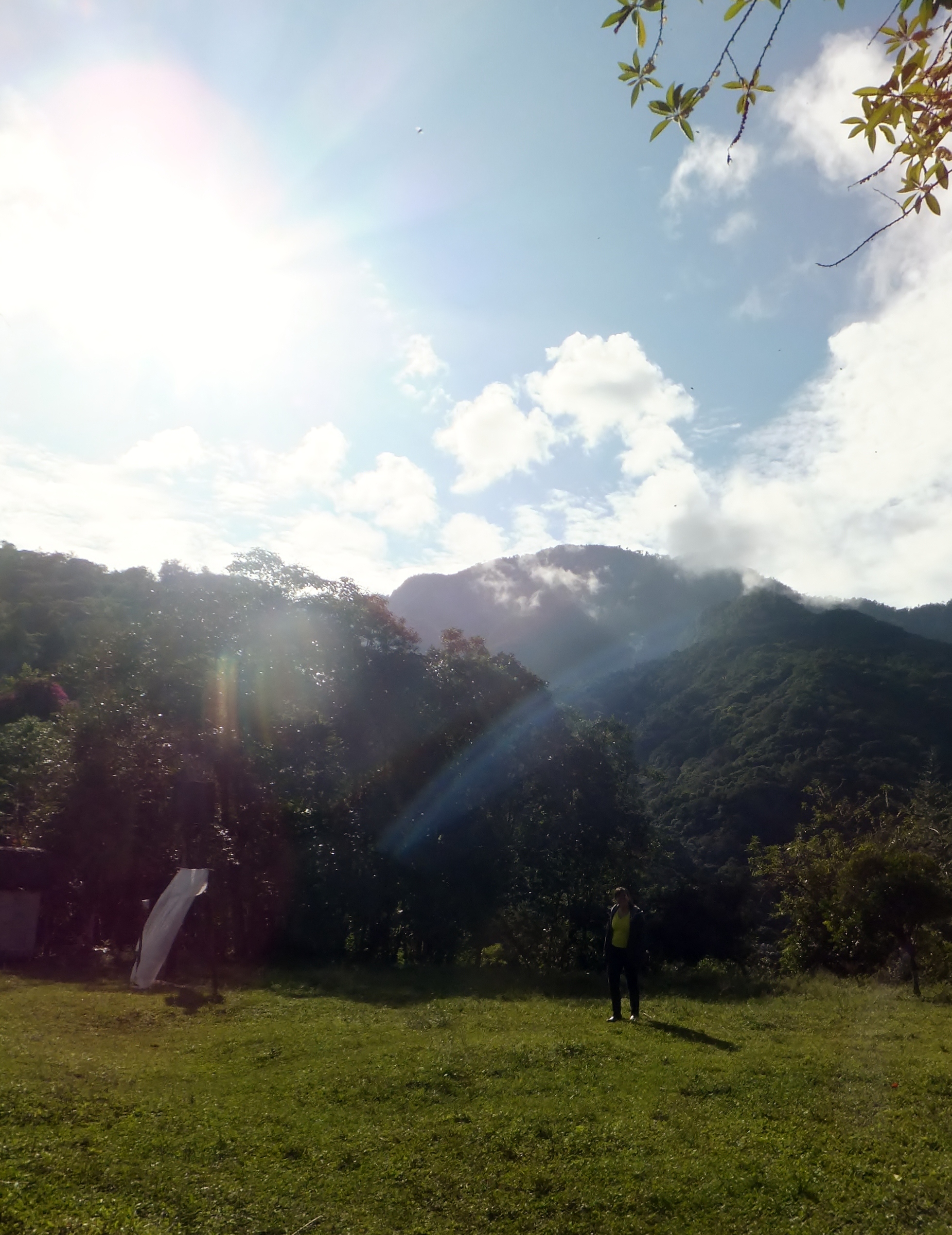
Arrival at the Bosque Nublado, the Cloud Forest

Arrival at the Bosque Nublado

After dividing into our cabins, we were walked through the set-up.

1. Electricity: La Florida has electricity in the main building, but it is simply nonsensical to install it everywhere, so we went to bed by candlelight for a week. I definitely suggest doing this, it was a wonderful experience.

2. Toilets: There are outhouses which have different underground levels where waste is broken down. They use a human waste composting system, so the waste is constantly mixed with very specific soil combinations to aid the breakdown process, and eventually used as fertilizer. This is one of the only places in Ecuador where toilet paper can go in the toilet!

3. Water: They receive their water from the nearby river, where it passes through a natural filtration system on its way to La Florida. However, this means the water heating system is the sun. If there is no sun, which is rather likely in rainy season, the water comes out fresh cold from the river.

The cabins also had wonderful hammocks hanging outside the rooms, which we promptly piled into and chattered the evening away about the beauty of our home for the weekend.

We had a discussion with Carlos, the owner of La Florida and a Cuban-American citizen who decided to move down here after he visited Intag’s Bosque Nublado once and fell in love. He now lives with his wife, a Spaniard, and they are working to save this section from mining destruction. Japanese, Canadian, and Chilean companies all want to come to Intag to mine for copper, even though the region has only .06% copper. This is the average percentage of copper stored in the ground throughout the entire world and extracting this tiny amount would cause more damage and create more waste product than the copper’s value. However, Intag is specifically being targeted because of Ecuador’s open trade agreements due its the neoliberal policies installed by Ronald Reagan and Margaret Thatcher and because of Intag’s low human population density.

However, Intag has many species unique to this area, many with medical uses, and possibly yet-undiscovered species, as we learned more about the next day. After a delicious breakfast of yogurt with fruit and granola, more fresh fruit on the side, bread, and real coffee, we set off for a hike through the primary forest. We learned of the interdependence of all the living organisms of the Cloud Forest, how each species is able to thrive because it relies on another for protection, because the existence of each species ensures that no one takes over, and because human interference has not yet taken place in this area. However, many plants have been extracted to create medicines, such as the face-numbing medicine you receive at the dentist that turns you into that person who is walking around poking yourself in the mouth to make sure it’s there.

Roberto, our guide, explains the medical uses of this giant-leafed plant, as well as how to roll the leaves into the shape of a 'gun' as part of our tour through the forest

Roberto, our guide, explains the medical uses of this giant-leafed plant, as well as how to roll the leaves into the shape of a ‘gun’

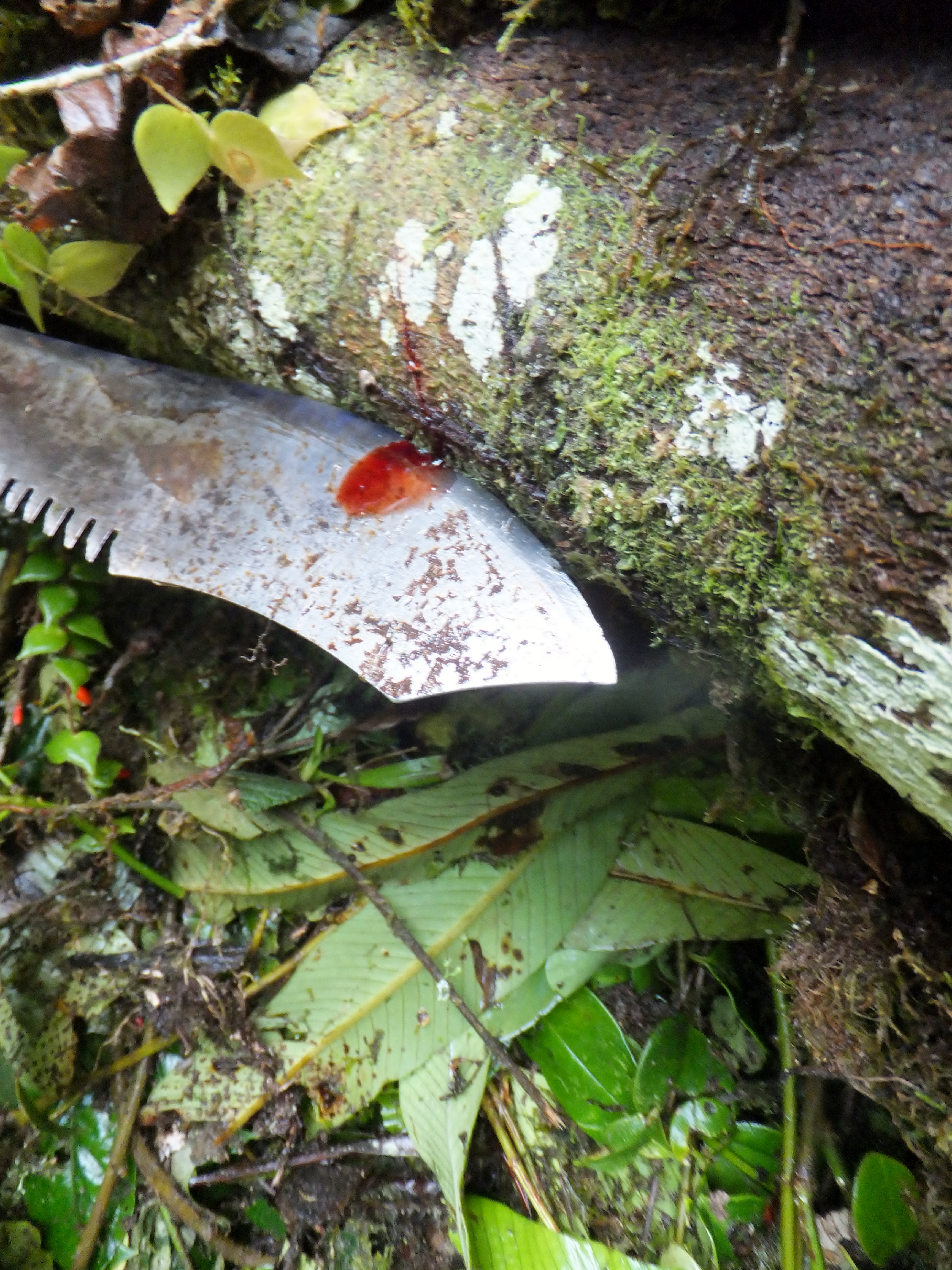
Roberto led us along, tromping across the river in our tall rubber boots to a part with many felled trees. He started hacking around with his machete until he found a specific tree, el Arból de Sangre del Drago (Drago Blood Tree). He cut a slice into it and a red blood-like substance started to pour onto his machete. Roberto then put this blood on his hand and explained that it can be eaten to cure stomach issues. As he started to rub it into his hand, the blood turned into a white cream, which can be used to disinfect and speed up the scabbing process of wounds, as well as used as a bug repellent and sunscreen. This one tree of the entire forest can be used for many purposes, but depends entirely on the existence of the other species throughout.

 Arból de Sangre del Drago (Drago Blood Tree) bleeding onto Roberto's (our guide's) machete

Arból de Sangre del Drago (Drago Blood Tree) bleeding onto Roberto’s machete

The next evening, we had a seminar with a local group of women who use a reed plant of the forest and natural dyes to make different products (purses, placemats, bracelets, hats). These women are also working on an eco-tourism project to bring income to the community, as well as bring attention to the situation with the mining companies. Last year, a group of German volunteers just happened to record an interaction between a mining company and some community members on their iPhones, which they were then able to use with International Human Rights groups to win back their land rights.

On my last morning at La Florida, I woke up to a bunch of commotion outside my bedroom. Silvia, a birdwatcher had come to do her biannual research on hummingbirds and they had just caught a new species for the area. Silvia walked us through the different measurements on the bird and why they’re taken (predicting the age, assuring it does not have stomach issues, checking to see if it’s pregnant), then held the little colobrí (hummingbird) up to my ear so I could hear its blood coursing through its tiny little body. It was amazing! The bird actually flapped its wings in my ear, and hummingbirds can flap their wings 50-80 times per second! What an incredible experience.

This crazy little guy, fittingly named the Rhino Beetle, also got stuck in the bird net and was a pain to cut out because of all his sharp edges.

On our last morning, this crazy little guy, fittingly named the Rhino Beetle, also got stuck in the bird net and was a pain to cut out because of all his sharp edges.