Emily in Samoa: A Trip to Savaiʻi

March 14, 2016

Our courses alternate between intense weeks of papers, exams, and debates, to weeks of experiential learning, where we all get on a plane or a ferry and go somewhere. Last week was one of the latter, and our director sent us off on the ferry to spend two nights at beach fales on the island of Savaiʻi, the larger island of Samoa.

After two days of relaxation, she met up with us, as did her friend Warren, an 86-year-old Australian who has been inhabiting the island for over thirty years, looking at lava flows, making odd deals with local businesses, and exuding an affable nature to those around him. In other words, Warren is what many of our local sources have been: a character.
 

Looking out over the lava fields

Looking out over the lava fields


After breakfast on Monday, we crammed into his van, and went to look at lava fields on the northern part of the island. Only a quarter of Samoa’s population lives on Savaiʻi due to difficult farming conditions. Samoa is located on a hotspot which has been moving over the years, so the soil on Upolu is older, and has had more time to gather the appropriate nutrients for farming. Nothing is built on the most recent lava fields, from the early 20th century, though many locals will chip off pieces to use for houses and graves. The fields are huge, and spread to nearby villages as well.

On Tuesday, Warren brought a bus. “Alright people! Get in,” he quipped. “We’re going to see some blowholes.” We spent the day driving all the way around the island, stopping to crawl through lava tubes and points of interest along the coast. One point was the westernmost point of Samoa, formerly the westernmost point in the world (until Samoa changed the dateline). There, waves crash against the rocks, shooting spray high into the air. The rocks break apart in the middle, and this marks the path that the souls of deceased Samoans would travel, before Christianity made it necessary for them to reroute. After walking the path, the souls jumped into whirlpools, returning to the ocean. The quiet, cloudy point was ideal for spending hours watching the sea..


The path of souls

The path of souls


At last, the blowholes. They were a bit further down the coast, and channeled the water from waves through small holes, until it sprayed 60 feet in the air. One of our guides brought along coconuts, and would look at us, grin, then gently toss the coconut into the blowhole. At the next wave, the coconut shot out, higher even than the water, and get tossed out to sea. Even though the wind was at our backs, we covered our heads instinctively.
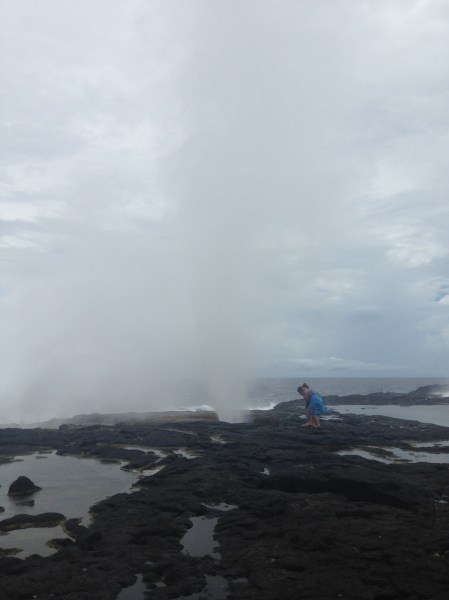
 

Peering into the blowhole

Peering into the blowhole

We spent our last few days at fales on stilts, built around a lagoon near the island’s main port. These served as our base for our next set of excursions, which included a volcano hike, waterfall swimming, and making tapa, bark cloth from the paper mulberry tree.

It was a busy week, but we have experienced a lot that we’ll take back with us. Most prominent is the incredible damage done by climate change, and the lifestyle changes it entails. Our fales on the beach were new, built after those that were formerly on a stretch of coast went underwater. Though they were protected by a ring of sandbags and sharp cliff in the sand, the waves still hit us when we were lying in our hammocks.

I know many people who don’t feel the need to worry about climate change, or even believe it exists—and I think this is largely due to it not affecting them yet. In the US, especially in non-coastal areas, climate change and environmental destruction are easy to ignore and wave off as something Out There, but not Here. Well, it’s here, in Samoa and the other Pacific islands. A warming in global temperatures, even by a few degrees, means that low-elevation countries near the equator can no longer grow certain crops. And though Samoa is endowed with high mountains, atoll countries like Tuvalu and Kiribati (KEER-uh-bahs) don’t have long before they will need to evacuate.

For those of us living far away from this, the situation is shocking…something that you would want to push out of your mind and not think of again. And people in countries like the US can do this successfully. But if this was your life, this slow submersion, what would you do?

Kiribati has bought a number of islands in Fiji, and people plan to relocate there, dragging and dropping an entire nation. Tuvalu has not yet devised a solution. Some people look for work abroad, others have resolved to remain on their land and die there. Those that do not come up with any plan will become what the UN is calling “environmental refugees,” and will be beholden to the whim of powerful, oft-indifferent countries (as we have seen happen with war refugees).
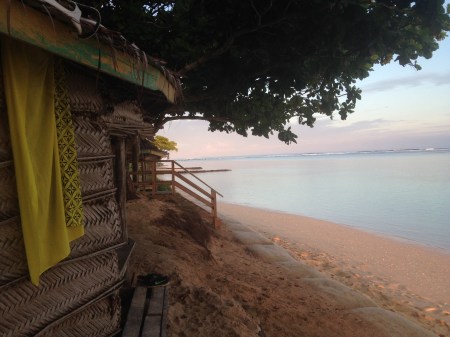
 

Home sweet beach fale

Home sweet beach fale


I don’t want to portray islanders as weak, because they aren’t. They are inventive, strong, and capable of dealing with what the world throws at them. But no one can fight a rising ocean, and if we do not begin to recognize the problem as it manifests here in the Pacific, we will be in big trouble when it threatens out homes, as well, in higher temperatures and drastic changes in weather.

And so we sat, dangling our legs out of our fales, watching the waves crash.


Maddie in Ireland: Interesting People

March 14, 2016

Whenever you discuss your future plans to travel, everyone inevitably sighs a wistful sighy-sigh and says, “Oh, just think of the people you’ll meet.” Usually when such a thing is said you shake your head and say, “Ya, ya, humanity is great… but did you hear about that castle I’m going to get to see? And the one waterfall? It has a bunch of falling water. It’s awesome.”

Now, I do not mean to downplay Mother Nature or Father Ancient Architecture in the slightest, because I am definitely a nature person—


Proof. This is a picture of me literally hugging a tree taken two days ago.

Proof. This is a picture of me literally hugging a tree taken two days ago.


—but I think as young people we tend to be really interested in the more glamorous aspects of traveling and overlook the smaller things… the smaller things like the lady who runs the music store down the street or the old man sitting next to you on the bus. Waterfalls and castles aren’t the only things that have stories to tell. Stories, histories are bing created every single day, and everyone around you is a witness to those stories. That being said, here is a list of the most interesting people I have met in Ireland (and the surrounding countries):


1) The Lady Who Runs The Music Shop Down The Street

My apartment and I went on a trip to a very small, very quaint town called Dingle (lol) a few weekends ago. After spending some time touring the local harbor and beaches we decided to just wander up and down the streets and do a little window-shopping. We weren’t having much luck, but stopped when we saw a building painted bright blue with white lettering loudly proclaiming that there were musical instruments and CD’s for sale inside. As the daughter of a man has an unparalleled enthusiasm for Celtic music, I went in to purchase a few souvenirs while the others waited outside. When I emerged from the store a few euros lighter and a few CDs heavier, I noticed them huddled around a map taped to the storefront window. Beside the map there was also a picture of three men and two women in swimming gear and a clip explaining how they had swum around the entire coast of Ireland. As we read the article one of the women from the picture practically leapt out from the nearest door and eagerly told us her story. It turns out that she had been born in Dingle and from an early age she and the same group of friends had taken an interest in long-distance swimming. As well as swimming the entire coast of Ireland she had also won several European competitions and swum across the Bering Strait, even doing a circuit as a motivational speaker for a bit.

Despite all of this she would always return to her small hometown— small enough that most addresses didn’t even have street names, just numbers— and live a quiet, unremarkable life. She was the most unassuming, normal looking woman in the world, and yet she nearly quivered with excitement when discussing her swims. She only ever swam for the love of the sport— she never wanted anything more than to just say, ‘Hey, I swam,” and that is pretty damn interesting.


Look how happy she is!

Look how happy she is!


2) The Old Man Who Sat Next To Me On The Bus

Riding busses is great because a) they’re cheap, b) busses run frequently, and c) I don’t have a car here so I don’t really have any other options, buuuuut they do have the disadvantage of being public transportation. This means that every once in awhile, you will be forced to sit next  to a random, unpleasant stranger who will smell like lunch meat and be completely unaware that they are taking up half of your seat as well as the entirety of their own (I’m an incredibly patient person, but as soon as you drop me in public transportation that patience-ometer drops straight to zero). So naturally when I managed to make 4 out of the 5 hours on our trip to Dingle without anyone sitting next to me, I was a little grumpy when an old man plopped right down next to me. He looked to be in his late 80’s, was wearing one of those shepherds hats, leaned over, smiled at me, and grabbed my hand, before turning his attention out the window. He asked my name, I told him, and then he began to tell me his story. He was what you would call “a good ol’ boy”. He grew up in that area, married his childhood sweetheart, and had several children. He also happened to be the nicest person I have ever met. An Irish Mr. Rogers, if you will.

Occasionally he asked me questions, but mostly he just talked and I sat and listened, still holding his hand. Given his age he tended to repeat himself, but he always returned to two phrases— “It’s nice to be nice” and “You’re such pleasant company.” They were amazing things to hear.

We parted as the bus pulled to a stop in the middle of an country road, no buildings in sight, but he knew it was his stop and the driver waved to him as he left. He always had an air of being partially next to me on the bus, but mostly somewhere else, some other time and place. Here is what I find amazing about him: He never said goodbye to me— he saw his stop and left— and I’m fairly certain he never thought of me again, but even so, in his incredible purity and kindness, he managed to make a lasting impression he won’t even remember making.

I don't have a picture with him, so here’s some pretty scenery.

I don’t have a picture with him, so here’s some pretty scenery.


3) The Lady Who Ran The Excavation Site

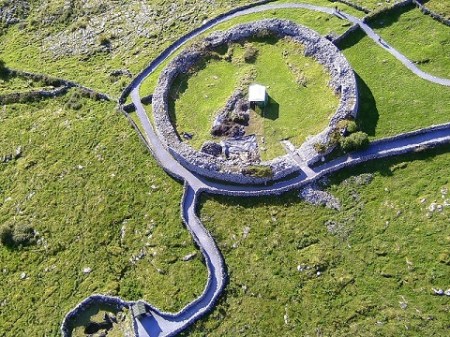
One of the classes I’m taking this semester is called “Gaelic Peoples: Identity and Cultural Practices.” It is an archaeology class, so it mainly revolves mainly around the different dwellings built in the medieval period. As part of a project we were taken to The Burren to examine ruins of different cahers or cashiels. For the most part the ruins were exactly that- ruins. One site however, Caherconnell (pronounced cah-her-kahn-ol and meaning Connell’s Castle), was incredible. It was beautifully preserved, easily allowing you to picture the castle that dominated the valley. It was also a standout site in that it appeared that the Connell family had resisted adopting Anglo-Normal culture, unlike the rest of medieval Ireland. They clearly were in contact with and interacted with the English, but, in a purposeful show of loyalty to the culture of their ancestors, they lived very traditionally Irish lives. Instead of using ceramic pottery they continued to use pots made of organic materials, wove their cloth the ~Irish~ way, and decorated pins/walls/toys/etc with traditional motifs, thank you very much.

The archaeologist who ran the site had been there since the beginning of the excavation. She had devoted her life to that castle, knowing its several thousand year story (it was purposely built around the gravesite of some prehistoric women and children), every single niche, every bit of castle, every pebble’s place. She lived on the premise and spent her spare time training border collies to perform in shows in an attempt to earn extra funding for the dig (and also because herding dogs are awesome). This woman’s knowledge was incredible, but even more incredible was her visible passion for archaeology and the very visible love she held for this ancient castle.

Caherconnell, the original Irish passive-aggressive “Stay off my lawn” sign.

Caherconnell, the original Irish passive-aggressive “Stay off my lawn” sign.


4) The Guy’s Grandson

I eat a lot of candy. That’s just fact.

Luckily for me, Ireland has a lot of candy shops. Mostly, however, those candy stores are filled with pretty commercial type stuff (still delicious, just widely available). One store broke that streak, being entirely and wholly and incandescently original. A very small little shop in Killarney, it had the very specific target audience of “people raised in the 80’s” and had recently grown successful enough to merit its own internationally shipping website. While sampling various sweets, the owner told us two stories. The first was how his grandfather, who had owned and run a convenience store, would often pass along candy to the owner when he was a child. Eventually the child grew up and opened a candy store in his grandfather’s honor, naming it after him and hanging his picture on the wall. The second was the story of “his chocolate lady”, who he got all his chocolate from. Her father was a very successful chocolatier in Germany, however her family was Jewish and after the onset of WW2 was forced to flee and leave their business behind. They successfully escaped to Ireland where her father taught her how to make chocolate, but was unable to resume his work due to financial strains. By her 40’s her father had died, but she was finally able to pick up where he left off. She is now in her 80’s, still making chocolate and selling it to small candy stores around the country.


Once again I don’t have a picture of the interesting person we just discussed, so here is a picture of downtown Killarney.

Once again I don’t have a picture of the interesting person we just discussed, so here is a picture of downtown Killarney.


5) The Boy Who Goes to Oxford

When I visited a fellow Spider who attended Oxford, I met the last of our very interesting people. He was by far the youngest person on this list, a student at Oxford, very tall and gangly with large glasses and a quite unidentifiable accent. His mother was a minister and his father was in the army for some unspecified country (I’m thinking America), so he had lived all over the world. Most recently he had come from Chicago where he was part of Second City’s junior troupe. I don’t know as much about him, but I can tell you that when he spoke, you listened to him with wide eyes, clinging onto every syllable and blindly believing everything he said. I mean, the guy just reeked of extreme intelligence and was positively dripping interesting stories. He was one of those mysterious people that just had some sort of… presence.

…I’m not saying he was a more advanced species of human sent back from the future to be a beacon of brilliant awesomeness, but I am saying that we don’t have any proof that he wasn’t a more advanced species of human sent back from the future to be a beacon of brilliant awesomeness.


Toodles kids,

Maddie, Class of ’17


Tony in Switzerland: Feeling the Berne

March 14, 2016

I’m unapologetically proud of the title for this post, but that might be the only sense of pride I have regarding my recent day trip to Berne. A couple of friends and I spent a few hours touring the city, and to be frank, it was the first time I experienced culture shock in Switzerland. I spend so much time in the Francophone quarter of the country that I had trouble adjusting to hearing and seeing German in Berne. Here are a few pictures of what ensued from our adventures around the city.


The city streets in Berne reflect more of a German influence than a French or Italian aesthetic. What interested me the most were the series of basements for each storefront.

The city streets in Berne reflect more of a German influence than a French or Italian aesthetic. What interested me the most were the series of basements for each storefront.


Although Berne was very different from Lausanne, there were a few similarities, notably this example of graffiti that captures existential European angst.

Although Berne was very different from Lausanne, there were a few similarities, notably this example of graffiti that captures existential European angst.


I would not refer to Berne as a tourist-heavy city. As the capital of the country, there are, of course, a few museums and nature parks to visit. However, there is a certain trademark (for lack of a better term) that defines Bern as a self-directed metropolis, as if it bears no need from the rest of the world.

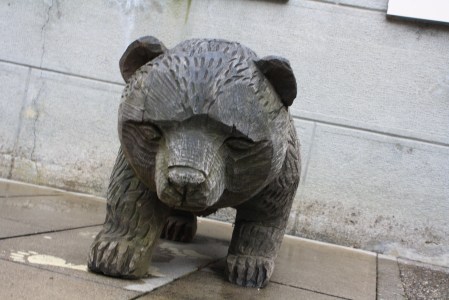
Bears are definitely emblematic of the city. There is even a park to visit bears that roam the grounds.

Bears are definitely emblematic of the city. There is even a park to visit bears that roam the grounds.


Unfortunately for us, the actual bears were hibernating, so finding the different statues around and above the city made do.

Unfortunately for us, the actual bears were hibernating, so finding the different statues around and above the city made do.


This might be the most curious thing I've ever seen in my life. It is a statue of an ogre eating babies. Some historians speculate it has anti-semitic roots. Others refer to it as a representation of Krampus. If you want to find out more, google Kindlifresserbrunnen!

This might be the most curious thing I’ve ever seen in my life. It is a statue of an ogre eating babies. Some historians speculate it has anti-semitic roots. Others refer to it as a representation of Krampus. If you want to find out more, google Kindlifresserbrunnen!


Stay tuned for my next post! You might be surprised to find out who will be making a guest appearance.


Tony in Switzerland: Boats and Woes

March 3, 2016

Welcome back to another post of postcards from Switzerland! I, at least, consider any photo I take with a mountain in the background to be a postcard.

This past weekend, one of my closest friends from home visited from Paris. She came to Lausanne with one of her friends from their program at Université Paris Diderot. What kind of tour guide would I be without showing them the most scenic views Lausanne has to offer?

In addition to showing off the cathedral, the mountains, and the cityscape, I decided to take my friends to Ouchy, which is the harbor district in Lausanne.


Take a look at the commercial street overlooking the harbor. Ouchy used to be completely separate from Lausanne until rail lines connected the two in the 1800s.

Take a look at the commercial street overlooking the harbor. Ouchy used to be completely separate from Lausanne until rail lines connected the two in the 1800s.


Ouchy offers ideal viewpoints to look at Lake Léman and the Swiss Alps. Tourists and locals alike swarm to this area regardless of the weather, but, of course, the harbor district is celebrated more during the summer.

Can you blame anyone for wanting to visit? The mountains take on a new identity around Ouchy. They rise from nothing and cut into the sky.

Can you blame anyone for wanting to visit? The mountains take on a new identity around Ouchy. They rise from nothing and cut into the sky.


The harbor district is also dotted with different sculptures and an English garden. I took a picture of this statue Vierge du Lac ("Virgin of the Lake"), which faces the mountains and sits away from the more commercial end of the harbor.

The harbor district is also dotted with different sculptures and an English garden. I took a picture of this statue Vierge du Lac (“Virgin of the Lake”), which faces the mountains and sits away from the more commercial end of the harbor.

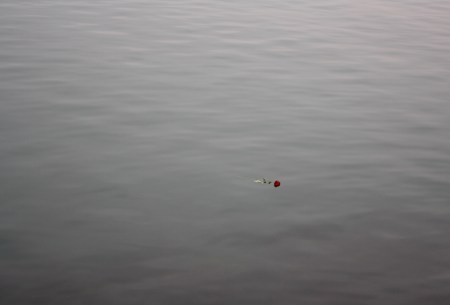
There's definitely something mystifying about Ouchy. A few roses floated in the water, but the lake is so calm that the flowers looked like they were floating in space.

There’s definitely something mystifying about Ouchy. A few roses floated in the water, but the lake is so calm that the flowers looked like they were floating in space.


After a weekend with a reminder of home, I definitely started to feel homesick. Rest assured, my international travels are coming up soon as I finish picking out my classes. Until next time!


Maddie in Ireland: One Month In (Part II)

March 1, 2016

I have returned, the Prodigal Writer, here to tell you about the next three of my January activities!

What’s on the menu today? How about a delicately roasted “My visit to the Aran Islands” with a fresh spring appetizer of “Classes I am taking” ? And no, I can’t recommend any wines to go with that.


Classes

My current university— National University of Ireland, Galway— has a very unusual way of registering for classes. At any college in the States, registering for class is a vicious, jungle-cat fight… Everyone is up four hours earlier than normal, poised to register for the limited number of spots in each class that was carefully chosen five months previously. At NUIG though, registration isn’t even open until two weeks after classes start. That means teachers start teaching without a roster and you just kind of show up to whichever class you’d like. Those two weeks of freedom are a bit of a double-edge sword- yes, you get to shop around and try out which classes you enjoy, but you also run the risk of missing important info from classes that you don’t go to immediately.

Once those two weeks, and the four weeks of open registration, were finished, I had settled on the following five classes:


Memory and Cognition

I mentioned previously that I am a Psychology & Criminal Justice double-major, so fittingly I am taking several psych classes. Memory and Cognition, taught by Prof. Gary Donohoe, Dr. Omar Mothersill, and Dr. Christopher Dwyer, examines the biological processes behind the various aspects of human memory and thought. Last week we studied <gulp> metacognition, meaning I spent two hours thinking about thinking about thinking… What I’m trying to say is that my class is essentially a Christopher Nolan movie that stars Leonardo DiCaprio.


Theories of Personality

Much less uh, mind-bending than Mem&Cog, Theories of Personality examines what constitutes a personality and where personalities may arise from according to a variety of different perspectives. Its an incredibly interesting class that forces you to reevaluate a lot of things you’ve always thought you’ve always known (as all good classes should). Bonus points for this class, I just got to write a paper about my favorite psychological figure, Carl Jung.


Embryology and Development

I am not a sciencey person. It’s not in my nature. I love research and enjoy neurobiology, but as a general rule, science is not ~my thing~. The only reason I signed up for this class is 100% because Richmond, in its quest to produce well-rounded, confident, and capable students, has a science gen-ed requirement. All of that being said, so far I love this class. We study the development of a human, week-by-week, from zygote to embryo to fetus. It is awesome and completely fascinating and I spend a lot of the class smiling, amazed at how physically incredible humans are.


Gaelic Peoples- Identity and Cultural Practices

Now we’re going to move on from the purely academic, relevant-to-my-majors classes and move on to the hey-I’m-in-Ireland-whaaaaaaat classes. Gaelic Peoples looks at the history of the variety of different people that have populated Ireland through the lens of archaeology. We examine historical buildings, writings, pottery, land formations, etc and this coming Saturday, will take a field trip to visit The Burren. The Burren, or Boireann, meaning ”great rock”, is a karst landscape in County Clare and contains the remnants of a prehistoric building that we will get to examine. Yay!


Celtic Mythology, Religion, and Folklore

Celtic Mythology, like Gaelic Peoples, explores the story of Ireland, however it takes a much less historically factual approach. Instead, we learn about the stories of the ancient Gales, we hear the tales mothers would tell their children, we learn about ancient wedding rituals, and how the practice of not moving your arms while step dancing originated. This class is just fun.


The Aran Islands

I like wild things. I like mountains and oceans and deserts and forests. I like things that are powerful and stormy and ancient and overgrown and green and way way way away from developed areas.

Wait, did I, did I just describe the Aran Islands? A powerful, stormy, ancient, overgrown, green island that has not just mountains and forests but also a desert and is very far from any major urban area? Woah! I guess I did. I guess the Aran Islands are pretty darn close to what I would consider the perfect place. Huh.

A few weekends ago, three of us got up at the crack of dawn, took a very long boat ride over very active waters, and disembarked on the island of Inishmore— also known as Árainn, Árainn Mhór, or Inis Mór— the largest of the three Aran Islands. The Aran Islands are known primarily for their sheep, the wool said sheep produce, and the incredible clothes they craft with said wool. A sweater made of Aran wool is just *mwah* perfecto. The Aran Islands are secondarily known for being staunchly loyal to their Irish culture. In Ireland about 40% of people have some degree of proficiency in the Irish language… On the Aran Islands 100% of the population is fluent in Irish and, in fact, really only use English to communicate with tourists.

A local elderly man named Tomás served as our tour guide and drove us— and two girls from Quebec that we befriended— around the island. He whipped along single-lane roads on massive rocky hills in an oversized white van, pointing out local landmarks, joking about his eyesight, and loudly recounting stories from his childhood (Like most inhabitants, Tomás has lived on the island his entire life). Eventually, Tomás declared there were too many sheep on the road (there were) and that we would have to continue by foot. We pulled over, he pointed with a pale hand to some cliffs, instructed us to follow those cliffs to Dun Aengus, and that if we were able to see sea spray we were not to go below the cliffs to the shore. He finished by saying that he would pick us up on the other side of that hill in four hours. It was not until he climbed into the van and slowly backing his way up through a herd of sheep, that we realized he had not specified on which hill exactly he was referring to.

Oh well. No time to waste.

The ground where Tomás had dropped us off was covered in large flat rocks, worn smooth by thousands of years of wind and rain, with hardy grasses pushing their way through the cracks. We walked across this rocky plain to the cliffs. They were massive and overlooked the Atlantic, giving you an incredible view of the ocean and in the distance, if you looked closely enough, a view of the mainland…………….buuuuut, if you stood with your back to the ocean and instead turned around, you would see something even better in the island itself. You could swear that no man had ever touched that land. It was just so untamed and ancient and wild it could make you cry. And it did. The sheer wildness of the windy, rocky island made me cry in fear and awe and joy and longing and a lot of other feelings I can’t put a name to. Poignant happiness, maybe?


cliffs


On the cliffs we saw the sea spray, so naturally we ignored the man who had spent the last seventy years on these islands, and decided to descend the cliffs to the beach. It was a very difficult, very long, very slippery trek that often required you to move on all fours and I 100% sliced my hand open on a sharp rock, but it was worth it. We weren’t just seeing the sea spray down here, we were getting covered in it.


I know its hard to believe, but this rectangle, called The Wormhole, was carved out of the stone naturally.

I know its hard to believe, but this rectangle, called The Wormhole, was carved out of the stone naturally.


At this point we were about two hours in, so we decided to go back to the trail and make our way to Dun Aengus, a well preserved Bronze Age fort. We climbed back up the cliffs, couldn’t find the trail but figured we knew the general direction we were supposed to go, and set off. The weather really started to pick up, so climbing up the hill to Dun Aengus had us bent over, seeing how far forwards we could lean, supported by the wind, without falling over. After another 45 minutes or so of hiking/crawling we reached the base of the hill on which Dun Aengus was situated and began our ascent, hopping over fences, walking around cattle, yelling as loudly as we could (because we could), and generally feeling that what we were doing was exactly what studying abroad was about.

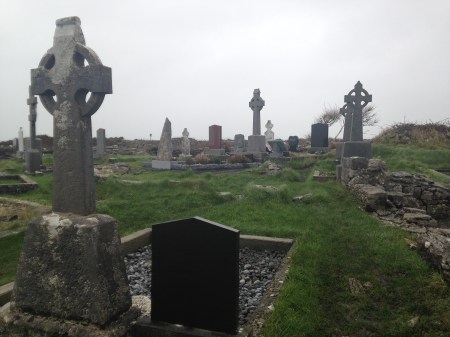
When we crested the hill we spent about 20 minutes examining the fort, built right on the edge of the highest cliff. From our vantage point we could actually see a small little village that had been blocked from view, the mysterious village that Tomás had promised to pick us up from. Collective sigh of relief. Tomás picked us up (right on time) and then drove us to “The Seven Churches”, a site where a church was built, broken down, and replaced with a  new church which then broke down and was replaced with a new church, and so on. While exploring the ruins we also got to explore the graveyards. I mentioned earlier that the inhabitants of the Aran Islands tend to live there their entire life, right? Well it was clearly reflected in the headstones. You could trace generations of families through the headstones.


 Wow

Wow


Oh also did I mention a large black dog with no owner showed up in the graveyard?! I'm calling it, that dog was a Grimm.

Oh also did I mention a large black dog with no owner showed up in the graveyard?! I’m calling it, that dog was a Grimm.


We headed back with Tomás to the main street, bought some seafood chowder and hot chocolate, purchased some wool goods, and then made our way to the docks. We were all exhausted and to be honest, I can’t remember one bit of the boat ride back. I was asleep within seconds of sitting down.

That trip was a few weeks ago, but I think back to it a lot. Those islands really struck a chord within me… I’ve a pretty good suspicion I’ll be back there soon.

Slán!

Maddie


Emily in Samoa: Worlds Without Walls

March 1, 2016

Picture your world, the one where you live out each day, where you go to work or school or coffee, where you interact with family and friends—and those people who, unfortunately, fall into an often unpleasant third category—and where, at the end of the day, you return home to peace and quiet. Now, eliminate every wall from this world. Start by taking down the physical walls, then go to the interpersonal ones, and demolish those, too.

If you do this right, you have a pretty good image of what a Samoan village homestay is like. While many people have switched to palagi (foreigner) homes, the fale (open house) mentality has stuck, and everyone’s life is out in the open to the rest of the village. We have lived in this wall-less world for ten days, and it is a definite cultural adjustment. We visitors have had to get used to a new style of living, in which the hardest part has definitely been derived from the lack of walls. And what are the implications?

Seaside fales provide the best views out and in

Seaside fales provide the best views out and in

Physically, no privacy. And I mean None. Windows are open, doors are few, and getting dressed in the morning is an adventure that often results in accidental flashing. Showers have no curtains, and are done in lavalavas (sarongs usually worn as skirts, but converted to tube dresses for the purpose). A shower is the biggest adventure in this wall-less world, and, as I found, a number of obstacles ensue once one is showering. What would you do if your host father decided to strike up conversation? Or if your shower happened to be next to a popular pig hangout? Or if your six siblings decided it would be good fun to turn on music and watch you?

My universal solution has been to dance. I am not an adept dancer by any means, but anyone who decides to be a part of the audience when this palagi showers is in for a good show…


My curious siblings surround my bed whenever I arrive at the house. This time, I gave them all pigtails.

My curious siblings surround my bed whenever I arrive at the house. This time, I gave them all pigtails.


With no privacy comes no alone time. You can approach this however you like: many students chose to be frustrated by it. “Why does my homestay family want to spend time with me?” they would mope. We discovered as we progressed that when we found times of alone-ness, “alone time” took on a new image. Instead of soaking in the peace, you sit puzzled, wondering where everyone is. And, in contrast to the US, this place with no alone time also has no room for loneliness.

A lack of being alone manifests itself in a variety of ways. Socially, everyone is always watching, gossiping, and peeping in on neighbors. If voices are raised in a house, everyone on the street will crowd the windows to see what is going on. If a group of palagi girls goes to the beach, at least ten village boys will be there within the hour.

This isn’t as oppressive as it seems, since the flipside of communal life offers benefits for all members. The most surprising example I found was when I was playing with my siblings. In the US, I rarely have found children who, come snack time, don’t snatch and devour their food. Here, however, a few children got snacks, and within seconds I and the others had piles of food in our hands. Three- and five-year-olds had evenly divided up their food for the rest of us, with no qualms whatsoever.

There are no walls around personal property, nor are there walls around individuals as they age or weaken. Samoa does not have Social Security, and care is taken on by the family and the village. Money is pooled for weddings, funerals, and hospital visits, so that everyone is taken care of by those around them.


Fa’alavelave is a Samoan term that refers to any major occasion in village life. We were able to attend a funeral fa’alavelave. Life is celebrated with singing, euglogies, and gift exchange. Fine mats (left) take weeks of work, and are a major gift.

Fa’alavelave is a Samoan term that refers to any major occasion in village life. We were able to attend a funeral fa’alavelave. Life is celebrated with singing, eulogies, and gift exchange. Fine mats take weeks of work, and are a major gift.


matais

A group of matais (chiefs, shown right) receive gifts for their deceased friend as they sit next to his grave, and others wait with the body in the house, singing and eating.


Most uniquely, perhaps, is that there is also no wall around death. Those who die are buried next to their front door, so that they can continue to take part in the goings on. Unlike in the US, where elders are shooed away to nursing homes and those who die are compartmentalized in far-away cemeteries, Samoans keep their family close by long after they die. Brightly-painted graves often match the houses they guard, and memories stay alive as children play on the stones and families have sunset conversations while sitting among deceased relatives. Maybe it sounds bizarre, but I think this is a good deal for the dead—why go to a cemetery when you can continue to be part of the family?

Taking down walls has made me more open, and enabled me to grow closer with those around me. It is certainly exhausting at times, but it has made me wonder about why we build all of these walls in the first place, and why we feel the need to keep building more.


Tony in Switzerland: Campus Kings and Castle Queens

March 1, 2016

It’s the last full week of February, everybody, and now that classes are starting up, the exchange student network (ESN) has been keeping international students busy. Last week, I participated in welcome week activities ranging from touring the city and exploring the campus.


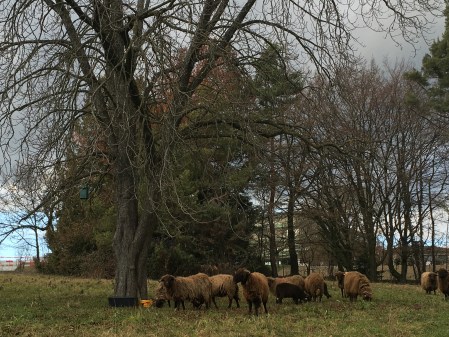
UNIL's mascot is the sheep, which gives the administration a perfect excuse to have sheep roaming the campus. The ESN highly encourages taking a selfie with the sheep before you leave UNIL. We'll see.

UNIL’s mascot is the sheep, which gives the administration a perfect excuse to have sheep roaming the campus. The ESN highly encourages taking a selfie with the sheep before you leave UNIL. We’ll see.


Welcome week also marked the end of my intensive French class that I took before the start of the semester.


To celebrate the end of the vacation class, we all went out to an authentic Swiss restaurant in front of Lausanne's cathedral.

To celebrate the end of the vacation class, we all went out to an authentic Swiss restaurant in front of Lausanne’s cathedral.


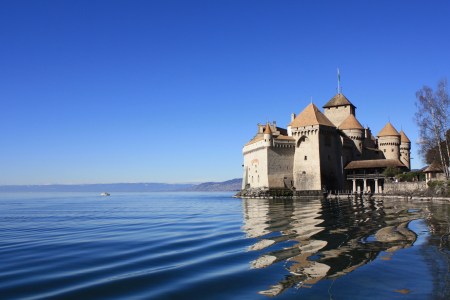
Before the semester officially began, I also went on a trip to the Château de Chillon right outside of Lausanne. The castle overlooks Lake Geneva and offers the best spots to take pictures.


Switzerland is a postcard, and I feel like every picture I take is a stock photo from Google.

Switzerland is a postcard, and I feel like every picture I take is a stock photo from Google.


My friends and I took a self-guided tour throughout the castle, which really meant looking for the best windows and towers from which to take pictures.

My friends and I took a self-guided tour throughout the castle, which really meant looking for the best windows and towers from which to take pictures.


Like I said, we searched hard for the best photo ops. This is the view from the windows in the castle's dungeon. It almost makes prison life look less miserable.

Like I said, we searched hard for the best photo ops. This is the view from the windows in the castle’s dungeon. It almost makes prison life look less miserable.


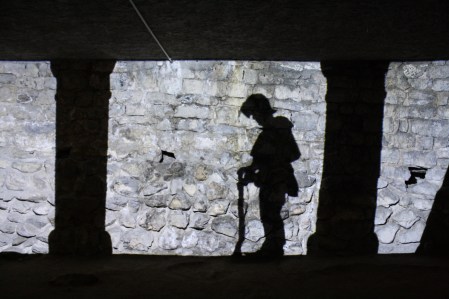
In one room of the castle, there was a video projection on the stone wall. The silhouettes of actors came in and acted out the siege of the castle in the 1400s.

In one room of the castle, there was a video projection on the stone wall. The silhouettes of actors came in and acted out the siege of the castle in the 1400s.

As of February 22nd, I am officially a student at the Université de Lausanne. In other words, I officially started classes this week, which is only mildly intimidating. I’m auditing courses to see what I might want to add on to my overall schedule by March 20th. It’s a very lenient system, but here’s hoping everything will transfer back okay!


Emily in Samoa: Home from the Sea

February 18, 2016

One day, around six months ago, I was struck by a craving for Book. I was somewhere in transition—a train station, an airport, a car, a couch in a busy room—and decided that it was time to supplement life with a story. As many may in such a situation, I picked Treasure Island by Robert Louis Stevenson, having never read the book, and figuring it was time I did.

Never did I imagine that my book choice would come full circle for me here in Samoa. Stevenson spent the last five years of his life in Vailima, a town in the inner hills of the island of ʻUpolu, where he would meander through the rainforest behind his house for hours on end, climbing to the top of Mount Vaea to look down into the valleys and out to the bay in Apia. Arriving at the age of 40, Stevenson and his family were welcomed by Samoans and befriended many locals, even giving support and advice to native independence movements. He wrote a number of books in his Samoa years, inspired by his Pacific travels, and gained the Samoan name Tusi Tala, or “teller of stories.”


View from Stevenson’s veranda

View from Stevenson’s veranda


However, Stevenson had come to the island to die. He had never been in good health, and had traveled to the Pacific in hopes that the climate would have a positive effect on it. He died in 1894, and asked to be buried at the top of Mount Vaea, overlooking the ocean. His Samoan friends forged a path through the forest as they carried his casket, mounting steep slopes in often scorching heat. He was buried, at his request, looking out over the island and wearing the boots he had worn throughout his stay in Samoa. His requiem, written on his grave, says the following:

Under the wide and starry sky,

Dig the grave and let me die.

Glad did I live and gladly die,

   And I laid me down with a will.

This be the verse you grave for me:

Here he lies where he longed to be;

Home is the sailor, home from the sea,

    And the hunter home from the hill.

The Samoans have set the verse to music, and now sing it (in English and Samoan) as a song of grief. Our museum guide sang the English version, telling us that she would cry if she sang it in Samoan. We climbed with the melody on our minds, and when we reached the top of the mountain, it was both tranquil and…chilling. The verse Stevenson wrote becomes more than a poem when you see the view it accompanies. The home he talks about is no longer Samoa, though the island welcomed him and he gladly became a part of its society. The home, from the top of the mountain, is the world he created for himself in his writing.


Hidden pirates

Hidden pirates


It’s possible that I idealize the place, but for me, the end of the climb was reverent. I could imagine Stevenson, a man whose health would prevent him from fighting pirates or going on the grueling adventures that fill his books, sitting atop Mount Vaea and looking out at the jagged mountains and sparkling sea. Devising, letter by letter, a world in which anything was possible; painting on the canvas that the view provided him.

I like to think, after this experience, that everyone will one day find their mountain. Wherever we are, we are looking to create a home for ourselves, be it physical, social, or literary. A place or a state of mind from which we may look out and survey what we have lived and shaped. And I am indebted to this experience for showing me that.


The group at the end of our climb

The group at the end of our climb


Maddie in Ireland: One Month In (Part 1)

February 18, 2016

Hey kids!

I’d like to start off by apologizing to you. I just know you’ve been refreshing this page anxiously for two weeks straight, waiting for my next installment about my adventures in Ireland and I am sorry for leaving you hanging. I am a horrible person and I apologize for an increases in blood pressure that may have occurred as a result of your prolonged wait.

“Where have you been Maddie? Why haven’t you kept in touch with me?” I’m sure you’re frantically asking. “Well,” I calmly reply to you, “I’ve been alllll over. Horribly busy actually. But I’m here now, children, and I have ~so~ much to tell you!”

Where should I start? Should I tell you about the people I know? Perhaps my visit to the Cliffs of Moher as promised? How about my Valentines Day spent with my girls? Or should I tell you about my visit to the Aran Islands? Maybe I’ll talk about going to Oxford to visit fellow Spiders studying abroad? Or the few days I spent exploring London by myself? What about the time I visited Stonehenge? Maybe my classes?

But then I think, porque no los dos? Or rather, porque no los siete?… Is, is that how you say it? Because, honestly, I have no clue. I took Italian, sooo I’m way out of my depth here. Well, however you say it, how do you feel about me telling you about all of it? (Spoiler alert: regardless of how you feel, I’m gonna tell you all about it).

Since I’d rather not skimp on the details, but I also don’t want to force you to read an entire novel, tonight I will write about the first tres activity-thingies listed and will continue the next few tomorrow. Good? Good.

The People

You know how in the beginning of any new program— high school, college, summer camp, a Super Bowl party at your weird friend Jeremy’s house— everyone tends to clump together? Like, everyone finds someone, sticks with them, gradually sticking onto new people, until there’s a group of about fifteen (secretly scared) people who are trying to navigate their new world without leaving each others side? Studying abroad works like that, too. You find a group right off the bat during Orientation and you do things constantly together before even finding out if you have things in common or even if you really like each other. Lucky for me, it has now been six weeks and I am very sure that the group I happened to cling onto, the first few people I met, were the right group to cling onto. They are all wonderful people with whom I actually have things in common and 100% like. We go on trips together (knowing that we like each other), we go to Trivia Night at the pub, we go cheese-tasting, we go on searches for a place that sells milkshakes at 2 a.m., we try and dissect Irish culture, we fight over who actually ate the last piece of pie, we help each other study, we battle the rain together, we have fun together, we experience Ireland, we explore new things, and we do it all together. The world is beautiful and awesome and strange and terrifying, but the people you’re with— whether you met them at Orientation, or because you saw them performing magic tricks one night, or because you’re both part of the Mountaineering Society— are the ones who can help you most see that.


Ain't we cute?

Ain’t we cute?


In conclusion, my friends— who, as you may have guessed, I have met through Orientation, seeing them perform magic tricks, and being part of the Mountaineering Society, among various other social interactions— are the best. Irish, Americans, Thai… we’re all awesome and are all helping each other through this beautiful, awesome, strange, terrifying world.

How precious.


The Cliffs of Moher

Lol, I told y’all I’d talk about this awhile back, so lets get down to bidness. After the first week of school, we— meaning my core group of friends who had found each other during Orientation— decided we had had enough of dumb Galway and its rich history, quaint streets, and charming people. We needed to leave this town.

So, we booked a tour, hopped on a quick bus, drove for two hours on the incredibly windy “Make-ye-sick” road (as our bus driver delicately put it), and just randomly pulled up to an ancient castle. No biggie. Just a centuries old building built in the middle of a lake. After spending half an hour or so at Caisleain Dhun Guaire, or Dunguaire Castle, we then headed off to Ailwee cave*. There was a tour of the cave, but I chose to stay behind and wander around the mountain. Technically there was a path I was supposed to follow if I wanted to explore— and I am in no way condoning going off designated paths—, but I totally went off the designated path (What can I say? I was raised in the mountains. If I see a cool tree in the distance, I’m gonna go look at that tree). I was rewarded by:

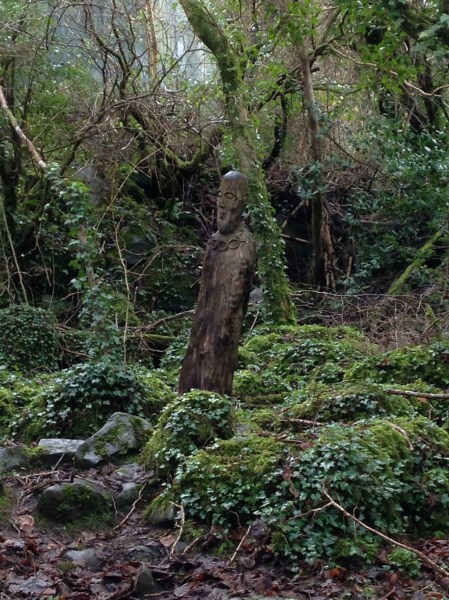
1) Finding some random statues of humanoid figures among the trees far away from the path. If I’m being honest, they were pretty frightening at first, but when you got closer turned out to be very beautiful and almost comforting.


Statue


2) Climbing to the top of the mountain and feeling the pure ecstasy you can only feel when standing at the top of a mountain. I will openly admit to raising my arms above my head, jumping, and yelling, a la Rocky finally climbing the Philadelphia Stairs.

3) Finally, finally, finally understanding why there the Landscape is such a large part of the Irish identity. The Land is haunting and halfway here, halfway there, half real, half a dream, faded, vivid, and so absolutely alive. The forest and the hills and the sun… it all just fills you. You don’t just see the land, you feel it. It sticks with you, even when you return to the city with all of its concrete and plastic and swarms of people.


Land


After the cave we hopped on the bus again and were taken to the legendary ~Cliffs of Moher~. The Cliffs were incredible. No poet, no painter, no photographer— and certainly not me— could ever convey the beauty and mystery of the cliffs. If Sir Patrick Stewart could be a geographic feature, that geographic feature would be only be half as awesome and wise as those cliffs.

After a few hours at The Cliffs of Moher, the bus returned to pick us up, we stopped by a seashore to take a few obligatory Instagram sunset pictures, and returned home.

I was exhausted, freezing, grouchy, covered in mud, had cut my hand pretty badly on a sharp rock, and it was all worth it.

*Fun fact, Ailwee actually served as the inspiration for Gollum’s cave in JR Tolkien’s “Lord of the Rings” trilogy.


Valentines Day Wif Ma Femayls

Hey you guys, guess what! I just celebrated my twentieth time being single on Valentines Day! Isn’t that just the greatest? There is no way I’m cynical and bitter! I must love seeing all the couples happy in their loving relationships! Yay!

…Did you read those sentences with a sarcastic voice? You shouldn’t have. I actually do love Valentine’s Day. I’m neither cynical nor bitter, cute couples make me happy, and I don’t mind being single, because I have some rad friends that I get to celebrate with. This year we celebrated the power of female friendship with Galentine’s Day and then later the power of friendship of both genders with Palentine’s Day.

The original plan was to go to a local restaurant and treat ourselves to a wine and cheese tasting, but then it started to rain, yada, yada, yada… long story short, we were really not up to walking the 20 minutes to the restaurant. Lucky for us— meaning myself and two female friends— there is actually a restaurant in our apartment complex. We headed straight to Scotty’s Steakhouse, sat down next to a family with three adorable children who played peek-a-boo with us and frequently blew kisses, and proceeded to eat our massive hamburgers until we were uncomfortably full. One friend passed around presents she had gotten us (I started to cry, because of course I did… it was really sweet) and thus, with that wonderful gesture, concluded Galentine’s Day. This conclusion was immediately followed by the beginning of Palentine’s Day as a male friend joined us for dessert.

After dessert we, still uncomfortably full, headed back to all of our apartments. I immediately went to bed where I, no joke, dreamt of chocolate. How Valentine’s-Day-ish is that?


Well, thats it for tonight, dear readers. Check in for the other cinco activities soon.

Isn’t it a wonderful world?

Maddie


Tony in Switzerland: Ski Lodging

February 16, 2016

This week, I saw my first snowfall in Switzerland. I didn’t expect to be so excited to see snow, especially after my traumatizing experience traveling to and from D.C. However, the joy of seeing snow comes right back when you’re surrounded by so many people who have never seen it before. In particular, the Australian students look at the snow with childlike wonder. The excitement truly rubs off on you.


Here's a quick scene of my first snowfall in Lausanne. The flakes here look more defined than the ones back home.

Here’s a quick scene of my first snowfall in Lausanne. The flakes here look more defined than the ones back home.


The snow also means that I was able to go skiing for the first time ever, much to the surprise of my friends and ski instructor. They expected that I would have gone skiing at least once before because I live in Massachusetts. Of course, it’s not that simple, and the appeal definitely varies from family to family based on several different factors.


I layered sweatpants with worker's pants from a local thrift store. Just a day in the life of the thrifty skier.

I layered sweatpants with worker’s pants from a local thrift store. Just a day in the life of the thrifty skier.


Here in Switzerland, though, I feel like I would be remiss if I did not ski. I’m only an hour away from the Swiss Alps, after all! Fortunately for me, UNIL offers group trips to Les Diablerets, which include private ski lessons, lodging in the UNIL chalet, and dinner and breakfast.


I know. I know...even more mountain views. It's hard not to look at the mountains or think about the mountains or talk about the mountains when you live less than an hour away from the Alps.

I know. I know…even more mountain views. It’s hard not to look at the mountains or think about the mountains or talk about the mountains when you live less than an hour away from the Alps.


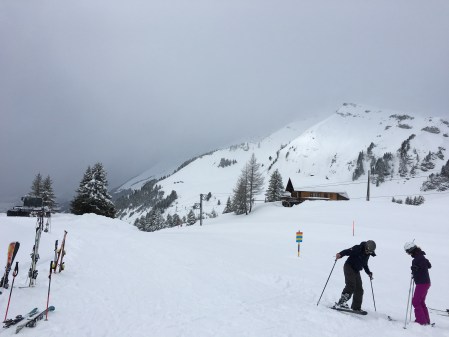
Skiing is weird. You tire every muscle in your body to go uphill and slide back down as you witness extremes in weather from the tip of a mountain. Somehow, it's still so much fun.

Skiing is weird. You tire every muscle in your body to go uphill and slide back down as you witness extremes in weather from the tip of a mountain. Somehow, it’s still so much fun.


My orientation is coming up this week, so stay tuned for even more of the city, but from  the cool perspectives of local students sharing their wisdom.